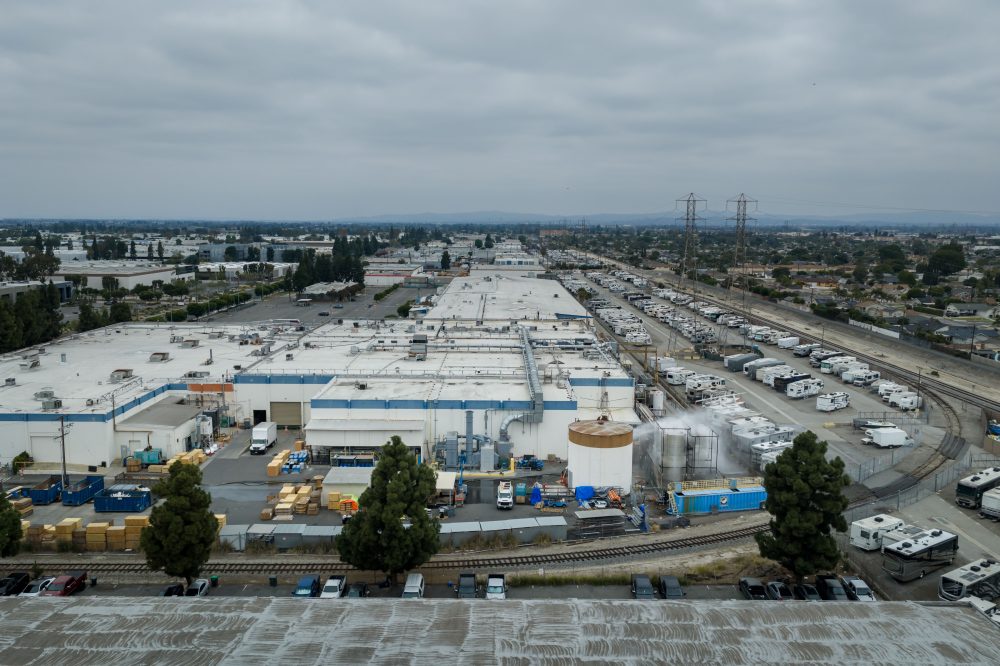

Emergency officials in Southern California continue working around the clock to address a critical situation involving a compromised chemical storage container at an aerospace company that has forced tens of thousands from their homes.
The container at GKN Aerospace holds approximately 6,000 to 7,000 gallons of methyl methacrylate, a dangerous substance used in manufacturing plastic components. The vessel became overheated last week and started releasing toxic fumes into the surrounding air in Garden Grove, located in Orange County. Weekend reports from officials indicated the container could discharge its entire contents or potentially detonate if temperatures continue rising.
While no one has been hurt, evacuation orders affected more than 50,000 people throughout the Memorial Day holiday weekend. Emergency responders have been continuously dousing the container with water to lower the temperature of the heating chemicals and avoid a potential blast.
The substance methyl methacrylate appears as a clear, combustible liquid utilized in creating resins, plastics and dental prosthetics, and falls under federal hazardous material regulations. According to the Environmental Protection Agency, the compound can cause irritation to respiratory systems, eyes and skin, while higher concentrations may lead to impaired breathing capacity, lightheadedness and cognitive issues. Air quality testing conducted around the evacuation area has shown pollution levels remain within acceptable ranges.
Officials report the container’s release valves have malfunctioned, creating uncertainty about how to handle the chemical contents while overheating dangers persist. Local emergency management warned that without intervention, the situation could result in either a massive chemical discharge or an explosion.
Emergency crews have concentrated efforts on maintaining the container temperature below 85 degrees Fahrenheit to reduce internal pressure. EPA chief Lee Zeldin stated Sunday that the most probable outcome involves a “low-volume release” of the tank’s materials, allowing officials to “monitor, neutralize, and contain the threat.”
Rising internal temperatures would create pressure buildup as the methyl methacrylate transforms from liquid to gas form, heightening explosion risks that could ignite additional containers at the location.
An explosion releasing the chemical airborne would spread it across a broader area and could generate dangerous inhalation vapors, warned Orange County’s top health officer, Dr. Regina Chinsio-Kwong.
Dr. Chinsio-Kwong explained that inhaling the vapor could irritate eyes, nasal passages and lungs, potentially causing throat soreness, burning eyes and dizziness. She noted the chemical produces a fruit-like smell, though detecting the odor doesn’t necessarily indicate health consequences will occur.
Extended exposure to methyl methacrylate can lead to severe breathing complications or loss of consciousness. The evacuation area sits west of Anaheim, where Disneyland’s two entertainment parks operate without evacuation requirements. Dr. Chinsio-Kwong assured that individuals beyond the evacuation boundary face no health concerns.
Sunday reports from officials suggested the container may have developed a fracture, which could reduce explosion probability. Orange County Fire Authority Capt. Wayhowe Huang reported emergency teams discovered the potential crack during overnight operations. Despite the crack, he said the container showed no signs of releasing toxic material into the environment.
Zeldin indicated a controlled, small-scale chemical release would enable officials to monitor the situation and reduce container pressure. GKN Aerospace announced Sunday afternoon its continued cooperation with local emergency services, stating “the situation remains ongoing.”