
ARACHOVA, Greece (AP) — Giannis Stathas recalls childhood winters when heavy snowfall would trap him and other children indoors for days in Arachova, a mountain village renowned for its ski slopes and winter recreation.
“We couldn’t go to school because of the snow,” recalled Stathas, who now serves as mayor of Arachova and its surrounding region. “We might have been stuck at home for two days without being able to go out because of the snow.”
“Now we don’t see that here anymore.”
According to Stathas, the amount of snow that previously accumulated at 300 meters (984 feet) elevation now only occurs at 2,400 meters (7,874 feet) up Mount Parnassos.
Recent research from the University of Cambridge’s Scott Polar Research Institute supports what the mayor has witnessed firsthand.
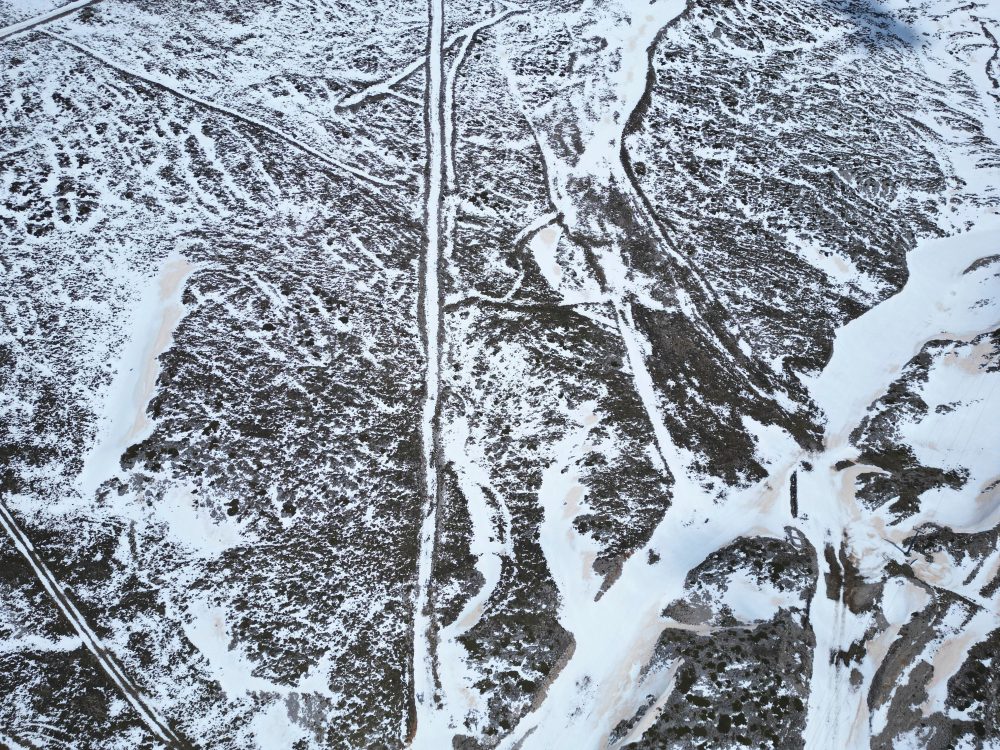
“What we found across 10 mountains of Greece, across the mainland, is that snow cover is rapidly declining,” explained Konstantis Alexopoulos, a snow hydrologist at the University of Cambridge and the National Observatory of Athens, and co-founder of the Hellenic Mountain Observatory. “We’ve lost more than half of the snow cover … since the mid-1980s.”
The research team analyzed four decades of satellite data from NASA and the European Space Agency, employing machine learning techniques to fill in information gaps caused by cloud interference and irregular satellite coverage.
According to Alexopoulos, this reduction is significant because snow functions as nature’s water storage system.
“Snowpack is really like a savings account,” he explained. “You can deposit an amount today and the longer you keep it in this savings account without spending it, the interest value is going to increase. And snow works in the exact same way.”
While rainfall quickly flows away through rivers to the ocean, snow stays trapped in mountainous areas “ultimately melting at the time that we need it the most,” Alexopoulos noted.
This natural storage system helps maintain water availability during dry periods, which proves particularly crucial in Mediterranean regions where summer precipitation remains scarce.
Alexopoulos emphasized that warming temperatures caused by greenhouse gas emissions are the primary driver behind snow loss, reducing both the amount of snowfall and how long it remains on the ground.
“The snow cover decline that we’re observing on the Greek mountains is not connected to the natural climate variability that does exist,” he stated. “The current rate of climate change globally and specifically in hotspots like the Mediterranean is much faster than what the earth has experienced previously.”
While researchers anticipated some decline, Alexopoulos said the severity caught them off guard. “Other mountainous regions of the world, such as the Andes or the Himalayas, … have all experienced a steep decline in snow cover but not at the rate that we saw in the Greek mountains.”
This research represents among the first comprehensive long-term examinations of Greek mountain conditions.
“Studying mountainous environments is inherently difficult due to remote access,” Alexopoulos explained, noting the challenges of installing and maintaining weather monitoring equipment in these locations.
“In Greece we haven’t focused so much on it because we never really understood the importance of snow’s contribution to our water resources,” he said. “But as this shifts and as this starts to decline, we are seeing those droughts, and we are trying to explain them.”
Though Mount Parnassos wasn’t included in the research, Alexopoulos said it reflects conditions found throughout Greece.
In Arachova, situated below Mount Parnassos, residents are already experiencing the effects.
“One hundred percent of Arachova’s water is supplied by snowmelt,” explained local restaurant owner Aktida Koritou.
She noted that community members have grown increasingly mindful of water conservation, taking extra precautions to avoid waste, particularly during summer months when shortages become most acute.
The mayor expressed serious worry as local springs are running dry and water reservoirs aren’t being replenished.
“The biggest problem begins in late August and early September and lasts until late September or early October,” Stathas explained.
While an unusual April snowfall surprised and pleased locals, it “will hardly help the reservoirs fill up,” according to Stathas.
Local officials are working on solutions. The municipal government is investigating small dam construction to prevent water loss, while the ski facility is implementing measures to help preserve snow for longer periods.
Reduced snowfall also creates drier plant life and heightened fire danger. Stathas said wildfires weren’t previously a concern in northern Greece, but conditions have changed.
“You could set fire among the fir trees 30 years, 40 years ago and there was never a chance that the mountain would burn,” he said. “But now there is a great danger because of the severe drought.”
Arachova’s ski-dependent economy is adapting to these changes.
Koritou, who was employed at the ski facility when it launched in the early 1980s, said skiing season now begins in January rather than December.
“No one will come to the mountain for Christmas. They will go to Switzerland. They will go wherever they find snow,” she said. “So they leave and (business) decreases. This Christmas, there was a 30% reduction, for me at least.”
To address this challenge, municipal leaders are working to expand beyond winter tourism, marketing Arachova as a summer retreat.
“Someone can swim and in 20 minutes come to stay here where it’s cool,” Stathas said. “But to be able to hold on to tourism in the summer, we have to have water.”
Residents still hold memories of previous winters. Koritou remembers farmers hurrying to collect grapes in late October ahead of the season’s first snow. People stored shovels by their entrances, and community members worked together to clear roadways. She also recalls mountain areas where snow remained year-round.
“There are some years when despair grips you,” Koritou said. “For those of us who know winter well, it’s disappointing not to see snow. You want it in the winter. The change is enormous.”