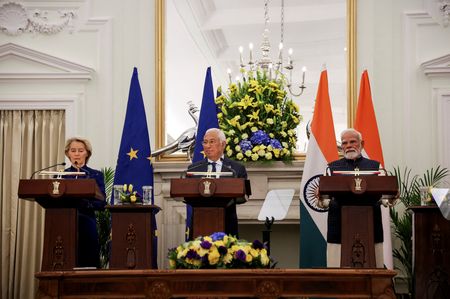

A comprehensive trade agreement between India and the European Union has established new frameworks for digital commerce and World Trade Organization compliance, according to draft documents released Friday by India’s trade ministry.
Under the proposed agreement, both nations will receive Most Favored Nation designation once the deal becomes active, creating a five-year period where neither country can provide superior tariff arrangements to other trading partners.
The trade partnership, finalized last month after extended negotiations, seeks to dramatically reduce tariffs on the majority of goods while increasing bilateral commerce during a time of rising international trade disputes.
Following legislative approval, the agreement is anticipated to become operational within one year and could potentially double European exports to India by 2032. The deal eliminates or reduces tariffs on 96.6% of traded merchandise by value, potentially saving European businesses 4 billion euros ($4.7 billion) in duty payments, according to EU officials.
Both governments have specified that agricultural products including soya, beef, sugar, rice and dairy items remain excluded from the trade agreement’s scope.
The draft text reveals commitments from both sides to maintain World Trade Organization standards by avoiding new import or export limitations while expanding digital trade collaboration within the proposed free-trade framework.
To facilitate smoother trade operations, India and the European Union will harmonize food safety and plant health protocols with WTO guidelines while simplifying certification and inspection processes.
The agreement also establishes improved customs coordination and expedited goods clearance procedures, with these obligations becoming legally enforceable following ratification.
Beginning one year after implementation, both parties will share yearly import statistics to track compliance and monitor tariff preference utilization. The agreement also guarantees fair and accessible appeals processes for customs rulings affecting imported, exported or transit goods.
Regarding digital commerce, India and the EU have pledged to eliminate unnecessary obstacles while fostering a transparent and secure digital marketplace.
The draft acknowledges privacy as a basic right while maintaining each party’s jurisdiction over personal data protection and international data transfer regulations.
Additionally, the agreement encourages electronic documentation and legal acceptance of digital contracts, signatures and verification methods.
Under a separate provision, the European Union will provide financial resources and investment support for India’s greenhouse gas reduction initiatives as part of the proposed agreement.