Category: Business

  • Nvidia CEO Signals Major Push Into CPU Market to Challenge Intel, AMD

    Nvidia CEO Signals Major Push Into CPU Market to Challenge Intel, AMD

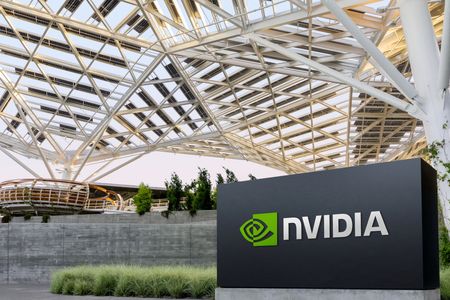
    Graphics chip powerhouse Nvidia is setting its sights on a direct confrontation with longtime processor rivals Intel and Advanced Micro Devices, as CEO Jensen Huang signals a major expansion into the central processing unit market.

    While Nvidia built its massive wealth through specialized graphics chips that drive artificial intelligence systems, Huang is now expressing growing enthusiasm for the more versatile CPU technology that has long been dominated by Intel and AMD.

    For many years, central processing units served as the primary computing engine in computers. However, Huang frequently points out how the computing landscape has dramatically shifted, with his company’s specialized chips now handling tasks that CPUs once managed almost exclusively.

    The tide appears to be turning once again. As artificial intelligence companies transition from developing their systems to actually putting them to work, CPUs are experiencing a resurgence – and Nvidia wants a significant piece of that action.

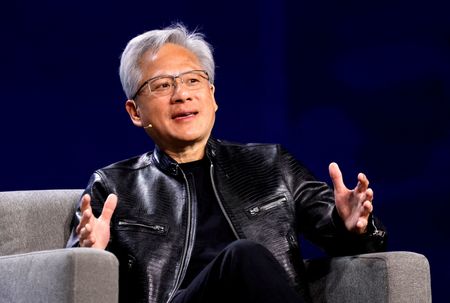
    “We love CPUs as well as GPUs,” Huang told financial analysts during Wednesday’s fourth-quarter earnings discussion.

    The executive emphasized that Nvidia stands ready for the CPU’s return to prominence, confident that the company’s data center processors, which debuted in 2023, will surpass competing products.

    During January’s Consumer Electronics Show in Las Vegas, Huang made an even bolder prediction, suggesting that high-performance Nvidia CPUs in data centers would see explosive growth. He said he wouldn’t be shocked “if Nvidia becomes one of the largest CPU makers in the world.”

    The fundamental difference between these two chip types has defined their roles for decades. Central processing units function as versatile workhorses, capable of managing virtually any computational challenge software developers present, though at moderate speeds due to their broad capabilities.

    Graphics processing units take a different approach, focusing on simpler mathematical operations but executing thousands of these calculations simultaneously. This parallel processing power made them ideal for rendering video game graphics and, more recently, for the matrix calculations that power artificial intelligence systems.

    The computing landscape is evolving as AI companies deploy autonomous “agents” capable of independently handling complex tasks like programming, document analysis, and research compilation. According to Creative Strategies analyst Ben Bajarin, this type of work “is happening more and more, and sometimes primarily, on the CPU.”

    Nvidia’s current top-tier AI server, the NVL72, incorporates 36 CPUs alongside 72 graphics processors. Bajarin anticipates this could shift to equal numbers for agent-based computing, or potentially eliminate graphics chips entirely for certain applications.

    Highlighting its processor ambitions, Nvidia recently struck a deal with Meta Platforms, where the social media giant will purchase substantial quantities of Grace and Vera CPU chips as standalone products. This marks a departure from Nvidia’s typical server configurations that pair each CPU with multiple graphics processors.

    However, Meta hasn’t abandoned its existing CPU suppliers – the company is simply diversifying its sources. AMD subsequently announced its own significant Meta agreement, continuing a relationship spanning several years.

    During the analyst call, Huang explained Nvidia’s distinctive CPU philosophy, contrasting it with the modular approaches favored by Intel and AMD. He described how Nvidia’s processors excel at handling sequential simple tasks while maintaining excellent access to substantial memory resources.

    “It is designed to be focused on very high data processing capabilities,” Huang explained. “And the reason for that is because most of the computing problems that we’re interested in are data driven – artificial intelligence being one.”

    HotTech Vision and Analysis principal analyst Dave Altavilla believes Nvidia aims to demonstrate that Intel’s traditional CPU dominance “is no longer the assumed default foundation of modern compute infrastructure. Instead, it becomes just one architectural option among several.”

    Huang indicated that additional CPU details would be revealed at the company’s upcoming annual developer conference in Silicon Valley next month.

  • Critical Material Shortages Hit US Aerospace and Chip Industries Despite Trade Deal

    Critical Material Shortages Hit US Aerospace and Chip Industries Despite Trade Deal

    American aerospace and semiconductor manufacturers are experiencing increasingly severe shortages of critical rare earth materials from China, forcing some suppliers to reject customers and halt production, according to industry sources.

    The supply crisis involves specialized rare earth elements including yttrium and scandium – obscure but essential materials from a group of 17 elements that play crucial roles in defense systems, aviation technology, and computer chips. China controls nearly all global production of these materials.

    Although Beijing has permitted many rare earth exports to restart following restrictions implemented in April, shipments of these critical materials continue to face significant barriers reaching American companies, according to Chinese customs records.

    The trade tensions and mineral export limitations remain central issues as diplomatic discussions continue between Washington and Beijing.

    Yttrium presents a particularly acute challenge, as it’s required for specialized coatings that prevent aircraft engines and turbines from overheating during operation. These protective coatings must be regularly applied to maintain engine functionality.

    Since initial reports of yttrium shortages emerged in November, market prices have surged 60% and now stand roughly 69 times higher than the previous year’s levels. Manufacturing companies producing these coatings have begun implementing rationing systems, according to industry executives and commodity traders.

    Two North American companies that purchase yttrium for coating production have been forced to temporarily suspend operations due to material shortages. One firm has started refusing smaller and international customers to preserve limited supplies for major clients, including engine manufacturers.

    An additional company in the coating supply network recently exhausted its material inventory and ceased selling products containing yttrium oxide, according to a source familiar with the situation.

    While the shortages of yttrium and scandium haven’t yet disrupted jet engine or semiconductor production, a federal government official confirmed that some American manufacturers are now experiencing “shortages” of specific rare earth materials from China.

    Export data reveals the dramatic impact: China shipped only 17 tons of yttrium products to the United States during the eight months following April’s controls, compared to 333 tons in the eight months prior to the restrictions.

    A White House representative stated the administration remains dedicated to securing critical mineral access for American businesses.

    “This includes negotiating with China and monitoring compliance with President Trump’s agreement with President Xi, as well as developing alternative supply chains as warranted,” the official said.

    The information comes from interviews with two federal officials, 14 corporate executives and staff members, traders, and industry analysts across aerospace and semiconductor sectors. Most sources requested anonymity when discussing sensitive production challenges.

    China’s Ministry of Commerce has not responded to inquiries about the situation.

    While current yttrium shortages haven’t disrupted engine manufacturing, producers remain vigilant about potential impacts, according to aerospace supply chain expert Kevin Michaels.

    “This is a watch item and a tangible example of how China is flexing its rare earth muscle,” said Michaels, who serves as managing director at consulting firm AeroDynamic Advisory.

    Engine manufacturers already face challenges meeting airline demand for replacement parts and increased production requirements from aircraft builders Boeing and Airbus.

    Major American aircraft engine companies GE Aerospace, RTX’s Pratt & Whitney, and Honeywell declined to provide statements.

    Beyond yttrium concerns, American semiconductor manufacturers are experiencing scandium shortages, potentially threatening production of advanced 5G computer chips, according to Dylan Patel, founder and CEO of research company SemiAnalysis.

    With worldwide production measuring only several dozen tons annually, scandium serves small but critical functions in fuel cells, specialized aluminum aerospace alloys, and advanced chip manufacturing and assembly processes.

    Leading American semiconductor companies depend on scandium for manufacturing chip components that “go into essentially every 5G smartphone and base station,” Patel explained.

    American chipmakers have encountered delays obtaining new scandium export permits from China recently and have contacted Washington for assistance, according to two industry sources.

    Many companies had sourced scandium through third-party suppliers, another federal official noted, but China mandates that license applicants identify their final users.

    “Our thesis is that it is precisely the semi industry being targeted,” the federal official stated.

    The U.S. Semiconductor Industry Association chose not to comment on the situation.

    “The U.S. currently has zero domestic scandium production and no operational alternative sources outside China,” Patel noted, estimating that existing stockpiles likely span months rather than years.

  • UC System Raises $2B in Bonds Amid Federal Government Pressure

    UC System Raises $2B in Bonds Amid Federal Government Pressure

    The University of California moved forward with a massive $2 billion municipal bond offering Wednesday, even as the institution finds itself in the crosshairs of escalating federal government actions.

    According to bond documentation, university officials are closely watching federal developments affecting higher education institutions. “The Regents (of the University of California) continue to monitor the federal government’s actions with respect to the higher education sector and, in particular, the university,” the documents stated. Officials indicated the bond proceeds will help fund and refinance various university projects.

    This latest financial move follows a similar $2.2 billion bond issuance by the UC system just two months ago in December.

    The timing proves significant as tensions between the university and federal authorities continue escalating. President Trump previously attempted blocking hundreds of millions in federal funding to UCLA over campus demonstrations supporting Palestinians, though courts later mandated restoration of those funds.

    Just Tuesday, federal officials filed legal action against the entire UC system, claiming the university discriminated against Jewish and Israeli staff members at UCLA. University representatives maintain they have implemented measures to address discrimination concerns.

    The current administration has targeted multiple universities through funding freezes and investigations related to pro-Palestinian campus activities, policies regarding transgender students, climate change programs, and diversity efforts. These actions have sparked widespread concerns about protecting academic freedom, free speech rights, and proper legal procedures.

    Despite legal challenges blocking some federal funding restrictions, educational institutions nationwide are developing contingency plans to address government uncertainty. Harvard University announced similar preparations last year, revealing plans for hundreds of millions in taxable bond offerings.

    UC officials emphasized Wednesday’s bond sale represented standard financial operations. They noted offering documents were published earlier this month, with retail pricing beginning Tuesday – before federal lawsuit filing.

    The UC system depends heavily on federal support, receiving over $17 billion annually from government sources.

    Administration officials have characterized pro-Palestinian demonstrations as antisemitic activities. However, protesters – including some Jewish organizations – argue the government incorrectly equates criticism of Israeli actions in Gaza and Palestinian territories with antisemitism, while wrongly linking Palestinian rights advocacy to extremist support.

    JPMorgan Chase and Siebert Williams Shank served as lead underwriters for the UC Regents’ bond transaction.

  • Korean E-Commerce Giant Hit With $1.6M Fine for Supplier Abuse

    Korean E-Commerce Giant Hit With $1.6M Fine for Supplier Abuse

    SEOUL – South Korea’s competition authority announced Thursday it has imposed a 2.2 billion won ($1.55 million) penalty on e-commerce company Coupang for coercing suppliers into price cuts and making them absorb extra expenses to help the retailer meet its profit goals, while also holding up vendor payments.

    The Korea Fair Trade Commission (KFTC) determined that the online shopping platform broke the nation’s large retailer regulations by demanding supply price reductions and forcing vendors to cover advertising costs and other fees to help Coupang reach company-established margin objectives.

    “As the overwhelming No.1 market leader, Coupang forced suppliers to bear sacrifices in order to maintain its profit margins and used retaliatory measures such as suspending or reducing orders when suppliers refused or were uncooperative,” the regulator said in a statement.

    According to the commission, when vendors couldn’t achieve the required targets, Coupang would negotiate or insist on reduced supply costs, and would halt or decrease orders, or suggest it might take such actions to apply pressure on suppliers.

    The company established gross profit targets and made suppliers absorb extra charges, including marketing fees, costs for its “Coupang Experience Group” initiative – where chosen customers get free or reduced-price items for writing product reviews – and premium data services. When profit margins didn’t meet expectations, the firm used order reductions or threats of such measures as bargaining tools, regulators found.

    In an additional infraction, the KFTC reported that Coupang held up payments to suppliers across 508,752 direct buying deals involving 25,715 vendors from October 2021 through June 2024. The combined amount of these delayed payments reached approximately 281 billion won.

    The company, scheduled to announce fourth-quarter financial results Thursday, is dealing with growing competitive pressure and regulatory challenges following last year’s major data security incident that reduced consumer spending and wiped out nearly 35% of its stock value.

  • GOP Attorneys General Call for DOJ Review of Netflix-Warner Bros Merger

    GOP Attorneys General Call for DOJ Review of Netflix-Warner Bros Merger

    A coalition of Republican attorneys general from eleven states is calling on the U.S. Department of Justice to carefully examine Netflix’s proposed purchase of Warner Bros studio and streaming properties, warning the merger could undermine America’s film industry leadership, according to correspondence obtained by Reuters.

    Netflix faces increasing pressure to navigate regulatory challenges and improve its proposal, especially after Warner Bros Discovery indicated it would consider Paramount Skydance’s enhanced offer of $31 per share.

    Nebraska and Montana spearheaded the coalition asking the DOJ to examine how the merger might impact streaming service customers and the theatrical movie release market.

    In their letter, the attorneys general stated the transaction “will likely result in undue market concentration that stifles competition and therefore creates higher prices, lower reliability, and less innovation for one of America’s major industries—all to the detriment of American consumers.”

    Officials expressed concern that Netflix gaining control over Warner Bros’ extensive content collection and incorporating competing streaming platform HBO Max could reduce competition in the subscription video marketplace. They also referenced objections from cinema industry organizations worried the Netflix acquisition would lead to fewer theatrical movie releases.

    The coalition included attorneys general from Alabama, Alaska, Iowa, North Dakota, Kansas, South Carolina, Tennessee, West Virginia and Utah.

    California’s attorney general has previously indicated the state is closely monitoring both Netflix’s proposal and Paramount’s rival offer.

    Netflix representatives did not immediately provide comment when contacted. The streaming company has previously stated the acquisition would help consumers and employees, and committed to continuing theatrical movie releases.

  • French Payment Giant Worldline Nears End of Business Restructuring Efforts

    French Payment Giant Worldline Nears End of Business Restructuring Efforts

    A major European digital payment company says it’s close to wrapping up a major business restructuring effort after meeting its annual financial projections following a challenging period under new leadership.

    Worldline, based in Paris, announced on February 25th that annual revenues dropped 2.4% to 4.5 billion euros (approximately $5.3 billion), which includes a digital services division set to be sold off as part of the company’s streamlining efforts.

    The company’s adjusted core earnings reached 841 million euros, falling within their predicted range of 830 million to 855 million euros.

    Looking ahead to 2026, Worldline maintained its projections for modest organic revenue growth in the low single digits, with adjusted core earnings expected between 630 million and 650 million euros.

    Company officials indicated that the business selloffs will result in workforce reductions of approximately 30%.

    Chief Executive Pierre-Antoine Vacheron described the fourth quarter as a “decisive turning point” for Worldline, expressing confidence that the earnings announcement combined with a planned 500 million euro capital increase in March would mark the end of two difficult years for the French payment processing company.

    The firm has seen its market value plummet significantly from pandemic-era highs, facing numerous profit warnings, leadership changes, and media allegations of hiding client fraud. Belgian authorities also launched a money laundering investigation into the company.

    The upcoming stock sale, which actually surpasses Worldline’s current market value of roughly 400 million euros, is designed to break a downward cycle that has included substantial short-selling activity and mounting debt concerns.

    Company leaders also hope the financial moves will preserve their credit rating following a damaging downgrade to junk status by S&P rating agency late last year.

  • Samsung’s New Galaxy S26 Phones Come with Higher Price Tags Due to Chip Shortage

    Samsung’s New Galaxy S26 Phones Come with Higher Price Tags Due to Chip Shortage

    Samsung Electronics introduced its newest Galaxy S26 smartphone lineup on Thursday from Seoul, implementing price increases for certain models in both American and South Korean markets as rising memory chip expenses squeeze profit margins.

    The new device launch incorporates artificial intelligence capabilities from Perplexity alongside Google’s Gemini technology and an enhanced version of Bixby. This release comes after Samsung lost its position as the top smartphone manufacturer to Apple last year, as iPhone sales surged in Chinese and Indian markets.

    Last month, the South Korean company cautioned about an intensifying semiconductor shortage fueled by artificial intelligence expansion. While robust memory demand has boosted Samsung’s primary chip division, it has created challenges for their smartphone and display sectors.

    Major technology companies including Meta, Google, and Microsoft have been aggressively building AI infrastructure, consuming significant portions of available memory supplies. This has driven up costs as semiconductor manufacturers focus on producing higher-profit data center components like high-bandwidth memory rather than chips for consumer electronics.

    In the United States, Samsung set the entry-level Galaxy S26 price at $899, representing a 4.7% increase from its predecessor. The S26 Plus model will cost $1,099, marking a 10% price jump, while the Ultra version maintains its previous pricing.

    South Korean consumers will see an 8.6% price hike for the base model in their domestic market.

    The company has also incorporated its own Exynos processors into select S26 models, moving away from Qualcomm’s Snapdragon chips used in the S25 series. Industry analysts suggest this change could benefit Samsung’s chip design operations and improve mobile device profitability.

    Samsung highlighted that the S26 Ultra features what the company describes as the first integrated mobile privacy screen in the industry, which restricts viewing from side angles.

    The S26 series will become available to consumers starting March 11, according to Samsung’s announcement.

    Industry research firm TrendForce projects that standard DRAM contract prices will jump between 90% and 95% during the first quarter of this year compared to the final quarter of 2025.

    During Apple’s January earnings call, CEO Tim Cook acknowledged expectations for sharp increases in memory chip costs but refused to discuss whether the company might raise its product prices in response to analyst inquiries.

  • Kansas City Fed Chief: Inflation Still Central Bank’s Primary Challenge

    Kansas City Fed Chief: Inflation Still Central Bank’s Primary Challenge

    A top Federal Reserve official emphasized Wednesday that elevated inflation continues to pose the most significant challenge for the nation’s central banking system, though he declined to specify what policy actions might follow.

    Jeffrey Schmid, who leads the Federal Reserve Bank of Kansas City, addressed the Economic Club of Colorado and stated his assessment of current economic conditions.

    “I think we have work to do on the inflation side of things,” Schmid remarked, while adding “I think we’re in a pretty good place for employment.”

    Despite outlining these economic concerns, the Fed official refrained from detailing how this economic landscape might shape future monetary policy decisions. Schmid had previously expressed reservations about the Federal Reserve’s decision to reduce short-term borrowing costs in 2023, which brought the target rate range down to 3.5% to 3.75%.

    Financial markets are anticipating additional rate reductions this year, though Fed leadership has provided minimal direction. Many analysts are monitoring economic indicators to determine whether inflation is declining toward the Federal Reserve’s established 2% goal.

    Last year’s rate reductions aimed to support a weakening employment market while maintaining sufficient policy measures to continue driving inflation downward.

    Schmid also discussed the Federal Reserve’s balance sheet policies, explaining that internal discussions center on determining appropriate reserve levels for the banking system.

    The Fed official pointed out that the central bank’s substantial mortgage bond portfolio from previous purchasing programs continues to reduce home lending rates. According to Schmid’s assessment, mortgage rates are “probably 75 to 100 basis points lower today than they would otherwise be” because of the Federal Reserve’s current mortgage bond holdings.

  • Toyota Prepares Massive $19 Billion Stock Sale in Corporate Reform Move

    Toyota Prepares Massive $19 Billion Stock Sale in Corporate Reform Move

    The world’s largest automaker is orchestrating what could become one of Japan’s most significant corporate governance transformations, with Toyota Motor preparing for financial institutions to divest roughly $19 billion worth of company stock, according to two informed sources.

    The massive divestiture, valued at approximately 3 trillion yen, represents Toyota’s effort to dismantle long-standing cross-shareholding relationships with banks and insurance companies. Sources indicate the transaction could potentially expand beyond the initial $19 billion figure, depending on institutional shareholders’ participation levels.

    Toyota is targeting completion of this financial restructuring within the current year, though the timeline and magnitude remain flexible based on shareholder cooperation. The entire initiative could be scrapped if circumstances change, one source noted.

    This exclusive information comes as Toyota has declined to provide official commentary on the matter. The sources requested anonymity due to the confidential nature of the planning.

    The automaker intends to reacquire these shares through buyback programs, with sources also mentioning secondary market sales to alternative investors as a possible avenue.

    This strategic move underscores Japan’s ongoing corporate governance revolution, where regulators and the Tokyo Stock Exchange are actively pushing companies to eliminate cross-shareholding practices.

    Cross-shareholding arrangements, where businesses maintain equity stakes in one another to strengthen commercial relationships, have faced mounting criticism from governance specialists and international investors. Critics argue these structures shield management from shareholder accountability, a practice common in Japan for generations but rarely seen in Western markets.

    Despite Toyota’s existing policy to reduce cross-shareholdings, the company has encountered governance-related criticism and investor pressure to enhance capital utilization efficiency.

    According to one source, Toyota seeks to signal its commitment to governance improvements through this strategic share unwinding.

    The automotive giant is currently pursuing a tender offer for forklift manufacturer Toyota Industries, facing opposition from activist investor Elliott, which contends the proposal undervalues the target and lacks transparency. Due to insufficient shareholder backing, Toyota has pushed the tender offer deadline to March 2.

    Toyota’s institutional shareholders encompass major financial entities including Sumitomo Mitsui Financial Group, Mitsubishi UFJ Financial Group, and MS&AD Insurance Group.

    Japanese banking and insurance sectors have increasingly adopted policies to reduce their cross-shareholding positions in recent years.

  • AI Giant OpenAI Recruits Top Researcher from Meta in Tech Talent War

    AI Giant OpenAI Recruits Top Researcher from Meta in Tech Talent War

    ChatGPT creator OpenAI has successfully recruited a prominent artificial intelligence researcher from Meta in the latest development of Silicon Valley’s heated competition for top AI talent, according to a Wednesday report from The Information.

    Ruoming Pang, who had been leading AI infrastructure development at Meta’s Superintelligence Labs, departed the social media giant last week following months of intensive recruitment efforts by OpenAI, the report stated, citing an OpenAI representative.

    Pang’s role at Meta involved supervising the technological foundation for the company’s Superintelligence Labs, the division responsible for creating Meta’s upcoming generation of artificial intelligence systems. His tenure at Meta lasted approximately seven months after arriving from Apple.

    According to previous reporting by Bloomberg, Pang secured a compensation agreement worth more than $200 million spread across multiple years when he initially joined Meta.

    The recruitment battle reflects the broader Silicon Valley phenomenon where technology companies are engaging in aggressive hiring practices, presenting multi-million-dollar salary packages to secure leading experts in artificial intelligence as firms compete to dominate the emerging AI landscape.

    Neither Meta nor OpenAI provided immediate responses to requests for commentary from Reuters regarding the personnel change.

  • UK’s Revolut to Test British Pound Digital Currency in New Trial Program

    UK’s Revolut to Test British Pound Digital Currency in New Trial Program

    Britain’s financial technology giant Revolut will participate in an experimental program to test a digital currency linked to the British pound, according to Wednesday’s announcement from the Financial Conduct Authority.

    The experimental initiative falls under the regulator’s controlled testing environment, known as a “sandbox” program, which permits companies to examine stablecoin products under supervised conditions.

    Major British financial institutions have demonstrated more conservative attitudes toward stablecoins—digital currencies tied to traditional money—compared to their counterparts in Europe and the United States, influenced partly by reservations from the Bank of England.

    Bank of England Governor Andrew Bailey has indicated his preference for financial institutions to concentrate on “tokenised” or blockchain-based deposits as an alternative approach.

    The regulatory authority confirmed that alongside Revolut, three other companies—Monee Financial Technologies, ReStabilise, and VVTX—will participate in the testing phase, examining potential applications including payment systems, wholesale settlement processes, and cryptocurrency trading.

    Revolut, headquartered in London, has experienced significant expansion in recent years and currently holds the position as Europe’s highest-valued financial technology company.

    The firm, which obtained a restricted UK banking license in 2024 while continuing to pursue full licensing approval, announced it will commence stablecoin testing work “this quarter.”

    According to an informed source, the testing efforts will concentrate on creating a pound-based stablecoin.

    The stablecoin market has experienced dramatic growth recently, with El Salvador-based Tether leading the sector by reporting over $180 billion worth of its dollar-linked tokens currently in circulation.

    Research from AFME in October revealed that European stablecoins, including those based on the euro, British pound, and Swiss franc, account for less than 0.2% of the worldwide market.

    While stablecoins primarily serve cryptocurrency trading purposes, some banking institutions believe they could enhance the efficiency of traditional financial services.

    In 2023, the Bank of England advised banks interested in issuing stablecoins to use distinct branding to prevent customer confusion between the safeguards provided for traditional bank deposits versus those offered for stablecoins.

  • Google Plans Search Changes to Avoid Massive EU Fine

    Google Plans Search Changes to Avoid Massive EU Fine

    The parent company of Google, Alphabet, is preparing to launch modifications to how search results appear in an effort to prevent substantial penalties from European Union regulators, according to someone familiar with the situation who spoke Wednesday.

    The modifications come as the technology giant faces accusations of giving preferential treatment to its own services when users search for accommodations, air travel, and dining options, potentially violating the Digital Markets Act.

    Since receiving formal charges in March of last year, Google has developed multiple proposals aimed at satisfying both competitors and European Union officials. However, none of these proposals have been put into practice after rival companies argued the suggested measures were inadequate.

    The dispute centers around Google’s relationship with vertical search services that specialize in specific industries like hospitality, aviation, and food service, as well as individual businesses operating in these sectors.

    According to the source, the upcoming modifications will display results from both vertical search services and Google’s own offerings, with the highest-ranking specialized search engines appearing prominently by default.

    Businesses in the hotel, airline, restaurant, and transportation industries that provide live information through data feeds will appear either above or below the list of vertical search platforms.

    The source indicated these modifications will be implemented throughout Europe in the near future, starting with accommodation searches before expanding to include flights and additional services. No additional specifics were provided.

    The European Commission chose not to provide a statement regarding the matter.

    These adjustments may help satisfy the European Commission, which serves as the EU’s competition enforcement body. Companies found in violation of the Digital Markets Act face penalties reaching up to 10% of their worldwide annual earnings.

    Since 2017, Google has accumulated 9.71 billion euros (equivalent to $11.5 billion) in penalties for various competition law violations throughout Europe.

    The European Union’s intensified efforts to regulate major technology companies for allegedly eliminating competition has increased friction with the United States, leading to threats of tariffs and travel restrictions against a former European Commission official who led significant digital services legislation requiring online platforms to increase their efforts against illegal and harmful content.

  • NY Attorney General Takes Legal Action Against Gaming Company Over ‘Loot Box’ Features

    NY Attorney General Takes Legal Action Against Gaming Company Over ‘Loot Box’ Features

    A major legal battle is brewing between New York state officials and a prominent video game company over controversial gaming features that critics say amount to gambling.

    Attorney General Letitia James has filed a lawsuit against Valve Corporation, the Washington-based developer behind popular gaming titles including Counter-Strike, Team Fortress, and Dota. The legal action centers on the company’s use of “loot boxes,” which James argues violates New York’s gambling regulations.

    According to the Manhattan state court filing, these digital containers function as games of chance where players spend real money for opportunities to obtain virtual prizes. The attorney general characterized this system as “quintessential gambling,” noting that while some items hold significant value, many prizes are worth only cents.

    The Bellevue, Washington-based company has not yet provided a response to media inquiries about the lawsuit.

    These controversial features allow gamers to purchase “keys” with actual currency to unlock virtual rewards like character customizations and weapon enhancements that demonstrate player status. James alleges that New York residents have spent tens of millions of dollars on these digital keys, supporting Valve’s business model that permits players to trade their winnings through the Steam Community Market and other online platforms.

    The complaint describes how one game’s loot box mechanism mirrors casino slot machines, featuring a spinning wheel that cycles through potential prizes before landing on the final selection.

    “Valve’s loot boxes are particularly pernicious because they are popular among children and adolescents,” the legal filing states. “Research has shown that children who are introduced to gambling are at a significantly higher risk of developing gambling addictions later in life.”

    James has accused the gaming company of breaching both New York’s constitutional provisions and criminal statutes related to gambling promotion. The attorney general is pursuing financial compensation for affected players along with penalties totaling three times the company’s alleged unlawful profits.

  • Amazon May Tie Massive OpenAI Investment to Key Business Milestones

    Amazon May Tie Massive OpenAI Investment to Key Business Milestones

    A massive investment deal between Amazon and OpenAI worth as much as $50 billion may be tied to specific business achievements, according to a Wednesday report from The Information.

    Sources with knowledge of the situation told the publication that Amazon’s willingness to provide the substantial funding could be contingent on OpenAI either launching an initial public offering or successfully developing artificial general intelligence.

    The potential investment represents one of the largest funding commitments in the artificial intelligence sector as tech giants compete to secure partnerships with leading AI developers.

    Reuters was unable to independently confirm the details of the reported investment structure.

  • Gas Prices May Rise as US-Iran Tensions Threaten Oil Supply Disruptions

    Gas Prices May Rise as US-Iran Tensions Threaten Oil Supply Disruptions

    Oil markets surged Thursday as diplomatic negotiations between the United States and Iran continued, with crude prices reaching their highest levels in seven months amid concerns over potential supply disruptions.

    Brent crude oil traded at $71.12 per barrel, gaining 27 cents or 0.3% early Thursday morning. West Texas Intermediate crude increased 23 cents to $65.65 per barrel, representing a 0.4% rise.

    Both oil benchmarks climbed to their strongest positions since late July this week as the United States has deployed military assets to the Middle East region while pressing Iran to abandon its nuclear weapons and ballistic missile development programs.

    A third round of diplomatic discussions is scheduled for Thursday in Geneva, with US representatives Steve Witkoff and Jared Kushner meeting with Iranian officials.

    Toshitaka Tazawa, a market analyst at Fujitomi Securities, explained that “Investors are focusing on whether military conflict will be averted in the U.S.-Iran negotiations.”

    According to Tazawa’s analysis, even a limited military engagement could push West Texas Intermediate crude temporarily above $70 per barrel before falling back to the $60-65 range. However, a prolonged conflict could severely impact oil shipments from Iran, which ranks as the third-largest crude producer within OPEC, along with other Middle Eastern exporters.

    During his State of the Union address Tuesday, President Donald Trump outlined his position on potential military action against Iran, declaring he would prevent what he called the world’s leading terrorism sponsor from obtaining nuclear weapons.

    Iran’s Foreign Minister Abbas Araqchi responded Tuesday that an agreement with the United States was “within reach, but only if diplomacy is given priority.”

    Saudi Arabia has begun ramping up oil production and exports as a precautionary measure in case US military strikes against Iran disrupt regional supplies, according to two sources familiar with the contingency planning.

    OPEC+, the alliance of oil-producing nations including OPEC members and partners like Russia, is considering increasing output by 137,000 barrels daily for April, three knowledgeable sources revealed. This potential increase comes as the group prepares for summer demand peaks while tensions between Washington and Tehran boost prices.

    However, price increases faced some resistance after US crude stockpiles jumped by 16 million barrels last week – the largest weekly increase in three years, according to Energy Information Administration data released Wednesday. This massive inventory build far exceeded analysts’ predictions of a 1.5-million-barrel increase.

  • Asian Markets Surge After Nvidia Delivers Strong Earnings Report

    Asian Markets Surge After Nvidia Delivers Strong Earnings Report

    Stock markets across Asia posted solid gains Thursday after computer chip giant Nvidia delivered earnings results that exceeded Wall Street expectations, calming investor fears about massive corporate spending on artificial intelligence technology.

    The strong financial performance from Nvidia helped ease worries that companies might be overspending on AI investments without seeing adequate returns. Japan’s Nikkei stock index reached an all-time high during early trading, while South Korea’s main stock index climbed 2 percent.

    The broader Asia-Pacific stock index outside of Japan increased by 0.7 percent, reflecting widespread optimism among investors.

    Nvidia projected first-quarter revenue figures that surpassed analyst predictions, banking on continued heavy investment from major technology companies in its AI processing chips.

    “Nvidia’s print was strong enough to keep the AI capex cycle alive. The immediate market reaction is relief, translating into a modest risk-on tone after the AI-driven volatility of recent weeks,” said Saxo’s chief investment strategist Charu Chanana.

    Investment professionals have shown mixed feelings about AI-related stocks recently, expressing concern about whether the technology will generate sufficient profits while also fearing they might miss out on potential gains.

    “The debate has been much less about stellar near-term results and more about the sustainability of AI capex spending given concerns around its quantum, monetisation and cashflow degradation,” said Richard Clode, portfolio manager at Janus Henderson Investors.

    Despite initial after-hours gains following the earnings announcement, Nvidia shares later gave up those increases, leaving U.S. stock futures slightly negative.

    Meanwhile, Japan’s currency remained a key concern for traders as it stayed near two-week lows following the government’s nomination of two economics professors viewed as supporters of continued monetary stimulus to the central bank’s governing board.

    This unexpected appointment was interpreted as reflecting Prime Minister preferences for maintaining loose monetary policy, raising questions about future interest rate increases by Japan’s central bank.

    The yen recovered slightly Thursday, gaining 0.2 percent against the dollar to trade at 156.01, though it remains down approximately 0.6 percent for the week.

    “Dovish-leaning BOJ nominees have reignited concerns the central bank may lag policy normalisation, weakening the JPY and steepening JGB curve,” strategists at OCBC noted.

    Oil prices continued climbing amid ongoing concerns about potential supply disruptions from escalating tensions between the United States and Iran, with negotiations over Iran’s nuclear program scheduled for Thursday.

    Brent crude futures increased 0.27 percent to $71.04 per barrel, while U.S. crude oil rose 0.24 percent to $65.55 per barrel.

    Senior officials in the current administration emphasized Wednesday that Iran represents a significant threat ahead of Thursday’s diplomatic talks regarding Tehran’s nuclear activities.

    Gold prices also moved higher, gaining 0.27 percent to $5,184.66 per ounce, as investors sought safe-haven assets amid geopolitical uncertainties.

  • Australian Airline Chief Expects Recovery on U.S. Flight Routes

    Australian Airline Chief Expects Recovery on U.S. Flight Routes

    The head of Australia’s flagship airline expressed confidence Thursday that recent struggles with passenger bookings on flights to and from the United States will prove to be temporary.

    During a Thursday earnings conference call with financial analysts, Qantas Airways Chief Executive Vanessa Hudson indicated she expects conditions to improve for the carrier’s trans-Pacific routes during the latter half of the fiscal year, which concludes on June 30.

    Hudson pointed to the strengthening Australian dollar, which has climbed above 70 U.S. cents, as a positive factor that should help drive renewed interest in travel between the two countries during the remaining months of the financial period.

  • Air New Zealand Reports Major Financial Loss Due to Engine Issues

    Air New Zealand Reports Major Financial Loss Due to Engine Issues

    New Zealand’s national airline announced Thursday it recorded substantial financial losses during the first six months of its fiscal year, citing ongoing aircraft engine maintenance problems and disappointing passenger numbers.

    The carrier posted a pre-tax deficit of NZ$59 million (equivalent to $35.38 million USD) for the period ending December 31, a dramatic reversal from the NZ$144 million profit recorded during the same timeframe the previous year.

    The financial results fell short of analyst expectations, with the actual loss significantly exceeding the projected NZ$21 million deficit predicted by Visible Alpha consensus forecasts.

    Company officials attributed the poor performance to continuing challenges with aircraft engine servicing schedules, disappointing recovery in domestic travel patterns, and increased operational expenses. The financial strain prompted management to suspend dividend payments to shareholders.

  • U.S. Dollar Weakens as Nvidia Earnings Boost Markets Amid Tariff Uncertainty

    U.S. Dollar Weakens as Nvidia Earnings Boost Markets Amid Tariff Uncertainty

    The U.S. dollar weakened during Thursday’s Asian trading session as investors responded positively to stronger-than-anticipated earnings from tech giant Nvidia while awaiting clarity on upcoming American trade tariffs.

    The dollar index, which tracks the currency’s performance against six major international currencies, continued its decline from Wednesday’s session, dropping to 97.592. This weakness comes as markets remain uncertain about President Donald Trump’s next moves following the Supreme Court’s February 20 decision that overturned his emergency tariff measures.

    U.S. Trade Representative Jamieson Greer announced Wednesday that tariff rates for certain nations will increase from the current 10% to 15% or higher, though he did not specify which trading partners would be affected or provide additional implementation details.

    Westpac analysts noted that “President Trump’s 2026 State of the Union address focused on the economy but provided little-to-no information on new policy initiatives.” They also pointed out that the U.S. Trade Representative “offered no details regarding how the higher tariff will be applied in situations where it breaches U.S. trade deals.”

    Market sentiment received a significant lift after artificial intelligence leader Nvidia projected first-quarter revenue figures that exceeded analyst expectations on Wednesday. This positive news energized Wall Street stocks, pushing the technology-driven rally to two-week peaks. However, Nvidia shares retreated during after-hours trading, causing U.S. stock futures to decline slightly.

    The Japanese yen gained 0.2% against the dollar, reaching 156.045 as it recovered from hitting two-week lows on Wednesday. Bank of Japan Governor Kazuo Ueda indicated that the central bank would examine economic data during its March and April meetings before determining whether to increase interest rates, according to Thursday’s Yomiuri newspaper report.

    The yen’s recovery followed Wednesday’s weakness after Japan’s government named two academic economists known for supporting economic stimulus measures to the central bank’s governing board.

    Capital Economics analysts warned that “Further efforts from the Takaichi government to influence the BOJ threatens another round of turmoil in Japan’s bond and currency markets.” However, they believe “the underlying fundamentals point towards continued stabilisation in the JGB market and a rebound in the yen.”

    The 10-year U.S. Treasury bond yield increased by 0.2 basis points to 4.048%.

    Financial markets overwhelmingly expect the Federal Reserve to maintain current interest rates at its upcoming meeting. Fed funds futures indicate a 98% probability that the central bank will leave rates unchanged during its March 18 two-day session, according to CME Group’s FedWatch tool.

    In offshore trading, the dollar remained steady against the Chinese yuan at 6.854, representing the strongest position for China’s currency in three years.

    The euro held flat at $1.1815, while the British pound showed little movement at $1.3555.

    The Australian dollar maintained its position at $0.7127, and the New Zealand dollar briefly dipped below $0.60 against the U.S. currency before recovering to trade flat at $0.6001.

    Cryptocurrency markets saw continued declines, with Bitcoin falling 1.0% to $68,218.64 and Ethereum dropping 1.9% to $2,060.31.

  • Digital Banking Giant Nubank Sees Profits Jump 50% Despite Stock Decline

    Digital Banking Giant Nubank Sees Profits Jump 50% Despite Stock Decline

    Nu Holdings, the parent company behind digital banking platform Nubank, announced Wednesday that its fourth-quarter net earnings jumped 50% compared to the same period last year, fueled by expanding customer numbers.

    However, the company’s stock price fell 5.5% during after-hours trading in New York, erasing earlier gains of about 4% that occurred immediately following the earnings announcement. Market analysts expressed concerns regarding the bank’s operational expenses.

    The digital banking company, which serves customers in Brazil, Mexico and Colombia while preparing for U.S. market entry, earned $894.8 million in net profit during the October through December period. This represents a significant increase from the $552.6 million recorded in the fourth quarter of 2024.

    Chief Financial Officer Guilherme Lago explained to Reuters that the earnings growth stemmed from an expanded customer base, higher revenue per active user, and consistent customer service costs.

    “This brings positive leverage to revenue,” Lago stated.

    JPMorgan financial analysts noted that while net earnings exceeded both their projections and market forecasts, the outperformance was largely attributed to lower-than-expected tax rates. They warned this “may be the main pushback from bearish investors, even as most operational metrics look good.”

    The digital bank reported quarterly revenue growth of 45%, reaching $4.86 billion. Customer numbers across all three operating markets climbed to 131 million, representing a 15% increase.

    Citi analysts praised the results, calling it “a strong quarter by Nubank on top-line, with an acceleration in loan portfolio growth and net interest income.” However, they cautioned that “cost of risk and operating expenses mud the picture for Nubank.”

    The company’s overall lending portfolio, consisting primarily of credit card loans, grew 40% to reach $32.7 billion. Meanwhile, the rate of loans overdue by more than 90 days decreased slightly to 6.6%, down 0.1 percentage points.

    During an analyst conference call, Lago mentioned that delinquency rates typically increase during the first quarter due to “natural seasonality,” a pattern Nubank anticipates will repeat this year.

    In January, Nubank obtained the first of three required regulatory approvals for entering the U.S. market within the coming year.

    Chief Executive Officer David Velez acknowledged during the call that while the U.S. banking sector appears highly competitive, the company sees potential opportunities in specific market segments.

  • Software Company C3.ai Eliminates Quarter of Workforce in Major Restructuring

    Software Company C3.ai Eliminates Quarter of Workforce in Major Restructuring

    Technology company C3.ai revealed Wednesday it will eliminate approximately one-quarter of its worldwide workforce as its new chief executive implements sweeping organizational changes, while also projecting fourth-quarter revenue far below Wall Street expectations.

    The artificial intelligence software firm, which employed about 1,181 full-time workers as of April 30, 2025, said it anticipates incurring between $10 million and $12 million in restructuring expenses during the current quarter. The company also plans to slash non-payroll expenses by roughly 30% before the end of 2027.

    Stephen Ehikian, who assumed the CEO role in September, explained the rationale behind the dramatic changes. “It was clear to me that we were not organized appropriately. We’ve reduced our cost structure and cash burn. We’ve restructured and flattened the sales organization,” Ehikian stated.

    The company’s third-quarter financial performance disappointed investors, with an adjusted net loss of 40 cents per share that surpassed the anticipated loss of 29 cents per share that analysts had predicted, based on LSEG data.

    Looking ahead to the fourth quarter, C3.ai anticipates generating revenue ranging from $48 million to $52 million, a figure substantially lower than the $77.47 million that market analysts had forecasted.

    For the full year, the company projects an adjusted operational loss between $219.5 million and $227.5 million, which represents an improvement from the $324.4 million loss recorded in fiscal 2025. Following the announcement, C3.ai’s stock price dropped 20% in after-hours trading.

  • NY Attorney General Sues Gaming Company Over Virtual Gambling Claims

    NY Attorney General Sues Gaming Company Over Virtual Gambling Claims

    New York’s top prosecutor has taken legal action against gaming giant Valve, accusing the company of operating an illegal gambling scheme through virtual prize containers in popular video games.

    Attorney General Letitia James filed the lawsuit Wednesday in state court, targeting the company’s use of digital prize boxes in major gaming titles including Counter-Strike 2, Team Fortress 2, and Dota 2. The legal action alleges these virtual containers force players to pay money for random chances at winning rare digital items.

    According to James’ office, the Counter-Strike system particularly mimics casino-style gambling, featuring animated spinning wheels that eventually land on prize selections.

    “Valve has made billions of dollars by letting children and adults alike illegally gamble for the chance to win valuable virtual prizes,” James stated. “These features are addictive, harmful, and illegal.”

    The Bellevue, Washington-based gaming company has not yet responded to requests for comment regarding the allegations.

    While these digital prize containers typically contain decorative items like character accessories or weapon designs that don’t affect gameplay, James’ office notes they can command substantial prices in online marketplaces.

    The lawsuit reveals that some of the scarcest items have sold for thousands of dollars online, with one particular Counter-Strike AK-47 weapon design recently fetching over $1 million.

    James’ legal filing accuses Valve of violating New York’s constitution through its gambling promotion practices. The state seeks to halt these operations and demands the company provide user compensation, damages, and penalties totaling three times the profits earned from these features.

    The attorney general’s office points to research indicating that children exposed to gambling activities face four times greater risk of developing gambling addictions in adulthood compared to those without such exposure.

    “Loot boxes, like other forms of gambling, can lead to addiction and result in real harm,” the lawsuit states. “But Valve’s loot boxes are particularly pernicious because they are popular among children and adolescents, who are lured into opening loot boxes by the prospect of winning expensive virtual items that convey status in the gaming world.”

    James’ office reports that the popularity of these virtual prizes has attracted not only online investors and speculators driving up values, but also criminals who target third-party marketplaces where these digital items are sold for real money.

    The company both enables these external trading platforms and operates its own Steam Community Market, where players can sell their virtual items and use the earnings to purchase additional games, gaming equipment, or other digital content.

  • Chip Software Company Synopsys Stock Drops on Weak Revenue Outlook

    Chip Software Company Synopsys Stock Drops on Weak Revenue Outlook

    A major chip design software company experienced a significant stock decline Wednesday evening after delivering a revenue outlook that disappointed Wall Street investors.

    Synopsys saw its stock price drop more than 5% during after-hours trading following the release of its financial forecast, which cited ongoing challenges from Chinese trade restrictions and broader economic headwinds.

    The California-based technology firm has encountered difficulties in the Chinese market, where trade limitations have blocked clients from launching new semiconductor design initiatives. Additionally, the company has seen weaker demand from a key foundry partner.

    Industry experts point to another factor impacting the business: the semiconductor industry’s pivot toward artificial intelligence chips is reducing manufacturing of traditional consumer electronics like mobile phones and personal computers. This shift has particularly affected Synopsys’ intellectual property division, which provides ready-made circuit blueprints to manufacturers.

    The IP segment’s revenue dropped by more than 6% during the first quarter, falling from $435.1 million in the previous year to $407 million this period.

    Chief Financial Officer Shelagh Glaser addressed the China situation during the company’s earnings conference call, stating: “Excluding Ansys, China revenue declined slightly year‑over‑year, consistent with our outlook.” She noted that the Ansys acquisition contributed roughly $886 million to first-quarter earnings.

    Looking ahead to the second quarter, Synopsys projects revenue between $2.23 billion and $2.28 billion, which falls below the $2.24 billion consensus forecast from financial analysts surveyed by LSEG.

    However, the company’s earnings per share projection of $3.11 to $3.17 on an adjusted basis slightly exceeded analyst expectations of $3.09.

    The first quarter showed mixed results, with total revenue reaching $2.41 billion, surpassing the anticipated $2.39 billion. Adjusted earnings of $3.77 per share also beat the consensus estimate of $3.56.

    Synopsys is currently managing substantial debt obligations stemming from its massive $35 billion purchase of engineering simulation software company Ansys, a deal that was completed in July 2025.

    To address financial pressures, the company announced a corporate restructuring initiative in November, which includes eliminating approximately 10% of its workforce while reallocating resources to more promising business opportunities.

  • Digital Banking Company Chime Beats Revenue Projections, Stock Jumps Nearly 10%

    Digital Banking Company Chime Beats Revenue Projections, Stock Jumps Nearly 10%

    Digital banking company Chime announced Wednesday that it anticipates 2026 revenues will surpass Wall Street projections, boosted by robust customer interest in its online banking services and steady consumer spending patterns.

    The financial technology sector has transformed traditional banking by introducing digital-first platforms, user-friendly interfaces, and reduced fees, creating intense rivalry for established financial institutions.

    Following the announcement, Chime’s stock price jumped 9.4% during after-hours trading, with the company projecting it will reach profitability by 2026.

    Digital banking platforms like Chime have gained ground against major financial institutions by focusing on younger demographics and underbanked populations, resulting in significant user growth and transaction volume.

    For the full year, Chime projects revenues ranging from $2.63 billion to $2.67 billion, surpassing analyst predictions of $2.61 billion based on LSEG data.

    “We’re in the business of acquiring primary account relationships. Those exist at the incumbent banks, Chase, BofA and Wells and so that is our primary competition,” Chief Financial Officer Matt Newcomb stated during a Reuters interview.

    “We continue to extend our lead over traditional banks,” he added.

    The company reported that artificial intelligence implementation has reduced its service costs by approximately 30% while boosting average revenue per active customer by 23% during the previous three years. Market observers are monitoring AI-powered improvements across various sectors as the technology advances.

    Current quarter revenue projections fall between $627 million and $637 million, exceeding analyst estimates of $624.8 million.

    These financial results demonstrate continued strength in U.S. consumer spending, with Americans maintaining purchases of daily necessities, which benefits the payments industry.

    Transaction volume, including outbound instant transfers, rose 16% to reach $35.3 billion during the quarter, while active membership increased 19% to 9.5 million users.

    “We’re seeing very consistent trends in the consumer, and that’s true across income levels,” Newcomb noted.

    Chime’s banking approach focuses on typical American consumers, providing various services for clients with minimal credit backgrounds who depend more heavily on debit rather than credit cards. The company plans to broaden its offerings in 2026 with membership levels and investment options.

    Fourth quarter revenue reached $596 million for the period ending December 31, surpassing analyst forecasts of $577.7 million.

  • South Korean E-Commerce Giant Faces Fallout After Massive Data Breach

    South Korean E-Commerce Giant Faces Fallout After Massive Data Breach

    South Korean e-commerce powerhouse Coupang will release quarterly earnings Thursday, with investors closely watching for signs of damage from a major security incident that compromised customer information for millions of users.

    The online retail giant is confronting challenges on multiple fronts following a November cyber incident that exposed personal details of approximately 34 million customers, including names, telephone numbers, and delivery addresses. While financial information and account passwords remained secure, the breach has created opportunities for competing platforms.

    Government investigators concluded this month that internal management failures, rather than sophisticated external attacks, were responsible for the security lapse. In response, Coupang stated it would “take all necessary steps to prevent further harm and continue strengthening safeguards to prevent a recurrence.”

    “Consumer trust in Coupang has been shaken,” commented Lee Kwang-lim, an executive director at the Korea Chainstores Association, which represents major retailers including E-mart and Lotte Mart.

    Data analytics show the breach’s measurable impact on user engagement. Mobile app usage dropped 3.5% between November and January, while competitor Naver saw usage surge 23% during the identical timeframe, according to WISEAPP research.

    Financial metrics also reflect customer migration, with daily consumer spending declining 6.3% to roughly 139.2 billion won ($97 million) in January compared to November, based on IGAWorks Mobile Index tracking.

    Wall Street analysts have reduced their revenue projections for Coupang’s fourth quarter by 2.2% and lowered core earnings estimates by 6.7%, according to LSEG information. The company’s New York Stock Exchange shares have tumbled approximately 34% since the breach announcement, while traditional retail and shipping companies have seen stock gains.

    The timing proves particularly challenging as proposed policy changes threaten Coupang’s competitive foundation. The company built its market leadership through “Rocket Delivery,” enabling customers to place orders until midnight for pre-dawn arrival.

    South Korean regulations have prohibited large physical retailers from overnight operations for over ten years, designed to shield small local businesses from competition. However, online platforms like Coupang, established in 2010 by Harvard alumnus Bom Kim, operated outside these restrictions, fueling their rapid growth.

    Government officials announced plans earlier this month to relax nighttime limitations for large-format stores, creating new opportunities for delivery service competition.

    Coupang declined to provide comment when contacted by reporters.

    Competing platforms including E-Mart, Kurly, and Naver are accelerating their rapid-delivery programs to capitalize on Coupang’s vulnerabilities.

    Naver CEO Choi Soo-yeon recently highlighted “meaningful” increases in both online traffic and customer spending during January.

    CJ Logistics, which serves Naver among other clients, reported overnight and same-day delivery volumes jumped 120% in the fourth quarter compared to the previous year.

    Despite these headwinds, some market observers believe Coupang’s established advantages may limit competitor gains.

    “There is still nothing quite as convenient as Coupang,” noted Seo Jung-yeon, a senior analyst at Shinyoung Securities.

    “The key question is … how effectively competitors seize this opportunity to gain share.”

  • Housing Stocks Plummet After Lowe’s, Home Depot Warn of Continued Market Struggles

    Housing Stocks Plummet After Lowe’s, Home Depot Warn of Continued Market Struggles

    Housing sector stocks experienced significant losses Wednesday after major home improvement chains delivered sobering assessments about the current state of America’s real estate market.

    Lowe’s shares plummeted 5.6% as the retail giant projected annual sales and profit figures that fell short of analyst expectations. The company, valued at approximately $150 billion, attributed its cautious outlook to ongoing challenges from elevated borrowing costs and market uncertainty.

    The housing sector’s troubles dragged down multiple companies, with homebuilder Lennar closing down 4.9%, PulteGroup falling 4.5%, and D.R. Horton declining 4%. Building materials supplier Builders FirstSource saw the steepest drop at 6.4%. The broader S&P 1500 Homebuilding index tumbled 3.7% to reach its lowest point in three weeks.

    During Lowe’s earnings call, CEO Marvin Ellison painted a challenging picture of consumer sentiment, describing it as “subdued given inflationary pressures and overall economic uncertainty.” Ellison explained that “a persistent lock-in effect remains in place, keeping housing turnover and new home starts under pressure,” leading the company to anticipate that “improvement in housing and home improvement markets to be gradual.”

    Home Depot’s chief financial officer Richard McPhail echoed similar concerns during Tuesday’s earnings discussion, characterizing the current market as a “frozen housing environment” that has persisted since 2023 without meaningful signs of recovery. Home Depot’s stock declined 2.3% Wednesday.

    The real estate market faces multiple headwinds including scarce inventory, elevated mortgage rates, and increased building expenses. January data showed existing home sales dropped to their weakest performance in over two years.

    Investment expert Jake Dollarhide from Longbow Asset Management in Tulsa, Oklahoma, offered his perspective on the market dynamics. “You would think given the president’s remarks on outlawing big corporations from buying homes that that would be a boon to the homebuilders,” Dollarhide noted, referencing President Trump’s State of the Union comments about restricting corporate home ownership.

    However, Dollarhide suggested the stock declines reflect “the warped situation” currently affecting housing. “Interest rates are too high. People are stuck in their homes, a prisoner to their one-, two- or three-percent mortgage rates, and they’re not moving,” he explained.

    Despite mortgage rates showing a slight decrease to 6.09% for 30-year fixed loans, demand for home purchase loans actually dropped 4.7%, indicating continued weakness in one of the housing market’s key forward-looking indicators.

    These housing sector losses occurred even as the broader S&P 500 managed to gain 0.8% for the day, highlighting the specific challenges facing real estate-related businesses.

  • Defense Department Probes Boeing, Lockheed Martin’s Use of AI Technology

    Defense Department Probes Boeing, Lockheed Martin’s Use of AI Technology

    The U.S. Defense Department is conducting an investigation into major defense contractors Boeing and Lockheed Martin regarding their use of artificial intelligence technology from Anthropic, according to a report from Axios published Wednesday.

    Military officials have requested that both aerospace giants provide detailed information about how extensively they depend on Claude, which is Anthropic’s artificial intelligence system. This inquiry represents an initial move that could potentially result in the AI company being classified as a “supply chain risk” by defense officials.

    The investigation highlights growing concerns within the Pentagon about the security implications of artificial intelligence systems used by companies that handle sensitive military contracts and defense projects.

  • Gates Addresses Epstein Connection at Foundation Staff Meeting

    Gates Addresses Epstein Connection at Foundation Staff Meeting

    Microsoft co-founder Bill Gates discussed his relationship with convicted sex offender Jeffrey Epstein during a Gates Foundation staff meeting this week, with the organization confirming he accepted accountability for his decisions.

    According to a foundation representative, Gates openly discussed the matter and provided detailed responses to multiple inquiries during Tuesday’s town hall session.

    The tech billionaire’s name appears throughout recently released Justice Department documents related to the investigation of the deceased financier. These records contain email exchanges between Gates and Epstein regarding charitable initiatives, scheduling records showing their meetings, and photographs from shared events.

    No criminal allegations have been made against Gates regarding Epstein, and Gates maintains he was unaware of Epstein’s illegal activities. Gates has previously stated their meetings focused on charitable work and his belief that Epstein could assist with fundraising for causes including global health initiatives. “Every minute that I spent with him I regret and I apologize that I did that,” Gates recently told Australia’s 9News.

    The renewed focus on Gates’ connection to Epstein intensified after the Justice Department made millions of related documents public last month. This scrutiny led Gates to withdraw from giving the main presentation at New Delhi’s India AI Impact Summit last week “to ensure the focus remains on the AI Summit’s key priorities.”

    Melinda French Gates, who departed the Gates Foundation in 2024 to pursue her own charitable work through Pivotal Ventures, has stated her former husband needs to address questions about his Epstein connections. Both have acknowledged that his association with Epstein contributed to difficulties in their marriage.

  • Massachusetts Couple Settles Lawsuit Against eBay Over Harassment Campaign

    Massachusetts Couple Settles Lawsuit Against eBay Over Harassment Campaign

    BOSTON — A married couple from Massachusetts has resolved their legal battle with eBay following a terrifying harassment ordeal that involved former company workers sending them live bugs, death threats, and other disturbing items to their home.

    David and Ina Steiner, residents of Natick who operate EcommerceBytes, an online publication covering the e-commerce sector, filed their federal lawsuit in Boston back in 2021. The couple alleged that eBay orchestrated a campaign designed to “intimidate, threaten to kill, torture, terrorize, stalk and silence them” as retaliation for their news coverage of the online marketplace giant.

    According to court documents, the Steiners endured digital stalking, threats on their lives, and physical surveillance conducted by former eBay staff members. The harassment campaign included anonymous packages containing live cockroaches and spiders, a funeral arrangement, and a bloodied pig mask delivered to their residence.

    Boston federal Judge Patti Saris officially closed the case Wednesday following the settlement agreement, though either party has 60 days to reopen proceedings if the deal falls through. The financial terms of the resolution remain confidential.

    eBay representatives declined to provide additional comment beyond referencing the court’s dismissal order. However, when the lawsuit was initially filed, the company acknowledged that “the misconduct of these former employees was wrong” and pledged to “do what is fair and appropriate to try to address what the Steiners went through.”

    The harassment scheme came to light in 2020 when federal authorities brought charges against seven ex-eBay workers. Prosecutors alleged the group launched their intimidation campaign after becoming upset over the couple’s newsletter reporting. The majority of those charged entered guilty pleas to conspiracy and cyberstalking charges, resulting in prison sentences or home detention.

    Beyond the disturbing deliveries, investigators revealed that the former employees also had adult magazines sent to a neighbor’s address with the husband’s name attached and plotted to secretly place a tracking device on the couple’s vehicle by breaking into their garage.

    eBay Corporation agreed to pay $3 million in criminal penalties to federal prosecutors in 2024 as part of a deferred prosecution arrangement.

  • Telecom Giant AT&T Reaches Deal with NYC Pension Funds Over Diversity Vote

    Telecom Giant AT&T Reaches Deal with NYC Pension Funds Over Diversity Vote

    Telecommunications company AT&T has reached a settlement agreement with four New York City public pension funds, resolving a dispute over shareholder voting rights on workforce diversity disclosure.

    The Dallas-based company will now allow its shareholders to vote on whether AT&T should publicly reveal demographic information about its 133,000 employees, including breakdowns by race, ethnicity, and gender.

    New York City Comptroller Mark Levine made the settlement announcement on Wednesday, just over a week after the pension funds filed legal action. The lawsuit aimed to prevent AT&T from excluding their diversity-focused proposal from the company’s 2026 annual shareholder meeting.

    The pension funds involved include the New York City Employees’ Retirement System along with retirement funds for police officers, teachers, and other educational workers. These groups argued that AT&T’s resistance to their proposal came after the Securities and Exchange Commission changed its policies in November, making it easier for corporations to exclude shareholder proposals by claiming a “reasonable basis” for doing so.

    “Today’s settlement is a major win for investors amid ongoing attempts to undermine transparency and accountability,” Levine stated. “AT&T shareholders will now have the responsibility to vote on our proposal that requests disclosure of clear and detailed data to help investors better assess its efforts to advance equal opportunity.”

    AT&T has not yet provided a response to requests for comment following the settlement announcement.

    The case highlights a broader trend where corporations frequently petition the SEC for permission to exclude shareholder proposals from voting ballots. Companies typically receive approval for such requests approximately half the time, with hundreds of these requests submitted annually.

    This settlement occurs during a period when numerous corporations have scaled back their diversity, equity, and inclusion initiatives following President Donald Trump’s announcement of a federal crackdown on such programs shortly after beginning his second presidential term.

  • Federal Regulators Examine Sports Moving Away From Free TV

    Federal Regulators Examine Sports Moving Away From Free TV

    Federal regulators announced Wednesday they are examining the increasing trend of live sporting events moving away from traditional free television to paid streaming platforms and subscription services.

    The Federal Communications Commission is seeking public feedback on potential actions the agency “could take to ensure continued access by viewers to live sports through free over-the-air broadcast TV.” Officials are also questioning whether existing sports broadcasting contracts interfere with television stations’ obligations to serve the public interest.

    The commission highlighted the dramatic financial evolution in sports broadcasting, noting that the National Football League signed a two-year deal with CBS in 1961 worth $9.8 million, while current NFL media agreements exceed $10 billion annually.

    “Broadcast television stations used the popularity of live sports and the advertising revenues from the programming to support their own industry and operations, including funding the local news and reporting that are so important to our country,” the agency stated.

    When contacted for response Wednesday, the NFL defended its distribution approach, stating that more than 87% of games appear on free broadcast television, with all games available on free TV in the home markets of competing teams.

    “The NFL has the most accessible, fan-friendly distribution model across all of sports and entertainment,” the league responded in an official statement.

    Representatives from Major League Baseball, the National Basketball Association, the National Hockey League, and major television networks did not provide immediate responses to requests for comment.

    A 1961 federal law provides major sports leagues with antitrust exemptions, enabling them to combine individual team television rights and market those rights collectively.

    The FCC pointed out that the NFL maintains broadcasting agreements with multiple companies including Walt Disney (ABC’s parent company), Paramount (CBS owner), Fox Corporation, NBCUniversal, NFL Network, Amazon, and Google. These contracts are expected to generate over $100 billion in rights fees throughout their duration.

    According to the commission, numerous sporting events that were previously accessible through free broadcast television or standard cable packages are now exclusively available through individual streaming subscriptions, creating frustration among sports fans.

    The FCC reported that NFL games appeared across 10 different platforms last year, with estimates suggesting consumers might spend more than $1,500 annually to access all games.

  • Federal Agency Claims Authority Over Prediction Market Trading Violations

    Federal Agency Claims Authority Over Prediction Market Trading Violations

    The U.S. Commodity Futures Trading Commission announced Wednesday that it possesses complete authority to investigate and prosecute illegal activities within prediction markets, after a major trading platform reported discovering insider trading violations.

    The federal agency stated it maintains “full authority” to address such violations in event market contracts, referencing Kalshi’s disclosure that the company had identified and suspended trader accounts connected to two separate insider trading incidents.

    Worries about insider trading within these emerging but expanding markets have been increasing, with a senior Justice Department official recently identifying them as a prime target for enforcement actions. State gaming authorities have also attempted to regulate these markets, which directly compete with casinos and established betting companies.

    In a recent court document, the CFTC asserted it holds exclusive oversight over these markets, intensifying its conflict with state regulators.

    Firms registered under CFTC oversight, including Kalshi, are generally required to help monitor misconduct within their platforms and report violations to the federal agency.

    Both the CFTC and Kalshi declined to provide immediate responses when contacted for further details.

  • Zoom Projects Lower Profits as Competition Heats Up in Video Conferencing Market

    Zoom Projects Lower Profits as Competition Heats Up in Video Conferencing Market

    Video conferencing company Zoom Communications announced Wednesday that its upcoming quarterly earnings will likely miss Wall Street projections, as the firm faces mounting pressure from competitors and cautious corporate spending habits.

    The company’s stock dropped almost 3% during after-hours trading following the announcement.

    Zoom finds itself under increasing pressure from competing platforms like Microsoft’s Teams and Google Meet from Alphabet, both of which are packaged with comprehensive workplace software suites that frequently offer more cost-effective solutions for business clients.

    Even with efforts to expand its product lineup, Zoom continues to struggle with declining growth rates as the pandemic-driven remote work trend fades and workers head back to traditional office settings.

    Although the company’s enterprise division has maintained stability, its online division, which caters to individual users and smaller companies, continues to underperform.

    During the fourth quarter, Zoom’s online division generated $489.7 million in revenue, while customer turnover rates saw a slight uptick compared to the previous year.

    The entire software industry has faced challenges in recent months as investors wait for clearer understanding of artificial intelligence’s effects and possible disruptions to existing business models.

    Although Zoom has introduced numerous AI-powered features to boost growth, the company’s technology investments may put strain on its operating profit margins.

    The company projects first-quarter revenue will range from $1.22 billion to $1.23 billion, matching analysts’ average prediction of $1.22 billion based on LSEG data.

    Adjusted earnings per share are expected to fall between $1.40 and $1.42, which is lower than the estimated $1.45.

    Zoom’s fourth-quarter revenue reached $1.25 billion, surpassing the anticipated $1.23 billion.

    The company’s adjusted earnings per share totaled $1.44, falling short of the projected $1.49.

  • Wall Street Surges Again as Nvidia Posts Strong Earnings, Tech Stocks Rally

    Wall Street Surges Again as Nvidia Posts Strong Earnings, Tech Stocks Rally

    Wall Street continued its upward momentum Wednesday, marking the second straight day of solid gains as technology stocks led another market rally and investors showed renewed interest in assets that had recently fallen out of favor, including precious metals and digital currencies.

    The market’s attention focused heavily on quarterly earnings from Nvidia, the world’s most valuable company with a market capitalization exceeding $4 trillion. The chip manufacturer’s financial reports have become as closely watched as major economic indicators like employment and inflation data.

    Nvidia exceeded expectations once again, reporting fourth-quarter revenue of $68.13 billion that surpassed analyst predictions. The company projected revenue would climb to $78 billion in the current quarter, well above the average analyst forecast of $72.6 billion. Nvidia shares jumped 4% in after-hours trading following the announcement.

    The technology sector as a whole gained 1.8%, while other standout performers included Coinbase, which surged 13.5%, and Super Micro Computer, up 8%. However, Lowe’s declined 5.5% after issuing cautious guidance, pulling the real estate sector down 0.7%.

    International markets also showed strength, with Taiwan, South Korea, Brazil, and Japan’s Nikkei all reaching new record highs. South Korean stocks have been particularly impressive this year, climbing 45% year-to-date, while broader emerging market indices have posted double-digit gains.

    Currency markets saw notable movement as well. China’s onshore yuan extended its winning streak to nine consecutive days, its longest rally since 2010. The Korean won emerged as the top-performing major currency, gaining 1%, while the dollar weakened and the Japanese yen continued to struggle among major currencies. Bitcoin added 8% to its value.

    In commodities, oil prices edged slightly higher, while precious metals showed strong performance with silver climbing 4% and platinum advancing 6%.

    Meanwhile, Japan made surprising policy moves as the government nominated two academic economists to the Bank of Japan’s board, both considered policy doves who favor accommodative monetary conditions. This development may disappoint those expecting the central bank to continue normalizing its ultra-loose monetary policy.

    Looking ahead, several key events could influence market direction, including South Korea’s interest rate decision, speeches from European Central Bank President Christine Lagarde and Federal Reserve Vice Chair Michelle Bowman, and the release of U.S. weekly unemployment claims data.

    The current market environment reflects what Goldman Sachs describes as the loosest financial conditions in emerging markets in four years, creating what analysts call a self-reinforcing cycle of strong domestic equity performance, dollar weakness, and stable Treasury markets.

  • Australian Airline Qantas Exceeds Profit Expectations Amid Travel Surge

    Australian Airline Qantas Exceeds Profit Expectations Amid Travel Surge

    Australia’s national airline Qantas Airways exceeded Wall Street expectations Thursday when it announced first-half earnings that outperformed analyst predictions, driven by continued strength in passenger travel demand.

    The carrier’s financial success stemmed from steady customer demand across both its premium services and low-cost options, according to company reports released February 26th.

    Strong passenger numbers on both domestic Australian routes and international flights, expanded service to overseas destinations, and the addition of new planes to its fleet all contributed to Qantas’s positive performance during the first six months of its fiscal year.

    Company executives indicated they anticipate reservation levels to remain steady throughout their route network for the remainder of 2024.

    The airline’s domestic operations saw revenue climb 5% due to increased flight capacity, while Jetstar, Qantas’s budget subsidiary, experienced a significant 38% increase in core operating profits for its domestic services.

    These strong results enabled Australia’s primary airline to achieve underlying pre-tax earnings of A$1.46 billion (equivalent to $1.04 billion USD), surpassing the Visible Alpha analyst consensus forecast of A$1.42 billion and exceeding the A$1.39 billion earned during the same period last year.

    In addition to the earnings announcement, Qantas revealed plans for a share repurchase program worth up to A$150 million and declared an interim shareholder dividend of 19.8 Australian cents per share.

  • Nvidia Projects Strong Sales as Tech Giants Pour Money into AI Chips

    Nvidia Projects Strong Sales as Tech Giants Pour Money into AI Chips

    Computer chip manufacturer Nvidia announced Wednesday it anticipates first-quarter sales will exceed Wall Street expectations, as major technology companies continue their heavy investment in artificial intelligence processors despite growing questions about these massive expenditures.

    The company’s stock price climbed more than 3% during after-hours trading following the announcement.

    The world’s most valuable corporation projects sales of approximately $78 billion for the upcoming fiscal first quarter, with a margin of error of 2%. This figure surpasses the average analyst prediction of $72.60 billion, based on LSEG research data.

    Market watchers are closely examining Nvidia’s performance to determine if the hundreds of billions being invested by major tech firms in data center infrastructure is generating returns.

    “Our customers are racing to invest in AI compute — the factories powering the AI industrial revolution and their future growth,” stated CEO Jensen Huang.

    Financial markets have been anticipating strong sales figures for Nvidia’s premium AI processing units, supported by substantial capital investments from technology leaders including Alphabet, Microsoft, Amazon.com, and Meta Platforms. These companies are projected to spend at least $630 billion by 2026, with the majority allocated to data centers and processors.

    Companies and government entities worldwide are investing heavily in the competition to create the most advanced AI technology, fearing they might otherwise fall behind.

    However, potential threats to Nvidia’s long-standing leadership in AI chip manufacturing are beginning to surface. Competitor AMD plans to introduce a new premier AI server this year and has secured contracts with some of Nvidia’s major clients, including Meta.

    Additionally, Alphabet’s Google has become a significant competitor through an agreement to supply Anthropic, the company behind the Claude chatbot, with its proprietary chips known as TPUs. Media sources indicate Google is also negotiating to provide chips to Meta.

    Major technology companies are increasingly developing their own solutions for enhanced computing capabilities, investing in creating proprietary chips for deployment in their data facilities.

    For the January quarter, Nvidia reported revenue of $68.13 billion, surpassing projections of $66.21 billion according to LSEG information. The company announced adjusted earnings of $1.62 per share, exceeding the estimated $1.53 per share.

    In the highly anticipated earnings report, released approximately 10 minutes behind schedule, Nvidia indicated its current quarter projections do not account for anticipated revenue from data center chip sales to China.

    Nevertheless, the company disclosed it obtained permits this month from the U.S. government to deliver “small amounts” of its H200 processors to Chinese customers.

    Market analysts and investors had been anticipating the possible resumption of Nvidia’s AI chip sales to China, which were previously limited due to U.S. government export restrictions.

    Last month, Huang expressed optimism that China would permit the company to market its advanced H200 AI processor in the country, noting that licensing was in final stages.

    Competitor AMD has reintroduced AI chip sales to its current quarter outlook after obtaining authorization to ship modified processors to China.

    Nvidia announced it has obtained sufficient inventory and production capacity to satisfy demand for multiple upcoming quarters.

    The company also revealed it will incorporate stock-based compensation costs in its non-GAAP financial reporting, departing from standard industry practices during a period when technology companies are competing intensely for leading AI engineers and researchers.

    “Stock-based compensation is a foundational component of Nvidia’s compensation program to attract and retain world-class talent,” the company stated.

  • Federal Government Approves Historic $27 Billion Utility Loan for Southern States

    Federal Government Approves Historic $27 Billion Utility Loan for Southern States

    Federal energy officials announced Wednesday they have approved a historic $27 billion loan package for electric utility companies in Georgia and Alabama, with officials claiming the massive funding will help reduce customer costs while companies expand their power infrastructure to meet growing demand from computer data centers.

    Georgia Power will receive $22.4 billion while Alabama Power gets $4.1 billion from the loan package. Both companies operate under Southern Company, an Atlanta-based utility giant that ranks among the country’s largest power providers. The utilities plan to spend the money constructing new natural gas power facilities, building additional transmission infrastructure, and modernizing current power plants.

    According to Energy Secretary Chris Wright, the loan arrangement will generate more than $7 billion in customer savings over multiple decades through reduced, government-subsidized interest rates.

    “We’re focused on driving down costs,” Wright stated. He emphasized that the loan would guarantee Southern Company customers “have access to affordable, reliable and secure energy for decades to come.”

    Both Wright and President Donald Trump have consistently promoted their fossil fuel-supporting policies as essential for maintaining electric grid reliability nationwide. This includes recent directives over nine months to prevent coal plant closures beyond their scheduled shutdown dates.

    Wright claims these directives have protected utility customers from millions in costs and maintained power during January’s winter storm. However, opponents argue the orders are unwarranted and have increased electric bills by forcing utilities to operate older, costlier facilities.

    “These loans will help lower the cost of investments in our grid that will enhance reliability and resilience for the benefit of our customers,” stated Chris Womack, Southern Company’s chairman, president and CEO.

    The loan announcement comes during increased examination of rising utility costs, as electricity rates have climbed faster than inflation across numerous states. Additionally, widespread resistance has emerged against new artificial intelligence data centers.

    During Tuesday’s State of the Union address, Trump unveiled a “ratepayer protection pledge” targeting higher utility costs linked to AI development. He indicated technology companies would supply their own electricity when constructing data centers, though Trump offered no specifics while promising price reductions.

    While no confirmation exists regarding tech company commitments to construct independent power facilities, Wright told reporters Wednesday that “every name you know that’s developing a data center has been in dialogue with us.”

    He mentioned “cooperation” from major corporations including Microsoft, Google and Meta, though he provided no details about formal written commitments.

    Government utility loans have a long history, including $12 billion in loan guarantees from both the initial Trump administration and President Barack Obama’s administration for two expensive nuclear reactors at Georgia’s Plant Vogtle, which Georgia Power partially owns.

    Trump’s recent tax and budget legislation modified the loan program to emphasize expanding electricity generation and transmission capacity. Under President Joe Biden, loan guarantees prioritized environmental energy objectives.

    Gregory Beard, who leads the recently renamed Office of Energy Dominance Financing, said Wednesday that reducing interest rates while abandoning Biden’s approach “will get us back on the right track in terms of affordability.”

    The loan office will examine individual projects for financial viability, he explained. “We’re not going to build this plant or deploy this capital until we are sure that it’s the right thing to do for the local community, for the local ratepayer,” Beard said during an interview.

    However, these requirements appear absent from loan documents Southern Company released Wednesday. Jennifer Whitfield, a Southern Environmental Law Center attorney who represented opponents of Georgia Power’s expansion, acknowledged the loans would benefit Georgians financially but questioned their prudence.

    “As a taxpayer, it’s hard to avoid the fact that this is a bailout paid for by every taxpaying citizen of the United States,” she commented.

    Customer savings require approval from elected Public Service Commissions in both Alabama and Georgia. Commissioners approved a three-year rate freeze for Georgia Power last July, while Alabama commissioners authorized a two-year freeze in December. Company representatives highlight these freezes amid record rate increase requests by utilities nationwide. Critics argue company-supportive regulators have maintained elevated prices and utility profits.

    Georgia voters removed two Republican commission incumbents in November over concerns about increasing bills.

    Commissioner Peter Hubbard, among two newly elected Democrats, recently attempted unsuccessfully to reverse approval for Georgia Power’s expansion plans. He argued Wednesday that decreasing costs for solar, wind and battery technologies could render new natural gas facilities economically unfeasible over time.

    “It’s locking us into a costlier option,” he said regarding the federal loan. “And so I think it just is not meeting the moment of affordability.”

  • Cloud Data Company Snowflake Beats Revenue Projections as AI Demand Surges

    Cloud Data Company Snowflake Beats Revenue Projections as AI Demand Surges

    Cloud data analytics company Snowflake announced Wednesday that its revenue projections for fiscal 2027 will exceed Wall Street expectations, as businesses increasingly turn to artificial intelligence applications and cloud-based services.

    The Montana-based company, which went public in 2012, provides a platform that allows businesses to store and analyze their data in one centralized location for generating insights and building AI applications.

    Business customers are ramping up their investments in moving operations to cloud-based systems while simultaneously developing artificial intelligence capabilities, creating higher demand for services like those Snowflake provides.

    Chief Executive Officer Sridhar Ramaswamy revealed to Reuters that the company recently closed its biggest contract to date. “We also signed the largest deal in our history of over $400 million,” Ramaswamy stated, though he did not identify the customer.

    The company’s Snowflake Intelligence platform, which became available to customers last November, has already been implemented by more than 2,500 clients, according to Ramaswamy.

    For the fiscal year concluding January 31, 2027, Snowflake projects product revenue will reach $5.66 billion, surpassing the $5.50 billion average forecast from financial analysts tracked by LSEG.

    The company’s first-quarter product revenue outlook of $1.26 billion to $1.27 billion also topped analyst predictions of $1.23 billion.

    Snowflake operates on a consumption-based pricing model that depends on how much customers use its storage and computing services. The company faces strong competition from rivals like Databricks, which recently secured $5 billion in funding this month.

    Despite the positive financial outlook, Snowflake’s stock price dropped approximately 3% in after-hours trading.

    The company has established separate multi-year partnerships worth $200 million each with AI companies OpenAI and Anthropic to incorporate their advanced technology into Snowflake’s platform, aimed at helping more businesses adopt artificial intelligence.

    In a recent acquisition move, Snowflake purchased app-monitoring company Observe for an undisclosed sum to improve its capabilities in identifying and resolving software and data performance problems.

    With a customer base exceeding 13,000 clients, including notable companies like Figma and BlackRock, Snowflake reported fourth-quarter product revenue increased roughly 30% to $1.23 billion, beating analyst estimates of $1.18 billion.

    The company’s adjusted earnings per share of 32 cents also surpassed expectations of 27 cents per share.

  • Exchange Giant LSEG Faces Investor Pressure Over AI Concerns, Profit Margins

    Exchange Giant LSEG Faces Investor Pressure Over AI Concerns, Profit Margins

    London Stock Exchange Group finds itself at a crossroads as CEO David Schwimmer prepares to deliver the company’s 2025 financial results this Thursday, facing mounting pressure from declining stock values and an influential activist investor demanding changes.

    The exchange and financial data company has seen its share price tumble approximately 30% over the past twelve months, while activist investment firm Elliott Management has recently taken a stake in the business and is pushing for operational improvements.

    Schwimmer, a former Goldman Sachs executive who assumed leadership in 2018, faces several challenging options to turn around the company’s fortunes, according to industry analysts and investors. These potential strategies include implementing multi-billion pound share buyback programs, demonstrating the value of LSEG’s data offerings in an artificial intelligence-dominated marketplace, reducing operational expenses to improve profit margins, and potentially divesting certain business units.

    ACTIVIST INVESTOR ENTERS THE PICTURE

    Under Schwimmer’s leadership, LSEG completed a massive $27 billion acquisition of financial data provider Refinitiv in 2019, transforming the company from primarily operating London’s stock exchange into a comprehensive data and markets enterprise. Three years later, the company forged a decade-long artificial intelligence and cloud computing alliance with Microsoft.

    Despite these strategic moves, LSEG’s stock performance has fallen behind competing exchanges and data companies. Recent weeks have brought additional selling pressure as investors worry that AI technology could undermine the company’s core business operations. Elliott Management, known for its aggressive activist approach, recently disclosed its shareholding position while seeking performance enhancements.

    “The management team needs to demonstrate that they have the credibility to take LSEG to the next stage,” stated Stephen Yiu, chief investment officer of the Blue Whale growth fund, which holds LSEG shares. Yiu mentioned he’s maintaining his position, established in December 2023, while monitoring progress indicators and Elliott’s influence.

    LSEG responded in a company statement: “LSEG maintains an active and open dialogue with our investors, while remaining focused on executing our strategy.” Elliott Management, recognized for its persistent activist campaigns, refused to discuss specific demands made to LSEG or confirm details about its share acquisition.

    It’s worth noting that LSEG serves as Reuters’ primary customer, with the news service supplying content for LSEG’s Workspace terminals and additional products.

    Several major shareholders continue supporting Schwimmer’s strategic direction. Lindsell Train, among LSEG’s top five investors, wrote in a February communication that the company’s stock decline reflected broader weakness in software and data sector stocks, stating they could “point to no operational failings to account for the recent share price falls.” All sixteen analysts covering LSEG currently recommend purchasing the stock, with several suggesting AI-related concerns are excessive.

    Last October, Schwimmer argued that artificial intelligence cannot replace LSEG’s services. “For those who think AI models can scoop up so-called public data from the internet and displace us, that just does not reflect how this industry works and fundamentally ignores the non-replicable nature of the vast majority of our data,” he explained.

    Financial analysts project LSEG will report adjusted pretax profits of 3.3 billion pounds, representing an increase from 2.97 billion pounds recorded in 2024, based on company-compiled forecasts.

    ELLIOTT TARGETS PROFIT MARGIN IMPROVEMENTS

    LSEG’s annual subscription value growth, which measures subscription revenue expansion across primary business segments, has stagnated in recent years.

    The company initially boosted this metric by reducing customer departure rates, according to analyst observations. Annual subscription value growth surged from 4.6% to 6.2% between 2021 and 2022 but subsequently declined to 5.6% in the latest quarterly report, partially due to one-time impacts from Credit Suisse’s account consolidation.

    Elliott believes LSEG’s profit margins trail industry competitors and has prioritized margin improvement in its demands, according to a source with knowledge of the situation. While Reuters couldn’t confirm specific steps Elliott is advocating, internal AI implementation to enhance operational efficiency represents one possibility, the source indicated.

    The activist investor is also urging Schwimmer to more aggressively counter suggestions that AI threatens LSEG’s business model and provide clearer explanations of the Microsoft partnership’s advantages, the source revealed.

    Schwimmer has characterized the Microsoft agreement as “transformative” and predicted “meaningful” revenue benefits beginning in 2025.

    However, some analysts and investors remain unconvinced by the partnership’s results. “The partnership has failed to deliver so far and other companies are moving much faster,” Blue Whale growth fund’s Yiu observed.

    Microsoft declined to provide commentary on the matter.

    POTENTIAL ASSET SALES AND SHARE BUYBACKS

    Elliott, which oversees approximately $80 billion in assets, is encouraging LSEG to evaluate its business portfolio and believes the company can support a 5 billion pound share buyback program, the source disclosed. LSEG did not respond to Reuters’ inquiry regarding this information.

    UBS analysts estimate that if LSEG were valued using similar metrics as industry peers, the company could be worth around 47 billion pounds. Wednesday’s closing market valuation stood at 39 billion pounds.

    Elliott views FTSE Russell, LSEG’s indexing division, and LCH, its clearing operations, as undervalued within the larger organization, the source explained. The company could also consider selling portions or all of its 51% ownership in Tradeweb, currently valued at nearly $13 billion based on market prices, the person added.

    Breaking up the company would essentially represent Schwimmer acknowledging his strategy’s shortcomings, according to someone who has collaborated with him. Schwimmer has characterized LSEG’s divisions as “great trophy assets on their own” that become more valuable through integration, emphasizing the company’s efforts to connect its products more closely.

    Multiple analysts and a shareholder told Reuters they favored increased buyback programs but expressed caution regarding significant asset sales.

    “We think it would be the wrong decision,” said Ben Needham, portfolio manager at Ninety One, ranking among LSEG’s top-20 shareholders. “You get a higher share price because of it; it would no doubt be accretive to where the market is today. But instant gratification isn’t a way of creating long-term value.”

  • Enbridge Starts Pipeline Reroute Work Despite Ongoing Legal Battles

    Enbridge Starts Pipeline Reroute Work Despite Ongoing Legal Battles

    MADISON, Wis. — Following seven years of courtroom battles, energy giant Enbridge has commenced construction work to redirect an aging oil pipeline away from a tribal reservation in northern Wisconsin, even as fresh legal challenges threaten to halt the project.

    The current route sends approximately 12 miles of Enbridge’s Line 5 pipeline through the Bad River Band of Lake Superior’s reservation near Lake Superior’s shoreline. In 2019, the tribe initiated legal action against Enbridge to force removal of the pipeline section, contending that land use agreements had lapsed six years prior and the 73-year-old infrastructure posed risks of a major environmental disaster.

    A court ruling in 2023 established a June deadline for the company to extract the pipeline segment from tribal lands. The Bad River tribe and environmental advocates have pushed for complete shutdown of the line while pursuing ongoing legal strategies to block the rerouting effort. On February 13, an administrative law judge validated Enbridge’s state wetlands authorization, eliminating the final legal obstacle and allowing construction to proceed.

    Company representative Juli Kellner confirmed that work crews began tree removal along the proposed new corridor on Tuesday.

    This month, the Bad River tribe and a group of environmental organizations submitted separate legal actions in Iron County Circuit Court requesting immediate suspension of the wetlands authorization, claiming officials failed to properly assess construction-related environmental harm.

    “The Bad River watershed is not an oil pipeline corridor that exists to serve Enbridge’s profits. It is our homeland. We must protect it,” Elizabeth Arbuckle, the Bad River tribal chair, said in a statement announcing the tribe’s filing.

    Both cases await judicial decisions, with a hearing in the Bad River matter set for Thursday.

    Enbridge representative Kellner argued that requesting a construction halt lacks justification considering the extensive review process and public energy needs. She emphasized that the pipeline supplies 10 refineries and propane facilities serving millions throughout the Midwest and Great Lakes area.

    The Calgary, Alberta-based company has operated Line 5 to move crude oil and natural gas liquids from Superior, Wisconsin, to Sarnia, Ontario, since 1953.

    Line 5 faces additional controversy in Michigan, where environmental groups and tribal nations worry about a 4.5-mile underwater section beneath the Straits of Mackinac that could fail. The straits connect Lake Michigan and Lake Huron, where a rupture could create an environmental catastrophe.

    Enbridge has suggested installing the underwater segment within a protective tunnel. Construction requires approvals from the U.S. Army Corps of Engineers and Michigan’s Department of Environment, Great Lakes and Energy. Neither agency has granted permission, though the corps has expedited its review process following President Donald Trump’s 2025 energy emergency directive.

    Separately, Michigan Governor Gretchen Whitmer and Attorney General Dana Nessel have pursued legal action to invalidate the agreements permitting pipeline operations in the straits.

    A federal judge dismissed Whitmer’s case in December, but the governor has filed an appeal with the 6th U.S. Circuit Court of Appeals. The U.S. Supreme Court is considering whether Nessel’s case should proceed in state or federal court.

  • North Dakota Judge Orders Greenpeace to Pay $345M Over Pipeline Protests

    North Dakota Judge Orders Greenpeace to Pay $345M Over Pipeline Protests

    BISMARCK, N.D. — A North Dakota judge announced this week he will require Greenpeace to pay damages totaling approximately $345 million related to protests against the Dakota Access oil pipeline that occurred nearly ten years ago. The environmental organization maintains it lacks the financial resources to cover such an enormous sum.

    Court documents filed on Tuesday show Judge James Gion plans to sign an order mandating multiple Greenpeace organizations pay the judgment to pipeline operator Energy Transfer. The judge established the $345 million figure last year after cutting a jury’s original damage award roughly in half, though his recent filing did not specify the exact final total.

    This anticipated order is expected to trigger appeals from both parties to the North Dakota Supreme Court.

    A nine-member jury previously determined that Netherlands-based Greenpeace International, Greenpeace USA, and their funding organization Greenpeace Fund Inc. were responsible for defamation and additional claims filed by Dallas-headquartered Energy Transfer and its Dakota Access subsidiary.

    The jury held Greenpeace USA accountable on every charge, including conspiracy, trespassing, creating a public nuisance, and tortious interference. The remaining two organizations were found responsible for portions of the allegations.

    The legal action originated from pipeline demonstrations during 2016 and 2017, when thousands of activists gathered and established camps close to where the project crosses the Missouri River above the Standing Rock Sioux Tribe’s territory. The tribe has consistently fought the pipeline, viewing it as a danger to their water resources.

    The original damage award reached $666.9 million, split among the three Greenpeace groups in varying amounts before the judge lowered the total. Greenpeace USA faced $404 million of that judgment.

    Energy Transfer has stated it will challenge the reduced damages, describing the jury’s initial verdict and award as “lawful and just.” The company did not respond to requests for comment regarding Tuesday’s court action.

    In financial documents filed recently, Greenpeace USA disclosed it lacks sufficient funds to cover the $404 million jury award “or to continue normal operations if the judgment is enforced.” The organization reported having $1.4 million in cash and equivalent assets, with total resources of $23 million as of December 31, 2024.

    While Greenpeace refused to comment on Tuesday’s court filing, interim general counsel Marco Simons for Greenpeace USA confirmed the organization cannot afford the judgment.

    “As mid-sized nonprofits, it has always been clear that we would not have the ability to pay hundreds of millions of dollars in damages,” Simons stated Wednesday.

    Simons emphasized the case remains far from concluded and expressed confidence about their planned appeal.

    “These claims never should have reached a jury, and there are many possible legal grounds for appeal – including a lack of evidence to support key findings and valid concerns about the possibility of ensuring fairness,” Simons explained.

    Greenpeace argues the lawsuit represents an attempt to use courts to silence activists and critics while suppressing First Amendment freedoms. The pipeline company counters that the case concerns Greenpeace’s failure to follow legal requirements, not issues of free speech.

    During trial proceedings, Energy Transfer’s legal team argued that Greenpeace coordinated efforts to halt pipeline construction, including organizing demonstrators, providing blockade materials, and spreading false information about the project.

    Lawyers representing the Greenpeace organizations maintained there was insufficient evidence supporting the company’s accusations and argued that Greenpeace staff had minimal involvement in the protests, with the organizations bearing no responsibility for Energy Transfer’s construction delays or refinancing issues.

  • Environmental Group Blocked from Investigating Meta’s $27B Louisiana Data Center Project

    Environmental Group Blocked from Investigating Meta’s $27B Louisiana Data Center Project

    Environmental advocates have been denied their request to examine the financing behind Meta’s massive $27 billion data center project in Louisiana, according to an announcement Wednesday from the legal organization Earthjustice.

    The environmental law firm had petitioned the Louisiana Public Service Commission last month, seeking an investigation into how the project’s funding structure might eventually burden everyday utility customers with unfair costs.

    The controversy surrounds Meta’s planned data center facility in Richland Parish, Louisiana, which requires the construction of three new natural gas power plants to support its operations.

    According to Earthjustice’s petition, Meta modified its financial commitment to the project around the same time state regulators gave approval for the power plants. Under this revised agreement, the tech giant can walk away from the entire project after just four years instead of the original 15-year commitment, while also removing its financial guarantee for the venture.

    Environmental lawyers argue that if Meta exits early, the local utility company won’t have enough time to recover the construction costs for the power plants. Those expenses would then be passed along to regular customers – including households and local businesses – through increased utility rates.

    “By dismissing this motion, the PSC is giving the green light to more tech companies to use this kind of financial maneuvering to maximize profits while evading public accountability,” said Susan Stevens Miller, senior attorney at Earthjustice.

    Officials with the Louisiana utility commission could not be reached for immediate comment on their decision.

  • American Express to Anchor Final World Trade Center Office Tower

    American Express to Anchor Final World Trade Center Office Tower

    NEW YORK (AP) — Construction on the final office building at the World Trade Center complex is set to begin this spring, with American Express serving as the anchor tenant for what will become the company’s new corporate headquarters, Governor Kathy Hochul and the financial services giant announced Wednesday. The milestone comes nearly a quarter-century after the September 11 terrorist attacks devastated the original site.

    The planned 2 World Trade Center structure will complete the lengthy and challenging reconstruction of the original 16-acre complex. While a residential tower to replace another building damaged in the 9/11 attacks still lacks a construction timeline, this office building announcement marks significant progress in the symbolic rebirth of ground zero.

    Hochul and other state leaders highlighted the development as evidence of New York’s enduring appeal to major corporations, particularly as states like Florida actively court businesses to relocate from the Empire State.

    “Building 2 World Trade Center will bring another iconic skyscraper to Lower Manhattan, create thousands of good-paying union jobs and provide billions in economic benefits to New Yorkers,” the Democratic governor stated.

    Stephen Squeri, American Express’s chief executive, described the new skyscraper as “an investment in our company’s future, our colleagues and the Lower Manhattan community.” The credit card company has maintained its presence in the area for nearly two centuries, with its existing headquarters located just west of the trade center complex.

    The original World Trade Center was destroyed when terrorists affiliated with al-Qaida flew hijacked aircraft into the twin towers on September 11, 2001, as part of coordinated attacks that also targeted the Pentagon and resulted in a crash in Pennsylvania. The attacks claimed nearly 3,000 lives, with the majority of casualties occurring at the trade center.

    Reconstruction efforts faced numerous obstacles including engineering challenges, funding difficulties, political disputes, and extensive public discussions about appropriate development plans. Despite these setbacks, the site now features the prominent 1 World Trade Center tower, additional office buildings, the September 11 memorial and museum, a transportation and retail complex, and a cultural performing venue, all situated on property managed by the Port Authority of New York and New Jersey.

    The proposed 55-floor building will span approximately two million square feet and rise at the northeast section of the site. Currently, the location houses a temporary low-rise structure decorated with colorful street art and an outdoor drinking establishment.

    While American Express refused to disclose construction costs for the tower — which the company will purchase while leasing the land beneath — officials confirmed no tax breaks are involved in the arrangement. Requests for additional financial details were sent to relevant authorities.

    Earlier proposals called for a structure reaching 80 stories, with media companies News Corp. and the former Twenty-First Century Fox among those previously considering relocation to the building. Similar to other trade center developments, securing adequate funding and a primary tenant proved challenging over many years. The COVID-19 pandemic further complicated matters in 2020 as office buildings emptied and companies reconsidered their space requirements.

    Developer Larry Silverstein consistently maintained confidence the project would move forward despite obstacles.

    Lisa Silverstein, chief executive of Silverstein Properties and daughter of the 94-year-old developer, praised American Express as “an iconic institution embodying the strength, resilience, and global significance of the project.”

    The financial services company intends to occupy the entire Norman Foster-designed structure, featuring a modern design with glass facades, outdoor terraces, and landscaped areas throughout. The building is designed to house up to 10,000 employees, though American Express declined to compare this capacity to their current facility.

    Project completion is anticipated by 2031.

  • Texas Judge Permits ExxonMobil Defamation Case Against California AG

    Texas Judge Permits ExxonMobil Defamation Case Against California AG

    A Texas federal court has given ExxonMobil permission to move forward with defamation claims against California Attorney General Rob Bonta regarding his public statements about the oil company’s plastic recycling programs.

    U.S. District Judge Michael J. Truncale from the Eastern District of Texas determined in his recent decision that Bonta loses his official immunity protection for certain public statements, particularly those made in a fundraising email distributed to Texas voters.

    The legal battle stems from Bonta’s September 2024 lawsuit against ExxonMobil, where he accused the petroleum company of misleading consumers by promoting plastic products as recyclable when effective recycling systems don’t exist. According to Bonta’s claims, fewer than 5% of plastic materials actually get transformed into new plastic items, and the recycling technologies that Exxon promotes are ineffective. ExxonMobil countered by blaming California’s recycling infrastructure for the problems.

    In response, ExxonMobil filed its own lawsuit in Texas against Bonta personally and several environmental organizations, claiming defamation and alleging that the public statements damaged existing and potential business relationships. The company chose to file in Texas, close to its headquarters location.

    While Judge Truncale threw out the claims against the environmental groups, he permitted the case against Bonta to continue.

    The court focused particularly on a campaign fundraising email Bonta distributed to Texas residents, which stated that only 5% of plastic gets recycled while the remainder pollutes the environment and enters human bodies, adding: “Exxon Mobil knew, and Exxon Mobil lied.” The Democratic attorney general maintained he was simply informing subscribers about his office’s work.

    However, Judge Truncale ruled that the presence of a campaign donation link transformed the message into political activity rather than official government business, stripping away Bonta’s immunity protections.

    “Here, the contribution request betrays the email’s true nature: a campaign promotion. Campaigning is not within Bonta’s scope of employment,” the judge wrote.

    Bonta’s office has not yet provided a response to requests for comment.

    ExxonMobil released a statement declaring that the “campaign of lies designed to derail our advanced recycling business must stop.”

  • Netflix Chief Executive Heading to White House for Warner Bros. Talks

    Netflix Chief Executive Heading to White House for Warner Bros. Talks

    The head of streaming service Netflix is set to hold discussions at the White House this Thursday, highlighting the political considerations surrounding the company’s potential takeover of Warner Bros Discovery, according to a Wednesday report from Politico.

    Ted Sarandos, who serves as Netflix’s chief executive officer, will participate in the White House meetings, two sources with knowledge of the planned discussions told the publication. The scheduled visit demonstrates how high-level government attention is being paid to Netflix’s proposed acquisition deal.

    The meetings come as Netflix explores the possibility of purchasing Warner Bros Discovery, a move that would significantly reshape the entertainment industry landscape.

  • Departing Fed Official Warns Political Fights Damaging Central Bank’s Independence

    Departing Fed Official Warns Political Fights Damaging Central Bank’s Independence

    WASHINGTON – The departing head of the Atlanta Federal Reserve issued a stark warning Wednesday about the damage political conflicts are inflicting on Americans’ faith in the central bank’s independence.

    Raphael Bostic, whose tenure concludes this Friday, penned a farewell message expressing deep concern that current political disputes are shaking public confidence in the Federal Reserve’s ability to operate free from outside influence – a cornerstone of American economic stability.

    In his departure letter, Bostic cautioned that America’s position as an economic powerhouse and global financial safe harbor “is not guaranteed. Safeguarding our special status includes protecting the Fed’s independence.”

    The outgoing Fed president described witnessing firsthand how recent controversies have affected public perception during his recent travels across the country.

    “My travels over the past several months have made clear that the legal and rhetorical battles raging around the central bank right now have caused people across a wide cross-section of our population to begin to doubt the Fed’s independence,” Bostic wrote.

    He stressed the critical importance of maintaining the central bank’s autonomy, noting extensive research supports this approach.

    “It’s important that the public understand what is at stake. Decades of lived experience, as well as a large body of academic research, makes clear that a nation’s economic outcomes are better when there is an independent central bank. Inflation is lower, economic performance is more robust, and consumers and businesses alike are more confident that long-run investments will be worth making.”

    While Bostic’s letter didn’t specifically name President Donald Trump or his administration, the recent controversies include Trump’s attempts to remove Fed Governor Lisa Cook, an ongoing Justice Department probe of Fed Chair Jerome Powell, and the president’s repeated public calls for reduced interest rates.

    Earlier this year, Powell took the unusual step of publicly criticizing the DOJ investigation as an attempt to influence monetary policy decisions – a rare public confrontation between a Fed chair and a sitting president.

    Fellow Federal Reserve officials and international central bank leaders have supported Powell, echoing Bostic’s concerns about the potential consequences if the Fed’s credibility becomes compromised.

  • Colgate-Palmolive Stands Firm on Diversity Board Standards Amid Conservative Push

    Colgate-Palmolive Stands Firm on Diversity Board Standards Amid Conservative Push

    Consumer products company Colgate-Palmolive will urge shareholders to reject a conservative organization’s attempt to eliminate diversity considerations from the company’s board member selection criteria, according to correspondence obtained by Reuters on February 24.

    The National Legal and Policy Center submitted the proposal as numerous major corporations including Goldman Sachs, Walmart, Target and Meta have either abandoned or are reconsidering their diversity, equity and inclusion initiatives. This shift comes as President Donald Trump and conservative advocacy groups intensify their campaign against corporate diversity programs.

    Many businesses expanded their diversity initiatives beginning in 2020 following the Black Lives Matter protests, but have since retreated from these commitments over the last year due to increasing political pressure from the current administration.

    By maintaining its diversity standards, Colgate would align with a limited number of companies like Costco and Apple that have preserved their inclusion policies during this period. In its response to the conservative group, Colgate noted that approximately two-thirds of its revenue comes from international markets beyond U.S. borders.

    In the company’s Monday submission to the National Legal and Policy Center, Colgate stated: “It is important that our directors bring a broad range of skills, experiences, perspectives and backgrounds to the Board.”

    The company has not yet provided an independent statement to Reuters regarding this matter.

    According to Colgate’s 2025 proxy filing, three board nominees represent “members of underrepresented communities,” though the National Legal and Policy Center noted the company failed to define what constitutes “underrepresented.”

    Bloomberg News initially broke the story about Colgate’s response to the conservative group’s proposal.

  • Major Trading Exchange Suspends Metals, Natural Gas Markets Due to Tech Problems

    Major Trading Exchange Suspends Metals, Natural Gas Markets Due to Tech Problems

    The country’s biggest exchange operator experienced a significant technical disruption Wednesday, forcing CME Group to temporarily suspend trading activities across its metals and natural gas markets.

    The Chicago-based company announced that its CME Globex platform for metals and natural gas futures and options had to be shut down while technical teams worked to address the problems.

    CME Group later provided an update, announcing that natural gas futures and options trading would resume with a pre-opening session at 12:45 Central Time, followed by full market opening at 12:50 Central Time.

    Company officials confirmed that their technical support teams were actively working to investigate and resolve the underlying issues causing the disruption.

    As a result of the technical problems, the exchange announced that all daily orders and good-till-date orders scheduled for Wednesday would be automatically canceled. However, good-till-canceled orders that had previously been processed and confirmed would continue to remain active in the system.

    The difference between these order types is significant for traders: good-till-date orders only remain active until their specified expiration date, while good-till-canceled orders stay in the trading system until traders manually remove them.

    CME Group holds the distinction of being the world’s most valuable exchange operator by market capitalization, offering trading services across a diverse portfolio that includes interest rates, stock indices, precious metals, energy commodities, digital currencies, and agricultural products.

    This technical disruption follows another recent issue earlier in February, when the exchange experienced problems with publishing final settlement prices for metals trading.

  • DoorDash Pulls Out of Four International Markets to Refocus Strategy

    DoorDash Pulls Out of Four International Markets to Refocus Strategy

    Food delivery giant DoorDash announced Wednesday it will shut down services in four international markets as part of a strategic refocus on more profitable regions.

    The California-based company will cease operations in Qatar, Singapore, Japan and Uzbekistan following an extensive evaluation of market conditions in each country. Company executives say they want to concentrate resources on areas where DoorDash can achieve dominant market position and sustainable expansion.

    “Our priority is supporting our teams and partners through an orderly transition as we focus on the geographies where we can offer the best products and build for long-term success,” stated Miki Kuusi, who leads DoorDash’s international operations.

    The delivery service entered some of these markets well behind established competitors. DoorDash launched in Japan in 2021, arriving five years after competitor Uber Eats had already established operations. In Qatar, DoorDash’s subsidiary Deliveroo – acquired by the company last year – only started service in 2022, nearly ten years after Dubai-based Talabat began dominating that market.

    The company also struggled against well-established competitors including GrabFood and Foodpanda in Singapore, while facing competition from Russia-based Yandex Eats in Uzbekistan.

    Company officials said the market exits won’t affect DoorDash’s financial projections. Stock prices jumped 5% during midday trading following the announcement.

    While DoorDash leads the delivery market in the United States, it has struggled to match Uber Eats’ international presence. The company purchased Finnish delivery service Wolt in 2021 and acquired Deliveroo to strengthen its European operations.

  • Agricultural Giant Corteva Plans to Split Into Two Companies This Fall

    Agricultural Giant Corteva Plans to Split Into Two Companies This Fall

    Agricultural chemicals giant Corteva announced Wednesday that it plans to complete its previously disclosed company division by the fourth quarter of 2024, creating two separate publicly traded entities.

    The corporation revealed late in 2023 that it intended to divide its seed operations from its pesticide divisions in an effort to create more focused strategic direction for each business segment.

    Speaking at the BofA Global Agriculture and Materials Conference, Corteva’s Chief Executive Chuck Magro indicated that the company will reveal the headquarters locations, top management teams, and chief executive officer for the restructured Corteva during the first six months of 2024.

    Company leadership expressed confidence about the crop protection sector’s outlook, pointing to consistent demand increases and opportunities for additional industry consolidation.

    “We’re seeing strong demand, essentially around the world, but there’s going to be some continued headwinds, in price, but volume should more than offset it,” a senior executive stated during the conference presentation.

    The agricultural company maintains a $9 billion crop protection development pipeline, featuring six active compounds and additional biological products scheduled for market introduction in the coming timeframe.

    “So the set up for our business is really strong,” the executive added.

    According to Corteva, favorable policy developments in the United States may provide benefits not only for the domestic soybean industry but also for canola and mustard crop markets.

  • Lawyers Push to Slow Down Bayer’s $7.25B Roundup Settlement Review

    Lawyers Push to Slow Down Bayer’s $7.25B Roundup Settlement Review

    Attorneys representing close to 20,000 individuals who filed lawsuits against Bayer regarding alleged harm from its Roundup herbicide asked a Missouri court Wednesday to postpone consideration of the German corporation’s massive $7.25 billion nationwide settlement proposal. The legal teams contend that expediting the process would harm the rights of numerous cancer patients and their loved ones.

    According to court documents filed in St. Louis state court, the lawyers stated the settlement agreement should not receive expedited treatment for potential preliminary approval scheduled for March 4, just fifteen days following the settlement announcement.

    This legal challenge represents the first significant coordinated opposition to Bayer’s efforts to settle the majority of approximately 65,000 outstanding Roundup litigation cases pending in both state and federal courtrooms across the nation.

  • Maria Grazia Chiuri Debuts at Fendi with Fur-Heavy Collection and Celebrity Audience

    Maria Grazia Chiuri Debuts at Fendi with Fur-Heavy Collection and Celebrity Audience

    MILAN (AP) — Maria Grazia Chiuri unveiled her inaugural collection as Fendi’s creative director during Milan Fashion Week on Wednesday, presenting a cold-weather lineup that ranged from practical daily wear to luxurious evening pieces, with fur-heavy outerwear taking center stage.

    The runway show attracted numerous celebrities, with Uma Thurman sporting a timeless white shirt beneath a dark jacket and Jessica Alba wearing a double-breasted suit. Their outfits mirrored styles featured in the collection.

    Also attending were Dakota Fanning and Monica Bellucci, alongside several K-pop celebrities, including Fendi brand ambassador Bang Chan. Outside the venue, hundreds of K-pop enthusiasts gathered with handmade posters and artwork of their beloved performers, while roughly a dozen anti-fur demonstrators protested across the street.

    Founded a hundred years ago in Rome as a fur and leather goods company, Fendi showcased its traditional fur expertise throughout the collection, displaying everything from bomber jackets to patchwork coats. Delicate fur trim enhanced silk dresses and transparent beaded evening wear, while fur-lined hoods decorated parkas and luxurious collars topped trench coats.

    The show opened with dark blazers and overcoats styled over pants, relaxed dresses, and see-through lace pieces. Lace patterns appeared on laser-cut leather garments, paired with crisp white collars and delicate bracelets.

    Brief appearances of bohemian floral designs and a transparent Art Deco-inspired dress added variety, while touches of denim and animal patterns broke up the predominantly black and navy color scheme.

    Chiuri’s debut ranked among the most eagerly awaited during this Milan Fashion Week, which focused primarily on women’s collections. Her fashion journey began at Fendi as a handbag designer before she became co-creative director at Valentino and later creative director at Dior.

    The recent wave of creative director changes in European fashion has been predominantly male-led, with Chiuri joining a select group of women assuming leadership roles at major fashion houses. This group includes Louise Trotter, presenting her second Bottega Veneta collection, and Meryll Rogge, making her Marni debut this week.

    Silvia Venturini Fendi, who stepped down from her creative director position last fall, occupied a front-row seat for Wednesday’s presentation.

    “It’s very moving,” Venturini Fendi commented, noting that until this season she had always been working behind the scenes during shows. “It’s the first time I have watched a Fendi runway show.”

  • Major Companies Slash Thousands of Jobs as AI Technology Takes Over

    Major Companies Slash Thousands of Jobs as AI Technology Takes Over

    A new warning from Goldman Sachs reveals that artificial intelligence technology could significantly increase unemployment across the United States this year, as major corporations continue eliminating positions in favor of automated systems.

    According to Goldman Sachs economists, AI technology was responsible for between 5,000 and 10,000 monthly job eliminations in the most vulnerable U.S. industries during the previous year. The technology also contributed to 7 percent of all planned workforce reductions announced in January.

    The following companies have announced significant layoffs connected to AI implementation since October:

    Polish media company Agora announced plans in December to eliminate up to 166 positions, representing 6.56 percent of its staff, as part of digital business improvements.

    German insurance giant Allianz intends to eliminate up to 1,800 positions in its travel insurance operations as artificial intelligence replaces human-performed tasks, according to a source familiar with the strategy who spoke to Reuters in November.

    Technology leader Amazon confirmed 16,000 corporate position eliminations on January 28, while indicating additional cuts remain possible as the company pursues efficiency improvements through AI integration.

    Design software company Autodesk announced on January 22 it would eliminate approximately 7 percent of its global staff, roughly 1,000 positions, while redirecting resources toward cloud platform development and AI programs.

    British American Tobacco revealed on February 12 a new productivity initiative driven by AI technology that will result in workforce reductions, though the company did not specify how many employees would be affected.

    Chemical manufacturer Dow announced on January 29 it will eliminate approximately 4,500 positions, representing 13 percent of its total workforce, as the company implements automation and AI across all operational processes.

    Computer and printer manufacturer HP Inc stated in November it anticipates cutting between 4,000 and 6,000 positions globally by fiscal year 2028 as operations become more streamlined through AI adoption.

    Brazilian e-commerce platform MercadoLibre eliminated 119 positions as part of AI expansion efforts, according to a January 12 report from Folha de S. Paulo.

    Meta, which operates Facebook and Instagram, is eliminating more than 1,000 positions at its Reality Labs division as the company shifts focus from Metaverse technology to AI devices, Bloomberg reported on January 13. The social media company also cut approximately 600 positions from its Superintelligence Labs division in October.

    Sportswear manufacturer Nike is eliminating 775 employee positions, a source told Reuters in January, as the company seeks to increase profits while accelerating automation implementation.

    Social media platform Pinterest announced in January it will reduce its workforce by up to 15 percent to reallocate resources toward AI-focused positions and strategic initiatives.

    French appliance manufacturer SEB announced on February 25 a restructuring initiative that will leverage AI capabilities and potentially impact up to 2,100 positions worldwide by 2027.

    Australia’s largest telecommunications company Telstra plans to eliminate 650 positions through an AI-focused restructuring partnership with India’s Infosys, The Australian reported on February 11.

    Australian software company WiseTech announced on February 25 it will eliminate approximately 2,000 positions, nearly one-third of its global workforce, as AI technology becomes integrated into customer software and internal operations.

  • Climate Investment Group Returns with Relaxed Standards After US Political Pressure

    Climate Investment Group Returns with Relaxed Standards After US Political Pressure

    A major climate-focused investment alliance resumed operations Wednesday with relaxed membership requirements following intense political pressure that drove away dozens of American financial firms, including investment giant BlackRock.

    The Net Zero Asset Managers initiative welcomed back more than 250 member companies after being shut down for a full year while leadership conducted an extensive review of its policies and procedures.

    The organization’s updated membership guidelines no longer mandate that participating firms structure their investment portfolios to achieve carbon neutrality by 2050, eliminating what was previously a core requirement. The revised standards also dropped obligations for companies to establish interim environmental targets.

    These changes came in response to criticism from Republican lawmakers who argued that participation in such climate-focused coalitions could violate federal antitrust regulations. This political opposition led BlackRock, the world’s largest asset management company, to exit the group in early 2025.

    Following BlackRock’s departure, 32 additional American firms withdrew from the initiative, including major players like Capital Group, JPMorgan Asset Management, and Franklin Templeton.

    The political fallout significantly reduced American participation in the relaunched organization. Only 12 US-based companies rejoined, compared to the 44 American members before the suspension. Some firms like State Street Investment Management and Wellington Management chose to participate only through their European operations.

    Rebecca Mikula-Wright, who chairs the organization’s steering committee, defended the remaining support level as meaningful. “The strong participation in today’s relaunch reflects the value NZAM signatories find in having a credible platform to demonstrate to their clients how they are addressing climate-related financial risks and capturing transition opportunities,” she stated.

    Mikula-Wright added that the continued membership sends a “strong signal to clients, regulators and other key stakeholders” about participants’ commitment to addressing climate challenges.

    Under the revised framework, member companies will independently establish their own environmental goals and develop customized strategies for reducing carbon emissions associated with their investments. They must provide annual progress reports on their efforts.

    Dan Grandage, who serves as chief sustainable investment officer at Aberdeen Investments, explained the strategic shift. “The new statement reflects the evolution of climate investing from an original focus on decarbonising portfolios, towards a broader set of approaches that includes decarbonisation alongside transition investing, climate solutions, adaptation and resilience,” he said.

  • Lowe’s Cuts Outlook as Delaware Homeowners Delay Major Renovations

    Lowe’s Cuts Outlook as Delaware Homeowners Delay Major Renovations

    Home improvement retailer Lowe’s delivered disappointing projections for the coming year on Wednesday, signaling that consumers will continue holding back on major home renovation spending.

    The company’s stock dropped 3% in pre-market trading following the announcement.

    For 2026, Lowe’s anticipates comparable store sales will either remain unchanged or increase by up to 2%, falling short of the 2% growth that Wall Street analysts had predicted, based on LSEG data.

    The retailer also set its adjusted earnings per share forecast between $12.25 and $12.75, missing analyst expectations of $12.95.

    Lowe’s continues to face challenges in its do-it-yourself customer segment, as homeowners are postponing expensive projects like kitchen renovations and new flooring while they monitor job market conditions, interest rates, and overall economic stability.

    “While the housing macro remains pressured, we are focused on directing what is within our control, which includes our ongoing productivity initiatives,” said Lowe’s CEO Marvin Ellison.

    The company recently eliminated 600 positions in corporate and support functions last month, affecting less than 1% of its workforce, as part of efforts to maintain profit margins.

    Meanwhile, competitor Home Depot reported stronger results the previous day, benefiting from steady business with professional contractors, though its leadership cautioned that housing market challenges will continue through 2026.

    The broader housing market remains strained, with existing home sales in the United States dropping to their lowest point in over two years during January. Limited housing inventory has driven up prices, creating additional pressure from elevated borrowing costs.

    Despite the cautious outlook, Lowe’s fourth-quarter performance exceeded expectations, with same-store sales climbing 1.3% and adjusted earnings reaching $1.98 per share, topping the anticipated $1.94.

  • Danish Pharma Giant Strikes $2.1B Deal for New Oral Weight Loss Medications

    Danish Pharma Giant Strikes $2.1B Deal for New Oral Weight Loss Medications

    A major pharmaceutical company announced Wednesday it has signed a massive agreement potentially worth $2.1 billion to develop new pill-form treatments for obesity and diabetes.

    Novo Nordisk, the Danish manufacturer behind popular weight loss drugs, has teamed up with American firm Vivtex Corp to create the next wave of oral medications for these conditions. The collaboration will focus on transforming biological drugs typically given through injections into pills that patients can take by mouth.

    The financial arrangement includes an initial payment from Novo Nordisk to Vivtex, though the exact amount wasn’t disclosed. Additional payments will be made when certain development milestones are reached, plus ongoing royalties once products reach the market.

    Vivtex will provide its specialized drug-delivery technology under the licensing agreement, while Novo Nordisk will handle worldwide development and bring the products to market. The U.S. company’s platform combines intestinal screening methods, advanced delivery systems, and artificial intelligence tools to help biological medications work effectively when taken as pills rather than injections.

    The Danish pharmaceutical company already markets several GLP-1 medications for weight management and type 2 diabetes, including well-known brands Wegovy, Ozempic, and the oral diabetes treatment Rybelsus. Just last month, Novo Nordisk introduced the pill version of Wegovy in the United States, marking the first oral medication specifically approved for obesity treatment worldwide.

    This partnership represents the latest effort by pharmaceutical companies to make weight loss and diabetes treatments more convenient for patients by eliminating the need for regular injections.

  • 2026 Honda Passport vs Subaru Outback: Which SUV Wins Head-to-Head?

    2026 Honda Passport vs Subaru Outback: Which SUV Wins Head-to-Head?

    Shopping for a midsize SUV that can handle Delaware winters and summer adventures? Two standout options have emerged from the crowded field: the completely redesigned 2026 Honda Passport and 2026 Subaru Outback.

    Both vehicles offer significant upgrades over their smaller counterparts – the Honda CR-V and Subaru Forester – featuring standard all-wheel drive systems and specialized trim levels designed for light off-road use. Each model received comprehensive redesigns for the 2026 model year, introducing fresh styling and updated technology. However, automotive experts at Edmunds conducted detailed testing to determine which SUV delivers better overall value.

    When it comes to power and efficiency, the Subaru Outback provides two four-cylinder engine options: a standard 180-horsepower unit and an available turbocharged 260-horsepower variant. While the base engine can feel underpowered during highway merging, the turbocharged option delivers impressive acceleration for families who regularly carry passengers and cargo.

    Track testing revealed the turbocharged Outback’s performance advantage, completing the zero-to-60 mph sprint in just 6.5 seconds compared to the Passport’s 7.9-second time with its standard 285-horsepower V6 engine.

    Fuel efficiency also favors the Subaru, with the base Outback achieving an EPA-estimated 27 mpg combined and the turbocharged version earning up to 24 mpg combined. The Honda Passport manages only 21 mpg combined according to EPA estimates.

    Interior space and cargo capacity tell a different story, however. Despite improvements to the Outback’s storage capacity and its lower height making roof rack access easier, the Passport claims victory in this category. The Honda’s taller and wider dimensions translate to a more spacious rear seat that better accommodates three passengers and large child safety seats. The Passport also offers superior cargo space and more practical storage solutions for personal items and beverages.

    Price comparison reveals another Subaru advantage. The 2026 Outback Premium starts at $36,445 including destination charges, while the entry-level Passport RTL begins at $46,445. Although the Honda includes additional standard features and a more powerful engine, the Subaru maintains its value proposition across all trim levels. Fully-loaded models show the gap persisting, with top-tier Outbacks reaching approximately $50,000 compared to $55,000 for comparable Passports.

    Technology systems in both vehicles have addressed previous shortcomings. The Outback features Subaru’s new 12.1-inch touchscreen with improved graphics, faster response times, and simplified climate controls. Large virtual buttons and wireless Apple CarPlay and Android Auto integration enhance usability.

    The Passport counters with a 12.3-inch display incorporating Google Built-In services, enabling natural voice commands through Google Assistant and integrated Google Maps navigation. Both infotainment systems perform similarly well, and their advanced driver assistance features offer comparable functionality.

    After comprehensive evaluation, Edmunds determined both SUVs represent excellent choices in the competitive midsize segment. However, the Subaru Outback narrowly wins the comparison based on its combination of superior performance capabilities and stronger overall value proposition.

  • Drug Research Company Boosts Profit Outlook After Asset Sales

    Drug Research Company Boosts Profit Outlook After Asset Sales

    Contract drug research firm Charles River Laboratories boosted its profit expectations for 2026 on Wednesday following the disclosure of asset sales to industry peer IQVIA and investment firm GI Partners.

    Back in November, the Massachusetts-based company had revealed intentions to shed poorly performing divisions without identifying potential purchasers.

    These divestments occur as Charles River anticipates stronger demand for its research services, citing increased project proposals and reduced contract cancellations from pharmaceutical companies. The upturn follows a period when federal drug pricing negotiations had dampened industry activity. Additionally, biotechnology firms have experienced improved funding access since early 2025 after facing financial constraints in the post-pandemic era.

    IQVIA will acquire specific European operations from Charles River’s drug discovery division for approximately $145 million, with possible additional payments reaching $10 million. These European facilities produced $144 million in revenue during 2025 and encompass five locations across the continent.

    According to IQVIA, this acquisition will enhance its comprehensive drug discovery services by incorporating innovative research methodologies and artificial intelligence platforms for small-molecule development. The deal, anticipated to finalize in the second quarter, will support increasing demand for research alternatives that don’t involve animal testing.

    Meanwhile, GI Partners will purchase Charles River’s contract manufacturing operations and cell solutions divisions, which collectively brought in $143 million in 2025 revenue. The transaction’s value depends largely on future business performance.

    The manufacturing unit specializes in producing gene-modified cell therapies and various gene treatments, while the cell solutions division supplies human-derived cellular materials essential for developing and manufacturing cell-based therapies.

    Charles River executives stated these strategic moves will allow greater concentration on business segments that complement their primary services. While the sales will reduce 2026 revenue by slightly more than $200 million, they expect operating profit margins to improve by at least 100 basis points.

    The company now projects adjusted earnings per share of $10.80 to $11.30 for 2026, representing a 10-cent increase at both the low and high ends of their previous forecast range.

  • Swiss Pharmaceutical Giant Novartis Plans New Cancer Treatment Facility in Texas

    Swiss Pharmaceutical Giant Novartis Plans New Cancer Treatment Facility in Texas

    Swiss pharmaceutical company Novartis announced Wednesday its plans to construct a specialized manufacturing facility in Texas dedicated to producing advanced cancer treatments, marking the company’s first such operation in the Lone Star State.

    The new facility represents part of Novartis’s massive $23 billion investment strategy to expand its American manufacturing presence, a move that comes as pharmaceutical companies worldwide work to strengthen domestic production capabilities amid increased tariffs on imported medications under the Trump administration.

    Company CEO Vas Narasimhan emphasized the facility’s importance, stating: “The addition of our fifth RLT manufacturing site in the U.S. strengthens our ability to meet growing demand, building the capabilities needed to deliver these next-generation treatments with the speed and precision they require.”

    The facility will focus on producing radioligand therapy treatments, an innovative approach to fighting cancer that uses targeted radiation delivered straight to cancerous cells. Novartis currently sells two such medications: Pluvicto, designed for prostate cancer patients, and Lutathera, which treats uncommon digestive system tumors.

    Construction on the 46,000-square-foot facility in Denton, Texas is scheduled to commence this year, with full operations expected by 2028. The company anticipates the site will generate employment opportunities in bioengineering, sophisticated manufacturing processes, quality control, and operational management.

    This Texas location will join Novartis’s current network of radioligand therapy production sites across New Jersey, Indiana, and California, plus a recently announced Florida facility.

  • TJ Maxx Parent Company Expects Lower Sales as Shoppers Cut Back Spending

    TJ Maxx Parent Company Expects Lower Sales as Shoppers Cut Back Spending

    The parent company of TJ Maxx and Marshalls delivered disappointing projections for the coming year on Wednesday, citing customers who are cutting back on non-essential purchases due to economic uncertainty.

    TJX Companies is grappling with growing worries about shoppers pulling back on optional purchases as the cost of living remains elevated. The discount retailer is experiencing increased pressure on profit margins, with financial headwinds particularly affecting lower-income customers who make up their primary customer base, resulting in reduced purchase amounts and weaker sales.

    The company anticipates yearly comparable store sales will increase by 2% to 3%, falling short of Wall Street analysts’ projected 3.5% growth rate based on LSEG data.

    TJX projects fiscal 2027 earnings per share will range from $4.93 to $5.02, below the analyst consensus estimate of $5.18 per share.

    Despite the cautious outlook, the discount retailer exceeded expectations for quarterly revenue, reporting $17.74 billion compared to analysts’ average projection of $17.36 billion.

  • Beef Demand Stays Strong Despite Rising Prices, Economists Report

    Beef Demand Stays Strong Despite Rising Prices, Economists Report

    Despite climbing costs at the meat counter, shoppers are maintaining their appetite for beef purchases, according to economic analysts.

    The sustained consumer demand indicates that rising prices have not yet reached a threshold that would drive customers toward cheaper protein alternatives or significantly reduce their beef consumption habits.

  • Tech Stocks Swing as AI Companies Face Market Volatility Ahead of Nvidia Earnings

    Tech Stocks Swing as AI Companies Face Market Volatility Ahead of Nvidia Earnings

    Technology stocks experienced a rollercoaster day Tuesday as artificial intelligence developments continue to create winners and losers across the market.

    Software companies saw gains after AI laboratory Anthropic unveiled new capabilities, but this time investors focused on potential partnerships rather than viewing AI as a competitive threat. This marked a shift from recent weeks when AI announcements typically sent software stocks tumbling.

    However, not all companies benefited from the renewed optimism. Workday, which provides human resources software, dropped 10% after releasing disappointing revenue projections. The decline was worsened by the fact that HR functions were specifically mentioned as targets for Anthropic’s latest technology.

    The mixed reactions highlight ongoing uncertainty about whether traditional software companies can adapt and prosper alongside AI developments, or face displacement by automated alternatives.

    Market attention now shifts to tonight’s earnings announcement from Nvidia, currently the world’s most valuable company. Analysts predict the chip manufacturer will report a 64% surge in first-quarter revenue projections, reaching approximately $72 billion.

    Despite these impressive growth expectations, Nvidia faces mounting pressure to exceed increasingly high performance standards. The company also confronts growing rivalry from competitors including Alphabet and AMD, while navigating changing Chinese demand amid evolving government restrictions on advanced chip sales.

    Although Nvidia shares have gained only 2% this year, options trading suggests investors are preparing for significant post-earnings movement of roughly 5% in either direction. Given the company’s enormous size, such a swing would represent about $230 billion in market value.

    Following Tuesday’s 0.77% gain in the S&P 500, futures trading indicated continued upward momentum heading into Wednesday’s session.

    Asian markets rallied strongly Wednesday, with investors increasingly recognizing how AI infrastructure spending benefits companies supporting the technology buildout. South Korea’s Kospi index, already up an remarkable 45% this year, climbed another 2%. Japan’s Nikkei advanced 2.2%.

    The Japanese market received additional support from yen weakness, which fell to two-week lows after Prime Minister Sanae Takaichi’s Bank of Japan board nominees were characterized as favoring inflationary policies.

    Meanwhile, China’s yuan continued strengthening to near three-year highs against the dollar as German Chancellor Friedrich Merz joined other European leaders visiting China this year. The offshore yuan has appreciated 3% over the past month.

    President Trump’s State of the Union address Tuesday evening touched on AI themes, with Trump directing major technology companies to construct their own power facilities for data centers. The directive reflects concerns about rising household electricity costs from massive grid demands.

    Trump also announced plans for $1,000 contributions to Americans without 401k retirement coverage, funds likely to flow directly into stock market investments.

    Looking ahead to Nvidia’s results, the company has exceeded sales forecasts for 13 consecutive quarters, though the margin of those beats has narrowed as competition intensifies and expectations climb higher.

  • Digital Currency Company Circle Sees Major Revenue Jump in Q4

    Digital Currency Company Circle Sees Major Revenue Jump in Q4

    Digital currency company Circle announced Wednesday that its fourth-quarter earnings climbed substantially, driven by growing use of its USDC stablecoin token, which pushed the company’s stock price up more than 14% before markets opened.

    The digital currency has gained momentum thanks to supportive legislation like the GENIUS Act, which President Donald Trump signed last year to create federal guidelines for dollar-backed digital currencies.

    International regulators have also been developing oversight structures for digital assets, creating opportunities for wider acceptance and helping companies like Circle expand their operations.

    USDC functions as a digital token tied to the U.S. dollar’s value, supported by reserves including cash and secure investments like U.S. Treasury bonds that keep its price stable at approximately $1.

    The amount of USDC in circulation jumped 72% compared to the previous year, reaching $75.3 billion during the fourth quarter and pushing reserve-based revenue to $733 million.

    Circle generates income by putting the cash it receives for token purchases into secure investments such as Treasury bonds and bank deposits, then keeping the profits from those investments.

    The company has recently formed important business relationships, including a deal with payment processor Visa that lets U.S. financial institutions use USDC for transaction settlements. Circle has also entered the prediction market space through a collaboration with Polymarket.

    During the three-month period, Circle obtained initial approval to operate as a national trust bank, a significant development that could help bring digital currencies further into traditional banking.

    Circle’s adjusted earnings before interest, taxes, depreciation and amortization reached $167 million for the fourth quarter, representing a 412% increase from the same period last year.

    The total value of USDC transactions processed on blockchain networks surged 247% to $11.9 trillion.

  • California Woman Testifies Against Meta, YouTube in Landmark Social Media Addiction Case

    California Woman Testifies Against Meta, YouTube in Landmark Social Media Addiction Case

    A groundbreaking legal battle is unfolding in Los Angeles as a California woman takes the witness stand Wednesday to share her story about how social media platforms allegedly damaged her mental health during childhood.

    The woman, identified in court documents as Kaley G.M., claims that using Instagram starting at age 9 and YouTube beginning at age 6 led to serious mental health struggles, including depression and body dysmorphia. Her legal team argues that Meta Platforms and Google deliberately designed their services to create addiction in young users while being aware of potential psychological harm.

    This high-profile lawsuit represents part of a growing worldwide movement challenging social media companies over their impact on young people. Australia recently prohibited minors from accessing these platforms, while other nations are exploring similar restrictions.

    The trial’s initial phase examined what company executives understood about social media’s effects on children and their marketing approaches toward younger demographics. Mark Zuckerberg, Meta’s CEO, provided testimony stating that while his company considered developing products for children, none were ever released.

    For the plaintiff to prevail, her attorneys must demonstrate that the platforms’ design and operation played a significant role in causing or amplifying her psychological problems.

    Defense attorneys for Meta have highlighted the woman’s background, noting her medical records document experiences with verbal and physical abuse, plus a troubled family dynamic following her parents’ divorce when she was three years old.

    However, the plaintiff’s legal team referenced a recent internal Meta research study showing that teenagers facing difficult personal circumstances were more likely to report using Instagram compulsively or without intention.

    The lawsuit alleges that specific platform features – including automatically playing videos and infinite scroll feeds – were intentionally created to maximize user engagement time, even with knowledge of potential harm to young people’s psychological well-being. Additionally, attorneys claim that “like” features exploited teenagers’ desire for approval while beauty enhancement filters distorted their self-perception.

    YouTube’s defense team countered that Kaley failed to utilize available safety features meant to shield users from harassment, such as comment deletion tools and viewing time restrictions. Court documents show her daily average viewing time for YouTube shorts was approximately 1 minute and 14 seconds, while her typical streaming time over the past five years averaged around 29 minutes per day.

  • Wall Street Expects Nvidia’s Smallest Post-Earnings Stock Move in Three Years

    Wall Street Expects Nvidia’s Smallest Post-Earnings Stock Move in Three Years

    Financial markets are showing unusually calm expectations for Nvidia’s upcoming quarterly earnings report, with options traders predicting the smallest stock movement following results in at least three years.

    Market data reveals that options contracts are pricing in approximately a 5.6% movement in either direction for Thursday, following the chip manufacturer’s earnings announcement. According to analytics company Option Research & Technology Services (ORATS), this represents the most modest anticipated reaction to any Nvidia earnings release over the past three years.

    Though such a percentage swing would still represent roughly $260 billion in market value changes — exceeding the total worth of approximately 90% of companies in the S&P 500 — it falls significantly short of the 7.6% average movement anticipated over the previous 12 quarters, ORATS information shows.

    The current market expectations also fall below Nvidia’s actual average post-earnings stock movement of 7.4% during the past three years.

    “In a market where single-stock volatility is elevated relative to index volatility, this unusually low event pricing makes Nvidia one of the more interesting catalysts of the week,” stated Chris Murphy, co-head of derivatives strategy at Susquehanna, a market maker in NVDA securities.

    Although the S&P 500 has remained within a relatively narrow trading band this year — staying within 2% of its previous year-end closing price — individual companies have experienced dramatic price swings as investors have sold software stocks amid concerns that the artificial-intelligence revolution might transform markets unpredictably.

    The restrained expectations for Nvidia’s post-earnings stock reaction may stem from the company’s recent pattern of smaller price movements following quarterly reports, market analysts suggest. Data from ORATS indicates the stock moved more than 5% in just one of its last five quarterly earnings releases.

    “Nvidia simply has not been moving the way it used to on earnings,” Murphy from Susquehanna explained.

    “With 80+ analysts covering the name and every major fund heavily focused on AI capex trends, positioning and estimates are far more refined than they were during the explosive 2023 phase, when earnings reactions of +14% and +24% were common,” he noted.

    “The element of surprise has diminished,” Murphy added.

    During this earnings period, options traders have typically profited by wagering that stocks would experience larger-than-anticipated movements after companies released their financial results.

    Despite Nvidia’s approximately 8% weighting in the S&P 500 and its dominant position in artificial intelligence — factors that make its earnings critical for broader market performance — traders are forecasting only a moderate short-term stock reaction.

    “It does feel like regardless of how good the report is and their guidance, that probably has already been baked in and we will get a muted reaction as we have for most of earnings season where option sellers most likely win and collect premium from speculators of a very outsized move,” Ken Mahoney, CEO of Mahoney Asset Management, wrote in a research note.

    Nvidia’s stock price has increased approximately 3% year-to-date but has declined roughly 8% since reaching a record closing peak in late October.

  • Tech Sector Struggles Weigh Down Market as Nvidia Earnings Await

    Tech Sector Struggles Weigh Down Market as Nvidia Earnings Await

    NEW YORK, Feb 25 (Reuters) — Technology stocks have gotten off to a rocky start in 2026, dragged down by concerns over artificial intelligence disruption and investor interest in previously overlooked sectors. However, the broader market may find it difficult to achieve significant growth without support from the influential tech industry.

    Wednesday’s quarterly earnings from Nvidia represent a crucial moment for technology stocks, as investors question whether the AI-driven sell-offs have gone too far and when struggling stocks might recover. As the semiconductor leader and world’s most valuable company by market cap, Nvidia serves as a key AI indicator whose financial performance and future guidance could send waves throughout the entire sector.

    “AI will continue to disrupt the world but I don’t think it’s the end of the world,” explained Ken Polcari, partner and chief market strategist at Slatestone Wealth in Jupiter, Florida. “Like every industrial revolution, there will be anxiety going through it, but then when it comes out the other side, there will be new opportunities.”

    The technology portion of the S&P 500 has declined 3.5% year-to-date, marking its poorest opening performance since 2022, when stocks dropped widely as the Federal Reserve began raising interest rates.

    Performance within the tech sector has varied significantly. Software firms have taken a beating due to worries that emerging AI technologies will disrupt their business models.

    The S&P 500 software and services index has fallen 23% in 2026 so far, representing the group’s worst year-to-date performance on record. Among major software stock declines, Intuit shares, with earnings scheduled for Thursday, have plummeted approximately 46% this year. Salesforce stock, reporting Wednesday, has fallen 30% year-to-date.

    However, some positive signals have appeared for investors. Despite shares being affected by a research report emphasizing AI-related threats, the group saw modest gains Tuesday after Anthropic announced new tools developed with partner companies.

    Two additional technology subsectors — semiconductors and equipment, plus hardware — have gained 7% and more than 4%, respectively, in 2026.

    The performance gap between semiconductor and software stocks has reached unprecedented levels.

    Nvidia also stands as the largest member of the “Magnificent Seven” megacap group, which includes Alphabet, Apple and Tesla.

    These companies drove much of the current bull market that started in October 2022, attracting investors with their exceptional earnings growth and market advantages.

    “Nvidia’s earnings matter because they are kind of the linchpin of the Mag Seven,” stated Chuck Carlson, chief executive officer at Horizon Investment Services in Hammond, Indiana.

    However, Magnificent Seven stocks have shown weak performance in 2026. Nvidia leads the group with gains exceeding 3%. Among other Mag 7 companies, Amazon has dropped about 10% and Microsoft has fallen nearly 20%, making it the largest individual contributor to S&P 500 underperformance this year through Friday, according to S&P Dow Jones Indices.

    Beyond software industry concerns, Microsoft shares have been pressured by fears that the company’s substantial AI infrastructure investments won’t generate adequate returns. Similar spending concerns have affected Amazon, Alphabet and Meta Platforms.

    Technology’s challenges have coincided with investor rotation into other market sectors that had been underperforming during most of the bull market.

    Since tech stocks peaked in late October last year, the sector has dropped roughly 10%. During the same period, materials and energy have both risen more than 20%, while industrials and consumer staples have each climbed well above 10%.

    Backed by these sectors, the benchmark S&P 500 has remained relatively flat since late October despite technology’s troubles.

    Despite tech’s modest returns this year, the sector continues to play a vital role in major index performance. Technology holds a 33% weight in the S&P 500; financials rank as the second-largest of the 11 sectors with a 12.4% weighting.

    This means that while other sectors perform well, benchmark indexes will struggle to advance meaningfully without technology sector participation.

  • Swiss Sneaker Company Opens Robot-Run Shoe Factory in South Korea

    Swiss Sneaker Company Opens Robot-Run Shoe Factory in South Korea

    A Swiss athletic footwear company has opened a cutting-edge robotic manufacturing plant in South Korea as part of its strategy to address supply chain challenges and reduce dependency on traditional overseas production methods.

    On Running announced Wednesday that its new facility in Busan utilizes advanced automation technology to manufacture running shoes, with plans to establish similar robotic operations in the United States and Europe in the coming years.

    The move comes as companies worldwide seek alternatives to conventional manufacturing approaches due to rising U.S. import duties, shipping disruptions, and international tensions that have prompted many brands to consider “nearshoring” – relocating production facilities closer to their primary customer bases.

    Caspar Coppetti, who helped establish On Running, explained that robotic manufacturing allows the company to produce footwear more quickly while reducing environmental impact and positioning production nearer to major markets, unlike traditional methods that depend on shipping completed products from Southeast Asian and Chinese facilities to American and European consumers.

    “The speed to market and the sustainability of it and also the fact that basically we’re running out of places with cheap labour are all speaking for automation and going closer to where consumers are,” Coppetti stated.

    Currently, the company obtains 90% of its footwear from contract manufacturers in Vietnam, with the remaining 10% coming from Indonesian suppliers, based on company financial documents.

    The brand initially introduced its “LightSpray” marathon running shoe during the 2024 Paris Olympics, featuring innovative technology where robotic equipment sprays material onto a form to create a seamless upper portion.

    The South Korean facility represents a significant scaling up from On’s initial automated plant in Zurich, which began operations last July with just four robots compared to the 32 machines now operating in Busan.

    The new factory has the capacity to manufacture approximately 1,000 shoe pairs per day, with the spray-application technique streamlining what was previously a complex 200-step manufacturing process spread across multiple facilities into one automated operation.

    On Running, which began operations in Switzerland in 2010, indicated that future robotic facilities planned for America would help reduce tariff expenses.

    High import duties imposed by the United States on major athletic footwear production centers including Vietnam and China have negatively affected the industry throughout the past year, increasing operational costs.

    A recent Supreme Court decision regarding tariffs has introduced additional uncertainty for retail companies and importers, with Coppetti advocating for greater policy clarity and expanded free trade agreements.

    In the competitive race among major athletic brands like Nike and Adidas to develop the fastest marathon footwear for both professional athletes and recreational runners seeking personal records, On has promoted the LightSpray technology as revolutionary due to its lightweight design.

    Professional runner Hellen Obiri, who represents the On brand, wore these shoes when she claimed victory at the New York Marathon in November.

  • South Korean Tech Giant SK Hynix Plans Massive $15B Chip Factory Expansion

    South Korean Tech Giant SK Hynix Plans Massive $15B Chip Factory Expansion

    Memory chip manufacturer SK Hynix revealed Wednesday its intention to spend 21.6 trillion won, equivalent to $15.07 billion, on constructing additional semiconductor manufacturing facilities in Yongin, South Korea, with completion targeted for 2030.

    The massive investment represents the company’s response to increasing worldwide demand for computer chips and semiconductors used in everything from smartphones to automobiles.

    The new production lines will be established in the South Korean city of Yongin as part of the company’s expansion strategy over the next six years.

  • Luxury Carmaker Aston Martin Slashes 20% of Workforce Amid US Trade Impact

    Luxury Carmaker Aston Martin Slashes 20% of Workforce Amid US Trade Impact

    The British luxury automaker famous for producing James Bond’s vehicles announced Wednesday it will eliminate up to one-fifth of its workforce as the company grapples with challenges from US import duties and declining sales in China.

    The workforce reduction will affect approximately 600 positions out of Aston Martin’s total staff of roughly 3,000 employees. Company officials expect these layoffs to generate annual cost savings of approximately 40 million pounds, equivalent to $54 million. While the automaker didn’t provide a specific timeline for implementing the cuts, executives indicated the majority of savings would be realized within this year. These reductions build upon a 5% workforce decrease that was announced previously.

    The company also scaled back its five-year investment blueprint, reducing planned capital expenditures from 2 billion pounds to 1.7 billion pounds by postponing investments in electric vehicle development.

    Following the announcement, Aston Martin’s stock price jumped nearly 5% during early trading, breaking a nine-day losing streak.

    The automaker, renowned for its association with the iconic spy franchise, has faced ongoing difficulties generating sufficient cash flow while managing substantial debt totaling 1.38 billion pounds. The company has stayed afloat through capital investments from Canadian billionaire Lawrence Stroll, who serves as Chairman, along with various financial arrangements.

    Company executives described US tariffs as “extremely disruptive” to operations, while also noting that consumer demand has been “extremely subdued” in China, which represents the globe’s largest automotive marketplace.

    Looking ahead, Aston Martin anticipates additional cash outflows through 2026, though management forecasts “material improvement” in the company’s financial health. The automaker has established targets for gross profit margins in the high 30% range and aims for adjusted earnings before interest and taxes to approach breakeven levels. These goals are supported by plans to deliver approximately 500 units of the company’s new Valhalla hybrid supercar.

    Financial records show the company recorded an operating loss of 259.2 million pounds in 2025.

    In another move to strengthen its financial position, the automaker recently completed a 50-million-pound transaction selling the permanent branding rights to its Formula One racing team.

  • Spanish Banking Giant Santander Sets Ambitious 20 Billion Euro Profit Goal by 2028

    Spanish Banking Giant Santander Sets Ambitious 20 Billion Euro Profit Goal by 2028

    Spain’s leading financial institution Santander has unveiled ambitious plans to increase annual profits to more than 20 billion euros by 2028, driven by expansion efforts in American and British markets along with technological improvements and customer growth.

    The Madrid-based banking giant announced Wednesday that it achieved record net earnings of 14.1 billion euros in 2025 and has raised its profitability target by nearly four percentage points to exceed 20%, anticipating benefits from its recent purchases of U.S.-based Webster bank and Britain’s TSB.

    The bank’s strategy of operating across multiple geographical regions – currently spanning 10 primary markets – has historically protected it from economic slowdowns in specific areas, though it has remained exposed to currency fluctuations, especially in Latin American countries.

    Following the announcement, Santander’s stock price rose more than 2% at 0918 GMT, reflecting investor confidence in the eurozone’s largest lender by market capitalization.

    The acquisitions of Webster and TSB have increased the proportion of Santander’s gross operating profit from developed markets to nearly two-thirds on a pro-forma basis, up from the previous 56%.

    “Our (2026-2028) strategic plan sets a new standard for profitable growth, with the aim to serve more than 210 million customers across Europe and the Americas,” Executive Chair Ana Botin said in a statement.

    The bank currently serves approximately 180 million clients worldwide as of the end of last year.

    Botin explained that implementing the bank’s global business framework would increase revenues while reducing operational costs. The cost-cutting initiatives focus on developing a unified IT system and rolling out a standardized global operating model.

    Santander plans to enhance its efficiency ratio to approximately 36% by 2028’s end, improving from the 41.2% recorded in 2025.

    The financial institution has established a 50% shareholder payout ratio, divided equally between cash and stock distributions. However, beginning in 2027, the cash portion will increase to 35% as part of its objective to achieve a core tier-1 capital ratio of about 13% by 2028, down from 13.5% at 2025’s conclusion.

  • Spanish Pharmaceutical Company Rovi Reports 3% Profit Increase Despite Revenue Drop

    Spanish Pharmaceutical Company Rovi Reports 3% Profit Increase Despite Revenue Drop

    A Spanish pharmaceutical company reported increased annual profits Wednesday, boosted by strong performance of its mental health medication and blood-thinning products despite facing challenges in other business areas.

    Laboratorios Farmaceuticos Rovi announced its annual net profit climbed 3% to reach 140.4 million euros in 2025, even as the company’s total operating revenue dropped 3% to 743.5 million euros.

    The profit increase was primarily driven by robust sales growth in the company’s specialty pharmaceutical division, which saw revenue jump 11% to 473.9 million euros. This growth was powered by a dramatic 97% surge in sales of Okedi, the company’s schizophrenia treatment, along with a 7% increase in sales of heparin products, which include various blood-thinning medications.

    However, Rovi faced significant headwinds in its contract manufacturing operations, where revenue plummeted 20% to 269.5 million euros. This decline was attributed to minimal revenue from Moderna-related contracts and reduced production volumes for the vaccine manufacturer.

    The company’s gross profit managed to grow 3% to 494.7 million euros, supported by 36.3 million euros in research and development assistance and lower costs for raw materials used in blood-thinning medications.

    Looking ahead, Rovi plans to reward shareholders with a proposed dividend of 0.96 euros per share, representing approximately 35% of profits. Company executives project that operating revenue will expand by a high single-digit to low double-digit percentage in 2026.

  • Alcoa Plans to Sell 10 Former Aluminum Sites to Data Center Companies

    Alcoa Plans to Sell 10 Former Aluminum Sites to Data Center Companies

    Major aluminum manufacturer Alcoa Corporation announced Tuesday it plans to sell 10 of its shuttered or scaled-back facilities to data center operators, with the initial transaction expected to close by the end of June.

    The move highlights how aluminum manufacturers, who require massive amounts of electricity for their energy-intensive metal production processes, are finding new opportunities amid fierce competition with power-hungry data centers for electrical supply. These former industrial sites are attractive to tech companies because they were originally chosen for their access to abundant energy sources.

    Alcoa’s competitor Century Aluminum recently completed a similar deal this month, selling its inactive Hawesville facility to a data center company while keeping a 6.8% ownership stake.

    “We have 10 sites that we’re focused on selling into that space,” Alcoa Chief Executive Officer Bill Oplinger told attendees at the BMO Global Metals, Mining and Critical Minerals Conference in Florida. “We think we’ll have the first sale in the first half of this year. There are two that could follow quickly after that.”

    Oplinger explained that Alcoa has traditionally focused on maximizing returns and minimizing legal obligations when divesting properties. However, the company is now evaluating how the artificial intelligence boom might affect property values.

    “What we’re really trying to understand is the value in a data centre world or an AI world of our individual sites,” he said.

    The CEO also noted that while elevated aluminum prices haven’t reduced demand in the United States, low costs for alumina—the raw material used in aluminum production—have put half of the world’s refineries in negative cash flow situations. He predicted this will result in alumina production cuts, though not at Alcoa facilities.

  • Australian Tech Company Eliminates 2,000 Jobs Due to AI Automation

    Australian Tech Company Eliminates 2,000 Jobs Due to AI Automation

    An Australian technology company has announced plans to eliminate roughly 2,000 positions worldwide over the next two years, representing one of the largest AI-related workforce reductions in the country’s history.

    WiseTech Global, which develops logistics and shipping management software, revealed the significant downsizing affects approximately 29% of its 7,000 employees spread across 40 nations. The company’s stock price jumped 11.1% following the announcement, closing at A$47.74 on Wednesday.

    The massive layoffs underscore the rapid transformation occurring in workplaces worldwide as artificial intelligence technology becomes more sophisticated, taking over routine administrative duties and complex programming tasks with greater efficiency and accuracy.

    This trend extends beyond Australia, with major corporations like Amazon recently announcing 16,000 job eliminations globally in their second round of cuts within three months, contributing to a broader pattern of workforce reductions across various industries.

    WiseTech plans to incorporate AI technology into both customer-facing software and internal business processes. The reductions will particularly impact product development, engineering, and customer service departments, with some teams potentially losing up to half their staff members.

    The company’s U.S. cloud computing division, E2open, which WiseTech purchased for $2.1 billion last August, may experience cuts reaching 50% of its workforce.

    “Software development has experienced its most significant shift in decades,” stated WiseTech CEO Zubin Appoo.

    “The era of manually writing code as the core act of engineering is over.”

    Despite the workforce reduction announcement, WiseTech reported strong financial performance for the first half of the year, with underlying net profits reaching $114.5 million, exceeding market expectations by 6%. The company also declared an interim dividend of 6.8 cents and maintained its full-year financial projections.

    However, the company’s stock remains significantly depressed, trading 68% below its November 2024 peak. This decline followed controversy surrounding founder and former CEO Richard White, including allegations of improper payments to a former romantic partner, which prompted many investors to sell their holdings. Additional concerns about AI’s impact on the software company’s future also contributed to the stock’s poor performance.

    According to Marc Jocum, a senior investment strategist at Global X ETFs, “With recent share price weakness was more governance-driven than fundamental and with the fiscal 2026 guidance reaffirmed, the underlying trajectory remains sustainable despite near-term disruption.”

    WiseTech, established more than thirty years ago, joins a growing list of technology companies restructuring their operations to adapt to the rapidly evolving artificial intelligence landscape.

  • TikTok Parent Company ByteDance Soars to $550 Billion Valuation

    TikTok Parent Company ByteDance Soars to $550 Billion Valuation

    TikTok’s parent company ByteDance has reached a staggering $550 billion valuation as investment firm General Atlantic prepares to sell its ownership stake, according to two sources familiar with the transaction.

    The proposed sale would mark the first major divestment since the Trump administration approved the transfer of TikTok’s U.S. operations last month, and represents a massive 66% increase from the company’s $330 billion valuation during a share repurchase program last year.

    This latest valuation also shows a 15% boost from a secondary market transaction in November that priced ByteDance at $480 billion, sources revealed last month.

    General Atlantic, which initially backed ByteDance in 2017 when the company was worth approximately $20 billion, began the process of selling portions of its holdings in recent weeks and aims to complete the transaction by March, one source indicated.

    Specific financial details of the stake sale, including General Atlantic’s current ownership percentage and what portion will remain after the deal, have not been disclosed.

    The transaction highlights ByteDance’s remarkable and consistent growth in private market valuations, potentially delivering substantial returns to other investors when the company eventually goes public.

    Both sources requested anonymity as they lack authorization to discuss the matter publicly. ByteDance has not responded to requests for comment, while General Atlantic declined to address the proposed share sale.

    Valuations for private companies can fluctuate significantly in secondary market deals, but such transactions serve as important indicators of investor confidence in a company’s stock.

    ByteDance’s true market worth remains unclear since its shares trade privately, and secondary market deal terms are not made public.

    General Atlantic has internally assessed its ByteDance investment at the $550 billion level, making it logical for the firm to seek similar pricing in its planned secondary sale, the second source explained.

    The share sale follows ByteDance’s agreement to transition TikTok’s U.S. operations to majority American ownership, resolving ongoing uncertainties that have affected both companies since President Donald Trump raised national security concerns about the app.

    General Atlantic’s decision to sell comes as some of its investment funds near the end of their operational cycles, the first source noted. Private equity firms typically operate on 10-12 year timelines to raise capital, make investments, and return profits to their investors.

    General Atlantic CEO Bill Ford currently serves on ByteDance’s board of directors.

    ByteDance has become the world’s largest social media company by revenue, surpassing Meta (Facebook’s parent company), as Reuters reported previously. The Chinese firm’s annual profits for 2025 could reach approximately $48 billion.

    Separately, venture capital firm HSG, previously known as Sequoia Capital China, is establishing a continuation fund to acquire ByteDance shares from maturing funds at a valuation between $350 billion and $370 billion, Reuters reported last month.

  • BMW Issues Recall for Nearly 59,000 US Vehicles Over Electrical Problem

    BMW Issues Recall for Nearly 59,000 US Vehicles Over Electrical Problem

    German luxury automaker BMW announced Wednesday it will recall 58,713 vehicles across the United States following the discovery of defective electrical wiring that poses a safety risk.

    Federal safety regulators with the National Highway Traffic Safety Administration reported the recall stems from faulty wiring harnesses connected to the vehicles’ air conditioning systems. These damaged electrical components could potentially create dangerous short circuits.

    The safety recall affects multiple BMW models, with the M5 Sportswagon, M5, and 750e xDrive among the vehicles requiring repairs, according to NHTSA officials.

  • Japanese Regulators Search Microsoft Offices Over Cloud Competition Concerns

    Japanese Regulators Search Microsoft Offices Over Cloud Competition Concerns

    TOKYO – Japanese competition regulators conducted a search of Microsoft Japan’s headquarters on Wednesday as part of an ongoing investigation into possible anti-competitive business practices, according to a report from the Nikkei business publication.

    The Japan Fair Trade Commission’s action stems from concerns that the technology company may have unlawfully prevented customers using its Azure cloud computing service from accessing competing cloud platforms, sources with knowledge of the investigation told Nikkei.

    Attempts to reach Microsoft Japan for a response were unsuccessful on Wednesday.

  • Chinese Tech Giant’s AI Chatbot Reaches 100 Million Users During Holiday Rush

    Chinese Tech Giant’s AI Chatbot Reaches 100 Million Users During Holiday Rush

    A Chinese artificial intelligence chatbot owned by ByteDance achieved a major milestone during the country’s Lunar New Year festivities, reaching more than 100 million daily users and outpacing rival tech companies in a fierce competition for market dominance.

    The Doubao application hit the 100 million user mark on February 16, representing a fourfold increase from early February numbers, according to Wednesday data from AICPB.com, a firm that monitors Chinese AI chatbot performance.

    China’s Spring Festival, which officially started February 15 and continued for nine days, has evolved into a crucial battleground for the nation’s technology giants to showcase their consumer AI products and capture public attention through expensive marketing blitzes.

    ByteDance’s success appeared linked to a strategic collaboration with CCTV’s Spring Festival Gala, among China’s most popular television broadcasts, which aired on February 16. During the program, Doubao processed more than 1.9 billion AI-generated inquiries, ByteDance reported.

    Meanwhile, Alibaba invested 3 billion yuan ($436.95 million) promoting its Qwen chatbot through subsidized purchases of products like bubble tea ordered through the application. Despite this substantial spending, Qwen’s daily active users peaked at just 30 million on New Year’s Eve, marking the lowest performance among the three competing chatbots surveyed. Early February data showed Qwen had fewer than 10 million daily users.

    Tencent launched a promotional effort for its Yuanbao chatbot featuring a 1 billion yuan coupon distribution campaign. This strategy helped the application grow steadily from 20 million daily users in early February to a maximum of 50 million on February 16, survey results indicated.

    Representatives from ByteDance, Alibaba, and Tencent did not provide immediate responses to requests for comment from Reuters.

    Following their holiday peaks, all three applications experienced declining user numbers, with Yuanbao showing the steepest decrease after its promotional campaign concluded. Qwen demonstrated the smallest user drop and maintained 22 million users by February 21.

    “Doubao gained the most visibility through the Spring Festival Gala, Yuanbao attracted users quickly with cash incentives, but both face user retention challenges after the holiday peak,” AICPB stated. “Qwen, however, showed the strongest retention by focusing on practical, everyday use cases.”

    Before the holiday period, Alibaba announced the addition of AI agent capabilities to its Qwen application. Users ultimately placed approximately 200 million orders for various items including eggs, flight tickets, and bubble tea through the platform during the festival season, AICPB data revealed.

  • Major Indian Tech Giant Pushes AI Use Despite Potential Revenue Loss

    Major Indian Tech Giant Pushes AI Use Despite Potential Revenue Loss

    India’s largest technology services company is pushing its workforce to embrace artificial intelligence tools, even though doing so might cut into the firm’s bottom line, according to the company’s top executive.

    K Krithivasan, chief executive of Tata Consultancy Services, made the remarks Wednesday during a technology conference in Mumbai as concerns grow about AI’s impact on India’s tech industry.

    “We are telling associates that if you find that you can do something faster, better, cheaper with AI, you should probably go and tell your customers, even if it cannibalises revenue,” Krithivasan stated at the Nasscom Technology and Leadership Forum.

    The executive expressed confidence that artificial intelligence will create opportunities rather than eliminate jobs in the sector.

    “We are not afraid this technology will take away our livelihood. We believe it is going to open up more, so you enjoy the benefits the more you do, and not by resisting the change,” he explained.

    This approach aligns with competitor Wipro’s strategy, as that company also anticipates AI adoption will increase demand for software services rather than reduce it. Wipro’s Chief Strategist and Technology Officer Hari Shetty has predicted artificial intelligence will generate more employment opportunities than it eliminates.

    The tech sector in India has faced significant market pressure recently, with investor worries about AI disrupting the industry’s traditional labor-intensive business model. India’s technology stock index has dropped 21% through Tuesday this month, marking what could be its worst monthly decline in nearly two decades. The selloff has erased approximately $68.6 billion in market value during February alone.

  • Global Spirits Giant Diageo Cuts Forecasts Again as US Sales Drop

    Global Spirits Giant Diageo Cuts Forecasts Again as US Sales Drop

    The world’s largest spirits company has lowered its financial projections for the second time in just four months, while also reducing shareholder payouts as declining sales in the United States and China continue to impact performance.

    Diageo, the company behind popular brands including Johnnie Walker whisky and Guinness beer, released its latest financial results under newly appointed CEO Dave Lewis, revealing ongoing struggles in key markets.

    “U.S. spirits performance reflected pressure on disposable income, and competitive pressure from more affordable alternatives addressing a more stretched consumer wallet,” Lewis stated in the company’s mid-year earnings report.

    Lewis assumed leadership of the beverage giant in January, inheriting significant challenges including high debt levels, tariff uncertainties affecting US operations, declining Chinese market demand, and shifting consumer preferences worldwide.

    The leadership change came after former CEO Debra Crew’s sudden departure, which followed disappointing performance in Latin America, slowing global expansion, and mounting investor concerns about the company’s direction and debt management.

    The London-based company has revised its 2026 projections, now anticipating organic sales will drop between 2% and 3%, while operating profits are expected to remain flat or show minimal single-digit increases. Previous estimates had called for stable to slightly declining sales with stronger profit growth.

    American market performance proved particularly challenging, with overall sales declining 9.3%. Even premium tequila brands like Don Julio, previously a growth driver, saw sales plummet more than 23%.

    Shareholders will also feel the impact, as the company announced an interim dividend payment of 20 cents per share, significantly down from 40.5 cents paid during the same period last year. The company established a minimum annual dividend floor of 50 cents.

  • Major Bank Predicts Gold Could Hit $6,300 by 2026

    Major Bank Predicts Gold Could Hit $6,300 by 2026

    A major Wall Street investment firm is making bold predictions about the future of gold prices, forecasting the precious metal could reach unprecedented levels within the next two years.

    In a research note released Wednesday, JP Morgan analysts project gold will climb to $6,300 per ounce by the conclusion of 2026. The financial institution attributes this dramatic price surge to heightened purchasing activity from both central banks worldwide and individual investors.

    The banking giant has also revised upward its extended outlook for the precious metal, now setting a long-term target of $4,500 per ounce.

    This optimistic forecast reflects growing confidence in gold as both a store of value and hedge against economic uncertainty in global markets.

  • HSBC Raises Profit Goals Despite $4.9B in One-Time Charges

    HSBC Raises Profit Goals Despite $4.9B in One-Time Charges

    International banking giant HSBC Holdings has increased its profitability expectations after annual earnings exceeded analyst predictions, signaling that the financial institution’s major restructuring efforts are largely complete and positioning for future expansion.

    Despite being hit with $4.9 billion in extraordinary charges, Europe’s biggest bank saw pretax earnings decline 7% to $29.9 billion for the year. The results still surpassed consensus predictions by approximately $1 billion, following what was considered an exceptionally strong performance in 2024.

    In a company statement, Chief Executive Georges Elhedery noted the bank’s decisive actions over the past year.

    “We are becoming a simple, more agile, focused bank built for a fast-changing world,” Elhedery said.

    The financial institution announced it was increasing its return on tangible equity goal – a crucial banking profitability metric – to “17% or better” by 2028, an improvement from the previous “mid-teens” objective established for the period ending in 2027. The bank achieved 13.3% in this measure last year.

    Following the earnings announcement, HSBC’s Hong Kong-traded stock price jumped 2.5%.

    The substantial charges from last year included a $2.1 billion write-down connected to the bank’s stake in China’s Bank of Communications, which suffered from dilution effects and China’s prolonged real estate market decline.

    This resulted in the bank’s mainland China operations seeing pretax earnings plummet 66% to $1.1 billion.

    Additional costs included $1.4 billion in legal reserves and $1 billion for restructuring and associated expenses.

    Since taking the helm 18 months ago, career HSBC executive Elhedery has transformed the organization by restructuring business units along geographical East-West divisions, eliminating smaller-scale investment banking operations in America and Europe, and reducing senior management positions.

    The bank completed departures from 11 different business segments worldwide during the previous year.

    These transformation efforts contributed to HSBC’s London-traded shares soaring 50% in 2025, with an additional 10% gain year-to-date, bringing the company’s market capitalization to approximately $300 billion.

    HSBC completed the acquisition of subsidiary Hang Seng Bank through a $13.7 billion privatization deal last year. The company announced Wednesday that their merged banking operations expect to generate $900 million in pretax revenue and cost efficiencies by 2028’s conclusion, though this will involve $600 million in restructuring expenses.

    The bank declared a final dividend payment of 45 cents per share, supplementing the 30 cents distributed earlier in the year. However, this total fell short of the 87 cents paid out for 2024.

    Elhedery’s total compensation package reached 6.6 million pounds ($8.9 million) in 2025, representing an 18% increase from the previous year.

    Investment analysts from Jefferies suggested that while investors would likely respond positively to the strong financial performance, they might question the bank’s projection of only a 1% cost increase for 2026 given competitive pressures and necessary artificial intelligence technology investments.

  • British Drugmaker GSK Purchases Canadian Biotech Firm for Nearly $1 Billion

    British Drugmaker GSK Purchases Canadian Biotech Firm for Nearly $1 Billion

    British pharmaceutical giant GSK announced Wednesday it will purchase Canadian biotechnology firm 35Pharma Inc for $950 million in cash, gaining access to a promising treatment for a serious lung condition.

    This acquisition represents the second significant purchase made by GSK since Luke Miels took over as chief executive, following the company’s $2.2 billion agreement to acquire RAPT Therapeutics last month.

    Through this transaction, GSK will obtain 35Pharma’s experimental medication designed to treat pulmonary hypertension, a deadly condition characterized by elevated blood pressure within the lungs that reduces patients’ life expectancy. This acquisition will strengthen GSK’s collection of respiratory treatments.

    Earlier this week, the London-based pharmaceutical company also announced a separate $1 billion agreement to purchase worldwide development rights for two kidney disease therapies from Frontier Biotechnologies that use small interfering RNA technology.

  • Swiss Eye Care Company Alcon Predicts Strong Growth Through 2026

    Swiss Eye Care Company Alcon Predicts Strong Growth Through 2026

    A major eye care company announced Tuesday its optimistic outlook for the next two years, projecting steady revenue increases driven by new medical device launches and surgical equipment.

    Swiss-based Alcon released forecasts showing anticipated sales growth between 5% and 7% through 2026, aligning closely with Wall Street predictions of approximately $11.13 billion in revenue. The company attributes this positive outlook to strong performance from its surgical platforms and contact lens divisions, even while facing headwinds from international trade policies.

    Company officials warned that tariff-related expenses could reach between $125 million and $175 million in 2026, even after implementing cost-saving measures.

    The firm also noted that expansion in Chinese markets may face challenges due to government procurement policies and broader economic uncertainties in the region.

    Alcon’s recent performance has been bolstered by consistent demand for cataract surgery procedures, which medical experts consider essential treatments for aging patient populations rather than elective procedures.

    During the final quarter of last year, the company’s surgical division generated $1.55 billion in revenue, marking a 9% increase. Equipment sales surged 21% following the introduction of new products, including the Unity surgical tools platform. Meanwhile, consumable products, which provide ongoing revenue streams, grew by 8%.

    However, the company’s operating margin decreased to 11.6% in the fourth quarter, down from 15.9% the previous year. This decline resulted from increased investments in new product development and higher research costs, along with tariff-related expenses.

    Market analysts are closely watching whether momentum from products like PanOptix Pro and newer equipment platforms can maintain growth trajectories through 2026, particularly as the company navigates supply chain challenges and pricing pressures.

  • British Healthcare Giant Haleon Sees Revenue Growth Slow Due to Mild Flu Season

    British Healthcare Giant Haleon Sees Revenue Growth Slow Due to Mild Flu Season

    British consumer healthcare company Haleon announced Wednesday that its revenue growth decelerated during the final quarter of last year, citing a late-arriving flu season that dampened sales of cold and respiratory medications.

    The company, known for manufacturing Sensodyne toothpaste, saw its respiratory health product sales suffer due to an unusually mild cold and flu season, especially across North America and Central and Eastern Europe. This challenge was made worse by reduced consumer spending in the United States and increased market competition that pushed customers toward more affordable options, particularly affecting the company’s underperforming Smokers’ Health product line.

    During the October-through-December period, Haleon’s organic revenue increased by 2.1%, marking a decline from the previous quarter’s 3.4% growth rate.

    Looking ahead to 2026, the company projects organic revenue growth will fall between 3% and 5%, which falls short of the 4.4% growth rate that market analysts had anticipated, based on a survey conducted by the company.

  • French Auto Parts Company OPmobility Names New CEO, Shows Profit Growth

    French Auto Parts Company OPmobility Names New CEO, Shows Profit Growth

    French automotive parts manufacturer OPmobility announced Wednesday that Félicie Burelle will permanently lead the company as chief executive officer, while reporting improved financial performance for 2025.

    Burelle had been serving as temporary CEO since November after her predecessor stepped down for personal reasons. The company has now made her appointment official as it continues pursuing expansion into new markets.

    The automotive supplier showed stronger profitability this year, with operating margins climbing to 4.8% in 2025 from 4.2% the previous year. The company also improved its financial position by cutting net debt from 1.58 billion euros to 1.41 billion euros.

    However, total revenue dropped to 11.54 billion euros in 2025, which the company attributed primarily to unfavorable currency exchange rates. OPmobility did not release projections for future revenue.

    “We will be able to continue to achieve synergies from two segments, which are now truly fundamental to us: the exterior solutions segment and the powertrain segment,” CEO Félicie Burelle said in a call with journalists.

    Burelle indicated the company plans to maintain its diversification efforts, particularly seeking growth opportunities in Asian and American markets to counterbalance ongoing challenges in European automotive markets.

    In January, OPmobility reached a preliminary agreement with South Korean parts manufacturer Hyundai Mobis to potentially merge their lighting operations. The proposed arrangement would give OPmobility majority control of Hyundai Mobis’ lighting division.

    “This would enable us to grow in terms of lighting, since this activity generates just over a billion in revenue,” Burelle explained, expressing optimism about finalizing the agreement by mid-year and completing the transaction by late 2026.

    The French company currently provides parts to America’s top three automakers – General Motors, Stellantis and Ford. Burelle noted that U.S. tariff impacts remained minimal at under 10 million euros, crediting the company’s localized business approach for limiting exposure.

  • German Healthcare Giant Fresenius Surpasses Fourth Quarter Revenue Forecasts

    German Healthcare Giant Fresenius Surpasses Fourth Quarter Revenue Forecasts

    A major German healthcare corporation announced Wednesday that it outperformed financial analysts’ projections for the final quarter of last year, driven by stronger results from its hospital operations division.

    Fresenius, headquartered in Hesse, Germany, disclosed quarterly earnings of 5.88 billion euros (equivalent to $6.94 billion) before accounting for special items, surpassing the 5.8 billion euro forecast compiled by Vara Research from analyst estimates.

    The healthcare conglomerate also revealed that its board of directors approved an early extension of CEO Michael Sen’s employment agreement, adding five additional years to his tenure through 2031.

    Sen, who assumed leadership in October 2022, has been implementing comprehensive organizational changes designed to cut expenses and reduce financial obligations. His transformation strategy included relinquishing majority control of the company’s dialysis division, Fresenius Medical Care, during 2023.

    The corporate overhaul has concentrated resources on two key business segments: Fresenius Kabi, which manufactures generic pharmaceutical products for hospitals, and Helios, the company’s hospital network spanning Germany and Spain.

    Shareholders will benefit from the improved financial performance, as Fresenius announced plans to distribute 1.05 euros per share in dividends, representing an increase from the previous year’s 1 euro per share payment.

  • Asian Markets Surge as AI Tech Stocks Hit Records Ahead of Nvidia Earnings

    Asian Markets Surge as AI Tech Stocks Hit Records Ahead of Nvidia Earnings

    Stock markets across Asia are climbing following a recovery in U.S. markets, as investors navigate the volatile world of artificial intelligence investments where dramatic price swings have become the norm. The U.S. dollar has weakened slightly while Treasury bond yields edged up and oil prices gained about 0.6%.

    Technology powerhouses South Korea, Taiwan and Japan are benefiting significantly from manufacturing the hardware that powers AI systems, turning massive capital expenditures into substantial profits. South Korea’s Kospi index has already jumped nearly 5% this week to reach a new all-time high, pushing its 2026 gains to an impressive 44%. Taiwan has posted similar weekly gains of 5% with yearly increases approaching 22%, outpacing even the tech-heavy Nasdaq.

    Japan’s Nikkei has climbed 15% year-to-date and is receiving positive attention from market analysts who predict higher valuations for Japanese companies based on improved earnings and corporate governance. Deutsche Bank points out that Japanese investors currently hold $2.25 trillion in foreign equities, suggesting that even a small shift toward domestic investments could significantly boost the Nikkei and strengthen the yen.

    Today’s market focus centers on AI industry leader Nvidia, which releases quarterly results that could dramatically impact global markets. According to LSEG projections, analysts expect profits to surge 62% for the quarter ending in January, with revenue jumping 68%. First-quarter revenue guidance is anticipated to show approximately 64% growth to $72 billion.

    Nvidia has exceeded sales predictions for 13 consecutive quarters, making the magnitude of any earnings beat crucial for investor sentiment, with $2 billion above estimates for both fourth-quarter results and first-quarter guidance considered the minimum threshold. Market volatility expectations suggest Nvidia’s stock could move up or down 4.8% following the announcement, which may seem modest compared to past reactions but represents $226 billion in market value given the company’s massive size. The tech giant’s total market capitalization of $4.7 trillion now exceeds the entire annual economic output of countries like Japan or India.

    During President Trump’s State of the Union address, artificial intelligence received brief mention as he unveiled a “rate-payer protection pledge.” This initiative would reportedly require major technology companies to construct their own power facilities for data centers, though specific implementation details and enforcement mechanisms were not provided.

    Oil markets showed a slight decline when Trump expressed his “preference” for resolving nuclear tensions with Iran through “diplomatic” means, despite the substantial U.S. military presence building in the region. Overall, financial markets showed minimal reaction to the State of the Union, following typical patterns for such addresses.

    Wednesday’s key market-moving events include Nvidia’s earnings announcement, German and French consumer confidence reports, final eurozone inflation data, and scheduled appearances by central bank officials including Sweden’s Erik Thedéen, Norway’s Ida Wolden, ECB’s Pedro Machado, and Federal Reserve presidents Thomas Barkin, Jeffrey Schmid and Alberto Musalem.

  • Tech Giant Nvidia Set to Release Key Earnings Report Amid AI Market Uncertainty

    Tech Giant Nvidia Set to Release Key Earnings Report Amid AI Market Uncertainty

    The technology sector will be watching closely Wednesday when chip manufacturer Nvidia announces quarterly earnings that could significantly influence an already nervous stock market, as investors continue questioning whether massive investments in artificial intelligence technology will prove worthwhile.

    Since Nvidia’s processors became the foundation for AI development, expectations have reached extraordinary levels for the company’s financial results covering their fiscal quarter from November through January.

    Wall Street experts predict the company will report revenues of $66.1 billion for that timeframe, marking a 68% jump compared to the same period last year, while profits are expected to climb even more dramatically at over 70%, based on data from FactSet Research.

    Throughout the last three years, Nvidia has consistently exceeded analyst predictions, frequently by substantial amounts, yet this success hasn’t always satisfied investors who have grown more doubtful about whether artificial intelligence will fulfill the enormous expectations surrounding the technology.

    Following Nvidia’s outstanding quarterly performance that significantly surpassed expert predictions in their most recent report, where CEO Jensen Huang praised demand for the company’s newest AI processors as being “off the charts,” the stock still dropped 3% the following trading day.

    The excitement intensified over the past month when four major AI companies — Amazon, Microsoft, Google’s parent company Alphabet, and Facebook’s parent Meta Platforms — announced combined commitments to invest approximately $650 billion this year in expanding their artificial intelligence computing capabilities.

    Much of this investment is anticipated to go toward purchasing additional Nvidia processors needed to operate AI data centers, continuing a pattern from the past three years that has driven the company’s yearly revenue from $27 billion to over $200 billion.

    This extraordinary expansion has transformed Nvidia from a relatively unknown chip manufacturer worth less than $400 billion at 2022’s end into an AI industry leader now valued at almost $4.7 trillion. This dramatic increase has made Nvidia a major market influencer, with its shares representing approximately 7% of the S&P 500 benchmark and playing a significant role in both the Dow Jones Industrial Average and the technology-focused Nasdaq index.

    In October, Nvidia momentarily became the first corporation to exceed a $5 trillion market valuation before concerns about AI technology brought its stock price down from that peak, which it hasn’t reached again this year.

    However, investor attitudes could change rapidly if Wednesday’s earnings announcement demonstrates that the Santa Clara, California-based company is gaining the traction needed to boost annual sales by another $100 billion this year, as predicted by FactSet Research analysts. These same experts believe Nvidia’s stock could reach $260 this year, which would push the company’s market worth above $6 trillion.

  • Gates Addresses Staff About Epstein Connections in Foundation Meeting

    Gates Addresses Staff About Epstein Connections in Foundation Meeting

    Microsoft co-founder Bill Gates addressed his controversial relationship with convicted sex offender Jeffrey Epstein during an employee meeting at his charitable foundation, according to statements released Tuesday by the organization’s representatives.

    A foundation spokesperson confirmed that Gates acknowledged his errors regarding connections to the late financier during a staff town hall session, responding to a Wall Street Journal article detailing the billionaire’s remarks to employees.

    Justice Department documents previously revealed that Gates and Epstein held multiple meetings following Epstein’s incarceration, with discussions centered around expanding the tech mogul’s charitable work.

    The Wall Street Journal reported that Gates described his association with Epstein as a significant error in judgment, particularly regretting involving Gates Foundation leadership in encounters with the convicted criminal. The publication cited audio recordings from the employee meeting.

    “I apologize to other people who are drawn into this because of the mistake that I made,” Gates stated, according to the newspaper’s account.

    The Journal’s reporting also indicated that Gates disclosed having extramarital relationships with two Russian women that Epstein later learned about, though Gates clarified these situations did not involve any of Epstein’s victims.

    “I did nothing illicit. I saw nothing illicit,” Gates reportedly told foundation staff.

    Justice Department materials included photographs showing the Microsoft founder with unidentified women whose faces were obscured. Gates has consistently maintained that his interactions with Epstein focused solely on philanthropic matters, while acknowledging the poor decision to meet with him.

    Gates explained to employees that the photographs were taken at Epstein’s request with individuals described as Epstein’s assistants following their business discussions, according to the Journal.

    “To be clear I never spent any time with victims, the women around him,” Gates added, per the report.

    The Gates Foundation representative told Reuters that the employee meeting covered various topics, including questions about the recently released Epstein documentation.

    “In the town hall, Bill spoke candidly, addressing several questions in detail, and took responsibility for his actions.”

    The spokesperson indicated that Gates provided thorough responses during the session and confirmed that the foundation’s public statement reflected the billionaire’s comments to staff.

    The foundation previously stated this month that it never provided financial compensation to Epstein or employed him in any capacity.

    Gates also withdrew from a scheduled keynote presentation at India’s AI Impact Summit last week, just hours before his planned appearance.

    Established in 2000 by Gates and his former spouse, the Gates Foundation operates as one of the globe’s largest supporters of international health programs, with Gates serving as chairman.

  • AI Excitement Drives Asian Markets Higher as Wall Street Rebounds

    AI Excitement Drives Asian Markets Higher as Wall Street Rebounds

    TOKYO — Markets across Asia posted gains during Wednesday morning sessions, with Japan’s primary stock index achieving a new record, following a robust overnight performance on Wall Street driven by renewed enthusiasm for artificial intelligence developments.

    Japan’s main market index climbed 1.3% to reach 58,081.62, even as tensions persisted from China’s recent decision to impose export restrictions on 40 Japanese firms and institutions, citing concerns about Japan’s military expansion.

    Market responses varied among individual companies, with some like Subaru Corp. and Mitsubishi Materials Corp. seeing price increases, while others including Eneos Corp. and Sumitomo Heavy Industries experienced declines.

    Market experts noted that a weakening yen helped lift shares of export-focused companies such as Honda Motor Co. and Panasonic Corp. The dollar fell slightly to 155.78 Japanese yen from 155.83 yen, well below the near-160 yen levels seen months earlier. The euro strengthened to $1.1784 from $1.1779.

    Other regional markets also posted strong performances: Australia’s S&P/ASX 200 jumped 1.1% to 9,122.50, South Korea’s Kospi surged 1.7% to 6,069.36, Hong Kong’s Hang Seng rose 0.3% to 26,668.83, and the Shanghai Composite added 0.7% to 4,147.68.

    Market participants are keeping close tabs on President Donald Trump’s State of the Union address, scheduled during Asian trading hours. Trump aims to reassure increasingly skeptical Americans about the economy’s strength and his administration’s support for domestic employment and manufacturing.

    Tuesday’s U.S. trading session saw the S&P 500 advance 0.8%, recovering nearly three-quarters of Monday’s steep decline. The Dow Jones Industrial Average gained 370 points or 0.8%, while the Nasdaq composite increased 1%.

    Advanced Micro Devices led market gains with an 8.8% rally after revealing a multi-year agreement to provide chips to Meta Platforms for its AI initiatives. The deal also grants Meta rights to purchase up to 160 million AMD shares at 1 cent each, contingent partly on chip purchase volumes.

    This development highlighted the continued excitement surrounding billions in AI investments, marking a sharp reversal from Monday’s concerns about AI’s potential negative impacts that rattled Wall Street. IBM recovered with a 2.7% gain, partially offsetting its 13.1% Monday decline – its worst performance since 2000.

    Tuesday brought new business-focused tools from Anthropic for its Claude AI assistant, spanning human resources, engineering, and investment banking applications.

    According to Wedbush analyst Dan Ives, the announcement suggested that concerns about AI completely replacing existing software may be excessive.

    “While these use cases are impressive, the reality is that these new AI tools will not rip and replace existing software ecosystems and data environments with these AI tools only as useful as the data it can reach,” he said.

    Major U.S. corporations continued delivering fourth-quarter 2025 earnings that exceeded analyst projections. Keysight Technologies posted the S&P 500’s largest gain at 23.1%, while Home Depot climbed 2% after reporting stronger-than-expected profits and revenue.

    Final tallies showed the S&P 500 rising 52.32 points to 6,890.07, the Dow Jones Industrial Average adding 370.44 to 49,174.50, and the Nasdaq composite gaining 236.41 to 22,863.68.

    Bond markets remained relatively stable following a report showing U.S. consumer confidence improved beyond economists’ forecasts. The 10-year Treasury yield held steady at 4.03%, matching late Monday levels.

    Energy markets saw benchmark U.S. crude oil rise 45 cents to $66.08 per barrel, while Brent crude, the global standard, increased 47 cents to $71.24 per barrel.

  • India’s Tech Stocks Plummet $68.6B as AI Automation Fears Grip Market

    India’s Tech Stocks Plummet $68.6B as AI Automation Fears Grip Market

    India’s stock market is struggling to keep pace with other Asian markets this February, weighed down by massive losses in technology companies totaling $68.6 billion as investors grow increasingly worried about artificial intelligence threatening traditional IT business models.

    The country’s major stock indices – the Nifty 50 which gained just 0.4% and the Sensex which dropped 0.1% this month – are both trailing behind broader Asian and emerging market benchmarks.

    Technology companies, which represent about 11% of India’s main stock index and rank as the second-largest sector by weight, have driven most of the market weakness.

    The ten technology companies in the Nifty IT index have collectively shed $68.6 billion in market value through February’s trading sessions, with the sector index plummeting 21% and heading toward its worst monthly decline in almost 23 years.

    Every single company in the index has fallen between 16.8% and 27% during February. Coforge leads the percentage losses, dropping 26.8%, while industry giants Tata Consultancy Services and Infosys have suffered the largest dollar losses at approximately $21.9 billion and $16.3 billion respectively.

    The massive sell-off stems from mounting fears that rapidly evolving automation technology could shorten project durations and undermine the labor-heavy business approach that supports India’s approximately $300 billion IT services sector.

    Market participants have focused particular attention on AI-powered automation initiatives from American companies like Anthropic and Palantir, amplifying worries about accelerated project completion, margin pressure, and fewer billable working hours.

    Financial analysts caution that India’s technology sector may face additional strain if artificial intelligence begins cutting into application services revenue, which typically represents 40% to 70% of these firms’ total income.

    “There are no easy answers to whether AI eventually renders IT services obsolete over the long term,” said analysts led by Abhishek Pathak of Motilal Oswal.

    The Motilal Oswal research team added, “The narrative that AI is coming for not just IT but large swathes of the economy could be too strong to shake, at least in the short term.”

    Any downturn or shrinkage in India’s technology industry, whether through workforce reductions or decreased recruitment, could immediately impact both home and office real estate markets. The Nifty Realty index has climbed about 2% in February after falling nearly 18% over the previous three months.

    Worries about Indian technology firms have also intensified foreign investor selling in the sector during 2026 thus far.

    Although foreign portfolio investors have become net purchasers of Indian equities in February with 196.75 billion rupees in inflows, they withdrew roughly 110 billion rupees ($1.21 billion) from technology stocks in the first half of February, following record net sales of 750 billion rupees in 2025.

  • Domino’s Pizza Australia Stock Crashes 16% After Poor Sales Performance

    Domino’s Pizza Australia Stock Crashes 16% After Poor Sales Performance

    Domino’s Pizza Enterprises in Australia experienced a devastating blow to its stock price Wednesday, with shares dropping 16% following the release of disappointing sales figures for the beginning of the second half of their fiscal year.

    The pizza chain operator, which runs Domino’s locations across a dozen nations including Australia, New Zealand, various Asian markets, and European countries, revealed that same-store sales declined by 7.2% during the initial eight-week period of the second half.

    Wall Street analysts had predicted a much smaller decline of just 0.2% for the six-month period, according to Visible Alpha estimates, making the actual results significantly worse than expected.

    The company’s stock price fell as low as A$18.13, representing a 16.3% decline and marking the most substantial single-day percentage loss since late August 2025, as recorded at 0205 GMT. This drop pushed the stock to its lowest point in nearly four months.

    Company executives attributed the disappointing performance to extreme weather events that impacted operations in Germany and the Netherlands. Additionally, Domino’s cited the timing of Chinese New Year celebrations as another factor contributing to the weak sales figures.

  • Hyundai Plans Multi-Billion Dollar Investment in Robotics and AI Technology

    Hyundai Plans Multi-Billion Dollar Investment in Robotics and AI Technology

    Hyundai Motor Group is preparing to announce a substantial investment package focused on advanced robotics, data infrastructure, and hydrogen technology development in South Korea, according to industry sources.

    The South Korean automotive giant plans to establish these facilities in the Saemangeum region along the country’s western coastline, with sources indicating the investment could reach multi-billion dollar levels.

    Industry insiders revealed that Hyundai Motor Group and South Korean government officials are expected to formalize a preliminary agreement for the Saemangeum project as soon as this week.

    When contacted for verification, a company representative for Hyundai Motor chose not to provide any statement regarding the reported investment plans.

    Financial markets responded enthusiastically to news reports about the potential investment, with Hyundai Motor stock prices jumping 10.5% during trading. The company’s affiliate, Kia, experienced an even stronger rally with shares rising 15% as investors showed excitement about the automakers’ potential move into artificial intelligence applications for self-driving vehicles and robotic systems.

  • Asian Stock Markets Surge on AI Optimism, Trump Speech in Focus

    Asian Stock Markets Surge on AI Optimism, Trump Speech in Focus

    Financial markets throughout Asia experienced substantial growth on Wednesday, with South Korean semiconductor companies spearheading the rally as investors renewed their confidence in artificial intelligence technology investments, according to market reports.

    Market watchers who have endured months of turbulent trading are now turning their attention to President Donald Trump’s upcoming State of the Union address scheduled for Tuesday night in Washington. Financial analysts anticipate the speech may include policy announcements covering trade relationships, economic affordability measures, and international relations including Iran.

    The MSCI Asia-Pacific index, excluding Japanese stocks, climbed 1% during morning trading sessions.

    Japan’s Nikkei achieved a historic milestone, gaining 1.1% to reach 57,956.92 in early trading while touching an intraday record of 58,047.89. The comprehensive Topix index showed modest growth of 0.07% to 3,818.73.

    South Korea’s KOSPI demonstrated remarkable performance, jumping nearly 1.7% and breaking above the 6,000 threshold for the first time in its history. The index has surged an impressive 44% year-to-date.

    The worldwide shortage of memory chips has propelled Samsung Electronics and SK Hynix share prices to double their October values, as investment capital flows toward these highly sought-after chipmakers in the AI supply chain. Global chip leader Nvidia Corp is scheduled to release its fourth-quarter earnings following Wednesday’s U.S. market closure.

    Hong Kong’s Hang Seng Index advanced 0.36% while China’s CSI300 posted a 0.3% increase.

    Australia’s S&P/ASX200 climbed as much as 1.1% to establish a new record high, despite January’s elevated consumer prices raising concerns about potential interest rate increases.

    The Japanese yen gained strength, rising 0.12% against the U.S. dollar to 155.7 per dollar on Wednesday, recovering from Tuesday’s 0.8% decline.

    Reports indicate that Japanese Prime Minister Sanae Takaichi has expressed concerns about additional interest rate increases to Bank of Japan Governor Kazuo Ueda, creating uncertainty about future rate adjustments.

    The dollar index, which tracks the greenback’s performance against major currencies including the yen and euro, dropped 0.05% to 97.84, while the euro increased 0.05% to $1.1777.

    A recent Reuters survey revealed that most economists predict the Bank of Japan will increase its benchmark rate to 1% before June ends, with some forecasting action as early as April due to growing inflation concerns and yen weakness.

    Current market pricing suggests a 50% probability of an April rate increase and 65% odds for a June adjustment.

    “Given there was an expectation that she would shift her stance on monetary policy this latest news brings uncertainty back into the market, and leaves investors keenly interested to see who her nominations are for the two new Bank of Japan board members which is expected to be announced today,” NAB analysts said.

    U.S. Treasury yields showed upward movement, with the benchmark 10-year note rising 0.5 basis points to 4.039% and the 30-year bond yield climbing 0.4 basis points to 4.6933%.

    Optimism surrounding artificial intelligence technology returned after San Francisco-based company Anthropic introduced 10 innovative applications for business clients using its AI tools, rekindling hopes that AI will enhance profitability across multiple industries.

    AI-related stock valuations have fluctuated significantly in recent weeks as investors questioned whether substantial AI capital investments would generate timely returns.

    “AI is not a bubble technology, but that doesn’t mean every AI bet will pay off. There are companies spending significantly on AI that likely won’t see a return,” said Laura Cooper, Nuveen’s head of macro credit and global investment strategist.

    Federal Reserve officials Lisa Cook and Chicago Fed president Austan Goolsbee indicated in Tuesday speeches that they believe the U.S. employment market may be beginning to stabilize.

    “It’s apparent that most members think it as appropriate to wait for further progress on inflation before adjusting policy lower,” said ANZ analysts.

    “While there have been signs of labour market stabilisation in 2026, labour market conditions are soft and a source of disinflationary pressure.”

    ANZ forecasts the Federal Reserve will begin reducing rates during the second quarter, likely in June, predicting 75 basis points in cuts throughout the year.

    Energy markets showed positive movement with U.S. crude oil rising 0.75% to $66.12 per barrel and Brent crude climbing to $71.30, up 0.75%.

    Precious metals remained relatively stable with spot gold holding steady at $5,138.49 per ounce while spot silver declined 0.43% to $86.96 per ounce.

  • Australian Mining Giant Fortescue Posts Strong Profits, Beats Dividend Expectations

    Australian Mining Giant Fortescue Posts Strong Profits, Beats Dividend Expectations

    Australian mining company Fortescue announced Wednesday that its first-half earnings climbed 23%, boosted by unprecedented iron ore shipments and rising commodity values that enabled the firm to distribute shareholder dividends exceeding market predictions.

    Stock prices for the company surged up to 3.8%, performing better than mining competitors BHP and Rio Tinto in trading activity.

    As the globe’s fourth-biggest iron ore producer, Fortescue is concentrating on reducing operational expenses to generate cash returns for investors from its profitable iron ore operations, while preparing for a period of reduced expansion and substantial capital investments through the 2030s.

    The company is working to expand into metals anticipated to see strong demand in technology and renewable energy sectors, following its decision last year to abandon worldwide green hydrogen initiatives due to expensive production costs and insufficient market interest.

    Fortescue’s two primary expansion ventures – iron ore operations in Gabon and copper mining in Peru – are not expected to begin production until the following decade.

    During an earnings conference call, when questioned about growth prospects this decade, Energy Division Head Agustin Pichot highlighted the company’s efforts to branch out into critical minerals and copper.

    These initiatives encompass a rare earths venture in Brazil and copper exploration activities in Australia, Canada and Kazakhstan, where the company is accelerating drilling operations.

    ONGOING CHINA NEGOTIATIONS

    For the six-month period ending December 31, Fortescue recorded underlying net earnings after taxes of $1.91 billion, rising from $1.55 billion in the previous year, though falling short of the Visible Alpha projection of $1.98 billion.

    The company announced an interim dividend of 62 Australian cents per share, representing 65% of earnings, an increase from the 50 cents distributed last year and surpassing analyst expectations of approximately 60 cents.

    These financial results coincided with the mining company achieving unprecedented iron ore shipment volumes during the first half, accompanied by a 3% reduction in iron ore production costs and a 6.6% increase in realized pricing.

    Investment firm Jarden anticipated strong trading performance for Fortescue shares, citing improved margins and cash flow from reduced costs, combined with an interim dividend that exceeded projections.

    Company leadership declined to provide details about supply contract discussions with China’s government-backed iron ore purchasing entity, describing them only as “phased discussions that are ongoing.”

    China Minerals Resources Group (CMRG) has limited shipments from larger competitor BHP during annual contract talks as it attempts to secure more favorable terms for its processing facilities.

    “Our products are moving well. We expect that to continue,” stated Metals and Operations Chief Executive Officer Dino Otranto during the results conference call.

    According to Otranto, Fortescue is implementing artificial intelligence technology to improve shipment scheduling efficiency, while anticipating that switching from diesel to renewable energy sources will reduce iron ore costs by $2-$4 per ton by 2030.

  • Gas Prices Could Rise as Oil Markets React to U.S.-Iran Tensions

    Gas Prices Could Rise as Oil Markets React to U.S.-Iran Tensions

    Crude oil markets are maintaining elevated levels close to seven-month peaks as concerns mount over potential supply disruptions stemming from rising tensions between the United States and Iran, with diplomatic negotiations scheduled for Thursday.

    As of early Wednesday trading, Brent crude was selling at $71.22 per barrel, representing a 45-cent increase or 0.64% gain. West Texas Intermediate futures climbed 42 cents to $66.05, also up 0.64%.

    Both oil benchmarks reached their strongest positions since late July and early August respectively on recent trading days, maintaining momentum as Washington has deployed military assets throughout the Middle East region to pressure Tehran into negotiations regarding its nuclear weapons and missile development programs.

    Any prolonged military confrontation could threaten oil shipments from Iran, which ranks as the third-largest crude producer within the Organization of the Petroleum Exporting Countries, along with other nations across the strategically important Middle Eastern production zone.

    American negotiators Steve Witkoff and Jared Kushner are scheduled to conduct a third round of discussions with Iranian representatives Thursday in Geneva.

    Iran’s Foreign Minister Abbas Araqchi stated Tuesday that an agreement with the United States was “within reach, but only if diplomacy is given priority.”

    Market analyst Tony Sycamore from IG noted in his research that “President Trump has warned that without a deal, there will be ‘very bad consequences’. Whether Iran’s concessions will meet the U.S.’s ‘zero enrichment’ red line remains to be seen.”

    Sources report that amid escalating tensions, Iran and China have intensified discussions about purchasing Chinese anti-ship cruise missiles, which could potentially target American naval forces currently stationed near Iranian waters.

    Defense experts indicate these anti-ship cruise missiles would strengthen Iran’s offensive capabilities and pose risks to U.S. naval operations in the region.

    President Trump is expected to address his Iran strategy during Tuesday evening’s State of the Union speech to Congress, according to two unnamed White House officials, though specific details were not provided.

    While geopolitical concerns have boosted oil prices, traders are also monitoring potential oversupply issues as global production continues outpacing consumption.

    Industry sources revealed that the American Petroleum Institute reported Tuesday evening a substantial 11.43 million barrel increase in U.S. oil reserves for the week ending February 20.

    However, the same API data showed decreases in both gasoline and distillate fuel inventories, according to the sources.

    The Energy Information Administration is expected to release official U.S. inventory figures later Wednesday.

  • Japanese Yen Weakens as Political Tensions Rise Over Interest Rate Policy

    Japanese Yen Weakens as Political Tensions Rise Over Interest Rate Policy

    Japan’s currency weakened significantly on Wednesday, hovering near its lowest point in two weeks after news emerged that Prime Minister Sanae Takaichi had expressed opposition to future interest rate increases during discussions with central bank leadership.

    The yen declined 0.8% overnight, reaching as low as 156.28 against the dollar before recovering slightly to 155.88. This weakness followed a Mainichi newspaper report citing unnamed sources who said Takaichi had shared her concerns about additional rate hikes with Bank of Japan Governor Kazuo Ueda during their recent meeting.

    The reported disagreement suggests growing tension over monetary policy direction, potentially complicating the central bank’s plans for gradual rate increases. Market analysts worry this could signal Takaichi’s preference for maintaining an overheated economy through low rates and increased government spending.

    “Her ‘tougher stance’ was a surprise and adds to concerns about FX weakness and policy shifts being market-unfriendly,” said Bob Savage, head of markets macro strategy at BNY.

    Savage added that “Intervention in tandem with the U.S. remains a brake against the 160 mark for JPY and against greater volatility.”

    Adding to currency market complexity, the Nikkei newspaper reported Tuesday that the United States had initiated so-called “rate checks” in January to support the yen, raising questions about Japan’s commitment to defending its currency independently.

    Japan’s currency has experienced years of decline due to the country’s low interest rate environment, with additional pressure mounting since Takaichi assumed power in October amid concerns about further budget strain.

    In contrast, Australia’s dollar gained 0.3% to $0.7074 following inflation data that increased expectations for potential rate hikes, making it the session’s strongest performer.

    Other major currencies showed minimal movement, with the euro holding steady at $1.1776 and the British pound remaining at $1.35. The New Zealand dollar edged up slightly to $0.5971.

    China’s yuan maintained its strong position after posting its largest single-day gain in nine months on Tuesday, rising 0.35%. The currency reached 6.8766 against the dollar, its highest level in nearly three years, before settling at 6.8778 in offshore trading.

    Market observers suggest the U.S. Supreme Court’s decision to overturn many of President Trump’s heaviest tariffs could lead to lower overall rates on Chinese imports, potentially supporting further yuan strength.

    Goldman Sachs analysts noted that “The fundamental underpinnings for our CNY appreciation view – a starting point of deep currency undervaluation and the remarkable strength of the export sector – remain very much in place.”

    They added, “While uncertainties remain, we believe the likelihood of President Trump imposing additional Section 301 tariffs on Chinese products is low ahead of his planned visit to China at the end of March.”

    The yuan has strengthened nearly 7% over the past ten months, reflecting China’s robust export performance and what analysts consider previous undervaluation.

    Traders remained attentive to President Trump’s upcoming State of the Union address, which occurred during Asian morning hours and could influence market sentiment moving forward.

  • Spirit Airlines Finalizes Lender Agreement to Exit Bankruptcy This Summer

    Spirit Airlines Finalizes Lender Agreement to Exit Bankruptcy This Summer

    Spirit Airlines announced Tuesday that it has successfully negotiated a financial agreement with its lending partners that will allow the budget carrier to exit bankruptcy proceedings by late spring or early summer.

    Spirit Aviation Holdings, the airline’s parent company, entered bankruptcy protection for the second time last August after facing severe cash flow challenges and growing financial losses.

    According to the airline, this new financial arrangement will supply Spirit with the necessary funding to complete its reorganization process and put into action strategic changes designed to improve its aircraft fleet operations, route network, and overall cost management structure.

  • Commerce Department Imposes Steep Tariffs on Solar Panel Imports

    Commerce Department Imposes Steep Tariffs on Solar Panel Imports

    The Commerce Department revealed Monday it will implement anti-subsidy tariffs targeting solar equipment imported from three Asian nations.

    Department officials published preliminary countervailing duty rates on their website, showing tariffs of 125.87% on solar cells and panels from India, 104.38% on Indonesian imports, and 80.67% on products from Laos.

    These three countries supplied $4.5 billion worth of solar equipment to the United States last year, representing approximately two-thirds of total solar imports in 2025, federal trade statistics show.

  • Brazilian Court Backs Government in Meal Voucher Fee Dispute

    Brazilian Court Backs Government in Meal Voucher Fee Dispute

    A Brazilian court has ruled in favor of the government, reversing earlier judicial decisions that had blocked new regulations affecting the country’s meal voucher industry, according to Tuesday’s court ruling.

    The dispute centers on a November decree issued by Brazil’s government that introduced fresh rules for the meal voucher marketplace, including limits on the fees that merchants must pay to voucher companies. Earlier this year, regional courts had granted injunctions to major industry players, including Pluxee and Edenred’s Ticket, effectively halting implementation of these new regulations.

    Brazil’s solicitor general’s office praised Tuesday’s decision, releasing a statement declaring that affected companies must immediately begin following the updated rules.

    When contacted for comment, Ticket representatives stated they would not provide a response as they had not yet received official notification of the court’s decision. Pluxee did not provide an immediate response to requests for comment.

    The ruling impacts four companies that dominate Brazil’s meal voucher sector: Ticket, Pluxee, along with domestic companies Alelo and VR, which collectively hold approximately 85% of the Brazilian marketplace.