
A recent federal policy change has shifted power dynamics between corporations and their investors, creating legal disputes and uncertainty in the process.
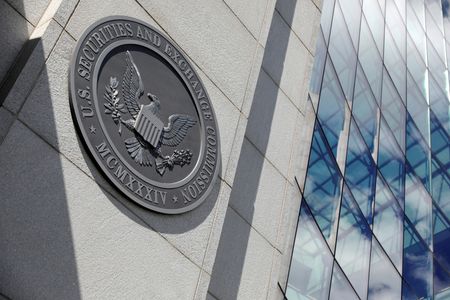
Last November, the Securities and Exchange Commission altered its longstanding practice of reviewing corporate decisions to exclude shareholder proposals from annual meeting ballots. Under the new approach, company executives gained broader authority to determine which investor resolutions will appear on proxy statements — the required documents distributed before shareholder meetings.
This regulatory shift has sparked at least three legal challenges against major corporations including AT&T, Axon Enterprises, and PepsiCo, with additional cases potentially on the horizon. Giovanna Eichner, a shareholder advocate with Green Century Capital Management, a Boston-based climate-focused investment firm, said the commission’s retreat from oversight has created confusion.
“More than anything, this lack of structure and rules is actually just leaving everyone unsure about the best way to move forward,” Eichner stated.
When the changes were announced in November, activist investors expressed concern that the move aligned with broader efforts by Trump administration appointees to limit environmental, social and governance (ESG) investment initiatives. Republican lawmakers from energy-producing regions have criticized ESG efforts as harmful to corporate profitability.
Despite gaining new authority, companies appear to be exercising restraint due to litigation risks. Shareholder advocacy organization As You Sow has submitted 47 proxy resolutions this year, with corporations blocking approximately half a dozen — similar to last year’s rate when companies rejected 8 out of 63 such proposals.
“Companies have to decide: Do you want to have a good relationship with your shareholders, or do you want to pay your corporate attorneys millions?” said Andy Behar, CEO of As You Sow.
SEC officials declined to provide comment, though a source familiar with the agency’s reasoning indicated the change was motivated partly by efforts to reduce staff workload.
The legal challenges have prompted some companies to reverse course. On January 5, PepsiCo informed the SEC it would exclude a proposal calling for review of animal welfare standards in its supply chain, including practices at Indian sugar facilities where bulls allegedly pull overloaded sugarcane carts. The company cited the proposal filer’s failure to adequately detail their availability for discussions.
Following a February 19 lawsuit, PepsiCo reversed its position the next day, agreeing to include the resolution on its proxy ballot.
“It was us bringing the lawsuit that forced Pepsi to follow the necessary procedure here,” said Asher Smith, attorney for the People for the Ethical Treatment of Animals Foundation, which represented the proposal filer.
Similarly, telecommunications company AT&T faced legal action on February 17 from New York City pension funds after rejecting a shareholder proposal seeking workforce demographic information. A week later, New York Comptroller Mark Levine announced AT&T had settled the lawsuit by agreeing to allow the vote, describing it as a “major win for investors amid ongoing attempts to undermine transparency and accountability” by corporations.
Stun-gun manufacturer Axon continues to fight a pending lawsuit in federal court after deciding to exclude a vote on political contribution reporting, arguing it would “micromanage” company operations. The Nathan Cummings Foundation filed the legal challenge seeking to force the vote.
Laura Campos, senior director at the foundation, explained the lawsuit was necessary to protect shareholder rights. “When the Securities and Exchange Commission stepped back from providing substantive responses to no-action requests, it left shareholders hoping to preserve their rights with few options for doing so,” she said.
Not all companies have chosen confrontation. Starbucks requested permission in November to skip a resolution on transgender healthcare coverage filed by conservative organization National Center for Public Policy Research, claiming it involved “ordinary business” matters. Despite the new regulatory flexibility that would have allowed Starbucks to simply exclude the proposal, the company scheduled it for their March 25 annual meeting.