
Federal prosecutors on Tuesday unveiled charges against 15 people accused of obstructing federal immigration agents during a sweeping enforcement operation carried out earlier this year in Minnesota under the Trump administration.
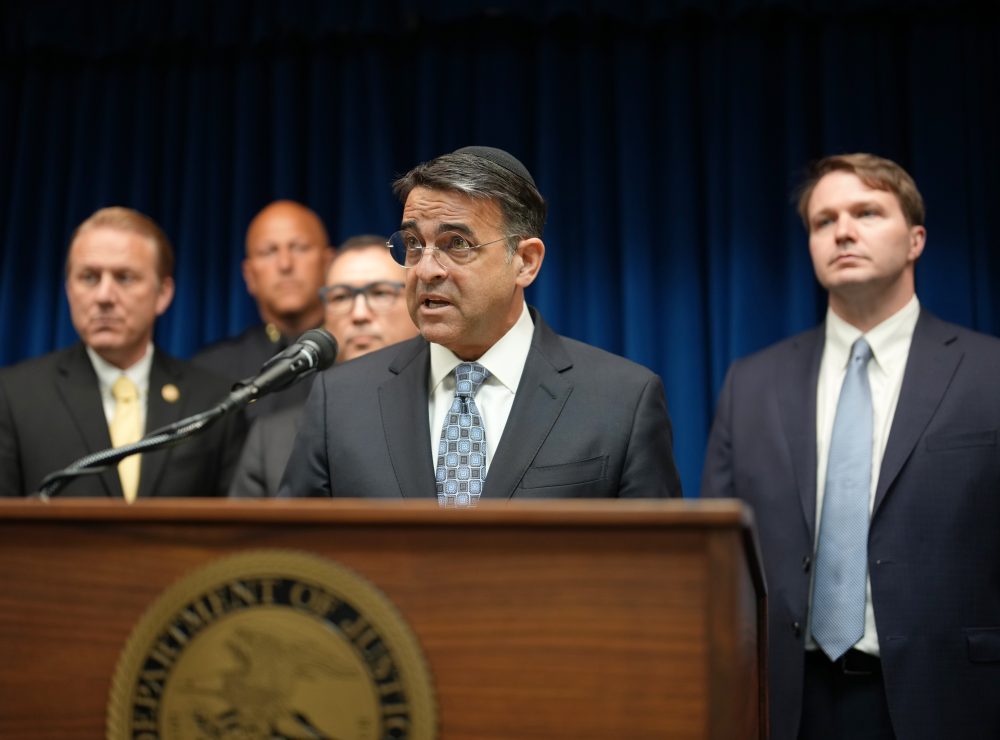
Minnesota U.S. Attorney Daniel N. Rosen announced at a press conference that the investigation focused on two Minneapolis-based groups he described as “antifa” organizations whose members had been trained in “surveillance, operational planning and rapid mobilization against law enforcement.”
The charges arrive as the Trump administration has ramped up its focus on “antifa” — a broad term referring to a loosely organized movement of militant left-wing activists. President Donald Trump has characterized the movement as a domestic terror group.
Rosen said some of the individuals arrested had self-identified as “antifa” and used various methods to disrupt the immigration operation, including what he called “stalking” federal agents and placing blocks of ice in the path of their vehicle convoys. When asked whether any federal agents were physically hurt, Rosen declined to answer directly.
“Whether or not they actually, at the end of the day, cause bodily harm is not the measure of whether or not they committed a serious federal crime,” Rosen told reporters.
Of the 15 charged, 12 were arrested Tuesday, one was already in custody, and two remain at large. The identities of those arrested and the specific charges they face were not immediately released.
The case stems from the administration’s “Operation Metro Surge,” which brought thousands of federal agents flooding into the Twin Cities area. The operation triggered widespread protests and resulted in the fatal shooting of two U.S. citizens.
During the crackdown, convoys of federal agents in unmarked SUVs moved through residential neighborhoods — in some cases forcing their way into homes, waiting near schools, and demanding that residents show proof of citizenship.
In response, a large and largely informal network of Minnesota residents quickly organized — mainly through anonymous neighborhood messaging platforms — with everyday citizens and activists using whistles and car horns to draw attention to the masked and heavily armed agents.
Border czar Tom Homan had signaled at the time that federal authorities were already looking into “the organization and funding of the attacks on ICE.”
“They’ll be held accountable,” Homan said. “Justice is coming.”
Last September, President Trump signed an executive order formally classifying antifa as a domestic terror organization and instructing federal agencies to “investigate, disrupt, and dismantle” its affiliates and those who fund them.
The designation has drawn criticism from Democrats and multiple First Amendment advocacy groups. While the federal government has the authority to label foreign organizations as terror groups, no formal legal mechanism exists to apply that same classification to domestic groups.
Trump has repeatedly used the “antifa” label broadly, at times directing it toward political opponents and peaceful demonstrators who do not hold anarchist views.