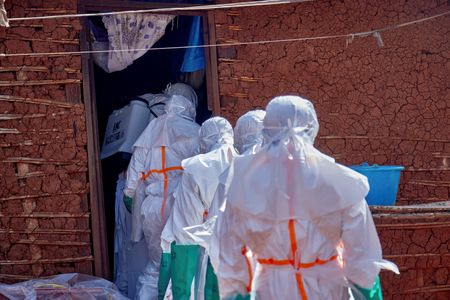

BEIJING — China’s National Disease Control and Prevention Administration rolled out a revised Ebola prevention and control plan on Tuesday, tightening procedures for tracking close contacts, strengthening oversight at medical facilities, and expanding monitoring at the country’s borders.
The updated plan was prompted by recent Ebola outbreaks in the Democratic Republic of the Congo and Uganda, according to a statement from the administration.
Under the new guidelines, anyone considered a close contact — meaning someone who has had direct exposure to the blood, bodily fluids, secretions, excrement, or contaminated belongings of a confirmed or suspected Ebola patient — must be tracked and placed under quarantined medical observation for 21 days starting from their last point of contact with the infected person or contaminated item.
Medical facilities, disease control agencies, and customs offices at every level are required to report both suspected and confirmed Ebola cases through a designated online system within two hours of identification.
The scope of surveillance is also being broadened. In addition to existing port health checks and domestic disease tracking, monitoring will now include alerts from international health organizations, testing conducted by domestic laboratory institutions, and wastewater screening on aircraft arriving from abroad.
Travelers arriving in China from Ebola-affected countries or regions — or anyone who has visited such areas within the past 21 days — will be required to monitor their own health for 21 days after entering the country.
Disease control agencies at the provincial level have been directed to work with relevant government departments to follow up with individuals who have traveled to Ebola-affected regions, maintaining contact until the 21-day monitoring period is complete.