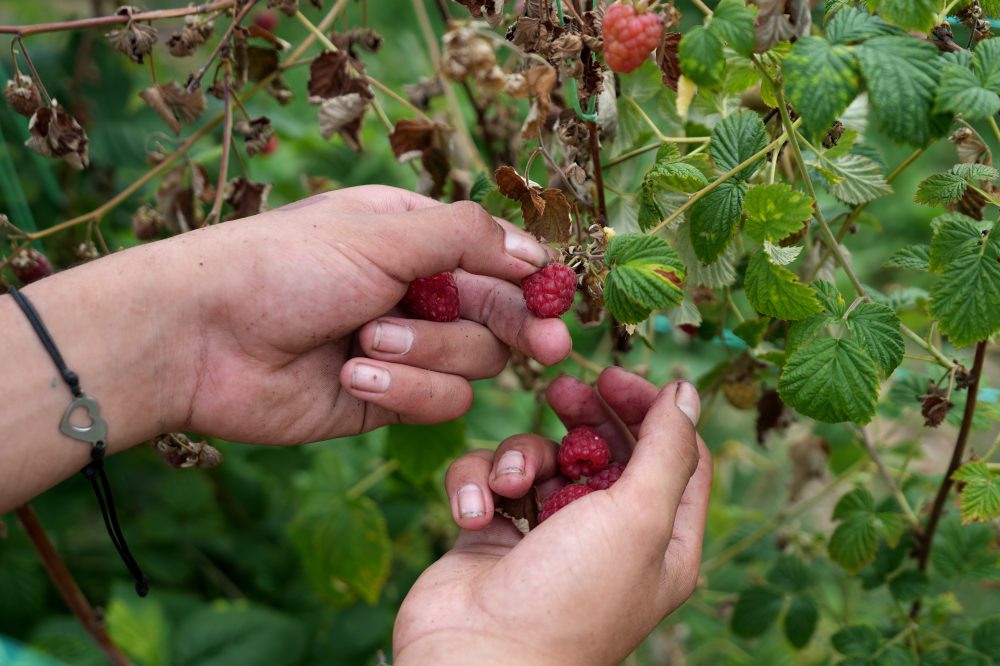

ARILJE, Serbia — Tucked into the hills of Serbia, the town of Arilje has built a remarkable identity around a single fruit: the raspberry. Known throughout the Balkan nation as its “raspberry capital,” Arilje’s reputation has spread well beyond its borders, with berries shipped to buyers as far away as the United States and Japan.
Serbia ranks among the top three raspberry-exporting nations in the world, and Arilje plays a central role in that standing. The municipality, home to roughly 17,000 residents and located about 170 kilometers — or around 100 miles — from the capital city of Belgrade, is responsible for approximately one-fifth of all raspberry exports from the country.
“We are born, we live and we die with raspberries,” said Mileta Pilcevic, who leads a local association of raspberry producers. “Arilje is unique in the world. You can’t find a smaller place with such big concentration of raspberry production.”
The region’s rolling, hilly terrain provides a naturally ideal climate for growing the fruit. What sets Arilje’s raspberries apart is the commitment to quality: no chemicals are used, and every berry is picked by hand.
Pilcevic explained that a raspberry field requires at least two years before it can produce a harvest. The fruit demands constant attention to develop the distinctive smell, taste, and aroma that have made it recognized around the globe. “Nothing must be done with machines or chemicals,” he said.
The raspberry fields have been passed down through generations, operating mostly as family businesses. On average, the fields surrounding Arilje produce between 15,000 and 20,000 tons of raspberries each year.
Early summer marks the harvest season, drawing seasonal workers from across Serbia and beyond — including, according to Pilcevic, workers from India and other parts of South Asia. Local resident Nada Marinkovic described the labor involved, noting that everything must be cleared of weeds and grass by hand. As for the picking itself, she said, “is only hard because of the sun.”
About 90% of Serbian raspberries are exported in frozen form, while the remainder are sold within the country. Some growers also sell fresh fruit and natural juices directly to consumers online. In Europe, the frozen berries are widely used in food processing, appearing in retail fruit products, jams, yogurt, and baked goods.
Despite the town’s proud legacy, producers are navigating a difficult period. This year’s harvest is expected to come in 20 to 30 percent below normal levels, largely due to a drought that struck last year. Extreme weather events — which experts suggest may be connected to climate change — have become a growing concern for growers.
Producers say the best way to manage that uncertainty is through more stable purchase prices. Pilcevic noted that the prices offered for raspberries too frequently leave farmers with little or no profit, making it impossible to absorb unexpected costs. The frustration has previously boiled over into public protests.
“It is not our job to be on the road but in the orchard,” Pilcevic said. “But, believe me when I say that we will be on the road if we have to.”