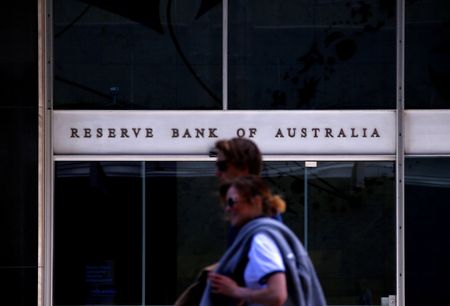

SYDNEY — A top official at Australia’s central bank said Wednesday that the institution still has more to do to bring inflation down, describing current price pressures as “far too high” — though he noted that falling global oil prices tied to a possible end to the Middle East conflict could offer some relief.
Reserve Bank of Australia Deputy Governor Andrew Hauser delivered a speech focused on the Phillips curve, an economic framework that describes how inflation and unemployment tend to move in opposite directions. He explained how that framework has shaped the bank’s decisions to raise interest rates this year.
Hauser said the board chose to begin lifting rates back in February out of concern that consumer demand was outpacing the economy’s ability to supply goods and services by a greater margin than anticipated. That imbalance was pushing inflation higher, and officials determined that tightening monetary policy was necessary to bring prices back under control over time.
“But this is where being on the steeper part of the Phillips curve has a potential silver lining,” Hauser said. “It also implies that timely policy steps to reduce inflationary pressures, of the kind we have taken, should also have a proportionally smaller unemployment cost.”
The Reserve Bank of Australia has now raised interest rates three times in 2025, completely reversing the easing measures it had put in place the prior year. Those rate hikes came in response to an energy price shock driven by the ongoing war. While headline inflation slowed to 4.0% in May, a more closely watched measure known as trimmed mean inflation actually moved higher, reaching 3.6% — well above the bank’s target range of 2% to 3%.
There are also signs that Australia’s job market is beginning to soften. The unemployment rate climbed to 4.5% in April, marking a four-and-a-half-year high.
Hauser pointed to several notable economic shifts since May, including the possibility that the conflict in the Middle East could be moving toward a resolution. He said lower oil prices resulting from such a development would be a positive sign for inflation.
“By itself, lower global oil prices would be a welcome development, helping to lower and flatten the Phillips curve somewhat,” he said. “But a full resolution is not yet assured and we still have work to do to reduce inflation here in Australia, which remains far too high.”