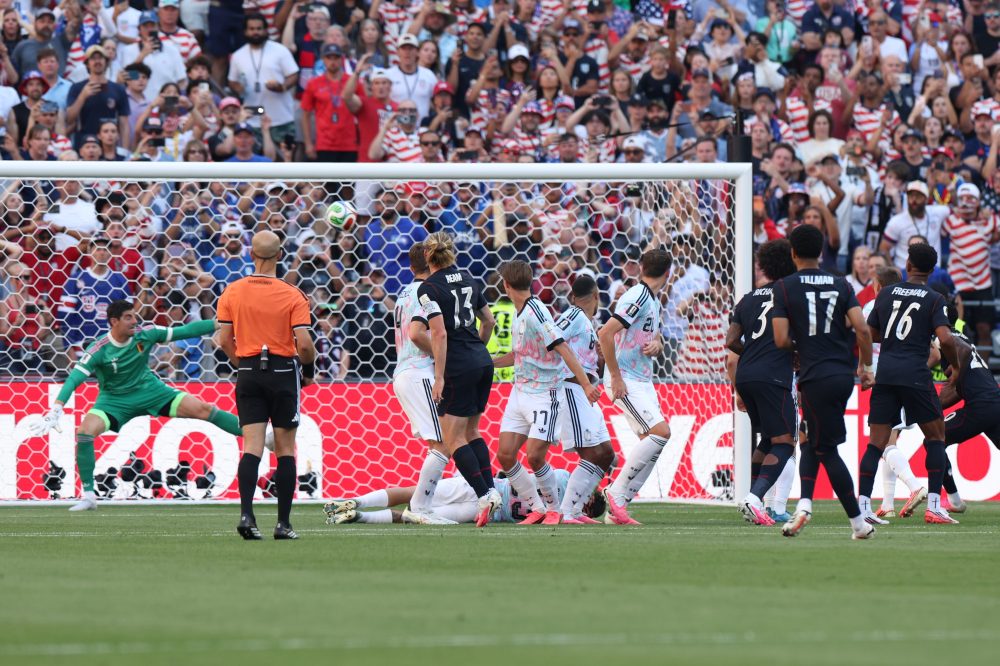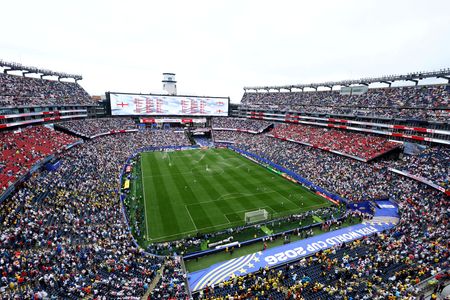

NEW YORK — The 2026 FIFA World Cup is heading toward record-breaking attendance figures, and experts say it has less to do with American passion for soccer and more to do with the nation’s hunger for once-in-a-generation events.
Through the first 44 matches of the tournament, total attendance surpassed 2.85 million fans, with stadiums running at an average of 99.6% capacity, according to a Reuters analysis of FIFA data.
“Americans like big events,” said Dan Rascher, a sports economics expert at the University of San Francisco. “They want to be there for the big moments.”
This year’s tournament is significantly larger than previous editions — featuring 104 total matches compared to 64 in prior cups — but attendance is already on pace to shatter the all-time record before even reaching the 64th game. That existing record of approximately 3.5 million spectators was established in 1994, the last time the United States served as host.
“Part of it is that we have these gigantic stadiums,” noted Victor Matheson, an economist and sports business expert at the College of the Holy Cross.
Beyond sheer size, the 2026 venues are also running fuller on a percentage basis than nearly any World Cup this century, with the possible exception of Germany’s 2006 tournament, according to FIFA annual reports and Reuters data.
Steep Prices Haven’t Scared Anyone Off
Soccer doesn’t hold the same cultural grip in the U.S. as it does in recent host countries like Brazil and Germany, and ticket prices have reached historic highs — yet fans are still coming.
FIFA introduced dynamic pricing for the first time this year, adjusting costs based on demand. A last-minute ticket to Thursday’s match between Paraguay and Australia, for instance, ran $450.
On the resale market, prices climbed even higher. TicketData, which monitors secondary market activity, reported average “get-in” prices of $798 — meaning that was the cheapest available resale ticket for any given game.
FIFA has drawn criticism over its pricing approach, but a spokesperson said Tuesday that the model reflects market demand and “aligns with industry trends … where the price is adapted to optimise sales and attendance.” The spokesperson also noted that FIFA made 130,000 tickets available at $60 apiece.
The organization also faced backlash for its December decision to award a peace prize to U.S. President Donald Trump, whose immigration policies have made it harder for fans from Haiti, Iran, Senegal, and other countries to enter the United States for the tournament.
If any resentment exists among fans, it hasn’t translated into empty seats. “The American consumer is willing to pay for what they perceive to be a premium sporting event,” said John Grady, a sport management professor at the University of South Carolina.
Americans Spend Big When It Counts
This pattern fits a wider consumer trend. Despite persistently low consumer confidence, Americans haven’t stopped spending on high-end experiences — they’ve simply become more selective, researchers at Nielsen IQ noted in a May report, increasingly balancing splurges with savings on everyday purchases.
“Americans want the best, and the World Cup is the cream of the crop,” Rascher said.
Interestingly, more Americans tune in to watch Mexico’s Liga MX — widely regarded as a high-talent league — than the U.S.’s own Major League Soccer, according to a June Nielsen report.
“We always think the World Cup will lead to a boost in MLS ratings, but so far, it hasn’t,” Rascher added.
Star athletes with worldwide name recognition, such as Argentina’s Lionel Messi and France’s Kylian Mbappe, can draw enormous crowds on their own — a relatively new phenomenon driven by the influencer era, according to Grady.
FIFA has projected more than $3 billion in revenue from ticket sales and hospitality rights, and some experts believe that figure may actually be too conservative. Matheson estimates the total could reach as high as $4 billion — a dramatic jump from approximately $949 million generated in 2022 and $712 million in 2018, per FIFA annual reports.
Immigration Policies Cast a Shadow
Some analysts believe fan turnout — particularly at surrounding events like FIFA fan festivals — could have been even greater without the Trump administration’s travel restrictions and rising anti-American sentiment in some parts of the world.
International tourism to the U.S. dropped 5.7% last year, driven in part by what consulting firm Oxford Economics described in a January report as “sentiment and policy headwinds.” Early World Cup tourism was slow to pick up as well.
“Under a different administration, we almost certainly would’ve had more international interest in coming,” Matheson said.
The White House did not respond when asked for comment.
FIFA fan festivals — large-scale watch parties featuring food, entertainment, and merchandise — drew 7.7 million visits during the 2018 World Cup in Russia and 5.5 million during the 2014 tournament in Brazil, according to FIFA. This year’s festivals have shown strong performance.
Beyond official FIFA events, companies and cities have launched their own gatherings. Walmart’s Kickoff event held in Dallas on June 20 attracted roughly 800 attendees, a spokesperson confirmed. Goya is backing what it calls Flag Cities events, complete with food trucks and live music. San Jose and its MLS club, the Earthquakes, have hosted a daily watch party running throughout the entire tournament.
Experts say the success could be a promising sign for the next major U.S. sports event on the horizon — the 2028 Summer Olympics in Los Angeles.
The World Cup has been “a nice precursor,” Grady said. “It shows global fans the United States can throw a good party.”