
The leader of the United Nations’ nuclear watchdog agency made his strongest statement yet Wednesday, confirming that his inspectors would be visiting Iranian nuclear enrichment sites — a central piece of the interim agreement struck between the United States and Iran.
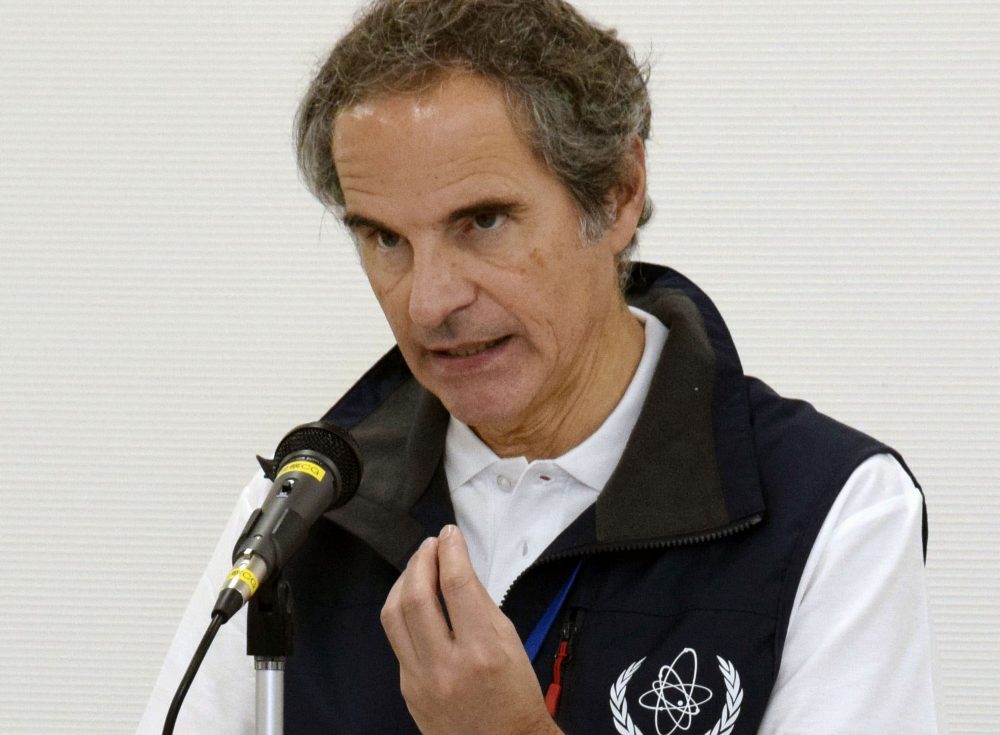
International Atomic Energy Agency Director General Rafael Mariano Grossi made the remarks at a news conference held at the tsunami-damaged Fukushima Daiichi nuclear power plant, signaling that the IAEA’s role in the deal is non-negotiable.
Ever since Israel launched a 12-day war against Iran in 2025, Tehran has blocked IAEA inspectors from accessing enrichment sites where the Islamic Republic is believed to have stockpiled enough highly enriched uranium to potentially construct as many as 10 nuclear weapons, if it chose to pursue them. Iran has consistently maintained that its nuclear program is for peaceful purposes, though it remains the only nation on Earth to have enriched uranium to 60% purity without having a weapons program.
On Tuesday, the U.S. and Iran offered conflicting accounts of whether those enrichment sites would be subject to inspections under the new deal.
Grossi addressed that tension directly, telling reporters: “I can understand political statements, they are part of the reality, but the fundamental thing I would like to remind you and draw your attention to is that there has been a Memorandum of Understanding, signed by both presidents.”
He said the agreement “says explicitly that the nuclear activities that are going to be carried out with the regards to the nuclear material facilities will be supervised by the IAEA — in all letters.”
Grossi left no room for ambiguity about what comes next: “Obviously, to do that, we will have to inspect. Whether this happens the day after tomorrow or in one week or in 10 days, it’s important, but not essential. This is going to happen.”
Those inspections are a critical element of the deal, which requires Iran’s uranium stockpile to be “downblended” — reduced from its current highly enriched state.
Iran did not immediately respond to Grossi’s comments. A day earlier, Iran’s Foreign Ministry spokesperson Esmail Baghaei told reporters in Tehran that U.N. inspectors were not on schedule to examine nuclear facilities that were bombed by the United States last year. Those remarks came in direct contrast to statements made by U.S. Vice President JD Vance.
While the IAEA has been permitted to visit some Iranian nuclear facilities since the 12-day war — including the Bushehr nuclear power plant — it has been shut out of the enrichment sites. Without that access, the agency says it cannot confirm the current status of Iran’s uranium stockpile or assess the centrifuge systems used for enrichment. Both Iran and the IAEA say Tehran has not been actively enriching uranium, but experts in nuclear nonproliferation have raised concerns that Iran may be relocating its stockpile to undisclosed locations.
The U.S. and Iran reached their agreement last week, under which Tehran would dilute its enriched uranium stockpile. In return, U.S.-backed sanctions on Iran would be waived, and both sides would have 60 days to work toward a broader, more comprehensive agreement.
The fragile ceasefire has already faced strain, however, with Iran announcing it closed a key strait again following renewed fighting between Israel and the Iranian-backed militia Hezbollah in Lebanon. Violence flared again in Lebanon on Tuesday, though it did not escalate further.