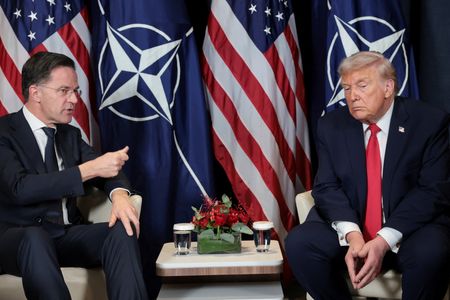

NATO Secretary-General Mark Rutte is heading to the White House this Wednesday for a face-to-face meeting with President Donald Trump, looking to cool rising tensions between the U.S. and its allies before a high-stakes NATO summit next month in Ankara.
Trump, who has long been critical of NATO — at one point calling it a “paper tiger” — has grown increasingly frustrated with the alliance’s refusal to back American military action in the Middle East. He has also been angered by NATO’s failure to help reopen the Strait of Hormuz, a crucial oil shipping route that was disrupted following a U.S.-Israeli strike on Iran on February 28.
Last week, Defense Secretary Pete Hegseth sharply criticized what he called “free-riding” allies during a NATO gathering and announced a six-month review of U.S. troop deployments across Europe — a process that could lead to reductions in American forces stationed there. That came on the heels of a U.S. decision to scale back the military resources it makes available to the alliance during crises, leaving NATO members scrambling to cover the shortfall.
Managing Trump’s rocky relationship with NATO has been a central part of Rutte’s job since Trump’s election in November 2024. He has repeatedly worked to prevent flashpoints — including Trump’s push to take control of Greenland, a territory belonging to fellow NATO member Denmark — from turning into full-blown crises, earning him a reputation as a so-called “Trump whisperer.”
Wednesday’s meeting is expected to follow that same careful diplomatic approach.
Stephen Wertheim, a senior fellow at the Carnegie Endowment for International Peace, a Washington-based think tank, offered his take on what Rutte is trying to accomplish. “I expect he is trying to get on the same page with Trump to make sure that the NATO summit is a success or not a wipeout,” Wertheim said.
Wertheim also cautioned that the summit itself carries real dangers. “The NATO summit carries a potential for significant risk because Trump is upset and erratic, and even if Rutte comes and thinks he has an understanding with Trump, who knows what two weeks later will bring,” he said.
The relationship between Trump and NATO allies has deteriorated in recent months. After the alliance declined to support Trump’s Iran military campaign — which he launched without first consulting allies — Trump publicly questioned whether the U.S. should remain bound by NATO’s mutual defense commitment and suggested he might pull out of the alliance altogether.
In a Tuesday interview on Fox News, Rutte pushed back on the idea that NATO members broadly blocked U.S. military operations, calling such incidents “isolated.” He noted that hundreds of American aircraft flew out of U.S. bases across Europe in support of Washington’s military campaign — a point he said he plans to bring up with Trump on Wednesday.
“We will also zoom out from this to this bigger picture of what he is doing for NATO,” Rutte said, adding that member nations have been boosting their defense budgets and that he would be unveiling what he described as “huge” spending figures during Wednesday’s meeting.
NATO spokesperson Allison Hart confirmed that Rutte’s White House visit is part of the final preparations for the July 7-8 Ankara summit. Hart said the gathering “will focus on how Allies are delivering on the commitments made last year at the NATO Summit in The Hague, including on increasing defense investment, expanding defense industrial production, and continuing support for Ukraine.”
The NATO alliance is under extraordinary pressure, with several European nations worried that Washington could withdraw entirely — a move that would fundamentally reshape the future of the alliance. Trump has previously threatened to do exactly that.
During Rutte’s visit, he is also expected to meet with members of Congress. The trip comes as U.S. officials have expressed concern about what they see as an “unhealthy co-dependence” by European nations on American military forces.
Despite the tensions, Rutte has maintained solid working relationships with Pentagon leadership. Hegseth spoke positively about Rutte’s leadership during last week’s NATO meeting in Brussels.
At last year’s summit in The Hague, NATO leaders agreed to Trump’s demand for a major boost in defense spending, pledging to dedicate 5% of their GDP to defense and defense-related measures within a decade. However, while some European countries have significantly ramped up their military budgets, others have been slow to follow through.