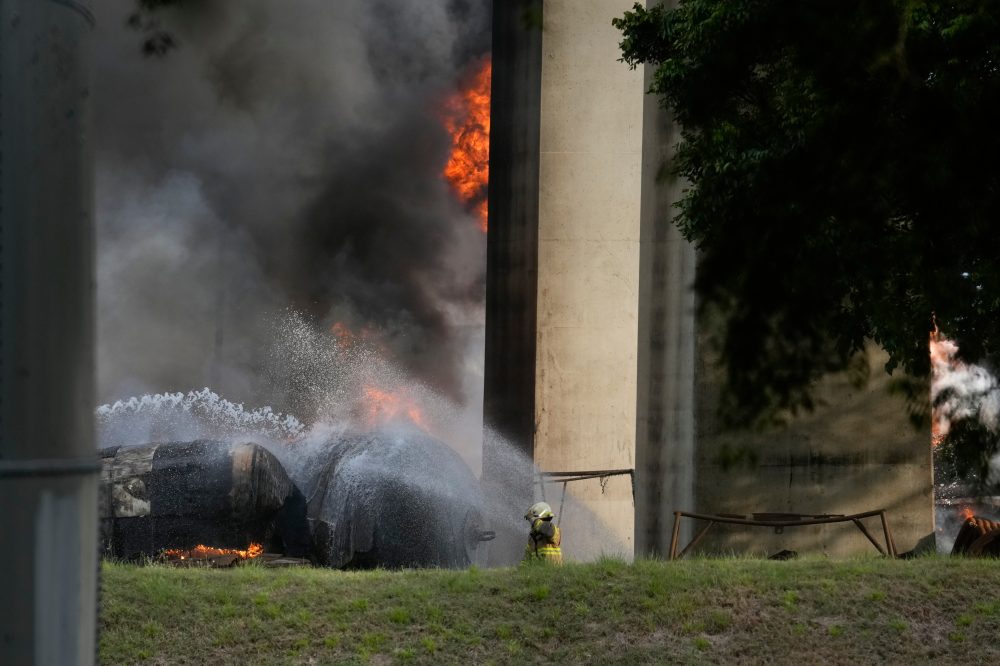
PANAMA CITY — A deadly fuel truck explosion Monday afternoon has forced officials to shut down a crucial bridge spanning the Panama Canal while investigators work to determine what caused the blast and engineers examine potential structural damage.
The incident occurred around 4 p.m. at the base of Panama’s Bridge of the Americas, creating a towering fireball that rose nearly to the bridge’s peak. Security cameras recorded the dramatic explosion on the vital span that links the nation’s capital to the airport and western residential areas. While multiple vehicles were crossing during the blast, their occupants escaped injury.
One fuel truck employee perished in the explosion, while two firefighters sustained injuries while battling the resulting blaze, according to officials.
“We have no confirmation of any other people injured,” stated Víctor Raúl Álvarez, who heads Panama’s Fire Department. He noted that investigators are just beginning their work and have not yet identified what triggered the explosion.
The intense fire has raised concerns about potential damage to the aging bridge, which serves as a critical transportation link between Panama City and the country’s western regions.
On Tuesday, Panama’s Public Works Ministry shared video footage on social media platforms showing engineers examining the site for structural compromises. President José Raúl Mulino posted on X that the bridge closure would “cause disruption” and expressed hope for a swift “return to normal.”
“The Bridge of the Americas is a structure that is over 60 years old. Due to the effects of the fire, if the metal structure was subjected to excessively high temperatures, it may have sustained damage,” explained Edwin Lewis, a ministry engineer.
Expert teams are currently analyzing both concrete and steel elements of the bridge. Authorities have declared the span will stay closed until safety can be guaranteed.
BANJA LUKA, Bosnia-Herzegovina — The president’s eldest son delivered harsh criticism of the European Union during a Tuesday visit to Bosnia, claiming the bloc’s progressive policies are driving away investors and forecasting a significant rift between eastern and western member nations.
Donald Trump Jr. told attendees at a business forum that top figures in banking, finance, technology and artificial intelligence view Europe as troubled but fixable. “The biggest players, the biggest names in banking and finance, in tech and AI across the board” believe that “Europe is a disaster,” but “the disaster that they feel also needs to be fixed,” he stated.
“The only way it gets fixed, though, in my opinion is if they (Europe) get out of of their own way,” Trump Jr. remarked during the business discussion in the northwestern Bosnian city, according to footage from state broadcaster RTRS.
The visit took place in Banja Luka, the primary city of Republika Srpska, the Serbian-controlled portion of Bosnia whose officials strongly support both President Donald Trump and Russian leader Vladimir Putin.
U.S. Embassy officials in Sarajevo, Bosnia’s capital city, confirmed to The Associated Press via email that Trump Jr. was visiting “in a private capacity.” However, local observers interpreted the trip as an endorsement of Serb separatist political figures.
The visit occurred simultaneously with Vice President JD Vance’s journey to Hungary, where he campaigned for nationalist Prime Minister Viktor Orbán ahead of a closely-watched election this weekend.
Milorad Dodik, a Bosnian Serb leader and former Republika Srpska president who maintains ties with Orbán, wrote on X that both visits “signal an important shift of the U.S. administration under the leadership of President Trump and the care for this part of Europe regarding the position of Christians.”
Speaking in Banja Luka, Trump Jr. praised eastern European nations for maintaining “a work ethic that has (withstood) some of the ‘woke’ nonsense that has really been a parasitic thing in the mind in Western Europe.”
“I see that creating major fractures in the European Union between those few countries in eastern Europe that actually still believe in common sense, and Western Europe that’s clearly missing in the political discourse these days,” he added.
Dodik has consistently advocated for the Serbian half of Bosnia to separate from areas governed by Bosniaks, who are predominantly Muslim, and Croats. This Serbian push for independence and potential merger with Serbia was considered the primary trigger of the 1992-95 ethnic conflict that claimed over 100,000 lives before concluding with a U.S.-mediated peace deal.
The Biden administration sanctioned Dodik and related individuals and entities in 2022 due to separatist activities that raised concerns about renewed conflict. These sanctions were removed by the Trump administration last year.
The current administration has maintained longstanding criticism of the EU, particularly regarding trade disputes and EU oversight of technology companies. This criticism of traditional European partners has grown stronger during the Iran war.
Bosnia holds candidate status for EU membership, and the 27-member union describes itself as Bosnia’s largest trading partner, investor and source of financial assistance.
HAVANA — Hundreds of women took to the streets of Cuba’s capital Tuesday, staging a demonstration against U.S. energy restrictions and other sanctions implemented during Donald Trump’s presidency that they say are choking the island nation.
The Federation of Cuban Women, a large government-affiliated organization with strong Communist Party connections, coordinated the protest to pay tribute to Vilma Espín, who founded the group, fought as a guerrilla, and was married to Raúl Castro.
Demonstrators assembled at a park dedicated to a 19th-century independence hero, displaying Cuban flags, carrying banners reading “Down with the Blockade” and holding photographs of Fidel Castro and Espín.
Leading the protest were Deputy Prime Minister Inés María Chapman, Deputy Foreign Minister Josefina Vidal, and Mariela Castro, who is Espín’s daughter and former President Raúl Castro’s child.
“This policy of abuse has to stop,” Vidal told The Associated Press. “The Cuban people don’t deserve this. It’s the most comprehensive, all-encompassing, and longest-running system of coercive measures ever imposed against an entire country.”
Vidal, who played a crucial role in the historic Cuba-U.S. diplomatic warming in 2014 during Barack Obama’s presidency, continued: “It subjects us to collective punishment, recognized as such under international law, and we couldn’t fail to be here.”
Early this January, U.S. forces targeted Venezuela and detained its former leader, cutting off vital oil deliveries to Cuba. Trump later in the month warned of tariffs against any nation providing oil to the Caribbean island.
Nevertheless, Trump expressed no objection when a Russian vessel loaded with 730,000 barrels of crude reached Cuba recently, representing the island’s first oil delivery in three months. Russia has announced plans to dispatch another tanker.
The island generates just 40% of its required fuel, and this shortage has crippled the nation, impacting healthcare, mass transit, manufacturing, and worsening an economic downturn that has persisted for five years.
“I am here fighting for the people of Cuba,” said Leydys de la Cruz, a 57-year-old seamstress who joined Tuesday’s rally. “I would ask Trump to leave us in peace. The situation is very bad because of the blockade he’s imposed on us.”
Georgina Reyes, a 36-year-old IT technician, also pleaded with Trump: “I would tell him that we don’t hurt anyone. … Please don’t hurt us.”
Trump has pushed for government overthrow in Cuba and threatened military action while U.S. Secretary of State Marco Rubio — whose parents emigrated from Cuba — has called for freeing political detainees and implementing free-market changes.
Both American and Cuban officials have acknowledged ongoing discussions, though details about their scope remain uncertain.
Delta Air Lines on Tuesday revealed plans to increase baggage charges, becoming another major U.S. airline to respond to escalating jet fuel expenses linked to ongoing Middle East warfare.
Starting Wednesday, travelers on domestic flights and short international routes will face $10 higher costs for their first two checked bags, while third bag fees jump $50. The new pricing structure sets first bag fees at $45, second bags at $55, and third bags at $200, Delta confirmed.
“These updates are part of Delta’s ongoing review of pricing across its business and reflect the impact of evolving global conditions and industry dynamics,” the carrier said in a statement.
This represents Delta’s first domestic baggage fee increase in two years. International long-distance flight baggage costs remain unchanged.
Last month, CEO Ed Bastian informed investors that rising jet fuel expenses have already increased Delta’s operational costs by approximately $400 million since fighting erupted on February 28. Leadership teams at United Airlines and American Airlines have reported comparable cost increases.
Jet fuel prices in major cities including Chicago, Houston, Los Angeles and New York averaged $4.69 per gallon on Monday, nearly doubling from $2.50 before the war began, data from Argus Media shows. The energy intelligence firm monitors pricing across these key aviation centers.
Delta confirmed that free baggage allowances will continue for premium cabin passengers, active military members, qualifying co-branded credit card users, and certain loyalty program members.
The Atlanta-based airline’s decision comes after United and JetBlue implemented similar baggage fee increases last week, though both maintained free first bags for select customers.
Aviation companies worldwide are struggling with unpredictable oil markets as combat near the Strait of Hormuz threatens global petroleum supplies. Approximately 20% of worldwide oil shipments pass through this critical waterway. Since jet fuel derives from crude oil, energy price fluctuations directly impact airline operating costs, with fuel representing carriers’ second-largest expense behind personnel.
Beyond raising ticket costs, industry experts predict U.S. airlines will increasingly rely on additional service fees to counter higher expenses, while international carriers are implementing or expanding fuel surcharges.
FORT WORTH, Texas — A one-time FedEx delivery driver entered a guilty plea to capital murder charges on Tuesday, admitting he killed a 7-year-old Texas girl after claiming he accidentally struck her with his delivery vehicle and then strangled her in a moment of panic.
Tanner Horner now faces either execution or life behind bars for the December 2022 death of Athena Strand, whose remains were discovered two days following her disappearance from the small community of Paradise, located near Fort Worth.
Following Horner’s guilty plea as his trial commenced, jurors who will determine his sentence began listening to witness testimony. During emotional testimony from Athena’s stepmother about the search efforts, the jury viewed footage from inside the delivery vehicle showing Athena alive, positioned on her knees behind the driver’s seat.
Court documents reveal that Horner informed law enforcement he killed Athena following what he described as an accidental collision with his van during a delivery stop. Horner explained to investigators that while Athena sustained no major injuries when he struck her while reversing his vehicle, he became overwhelmed with fear and placed her inside his van.
According to the arrest warrant, Horner stated he was concerned about Athena informing her father about the incident, leading him to attempt breaking the child’s neck. When unsuccessful, he used his hands to strangle her in the rear of the delivery vehicle. Authorities noted that Horner guided investigators to the location where he had disposed of Athena’s remains.
Family members revealed that the package Horner had been delivering contained a Christmas gift intended for Athena — a set of “You Can Be Anything” Barbie dolls.
The proceedings were relocated from rural Wise County to Fort Worth following arguments from Horner’s legal team that their client could not receive an impartial trial in the original venue.
A humanitarian mission organized by Vatican officials was compelled to retreat Tuesday when artillery fire erupted near a Christian community in southern Lebanon that has been cut off from essential supplies.
The relief convoy, coordinated through the Vatican’s Lebanese embassy, was attempting to reach the town of Debel with desperately needed provisions when nearby combat forced the mission to abort, according to Father Fadi Falfil, a local priest.
Christian communities across southern Lebanon have remained in their homes throughout the intensifying conflict between Israeli forces and Hezbollah fighters, hoping their neutrality might protect them from the violence engulfing neighboring areas.
However, ongoing military operations and aerial bombardments in surrounding regions have made transportation extremely hazardous, creating severe shortages of food, clean water, and medical supplies.
“We don’t have basic medication like insulin – we don’t even have drinking water,” Father Falfil stated in an interview.
The priest explained that the relief mission was initially scheduled for Easter Sunday but had to be postponed due to intense artillery activity in the region.
“We were waiting all day, and they were at pains all day to try to get this aid to us. It was five minutes away and it had to turn back,” Falfil described.
According to the priest’s briefing, Israeli military operations targeting Hezbollah fighters in the vicinity prevented the delivery from proceeding, with no alternative date currently established for another attempt.
Neither Israeli military officials, Hezbollah representatives, nor Vatican embassy personnel in Lebanon provided immediate responses to media inquiries.
The United Nations peacekeeping mission in Lebanon, designated as UNIFIL, was providing security escort for Tuesday’s humanitarian convoy.
“The mission had to be cut short due to shelling in the area. We did have some very minor injuries among peacekeepers due to the impacts nearby,” explained UNIFIL spokesperson Kandice Ardiel.
Lebanese television network MTV reported the aid shipment contained three trucks loaded with essential items including bread and fresh vegetables.
“No matter what happens, we’re going to stay. We stay because of our faith and our history here – it isn’t a choice, it’s a message,” Father Falfil declared.
BANJA LUKA, Bosnia and Herzegovina – The eldest son of President Donald Trump made a controversial visit to Bosnia’s Serb Republic on Tuesday, where he delivered sharp criticism of the European Union during a private gathering with regional leaders.
During his stop in Banja Luka, the de facto capital of the Serb Republic, Donald Trump Jr. described the European Union as “a little bit of a mess” while speaking to a closed panel of political figures and business leaders. He was invited by Igor Dodik, son of the region’s former separatist leader Milorad Dodik.
Trump Jr., who serves as executive vice president of the Trump Organization alongside his brother Eric, shared feedback he claimed to have received from international business contacts. “But it’s a disaster they feel also needs to be fixed because of the impact that it does have on the values and Western civilization,” he stated, referring to concerns about Europe’s current state.
The timing of the visit aligned with Vice President JD Vance’s appearance in Budapest, where he accused the EU of interfering in Hungarian electoral processes.
The Serb Republic represents one half of Bosnia’s dual autonomous structure, established through the U.S.-brokered Dayton peace agreement in 1995. This accord ended a devastating three-year conflict that claimed approximately 100,000 lives and forced around 2 million people from their homes.
Milorad Dodik, who previously led the region, lost his political position last August following a court ruling that prohibited him from holding office. He had faced U.S. sanctions for violations of the Dayton peace framework but has emerged as a vocal supporter of Trump administration policies.
“The arrival of Vance in Hungary and Donald Trump Jr. in Banja Luka is a signal of an important shift in the U.S. administration under President Trump, showing concern for this part of Europe,” Dodik wrote on social media platform X.
The Treasury Department removed sanctions against Dodik and his associates in October without providing public justification for the decision. Serbian officials indicate they have been working behind the scenes to strengthen ties with Washington while preserving their relationship with Russia.
The panel discussion was restricted to government-friendly media organizations, though footage was subsequently aired on regional television networks.
A senior executive at German pharmaceutical company Bayer told reporters Tuesday that recently announced federal tariffs on imported medications won’t force the company to revise its business projections for 2026.
Sebastian Guth, who serves as Chief Operating Officer for Bayer Pharmaceuticals and heads the company’s U.S. operations, explained that the drugmaker had already factored potential tariffs into its planning. “We feel that we’ve appropriately anticipated tariffs as we think about our 2026 guidance,” Guth stated during an interview.
The executive expressed confidence in the company’s position, noting that existing trade agreements between the United States and European Union provide some protection. Under last year’s deal, tariff rates on most European goods, including pharmaceutical products, cannot exceed 15 percent.
Earlier this year in March, Bayer released financial projections showing expected earnings before interest, taxes, depreciation and amortization of between 9.6 billion and 10.1 billion euros for 2026. This represents growth from the company’s 2025 EBITDA figure of 9.669 billion euros.
The tariff policy stems from an executive order signed by President Donald Trump last week, targeting brand-name prescription drugs brought into the United States from overseas. Companies can avoid these fees by agreeing to government pricing negotiations or promising to manufacture their products domestically.
Implementation of these tariffs is set to begin in September for most pharmaceutical companies.
While sixteen major global drugmakers have already negotiated agreements with federal officials to exempt billions of dollars in medications from the new tariffs, Bayer was not included in those initial discussions. Guth would not discuss whether his company has since engaged with the Trump administration about potential exemptions.
The executive also highlighted a separate trade agreement between Britain and the United States as a potential model for other nations. Under that arrangement, British pharmaceutical companies receive tariff-free access to American markets in exchange for higher domestic drug prices.
The British deal requires increasing medicine expenditures from 0.3 percent of the country’s gross domestic product to 0.35 percent by 2028, eventually reaching 0.6 percent by 2035. Guth suggested this framework could guide how other wealthy nations approach pharmaceutical pricing reforms.
“There’s an acknowledgment that it isn’t going to happen overnight, but will happen over time,” Guth said regarding these gradual pricing adjustments.
A new study from the Dallas Federal Reserve Bank indicates that prolonged disruptions to global oil shipping due to the Iran conflict could push U.S. inflation rates above 4% before the end of this year, with potentially steeper short-term spikes possible.
However, the research published Tuesday suggests that while headline inflation numbers may climb, the impact on long-term inflation expectations would remain relatively small. Federal Reserve officials closely monitor these expectations and have found reassurance in their current stability.
“There is little evidence of higher gasoline prices being passed through to core inflation or long-run inflation expectations becoming unanchored,” the Dallas Fed study authors stated.
The research comes as Middle East tensions reached a critical point Tuesday, with President Donald Trump demanding Iran reopen the Strait of Hormuz or face attacks on its infrastructure including power facilities and transportation networks.
The Dallas Fed analysis examined various scenarios involving the Strait of Hormuz, a critical waterway that handles one-fifth of global oil shipments and has been effectively blocked for five weeks.
According to the study, a three-month closure of the strait could spike inflation by 5.2 percentage points on an annual basis during March, though this surge would fade quickly, leaving fourth-quarter inflation only 0.35 percentage points higher.
A more prolonged nine-month blockade would drive oil prices from their current $115 per barrel to $167, potentially boosting fourth-quarter inflation by up to 1.8 percentage points, researchers determined.
Current inflation measured by the personal consumption expenditure index stood at 2.8% in January, compared to the Federal Reserve’s 2% target.
Core inflation, which strips out volatile food and energy costs, would see smaller increases of 0.18 percentage points for a three-month closure or 0.49 percentage points for a nine-month disruption. Core inflation measured 3.1% in January.
The study found that household inflation expectations would see more limited increases. Short-term expectations spanning one year could climb by as much as 0.8 percentage points, while longer-term five to ten-year expectations that concern Fed officials most would rise by no more than 0.09 percentage points.
A Freeze Warning is now in effect for northern Delaware and parts of New Jersey, with dangerous sub-freezing temperatures expected overnight into Wednesday morning.
The National Weather Service Mount Holly issued the warning at 2:18 PM Tuesday, forecasting overnight lows between 25 and 30 degrees from midnight tonight through 9:00 AM Wednesday. The warning covers New Castle County in Delaware, along with multiple New Jersey counties including Salem, Gloucester, Camden, Cumberland, Atlantic, Cape May, and portions of Burlington County.
These frigid conditions pose serious risks to tender plants, crops, and unprotected outdoor plumbing. Frost and freeze damage could kill sensitive vegetation that may have already begun spring growth.
Residents should take immediate action to protect their property. Bring potted plants indoors, cover sensitive garden plants with blankets or tarps, and ensure outdoor water pipes are insulated or have water dripping to prevent freezing.
Looking ahead, meteorologists are monitoring another potential freeze event Wednesday night into Thursday morning, with a Freeze Watch already posted for the same areas.
The current Freeze Warning expires at 9:00 AM Wednesday, but residents should stay tuned to TV Delmarva for updates on the developing weather pattern.
Maryland’s Pesticide Advisory Committee has announced plans to convene virtually on April 22, 2026, for a two-hour session beginning at 10 a.m.
The committee gathering will run until 12 p.m. and will be conducted entirely online. Participants can join the discussion through a Google Meet video conference link at https://meet.google.com/gqv-tmwb-xrq.
Those preferring to participate by telephone can dial (US) +1 402-921-2196 and enter PIN: 693 591 915# when prompted.
The meeting agenda shows that opening remarks and roll call will take place during the first 15 minutes, with Dr. Frederick Kutz serving as committee chair and delivering introductory comments.
Moody’s Ratings downgraded its assessment of U.S. business development companies this Tuesday, shifting from a stable to negative outlook due to increased investor withdrawal demands, elevated debt levels, and diminished access to capital markets.
The rating agency noted a dramatic change in financial conditions for perpetual non-traded BDCs, which experienced robust capital inflows during the third quarter of 2025 but then faced unprecedented outflows during the first quarter of 2026.
These perpetual non-traded BDCs operate as closed-end investment funds that provide financing to private businesses. Unlike publicly traded companies, they don’t appear on stock exchanges and have no set expiration date, enabling them to raise money continuously while providing investors with restricted, occasional opportunities to withdraw funds.
Artificial intelligence technology has created another layer of risk, especially for BDCs that have significant investments in software companies.
This worry is intensifying challenges within private credit markets, which have already been a consistent source of difficulty for alternative investment managers, as investors fear AI could fundamentally threaten software investment portfolios – a major focus area for the $2 trillion sector.
While industry leaders have consistently characterized these worries as excessive, investors continue to feel anxious. Large funds have seen withdrawal requests spike as concerns mount that investment quality may decline as artificial intelligence technology advances.
BDCs, which provide loans to many of the same mid-sized companies that private credit funds target, serve as an early warning system for problems within the industry.
Weather forecasters have issued a freeze warning beginning Sunday at 11:01 AM EDT and continuing until Monday morning at 9:00 AM EDT, according to the National Weather Service office in Mount Holly, New Jersey.
The warning alerts residents to prepare for potentially damaging cold temperatures that could harm sensitive vegetation and outdoor plants. Officials recommend taking precautions to protect tender plants and ensure proper winterization of outdoor plumbing and equipment.
The freeze warning covers the period when temperatures are expected to drop to levels that could cause frost formation and potential agricultural impacts. Residents should monitor local weather conditions and take appropriate measures to safeguard temperature-sensitive items.
A Freeze Warning is in effect for northern Delaware and parts of southern New Jersey from midnight tonight through 9 AM Wednesday morning, with temperatures expected to plummet between 25 and 30 degrees.
The National Weather Service issued the warning at 11:01 AM Tuesday for New Castle County in Delaware, along with multiple counties in New Jersey including Salem, Gloucester, Camden, Cumberland, Atlantic, Cape May, Ocean, and portions of Burlington and Monmouth counties.
These dangerously cold temperatures pose a serious threat to crops, gardens, and sensitive vegetation that have already begun spring growth. The frost and freezing conditions could kill tender plants and potentially damage unprotected outdoor plumbing.
Residents should take immediate action to protect their gardens and property. Cover or bring indoors any sensitive plants, disconnect and drain outdoor hoses, and ensure pipes in unheated areas are properly insulated.
Looking ahead, meteorologists are also monitoring conditions for Wednesday evening through Thursday morning, when another round of freezing temperatures between 25 and 31 degrees is possible.
The current Freeze Warning expires at 9 AM Wednesday. Stay with TV Delmarva for continued weather updates as we track these unseasonably cold conditions across the peninsula.
Bundle up your plants and check your pipes – a Freeze Warning is in effect across much of the Delmarva Peninsula from 2 AM to 9 AM Wednesday morning. The National Weather Service expects temperatures to plummet between 28 and 31 degrees, potentially damaging sensitive vegetation and outdoor plumbing.
The warning covers Kent and inland Sussex counties in Delaware, along with Caroline, Kent, Queen Anne’s, and Talbot counties in Maryland. This unseasonably cold snap comes as many residents have already begun their spring gardening.
Residents should take immediate action to protect tender plants by covering them or bringing potted plants indoors. Don’t forget to disconnect garden hoses and consider wrapping exposed pipes to prevent freezing and costly damage.
The weather service has also issued a Freeze Watch extending from Wednesday evening through Thursday morning, with similar temperatures expected and possible frost development.
This April freeze is particularly concerning for local farmers and gardeners who may have already planted cold-sensitive crops. The current Freeze Warning expires at 9 AM Wednesday, but residents should continue monitoring weather updates as conditions may extend into Thursday morning.
Weather officials have issued a freeze warning for the region that will remain in effect from Sunday evening through Monday morning.
The National Weather Service office in Mount Holly, New Jersey issued the alert on Sunday at 11:01 AM, with the warning period extending until 9:00 AM on Monday.
Temperatures are expected to drop to levels that could cause damage to sensitive vegetation and crops during the overnight hours. Residents are advised to take precautions to protect any tender plants or agricultural products that could be affected by the freezing conditions.
The weather service typically issues freeze warnings when temperatures are forecast to drop to 32 degrees Fahrenheit or below for an extended period, particularly during growing season when such conditions could cause significant agricultural or horticultural damage.
Farm equipment manufacturer John Deere has reached a $99 million settlement agreement to resolve allegations that the company created a monopoly over repair services for its agricultural machinery.
The Illinois-based corporation faced accusations in a 2022 class action lawsuit claiming it deliberately restricted access to repair software and worked with authorized service centers to prevent farmers from conducting their own equipment maintenance or seeking independent repair options.
According to legal documents, farmers alleged this practice allowed John Deere and its dealer network to impose inflated pricing in a market where competition was artificially limited.
While continuing to reject any admission of guilt, the company stated it reached the settlement agreement to focus on customer service priorities. “To move forward and remain focused on what matters most — serving our customers,” explained Denver Caldwell, the company’s vice president of aftermarket and customer support.
The settlement funds will be distributed to farmers who paid John Deere or its authorized service providers for large agricultural equipment repairs from January 10, 2018, through the preliminary approval date. Court approval is still required before the agreement becomes final.
Additionally, John Deere committed to expanding access to repair resources and diagnostic tools as part of the settlement terms.
This resolution doesn’t end the company’s legal challenges, as the Federal Trade Commission filed a separate lawsuit in January 2025, alleging unfair business practices that increased repair costs while limiting farmers’ ability to perform timely equipment fixes. John Deere dismissed those federal claims as unfounded.
The dispute reflects a broader movement across multiple industries where consumers and workers are demanding greater access to repair their own products. From smartphones to gaming systems, manufacturers have faced criticism for restricting repair tools and creating software barriers that force customers to use company-authorized service providers, potentially stifling independent repair businesses. Several state legislatures have considered measures to address these concerns.
Ten years after his controversial protest made headlines across America, former NFL quarterback Colin Kaepernick is ready to tell his complete story in a forthcoming memoir.
The ex-San Francisco 49ers player has finished writing “The Perilous Fight,” scheduled for release on September 15 through Legacy Lit, an imprint of Hachette Book Group. The publication date falls nearly a decade after Kaepernick’s decision to kneel during the national anthem before a preseason matchup, sparking a nationwide conversation about police brutality and racial injustice that divided fans, team executives, and political figures.
The 38-year-old athlete, who hasn’t appeared on an NFL roster since the 2016 season, explained his motivation for writing the book was to provide background on the experiences that shaped his decision to protest. Initially, Kaepernick had chosen to sit during the anthem before switching to kneeling.
“People saw the moment. But they didn’t see the years that made it possible: the questions about who I was; the injustices I could no longer ignore; the voices of those who came before me that I carried into that stadium,” Kaepernick stated in Tuesday’s announcement. “That journey, from a Black kid navigating an identity the world didn’t always make space for, to an athlete who realized the game was bigger than football, shaped everything. When I took a knee, it wasn’t a sudden act.”
The publisher describes the upcoming release as part personal story, part call to action, chronicling “the off-the-field battles that turned a single act of protest into a movement that changed American sports and culture forever.” An audiobook version, read by Kaepernick himself, will be available exclusively through Audible.
During his NFL career spanning six seasons with San Francisco, Kaepernick guided the team to Super Bowl XLVII in 2013, though they fell to Baltimore 34-31. Beyond football, he has remained active in social justice advocacy, established his own publishing company, and authored children’s books including “We Are Free, You & Me” and the graphic novel “Change the Game.”
ANN ARBOR, Mich. — A contentious debate is unfolding within the Democratic Party after a Michigan Senate candidate scheduled campaign appearances with Hasan Piker, an online content creator whose past statements have drawn sharp criticism from fellow Democrats.
The controversy surrounding Piker’s Tuesday events with Abdul El-Sayed, a progressive seeking the Democratic nomination for U.S. Senate, has exposed deep divisions about the party’s direction. While supporters view the popular streamer as a bridge to younger voters who have increasingly moved toward conservative politics, critics worry about embracing figures they consider too extreme.
Piker has faced scrutiny for inflammatory statements, including claims that “Hamas is a thousand times better” than Israel, referring to some Orthodox Jews as “inbred,” and declaring that “America deserved 9/11.”
The Turkish American content creator, who boasts 3.1 million Twitch followers and 1.8 million YouTube subscribers, told The Associated Press that the backlash reflects a larger struggle over the party’s identity.
“There is definitely, I think, a battle right now for who gets to be more representative of the national Democratic Party,” he said.
Piker defended his record, showing little remorse for his previous comments while acknowledging some were “poorly worded.” He dismissed the renewed attention as “totally ridiculous, especially considering that there are far more consequential things happening in the world right now.”
“The super wealthy are picking apart the scraps of the American carcass like a bunch of vultures, and some of the Democrats are talking about their affiliations with a Twitch streamer,” Piker said. “I think Americans understand that this is totally ridiculous.”
The 34-year-old influencer, who has featured prominent Democrats like Rep. Alexandria Ocasio-Cortez and New York City Mayor Zohran Mamdani on his unscripted, interactive livestreams, positions himself as a voice for frustrated Americans. He believes the criticism stems less from personal animosity and more from what his presence represents within the party’s evolving landscape.
“I think they find me to be a more appropriate target than to just actively disparage the voters,” he said.
El-Sayed, who has received endorsement from progressive Sen. Bernie Sanders, hopes to harness that appeal during events at Michigan State University and the University of Michigan. The physician and former county health official faces a competitive primary against U.S. Rep. Haley Stevens and state Sen. Mallory McMorrow for the seat currently held by Democratic Sen. Gary Peters, who is not seeking reelection. The primary winner will likely face former Republican Rep. Mike Rogers in November.
Foreign policy toward Israel has become a dividing line among the three Democratic candidates. El-Sayed and McMorrow have both characterized the conflict in Gaza as genocide, though El-Sayed advocates for ending all military aid while McMorrow supports a two-state solution. Stevens has identified herself as a “proud pro-Israel Democrat.”
McMorrow criticized Piker to Jewish Insider, saying he “says extremely offensive things in order to generate clicks and views and followers,” drawing comparisons to white supremacist Nick Fuentes. Stevens accused El-Sayed of “choosing to campaign with someone who has a history of antisemitic rhetoric.”
El-Sayed defended his decision to appear with Piker, stating that “if we want to have a conversation where we’re actually bringing people together about the things that we need and deserve, we’re gonna have to go to unlikely and uncommon places.”
However, not all Democrats support that approach. Rep. Brad Schneider of Illinois, who leads the moderate New Democratic Coalition and co-chairs the Congressional Jewish Caucus, labeled Piker “an unapologetic antisemite.”
Rabbi Davey Rosen, CEO of Michigan Hillel, expressed disappointment with the University of Michigan event. “We are deeply disappointed by the decision to host a speaker at the University of Michigan with a documented record of antisemitic rhetoric,” he said. “Such invitations normalize hate and contribute to a hostile environment for Jewish students.”
Piker rejects accusations of antisemitism, describing his position as anti-Zionist. Anti-Israel sentiment has grown throughout the political landscape and created significant divisions within the Democratic Party during the Gaza conflict.
Much of the criticism focuses on Piker’s previous statements. Following the Oct. 7 attack on Israel, Piker suggested that whether reports of sexual violence were accurate “doesn’t change the dynamic” of the conflict, consistently arguing that Israel’s actions in Gaza remain the central issue.
Piker has also faced criticism for a 2019 livestream comment that “America deserved 9/11,” made during a discussion about U.S. foreign policy. While he has acknowledged the statement was poorly phrased, he clarified in his AP interview that he “didn’t mean that Americans deserved to die.”
A New York court has thrown out a lawsuit filed by the animal rights organization PETA challenging breeding standards for several popular dog breeds, ruling that the group incorrectly applied state law in their case against the American Kennel Club.
The legal action, initiated last year, represented a fresh approach in PETA’s ongoing battle with dog breeding practices. The organization targeted the AKC’s breeding guidelines for French bulldogs, bulldogs, Chinese shar-peis, dachshunds, and pugs, claiming these standards promote unhealthy characteristics. French bulldogs currently rank as America’s most popular breed according to AKC data. The kennel club, which serves as the country’s oldest purebred dog registry, disputed these allegations and emphasized its commitment to canine wellness.
On Tuesday, PETA announced that its legal team is reviewing potential next steps following the dismissal.
“Money-grubbing dog merchants flood the market with deformed dogs bred at the AKC’s direction,” stated PETA founder Ingrid Newkirk. She encouraged pet seekers to consider shelter adoption rather than purchasing purebred animals, saying “No dog should be custom-made for a look that causes pain.”
The AKC has not yet responded to requests for comment.
The lawsuit relied on a New York statute typically employed to challenge government agency decisions, though it has occasionally been used against private entities. However, Judge David B. Cohen noted in Monday’s ruling that previous cases involving private organizations concerned groups with direct authority over the plaintiffs, such as union leadership disputes or condominium board conflicts.
Because PETA operates independently of the kennel club’s oversight, Cohen determined the case “must be dismissed,” declining to address the underlying health concerns that formed the basis of the complaint.
The lawsuit highlighted medical conditions often linked to flat facial features found in bulldogs, pugs, and French bulldogs, as well as issues related to the elongated bodies and shortened legs characteristic of dachshunds. Chinese shar-peis face risks of recurring fever and inflammation called “shar-pei autoinflammatory disease.”
While these health issues don’t affect every dog, they can create significant medical challenges.
The AKC maintains that its breed guidelines, developed by enthusiasts and vetted by the organization, represent “decades of collaboration with veterinary experts and breeders.” The club reports contributing more than $40 million to canine health research initiatives since 1995.
Delaware State Police took two teenagers into custody Monday afternoon following the discovery of a stolen SUV at a New Castle County gas station.
Authorities apprehended a 17-year-old male from Wilmington and a 15-year-old female from New Castle after finding them with a stolen Toyota Highlander on April 6, 2026, around 4:45 p.m.
A state trooper on patrol spotted the stolen vehicle at a fuel pump outside the Wawa on North Dupont Highway in New Castle. The officer observed the teenage driver leave the SUV and walk behind the store to meet with other young people. When the trooper moved toward the group, they scattered and ran.
During the pursuit, police caught the 17-year-old, who fought back against officers and injured the trooper during his arrest. The injuries were not serious. Meanwhile, the female passenger created a disruption at the scene before running away.
New Castle County Police later found the 15-year-old girl walking on a street nearby and arrested her without resistance. Police say she knew the vehicle had been reported stolen.
Both suspects were processed at Troop 2. The male teenager faces multiple felony charges and was held on $7,000 secured bond after his arraignment at Justice of the Peace Court 11. His charges include receiving stolen property over $1,500, resisting arrest with violence against an officer, second-degree conspiracy, and offensive touching of a law enforcement officer.
The female suspect was charged with receiving stolen property, second-degree conspiracy, and disorderly conduct. She was released on $2,100 unsecured bond following her court appearance.
The crew of NASA’s Artemis II mission is requesting that a lunar crater be named ‘Carroll’ to honor the late wife of their mission commander.
Reid Wiseman led the astronaut team that became the first humans to observe multiple craters on the moon’s far side during their groundbreaking lunar flyby mission. The crew wants one of these previously unseen craters to bear the name of Carroll Wiseman, who passed away from cancer in 2020.
The historic mission marked a significant milestone as the astronauts peered through the Orion spacecraft’s main cabin windows during their approach to the moon, witnessing lunar features that no human had seen before.
This naming proposal represents both a scientific achievement and a personal tribute, as the crew seeks to commemorate Carroll Wiseman’s memory through this permanent lunar landmark discovered during their pioneering journey around the moon.
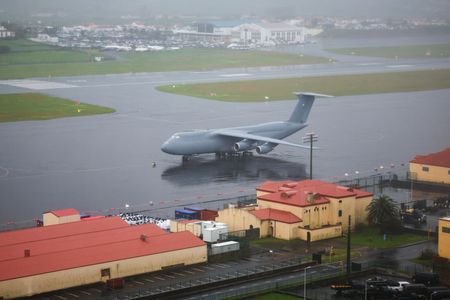
LISBON, April 7 – Portuguese officials have granted permission for 76 American military aircraft to land at the Lajes air facility in the Azores, along with 25 flights over Portuguese airspace during the current U.S.-Israeli military operations against Iran, according to government statements made Monday.
The approvals come with strict stipulations that American forces avoid striking civilian targets, Foreign Minister Paulo Rangel disclosed during testimony before parliament. Rangel confirmed that Washington has honored these requirements as part of what he described as “loyal cooperation” between the NATO partners, though he noted that Portuguese authorities have denied some landing requests.
Multiple European nations including Spain, France, Italy, Austria and Switzerland have either limited or completely blocked American military aircraft from using their airspace and facilities during the Iranian conflict.
The restrictions come as President Donald Trump has set a Tuesday 8 p.m. Washington time deadline – which translates to 3:30 a.m. Wednesday in Tehran – for Iran to lift its Gulf oil blockade or face American strikes against Iranian bridges and power facilities.
“We are against any attack on civilian infrastructure, and we made that a condition for the use of the Lajes air base,” Rangel explained to lawmakers. He said Lisbon provides base access for military responses to attacks on America, but only when the retaliation is “necessary and proportional” and avoids civilian casualties.
“The Portuguese government has always made a point of handling this transparently. We say when we authorise it and when there are transits of U.S. aircraft, other (European) governments do as they see fit,” the Foreign Minister stated, emphasizing Portugal’s preference for diplomatic solutions to the Iranian crisis.
The Lajes facility serves as a crucial strategic location housing the U.S. Air Force’s 65th Air Base Wing, which supports American, NATO and allied military operations throughout the region.
The South Korean automotive manufacturer Hyundai Motor announced on Tuesday that it’s restarting sales of its recalled 2026 Palisade SUVs following the completion of a software solution to address a power seat malfunction that led to the death of a 2-year-old child in Ohio.
The company confirmed it has completed development of a software patch for the 2026 model year Palisade and Palisade Hybrid models that feature powered seating in the second and third rows, specifically affecting the Limited and Calligraphy trim levels. Hyundai had suspended all sales in the middle of March and issued a recall covering 68,500 Palisade vehicles after the fatal incident occurred. Dealerships will be authorized to restart sales once they install the software patch on affected vehicles.
The National Hockey League has imposed a $2,000 penalty on Philadelphia Flyers rookie Matvei Michkov following his second diving and embellishment violation of the season, officials announced Tuesday.
The 21-year-old forward’s latest infraction took place during Philadelphia’s March 24 matchup against the Columbus Blue Jackets, which resulted in a loss for the Flyers.
This marks Michkov’s second such penalty this season, following an initial warning he received after his first violation during Philadelphia’s December 3 win over the Buffalo Sabres.
Despite the disciplinary issues, Michkov has been productive on the ice this season, tallying 43 points through 76 games played, including 17 goals and 26 assists.
Ukrainian military personnel have established operations in western Libya through a secret agreement backed by Western nations, and launched a drone strike against a Russian gas tanker from Libyan territory last month, two Libyan officials revealed Tuesday.
The Russian vessel Arctic Metagaz, loaded with 61,000 tons of liquefied natural gas, sustained severe damage from what authorities believe was a sea drone assault near Malta’s waters in early March. The ship has since been drifting off Libya’s coast. Rescue teams evacuated all 30 crew members to another ship bound for Benghazi, according to Libya’s Maritime Authority.
The targeted vessel belongs to Russia’s unofficial shadow fleet that transports oil despite international sanctions imposed over Moscow’s ongoing invasion of Ukraine, which began more than four years ago. Recent temporary U.S. sanctions relief aims to address supply shortages during the Iran conflict.
Moscow has attributed the assault to Ukrainian sea drones. Ukraine maintains that oil export profits are financing Russia’s military campaign.
The Ukrainian personnel, primarily drone specialists, are based mainly at a Misrata air facility along the coast, while also maintaining presence at military installations in Tripoli and the coastal community of Zawiya, the officials informed The Associated Press. Both requested anonymity when discussing sensitive information.
According to one official, Ukrainian operatives launched the March 3 drone assault from a Tripoli military installation.
Libya’s Maritime Authority reported at the time that the vessel suffered “sudden explosions, followed by a massive fire” approximately 240 kilometers (150 miles) from Sirte. The maritime agency incorrectly initially announced the tanker had been destroyed.
Following the strike, the Arctic Metagaz stayed afloat and ocean currents pushed it toward Libya’s shoreline, the World Wide Fund for Nature reported. Recently, Libyan officials tried towing the vessel to safer waters off their western coastline. These attempts were unsuccessful due to severe weather and powerful winds that left the tanker drifting without control.
Russian and Ukrainian representatives have not immediately responded to these allegations. Tripoli’s government also did not provide immediate comment.
Ukraine has emerged as a center for rapid military technological advancement, particularly in unmanned aircraft systems, while defending against Russia’s larger military force.
Ukraine’s Sea Baby naval drones have successfully targeted Russian vessels throughout the Black Sea. These effective operations forced Russia to modify its tactics, reducing Black Sea attack opportunities and pushing Ukrainian specialists to plan more ambitious strikes.
The officials explained that Ukrainian forces were progressively positioned in western Libya over recent months through what one described as a “covert deal” between Kyiv and the struggling administration of Prime Minister Abdul-Hamid Dbeibah in Tripoli.
Western nations, including the United States, supported this arrangement. U.S. African affairs adviser Massad Boulos has created a proposal to resolve Libya’s prolonged conflict while maintaining Dbeibah as prime minister, the officials stated.
Boulos’ plan also involves naming Saddam Hifter, son of influential eastern military leader Khalifa Hifter, to lead the presidential council. Saddam Hifter serves as chief of staff for the self-proclaimed Libyan National Army controlling eastern and southern Libya, including significant oil reserves.
For over ten years, the nation has remained divided between a U.N.-recognized Tripoli government under Dbeibah and a competing eastern administration supporting Russia-aligned Hifter. Various armed factions and international governments have backed each side.
Dbeibah’s governmental authority ended when Libya couldn’t conduct its planned presidential election in December 2021. He has since resisted attempts to form a new government and guide the petroleum-rich country toward elections, cautioning that his removal could spark warfare.
Jalel Harchaoui, a Libya expert with the Royal United Services Institute, indicated that Ukrainian forces in western Libya represent NATO’s continuing efforts to prevent the region from falling under “Russia’s reach.”
“It is entirely plausible that, with the knowledge and blessing of NATO powers — chiefly the United States but also the United Kingdom and Turkey — several small groups of Ukrainian operatives now maintain a presence in the greater Tripoli area,” he stated.
Libya has experienced turmoil since a NATO-supported rebellion overthrew and killed longtime ruler Moammar Gadhafi in 2011. The oil-wealthy country has become a battleground for ongoing competition between Russia and Western powers. With borders touching six nations, Libya has created challenges for Europe by serving as a migration route for people attempting to reach European territories.
A Freeze Warning is now in effect across much of Delmarva, with dangerous cold temperatures expected to threaten crops, gardens, and outdoor plumbing.
The National Weather Service issued the warning for Kent and Inland Sussex Counties in Delaware, plus Caroline, Kent, Queen Anne’s, and Talbot Counties in Maryland. Temperatures are forecast to plummet between 28 and 31 degrees from 2 AM to 9 AM Wednesday morning.
This unseasonable cold snap poses serious risks to tender plants and vegetables that may have already been planted for spring. Frost and freezing conditions could kill sensitive vegetation and potentially damage unprotected outdoor pipes and plumbing fixtures.
Residents should take action now to protect their gardens by covering plants with blankets, sheets, or specialized frost cloth. Bring potted plants indoors if possible, and consider draining outdoor water lines or allowing faucets to drip slightly to prevent freezing.
The immediate Freeze Warning expires at 9 AM Wednesday, but meteorologists are monitoring conditions for a possible Freeze Watch Wednesday evening through Thursday morning, with similar temperatures expected.
Stay with TV Delmarva for continued weather updates as this cold pattern affects our region.
The University of Delaware Blue Hens softball squad is preparing for a busy week ahead with two significant matchups on their schedule.
The team will take on both Villanova and Middle Tennessee in games that promise to test their skills against quality competition. These contests represent important opportunities for the Blue Hens to showcase their abilities as the season progresses.
Both games will provide valuable experience for the Delaware players as they continue to develop their chemistry and work toward their season goals. The matchups against these opponents should offer competitive action for fans following the team’s progress.
The University of Delaware women’s swimming and diving program celebrated academic excellence this week as four of its student-athletes received recognition from the College Swimming Coaches Association.
The CSC announced Tuesday that four Blue Hens swimmers and divers have been selected for Academic All-District honors, highlighting their success both in the pool and in the classroom.
The Academic All-District recognition celebrates student-athletes who demonstrate outstanding performance in their academic studies while competing at the collegiate level in swimming and diving.
This achievement reflects the commitment of Delaware’s swimming and diving program to developing well-rounded student-athletes who excel in multiple areas of their college experience.
The University of Delaware men’s swimming and diving program has reason to celebrate both in and out of the pool, as four student-athletes earned recognition for their academic achievements.
The College Swimming Coaches Association announced Tuesday that four Blue Hens swimmers have been selected for CSC Academic All-District honors, highlighting their excellence in the classroom alongside their athletic commitments.
The Academic All-District recognition acknowledges student-athletes who demonstrate outstanding academic performance while competing at the collegiate level. The award represents the dedication these swimmers have shown to balancing their rigorous training schedules with their educational pursuits.
The announcement came from Greenwood, Indiana, where the organization is based. This recognition serves as a stepping stone for potential Academic All-America consideration, representing some of the top scholar-athletes in collegiate swimming and diving.
Two French citizens who spent more than three years imprisoned in Iran have been released and are traveling back to France, according to French President Emmanuel Macron’s announcement Tuesday.
Cécile Kohler and Jacques Paris were permitted to depart Iran after being confined to French diplomatic facilities since their prison release in November. “Cécile Kohler and Jacques Paris are free and on route toward French territory, after three and a half years of detention in Iran,” Macron wrote on social media platform X.
The breakthrough came after extensive diplomatic efforts by France to secure their departure from Iranian territory. Macron acknowledged Oman’s assistance in mediating the release, stating “It’s a relief for us all and obviously for their families.”
According to Iran’s official news agency IRNA, Tehran agreed to release the French pair in exchange for Iranian citizen Mahdieh Esfandiari. Iranian officials had been demanding Esfandiari’s release since last year following her conviction in France for promoting terrorism through statements she made regarding the October 7, 2023 Hamas attacks against Israel.
The prisoner exchange highlights Iran’s strategic approach to international relations during ongoing regional conflicts. Macron has maintained France’s distance from the broader Middle East tensions, stating his nation was not consulted about U.S.-Israeli military operations.
Iranian authorities had freed Kohler and Paris from prison in November but prevented their departure from the country. The two had been detained since May 2022 on espionage allegations that French officials consistently rejected as baseless.
French Foreign Minister Jean-Noël Barrot confirmed he spoke with both released citizens, who “expressed their emotion and their joy at soon being reunited with their country and their loved ones.” He praised France’s embassy staff in Tehran for keeping them secure “under very difficult conditions.”
France has long criticized Iran for what it calls a “hostage policy,” using foreign nationals as diplomatic leverage. Tehran denies these accusations from Western governments.
In September, Iranian officials indicated the two nations were close to finalizing a prisoner exchange involving Esfandiari. France subsequently withdrew its case against Iran at the International Court of Justice, where it had accused Tehran of violating consular protection rights.
A French court convicted Esfandiari in February on terrorism incitement charges, sentencing her to one year in prison plus a three-year suspended sentence and permanent ban from French territory.
O’SMACH, Cambodia (AP) — Thai military officials provided journalists with an unprecedented look inside what may be the largest online fraud operation ever discovered, a massive complex spanning 197 acres along the Thailand-Cambodia border.
The facility, known as the O’Smach Resort, covers an area equivalent to 150 football fields and housed an estimated 10,000 people engaged in elaborate online scamming operations targeting victims across the globe.
Thai forces seized control of the compound in December amid border tensions with Cambodia, with military officials stating they captured the area after Cambodian forces used it to launch cross-border attacks.
The sprawling operation represents the growing scale of online fraud networks that have expanded rapidly across Southeast Asia following the pandemic. United Nations human rights officials estimate approximately 300,000 workers are involved in similar scamming enterprises throughout the region.
The complex belonged to Cambodian politician Ly Yong Phat, who currently faces U.S. sanctions for human rights violations connected to this same facility. Construction materials and cranes scattered throughout the grounds suggest ongoing expansion plans.
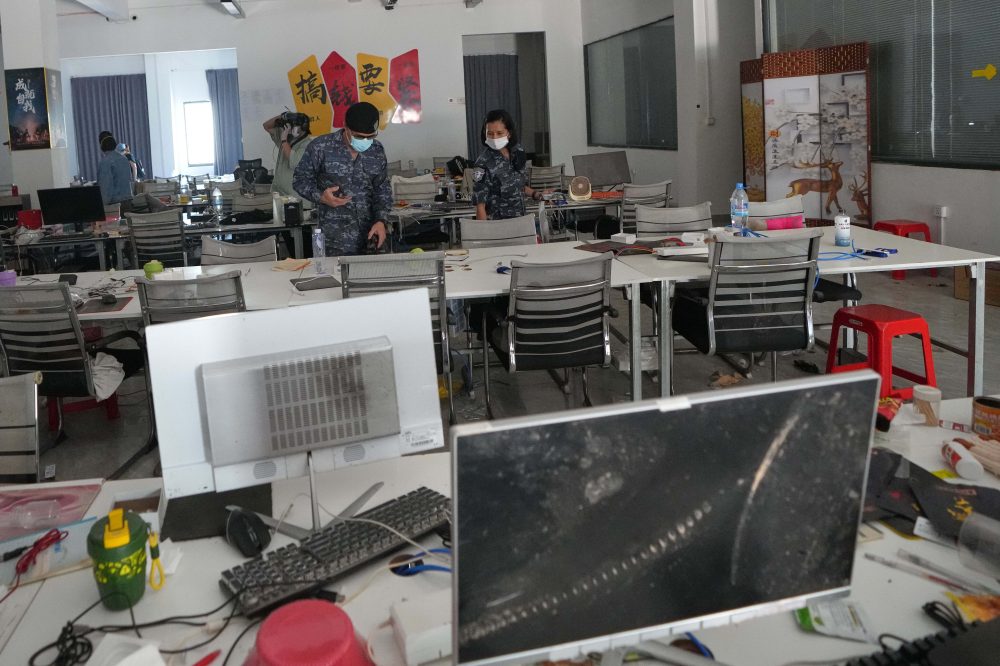
Inside a four-story office building, evidence of the sophisticated American-targeted schemes remained scattered across desks. Investigators found detailed instruction manuals written in Chinese, along with American SIM cards and leftover snacks from the previous occupants.
Among the materials discovered was an elaborate 24-page character profile for a fictional woman named Mila, created to deceive targets interested in gold options trading. The fabricated backstory included tragic personal details about losing her husband to leukemia, childhood bullying experiences, and a manufactured history of living in South Africa with relatives.
The compound featured 157 buildings total, with 29 structures dedicated to housing the fraudulent operations and their administrative offices. The remaining buildings included large dormitory facilities and upscale living quarters featuring apartments and three-story residential villas.
To serve the predominantly Chinese workforce, the facility included multiple restaurants offering regional cuisines from Hunan, Shaxian, and Sichuan provinces, complete with traditional dishes like hot and sour rice noodles.
Recent FBI statistics reveal Americans suffered losses approaching $21 billion from various scam operations during 2025 alone, highlighting the financial impact of these international fraud networks.
Air Chief Marshal Prapas Sornchaidee, who guided the media tour, emphasized the global nature of the challenge facing law enforcement agencies.
“Every country of the world has to join together to solve this problem, (we) cannot do it alone with Cambodia and Thailand,” Sornchaidee stated.
Despite commitments from both Thailand and Cambodia to address these criminal enterprises, officials acknowledge the international scope of the problem requires coordinated global response efforts.
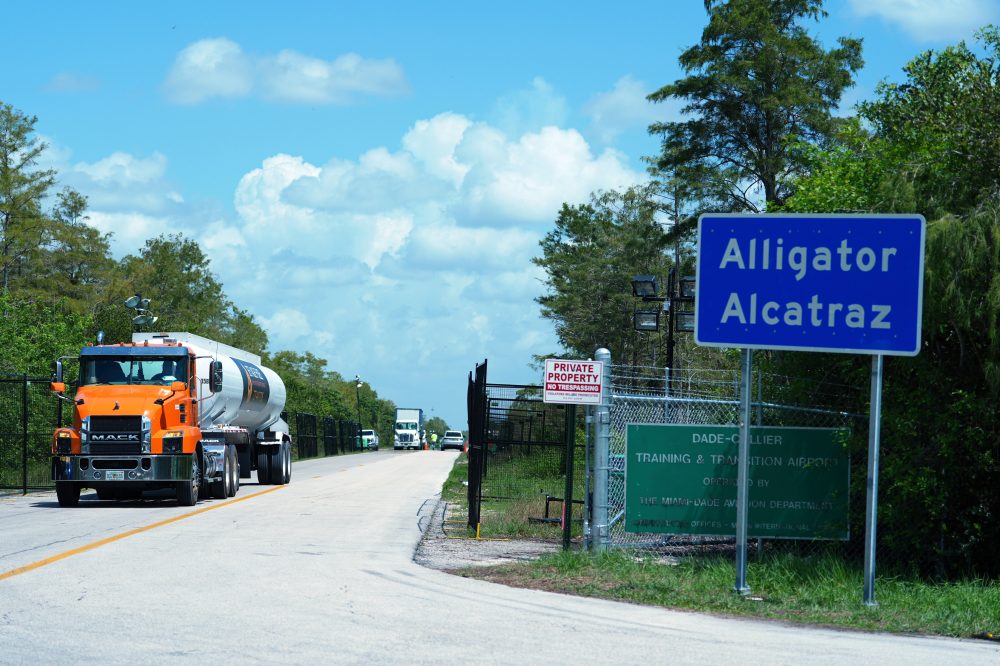
ORLANDO, Fla. — Conservation organizations requested Tuesday that a federal appeals court remove its temporary suspension of a ruling that would force Florida officials to shut down an immigration detention facility located deep within the Everglades, dubbed ‘Alligator Alcatraz.’
The Everglades detention center continues operating and housing immigrants because the appeals court paused the closure order in early September, accepting arguments from Florida officials and the Trump administration that the state hadn’t yet sought federal reimbursement and therefore didn’t need to comply with federal environmental regulations. State leaders established the detention facility last summer as part of President Donald Trump’s immigration enforcement efforts.
During oral arguments at a Miami courthouse, three appeals court judges focused their questions on determining the extent of federal oversight at the state-constructed facility and when environmental assessments become mandatory under federal law. The judges provided no timeline for their decision.
Jesse Panuccio, representing the Florida Department of Emergency Management, argued before the judges that federal funding and federal oversight of the facility were both necessary conditions for federal environmental law to take effect, and that federal agencies lacked control over the state-operated detention center.
In late September, Florida received notification that FEMA had granted $608 million in federal funding for the center’s construction and operations.
‘You need both,’ Panuccio stated. ‘Even with funding, I don’t think that would follow because they don’t have federal control.’
A lawyer representing the conservation groups argued that the law mandating environmental review covered the facility since the Department of Homeland Security had authorized the funding and immigration enforcement falls under federal, not state, jurisdiction.
‘What is different about this property is that immigration is constitutionally a federal function,’ said Paul Schwiep, representing the Friends of the Everglades and the Center for Biological Diversity. ‘The state has no role.’
A federal district judge in Miami ordered in mid-August that the facility cease operations within two months because officials had not conducted a required environmental impact assessment under federal law. That judge determined that a reimbursement decision had already been finalized. The appeals court suspended that order following an appeal.
This environmental lawsuit represents one of three federal court challenges targeting the Everglades facility since it began operations. In another case, a detainee claimed that Florida agencies and private contractors hired by the state lacked authority to run the center under federal law. That challenge concluded when the immigrant detainee who initiated the lawsuit agreed to deportation from the United States.
In the third case, a federal judge in Fort Myers, Florida, determined that the Everglades facility must give detainees improved access to their legal counsel, including private, unmonitored, and unrecorded outgoing calls to attorneys.
MADISON, Wis. — Jay Rothman, who leads Wisconsin’s state university system, faces potential termination during a private Board of Regents meeting scheduled for Tuesday at 6 p.m. EDT.
Board members called the closed session to vote on dismissing Rothman, who has overseen the state’s four-year universities for slightly over four years. Officials have not publicly explained their rationale for potentially removing him from his leadership role.
The termination vote comes just five days after The Associated Press revealed that regents had given Rothman an ultimatum to step down voluntarily or face dismissal. In response letters to board members, Rothman stated he would not resign without understanding what prompted their loss of confidence.
Board President Amy Bogost released a statement Monday indicating regents had completed a performance evaluation and provided Rothman with “direct conversations and clear feedback regarding leadership expectations.” She emphasized the system requires “a clear vision” but declined to detail the review’s specific conclusions.
The lack of public information has angered Republican lawmakers who oversee the university system’s budget allocation.
“This lack of transparency is unacceptable,” said GOP state Rep. David Murphy, chair of the Assembly’s colleges and universities committee. “President Rothman deserves to know exactly why the Board has lost confidence in his leadership.”
Rothman took charge of the 165,000-student, multi-campus system in January 2022. The former chair and CEO of Milwaukee-based Foley & Lardner law firm had no previous background in higher education administration.
During his leadership, he has worked to secure additional state funding from Republican legislators amid federal budget reductions, addressed free speech concerns related to pro-Palestinian demonstrations, and managed declining student numbers that resulted in eight satellite campus closures. Despite these challenges, total system enrollment has remained relatively stable during his tenure.
His position requires balancing relationships between a Republican-dominated Legislature and a Board of Regents where most members were selected by Democratic Governor Tony Evers.
In 2023, Rothman negotiated an agreement with Assembly Republican Speaker Robin Vos that included halting diversity-focused hiring and establishing a conservative studies position at UW-Madison. In return, Vos agreed to release funding for employee salary increases and construction projects worth tens of millions across the system.
Initially, regents voted down the proposal before reversing course and approving it days later. Governor Evers expressed disappointment and frustration with the final agreement.
When asked Monday about efforts to remove Rothman, Evers remained neutral, stating “It’s their call” regarding the board’s decision.
The controversy over Rothman’s position coincides with upcoming leadership changes at the system’s flagship Madison campus. Chancellor Jennifer Mnookin will depart in May following the current academic year to assume the presidency of Columbia University.
Rothman receives an annual salary of $600,943 as university president. According to Wisconsin employment attorney Tamara Packard, who examined Rothman’s contract for the Associated Press, he can be terminated without cause and has no right to appeal the decision.
His contract requires six months’ advance notice for termination. Packard noted that typically, dismissed executives are asked to focus on transitional responsibilities rather than continuing regular office duties during this period.
Eight student-athletes from Salisbury University’s swimming programs have been recognized for their outstanding academic performance, earning spots on the 2025-26 College Sports Communicators Division III Academic All-District teams.
The College Sports Communicators organization announced the honors on Tuesday, highlighting swimmers from both the men’s and women’s teams who have demonstrated excellence in their studies while competing at the collegiate level.
The Academic All-District recognition celebrates student-athletes who maintain high academic standards while participating in their respective sports, showcasing the balance between athletic competition and classroom achievement.
This recognition reflects the continued commitment of Salisbury University’s swimming programs to developing well-rounded student-athletes who succeed both in competition and in their academic pursuits.
Weather officials have issued a freeze watch for the region, warning residents to prepare for dangerously cold temperatures over the next few days.
The National Weather Service office in Mount Holly, New Jersey announced the alert on Sunday at 11:01 AM, with the watch remaining in effect until 9:00 AM on Tuesday, April 9th.
The freeze watch indicates conditions are favorable for temperatures to drop to levels that could damage sensitive vegetation and pose risks to exposed pipes and outdoor water systems.
Residents are advised to take precautions to protect tender plants by covering them or bringing potted plants indoors. Property owners should also consider draining outdoor water lines and covering exposed plumbing to prevent freeze damage.
The weather service will continue monitoring conditions and may upgrade the watch to a freeze warning if temperatures are expected to reach more severe levels.
A Freeze Warning is in effect for northern Delaware and parts of New Jersey from midnight tonight through 9 AM Wednesday morning, with temperatures expected to drop between 25 and 30 degrees.
The National Weather Service issued the warning Monday morning for New Castle County in Delaware, along with multiple counties in central and southern New Jersey including Mercer, Camden, Gloucester, Salem, Ocean, Atlantic, and Cape May counties.
These dangerously cold temperatures could kill tender plants, damage crops, and potentially freeze unprotected outdoor plumbing. Weather officials are urging residents to take immediate action to protect sensitive vegetation by covering plants or bringing them indoors.
Homeowners should also ensure outdoor pipes are properly insulated or allow faucets to drip slightly to prevent freezing.
Looking ahead, another Freeze Watch has been issued for Wednesday evening through Thursday morning, with similar temperatures expected and possible frost development.
This unseasonably cold weather is unusual for early April when many residents have already begun their spring gardening. The Freeze Warning expires at 9 AM Wednesday, but residents should continue monitoring weather conditions as additional cold snaps are possible this week.
Stay with TV Delmarva for continued weather updates.
Delaware transportation officials are alerting drivers about significant traffic changes coming to northbound Interstate 95 this weekend as part of ongoing construction work.
DelDOT has scheduled a major construction phase to begin Saturday, April 18th and continue through Sunday, April 19th, affecting traffic patterns in New Castle County.
The changes will begin at 6:00 pm Saturday with the closure of Exit 5A, which normally provides access from northbound I-95 to Airport Road. During this closure, drivers will need to use Exit 5B as an alternate route.
Additional restrictions will take effect throughout the evening, including a single right lane closure on northbound I-95 at Route 1 starting at 6:00 pm. At 8:00 pm, traffic will be reduced to three through lanes on the northbound side.
The most significant impact will occur at 11:00 pm, when northbound I-95 will be reduced to just one through lane from Route 1 to the Airport Road exit.
All lanes and ramps are scheduled to reopen to normal traffic by 10:00 am Sunday.
Transportation officials note that once the work is complete, the two left lanes of northbound I-95 will remain separated from the three right lanes by a concrete barrier. New pavement markings will indicate route designations before drivers reach the decision point.
WASHINGTON, April 7 – Negotiations to modify the North American trade agreement between the United States, Mexico, and Canada will probably extend beyond the July 1 target date, according to U.S. Trade Representative Jamieson Greer, who spoke Tuesday at a Hudson Institute gathering.
While the Trump administration plans to address as many trade issues as possible before the summer deadline, Greer indicated the discussions to restructure the commercial arrangement will likely require additional time. He suggested the U.S. might need to consider withdrawing from the current North American trade framework to allow negotiations to continue.
Speaking about the administration’s position, Greer noted that President Donald Trump “has been clear that he is dissatisfied with a lot of the outcomes of USMCA,” particularly citing increased automotive shipments from Mexico and rising steel and aluminum imports from both neighboring nations.
The trade representative acknowledged that despite valuable components within the USMCA framework – which Trump signed in 2020 as a replacement for the 1994 North American Free Trade Agreement – separate negotiating approaches will be necessary for Mexico and Canada due to distinct trade circumstances with each country.
Discussions with Mexico have already begun, while talks with Canada are expected to commence in May. The three nations face a July 1 requirement to either approve extending the current USMCA or indicate their intent to withdraw from the agreement, which would trigger a decade-long exit process that could provide additional time for modifications.
“So I think that we aren’t probably going to resolve all issues by July 1,” Greer stated, while emphasizing that his office would work to address as many concerns as possible before that date. He also mentioned the need to inform Congress about U.S. intentions regarding the trade agreement by June 1.
Residents living along Israel’s northern border are taking a stand, refusing to abandon their homes despite facing renewed rocket attacks from Hezbollah forces across the Lebanese frontier.
Fifty-nine-year-old Orna Weinberg was among those who evacuated from her home in Manara after a Hezbollah rocket damaged her property in October 2023. She spent two years away from her close-knit community, which sits mere meters from Lebanon’s border.
Weinberg characterized those years of displacement as “pretty tough,” marked by devastating personal losses. Several elderly community members, including her mother-in-law and uncle, passed away while living away from home.
“The day we had electricity, and we could put a mattress in, we got back, and we started fixing the house from inside out,” Weinberg explained about returning to her damaged home.
Despite current rocket fire targeting northern Israel as military forces engage Hezbollah in broader regional conflict, Weinberg and fellow residents of the small kibbutz are determined to remain, having only returned last October.
“We will never, ever leave this place again,” Weinberg declared.
The kibbutz of Manara was founded in 1943 by Jewish immigrants during the British Mandatory Palestine period, five years before Israel’s establishment as a state.
From Manara’s perimeter, Lebanese villages are easily visible, highlighting the community’s exposure to cross-border attacks. The sound of Israeli artillery responding into Lebanon regularly reverberates across the area.
People living in Manara and neighboring northern Israeli settlements, which house hundreds of thousands of residents, typically have mere seconds to reach protective shelters when rockets launch from Lebanon, unlike those in Tel Aviv or Jerusalem who have several minutes. Occasionally, alerts arrive only after projectiles have already hit their targets.
Construction work on Weinberg’s residence has stopped due to safety concerns. Other damaged homes in the kibbutz await demolition after sustaining damage from Hezbollah rockets during more than a year of combat that paralleled the Gaza conflict. The Israel-Hezbollah hostilities decreased following a ceasefire agreement in 2024.
At Hagoshrim, another kibbutz located approximately two kilometers from the Lebanese border, residents have similarly committed to staying despite deadly rocket threats. A community member was killed by Hezbollah fire in 2024.
Hagoshrim resident Dror Gavish acknowledges the terror posed by the Lebanese militant organization. Two Israelis have died in Hezbollah strikes since the group began launching rockets in support of Iran on March 2 this year.
Nevertheless, forty-two-year-old Gavish said he, his spouse, and their three children chose to remain rather than evacuate. “We are here and we’re not going to go anywhere.”
Prime Minister Benjamin Netanyahu’s administration has maintained that no northern residents will face forced evacuation as combat continues.
This approach contrasts sharply with conditions across the border, where Israeli forces have commanded hundreds of thousands of Lebanese civilians to flee their communities as bombing campaigns destroy villages, with Israel claiming Hezbollah uses these areas for launching attacks. Israel’s renewed military campaign in Lebanon has displaced over 1.2 million people.
Following Hamas’s October 7, 2023 assault on southern Israel, Manara’s population evacuated, fearing Hezbollah might execute a similar attack. Tens of thousands of northern Israeli residents received government support to stay in temporary housing throughout the country, with many still not returned.
Currently, Netanyahu’s government has not provided funding for residents to stay in hotels elsewhere until hostilities end. Instead, officials have promised to capture Lebanese territory to prevent Hezbollah from threatening northern Israeli communities with short-range weapons.
Weinberg expresses criticism toward Netanyahu’s government. Like numerous Israelis, she believes an investigation must examine the failures leading to the October 7 attack, which resulted in nearly 1,200 deaths, including two of her family members. Another relative was kidnapped to Gaza and subsequently killed, she reported.
Netanyahu has denied personal accountability for the failures and has resisted an independent investigation, instead supporting an inquiry where the government would select half the panel members.
“I don’t think the government are our saviours, and I don’t expect them to be,” Weinberg stated. She believes Israel’s leadership should pursue peaceful relations with neighboring countries rather than engaging in warfare.
Gavish from Hagoshrim said that while he, like many Israelis, views Iran as a significant threat, he lacks confidence in Netanyahu’s government to act in the nation’s best interests.
He anticipates upcoming elections will produce new leadership focused on diplomatic solutions, including peace agreements with Lebanon.
“I really believe things here can be much better for us,” he said.
A Freeze Warning is in effect for much of the Delmarva Peninsula as temperatures are expected to plummet into dangerous territory for plants and crops early Wednesday morning.
The National Weather Service issued the warning for Kent and inland Sussex counties in Delaware, along with Caroline, Kent, Queen Anne’s, and Talbot counties in Maryland. Temperatures between 28 and 31 degrees are forecast from 2 AM to 9 AM Wednesday, with frost and freeze conditions likely.
Residents should take immediate action to protect tender plants, crops, and sensitive vegetation that could be killed by the freezing temperatures. Outdoor plumbing should also be protected from potential damage.
This unseasonably cold weather comes as another concern looms on the horizon – meteorologists are monitoring conditions for a possible Freeze Watch from Wednesday evening through Thursday morning, when temperatures could again drop between 29 and 31 degrees.
Gardeners and farmers across the region are urged to cover plants, bring potted vegetation indoors, and ensure outdoor water pipes are properly insulated. The current Freeze Warning expires at 9 AM Wednesday, but residents should stay tuned for updates on potential extended cold conditions.
The escalating Middle East conflict has reached extraordinary intensity as American and Israeli forces work together to dismantle Iran’s military and economic infrastructure, according to a senior Israeli defense official.
Brigadier General Amir Avivi, who founded and leads the Israel Defense and Security Forum, shared his analysis of the current situation with The Media Line. Despite facing continuous attacks across multiple fronts, Avivi expressed confidence in the coalition’s progress. “Obviously, it’s very, very challenging, but we are winning decisively,” he stated.
The general revealed details of recent joint operations, including a dramatic rescue mission where American forces, supported by Israeli intelligence and special units, extracted a downed US pilot from Iran’s mountainous regions. Avivi described how the airman moved “towards the top of the mountain to … a place where he can hide” while the US “built a whole base in the area in order to support the troops that were involved in the rescue itself.” Israeli forces provided intelligence support and elite unit participation in the operation.
According to Avivi’s assessment, the allied campaign has achieved remarkable success in degrading Iran’s capabilities, destroying 90% of the country’s essential military production facilities and eliminating 85% of petrochemical operations. The economic impact has been severe, with “tens of billions of dollars have gone to the drain,” he observed. The strategy aims to reach a point where “Iran cannot sustain anymore, where this regime cannot pay salaries, cannot sustain its economy and its military capabilities.”
Drawing parallels to World War II strategy against Japan, Avivi explained that current efforts focus on forcing surrender without requiring American ground forces. He noted that President Trump has discussed targeting electrical infrastructure and seizing control of Iranian oil resources. Supporting this approach, Avivi warned, “They have to lose everything,” predicting that “in a few attacks, this country will not function anymore at all.”
Regarding Iran’s interference with shipping in the Strait of Hormuz, Avivi argued there “shouldn’t be a problem for the US to take over the Strait,” describing it as strategically essential. He emphasized the waterway’s importance, noting “Twenty percent of the oil and gas goes through this Strait” and stressed that “Whoever controls it has a lot of power. And this power shouldn’t be in the hands of this apocalyptic, crazy regime.”
To address potential disruptions to global energy supplies, Avivi described an alternative transportation route through Saudi Arabia and Israel. This corridor would utilize Saudi pipelines and move petroleum from the Red Sea through Eilat to Ashkelon, making “Israel will become a corridor of energy that will supply huge amounts of oil to Europe.” Combined with increased exports from America, Venezuela, and Azerbaijan, he estimated this alternative route could address approximately half of the market disruption caused by strait closures.
The general emphasized that complete victory requires total elimination of Iran’s nuclear and ballistic missile threats. “If you want to get to the point where the Iranians give all the enriched uranium, where you have forces going in and dismantling all their underground cities with ballistic missiles. … This can be done only when the regime surrenders or falls,” he argued.
Avivi’s most dramatic recommendation involves destroying Iran’s electrical grid to paralyze the government’s ability to function. He believes this would leave the state without operational banking systems, command centers, or computer networks. “When you take down the electricity, they will have maybe a few days to use generators. … But this is good for a few days, not anymore. And once this is done, they’re done,” he explained.
Using biblical imagery, he advocated for “a plague of darkness in Iran, taking out their electricity plants and rendering this regime completely incapable.” However, Avivi clarified that the strategy targets the regime rather than ordinary Iranians. “You can destroy certain elements that can be rebuilt later on,” he noted, seeking to “enable the Iranian people to rebuild their future once there is a change of regime.”
On the home front, Avivi described the ongoing impact of Iranian ballistic missile strikes on Israeli civilians. While Israel’s defense systems intercept more than 90% of incoming threats, he acknowledged the psychological burden on the population. “People wake up in the middle of the night to sirens and in the middle of the day and little children,” Avivi described, adding that Iran’s indiscriminate targeting of civilians proves “It’s not a regime that can continue to exist.”
In Lebanon, Israeli forces have advanced five to six miles into the southern region to reduce anti-tank missile threats. When questioned about the permanence of this presence, Avivi responded, “Probably. We’ll see.” Israeli air operations continue targeting Hezbollah leadership, weapons systems, and financial networks. However, he stressed that Iran remains the primary target, serving as the financial backbone for “militias in Iraq, the Houthis in Yemen, Hezbollah in Lebanon, Hamas in Gaza.” He noted that “it’s the Iranian regime that is sustaining Hezbollah, that paid them in 2025, $2 billion.”
While Israeli operations have eliminated over a thousand Hezbollah operatives, Avivi argued that logistical advantages over Iran are crucial for overall victory. He pointed out that Israel and America maintain continuous weapons production while Iran’s manufacturing facilities have been destroyed. Quoting a military principle often attributed to General Omar Bradley, Avivi said, “Amateurs talk strategy, professionals talk logistics.”
Despite significant progress, he counseled patience in achieving complete victory. “We are winning the war. But we have to understand what was built in 47 years, you don’t destroy in a few weeks. It takes some time.” He summarized his strategic philosophy by declaring, “Iran is the key. And we really need to cut the head of the snake.”
Avivi strongly criticized NATO’s decision not to participate in the conflict, calling it a historic error that could reshape international alliances. He predicted growing tensions, stating, “I think the US understands that they cannot trust NATO anymore. It wouldn’t surprise me to see the US leaving NATO.” He warned that European nations will need to rebuild their military capabilities to counter Russian threats while observing that US-Israel cooperation is strengthening, potentially expanding the Abraham Accords after the conflict ends. “The US understands that they only have one really serious, capable ally. Nobody else really stepped [up] and helped in this war,” he observed.
Regarding Gaza operations, Avivi confirmed that Israeli forces control more than half the territory while maintaining clear objectives about Hamas’s future. “If anybody thinks that Israel will let Hamas stay armed in Gaza, this is not going to happen,” he stated firmly.
The general also addressed domestic Israeli debates about military conscription during wartime. He criticized exemptions that allow some groups to avoid service during what he considers an existential crisis, arguing that all Israeli society must contribute to defense efforts. “In Israel, everybody needs to serve,” he declared, calling draft avoidance “completely against our Jewish values.”
Looking back on the conflict’s development, Avivi expressed surprise at the rapid success achieved during last June’s 12-day campaign against Iran, particularly the swift destruction of Iranian air defenses within thirty-six hours. Comparing actual results to pre-war projections, he admitted, “With all the challenges that we have now, it’s not even 1% of what we thought it might be.”
Intelligence sources indicate that Iran’s recently appointed Supreme Leader Mojtaba Khamenei remains unconscious and in grave condition in the city of Qom, creating uncertainty about who holds power in Tehran, according to a diplomatic briefing citing American and Israeli intelligence that was published Tuesday in The Times of London.
Former President Trump has questioned whether the Iranian leader remains alive or capable of governing. Speaking last month, Trump stated, “The supreme leader of Iran is dead or seriously wounded because nobody hears from him. Who would want to lead Iran? Nobody.”
Mojtaba Khamenei has been absent from public view since early March, just weeks after taking over as supreme leader. His current medical crisis stems from wounds he received during a combined American-Israeli military strike on February 28 that marked the beginning of the conflict. That same attack resulted in the deaths of his father Ali Khamenei, along with his mother, spouse, and child.
The intelligence memo reveals that funeral arrangements are being made in Qom for Ali Khamenei, with construction of an expansive mausoleum designed to accommodate “more than one grave,” suggesting additional family members may be interred at the location.
Meanwhile, Iran International, an opposition news source, has reported that a military committee consisting of high-ranking Islamic Revolutionary Guard Corps commanders has taken control of governmental decisions in Iran. This council is allegedly blocking Mojtaba Khamenei from receiving updates about the nation’s wartime situation.
Additional friction has emerged between President Masoud Pezeshkian’s government and the Revolutionary Guards. Reports indicate that Pezeshkian sought an audience with Mojtaba Khamenei, but his request received no response and contact was never made.
Israeli military forces launched extensive bombing operations across Iran on Monday, striking facilities the military claims were essential to the country’s weapons manufacturing capabilities, according to statements from the Israel Defense Forces.
Military officials reported that warplanes targeted a chemical manufacturing complex in Shiraz that produced nitric acid, a substance Israeli forces describe as crucial for creating explosives and developing ballistic missiles. Israeli military representatives stated this location was among the limited number of Iranian sites still capable of manufacturing vital chemical materials for weapons production.
The Israeli military indicated these latest attacks followed previous bombardments of other major chemical manufacturing complexes, including what they characterized as Iran’s largest petrochemical operation and another facility in Mahshahr. Military officials claim these combined strikes have disabled more than 85% of Iran’s chemical export capabilities.
In addition to the Shiraz facility, Israeli forces reported hitting a major ballistic missile installation in Iran’s northwestern region during the same military operation.
Israeli officials expect the infrastructure damage will significantly hamper Iran’s capacity to produce essential missile components, which they say Iran uses to threaten Israel and neighboring Middle Eastern nations.
The University of Delaware has released its weekly athletics digest, offering Blue Hens supporters an overview of recent developments and upcoming competitions across the university’s sports programs.
The athletics department’s regular publication serves as a comprehensive resource for fans looking to stay current with Delaware’s various teams and athletic events.
The weekly roundup continues the university’s tradition of keeping the community informed about Blue Hens athletics throughout the competitive seasons.
The United Nations migration agency reported Tuesday that over 80 migrants remain unaccounted for following a devastating boat accident in the central Mediterranean Sea. Two bodies have been found so far from the tragedy.
The vessel was carrying approximately 120 individuals when it left Tajoura, a coastal community in northwestern Libya, on Sunday. According to the International Organization for Migration (IOM), the boat took on water and flipped over due to severe weather conditions in the area.
Rescue operations by a commercial ship and tugboat successfully pulled 32 survivors from the water, who were subsequently transported by Italy’s coast guard to Lampedusa, a southern Italian island. Officials confirmed the recovery of two victims’ bodies during the operation.
The North African nation has become a primary departure point for people escaping conflict and economic hardship across Africa and the Middle East. Libya descended into turmoil following the 2011 rebellion that resulted in the death of long-ruling leader Moammar Gadhafi.
This latest tragedy occurred roughly one week following another deadly incident when Italian coast guard personnel discovered 19 bodies and saved 58 individuals from a migrant dinghy approximately 80 nautical miles from Lampedusa. That rescue operation took place in Libya’s search and rescue waters during challenging weather.
The small Mediterranean island of Lampedusa serves as Europe’s primary arrival destination for migrants making the dangerous crossing from North Africa, with thousands perishing during these treacherous voyages. Most fatalities occur when small vessels launch from Tunisian and Libyan shores.
According to Tuesday’s IOM report, early 2026 has become the most lethal beginning to any year for Mediterranean crossings since 2014, with no fewer than 990 documented deaths already recorded. In the Central Mediterranean specifically, 765 people have lost their lives in 2026, representing approximately a 150% surge compared to the same timeframe last year.
IOM Director General Amy Pope recently told The Associated Press that the organization is observing increasing numbers of migrants from Bangladesh, Pakistan, Afghanistan and Sudan aboard Mediterranean vessels.
“The issue of people crossing the Mediterranean is really dependent on what else is happening in the world and the factors at the moment, war, instability, lack of access to food, sexual violence, all of these things will drive people to move,” she said.
BULLY-LES-MINES, France — A locomotive engineer lost his life Tuesday when a high-speed passenger train collided with a truck transporting military equipment at a railroad crossing in northern France, according to local officials.
Sixteen passengers sustained injuries in the crash, with two in serious condition, authorities reported. The truck operator has been taken into custody as investigators launch an aggravated manslaughter probe, though Prosecutor Etienne Thieffry told media it remains too soon to pinpoint what caused the deadly collision.
Jean Castex, who leads France’s national railway system SNCF, confirmed that the crossing’s safety gates were operating properly at the time of impact.
Emergency responders descended on the crash site in Bully-les-Mines, located along the rail line connecting Dunkirk to Paris, regional officials stated. More than 200 train passengers were safely evacuated from the scene following the accident.
An Associated Press reporter observed extensive damage to both vehicles, with the locomotive’s front end severely crushed and the truck also heavily damaged. The train cars stayed upright on the rails, though railway operations were suspended while emergency crews conducted their response operations.
KABUL, Afghanistan (AP) — Afghan diplomatic officials announced Tuesday that peace negotiations taking place in China between Afghanistan and Pakistan aimed at stopping cross-border violence have shown encouraging progress.
The diplomatic meetings commenced last week in Urumqi, a city in western China, after Beijing extended an invitation to both nations in hopes of resolving the deadly conflict that erupted in February and has claimed hundreds of lives. Pakistan previously declared it was engaged in “open war” with Afghanistan and has conducted aerial bombardments on Afghan territory, including strikes in Kabul.
According to a Tuesday post by the United Nations humanitarian coordination office in Afghanistan, the ongoing violence has forced 94,000 people from their homes, while another 100,000 residents in two Afghan border districts have been completely isolated by the fighting since February began.
The escalating violence has created significant concern among international observers, especially given that extremist groups like al-Qaida and ISIS maintain operations in the contested region.
Afghan Foreign Minister Amir Khan Muttaqi held discussions with China’s ambassador to Afghanistan on Tuesday, as reported by Foreign Ministry deputy spokesman Zia Ahmad Takal on social media. Takal expressed gratitude to Beijing for organizing and facilitating the negotiations, while also acknowledging mediation assistance from Saudi Arabia, Turkey, Qatar and the United Arab Emirates.
“Noting that constructive discussions have taken place so far, FM Muttaqi expressed hope that minor interpretations would not hinder the progress of the negotiations,” Takal wrote.
Official communications about the diplomatic talks have remained limited since mid-level representatives from both countries began meeting on April 1.
Despite the ongoing negotiations, Afghanistan has repeatedly alleged that Pakistan continued cross-border artillery attacks during the talks, resulting in civilian casualties. Pakistani officials have not responded to these accusations.
Pakistan frequently claims that Afghanistan allows militant groups to operate from its territory and launch deadly strikes inside Pakistan, particularly the Pakistani Taliban organization known as Tehrik-e-Taliban Pakistan or TTP. This group maintains ties with but operates separately from the Afghan Taliban, which assumed control of Afghanistan in 2021 after U.S.-led forces withdrew. Afghan authorities reject these allegations.
Pakistani military leadership pledged Tuesday to maintain current anti-terrorism operations until what they described as “militant safe havens” are destroyed and “the use of Afghan territory against Pakistan” ceases.
These statements emerged from a high-level military conference led by Army Chief Field Marshal Asim Munir, according to an official military announcement.
The gathering assessed current domestic and international security conditions. The statement indicated that “terrorist proxies” working for “external sponsors” and their supporters would be tracked down and eliminated “relentlessly and without exception.”
The current violence represents the most intense fighting between the neighboring countries and began when Afghanistan launched retaliatory cross-border operations following Pakistani airstrikes on Afghan soil. These clashes shattered a Qatar-mediated ceasefire agreement from October that had ended earlier fighting which killed dozens of military personnel, civilians and suspected militants.
A Pakistani airstrike on March 17 targeted a drug rehabilitation facility in Kabul, with Afghan authorities reporting more than 400 deaths. Pakistan disputed targeting civilians, claiming its operations focused on military installations.
HOUSTON — NASA’s Artemis II crew has created their own piece of space history, capturing breathtaking images that echo the legendary Apollo 8 mission from more than five decades ago.
Following their successful moon flyby, NASA unveiled remarkable photographs taken by the four-member international crew on Tuesday.
The astronauts — three from the United States and one from Canada — produced their own version of Apollo 8’s iconic 1968 ‘Earthrise’ photograph, calling theirs ‘Earthset’ as it shows Earth disappearing behind the moon’s cratered, gray surface. The crew also documented a complete solar eclipse visible from their vantage point as the moon passed between them and the sun.
The team is currently traveling back to Earth, with their Pacific Ocean touchdown scheduled for Friday.
The original Apollo 8 crew made history as humanity’s first lunar visitors when they orbited the moon during Christmas Eve 1968. Their famous ‘Earthrise’ image went on to become an iconic symbol for the environmental movement.
This Artemis II mission represents NASA’s first crewed return to lunar vicinity and serves as a crucial milestone in preparation for an actual moon landing mission planned for 2026.
INDIANAPOLIS — A city council member in Indianapolis says gunmen targeted his residence with gunfire early Monday morning, leaving behind a message opposing data centers after he supported a controversial development project.
Council member Ron Gibson reported that he and his 8-year-old son were jolted awake around 12:45 a.m. when attackers discharged 13 rounds at their front entrance. Neither Gibson nor his child suffered injuries, though the gunfire hit dangerously close to where his son had been playing with building blocks at the dining table just hours earlier.
“That reality is deeply unsettling,” Gibson said. “This was not just an attack on my home, but endangered my child and disrupted the safety of our entire neighborhood.”
Indianapolis Metropolitan Police Department officials confirmed that officers responded to the East 41st Street residence after 9 a.m. Monday morning, discovering bullet damage to the home. Authorities characterized the shooting as a deliberate, targeted attack and have requested FBI assistance in the investigation.
“I understand that public service can bring strong opinions and disagreement, but violence is never the answer, especially when it puts families at risk,” Gibson said on Monday. “This will not deter me. I will continue to serve the residents of this district with integrity and respect for all voices.”
The shooting follows recent controversy over Gibson’s backing of a data center development by Metrobloks in his district. The Indianapolis Metropolitan Development Commission granted approval for the rezoning request last week, despite opposition from neighborhood residents and community activists who voiced concerns about the project’s potential impact.
Gibson had publicly endorsed the commission’s approval in a statement issued last week.
“The site has remained underutilized for years, and today’s action is an important step toward bringing it back into productive use in a way that benefits both the surrounding neighborhood and our city,” Gibson said. “As the district councilor, when this petition comes before the full Council, I do not intend to call it down.”
The National Weather Service office in Mount Holly, New Jersey has announced a freeze watch that went into effect Sunday at 11:01 AM and will remain active until Tuesday morning at 9:00 AM.
The alert warns residents to prepare for freezing conditions that could pose risks to temperature-sensitive vegetation and exposed water pipes. This unseasonably cold weather pattern is expected to bring temperatures low enough to cause frost formation across the coverage area.
Homeowners are advised to take precautionary measures such as covering delicate plants, bringing potted flowers indoors, and ensuring outdoor faucets and irrigation systems are protected from potential freeze damage.
The weather service will continue monitoring conditions and may update the alert as the situation develops over the next 48 hours.
Seven Democratic senators are challenging Treasury Secretary Scott Bessent over whether massive liquefied natural gas shipping vessels should receive tax incentives originally created for small watercraft that use alternative fuels.
The controversy centers on the Alternative Fuel Excise Tax credit, legislation signed into law by former President George W. Bush in 2005. The tax incentive was designed to reduce America’s oil dependency by encouraging smaller motorboats to switch to alternative energy sources including natural gas, propane, and LNG.
However, critics argue that giving these credits to LNG tankers defeats the original purpose. These enormous ships – which can stretch the length of three football fields – already use LNG that naturally evaporates during transport. Without burning this boiled-off gas, it would either be released into the atmosphere or converted back to liquid form.
“Providing tankers with AFET credits would unnecessarily waste taxpayer money while doing nothing to protect the environment, reduce costs for everyday Americans, or lessen the United States’ dependence on oil,” the lawmakers wrote in their letter. The correspondence was signed by Senators Jeff Merkley, Elizabeth Warren, Chuck Schumer, and four additional colleagues.
The senators emphasized that federal regulations define motorboats as vessels under 65 feet in length – dramatically smaller than the massive LNG carriers currently claiming the credits.
Energy company Cheniere disclosed in February that it received a $370 million tax reduction for using the fuel in its LNG tankers. When contacted for comment, Cheniere declined to respond.
The Treasury Department has not yet provided a response to the senators’ concerns.
While Senate Democrats currently hold minority status and have limited legislative power, the political landscape could shift following November’s midterm elections.
Delaware residents and Americans nationwide are bracing for higher costs in the coming year as inflation expectations climb due to escalating energy prices linked to Middle East conflicts, according to a new Federal Reserve Bank of New York survey released Tuesday.
The March consumer expectations report revealed that Americans anticipate inflation will hit 3.4% within the next 12 months, marking a significant rise from February’s 3% projection. This uptick brings the volatile measurement back to December levels.
The surge in short-term inflation forecasts coincided with dramatically higher gasoline price expectations, which jumped 5.3 percentage points to reach 9.4% – the steepest increase recorded since March 2022. That earlier spike occurred during similar energy market disruptions following Russia’s invasion of Ukraine, which like the current Middle East conflict initiated by President Donald Trump and Israel, created widespread turmoil in global energy markets.
Federal Reserve officials weren’t caught off guard by the near-term inflation expectation increase, as these projections typically respond quickly to current events. However, the survey showed more restrained long-term outlook changes: three-year inflation projections edged up slightly from 3% to 3.1% in March, while five-year expectations remained steady at 3%.
These projected inflation rates all exceed the Federal Reserve’s 2% target goal. The central bank has been working to bring inflation back to that benchmark, but the ongoing conflict, combined with lingering effects from Trump’s import tariff policies, has disrupted what had been progress toward the Fed’s objectives.
During a Tuesday morning Bloomberg television interview, New York Federal Reserve President John Williams explained that conflict-related energy disruptions “will directly go into headline inflation because energy prices are an important component of that…I expect headline inflation to actually be elevated, you know, in the middle of this year” and reach approximately 2.75% annually.
Williams emphasized that he considers current monetary policy “well positioned” and appropriately calibrated as policymakers monitor economic developments. The Federal Reserve’s benchmark interest rate currently sits between 3.5% and 3.75%, with officials projecting just one rate reduction this year based on last month’s policy discussions.
The steadiness of long-term inflation expectations likely provides reassurance to Fed policymakers, demonstrating that Americans maintain confidence the conflict won’t trigger broader inflationary pressures. Federal Reserve officials generally agree that public inflation expectations significantly influence actual price movements.
The New York Fed’s survey also revealed that participants expressed increased pessimism regarding both current and future personal finances, while showing divided opinions about employment market conditions. Researchers noted that unemployment rate expectations for the coming year reached their highest point since April 2025.
Crude oil costs have skyrocketed to unprecedented levels approaching $150 per barrel as the escalating Middle East conflict continues to strangle global energy supplies, according to industry data released April 7.
The ongoing war involving the U.S.-Israel alliance against Iran has resulted in the effective blockade of the Strait of Hormuz, cutting off approximately 12 million barrels of oil per day from reaching world markets. This represents roughly 12% of global oil production, creating severe supply shortages that are driving prices to historic peaks.
While Brent crude futures climbed to $119.50 per barrel last month – the highest level since 2022 – the actual cost of physical oil deliveries has far surpassed even those elevated prices. North Sea Forties crude reached an all-time high of $146.09 per barrel on Tuesday, surpassing the previous 2008 record of $147.50.
The dramatic price surge stems from desperate competition among refineries in Europe and Asia scrambling to secure alternative oil sources to replace the lost Middle Eastern supplies. This has created a bidding war for immediately available crude from regions like Europe and Africa.
Veteran oil trader Adi Imsirovic attributed the extreme pricing to widespread “panic” in the marketplace. “When there is a real, physical shortage, people are not thinking about July delivery – June loading and hence June futures prices – but oil NOW,” Imsirovic explained.
The gap between immediate delivery prices and future contracts has widened dramatically, with dated Brent crude – which reflects actual cargo prices – trading nearly $20 above June futures contracts. This premium reflects the urgent need for oil that can be delivered immediately rather than months down the road.
“At the moment, the market is scrambling for prompt, refinery-usable barrels, and stress is appearing first in the part of the benchmark that is closest to the immediate physical problem,” Morgan Stanley analysts noted in their latest market assessment.
S&P Global Energy Platts, a major oil price publisher, valued dated Brent at $141.365 on April 2, approaching the 2008 record of $144.22. Using this benchmark would push many physical oil cargoes, including Forties crude, well beyond the $150 threshold.
The supply crisis has also sent refined fuel costs soaring across European markets. Jet fuel prices reached $226.40 per barrel on Tuesday, nearly matching record highs set in mid-March. Diesel prices climbed to $203.59 per barrel, though still below the peaks reached in 2022.
Scientists have witnessed an extraordinary sight in Central Africa: thousands of tiny fish scaling a towering 50-foot waterfall using nothing but their fins and determination.
Researchers studying the upper Congo Basin documented this remarkable behavior in a species called Parakneria thysi, commonly known as shellear fish. These aquatic acrobats tackle the vertical face of Luvilombo Falls during seasonal flooding periods in April and May.
The climbing fish measure just 1.5 to 1.9 inches in length – only the smaller members of the species attempt this feat. Larger fish, which can grow up to 3.9 inches, appear too heavy to support their own weight during the ascent.
The journey to the summit requires nearly 10 hours of grueling effort. The fish move in brief spurts followed by rest periods, navigating through areas moistened by waterfall spray rather than direct water flow.
Lead researcher Pacifique Kiwele from the Université de Lubumbashi explained the significance of this finding: “This discovery highlights the importance of maintaining the continuity of watercourses, particularly in the context of the Congo Basin, where studies on fish behaviour are virtually nonexistent.”
Kiwele emphasized the wonder of the discovery, stating: “It prompts scientists to be even more vigilant in their observations, as anything is possible. Who would have believed it without being close enough to check, and document it with photographic and film material, that indeed some fish are able to climb waterfalls? It illustrates that there are wonders out there that surpass our imagination.”
While other fish species worldwide have demonstrated waterfall-climbing abilities, this marks the first documented case in Africa, according to the research team.
The scientists captured this behavior on four separate occasions during 2018 and 2020, publishing their findings in Scientific Reports journal.
The climbing technique involves using pectoral fins to grasp wet rock surfaces, with pelvic fins providing additional support. Tiny hook-shaped structures called unculi help secure their grip, while side-to-side body movements propel them upward.
To put this achievement in perspective, if scaled to human proportions, it would equal a person climbing hundreds of feet straight up.
The ascent carries significant risks. Sudden water bursts can dislodge climbing fish, especially when they must flip upside down to navigate overhanging rock sections. While fish falling into the pool below can likely attempt another climb, those landing on rocks may face fatal injuries.
Scientists believe the fish undertake this challenging journey to reach upstream areas with better living conditions, reduced competition, and fewer predators.
The species faces two primary human-related threats: illegal fishing operations using fine-mesh mosquito nets that easily capture the small fish, and water diversion for irrigation that has sometimes left the Luvilombo River severely depleted.
This finding underscores how much remains unknown about fish behavior throughout the Congo Basin region.
“It is quite possible that other fish species living in rapid habitats are capable of overcoming similar vertical obstacles,” Kiwele noted, revealing plans for additional research to investigate preliminary observations of climbing behavior in other fish families.
Officials in Northampton County, Virginia are issuing a warning to residents about fraudulent email campaigns designed to trick property owners into paying fake government fees.
The scam involves emails that appear to come from legitimate government sources, requesting payment for bogus permit invoices and public hearing fees. These deceptive messages are crafted to look official and may catch unsuspecting residents off guard.
County authorities are advising citizens to be extremely cautious when receiving any unexpected emails requesting payment for government services. Residents should verify the legitimacy of any such requests by contacting the appropriate county office directly before making any payments.
The fraudulent scheme appears to be targeting property owners specifically, likely in an attempt to exploit their familiarity with legitimate government fees and permits.
Anyone who believes they may have received one of these suspicious emails should report it to local authorities and avoid clicking any links or providing personal information.
A Freeze Warning is in effect for northern Delaware and central and southern New Jersey from midnight tonight through 9 AM Wednesday morning, as temperatures are expected to plummet into the mid-to-upper 20s.
The National Weather Service issued the warning at 2:19 AM, covering New Castle County in Delaware and multiple New Jersey counties including Mercer, Camden, Gloucester, Salem, Atlantic, Cape May, Ocean, and Burlington counties, among others.
Temperatures between 25 and 30 degrees are forecast overnight, creating conditions that could kill tender plants and damage unprotected outdoor plumbing. Gardeners and homeowners should take immediate action to protect sensitive vegetation by covering plants or bringing potted plants indoors.
This unseasonably cold snap comes as many residents have already begun their spring planting. The combination of frost and freezing temperatures poses a significant threat to newly planted flowers, vegetables, and other cold-sensitive crops.
Looking ahead, another freeze watch has been issued for Wednesday evening through Thursday morning, with temperatures potentially dropping between 25 and 31 degrees.
The current Freeze Warning expires at 4 PM today, but residents should continue monitoring weather conditions as additional cold weather is expected later this week.
Residents across much of the Delmarva Peninsula need to prepare for a hard freeze tonight into Wednesday morning, as temperatures are expected to drop into the upper twenties and low thirties.
The National Weather Service has issued a Freeze Warning effective from 2 AM to 9 AM Wednesday for Kent and Inland Sussex counties in Delaware, along with Caroline, Kent, Queen Anne’s, and Talbot counties in Maryland. Temperatures between 28 and 31 degrees are forecast during this period.
The unseasonably cold weather poses a significant threat to crops, gardens, and sensitive vegetation that may have already begun sprouting due to recent warmer temperatures. Outdoor plumbing could also be at risk of damage if not properly protected.
Meteorologists are advising residents to take immediate action to protect tender plants by covering them or bringing potted plants indoors. Consider wrapping exposed pipes and allowing faucets to drip slightly to prevent freezing.
Looking ahead, another round of freezing temperatures is possible Wednesday night into Thursday morning, prompting forecasters to issue a Freeze Watch for the same areas.
The current Freeze Warning expires at 4 PM today, but conditions will remain dangerous through Wednesday morning. Stay with TV Delmarva for continued weather updates.
A Freeze Warning is now in effect for northern Delaware and parts of southern New Jersey, with overnight temperatures expected to plummet into the mid-to-upper 20s.
The National Weather Service issued the warning at 11:01 AM Tuesday, warning residents that sub-freezing temperatures between 25 and 30 degrees are expected from midnight tonight through 9:00 AM Wednesday morning.
Affected areas include New Castle County in Delaware, along with Salem, Gloucester, Camden, Cumberland, Atlantic, Cape May, and parts of Burlington, Mercer, Monmouth, and Ocean counties in New Jersey.
These unseasonably cold conditions for early April could severely damage or kill tender vegetation, newly planted crops, and sensitive plants. Frost development is also possible, creating additional hazards for gardeners and farmers.
Officials urge residents to take immediate action to protect vulnerable plants by covering them or bringing potted plants indoors. Homeowners should also check outdoor plumbing and consider draining exposed pipes to prevent freeze damage.
The Freeze Warning expires at 9:00 AM Wednesday, but meteorologists are monitoring conditions for a potential Freeze Watch Wednesday evening into Thursday morning, with similar temperature drops possible.
Stay with TV Delmarva for continued weather updates.
A Freeze Warning is in effect for much of Delmarva tonight into Wednesday morning, with temperatures expected to plummet into the upper 20s and low 30s.
The National Weather Service issued the warning for Kent and inland Sussex counties in Delaware, plus Caroline, Kent, Queen Anne’s, and Talbot counties in Maryland. The warning takes effect at 2 AM Wednesday and continues until 9 AM.
Temperatures are forecast to drop between 28 and 31 degrees, creating conditions that could kill tender plants and damage sensitive vegetation. The late-season freeze is particularly concerning for gardeners who may have already planted spring flowers or started vegetable gardens.
Residents should take immediate action to protect outdoor plants by covering them with blankets, tarps, or bringing potted plants indoors. Don’t forget to check outdoor plumbing and turn off irrigation systems to prevent damage from freezing water.
Looking ahead, another potential freeze is possible Wednesday night into Thursday morning, so keep those plant covers handy.
The current Freeze Warning expires at 9 AM Wednesday, but stay tuned to TV Delmarva for updates on additional freeze risks later this week as we track this unseasonably cold weather pattern.
Medical researchers have confirmed that former Chicago Bears defensive star Steve McMichael suffered from chronic traumatic encephalopathy, according to the Concussion & CTE Foundation.
The Hall of Fame player passed away in 2024 at age 67 following a lengthy battle with ALS that lasted five years.
“Too many NFL players are developing ALS during life and diagnosed with CTE after death,” his widow Misty McMichael stated through the foundation. “I donated Steve’s brain to inspire new research into the link between them.”
Chronic traumatic encephalopathy represents a progressive brain condition discovered in contact sport athletes, military veterans and individuals who have experienced repeated head injuries. The disease is associated with aggressive mood changes, reckless behavior and mental health struggles.
Medical professionals can only confirm CTE through post-mortem examination.
Research from Harvard Medical School and Boston University’s CTE Center in 2021 revealed that NFL players face more than four times the risk of developing ALS compared to other men. Boston University CTE Center Director Dr. Ann McKee noted that approximately 6% of CTE cases in their brain repository also show signs of ALS, commonly called Lou Gehrig’s disease.
“There is strong evidence linking repetitive brain trauma and ALS,” McKee stated.
McMichael earned All-Pro honors twice and received Pro Football Hall of Fame recognition in 2024. Known by nicknames “Mongo” and “Ming The Merciless,” he established a Bears franchise record by appearing in 191 straight games between 1981-93. His career total of 92 1/2 sacks places him second behind Richard Dent in team history.
After completing his Chicago tenure, McMichael spent his final NFL season with Green Bay in 1994 before transitioning to professional wrestling.
McMichael publicly disclosed his ALS diagnosis in 2021, a condition that damages brain and spinal cord nerve cells while eliminating muscle function. He actively followed research examining ALS and CTE connections and committed his brain for scientific study, according to Concussion & CTE Foundation co-founder and CEO Chris Nowinski.
“Steve McMichael was known for his strength, toughness, and larger-than-life presence, but his final act was to give a piece of himself back to the sports community so that we might have a chance to save ourselves,” Nowinski commented. “I appreciate all the former athletes, including many of Steve’s ’85 Bears teammates, who are raising funds and volunteering to participate in CTE research so we can create a brighter future for athletes everywhere.”
Ford Motor Company has issued a major safety recall affecting 422,613 trucks and SUVs after discovering that windshield wiper arms can fracture during operation, creating hazardous driving conditions that could lead to accidents.
The safety recall encompasses Ford Expedition and Lincoln Navigator models from 2021 through 2023, along with Ford’s F-Series Super Duty pickup trucks manufactured in 2022 and 2023.
Ford plans to send initial notification letters to affected vehicle owners beginning April 13. A second round of correspondence will follow once the company finalizes repair procedures.
Authorized Ford dealerships will examine and replace defective wiper components at no cost to owners once the fix becomes available.
Starting April 1, 2026, owners can search their Vehicle Identification Numbers on the NHTSA website to verify if their vehicle is part of this recall.
The recall specifically affects these vehicle models:
1. Lincoln Navigator (2021-2023 model years)
2. Ford Expedition (2021-2023 model years)
3. F-250 SD, F-350 SD, F-450 SD, F-550 SD and F-600 SD Super Duty trucks (2022-2023 model years)
Vehicle owners seeking additional information can reach Ford’s customer service department at 1-866-436-7332 and should mention recall reference number 26S24.
BAGHDAD — Three Iraqi government sources revealed Tuesday that local officials suspect the Iran-backed Kataib Hezbollah militia orchestrated the March 31 kidnapping of American freelance journalist Shelly Kittleson from a Baghdad street corner, though efforts to secure her freedom have encountered significant roadblocks.
While U.S. authorities had previously pointed to this group as responsible for Kittleson’s abduction, Iraq’s government has not officially identified the perpetrators, and the militia organization has made no public claims regarding the kidnapping.
When contacted for comment, representatives from Kataib Hezbollah refused to respond.
Two Iraqi security officials and one member of the pro-Iran Coordination Framework political alliance shared details with The Associated Press under anonymity, as they lacked authorization to discuss the sensitive matter publicly.
According to one security source, a representative from the Popular Mobilization Forces — an umbrella organization of Iran-backed militias operating under nominal Iraqi military oversight — was assigned to establish contact with the kidnappers for Kittleson’s release but encountered substantial communication barriers with Kataib Hezbollah’s leadership.
“The primary challenge is that the leaders of the Kataib militia — specifically, the commanders of the battalions — are nowhere to be found. No one knows their whereabouts, and the process of establishing contact with them is extremely complex,” they said. “These leaders have gone underground, maintaining no active lines of communication, out of fear of being targeted.”
The political source indicated that Iraqi officials sent communications to Kataib leadership seeking their conditions for the journalist’s release. While authorities expressed readiness to free six detained Kataib Hezbollah members — most held for attacks on a U.S. facility in Syria — the militia has yet to clearly state its demands.
A second security official noted additional complications, explaining that the Iraqi official overseeing the case still awaits authorization from U.S. authorities to move forward with negotiations.
U.S. officials have not yet responded to requests for comment. The State Department has previously stated it is collaborating with the FBI to secure Kittleson’s freedom.
Press freedom organizations have called on the U.S. government to officially classify Kittleson as a hostage or “wrongful detainee,” a status that would activate enhanced government response protocols.
The 49-year-old Kittleson spent years working internationally, previously operating from Rome while establishing a distinguished journalism career throughout the Middle East, with particular focus on Iraq and Syria. As is common for independent journalists, she frequently operated with limited resources and without the security measures provided by major news organizations to their staff reporters.
She had recently re-entered Iraq before her capture. U.S. officials report they repeatedly warned her about threats to her safety, but she chose to remain in the country.
Iraqi authorities described the kidnapping as involving two vehicles, with one crashing during a pursuit near al-Haswa in Babil province, located southwest of Baghdad. The journalist was subsequently moved to a second vehicle that escaped.
UNITED NATIONS (AP) — The United Nations Security Council will cast ballots Tuesday on a significantly diluted measure calling for the reopening of the Strait of Hormuz, though uncertainty remains over whether Russia and China will block the Bahrain-backed proposal.
The balloting comes just hours ahead of an 8 p.m. Eastern time ultimatum issued by U.S. President Donald Trump requiring Iran to reopen the crucial shipping lane or face military strikes on its infrastructure including power facilities and bridges. Approximately 20 percent of global oil shipments normally transit through this waterway, and Iran’s blockade amid the ongoing conflict has caused energy costs to spike dramatically.
Even if the measure passes, it’s unlikely to influence the conflict, which has now entered its fifth week, given how substantially it has been diluted in attempts to persuade Russia and China to abstain instead of using their veto power.
The original proposal from Bahrain would have permitted nations to employ “all necessary means” — diplomatic language at the UN that encompasses military force — to guarantee passage through the Strait of Hormuz and prevent closure attempts.
Following objections from Russia, China and France, all permanent Security Council members with veto authority on the 15-nation body, regarding the authorization of force, the measure was amended to remove all references to offensive operations. The revised version would have permitted only “all defensive means necessary.” Voting had been anticipated for Saturday.
However, the proposal underwent further weakening to remove any mention of Security Council authorization — which constitutes a directive for action — and restrict its scope specifically to the Strait of Hormuz. Earlier versions had encompassed surrounding waters.
Tuesday’s resolution “strongly encourages states interested in the use of commercial maritime routes in the Strait of Hormuz to coordinate efforts, defensive in nature, commensurate with the circumstances, to contribute to ensuring the safety and security of navigation across the Strait of Hormuz.”
This would encompass providing protection for merchant and commercial ships, and preventing efforts to shut down, block or disrupt international shipping through the waterway, according to the text.
The measure also calls on Iran to immediately cease attacks on merchant and commercial vessels and stop hindering their navigation freedom through the Strait of Hormuz and targeting civilian infrastructure.
Following U.S. and Israeli military operations that began February 28, Iran has struck hotels, airports, residential areas and other civilian targets across more than 10 nations, including the Islamic Republic’s Gulf neighbors, some of whom rank among the world’s leading oil and natural gas exporters.
Gulf states view Iran’s strait blockade as a threat to their survival. Bahrain, which houses the U.S. Fifth Fleet and currently serves as the Security Council’s Arab representative and monthly president, has been advocating for UN intervention.
Meanwhile, Trump reiterated Monday his demand for Iran to reopen the Strait of Hormuz while praising U.S. forces for their bold rescue of two fighter jet crew members shot down over Iran. The Republican leader cautioned Iran that the “entire country can be taken out in one night, and that might be tomorrow night.”
He echoed this threat Tuesday, stating a “whole civilization will die tonight” unless Tehran meets his deadline to accept an agreement that includes reopening the Strait of Hormuz.
Russia’s UN Ambassador Vassily Nebenzia and China’s UN Ambassador Fu Cong have held the U.S. and Israel responsible for initiating the conflict and creating a widening international crisis. They informed the Security Council last week that the most pressing need is an immediate cessation of military activities.
Following Iran’s attacks on its Gulf neighbors, the Security Council passed a Bahrain-sponsored resolution March 11 denouncing the “egregious attacks” and demanding Tehran immediately stop its strikes.
That measure, approved 13-0 with Russia and China not participating, also criticized Iran’s Strait of Hormuz actions as endangering global peace and security and demanded an immediate end to all shipping blockade activities.
Law enforcement officials from Worcester and Wicomico counties have successfully concluded an extensive narcotics investigation that dismantled a significant drug trafficking network operating across the Eastern Shore.
The Worcester County Sheriff’s Office Criminal Enforcement Team and the Wicomico County Sheriff’s Office Joint Community Action Team spearheaded the operation, working alongside numerous local, state, and federal law enforcement partners. Officials announced the completion of their long-term investigation targeting the drug trafficking organization responsible for distributing illegal substances throughout the area.
The collaborative effort represents months of investigative work aimed at disrupting the drug supply chain in the region. Details about arrests, seizures, and charges are expected to be released as the investigation concludes.
Bundle up those tender plants tonight – a Freeze Warning is in effect for northern Delaware and much of central and southern New Jersey from midnight through 9 AM Wednesday morning.
The National Weather Service Mount Holly issued the warning early Tuesday morning, forecasting dangerous sub-freezing temperatures between 25 and 30 degrees across the region. Areas under the warning include New Castle County in Delaware, along with Salem, Gloucester, Camden, Cumberland, Atlantic, Cape May, and Ocean counties in New Jersey, among others.
This late-season freeze poses serious risks to crops and sensitive vegetation that may have already begun spring growth. The cold snap could also damage unprotected outdoor plumbing, including sprinkler systems and exposed pipes.
Residents should take immediate action to protect tender plants by covering them or bringing potted plants indoors. Check on any outdoor plumbing and consider letting faucets drip slightly to prevent freezing.
Looking ahead, another Freeze Watch has been issued for Wednesday evening through Thursday morning, with similar conditions expected.
The current Freeze Warning expires at 4 PM Tuesday, but the cold conditions will continue overnight. Stay with TV Delmarva for the latest weather updates as we track this unusual April freeze.
Turkish law enforcement officers fatally shot an assailant during an armed confrontation outside the structure that houses Israel’s consulate in Istanbul on Tuesday, officials and eyewitnesses confirmed.
The violent encounter brings attention to Turkey’s extensive record of extremist violence spanning nearly a decade. Here’s a chronological overview of significant terrorist incidents that have occurred across the country:
December 29, 2025 – Six Islamic State fighters and three Turkish law enforcement officers died during armed combat in Yalova, located in Turkey’s northwest region.
September 8, 2025 – Authorities detained a teenager, age 16, in connection with the fatal shooting of two officers during an assault on a police facility in Izmir, a western Turkish municipality.
October 24, 2024 – A pair of armed assailants murdered five individuals at TUSAS, Turkey’s premier aerospace company in Ankara. Officials attributed the assault to the Kurdistan Workers’ Party (PKK) extremist organization.
January 28, 2024 – Two masked shooters fatally wounded one person while attacking a religious service in Istanbul. Law enforcement apprehended the suspects and established connections to Islamic State.
October 1, 2023 – Two militants set off an explosive device outside government facilities in Ankara, killing themselves and injuring two law enforcement officers. The PKK took credit for the bombing.
November 13, 2022 – An explosion on a crowded Istanbul street resulted in six deaths and 81 injuries. Turkish officials accused the Syrian Kurdish YPG militia, which they regard as a PKK affiliate, though both organizations rejected involvement.
January 5, 2017 – A vehicle bomb in Izmir claimed the lives of one police officer and one court worker. Officials determined PKK members carried out the attack.
December 31, 2016 – Islamic State accepted responsibility for a New Year’s Eve mass shooting at an Istanbul entertainment venue that resulted in 39 fatalities.
December 17, 2016 – A car bomb explosion killed 13 military personnel in Kayseri. A PKK splinter group claimed the attack.
December 10, 2016 – Dual explosive attacks near an Istanbul football stadium killed 44 people, primarily law enforcement officers. The Kurdistan Freedom Hawks (TAK), affiliated with PKK, claimed responsibility.
August 26, 2016 – A suicide truck bomb targeting a police station in southeastern Turkey killed no fewer than 11 people. The PKK claimed the operation.
August 20, 2016 – A suicide bomber struck a wedding celebration in Gaziantep, killing at least 51 attendees. President Tayyip Erdogan stated the perpetrator had Islamic State connections.
June 28, 2016 – A coordinated attack involving three suicide bombers and gunmen at Istanbul’s primary airport killed 45 and injured more than 160. The attackers, believed connected to Islamic State, received life imprisonment sentences.
March 19, 2016 – A suicide bomber killed four people in Istanbul, including three Israeli citizens (two holding dual U.S. citizenship) and one Iranian national. A Turkish Islamic State member was responsible.
March 13, 2016 – An explosive-laden vehicle detonated at a busy transportation center in Ankara, killing 37 people. TAK claimed responsibility.
February 17, 2016 – A car bomb targeted military transport vehicles near the armed forces headquarters, parliament, and additional government structures in Ankara, killing 28 and wounding many others. TAK claimed the attack.
January 12, 2016 – A suicide bomber killed at least 10 individuals, predominantly German visitors, in Istanbul’s historic district. Authorities attributed the incident to Islamic State.
October 10, 2015 – Twin bomb attacks outside Ankara’s central railway station killed more than 100 people. Turkish courts gave life sentences to the perpetrators, who had Islamic State ties.
September 8, 2015 – PKK fighters killed 15 law enforcement officers in the eastern provinces of Mardin and Igdir.
July 20, 2015 – An Islamic State suicide bomber killed over 30 people, mainly young students, in Suruc, a predominantly Kurdish community near Syria’s border.
Two French citizens who spent more than three years imprisoned in Iran are now heading home, French President Emmanuel Macron announced Tuesday.
Cecile Kohler and Jacques Paris are “free and on their way to France, after three and a half years of detention in Iran,” Macron wrote on the social media platform X.
The news prompted French legislators to rise in a standing ovation when the announcement was shared at the National Assembly in Paris.
The founding families behind two major beauty industry players are heading to New York this week for high-stakes merger discussions that could reshape the global cosmetics landscape.
Representatives from U.S. cosmetics powerhouse Estee Lauder and Spanish beauty company Puig are scheduled to meet to hash out details of a potential business combination, according to an insider familiar with the negotiations who spoke anonymously due to the private nature of the talks.
The source indicated that both Estee Lauder and Puig hope to finalize an agreement within the next few weeks. This information backs up an earlier report published by Spanish business publication Expansion.
Last month, both companies publicly announced they were exploring a deal that would establish the globe’s biggest premium beauty corporation, bringing together prestigious brands such as Tom Ford, Carolina Herrera, Rabanne, Jean Paul Gaultier, and Clinique.
When contacted for comment, Puig representatives declined to provide a statement, while Estee Lauder officials were unavailable during non-business hours.
The merger discussions have already impacted Puig’s scheduled business activities. The company was originally planning to release its first-quarter sales figures and conduct its capital markets presentation on April 14, but has pushed back the sales announcement to April 28 and has not yet revealed a new date for the markets presentation.
According to Expansion’s reporting, the deal would be structured as a combined cash-and-stock public acquisition offer from Estee Lauder targeting Puig, with the resulting company trading on the New York Stock Exchange.
The proposed merger structure would reduce the Lauder family’s controlling interest, bringing their ownership closer to what the Puig family would hold, while Puig’s shareholders without voting rights would receive either cash payments or shares with limited voting power, the Spanish publication reported.
Industry experts project the merged entity would generate revenues exceeding 20 billion euros, positioning it as the world’s top premium beauty conglomerate, surpassing L’Oreal’s Luxe division, which recorded 15.6 billion euros in revenue and acquired Kering’s beauty portfolio last October.
Major U.S. stock markets began trading Tuesday with mixed results as financial markets reacted to escalating tensions between the United States and Iran ahead of a critical deadline set by President Donald Trump regarding the Strait of Hormuz.
Market participants closely monitored statements from both American and Iranian officials, searching for indicators about the direction of the international standoff before Trump’s ultimatum for Iran to restore access to the strategically important waterway.
At the opening bell, the Dow Jones Industrial Average gained 74.9 points, representing a 0.16% increase to reach 46,744.76. Meanwhile, the S&P 500 index declined by 9.9 points or 0.15% to settle at 6,601.93. The technology-heavy Nasdaq Composite experienced the steepest decline, falling 69.2 points or 0.31% to 21,927.087.
A Freeze Warning remains in effect until 9 AM Wednesday morning for much of the Delmarva Peninsula, with temperatures expected to drop as low as 28 degrees.
The National Weather Service warns that sub-freezing temperatures between 28 and 31 degrees will impact Kent and Inland Sussex counties in Delaware, along with Caroline, Kent, Queen Anne’s, and Talbot counties in Maryland from 2 AM through 9 AM Wednesday.
These unseasonably cold conditions pose significant risks to sensitive vegetation, crops, and unprotected outdoor plumbing. Frost and freeze conditions could kill tender plants that have already begun spring growth.
Residents should take immediate action to protect vulnerable plants by covering them or bringing potted plants indoors. Outdoor water pipes and faucets should also be protected from freezing temperatures.
Looking ahead, meteorologists are monitoring conditions for a potential Freeze Watch Wednesday evening through Thursday morning, with similar temperatures and possible frost development expected.
The current Freeze Warning expires at 4 PM today, but residents should continue monitoring weather updates as additional cold weather advisories may be issued. This late-season freeze is particularly concerning for local farmers and gardeners who have already begun spring planting.
Delaware environmental regulators have launched a comprehensive review of water and sewer systems serving mobile home parks across the state, focusing on infrastructure problems that have burdened residents who bear no responsibility for the issues.
The Delaware Department of Natural Resources and Environmental Control has initiated the evaluation to examine both wastewater treatment and drinking water systems within manufactured housing communities statewide. Officials say the effort will help address ongoing water-related problems affecting these residential areas.
According to state officials, numerous mobile home parks are situated in underserved areas where utility systems are suspected of being obsolete, inadequately maintained, or in declining condition. The assessment aims to identify specific infrastructure deficiencies and develop solutions for communities struggling with water quality and wastewater management challenges.
Drivers using Bear Road in the Reybold Drive area are experiencing periodic shoulder closures today as construction crews continue their work in the zone.
According to DelDOT traffic reports, the shoulder restrictions along Bear Road at Reybold Drive will remain in effect throughout the day, with work expected to wrap up by 3 PM this afternoon.
Motorists are advised to use caution when traveling through the construction zone and to expect possible delays during peak traffic hours. Drivers should allow extra time for their commute and consider alternate routes if possible.
Delaware Department of Transportation officials have implemented a temporary right shoulder closure at the intersection of Silverside Road and Carr Road due to construction activities in the area.
The shoulder restriction went into effect earlier today and is expected to last until 10:45 AM, according to DelDOT’s traffic incident reporting system.
Motorists traveling through this area should expect potential delays and are advised to use caution while construction crews complete their work. Drivers may need to merge left to avoid the closed shoulder area.
DelDOT has not provided additional details about the specific nature of the construction work being performed at this location.
Military strikes targeted infrastructure across Iran on Tuesday, hitting transportation networks and a train facility, while President Donald Trump issued what he called a final ultimatum demanding Tehran agree to terms that would reopen the strategically vital Strait of Hormuz.
Trump delivered stark warnings that “a whole civilization will die tonight” unless Iranian leaders accept his latest proposal by an 8 p.m. Washington deadline. The president has previously extended similar ultimatums but indicated this one would be his last.
American forces also conducted operations against military installations on Kharg Island, Iran’s key oil export facility, marking the second assault on the location. Previous attacks on the island destroyed air defense systems, radar equipment, an airfield, and a naval base, according to satellite imagery analyzed by defense research organizations.
The escalating conflict has Iran’s leadership calling on citizens to protect critical infrastructure. Iranian official Alireza Rahimi released a video appeal urging “all young people, athletes, artists, students and university students and their professors” to create protective human barriers around electrical generation facilities.
Iranian President Masoud Pezeshkian announced on social media that 14 million citizens have responded to recruitment drives, volunteering for military service, and declared his intention to join them. Revolutionary Guard commanders have encouraged families to send their children to staff security checkpoints.
The military standoff centers on Iran’s blockade of the Strait of Hormuz, through which roughly 20% of global oil supplies normally flow during peacetime. Iran imposed the shipping restrictions after coordinated attacks by Israel and the United States on February 28 initiated the current conflict.
Iranian forces retaliated Tuesday morning by launching seven ballistic missiles toward Saudi Arabia, with debris scattering near energy installations as defense systems intercepted the projectiles. The attacks forced Saudi authorities to temporarily shut down the King Fahd Causeway, the sole roadway linking Bahrain and the Arabian Peninsula.
Additional missile strikes targeted Israeli territory, with incoming projectiles reported near Tel Aviv and Eilat. Israel’s military confirmed it attacked an Iranian petrochemical facility in Shiraz for the second consecutive day and issued warnings in Farsi advising Iranians to avoid railway travel.
The humanitarian toll continues mounting, with Iranian state media reporting over 1,900 deaths since hostilities began, though officials haven’t updated casualty figures recently. In Lebanon, where Israel battles Iran-supported Hezbollah forces, more than 1,400 people have died and over one million have been displaced.
Economic consequences are spreading globally as oil prices surge. Brent crude reached above $108 per barrel in Tuesday trading, representing approximately a 50% increase since the conflict started.
International leaders are expressing alarm at the escalating rhetoric. French Foreign Minister Jean-Noël Barrot warned that strikes against civilian and energy infrastructure “are barred by the rules of war, international law” and would trigger “a new phase of escalation.”
United Nations Secretary-General António Guterres also cautioned the United States that attacks on civilian infrastructure violate international legal standards, according to his spokesperson.
When asked about potential war crimes concerns, Trump told reporters he’s “not at all” worried about such allegations.
Behind-the-scenes diplomatic efforts are continuing despite the public threats. Mediators from Pakistan, Egypt, and Turkey are working intensively to broker a compromise before the deadline expires. Iran has connected any reopening of the strait to sanctions relief, while the United States has shown willingness to ease some restrictions, particularly on Iran’s oil sector, partly to stabilize global energy markets.
Tehran rejected a 45-day ceasefire proposal on Monday, demanding instead a permanent end to hostilities. However, indirect communication channels between Washington and Tehran remain active as negotiators race against time.
The mood in Iran’s capital reflects the gravity of the situation. One teacher in Tehran, speaking anonymously for safety reasons, expressed fear that continued attacks on infrastructure could create widespread chaos. Many Iranians who initially hoped the conflict might topple their government now worry about returning to primitive conditions without electricity, internet, or basic utilities.
Iran’s Revolutionary Guard has threatened to “deprive the U.S. and its allies of the region’s oil and gas for years” and expand attacks throughout the Gulf region if Trump follows through on his ultimatum.
The conflict has also claimed lives beyond Iran and Lebanon, with more than two dozen deaths reported in Gulf Arab states and the occupied West Bank, 23 fatalities in Israel, and 13 American service members killed.
The National Oceanic and Atmospheric Administration has unveiled its strategic priorities for marine farming development throughout 2025, emphasizing the expansion of domestic seafood cultivation operations.
The federal agency’s annual aquaculture roadmap focuses on enhancing underwater farming techniques that contribute to America’s seafood supply chain while supporting coastal economic development. These underwater cultivation methods, including mussel farming operations, represent a growing sector in the nation’s food production industry.
NOAA’s 2025 initiative targets the advancement of sustainable seafood farming practices that can boost local food security and create employment opportunities in coastal communities. The program encompasses various species cultivation, from shellfish to finfish, designed to reduce dependence on imported seafood products.
The agency’s comprehensive approach includes supporting research into innovative farming technologies, streamlining regulatory processes for aquaculture operations, and providing technical assistance to marine farmers across the country.
Commercial underwater farming operations, such as the mussel cultivation systems highlighted in the federal report, demonstrate the potential for scaling up domestic seafood production while maintaining environmental sustainability standards.
Ride-sharing giant Uber has strengthened its technology partnership with Amazon by incorporating the company’s specialized computer processors to enhance artificial intelligence capabilities, Amazon announced Tuesday.
The expanded collaboration allows Uber to leverage Amazon Web Services’ Graviton processors for improved ride and delivery operations, while also utilizing Trainium chips to develop AI systems that power the company’s mobile applications.
The ride-hailing service is focused on refining its digital platform, improving the speed of connecting drivers with passengers, and creating more personalized customer experiences as it works to attract users and maintain its competitive position in the market.
For Amazon, this partnership represents part of a broader strategy to promote its specialized processors and draw in corporate clients looking to take advantage of the surging demand for AI development and processing capabilities.
LAGOS, Nigeria — Massive crowds gathered in Nigeria’s commercial capital of Lagos for the spectacular annual Fanti Carnival, honoring the rich Afro-Brazilian culture of the “Aguda” community — descendants of formerly enslaved individuals who made their way back from Brazil during the 1800s.
Typically held during the Easter season in recent years, this cultural extravaganza ranks among West Africa’s most significant celebrations, drawing comparisons to Brazil’s famous Rio Carnival, known worldwide as the ultimate party.
Upon arriving in West Africa, many of these returnees made Lagos their home, integrating with the local Yoruba community while maintaining elements of Brazilian and Portuguese traditions. These influences became woven into local music, cuisine, building styles, religious practices, and daily life, ultimately creating the foundation for the Fanti celebration.
“If you know the history of Lagos, you will understand how this carnival is important to the city and its history,” carnival participant Ademola Oduyebo explained on Monday. “It is important that we preserve this so for our children.”
Under this year’s banner “A Homecoming of Heritage,” parade groups from throughout Lagos made their way to Tafawa Balewa Square, showcasing multiple generations of descendants from formerly enslaved communities.
Participants donned vibrant attire as they danced through the streets toward downtown, with some riding on horseback. Each group proudly showcased aspects of their Brazilian ancestry and cultural identity.
Performers and artists from across the African continent displayed stunning outfits adorned with beads and feathers, while others painted their bodies in brilliant colors, moving to traditional Yoruba beats.
Festival attendee Glamour Sandra expressed her enthusiasm for participating in both the Fanti celebration and Brazil’s Rio Carnival.
“I love the energy, the artistic splendor that they create,” she remarked about the Fanti festival.
Community organizations representing the historic Aguda neighborhoods play a central role in the yearly celebration and assist with its coordination.
ISTANBUL, Turkey — A violent confrontation erupted outside the Israeli Consulate in Istanbul on Tuesday when three armed individuals launched an assault on police officers, resulting in one gunman’s death and the capture of two wounded suspects, according to Turkish authorities.
Istanbul Governor Davut Gul reported to the media that two law enforcement officers received minor injuries during the exchange of gunfire. The attackers were armed with long-barrel firearms during the incident.
Turkey’s Interior Minister Mustafa Cifti revealed on X that the perpetrators had driven approximately 60 miles from Izmit to Istanbul in a rental vehicle. According to Cifti, one of the suspects had connections to an organization that “exploits religion,” though he did not specify which group. Turkey has previously experienced fatal attacks carried out by the Islamic State organization.
The Interior Ministry identified the two captured brothers as Onur C. and Enes C., with the former having a prior criminal history involving narcotics. Both suspects are currently undergoing questioning.
Footage captured during the assault revealed one gunman wielding what looked like an assault weapon while wearing a brown backpack, taking cover behind a bus during the firefight with officers. The video shows a police officer being struck and falling before rolling to safety behind a tree.
Ministry officials confirmed that one officer sustained a leg wound while another was injured in the ear during the confrontation.
The consulate operates within a high-rise structure located in Levent, a major commercial area of the city. Authorities noted that no Israeli diplomatic personnel are currently stationed at Israeli facilities throughout Turkey, as Israel removed its diplomats due to safety concerns and worsening diplomatic ties during the Gaza conflict.
Turkish Justice Minister Akin Gurlek announced that three prosecutors, including a deputy chief prosecutor, have been appointed to oversee the investigation.
Law enforcement cordoned off the building and closed multiple streets while forensic specialists in protective gear searched the scene for evidence.
U.S. Ambassador to Turkey Tom Barrack criticized the attack and commended Turkish officials for “their swift and decisive response.” He stated on X: “Attacks on diplomatic missions are attacks on the international order — and an assault on the principles that bind nations together.”
Israel’s Foreign Ministry similarly condemned the incident and praised Turkish security personnel for their “swift action in thwarting this attack.”
Following George Floyd’s death in 2020, the nationwide movement for racial justice sparked commitments from corporations and foundations to better support Black-led nonprofit organizations that had historically been underfunded. Companies increased donations to historically Black colleges, climate funders promised greater investment in minority communities, and major donors vowed to address racial wealth disparities.
However, research published Tuesday reveals these financial commitments largely failed to materialize into sustained support. The study, conducted by nonprofit research organization Candid in partnership with Black philanthropy group ABFE, found that larger Black-led nonprofits experienced only brief funding increases from 2020 to 2022, while smaller organizations saw virtually no improvement.
This pattern of reduced investment has placed community organizations at an even greater disadvantage as President Donald Trump’s administration implements policies limiting diversity, equity and inclusion funding. The nonprofit sector faces additional challenges from threats to social service programs, uncertainty about future grants due to agency staff cuts, and restrictions on racial justice funding through anti-DEI executive orders.
Cliff Albright, who co-founded Black Voters Matter, emphasized that these same community nonprofits are now expected to assist increasing numbers of low-income families struggling with elevated healthcare expenses and food costs.
“We’re literally being asked to do more with less resources,” Albright told The Associated Press.
The research found that smaller Black-led nonprofits frequently depended on new donors rather than established supporters, missing out on transformative partnerships that provide long-term stability and help weather difficult periods. Organizations with annual budgets of $1 million or less received just over one-third of their funding from repeat donors, the report indicated.
This challenge affected organizations like the Resident Association of Greater Englewood, which serves a predominantly Black neighborhood on Chicago’s South Side that ranks among the city’s most economically disadvantaged areas. CEO Asiaha Butler co-established the nonprofit over 15 years ago to empower residents to challenge negative perceptions of their community.
While the organization maintained several steady supporters for its mission, summer 2020 brought more than 24 new funding sources.
“All of a sudden, we were desirable for people to fund,” Butler recalled, noting that the “spurt” eventually became a “curse” as the rapid influx of money eventually diminished.
“We started seeing this revenue and thinking we’re gaining really great relationships with funders,” she explained. “And, really, those priorities shifted quickly.”
According to ABFE CEO Susan Taylor Batten, foundations had limited connections with Black organizations of any size before 2020.
Black philanthropy experts say this disconnect created chaos when protesters demanded that businesses and philanthropic organizations confront systemic racism.
Kia Croom, whose fundraising company serves nonprofits in Black communities, reported that her clients received unprecedented corporate funding. Some hired extra development personnel to handle the increased interest, only to conduct layoffs when the money vanished.
“It was just a very transactional gift at best,” she observed.
Kandee Lewis, who leads the Positive Results Center, a Los Angeles nonprofit supporting domestic violence survivors and others who have experienced harm, said receiving contributions from new supporters felt wonderful initially. However, the assistance often proved to be one-time donations rather than the foundation of ongoing partnerships.
Lewis believed the funding arrived solely because her organization was Black-led, not because donors truly understood their mission.
“They were so busy trying to figure out who was who that they didn’t really take time to get to know people,” she stated.
Jaleesa Hall understands that philanthropy operates on relationships. She directs the Raising A Village Foundation, which promotes educational equity through tutoring initiatives. When she established the Washington, D.C. nonprofit over six years ago, her network included few wealthy individuals.
This limited circle made it challenging to attract foundation attention, as these organizations “haven’t really cracked” how to identify potential grant recipients beyond their existing networks of connections.
“Small, Black-led nonprofits simply aren’t in those rooms to begin with,” Hall noted.
The report showed that most foundation grant funding for these organizations came from first-time supporters.
Cathleen Clerkin, associate vice president of research at Candid, explained that the nonprofits’ mission becomes even more difficult due to the “song and dance” required to obtain long-term investment annually.
“They’re just constantly going on first dates with new funders and hoping that somebody will invest in them and understand them,” she said.
Leaders of small nonprofits remain so occupied with daily operations and financial survival that they lack time for networking events or money to travel to national conferences.
T’Pring Westbrook, a nonresident fellow at the Urban Institute’s Center on Nonprofits and Philanthropy, co-established a consulting firm serving small nonprofits. She argues the issue isn’t that foundations refuse to support marginalized communities, but that they do so through “trend funding.”
“Maybe during Black History Month there will be a funding campaign,” she explained. “But the thing about a campaign is a campaign doesn’t build sustainability.”
Small nonprofits report facing additional obstacles regardless of race, including grant qualification criteria. Limited staffing may prevent eligible organizations from maintaining foundations’ required weekly or monthly progress reports on funded projects.
“It ends up feeling like a burden,” Hall said. “The juice isn’t worth the squeeze.”
The philanthropy sector has moved toward trust-based approaches that provide general operating support and multi-year grants, recognizing nonprofits’ knowledge about best fulfilling their missions. However, Batten noted that Black-led nonprofits typically haven’t benefited from these improved practices.
The study demonstrated that Black-led nonprofits had significantly fewer repeat funders compared to non-Black organizations. Only one-third received general operating support, while just over half of other nonprofits did.
“We are still seeing remnants of bad practice when it comes to investing in Black communities,” Batten stated. “There’s just no way for a foundation to move its mission for communities in this country, let alone Black nonprofits to move theirs, if we do not evolve this sector.”
Butler, the Chicago community leader, now hears explanations from supporters who contributed during the peak of the 2020 racial justice movement: “Priorities have shifted,” they inform her, or there are “new strategic goals.”
“Little buzz words that just say perhaps this nonprofit — grassroots, Black-led, very focused on the Black population — is probably just not in peoples’ cards to continue to support,” she said.
This funding decline postponed a nearly $7 million capital project building on their economic justice efforts following the post-George Floyd civil unrest. The planned 8,800-square-foot building would house a full-service restaurant and another Black-owned business. One tenant would offer workforce development training. Her objective is to strengthen Englewood’s economic and social foundation through a flourishing Black business district.
By 2023, she had obtained a $1 million grant — her nonprofit’s largest — to begin the project. However, she compared her search for additional funding to “pulling teeth.” Former philanthropic partners withdrew support, and their prospects looked dim.
She’s now pursuing public funding. Chicago provided a $2.5 million grant, and Butler said another $1.5 million state award awaits approval.
“Things shifted and so we didn’t want to start soliciting for a capital campaign,” she explained. “The timing was off.”
The president of the Federal Reserve Bank of New York warned Tuesday that ongoing conflict in the Middle East will cause inflation to climb higher throughout 2024 due to rising energy costs.
John Williams told Bloomberg Television that energy price increases from the war “will directly go into headline inflation because energy prices are an important component of that.” He predicted that inflation rates will reach elevated levels during the middle of the year.
Williams forecasts that headline inflation will hit approximately 2.75% for the full year, driven by the energy market disruptions caused by the Middle Eastern conflict. Despite these concerns, he emphasized that current monetary policy remains appropriately positioned to address whatever economic challenges may emerge.
The New York Fed president’s comments highlight how geopolitical tensions continue to influence domestic economic conditions, particularly through energy market volatility that affects consumer prices across the board.
Vice President JD Vance confirmed Tuesday that recent American military strikes against Iran’s Kharg Island do not signal any shift in the United States’ current approach, while a U.S. official confirmed the attacks focused on military installations rather than oil facilities.
An unnamed U.S. official speaking with Reuters indicated that the strikes targeted locations that had been hit in previous operations, with the military action taking place during the early morning hours on Tuesday.
During remarks made in Budapest, Vance emphasized that these strikes maintain consistency with existing U.S. policy, noting the Trump administration expects Iran to respond by 8 p.m. Tuesday (0001 Wednesday GMT) regarding ongoing negotiations aimed at resolving the current conflict. President Trump has demanded that Iran abandon its nuclear weapons program and allow the reopening of the Strait of Hormuz, a vital shipping route for global oil transport.
“We were going to strike some military targets on Kharg Island, and I believe we have done so,” Vance stated.
“We’re not going to strike energy and infrastructure targets until the Iranians either make a proposal that we can get behind or don’t make a proposal,” he continued. “I don’t think the news in Kharg Island … represents a change in strategy, or represents any change from the President of the United States.”
Officials from Afghanistan announced Tuesday that productive negotiations occurred in the Chinese city of Urumqi as part of efforts to address escalating tensions with neighboring Pakistan.
China, which borders both nations along its western frontier, has stepped into a mediating role to help resolve what has become the most serious diplomatic crisis between the two countries since Taliban forces regained control of Afghanistan in 2021.
The talks represent an attempt to repair the deteriorating relationship between the former allies, whose partnership has soured significantly in recent years.
WASHINGTON – Federal data released Tuesday revealed that February orders for essential U.S. manufacturing equipment surpassed analyst predictions, though revised January numbers paint a more cautious picture of business investment trends in early 2024.
The Commerce Department’s Census Bureau reported that orders for non-defense capital goods, excluding aircraft – a key indicator economists use to gauge business equipment spending – climbed 0.6% in February. This followed a revised 0.4% decline in January.
Financial analysts surveyed by Reuters had anticipated a 0.4% increase for February, following what was initially reported as a 0.1% January gain before the downward revision.
The mixed signals suggest businesses may be exercising more caution with equipment purchases during the opening months of the year, despite February’s stronger-than-expected performance.
The Census Bureau continues working to release delayed economic data following disruptions from last year’s federal government shutdown.
A German biotechnology company announced Tuesday it will maintain ongoing discussions with a major investor who has publicly outlined specific changes the firm should implement.
Hamburg-based Evotec responded to demands from MAK Capital, stating in a Tuesday announcement: “We have maintained a constructive dialogue with MAKCapital for some time and we look forward to continuing our engagement with them as well as with other investors.”
The biotech firm also revealed Tuesday that its supervisory board has nominated Dieter Weinand, the former leader of Bayer’s pharmaceutical division, for election as chairman.
MAK Capital issued an open letter to Evotec’s management on Monday outlining several demands, including spinning off and publicly listing the company’s contract development and manufacturing arm, Just Evotec Biologics. The investment firm, which controls approximately 7% of Evotec’s shares, also pushed for faster restructuring efforts and requested the appointment of industry executive Wolfgang Hofmann to the supervisory board.
The company has faced significant financial challenges, with its stock price falling more than 85% during the past five years. Adding to its troubles, Evotec disclosed in early 2024 that former CEO Werner Lanthaler had failed to properly report his personal stock transactions in the company for several years.
Salisbury’s Infrastructure and Development Department has announced an urgent street closure affecting Hanover Street from South Boulevard to Monticello Avenue. Work teams have arrived at the location to begin emergency repairs on damaged sewer infrastructure.
Officials say the street will stay blocked to traffic until the repair work is finished. Drivers who normally use this route should follow the temporary detour signs, drive carefully around the work zone, and plan for additional travel time.
City officials are asking residents for their understanding while work crews focus on fixing the problem in the quickest and safest way possible.
OCEAN CITY, Md. – Ocean City’s Public Works Department has announced plans to kick off its biannual water system maintenance program on Sunday, April 26.
The fire hydrant flushing operation will commence in the southern section of the resort town, starting at South 1st Street. Work crews plan to cover multiple city blocks each day as they systematically move through the community from south to north.
This routine maintenance is performed twice each year to ensure the water distribution system operates properly throughout the coastal community.
Motorists traveling through Pike Creek should expect delays today as construction crews continue work that requires periodic lane restrictions along a busy stretch of roadway.
The Delaware Department of Transportation reports that Pike Creek Road is experiencing intermittent lane closures between Abbey Lane and Kirkwood Highway (Route 2) due to ongoing construction activities.
The traffic disruption is expected to remain in effect until 5:30 PM today, potentially impacting the evening commute for drivers in the area.
Drivers are advised to allow extra travel time and consider alternate routes if possible to avoid potential delays in the construction zone.
SRN News produces a daily audio program called “Global Landscape” that offers listeners a quick overview of religious news happening worldwide. The two-minute segment covers major faith-related stories, cultural developments, and events where religion intersects with international affairs.
The brief daily feature aims to keep audiences updated on significant religious developments and cultural changes occurring across the globe. Listeners can access these concise updates to stay informed about how faith communities and religious issues are shaping current events worldwide.
A conservative parental advocacy organization that initially focused on local school board elections is now wielding significant influence at the federal level. Moms for Liberty, which began by challenging what it viewed as progressive ideology in classrooms, has found a receptive audience in the current administration. The organization’s CEO Tina Descovich reports that her group has participated in policy conversations covering topics from transgender athletics restrictions to artificial intelligence regulation. Those who back the organization point to its rise as evidence of widespread parental concern about educational content and the growing political importance of family rights issues.
In Lebanon, the ongoing conflict between Hezbollah and Israel is forcing Christian communities to flee their historic homeland. Thousands of believers have been separated from churches where their faith has endured for generations through various empires and modern conflicts. Christians represent approximately one-third of Lebanon’s 5.5 million residents, with twelve different denominations calling the country home. This makes Lebanon the Arab world’s most Christian nation by percentage. The recent violence forced many families to observe Holy Week away from their traditional places of worship.
Across the Atlantic, advocates for England’s centuries-old church choir tradition are working to secure official protection for their musical heritage as the country becomes less religious. They’re petitioning the government to designate choral worship services as culturally significant under a United Nations program that safeguards intangible cultural practices. The centerpiece of this tradition is Evensong, a weekly evening worship service featuring hymns, psalms and prayers that Archbishop Thomas Cranmer established for the Church of England in 1549. During these services, trained choirs perform while worshippers participate through listening.
In India, new legislative changes are creating obstacles for international non-governmental organizations, particularly Christian ministries that rely on overseas funding. Recent modifications to the Foreign Contribution Regulation Act appear designed to limit Christian organizations that receive financial support from the United States and other countries. The ruling Hindu Nationalist party has openly stated its intention to elevate Hinduism above other faiths throughout the nation. In rural areas, Christian communities face intimidation from extremist Hindu organizations that have publicly threatened to force Christians from the country or resort to violence.
Motorists traveling on Old Miller Bridge Road should expect delays due to construction activity causing intermittent lane restrictions today.
According to DelDOT, the lane closures are occurring along the stretch of roadway between Bayard Road and Miller Neck Road. The construction-related traffic pattern is scheduled to remain in effect until 4:00 PM.
Drivers are advised to plan for extra travel time and consider alternate routes if possible while work crews complete their activities in the area.
Delaware Department of Transportation crews are conducting debris removal activities along a busy stretch of Route 1 today, potentially affecting traffic flow for commuters.
The cleanup operation is taking place on Korean War Veterans Memorial Highway between Exit 114 and the Middletown area, with workers focusing their efforts in the median strip of the roadway.
DelDOT officials indicate the litter removal work will continue through 5 PM today. Motorists traveling through the area should expect possible delays and exercise caution around work crews.
The department routinely conducts such maintenance operations to keep Delaware’s highways clean and safe for drivers.
Motorists traveling on Kenton Road should expect delays this afternoon as construction crews have closed one southbound lane between Burning Tree Road and Carnoustie Road.
According to DelDOT traffic officials, the lane restriction will remain active until 5 p.m. today while work continues in the area.
Drivers are advised to allow extra travel time and use caution when passing through the construction zone.
The National Basketball Association has a tradition of delivering its finest performances when the stakes are highest.
Basketball fans are hoping that pattern continues as the postseason approaches.
The current regular season has been plagued by numerous issues that have drawn criticism. Lopsided victories are occurring at unprecedented rates across the league. Several franchises have deliberately lost games to improve draft positioning, prompting the NBA to revise its lottery procedures. Multiple coaching positions appear uncertain, with Chicago’s management already undergoing a complete overhaul. Milwaukee’s Giannis Antetokounmpo recently suggested he and the Bucks require “couples therapy,” raising questions about his long-term commitment to the organization.
These concerns are certainly troubling.
However, these negative narratives may be obscuring the positive developments as the league approaches its most exciting period – the playoff tournament.
Current titleholder Oklahoma City is poised to secure the top Western Conference position once again, surpassing 60 victories while fending off Victor Wembanyama’s San Antonio squad, which has emerged as a legitimate championship threat. Detroit has transformed from a struggling franchise to the Eastern Conference’s number one seed in just two years.
“Reflect on where we’ve been, reflect on the work that we’ve put in to get here, but understanding that this isn’t the finish,” Pistons coach J.B. Bickerstaff said. “To grow the way this group has grown together, as quickly as it has, it is special. But we’ve got more food to eat.”
League-wide scoring has reached levels not seen in over fifty years. Stephen Curry has recovered from his injury and aims to create playoff momentum for Golden State. Both the Coach of the Year and MVP competitions feature compelling storylines. Wembanyama and Denver’s Nikola Jokic delivered a spectacular showdown recently, while Dallas newcomer Cooper Flagg battled Los Angeles Lakers veteran LeBron James, who praised emerging talents including Flagg, Charlotte’s Kon Knueppel, and Philadelphia’s VJ Edgecombe.
“League’s in good hands with those rooks,” said James, perhaps a passing-of-the-torch sort of sentiment from a 41-year-old who started his NBA career before anyone in that trio of rookie stars had even been born.
Statistics show that through Monday, 261 contests have been decided by 20-plus points, with 90 games featuring 30-point margins – both league records. These figures could easily support arguments that the overall product has declined.
Nevertheless, competitive games remain abundant.
As of Monday, 47 NBA matchups this season ended with one-point differences, while 176 were decided by three points or fewer. Historical averages over the past decade show 49 one-point contests and 177 single-possession games.
Some teams have clearly abandoned effort in certain situations. Deliberate losing strategies have definitely occurred. These factors have seemingly diminished the entertainment value.
The playoff tournament should eliminate these problems. While blowouts will still happen, strategic tanking will disappear.
Recent meaningful games demonstrate this potential – New York’s 108-105 victory over Atlanta on Monday (where Atlanta’s CJ McCollum nearly forced overtime with a last-second halfcourt shot), Houston’s 117-116 triumph over Golden State on Sunday, and Denver’s 136-134 overtime win against San Antonio on Saturday. These nail-biting finishes preview the playoff excitement ahead, contrasting sharply with Utah’s recent losses by 34 and 35 points within three days.
Denver coach David Adelman appears aware of criticism suggesting quality basketball is absent league-wide. He spontaneously addressed this perception following the Spurs game.
“I would say this, just kind of off topic, but I know, pessimistic world, sports, pessimism is everywhere,” Adelman said. “I would pay to watch these two teams play. This is very good basketball. They’re well coached. They have talented, fun players. They play together. Wembanyama, amazing talent. And then on our side, what we have … yeah, you can build off this for sure.”
San Antonio shared this perspective. Jokic performed brilliantly in Denver’s victory, while Wembanyama also excelled despite the loss and clearly viewed the experience as valuable playoff preparation.
“I think the timing of everything is great,” Wembanyama said after that loss. “There’s no better way that we would have learned. There’s no better outcome of this game to learn from for us.”
His focus has already shifted to the postseason. Many franchises are preparing for either the play-in tournament beginning April 14 or the main playoff bracket starting April 18.
Ideally, the tanking controversies and lopsided scores will quickly fade from memory. The quest for the Larry O’Brien Trophy is approaching.
“I think the league is so, so talented and there (are) so many matchups and so many good teams playing against each other,” Jokic said. “I think it’s great to be a fan of basketball right now.”
Wall Street heavyweight Bill Ackman is making a massive play for the music industry, proposing a $64 billion acquisition of Universal Music Group through his investment firm Pershing Square Capital Management. The record label represents chart-topping artists including Taylor Swift and Bad Bunny.
Under the proposed arrangement, Universal Music would combine with Pershing Square SPARC Holdings, a acquisition vehicle that received Securities and Exchange Commission approval in 2023. The merged entity would relocate its headquarters to Nevada and shift its stock trading from Amsterdam to the New York Stock Exchange.
“UMG’s stock price has languished due to a combination of issues that are unrelated to the performance of its music business and importantly, all of them can be addressed with this transaction,” Ackman stated on Tuesday.
The offer breaks down to 30.40 euros per share, equivalent to $35.12, placing Universal Music’s total worth at roughly 56 billion euros considering all outstanding shares.
Under the deal structure, Universal Music investors would collect 9.4 billion euros in cash payments (5.05 euros per share) plus 0.77 shares in the new combined company for every Universal Music share they currently hold.
Universal Music has not yet provided a response to requests for comment regarding the proposal.
Pershing Square expects the deal to reach completion before the end of 2024.
This marks Ackman’s second attempt at acquiring a piece of Universal Music. In 2021, he abandoned plans to secure a 10% ownership stake after the SEC raised concerns about whether special-purpose acquisition company regulations would permit such a transaction under New York Stock Exchange guidelines.
Universal Music shares jumped over 10% during midday Amsterdam trading following the announcement.
YAOUNDE, Cameroon (AP) — Officials in Cameroon announced Monday that Russian authorities have verified the deaths of 16 soldiers from the Central African nation who were killed fighting in Ukraine, based on correspondence sent to Russia’s embassy in Cameroon.
The foreign affairs ministry in Cameroon sent a communication to the Russian embassy confirming the deaths of the 16 Cameroonian soldiers who were deployed in Ukraine’s conflict zone. Ministry officials stated that “necessary arrangements” have been initiated to reach out to the families of the fallen soldiers.
On the same day, the ministry issued another communication requesting that relatives of six additional Cameroonian citizens residing in Russia visit the ministry regarding “urgent matters” related to their family members. No additional details were provided about these cases.
Last March, Cameroon’s defense minister directed the nation’s military leadership to implement “strict emergency measures” aimed at stopping additional defections among current and former military personnel.
Ukrainian officials estimate that over 1,700 African nationals have been enlisted to fight alongside Russian forces, with multiple African governments reporting that their citizens were deceived into combat roles through promises of well-paying employment or professional training opportunities.
A security briefing delivered to Kenya’s parliament this year revealed that approximately 1,000 Kenyan nationals were recruited for Russian military service after being deceived with false job promises before being deployed to combat zones.
Ukraine’s intelligence services reported this month that two Nigerian citizens were killed in combat while fighting for Russian forces late last year.
A separate AP investigation conducted in 2024 revealed that African women were also deceived into supporting Russia’s military operations, being sent to work in facilities manufacturing attack drones for use against Ukraine. These women were recruited through social media advertisements promoting educational work programs.
Motorists traveling southbound on Kenton Road should expect delays today as construction crews have closed one lane between Burning Tree Road and Carnoustie Road.
According to DelDOT, the lane restriction will remain active until 5 PM this evening as work continues in the area.
Drivers are advised to allow extra travel time and consider alternate routes if possible to avoid potential traffic backups during the construction period.
Drivers traveling through the area should be aware of traffic disruptions on Frederica Road this afternoon.
Delaware Department of Transportation officials report that southbound traffic on Frederica Road is experiencing a lane restriction between David Street and Market Street. The closure is scheduled to remain active until 4:00 PM today.
Motorists are advised to allow extra travel time and consider alternate routes if possible to avoid potential delays in the affected area.
Danish pharmaceutical company Novo Nordisk announced Tuesday the nationwide rollout of a stronger formulation of its popular weight-loss medication Wegovy throughout American pharmacies.
The enhanced version, marketed as Wegovy HD, contains 7.2 milligrams of the active ingredient and received regulatory clearance through the FDA Commissioner’s National Priority Review Voucher program in March.
Previously, the maximum approved strength of the weight-loss injection was limited to 2.4 milligrams.
According to the pharmaceutical manufacturer, patients can obtain the stronger formulation through traditional pharmacies nationwide, the company’s NovoCare Pharmacy network, and approved telehealth services.
Patients paying out-of-pocket for Wegovy HD will face monthly costs of $399, though those with commercial insurance coverage may reduce their expenses to just $25 monthly through the manufacturer’s discount program, the company stated.
In March, Novo Nordisk announced plans to introduce a reduced-price subscription service for American patients purchasing Wegovy without insurance assistance, providing significant cost reductions as the company works to compete with rival Eli Lilly in the expanding obesity treatment marketplace.