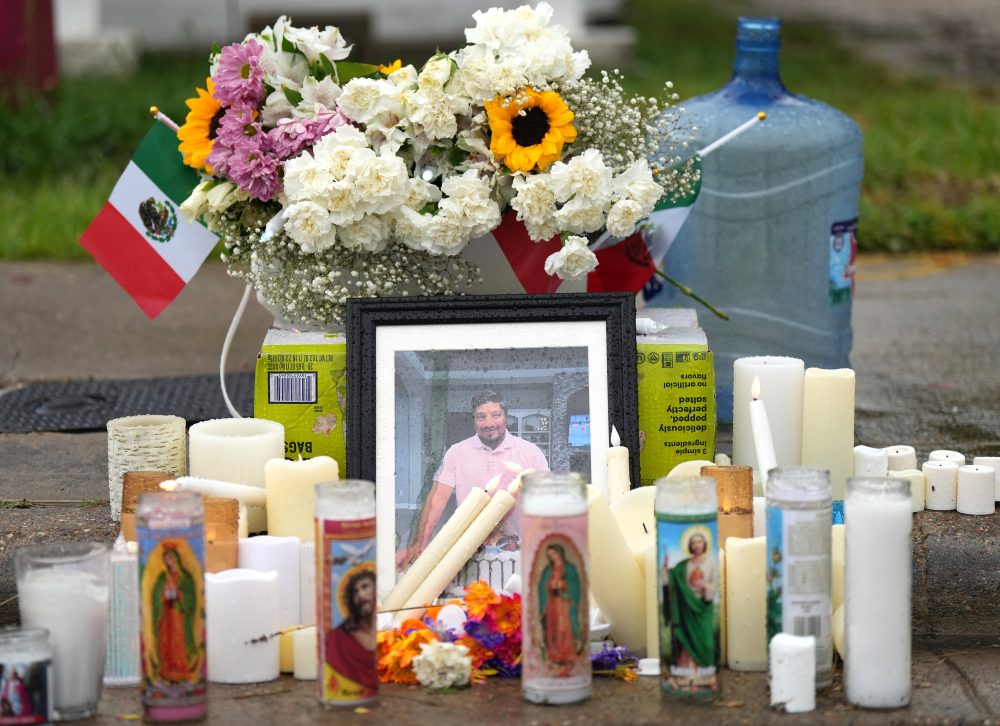

Following George Floyd’s death in 2020, the nationwide movement for racial justice sparked commitments from corporations and foundations to better support Black-led nonprofit organizations that had historically been underfunded. Companies increased donations to historically Black colleges, climate funders promised greater investment in minority communities, and major donors vowed to address racial wealth disparities.
However, research published Tuesday reveals these financial commitments largely failed to materialize into sustained support. The study, conducted by nonprofit research organization Candid in partnership with Black philanthropy group ABFE, found that larger Black-led nonprofits experienced only brief funding increases from 2020 to 2022, while smaller organizations saw virtually no improvement.
This pattern of reduced investment has placed community organizations at an even greater disadvantage as President Donald Trump’s administration implements policies limiting diversity, equity and inclusion funding. The nonprofit sector faces additional challenges from threats to social service programs, uncertainty about future grants due to agency staff cuts, and restrictions on racial justice funding through anti-DEI executive orders.
Cliff Albright, who co-founded Black Voters Matter, emphasized that these same community nonprofits are now expected to assist increasing numbers of low-income families struggling with elevated healthcare expenses and food costs.
“We’re literally being asked to do more with less resources,” Albright told The Associated Press.
The research found that smaller Black-led nonprofits frequently depended on new donors rather than established supporters, missing out on transformative partnerships that provide long-term stability and help weather difficult periods. Organizations with annual budgets of $1 million or less received just over one-third of their funding from repeat donors, the report indicated.
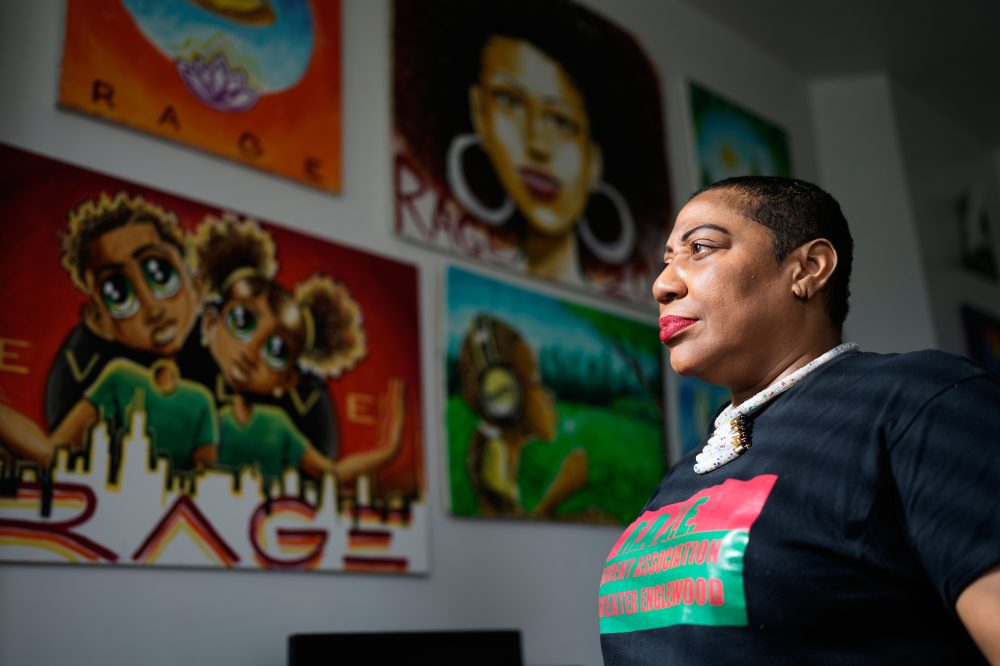
This challenge affected organizations like the Resident Association of Greater Englewood, which serves a predominantly Black neighborhood on Chicago’s South Side that ranks among the city’s most economically disadvantaged areas. CEO Asiaha Butler co-established the nonprofit over 15 years ago to empower residents to challenge negative perceptions of their community.
While the organization maintained several steady supporters for its mission, summer 2020 brought more than 24 new funding sources.
“All of a sudden, we were desirable for people to fund,” Butler recalled, noting that the “spurt” eventually became a “curse” as the rapid influx of money eventually diminished.
“We started seeing this revenue and thinking we’re gaining really great relationships with funders,” she explained. “And, really, those priorities shifted quickly.”
According to ABFE CEO Susan Taylor Batten, foundations had limited connections with Black organizations of any size before 2020.
Black philanthropy experts say this disconnect created chaos when protesters demanded that businesses and philanthropic organizations confront systemic racism.
Kia Croom, whose fundraising company serves nonprofits in Black communities, reported that her clients received unprecedented corporate funding. Some hired extra development personnel to handle the increased interest, only to conduct layoffs when the money vanished.
“It was just a very transactional gift at best,” she observed.
Kandee Lewis, who leads the Positive Results Center, a Los Angeles nonprofit supporting domestic violence survivors and others who have experienced harm, said receiving contributions from new supporters felt wonderful initially. However, the assistance often proved to be one-time donations rather than the foundation of ongoing partnerships.
Lewis believed the funding arrived solely because her organization was Black-led, not because donors truly understood their mission.
“They were so busy trying to figure out who was who that they didn’t really take time to get to know people,” she stated.
Jaleesa Hall understands that philanthropy operates on relationships. She directs the Raising A Village Foundation, which promotes educational equity through tutoring initiatives. When she established the Washington, D.C. nonprofit over six years ago, her network included few wealthy individuals.
This limited circle made it challenging to attract foundation attention, as these organizations “haven’t really cracked” how to identify potential grant recipients beyond their existing networks of connections.
“Small, Black-led nonprofits simply aren’t in those rooms to begin with,” Hall noted.
The report showed that most foundation grant funding for these organizations came from first-time supporters.
Cathleen Clerkin, associate vice president of research at Candid, explained that the nonprofits’ mission becomes even more difficult due to the “song and dance” required to obtain long-term investment annually.
“They’re just constantly going on first dates with new funders and hoping that somebody will invest in them and understand them,” she said.
Leaders of small nonprofits remain so occupied with daily operations and financial survival that they lack time for networking events or money to travel to national conferences.
T’Pring Westbrook, a nonresident fellow at the Urban Institute’s Center on Nonprofits and Philanthropy, co-established a consulting firm serving small nonprofits. She argues the issue isn’t that foundations refuse to support marginalized communities, but that they do so through “trend funding.”
“Maybe during Black History Month there will be a funding campaign,” she explained. “But the thing about a campaign is a campaign doesn’t build sustainability.”
Small nonprofits report facing additional obstacles regardless of race, including grant qualification criteria. Limited staffing may prevent eligible organizations from maintaining foundations’ required weekly or monthly progress reports on funded projects.
“It ends up feeling like a burden,” Hall said. “The juice isn’t worth the squeeze.”
The philanthropy sector has moved toward trust-based approaches that provide general operating support and multi-year grants, recognizing nonprofits’ knowledge about best fulfilling their missions. However, Batten noted that Black-led nonprofits typically haven’t benefited from these improved practices.
The study demonstrated that Black-led nonprofits had significantly fewer repeat funders compared to non-Black organizations. Only one-third received general operating support, while just over half of other nonprofits did.
“We are still seeing remnants of bad practice when it comes to investing in Black communities,” Batten stated. “There’s just no way for a foundation to move its mission for communities in this country, let alone Black nonprofits to move theirs, if we do not evolve this sector.”
Butler, the Chicago community leader, now hears explanations from supporters who contributed during the peak of the 2020 racial justice movement: “Priorities have shifted,” they inform her, or there are “new strategic goals.”
“Little buzz words that just say perhaps this nonprofit — grassroots, Black-led, very focused on the Black population — is probably just not in peoples’ cards to continue to support,” she said.
This funding decline postponed a nearly $7 million capital project building on their economic justice efforts following the post-George Floyd civil unrest. The planned 8,800-square-foot building would house a full-service restaurant and another Black-owned business. One tenant would offer workforce development training. Her objective is to strengthen Englewood’s economic and social foundation through a flourishing Black business district.
By 2023, she had obtained a $1 million grant — her nonprofit’s largest — to begin the project. However, she compared her search for additional funding to “pulling teeth.” Former philanthropic partners withdrew support, and their prospects looked dim.
She’s now pursuing public funding. Chicago provided a $2.5 million grant, and Butler said another $1.5 million state award awaits approval.
“Things shifted and so we didn’t want to start soliciting for a capital campaign,” she explained. “The timing was off.”