Author: Admin

  • Treasury Secretary Predicts Strong Economic Growth for 2026

    Treasury Secretary Predicts Strong Economic Growth for 2026

    WASHINGTON – Treasury Secretary Scott Bessent expressed optimism about America’s economic future during a Friday interview on Fox News, predicting the nation’s economy could expand by no less than 3.5% in 2026.

    Speaking on “The Will Cain Show,” Bessent attributed the disappointing fourth-quarter economic performance, which showed just 1.4% growth in gross domestic product, to external factors that hampered normal business operations. He specifically pointed to a partial government shutdown and significant financial write-offs by American automotive companies as major contributors to the sluggish numbers.

    According to Bessent, these disruptions may have reduced economic growth by one to two percentage points compared to what could have been achieved under normal circumstances.

    “It was this longest shutdown in history that caused the fourth quarter to crash,” Bessent explained during the television appearance.

  • Trump Blasts Supreme Court Justices Over Tariff Decision in Scathing White House Remarks

    Trump Blasts Supreme Court Justices Over Tariff Decision in Scathing White House Remarks

    President Donald Trump delivered a scathing 45-minute response Friday following the Supreme Court’s decision to overturn his global tariff policies, targeting specific justices with unusually harsh personal criticism.

    The high court’s 6-3 decision against the tariffs prompted Trump to express disappointment and shame toward certain members of the nation’s highest judicial body during remarks to reporters at the White House.

    “The Supreme Court’s ruling on tariffs is deeply disappointing. And I’m ashamed of certain members of the court – absolutely ashamed – for not having the courage to do what’s right for our country,” Trump stated from the White House briefing room.

    The ruling particularly stung Trump because it included votes from two justices he nominated during his first presidency – Neil Gorsuch and Amy Coney Barrett – who joined Chief Justice John Roberts and the court’s three liberal members in the majority opinion.

    Trump’s response marked an extraordinary public attack on the Supreme Court by a sitting president, even as his administration has previously criticized lower court decisions that have blocked his policy initiatives since returning to office in January 2025.

    Speaking from behind a lectern in dimly lit conditions, the president questioned the patriotism of some justices and alleged the court “has been swayed by foreign interests,” though he offered no supporting evidence for this claim.

    Trump directed especially sharp words at his own appointees Gorsuch and Barrett for their votes against the tariff policy, which he has used as a key tool in foreign relations.

    “I think it’s an embarrassment to their families, you wanna know the truth, the two of them,” Trump said, referring to Gorsuch and Barrett.

    In contrast, the president offered high praise for Justice Brett Kavanaugh, another of his appointees, who authored the dissenting opinion alongside Justices Clarence Thomas and Samuel Alito.

    “I’d like to thank and congratulate Justices Thomas, Alito, and Kavanaugh for their strength and wisdom and love of our country, which is, right now, very proud of those justices,” Trump declared. “When you read the dissenting opinions, there’s no way that anyone can argue against them.”

    Kavanaugh’s dissent suggested the ruling might not significantly limit presidential tariff authority in the future, noting that the court concluded Trump “checked the wrong statutory box by relying on (an emergency economic powers law) rather than another statute to impose these tariffs.”

    The justice wrote that Friday’s decision doesn’t prevent the president “from imposing most if not all of these same sorts of tariffs under other statutory authorities” and that “the court’s decision is not likely to greatly restrict presidential tariff authority going forward.”

    Trump repeatedly highlighted Kavanaugh during his remarks, calling his 2018 appointee’s work “genius” and expressing pride in the nomination that survived a contentious Senate confirmation process.

    “I would like to thank Justice Kavanaugh for his, frankly, his genius and his great ability,” Trump said. “Very proud of that appointment.”

    The president also targeted the court’s liberal wing with harsh criticism, referring to them as “the Democrats on the court.”

    “They’re an automatic no, just like in Congress. They’re an automatic no. They’re against anything that makes America strong, healthy and great again,” Trump said. “They also are a, frankly, disgrace to our nation, those justices.”

    The Supreme Court, which maintains a 6-3 conservative majority, had generally supported Trump’s broad executive power claims in emergency rulings over the past year, making Friday’s defeat particularly notable for the administration.

    The tariff policies were implemented under legislation designed for national emergencies, but the majority found this legal justification insufficient to support the broad trade measures.

  • Canada Approves Gulfstream Jets After Trump Trade Threat

    Canada Approves Gulfstream Jets After Trump Trade Threat

    Canadian aviation regulators have given their stamp of approval to two General Dynamics Gulfstream business aircraft models, according to government paperwork, ending a diplomatic dispute that involved threats from former President Donald Trump.

    Transport Canada issued certification for the G500 and G600 business jets on February 15, according to a type certificate data sheet that had not been publicly disclosed before. The Federal Aviation Administration’s leader had predicted earlier this month that Canada would soon greenlight several Gulfstream aircraft that had been stuck in approval limbo for multiple years.

    The approval follows Trump’s January social media threat to remove certification from Canadian-manufactured Bombardier Global Express business aircraft and impose 50% import duties on all Canadian-built planes. Trump demanded that Canada’s aviation authority approve several aircraft built by American competitor Gulfstream before lifting his threatened penalties.

    Two additional Gulfstream models, the G700 and G800, remain awaiting Canadian certification approval.

    The political pressure surrounding aircraft certification troubled aviation industry professionals, who emphasized that airplane approvals should focus solely on safety considerations without political interference.

    International aviation protocols establish that the nation where aircraft are developed – in this case, the United States for Gulfstream planes – holds primary responsibility for initial safety certification through a type certificate process that validates the aircraft’s design safety.

    While other nations generally accept the primary regulator’s determination, they maintain authority to reject certification or request additional safety information.

  • Kim Jong Un Evaluates North Korea’s Five-Year Progress at Major Party Meeting

    Kim Jong Un Evaluates North Korea’s Five-Year Progress at Major Party Meeting

    North Korean leader Kim Jong Un spent Saturday examining his nation’s accomplishments over the past half-decade, which he described as bringing “great transformation” to the country, according to state-run media reports from Seoul.

    The Workers’ Party’s Ninth Congress kicked off Thursday and is anticipated to continue for several more days. This major political gathering, held once every five years, represents North Korea’s most significant governmental event, establishing future policies and potentially reshuffling leadership positions under Kim’s supreme authority.

    State media outlet KCNA reported that the ruling party celebrated “remarkable successes” across multiple sectors including politics, economics, cultural affairs, military defense, and international relations throughout Kim’s leadership over the previous five years.

    According to KCNA, the party’s Central Committee initially concentrated on identifying areas needing improvement before turning attention to achievements, though the report did not specify what deficiencies were discussed.

    Friday’s reports indicated that 5,000 Workers’ Party members are participating in the congress. While no major international officials appear to be in attendance, KCNA noted that congratulatory messages arrived from Russia, China, Vietnam, and Laos.

    Analysts expect North Korea to display its military strength through a parade and outline weapons development objectives as components of the ongoing meeting.

  • Treasury Secretary Says High Court Ruling Limits Trump’s Tariff Options

    Treasury Secretary Says High Court Ruling Limits Trump’s Tariff Options

    Treasury Secretary Scott Bessent declared Friday that a recent Supreme Court decision has diminished President Donald Trump’s negotiating power by overturning tariffs that were implemented through emergency authority legislation.

    Speaking on Fox News’ “The Will Cain Show,” Bessent explained the court’s impact on the administration’s trade strategy. “The Supreme Court has taken away the President’s leverage, but in a way, they have made the leverage that he has more draconian because they agreed he does have the right to a full embargo,” Bessent stated during the interview.

    The Treasury Secretary indicated that the administration would find alternative pathways to maintain current tariff levels. “We will get back to the same tariff level for the countries. It will just be in a less direct and slightly more convoluted manner,” he explained.

    Following the court’s decision on Friday, Trump responded by declaring his intention to use alternative legal authorities for tariff collection and revealed plans for a comprehensive 10% tariff on imports from all other nations.

    Bessent expressed confidence that international partners would maintain their existing trade commitments with the Trump administration from the past year.

    The Treasury Secretary emphasized the president’s broader trade enforcement capabilities, stating: “He (Trump) has a right to a complete embargo, he can just cut countries off … or he can cut whole product lines off. We can’t receive any money. So, I would call on all countries to honor their agreements and move forward.”

  • German-American Showdown Heats Up Olympic Bobsled Competition

    German-American Showdown Heats Up Olympic Bobsled Competition

    CORTINA D’AMPEZZO, Italy – The fierce competition between German and American bobsledders delivered thrilling action Friday during the opening day of Olympic two-woman bobsled racing, with teams from both nations claiming every spot in the top five heading into the weekend finale.

    Germany’s Laura Nolte, the reigning champion in this event, sits atop the leaderboard at the midway mark alongside her brakewoman Deborah Levi. The duo demonstrated remarkable precision, setting a track record of 56.97 seconds in their opening run before improving to 56.96 on their second attempt.

    With just 0.62 seconds separating the leading five sleds, Saturday’s final two runs will determine the medal winners. Notably absent from medal contention will be America’s Elana Meyers Taylor, who captured monobob gold earlier this week but experienced a catastrophic second run that derailed her championship hopes.

    Nolte has established herself as the sport’s premier pilot, capturing three consecutive World Cup championships and winning five of seven races this season. Despite her record-setting performance, she acknowledged room for improvement.

    “On the first run I messed up corner one and when you lose speed there it’s hard to get it back in the down part,” Nolte explained after her track record run.

    Germany’s second sled features Lisa Buckwitz, who earned gold as a brakewoman in 2018 and now competes as a pilot. Partnered with Neele Schuten, Buckwitz trails by just 0.18 seconds after showing impressive form during practice sessions throughout the week.

    American veteran Kaillie Humphries, who previously won Olympic gold for Canada in 2010 and 2014 before representing the United States, demonstrated masterful driving skills alongside brakewoman Jasmine Jones. After leading following the first run, they now sit in third place, just five hundredths behind Buckwitz.

    Germany’s third entry of Kim Kalicki and newcomer Talea Prepens holds fourth position, while Americans Kaysha Love and Azaria Hill round out the top five.

    The most dramatic storyline involves Meyers Taylor, competing in her fifth Olympics at age 41 with four previous medals in this discipline. Teamed with explosive heptathlete Jadin O’Brien, who only began bobsledding months ago, they appeared competitive after their opening run before disaster struck.

    During their second attempt, the pair crashed into the wall shortly after entering their sled, sliding sideways and losing crucial momentum. Their time of 57.99 seconds ranked 21st among 25 competitors, dropping them to 12th overall and effectively ending their medal pursuit.

    “We came out of the start grooves, hit right. I tried to steer it away from the wall and just could not react in time,” Meyers Taylor said, reflecting on her six Olympic medals across five Games.

    “So we hit, skidded up the first curve, and after you do that it’s game over. When you make that kind of mistake, that is a devastating mistake.”

    Historical dominance by Germany, the United States, and Canada continues in this event, with these nations claiming 17 of 18 available medals since two-woman bobsled joined the Olympics in 2002. Italy’s single bronze medal at the 2006 Turin Games represents the only exception to this pattern.

    Saturday’s conclusion appears likely to extend this streak, with all medal contenders representing these three powerhouse nations.

  • Michigan Dairy Cattle Confirmed with Bovine Tuberculosis Outbreak

    Michigan Dairy Cattle Confirmed with Bovine Tuberculosis Outbreak

    Agricultural officials in Michigan have confirmed that cattle at a dairy operation in the state’s northern region have tested positive for bovine tuberculosis.

    According to the Michigan Department of Agriculture and Rural Development, the infected herd is located in Charlevoix County. The outbreak came to light when a cow from the operation tested positive for the disease during routine screening at a federally-inspected meat processing facility.

    Following the initial positive test result, officials conducted further testing that revealed additional infected animals within the same herd. This marks the second reported case of bovine tuberculosis in Michigan livestock operations recently.

  • Weekly Cattle Market Drops as Traders Await Key USDA Report

    Weekly Cattle Market Drops as Traders Await Key USDA Report

    Trading contracts for cattle experienced declines at the Chicago Mercantile Exchange as market participants held back, anticipating the development of direct business activity and the release of Friday’s On Feed report from the U.S. Department of Agriculture.

    Live cattle contracts for April delivery dropped $1.42 to settle at $242 per hundredweight, while June contracts fell $1.35 to close at $237.52. Feeder cattle also saw significant losses, with March contracts declining $2.25 to finish at $368.02 per hundredweight, and April contracts posting similar decreases.

    The market pullback reflects trader caution as they await key industry data that could influence future pricing trends in the livestock sector.

  • New Castle Woman Missing Since 1998: Police Review Cold Case of Cary Sue Huie

    New Castle Woman Missing Since 1998: Police Review Cold Case of Cary Sue Huie

    Delaware law enforcement officials are conducting a fresh review of a decades-old missing person case involving a New Castle County woman who disappeared more than 25 years ago.

    Cary Sue Huie, who may have also gone by Sue Shields Huie, was officially reported as a missing person on February 20, 1998. According to police records, Huie was last spotted on January 20, 1998, when she departed her New Castle residence with plans to travel to North Carolina to see family members.

    Huie never reached her intended destination in North Carolina and has remained missing without any contact or sightings since that January day in 1998. The case has remained unsolved for more than two decades.

    As part of ongoing efforts to resolve cold cases, investigators are taking another comprehensive look at the circumstances surrounding Huie’s disappearance, hoping that new leads or information might emerge to help solve this long-standing mystery.

  • University of Maryland Eastern Shore Track Team Gears Up for MEAC Championships

    University of Maryland Eastern Shore Track Team Gears Up for MEAC Championships

    The University of Maryland Eastern Shore Hawks track and field squad is putting the finishing touches on their training as they get ready to compete in the Mid-Eastern Athletic Conference Indoor Championships this weekend.

    The annual conference indoor meet will unfold across two days, with competition beginning Sunday and concluding Monday.

    UMES athletes will look to showcase the skills they’ve developed throughout the indoor season as they face off against other MEAC schools in various track and field events.

    The Hawks will be hoping to make their mark at the championship meet as they compete for individual honors and team standings within the conference.

  • Pork Producers Warn of State Overreach in Animal Housing Rules Debate

    Pork Producers Warn of State Overreach in Animal Housing Rules Debate

    The National Pork Producers Council is sounding the alarm about potential ripple effects if federal lawmakers don’t take action on California’s Proposition 12 animal housing requirements. The organization’s CEO Bryan Humphreys spoke with agricultural media about his concerns regarding multiple states pursuing similar livestock confinement regulations modeled after California’s controversial law.

    According to Humphreys, the core issue with both Massachusetts’ Question 3 and California’s Proposition 12 centers on jurisdictional overreach. “The challenge with Massachusetts’ (Question 3) and with California specifically remains, they are legislating and regulating farmers outside” their state boundaries, Humphreys explained during the interview.

    The pork industry leader emphasized that this trend represents a broader question about which level of government should establish farming practices across the United States, as more states consider implementing their own versions of animal welfare legislation.

  • Wisconsin Chicken Processing Company Receives State Manufacturing Honor

    Wisconsin Chicken Processing Company Receives State Manufacturing Honor

    A family-run poultry processing company has been honored with Wisconsin’s prestigious Manufacturer of the Year recognition. Brakebush Brothers, Inc., which specializes in enhanced chicken products, received the state’s top manufacturing distinction.

    The company serves major grocery store chains nationwide, along with foodservice operations and ingredient manufacturers. Based in Westfield, Wisconsin, Brakebush Brothers operates processing facilities in several states including Wells, Minnesota; Irving, Texas; Mocksville, North Carolina; and Hartwell, Georgia.

    The Wisconsin-based processor focuses on creating value-added poultry products rather than basic commodity chicken, setting them apart in the competitive food manufacturing industry.

  • Dairy Operations Decline as Milk Output Climbs Despite Industry Challenges

    Dairy Operations Decline as Milk Output Climbs Despite Industry Challenges

    Agricultural economists are forecasting continued growth in milk production through 2026, despite mounting challenges facing dairy operators across the region. The latest USDA data reveals that 4% of dairy operations have ceased operations, highlighting ongoing pressures within the industry.

    During the recent USDA Agricultural Outlook conference, economist Anthony Fisher addressed how elevated beef prices are creating significant impacts on dairy herd management strategies. Fisher noted that milk production increases are expected even as the total number of dairy cows continues to shrink.

    “It’s expected to decline from the recent highs as producers respond to lower milk prices, higher replacement heifer costs,” Fisher explained during his presentation, referring to the factors driving changes in herd sizes.

    The agricultural expert emphasized that while January milk production showed increases, dairy farmers are navigating a complex economic environment that includes fluctuating milk prices and rising costs for replacement animals. These market dynamics are forcing producers to make difficult decisions about their operations’ future viability.

  • Grain Markets Mixed as Wheat Climbs on Dry Weather Fears

    Grain Markets Mixed as Wheat Climbs on Dry Weather Fears

    Grain markets showed mixed results this week as wheat values climbed higher while soybean prices faced downward pressure from investors cashing in profits and technical trading patterns.

    Wheat managed to finish the trading period with gains, boosted by ongoing concerns about dry weather conditions and traders covering short positions in the market.

    Meanwhile, soybeans experienced a decline as traders took profits and engaged in technical selling strategies, though the crop still managed to post small weekly increases overall.

    Market watchers are keeping close tabs on South American growing regions, where weather forecasts show some scattered rainfall expected in both Argentina and Brazil in the coming days.

    On the export front, sales figures showed improvement compared to the previous week, though the 29.3 million bushel total remained below typical averages. China and Egypt emerged as the primary buyers driving the increased export activity.

  • Delaware State Police Seek Public Help Locating Missing Sex Offenders

    Delaware State Police Seek Public Help Locating Missing Sex Offenders

    Delaware State Police are reaching out to the community for assistance in tracking down multiple registered sex offenders who have either disappeared from their registered locations or are living without permanent housing.

    The Sex Offender Apprehension and Registration Unit, known as SOAR, has published public alerts for two distinct groups of individuals requiring different types of monitoring.

    Missing Offenders Being Actively Sought

    Seven registered sex offenders are currently being pursued by authorities after failing to comply with address registration requirements or update their location information as mandated by law.

    The wanted individuals include Luis Burgos, Charles Fulton, Tori Lied, John Martz, Mollie Anne Schonwit, Roy Stevens, and Michael Viscount.

    Anyone with knowledge of where these individuals might be located should immediately contact authorities at (302) 739-5882. Tips can also be submitted anonymously through Delaware Crime Stoppers by calling (800) 847-3333.

    Homeless Offender Notifications

    Additionally, SOAR has identified five registered sex offenders who are currently without permanent housing but are not considered fugitives from registration requirements.

    These individuals – Quentrae Carroll, William Hammons, Kennie McGhee, Eric Riffel, and Moises Torres-Paddilla – have recently reported their homeless status to authorities as required.

    If community members have information indicating any of these individuals have moved into permanent housing, they should notify police using the same contact numbers.

    State Police emphasize that the individuals featured in this alert represent only a partial list of both wanted and homeless registered sex offenders currently being monitored. Complete information about all registered sex offenders in Delaware can be accessed through the official Delaware Sex Offender Registry website.

    Detailed profiles for each individual, including photographs and offense information, are available by clicking through the registry database.

  • National Poultry Output Drops 3% in January 2026

    National Poultry Output Drops 3% in January 2026

    The nation’s poultry industry started 2026 on a slower note, with January production numbers showing a notable decline from the previous year’s levels.

    According to federal agriculture officials, processors certified 4.49 billion pounds of wholesome poultry during the month, marking a 3% drop compared to January 2025. The decrease stems from reduced processing speeds combined with birds maintaining steady to lighter average weights across the industry.

    Chicken production bore the brunt of the decline, falling 3% to reach 4.081 billion pounds for the month. Turkey processing also experienced setbacks, dropping 4% to 398.607 million pounds during the same period.

    The production slowdown reflects broader challenges facing poultry processors as they navigate operational adjustments in the new year.

  • Health Officials Investigate Measles Exposure at Wilmington Children’s Hospital

    Health Officials Investigate Measles Exposure at Wilmington Children’s Hospital

    Delaware health officials announced Thursday they are investigating a potential measles exposure that took place at the emergency department of Nemours Children’s Hospital in Wilmington earlier this week.

    The Delaware Division of Public Health confirmed the exposure occurred on February 18, 2026, prompting immediate action from state health authorities.

    Health department officials are currently conducting contact tracing efforts to identify individuals who may have been exposed to the highly contagious disease during their visit to the hospital’s emergency room.

    As part of their investigation, DPH officials will be reaching out directly to people who were identified as potentially exposed to verify their vaccination status against measles.

    The health department’s swift response underscores the serious nature of measles exposure, particularly in a pediatric healthcare setting where vulnerable populations may be present.

  • Maryland Releases Zizians Cult Member Connected to Multi-State Death Investigations

    Maryland Releases Zizians Cult Member Connected to Multi-State Death Investigations

    CUMBERLAND, Md. — One of three individuals belonging to a group outsiders call the Zizians, which authorities have connected to six fatalities across the country, walked free from a Maryland detention facility Friday after making bail.

    Daniel Blank posted $15,000 bond and was released around midday Friday, while his co-defendants Jack “Ziz” LaSota and Michelle Zajko continue to be held without the possibility of bail, according to court records and testimony from preliminary hearings.

    Law enforcement officials in Maryland have tied the trio to murder cases spanning California, Pennsylvania, and Vermont after a property owner discovered them residing in box trucks on a remote, snow-covered dirt road this past February.

    Blank’s attorney Rebecca Lechliter refused to provide any statement regarding the release. As part of his bail conditions, Blank must reside by himself and wear a GPS monitoring device.

    The death toll associated with this group climbed to six in the previous year following the killing of a U.S. border patrol agent in Vermont. Following this incident, the three individuals were taken into custody on weapons and trespassing violations while hiding in the forests of western Maryland. Currently, seven group members are incarcerated across three different states, all awaiting their respective trials.

    Following their February 16, 2025 apprehension, Maryland State Trooper Brandon Jeffries documented that all “suspects involved are to be questioned regarding other crimes that have occurred across the country and have ties with the Zizians Cult.”

    This collective, dubbed “Zizians” by those outside their circle, consists of young, exceptionally bright computer science professionals who appear to hold extreme viewpoints regarding plant-based diets, animal welfare, gender identity, and artificial intelligence. Beginning in 2022, group members have been implicated in the death of one of their own during an assault on a California property owner, the subsequent murder of that landlord, the fatal shootings of Zajko’s mother and father in Pennsylvania, and a deadly highway gunfight in Vermont that claimed the lives of both the border agent and another Zizian member.

    The selection of jurors was scheduled to begin recently in Cumberland, Maryland, where LaSota, Zajko, and Blank face charges including LSD possession, intent to distribute LSD, various firearms violations, trespassing, and obstructing law enforcement.

    However, the proceedings have been postponed until June after Zajko, who also faces a resisting arrest charge, dismissed her legal counsel, briefly acted as her own representative, and subsequently retained new legal representation.

  • Court Considers Return of Devices Seized from Washington Post Reporter’s Home

    Court Considers Return of Devices Seized from Washington Post Reporter’s Home

    ALEXANDRIA, Va. — A federal magistrate is deliberating whether to force authorities to give back electronic equipment confiscated from a Washington Post journalist’s Northern Virginia residence during a search last month.

    During Friday’s court proceedings, legal representatives for the newspaper contended that federal officials are trampling on First Amendment protections after taking devices from reporter Hannah Natanson’s Alexandria home. U.S. Magistrate Judge William Porter had previously approved the FBI search as part of a probe into suspected illegal sharing of classified materials with Natanson by a Pentagon contractor.

    Porter declined to make an immediate ruling on the Post’s motion demanding return of the seized equipment, stating he plans to announce his decision prior to a scheduled follow-up session on March 4.

    “I have a pretty good sense of what I’m going to do here,” the magistrate said without elaborating.

    The investigation centers on Pentagon contractor Aurelio Luis Perez-Lugones, who was taken into custody January 8 on charges of improperly removing and keeping classified documents. Authorities allege Perez-Lugones brought home printed classified materials from his job and subsequently shared them with Natanson.

    During the January 14 search of Natanson’s Alexandria residence, federal agents confiscated a mobile phone, two laptop computers, a recording device, a portable hard drive and a Garmin smartwatch. Porter previously agreed to temporarily prevent the government from examining any content from the reporter’s devices.

    Attorney Simon Latcovich, representing the Post, explained that material stored on Natanson’s equipment could reveal hundreds of confidential sources who regularly supplied her with numerous tips daily.

    “Since the seizure, those sources have dried up,” he said.

    Should Porter decide to conduct a private examination of the device contents before determining what the government can access, Latcovich requested that Post and reporter attorneys be permitted to review the material first to argue for protecting certain information.

    Justice Department lawyer Christian Dibblee acknowledged that the government understands Porter didn’t approve a “fishing expedition.”

    “The government does take that seriously,” he said.

    The newspaper’s legal team accused authorities of breaking legal protections for journalists and violating Natanson’s First Amendment free speech guarantees.

    Government prosecutors maintained they have the right to retain the confiscated materials because they contain evidence relevant to an active investigation involving national security concerns.

    The situation has attracted nationwide attention and criticism from press freedom organizations who view it as evidence of increased Justice Department aggressiveness in leak investigations targeting journalists.

    “There is a pattern here, your honor, that this is a part of,” Latcovich said.

  • Trump Administration Plans to Reopen Syrian Embassy After 14-Year Closure

    Trump Administration Plans to Reopen Syrian Embassy After 14-Year Closure

    WASHINGTON — Congressional leaders have been notified that the Trump administration plans to move forward with preparations to potentially reopen America’s embassy in Damascus, Syria, after a 14-year closure that began during the nation’s civil conflict in 2012.

    According to documentation received by The Associated Press, lawmakers were informed earlier this month about the State Department’s plan to “implement a phased approach to potentially resume embassy operations in Syria” through a notice sent to congressional committees.

    The February 10 communication indicated that funding for these preparations would commence within 15 days, beginning next week, though no specific timeline was provided for completion or the return of American diplomatic staff to Damascus on a permanent basis.

    Embassy reopening discussions have been ongoing since last year, gaining momentum after longtime ruler Bashar Assad was removed from power in December 2024. The initiative has received strong support from President Donald Trump’s ambassador to Turkey and Syria special envoy, Tom Barrack.

    Barrack has championed extensive diplomatic reconciliation with Syria’s new government led by former opposition leader Ahmad al-Sharaa, successfully promoting the removal of American sanctions and Syria’s return to regional and global diplomatic circles.

    Speaking to media on Friday, Trump praised al-Sharaa’s leadership performance. “He’s doing a phenomenal job,” Trump stated. “He’s a rough guy. He’s not a choir boy. A choir boy couldn’t do it. But Syria’s coming together.”

    During a Damascus visit last May, Barrack ceremonially raised the American flag at the embassy location, though formal operations had not yet resumed.

    On the same date as the congressional notification, Barrack celebrated Syria’s decision to join the coalition fighting Islamic State militants, despite ongoing U.S. military withdrawal from a strategically important southeastern base and continuing tensions with Kurdish populations.

    “Regional solutions, shared responsibility. Syria’s participation in the D-ISIS Coalition meeting in Riyadh marks a new chapter in collective security,” Barrack commented.

    State Department officials declined to provide specific details about the classified embassy reopening strategy beyond acknowledging the congressional notification was delivered.

    The department has employed comparable “phased” methodology for plans to reestablish the American Embassy in Caracas, Venezuela, following military action that removed former President Nicolás Maduro in January, utilizing temporary personnel operating from provisional locations.

  • Swiss Curling Team Dominates Norway 9-1 to Claim Olympic Bronze

    Swiss Curling Team Dominates Norway 9-1 to Claim Olympic Bronze

    The Swiss men’s curling team captured Olympic bronze on Friday with a decisive 9-1 triumph over Norway at the Milano Cortina Games in Italy.

    Led by Yannick Schwaller, the Swiss squad delivered a commanding performance at the Cortina Curling Olympic Stadium, establishing control early and maintaining their dominance throughout the match.

    The Swiss team had entered the bronze medal game after completing a perfect round-robin phase without a single loss. However, their path to gold was blocked when they fell to defending world champions Britain in Thursday’s semifinal round.

    Switzerland built their advantage through precise play in the opening ends. Smart tactical moves in the second end positioned Benoit Schwarz-van Berkel to score three points, and the team followed up by stealing another point to establish a commanding 4-0 lead.

    Norway managed to put one point on the scoreboard, but Schwarz-van Berkel responded with another strong performance in the eighth end. His skillful runback shot added two more points to Switzerland’s total, extending their lead to 6-1.

    The Norwegian team struggled to mount any significant comeback throughout the contest. When Magnus Ramsfjell missed a crucial shot that allowed Switzerland to steal three points in the eighth end, Norwegian skip conceded the match in memorable fashion by performing a complete 360-degree spin while delivering his final stone.

    This bronze medal represents Switzerland’s eighth overall medal in Olympic curling competition and marks their first podium finish since claiming men’s bronze at the 2018 Pyeongchang Olympics.

    The gold medal match is scheduled for Saturday, featuring Canada’s team under Brad Jacobs against Britain’s squad led by Bruce Mouat, who enter as the current world champions.

  • Delaware Businesses Welcome Supreme Court Decision Striking Down Trump Tariffs

    Delaware Businesses Welcome Supreme Court Decision Striking Down Trump Tariffs

    Corporate executives and trade organizations are expressing optimism following the U.S. Supreme Court’s February 20 decision to strike down former President Donald Trump’s emergency tariff measures, though many acknowledge the complicated reimbursement process that lies ahead.

    The ruling has generated widespread commentary from business leaders across various sectors:

    Steve Lamar, who leads the American Apparel & Footwear Association, emphasized the need for stability in trade policy. “Now is the time to restore a predictable and dependable trade policy, compliant with the rule of law, that the apparel and footwear industry can rely on to temper the already heavy tariff burden facing our industry, U.S. manufacturers, and every hard-working American family that relies on our products,” Lamar stated.

    Michael Wieder, who co-founded baby products manufacturer Lalo, clarified the Court’s reasoning behind the decision. “The Supreme Court decision didn’t say that tariffs are illegal, it’s that this way of imposing tariffs is illegal … You can do it, but there has to be a clear definitive reason,” Wieder explained.

    He added his satisfaction with the outcome: “We don’t have 100% of the facts, but we’ve been waiting for this and so many people have, so it is definitely a good day.”

    However, some experts warn of challenges ahead. Steve Orava, who chairs the International Trade Practice at King & Spalding, pointed to continuing uncertainty. “The major issue that everybody’s going to be dealing with for at least the short term is some additional uncertainty … Whether you’re in favor of the tariffs or against the tariffs, there’s kind of a unified view that getting some certainty in terms of the tariff levels is what is most helpful to drive business and investment decisions,” Orava said.

    The refund process itself may prove problematic, according to Andrew Wilson from the International Chamber of Commerce. “Instances where intermediaries, wholesalers, express shippers like DHL, FedEx have paid the tariff on behalf of customers, they will be named as the importer of record … I think there (is) going to be quite a lot of uncertainties, quite a lot of tension, possibly some litigation coming out of this,” Wilson predicted.

    Retail Industry Leaders Association President Brian Dodge viewed the decision as an opportunity for improved government-industry cooperation. “The Supreme Court’s decision … opens the door for the Administration to engage industry more closely on trade policy to create the stability and predictability American retailers and consumers need,” Dodge commented.

    Francis Creighton, who heads Wine & Spirits Wholesalers of America, welcomed the clarity the ruling provides. “Today’s decision restores clarity and helps stabilize an industry that depends on open markets and longstanding international partnerships,” Creighton said.

    Dan Anthony, executive director of We Pay The Tariffs, a coalition representing over 800 small businesses, addressed the technical aspects of processing refunds. “From a technical perspective, for the U.S. government, this is not novel or difficult … Every shipment has a code that specifically calls out the IEEPA tariffs that are paid,” Anthony noted.

    Anthony urged the government to act swiftly, saying it “should be looking to minimize future suffering.”

  • Supreme Court Tariff Ruling Brings Little Global Economic Relief, Experts Say

    Supreme Court Tariff Ruling Brings Little Global Economic Relief, Experts Say

    Economic experts are cautioning that Friday’s U.S. Supreme Court decision blocking President Donald Trump’s emergency-based tariffs won’t provide much immediate economic relief globally, despite representing a significant legal defeat for the administration’s trade strategy.

    Analysts predict another wave of market-disrupting uncertainty as Trump pursues alternative methods to reinstate the comprehensive tariff system the court deemed illegal.

    Several major questions loom large: what replacement tariffs the administration will implement, whether businesses will receive refunds from the invalidated levies, and if nations that negotiated agreements to reduce tariff impacts might seek to renegotiate those arrangements.

    Following the court’s decision, Trump quickly unveiled replacement global tariffs set at 10% for an initial 150-day timeframe, while noting uncertainty about potential refund timelines.

    “In general, I think it will just bring in a new period of high uncertainty in world trade, as everybody tries to figure out what the U.S. tariff policy will be going forward,” said Varg Folkman, analyst at the European Policy Centre think tank.

    “In the end it’s going to look pretty much the same.”

    ING bank economists shared this assessment: “The scaffolding has come down, but the building remains under construction. No matter how today’s ruling reads, tariffs are here to stay.”

    The Supreme Court’s decision specifically targeted tariffs implemented under the International Emergency Economic Powers Act, legislation designed for national emergencies. These levies have generated more than $175 billion in revenue to date.

    The ruling cuts America’s trade-weighted average tariff rate nearly in half, dropping from 15.4% to 8.3%, according to Global Trade Alert, a trade policy monitoring organization.

    Nations facing the highest U.S. tariff rates will see the most dramatic changes. China, Brazil, and India are expected to experience double-digit percentage point reductions, though rates will remain elevated.

    However, no one anticipates this situation will persist: the Trump administration had already signaled before the ruling that it would utilize different legal mechanisms to restore tariffs.

    Meanwhile, approximately two dozen countries that negotiated bilateral agreements with the U.S. to establish tariff levels and sometimes commit to American investments are now evaluating whether the Supreme Court ruling provides leverage for renegotiation.

    Bernd Lange, who chairs the European Parliament’s trade committee, indicated lawmakers could ratify the European Union’s agreement with the United States as early as Monday.

    “The era of unlimited, arbitrary tariffs … might now be coming to an end,” Lange posted on X. “We must now carefully evaluate the ruling and its consequences.”

    British officials stated Friday they expect their special trading relationship with the United States to persist, referencing the baseline 10% tariff arrangement negotiated with Washington.

    Many nations had been adapting to Trump’s tariff policies, with Americans bearing most of the financial burden according to a Federal Reserve Bank of New York analysis released this month.

    The International Monetary Fund’s latest World Economic Outlook projects “resilient” global growth of 3.3% for 2026.

    China reported a record trade surplus approaching $1.2 trillion in 2025, driven by surging exports to markets outside the U.S. as Chinese manufacturers adjusted to Trump’s trade policies.

    Some countries may therefore choose to maintain their current bilateral U.S. agreements rather than “inviting the kind of uncertainty we saw in the spring in 2025,” according to EPC’s Folkman, referencing the disruption caused by Trump’s “reciprocal” tariff strategy.

    However, Niclas Poitiers, a research fellow at economic think tank Bruegel, highlighted significant political uncertainties surrounding the EU-U.S. trade agreement, where Europe was perceived as making excessive concessions.

    “There could be circumstances in which the deal unravels,” he observed.

  • Federal Investigation Into AppLovin Marketing Platform Remains Ongoing

    Federal Investigation Into AppLovin Marketing Platform Remains Ongoing

    Federal regulators are maintaining their investigation into marketing platform AppLovin, according to a Friday report from Bloomberg News.

    The Securities and Exchange Commission previously began examining claims that AppLovin breached service agreements with platform partners in order to deliver more targeted advertisements to users, Bloomberg initially reported in October.

    When Bloomberg requested documents related to the AppLovin investigation, the SEC refused to provide them. Following an appeal, the agency confirmed that an “investigation involving AppLovin is still active and ongoing.”

    In a Friday letter to Bloomberg, the SEC explained it would not share internal communications among staff members mentioning AppLovin because doing so could “cause harm to the ongoing and active enforcement investigation.”

    According to the report, the agency expressed concerns that relevant individuals and organizations might “fabricate evidence, influence witness testimony and/or destroy or alter certain documents” if information were disclosed.

    The SEC also noted in its Bloomberg correspondence that releasing the communications could potentially expose cooperating witnesses. The agency has not detailed what specific areas the investigation covers or formally accused AppLovin or its executives of any violations.

    Reuters was unable to confirm the Bloomberg report independently. Both the SEC and AppLovin have not yet responded to Reuters’ requests for statements.

    The AppLovin investigation reportedly stems from a whistleblower complaint submitted last year, as well as several reports from short-seller firms.

  • Blue Hens Women’s Basketball Team Travels to Face Missouri State

    Blue Hens Women’s Basketball Team Travels to Face Missouri State

    The University of Delaware women’s basketball team is preparing for a road trip to take on Missouri State in their next scheduled contest.

    The Blue Hens will face the Bears as they continue their current season campaign. The matchup represents another opportunity for Delaware to showcase their skills away from their home court.

    The team will be looking to build on their recent performances as they travel to Missouri for what promises to be a competitive game against the Bears.

  • Overnight Lane Closure Planned on I-95 in Wilmington for Bridge Repairs

    Overnight Lane Closure Planned on I-95 in Wilmington for Bridge Repairs

    Drivers traveling through Wilmington should prepare for overnight lane restrictions this week as crews work to repair the I-95 viaduct.

    The Delaware Department of Transportation has notified commuters that workers will need to shut down one lane of southbound Interstate 95 to fix broken acrylic panels on the Wilmington Viaduct structure.

    The repair operation is set to take place overnight from 9:00 pm Wednesday, February 25th until 5:00 am Thursday morning. Should weather conditions prevent the work from proceeding as planned, DelDOT will move the project to Thursday night, February 26th, during the same hours.

    The affected stretch of highway runs from the Jackson Street exit ramp to where traffic merges back onto I-95 at the 2nd Street entrance ramp.

    Motorists are advised to allow extra travel time and use caution when driving through the work zone during the overnight hours.

  • Agriculture Secretary Calls on Congress to Authorize Year-Round E15 Sales

    Agriculture Secretary Calls on Congress to Authorize Year-Round E15 Sales

    Agriculture Secretary Brooke Rollins addressed participants at the USDA’s Ag Outlook Forum, emphasizing that legislative action is required to enable nationwide E15 ethanol fuel availability throughout the year.

    “While the Trump administration has gone as far as we possibly can on E15, we are asking Congress to step up, answer the call and to finally get nationwide, year-round E15,” Rollins stated during her remarks to forum attendees.

    The secretary’s comments highlight the administration’s position that executive measures have reached their limit regarding E15 authorization, and that lawmakers must now take the lead to advance the ethanol fuel initiative on a national scale.

  • Cattle Supply Tightens as Feedlot Numbers Drop Across US

    Cattle Supply Tightens as Feedlot Numbers Drop Across US

    Cattle supplies across the United States continue to tighten, according to new federal agriculture data that shows significant drops in both feedlot activity and market-ready livestock.

    Federal agriculture officials report that U.S. feedlots received 1.736 million head of cattle in January 2026, representing a 5% decrease from the same month in 2025. The majority of these incoming animals were classified as lighter and middle weight cattle.

    The situation appears even more pronounced when examining cattle ready for sale. Marketing numbers reached 1.626 million head during the reporting period, marking a substantial 13% year-over-year decline.

    These trends suggest that tight cattle supplies will likely persist in the coming months, potentially affecting beef prices and availability for consumers throughout the region.

  • Massive Potomac Sewage Disaster Demands Answers, Accountability

    Massive Potomac Sewage Disaster Demands Answers, Accountability

    Following the catastrophic failure of the Potomac Interceptor on January 19, environmental and economic consequences are mounting as this massive sewer main continues dumping an estimated 240 to 300 million gallons of untreated sewage directly into the Potomac River.

    While protecting public health from dangerous contaminants and harmful bacteria remains the immediate focus, officials will eventually need to calculate the enormous nutrient pollution burden this disaster has added to both the river and Chesapeake Bay.

    Some experts are calling this the most significant sewage disaster in American history. University of Maryland water testing revealed E. coli contamination reaching 10,000 times beyond EPA safety limits during the worst period of the spill.

    Although DC Water’s monitoring shows contamination levels decreasing in areas farther from the source, repairs won’t completely halt the leak until mid-March, with full restoration work taking an additional nine months to finish.

    Repair efforts faced major setbacks when crews discovered a 10-foot rock barrier near the rupture site, combined with pump equipment failure caused by massive clumps of non-flushable wipes, resulting in an additional 600,000 gallons entering the waterway.

    The ongoing crisis threatens to shut down fish farming operations and commercial fisheries, could devastate regional tourism, and will likely reverse years of progress in reducing Chesapeake Bay watershed pollution.

    The exact environmental damage remains unclear, but experts anticipate severe consequences as weeks’ worth of nitrogen and phosphorus contamination entered the water system within just days. If agricultural operations had caused even a small portion of this pollution, there would be clear targets for blame and legal action.

    Instead, elected officials are engaging in political finger-pointing to avoid responsibility for the infrastructure neglect that led to this 60-year-old pipeline’s collapse.

    This major sewage catastrophe, along with numerous smaller spills throughout the watershed, must not be allowed to undermine the pollution reduction achievements funded by taxpayers, agricultural producers, watermen, and municipal governments.

    Regardless of who takes responsibility, everyone will ultimately bear the costs of this environmental disaster.

  • Coastal Flood Watch Remains Active Through Friday Morning for Delaware Shore

    Coastal Flood Watch Remains Active Through Friday Morning for Delaware Shore

    Delaware’s coastal communities remain under a Coastal Flood Watch that will stay in effect until Friday morning at 5:00 AM, according to the National Weather Service office in Mount Holly, New Jersey.

    The weather alert was initially issued on Tuesday, February 20th at 3:50 PM and continues to monitor conditions that could lead to flooding along Delaware’s shoreline areas.

    Residents and businesses in coastal zones should stay informed about changing conditions and be prepared to take necessary precautions if flooding develops during the watch period.

    The National Weather Service typically issues these watches when weather patterns suggest the possibility of coastal flooding, giving communities advance notice to prepare for potentially hazardous conditions.

  • Trump Weighs Military Action Against Iran Despite Nuclear Deal Progress

    Trump Weighs Military Action Against Iran Despite Nuclear Deal Progress

    WASHINGTON — President Donald Trump acknowledged Friday that he’s contemplating limited military action against Iran, even as Tehran’s foreign minister indicated a nuclear agreement could be finalized within days.

    When asked by reporters whether the United States might pursue limited military strikes while diplomatic negotiations continue, Trump responded, “I guess I can say I am considering that.”

    Meanwhile, Iranian Foreign Minister Abbas Araghchi told television interviewers that Tehran plans to complete a draft agreement “in the next two to three days” before sending it to Washington.

    The contrasting messages highlight growing tensions between the two nations as the Trump administration demands concessions from Iran. The U.S. has assembled its most substantial military deployment in the Middle East in decades, with additional naval vessels and aircraft en route to the region.

    Both Washington and Tehran have indicated their readiness for military conflict should diplomatic efforts regarding Iran’s nuclear program collapse. Recent indirect negotiations have shown minimal apparent advancement.

    The standoff reflects the longstanding adversarial relationship between the two countries, with military preparations intensifying even as diplomatic channels remain active.

  • 13-Nation NATO Military Training Exercise Unfolds in Northern Germany

    13-Nation NATO Military Training Exercise Unfolds in Northern Germany

    PUTLOS, Germany (AP) — A massive multinational military training operation brought together thousands of service members from over a dozen countries in northern Germany for NATO exercises dubbed Steadfast Dart 2026.

    The training marked a historic milestone as NATO’s rapid response spearhead force conducted its inaugural European deployment, incorporating naval vessels, military aircraft, and ground forces from 13 participating countries: Italy, Greece, Germany, the Czech Republic, Spain, Lithuania, Estonia, and Turkey. Additional logistical and operational support came from France, Belgium, Poland, the United Kingdom, and the Netherlands.

    The images were compiled by Associated Press photography staff.

  • Weather Experts Update El Niño Tracking Due to Rising Global Temperatures

    Weather Experts Update El Niño Tracking Due to Rising Global Temperatures

    WASHINGTON — Weather experts are revising how they track El Niño patterns as global warming continues to alter traditional climate measurements, according to new research from meteorologists.

    Fresh analysis published this month reveals that an uncommon extended cooling period helped scientists understand why Earth’s temperatures jumped dramatically over the last three years, beyond the steady warming trend linked to human activities.

    The U.S. National Oceanic and Atmospheric Administration has modified its method for determining when these influential weather cycles begin and end. Rising ocean temperatures worldwide forced NOAA to update their calculations, which will likely result in more La Niña events being identified and fewer El Niño periods being declared.

    Global monthly temperatures made a significant leap above the long-term warming pattern in early 2023, continuing through 2025. Researchers have proposed various explanations for this jump, including accelerated greenhouse gas effects, reduced ship pollution particles, underwater volcanic activity, and increased solar energy.

    New research published in Nature Geoscience by Japanese scientists examined how Earth’s energy balance — the difference between incoming and outgoing energy — shifted in 2022. When this balance tips toward more trapped heat, temperatures rise accordingly. The study found that roughly three-quarters of this energy change resulted from both long-term human-caused warming and the transition from an extended La Niña cooling phase to a warming El Niño period.

    El Niño represents a natural cyclical warming of specific equatorial Pacific Ocean areas that disrupts global weather patterns, while La Niña involves cooler-than-normal waters in the same regions.

    These phenomena affect rainfall and temperature patterns differently across the globe. El Niño events typically boost worldwide temperatures, while La Niña periods suppress the overall warming trend.

    Research indicates La Niña conditions generally create more destructive impacts for the United States through enhanced hurricane seasons and drought conditions.

    Between 2020 and 2023, Earth experienced an uncommon “triple dip” La Niña period without any intervening El Niño phase. During La Niña conditions, warmer water remains at deeper levels, creating cooler surface temperatures. This reduces the amount of energy released into space, explained study co-author Yu Kosaka from the University of Tokyo.

    Kosaka drew a comparison to human fever responses.

    “If our body’s temperature is high then it tends to emit its energy out, and the Earth has the same situation happening. And as the temperatures increase, it acts to emit more energy outward. And for three-year La Nina, it’s opposite,” Kosaka said.

    This traps more energy — which converts to heat — on Earth, she explained. While La Niña periods typically create one or two years of extra energy buildup, this extended cycle lasted longer, making the effects more pronounced and producing higher temperatures.

    “When there is a transition from La Nina to El Nino, it’s like the lid is popped off,” releasing the accumulated heat, explained former NOAA meteorologist Tom Di Liberto, now with Climate Central.

    The study authors determined that approximately 23% of the energy imbalance driving recent temperature increases stems from this unusually prolonged La Niña pattern, while slightly more than half comes from fossil fuel emissions. Other factors account for the remainder.

    Jennifer Francis from the Woodwell Climate Research Center, who wasn’t part of the study team, said the findings make logical sense and explain an energy imbalance increase that some researchers had attributed to accelerated warming.

    For seven and a half decades, meteorologists have identified El Niño and La Niña events by comparing temperatures in three tropical Pacific areas to normal conditions. El Niño was defined as 0.5 degrees Celsius (0.9 degrees Fahrenheit) above normal, while La Niña was the same amount below normal.

    The challenge in our warming world is that “normal” temperatures keep changing.

    Previously, NOAA used 30-year temperature averages as their baseline, updating these averages every decade along with other climate measurements. As waters warmed significantly, NOAA switched to updating the baseline every five years, but this still proved insufficient, according to Nat Johnson, a meteorologist at NOAA’s Geophysical Fluid Dynamics Lab.

    NOAA introduced a relative El Niño index this month that compares temperatures to other tropical regions worldwide. The difference between old and new methods has recently reached half a degree Celsius (0.9 degrees Fahrenheit), “and that’s enough to have an impact,” Johnson said.

    The key factor with these weather patterns is how ocean waters interact with the atmosphere. Recent interactions didn’t align with the previous labeling system but do correspond with the updated method, Johnson noted.

    This change will probably result in slightly more La Niña identifications and fewer El Niño declarations compared to the former system, Johnson said.

    NOAA’s current forecast predicts an El Niño development later this year during late summer or fall. If it arrives early enough, it could reduce Atlantic hurricane activity. However, it would also mean higher global temperatures in 2027.

    “When El Nino develops, we’re likely to set a new global temperature record,” Woodwell’s Francis said in an email. “‘Normal’ was left in the dust decades ago. And with this much heat in the system, everyone should buckle up for the extreme weather it will fuel.”

  • NASCAR Partners with POET for Revolutionary Zero-Carbon Racing Fuel

    NASCAR Partners with POET for Revolutionary Zero-Carbon Racing Fuel

    NASCAR is making history by becoming the first major racing series to run on zero-carbon bioethanol through a groundbreaking partnership with biofuel company POET. The collaboration represents a significant milestone in the motorsports industry’s push toward sustainable fuel alternatives.

    POET’s Founder and CEO Jeff Broin spoke with Brownfield about the historic agreement, explaining that NASCAR’s adoption of this technology marks a first for professional racing. “Through NASCAR we’re announcing this as the first liquid transportation fuel that’s available that’s zero-carbon and it’s available in,” Broin stated during the interview.

    The partnership positions NASCAR at the forefront of environmental innovation in motorsports, demonstrating how racing organizations can embrace cleaner fuel technologies without compromising performance. This move could potentially influence other racing series and transportation sectors to consider similar sustainable fuel options.

  • USDA Offers Grants to Help Delmarva Farmers Boost Income, Expand Markets

    USDA Offers Grants to Help Delmarva Farmers Boost Income, Expand Markets

    (Editor’s note: Letitia Nichols serves as deputy state director for USDA Rural Development covering Maryland and Delaware.)

    Representatives from USDA Rural Development recently took part in the 25th annual MidAtlantic Women in Agriculture Regional Conference, demonstrating the agency’s dedication to assisting farming operations throughout the Delmarva Peninsula and broader Mid-Atlantic area.

    The gathering united female farmers, livestock producers, agricultural business owners and farm service providers for comprehensive workshops centered on farming practices.

    Taking part in this conference allowed our Rural Development staff to directly hear about the obstacles and requirements facing women in agricultural production within our area.

    Conference attendees listened to Oksana Bocharova, who successfully received funding through the Value-Added Producer Grant program.

    Agricultural producers throughout the Delmarva area can apply for federal grants designed to boost farm revenues and create new market access.

    USDA Rural Development continues to accept submissions for its VAPG initiative. Officials have pushed back the submission deadline to 1 p.m. on April 22.

    The VAPG initiative stands as one of USDA Rural Development’s most sought-after resources for assisting farmers, livestock producers, and agricultural enterprises in creating innovative products, broadening marketing reach, and boosting producer earnings.

    This program directly addresses the requirements of numerous area agricultural producers dealing with narrow profit margins and changing market conditions.

    The VAPG initiative provides funding for two main project categories:

    • Planning grants: Financial support for feasibility assessments, business planning, and market analysis for potential projects; and

    • Working capital grants: Resources to establish or grow processing, marketing, or distribution operations for value-added agricultural products.

    For 2026, planning grant awards max out at $50,000 while working capital grants reach up to $200,000.

    Every grant demands a 1:1 matching contribution, which can consist of cash and qualifying in-kind support.

    USDA mandates that all submissions must be filed electronically via their online application system.

    The online system features a comprehensive user manual and detailed guidance to assist applicants through the submission process.

    Those interested should start their preparation well in advance.

    Due to the program’s competitive nature and complexity, many agricultural producers collaborate with professional grant writers, cooperative extension personnel, or regional development groups to improve their application quality.

    For additional details, reach out to your state’s business programs director or check https://www.rd.usda.gov/programs-services/business-programs/value-added-producer-grants.

    Lisa Fitzgerald serves as the business programs director for Delaware and Maryland, and can be contacted at [email protected] or 302-857-3628.

  • First Lady Melania Trump Donates Second Inaugural Gown to Smithsonian

    First Lady Melania Trump Donates Second Inaugural Gown to Smithsonian

    WASHINGTON — First Lady Melania Trump presented her 2025 inaugural ball gown to the Smithsonian’s National Museum of American History on Friday, calling the experience “incredible” as she watched the dress take its place in the museum’s renowned First Ladies Collection.

    This marks the second time the First Lady has contributed an inaugural dress to the museum’s collection, having previously donated her 2017 gown.

    During Friday’s ceremony, Trump upheld the time-honored custom of first ladies contributing their inaugural attire to the museum. She presented the sleeveless white dress with black trim along with a black neck accessory featuring a replica Harry Winston diamond brooch that she wore during the January 20, 2025 inauguration festivities. The complete outfit was showcased on a display mannequin during the presentation.

    The First Lady offered thoughtful commentary about the dress and its significance, emphasizing her passion for fashion design while noting the garment represents much more than clothing.

    “This is more than 50 years of education, experience, and wisdom realized with each thread, each stitch, each sharp edge,” she said. “The meticulously formed black shape ‘Z’ on the front bodice summons decades of my early memories, life experiences, and influences. And, all of these stories are tucked deep within its crisp, strong seams — forever.”

    Drawing from her background as a former fashion model, Trump explained that fashion design represents another avenue for artistic expression, noting how the dress’s black and white color scheme “sets a mood rich with emotion.”

    “This dress speaks with a distinct point of view, a modern silhouette, bold and dignified, and ruthlessly chic,” she said.

    Following the brief ceremony, museum staff transported the mannequin to the upper level where it joined the first ladies’ display, which showcases more than two dozen gowns from previous presidential spouses. Trump, accompanied by Herve Pierre — her long-time fashion consultant who created both of her donated gowns — visited the exhibit to view the dress in its protective display case.

    “It’s incredible. It’s a historic moment,” she told reporters when asked about seeing her gown become part of the permanent collection. The museum welcomed visitors back that Friday afternoon.

  • Boston Seal’s Rubber Duck Training Goes Viral, Delights Visitors

    Boston Seal’s Rubber Duck Training Goes Viral, Delights Visitors

    BOSTON — What appears to be simple playtime is actually sophisticated mental training for a beloved harbor seal at Boston’s New England Aquarium. Reggae, a 33-year-old Atlantic harbor seal, has captured widespread attention after videos surfaced showing him tenderly embracing rubber ducks during his daily enrichment activities.

    The heartwarming footage shows Reggae floating peacefully while clutching a yellow duck to his chest, and in another scene, sitting on artificial rocks while gently patting the toy’s head with his flipper.

    These charming interactions serve a deeper purpose than entertainment. The duck-based activities help Reggae develop crucial cognitive abilities including memory retention, analytical thinking, and concentration — all vital for maintaining the wellbeing of animals living in captivity.

    Rebekah Miller, who supervises the aquarium’s pinniped section that houses Atlantic harbor seals and California sea lions, explained the importance of these mental challenges.

    “He can use his great vision to look around the habitat, find these new items, and he can also use his other senses to kind of explore,” Miller noted. “It’s a great way to challenge our animals. We want to create challenges for them and really allow them to use those problem-solving skills that they have.”

    During a recent training demonstration, animal care specialist Liz Wait directed Reggae through various commands while offering fish treats from a metal container attached to her belt.

    “Target!” Wait instructed, gesturing toward a specific duck. Reggae immediately swam over and touched it with his snout. She continued with additional commands using different toys.

    “Hold it!” she directed, positioning a rubber duck on his pale stomach. Reggae responded by wrapping his flippers around the object in an embrace.

    “Are you having fun with your ducks?” Wait asked as the seal positioned himself on a rock platform, resting his head on one of the toys.

    “You want to say, ‘Bye, everybody?’” the trainer requested while waving. Reggae lifted his right flipper in response and exchanged a salute with Wait. “Good, Bubba.”

    According to Miller, Reggae seems unbothered by his newfound internet fame, describing his temperament as calm and sociable.

    “We describe his personality as very mellow. He’s a very easygoing guy, he goes with the flow and he loves attention from people,” she observed.

    Young visitors were particularly enchanted by the unusual sight. Thirteen-year-old Tom Smith from Boston, who was touring the facility with his family during school break, expressed his amazement.

    “You never expect a seal to hug a rubber ducky,” Smith remarked.

    The harbor seals represent some of the aquarium’s most popular attractions, residing in a massive 42,000-gallon outdoor enclosure located on the main plaza. All current seals were born at the facility to parents who were also long-term residents.

    Many of today’s seals can trace their ancestry back to Hoover, a famous harbor seal born in 1971 who was initially cared for by a Maine fisherman after becoming orphaned. When feeding costs became prohibitive for the fisherman’s family, Hoover was transferred to the aquarium, where he eventually became famous nationwide for his ability to mimic human speech, including phrases like “hello there” and “get out of here” spoken in a distinctive New England dialect.

    The aquarium’s seals typically exceed the approximately 25-year lifespan common in natural environments. Several have reached ages of 30 and even 40 years, longevity that staff members credit to comprehensive veterinary care, structured behavioral training, and daily mental stimulation activities.

  • Ex-New Haven Police Chief Surrenders on $85K Theft Charges

    Ex-New Haven Police Chief Surrenders on $85K Theft Charges

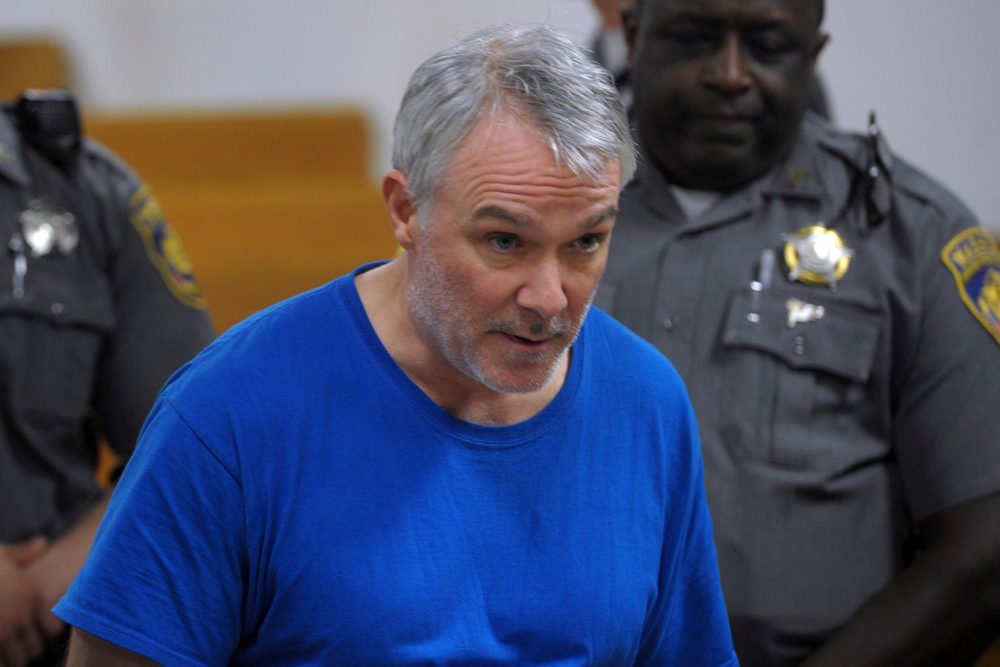
    NEW HAVEN, Conn. — A former police chief who suddenly stepped down from his position in January has surrendered to authorities on charges of stealing $85,000 from his own department’s accounts.

    Karl Jacobson, who previously led the New Haven Police Department, voluntarily turned himself in Friday on an outstanding warrant. A judge set his bond at $150,000, and he was subsequently released, according to state prosecutors. The charges include two counts of larceny involving the defrauding of a public community.

    “An allegation of embezzlement by a police official is a serious matter and potentially undermines public confidence in the criminal justice system,” Chief State’s Attorney Patrick J. Griffin said in a statement.

    Defense attorney Gregory Cerritelli, representing Jacobson, stated he was not yet prepared to address the specific accusations but emphasized that “an arrest is not evidence of guilt and allegations are not proof.”

    “This is the beginning of a very long process,” he said in an emailed statement. “I urge everyone to keep an open mind and avoid a rush to judgment.”

    New Haven Mayor Justin Elicker revealed last month during Jacobson’s retirement announcement that the ex-chief had confessed to taking money from a municipal account designated for compensating confidential informants who assist police in solving cases.

    According to Elicker, Jacobson admitted to using the funds for personal expenses after three of his deputy chiefs confronted him about financial discrepancies.

    The mayor described the allegations as “shocking” and a “betrayal of public trust.”

    Jacobson led the police force for three years in the Connecticut city, which houses Yale University and ranks among the state’s most populous municipalities.

    State prosecutors announced Friday that New Haven officials first reported the embezzlement claims on January 5, triggering a Connecticut State Police investigation. The inquiry uncovered that $81,500 had gone missing or been misused from the New Haven Police Department Narcotic Enforcement Fund during the period from January 1, 2024, through January 5, 2026. This fund provides payments to confidential sources who assist in drug-related investigations.

    “The defendant had access to money in that fund,” prosecutors stated in their announcement, noting that banking records revealed checks connected to the fund had been deposited into Jacobson’s personal banking account.

    Additionally, two checks worth a combined $4,000 were taken from the New Haven Police Activity League Fund on December 23 and 24, 2025. Prosecutors confirmed both payments ended up in Jacobson’s personal account. Investigators determined no other department personnel were implicated in the scheme.

    Before becoming chief, Jacobson had worked with the New Haven department for 15 years. His law enforcement career also included nine years with the East Providence Police Department in Rhode Island.

  • Trump Admin Mandates English-Only Testing for Commercial Truck, Bus Drivers

    Trump Admin Mandates English-Only Testing for Commercial Truck, Bus Drivers

    Commercial truck and bus drivers across the nation will now be mandated to complete their licensing examinations exclusively in English under new federal requirements announced by the Trump administration’s transportation officials.

    Transportation Secretary Sean Duffy revealed the policy change on Friday, emphasizing the need for drivers to possess adequate English skills for reading traffic signage and interacting with police during traffic stops. The state of Florida has already begun implementing English-only testing procedures.

    At present, numerous states permit drivers to complete their examinations in alternative languages, despite existing requirements for English language competency. California previously provided testing options in 20 different languages. Duffy noted that several states have contracted external organizations to conduct commercial driving tests, and these third-party entities are failing to uphold proper qualification standards.

    “And the third party tester is participating in the scam because they are not adequately testing the people who went through a sham school,” Duffy said.

    The Transportation Secretary stressed that Americans expect operators of large commercial vehicles to possess proper qualifications for handling such equipment. Duffy criticized the longstanding neglect of trucking industry problems, stating they were “allowed to rot and no one’s paying attention to it for decades.”

    “Once you start to pay attention, you see that all these bad things have been happening. And the consequence of that is that Americans get hurt,” Duffy said. “When we get on the road, we should expect that we should be safe. And that those who drive those 80,000-pound big rigs, that they are well-trained, they’re well-qualified, and they’re going to be safe.”

    The comprehensive safety initiative will also target fraudulent trucking operations attempting to enter the industry while maintaining pressure on substandard training facilities and ensuring state compliance with commercial licensing regulations.

    This week, the Transportation Department ordered the closure of 557 driver training facilities for failing to satisfy fundamental safety requirements. The agency has intensified enforcement actions against states issuing commercial licenses to immigrants lacking proper qualifications, particularly following a deadly August collision.

    According to Duffy, an unauthorized truck operator performed an illegal U-turn in Florida, triggering a fatal accident that claimed three lives. Additional deadly incidents, including a recent Indiana crash that killed four people this month, have amplified safety concerns.

    Federal officials plan to strengthen trucking company registration procedures and requirements while increasing Federal Motor Carrier Safety Administration inspection frequency at truck stops and driving schools.

    Under current regulations, companies need only pay several hundred dollars and provide insurance documentation to obtain operating permits, with audits potentially delayed for a year or longer.

    This lenient system has enabled fraudulent operators, dubbed “chameleon carriers” within the industry, to register repeatedly using different business names and simply change identities to evade accountability following accidents or violations.

    Authorities are also working to verify the accuracy of electronic logging equipment used by drivers and confirm that states are properly enforcing commercial licensing requirements.

    Following the Indiana collision, the Federal Motor Carrier Safety Administration suspended the employing company and revoked operating numbers for two affiliated businesses connected to AJ Partners. Chicago-area companies Tutash Express and Sam Express were also disqualified, while the Aydana driving school attended by the crash-involved driver lost its certification.

    Immigration officials detained the driver, a 30-year-old from Kyrgyzstan who allegedly entered the United States illegally. Investigators report he attempted to pass a slower vehicle ahead of him when his truck collided with an approaching van.

    In December, the Federal Motor Carrier Safety Administration moved to revoke certification for up to 7,500 of the nation’s 16,000 driving schools, though many of those facilities were already inactive.

    Duffy revealed that the companies involved in the Indiana crash were all registered to the same apartment address. In other instances, hundreds of these chameleon operations may share a single registration address.

  • Medical Revolution: Israeli Health Tech Draws Global Leaders to Innovation Labs

    Medical Revolution: Israeli Health Tech Draws Global Leaders to Innovation Labs

    A group of nearly 40 healthcare executives from around the world recently completed an intensive tour of Israel’s medical innovation centers, exploring how groundbreaking research transforms into life-saving technologies used globally.

    The delegation arrived at the Weizmann Institute of Science in Rehovot on a clear February day, though visible damage from an earlier Iranian missile strike served as a stark reminder of ongoing regional tensions. The attack had destroyed dozens of laboratories conducting critical cancer and disease research.

    Dr. Daniel Kraft, founder of Exponential Medicine and a physician-scientist working at the crossroads of technology and healthcare, shared his perspective with The Media Line. “The future of health and medicine is coming faster than you think,” Kraft said. “It’s not the technology; it’s often the convergence of a new operating system for the future of health and medicine.”

    According to Kraft, Israel’s unique advantage lies in its concentrated environment where artificial intelligence, digital health tools, diagnostic systems, and clinical facilities operate within close proximity. This density speeds up the development process significantly. “Health and medicine are a universal need and collecting point,” he explained, noting that medical collaboration often continues even when political relationships face challenges.

    The visiting healthcare leaders participated in a program jointly organized by Israel Tech Mission and 8400 The Health Network, Israel’s primary HealthTech ecosystem accelerator. The network serves as a bridge connecting the country’s medical innovation ecosystem with global health sector leaders.

    As the primary organization supporting Israel’s HealthTech and Life Sciences sector, 8400 The Health Network played a crucial role in designing the program’s agenda and facilitating connections between international visitors and key Israeli stakeholders.

    The initiative aimed to showcase both current obstacles and emerging opportunities within the ecosystem, while identifying areas of mutual strategic benefit and establishing pathways for long-term investment, collaboration, and partnerships. The organization continues supporting ongoing relationships, helping transform initial meetings into enduring partnerships and sustained strategic involvement.

    The participants included investors, company founders, advisors, and operators from the United States and international markets, all sharing a common goal: understanding how laboratory discoveries in Israel successfully transition into global healthcare applications.

    David Siegel, chairman and founder of Israel Tech Mission, helped structure the week-long program. He characterized the initiative as an opportunity to expose participants to both promising companies and the fundamental operating principles of Israel’s innovation ecosystem.

    “We don’t bring people here just to see companies. We bring them here to understand how the system works,” Siegel explained to The Media Line. For him, this distinction is crucial, as the goal involves creating lasting relationships that continue developing well beyond the formal meetings.

    David Nakar, the mission’s executive director, coordinated the week’s complex logistics and arranged meetings across research institutions, hospitals, and startup facilities. “Israel’s advantage isn’t just density of talent—it’s velocity,” Nakar told The Media Line. “But velocity needs channels. Delegations like this create structured pathways between founders, researchers, operators, and capital allocators. When those pathways are intentional, the distance between lab discovery and global patient impact shortens dramatically.”

    Mission participant Al Kinel expressed his enthusiasm about the experience to The Media Line. “I feel so proud and happy about what is occurring here and what’s coming out,” Kinel said. “I’m excited to be able to help take those innovations and get them out to the world and help let people learn about them.”

    Kinel operates a health technology consulting firm called Strategic Interests and leads the New York Israel Chamber of Commerce, which fosters commercial and research connections between Israel and the United States. His work focuses primarily on helping medical innovations move beyond early-stage promise into actual implementation within American healthcare systems. “There are people that are going to be supportive and helpful, and we will figure out how to work with them to help us be successful, and then there’s the undecided,” he said. “I want them to understand the value of the innovation of Israel and how it’s changing the world in tikkun olam [‘healing the world’].”

    He acknowledged the challenging global environment surrounding these efforts. “Unfortunately, we’re in a spot in a world where there are people who are going to hate us and will never want to listen,” he said. “That’s not our audience.” His focus remains on those willing to consider evidence and engage in collaboration. From his perspective, exporting medical technology represents more than just economic activity—it becomes a form of engagement based on measurable results. “If we can align, we will probably be way more impactful than we each could in our own individual way,” he added.

    While Kinel emphasized alignment, Sam Moed discussed organizational structure.

    As a global board member of 8400 The Health Network, Israel’s national HealthTech ecosystem accelerator, Moed described the organization’s dual mission. “We are very focused on supporting and strengthening the health care system in Israel,” he told The Media Line, “but at the same time, we are building bridges globally.”

    For Moed, these international connections serve practical purposes. Israel produces substantial early-stage medical innovation, but scaling these technologies requires access to global capital and markets. “The United States is the largest source of life sciences capital in the world,” he said. Without connecting to that ecosystem, promising technologies may fail to reach patients.

    “I am very optimistic about the magnitude of disruptive innovation that is coming out of Israel,” Moed stated. The goal, he suggested, involves not just incremental improvements but establishing healthcare alongside cybersecurity and defense as one of Israel’s defining pillars. “We want health care to be one of those pillars.”

    He noted that local challenges often generate globally applicable solutions. Referencing trauma care and mental health innovation, Moed observed that real-world experience has shaped technologies now attracting international attention. “Some of the innovation agenda is driven by the problems we face here,” he said. In this way, the country’s constraints have produced exportable expertise.

    During the week, the delegation met with participants operating at every level of Israel’s health system, from capital formation to clinical application. The program included sessions with venture capital leaders and life sciences investors, hospital-based innovation teams integrating digital tools into patient care, early-stage founders developing diagnostics and therapeutic platforms, and professionals working in trauma and mental health in southern Israel following the October 7 events. Rather than focusing on individual companies, the schedule exposed participants to the structural elements of the ecosystem: academic research, clinical integration, capital formation, and resilience-driven innovation, and how these components interact.

    At the Weizmann Institute of Science, conversations focused on translational pathways. Researchers explained their approach of designing studies backward from proof of concept and regulatory milestones, rather than forward from curiosity alone.

    During one smaller breakout session, a group met with Professor Ravid Straussman, a physician-scientist in the Department of Molecular Cell Biology at the Weizmann Institute of Science. From his office, Straussman presented the progression of his research and how it has developed into three startups focused on cancer treatment. His work centers on identifying specific bacteria and fungi living within tumors, discoveries that are changing how certain cancers are understood and treated therapeutically. By analyzing the tumor microbiome, his team has opened new strategies for targeting cancer and potentially strengthening patients’ immune responses.

    The discussion reflected a broader theme of the visit: the transition from discovery to practical application. Straussman described not only the scientific breakthrough, but the process of translating that breakthrough into structured ventures designed to carry the research beyond academic settings. For participants evaluating Israel’s health ecosystem, the session provided a concrete example of how basic science can develop into companies with international clinical significance.

    Jonathan Sheffi, vice president of strategy and product excellence for the Life Sciences & Healthcare division at Clarivate, said the visit has already prompted him to pursue a structured initiative. Speaking with The Media Line, he stated, “I will create a business plan to develop a translational research platform based on Israel’s patient-level data.” The intention, he explained, involves not incremental collaboration but systematic leverage. “Through this platform, I hope to spur financial and human capital investment in Israel by large pharmaceutical companies,” he noted. By building on what he described as Israel’s strengths in “software, data science, and AI,” Sheffi added that he hopes to help “create a new generation of Israeli drug discovery companies.”

    “It was announced that I will be joining the board of directors of Compugen,” Michele Holcomb told The Media Line, referring to the Israeli biotechnology company. Holcomb, a board director at PureTech Health and a veteran biotech and pharmaceutical executive, noted that the dialogue and interviews related to the appointment preceded the visit. Still, the timing highlighted the depth of integration between Israeli life sciences and global industry leadership. The flow of expertise, she suggested, moves in both directions.

    Lee Shapiro’s relationship with Israeli health technology spans more than two decades. As co-founder of Chicago-based 7wire Ventures, he has observed the ecosystem evolve from early digital health experiments to mature global companies. “Israel had a very organized longitudinal record for every citizen in Israel, kind of cradle to grave health information that existed,” he said, recalling the early infrastructure that allowed companies to innovate around data long before it became common elsewhere.

    Today, he sees few comparisons. “There really is very little comparison,” he said. “Israeli companies and their technology base are far advanced from where European companies have been and what we see coming out of Asia.” At the same time, he believes awareness lags behind reality. “We need more stories told about the life-saving technologies,” Shapiro said. “I don’t think people realize that some of the great medications that they’re using every day have come from Israel.”

    Those medications, devices, and digital platforms are integrated into health systems across North America, Europe, and Asia. Their impact is measured in survival rates, early diagnoses, and more efficient care pathways. Shapiro framed that reach culturally. “The spirit of tikkun olam in terms of healing the world is something that is part of the ecosystem here and is something that’s used in a way that can not only create great markets but also do good for the rest of the world,” he said.

    The conversation at Startup Nation Central expanded the perspective further. There, attention turned to infrastructure: mapping innovation, matching investors with startups, and supporting regulatory and market entry abroad.

    Innovation, in Rob Cronin’s view, carries another dimension. As founder and CEO of 120/80 GROUP, a New York-based communications firm specializing in health technology, he sees economic impact and diplomacy intersect. “What I see as the opportunity and the ultimate form of diplomacy and the mechanism by which we can fight antisemitism is an economic, innovation-based form of tikkun olam,” he told The Media Line. “It’s about improving people’s lives.”

    Michelle Garland, founder and CEO of Soul Search Partners, has spent more than two decades placing executive teams in venture-backed health technology companies. What impressed her most was not only product or capital, but people. “The talent here is exceptional, and the ideas are brilliant,” she told The Media Line. Sustained collaboration, she suggested, depends as much on relationships as financing. “We have to build more bridges,” she asserted.

    By the end of the conversation, her reflection became personal. “I have a bigger tribe than I knew of,” she said, visibly moved. The remark pointed to something that ran beneath the week’s formal meetings: a sense that professional ambition, identity, and global health purpose were not entirely separate.

    Participants repeatedly described an ecosystem that is compact yet internationally focused, technically rigorous yet commercially disciplined. Israeli medical innovation is developed with international application in mind. Therapies enter multinational trials. Digital platforms integrate into foreign health systems. Devices travel through supply chains that extend well beyond national borders.

    For Moed, that orientation remains central. “We want Israel to be seen as a global health care innovation powerhouse,” he said. The measure is not visibility, but penetration into global health systems.

    Israel’s growing role in global healthcare reflects more than scientific output. It reflects structure. As Kraft told The Media Line, “It’s often about connecting dots and getting people out of their old silos, their cognitive silos, their political silos, their belief silos, and better work together.” In a compact ecosystem where research, capital, and clinical infrastructure converge at close range, that ability to connect may be what places Israel at the center of how new medicine is built.

  • Canada Rallies from Two-Goal Deficit to Defeat Finland, Advances to Olympic Gold Game

    Canada Rallies from Two-Goal Deficit to Defeat Finland, Advances to Olympic Gold Game

    Nathan MacKinnon delivered a clutch performance in Milan on Friday, scoring the decisive goal with 35.2 seconds remaining to propel Canada past defending Olympic champion Finland 3-2 in men’s hockey semifinal action.

    The NHL’s top goal scorer found the back of the net at Santagiulia Arena with just one second left in a power play opportunity, completing Canada’s remarkable rally from a two-goal disadvantage in the second period.

    Sam Reinhart ignited Canada’s comeback effort with a crucial goal, while defenseman Shea Theodore delivered the third-period tying score to set up MacKinnon’s heroics.

    Canada now awaits the outcome of Friday’s other semifinal matchup between the United States and Slovakia to determine their opponent for Sunday’s championship game. Finland will compete for the bronze medal on Saturday.

    Despite entering as heavy favorites with their star-studded NHL roster, Canada has faced significant challenges in recent contests. The team required overtime to eliminate the Czech Republic in Wednesday’s quarterfinal round.

    Canada’s situation became more complicated when captain Sidney Crosby sustained an injury in that previous game and was unable to participate Friday, leaving the team without one of their key offensive weapons.

    The Canadians struggled early, managing only three shots on goal in the first half of the opening period. Finland capitalized when Sam Bennett received a penalty for goaltender interference.

    Mikko Rantanen struck just three seconds into the resulting power play, and Finland extended their advantage early in the second period when Erik Haula converted a short-handed opportunity with a backhand shot.

    “The start of the game, everybody’s so excited to play, and so amped up, so much adrenaline, it’s just kind of natural, you get a little bit of a feel out process,” said Canada forward Brad Marchand. “Some of these teams you haven’t played before. It’s kind of chess match.”

    Canada began their resurgence during their next power play opportunity, as defenseman Cale Makar fired a shot through traffic that Reinhart redirected past the Finnish goaltender to cut the deficit in half. Theodore evened the score midway through the final period with a powerful slap shot from the point.

    MacKinnon’s tournament-saving goal came off an assist from Connor McDavid in the game’s final moments, allowing Canada to avoid overtime. However, tension remained high as officials reviewed a potential offside challenge from Finland’s bench, which was ultimately unsuccessful.

    The victory maintains the possibility of a North American championship showdown between two hockey powerhouses, marking the first Olympics since 2014 where NHL players have been permitted to participate in the Games.

  • Poultry Production Drops 3% as Ready-to-Cook Weight Falls from Previous Year

    Poultry Production Drops 3% as Ready-to-Cook Weight Falls from Previous Year

    Federal agricultural statistics reveal a decline in poultry production, with ready-to-cook weight measurements showing a 3 percent decrease when compared to the same period last year.

    The data, compiled by the National Agricultural Statistics Service, indicates a measurable reduction in processed poultry available for consumer markets across the United States.

    This production decline reflects changing dynamics within the nation’s poultry processing industry, which plays a significant role in America’s food supply chain and agricultural economy.

  • US Cattle Numbers Drop 2% According to Federal Agriculture Report

    US Cattle Numbers Drop 2% According to Federal Agriculture Report

    New data from the United States Department of Agriculture reveals a 2 percent decrease in the nation’s cattle inventory, according to the latest federal livestock report.

    The USDA’s National Agricultural Statistics Service released figures showing the decline in cattle numbers, along with detailed breakdowns by farm size categories across the country.

    This drop in livestock numbers could have implications for beef markets and pricing as the agricultural sector continues to navigate various economic pressures.

    The federal report tracks cattle populations as a key indicator of the nation’s agricultural health and provides important data for farmers, ranchers, and market analysts monitoring livestock trends.

  • Delaware Farmers See Drop in Peanut Payments as Prices Fall to 19.8 Cents Per Pound

    Delaware Farmers See Drop in Peanut Payments as Prices Fall to 19.8 Cents Per Pound

    Delaware area farmers witnessed a downturn in their peanut crop earnings during the second week of February, according to federal agricultural data.

    Agricultural producers received compensation averaging 19.8 cents per pound for all varieties of farm-stock peanuts during the seven-day period concluding February 14th. This figure represents a decline of 4.5 cents compared to earlier pricing periods.

    The pricing information comes from weekly market reports tracking farmer compensation across various agricultural commodities. These fluctuations in peanut values directly impact local farming operations and the broader agricultural economy in the Delmarva region.

  • Dairy Industry Shows Strong Growth with January Production Surge

    Dairy Industry Shows Strong Growth with January Production Surge

    The dairy industry kicked off the year with impressive numbers, as the nation’s top milk-producing states saw a notable boost in January output.

    According to new federal data, the 24 leading dairy states generated a combined 19.1 billion pounds of milk during the first month of 2024, marking a 3.4 percent increase over January of the previous year.

    The uptick in production reflects positive trends within the agricultural sector, as dairy operations across these major producing regions continue to expand their output capabilities.

  • Foggy Conditions Force Speed Reduction on I-495 to 55 MPH

    Foggy Conditions Force Speed Reduction on I-495 to 55 MPH

    Delaware Department of Transportation officials have implemented a temporary speed reduction on Interstate 495, dropping the limit to 55 miles per hour as thick fog blankets the roadway.

    The speed restriction comes as dense fog conditions create reduced visibility for drivers, prompting safety concerns along the busy corridor. Transportation authorities are monitoring the situation and urge motorists to exercise extra caution while traveling through the affected area.

    Drivers are advised to reduce their speed, increase following distances, and use headlights while navigating through the foggy conditions. The temporary speed limit will remain in effect until visibility improves and normal driving conditions return to the interstate.

  • DSU Women’s Flag Football Club Heads to New Orleans for National Tournament

    DSU Women’s Flag Football Club Heads to New Orleans for National Tournament

    DOVER, Del. — A group of Delaware State University athletes will showcase their skills on a national stage this weekend in Louisiana.

    The university’s Department of Wellness & Recreation has confirmed that their Women’s Flag Football Club is heading to New Orleans to take part in the Women’s NFL Flag Football Tournament. The competition runs from February 20th through 22nd, 2026, and coincides with the HBCU Legacy Bowl festivities.

    The DSU team will join other collegiate flag football squads from across the country in what promises to be a competitive three-day tournament in the Crescent City.

  • Major Investor Urges Funko to Consider Sale After Stock Plummets 75%

    Major Investor Urges Funko to Consider Sale After Stock Plummets 75%

    A New York investment firm has taken a significant position in collectibles manufacturer Funko Inc. and is urging company leaders to consider putting the business up for sale, according to regulatory documents filed Thursday.

    Pleasant Lake Partners revealed it now owns approximately 10% of the pop culture merchandise company, which produces vinyl figurines and bobblehead collectibles. The hedge fund indicated it plans to work directly with Funko’s leadership team and board members to find ways to increase value for shareholders.

    The investment group is calling for company executives to immediately begin a comprehensive review of potential options, including possible acquisition by either strategic buyers or financial investors.

    Funko’s stock price rose roughly 4% during pre-market trading following the announcement. The company’s market value stood at approximately $245 million when markets closed Thursday, after suffering a devastating 75% decline throughout the previous year.

    Company representatives did not provide an immediate response when contacted for comment about the investor’s proposal.

    The manufacturer has faced significant challenges as consumer demand for toys has weakened, resulting in falling revenues over the past two years. The company specializes in creating collectible items based on popular culture franchises and characters.

    Investment firm Fund 1, which operates as a managing partner for Pleasant Lake, disclosed in the filing that it holds about 5.5 million Funko shares.

    Pleasant Lake indicated in its regulatory submission that it stands ready to take part in any potential sale process. The firm highlighted its experience with previous buyout deals, noting successful transactions involving L’Occitane in 2024 and Tile Shop Holdings this past December.

  • Southern Italian Students Who Created Olympic Mascots Receive Closing Ceremony Tickets

    Southern Italian Students Who Created Olympic Mascots Receive Closing Ceremony Tickets

    Five students from a small Italian town have received tickets to the Winter Olympics closing ceremony after their creative design inspired the beloved mascots for the Milano Cortina Games.

    The mascot characters — two stoats called Tina and Milo — have become incredibly popular with fans, leading to plush toy versions being completely sold out at official Olympic merchandise locations.

    While the Winter Games took place in northern Italy, the creative spark behind the mascots originated in Taverna, a mountain community of approximately 2,500 residents situated 521 meters high in the Sila mountains of southern Calabria.

    “The concept of the stoat came entirely from the students. We worked on it for about a month,” explained Gabriella Rotondaro, the physical education instructor who guided the project development over three years ago.

    “It was the idea that won, not the stoat as a character. It conveyed the values of sport and inclusion, and that is why it prevailed,” Rotondaro continued.

    The student team and their instructors emerged victorious in a nationwide contest organized by Italy’s Ministry of Education along with the Milano Cortina Foundation, beating approximately 1,600 other submissions from throughout the country.

    The five young designers — Sara Godino, Aurora Munizza, Francesco Angotti, Federico Barra and Tommaso Pascuzzi — were approximately 13 years old when they created their winning concept.

    Beyond receiving tickets to the closing ceremony in Verona, the students were awarded two mascot figures valued at roughly 35 euros ($41) each, along with flags and Olympic-themed scarves.

    Critics in Italy have raised questions about whether the school deserved more substantial financial compensation, particularly given that many southern Italian schools face ongoing infrastructure challenges.

    However, Rotondaro chose not to escalate that debate.

    “Certainly, funds to improve the school building or its activities would have been appreciated, but what matters most is the recognition these five students deserve for their brilliant ideas,” she stated.

  • December Inflation Jumps Higher Than Expected, Rate Cuts Unlikely Before Summer

    December Inflation Jumps Higher Than Expected, Rate Cuts Unlikely Before Summer

    WASHINGTON – Consumer prices climbed more sharply than anticipated in December, with early indicators suggesting inflation may continue accelerating into January. This development makes it less likely that the Federal Reserve will reduce interest rates before the summer months.

    According to Friday’s report from the Commerce Department’s Bureau of Economic Analysis, the core personal consumption expenditures price index – which strips out volatile food and energy costs – jumped 0.4% in December following November’s unchanged 0.2% increase. Financial analysts surveyed by Reuters had predicted a smaller 0.3% rise. Over the full year ending in December, core PCE inflation reached 3.0%, up from November’s 2.8% rate.

    This metric serves as a key benchmark for the Federal Reserve as it works toward its 2% inflation goal. The figures were part of Friday’s preliminary fourth-quarter economic growth report.

    While last week’s Consumer Price Index data from the Bureau of Labor Statistics showed modest January increases, economists noted persistent challenges in services sector pricing. A particularly notable spike occurred in legal services during January.

    Barclays economist Pooja Sriram explained the impact: “This category, which the BLS does not publish, but can be backed out, registered a 12.0% month-on-month increase in January, which alone is worth about 10 basis points on core PCE inflation.” However, she cautioned, “That said, this tends to be a very volatile category, with very little forward-looking inference.”

    Economic forecasters predict core PCE inflation could climb as high as 0.4% monthly for January, potentially pushing the annual rate to 3.1%.

    These projections may shift following next Friday’s January Producer Price Index release. January’s PCE inflation figures are scheduled for March 13, with reporting timelines affected by last year’s government shutdown delays.

    The broader PCE price index rose 0.4% in December, doubling November’s 0.2% gain. Annual PCE inflation increased to 2.9% from November’s 2.8%.

    Government data also showed consumer spending – representing over two-thirds of all economic activity – grew 0.4% in December, matching November’s pace. After accounting for inflation, consumer spending managed just a 0.1% gain, indicating modest momentum entering the first quarter.

  • Spain Calls for EU to Drop Sanctions on Venezuela’s New Leader

    Spain Calls for EU to Drop Sanctions on Venezuela’s New Leader

    MADRID – Spain’s top diplomat called on the European Union Friday to remove sanctions targeting Venezuela’s interim president, Delcy Rodriguez, following the South American nation’s passage of a prisoner amnesty measure.

    Rodriguez assumed leadership last month following the U.S.-backed removal of President Nicolas Maduro. Since taking power, she has complied with Trump administration oil policy requirements and freed hundreds of individuals that human rights organizations consider political detainees, working toward improved U.S.-Venezuela relations.

    Spanish Foreign Minister Jose Manuel Albares argued the EU should “send a signal that (Venezuela) is heading down the right path in this new phase.”

    “Sanctions are never an end in themselves. They are a means to achieve ends so that this broad, peaceful and democratic dialogue can take place,” Albares told reporters in Barcelona.

    When asked about Spain’s request later Friday, EU Commission spokesperson Anouar El Anouni avoided directly responding to Madrid’s suggestion, stating: “We do stand ready to use every tool at our disposal in our toolbox to support a transition towards democracy in Venezuela.”

    The European Union first implemented various sanctions against Venezuela in 2017, including restrictions on arms sales and surveillance technology, after regional voting processes the bloc deemed flawed and irregular.

    The following year, the EU expanded its punitive measures to include economic sanctions against 11 high-ranking Venezuelan officials, including Rodriguez, who served as Maduro’s vice president. The bloc cited their role in human rights abuses and efforts to weaken democratic institutions and legal frameworks.

    Human rights advocates argue the amnesty legislation passed unanimously Thursday by Venezuela’s ruling party-dominated parliament doesn’t provide adequate relief for the hundreds of political prisoners still detained. Venezuelan authorities have consistently rejected claims they hold political prisoners, maintaining that all incarcerated individuals have been convicted of criminal offenses.

  • Rep. McBride Meets with Delaware Farmers to Discuss Key Agricultural Issues

    Rep. McBride Meets with Delaware Farmers to Discuss Key Agricultural Issues

    Delaware’s agricultural community gathered with Congresswoman McBride in Harrington on February 19th for a focused discussion on the pressing issues facing local farmers. The summit brought together Farm Bureau officials and growers from throughout the First State to engage in direct dialogue about industry challenges and potential solutions.

    Key issues on the table included federal Farm Bill provisions, escalating costs for farming supplies, crop insurance matters, labor shortages, and emerging agricultural technologies. Local farmers emphasized which Farm Bill elements they consider most essential for Delaware agriculture, while also expressing concerns about how mounting input expenses are squeezing their bottom lines and threatening farm viability.

    McBride informed attendees that she serves on the bipartisan Poultry Caucus in the House, which Senator Chris Coons co-chairs. She indicated plans to utilize insights gained from the summit regarding insurance coverage issues and High Pathogenicity Avian Influenza (HPAI) in her caucus work.

    The congresswoman also discussed her ongoing research into artificial intelligence applications in farming and requested farmer input to bring back to the House Committee on Science, Space, and Technology, where she serves.

    Delaware Farm Bureau expressed appreciation for participating in the summit and maintaining strong collaboration with Congresswoman McBride.

  • Norwegian Biathlete Caps Dramatic Olympics with Fifth Medal Despite Personal Turmoil

    Norwegian Biathlete Caps Dramatic Olympics with Fifth Medal Despite Personal Turmoil

    ANTERSELVA, Italy – Norwegian biathlete Sturla Holm Laegreid wrapped up an extraordinary Milano Cortina Olympics on Friday, claiming his fifth medal in what turned out to be one of the most unexpected performances of the Games.

    The 29-year-old athlete secured a silver medal in the men’s mass start, the final men’s biathlon competition, capping off two weeks that saw him earn three silver and two bronze medals despite entering the Olympics without a single World Cup podium finish this season.

    Laegreid’s Olympic journey was marked by both athletic triumph and personal drama, including a widely-publicized emotional admission of marital infidelity that went viral on social media.

    “It was a fighter’s race, tough snow conditions on the track, and also tough wind conditions in the shooting range. So it was the race you needed to be sharp and focused to do well,” Laegreid explained to reporters following Friday’s competition.

    “I was fighting (to get) the targets down today and rewarded with the silver medal. So really, really proud of myself today,” he added.

    The Norwegian’s medal collection from these Games includes silver finishes in the mass start, pursuit, and relay competitions, along with bronze medals in both the sprint and individual events. This performance came as a surprise given his struggles throughout the World Cup season, though he was previously part of Norway’s gold medal-winning relay team at the Beijing Olympics.

    Following his successful but emotionally challenging Olympic experience, Laegreid admitted he’s reluctant to return to regular life.

    “It’s been also kind of nice to be here in the bubble, don’t really think about the real life, and really, you know, decide what thoughts I want to have, who I want to be around,” the athlete reflected.

    “But yeah, to come home. I guess it’s a time for everything now. It’s time to live the real life again,” he continued.

    In Friday’s mass start race, Laegreid was edged out for gold by fellow Norwegian Johannes Dale-Skjevdal, who delivered a flawless shooting performance to claim his first Olympic medal.

    “I mean, if there’s one guy who has the level, it’s him,” Laegreid said of his teammate’s victory. “I was also impressed by his shooting in these conditions, it was his first time shooting 20 for 20 and it wasn’t an easy day to do it on, so huge respect and a well-deserved gold medal.”

  • Minnesota Corn Farmers Gear Up for Legislative Battle Over Drainage Rights

    Minnesota Corn Farmers Gear Up for Legislative Battle Over Drainage Rights

    Agricultural leaders in Minnesota are gearing up for a legislative fight to protect their farming drainage practices. The Minnesota Corn Growers Association plans to advocate for maintaining current drainage rights as lawmakers convene for the new session.

    According to MCGA President Wes Beck, environmental groups are working to expand the Minnesota Pollution Control Agency’s regulatory authority over agricultural drainage systems, potentially bypassing existing statutory guidelines. Beck stated the organization is focused on “defending our rights to continue to drain our farmlands appropriately.”

    The upcoming legislative battle highlights ongoing tensions between agricultural interests and environmental advocates over water management practices on Minnesota farmland.

  • Traffic Alert: Northbound I-95 Lanes Blocked Near S. Chapel Street After Crash

    Traffic Alert: Northbound I-95 Lanes Blocked Near S. Chapel Street After Crash

    Delaware Department of Transportation officials are reporting a traffic incident that has shut down multiple lanes on Interstate 95 northbound in the vicinity of South Chapel Street.

    The crash has resulted in significant lane restrictions for motorists traveling north on the major highway corridor. DelDOT traffic management systems are currently showing the incident as active.

    Drivers planning to use this section of I-95 should anticipate delays and may want to consider using alternative routes until the roadway can be fully reopened.

    The Delaware Department of Transportation has not yet provided an estimated time for when normal traffic flow will resume. Motorists are encouraged to check DelDOT’s traffic information system for the most current updates on this developing situation.

  • NASA Sets March 6 Target Date for Historic Moon Mission with Four Astronauts

    The space agency has set its sights on March 6 as the target date to send four crew members on a historic journey around the moon as part of the Artemis II mission.

    This lunar voyage will mark a significant milestone in space exploration, as these astronauts will become the first humans to travel to the moon since the conclusion of the Apollo program in 1972.

    The ambitious ten-day expedition is planned to cover a distance exceeding 600,000 miles as the crew conducts a flyby of the lunar surface before returning to Earth.

    The Artemis II mission represents a crucial step in NASA’s broader goal of returning humans to the moon and eventually establishing a sustainable presence there for future exploration missions.

  • NYC Hospital Nurses End Historic Six-Week Strike with New Contract Deal

    NYC Hospital Nurses End Historic Six-Week Strike with New Contract Deal

    The final chapter of New York City’s historic nursing strike appears to be closing as the last group of striking healthcare workers has reached a preliminary contract agreement with their employer.

    Officials from the New York State Nurses Association announced Friday that roughly 4,200 nurses at NewYork-Presbyterian hospital have secured a tentative deal that will go before union members for a vote over the weekend. The proposed contract includes wage increases exceeding 12% across a three-year period, maintains current health benefit protections, and establishes new guidelines governing artificial intelligence implementation in healthcare settings.

    The labor dispute commenced on January 12 when 15,000 nursing professionals across three major hospital networks left their posts, demanding improved compensation and enhanced workplace safety measures. The widespread work stoppage created significant staffing challenges throughout the city’s healthcare system, prompting Governor Kathy Hochul to issue an emergency declaration that permitted medical workers from other states and countries to temporarily fill vacant positions.

    Earlier this month on February 14, approximately two-thirds of the striking nurses resumed their duties following successful contract negotiations with Montefiore and Mount Sinai health systems.

    Union President Nancy Hagans praised the NewYork-Presbyterian nurses’ determination in a statement announcing the breakthrough. “For a month-and-a-half, through some of the harshest weather this city has seen in years, nurses at NYP showed this city that they won’t make any compromises to patient care,” Hagans declared.

    Hospital spokesperson Angela Karafazli expressed satisfaction with the resolution in her own statement. “We are pleased to have reached a tentative settlement with NYSNA, through the mediator, that reflects our tremendous respect for our nurses,” Karafazli commented.

  • Schwab Processed $27.7M for Epstein’s Morocco Palace Deal Days Before Arrest

    Schwab Processed $27.7M for Epstein’s Morocco Palace Deal Days Before Arrest

    Newly released Justice Department files show Charles Schwab processed approximately $27.7 million in wire transfers for Jeffrey Epstein as the convicted sex offender attempted to buy an extravagant palace in Morocco during the 10 days leading up to his 2019 arrest.

    The financial services company handled these transactions for Epstein over several months in 2019, even as the disgraced financier faced intense public attention following Miami Herald investigations in 2018. Schwab submitted a suspicious activity report to federal authorities on July 13, one week after Epstein’s arrest.

    According to the documents, Schwab established three business accounts for Epstein’s companies in April 2019. One account belonged to Southern Trust, the entity seeking to purchase the lavish Bin Ennakhil palace in Marrakesh. The corporate account designated Richard Kahn, Epstein’s accountant, as an authorized individual, while Epstein served as Southern Trust’s president and sole beneficial owner.

    From June 26 through July 9, 2019, Southern Trust directed Schwab to transfer roughly $12.7 million in euros for the property acquisition, then canceled that order. The brokerage subsequently received another wire request bearing Epstein’s signature and transferred $14.95 million for the same property, despite the account lacking adequate funds while awaiting the return of the initial payment.

    When contacted by Reuters, Schwab refused to discuss account specifics, citing federal regulations, privacy laws, and company policies requiring confidentiality.

    “An associate of Epstein opened accounts in April 2019. Shortly after, our Risk team began investigating the accounts and within 60 days of starting the review, we notified the client of our decision to close and terminate the relationship. We also referred the matter to federal law enforcement,” the company stated in an email response.

    Schwab declined to specify when its risk team initiated its investigation.

    Federal Bank Secrecy Act regulations require financial institutions to submit suspicious activity reports within 30 days of discovering concerning facts, along with reporting daily cash transactions exceeding $10,000 to help detect and prevent money laundering.

    A FinCEN spokesperson informed Reuters that federal law prohibits confirming or denying the existence of any alleged suspicious activity report.

    Kahn’s attorney did not respond to Reuters’ inquiries.

    Marc Leon, the Marrakesh real estate agent, told Reuters via email that Epstein initially attempted to purchase Bin Ennakhil in 2011, with negotiations over terms and pricing continuing for years.

    Property listings in the Justice Department files describe Bin Ennakhil as featuring gold-adorned walls, a hammam steam spa, 60 marble fountains, and an outdoor pool and jacuzzi across 4.6 hectares. The estate includes multiple gardens containing hundreds of olive trees and over 2,000 palm trees, covering an area larger than New York’s Washington Square Park or approximately six soccer fields.

    Leon defended his involvement in facilitating Epstein’s property bid.

    “Epstein had been convicted of sex crimes (in 2008) and had served his sentence. There was therefore nothing to prevent him from attempting to purchase property in Morocco. We had no way of knowing that he had continued his terrible crimes,” he explained.

    Epstein died in jail in August 2019 while facing federal sex trafficking charges.

    Epstein sought Schwab’s services in 2019 as Deutsche Bank closed accounts belonging to the convicted sex offender, who had pleaded guilty in 2008 to soliciting prostitution from a minor and served prison time.

    The U.S. Virgin Islands subpoenaed Schwab along with at least six other financial firms in 2020, requesting documents related to Epstein’s estate co-executors. The subpoena did not name Schwab as a defendant or include any wrongdoing allegations against the brokerage.

    Emails and wire transfer requests in the Justice Department documents indicate Epstein discussed the luxury Marrakesh property purchase with associates during spring 2019. Southern Trust, Epstein’s company, agreed to acquire the property through Leon in March 2019.

    After evaluating various financial arrangements, Epstein instructed associates to transfer funds to Leon.

    Schwab received Southern Trust’s order to wire 11.15 million euros, approximately $12.7 million at that time, to Leon on June 26, 2019, according to the suspicious activity report reviewed by Reuters.

    The funds went to Leon’s Julius Baer account in Switzerland, where Leon was based at the time.

    The following day, Schwab received a call from someone whose identity was redacted in the report, requesting the transfer’s cancellation. When asked why, the caller explained that real estate deal terms were not “agreeable.”

    The caller also indicated another payment for a larger amount would be made to a different account.

    Schwab successfully reversed the order, with funds scheduled to return on July 10.

    Two days before Epstein’s arrest, Southern Trust instructed Schwab in a July 4 wire transfer request signed by Epstein and his co-signatory to send Leon $14.95 million.

    Schwab transferred the funds to Leon’s Julius Baer account, despite Southern Trust’s account lacking sufficient funds because the earlier transfer had not yet been returned.

    While Schwab could reasonably expect the payment would be transferred back to Epstein’s account, the bank faced risk until the funds returned.

    Reuters could not determine when the $12.7 million ultimately returned to Epstein’s account, though the funds were scheduled to arrive July 10, according to the July 13 suspicious activity report.

    When asked about its policy for processing international wire transfers from accounts with insufficient funds, Schwab declined to comment.

    Reuters could not establish whether Julius Baer accepted the transfers. A Julius Baer spokesperson declined to comment.

    Leon stated: “The anti-money laundering checks in force were carried out by the banking institutions involved in the future transaction, which ultimately never took place.”

    Schwab canceled the second transfer on July 9, three days after Epstein’s arrest, at the request of an individual acting on Epstein’s behalf whose name was redacted.

    An email in the Justice Department documents shows Epstein’s accountant Kahn requested the transfer cancellation on July 9.

    House Oversight Committee member Robert Garcia announced in January that Kahn has been ordered to testify before Congress next week to answer questions about whether he helped facilitate Epstein’s crimes through managing the deceased sex offender’s financial affairs.

    Reuters has no evidence of wrongdoing by Kahn.

    In a post-arrest exchange with Schwab, an unidentified Epstein associate asked whether future Southern Trust account transfers would still require two signatures, as more money would be sent soon.

    The Justice Department announced on July 8 that Epstein had been charged with sex trafficking of minors and remained in jail.

    In its July 13 suspicious activity report to FinCEN, Schwab expressed “concerns with attempted wires for the purpose of real estate, in light of negative media surrounding Jeffrey Epstein” and worries about him being a potential flight risk before a bail hearing.

    “This investigation is the result of an internal referral,” the document shows Schwab stating.

    While Epstein’s deal collapsed, the Bin Ennakhil palace – meaning “amidst the palms” – in Marrakesh is no longer empty.

    “The property has since been sold to another buyer,” Leon informed Reuters.

  • Court Approves $1B Bankruptcy Loan for Saks After Vendor Dispute Resolution

    Court Approves $1B Bankruptcy Loan for Saks After Vendor Dispute Resolution

    A federal bankruptcy court judge has granted final approval for Saks Global’s emergency financing package worth $1 billion, following the resolution of disputes with luxury brand partners and other business associates.

    U.S. Bankruptcy Judge Alfredo Perez authorized the funding during a Friday court session in Houston after Saks successfully addressed objections from several parties, including high-end fashion house Dolce & Gabbana, property landlords, and Amazon.com, which operates an online retail partnership with the department store chain.

    The primary concern among luxury brand suppliers centered on whether Saks’ bankruptcy lenders could claim ownership rights to valuable merchandise – including designer handbags, apparel, and jewelry – that fashion labels had provided through consignment agreements worth millions of dollars.

    Saks and its financial lenders successfully negotiated a resolution confirming that consigned inventory remains the property of the supplying brands rather than belonging to the retailer. Under typical consignment arrangements in the luxury retail sector, fashion labels maintain ownership of their products even while displayed in Saks stores until the items are actually sold to customers.

    This business model is standard practice in upscale department store operations, where designer brands frequently establish boutique sections within larger retail spaces and provide merchandise through consignment or concession agreements.

    With the major objections resolved prior to Friday’s hearing, Judge Perez was able to approve the crucial financing that will help Saks continue operations during its bankruptcy proceedings.

  • Second Suspect Surrenders in Bear Shopping Center Armed Robbery Case

    Second Suspect Surrenders in Bear Shopping Center Armed Robbery Case

    Delaware State Police have taken a second suspect into custody in connection with an armed carjacking that took place at a Bear shopping center last spring.

    Daviel Aviles, 20, of Middletown, surrendered to authorities at Troop 2 on February 19th, facing charges related to the May 19th robbery at Salem Center on Pulaski Highway.

    According to police, the incident unfolded around 2:15 in the afternoon when a victim became engaged in a dispute with one suspect in the shopping center’s parking lot. Investigators say a second individual then joined the confrontation, brandishing a firearm. The two suspects collaborated to steal the victim’s car before driving away in the stolen vehicle.

    Detectives with the Delaware State Police Troop 2 Criminal Investigations Unit conducted an investigation that led them to identify both Calvin Williams and Daviel Aviles as the individuals responsible for the crime. Arrest warrants were subsequently issued for both men.

    Williams was apprehended first when law enforcement executed a search warrant at his home on May 30th. Members of the Delaware State Police Special Operations Response Team assisted with the arrest, which occurred without any complications.

    Following his surrender, Aviles appeared before Justice of the Peace Court 2 for arraignment. He now faces charges of Robbery Second Degree and Conspiracy Second Degree, both felony offenses. The court set his bond at $20,500 cash, and he was transported to the Howard R. Young Correctional Institution.

  • LA Rams Elevate Nate Scheelhaase to Offensive Coordinator Role

    LA Rams Elevate Nate Scheelhaase to Offensive Coordinator Role

    The Los Angeles Rams have elevated assistant coach Nate Scheelhaase to the role of offensive coordinator, according to a source familiar with the decision who spoke with The Associated Press on Friday.

    The source requested anonymity since the Rams have not yet officially announced head coach Sean McVay’s complete coaching staff for the coming season. Scheelhaase steps into the position left vacant when Mike LaFleur departed this month to take over as Arizona Cardinals head coach.

    At 35 years old, Scheelhaase has emerged as a highly sought-after coaching talent in NFL circles over the past season. He participated in interviews for no fewer than five head coaching openings during the last two months. For the past two seasons, he served as a key offensive aide under both McVay and LaFleur, earning the pass game coordinator title last year as the Rams posted a 14-6 record and advanced to the NFC championship game.

    While McVay continues to handle play-calling duties and oversee offensive design for Los Angeles, Scheelhaase becomes the fifth person to hold the offensive coordinator position during McVay’s decade-long tenure as head coach. Each of the four previous assistants in this role has advanced to become a head coach, as has former Rams quarterbacks coach Zac Taylor.

    These five former top Rams assistants — Matt LaFleur, Taylor, Kevin O’Connell, Liam Coen and Mike LaFleur — continue to serve as head coaches today. This number could have been higher, but McVay operated without a designated offensive coordinator for two seasons following Matt LaFleur’s exit.

    Scheelhaase, who played quarterback at Illinois during his college career, worked under Matt Campbell at Iowa State from 2018 through 2023. He rose to become the Cyclones’ offensive coordinator in his final year there, orchestrating a significant turnaround that drew McVay’s notice.

    During his time in Los Angeles, Scheelhaase handled the detailed task of creating visual diagrams of offensive plays for the team’s weekly game preparations — a meticulous responsibility previously managed by several Rams assistants who later secured prominent positions elsewhere.

    Last season, the Rams operated what many considered the NFL’s most effective offense, topping the league in both points scored and total offensive yards during regular season play with AP NFL MVP Matthew Stafford leading the unit. Stafford has confirmed his return for what will be his 18th NFL campaign. The Rams are expected to be among the top contenders for a Super Bowl appearance at their home venue, SoFi Stadium, in February 2027.

  • Gaza Residents Express Doubt Over Trump’s $7 Billion Reconstruction Promise

    Gaza Residents Express Doubt Over Trump’s $7 Billion Reconstruction Promise

    GAZA CITY, Gaza Strip — During the first session of President Donald Trump’s Board of Peace held in Washington, the administration highlighted commitments of billions in funding to reconstruct the Gaza Strip and envisioned a “new and harmonious” Middle East emerging from conflict. Presentation materials displayed at the session featured visions of sparkling skyscrapers and fresh athletic facilities.

    However, such hope remains absent among Gaza’s population, where Palestinians enduring months or years in overcrowded temporary settlements or destroyed neighborhoods express little faith in promised changes.

    “Since the beginning of the war, we’ve been hearing about conferences and meetings. They say there’s a solution and peace, but it’s all a joke. They’re all liars,” said Faraj Abu Anze, who is among tens of thousands of Palestinians living in a sprawling tent camp on the Mediterranean coast.

    “We see nothing of that on the ground. There is no hope. Education and health care are gone. There is no life,” he said.

    The president revealed that nations participating in his comprehensive peace initiative had committed $7 billion toward rebuilding efforts and agreed to deploy thousands of military personnel as part of an International Stabilization Force.

    However, officials provided no specific schedule, and rebuilding activities have not yet commenced.

    Israeli authorities maintain that Gaza reconstruction cannot proceed until Hamas surrenders its arsenal, a provision within the October ceasefire agreement that has become a significant obstacle.

    International organizations including the United Nations, European Union and World Bank have calculated reconstruction costs at $70 billion — potentially ten times Thursday’s announced commitments. Clearing enormous amounts of debris containing unexploded weapons alone could require multiple years.

    Gaza’s Health Ministry reports that over 72,000 Palestinians have died in the conflict that began with Hamas’ Oct. 7, 2023 assault on Israel. Though part of the Hamas-controlled administration, the ministry’s casualty figures are considered generally accurate by the United Nations and independent analysts.

    Palestinian fighters killed approximately 1,200 individuals, primarily civilians, during their initial assault and captured 251 others as hostages. While the ceasefire agreement halted major combat operations and secured the freedom of all remaining captives, it left crucial questions about Gaza’s governance unresolved.

    “There are meetings every day, but we see nothing,” said Ahmad Abu Selme, who has been displaced twice during the war. “There are tents everywhere and people are frustrated. We are tired.”

    “I hope a real peace takes place and that we can go back to our homes,” he added. “I know there are no homes anymore, but we still want to return.”

    American officials plan to initiate reconstruction efforts in Rafah, located along Gaza’s Egyptian border. The community suffered extensive destruction and population exodus during fighting, and currently sits within the Gaza territory under complete Israeli military authority.

    Ruwayda Dheir, displaced from Rafah along with tens of thousands of others, doubts she and fellow residents will benefit from the promised funding.

    “The most important thing is that they put the money where it belongs and give it to the people,” she said. “They’ll say they spent it on infrastructure, but we won’t see it.”

  • Winter Storm Watch: Heavy Snow Could Dump 5+ Inches Across Delmarva This Weekend

    Winter Storm Watch: Heavy Snow Could Dump 5+ Inches Across Delmarva This Weekend

    A Winter Storm Watch is now in effect for much of the Delmarva Peninsula, with heavy snow and gusty winds expected to create hazardous travel conditions from Sunday afternoon through Monday afternoon. The National Weather Service issued the watch Thursday afternoon, warning that snow accumulations could exceed 5 inches across New Castle, Kent, and Sussex counties in Delaware, plus Kent, Queen Anne’s, Talbot, and Caroline counties on Maryland’s Eastern Shore. Wind gusts up to 35 mph could create blowing snow and reduced visibility. “Travel could be very difficult,” meteorologists warn, noting that the storm’s timing could significantly impact both Monday morning and evening commutes. The heaviest snowfall is expected Sunday night into Monday morning. Residents should prepare now by stocking up on essentials, checking emergency kits, and avoiding unnecessary travel during the storm. Those who must drive should keep extra supplies in their vehicles and allow extra time. TV Delmarva meteorologists will continue monitoring this developing situation closely. The Winter Storm Watch remains in effect until 6:00 PM Monday, but conditions and timing could change as the storm approaches. Stay with TV Delmarva for the latest forecast updates and school closing information throughout the weekend.
  • Supreme Court Strikes Down Trump’s Emergency Tariff Powers in 6-3 Decision

    Supreme Court Strikes Down Trump’s Emergency Tariff Powers in 6-3 Decision

    WASHINGTON — President Donald Trump suffered a significant setback to his trade agenda Friday when the U.S. Supreme Court rejected his use of emergency authority to implement extensive import taxes across the globe.

    The high court’s 6-3 decision determined that Trump’s reliance on emergency powers legislation to establish these trade levies was unconstitutional.

    Notably, two of the three justices Trump nominated to the court sided with the majority against this major component of his second-term economic strategy.

    Trump had invoked the International Emergency Economic Powers Act of 1977, known as IEEPA, to justify his widespread tariff program, despite the law making no reference to trade duties. The legislation, originally designed to allow presidents to freeze assets and halt financial transactions during national crises, was first implemented during the Iranian hostage situation. Since then, it has been applied to various international conflicts, including responses to September 11th and the conflict in Syria.

    The president argued that America’s trade imbalance constituted a national emergency serious enough to warrant such measures, but the Supreme Court rejected this reasoning.

    Chief Justice John Roberts, writing for the majority, stated: “The fact that no President has ever found such power in IEEPA is strong evidence that it does not exist.”

    The court’s opinion emphasized that the Constitution “very clearly” assigns Congress, rather than the executive branch, the authority to establish taxes, including import duties.

    Three justices — Samuel Alito, Clarence Thomas, and Brett Kavanaugh — opposed the majority ruling.

    Justice Kavanaugh wrote in dissent: “The tariffs at issue here may or may not be wise policy. But as a matter of text, history, and precedent, they are clearly lawful.”

    In early 2024, Trump used IEEPA to establish tariffs on the nation’s top three trade partners: Mexico, Canada, and China. He justified these measures by declaring a national emergency related to illegal border crossings and fentanyl trafficking.

    Later, in April during what Trump called “Liberation Day,” he implemented “reciprocal” import taxes reaching 50% on products from numerous nations, plus a standard 10% levy on nearly all other countries, again citing IEEPA authority.

    Trump also applied IEEPA to establish significant import duties on Brazilian products, pointing to that nation’s legal action against former President Jair Bolsonaro, and on Indian goods, citing India’s Russian oil purchases.

    These IEEPA-based tariffs have experienced frequent changes over the past year, with rates being removed, increased, and reinstated multiple times.

    Although the Supreme Court’s ruling eliminates many of these import taxes, other Trump tariffs based on different legal foundations remain in place.

    The majority of America’s trade partners continue to face substantial duties on particular industries, including steel, aluminum, automobiles, copper, lumber, kitchen cabinetry, bathroom fixtures, and upholstered goods.

    The White House has not yet issued a statement regarding the court’s decision, but tariff opponents are celebrating the outcome.

    We Pay the Tariffs, representing small businesses that challenged the import taxes, described the ruling as a “tremendous victory” for companies harmed by the levies.

    Group leader Dan Anthony stated: “They’ve taken out loans just to keep their doors open. They’ve frozen hiring, canceled expansion plans, and watched their life savings drain away to pay tariff bills that weren’t in any budget or business plan. Today, the Supreme Court has validated what we’ve been saying all along: These tariffs were unlawful from the start.”

    Government records indicate the Treasury Department has gathered over $133 billion from these emergency-power-based import taxes through December.

    However, the Supreme Court did not determine whether businesses and individuals who paid these tariffs could receive refunds. Several companies, including warehouse retailer Costco, have already filed lawsuits in lower courts seeking reimbursement.

    Justice Kavanaugh, in his dissenting opinion, warned the refund process could prove challenging.

    “The Court says nothing today about whether, and if so how, the Government should go about returning the billions of dollars that it has collected from importers. But that process is likely to be a ‘mess,’ as was acknowledged at oral argument,” Kavanaugh wrote.

  • Olympic Skiing Stars Born in US Face Different Reception Competing for Other Nations

    Olympic Skiing Stars Born in US Face Different Reception Competing for Other Nations

    LIVIGNO, Italy — Two American-born athletes stand as the leading contenders for Olympic gold in women’s halfpipe skiing, yet neither will be wearing red, white and blue when they compete.

    Zoe Atkin represents Great Britain with minimal public attention, while Eileen Gu faces constant criticism for skiing under China’s flag.

    Athletes switching national allegiances isn’t uncommon in international competition. But when Olympic medals are at stake and a high-profile competitor like Gu achieves remarkable success, the situation becomes controversial and politically charged.

    “So many athletes compete for a different country,” Gu commented following Thursday evening’s qualifying round that positioned her for a potential third medal at these Games. “People only have a problem with me doing it because they kind of lump China into this monolithic entity, and they just hate China. So it’s not really about what they think it’s about.”

    Her remarks came after U.S. Vice President J.D. Vance stated on Fox News earlier this week that he hoped someone who benefited from an American upbringing would choose to represent the United States.

    The 22-year-old California Bay Area native acknowledges she faces harsh criticism not only for representing her mother’s country of origin but also due to her achievements both in competition and commercial endeavors.

    Following the Olympics, Gu plans to attend a Milan fashion event.

    But first, Saturday brings her opportunity to claim a sixth Olympic medal and potentially achieve a perfect record across two consecutive Games. No athlete has accomplished this feat since big air joined the program four years ago, creating three aerial freestyle skiing disciplines in the snow park.

    “Like, if I wasn’t doing well, I think that they probably wouldn’t care as much, and that’s OK for me,” she explained.

    Olympic regulations require athletes to be “nationals” of their competing country — terminology similar to citizenship but with distinct legal implications. Athletes holding multiple nationalities must complete a waiting period to switch allegiances, though neither Gu nor Atkin has changed during their Olympic careers.

    This situation reflects the nature of freeskiing and snowboarding — lifestyle sports emphasizing personal expression, developed through events like X Games and Dew Tours where national flags rarely appear. Athletes spend most of their time traveling internationally with little focus on countries or national anthems.

    “We’re all going to the same place, all traveling together,” explained Nick Goepper, a three-time American medalist competing for his birth country. “There’s 25 guys who do this at a high level across the world and it’s better to hang out and mingle with each other, just like people do.”

    Beyond Vance’s statements, recent news reports about a 2025 document indicating the Chinese government provided millions in funding to Gu and another athlete have generated Olympic headlines. Gu rarely discusses financial motivations, instead emphasizing her goal to promote the sport and encourage female participation in China, where the discipline was less established than in America.

    “I’ve never received criticism from anybody in the ski industry about any of these decisions,” she told The Associated Press last month. “But that’s because I’m friends with all of them.”

    Atkin experiences success without similar controversies. The Massachusetts-born athlete has maintained dual citizenship from birth, with her father being British. (Gu’s citizenship remains a subject of ongoing speculation, which she hasn’t publicly clarified.) Like Gu, Atkin studies at Stanford University.

    The 23-year-old world champion has represented Britain throughout her career, explaining that the smaller team structure allows her to train and compete at her preferred pace.

    “It also has a lot to do with my family and I guess I don’t really care what anybody else thinks,” she stated. “Obviously, we compete for our nation, but at the end of the day, this is an individual sport and I’m trying to do my best show and my best skiing. To me, that’s all it’s really about.”

    Gus Kenworthy represents a middle ground between Gu and Atkin — initially gaining Olympic fame representing America before continuing his career with Britain.

    He encountered criticism when switching teams, partly due to the competitive depth of the U.S. squad. This year, America qualified all four male halfpipe skiers for Friday’s final while leaving two top-10 ranked athletes, including two-time gold and silver medalist David Wise, off the team.

    “You could be the fifth best person in America, ranked seventh in the world, and still not make the team,” noted Kenworthy, who earned silver in 2014. “It’s great to have all these different countries represented. But sometimes it sucks to be in that position, and I’ve been in that position.”

    The dynamics shift dramatically when action sports enter the Olympic spotlight.

    As Gu consistently states and reiterated Thursday, “people are entitled to their opinions.”

  • Agriculture Groups Push for Trade Policy Stability After Supreme Court Decision

    Agriculture Groups Push for Trade Policy Stability After Supreme Court Decision

    Agricultural organizations across the United States are responding to the Supreme Court’s decision to overturn President Donald Trump’s emergency tariffs with demands for more stable trade policies moving forward.

    In the wake of the high court’s ruling, farming groups are emphasizing the need for predictability in international trade regulations while specifically requesting that agricultural supplies and equipment be excluded from any future tariff measures.

  • Ohio Soybean Leaders See Biofuel Expansion Boosting Crop Demand in 2026

    Ohio Soybean Leaders See Biofuel Expansion Boosting Crop Demand in 2026

    Leaders with the Ohio Soybean Association believe the state is well-positioned for significant biofuel industry expansion by 2026, which could create new market opportunities for soybean producers. Bennett Musselman, who serves as the association’s president and farms in Pickaway County, points to new infrastructure development and growing market demand as key factors driving the potential growth.

    “With some of the new crush plants that are coming online, we will have the ability” to capitalize on these emerging opportunities, Musselman explained. The anticipated expansion represents a promising development for Ohio’s agricultural sector as farmers look for ways to strengthen commodity markets.

  • Farm Industry Monitors Supreme Court Decision Restricting Presidential Tariff Authority

    Farm Industry Monitors Supreme Court Decision Restricting Presidential Tariff Authority

    Farm industry leaders are keeping a watchful eye on a recent Supreme Court decision that restricts presidential authority over tariff implementation, with potential implications for agricultural trade policy. The high court’s ruling has drawn attention from lawmakers who say it could significantly alter how trade matters affecting agriculture are handled going forward.

    Nebraska Republican Representative Mike Flood commented on the decision’s impact, stating that legislative and executive branches must collaborate more closely in the future. “The ruling really underscores Congress’s responsibility and obligation to set the tariff policy,” Flood explained, emphasizing the shift in how such economic policies will be developed.

    The Supreme Court’s Friday decision marks a notable change in the balance of power regarding trade policy, particularly as it relates to agricultural markets that often depend on international commerce. Industry observers suggest this ruling could lead to more legislative involvement in trade decisions that directly affect farming communities and agricultural exports.

  • Social Media Finance Expert From Baltimore Shares Money Tips for Couples

    Social Media Finance Expert From Baltimore Shares Money Tips for Couples

    Do financial topics make you nervous? A Baltimore-born social media star wants to change that.

    Vivian Tu has captured the attention of millions through her TikTok presence called ‘Your Rich BFF,’ creating fun and accessible content about money management. Her videos cover everything from salary negotiation strategies to managing credit card debt effectively. The self-described ‘favorite Wall Street girly’ has amassed 10 million social media followers and authored two books on personal finance.

    Growing up in Baltimore as the child of Chinese immigrants shaped Tu’s financial perspective early on. While her parents instilled frugal habits and money awareness from childhood, Tu discovered her true calling for financial education several years into her professional journey.

    After earning her degree from the University of Chicago, Tu launched her career as a JPMorgan trader in New York City. Following her Wall Street experience, she transitioned to a sales role at BuzzFeed for two years. Tu launched her TikTok presence in late 2021, which now boasts 2.7 million followers. The inspiration came from constantly providing financial guidance to her coworkers.

    Beyond social media, Tu produces the podcast ‘Networth and Chill’ and recently accepted the position of chief of financial empowerment at SoFi, a financial technology and banking company. Her latest publication, ‘Well Endowed,’ hit shelves this month.

    Here are Tu’s essential recommendations for managing money wisely, from curbing unnecessary spending to beginning your investment path:

    According to Tu, discussing money matters ranks among the most crucial conversations couples can have. Though talking finances with a partner may feel daunting, it’s essential for building a solid future together. Rather than waiting until engagement or marriage, Tu advocates for early financial discussions.

    ‘Start early, start often. I always say you have to talk about money on the first date,’ she said.

    Tu suggests beginning these conversations with engaging questions. She recommends asking: ‘If I gave you $100,000 tomorrow to plan your dream two-week vacation, what would you do?’ When one partner envisions an outdoor adventure while the other prefers luxury accommodations, this reveals different lifestyle priorities.

    Financial discussions can be enjoyable while revealing important insights about your partner’s money values and aspirations. These conversations don’t need to be serious initially; they can deepen alongside your relationship.

    Excessive spending can prevent emergency fund building or worse, create credit card debt. Tu suggests pausing before purchases to examine your motivations.

    ‘The most important question to ask yourself before you buy something is: Do I want it or do I want people to know I have it?’ Tu said. ‘There have been multiple instances in my personal life where I have bought stuff to be cool, to prove to someone else that I was cool.’

    Tu emphasizes making deliberate purchasing decisions and avoiding spending driven by social pressure or the desire to fit in with certain groups.

    While homeownership is traditionally viewed as part of ‘The American Dream,’ rising costs have made it increasingly difficult to achieve. However, Tu points out that owning property isn’t the ideal choice for everyone. Renting provides greater flexibility and can be more budget-friendly.

    ‘Are you okay with maintaining your own HVAC, providing plumbing for toilets if something starts leaking at 2 a.m.?’ Tu said. ‘If not, you’d be better off having your landlord be on the hook for that.’

    While many consider homeownership a future investment, renters can still achieve strong financial positions through other means, Tu explains. She advocates allocating funds toward alternative investments, building savings accounts, and eliminating debt.

    For those who find investing overwhelming, Tu recommends robo-advisers as an accessible starting point for beginners or anyone seeking simplicity.

    ‘A robo-adviser is the happy medium,’ she said. ‘What I love about (robo-advisors) is that anybody who doesn’t understand investing can be investing in 45 minutes. It is better to start today than to start tomorrow, the sooner the better.’

    These automated investment platforms gather information about your financial circumstances and future objectives through questionnaires, then provide personalized advice and handle investments on your behalf.

  • EPA Relaxes Mercury Pollution Rules for Coal Plants Under Trump

    EPA Relaxes Mercury Pollution Rules for Coal Plants Under Trump

    WASHINGTON — Federal environmental officials announced Friday they are rolling back tougher mercury pollution standards for coal-burning power plants, marking another step in the Trump administration’s push to support fossil fuel operations by reducing environmental regulations.

    Mercury and other dangerous pollutants released by coal and oil power facilities can damage children’s developing brains and increase risks of heart problems and other health issues in adults. These same facilities also produce significant greenhouse gases that contribute to global warming. EPA officials made their announcement at a large coal facility along the Ohio River in Louisville, Kentucky.

    “The Trump EPA’s action follows the rule of law and will reduce of cost of generating baseload power, lowering costs and improving reliability for consumers,” EPA Deputy Administrator David Fotouhi said in a statement. Agency officials estimate the regulatory change will save hundreds of millions of dollars.

    The new regulation brings back industry standards originally put in place during 2012 under the Obama administration, which successfully cut mercury pollution by almost 90%. The Biden administration had worked to strengthen those requirements even more after Trump’s first term had attempted to weaken them.

    Power plants that burn coal represent the biggest single source of mercury contamination caused by human activity. These facilities discharge mercury into the air, which later comes down through rainfall or settles naturally, contaminating the food supply through fish and other consumable products.

    Conservation organizations maintain that stronger pollution controls have protected lives and improved health outcomes for communities located near coal power facilities. However, industry representatives have argued that stricter emission requirements, combined with other coal plant regulations, have made operations financially unsustainable.

    Industry leaders have criticized the Biden administration for implementing excessive regulatory requirements that would force widespread plant closures.

    “The reliability of the electric grid is in a better place because of the administration’s swift repeal of this rule. As crafted, the rule would have dealt a crippling blow to power plants that are essential to maintaining grid reliability,” said Jim Matheson, CEO of the National Rural Electric Cooperative Association.

    The coal sector’s prospects have shifted significantly over the past twelve months.

    During March, EPA officials touted what they called the “biggest deregulatory action in U.S. history,” revealing plans to eliminate numerous environmental safeguards. The Biden administration’s climate change priorities were ending — EPA Administrator Lee Zeldin described the moves as “the death of the ‘green new scam.’” Fossil fuel regulations became primary targets, including major initiatives to cut carbon pollution from coal facilities and require greenhouse gas disclosure. The current Trump administration has also given additional time for many coal plants to meet certain Clean Air Act requirements.

    In addition to reducing environmental oversight, the Trump administration has issued emergency directives preventing the planned closure of multiple coal facilities. Government officials argue these plants provide steady electricity during severe weather or other high-demand periods. Eliminating coal would compromise grid dependability, particularly as new data centers create unprecedented electricity demands, according to officials. They have rejected concerns about increased consumer costs from maintaining coal operations, their substantial emissions, and their major role in climate change.

    Earlier this month, EPA officials also withdrew a determination that climate change poses public health risks, which has historically justified federal regulation of greenhouse gas emissions. Recently, President Donald Trump met with coal miners who praised him as the “Undisputed Champion of Beautiful, Clean Coal.”

    Environmental advocates argue that supporting coal makes no economic sense when renewable energy sources are cleaner, more affordable, and dependable.

    Gina McCarthy, who led EPA during Barack Obama’s presidency, said the Trump administration will be known for prioritizing the coal industry over public health.

    “By weakening pollution limits and monitoring for brain-damaging mercury and other pollutants, they are actively spiking any attempt to make America – and our children – healthy,” said McCarthy, who also chairs the climate advocacy organization America Is All In.

  • Trump Mulls Military Action Against Iran as Nuclear Deal Talks Continue

    Trump Mulls Military Action Against Iran as Nuclear Deal Talks Continue

    WASHINGTON — President Trump acknowledged Friday that he’s weighing limited military action against Iran while diplomatic negotiations over the country’s nuclear program remain ongoing.

    When asked by reporters whether the United States might pursue targeted military strikes during ongoing talks, Trump responded, “I guess I can say I am considering that.” His comments came the same day Iran’s Foreign Minister Abbas Araghchi announced Tehran plans to complete a draft agreement within “the next two to three days” for submission to Washington.

    “I don’t think it takes long, perhaps, in a matter of a week or so, we can start real, serious negotiations on the text and come to a conclusion,” Araghchi stated during his appearance on MSNBC’s “Morning Joe” program.

    The escalating rhetoric comes as the Trump administration has assembled the most substantial U.S. military deployment in the Middle East seen in decades, with additional naval vessels and aircraft heading to the region. Officials from both nations have indicated readiness for armed conflict should nuclear negotiations collapse.

    “We are prepared for war, and we are prepared for peace,” Araghchi declared Friday.

    Earlier this week, Trump stated he believes Iran has “enough time” over the next 10 to 15 days to reach an agreement following recent indirect diplomatic sessions in Geneva that showed minimal progress. However, these discussions have remained at an impasse for years, with Iran rejecting broader American and Israeli demands to curtail its missile capabilities and end support for militant organizations.

    During Friday’s interview, Araghchi claimed his American negotiating partners haven’t demanded complete cessation of uranium enrichment in current discussions, contradicting statements from U.S. officials.

    “What we are now talking about is how to make sure that Iran’s nuclear program, including enrichment, is peaceful and will remain peaceful forever,” he explained.

    The Iranian diplomat added that his country would implement trust-building measures in exchange for sanctions relief.

    A White House official, speaking anonymously, countered Araghchi’s assertions by reaffirming Trump’s position that Iran must not possess nuclear weapons capabilities or enrich uranium.

    Iranian officials have maintained that discussions should focus exclusively on nuclear matters and claim they’ve halted uranium enrichment since U.S. and Israeli airstrikes targeted Iranian nuclear facilities last June. While Trump described those attacks as having “obliterated” Iran’s nuclear infrastructure, the actual extent of damage remains unclear as Tehran has blocked international inspection teams.

    Iran continues to assert its nuclear activities serve peaceful purposes, while the United States and other nations suspect the program aims toward weapons development.

  • UN Chief: Only Diplomacy Can End Ukraine War, But Aid Funding Falls Short

    UN Chief: Only Diplomacy Can End Ukraine War, But Aid Funding Falls Short

    KYIV, Ukraine — Despite numerous challenges blocking a peace agreement in Ukraine, diplomatic negotiations represent the sole realistic pathway forward, according to the newly named leader of the United Nations refugee agency who issued this warning Friday while highlighting how humanitarian efforts worldwide are becoming dangerously overextended due to simultaneous global emergencies.

    Barham Salih, the former Iraqi president who assumed the role of UNHCR high commissioner following his December election, conducted his inaugural Ukraine visit since beginning his tenure.

    Following trips to Ukrainian frontline communities such as Kharkiv and Zaporizhzhia, Salih held discussions with President Volodymyr Zelenskyy about current peace negotiation efforts. Their talks also covered future UNHCR operations as Ukraine faces continued Russian strikes against its power infrastructure throughout this brutal winter season.

    “You have to be hopeful, but I do understand the difficulties in the situation, and it’s clear, of course, there are many, many impediments along the way, but at the end of the day, there is no military solution. There needs to be peace, a durable and just peace so that people can go back to their lives,” Salih told The Associated Press during a Kyiv interview.

    “Things are not necessarily easy, definitely not easy, but let’s redouble the effort to make sure that diplomacy has a chance and really bring about a durable and just peace to this war that has been going on for far too long,” he continued.

    International donors have committed just $150 million toward the organization’s $470 million Ukraine funding request. This significant gap demonstrates widespread reductions throughout humanitarian sectors, creating mounting challenges for aid distribution across numerous global emergencies.

    According to Salih’s figures, approximately 3.7 million Ukrainians remain internally displaced while nearly 6 million Ukrainian refugees have settled in European nations and other countries.

    “This tells you the gap between what is needed and what is available,” he explained. “My appeal to the international community is, really, this is not the moment to walk away, this is not a moment to look the other way round. These vulnerable populations need support. We should deliver this help to them.”

    UN agency projections indicate 10.8 million Ukrainians will require humanitarian support by 2026, based on recent organizational reports. The most urgent requirements remain concentrated near combat zones in eastern and southern Ukraine, plus northern border areas. Escalating fighting continues generating additional displacement waves.

    Ukraine’s funding appeal faces competition from major conflicts in Sudan and Gaza. Since his appointment, Salih has spent merely one week at Geneva headquarters, instead traveling to Kenya, Chad, Turkey and Jordan before reaching Ukraine.

    Severe reductions in U.S. humanitarian funding under President Donald Trump have accelerated the deterioration of global humanitarian systems and significantly weakened organizations’ capacity for aid delivery.

    Worldwide, 117 million people face displacement, including at least 42 million refugees, Salih reported. Two-thirds experience prolonged displacement while remaining reliant on humanitarian support.

    Choosing priorities amid declining resources proves “difficult,” he acknowledged.

    “It’s really very difficult to prioritize given the scale of the problem. I was in Kenya and I was in Chad recently and I was in Turkey and in Jordan talking to refugees from Syria. And of course, now in Ukraine, these are all pressing issues, pressing requirements,” he said.

    “We need to be there to help people, but also I have to say we really need to look at durable solutions too as well. It’s not a matter of sustaining dependency or humanitarian assistance,” he added.

    During his Zelenskyy meeting, Salih said they explored focusing on the “recovery phase and sustainable solutions and self reliance as we go forward.”

  • Georgia Teacher Killed in Crash During ICE Pursuit Remembered by Students

    Georgia Teacher Killed in Crash During ICE Pursuit Remembered by Students

    Young students at a Georgia elementary school are struggling to cope after losing a beloved teacher in a tragic accident involving an immigration enforcement chase.

    Linda Davis, age 52, died Monday morning when her vehicle was struck by a pickup truck driven by a man attempting to escape from federal immigration agents. The fatal collision occurred less than half a mile from Herman W. Hesse K-8 School in Savannah, where Davis worked with kindergarten and first-grade students who have special needs.

    School principal Alonna McMullen described the heartbreaking task of informing the young children about their teacher’s death.

    “It was extremely difficult to tell 5 and 6 year olds that the teacher they loved and cherished will not be returning to see them,” McMullen explained. “To see the looks on their faces, it broke my heart.”

    The crash site has become an impromptu memorial, with a cross fashioned from red roses and flower arrangements placed in the roadway median. A handwritten message reads: “Rest In Peace & Power, Dr. Davis.”

    Davis had joined the school staff in September, arriving after the academic year had already started. Despite her brief tenure, she quickly won over colleagues and students with her positive attitude and commitment to helping children with special educational requirements succeed.

    “Even the most difficult students, she knew how to make them shine,” McMullen told reporters.

    The educator had been working in Savannah-area schools since 2022. Beyond her professional life, Davis was caring for four children of her own and serving as guardian to another child, according to her sister Felicia Jackson.

    Jackson described the profound impact of losing her sister in a social media tribute.

    “The preventable, sudden, and violent loss of her presence and love has created a vacuum of compounded grief so vast it feels as though it fills the Mariana Trench,” Jackson wrote.

    Standing nearly six feet tall, Davis brought joy to her household, Jackson recalled, noting how her sister enjoyed performing Disney melodies and musical theater numbers with her children at full volume.

    “That was Linda: fully alive, engaged, and loving,” Jackson wrote.

    The incident has prompted questions from local officials about federal immigration enforcement methods during the current administration’s intensified deportation efforts.

    Savannah Mayor Van Johnson and Chester Ellis, who chairs the Chatham County Board of Commissioners, have raised concerns about whether the pursuit that led to Davis’s death was warranted.

    Lindsay Williams, a spokesperson for U.S. Customs and Immigration Enforcement, confirmed that the fleeing driver had no prior criminal record but was residing in the country without legal authorization.

    School security footage from Monday morning captured a red pickup truck racing past the campus, followed moments later by two law enforcement vehicles with emergency lights activated.

    Police have identified the truck’s driver as 38-year-old Oscar Vasquez Lopez, who sustained minor injuries in the crash. He remains in custody facing charges that include vehicular homicide and operating a vehicle without proper licensing.

    According to Williams, ICE agents had stopped Lopez to carry out a deportation order issued by an immigration judge in 2024. Lopez fled when officers approached his vehicle, the agency reported. ICE stated that Lopez struck Davis’s car after making a U-turn and running through a red traffic signal.

    Don Plummer, representing the Georgia Public Defender Council, which has assigned an attorney to Lopez’s case, emphasized that his client maintains the presumption of innocence.

    “He is presumed innocent, and the court process will determine the outcome,” Plummer stated.

    Meanwhile, students in Davis’s special education classes are creating artwork depicting their teacher as a way to process their grief, while school staff members have prepared memorial banners to display during Thursday evening’s basketball game.

  • Family Toy Company Wins Supreme Court Battle Against Trump Trade Tariffs

    Family Toy Company Wins Supreme Court Battle Against Trump Trade Tariffs

    A family-owned educational toy company found itself at the center of a major Supreme Court victory after challenging former President Trump’s trade tariffs in what started as a long-shot legal battle.

    Rick Woldenberg, who has led Learning Resources Inc for almost 30 years, never expected to become involved in high-stakes litigation when he took over the family business. However, his company became one of the key players in a Supreme Court decision announced Friday that overturned Trump’s tariff policies implemented under emergency economic powers legislation.

    The high court ruled against the former president’s sweeping tariff program after numerous importers, state governments, and other entities filed legal challenges. Learning Resources, headquartered in Illinois and specializing in educational toys imported primarily from China, was among the first small companies to file suit against the tariffs in April of last year.

    The ruling could result in billions of dollars being returned to importers like Learning Resources, though the Supreme Court left questions about the timing and process of such refunds unanswered.

    “My hope is that this ruling is an opportunity for everyone to take a breath and think about what is important and what needs to get done,” Woldenberg said Friday in an interview with Reuters.

    The White House has not yet responded to requests for comment regarding the court’s decision.

    Companies like Learning Resources and its affiliated business hand2mind make up approximately 97% of all U.S. importers, bringing in roughly $868 billion in goods each year, based on a 2025 Chamber of Commerce study. That same report characterized Trump’s tariff policies as an existential threat to small importing businesses.

    Woldenberg quickly became a vocal opponent of the trade duties shortly after Trump announced them last April. After his company secured a victory in federal district court in June, Learning Resources petitioned the Supreme Court for expedited review of the case.

    “I decided that I would have a lot harder time dealing with not acting than acting,” Woldenberg explained in a Thursday interview, emphasizing that he viewed his legal fight as non-partisan.

    “It’s about taxes,” he stated. “They owe us money… every American agrees we pay too much in taxes, and no one will want to pay a tax they don’t have to pay.”

    Legal experts caution that Friday’s Supreme Court ruling doesn’t resolve all issues, as the refund process will likely be lengthy and complicated. They also note that Trump could potentially pursue tariffs through alternative legal mechanisms.

    The toy industry runs deep in Woldenberg’s family history. His mother established Learning Resources in 1984, building on a business foundation laid by Woldenberg’s grandfather over 100 years ago.

    The company, along with hand2mind, produces educational products including Alphabet Coffee Cups designed to teach children the difference between capital and lowercase letters, and Numberblocks, a mathematics learning toy based on a popular British television program.

    With approximately 500 workers and distribution to around 100 nations worldwide, Learning Resources conducts most of its manufacturing in China, which faced some of the harshest tariff penalties. Woldenberg estimates his company paid about $10 million in tariff fees during 2025 alone.

    The financial burden forced the company to abandon expansion projects, including plans for an additional 600,000 square feet of warehouse and office facilities in Illinois. Staff members were reassigned from their regular duties to work on restructuring the company’s supply network. Marketing strategies, sales initiatives, and product development all required immediate overhauls.

    “The company went from trying to innovate to trying to react and survive. It spent less. It took in less. We shrank last year,” he explained.

    A central element of Woldenberg’s opposition campaign focused on demonstrating the real-world difficulties of the Trump administration’s push for companies to relocate manufacturing operations back to American soil.

    “Moving a supply chain out of a country on an emergency basis, as if bombs are falling on your head, is a project no one is prepared for,” he said.

    The manufacturing process for his company’s toys requires more than 30 injection molding machines, each weighing several tons, that heat plastic and force it into thousands of steel molds. Relocating such equipment would cost enormous amounts of money and present nearly impossible logistical challenges, requiring dozens of flatbed transport trucks and multiple cranes, according to Woldenberg.

    Beyond equipment concerns, there’s the matter of skilled workers. Woldenberg’s manufacturing partner in China has years of toy-making experience, employing highly trained staff capable of meeting the toy industry’s strict safety requirements. Building similar expertise elsewhere could require months or even years, he noted.

    Following the court victory, Woldenberg is eager to return his company’s focus to normal business operations after dedicating much of the past year to legal proceedings. He remains optimistic that Learning Resources will recover the tariff payments it made to the government.

    “And as soon as they do, we’ll start spending it,” he said. “We want to run our company again.”

  • Investment Giant KKR Considers $1.5B Sale of Tech Company BMC Helix

    Investment Giant KKR Considers $1.5B Sale of Tech Company BMC Helix

    Investment powerhouse KKR is considering selling technology company BMC Helix in a deal that could be worth up to $1.5 billion, industry insiders report.

    Sources familiar with the potential transaction say investment bank Jefferies is handling the sale process for Helix, and preliminary offers have already come in from both private investment firms and corporate purchasers. The sources requested anonymity since the discussions remain confidential.

    Representatives from KKR and Jefferies refused to provide comment, while BMC Helix has not responded to inquiries about the potential sale.

    This proposed transaction will gauge market interest in software company acquisitions during a period when artificial intelligence developments have created uncertainty about sector valuations and slowed deal-making activity.

    BMC Helix operates as an artificial intelligence-powered platform that helps large companies automate their IT support services, handle technical problems, manage computer assets, and oversee complex technology systems. The company faces competition from other IT management firms like ServiceNow.

    Industry sources indicate the company produces approximately $150 million in core earnings and brings in $750 million in recurring annual revenue. Based on these financial metrics, potential buyers might value Helix at eight to ten times its core profits, reaching the $1.5 billion price range, according to the sources.

    This sale opportunity stems from KKR’s 2025 restructuring that separated the Helix division into its own standalone entity specializing in IT services and operations. Meanwhile, the original parent company BMC Software continues operating its mainframe and software automation divisions.

    Following the Helix transaction, KKR intends to start preparing BMC Software for a public stock offering as soon as 2026, sources revealed.

    Technology company values have declined recently as stock market investors express concerns that artificial intelligence advances might disrupt traditional software business operations. This broader software market downturn has also caused some merger and public offering plans to be postponed.

  • President Trump Plans China Visit Next Month as Trade Relations Take Center Stage

    President Trump Plans China Visit Next Month as Trade Relations Take Center Stage

    President Donald Trump has scheduled a diplomatic visit to China spanning March 31 through April 2, where he will engage in crucial discussions with Chinese President Xi Jinping amid shifting trade dynamics between the two economic superpowers.

    The White House confirmed Trump’s upcoming journey on Friday, coinciding with a Supreme Court ruling that dismantled numerous tariffs the president had implemented on imported products as part of his approach to managing U.S.-China relations.

    During his stay, Trump plans to visit Beijing for what’s described as an elaborate, multi-day diplomatic engagement with the Chinese leader. This marks Trump’s return to China since his 2017 visit, making him the most recent American president to travel there.

    Originally, discussions were centered on extending an existing trade agreement that prevented both nations from imposing additional tariffs. However, following Friday’s court decision, questions remain about Trump’s legal options for reinstating import duties on Chinese goods.

    The Trump administration has defended these trade measures as essential responses to national security concerns stemming from trade deficits and China’s involvement in manufacturing chemicals used to produce illegal fentanyl.

    Speaking to visiting foreign dignitaries on Thursday, Trump described the upcoming trip enthusiastically. “That’s going to be a wild one,” Trump remarked. “We have to put on the biggest display you’ve ever had in the history of China.”

    Chinese embassy representatives in Washington have not yet responded to inquiries about the visit, and Beijing has not officially acknowledged the planned meeting.

    This diplomatic encounter represents the first face-to-face meeting between the leaders since their October discussion in South Korea and their first direct communication since February. During their previous October summit, Trump agreed to reduce certain Chinese tariffs in return for Beijing’s commitment to combat fentanyl trafficking, restart American soybean imports, and maintain rare earth mineral exports.

    While the October negotiations largely avoided the contentious Taiwan issue, Xi brought up American arms sales to the island during their February conversation.

    The United States announced its most substantial weapons deal with Taiwan in December, involving $11.1 billion worth of defensive equipment potentially useful against Chinese military action. Taiwan anticipates additional such agreements.

    Beijing considers Taiwan part of Chinese territory, a claim Taiwan’s government disputes. While America maintains official diplomatic relations with China, it sustains informal connections with Taiwan and serves as the island’s primary weapons provider. U.S. law requires providing Taiwan with necessary self-defense capabilities.

    According to Trump, Xi indicated during their February discussion that he might consider expanding soybean purchases further. American farmers, who represent a significant political base for Trump, have faced economic challenges, while China remains the world’s largest soybean market.

    Despite Trump’s justification of aggressive policies toward various regions including Canada, Greenland, and Venezuela as measures to counter Chinese influence, he has recently moderated his stance toward Beijing in several key sectors, including tariffs, advanced semiconductors, and drone technology.

  • Paramount Clears Federal Hurdle in Warner Bros Discovery Takeover Attempt

    Paramount Clears Federal Hurdle in Warner Bros Discovery Takeover Attempt

    Media conglomerate Paramount announced Friday that federal regulators have completed their initial antitrust review of the company’s massive $108.4 billion cash offer to purchase Warner Bros Discovery, the entertainment giant behind HBO Max.

    The conclusion of the regulatory waiting period on February 19th removes one potential roadblock for Paramount’s acquisition attempt, according to company officials. As Paramount noted, this development “means there is no statutory impediment in the U.S. to closing Paramount’s proposed acquisition of WBD.”

    However, the end of the mandatory 10-day review period under federal Hart-Scott-Rodino Act guidelines doesn’t signal final approval from the U.S. Department of Justice, which retains authority to continue examining the proposed merger.

    Federal investigators maintain the power to demand additional documentation, conduct further analysis, and potentially file legal action to prevent the transaction from moving forward. The Justice Department demonstrated this approach in 2023 when it moved to stop the JetBlue-Sprint combination well after the initial waiting period had concluded.

    Complicating Paramount’s pursuit is the absence of a binding agreement with Warner Bros Discovery, which has already committed to a competing offer from streaming giant Netflix valued at $27.75 per share, totaling approximately $82.7 billion.

    Netflix’s top legal executive David Hyman criticized Paramount’s announcement, stating: “Paramount Skydance continues to mislead stockholders and distract from the facts.”

    “They have not secured approvals needed to close and they are a long way from doing so,” Hyman added.

    The Netflix acquisition will likely trigger extensive examination by both American and European competition watchdogs, who must evaluate whether merging Netflix’s worldwide streaming dominance with Warner Bros Discovery’s established century-old entertainment production capabilities would harm market competition or restrict options for consumers.

  • Trump’s Weed Killer Order Sparks Backlash from Health Movement Supporters

    Trump’s Weed Killer Order Sparks Backlash from Health Movement Supporters

    WASHINGTON – Supporters of the Make America Healthy Again movement who helped propel President Donald Trump back to the White House are now threatening to abandon him over a controversial executive order signed this week.

    The order, which invokes the Defense Production Act to increase domestic manufacturing of glyphosate – a widely-used herbicide – has sparked outrage among MAHA followers who view the chemical as a public health threat.

    These same activists were instrumental in Trump’s 2024 victory and have seen some of their priorities implemented during his second term, including cuts to recommended childhood vaccination schedules and promotion of whole food diets in federal nutrition guidelines.

    However, Wednesday’s executive order has created a rift between the administration and its health-conscious supporters, who see it as betraying their core mission to reduce exposure to potentially harmful chemicals.

    “I don’t feel like there’s much hope after this executive order in preserving the MAHA vote,” stated Kelly Ryerson, who serves as co-executive director of American Regeneration and has been vocal in opposing glyphosate use.

    The presidential directive describes glyphosate as “crucial to the national security and defense, including food-supply security.”

    The White House has not yet provided a response to requests for comment regarding the backlash.

    The timing of Trump’s order coincides with Bayer’s announcement of a massive $7.25 billion settlement proposal to resolve tens of thousands of legal claims alleging their Roundup weedkiller causes cancer. Bayer remains the sole U.S. manufacturer of glyphosate and had previously warned they might cease domestic production without regulatory protection from ongoing litigation.

    Currently, America relies heavily on Chinese imports to meet glyphosate demand, a dependency the executive order aims to reduce.

    While Bayer continues to defend glyphosate’s safety profile, scientific studies present conflicting evidence, with some research suggesting potential links to cancer and endocrine system disruption.

    Dave Murphy, who leads United We Eat and previously managed finances for Kennedy’s presidential campaign, characterized the executive order as a “strategic mistake” that could hurt Republicans politically.

    “Trump would not be in the White House this second time without those followers, and we expect him to live up to his word,” Murphy emphasized.

    Health Secretary Robert F. Kennedy Jr., despite his long history of criticizing glyphosate and previously calling it “one of the likely culprits in America’s chronic disease epidemic” on social media, defended the order as essential for national security.

    “When hostile actors control critical inputs, they weaken our security,” Kennedy explained in his statement, though he didn’t identify specific countries. “By expanding domestic production, we close that gap and protect American families.”

    The controversy comes at a politically sensitive time, with November’s midterm elections approaching. Republicans currently hold narrow control of both the House and Senate, but all House seats and one-third of Senate positions will face voters this fall.

    Trump already faces potential electoral challenges from his immigration policies and persistent concerns about high living costs. Historical patterns show sitting presidents typically lose House seats during midterm elections, with the last exception being George W. Bush in 2006.

    MAHA activists have taken to social media platforms to express their frustration, sharing posts and images declaring “we do not consent to being poisoned.”

    Moms Across America, led by Zen Honeycutt who has close ties to Kennedy, has launched a petition drive urging Trump to reverse his decision.

    “True national security is healthy families and the ability of the next generation to reproduce and thrive, which will not happen for as long as these pervasive, harmful herbicides are being used,” the petition argues.

    While estimates of MAHA’s voter strength vary significantly, the movement represented a substantial portion of Kennedy’s support base during his presidential campaign before he withdrew and endorsed Trump.

  • Supreme Court Strikes Down Trump Tariffs, Markets React Mixed

    Supreme Court Strikes Down Trump Tariffs, Markets React Mixed

    Financial markets responded with mixed signals Friday after the U.S. Supreme Court struck down President Donald Trump’s extensive tariff program, delivering a blow to the administration’s trade policy while creating new concerns about government spending.

    The high court’s decision validated a lower court ruling that determined the Republican president overstepped his legal authority when implementing the import duties under a 1977 statute. Stock markets initially climbed roughly 0.5% following the announcement, with retail companies and consumer-focused businesses leading the gains, though some of those increases faded within an hour.

    The ruling potentially requires the federal government to reimburse between $150 billion and $200 billion to domestic and international companies that previously paid these trade duties. This development could particularly benefit automobile manufacturers and businesses that import consumer products.

    However, the decision also triggered concerns in bond markets, where 10-year Treasury yields rose to 4.102% as investors worried about the government’s fiscal position.

    “The big question for everyone is what exactly happens to refunds and whether this means the government has to refund the tariff revenue and how quickly that happens. And the key source of uncertainty is what the administration does in response,” explained Gennadiy Goldberg, who leads U.S. rates strategy at TD Securities in New York.

    Goldberg added that “What matters for the fixed income market is forward collections of tariffs.”

    Economists from Penn-Wharton Budget Model estimated the potential refund amount at approximately $175 billion, according to Friday reports. However, trade law specialists caution that the reimbursement process will likely face significant legal challenges, making refunds far from certain.

    The court’s action raises questions about projected government revenue streams that could total trillions of dollars over the coming decade, money needed to manage the nation’s $30 trillion debt load. This uncertainty adds to existing market anxiety about America’s deficit spending and might prompt bond investors to demand higher yields on government securities.

    “Fixed income yields jumped over concerns that the U.S. Treasury is now going to have to pay a significant amount back to U.S. corporations. This would lead to a higher deficit and a potential degradation in credit standards of the United States,” stated Phil Blancato, chief market strategist at Osaic in New Jersey.

    Trump’s April 2nd “Liberation Day” tariff announcement had previously caused significant disruption in global stock and Treasury bond markets, with his unpredictable trade approach continuing to create market volatility throughout the past year, including a major selloff in October.

    Earlier bond market turmoil in April had forced the administration to scale back some of its tariff plans, leading to pauses in certain duties while pursuing new trade deals and reducing others after agreements were reached. Companies worldwide have filed thousands of lawsuits challenging the tariffs’ legality while seeking refunds.

    Eddie Ghabour, CEO of KEY Advisors Wealth Management, warned that another surge in Treasury yields could become a “major headwind for markets.”

    Some market participants believe the administration will find alternative legal pathways to reimpose similar tariffs, potentially limiting the long-term impact of Friday’s Supreme Court decision.

    “I think the Trump administration has contingency plans in place,” said Jeff Leschen, managing director at Bramshill Investments in Florida, noting that investors need time to process the news. “I don’t expect there will be major revisions to the S&P targets for the year.”

    The ruling could negatively affect investor confidence, particularly for those anticipating Trump will pursue alternative methods to restore import duties. This uncertainty may impact sectors with substantial international revenue or those vulnerable to raw material and component price changes, including technology, materials, energy, and industrial companies.

  • Atlanta Fed Chief Says Strong Economy Could Keep Interest Rates High

    Atlanta Fed Chief Says Strong Economy Could Keep Interest Rates High

    An outgoing Federal Reserve official is sounding the alarm that America’s robust economic performance may require continued high interest rates to prevent runaway inflation.

    Atlanta Federal Reserve President Raphael Bostic described last year’s 2.2% economic growth as impressive, calling it “a pretty strong number” during remarks Friday at an economic forum in Birmingham, Alabama. However, he cautioned that such vigorous expansion could complicate efforts to bring inflation under control.

    “Our economy has remained remarkably resilient,” Bostic noted, projecting that growth will climb to 2.4% in the coming year. This forecast exceeds what he believes represents the economy’s natural capacity for expansion.

    The Fed official expressed particular concern about inflation implications, stating: “What that means is that we have to worry about the implications for prices on a strong economy.” With inflation hovering around 3%, he emphasized it remains “a long way” from the Federal Reserve’s desired 2% benchmark.

    Bostic argued it would be “prudent” for the central bank to maintain restrictive interest rates that could slow economic activity and help drive down stubbornly high prices that have shown minimal improvement in recent months.

    The Atlanta Fed president, who is stepping down this month after attending his final policy meeting in January, highlighted how remarkable the economic performance has been despite significant challenges. He praised the growth figures given “all the turbulence we’ve seen, with the disruptions in trade relationships, and the uncertainty around where policy will land.”

    Friday’s economic data revealed that while fourth-quarter growth disappointed at 1.4%, the full-year expansion of 2.2% surpassed what Bostic considers the economy’s sustainable growth rate of approximately 1.8% annually. This figure aligns with projections from his Federal Reserve colleagues.

    When economic growth significantly exceeds this threshold, it typically drives up prices, Bostic explained, making a case against reducing interest rates. His perspective contrasts with incoming Fed chair nominee Kevin Warsh, who has suggested that emerging productivity gains could allow for faster economic growth without triggering inflation.

    Bostic’s comments highlight an evolving discussion within the Federal Reserve about whether advancing artificial intelligence technology might be reshaping the economy’s fundamental growth capacity and what that could mean for future price stability.

  • Sarah Ferguson’s Epstein Connections Destroy Royal Reputation Alongside Ex-Husband

    Sarah Ferguson’s Epstein Connections Destroy Royal Reputation Alongside Ex-Husband

    LONDON – Sarah Ferguson’s decades-long role as a steadfast supporter of her former husband Prince Andrew has come to an abrupt end as her own connections to Jeffrey Epstein have surfaced, leaving both royal figures isolated and disgraced.

    Ferguson, widely recognized by her nickname ‘Fergie,’ wed Prince Andrew in an elaborate Westminster Abbey wedding in 1986, later welcoming daughters Princess Beatrice and Princess Eugenie. Though the couple separated in 1992 and finalized their divorce four years afterward, they maintained their bond and continued living together in a 30-room estate until recently.

    However, damaging revelations regarding both Ferguson and Andrew’s association with the convicted American sex offender have emerged, particularly through the January publication of over 3 million pages of government documents, leaving their reputations in ruins with little chance of recovery.

    The released files indicate Ferguson brought her daughters, ages 20 and 19 at the time, to meet Epstein in America just one week following his 2009 prison release for charges related to soliciting and procuring a minor for prostitution.

    Prince Andrew, King Charles’ younger sibling, faced arrest Thursday as authorities investigate potential criminal activity involving leaked government documents provided to Epstein during Andrew’s tenure as a trade representative.

    While no formal charges have been filed, Andrew appeared worn and troubled when photographed leaving the police facility after a full day of questioning. He maintains his innocence and has expressed regret over his association with Epstein.

    Ferguson has remained absent from public view for several months now.

    Email correspondence reveals Ferguson maintained both emotional and financial relationships with Epstein.

    In messages signed by ‘Sarah,’ she described Epstein as “the brother I have always wished for” and wrote “I am at your service. Just marry me,” while proposing she could help manage his properties.

    Multiple charitable organizations severed connections with Ferguson in September following earlier document releases that demonstrated her continued friendship with Epstein despite his criminal conviction.

    Ferguson’s representatives did not respond to Friday requests for comment.

    Ferguson continued residing at Andrew’s Windsor residence, Royal Lodge, until October of last year, when mounting Epstein-related revelations prompted King Charles to revoke Andrew’s princely title and demand his departure from the property.

    Palace insiders indicated at that time that Ferguson would need to secure alternative living arrangements.

    Hello! magazine documented her time in the United Arab Emirates, while additional reports suggest she may be staying with her daughters.

    Both princesses maintain London apartments and divide time between secondary residences in England’s Cotswolds region and Portugal.

    Each daughter maintains employment and supports various charitable endeavors.

    “If I was to advise this to them, I would say keep the lowest of profiles, get on with your day job,” a former senior royal aide told Reuters.

    Before these latest disclosures, Ferguson had been gradually attempting to improve her standing within the extended royal family.

    Shortly after her 1992 separation from Andrew, tabloid publications printed photographs showing Ferguson topless while having her toes kissed by American financial consultant John Bryan.

    This scandal compounded existing media coverage of her excessive spending patterns. During the couple’s separation, the late Queen Elizabeth declared Ferguson responsible for settling her own financial obligations.

    In subsequent years, Ferguson authored multiple publications, including the children’s book series “Budgie the Little Helicopter” and her personal memoir, while earning substantial income as a Weight Watchers representative.

    Another controversy emerged in 2010 when tabloid journalists exposed Ferguson offering access to her former spouse for £500,000. She issued an apology for what she called a “serious lapse in judgement.”

    During a 2011 London Evening Standard interview, Ferguson characterized her Epstein involvement as a “gigantic error of judgement on my behalf.”

    Despite public statements, private communications continued, with Ferguson even denying to Epstein that she used the word “paedophilia” during the interview, according to released documentation.

    “As you know, I did not, absolutely not, say the ‘P word’ about you but understand it was reported that I did,” she wrote to him in emails.

    “I know you feel hellaciously let down by me. You have always been a steadfast, generous and supreme friend to me and my family.”

    Ferguson’s spokesperson claimed last September that she made those remarks to prevent potential litigation from Epstein.

  • Understanding ALS: The Fatal Disease That Claimed Actor Eric Dane’s Life

    Understanding ALS: The Fatal Disease That Claimed Actor Eric Dane’s Life

    Television star Eric Dane, beloved for his performances in “Grey’s Anatomy” and “Euphoria,” passed away this week at age 53 after battling amyotrophic lateral sclerosis, commonly known as ALS.

    The progressive neurological condition took Dane’s life less than 12 months following his public announcement of the diagnosis, highlighting the aggressive nature of this devastating illness.

    Data from the Centers for Disease Control and Prevention shows ALS affects a relatively small population. Researchers counted approximately 33,000 cases nationwide in 2022, with projections indicating the number could climb beyond 36,000 by the decade’s end.

    The condition shows a slight preference for affecting males over females and typically emerges during middle age, most commonly striking individuals between 40 and 60 years old.

    ALS targets nerve cells located in both the brain and spinal cord, resulting in progressive loss of muscle function that worsens as time passes.

    The disease destroys nerve cells in both upper and lower regions of the body, causing them to malfunction and eventually die. When nerves can no longer activate specific muscles, patients gradually develop paralysis. Individuals diagnosed with ALS often experience difficulties with movement, speech, swallowing, and respiratory function.

    Medical researchers have yet to identify the precise cause of this condition, though Mayo Clinic specialists note that a limited percentage of cases stem from genetic inheritance.

    The alternate name “Lou Gehrig’s disease” honors the legendary New York Yankees baseball player who brought national attention to ALS. Gehrig received his diagnosis in 1939 on his 36th birthday, succumbed to the illness in 1941, and became the public face of ALS awareness for many years.

    Medical professionals explain that initial symptoms often appear mild and easy to overlook. The condition frequently starts with muscle spasms and weakness affecting a single arm or leg.

    As the disease advances, muscles lose their ability to function properly, according to specialists at University of California San Francisco Health. Patients may experience declining strength and coordination in their limbs, weakness in feet and ankles, and cramping or spasms in muscles of the arms, shoulders, and tongue. Difficulty swallowing and speaking often develop alongside persistent exhaustion.

    UCSF medical experts emphasize that cognitive abilities and the five senses – sight, hearing, smell, taste, and touch – typically remain unaffected by the disease.

    In advanced stages, muscles responsible for breathing may become paralyzed. Patients often lose the ability to swallow properly, leading to aspiration of food or saliva. Respiratory failure represents the leading cause of death among ALS patients.

    Diagnosing ALS presents significant challenges since no single test or procedure can definitively confirm the condition. Medical professionals typically conduct comprehensive physical examinations, laboratory testing, and brain and spinal cord imaging.

    Physicians look for specific indicators that may suggest ALS, including abnormal toe reflexes, decreased fine motor skills, painful muscle cramping, involuntary muscle twitching, and spasticity characterized by stiff, jerky movements.

    While no cure exists for ALS, the medication riluzole has received approval for treatment purposes. Mayo Clinic research indicates this drug may prolong survival during early disease stages or delay the need for mechanical breathing assistance.

    Relyvrio, another treatment option that generated significant controversy, was withdrawn from American markets by Amylyx Pharmaceuticals in 2024. The ALS Association, which gained prominence through the viral 2014 “ice bucket challenge” fundraising campaign, had partially funded the drug’s development.

    Additional medications are sometimes prescribed to help manage specific symptoms as they arise.

    As ALS progresses, choking becomes increasingly frequent, often necessitating feeding tube placement. Patients may require mobility aids like braces and wheelchairs, as well as communication devices including speech synthesizers and computer-based systems.

    Following symptom onset, medical experts indicate survival times range from two years to a full decade. The majority of patients live between two and five years after symptoms first appear, while approximately 20 percent survive beyond the five-year mark following diagnosis.

  • Maryland Protects Nearly 1,500 Acres of Farmland Across Eastern Shore Counties

    Maryland Protects Nearly 1,500 Acres of Farmland Across Eastern Shore Counties

    ANNAPOLIS, MD — The Maryland Board of Public Works has given the green light to permanently protect 11 working farms spanning nearly 1,500 acres through new conservation easements.

    The Maryland Agricultural Preservation Foundation secured approval for these easements on February 20, 2026, which will forever safeguard 1,479 acres of valuable agricultural land. The protected properties are located throughout Anne Arundel, Dorchester, Queen Anne’s, St. Mary’s, Somerset, and Talbot counties.

    This latest action represents Maryland’s continued dedication to maintaining its farming heritage and ensuring productive agricultural land remains available for future generations. The conservation easements prevent development on these working farms while allowing agricultural operations to continue.

    The preservation effort spans multiple Eastern Shore counties that are part of the Delmarva Peninsula’s rich agricultural landscape. These protected farms contribute to the region’s economy and help maintain the rural character that defines much of Maryland’s Eastern Shore.

  • Nebraska Cattle Ranchers Split on Proposed Brand Law Changes

    Nebraska Cattle Ranchers Split on Proposed Brand Law Changes

    Nebraska’s cattle industry finds itself at odds over proposed legislation that would eliminate the state’s existing livestock branding regulations. The Agriculture Committee recently heard contrasting viewpoints on the controversial measure during public testimony sessions.

    State Senator Ben Hansen from Blair, who authored the proposed legislation, argues that the changes would establish consistent regulations across Nebraska’s cattle industry. Hansen told committee members that the current system creates challenges for livestock operations.

    “As a businessman, I struggle with the idea that producers face different rules,” Hansen stated during his testimony before the Agriculture Committee.

    The proposed overhaul has created a rift within Nebraska’s ranching community, with cattle producers expressing opposing views on whether the state’s brand law system should be dismantled or maintained in its current form.

  • U.S. Rice and Cotton Exports Reach Year’s Peak Despite Mixed Agricultural Sales

    U.S. Rice and Cotton Exports Reach Year’s Peak Despite Mixed Agricultural Sales

    American agricultural exports showed a mixed performance during the week ending February 12th, with rice and cotton reaching their strongest export levels of the current marketing year, according to the U.S. Department of Agriculture.

    The surge in rice exports was primarily driven by strong demand from Colombia, while Vietnam emerged as a key buyer pushing cotton sales to new yearly peaks. Soybean and soybean product exports also demonstrated positive momentum compared to the prior week.

    However, several other major agricultural commodities experienced declining export sales. Corn, wheat, sorghum, beef, and pork all recorded lower sales figures than the previous week, highlighting the uneven nature of current international demand for American farm products.

    The contrasting performance across different agricultural sectors reflects varying global market conditions and international buying patterns that continue to shape U.S. export opportunities.

  • Major I-95 Lane Closures Coming Monday for Bridge Work in New Castle County

    Major I-95 Lane Closures Coming Monday for Bridge Work in New Castle County

    Drivers should prepare for significant traffic delays on Interstate 95 in New Castle County this Monday as state transportation crews conduct bridge maintenance and inspections.

    Delaware Department of Transportation officials have announced they will close multiple lanes on southbound I-95 during daytime hours Monday for bridge inspection activities. Additionally, crews will implement overnight lane restrictions on northbound I-95 for bridge construction work.

    The work zone is located at the I-95 and Route 896 interchange in the Newark area. Transportation officials also plan to use rolling roadblocks overnight on northbound Route 896 and the northbound Route 896 entrance ramp to northbound I-95 on both Monday and Tuesday nights, depending on work progress.

    Motorists are advised to seek alternate routes or allow extra travel time when passing through the construction zone during the scheduled closure periods.

  • Construction Shuts Down Wedgewood Road Through Thursday Afternoon

    Construction Shuts Down Wedgewood Road Through Thursday Afternoon

    Motorists should plan alternate routes as a section of Wedgewood Road remains completely blocked to traffic due to construction activities.

    According to DelDOT officials, both lanes of Wedgewood Road are inaccessible between Covered Bridge Lane and New London Road. The road closure is scheduled to remain in effect until 5 PM this afternoon.

    Drivers traveling through the area are advised to seek alternative routes and allow extra time for their commutes while the construction work continues.

  • Olympic Cross-Country Skiers Trade Snow for Yarn During Downtime

    While most people think of Olympic athletes spending their downtime stretching or strategizing, a surprising number of competitors at the Games have discovered a different way to unwind: knitting.

    Among those wielding needles alongside their athletic equipment is Ben Ogden, the American cross-country skier who made headlines this week by becoming the most accomplished male U.S. Olympic competitor in his discipline.

    The trend of crafting between competitions has caught on with multiple Olympic participants, who find the rhythmic, meditative nature of knitting helps them stay calm during the intense atmosphere of the Games.

    Bronze medalist Jessie Diggins, who claimed her podium spot in the women’s 10-kilometer cross-country event, has also embraced the craft as part of her Olympic routine.

    The athletes’ choice to pursue this traditional hobby demonstrates how competitors are finding creative ways to manage stress and pass time between their high-stakes performances on the world’s biggest sporting stage.

  • Cyber Attack Shuts Down Mississippi Medical Center Clinics for Second Day

    Cyber Attack Shuts Down Mississippi Medical Center Clinics for Second Day

    JACKSON, Miss. — For the second consecutive day Friday, the University of Mississippi Medical Center kept its outpatient clinics shuttered and non-emergency surgeries postponed due to a cyber attack that infiltrated their computer networks.

    Medical center administrators cautioned that the disruption may persist for several additional days while they assess the full scope of the cyber breach and work to bring back online the network infrastructure they deliberately shut down to prevent further damage.

    Despite the clinic closures, hospital facilities and emergency departments continued normal operations, with patients receiving appropriate medical attention, according to Vice Chancellor LouAnn Woodward, who addressed reporters during Thursday’s press briefing. She explained that the cyber assault impacted numerous computer systems throughout the facility, including their digital patient records database.

    “Some of us in the room have been here long enough that we remember taking care of patients with pen and paper,” she said.

    Officials are currently investigating whether the attackers gained access to confidential patient data, Woodward indicated.

    While confirming that the cyber criminals had made contact with university leadership, she declined to reveal what ransom demands were made. The medical center is coordinating response efforts with federal investigators.

    During Thursday’s media briefing, FBI Special Agent in Charge Robert Eikhoff emphasized that the bureau’s primary focus centers on restoring the hospital’s technological capabilities to ensure uninterrupted patient treatment.

  • 2026 Winter Olympics Commits to 100% Clean Energy for All Venues

    2026 Winter Olympics Commits to 100% Clean Energy for All Venues

    CORTINA D’AMPEZZO, Italy — The massive power demands of hosting a Winter Olympics — from lighting venues to producing artificial snow — will be met entirely through renewable energy sources at the 2026 Milan Cortina Games, marking an unprecedented commitment to environmental sustainability.

    Event planners identified electricity consumption as their biggest opportunity to reduce environmental impact, recognizing it as a primary contributor to carbon emissions at large-scale sporting events. Italy’s major utility provider, Enel, has committed to delivering completely certified green power to all Olympic facilities.

    According to the organizing committee’s September sustainability report, all electrical power during the Games will come from verified renewable sources. When temporary generators are necessary, officials plan to use hydrotreated vegetable oil instead of conventional diesel fuel.

    “This is also an opportunity to contribute to a broader shift — showing athletes, spectators and future host cities that cleaner energy solutions are increasingly viable for events of this scale,” organizers stated in a Friday announcement to The Associated Press. “We hope the steps taken for these Games can support ongoing progress across major events.”

    Enel will deliver 85 gigawatt-hours of electricity for both the Olympic and Paralympic competitions. The company purchased “guarantee of origin” certificates from renewable energy facilities to match the Games’ complete power requirements.

    These GO certificates represent a European trading system established in 2001, where each certificate equals one megawatt hour of electricity generated from verified renewable sources.

    Companies trade these certificates through market transactions or broker arrangements. After use, certificates are permanently retired to prevent duplicate claims for the same renewable energy production. This framework aims to accelerate renewable energy development by helping organizations achieve their environmental goals.

    Enel described its clean energy commitment as translating “the values of sustainability and inclusion inherent in the Games into concrete terms, combining technological innovation and environmental protection.”

    However, the certificate system faces criticism from some experts. Matteo Villa from the Italian Institute for International Political Studies called it a “great way to promote your event,” but argued it doesn’t actually make Italy’s energy system cleaner or more renewable.

    Villa emphasized that the Games’ environmental impact can only be as sustainable as Italy’s overall energy infrastructure.

    Enel’s 2025 preliminary data shows nearly 75% of its Italian electricity production was carbon-free. Hydroelectric power accounted for roughly 50%, geothermal provided 17%, and wind, solar, and other renewables contributed under 10%. Natural gas plants supplied the remaining power.

    Northern Italy hosts numerous hydroelectric facilities that benefit from mountainous terrain and abundant water resources. Nevertheless, Italy’s national power grid continues to depend significantly on fossil fuels, based on International Energy Agency country data.

    Enel constructed new primary electrical substations in Livigno and Arabba to distribute power across the Olympic region. The company also built and enhanced distribution networks in Livigno, Bormio, and Cortina areas, creating lasting infrastructure benefits for local communities beyond the Games.

    Environmental responsibility has become central to these Games as both organizers and the International Olympic Committee demonstrate methods for reducing carbon emissions while managing major events. Climate researchers warn that the number of locations capable of reliably hosting Winter Olympics will decrease dramatically in coming decades.

    “Every Games we strive to push innovation in sustainability, reduce the overall impact and the carbon footprint,” Julie Duffus, the IOC’s sustainability director, told the AP on Friday. She emphasized the clean power initiative, energy infrastructure improvements, and the decision to use primarily existing or temporary venues.

    Matteo Di Castelnuovo, an energy economics professor at Milan’s SDA Bocconi School of Management, expects Olympic organizers will maintain their clean energy focus, noting “the challenge lies somewhere else to make them greener.” The more complex issue involves reducing emissions beyond direct control, particularly transportation-related pollution.

    The Games’ estimated greenhouse gas emissions equal those produced by 4 million typical gasoline vehicles traveling from Paris to Rome, according to the organizing committee’s carbon management plan. The largest portion of the environmental footprint comes from indirect activities including visitor accommodations and spectator transportation. Aviation contributes significantly because jet fuel combustion releases substantial carbon dioxide.

    Karl Stoss, who leads the Games’ Future Host Commission, has suggested potentially reducing the number of sports, athletes, and attendees in future Olympics.

    Several prominent skiers, including U.S. team members Lindsey Vonn and Mikaela Shiffrin, have voiced concerns during competition about climate change accelerating global glacier melting.

  • Congressional Map Battles Continue as Mid-Decade Redistricting Spreads Nationwide

    Congressional Map Battles Continue as Mid-Decade Redistricting Spreads Nationwide

    Primary elections are already taking place in some areas, but a nationwide fight over congressional district maps continues to unfold as the November midterm elections approach.

    Congressional district boundaries remain up in the air in Missouri, New York, Utah and Virginia. Meanwhile, governors in Florida and Maryland are pressuring their state legislatures to redraw House districts. These efforts add to redistricting changes that have already been implemented in California, North Carolina, Ohio and Texas.

    While congressional maps are normally redrawn every ten years following the census, former President Donald Trump sparked an uncommon mid-decade redistricting effort last summer when he encouraged Texas Republicans to alter House districts to benefit the GOP in the midterms. Democratic leaders in California responded in kind, setting off a nationwide redistricting battle.

    Republicans estimate they could secure nine extra seats in states where they’ve successfully redrawn congressional maps, while Democrats project they might pick up six seats in other areas due to redistricting efforts. However, these projections depend on historical voting trends continuing through November. That outcome remains questionable, particularly since the party holding power usually loses congressional seats during midterm elections and Trump’s poll numbers show negative approval ratings.

    Democrats only need to pick up a handful of seats in November to take House control away from Republicans, which would enable them to block Trump’s legislative priorities.

    Missouri
    Current map: two Democrats, six Republicans
    New map: Republican Gov. Mike Kehoe approved a revised House map last fall that could help Republicans secure one more seat.
    Challenges: Opposition groups filed petition signatures in December attempting to force a statewide vote on the map. The Republican secretary of state has until August to verify the petition’s legality and signature count. Multiple lawsuits are also challenging the new districts’ legality.

    Maryland
    Current map: seven Democrats, one Republican
    Proposed map: The Democratic-controlled state House approved a redistricting plan supported by Democratic Gov. Wes Moore that could help Democrats gain another seat.
    Challenges: The Democratic state Senate president stated his chamber won’t proceed with redistricting due to worries it might hurt Democrats.

    New York
    Current map: 19 Democrats, seven Republicans
    Proposed map: A judge ordered a state commission in January to redraw boundaries for New York City’s only Republican-held congressional district, ruling it unconstitutionally weakens Black and Hispanic voters’ influence.
    Challenges: Republicans lost their state court appeal but have petitioned the U.S. Supreme Court to hear the case.

    Utah
    Current map: no Democrats, four Republicans
    New map: A judge imposed revised House districts in November that could help Democrats win a seat. The court determined lawmakers had bypassed anti-gerrymandering rules approved by voters when creating the previous map.
    Challenges: Republicans are fighting the court-ordered map in both the state Supreme Court and federal court.

    Florida
    Current map: eight Democrats, 20 Republicans
    Proposed map: Republican Gov. Ron DeSantis announced he will convene a special legislative session in April focusing on congressional redistricting.
    Challenges: A lawsuit claims DeSantis lacks legal authority to call the special session. The state constitution prohibits drawing districts intended to help or hurt a political party or incumbent.

    Texas
    Current map: 13 Democrats, 25 Republicans
    New map: Republican Gov. Greg Abbott signed revised House districts into law last August that could help Republicans gain five more seats.
    Challenges: The U.S. Supreme Court cleared the way in December for the new districts to be used in this year’s elections. It suspended a lower-court decision that had blocked the new map for being “racially gerrymandered.”

    California
    Current map: 43 Democrats, nine Republicans
    New map: Voters approved revised House districts in November drawn by the Democratic-controlled Legislature that could help Democrats win five additional seats.
    Challenges: The U.S. Supreme Court allowed the new districts to be used in this year’s elections in February. It rejected an appeal from Republicans and the Department of Justice, who argued the districts improperly favor Hispanic voters.

    North Carolina
    Current map: four Democrats, 10 Republicans
    New map: The Republican-controlled General Assembly gave final approval in October to revised districts that could help Republicans gain another seat.
    Challenges: A federal court panel denied a request in November to prevent the revised districts from being used in the midterm elections.

    Ohio
    Current map: five Democrats, 10 Republicans
    New map: A bipartisan panel with a Republican majority approved revised House districts in October that improve Republicans’ odds of winning two more seats.
    Challenges: None. The state constitution mandated new districts before the 2026 election. Since Republicans had passed the previous maps without adequate Democratic support, they were set to expire after the 2024 election.

  • Virginia Democrats Advance Congressional Map Targeting 4 House Seats

    Virginia Democrats Advance Congressional Map Targeting 4 House Seats

    RICHMOND, Va. — Virginia’s Democratic-controlled legislature approved new congressional district boundaries on Friday, strategically designed to help their party secure four additional U.S. House seats in the ongoing national redistricting fight. While the move demonstrates state Democrats’ legislative strength, significant obstacles stand between them and implementing more favorable district lines for this year’s midterm contests.

    A judge in Tazewell, located in conservative Southwest Virginia, has temporarily halted a planned April 21 voter referendum on the redistrict maps by issuing a restraining order on Thursday.

    Democratic leaders are challenging both this decision and an earlier ruling from the same judge, who determined last month that Democrats unlawfully expedited the planned public vote on their constitutional amendment enabling the redistricting effort. Virginia’s Supreme Court has accepted the party’s appeal of the initial decision.

    Should Democrats succeed in holding their referendum, citizens would decide whether to temporarily implement new congressional boundaries before reverting to Virginia’s standard redistricting procedures following the 2030 census. Democratic officials sought to release the new map prior to the April election.

    Former President Donald Trump initiated an uncommon mid-decade redistricting fight last year by urging Republican leaders in Texas to redraw their districts to boost GOP representation. The strategy aimed to help Republicans maintain their slim House majority despite political challenges that typically benefit the opposition party during midterm cycles.

    This action sparked a nationwide redistricting competition. Currently, Republicans anticipate gaining nine additional House seats across Texas, Missouri, North Carolina and Ohio. Democrats project winning six more seats in California and Utah, while hoping to offset the remaining three-seat difference in Virginia.

    Virginia Democratic lawmakers have characterized their redistricting efforts as a necessary response to Trump’s actions.

    “The president of the United States, who apparently only one half of this chamber knows how to stand up to, basically directed states to grab power,” stated Virginia’s Democratic Senate Majority Leader Scott Surovell in February. “To basically maintain his power indefinitely — to rig the game, rig the system.”

    Republican officials have expressed outrage at the proposal. House Minority Leader Terry Kilgore characterized the redistricting as an attempt by liberals from northern Virginia’s Arlington, Fairfax and Prince William counties to control the entire state.

    “In southwest Virginia, we have this saying … They say, ‘Terry, you do a good job up there, but you know, Virginia stops at Roanoke,’” Kilgore explained, referencing how residents across Virginia’s Appalachian region feel underrepresented in state government. “That’s not going to be the same saying anymore, because Virginia is now going to stop just a little bit west of Prince William County.”

    Virginia currently sends six Democrats and five Republicans to the U.S. House, representing districts established by a court after a bipartisan legislative commission couldn’t reach agreement on boundaries following the 2020 census.

    The legislation implementing Democrats’ more partisan map, contingent on voter approval, now awaits the signature of Democratic Gov. Abigail Spanberger, who has signaled her support.

    “Virginia has the opportunity and responsibility to be responsive in the face of efforts across the country to change maps,” Spanberger declared while endorsing the referendum.

    Democratic hopefuls are already positioning themselves for potential opportunities. “Dopesick” author Beth Macy and former U.S. Rep. Tom Perriello have announced campaigns in traditionally Republican areas that would shift into districts with higher Democratic registration.

    Virginia Del. Dan Helmer and former federal prosecutor J.P. Cooney, who participated in Trump investigations before being dismissed by him, have launched campaigns in a previously rural district that would now primarily encompass voters near the nation’s capital. Additionally, former Democratic congresswoman Elaine Luria is attempting a comeback against Republican Rep. Jen Kiggans, who defeated her in 2022, in a competitive district the new map would make slightly more Democratic-friendly.

  • Supreme Court Strikes Down Trump’s Tariff Powers in Major Economic Ruling

    Supreme Court Strikes Down Trump’s Tariff Powers in Major Economic Ruling

    WASHINGTON — The Supreme Court dealt a major setback to President Donald Trump’s trade strategy Friday, issuing an uncommon rebuke by determining he overstepped his authority in declaring an economic emergency to impose extensive import taxes.

    Trade tariffs have become the cornerstone of Trump’s economic message to voters ahead of the midterm elections, with the president once calling tariffs his “favorite word in the dictionary.” He pledged that manufacturing plants would return from abroad bringing employment opportunities, while cautioning that eliminating tariffs might trigger a severe economic downturn.

    However, Friday’s Supreme Court decision will likely extend political and economic uncertainty surrounding international commerce throughout the election cycle.

    According to two individuals familiar with the president’s response who requested anonymity, Trump labeled the ruling “a disgrace” when he received word of the Supreme Court’s decision during a private gathering with multiple governors. A third person briefed on the discussion revealed that Trump stated he has “to do something about these courts.”

    The governors’ meeting concluded shortly after Trump was informed of the ruling.

    The president is anticipated to make public remarks about the decision during an afternoon news conference.

    Republican political consultant Doug Heye noted it was immediately apparent that the president “is not going to be happy” regarding the decision.

    “We’re starting to hear about how this is a massive blow, a massive repudiation,” he stated.

    Nevertheless, Heye indicated Trump would likely seek alternative methods to advance his trade policies.

    “Are they going to be able to figure out how to use this as an opportunity or not?” he questioned. “There are too many questions.”

    The administration intends to utilize different legal authorities to maintain his tariff program, though these approaches will only extend the controversy and sustain an issue that remains largely unpopular among voters.

    Approximately 60% of Americans believed Trump had overreached in implementing new tariffs on foreign nations, based on an AP-NORC survey from January.

    Even more concerning for a president who campaigned on addressing Americans’ affordability worries, 76% indicated in an April poll that Trump’s tariff strategies would raise consumer prices domestically.

    Trump’s assertive tariff implementation had created discomfort among numerous Republican legislators, both publicly and privately, compelling them to justify what amounted to tax hikes on American citizens and enterprises.

    Throughout Trump’s second presidential term, no fewer than seven GOP senators have expressed their objections. This month, six House Republicans aligned with Democrats to support a measure opposing Trump’s tariffs on Canada.

    Free trade had historically represented a fundamental principle of the Republican Party prior to Trump’s political emergence.

    Former Vice President Mike Pence, who served during Trump’s initial term, celebrated the Supreme Court decision as a win for citizens, constitutional separation of powers, and free trade principles.

    “American families and American businesses pay American tariffs — not foreign countries,” Pence posted on social media. “With this decision, American families and businesses can breathe a sigh of relief.”

    Democrats quickly capitalized on the opportunity presented by the Supreme Court, with Rep. Suzan DelBene, D-Wash., declaring that Trump “is not a king” and his “tariffs were always illegal.”

    “Republicans in Congress could have easily ended this economic crisis by standing up for their communities,” stated DelBene, who chairs the Democratic Congressional Campaign Committee. “Instead, they chose to bend the knee to Trump while families, small businesses, and farmers suffered from higher prices.”

    The decision effectively enables Trump’s opponents to argue he violated the law while middle-class families bore the consequences.

    Yet Trump has maintained that his tariffs prevented national economic collapse, a message he delivered Thursday evening to voters in the battleground state of Georgia.

    During Thursday’s address at Coosa Steel, a Georgia steel manufacturer, the president mentioned “tariff” 28 times, with the company attributing the import taxes to making their products more competitive against Chinese goods.

    “Without tariffs, this country would be in such trouble right now,” Trump declared.

    Trump also expressed frustration about having to defend his tariff authority before the Supreme Court.

    “I have to wait for this decision. I’ve been waiting forever, forever, and the language is clear that I have the right to do it as president,” he said. “I have the right to put tariffs on for national security purposes, countries that have been ripping us off for years.” The high court disagreed by a 6-3 margin.

    The president has repeatedly provided misleading information about his tariffs, asserting contrary to evidence that foreign governments would bear the cost and that the revenue would be adequate to reduce the national debt and provide taxpayer dividends.

    Fresh analysis from a major American bank released Thursday showed that tariff payments by medium-sized U.S. companies increased threefold during the past year.

    The additional tax burden has forced companies employing a total of 48 million Americans — the type of businesses Trump promised to strengthen — to manage the new costs by raising customer prices, reducing their workforce, or accepting diminished profits.

    Trump’s tariffs — not entirely eliminated by the ruling — were projected to produce $3 trillion in revenue over a decade, according to Congressional Budget Office estimates. While substantial, this amount would fall short of covering anticipated deficit spending.

    The Supreme Court has not addressed how any potential refund mechanism would operate.

  • NASA Sets March 6 Target for Historic Moon Mission After Successful Test

    NASA Sets March 6 Target for Historic Moon Mission After Successful Test

    WASHINGTON – The National Aeronautics and Space Administration announced Friday that it’s setting its sights on March 6 as the target date to send four crew members on a historic journey around the moon through its Artemis II program, after successfully completing a critical launch preparation test this week while warning that additional preparations might push back the timeline.

    Space agency officials reported that they finished an extensive launch countdown simulation Thursday evening that lasted nearly 50 hours, during which they loaded the massive rocket with approximately 730,000 gallons of fuel without encountering the troublesome hydrogen leak issues that disrupted their first rehearsal attempt last month, according to statements made at a Friday press briefing.

  • South Korean Golfer Fires Record 61 to Lead Honda LPGA Thailand

    South Korean Golfer Fires Record 61 to Lead Honda LPGA Thailand

    South Korean golfer Somi Lee fired a personal-best 61 on Friday, establishing a commanding three-shot advantage at the halfway point of the Honda LPGA Thailand tournament with a total of 17-under par.

    Behind Lee sits world’s top-ranked player Jeeno Thitikul, who delighted her hometown supporters by shooting a 63 at Pattaya’s Siam Country Club Old Course, putting her at 14-under par.

    Friday’s conditions proved favorable for scoring, as golfers consistently posted rounds in the 60s. Both Lee and Thitikul capitalized on these opportunities to separate themselves from the field.

    Both golfers played flawless rounds without dropping a shot. Lee’s scorecard featured nine birdies plus an eagle, matching the course record, while Thitikul combined seven birdies with an eagle for her strong showing.

    The Thai star celebrated her 23rd birthday in style, with spectators serenading her with “Happy Birthday” songs after her birdie putts. Thitikul noted she’ll cherish the day for both the festivities and her performance.

    “For the past two days, I have been in a good position where I just want my ball to be,” she said. “So if we can put the ball where it’s kind of safe, not too risky, should be not a big problem with this golf course.”

    Lee expressed satisfaction with her historic round as well.

    “My shots went well overall, but even the shots that didn’t go well I was able to save with my putter, so I think that’s what overall went well today,” she said.

    The South Korean is pursuing her second LPGA Tour victory, having captured the Dow Championship this past June.

    “I had the best score of my life today so I’m emotional,” she said. “But since the competition is not over and there is still two more days left, I just want to celebrate this a little bit.”

    Competitors battled sweltering temperatures throughout the day, presenting additional challenges according to Lydia Ko, who shares third place with Japan’s Chizzy Iwai following a flawless 64. Despite the heat, Ko remained focused and felt encouraged by her ball-striking improvements.

    “My ball striking is something that we’ve been trying to dial down, and especially my iron play,” the New Zealand native explained. “I think I had like my worst iron greens in regulation stats these past couple years, so that was something that was really high on my attention list.

    “It’s been a while since I hit 16 greens, so definitely nice to come off with a round like that. Yeah, especially with Jeeno playing well today, I felt like the whole group was really able to get in a good momentum and make a lot of birdies out there.”

    First-round co-leaders Chanettee Wannasaen of Thailand and Japan’s Nasa Hataoka struggled to maintain their early pace. Wannasaen posted a 71 to fall back to 8-under and a tie for 13th place, while Hataoka’s 72 dropped her to 7-under and tied for 22nd.

    Last year’s tournament winner Angel Yin followed her opening 69 with a disappointing 75, leaving her at even par for the championship.

  • US Soccer Star Josh Sargent Joins Toronto FC in Massive $22M Transfer

    US Soccer Star Josh Sargent Joins Toronto FC in Massive $22M Transfer

    American striker Josh Sargent has completed his highly anticipated transfer to Toronto FC, with the Major League Soccer franchise reportedly shelling out approximately $22 million for his services, multiple sources confirmed Friday.

    The United States national team player had been embroiled in a lengthy dispute with Norwich City after he refused to participate in the club’s FA Cup match against Walsall back in January, attempting to push through a move to his preferred destination of Toronto. Following his refusal to play, Norwich relegated Sargent to their reserve squad, where he remained until this transfer was finalized.

    This massive transfer fee places the deal among MLS’s most expensive acquisitions ever, trailing only LAFC’s $26.5 million purchase of Son Heung-min and matching Atlanta United’s $22 million investment in Emmanuel Latte Lath, according to The Athletic. Additional performance bonuses could potentially increase the total package to $27 million.

    During his tenure with Norwich beginning in 2021, Sargent found the back of the net 56 times across 157 matches, competing in both England’s top-flight Premier League and second-tier Championship. Before being sidelined due to the transfer dispute, he had netted eight goals in 25 appearances across all competitions this campaign.

    The 26-year-old striker maintains aspirations of earning a spot on the United States Men’s National Team roster for the upcoming World Cup. While he has earned 29 international appearances for his country, with his most recent call-up occurring in September, Sargent hasn’t scored for the national team since 2019 and faces intense competition for limited roster positions.

  • Supreme Court Ruling on Trump Tariffs Could Trigger $175B in Business Refunds

    Supreme Court Ruling on Trump Tariffs Could Trigger $175B in Business Refunds

    WILMINGTON, Delaware – A Friday decision by the U.S. Supreme Court declaring former President Donald Trump’s tariffs unconstitutional has left businesses facing an uncertain path to recover an estimated $175 billion in payments, with no clear roadmap from the high court on how refunds should be processed.

    The justices ruled that tariffs implemented under emergency economic powers violated federal law, but offered no direction on the refund mechanism for the massive sum collected from importers nationwide.

    UNDERSTANDING THE TARIFF COLLECTION SYSTEM

    When importing goods subject to tariffs, businesses typically secure a bond through Customs and Border Protection and pay estimated duties to bring merchandise into the country. The government then finalizes actual tariff amounts through a process called liquidation, typically occurring 314 days after goods enter the U.S. Companies receive refunds for overpayments or must cover any shortfall. Importers attempted to halt this finalization process at the U.S. Court of International Trade while awaiting the Supreme Court’s decision, but were unsuccessful.

    SUPREME COURT SILENT ON REFUND PROCESS

    The high court’s ruling contained no instructions for handling repayments. Justice Brett Kavanaugh, writing in dissent, warned the decision would likely create “serious practical consequences in the near term, including refunds.” He referenced oral arguments where attorneys acknowledged the refund distribution process would likely be “a mess.” The matter now returns to the Court of International Trade for resolution.

    POTENTIAL REFUND MECHANISMS

    Over 1,000 lawsuits from importers seeking refunds are already pending in the trade court, with legal experts anticipating a surge of additional cases. In December, the court established its authority to reopen final tariff decisions and mandate government refunds with interest – power the Trump administration indicated it would not contest. Trade law specialists say this ruling eliminated potential legal obstacles to the refund process.

    REQUIREMENTS FOR BUSINESSES SEEKING REFUNDS

    Individual importers may need to file separate lawsuits in the Court of International Trade to obtain refunds, as legal experts question whether class-action suits could encompass the diverse range of affected companies. Federal trade law allows importers two years to pursue refund claims through litigation. This process may disproportionately impact smaller enterprises, which already faced greater tariff burdens than well-funded corporations like Costco. Attorney representatives for importers indicate some smaller businesses might forgo potential refunds rather than spend thousands on legal and court expenses.

    HISTORICAL PRECEDENT FOR LARGE REFUNDS

    The Court of International Trade has previously managed extensive refund operations. Following Congress’s 1986 harbor maintenance tax on cargo values at U.S. ports, the Supreme Court declared portions unconstitutional in 1998. The trade court subsequently supervised refunds to more than 100,000 claimants under Judge Jane Restani, who continues serving on the court.

    AVOIDING COMPLICATIONS

    Trade specialists note that government tracking systems for tariff payments and enhanced record-keeping should facilitate refund calculations. Small business advocates have urged the Trump administration to provide automatic repayments and expressed concerns about potential government delays through excessive paperwork review. However, some companies seeking refunds may not receive payments if they weren’t the designated “importer of record” – the entity legally responsible for regulatory compliance and duty payments. Contractual agreements between tariff-paying companies and importers of record will determine ultimate refund recipients, potentially creating additional legal disputes. Industry groups warn the entire process could span several years.

  • Delaware Blue Hens Basketball Team Travels to Face Middle Tennessee

    Delaware Blue Hens Basketball Team Travels to Face Middle Tennessee

    The University of Delaware men’s basketball team is set to travel for an upcoming road game against Middle Tennessee State University.

    The Blue Hens will make the journey to face the Blue Raiders as they continue their current season schedule. Player Christian Bliss is among the team members making the trip for this matchup.

    This road game represents another opportunity for Delaware to compete away from their home court as they work through their conference play.

  • London Stock Exchange Debuts New Private Company Trading Platform

    London Stock Exchange Debuts New Private Company Trading Platform

    The London Stock Exchange completed its inaugural deal Friday using a groundbreaking new system that enables investors to buy and sell stakes in private companies without requiring a full public stock offering.

    This milestone transaction established a specialized investment vehicle called a TPEIC to hold ownership interests in Oxford Science Enterprises, an investment company connected to Oxford University. The shares will be available for purchase through organized auctions on the exchange’s Private Securities Market.

    The London Stock Exchange became the first organization to receive government approval for operating a Private Intermittent Securities and Capital Exchange System, known as PISCES, as the United Kingdom seeks to stimulate economic expansion, improve access to investment capital, and prevent companies from removing their shares from public markets.

    Oxford Science Enterprises carries a valuation of 1.3 billion pounds, equivalent to $1.75 billion, and maintains ownership positions in over 100 companies working in artificial intelligence, quantum computing, and life sciences sectors.

    The PISCES framework aims to assist smaller businesses that lack experience with capital markets in gaining attention from potential investors while avoiding the complexities and costs of conducting a complete initial public offering.

    London Stock Exchange CEO Dame Julia Hoggett expressed enthusiasm about the development, stating: “We are delighted that the first transaction will take place on our Private Securities Market in the coming weeks.” She emphasized that this demonstrates how businesses can utilize the new framework “in innovative ways to access the solutions that best suit their needs.”

  • IOC Chief Declares Milano Cortina Winter Olympics a Major Success

    IOC Chief Declares Milano Cortina Winter Olympics a Major Success

    International Olympic Committee President Kirsty Coventry delivered strong praise for the Milano Cortina Winter Olympics on Friday, declaring the multi-city format a resounding success that surpassed all expectations.

    Speaking at a press conference in Milan, Coventry emphasized how the Games proved skeptics wrong about hosting events across multiple locations.

    “These Games are truly … successful in a new way of doing things, in a sustainable way of doing things, in a way that I think many people thought maybe we couldn’t do, or couldn’t be done well, and it’s been done extremely well, and it’s surpassed everyone’s expectations,” Coventry stated.

    This represents the IOC leader’s strongest public support yet for the innovative approach of distributing Olympic events across various Alpine locations instead of centralizing them in a single host city.

    Coventry’s positive assessment follows two weeks during which event organizers worked to demonstrate that a geographically scattered Olympics could maintain consistent quality for athletes.

    The successful execution comes after numerous years of logistical hurdles and political obstacles, including construction setbacks at Milan’s Santagiulia Arena and disputes over constructing a new sliding facility in Cortina despite IOC recommendations against it.

    Event organizers also dealt with sporadic disruptions throughout the Games, including suspected railway sabotage and demonstrations in Milan related to housing and environmental concerns.

    Worries about transportation between the spread-out venues were lessened by minimal cross-regional movement among spectators, although some athletes had to walk through heavy snow to reach the Cortina Curling Olympic Stadium when weather conditions halted vehicle traffic.

    Coventry highlighted that maintaining uniform standards across multiple athlete villages despite the geographic separation between venues from Cortina d’Ampezzo to Livigno and Bormio was key to the Games’ success.

    Strong performances by Italian competitors also boosted ticket sales, which reached approximately 1.4 million.

    “And the athletes are extremely happy. And they’re happy because the experiences that the MiCo (Milano Cortina) team and my team delivered to them have been the same,” she explained.

    However, mixed relay silver medalist Tommaso Giacomel expressed disappointment about the lack of an Olympic village near the Antholz-Anterselva Biathlon Arena, noting that competitors were spread across different hotels in the area rather than housed together.

    The Games featured dual opening ceremonies – a major event at Milan’s San Siro stadium and a smaller, more personal parade along Cortina d’Ampezzo’s Corso Italia, where athletes and fans could interact closely.

    Coventry noted that athlete feedback indicated the more intimate venues sometimes created a better Olympic experience, citing the Cortina opening ceremony as an example.

    The Zimbabwean official, leading her first Games as IOC president following 2025 elections, positioned Milano Cortina as a model for future host cities dealing with increasing costs and climate challenges, while recognizing that modifications will be needed.

    “It allows us to really look at ourselves and look at the things that we have in place and how we’re then going to make certain adjustments for the future,” she said.

    Beyond operational aspects, Coventry emphasized the Games’ broader significance, noting gender balance with women comprising 47% of competitors and worldwide participation as indicators of advancement.

    “But it’s been an incredible experience and we’re all very proud to have gender equity playing a big role in the delivery of the Games,” she remarked, describing “tremendous Games” where athletes have “come together and shared in their passion”.

    With the closing ceremony in Verona approaching, Coventry indicated attention would soon turn to a comprehensive review process, but stressed the main takeaway was already evident.

    “So we look forward to doing that and to learning from all the incredible experiences that I think all of the stakeholders have had across these Games, across these past two weeks,” she concluded.