A comprehensive study marking America’s upcoming 250th anniversary has revealed significant demographic shifts over the past half-century. The Pew Research Center’s analysis shows that American families have become notably smaller since the nation’s bicentennial celebration in 1976.
The research indicates that the typical American woman now has two children during her reproductive years, compared to three children in 1976. According to Pew researchers, “the introduction of the birth control pill, delays in marriage and increases in women working outside the home have contributed to the change.”
This demographic transformation represents one of several major societal shifts documented in Pew’s extensive examination of how the United States has evolved since its bicentennial year.
A Freeze Warning remains in effect for northern Delaware and southern New Jersey until 9 AM Wednesday morning, with dangerous sub-freezing temperatures threatening sensitive vegetation across the region.
The National Weather Service warns overnight lows will plummet between 25 and 30 degrees, creating conditions that could kill crops and damage tender plants. Areas under the warning include New Castle County in Delaware, along with Salem, Gloucester, Camden, Cumberland, Atlantic, Cape May, and parts of Burlington, Monmouth, Mercer, and Ocean counties in New Jersey.
Residents should take immediate action to protect outdoor plants by bringing potted vegetation indoors, covering garden beds with blankets or tarps, and ensuring outdoor plumbing is properly insulated to prevent freezing damage.
This unseasonably cold weather comes as many gardeners have already begun spring planting. The frost and freeze conditions pose particular risks to newly planted flowers, vegetables, and fruit trees that have started to bloom.
Looking ahead, another round of freezing temperatures is possible Wednesday night into Thursday morning, prompting meteorologists to issue a Freeze Watch for the same areas.
The current Freeze Warning expires at 4 PM today, but residents should continue monitoring weather updates as additional cold snaps are forecast through the week.
A Freeze Warning is currently in effect across much of the Delmarva Peninsula, with dangerously cold temperatures expected to continue through 9 AM Wednesday morning.
The National Weather Service Mount Holly has issued the warning for Kent County Delaware, Inland Sussex County, and Maryland’s Caroline, Kent, Queen Anne’s, and Talbot counties. Temperatures are forecast to drop between 28 and 31 degrees during the overnight hours.
This unseasonably cold snap poses significant risks to crops and sensitive vegetation across the region. Frost and freeze conditions could kill tender plants and potentially damage unprotected outdoor plumbing.
Residents should take immediate steps to protect plants by covering them or bringing potted plants indoors. Property owners are also advised to check outdoor pipes and faucets to prevent freeze damage.
Looking ahead, meteorologists are monitoring conditions for a potential Freeze Watch from Wednesday evening through Thursday morning, where similar temperatures and frost development remain possible.
The current Freeze Warning remains in effect until 9 AM Wednesday. TV Delmarva will continue monitoring conditions and provide updates as weather conditions change across the peninsula.
Drivers traveling on westbound Main Street should plan for potential delays today as construction crews have reduced traffic to a single lane near the State Street intersection.
Traffic control personnel are on scene directing vehicles through the work zone, which is expected to remain in place until 5 PM this evening.
Motorists are advised to allow extra travel time and consider alternate routes if possible to avoid congestion in the area.
Research released by the Pew Research Center reveals striking differences in how Americans across different generations view moral issues. The data shows a significant generational divide on several controversial topics.
According to the findings, fewer than half of younger Americans believe consuming pornography is morally objectionable, while more than two-thirds of senior citizens consider it wrong. The study also examined attitudes toward homosexuality, finding that 30% of Americans aged 18 to 29 view same-sex relationships as immoral, compared to 46% of those 65 and older who hold similar views.
Motorists traveling on Janice Road should plan for potential delays as construction crews continue work that requires periodic lane restrictions.
The Delaware Department of Transportation reports that drivers can expect intermittent lane closures along Janice Road in the stretch between Nassau Road and Nassau Commons Boulevard.
These construction-related traffic restrictions are expected to remain in effect until 5 PM today.
Drivers are advised to allow extra travel time and exercise caution when passing through the work zone area.
Motorists using Janice Road should plan for potential delays this afternoon as construction crews continue work in the area.
According to DelDOT, drivers can expect periodic lane closures along the stretch of Janice Road running from Nassau Road to Nassau Commons Boulevard. The construction-related lane restrictions are set to continue through 5 PM today.
Officials advise drivers to allow extra travel time and exercise caution when passing through the work zone. The lane closures are described as intermittent, meaning traffic flow may vary throughout the day as work progresses.
Motorists traveling on northbound Route 1 should expect lane restrictions today as the Delaware Department of Transportation has shut down the right shoulder near Cedar Beach Road for construction activities.
The shoulder closure affects traffic in the immediate vicinity of Cedar Beach Road and is scheduled to last until 5 PM this afternoon, according to DelDOT’s traffic incident reporting system.
Drivers are advised to use caution when traveling through the work zone and to expect potential delays during peak travel times. The construction work is part of ongoing infrastructure improvements in the area.
Ukrainian President Volodymyr Zelenskyy has put forward a proposal to Russia calling for both nations to halt strikes on energy facilities during the upcoming Orthodox Easter weekend celebration.
The proposal was delivered to Moscow through American intermediaries who have been facilitating discussions between Ukrainian and Russian representatives as the conflict enters its fifth year, Zelenskyy announced.
“If Russia is ready to stop strikes on our energy infrastructure, we will be ready to respond in kind,” Zelenskyy stated during his Monday evening address to the nation. “This proposal, conveyed through the Americans, has already been presented to the Russian side.”
Moscow has not yet responded to the Easter truce suggestion. Past ceasefire attempts have yielded minimal results. Last Easter, Russian President Vladimir Putin declared a unilateral 30-hour halt to hostilities, but both nations later blamed each other for violations.
Russia previously dismissed a 30-day unconditional ceasefire proposed by the United States and Ukraine as a pathway to peace negotiations, demanding instead a complete resolution to the conflict. However, Moscow has implemented several brief, one-sided truces.
Zelenskyy expressed skepticism that the Kremlin would accept his April 12 holiday ceasefire proposal, noting that Russia currently profits from elevated oil prices resulting from the Iran conflict.
The Ukrainian president worries that an extended U.S.-Israeli confrontation with Iran might diminish American backing for Ukraine.
The American-mediated negotiations have stalled on major issues as Washington focuses on Middle Eastern developments, while Russian and Ukrainian forces continue fighting along the approximately 1,250-kilometer front.
Russia has systematically targeted Ukraine’s electrical grid to break civilian morale, while Ukraine has launched domestically manufactured long-range drones against Russian oil facilities to reduce Moscow’s primary export income.
“Ukraine’s expanding long-range strike campaign against Russian oil infrastructure is exploiting overstretched Russian air defenses and significantly damaging Russian oil export capabilities,” stated the Institute for the Study of War, a Washington think tank, in Monday’s analysis.
“Russia’s geographical size poses an enormous challenge to defend, especially with traditional air defense systems on which the Russians reportedly still rely to protect against Ukraine drone salvos,” the assessment continued.
Russian forces are also striking public transportation systems, including Ukraine’s critical railway network and bus routes.
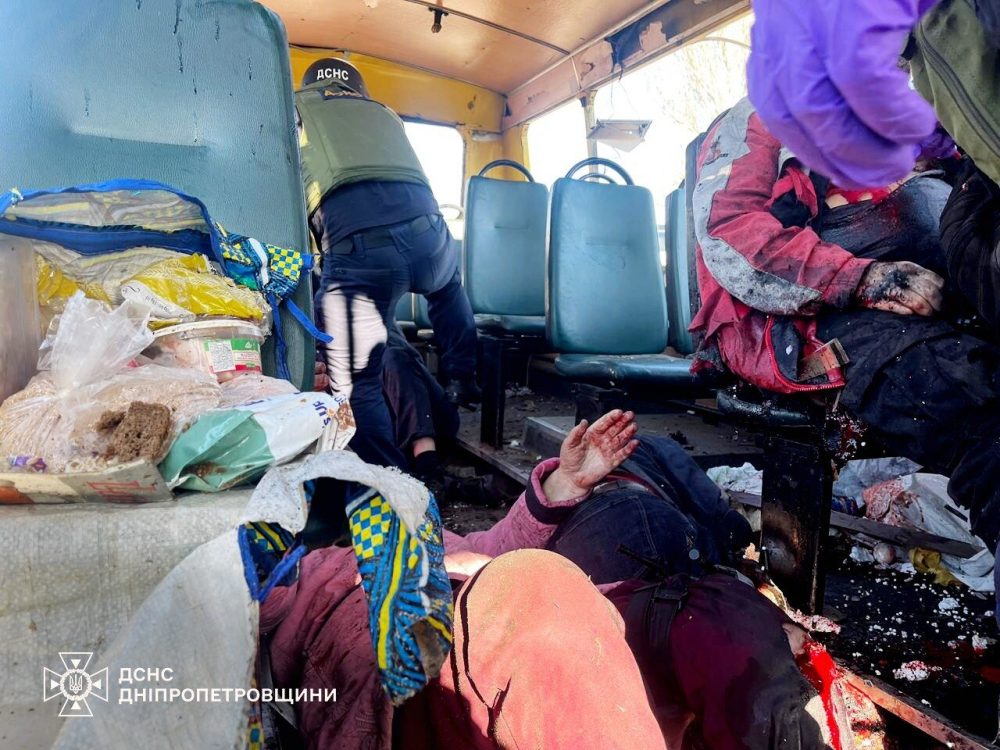
Tuesday morning brought tragedy when a Russian drone hit a bus approaching a stop in Nikopol, a southeastern Ukrainian city, killing four civilians and wounding 15 others, local officials reported.
“This brutal attack on civilian regular transportation occurred during rush hour, when people were just going to work,” Interior Minister Ihor Klymenko posted online. “This is not an accident, it’s their (Russian) tactic: deliberate strikes on civilians.”
Ukrainian officials also confirmed three deaths and three injuries from an assault on a residential structure in Kherson, a southern city. Near the eastern city of Synelnykove, an 11-year-old boy died in a separate drone attack, raising Tuesday’s civilian casualties to eight fatalities.
Government and military leaders reported electrical outages across multiple eastern and southern Ukrainian regions following artillery bombardments and drone attacks.
Years after the defeat of ISIS forces, Christian communities across Iraq continue to endure violent persecution and oppression, according to a recent study from Britain’s All-Party Parliamentary Group for International Freedom of Religion or Belief.
The parliamentary analysis reveals that while Christian families living within the Kurdistan region have found relative safety and stability, those residing in other parts of the nation remain targets of violence from Muslim community members.
Christians represent approximately three percent of Iraq’s total population, making them a vulnerable minority group in the predominantly Muslim nation.
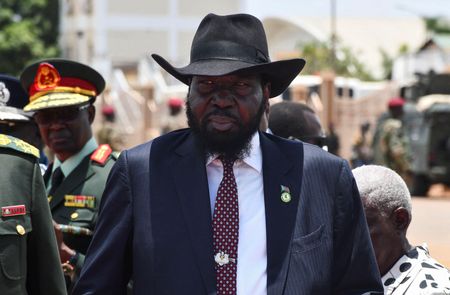
South Sudan’s President Salva Kiir has dismissed both the speaker and deputy speaker of the nation’s parliament, according to an official announcement made during Tuesday’s legislative session.
Tulio Odongi Ayahu, who serves as chief whip for Kiir’s Sudan People’s Liberation Movement (SPLM), delivered the presidential decree that terminated Speaker Jemma Nunu Kumba and Deputy Speaker Permena Awerial Aluong from their positions in the Transitional National Legislative Assembly.
The dismissals stem from accusations made the previous week by SPLM caucus members, who filed a formal petition alleging Kumba engaged in corrupt practices related to the improper handling of legislative funding. The petition demanded her immediate removal from office.
Kumba, who broke barriers in 2021 by becoming South Sudan’s first female parliamentary speaker, has remained silent regarding these corruption claims.
President Kiir has named Joseph Ngere Paciko as the new speaker, while Abuk Paiti Ayiik will assume the deputy speaker role.
These terminations follow a pattern of sudden leadership changes under Kiir’s administration. In late February, he unexpectedly dismissed Finance Minister Bak Barnaba Chol after only three months in the position, offering no public explanation for the decision.
Political observers note that Kiir regularly rotates high-ranking officials in both government and military positions as a strategy to consolidate his authority while navigating ongoing political uncertainty and questions about future leadership transitions.
Financial markets across the globe are experiencing uncertainty as President Donald Trump’s deadline for Iran approaches this evening at 8 p.m. EDT, with traders watching closely to see if Tehran will reopen the strategically important Strait of Hormuz.
Iran has declined to reopen the crucial shipping lane and has rejected ceasefire proposals, despite Trump’s warning that the country could be “taken out in one night.” This standoff has left investors wondering whether the president’s aggressive rhetoric will translate into military action or result in another extended deadline.
As markets reopened Tuesday following the extended holiday weekend, trading activity reflected the cautious mood among investors. Oil markets showed particular volatility, with Brent crude initially climbing above $111 per barrel before retreating from those highs. Meanwhile, U.S. WTI crude fluctuated around $113 per barrel after briefly surpassing $116.
Stock markets displayed mixed performance across different regions. Asian markets remained largely unchanged despite an early boost from Samsung Electronics’ record-breaking quarterly earnings forecast. European markets opened with gains, while U.S. futures showed little movement ahead of the opening bell.
The previous trading session saw U.S. markets rise on hopes of continued diplomatic talks regarding a potential ceasefire. However, that optimism diminished after Tehran’s rejection of a temporary truce agreement. Reports indicate that Pakistan continues to serve as a mediator in the ongoing situation.
Currency markets reflected the global uncertainty, with the U.S. dollar experiencing a slight decline while maintaining overall strength. The dollar index remained close to the 100 mark after reaching its highest point since May 2025 last week. The Japanese yen continued to struggle, trading near the 160-per-dollar level.
Adding complexity to the situation are recent economic indicators from the United States that suggest broader implications from the Iran crisis. The Institute for Supply Management released survey data Monday showing that growth in the U.S. services sector decelerated in March. Additionally, businesses reported the largest increase in input costs in over 13 years, signaling potential inflationary pressures stemming from the conflict.
The upcoming release of U.S. March consumer price index data on Friday will provide further insight into inflation trends. Meanwhile, International Monetary Fund Managing Director Kristalina Georgieva warned Monday that current global conditions point toward higher prices and reduced economic growth across “all roads.”
In corporate news, Samsung Electronics announced remarkable first-quarter results, with estimated operating profits of 57.2 trillion won ($37.92 billion) for the January-March period. This figure significantly exceeded analyst expectations of 40.6 trillion won and represented more than an eightfold increase from the previous year’s 6.69 trillion won.
Looking ahead, investors will be monitoring several key economic releases and Federal Reserve communications. Today’s schedule includes U.S. February durable goods data at 8:30 a.m. EDT and a 3-year Treasury note auction at 1:00 p.m. EDT. Additionally, three Federal Reserve officials are scheduled to speak: Philip Jefferson, Chicago Fed President Austan Goolsbee, and San Francisco Fed President Mary Daly.
The fundamental question facing markets remains whether Trump’s latest ultimatum will lead to an escalation or de-escalation of the current conflict. As the 8 p.m. deadline approaches, traders and investors worldwide are preparing for potential market volatility depending on the outcome.
Multiple international and Saudi companies operating in Riyadh have prolonged their remote work policies this week, according to five sources with knowledge of the situation, as tensions mount over a U.S. deadline demanding Iran reopen the Strait of Hormuz or face severe consequences.
Regional Gulf nations, which have endured repeated Iranian attacks since hostilities commenced on February 28, are concerned that any American military escalation could prompt Iran to intensify strikes against vital infrastructure and civilian targets throughout the Gulf region.
The remote work notifications, distributed Monday and Tuesday through individual company emails and text messages, impact operations across Riyadh’s King Abdullah Financial District, Faisaliah Tower, Business Gate, and Laysen Valley, sources revealed.
These business hubs house regional headquarters for prominent American financial institutions and technology companies including Microsoft and Apple, alongside Saudi organizations such as the kingdom’s sovereign wealth fund.
Workers initially received instructions to operate remotely at the start of last week, sources indicated, following Iranian threats to target major American technology companies in the region as retaliation for U.S.-Israeli military actions and targeted killings.
Saudi Arabia’s government media office has not yet provided a response to requests for comment.
The kingdom has endured hundreds of Iranian drone and missile strikes since the conflict’s onset but reports successfully intercepting most incoming projectiles. Saudi Arabia has experienced fewer attacks compared to neighboring Gulf nations including the UAE and Kuwait.
On Tuesday, Saudi officials announced they intercepted and eliminated seven ballistic missiles fired toward the country’s Eastern Region, with debris landing near energy infrastructure. Iran’s semi-official Fars news agency reported that a petrochemical facility in Saudi Arabia’s Jubail industrial area came under attack.
A high-ranking Iranian official revealed Tuesday that Tehran has established specific conditions that must be fulfilled before engaging in permanent peace negotiations with Washington.
Speaking to Reuters, the official outlined Iran’s demands, which include an immediate cessation of military strikes, assurances that future attacks will not occur, and financial compensation for damages sustained.
The official emphasized that Tehran would not accept any temporary ceasefire arrangement with the United States.
Additionally, the Iranian representative stated that any permanent peace agreement should grant Iran the authority to collect transit fees from vessels navigating through the Strait of Hormuz. According to the official, these fees would be calculated based on factors including vessel type, cargo contents, and current maritime conditions.
A Freeze Warning is in effect across much of the Delmarva Peninsula from 2 AM to 9 AM Wednesday, with temperatures expected to drop as low as 28 degrees.
The National Weather Service has issued the warning for Kent and inland Sussex counties in Delaware, along with Caroline, Kent, Queen Anne’s, and Talbot counties in Maryland. Meteorologists predict sub-freezing temperatures between 28 and 31 degrees during the early morning hours.
Residents should take immediate action to protect sensitive plants and outdoor plumbing. The combination of frost and freezing temperatures could kill crops and tender vegetation, while unprotected outdoor water pipes risk damage from freezing.
Weather officials recommend covering or bringing potted plants indoors, wrapping exposed pipes, and allowing faucets to drip slightly to prevent freezing. Farmers and gardeners should also consider covering sensitive crops with blankets or tarps.
Looking ahead, another freeze watch has been issued for Wednesday evening through Thursday morning, with similar conditions expected.
The current Freeze Warning expires at 9 AM Wednesday morning, but residents should continue monitoring weather conditions as additional cold snaps are possible through the week. Stay with TV Delmarva for the latest weather updates.
A Freeze Warning is now in effect across northern Delaware and central and southern New Jersey, with dangerous cold temperatures expected to dip between 25 and 30 degrees overnight into Wednesday morning.
The National Weather Service issued the warning early Tuesday morning, covering New Castle County in Delaware and multiple counties across New Jersey including Gloucester, Camden, Salem, Atlantic, Cape May, and Ocean counties. The warning remains active from midnight tonight through 9 AM Wednesday.
Residents should take immediate action to protect sensitive plants, outdoor plumbing, and crops from potential freeze damage. The combination of sub-freezing temperatures and possible frost development could kill tender vegetation and damage unprotected pipes.
Gardeners are urged to cover or bring in potted plants, wrap outdoor faucets, and take precautions with any sensitive landscaping. Agricultural interests should also prepare for potential crop damage.
Looking ahead, another round of cold weather is possible later this week, with a Freeze Watch issued for Wednesday evening through Thursday morning where temperatures could again drop into the upper 20s.
The current Freeze Warning expires at 4 PM Tuesday, but conditions will deteriorate overnight. Stay with TV Delmarva for continuing weather updates.
Iranian leadership remains steadfast in their position as President Trump’s Tuesday 8 p.m. Eastern time ultimatum draws near, demanding the country reopen the Strait of Hormuz shipping lane.
Military operations persist throughout the Persian Gulf waters with no diplomatic resolution on the horizon. The president has maintained his warning to strike Iranian transportation infrastructure and electrical facilities should negotiations fail to produce an agreement.
The escalating standoff continues to unfold in the strategically vital waterway, with both sides showing little indication of backing down from their respective positions as the deadline rapidly approaches.
A worldwide organization representing airline pilots is demanding that flight commanders receive ultimate authority to decline missions through dangerous conflict areas, free from corporate influence or financial pressure.
The International Federation of Air Line Pilots’ Associations issued the statement Monday as ongoing warfare in Iran continues to disrupt Middle Eastern aviation for its sixth week, with drone strikes and missile interceptions creating serious safety concerns for flight crews and travelers.
The Montreal-headquartered organization emphasized that airlines must acknowledge the psychological and emotional burden placed on pilots operating in war zones.
“The Commander’s decision regarding the conduct or rerouting of a flight, including refusal to overfly a conflict zone, must be final and non-negotiable,” the document stated. “Additionally, this decision must not be influenced by financial or other incentives, career repercussions or other penalties, or commercial pressures.”
Despite numerous airlines suspending operations to affected regions, Emirates continues flying at roughly 69% of typical capacity while Qatar Airways maintains 26% of normal service levels, based on Flightradar24 tracking information. This represents hundreds of daily flights traversing airspace targeted by Iranian weaponry.
The UAE has established designated “safe corridors” with predetermined routes, though aircraft frequently enter holding patterns during attacks and sometimes face diversions or returns when airspace temporarily closes.
Qatar Airways stated that “the safety of our passengers and crew remains paramount” and confirmed all Doha flights utilize dedicated pathways coordinated with Qatar’s Civil Aviation Authority.
Emirates, which has similarly emphasized safety priorities, did not immediately provide comment.
The pilots’ federation stressed that airlines operating in conflict zones must offer support measures including post-flight recovery periods and confidential assistance programs.
“If rerouting, delay, holding, elevated workload, diversion complexity, or sector uncertainty are recurrent and foreseeable, they should be incorporated into scheduling assumptions, fatigue controls, and roster buffers with additional safety margins such as augmented crew rostering, rather than repeatedly managed as an ad hoc exception,” the statement explained.
In a separate development Monday, the United Nations aviation authority announced its governing board condemned Iran for illegal airspace violations affecting Gulf nations including the UAE, Qatar and Saudi Arabia, compromising civilian flight safety.
“The council deplored Iran’s illegal use of unmanned aircraft systems for military purposes against civilian infrastructure over the territories of the affected member states,” the International Civil Aviation Organization declared.
The council’s action follows a complaint filed by multiple Arab nations regarding Iran’s weaponized drone operations against neighboring countries, according to a knowledgeable source.
Iran has filed its own separate documentation concerning its territory for consideration during an upcoming council meeting, though specific details remain unclear.
Federal immigration enforcement officers have taken more than 800 people into custody based on information provided by airport security personnel since President Donald Trump’s current administration began, according to internal Immigration and Customs Enforcement records obtained by Reuters.
The Transportation Security Administration provided ICE with information on more than 31,000 travelers who could potentially face immigration enforcement actions, the documents reveal. This number significantly exceeds what had been previously disclosed to the public.
Reuters was unable to confirm how many of these detentions occurred within airport facilities, though TSA intelligence would primarily help determine travelers’ schedules and whereabouts.
Both ICE and TSA operate under the Department of Homeland Security umbrella. While these agencies have traditionally exchanged information regarding national security concerns, they shifted focus toward standard immigration enforcement last year as part of Trump’s expanded deportation initiative.
The traveler information came through TSA’s Secure Flight Program, established in 2007 to enable the agency to screen passenger data against federal government watchlists. The program’s original design targeted terrorism prevention rather than immigration violations, according to its founding regulations.
When asked about TSA sharing passenger details with ICE, DHS officials did not provide specific responses but stated that under Trump’s leadership, TSA “is pursuing solutions that improve resiliency, security, and efficiency across our entire system.”
Data showing arrests and traveler information exchanges between TSA and ICE from previous administrations was not available for comparison.
Airport operations and immigration enforcement have become central to a political budget dispute since mid-February, when Democratic lawmakers rejected additional funding for the Republican president’s immigration policies without accompanying reforms to reduce aggressive enforcement methods.
This political deadlock prevented passage of DHS funding legislation, resulting in TSA security personnel missing multiple full paychecks. When unpaid TSA workers began reporting sick in significant numbers, Trump sent ICE agents to over a dozen airports in March to support security operations.
Democratic officials have condemned this deployment and demanded the Trump administration withdraw these personnel. More than 40 House Democrats sent correspondence to newly appointed Homeland Security Secretary Markwayne Mullin last week, stating that ICE officers “will cause confusion and fear” if they continue operating in airports.
Multiple incidents involving ICE agents detaining travelers at U.S. airports have generated public criticism.
Immigration officers apprehended a college student traveling from Boston to Texas for Thanksgiving celebrations in November and arrested a distraught mother at San Francisco International Airport one day before Trump’s airport deployment initiative launched.
DHS officials justified both arrests, explaining that the individuals were subject to final removal orders.
Reuters interviewed three immigration lawyers familiar with cases involving people without legal immigration status being detained at airports.
Attorney Christina Canty described one case involving an Irish couple who had resided in the United States for over twenty years and were detained by immigration authorities in front of their children while attempting to fly from Florida to New York following a vacation.
The parents, who had submitted applications for permanent residency, were ultimately deported and forced to leave their two young children, ages 7 and 10, in the care of adult siblings in the United States, Canty explained.
Another case involved a Chinese woman with a final removal order who was seeking permanent residence and was detained by ICE at the Atlanta airport while traveling to Philadelphia, according to one of the attorneys.
Iranian forces launched a strike Tuesday against a petrochemical facility in Saudi Arabia’s Jubail industrial region, according to reports from Iran’s state-affiliated Fars news agency.
The attack targeted the facility located in Saudi Arabia’s Eastern province. Representatives from Saudi Arabia’s government communications office have not yet provided a response to the reported incident.
Officials from Aramco, Saudi Arabia’s national oil company, and SABIC, the kingdom’s petrochemical subsidiary, also have not issued statements regarding the alleged strike.
ISTANBUL, Turkey – A deadly shooting erupted Tuesday in the vicinity of the Israeli consulate building in Istanbul, resulting in three deaths and leaving two police officers wounded, according to Turkish media outlets.
Video footage captured by Reuters revealed the chaotic scene as law enforcement officers drew their weapons and sought shelter while gunshots echoed through the area. The footage also showed at least one individual covered in blood during the violent incident.
The neighborhood surrounding the Israeli consulate maintains heavy security with armed police stationed there at all times. Following the shooting, television broadcasts displayed additional armed officers conducting patrols throughout the affected area as authorities responded to the scene.
Stock prices for major health insurance companies soared during pre-market trading Tuesday morning after federal officials announced significantly higher payment increases for Medicare Advantage programs than previously expected.
The surge was led by UnitedHealth, which saw shares climb 6.9%, while other major insurers including CVS Health, Elevance Health, Centene and Molina Healthcare experienced gains ranging from 3.6% to 6%.
Humana, which focuses primarily on Medicare coverage, posted the strongest performance with a 10.7% jump, making it the top performer among S&P 500 companies in early trading.
Late Monday, the Centers for Medicare & Medicaid Services announced it would boost payments to private companies providing Medicare Advantage coverage to seniors by an average of 2.48% for 2027. This represents a dramatic increase from the modest 0.09% bump initially proposed in January.
Financial analysts at RBC Capital Markets noted the increase substantially exceeded their projections of 1% to 1.5%.
“We view the revision more as righting an actuarial wrong, not CMS backing off its disciplinarian attitude towards MA,” Jefferies analysts said in a note.
During a media briefing, a Medicare agency representative explained that insurance companies will receive an additional 2.5% boost through modifications to risk assessment payments tied to patient health conditions, bringing the total increase to approximately 5%.
According to CMS projections, the enhanced payment structure will generate more than $13 billion in additional funding for Medicare Advantage programs in 2027.
These government payment levels directly influence the monthly premiums insurers charge customers, determine which benefits they can provide, and ultimately impact company profitability. Insurance companies use these rates when submitting bids for Medicare Advantage contracts they plan to offer in 2027.
Iran’s Sports Minister Ahmad Donyamali announced that his country’s government is holding off on a final World Cup participation decision until FIFA responds to their request for relocating matches away from the United States.
The Iranian Football Federation has been advocating to shift their three group stage games from American venues to Mexico instead. This push stems from Iran’s opposition to U.S. military actions supporting Israel in regional conflicts that have led to ongoing warfare.
Last month, Iranian football officials confirmed they were negotiating with FIFA regarding the venue change. Meanwhile, Iran’s sports ministry has prohibited all national and club teams from traveling to nations deemed hostile until further guidance is issued.
Despite Iran’s efforts, FIFA President Gianni Infantino stated last week that the matches would proceed as originally planned.
“Our request to FIFA to relocate Iran’s games from the U.S. to Mexico is still valid, but we have not yet received a response,” Donyamali explained in a weekend interview with Turkey’s Anadolu news agency.
“If accepted, Iran’s participation in the World Cup will be certain. However, FIFA has not yet responded.”
“As the Minister of Sports, together with the Iranian football federation, we will keep the football team ready for the World Cup. However, the final decision will be made by our government.”
Iran’s Group G schedule currently places all three matches on U.S. territory, with games against New Zealand and Belgium set for Los Angeles, followed by their final match against Egypt in Seattle.
President Donald Trump commented last month that while Iran’s team would be welcomed to compete in America, concerns existed regarding their “life and safety.”
Trump subsequently clarified that any potential threats would not originate from the United States.
“According to FIFA’s relevant regulations, security must be provided in the country concerned,” Donyamali stated. “However, the World Cup is taking place soon, and providing guarantees during this period is questionable.”
“Under these circumstances, the possibility of Iran participating in the World Cup matches in the U.S. is very low. But, if the relevant security guarantees are provided, our government will make the decision on Iran’s participation in the World Cup.”
FIFA has not yet provided comment on the matter.
The 2026 World Cup is scheduled to run from June 11 through July 19 across the United States, Mexico, and Canada.
Investment banking firm Goldman Sachs announced Tuesday that technology companies may now present compelling investment opportunities following an extended stretch of poor market performance that has driven stock prices down significantly.
According to the financial services company, the current year has witnessed technology stocks experiencing some of their most challenging relative performance compared to other market sectors in five decades. “(So far this year), we have seen one of the weakest periods of relative returns for technology over the past 50 years,” the brokerage stated in their research note.
Multiple developments have contributed to the technology sector’s struggles since the start of 2025, leading many investors to shift their money toward value-oriented investments instead. Key factors behind this trend include the introduction of DeepSeek, an artificial intelligence platform from China, along with enormous capital expenditures by major U.S. technology companies and AI-related changes disrupting the software business landscape.
Goldman Sachs analysts believe these challenging conditions have created favorable circumstances for investors looking to purchase technology stocks, noting that while company growth rates continue to be robust, their market valuations have dropped considerably.
The research shows that in American markets, the premium pricing previously commanded by major technology companies has decreased substantially and now sits at nearly identical levels to the broader technology sector. On a worldwide basis, information technology companies’ price-to-earnings ratios have fallen below those seen in consumer discretionary, consumer staples, and industrial sectors.
“The underperformance of the technology sector is also starting to generate attractive valuation opportunities for investors as its valuation, relative to expected consensus growth, has fallen below that of the global aggregate market,” Goldman analysts explained.
The ongoing conflict involving Iran has also enhanced the technology sector’s investment appeal, according to the firm’s assessment. “Given the relative insensitivity of cash flows in the technology sector to economic growth, and the benefit it would derive on any rally in bond yields, this sector might prove to be more defensive over the next few months,” Goldman researchers noted.
Despite the depressed stock valuations, technology companies have continued to deliver impressive financial results, the investment bank reported. Within the S&P 500 index, market analysts expect information technology earnings per share to increase by 44%, representing 87% of the entire index’s earnings growth for the first quarter.
“Earnings revisions have been more positive than for any sector too. This has led to a record gap between performance and underlying earnings growth,” Goldman Sachs concluded in their analysis.
A Freeze Warning is now in effect across northern Delaware and parts of southern New Jersey as overnight temperatures are expected to plummet to dangerous levels for vegetation.
The National Weather Service warns that temperatures will drop between 25 and 30 degrees from midnight tonight through 9 AM Wednesday morning. Areas under the warning include New Castle County in Delaware, plus Salem, Gloucester, Camden, Cumberland, Atlantic, Cape May, and parts of Burlington, Mercer, Monmouth, and Ocean counties in New Jersey.
These sub-freezing conditions pose a serious threat to crops, gardens, and sensitive vegetation. Frost and freeze conditions could kill tender plants and potentially damage unprotected outdoor plumbing.
Residents should take immediate action to protect vulnerable plants by covering them or bringing potted plants indoors. Homeowners should also consider wrapping exposed pipes to prevent freezing and potential burst pipes.
This unseasonably cold weather comes as many gardeners have already begun spring planting. The timing makes this freeze particularly concerning for local agriculture and home gardens.
The Freeze Warning expires at 4 PM today, but residents should continue monitoring weather conditions as another freeze watch may be issued for later this week.
A Freeze Warning is now in effect across much of the Delmarva Peninsula, with dangerous sub-freezing temperatures expected to dip as low as 28 degrees through Wednesday morning.
The National Weather Service issued the warning for Kent and Inland Sussex Counties in Delaware, along with Caroline, Kent, Queen Anne’s, and Talbot Counties in Maryland. The warning remains active from 2 AM until 9 AM Wednesday.
Temperatures between 28 and 31 degrees are forecast, creating conditions that could kill crops and other sensitive vegetation. Unprotected outdoor plumbing is also at risk of damage from the freezing conditions.
Residents should take immediate action to protect tender plants by covering them or bringing them indoors. Don’t forget to disconnect and drain garden hoses, and consider wrapping exposed pipes.
This unusually late freeze warning comes as many gardeners have already planted spring crops and flowers, making protection efforts especially critical.
Looking ahead, meteorologists are monitoring the possibility of another freeze Thursday morning, though that remains under a Freeze Watch for now.
The current Freeze Warning expires at 4 PM today, but residents should continue monitoring weather updates as conditions develop. Stay with TV Delmarva for the latest forecast updates.
Good morning, Delmarva! We’re looking at a beautiful but breezy Tuesday across the peninsula with plenty of sunshine to brighten your day. Temperatures will climb to a pleasant 55 degrees, but you’ll definitely want to secure any loose outdoor items as northwest winds will be gusty today, ranging from 5 to 20 mph with gusts potentially reaching 35 mph.
Tonight, those winds will calm down significantly as skies remain clear and temperatures drop to a chilly 32 degrees. It’s a perfect night to cozy up indoors!
Wednesday brings more sunshine with temperatures reaching around 50 degrees – ideal weather for any midweek outdoor activities. However, Wednesday night tells a different story as we’ll see our first frost conditions of the season developing across parts of the peninsula, with lows dipping to 33 degrees.
If you have any tender plants or early spring flowers, you may want to cover them Wednesday night or bring potted plants indoors. Otherwise, enjoy this gorgeous spring weather while staying aware of those gusty conditions today. Stay safe and have a wonderful Tuesday, Delmarva!
Drivers traveling through a key intersection in Delaware should exercise caution as construction work has left traffic signals completely inoperative.
The intersection where Business Route 13 meets Rolling Road currently has no working traffic lights due to construction activities in the area. Delaware Department of Transportation officials indicate the signal outage will continue through 11 AM today.
Motorists approaching this intersection should treat it as a four-way stop until power is restored to the traffic control system. Drivers are advised to allow extra travel time and proceed with increased caution when navigating through this area.
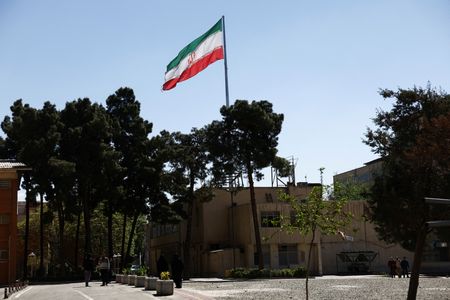
RAZI, Iran (AP) — During a lengthy 12-hour journey across Iran, Associated Press journalists witnessed a nation where ordinary civilian routines continue alongside visible reminders of regional conflict and tension.
The reporting team observed families sharing morning meals at roadside truck stops and spotted a cargo vehicle displaying a Nike emblem while traveling through a mountain pass. At one dining establishment, patrons listened to R.E.M.’s “Losing my religion” while enjoying grilled dishes and saffron beverages, including women who had removed their required head coverings.
Following five weeks of intensive American and Israeli military strikes, significant damage has occurred throughout the country, especially in Tehran where journalists documented destroyed government facilities and law enforcement buildings.
However, during the extended journey from the Turkish border, visible evidence of the regional conflict that has affected Middle Eastern stability and global markets remained limited.
Iranian authorities have authorized the Associated Press to deploy an additional reporting team for a short-term assignment in the country. The AP maintains existing operations in Iran, with visiting journalists required to work alongside government-affiliated media assistants while retaining complete editorial independence.
Large images of Supreme Leader Ayatollah Ali Khamenei, who died during the conflict’s opening day, decorated the border crossing area with inflammatory messaging. Nearby, a herder moved his flock along the roadway as snow-covered peaks stretched into overcast skies.
Halfway through their journey in Zanjan city, reporters encountered their first direct war evidence. An Israeli military strike had recently damaged a religious community facility called a husseiniyah. Iranian authorities reported the attack destroyed medical and library facilities, resulting in two civilian deaths. Israeli forces claimed they targeted a military command center.
Beyond this damaged complex and throughout every community along the Tehran route, normal activities appeared to continue. Commercial establishments remained operational and traffic congestion occurred during peak hours.
Additional Khamenei promotional displays appeared as the team approached Tehran. Arriving after midnight, they traveled through vacant streets past bombed government structures and security positions staffed by Revolutionary Guard and Basij forces, key Islamic Republic institutions that have faced repeated attacks.
This documentary photo story was compiled by AP photo editors.
Associated Press reporter Sam Metz in Ramallah, West Bank, contributed.
NASA’s Artemis II mission has successfully achieved its primary lunar flyby objective, with the crew accomplishing several critical mission goals during their journey around the moon.
The space mission reached multiple important benchmarks as the astronauts navigated their path around the lunar surface. Commander and NASA astronaut Reid Wiseman was photographed gazing through one of the Orion spacecraft’s primary cabin windows at the moon during the crew’s lunar approach.
During their lunar journey, the crew managed to surpass a record previously held by an Apollo mission and witnessed a solar eclipse from their unique vantage point in space.
Following their successful completion of the lunar loop, the space capsule has begun its return trajectory toward Earth. Mission officials anticipate the spacecraft will make its ocean landing on Friday, marking the conclusion of this significant milestone in NASA’s lunar exploration program.
The mission represents a major step forward in NASA’s efforts to return humans to lunar exploration and establishes important precedents for future deep space missions.
Almost five decades after a beloved television comedy series brought the call letters into American pop culture, Cincinnati could finally have an actual radio station using the WKRP identifier.
The classic sitcom that entertained audiences in the late 1970s and early 1980s centered around the fictional adventures of staff members at a radio station in Ohio’s Queen City, making the call letters instantly recognizable to television fans across the country.
PARIS – A deadly collision occurred Tuesday morning when a high-speed passenger train struck a truck transporting military equipment at a railroad crossing in northern France, according to local government officials.
The train’s engineer died in the crash, which happened near the port city of Calais, a local prefecture spokesperson confirmed. Multiple passengers aboard the train were also hurt in the accident.
France’s Transportation Minister Philippe Tabarot acknowledged the fatal incident through a social media post, stating he planned to travel to the crash site personally.
The national railway company SNCF reported through its social media channels that the collision took place at a grade crossing situated between Bethune and Lens. Rail service along the route has been suspended following the accident.
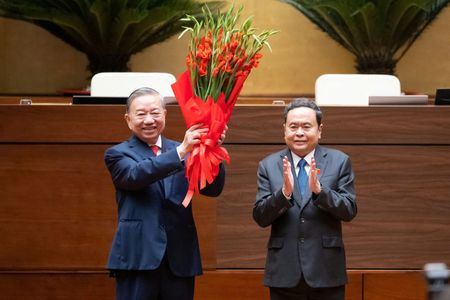
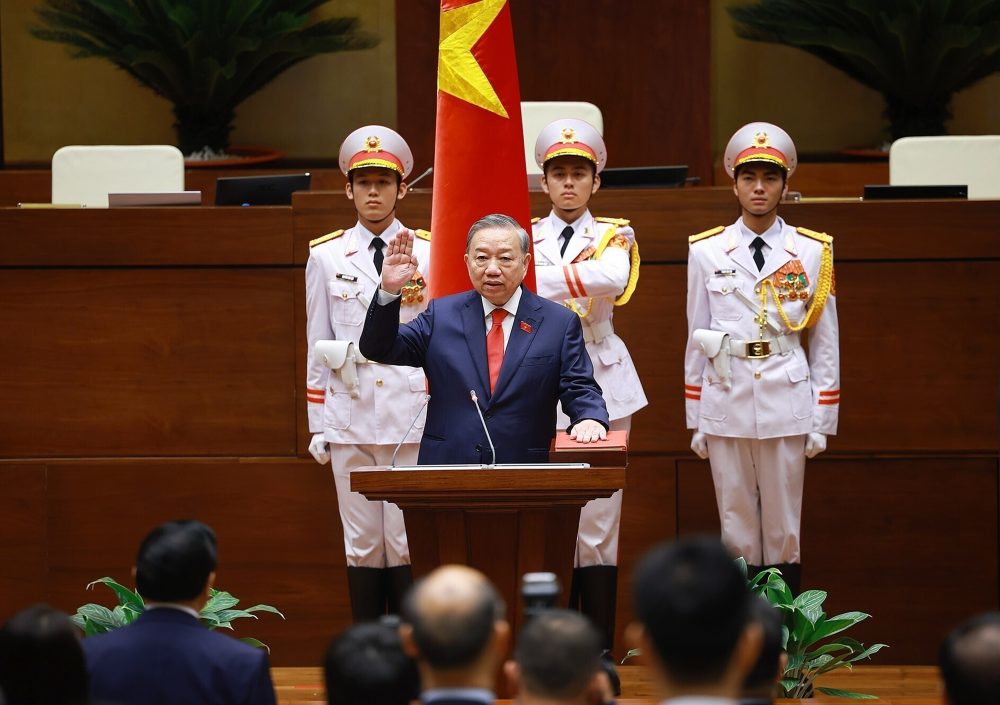
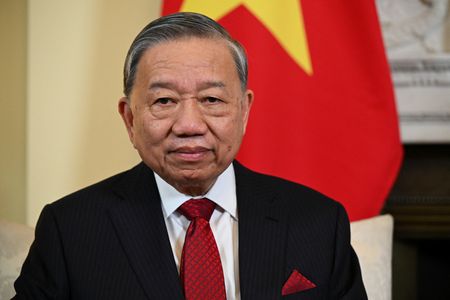
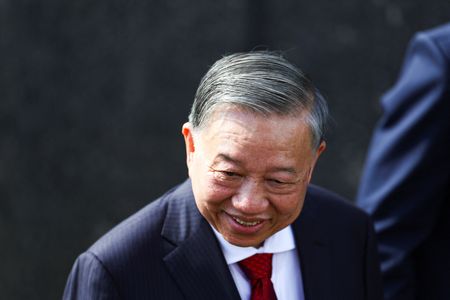
Vietnamese lawmakers made a historic decision Tuesday, unanimously selecting Communist Party Secretary General To Lam as the nation’s state president for the upcoming five-year term, establishing him as Vietnam’s most influential leader in recent decades.
This anticipated decision represents a departure from Vietnam’s long-standing tradition of shared leadership among multiple officials, concentrating power in a single individual in ways experts believe could push the single-party nation toward increased authoritarian control, while potentially allowing for quicker policy implementation similar to neighboring China.
Parliamentary records show that all 495 legislators attending Tuesday’s National Assembly gathering supported the Communist Party’s selection, with five members not present. Government officials indicated that nominations for senior state positions were completed during a late March conference.
The previous public security chief now holds dual authority to govern Vietnam for the coming five years, following his successful bid for a second term as general secretary in January.
In a separate but equally expected development Tuesday, parliament members also gave unanimous approval to Le Minh Hung as Vietnam’s incoming prime minister.
Following the election, Lam addressed legislators in a broadcast speech, expressing gratitude for holding both positions and promising “a new growth model with science, technology, innovation, and digital transformation as the primary driving forces.”
He outlined his main objectives as maintaining national stability, advancing rapid and sustainable development, and enhancing “all aspects of people’s lives.”
“Concentrating greater power in To Lam’s hands could pose risks to Vietnam’s political system, such as increased authoritarianism,” warned Le Hong Hiep, senior fellow at the ISEAS Yusof Ishak Institute in Singapore.
Nevertheless, such power concentration “could enable Vietnam to formulate and implement policies more quickly and effectively,” supporting economic expansion, he noted.
The merger of these two positions “will shift Vietnam’s domestic politics to a new normal where most of the old assumptions about Vietnam’s politics, including those about collective leadership, are no longer valid,” explained Alexander Vuving of the Asia-Pacific Center for Security Studies in the United States.
Lam previously managed both roles temporarily following the 2024 death of former party General Secretary Nguyen Phu Trong.
Even after transferring the state presidency to army general Luong Cuong, Lam continued operating as though he maintained the position, conducting extensive international travel and representing Vietnam in diplomatic meetings with foreign officials.
During his initial term as party leader, the 68-year-old Lam introduced comprehensive economic changes aimed at enhancing Vietnam’s competitiveness, generating both support and opposition.
Lam seeks to achieve double-digit economic expansion through a fresh development approach that reduces dependence on low-cost manufacturing, which has historically anchored Vietnam’s export-focused economic surge driven by international corporations.
His initiatives have occasionally created uncertainty within government circles and business communities, though he has demonstrated practical adaptability in their implementation.
He has endorsed the growth of private business empires, but prior to his reappointment, also released guidance emphasizing state-owned enterprises’ leadership role to satisfy party conservatives.
International investors frequently commend political consistency and view Lam as supportive of business interests. However, his endorsement of domestic champions and pursuit of aggressive growth have sparked concerns among some regarding preferential treatment, corruption possibilities, financial bubbles, and resource misallocation.
Regarding international relations, Lam has continued Vietnam’s “Bamboo Diplomacy” strategy and worked to maintain balanced relationships with major nations while broadening global partnerships.
“Lam’s double-hat would not signal any changes in Vietnam’s foreign policy, even if there are concerns that Vietnam is concentrating more power in a single individual,” stated Khang Vu, a visiting scholar at Boston College.
The newly chosen prime minister Hung, age 55, previously led the central bank from 2016 to 2020, becoming the youngest individual to occupy that role.
He succeeds Pham Minh Chinh, 67, who oversaw a rapidly growing economy during his five-year tenure and became one of Vietnam’s most recognizable leaders domestically and internationally through regular foreign visits and participation in global conferences.
Hung has maintained a reserved public presence in his party and central banking positions.
While lacking formal economics training, Hung’s selection is viewed by some officials as an effort to introduce economic knowledge into senior government levels, which have been primarily filled by politicians with security experience.
In his post-election remarks to lawmakers, Hung committed to pursuing sustainable growth and pledged his utmost effort to achieve the party’s ambitious target of at least 10% annual economic growth through 2030.
He lacks personal security experience, but his family maintains strong connections to the ministry Lam previously headed: Hung’s father served as public security minister, and two siblings hold general ranks in security forces.
A Freeze Warning is currently in effect for portions of northern Delaware and central and southern New Jersey, with dangerous sub-freezing temperatures expected to continue through 9 AM Wednesday morning.
The National Weather Service warns that overnight lows will plummet between 25 and 30 degrees across affected areas including New Castle County in Delaware, along with Salem, Gloucester, Camden, Cumberland, Atlantic, Cape May, and parts of Burlington, Mercer, Monmouth, and Ocean counties in New Jersey.
These frigid conditions pose a serious threat to tender plants, crops, and sensitive vegetation. Frost and freeze conditions could kill unprotected outdoor plants and potentially damage exposed plumbing.
Residents should take immediate action to protect vulnerable plants by covering them or bringing potted plants indoors. Don’t forget to disconnect and drain outdoor hoses, and consider letting faucets drip slightly to prevent pipe damage.
Looking ahead, another round of freezing temperatures is possible Wednesday evening through Thursday morning, with lows between 25 and 31 degrees and additional frost development expected.
The current Freeze Warning expires at 4 PM today, but residents should stay tuned to TV Delmarva for the latest weather updates as conditions continue to develop.
A Freeze Warning is in effect for much of the Delmarva Peninsula from 2 AM to 9 AM Wednesday morning, with temperatures expected to drop between 28 and 31 degrees.
The National Weather Service Mount Holly has issued the warning for Delaware’s Kent and Inland Sussex Counties, along with Caroline, Kent, Queen Anne’s, and Talbot Counties in Maryland. These dangerously cold temperatures could kill crops and sensitive vegetation, while also potentially damaging unprotected outdoor plumbing.
Residents are urged to take immediate action to protect tender plants by covering them or bringing potted plants indoors. Homeowners should also ensure outdoor water pipes are properly insulated or wrapped to prevent freezing and costly damage.
The threat doesn’t end Wednesday morning. Weather officials have issued a Freeze Watch for Wednesday evening through Thursday morning, when similar conditions are expected to return with lows between 29 and 31 degrees and possible frost development.
Gardeners and farmers across the region should be especially vigilant, as these late-season freezing temperatures can devastate newly planted crops and flowering plants that have emerged with recent warmer weather.
The current Freeze Warning expires at 4 PM Wednesday, but residents should continue monitoring weather updates for the extended forecast.
Almost five decades after a beloved television comedy put the call letters on the map, Cincinnati could soon welcome an actual radio station bearing the WKRP name.
The iconic designation became a household name through the popular late 1970s sitcom that followed the misadventures of a struggling rock station’s staff in Ohio. Now, the fictional broadcast facility that entertained audiences for four seasons may transition from television fantasy to radio reality in the very city where the show took place.
The head of America’s largest bank recently sat down with NPR’s Steve Inskeep to discuss several pressing issues facing the nation and world today.
Jamie Dimon, who serves as chief executive of JPMorgan Chase, shared his insights on the current state of the U.S. economy during the wide-ranging conversation. The banking executive also offered his thoughts on how ongoing military conflict involving Iran is affecting global markets and stability.
Additionally, Dimon addressed the rapidly evolving role of artificial intelligence in both the financial sector and broader economy, discussing how these technological advances may shape the future business landscape.
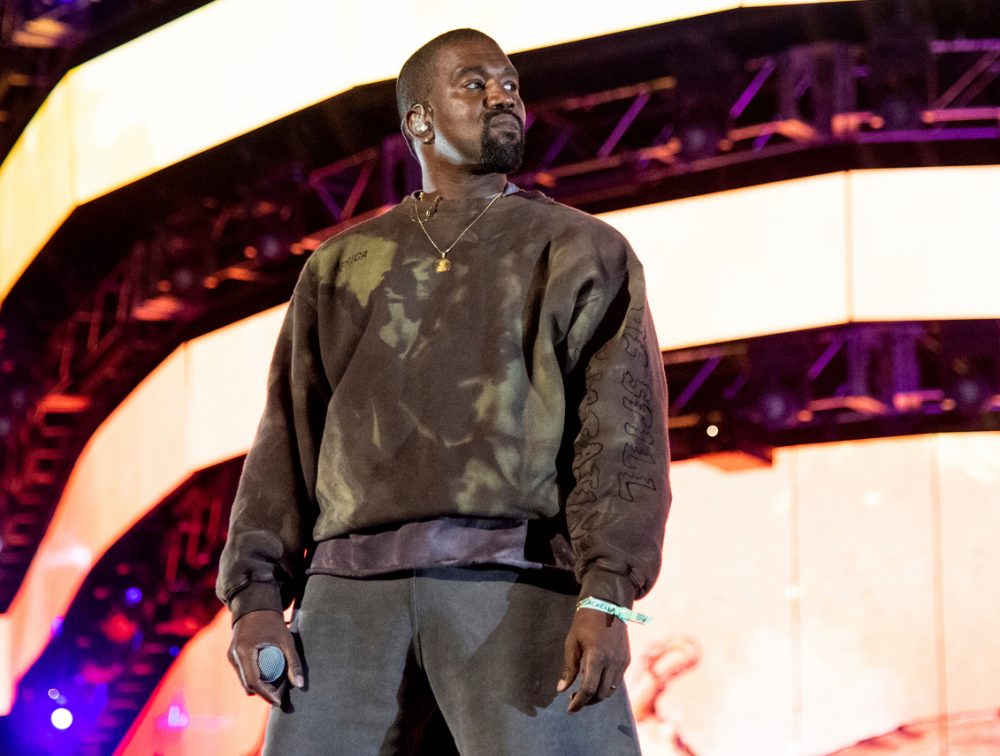
LONDON — British government officials are demanding that the artist formerly known as Kanye West be removed from a major London music festival lineup, while the rapper has requested face-to-face meetings with UK Jewish community leaders following controversy over his past antisemitic remarks.
The performer, who legally changed his name to Ye in 2021, is scheduled to headline the Wireless Festival at Finsbury Park from July 10-12, where approximately 150,000 attendees are expected across the three-day event.
Festival organizers face increasing demands from corporate sponsors and government leaders to cancel Ye’s appearances after the artist sparked widespread criticism for making antisemitic comments and expressing praise for Adolf Hitler.
The 48-year-old musician previously released a track titled “Heil Hitler” and promoted Nazi imagery on merchandise through his website. In January, he issued a public apology through a full-page Wall Street Journal advertisement, attributing his behavior to his bipolar disorder and describing “a four-month long, manic episode of psychotic, paranoid and impulsive behavior that destroyed my life.”
Major festival sponsors including Pepsi, Rockstar Energy and Diageo have withdrawn their support since Ye’s headlining announcement, while British Prime Minister Keir Starmer described the booking as “deeply concerning.”
The rapper issued a statement Tuesday expressing his desire for dialogue, saying he “would be grateful for the opportunity to meet with members of the Jewish community in the U.K. in person, to listen.”
“I know words aren’t enough — I’ll have to show change through my actions,” he continued. “If you’re open, I’m here.”
Festival Republic, the event’s organizing company, has defended keeping Ye on the bill. Managing director Melvin Benn released a statement Monday encouraging people to show the performer “forgiveness and hope.”
“We are not giving him a platform to extol opinion of whatever nature, only to perform the songs that are currently played on the radio stations in our country and the streaming platforms in our country and listened to and enjoyed by millions,” Benn’s statement read.
UK Health Secretary Wes Streeting rejected the organizers’ position as “absurd” and stated Ye should “absolutely not” take the stage at Wireless. Streeting revealed that Home Secretary Shabana Mahmood is evaluating whether to prohibit the rapper from entering Britain.
Benn confirmed that Mahmood possesses the authority to cancel Ye’s visa for UK entry.
“If she does, she does, and then the issue is over,” he told the BBC Tuesday.
Representatives for Ye have not responded to requests for comment.
Federal agriculture officials are working to update documentation requirements that govern how fruits and vegetables move from Hawaii and U.S. territories to the mainland United States.
The Animal and Plant Health Inspection Service has announced plans to seek revised approval for information collection procedures related to interstate transportation of produce from these regions. The agency is following requirements under the Paperwork Reduction Act of 1995 as it pursues both changes to existing rules and an extension of current approval.
These regulations control the movement of agricultural products between Hawaii, U.S. territories, and other states to help prevent the spread of plant diseases and invasive species that could harm mainland crops.
A major battery manufacturer that supplies electric vehicle makers including Tesla and General Motors has announced significant financial losses for the first quarter of this year.
LG Energy Solution, based in South Korea, revealed Tuesday that it anticipates an operating loss of 208 billion won, equivalent to approximately $138.16 million, during the January through March period. The company attributed the red ink to declining orders from electric vehicle manufacturers.
The projected loss exceeded Wall Street expectations, which had predicted a smaller deficit of 160 billion won according to LSEG SmartEstimate forecasts from financial analysts.
The battery manufacturer, which also counts Hyundai Motor among its clients, has been struggling with reduced demand for EV batteries. Contributing to this challenge, General Motors temporarily shut down a Detroit electric vehicle manufacturing facility until April.
Company officials said revenue is expected to drop 2.5 percent compared to the same period last year, falling to 6.6 trillion won.
The financial projections include tax benefits from the U.S. Inflation Reduction Act related to the company’s American battery manufacturing operations, according to a regulatory document filed by LG Energy Solution. Without these federal tax incentives, the operating loss would have reached 398 billion won.
To counter the weakness in electric vehicle battery sales, the company is pivoting toward energy storage systems, which are experiencing increased demand due to growing electricity requirements for artificial intelligence data centers.
In February, LG Energy Solution announced plans to triple its energy storage system revenue this year compared to 2023. Investment firm Nomura projects the company’s energy storage revenue could reach approximately 2.8 trillion won by 2025.
Financial analysts believe recent U.S. legislation could benefit South Korean battery manufacturers. The CHARGE Act, introduced in Congress last month, would prohibit imports of certain Chinese-manufactured energy storage systems due to concerns about potential remote monitoring capabilities in products made in China and shipped to the United States.
LG Energy Solution plans to release comprehensive quarterly earnings results on April 30.
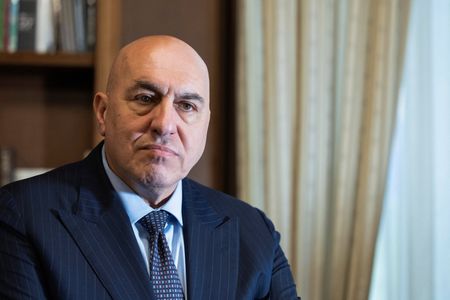
ROME, April 7 – America’s standing as a world leader faces serious challenges due to the Iran conflict, according to Italy’s Defense Minister Guido Crosetto, who voiced alarm about the potential for nuclear escalation he described as “madness.”
Italy joined several NATO partners last week in showing resistance to President Donald Trump’s Iran military operations by refusing to allow American military planes to use the Sigonella air base in Sicily for flights heading to the Middle East.
“This war is also putting the United States at risk in its global leadership,” Crosetto stated during an interview with Italian newspaper Corriere della Sera that was published Tuesday.
The defense minister, who maintains close ties with Italian Prime Minister Giorgia Meloni and has established a positive working relationship with Trump, expressed deep concerns that the situation could deteriorate further. He referenced the 1945 atomic bombings that ended World War Two as a historical warning.
“Just think: it was human beings like us who decided that even Hiroshima and Nagasaki were acceptable means of ending a conflict. Unfortunately, we still possess nuclear weapons, and those who do not have them are seeking to acquire them. We have learnt nothing,” Crosetto said.
“The risk is madness, and what we are experiencing is a conflict in which every action triggers a reaction at a higher level,” he added.
Speaking ahead of his scheduled parliamentary address about the Iran war on Tuesday, Crosetto suggested that Trump needs advisers willing to challenge his decisions.
“One of the problems of this presidency is that no one dares contradict the boss,” he remarked.
As tensions grow between Trump and European nations over their war positions, Crosetto confirmed that Italy has maintained its restrictions on U.S. base usage beyond the recent incident.
Prime Minister Meloni, who has avoided taking a strong public stance against the conflict, traveled to Saudi Arabia, Qatar and the United Arab Emirates over the weekend. The diplomatic mission aimed to demonstrate Italy’s support for Gulf states facing Iranian threats while also securing the country’s energy interests amid global fuel price increases.
The Ford Motor Company announced Tuesday it is pulling more than 422,000 vehicles from American roads due to malfunctioning windshield wipers, according to federal safety officials.
The National Highway Traffic Safety Administration reported that the massive recall affects several popular Ford models, including the Lincoln Navigator SUV, Ford Expedition SUV, and select F-series pickup trucks.
Federal regulators explained that the windshield wiper arms on these vehicles may snap or break completely, rendering the wipers useless during operation. This mechanical failure creates dangerous driving conditions, particularly during rain or snow when clear visibility is essential for safe vehicle operation.
To address the safety concern, Ford dealerships will conduct thorough inspections of affected vehicles and install replacement wiper arms at no cost to owners, the safety administration confirmed.
Mounting fuel costs and concerns about petroleum availability have triggered an unprecedented shift toward electric motorcycles throughout Pakistan, with dealers reporting record-breaking sales increases.
In Rawalpindi, Haseeb Bhatti, who converts gasoline-powered motorcycles to electric models, experienced a remarkable 70% jump in March sales. Meanwhile, Ali Gohar Khan, who operates a nationwide electric bike dealership established seven years ago, described the recent sales spike as the most dramatic he has ever witnessed.
“People have this fear that maybe in the near future, they might not get petrol at all,” Khan said.
The ongoing Middle East conflict has caused worldwide petroleum prices to climb sharply, adding to the financial burden on Pakistani citizens already struggling with inflation and economic challenges following the pandemic. Since Pakistan relies on imports for nearly all its oil through the Strait of Hormuz, concerns about supply disruptions have spread despite government reassurances.
Transportation experts note that approximately 40% of Pakistan’s gasoline consumption powers the country’s 30 million motorcycles and three-wheeled vehicles that fill the streets in a nation where automobiles remain unaffordable for most and mass transit systems are limited.
Market specialists and researchers predict the current crisis will accelerate Pakistan’s transition to electric vehicles, a movement that benefits from the country’s abundant and inexpensive solar energy resources for charging stations. This transformation could significantly reduce oil import dependency, strengthen foreign currency reserves, and cut pollution in what was ranked as the world’s most polluted nation in 2025.
Following an 18% government fuel price increase last week, Pakistani families earning average wages now spend 31% of their daily earnings on a single liter of gasoline – ranking among the highest 22 countries out of 139 nations monitored by globalpetrolprices.com and Our World in Data.
“My monthly salary is 30,000 rupees. I can barely cover expenses for my family of six with this. How am I supposed to fill my bike?” said Zahoor Ahmed, a security guard in the southern city of Karachi.
The shift to electric vehicles has attracted everyone from working professionals to university students in recent months. Data from consultancy Renewables First revealed that elevated gasoline prices drove electric vehicle sales up nearly threefold last year to 90,000 units, representing 5% of all two-wheeled vehicle purchases.
This year marks the first time electric vehicles have captured more than 10% of monthly motorcycle sales, according to Talha Khan, CEO of EV logistics planning firm Orko. He anticipates this trend will accelerate since conventional fuel costs can be up to 10 times higher than electric charging expenses.
“Keeping inflation and fuel prices in mind, I took matters in my own hands and bought an electric scooter,” said Mehvish Qureshi, a lawyer in southern Hyderabad.
A standard electric motorcycle costs approximately 250,000 rupees – exceeding half of Pakistan’s annual per capita income and 56% more than the popular gasoline-powered Honda CD 70, priced around 160,000 rupees.
The government launched the Pakistan Accelerated Vehicle Electrification (PAVE) initiative in February, offering subsidies covering one-fifth of purchase prices plus interest-free financing for the remainder. The program focuses specifically on electric motorcycles and autorickshaws.
Finance Ministry adviser Adnan Pasha told Reuters the program has already attracted roughly 270,000 applications – nearly seven times PAVE’s initial phase goal ending in June. The government plans to finance 2 million electric vehicles over five years, funding the initiative through existing fuel sales taxes.
“Electrifying just 2 million vehicles could result in nearly half a billion dollars in annual savings, as we don’t have to import that fuel,” Pasha said.
Many Pakistani households adopted solar power following IMF-mandated electricity rate increases in 2023, purchasing affordable Chinese-manufactured panels for residential use. The government now seeks to leverage this solar expansion to support electric vehicle growth.
“Using solar can reduce electricity costs at charging stations, and make it more affordable to charge at home,” Pasha said.
Ammar Habib, an adviser to Pakistan’s power minister, explained that electric vehicles are also “great for the grid as the steady demand from electric vehicle charging will ease some of the daytime volatility linked to solar oversupply.”
Similar to Pakistan’s solar energy transformation, the country’s electric motorcycle adoption relies heavily on Chinese manufacturers. Scooter companies including Yadea and Jinpeng, along with locally assembled electric bikes using batteries and parts from firms like AIMA and Sunra, are positioned to meet growing demand.
Chinese electric vehicle manufacturer BYD, which has partnered with Pakistan’s HUBCO Green to establish charging networks nationwide, announced plans to support broader electrification efforts before eventually introducing passenger vehicles.
Pasha indicated the government wants domestic companies to construct charging facilities and expects the 45% reduction in charging station electricity rates implemented last year to continue encouraging adoption.
However, financial support programs could face pressure if regional conflicts continue, while limited local technical expertise and challenging charging infrastructure expansion present additional obstacles for Pakistan’s electric vehicle transition, according to Ahtasam Ahmad, energy finance lead at Renewables First.
Reliable maintenance networks are essential since electric vehicles are more vulnerable to road damage from potholes, which are widespread on South Asian streets. In neighboring India, operating electric scooters on poorly maintained roads has created significant service delays.
“When Chinese players flood the market, it may look promising on paper, but with virtually no after-sales service infrastructure, they risk eroding consumer confidence in the technology,” Ahmad said.
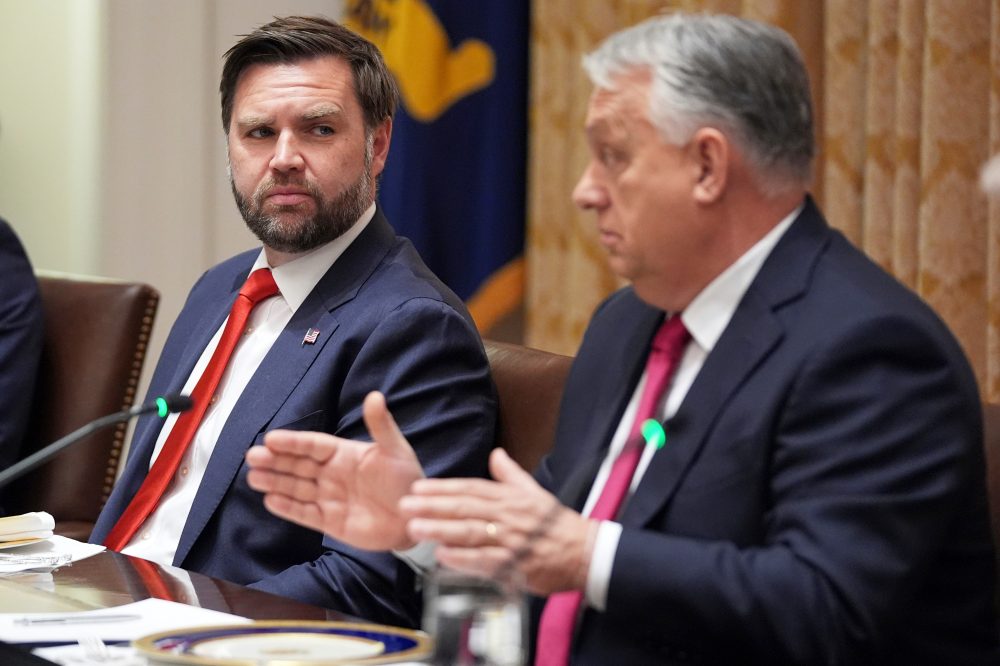
BUDAPEST, Hungary — Vice President JD Vance arrived in Hungary’s capital city Tuesday for a two-day visit aimed at supporting Prime Minister Viktor Orbán’s struggling reelection campaign just days before voters head to the polls.
The visit, which includes an official meeting with Orbán followed by an appearance at one of his campaign events, represents the most direct signal yet that the Trump administration is fully backing the Hungarian leader’s bid for another term when the nation votes this Sunday.
Orbán has held power continuously since 2010 and is seeking a fifth consecutive term as prime minister. However, he and his Fidesz party are confronting their most challenging electoral battle in twenty years against center-right opposition candidate Péter Magyar, who leads the Tisza party and could potentially end Orbán’s decade-and-a-half grip on power.
Critics have long accused the Hungarian leader of seizing control of the country’s institutions, restricting media freedoms, and allowing widespread government corruption to flourish — allegations Orbán rejects. Despite these controversies, he has emerged as a prominent figure within international far-right political circles.
President Trump has publicly backed Orbán’s reelection efforts multiple times, with many supporters of the Make America Great Again movement praising the Hungarian prime minister’s strict immigration policies, restrictions on LGBTQ+ rights, and control over media outlets and educational institutions.
However, recent independent polling data suggests Fidesz is running more than ten points behind among committed voters in advance of the April 12 election, prompting Orbán to seek public appearances with his international supporters to enhance his standing.
This marks the second major show of American backing for Orbán’s government in recent months.
Hungary has diverged from most European Union member nations by declining to provide Ukraine with financial aid or military equipment to defend against Russia’s ongoing invasion, while continuing to purchase Russian energy resources despite EU efforts to reduce such dependencies.
Following a White House meeting between Orbán and Trump last November, Hungary secured an exemption from American sanctions targeting Russian oil and gas imports.
During a February visit to Budapest, Secretary of State Marco Rubio offered strong praise for Orbán and highlighted the “person-to-person connection” between the Hungarian leader and President Trump. Rubio told Orbán: “President Trump is deeply committed to your success because your success is our success.”
At the end of last month, Orbán welcomed dozens of international allies to Budapest for the Hungarian version of the Conservative Political Action Conference and a gathering of the Patriots for Europe party alliance, which holds the third-largest bloc of seats in the European Parliament.
Trump contributed a video message to the Hungarian CPAC event, declaring that Orbán had his “complete and total endorsement” and calling him a “fantastic guy.”
The Trump administration’s support for Orbán demonstrates its broader alignment with European far-right political movements, with mutual admiration evident across countries including Spain, France, Germany, and the Netherlands.
Nevertheless, Trump’s recent foreign policy decisions regarding Greenland, Venezuela, and Iran have created tension with some European relationships.
Orbán has maintained his loyalty to Trump, including repeating the former president’s unfounded assertions about winning the 2020 election. Speaking on state radio shortly before Trump’s second term began, Orbán claimed Democrats “took the presidency away from Donald Trump through fraud.”
Vance’s scheduled participation in Orbán’s campaign rally represents an uncommon move for a foreign official and departs from the typical practice of political leaders avoiding direct involvement in other nations’ electoral contests.
Ironically, Orbán has previously criticized any mention of Hungary’s election by fellow EU leaders, condemning expressions of support for his political rivals as serious violations of Hungarian sovereignty and improper interference in the democratic process.
A major Vietnamese financial technology company is considering strategic moves that could bring its valuation to more than $2 billion, according to industry sources familiar with the discussions.
MoMo, Vietnam’s leading digital payment platform, has been examining various strategic alternatives, including the possibility of adding new investors to its roster. Two knowledgeable sources revealed that the company has achieved profitability as of 2024.
Investment banking giants Jefferies and Morgan Stanley have been brought on board to oversee the process following expressions of interest from both strategic partners and financial backers, the sources indicated.
However, the conversations remain in preliminary phases and there’s no guarantee they will lead to any final deal, noted the sources, who requested anonymity due to the confidential nature of the talks.
When contacted for comment on Tuesday, neither MoMo nor Morgan Stanley provided immediate responses. Jefferies chose not to comment on the matter.
This investor attention coincides with expectations that Vietnam’s digital financial services sector will continue its upward trajectory as consumers increasingly embrace cashless transactions and digital financial products become more mainstream.
Research from Bain featured in the 2025 e-Conomy SEA report forecasts Vietnam’s digital payment transaction volume will climb to $178 billion this year, up from $150 billion in 2024, with projections reaching between $300 billion and $400 billion by the decade’s end.
Established in 2010, MoMo has evolved beyond its original mobile payment roots to become what the company describes as a comprehensive financial services “super app” offering payment processing, consumer loans, insurance products, savings options, investment services, and merchant solutions within Vietnam’s rapidly developing economy.
The platform reports serving over 30 million customers and has established an extensive nationwide infrastructure for digital financial transactions.
While Reuters had previously reported that MoMo was planning a public stock offering by 2025, both sources indicated that an initial public offering is not currently under immediate consideration.
The company’s most recent significant funding effort took place in 2021, when it announced securing $200 million in investment with Mizuho Bank serving as the lead investor.
Last year, MoMo announced plans to broaden its service offerings for both individual consumers and small enterprises as part of its comprehensive digital finance expansion strategy.
A former Olympic cycling champion is speaking out against what he calls unfair media coverage after receiving a suspended prison sentence in connection with his wife’s tragic death.
Rohan Dennis, a two-time world champion from Australia, was handed a suspended jail term last year following the 2023 death of his wife, Melissa Hoskins, who was also an accomplished Olympic track cyclist and former world champion.
The fatal incident occurred in an inner northern Adelaide suburb when Hoskins was struck by a vehicle operated by Dennis. Court proceedings revealed that following a domestic dispute, Hoskins grabbed onto the car as Dennis tried to drive away, resulting in her falling.
Dennis entered a guilty plea to an aggravated charge of creating the likelihood of harm. The presiding judge determined that while Dennis had failed to consider his wife’s safety, he bore no criminal responsibility for her death.
The court imposed a sentence of one year, four months and 28 days imprisonment, suspended for a two-year period, along with a five-year driving ban.
Taking to social media, the 35-year-old athlete expressed his love for his deceased wife and stated he never meant to cause her harm.
“The narrative which the media ran with was clear. They wanted me to look like the husband who abused his wife,” Dennis wrote.
“The media speak about the children and how saddened they are for the children. Yet they happily stalk, follow and harass not just adults in my family but even when the kids are involved.
“They know I never intentionally or unintentionally used a vehicle as a weapon… Time for all you so called journalists and media outlets to back off and leave my family alone.”
Dennis achieved significant success in professional cycling, capturing two world championship titles in time trial events. He also earned a silver medal in team pursuit at the 2012 Olympics and claimed bronze in time trial competition at the Tokyo Games.
Hoskins had her own distinguished cycling career, winning team pursuit gold at the 2015 world championships and representing Australia in both the 2012 and 2016 Olympic Games.
San Antonio’s standout big man Victor Wembanyama was unable to return after halftime in Monday’s matchup with Philadelphia following a left rib injury he suffered when he collided with 76ers forward Paul George during the second quarter.
The future availability of the All-Star player remains unclear following the incident.
The young center made two trips to San Antonio’s locker room during the second quarter after the contact with George, but managed to stay on the floor through the end of the first half.
After the Spurs secured a 115-102 win, head coach Mitch Johnson addressed the situation, stating: “At halftime, I was told he wasn’t coming back. I haven’t heard anything else up to this point. I think it would be a positive that he felt like he could come back, and he played the last four or five minutes of the half. So, that’s a positive from my perspective.”
During his 16 minutes of action, Wembanyama contributed 17 points, five rebounds, and three blocked shots, with his playing time officially counting toward postseason award eligibility requirements.
The 22-year-old French center has emerged as a candidate for the league’s Most Valuable Player award during his third season, currently posting averages of 24.8 points, 11.5 rebounds, 3.1 assists, and a league-leading 3.1 blocks per contest.
Monday’s contest marked Wembanyama’s 64th appearance this season, counting the NBA Cup championship game that doesn’t typically factor into statistical records. To be eligible for end-of-season honors, players must participate in at least 65 games, and San Antonio has three contests left on their schedule.
Buffalo ended their recent struggles with a decisive 4-2 victory over Tampa Bay on Monday evening, as Jason Zucker netted the game-winning goal in the middle frame while also contributing an assist for the home team.
The Sabres (47-23-8, 102 points) received additional scoring from Alex Tuch, Josh Norris, and Jack Quinn, halting their two-game skid and creating a deadlock with Tampa Bay for first place in the Atlantic Division. Defenseman Bowen Byram contributed two helpers while goaltender Ukko-Pekka Luukkonen turned away 23 shots.
For the Lightning (48-23-6, 102 points), Jake Guentzel tallied one goal and one assist, with Nikita Kucherov adding the other marker for Tampa Bay, which had captured four victories in their last five contests. Defenseman Darren Raddysh recorded two assists while Andrei Vasilevskiy made 25 saves in the losing effort.
Buffalo took a 3-2 advantage when Zucker deflected Byram’s shot from the right point at waist height, finding the net 7:38 into the second period. Quinn sealed the victory with an empty-netter with 1:54 remaining, as Buffalo now has four contests left while Tampa Bay faces five remaining games.
Kings 3, Predators 2 (SO)
Los Angeles extended their point streak to four games (3-0-1) as Joel Armia and Scott Laughton found the net in regulation, while Adrian Kempe delivered the decisive shootout goal in the home victory over Nashville.
Goaltender Anton Forsberg was stellar with 29 saves and remained perfect in the shootout for Los Angeles (32-26-19, 83 points), moving one point clear of Nashville for the second Western Conference wild-card position.
The Predators (36-31-10, 82 points) got scoring from Roman Josi, who added an assist, and Steven Stamkos, while Juuse Saros made 26 stops. Nashville had claimed the second wild-card spot with Thursday’s 5-4 shootout triumph in Los Angeles and maintained that position following Saturday’s 6-3 victory over San Jose.
Sharks 3, Blackhawks 2
San Jose rallied for a home victory over Chicago behind William Eklund’s goal and assist performance.
Kiefer Sherwood and Will Smith also found the back of the net for the Sharks, who have captured five of their last six games while staying within two points of playoff contention. Alex Nedeljkovic recorded 27 saves for the winners.
Chicago received one goal and one assist from Frank Nazar, with Ryan Donato also scoring for the Blackhawks, who managed just one victory in their past seven outings (1-5-1). Spencer Knight made 20 saves in defeat.
Jets 6, Kraken 2
Winnipeg’s playoff hopes received a boost as Kyle Connor recorded two goals and Mark Scheifele dished out three assists in the commanding home victory over Seattle.
The Jets improved to 6-2-0 over their last eight contests, with this recent surge bringing Winnipeg (34-31-12, 80 points) to within three points of the final Western Conference wild-card berth. Gabriel Vilardi and Jonathan Toews each contributed one goal and one assist, while Connor Hellebuyck stopped 22 of 24 shots.
Winnipeg dominated special teams with a perfect 3-for-3 power-play performance, exploiting Seattle’s struggling penalty kill. The Jets entered Monday with the NHL’s fifth-worst power-play percentage at 17.22%, while the Kraken’s penalty-kill rate of 72.77% ranked second-worst league-wide. Seattle (32-33-11, 75 points) now trails the final Western wild-card spot by eight points.
KYIV – Three people lost their lives and twelve others sustained injuries when a Russian drone targeted a public bus during Tuesday morning’s commute in Nikopol, located in Ukraine’s Dnipropetrovsk region, according to Ukrainian authorities.
The attack occurred as commuters were making their way to work, striking the public transportation system during one of the busiest travel periods of the day. Ukrainian Interior Minister Ihor Klymenko described the incident on Telegram, stating: “It is a devastating blow at public transport. It happened during rush hour, just as people were heading to work.”
The drone assault represents the latest in ongoing attacks targeting civilian infrastructure in the eastern Ukrainian region.
A Freeze Warning is in effect for much of the Delmarva Peninsula from 2 AM to 9 AM Wednesday morning, with temperatures expected to plummet to dangerous lows between 28 and 31 degrees.
The National Weather Service issued the warning for Kent and Inland Sussex Counties in Delaware, along with Caroline, Kent, Queen Anne’s, and Talbot Counties in Maryland. These sub-freezing temperatures pose a serious threat to crops, tender vegetation, and unprotected outdoor plumbing.
Residents are urged to take immediate action to protect sensitive plants by covering them or bringing potted plants indoors. Garden enthusiasts who’ve already started their spring planting should pay special attention to newly sprouted vegetables and flowering plants, which are particularly vulnerable to frost damage.
Homeowners should also check that outdoor water pipes are properly insulated to prevent freezing and potential bursting.
This unusually cold snap for April serves as a reminder that Old Man Winter isn’t quite finished with our region. The Freeze Warning expires at 4 PM today, but forecasters are monitoring conditions for a possible freeze watch extending into Thursday morning.
Stay with TV Delmarva for continued weather updates as we track these cold temperatures moving through the peninsula.
A Freeze Warning is now in effect for parts of the Delmarva Peninsula, with dangerous sub-freezing temperatures expected overnight into Wednesday morning.
The National Weather Service issued the warning early this morning, forecasting temperatures to plummet between 25 and 30 degrees from midnight tonight through 9 AM Wednesday. The warning affects New Castle County in Delaware, along with multiple counties in southern New Jersey including Cumberland, Atlantic, Cape May, Salem, Gloucester, and Camden counties.
These frigid conditions pose a serious threat to tender plants, crops, and sensitive vegetation that may have already begun spring growth. The freezing temperatures could also damage unprotected outdoor plumbing.
Residents are urged to take immediate action to protect their gardens and property. Cover or bring indoors any tender plants, disconnect and drain garden hoses, and ensure outdoor pipes are properly insulated.
Looking ahead, meteorologists are also monitoring conditions for Wednesday night into Thursday morning, when another round of freezing temperatures is possible.
The current Freeze Warning expires at 4 PM today, but residents should stay tuned to TV Delmarva for the latest weather updates as we track this unseasonably cold snap affecting our region.
Weather officials have issued a freeze warning for the region that started at 2:19 AM on Sunday and will continue through 9:00 AM on Monday morning.
The National Weather Service office in Mount Holly, New Jersey announced the alert as temperatures are forecast to dip below freezing during the overnight hours.
The warning indicates that sub-freezing temperatures could cause significant damage to plants, crops, and other temperature-sensitive vegetation in the area.
Residents are advised to take precautions to protect tender plants and outdoor plumbing during this cold weather event.
Weather officials have issued a freeze warning that took effect at 2:19 AM on Sunday, April 7th and will remain in place until 9:00 AM on Monday, April 8th.
The National Weather Service office in Mount Holly, New Jersey issued the alert, warning residents that freezing temperatures are expected during the overnight hours.
The warning indicates that sub-freezing temperatures could pose risks to sensitive plants, crops, and outdoor vegetation that may have already begun spring growth.
Residents are advised to take protective measures for any tender plants or agricultural crops that could be damaged by the freezing conditions expected during this period.
Weather officials have issued a freeze watch for the region that will remain in effect from early Sunday morning through Tuesday morning at 9:00 AM.
The National Weather Service office in Mount Holly, New Jersey announced the cold weather advisory at 2:19 AM on Sunday, April 7th, warning residents to prepare for potentially damaging freezing conditions.
The watch will continue until 9:00 AM on Tuesday, April 9th, giving residents time to protect sensitive outdoor plants and take necessary precautions against the unseasonably cold temperatures.
Gardeners and homeowners are advised to cover or bring indoors any tender plants that could be damaged by frost during this period.
Weather officials have announced a freeze watch that began early Sunday morning and will remain in effect until 9:00 AM on Tuesday, according to the National Weather Service office in Mount Holly, New Jersey.
The alert, which was issued at 2:19 AM on Sunday, warns residents to prepare for freezing conditions that could damage tender vegetation and exposed water pipes.
During a freeze watch, temperatures are expected to drop to 32 degrees Fahrenheit or below, creating potentially harmful conditions for plants that have begun their spring growth cycle.
Residents are advised to take precautions to protect sensitive plants by covering them or bringing potted plants indoors. Property owners should also ensure that any exposed plumbing is properly insulated to prevent freezing and potential pipe damage.
The cold snap comes as many areas have experienced warmer spring-like weather in recent weeks, making the sudden temperature drop particularly concerning for early-blooming plants and newly planted gardens.
The Los Angeles Dodgers delivered an offensive showcase Monday evening, crushing the Toronto Blue Jays 14-2 behind a five-home run barrage in what served as a rematch of the 2025 World Series.
Dalton Rushing powered the attack with a pair of home runs as part of a four-hit performance for the visiting Dodgers. Former Toronto player Teoscar Hernandez delivered a two-run blast and drove in four runs total, while Freddie Freeman contributed his own two-run homer and knocked in three runs against the Blue Jays.
Shohei Ohtani chipped in with two hits and a solo home run for Los Angeles, which extended its winning streak to four games. Starting pitcher Justin Wrobleski earned his first victory of the season, surrendering just one run across five innings of work.
Toronto’s struggles continued as they dropped their fifth consecutive game. Kazuma Okamoto managed two hits for the Blue Jays in the loss. Starter Max Scherzer lasted only two innings before exiting with forearm tendinitis after giving up two runs, though manager John Schneider indicated he could make his next scheduled appearance.
Royals 4, Guardians 2
Carter Jensen’s go-ahead solo blast in the sixth inning and Jonathan India’s two-run shot in the eighth powered Kansas City past Cleveland on an evening when Jose Ramirez set the Guardians’ franchise record for games played.
Jensen connected on a fastball from rookie Peyton Pallette, sending it into the right field seats to give Kansas City its first lead at 2-1. India, who had driven in a run with a fourth-inning single, launched a shot off Kolby Allard two frames later to score Jensen and extend the lead to 4-1.
Michael Wacha earned the victory with seven solid innings, allowing just one run on Steven Kwan’s homer among three hits surrendered. Ramirez made his franchise-record 1,620th appearance, drawing two walks while going hitless in two at-bats. The seven-time All-Star passed Terry Turner for the milestone.
Rockies 9, Astros 7
Colorado erupted for eight runs in the fifth inning, with Willi Castro collecting two hits in the frame and Troy Johnston homering among his three hits, as the Rockies defeated Houston at home.
Edouard Julien and TJ Rumfield each contributed two hits and two RBIs, while Juan Mejia secured his first save of the campaign for Colorado, which has now won back-to-back games after losing the first two contests of their opening homestand.
Jose Altuve recorded three hits and Cam Smith finished with two hits, including a home run, for Houston. Relief pitcher Ryan Weiss suffered the loss after being charged with seven runs in 2 2/3 innings.
Padres 5, Pirates 0
Nick Castellanos and Jake Cronenworth each doubled and drove in runs among their two hits, leading San Diego to victory over Pittsburgh and extending the Padres’ winning streak in Pittsburgh to seven straight games.
Xander Bogaerts and Freddy Fermin also recorded two hits apiece for San Diego, which received strong pitching from German Marquez in his five shutout innings. Relievers Ron Marinaccio and David Morgan finished the combined shutout effort.
Pittsburgh starter Bubba Chandler worked 4 1/3 innings and allowed three runs on five hits in the defeat.
Rays 6, Cubs 4
Cedric Mullins and Jonathan Aranda launched two-run homers as Tampa Bay returned to their renovated domed facility with a victory over Chicago in St. Petersburg.
The contest marked the Rays’ first game at Tropicana Field in 19 months following Hurricane Milton’s destruction 561 days earlier. Junior Caminero connected for a solo shot for the second straight game, while Yandy Diaz and Chandler Simpson each collected two hits.
Matt Shaw homered in the ninth and Nico Hoerner drove in two runs for Chicago, which managed only four hits and suffered its second consecutive loss.
Reds 2, Marlins 0
Brandon Williamson tossed 6 2/3 scoreless innings and local product Sal Stewart delivered an RBI single as Cincinnati defeated Miami on the road.
Tyler Stephenson also went deep and Stewart swiped a base during his homecoming to help the Reds capture their fourth straight victory. Emilio Pagan worked a perfect ninth inning to record his fourth save of the season.
Miami starter Janson Junk pitched effectively for 7 1/3 innings, giving up seven hits and two runs, but the Marlins generated just three hits offensively.
Brewers 8, Red Sox 6
Garrett Mitchell’s two-out RBI single in the eighth inning snapped a tie and lifted Milwaukee to victory over Boston on the road.
Aaron Ashby picked up the win after throwing 1 1/3 scoreless innings in relief. Christian Yelich tallied three hits as the Brewers improved to 8-2 on the season.
Willson Contreras had three hits for Boston, including a solo homer that completed the scoring in the ninth. Garrett Whitlock took the loss in relief as the Red Sox fell to 2-8.
Orioles 2, White Sox 1
Brandon Young delivered five shutout innings in an emergency start and Gunnar Henderson homered, helping Baltimore end a three-game skid and hand Chicago its first home defeat of the season.
Young scattered two hits and two walks while striking out two after being promoted from Triple-A Norfolk before the game to replace injured Dietrich Enns. Tyler O’Neill also drove in a run for Baltimore, and Ryan Helsley notched his third save.
Chicago’s Erick Fedde allowed two runs and five hits over six innings. Chase Meidroth went 2-for-3 with a walk for the White Sox.
Twins 7, Tigers 3
Luke Keaschall belted a tie-breaking two-run homer and Minnesota pulled away for a home victory over Detroit.
Victor Caratini went 2-for-4 with three RBIs for the Twins, while Matt Wallner finished 2-for-5 with a double and an RBI. Keaschall’s fourth-inning blast gave the Twins the lead for good and earned Joe Ryan the victory after his five-inning start in which he allowed three runs on three hits.
Detroit starter Casey Mize surrendered five runs on seven hits in 4 1/3 innings. Zach McKinstry went 1-for-3 with two RBIs to pace the Tigers offense.
Nationals 9, Cardinals 6
James Wood, Brady House and CJ Abrams homered during a six-run eighth inning as Washington rallied for a home victory over St. Louis, snapping the Nationals’ five-game losing streak.
Washington trailed 6-3 before Wood knotted the score with a three-run blast, House followed with a two-run shot for the lead, and Abrams provided insurance with a solo homer. House finished with three hits overall. Cionel Perez earned the win with a scoreless ninth inning.
Ramon Urias collected three hits including a homer for St. Louis. Jordan Walker broke a 3-3 deadlock with an eighth-inning solo blast and added a single. Matt Svanson suffered the loss after allowing three runs in two-thirds of an inning.
Rangers 2, Mariners 1
Corey Seager recorded two hits and an RBI while Jake Burger drove in the deciding run with a sixth-inning double, leading Texas past struggling Seattle in Arlington.
Seager scored the game-winning run after reaching base with two outs, then came home on Burger’s clutch hit to give reliever Jalen Beeks the victory. Jacob DeGrom set up the heroics by tossing five one-hit innings, surrendering only a solo homer.
Seattle’s Cal Raleigh launched his first home run of the season in the opening frame. Logan Gilbert allowed two runs on six hits over six innings, but it wasn’t sufficient for the Mariners to avoid their fifth loss in six games.
Angels 6, Braves 2
Jose Soriano fanned 10 batters over eight innings while Jo Adell and Zach Neto homered to lead Los Angeles past Atlanta at home for its third consecutive victory.
Soriano retired 19 consecutive batters at one stretch while allowing just one run on three hits. Jordan Romano earned his fourth save, as Logan O’Hoppe, Yoan Moncada, and Bryce Teodosio each contributed an RBI.
Atlanta starter Chris Sale surrendered six runs on five hits, two walks and two hit batsmen in four-plus innings. It marked the first time Sale had allowed at least six runs since June 1, 2024. Drake Baldwin and Mauricio Dubon each homered as the Braves dropped their third straight contest.
Phillies 6, Giants 4
Bryce Harper collected three hits and drove in three runs, while Philadelphia’s bullpen threw five shutout innings to help the visiting Phillies defeat San Francisco.
Andrew Painter lasted just four innings, allowing the Giants to build a 4-0 advantage. However, Philadelphia’s relief corps pitched five scoreless frames, with Jhoan Duran recording his fourth save. Jonathan Bowlan earned the win after the Phillies took the lead in the seventh. Alec Bohm, Brandon Marsh and Trea Turner also drove in runs to help Philadelphia win its fifth game in six attempts.
Ryan Borucki surrendered two runs while recording just one out to take the loss. Adrian Houser couldn’t maintain the early 4-0 lead, giving up four runs over six innings. Matt Chapman, Heliot Ramos and Luis Arraez all drove in runs for San Francisco.
Paolo Banchero delivered a stellar 31-point performance while Desmond Bane contributed 25 points as the Orlando Magic fought off a late Detroit comeback to defeat the Pistons 123-107 on Monday night.
The Magic received strong bench production from Anthony Black, who added 14 points in the victory. Orlando also got balanced scoring from Wendell Carter Jr., Jalen Suggs, and Tristan da Silva, who each tallied 12 points. Suggs also recorded a personal-best 12 assists for the evening. The win marked Orlando’s fourth victory in their last five contests.
Currently sitting at 43-36, the Magic find themselves in a three-way deadlock for seventh place in the Eastern Conference alongside Charlotte and Philadelphia. All three teams trail Toronto by just half a game for the sixth seed.
Detroit was paced by Jalen Duren and Daniss Jenkins, who each scored 18 points in the loss. The Pistons, now 57-22 on the season, had already secured the Eastern Conference’s top playoff position for the first time since the 2006-07 campaign following Saturday’s victory over Philadelphia.
Kevin Huerter and Javonte Green each contributed 17 points for Detroit. The Pistons found themselves trailing by as much as 26 points during the third quarter but mounted a fourth-quarter surge, opening the final period with a 10-0 scoring run. Detroit managed to cut the deficit to just four points at 109-105 before Orlando closed the game with a decisive 14-2 run.
Spurs 115, 76ers 102
Stephon Castle recorded his fifth career triple-double, posting 19 points, 13 assists, and 10 rebounds as San Antonio defeated Philadelphia at home.
The Spurs played the entire second half without star big man Victor Wembanyama, who was sidelined with a left rib injury sustained during a second-quarter collision with Philadelphia’s Paul George. Wembanyama had scored 17 points before departing.
At 60-19, San Antonio remains mathematically alive for the league’s best record but would need to win their final three home games while Oklahoma City loses three of their remaining four contests. Joel Embiid led Philadelphia with 34 points and 12 rebounds.
Nuggets 137, Trail Blazers 132 (OT)
Aaron Gordon’s timely perimeter shooting sparked Denver’s comeback from an 18-point deficit to edge Portland in overtime.
The Nuggets trailed for most of regulation before Gordon’s deep two-pointer from the right corner gave Denver a 125-123 advantage with 27 seconds left. Gordon had tied the game moments earlier with a three-pointer from the opposite corner, finishing with 23 points.
Portland’s Deni Avdija forced overtime with a paint score, but Gordon opened the extra session with another crucial three-pointer as Denver outscored the Trail Blazers 10-3 to start overtime. Nikola Jokic recorded his 33rd triple-double of the season with 35 points, 14 rebounds, and 13 assists.
Knicks 108, Hawks 105
Jalen Brunson’s go-ahead basket with 29.8 seconds remaining, followed by his defensive stop on CJ McCollum’s potential game-tying three-pointer at the buzzer, lifted New York past Atlanta.
Brunson scored 17 of his 30 points in the final quarter, including 14 of New York’s last 16 points. His decisive 19-foot jumper bounced twice on the rim before falling through after he drove past McCollum.
OG Anunoby added 22 points while Karl-Anthony Towns recorded 21 points and 12 rebounds, helping the 51-28 Knicks overcome a 10-point third-quarter deficit. Atlanta’s Nickeil Alexander-Walker led all scorers with 36 points and seven three-pointers, while Jalen Johnson contributed 21 points and 11 rebounds. The loss was just Atlanta’s fourth in 23 games since the All-Star break.
Cavaliers 142, Grizzlies 126
Cleveland erased a 17-point first-half deficit to defeat Memphis on the road, securing the franchise’s 14th 50-win season despite the Grizzlies tying the NBA record for most three-pointers made in a single game.
Evan Mobley topped Cleveland’s scoring with 24 points, while Dennis Schroder added 22 points and 11 assists. Sam Merrill chipped in 21 points, and Keon Ellis contributed 19 points and eight assists for the Cavaliers, who improved to 50-29 with their ninth win in 11 games.
Memphis, plagued by injuries all season long, dropped their fifth consecutive game and 18th in their last 20 outings to fall to 25-54. However, the Grizzlies made history by matching the NBA record for three-pointers when Adama Bal connected on their 29th attempt with 1:41 remaining, tying marks previously set by Boston in 2024 and Milwaukee in 2020. Memphis finished an impressive 29-of-59 from beyond the arc.
A Japanese citizen who has been held in Iranian custody since the beginning of this year has been granted bail and released, Tokyo government officials announced Tuesday.
Chief Cabinet Secretary Minoru Kihara confirmed during a press briefing that the individual’s release was verified on Monday, while emphasizing that Japanese officials continue to push Iranian authorities for complete freedom for the detainee.
Kihara reported that Japan’s ambassador to Iran, Tamaki Tsukada, conducted a meeting with the released person and verified their good health condition, though he declined to share additional information.
Sources indicate the detained individual works as a journalist for NHK, Japan’s national public broadcasting network. This case follows another incident where a different Japanese citizen, who had been held in Iran starting last June, gained freedom and returned home in March.
The bail announcement followed diplomatic discussions between Japanese Foreign Minister Toshimitsu Motegi and Iran’s Foreign Minister Abbas Araghchi, who spoke by telephone on Monday about Iran’s ongoing conflicts with both the United States and Israel.
According to a Foreign Ministry statement issued after their conversation, Motegi pressed again for the detainee’s complete release, while Araghchi indicated he would give serious consideration to Japan’s appeal.
The Committee to Protect Journalists has identified the person taken into custody in January as an NHK broadcast journalist. According to the CPJ, Iranian Revolutionary Guard Corps officials made the arrest on January 20, and the journalist was later moved to Evin Prison on February 23, based on information from unnamed sources who cited safety concerns.
HANOI, Vietnam — In a unanimous decision, Vietnam’s National Assembly has selected Communist Party General Secretary To Lam for a five-year presidential term, marking a significant shift in the country’s leadership structure.
This decision breaks with Vietnam’s long-standing practice of distributing power among different officials, instead mirroring the concentrated leadership models seen in China under Xi Jinping and in neighboring Laos.
Political observers had anticipated this outcome following Lam’s reconfirmation as party leader in January, when analysts recognized that his strengthened party position would likely lead to his assumption of presidential duties.
Following his swearing-in ceremony, the 69-year-old leader addressed the National Assembly, emphasizing that maintaining peace and stability would be his primary focus as the foundation for rapid and sustainable economic development. “We aim to improve people’s livelihoods so all can share the benefits of development,” he stated.
This marks Lam’s second period holding dual roles, having previously served in both capacities briefly in 2024 following the death of his predecessor as party chief, Nguyen Phu Trong.
According to Nguyen Khac Giang from Singapore’s ISEAS–Yusof Ishak Institute research center, this power consolidation is particularly noteworthy because it provides Lam with a “stronger mandate and far more political room to push through his agenda than any leaders” since the 1980s, when Vietnam implemented reforms transitioning from a state-controlled economy to a market-based system welcoming foreign investment.
“The opportunity is obvious. Faster decision-making, greater policy coherence, and a better chance of pushing difficult reforms at a pivotal moment. But the risk is that concentration of power can move faster than institutional reform,” Giang explained.
Lam’s ascension represents the culmination of a former police officer’s journey through Vietnam’s security apparatus to the pinnacle of political power. His rise was facilitated by an extensive anti-corruption initiative launched by his predecessor, which he supervised while serving as Minister of Public Security.
In his role as party leader, Lam has spearheaded Vietnam’s most extensive administrative restructuring since the 1980s, eliminating positions, consolidating ministries, reorganizing provincial borders, and promoting significant infrastructure developments.
His agenda emphasizes economic achievement and private sector expansion, seeking to transition Vietnam away from its current labor- and export-dependent framework that has successfully elevated millions from poverty and established a manufacturing-focused middle class. The nation has set ambitious targets of achieving 10% or greater annual economic growth throughout the next five years.
However, significant obstacles persist, particularly the immediate challenge of implementing this bold strategy amid global economic disruption caused by energy market volatility from the conflict in Iran. Vietnam’s economy grew at a 7.8% annualized rate during the first quarter, improving from 7.1% the previous year but falling short of the 9.1% goal and slower than late 2025 performance.
Giang noted that Lam must also navigate political obstacles to secure reform support while preserving Vietnam’s practical foreign policy approach.
Vietnam faces pressure from the United States regarding its trade surplus while simultaneously managing relationships with China, its primary trading partner and competitor in South China Sea territorial disputes.
“It has benefited from a careful balancing strategy in foreign policy, but maintaining that position will become harder in a more turbulent world,” he observed.
MELBOURNE, Australia — Australian authorities have filed war crime charges against a 47-year-old former military member on Tuesday, accusing him of murdering five defenseless Afghan civilians during his deployment between 2009 and 2012, according to law enforcement officials.
The identity of the accused veteran has not been disclosed by authorities. Court officials expect him to make his initial appearance before a Sydney judge on Tuesday.
This case represents just the second instance of an Australian Afghanistan war veteran facing war crime prosecution.
The first case involves 44-year-old Oliver Schulz, a former member of the Special Air Service Regiment, who has entered a not guilty plea to war crime murder charges. Prosecutors allege Schulz fatally shot an Afghan civilian named Dad Mohammad three times in the head while in a wheat field in Uruzgan province during May 2012.
Under Australian federal law, war crime murder constitutes the deliberate killing of individuals not actively engaged in combat operations, including civilians, captured soldiers, or wounded personnel during armed conflict. Conviction carries a maximum penalty of life imprisonment.
The suspect was taken into custody at Sydney Airport on Tuesday following his arrival from Brisbane, according to Australian Federal Police Commissioner Krissy Barrett.
“Authorities will contend that the deceased individuals were not participating in combat activities when they were allegedly murdered in Afghanistan. We will argue that these victims had been detained, were without weapons, and remained under Australian Defense Force supervision at the time of their deaths,” Barrett explained during a media briefing.
“The prosecution will maintain that the accused either personally shot the victims or that subordinate ADF personnel carried out the killings while in his presence and following his commands,” Barrett continued.
These criminal charges stem from a military investigation completed in 2020 that documented evidence showing elite Australian SAS and commando units illegally executed 39 Afghan detainees, agricultural workers, and other non-combatants.
Barrett emphasized that only a limited number of service members are implicated in the current allegations.
“The alleged misconduct associated with these charges involves only a very small portion of our reliable and esteemed ADF personnel who work to protect our nation’s security,” Barrett stated.
“The vast majority of our military forces make our nation proud. These charges do not represent the conduct of most service members who wear the Australian uniform with integrity, excellence, and democratic principles,” she concluded.
The Office of the Special Investigator was created to collaborate with police on war crime investigations. Investigation director Ross Barnett reported that 53 potential war crimes have been examined, with 39 investigations completed without resulting in charges. Approximately 40,000 Australian service members were deployed to Afghanistan from 2001 through 2021, with 41 losing their lives during the conflict.
DUBAI, United Arab Emirates (AP) — From their apartment balcony overlooking Iran’s capital, Zahra Arghavan and Mehdi Alishir watched the evening sky while preparing themselves for the possibility of incoming strikes.
With President Donald Trump’s newest deadline approaching, the couple faces troubling questions: What happens if electrical facilities get hit and the lights go out for days? How would they escape Tehran if bombing destroys the city’s bridges?
After five weeks of conflict, the pair has adapted to the thunder of U.S. and Israeli military aircraft overhead, the rumble of explosions, and nights without rest. Similar to many residents, they’ve evacuated and returned to the capital multiple times seeking security. The married couple of more than ten years survived both the coronavirus outbreak and last June’s nearly two-week conflict.
They’ve applied transparent tape along their window frames as protection from potential blast damage. Glass items and breakable decorations have been relocated or fastened down. An emergency bag containing important papers, medicine and necessities sits ready for rapid departure.
During a profanity-filled warning this past weekend, Trump declared that “Tuesday will be Power Plant Day, and Bridge Day,” threatening that Iranian officials will be “living in Hell” unless they reopen the Strait of Hormuz.
“Honestly, the situation is really unclear,” Arghavan said. “We don’t really understand things like how long the power might go out if it does, or what life without electricity would even look like.”
Alishir explained that he and his spouse could manage without electrical power — and possibly without water service — for about seven days maximum. “If it goes on longer, we’ll definitely run into problems,” he said.
Their difficulties started before the initial American and Israeli attacks hit Iran on February 28.
Tehran’s response to January’s nationwide demonstrations included severe internet restrictions. According to NetBlocks, an organization that tracks online connectivity, this represents the most extended countrywide internet blackout on record.
Arghavan operates a small educational business teaching French language skills to Iranian citizens planning to relocate to Quebec, Canada.
“We were basically an online school, and our students had classes with kids abroad,” she said. “Around 50% of our learners were outside the country. But now, with all these internet outages, it’s really disrupting our work.”
Iranian citizens remain split regarding the conflict: Some participate in daily government-supporting demonstrations, while others privately support military action against their leadership despite opposing civilian casualties and infrastructure destruction.
The couple holds Israel and the United States responsible for initiating the conflict and hopes diplomacy will prevail.
“I really hope an agreement is reached soon and that whatever happens, it ends up helping people, because right now people are the ones paying a heavy price,” Arghavan said.
Iranian officials have declined a proposed 45-day temporary ceasefire, instead demanding a complete and permanent conclusion to the ongoing conflict as President Donald Trump’s Tuesday 8 p.m. ET ultimatum approaches with expanded threats targeting the nation’s power grid and transportation infrastructure.
Speaking Monday, Trump expressed he is “not at all” worried about potential war crimes allegations while reiterating his threats to demolish Iranian infrastructure should Tehran fail to reopen the Strait of Hormuz by his specified deadline.
United Nations Secretary-General António Guterres cautioned the United States that targeting civilian infrastructure violates international law, according to his spokesperson’s Monday statement.
Israeli forces launched fresh strikes against Iran in the early hours of Tuesday, prompting Iranian missile retaliation directed at Israel and neighboring Gulf nations.
The death toll in Iran has surpassed 1,900 since hostilities began, though officials have not provided updated casualty figures in recent days.
Lebanese authorities report over 1,400 fatalities and more than one million displaced residents. Eleven Israeli military personnel have lost their lives in that theater.
Casualties in Gulf Arab nations and the occupied West Bank exceed two dozen, while Israel has reported 23 deaths and 13 American service members have been killed.
South Korean President Lee Jae Myung announced plans to send his chief of staff on a diplomatic mission to Kazakhstan, Oman and Saudi Arabia, seeking alternative fuel sources amid energy shortages triggered by the Middle Eastern conflict.
Kang Hoon-sik confirmed his Tuesday evening departure for talks aimed at securing additional crude oil and naphtha supplies, essential for plastic production.
Last month, South Korea secured an agreement with the United Arab Emirates for 24 million barrels of crude, with initial deliveries already arriving.
South Korea’s energy imports – over 60% of crude oil and half of naphtha supplies – typically transit through the Strait of Hormuz, the critical waterway now largely obstructed by Iran as leverage against the United States and Israel.
The King Fahd Causeway connecting Saudi Arabia to Bahrain was shuttered early Tuesday due to Iranian attack threats.
Officials from the King Fahd Causeway Authority announced via social media that traffic had been “suspended as a precautionary measure” following Iranian strikes targeting Saudi Arabia’s Eastern Province.
The 25-kilometer bridge serves as Bahrain’s sole road connection to the Arabian Peninsula, with the island nation hosting the U.S. Navy’s 5th Fleet headquarters.
Though no direct threats against the causeway have been issued, Iranian hardliners have increasingly suggested it as a potential target.
Such risks could escalate if Trump proceeds with his threatened bridge strikes within Iran.
Saudi military officials reported early Tuesday that seven Iranian ballistic missiles struck the kingdom’s oil-rich Eastern Province, with “debris from the missiles” landing near energy installations.
Major General Turki al-Malki, speaking for Saudi forces, provided limited details about ground damage while confirming an “assessment is underway.”
The specific energy facilities affected remained unclear.
DUBAI, United Arab Emirates (AP) — Officials temporarily shut down a crucial roadway connecting Saudi Arabia and Bahrain early Tuesday morning due to concerns about potential Iranian military strikes.
The King Fahd Causeway Authority announced the closure through a social media post on X.
Officials stated that traffic flow had been “suspended as a precautionary measure” due to Iranian attacks targeting Saudi Arabia’s Eastern Province.
The 25-kilometer (15.5 mile) roadway serves as Bahrain’s sole land connection to the Arabian Peninsula. Bahrain hosts the U.S. Navy’s 5th Fleet.
President Donald Trump has given Iran an ultimatum to reopen the Strait of Hormuz and has warned of strikes against Iranian power facilities and infrastructure if compliance doesn’t occur by Tuesday 8 p.m. EDT.
The University of Michigan claimed its second NCAA basketball championship Monday evening, defeating the University of Connecticut 69-63 in a defensive battle at the Final Four in Indianapolis.
The Wolverines, known for their explosive offensive attack, were forced to adapt their strategy against Connecticut’s tenacious defense. Michigan connected on just two shots from beyond the three-point arc throughout the entire contest, relying instead on physical play in the paint to secure the victory.
The championship game showcased a clash of styles, with Michigan’s typically high-octane offense meeting Connecticut’s disciplined and determined defensive scheme. Despite the offensive struggles from long range, the Wolverines found enough scoring opportunities to outlast their opponents in what became a grinding, physical contest.
The victory marks Michigan’s second national championship in the program’s history, as the team overcame a resilient Connecticut squad that refused to back down throughout the hard-fought battle in Indianapolis.
The Memphis Grizzlies put on a historic shooting display Monday evening, equaling the NBA’s single-game three-point record with 29 successful shots from beyond the arc during their 142-126 defeat to the Cleveland Cavaliers.
Despite the record-tying performance, Memphis couldn’t secure the victory. Nine different players contributed to the three-point barrage, with the team connecting on an impressive 49.2% of their long-range attempts (29 of 59) while shooting 45.7% from closer range (16 of 35).
The previous record was held jointly by Milwaukee and Boston. Milwaukee first achieved the mark during a dominant 144-97 victory over Miami on December 29, 2020, while Boston matched it more recently in a 132-109 triumph against the New York Knicks on October 22, 2024.
“I think we can be pretty proud of how we played with this group today on the court,” Memphis head coach Tuomas Iisalo commented. “Guys wanted to go for it in the end, and we were all for it. Unfortunately couldn’t set a singular record, but tied it. Nonetheless, very proud of our group.”
Memphis distributed their three-point success throughout the contest, converting 10 attempts in the opening quarter, three during the second period, six in the third quarter, and finishing with 10 more in the final frame.
Cleveland managed 12 successful three-pointers on 32 attempts during the game.
“Incredible shooting performance by the Grizzlies. Give them credit,” Cavaliers head coach Kenny Atkinson acknowledged. “They shot the heck out of the ball.”
Several Memphis bench players led the three-point assault. Reserves Adama Bal and Dariq Whitehead each contributed six successful three-pointers, while Lucas Williamson connected on five of his 12 attempts from distance. Olivier-Maxence Prosper was nearly perfect, making four of five three-point shots.
The defeat marked Memphis’s 18th loss in their previous 20 contests. Prior to Monday’s game, the team was averaging 13.7 made three-pointers per contest.
BOSTON — Boston Red Sox first baseman Willson Contreras delivered a stern message to the Milwaukee Brewers following Monday night’s game after being struck by yet another pitch from the team that has hit him more than any other in his career.
“They always say, ‘I’m not trying to hit you,’” Contreras stated after Milwaukee defeated Boston 8-6 at Fenway Park. “That gets old. So, next time they hit me again, I’m going to take one of them out. That’s a message.”
Throughout his major league career, Contreras has been struck by pitches 131 times, with the Brewers accounting for 24 of those incidents — significantly more than any other team he’s faced. His contentious relationship with Milwaukee pitcher Brandon Woodruff runs particularly deep, as Woodruff has hit Contreras six separate times.
Following Monday’s beaning, Contreras shouted at Woodruff while standing on first base. Later in the game, during a force play situation, Contreras made an aggressive slide into second base, making contact with shortstop David Hamilton’s left knee with his cleats and ripping Hamilton’s uniform pants.
“I mean, we’ve been through that. It’s been like nine years for me. It seems like every year,” Woodruff responded. “He’s trying to play a game and he’s trying to get his side fired up, which is fine. Once I knew what was going on, I wasn’t going to let it affect me.”
Prior to joining Boston through an offseason trade, Contreras spent his entire 10-year major league career in the National League Central division, facing Milwaukee frequently while playing for both the Chicago Cubs and St. Louis Cardinals.
The Monday night incident occurred when Woodruff’s fastball struck Contreras on his left hand, barely grazing his fingers. Milwaukee manager Pat Murphy disputed the hit-by-pitch ruling and requested a replay review, but the original call stood.
“I thought it wasn’t a hit by pitch,” Murphy explained. “That’s why we challenged it. Those are really hard to get overturned.”
Adding an interesting family dynamic to the situation, Contreras’ younger brother William served as Milwaukee’s catcher during Monday’s contest.
When asked if he attempted to defuse his older brother’s anger as they walked toward first base together, William replied simply: “I tried. He plays like that.”
Despite the tension, Willson Contreras had a productive offensive night, launching a solo home run in the ninth inning and reaching base five times total. He celebrated emphatically by flipping his bat after both the homer and a first-inning walk.
In a professional moment during the game, William Contreras challenged a 2-0 pitch to his brother that was ruled a ball, though the call was confirmed by the automated ball-strike system.
“I was going to check it whether it was my bother at the plate or not,” William Contreras said through a translator. “I saw it a little closer than it was.”
The two teams will complete their three-game series with two remaining matchups.
TAIPEI, Taiwan — A prominent Taiwanese opposition figure departed for mainland China on Tuesday following an invitation from Chinese President Xi Jinping, describing her diplomatic mission as a “journey for peace” while Beijing continues pressing for control over the self-governing island.
Cheng Li-wun’s trip represents the first time a Taiwan opposition leader has visited China in ten years, occurring just months before a planned May meeting in Beijing between Xi and U.S. President Donald Trump.
Speaking to media before her departure from Taipei, the Kuomintang party chairwoman emphasized that Taiwan should exhaust every possible avenue to avoid conflict and embrace opportunities for peaceful dialogue.
Beijing maintains its claim over the democratically-governed island and has refused to eliminate military action as an option for achieving unification.
“The purpose of this visit to mainland China is precisely to show the world that it is not just Taiwan that unilaterally hopes for peace,” Cheng said.
“I believe that through this journey for peace, everyone is even more eager to see the sincerity and determination of the CPC Central Committee to use peaceful dialogue and exchange to resolve all possible differences between the two sides,” she added, referring to the initials of the Communist Party of China.
Several dozen people gathered at Taipei’s airport to either support or protest Cheng’s departure, displaying banners and voicing their opinions.
The Trump administration announced in December a substantial arms package for Taiwan worth over $10 billion, including medium-range missiles, howitzers and drones, prompting anger from Beijing.
Beijing requires all nations with diplomatic relations, including the United States, to avoid official connections with Taipei. The U.S. serves as Taiwan’s most significant unofficial ally and weapons supplier, with the recent arms deal expected to feature prominently in discussions during the Xi-Trump meeting.
During a February phone conversation between Xi and Trump, the Chinese president declared that “Taiwan will never be allowed to separate from China,” according to a Chinese government readout of the call. “The U.S. must handle the issue of arms sales to Taiwan with prudence,” the statement continued.
Beijing also characterized the “Taiwan question” as “the most important issue in China-US relations.”
China has maintained an almost daily presence of military aircraft and ships near Taiwan, recently conducting two significant military drills around the island. The latest exercise occurred in December following the U.S. arms sale announcement and featured coordinated air, naval and missile forces in live-fire training.
The U.S. State Department condemned such military activities as unnecessarily escalating tensions and urged Beijing to end its military intimidation of Taiwan.
China refuses diplomatic engagement with Taiwan’s President Lai Ching-te, labeling him a separatist.
Cheng’s visit to China coincides with the opposition-controlled parliament blocking efforts by Taiwan’s government to approve a $40 billion special defense spending package.
MADISON, Wis. — Wisconsin voters headed to the polls Tuesday to choose between two appeals court judges in a Supreme Court race that could strengthen liberal influence on the state’s highest court, with abortion access emerging as the central campaign issue alongside pending cases involving legislative maps and labor rights in this key swing state.
Unlike the previous two Supreme Court contests in Wisconsin that shattered national spending records while determining court control, this year’s race has attracted significantly less money and nationwide focus since the court’s balance isn’t hanging in the balance.
The outcome could help Democrats solidify their court advantage just months ahead of November elections where they aim to retain the governor’s mansion and win back the state Legislature, which has remained under Republican control since 2011. Democratic leaders hope to reverse numerous GOP-backed policies that positioned Wisconsin as a centerpiece of conservative politics during the last decade.
Tuesday’s contest pits Chris Taylor, who has Democratic backing and previously served as a state legislator while also working for Planned Parenthood, against Maria Lazar, the Republican-endorsed candidate. Both women currently serve as judges on the state’s Appeals Court.
A victory for Taylor would expand the liberal advantage on the seven-member court from the current 4-3 split to a more commanding 5-2 majority, securing liberal control through at least 2030.
The liberal faction gained court control in 2023, breaking a 15-year period of conservative dominance. They maintained their majority in last year’s election that attracted involvement from President Donald Trump and wealthy figures including George Soros and Elon Musk, who made headlines by personally distributing $1 million payments to Wisconsin voters.
Liberal supporters have framed the 2025 election as crucial for democratic principles, pointing to 2020 when the conservative-controlled court nearly sided with Trump’s efforts to throw out enough ballots to reverse his electoral defeat in Wisconsin.
After liberals gained control, the court has overturned multiple election-related decisions, including restoring the use of absentee ballot drop boxes, positioning the court to play a significant role again during the 2028 presidential race.
While Supreme Court elections in Wisconsin are technically nonpartisan, candidate support typically follows party lines.
Taylor has made abortion rights the cornerstone of her campaign, running television advertisements declaring that “abortion is on the ballot.” She has also attacked Lazar for previously describing the U.S. Supreme Court’s 2022 decision eliminating Roe v. Wade as “very wise.”
Lazar, who received endorsements from anti-abortion organizations during her appeals court campaign, has portrayed Taylor as merely a politician who would advance a partisan agenda from the bench.
The candidates clashed over accusations of partisanship during their only debate last week.
“Radical, extreme legislator” and “judicial activist” were among the terms Lazar used to describe Taylor. Taylor responded by saying Lazar would bring “an extreme, right-wing political agenda to the bench.”
Lazar has struggled to match Taylor’s outreach efforts. Taylor enjoyed a substantial fundraising edge and outspent Lazar roughly nine-to-one on television advertising, according to tracking by the Brennan Center for Justice.
The liberal-majority court has already eliminated a state abortion ban and mandated new legislative district maps, boosting Democratic optimism about winning legislative control this November.
Taylor has served as a judge since 2020, following a decade as a Democratic Assembly member representing Madison, the liberal state capital.
Lazar has been on the bench since 2015 and previously spent four years working for a Republican attorney general in the state Justice Department. In that position, she defended legislation signed by former Republican Governor Scott Walker that essentially eliminated collective bargaining rights for most government employees.
A lower court judge declared that law unconstitutional in December, setting up a likely appeal to the state Supreme Court.
Lazar also defended Republican-passed measures signed by Walker that established voter identification requirements and limited abortion access.
Democrats feel confident based on the last two Supreme Court races, where their preferred candidates won by margins exceeding 10 percentage points.
The opening exists because a conservative justice chose to retire. With another conservative justice stepping down next year, liberals could achieve 6-1 court control if they prevail on Tuesday.
ATLANTA — A Tuesday runoff election in Georgia will determine who takes over Marjorie Taylor Greene’s congressional seat, with Republican Clay Fuller carrying President Trump’s endorsement against Democratic challenger Shawn Harris.
Harris topped the initial voting round on March 10 with 37% support in the 14th District, which spans 10 counties from Atlanta’s suburbs to the Tennessee border. Fuller finished second with 35% in the 17-candidate special election, though Republican candidates collectively captured nearly 60% of total votes. The Cook Political Report ranks this district as Georgia’s most conservative.
Trump threw his support behind Fuller in February, backing the district attorney who has handled prosecutions across four counties to replace Greene in the 14th Congressional District. Greene, previously one of Trump’s strongest allies, stepped down in January following disagreements with the former president.
Fuller has shown unwavering loyalty to Trump, stating during a March 23 debate that he found no areas of disagreement with the president’s positions.
“We need an America First fighter to stand strong for northwest Georgia,” Fuller declared on March 23. The candidate served as a White House fellow during Trump’s first presidency and holds the rank of lieutenant colonel in the Georgia Air National Guard.
Trump reinforced his backing for Fuller on Monday evening.
“I am asking all Republicans, America First Patriots, and MAGA Warriors, to please GET OUT AND VOTE for a fantastic Candidate, Clay Fuller, who has my Complete and Total Endorsement!” the president posted on social media.
Harris, who operates a cattle farm and previously served as a general before losing to Greene in 2024, has positioned himself as an alternative to Greene’s confrontational approach. The candidate describes himself as a “dirt-road Democrat” with practical solutions, appealing to moderate Republicans to support him based on his focus on local priorities.
“He has sold his soul to Donald Trump,” Harris stated about Fuller on March 23. “The reality of it is he cannot fight for you because he cannot go against the president.”
Tuesday’s victor will complete Greene’s remaining term in office. A Republican victory would strengthen the party’s narrow House majority, where Republicans hold 217 seats compared to Democrats’ 214, plus one independent.
However, whoever wins must campaign again to stay in Congress past January. Republicans seeking a full two-year term face a May 19 primary, with a potential June 16 runoff before November’s general election. Harris runs unopposed in the Democratic primary.
Greene maintained high visibility in Congress until her January departure. She remained committed to Trump following his 2020 loss to Democrat Joe Biden, promoting Trump’s unsubstantiated claims about election fraud. During Trump’s 2024 campaign, she traveled nationwide with him and addressed rallies while sporting a red “Make America Great Again” hat.
However, Greene’s relationship with Trump soured last year when he and other Republicans opposed her potential Senate or gubernatorial campaigns. Greene criticized Trump’s international policies and his hesitation to release Jeffrey Epstein-related documents. Trump eventually declared he would back a primary opponent against her, prompting Greene to announce her resignation one week later.
A Utah courtroom will be the scene Tuesday as a judge considers whether to extend protective measures against reality television personality Taylor Frankie Paul, the star whose upcoming ‘Bachelorette’ season was scrapped following domestic violence accusations.
Dakota Mortensen, who currently has temporary custody of the 2-year-old child he shares with Paul, is requesting the court convert a temporary restraining order into a permanent arrangement while law enforcement continues investigating domestic violence reports from February of this year.
Both Paul and Mortensen will join Tuesday’s proceedings via video conference while their legal representatives attend in person at the Salt Lake City courthouse. Court officials have kept the specifics of the temporary restraining order confidential.
Legal teams are anticipated to focus on the February incidents currently under investigation, rather than a 2023 altercation that resulted in Paul’s arrest and gained renewed attention just before her ‘Bachelorette’ debut, although the earlier incident may come up during discussions.
In an extraordinary decision last month, ABC chose to completely shelve a finished season of ‘The Bachelorette’ featuring Paul as the lead. The network and Disney cited a leaked video that TMZ published on March 19, showing footage from 2023 where Paul appears to physically attack Mortensen by punching, kicking and hurling furniture while her young daughter witnessed the violence and became distressed.
Footage from police body cameras during Paul’s 2023 arrest was included in the debut episode of ‘The Secret Lives of Mormon Wives,’ which premiered in 2024. In that footage, Paul describes the incident as “the worst night of my life.” The actual fight video, seemingly recorded from Mortensen’s perspective, remained private until last month’s media leak.
Paul faced charges including aggravated assault and domestic violence committed in front of a minor. She entered a guilty plea to a reduced misdemeanor assault charge, leading to the dismissal of the remaining charges.
Paul is mother to two children from her previous marriage to Tate Paul, plus the son she had with Mortensen following their 2023 conflict.
Following the show’s cancellation, a spokesperson for Paul claimed she had been “silently suffering extensive mental and physical abuse as well as threats of retaliation” and was “finally gaining the strength to face her accuser.”
Mortensen responded with his own statement, saying he was “used to these baseless claims about me and our relationship, which I categorically deny.”
Disney has also suspended work on the fifth season of ‘The Secret Lives of Mormon Wives,’ the Hulu program that launched Paul to reality TV fame. Her selection for ‘The Bachelorette’ created promotional opportunities between the shows for Disney, which controls both networks.
Paul gained recognition as a social media influencer within the #MomTok movement, a collective of women from The Church of Jesus Christ of Latter-day Saints who document their experiences on TikTok. This community, along with Paul’s revelations about polyamory within the group, inspired the popular reality series.
This past Sunday, Paul revealed she was departing what is commonly called the Mormon church. She posted on Instagram that while she maintains “love and respect” for the Utah-headquartered religious organization, “It’s time to detach myself.”
HONOLULU — Final arguments are set for Tuesday in the attempted murder case against an anesthesiologist who allegedly attacked his wife on a dangerous hiking trail overlooking Hawaii’s coastline.
Nearly one year has passed since Gerhardt and Arielle Konig took what should have been a scenic walk on the Pali Puka trail in Honolulu, but the outing ended with her covered in blood and shouting that he had attempted to murder her. Gerhardt Konig has entered a not guilty plea to the charges.
___
EDITOR’S NOTE: This story contains references to domestic violence. Those seeking assistance can contact the national domestic violence hotline at 1-800-799-7233.
___
The pair had traveled to Hawaii’s capital for a birthday celebration in March 2025, leaving their two young children at home on Maui. According to prosecutors, the 47-year-old doctor became enraged about his wife’s involvement with a colleague and allegedly attempted to force her over the edge of the steep path, struck her head with a stone, and tried to attack her with a medical syringe.
The proceedings, which have been broadcast live on Court TV, have exposed the couple’s troubled relationship and presented two dramatically different accounts of the mountain confrontation.
During his testimony, Gerhardt Konig revealed he had discovered his wife’s extramarital relationship by accessing her phone without permission while she was asleep. Arielle Konig described the relationship as an “emotional affair” consisting of flirtatious text exchanges with a workplace colleague, and said this topic arose during their hike.
Arielle Konig told the court that her husband seized her and attempted to force her toward the precipice, but she managed to throw herself to the ground to resist. She testified that he positioned himself over her while holding a syringe, which she managed to knock from his grasp. In her struggle to escape, she bit his arm and grabbed his groin area, she stated.
Gerhardt Konig disputed claims that he tried to push her off the cliff and instead testified that she struck him with a rock on his face. He said he took the rock from her and hit her twice with it as a defensive measure.
He rejected allegations about carrying syringes on the mountain or attempting to stab her. His legal representative reminded jurors that no syringe was recovered at the location.
Two other hikers who heard Arielle Konig’s cries for help assisted her descent from the trail.
The Pali Puka trail, whose name translates to “pierced cliff” in the Hawaiian language, leads to an opening in a rocky ridge where visitors can view the forest and ocean beyond. State authorities have officially closed the trail due to safety concerns, but hikers frequently bypass barriers through a small gap, disregarding posted warnings that state: “Area Closed! Do not go beyond this sign.”
Gerhardt Konig testified that as he observed his wife moving away from him, he realized both his marriage and professional life were finished and contemplated suicide by jumping. However, he first contacted his adult son from an earlier marriage. According to authorities, the son reported that his father admitted he “tried to kill your stepmom” — a statement Gerhardt Konig denies making.
He remained on the mountain for several hours before choosing to descend and turn himself in to law enforcement.
His wife has subsequently initiated divorce proceedings.
WASHINGTON — President Donald Trump has extended his ultimatum for Iran to negotiate a deal or reopen the Strait of Hormuz until Tuesday evening, marking another postponement in a pattern of shifting deadlines that began in March, while warning that without compliance “Hell will reign down on them.”
Trump’s original March 23rd deadline has been moved multiple times over recent weeks as the president has alternated between aggressive warnings, announced postponements, and declarations of diplomatic progress, sometimes within the same public statement.
Iranian officials turned down the most recent ceasefire offer, according to the nation’s state-controlled IRNA news agency on Monday. Following this rejection, Trump issued a stark warning about Iran’s fate if it fails to comply, indicating Tuesday’s 8 p.m. deadline would be his final extension.
“They’ll have no bridges. They’ll have no power plants. They’ll have no anything,” he stated.
United Nations Secretary-General António Guterres cautioned the United States through his spokesperson that targeting civilian infrastructure violates international law. When questioned by reporters, Trump said he’s “not at all” worried about potential war crimes charges related to such strikes.
The timeline of Trump’s ultimatums began March 21, when he posted on Truth Social demanding Iran “FULLY OPEN, WITHOUT THREAT, the Strait of Hormuz, within 48 HOURS from this exact point in time,” or face attacks on their power facilities.
This initial ultimatum set a March 23 evening deadline.
However, twelve hours before that deadline expired, Trump announced on Truth Social that productive talks were underway between both nations.
“I HAVE INSTRUCTED THE DEPARTMENT OF WAR TO POSTPONE ANY AND ALL MILITARY STRIKES AGAINST IRANIAN POWER PLANTS AND ENERGY INFRASTRUCTURE FOR A FIVE DAY PERIOD,” he posted, noting this depended on successful negotiations.
This delay moved the deadline to the end of that week.
On March 26, before the new deadline arrived, Trump intensified his warnings on Truth Social: “They better get serious soon, before it is too late, because once that happens, there is NO TURNING BACK, and it won’t be pretty!”
Yet that same day, he granted another 10-day extension until April 6 at 8 p.m., posting on Truth Social that talks were “going very well.”
Trump issued conflicting messages on March 30, praising negotiation progress while simultaneously broadening his bombing threats if an agreement wasn’t “shortly reached,” adding that “it probably will be.”
“We will conclude our lovely ‘stay’ in Iran by blowing up and completely obliterating all of their Electric Generating Plants, Oil Wells and Kharg Island (and possibly all desalinization plants!),” he posted.
The meaning of Trump’s “shortly reached” timeline remained unclear, but no agreement materialized as the deadline approached.
“Remember when I gave Iran ten days to MAKE A DEAL or OPEN UP THE HORMUZ STRAIT,” Trump wrote on Truth Social Saturday, “Time is running out – 48 hours before all Hell will reign down on them.”
As the deadline neared, his social media posts escalated the threats until Sunday, when Trump again postponed the deadline in a profanity-laden message.
“Tuesday will be Power Plant Day, and Bridge Day, all wrapped up in one, in Iran. There will be nothing like it!!! Open the F——-in’ Strait, you crazy bastards, or you’ll be living in Hell,” Trump wrote on Truth Social, followed by a separate post establishing the 8 p.m. Tuesday deadline.
On Monday, Trump indicated Tuesday’s deadline would be his last, claiming he had already provided Iran with sufficient extensions.
“The entire country can be taken out in one night, and that night might be tomorrow night,” Trump declared. “We have a plan, because of the power of our military, where every bridge in Iran will be decimated by 12 o’clock tomorrow night.”
Mojtaba Ferdousi Pour, Iran’s diplomatic mission chief in Cairo, stated that Iran has lost confidence in the Trump administration following two previous U.S. bombing campaigns during earlier negotiation attempts.
“We only accept an end of the war with guarantees that we won’t be attacked again,” he informed The Associated Press.
A regional official participating in the diplomatic efforts indicated that negotiations haven’t completely broken down. “We are still talking to both sides,” the official said, requesting anonymity due to the sensitive nature of the closed-door discussions.
Israeli television station Channel 13’s evening broadcast featured a prominent digital countdown timer marking the hours and minutes remaining until Tuesday’s deadline.
HOLLYWOOD, Florida — Hip-hop artist Offset, a member of the rap group Migos, was wounded in a shooting Monday evening and is currently hospitalized in stable condition, according to his representative.
The musician is receiving medical treatment and remains under close observation at a Florida hospital, his spokesperson confirmed in a public statement.
Offset, who was previously married to rapper Cardi B and shares three children with her, was injured during an incident at the Seminole Hard Rock casino in Hollywood, Florida.
The Seminole Police Department reported that an individual suffered non-fatal injuries Monday night in the valet section outside the casino property. Law enforcement officials have not publicly named the victim.
Authorities have taken two suspects into custody as they continue their investigation into the shooting, police officials announced.
“The site is secure and there is no threat to the public,” police stated. “Operations continue as normal.”
This incident comes two years after Offset’s relative Takeoff, who was also part of Migos, was fatally shot in 2022.
Migos gained widespread recognition for their distinctive rapid-fire musical style and became one of hip-hop’s most successful acts. The group first gained mainstream attention with their 2013 single “Versace” and later received Grammy recognition for their 2018 album “Culture,” which earned nominations for best rap album and best rap performance.
Offset and Cardi B married privately in Atlanta during September 2017. Earlier this year, Cardi B publicly announced she had initiated divorce proceedings.
TOKYO (AP) — Stock markets across Asia displayed varied performance during cautious Tuesday trading, while petroleum prices maintained their upward climb before President Donald Trump’s ultimatum expires for Iran to restore full shipping access through the Strait of Hormuz or face strikes on infrastructure including power facilities and bridges.
Japan’s primary Nikkei 225 index reversed early positive movement to fall 0.2% during morning sessions, settling at 53,310.30. Australia’s S&P/ASX 200 posted a 1.5% increase to reach 8,706.90. South Korea’s Kospi remained nearly flat, dropping less than 0.1% to 5,445.80. China’s Shanghai Composite moved up 0.4% to 3,896.98. Hong Kong markets remained closed due to a holiday.
U.S. markets saw modest upward movement on Wall Street, with the S&P 500 advancing 0.4% following its first positive week in six attempts. The Dow Jones Industrial Average climbed 165 points, representing a 0.4% gain, while the Nasdaq composite increased 0.5%.
Energy markets witnessed significant activity as U.S. benchmark crude oil surged $2.37 to reach $114.78 per barrel. International Brent crude rose $1.40 to $111.17 per barrel. These prices remain substantially elevated compared to approximately $70 before the conflict began.
Petroleum prices have fluctuated dramatically due to uncertainty surrounding the Iranian conflict’s duration and its impact on worldwide oil and natural gas distribution. Iran rejected Monday’s ceasefire proposal, instead demanding a complete end to hostilities.
Singapore-based researchers at Mizuho Bank noted in their Mizuho Daily report that Trump’s recent moves represent “an escalation cycle that has now been extended several times since his first ultimatum in late March.”
“Given the differing perspectives, hopes of a complete resolution to the conflict remains elusive while countries continue to work on bilateral solutions,” the report stated.
During ongoing negotiations, Iranian and Omani representatives continued developing administrative procedures for the strategic waterway that handles one-fifth of global oil shipments during peaceful periods. Iran’s control over this passage has disrupted the worldwide economy.
Overall, the S&P 500 increased 29.14 points to 6,611.83. The Dow Jones Industrial Average added 165.21 points to reach 46,669.88, while the Nasdaq composite rose 117.16 points to 21,996.34.
Bond markets showed Treasury yields remaining relatively stable. The 10-year Treasury yield held at 4.33%, still significantly higher than its pre-war level of 3.97%.
Currency markets saw the U.S. dollar strengthen to 159.89 Japanese yen from 159.62 yen. The euro declined to $1.1529 from $1.1543.
INDIANAPOLIS — The Michigan Wolverines claimed their second national basketball championship Monday night, grinding out a tough 69-63 victory over Connecticut in a hard-fought battle that showcased defense over flashy offense.
The Wolverines, known for their high-powered scoring attack, managed just two successful three-point shots throughout the entire contest but found other ways to secure the title. Elliot Cadeau paced Michigan’s offense with 19 points, connecting on the team’s initial three-pointer at the 7:04 mark of the second half.
Freshman Trey McKenney delivered the crucial second three-pointer with 1:50 remaining on the clock, extending Michigan’s advantage to nine points in what appeared to be a decisive blow. Coach Dusty May’s squad, comprised largely of transfer players, seemed poised to cruise to victory.
However, Connecticut refused to surrender. Solo Ball connected on a banked three-pointer with 37 seconds left, trimming the deficit to four points. Following two missed Michigan free throws, UConn’s Alex Karaban, who finished with 17 points, attempted a three-point shot that barely touched the rim with 17 seconds remaining that could have cut the lead to just one point.
The Huskies dominated the offensive boards, out-rebounding Michigan 22-12 in second-chance opportunities and keeping the pressure on throughout the contest. The Wolverines finally sealed their championship when McKenney converted two free throws, capping off an impressive 25-of-28 performance from the charity stripe.
The victory gives Michigan a 37-3 record for the season and marks the program’s second national championship, with their previous title coming in 1989.
In the agricultural regions surrounding Taizhou, China, located two hours northwest of Shanghai, pig farmers are experimenting with an innovative feeding approach that could reshape global soybean markets.
At one local farm, owner Gao Qinshan, 47, has installed two large pools containing a fermented mixture of locally-sourced materials including grain brans, pumpkin vines, and wine byproducts. This ochre-colored liquid represents a significant departure from traditional soybean-based feeds.
The fermentation process breaks down proteins similar to yogurt production, making nutrients more digestible for livestock while reducing the need for premium soybean proteins. China currently imports 80% of its soybeans, creating vulnerability to price fluctuations and trade disruptions.
“Soybean prices have become so unstable,” Gao explained. With feed representing 70% of pig production expenses and soybean costs rising due to trade tensions with Washington and Middle East conflicts, “pig farming has become unprofitable. Everyone is thinking about how to cut costs.”
Beyond individual farm economics, Beijing has strategic motivations for this agricultural transformation. The government intensified efforts to diversify livestock protein sources in March of last year, coinciding with escalating trade disputes during President Trump’s second term, when soybeans became a negotiating tool.
Reuters investigations involving dozens of livestock producers, feed manufacturers, government researchers, and industry analysts show Beijing is advancing alternative feed technologies more rapidly than previously understood.
This agricultural initiative parallels Beijing’s technological independence campaigns in semiconductors and artificial intelligence, responding to Washington’s restrictions on advanced technology exports to China.
“The biggest national policy goal right now is soymeal reduction,” stated Fu Zhenzhen, a feed analyst at Beijing Orient Agribusiness Consultants. “The most direct reason for that is the trade war with the United States. Fermentation is essential.”
China leads global soybean purchases, importing $52.7 billion worth in 2024, with $12 billion originating from the United States, according to World Bank data. Last year’s imports increased 6.5% from 2024 to reach a record 111.8 million metric tons, Chinese customs reported.
Fermented feed currently represents 8% of China’s industrial feed production, rising from 3% in 2022, with industry projections reaching 15% by 2030. This growth could reduce Chinese soybean imports by up to 6.3% from current levels, based on Reuters analysis.
Pig farming represents a crucial component of Beijing’s food security strategy. Pork remains a dietary staple for Chinese consumers, with China housing half the world’s pig population. Swine require more soymeal than poultry or cattle, making feed alternatives particularly important.
Operations like Gao’s produce one-third of China’s livestock, making the country the world’s largest meat producer.
However, transitioning to fermented feed systems requires substantial investment and often complete feeding infrastructure overhauls. Gao initially struggled with mold contamination and feed waste, challenges that cause many farmers to abandon the approach.
Beijing is addressing these obstacles through comprehensive industry incentives targeting every supply chain segment.
Muyuan Foods, the world’s largest pig farming operation, has decreased soymeal content from 10% six years ago to 7.3% currently using synthetic amino acids derived from fermented corn starch, according to feed division director Zhang Meng.
Agricultural conglomerate New Hope Liuhe has created soymeal-free poultry feeds by fermenting duckweed and other affordable protein sources, according to informed sources. New Hope did not respond to comment requests.
Collaborating with government agencies, China’s leading dairy producers Yili and Mengniu have reduced cattle feed soymeal content by 20%, according to sources at the state-supported National Center of Technology Innovation for Dairy. Yili declined comment, while Mengniu did not respond to inquiries.
These soymeal reduction figures are being disclosed publicly for the first time.
International investment is also flowing into China’s fermented feed sector, with Netherlands-based trading company Louis Dreyfus planning its first fermented feed production facility in the northern port city of Tianjin.
“China is standing at the forefront of fermentation technology,” observed Shambhu Nath Jha, principal consultant at Fact.MR.
The US-based consulting firm estimates China’s fermented feed market reached $6 billion in value last year, rapidly approaching Europe’s mature $7 billion market. By comparison, the US market totals just $2.5 billion due to readily available domestic soybeans and corn.
In poultry applications, China’s 25% fermented feed adoption rate already exceeds Europe’s 20%, according to Fact.MR data.
Beijing benefits from favorable market conditions, as pork prices at 16-year lows make cost-reduction strategies attractive to producers.
However, the fermentation approach faces challenges from lack of standardized methods, analysts note.
Some experts argue that pigs fed improvised fermented feeds may mature more slowly and show increased disease susceptibility.
Consumer preferences may provide the ultimate evaluation criterion.
“There is so much demand from consumers for better quality meat, but the industry is just focused on reducing costs and doing what the government wants,” said Ian Lahiffe, a Beijing-based agriculture consultant.
“There are a lot of benefits to feeding soybeans,” he added. “They need to think about how to avoid sacrificing animal health and meat flavour.”
Taiwan’s top security officials are warning that Beijing is orchestrating a systematic campaign to acquire the island’s cutting-edge semiconductor technology and skilled workers as part of efforts to circumvent international trade restrictions.
According to a new report from Taiwan’s National Security Bureau presented to legislators, China’s pursuit of chip expertise has grown more aggressive as Beijing seeks independence in advanced semiconductor production while facing escalating technology competition with the United States.
The island nation, which Beijing considers part of its territory, regularly discovers and dismantles Chinese operations illegally attempting to recruit semiconductor professionals and high-tech specialists. Taiwan maintains stringent regulations preventing its most sophisticated technologies from reaching China.
In their briefing to lawmakers, security officials detailed how China attempts to “lure” Taiwan’s technology sectors, particularly artificial intelligence and semiconductor companies, into establishing or maintaining business operations on the mainland.
“It also continues to use indirect channels to poach Taiwanese talent, steal technology, and procure controlled goods, with the aim of obtaining key core technologies and products such as Taiwan’s advanced-process chips, thereby breaking through international technological containment.”
China’s Taiwan Affairs Office has not responded to requests for comment regarding these allegations. Beijing maintains its position that Taiwan represents a Chinese province that will ultimately fall under mainland control.
The island serves as headquarters for TSMC, the globe’s largest contract semiconductor manufacturer and a key supplier to major corporations like Nvidia and Apple.
Beyond technology theft, the security report warns that China plans to deploy various unconventional tactics, including artificially generated content and fabricated polling data, to meddle in Taiwan’s upcoming local elections at year’s end.
Government computer networks faced more than 170 million attempted cyber intrusions during the first three months of 2024, according to the document reviewed ahead of Director-General Tsai Ming-yen’s scheduled legislative testimony on Wednesday.
“It cannot be ruled out that the Chinese Communist Party is laying the groundwork to interfere in Taiwan’s year-end elections, with the intent of expanding intelligence collection, surveillance, and data theft,” the report said.
Military tensions also continue escalating around the island nation.
During the opening quarter of this year, Taiwan’s defense systems tracked over 420 Chinese military aircraft operating in surrounding airspace, while naval forces conducted coordinated operations in 10 “joint combat readiness patrols,” security officials documented.
The report characterizes China’s Communist leadership as facing increased internal and external challenges, including economic difficulties and international strategic competition.
“Nevertheless, it continues to employ a range of hybrid threats against Taiwan, including military intimidation,” the report added.
Taiwan’s administration dismisses Beijing’s territorial claims, maintaining that only the island’s residents possess the authority to determine their political future.
SEOUL, April 7 – Officials in South Korea announced Tuesday that North Korea’s unusually diplomatic reaction to an apology over drone flights represents significant advancement in reducing military hostilities between the neighboring countries.
The South Korean Unification Ministry characterized North Korea’s response as “meaningful progress” following President Lee Jae Myung’s expression of regret regarding unauthorized drone operations that crossed into North Korean territory.
Lee’s administration has been working to repair severely damaged relations between the two nations, which technically remain in a state of war following the armistice that ended the Korean War from 1950-53.
In an official statement, the ministry responsible for managing inter-Korean relations said Seoul would continue adhering to its commitment to avoid hostile actions against North Korea while pursuing peaceful coexistence across the Korean peninsula.
The ministry’s comments came in response to statements published Monday by North Korea’s state-run KCNA news agency. In those remarks, Kim Yo Jong, the powerful sister of North Korean leader Kim Jong Un, described Lee’s apology and promise to prevent future incidents as “very fortunate and wise” – language markedly different from the harsh criticism typically seen in recent years.
However, Kim Yo Jong also warned that Seoul should “refrain from any attempt at contact” with North Korea.
President Lee issued his statement of regret Monday, acknowledging that the drone incursions had created unnecessary military tensions. He explained that civilians acting contrary to government policy had conducted these flights into North Korean airspace.
Lee revealed that an investigation discovered involvement by a National Intelligence Service worker and an active military official, describing these incidents as violations of South Korea’s constitution.
South Korean media reported Tuesday that presidential chief of staff Kang Hoon-sik explained Lee’s decision to express regret demonstrated his strong commitment to reducing military tensions and rebuilding trust. The president ordered the message after receiving briefing materials about the investigation’s findings.
In recent years, Pyongyang has designated South Korea as its “most hostile state” and abandoned reunification goals, instead treating inter-Korean relations as connections between two enemy nations rather than parts of a divided country.
Kyungnam University professor Lim Eul-chul interpreted North Korea’s response as a measured acceptance of Lee’s statements, but warned that South Korea remains viewed as a hostile state. Any reduction in tensions would likely focus on managing the current situation rather than changing Pyongyang’s rigid two-state approach.
A former Australian military member who received his country’s highest honors has been taken into custody on war crimes charges related to killings during his deployment in Afghanistan, according to reports from Sydney.
Ben Roberts-Smith, age 47, was apprehended at Sydney Airport on Tuesday morning by Australian Federal Police. Authorities have charged him with five counts of war crimes for the alleged murders of five individuals in Afghanistan during the period from 2009 to 2012.
Each charge carries a potential sentence of life behind bars, police officials confirmed.
The former soldier had achieved hero status in Australia after receiving multiple prestigious military decorations, including the Victoria Cross, for his conduct during six deployments to Afghanistan spanning 2006 through 2012.
Roberts-Smith has maintained his innocence regarding allegations of misconduct during his military service. These accusations first came to public attention through a series of reports published by Nine Entertainment newspapers beginning in 2018.
The published allegations included claims that Roberts-Smith fatally shot an unarmed Afghan youth and forced a handcuffed individual off a cliff before commanding subordinates to kill him.
In what became Australia’s costliest defamation case, Roberts-Smith attempted to fight the newspaper reports but was unsuccessful. A Federal Court judge determined in 2023 that the publications had substantiated four out of six murder allegations they had made. The High Court rejected his final appeal attempt in September 2025.
A government report released in 2020 documented credible evidence showing that Australia’s Special Air Service Regiment members had killed numerous unarmed prisoners during the extended conflict in Afghanistan.
The Australian Federal Police and the Office of the Special Investigator launched their probe into Roberts-Smith in 2021. The Special Investigator’s office was established specifically to examine war crime allegations against Australian military personnel who served in Afghanistan.
Officials stated that the defendant is scheduled to make his first court appearance in New South Wales later Tuesday.
Legal representatives who handled Roberts-Smith’s defamation case have not yet responded to requests for comment regarding the criminal charges.
DHAKA, Bangladesh (AP) — Health officials in Bangladesh have launched an urgent vaccination drive to combat a deadly measles outbreak that has claimed the lives of more than 100 children in less than four weeks.
Working alongside the World Health Organization, UNICEF, and the Gavi vaccine alliance, Bangladesh’s government started immunizing children between 6 months and 5 years old in 18 districts with the highest risk on Sunday. The vaccination effort will roll out across the entire country in stages beginning next month, according to a collaborative announcement.
UNICEF’s representative in Bangladesh, Rana Flowers, expressed grave concern about the rapid increase in infections, noting the severe threat to the nation’s youngest population. “This resurgence highlights critical immunity gaps, particularly among zero-dose and under-vaccinated children, while infections among infants under nine months, who are not yet eligible for routine vaccination, are especially alarming,” Flowers stated.
Health data from the South Asian country of over 170 million residents shows more than 900 confirmed measles cases among 7,500 suspected infections reported since March 15.
According to WHO, measles spreads easily through the air and triggers fever, breathing problems, and a distinctive skin rash. The disease can lead to serious complications or death, particularly in young children.
Health experts emphasize that immunization is essential for controlling measles transmission, but WHO guidelines indicate 95% population vaccination coverage is necessary to halt the disease’s spread.
During parliamentary questioning Monday, Bangladesh’s Health Minister Sardar Mohammed Sakhawat Husain attributed the current crisis to poor management and mistakes by former administrations.
The minister pointed to failures by the previous administration under former Prime Minister Sheikh Hasina and the interim government led by Nobel Peace Prize winner Muhammad Yunus, saying their inadequate vaccine stockpile decisions created shortages affecting measles and six additional disease vaccines.
Bangladesh’s measles immunization program faced disruption during recent political turmoil. Hasina was removed from power during mass protests in 2024, followed by Yunus’s interim leadership before an elected government took control after February elections.
Health officials are urging parents to seek hospital care immediately when measles is suspected.
“They should avoid taking medicine from shopkeepers unnecessarily. If a child has a fever, especially high fever — 101, 102, 3, 4 (Fahrenheit, or higher than 38.3 Celsius) — they should not rely on medicine from local shops,” explained F. A. Asma Khan, deputy director of Dhaka’s Infectious Diseases Hospital.
“Instead, they must take the child to a hospital as soon as possible, because our medical officers are capable of providing proper basic treatment,” she added.
Bangladesh has achieved significant immunization improvements since launching a comprehensive vaccination program in 1979, increasing fully vaccinated children from merely 2% to 81.6%.
However, UNICEF cautioned last year that despite Bangladesh’s substantial progress in expanding vaccine coverage, significant inequalities remain throughout the country.
Vietnam’s National Assembly unanimously approved Communist Party chief To Lam for the position of state president on Tuesday, granting him dual leadership authority that political analysts say represents the most significant concentration of power in the Southeast Asian nation in decades.
The parliamentary approval, which was widely expected, formally breaks with Vietnam’s longstanding tradition of shared leadership among multiple officials. This shift toward centralized control mirrors developments in neighboring China and could fundamentally alter how the single-party state operates moving forward.
Lawmakers endorsed the Communist Party’s selection of Lam, a decision that party officials confirmed was reached during closed-door discussions in late March. The 68-year-old former security chief now holds both the general secretary and presidential positions simultaneously for a five-year term, after securing his second stint as party leader this past January.
Following the legislative vote, Lam addressed parliament members in remarks broadcast on television, expressing gratitude for the dual appointment. He outlined his vision for the country, promising “a new growth model with science, technology, innovation, and digital transformation as the primary driving forces.” Lam also emphasized his commitment to strengthening national defense capabilities through domestic resources.
Singapore-based political expert Le Hong Hiep from the ISEAS Yusof Ishak Institute warned about potential consequences of this power consolidation. “Concentrating greater power in To Lam’s hands could pose risks to Vietnam’s political system, such as increased authoritarianism,” Hiep noted. However, he acknowledged that streamlined leadership “could enable Vietnam to formulate and implement policies more quickly and effectively,” potentially boosting economic development.
Alexander Vuving from the Asia-Pacific Center for Security Studies in the United States described the change as transformative. The dual role arrangement “will shift Vietnam’s domestic politics to a new normal where most of the old assumptions about Vietnam’s politics, including those about collective leadership, are no longer valid,” Vuving explained.
This marks Lam’s second time holding both positions simultaneously. He previously served in both capacities for several months in 2024 following the death of former General Secretary Nguyen Phu Trong. Even after temporarily stepping back from the presidency in favor of military leader Luong Cuong, Lam continued conducting presidential duties, including extensive international travel and diplomatic meetings with foreign officials.
Throughout his initial tenure as party leader, Lam has pursued ambitious economic restructuring aimed at enhancing Vietnam’s global competitiveness, though his initiatives have generated mixed reactions. He has committed to achieving double-digit economic growth by moving away from the low-wage manufacturing model that has traditionally powered Vietnam’s export economy under foreign corporate leadership.
While Lam’s reform agenda has sometimes created uncertainty within government circles and the business community, he has demonstrated adaptability in his approach. He supports expanding private sector conglomerates but has also issued guidance reinforcing the importance of state-owned companies, apparently to maintain support from party conservatives.
International businesses, which play a crucial role in Vietnam’s export-focused economy, generally view the country’s political consistency favorably and regard Lam as business-friendly. Nevertheless, his promotion of domestic corporate champions and aggressive growth targets have sparked concerns among some observers about potential favoritism, corruption vulnerabilities, speculative bubbles, and inefficient resource allocation.
In international relations, Lam has maintained a balanced approach. He continues Vietnam’s established “Bamboo Diplomacy” strategy, working to maintain equilibrium among major global powers while pursuing broader international cooperation.
Boston College visiting scholar Khang Vu believes the leadership consolidation will not alter Vietnam’s foreign policy direction. “Lam’s double-hat would not signal any changes in Vietnam’s foreign policy, even if there are concerns that Vietnam is concentrating more power in a single individual,” Vu stated.
Technical complications during testing of Apple’s first folding smartphone could result in production delays, according to a Monday report from Nikkei Asia citing industry sources.
The tech giant is facing more complex engineering challenges than originally anticipated while developing the foldable device, the report indicates. These difficulties are requiring additional time to address properly.
Component suppliers have been informed that manufacturing schedules may need to be adjusted due to the ongoing technical issues, sources told the publication.
Reuters was unable to independently confirm these details, and Apple has not yet provided a response to requests for comment regarding the reported setbacks.
The development challenges are reportedly taking longer to overcome than the company initially expected, potentially affecting the timeline for mass production of the innovative device.
The head of Taiwan’s primary opposition party departed Tuesday for China on what she calls a diplomatic mission aimed at preventing conflict, while Taiwanese officials revealed the current positioning of Chinese naval vessels surrounding the island.
Cheng Li-wun, who leads the Kuomintang (KMT) party, embarked on her journey during a period of heightened military tensions with China, which considers Taiwan part of its territory. Her trip also coincides with legislative delays over a proposed $40 billion increase in Taiwan’s defense budget.
Before heading to the airport from her party’s offices, Cheng addressed reporters about what she described as a “historic journey for peace,” while acknowledging that some citizens have concerns about her visit.
“If you truly love Taiwan, you will seize even the slightest chance, every possible opportunity, to keep Taiwan from being ravaged by war,” Cheng stated.
“So I would rather believe that all Taiwanese people hope this trip will succeed, because we can transform the most dangerous place in the world into the safest place in the world,” she added.
Beijing maintains its position that military action remains an option for bringing Taiwan under Chinese control and refuses diplomatic contact with Taiwan’s current President Lai Ching-te, whom Chinese officials label a “separatist.”
On Monday evening, Kuan Bi-ling, who oversees Taiwan’s coast guard through the Ocean Affairs Council, shared a Facebook image showing current Chinese naval deployments around Taiwan – including two vessels positioned off the eastern coastline and one ship each stationed to the north, northwest, and southwest of the island.
“When you depart, you are doing so from within what they see as the ‘Taiwan cage’,” Kuan explained to parliamentary reporters Tuesday, referencing China’s military terminology for Taiwan’s planned T-Dome air defense system while discussing Cheng’s diplomatic mission.
During separate parliamentary remarks, Chiu Chui-cheng, Taiwan’s chief official handling China relations through the Mainland Affairs Council, emphasized that Beijing should work with Taiwan’s democratically chosen leadership.
“We call on Chairwoman Cheng Li-wun, when facing the Communist Party authorities in person, to demand that they immediately stop their compounded pressure against Taiwan, including military aircraft and naval harassment,” Chiu stated.
Cheng’s China visit occurs one month ahead of a planned summit between U.S. President Donald Trump and Chinese President Xi in Beijing.
Although Trump and Xi may reach cooperative agreements on agricultural trade and aircraft components during their Beijing meeting, discussions are anticipated to cover contentious issues including Taiwan, where diplomatic breakthroughs appear unlikely.
During a February phone conversation, Xi cautioned Trump that the United States “must carefully handle arms sales to Taiwan.”
This marks the first visit by a KMT leader to China in ten years, though Chinese officials have not confirmed whether Xi will definitely meet with Cheng, who plans to remain in Beijing starting Thursday.
Her itinerary includes an initial stop in Shanghai followed by rail travel to Nanjing, where the tomb of party founder Sun Yat-sen is located. Sun Yat-sen led the overthrow of China’s final imperial dynasty and established the Republic of China in 1912.
The KMT-controlled republican government relocated to Taiwan in 1949 following their defeat in a civil conflict against Mao Zedong’s communist forces.
Vietnam’s National Assembly has unanimously selected Communist Party General Secretary To Lam to serve as the nation’s president for the next five years, according to parliamentary officials following Tuesday’s vote.
This expected decision represents a departure from Vietnam’s longstanding tradition of shared leadership among multiple officials, concentrating power under a single leader in a manner that experts believe could push the communist nation toward increased authoritarian control, while potentially allowing for quicker policy decisions similar to neighboring China.
National Assembly members approved Lam’s selection after the Communist Party formally nominated him during meetings concluded in late March.
The 68-year-old former public security chief now holds dual authority to govern Vietnam for five years ahead, having already secured his second term as general secretary this past January.
“Concentrating greater power in To Lam’s hands could pose risks to Vietnam’s political system, such as increased authoritarianism,” stated Le Hong Hiep, senior fellow at the ISEAS Yusof Ishak Institute in Singapore.
Nevertheless, this power concentration “could enable Vietnam to formulate and implement policies more quickly and effectively,” which would support economic expansion, he noted.
The merging of these two positions “will shift Vietnam’s domestic politics to a new normal where most of the old assumptions about Vietnam’s politics, including those about collective leadership, are no longer valid,” explained Alexander Vuving from the Asia-Pacific Center for Security Studies in the United States.
Lam previously occupied both roles temporarily following the 2024 death of former party General Secretary Nguyen Phu Trong.
Despite transferring the presidency to army general Luong Cuong, Lam continued functioning as though he maintained the position, conducting extensive international travel and representing Vietnam in diplomatic meetings with foreign officials.
During his initial tenure as party leader, Lam introduced comprehensive economic reforms aimed at enhancing Vietnam’s competitiveness, generating both support and opposition.
Following his reappointment as party chief, Lam pledged to achieve double-digit economic growth through a fresh development strategy reducing dependence on low-cost manufacturing, which has historically driven Vietnam’s export-focused economic success under foreign multinational leadership.
While Lam’s initiatives have occasionally created uncertainty within government circles and business communities, he has demonstrated practical adaptability in their implementation.
He has supported private conglomerate expansion, though prior to his reappointment, he also released guidance emphasizing state-owned enterprises’ primary importance to satisfy party traditionalists.
International investors, who play a crucial role in Vietnam’s export-dependent economy, frequently commend the nation’s political stability and view Lam as business-friendly. However, his support for domestic champions and aggressive growth targets have sparked concerns among some regarding preferential treatment, corruption possibilities, asset inflation, and resource misallocation.
Regarding international relations, Lam has maintained a practical approach.
He has preserved Vietnam’s “Bamboo Diplomacy” strategy while working to maintain balanced relationships with major global powers and expanding international partnerships.
“Lam’s double-hat would not signal any changes in Vietnam’s foreign policy, even if there are concerns that Vietnam is concentrating more power in a single individual,” said Khang Vu, a visiting scholar at Boston College.
San Antonio’s standout center Victor Wembanyama was forced to sit out the remainder of Monday night’s matchup with Philadelphia after sustaining a left rib contusion following a collision with 76ers forward Paul George in the opening half.
The 22-year-old made two trips to San Antonio’s locker room during the second quarter following the incident but managed to complete the first half of play. Before his departure, Wembanyama contributed 17 points, grabbed five rebounds, and recorded three blocks across more than 16 minutes of action, which officially counts toward postseason award eligibility requirements.
Currently in his third NBA season, Wembanyama has emerged as a serious contender for the Most Valuable Player award. Coming into Monday’s contest, he was posting impressive averages of 24.9 points, 11.6 rebounds, 3.1 assists, and a league-leading 3.1 blocks per game.
The injury comes at a crucial time for award consideration, as Monday marked Wembanyama’s 63rd appearance this season. NBA rules require players to participate in at least 65 games to be eligible for major postseason honors. With San Antonio having just three contests left on their schedule following Monday’s game, the young star’s availability for those remaining matchups becomes critical for his award prospects.
Elon Musk’s rocket company SpaceX has shared new details about its upcoming initial public offering during a private meeting with banking partners, revealing plans to allocate an unusually large number of shares to individual investors and schedule a special event for 1,500 retail participants in June.
During a virtual conference with bankers on Monday evening, SpaceX Chief Financial Officer Bret Johnsen emphasized the company’s commitment to everyday investors, stating that “Retail is going to be a critical part of this and a bigger part than any IPO in history,” according to two sources with knowledge of the discussion.
Johnsen explained that the substantial retail component reflects the company’s appreciation for long-term supporters, saying the large retail component is by design as “those are folks that have been incredibly supportive of us and of Elon (Musk) for a long time, and we want to make sure that we recognize that.”
The aerospace manufacturer is preparing for what industry experts expect to be the most significant initial public offering ever recorded, with plans to raise $75 billion and achieve a company valuation of up to $1.75 trillion.
Company executives have scheduled their investor roadshow to commence during the week of June 8, when leadership and financial advisors will present the investment opportunity to potential backers. Approximately 125 financial analysts representing the 21 participating banks will meet with SpaceX representatives one day prior to the roadshow launch.
On June 11, SpaceX will host a major investor gathering for 1,500 retail participants. The company plans to extend participation opportunities to individual investors across multiple countries, including the United States, United Kingdom, European Union, Australia, Canada, Japan, and South Korea.
A lead underwriter from the banking syndicate told the group of 21 investment firms that the retail demand and share allocation will exceed anything they have “never seen before,” the sources indicated.
Final details regarding the offering structure and exact retail allocation percentages will be determined closer to the IPO launch date. Previous reports indicated that founder Elon Musk sought to reserve as much as 30% of company shares for smaller investors, significantly higher than the typical 5% to 10% allocation seen in most public offerings.
SpaceX plans to release its public IPO prospectus document in late May. The company has not yet responded to requests for comment regarding the disclosed details.
SAN ANTONIO — San Antonio Spurs star Victor Wembanyama was sidelined for the second half of Monday night’s matchup with the Philadelphia 76ers after sustaining a bruised left rib injury.
The towering 7-foot-4 center was hurt when Philadelphia’s Paul George accidentally struck him with an elbow while trying to disrupt a pass during a fast break sequence. The collision occurred with 10:49 left on the clock in the opening half. Following the contact, George immediately offered an apologetic pat on Wembanyama’s back as the injured player stayed on the floor momentarily.
Just 13 seconds after the incident, Wembanyama was substituted out and headed straight to the locker room tunnel, visibly holding his arm against his side.
The French sensation made a brief comeback with 5:33 left in the first half but requested to be removed from the game again when 44 seconds remained before halftime. Once more, he walked toward the locker room while protecting his injured side, and team officials confirmed he would not return for the second half.
During his limited 15 minutes and 40 seconds of action, Wembanyama managed to score 17 points, grab five rebounds, and record three blocks.
The injury comes at a crucial time as Wembanyama has publicly expressed his desire to capture the league’s Most Valuable Player trophy this season. NBA regulations permit only two contests where players log between 15 and 19.59 minutes to qualify toward the mandatory 65-game minimum for major award consideration.
Wembanyama has appeared in 63 contests this season, which includes the NBA Cup Final.
The Spurs, who hold a 59-19 record, are wrapping up their regular season schedule with four consecutive home games, beginning with Monday’s Philadelphia contest.
SQUAMISH, British Columbia — Officials in British Columbia are warning residents to avoid a cliff area above a major highway where engineering students apparently hung a red Volkswagen Beetle shell as part of an elaborate stunt.
Provincial authorities announced Monday that BC Parks crews are working to take down the vehicle and anticipate completing the removal by week’s end. The Environment Ministry confirmed that both the Royal Canadian Mounted Police and park officials have been called in to look into the incident.
The hollowed-out car emerged on the cliff face overlooking Highway 99 in Squamish last week, displaying a prominent “E” painted on its top — a marking that suggests University of British Columbia engineering students were continuing their longstanding practice of positioning Beetle shells in challenging spots.
This type of stunt has occurred before. In 2009, another Beetle dropped from the Iron Workers Memorial Bridge, leading Vancouver police to arrest five students who had unsuccessfully tried to hang it from the bridge structure.
University representatives have not yet responded to requests for comment about the latest incident.
Squamish Mayor Armand Hurford expressed concern about the location chosen for the prank, describing the Stawamus Chief rock formation area as a “sacred place” that holds significant cultural importance for the Squamish Nation.
The mayor noted that the location draws many outdoor enthusiasts for hiking and climbing activities, and emphasized that what “may have felt like an innocent prank” has negatively impacted the local community.
“This is an area that deserves respect, and that wasn’t the case here,” Hurford said in the statement.
SYDNEY, April 7 – Australian swimming star Kyle Chalmers dominated the field to capture the 100-meter freestyle championship at the Australian Open swimming meet on Monday, then shared his ambitious goal of securing an Olympic relay gold medal in 2028.
The 27-year-old swimmer from South Australia boasts an impressive medal collection, though only one Olympic gold – the individual 100m freestyle title he claimed as an 18-year-old at the 2016 Rio Olympics. Despite earning two bronze medals and one silver in the 4×100 relay across three Olympic Games, the former world champion dreams of defeating the United States on home soil in Los Angeles.
“I’d love a gold medal in a relay,” Chalmers said to Code Sports following his victory in the premier sprint event with a time of 48.39 seconds.
“To go to a fourth Olympics and get a gold medal in that relay that would be, for me, the ultimate success at this point.
“And I say that truthfully and honestly, I love that relay and if we were able to win it, I think it would be amazing.”
Chalmers sees the potential addition of 50m world record holder Cam McEvoy to Australia’s relay squad as crucial for challenging American dominance. The United States has claimed the 4×100 freestyle relay title at the past three Olympic Games.
McEvoy has been absent from relay competition for five years, but Chalmers expressed willingness to surrender the anchor position if it would convince the 31-year-old to rejoin the team effort.
“If it was to work out, I feel like we would be a very good chance of beating America at their home Olympics, which on night number one … would set the team up for an amazing week in the pool,” Chalmers explained.
The majority of competitors at the Gold Coast Aquatic Centre are focusing on upcoming competitions, including this year’s Commonwealth Games in Glasgow and the Pan Pacific Championships scheduled for California.
World champion Mollie O’Callaghan claimed the women’s 100m freestyle title on Monday with a time of 52.66 seconds, while Olympic champion and world record holder Kaylee McKeown dominated the 200m backstroke in 2 minutes, 5.66 seconds.
In men’s distance events, former world champion Sam Short captured the 400m freestyle in 3:42.53, finishing nearly four seconds ahead of Paris Olympics silver medalist Elijah Winnington, who touched in 3:46.36.
Competition at the championships runs through Wednesday. Australian selection trials for the Commonwealth Games and Pan Pacific Championships are scheduled for June 7-13 at Sydney Olympic Park.
Basketball icon Shaquille O’Neal revealed Monday his plans to create a new professional dunking competition, with the first season scheduled to begin later this year.
The venture has secured support from TNT Sports and Authentic Brands Group, expanding upon last year’s DUNKMAN TV series. O’Neal’s vision transforms traditional slam dunk showcases into an organized professional sporting league.
Twenty-four competitors from across the globe will participate in the inaugural season, which features four live preliminary rounds leading up to the DUNKMAN World Championship. The ultimate champion will take home a grand prize worth $500,000.
“These athletes are innovators and DUNKMAN is going to give them a global stage, real stakes, and a chance to build careers doing what they love,” stated O’Neal, who will oversee the league as commissioner.
The competition will broadcast on TNT, TBS, truTV and HBO Max, with supplementary content shared through social media platforms and digital channels.
Craig Barry, TNT Sports Chief Content Officer, explained the league will appeal to fans of both athletics and entertainment culture. He emphasized that collaborating with O’Neal will help develop programming centered on the distinct personalities and artistic abilities of elite dunkers.
A judging panel will assess each dunking performance to determine which competitors move forward in the tournament. Officials plan to reveal additional information about venue locations, participant rosters and broadcast schedules in upcoming weeks.
A Japanese citizen who spent nearly three months detained in Iran has been granted bail and released from custody, according to Japan’s government officials.
Chief Cabinet Secretary Minoru Kihara announced during a Tuesday press conference that the individual, who was taken into custody on January 20th, was freed on bail this past Monday. Kihara reported that the person appears to be in good health but declined to share additional information including the detainee’s name or what charges were involved.
Earlier this year in February, Radio Free Europe published reports indicating that Shinnosuke Kawashima, who serves as the Tehran bureau chief for Japan’s public broadcasting network NHK, had been arrested by Iranian authorities and moved to a prison facility.
When the arrest reports first emerged, NHK representatives stated that “there is nothing we can answer at this stage” while emphasizing that protecting their staff members’ safety remained their highest concern.
Japanese government officials subsequently acknowledged that one of their citizens was being held in Iran and confirmed they had established communication with both the detained person’s relatives and Iranian government representatives.
The detention occurred during a period of heightened tensions involving Iran, particularly following the start of hostilities between the United States and Israel against the Middle Eastern nation on February 28th.
Agricultural equipment manufacturer John Deere reached a $99 million settlement agreement on Monday to resolve a class-action lawsuit filed by farmers over repair expenses and equipment access issues.
The legal dispute reflects growing national concerns about manufacturers’ repair policies, with government officials and lawsuit plaintiffs claiming certain companies stifle competition by restricting access to diagnostic software and repair equipment.
According to court documents filed Monday in Chicago federal court, the monetary settlement will benefit qualifying farmers who purchased repair services from Deere’s authorized dealerships for large farming machinery starting in January 2018.
Beyond the financial compensation, Deere committed to providing farmers with access to necessary digital diagnostic and repair tools for major agricultural equipment over the next 10 years. This includes tractors, combines, and sugarcane harvesters, according to the court filing.
The proposed agreement still requires judicial approval before taking effect.
“This settlement addresses the issues raised in the 2022 complaint and brings this case to an end with no finding of wrongdoing,” Deere stated in a company announcement.
The equipment manufacturer continues to face additional legal challenges, including a separate lawsuit filed by the Federal Trade Commission. A federal judge ruled in 2025 that Deere must defend against FTC allegations that the company requires farmers to use only authorized dealers, inflating repair and parts costs.
The FTC has argued that Deere prevents farmers from obtaining “tools and information necessary to repair their equipment in a timely and cost-effective manner,” according to court documents filed in April. Deere has disputed these allegations.
Elon Musk’s rocket company SpaceX has revealed key information about its upcoming initial public offering during a Monday evening conference with its banking team, according to two sources with knowledge of the discussion.
The aerospace manufacturer announced plans to reserve a substantial number of shares specifically for individual investors and will invite 1,500 of them to a special gathering in June after launching its IPO roadshow, the sources reported.
During the virtual conference, Chief Financial Officer Bret Johnsen emphasized the company’s commitment to retail participation. “Retail is going to be a critical part of this and a bigger part than any IPO in history,” Johnsen stated, according to the two individuals who requested anonymity due to the confidential nature of the meeting.
Johnsen explained that the substantial retail component represents an intentional strategy, noting that “those are folks that have been incredibly supportive of us and of Elon (Musk) for a long time, and we want to make sure that we recognize that.”
The gathering marked the first time the complete banking syndicate came together as part of preparations for what could become the largest initial public offering on record. SpaceX aims to secure $75 billion in funding, which would establish the company’s worth at approximately $1.75 trillion, according to previous reports.
This approach represents a departure from traditional IPO strategies, with SpaceX prioritizing individual investor participation over institutional buyers in its public market debut.
Delaware Department of Transportation crews are working through the night to complete road striping operations on a section of Newton Road.
The mobile striping work is taking place along Newton Road from Fawn Road to Delaware Route 404, with operations expected to wrap up by 5:00 AM.
Motorists traveling through the area should expect to encounter work crews and equipment during the overnight hours and are advised to use caution when driving through the work zone.
Delaware residents should prepare for a significant drop in temperatures as the National Weather Service Mount Holly office has issued a freeze watch beginning Saturday evening at 9:36 PM and extending until Monday morning at 9:00 AM.
The weather alert warns that freezing temperatures could develop across the region during this timeframe, potentially causing damage to sensitive outdoor plants and vegetation.
Residents are advised to take precautionary measures to protect tender plants, outdoor plumbing, and other temperature-sensitive items during the expected cold snap.
The freeze watch indicates conditions will be favorable for widespread frost and freezing temperatures, which could impact agricultural operations and home gardens throughout the First State.
ARLINGTON, Texas — Seattle Mariners backstop Cal Raleigh finally broke through Monday evening, launching his inaugural home run of the 2026 campaign after going 10 consecutive games without clearing the fence.
The catcher, who dominated Major League Baseball with 60 round-trippers in 2025, delivered the long ball during a marathon 12-pitch battle against Texas Rangers ace Jacob deGrom, a two-time Cy Young Award recipient. Raleigh worked through six foul balls while facing elimination with two strikes before crushing a 99 mph heater over the right field wall in the opening frame.
The power hitter’s previous longest stretch without a home run last season lasted eight contests.
Coming into Monday’s matchup, Raleigh was struggling mightily at the plate with a .132 batting average and just one run to his credit this year. The veteran nearly ended his drought during Saturday’s contest versus the Los Angeles Angels when he launched a first-inning drive that appeared destined for the seats, only to watch right fielder Jo Adell make a spectacular grab above the wall — the first of three would-be homers Adell robbed in that single game.
ST. PETERSBURG, Fla. — The sound of cowbells filled the air as Bryan Baker celebrated striking out Pete Crow-Armstrong, capping off a memorable homecoming for the Tampa Bay Rays at Tropicana Field.
Playing at home for the first time in 561 days following Hurricane Milton’s devastating damage to their stadium, the Rays defeated the Chicago Cubs 6-4 on Monday before a capacity crowd of 25,114 fans.
“It felt pretty good to say the least,” Baker said of his reaction to the final pitch. “I think that was an encapsulation of how everybody felt getting back in this building and playing in front of these fans. To get out there and seal the deal for the boys was really fun.”
The massive storm struck downtown St. Petersburg on Oct. 9, 2024, requiring nearly $60 million in repairs to replace the damaged roof and restore the facility.
Powerful winds tore away portions of the original roofing structure, leaving the stadium exposed to rainfall for several months. The resulting water infiltration led to mold growth and significant harm to electrical, audio, and broadcasting equipment.
Workers completed installation of the replacement roof last August while the team spent their 2025 season playing temporary home games at Steinbrenner Field in Tampa, which serves as the New York Yankees’ spring training facility.
Construction crews installed the final roofing section on Nov. 21. The renovations also included improvements to luxury boxes and the stadium’s video display system. Team members praised the updated artificial playing surface and appreciated enhancements such as fresh clubhouse flooring and new lockers.
“It was an important day for Rays baseball and unique for what we’ve gone through,” manager Kevin Cash said. “Very well done.”
While the Rays typically struggle with attendance, Monday marked their 20th straight sellout for a season opener, not counting 2020 when COVID-19 restrictions prevented fan attendance.
“It was great. Shout out to the city of St. Pete and the fans for showing up for us after everything they’ve been through,” said Chandler Simpson, who had two hits and two stolen bases.
Tampa mayor Jane Castor and St. Petersburg mayor Kenneth Welch delivered ceremonial first pitches, while Florida Gov. Ron DeSantis attended the game.
The victory marked the first home win under the franchise’s new ownership. Real estate developer Patrick Zalupski led an investment group that acquired the Rays for $1.7 billion last year. Zalupski and executives Ken Babby and Bill Cosgrove are working toward constructing a new stadium in Tampa, located near the Yankees’ spring training facility and across from Raymond James Stadium, where the Tampa Bay Buccaneers play.
The team remains committed to playing at Tropicana Field through the 2028 season under their current lease agreement.
“The fans’ support was amazing,” said Junior Caminero, who hit one of three home runs for Tampa Bay. “It was exciting to be back at Tropicana.”
The team also unveiled the renovated “Cownose Clubhouse,” featuring seven cownose stingrays from The Florida Aquarium that survived Hurricane Milton. Following the storm, the marine animals temporarily relocated to The Florida Aquarium before moving to TECO’s Manatee Viewing Center at Apollo Beach in January, and finally returning to their permanent Tropicana Field habitat before the season opener.
SAN FRANCISCO — Tony Vitello finds himself constantly saying sorry to his family members for the San Francisco Giants’ poor performance, and even during family dinners, his thoughts remain focused on baseball rather than the conversation at hand.
The first-year Giants skipper has plenty to contemplate following a disappointing 3-7 record to begin his transition from collegiate coaching to Major League Baseball.
Following Sunday’s afternoon matchup, with Monday’s evening game providing extra reflection time, Vitello spent hours analyzing everything that contributed to San Francisco’s third consecutive loss. During that game, he received his first career ejection while protesting a seventh-inning call that ruled Jerar Encarnación out for running outside the baseline toward first base.
The manager continues to examine every choice he makes, committed to finding solutions for his struggling team.
“At 3-7 and how yesterday went, I didn’t think yesterday was the proper time for me to go gallivanting around San Francisco, so, yeah, I was in my condo the whole night,” Vitello explained. “Whether I’m there or sitting with family I apologize to them, ‘Find something better to watch if you’re watching this.’ We’re at dinner, I am thinking about this more than that. So, yeah, yesterday sitting at home you finish on a day game and you have a night game, you’ve got a lot of time to go over that stuff. You replay it all.”
Prior to Monday’s series opener against the Philadelphia Phillies, Vitello spoke with third baseman Matt Chapman about getting thrown out stealing following his leadoff single during the ninth inning of a 5-2 defeat to the Mets that completed New York’s weekend sweep.
Vitello understands such errors would become more costly as the season progresses, noting that the Giants are “trying” so intensely to secure victories “it’s probably something that everybody’s been a little guilty of, of not going about it the way they would if they were thinking clearly but when you’re trying to win games as hard as possible sometimes it actually contradicts what your end goal is.”
Entering Monday’s contest, San Francisco had been outscored by 25 runs through their opening 10 games — the franchise’s worst differential through 10 contests since recording minus-49 in 1896. The team’s 3-7 start matched its second-worst 10-game beginning since relocating to San Francisco in 1958, with only a 2-8 start in 1983 being worse.
Chapman remains optimistic that favorable outcomes will provide the Giants with necessary momentum to climb out of last place in the competitive NL West division, expressing gratitude that these difficulties are occurring early with ample time remaining. San Francisco has failed to reach the postseason for four consecutive years.
“Whatever it is, I think it’s more of an accumulation of maybe some frustrating things happening because we’re right there and we’re not able to get the job done,” Chapman noted. “… It sucks when it looks like it’s sloppy baseball and we’re making some sloppy mistakes that kind of shot us in the foot last year and was one of the reasons why we probably weren’t able to finish as strong. But I don’t think it’s going to be something that’s going to be the story of our season by any means.”
Following his ejection, Vitello provided detailed reasoning for his frustration. The former University of Tennessee head coach frequently references experiences from his collegiate career.
“I’m sure he got it exactly technically right,” Vitello said after Sunday’s game. “It’s just a play I’ve got a lot of history for. A little frustrated about something else that occurred in the game. … Got a ton of history with that play. Lost a game to Lipscomb on that play, lost the game to (Oklahoma State coach) Frank Anderson and a Big 12 championship on that play. The difference between the two that I’m talking about, and I can talk about others, is the runner in Frank’s instance — and I’ve called his team cheaters — completely interfered with the throwing lane for the pitcher. So again, umpires are held accountable by what the rules are, and they enforce those rules.”
Multiple players and coaching staff members have praised Vitello’s enthusiasm, intensity, and methodology since spring training began.
From his first day, Vitello admitted he would need to adapt quickly from the dugout and expected numerous challenges along the way.
“Listen, Tony’s great, I like Tony, he’s cool,” said center fielder Harrison Bader, who entered the series hitting .118 (4 for 34) with one home run while working to improve his performance. “At the major league level, a little different in terms of the fans and the speed but he won at a really high level in the SEC. It’s the same game, so he’s familiar to winning and what it looks like to help players win and what that feeling looks like and how to maintain it. So he’s in the right spot.”
The New Jersey Devils have dismissed general manager Tom Fitzgerald, marking another mid-season front office shakeup across the NHL.
Co-owner David Blitzer revealed Monday that the organization had decided to release Fitzgerald from his duties. Fitzgerald took over as general manager in January 2020 and received a promotion to president of hockey operations along with a contract extension earlier in 2024.
“Tom and I had a thoughtful conversation today and agreed it was time to move in a new direction,” Blitzer stated. “Tom changed the trajectory of our team here, including setting a franchise record for points in a season and helping make New Jersey a hockey destination. He is a well-respected leader across the Devils’ organization and NHL, and I am grateful for our friendship.”
During his tenure, Fitzgerald helped develop much of the team’s foundation around star players Nico Hischier and Jack Hughes, both of whom were selected when he served as assistant to Ray Shero. The 57-year-old executive faced recent scrutiny for awarding contracts with limiting no-trade provisions and for extending Jacob Markstrom’s deal prematurely, ahead of the goaltender’s performance issues.
“After talking with David Blitzer, it was apparent to everyone that the best course of action is to move on for the benefit of the team,” Fitzgerald commented. “The Devils are fortunate to have a core of great players, vocal and passionate fans, but most importantly, tremendous people who worked with me toward a common goal. I’ve always said that New Jersey is a hidden gem, and I’m proud of the effort that we put in to raise the standard and make it a destination.”
Under Fitzgerald’s leadership, New Jersey reached the playoffs twice across five seasons, advancing to the second round in 2023 before falling in the opening round the following year.
“As we prepare to move forward, it is important I acknowledge our fans: I recognize we have not delivered in the way you expect and deserve and I understand and share in your frustration,” Blitzer explained. “This is a critical offseason for our franchise, and we will explore all avenues that best position the Devils to compete for a Stanley Cup once again.”
The dismissal raises questions about head coach Sheldon Keefe’s status, as he approaches the conclusion of his second season. Fitzgerald brought Keefe aboard in May 2024.
Having participated in USA Hockey’s management team that assembled the gold medal-winning Olympic roster for Milan Cortina, Fitzgerald may quickly emerge as a contender for other general manager openings league-wide. Both the Nashville Predators, following Barry Trotz’s retirement, and the Toronto Maple Leafs, after dismissing Brad Treliving, are actively seeking new hockey operations leadership.
“I am incredibly appreciative to David, Josh Harris, and the entire New Jersey Devils organization for being a part of my life for the past decade,” Fitzgerald expressed. “I look forward to the next step in my hockey career and will always look back fondly on my time with the Devils.”
Fitzgerald’s playing history includes stints in Nashville and Toronto. He served as Nashville’s inaugural captain from 1998-2002 under coach Trotz and spent two seasons with Toronto from 2002-2004.
Following his transition to management, Fitzgerald held the position of director of player development when Pittsburgh captured the Stanley Cup in 2009. He joined the Devils organization in 2015.
AUGUSTA, Ga. — Though Tiger Woods isn’t competing at Augusta National this week, the legendary golfer remains at the forefront of fellow competitors’ thoughts as they prepare for the Masters tournament.
The 50-year-old golf icon has entered a treatment facility outside the United States after a March 27 car crash in Florida that resulted in DUI charges. Woods subsequently announced he would skip this year’s Masters and withdrew from consideration as the 2027 U.S. Ryder Cup captain while taking an indefinite break from professional golf.
Reports indicate Woods’ aircraft arrived in Switzerland last week, following his lawyer’s statement to a Martin County judge that the golf superstar required an “intensive, highly individualized and medically integrated program” away from public attention and media coverage.
Following Monday’s practice round, Jason Day reflected on Woods’ situation, saying: “It just shows the human element and the human side of someone that is struggling with some sort of an addiction. He’s not immune to it just because he can hit a golf ball really well. He’s had 25 to 30 something surgeries, and when you’re going through that many procedures, it’s painful coming out of those procedures. I’ve had procedures done and I typically try and stay away from all that stuff because I just know that — painkillers, there can potentially be a downfall to it.”
Day continued: “Granted, when I look at that, I look at it and go, he’s just a human being like everyone else and we have struggles. It’s unfortunate.”
The five-time Masters winner entered a not guilty plea to misdemeanor DUI charges after his vehicle collided with a trailer near his Jupiter, Florida residence. Woods’ SUV overturned during the incident, and he received an additional citation for distracted driving. Law enforcement discovered two white pills identified as hydrocodone in his clothing.
While expressing empathy, Day also noted concerns about the incident: “The only thing that I don’t understand is that it’s a little bit selfish of him to drive and put other people in harm’s way, as well. But when you’re the player that he was and how strong-willed he is, he thinks he can do almost anything, and that’s probably why he’s probably driving and a little bit under the influence.”
Just three days before the accident, Woods had discussed his preparation efforts for this week’s Masters during the TGL championship. His unexpected absence has deeply affected competitors who either played alongside him or idolized the 15-time major winner during their formative years.
“He was my hero — he is my hero,” Day explained. “He was my hero growing up. The reason why I play golf is because of this tournament and Tiger. It’s hard to see him go through what he’s going through, and especially under the microscope that — it must be hard to be who he is and have everything, everyone look on, kind of down on him. Some people want him to fail. Some people obviously want him to succeed. It’s really difficult for me to go through that and watch him, and I know that he’s getting the help now, which is good. I’m just hoping he comes out on the other side and is better.”
Tuesday evening’s champions dinner will proceed without Woods, as 2018 Masters winner Patrick Reed noted. Phil Mickelson will also be absent due to personal medical issues.
“Let’s be honest, without Tiger Woods and Phil Mickelson in the events, in golf, when they both step away, honestly I feel it hurts the game of golf,” Reed observed. “But at the same time, we want them to come back and be healthy and ready to go.”
This marks the first time in 32 years that both Mickelson and Woods have missed the Masters simultaneously. Woods’ last absence from golf’s first major occurred in 2021 during his recovery from severe injuries sustained in a California vehicle accident. During the recent Florida incident, Woods informed officers he had undergone more than 20 surgeries on his right leg, along with seven back operations and treatment for a torn Achilles tendon.
PGA Tour veteran Harris English described Woods’ absence as “very strange” this week at Augusta National.
“He’s such a legend in this game, somebody I looked up to,” English said. “Watching him win around this place in (19)97 is kind of the reason I started getting into golf. I know he’s going to get through this. He has a big fight ahead of him. He’s a fighter. That’s what he does. He’s going to get through it and come out a better man and a better person. We hope to see him soon.”
Jacob Bridgeman, who joined the professional ranks in 2022, lacks the extensive playing experience alongside Woods that veterans like Day, Reed and English possess. However, he represents another generation whose passion for golf developed largely through watching Woods compete.
“I think everybody has a very soft heart for Tiger. He’s been the guy for our game that’s changed everything the most,” Bridgeman explained. “He’s made these tournaments what they are, and he’s made the purses what they are just by his popularity. Everybody loved watching him. I grew up watching Tiger. He was my golf idol. I think everybody is thinking about him and hoping he can do what’s best.”
Two-time Masters champion Bubba Watson witnessed Woods’ most recent Augusta National victory in 2019. He recalled rushing with other former champions to the 18th green to congratulate Woods, but emphasized that he “could care less about Tiger’s golf.”
“Anybody that’s struggling with anything, I feel for him because I’ve went through a lot of mental stuff. So yeah, I always pull for him. Nothing but love for him, and hopefully he can come back stronger,” Watson said.