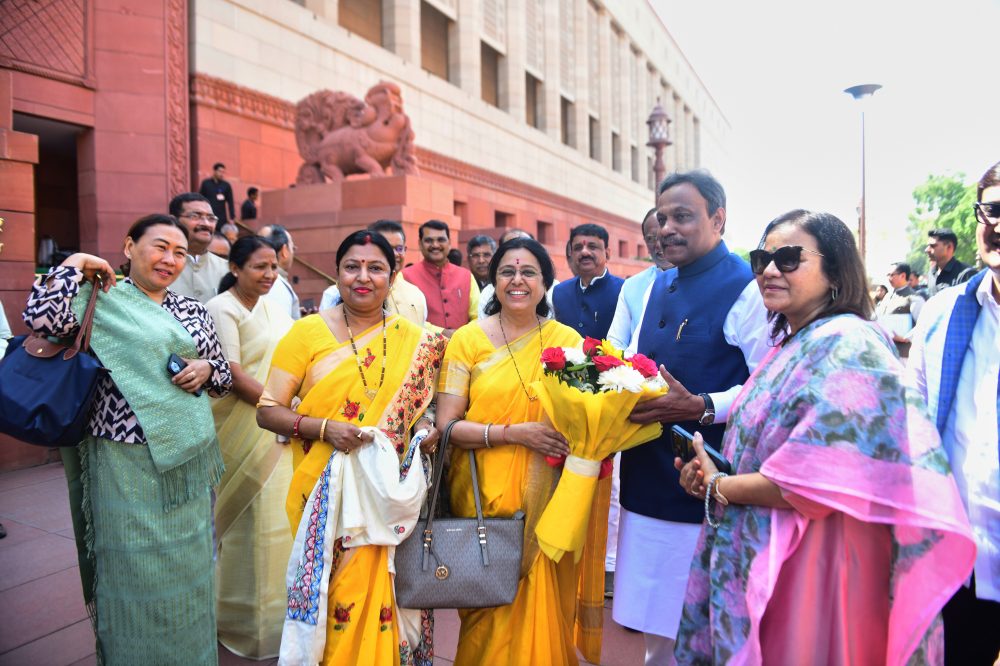

NEW DELHI (AP) — India’s lower house of Parliament rejected legislation Friday that would have set aside one-third of legislative seats for women, alongside a connected proposal to restructure the nation’s electoral districts and expand the size of the legislature.
The proposed changes represented what many considered the most sweeping transformation of India’s political framework since gaining independence from Britain in 1947. After two days of parliamentary discussion involving both ruling party and opposition members, the measure failed to secure enough votes. The legislation aimed to guarantee 33% female representation in both national Parliament and state assemblies, addressing long-standing gender imbalances in Indian politics.
The women’s representation measure became controversial because it was connected to plans for electoral redistricting throughout India, which emerged as the primary obstacle to passage. Although lawmakers from multiple parties expressed support for boosting women’s political participation, opposition members raised alarms that restructuring electoral boundaries and enlarging Parliament might give Prime Minister Narendra Modi’s Bharatiya Janata Party an unfair advantage.
Modi’s administration presented both pieces of legislation during a special three-day parliamentary session that started Thursday, with passage requiring support from two-thirds of legislators. When the women’s quota bill failed to reach that benchmark, officials pulled the redistricting measure from consideration.
Had the redistricting plan succeeded, it would have grown the lower house from its current 543 members to approximately 850 by the 2029 parliamentary elections.
Leading opposition factions fought against the proposal, expressing concern that using 2011 census figures to determine new districts would transfer political influence to rapidly expanding northern states while diminishing the voice of southern areas. They contended these modifications would particularly help Modi’s party, which maintains strong backing in northern India.
Government officials dismissed these objections, stating their plan included uniform 50% seat increases across all states to maintain balanced representation nationally. Opposition critics pointed out, however, that the proposed legislation lacked explicit guarantees for this approach.
Shortly before the scheduled vote, Modi posted on X that his government had responded to all worries and “misconceptions surrounding the legislation with facts and logic.”
Opposition leadership remained skeptical. Congress party member Rahul Gandhi characterized the initiative as “an attempt to change the electoral map of India.”