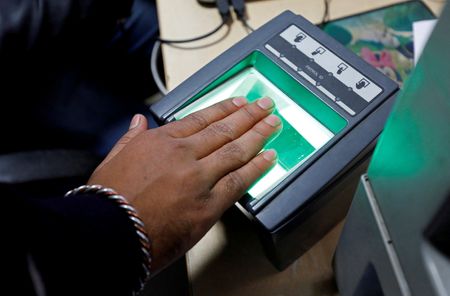

The Indian government has abandoned its plan to require smartphone manufacturers to pre-install the nation’s biometric identification application on all devices, following strong opposition from major technology companies, according to a government agency announcement Friday.
The proposal would have forced companies including Apple, Samsung, and Google to include the Aadhaar app on every smartphone sold in India. The application connects to a 12-digit identification number linked to individuals’ fingerprints and iris scans, serving nearly 1.34 billion residents who use it for banking, telecommunications, and airport security verification.
UIDAI, the government agency overseeing the Aadhaar system, confirmed that India’s IT ministry examined the proposal but “is not in favour of mandating the pre-installation of the Aadhaar App on smartphones.” The agency provided no explanation for the reversal, and the IT ministry declined to comment.
According to UIDAI’s statement, the IT ministry conducted a “consultation with stakeholders from the electronics industry” before deciding to scrap the mandatory installation requirement.
This marks the sixth unsuccessful attempt in two years by the Indian government to mandate pre-installed state applications on smartphones, with the technology industry opposing each proposal.
Manufacturing companies expressed concerns about device security and compatibility issues when presented with the Aadhaar installation requirement. They also highlighted increased production expenses, as they would need to operate separate assembly lines for Indian domestic sales versus international exports.
Apple and Samsung specifically voiced objections regarding safety and security implications, according to sources familiar with the discussions.
The government’s retreat demonstrates the limitations facing Prime Minister Narendra Modi’s technology initiatives as India seeks to attract companies like Apple to expand the country’s position as a global smartphone manufacturing center. Last December, India faced backlash over requirements for smartphone companies to pre-install a telecommunications security application, leading to a policy reversal within days.
A senior Indian government official, speaking anonymously, stated that the IT ministry opposes any application pre-loading requirements “unless it is considered very essential.”
Despite government assurances about Aadhaar’s safety and security, the application has drawn ongoing criticism from privacy advocates, particularly following data breaches that exposed personal information of millions of users on the dark web.
Apar Gupta, who founded the Internet Freedom Foundation, a digital rights organization based in New Delhi, praised the government’s decision to withdraw the Aadhaar pre-installation requirement. He argued that similar proposals should be rejected as they lack legal justification and serve no clear public policy purpose.
“Hopefully it is a welcome exercise of regulatory restraint that recognises that citizens carry their phones as extensions of their autonomy, not as vessels for government order,” Gupta said.