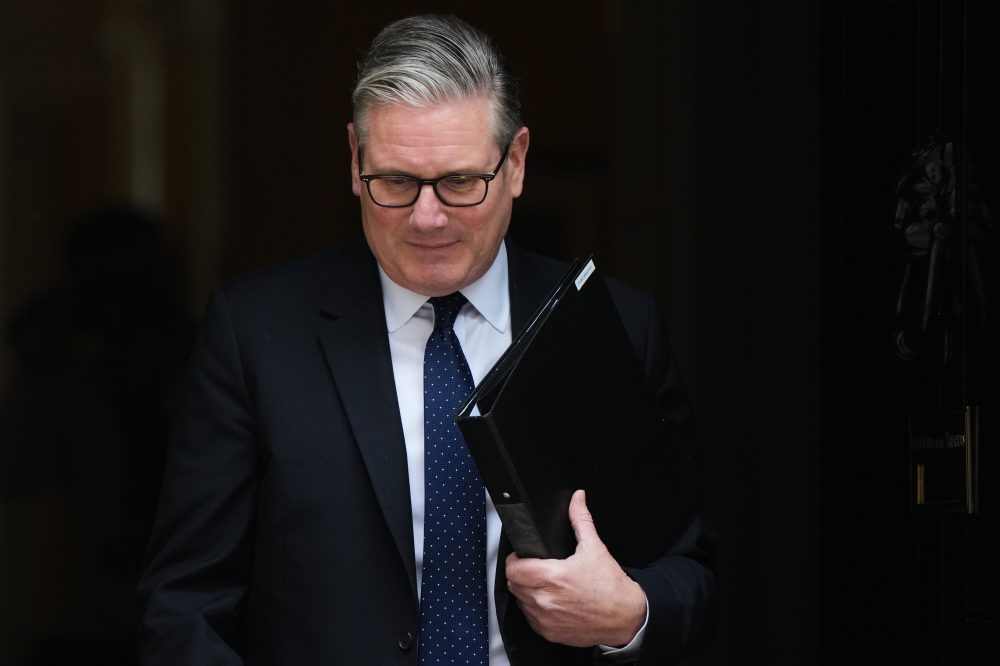
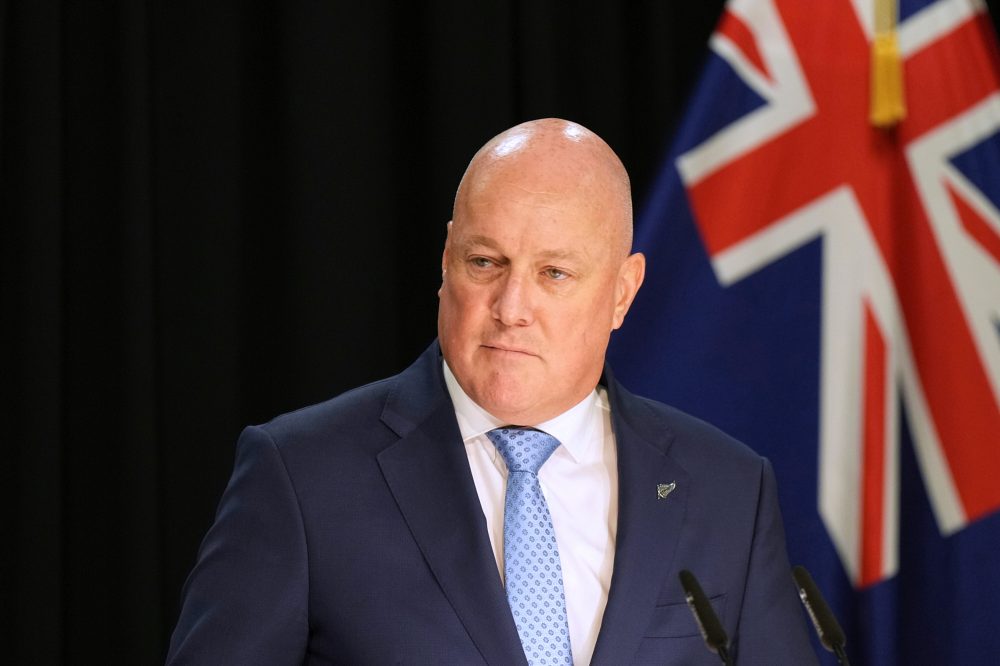
LONDON (AP) — A dismissed British civil service leader revealed Tuesday that he experienced intense political pressure to expedite Peter Mandelson’s selection as the United Kingdom’s ambassador to the United States, even while security issues remained unresolved.
Olly Robbins, who previously led the Foreign Office before Prime Minister Keir Starmer terminated him last week, testified before the House of Commons Foreign Affairs Committee about what he described as an “atmosphere of pressure.”
Robbins explained there was “a very, very strong expectation” that Mandelson “needed to be in post and in America as quickly as possible.”
The Prime Minister now confronts mounting demands for his resignation following disclosures that Mandelson received the critical diplomatic assignment even after security clearance failures.
DUBAI, United Arab Emirates (AP) — Iranian state television broadcast an alert Tuesday declaring that “no delegation from Iran has visited Islamabad … so far” amid mounting speculation about potential diplomatic discussions with the United States.
The televised announcement appears to highlight ongoing disagreements within Iran’s religious government as leaders consider their response to the U.S. Navy’s weekend capture of an Iranian cargo vessel.
Hard-line factions have historically maintained control over Iranian state television operations.
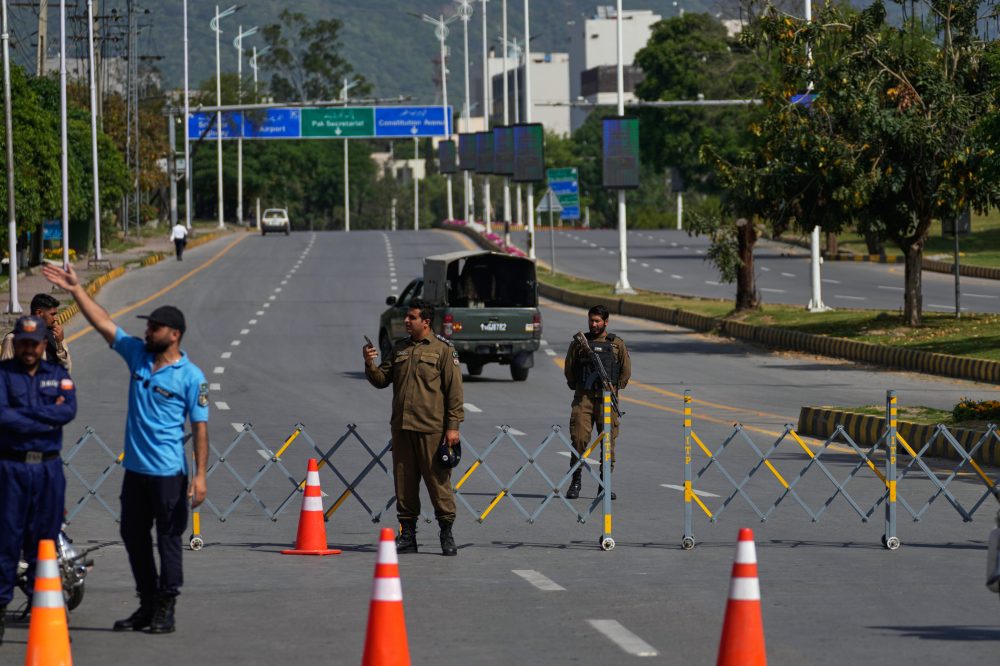
To date, no government representative has confirmed plans to send a delegation to Islamabad, where Pakistani officials have remained prepared for several days awaiting possible diplomatic meetings.
U.S. Vice President JD Vance is anticipated to head the American negotiating team. Iran has not disclosed who might represent their interests, though parliamentary speaker Mohammad Bagher Qalibaf previously led Iranian representatives in past discussions.
Iranian officials have not publicly addressed strategies for restarting diplomatic dialogue. Extreme conservative elements within Iran have voiced opposition to renewed negotiations in recent days, particularly following the naval incident.
Some online voices have called for Supreme Leader Ayatollah Mojtaba Khamenei to publicly declare his position on continuing negotiations, but the Iranian leader has remained silent and has not appeared publicly since the conflict began, with Israeli and American officials claiming he sustained injuries during the fighting.
This situation has likely positioned Iran’s paramilitary Revolutionary Guard as the primary governing force in the Islamic Republic. Guard units played crucial roles during the conflict and operated with significant independence from Tehran when selecting military targets.
Iran’s civilian government has largely remained silent, especially after Foreign Minister Abbas Araghchi posted online over the weekend that shipping lanes had reopened, only to have other Tehran officials later contradict his statement.
Iran has restricted maritime traffic through the strategic waterway connecting the Persian Gulf to international waters since the February 28 attacks by the U.S. and Israel that initiated the current conflict. The United States has implemented its own blockade of Iranian ports in response to Tehran’s actions.
A major Chinese automobile manufacturer has unveiled bold expansion plans that could reshape the global automotive landscape within the next six years.
Changan, a state-owned car company, revealed Tuesday its intention to secure a position among the world’s top-10 automakers by 2030 through aggressive growth in international markets. The announcement comes as Chinese car manufacturers increasingly look beyond their domestic borders for expansion opportunities.
The automaker has established a goal of reaching 5 million vehicle sales worldwide by 2030, with a floor target of 4 million units. Electric vehicles and plug-in hybrid models are expected to represent 60% of these sales.
This ambitious projection was shared ahead of the upcoming Beijing auto show, highlighting the company’s confidence in its growth strategy.
Currently ranking as the thirteenth-largest automaker globally, Changan achieved sales of 2.9 million vehicles in the previous year through its operations and partnerships with Ford and Mazda. If the company reaches its 5 million unit target, industry projections suggest it would climb to fifth place among global automakers based on current market standings.
The manufacturer operates several brand names including Changan, Deepal, Nevo, and Avatr as part of its diverse portfolio.
International expansion represents a key component of Changan’s strategy, with overseas sales targeted to reach between 1.4 million and 1.8 million vehicles by 2030. For comparison, the company sold 638,000 vehicles outside China in 2025.
This international push reflects broader trends among Chinese automakers, who are pursuing overseas growth as their home market experiences slower expansion despite being the world’s largest automotive market.
Other Chinese manufacturers have announced similarly aggressive targets this year. Geely has set a 2030 goal of 6.5 million vehicle sales, representing significant growth from its 4.2 million units sold in 2025. Meanwhile, BYD, China’s leading electric vehicle producer, has indicated to investors that it wants international sales to comprise half of its total volume by 2030.
In addition to its sales ambitions, Changan outlined plans to introduce innovative battery technology in its future vehicles. The company will launch two fully electric sedan models in 2027 featuring sodium ion batteries provided by Chinese battery manufacturer CATL.
Sodium ion battery technology offers significant cost advantages over traditional lithium ion batteries at scale, primarily because it utilizes salt as a key component, which is widely available and inexpensive to obtain.
However, this technology currently faces limitations in energy density compared to lithium batteries, resulting in reduced driving range. Changan’s planned 2027 sedan models will offer approximately 400 kilometers or 249 miles of range per charge.
Volkswagen’s chief executive officer Oliver Blume announced Tuesday that the German automaker will slash its manufacturing capacity by an additional one million vehicles annually, according to an interview published in Manager Magazin, a business publication.
“On the one hand, we’re investing heavily in products. At the same time, we’ve already taken extensive measures. We’re currently looking at cutting a further million units of capacity to reflect the global market situation,” Blume stated during the interview.
The latest reduction brings Volkswagen’s total planned capacity cuts to three million vehicles, with the company targeting annual global production of nine million cars down from its original capacity of 12 million units, according to the CEO’s comments.
KATHMANDU – The government of Nepal announced Tuesday it has restarted the process of granting work permits to citizens seeking employment in Middle Eastern countries, ending a six-week suspension that was implemented due to ongoing regional conflicts.
The decision to halt permit issuance had been made on March 1, one day following the start of the U.S.-Israeli military action against Iran, but officials now say conditions warrant resuming the program.
“Permit resumption follows advice from the foreign ministry and high demand from workers,” stated Pitambar Ghimire, a spokesperson for Nepal’s labor ministry, when speaking with Reuters.
The economic implications of this decision are significant for the Himalayan nation. Approximately three-quarters of all Nepali citizens working overseas are employed in Middle Eastern countries, primarily in construction and manual labor positions. Financial experts indicate that money sent home by these workers accounts for more than 25% of Nepal’s $42 billion economy.
Nepal’s domestic employment situation helps explain the high demand for overseas work opportunities. Current World Bank statistics show the country has a youth unemployment rate of 20.6% among its 30 million residents, representing the highest such percentage across all South and Southeast Asian nations.
Industry representatives estimate that roughly 3 million Nepali nationals are currently employed in foreign countries. Labor organizations calculate that approximately 1,500 young people depart Nepal daily in search of work abroad, primarily due to limited employment prospects within their home country.
Under Nepali law, citizens must obtain government-issued work permits before accepting employment in foreign nations, making the suspension and subsequent resumption of this process particularly significant for job seekers.
Four decades after the world’s most devastating nuclear disaster, a Ukrainian cleanup worker reflects on how radiation exposure forever changed his life and health.
Petro Hurin, now 76, was among the hundreds of thousands of workers known as ‘liquidators’ who were deployed to contain the aftermath of the Chernobyl nuclear plant explosion on April 26, 1986. The catastrophic reactor four blast released radioactive clouds that spread across much of Europe.
Hurin’s employer, a company providing excavation equipment and construction machinery, dispatched him to the Chernobyl exclusion zone in June 1986. Of the four dozen workers his company sent to the site, only five remain alive today, according to Hurin.
“Not a single Chornobyl person is in good health,” the 76-year-old explained. “It’s death by a thousand cuts.”
The initial blast and radiation exposure killed 31 power plant employees and firefighters within days, primarily from severe radiation poisoning. Since then, thousands more have died from radiation-linked diseases including cancer, though experts continue to debate the total casualty count and lasting health impacts.
Soviet leadership worked to minimize public knowledge of the disaster’s scope, even proceeding with the traditional May 1 parade in Kyiv, located approximately 60 miles south of the plant. Ukraine’s present-day government has criticized how Soviet officials mishandled the crisis and attempted to hide its severity.
While some of Hurin’s coworkers obtained medical exemptions to avoid Chernobyl duty, he volunteered to participate in the cleanup efforts.
“I realised that, however small my contribution might be, I was doing my bit to help tame this atomic beast,” he recalled.
During grueling 12-hour work periods, Hurin operated heavy machinery to move dry concrete mixed with lead – delivered to the site via river transport – onto trucks. The material was then taken to the reactor area where it was used to construct an enormous protective barrier designed to seal in the radiation.
“The dust was terrible,” Hurin remembered. “You’d work for half an hour in a respirator, and it would end up looking (brown) like an onion.”
Within four days of starting work, Hurin developed alarming symptoms including severe headaches, chest pain, internal bleeding, and a metallic taste in his mouth. Medical staff provided treatment, but after returning to work, he became so weak he could barely stand and feared death was imminent.
“I was brought to the hospital, and the doctors did a blood test first,” Hurin said. “They pricked all my fingers and a pale liquid came out, but no blood.”
Soviet medical officials refused to officially diagnose radiation poisoning, which was reportedly forbidden at the time. Instead, doctors attributed his condition to vegetative-vascular dystonia, a stress-related nervous system disorder.
Prior to the nuclear accident, Hurin had maintained perfect attendance at work, never requiring medical leave. Following his exposure, he spent approximately seven months moving between different medical facilities for treatment, including receiving blood transfusions.
His current medical conditions include anemia – frequently associated with radiation exposure – along with heart disease, pancreatic inflammation, and multiple other ailments.
Despite his health challenges, Hurin has exceeded typical life expectancy for Ukrainian men. World Health Organization data shows male life expectancy in Ukraine was 66 years in 2021, having dropped during the pandemic.
Today, Hurin and his wife Olha reside in Ukraine’s Cherkasy region. Though dealing with ongoing health issues, he continues playing the bayan, a traditional accordion, and composes music and poetry.
He remains in legal battles to obtain special disability benefits designated for nuclear disaster cleanup workers.
A more recent tragedy – Russia’s 2022 military invasion – has overshadowed much of his daily life. Hurin and Olha frequently visit a nearby memorial at Kholodnyi Yar honoring their grandson, Andrii Vorobkalo, a Ukrainian military member killed in combat at age 26.
The couple raised Andrii from age four after his mother relocated to Europe for work. When Russia launched its invasion in 2022, Andrii abandoned his employment in Greece to return home.
“He left everything behind and came to defend Ukraine,” Hurin stated while standing beside the memorial stone bearing his grandson’s name. “We think of Andrii all the time.”
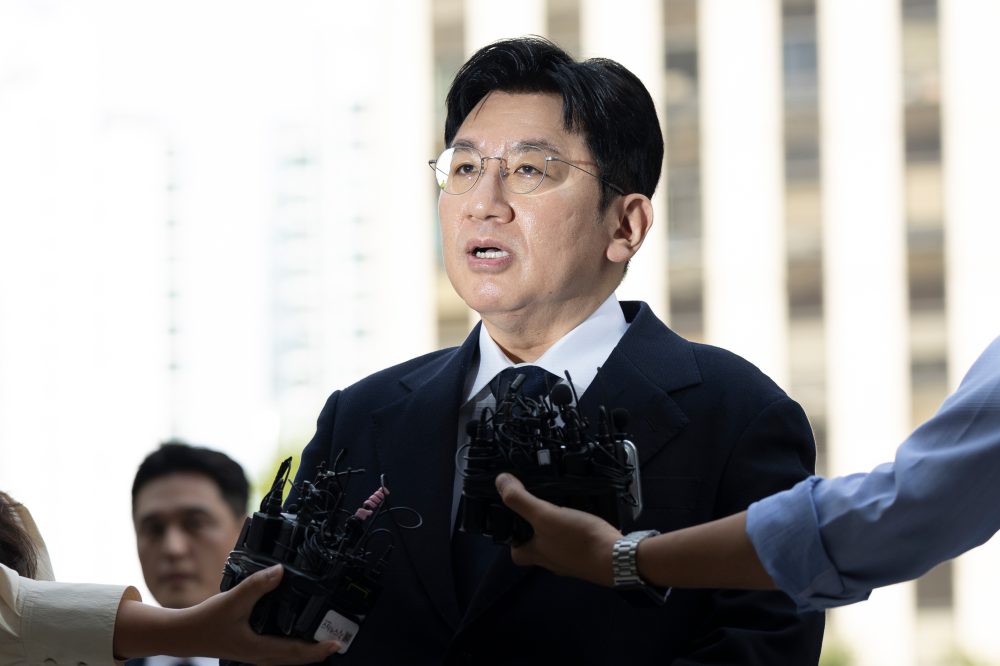
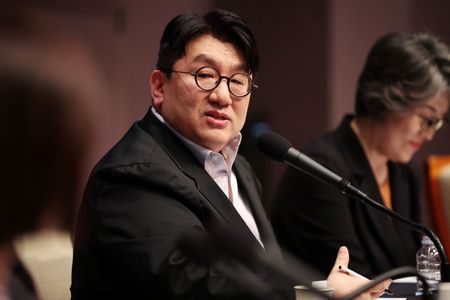
Law enforcement officials in South Korea have filed paperwork requesting the arrest of Bang Si-hyuk, who leads HYBE, the entertainment giant that manages worldwide K-pop phenomenon BTS.
Authorities with the Seoul Metropolitan Police Agency accuse Bang of breaking financial regulations by providing false information to early investors before HYBE became a publicly traded company and directing them to transfer shares to a private investment firm connected to his business partners.
Investigators claim that following HYBE’s public debut, the investment firm disposed of its holdings, with Bang collecting approximately 30% of the proceeds through a previously established shareholder deal, netting him around 190 billion won, equivalent to $129.1 million in unauthorized profits.
Bang has consistently maintained his innocence regarding these allegations.
HYBE released a statement Tuesday through Bang’s attorneys expressing disappointment: “We regret that a detention warrant has been sought despite our full and consistent cooperation with the investigation over an extended period.”
The statement continued: “We will continue to cooperate with all legal procedures and make every effort to clearly explain our position.”
Bang established HYBE, the entertainment empire responsible for launching the internationally acclaimed K-pop group BTS.
Following news of the warrant request, HYBE’s stock price shifted direction and closed down 2.4%, while South Korea’s primary stock index KOSPI gained 2.7%.
The National Police Agency verified that the American embassy in Seoul recently submitted correspondence requesting permission for Bang to visit the United States, despite travel restrictions currently in place due to the ongoing investigation.
Police sources indicate the embassy’s letter requested a temporary lifting of the travel prohibition, referencing Bang’s planned attendance with other company leadership at a U.S. Independence Day celebration and discussions regarding BTS’s continuing world tour.
Embassy officials in Seoul declined to provide additional comments on the matter.
Bang has been prohibited from departing South Korea since August of last year.
The Seoul Southern District Prosecutors’ Office will examine the warrant application, and should prosecutors move forward with detention proceedings, local court procedures typically schedule a hearing within two to three days to determine whether to authorize Bang’s arrest, according to regional media reports.
CJ McCollum delivered a clutch performance Monday night, netting 32 points including six crucial scores in the game’s final moments as the Atlanta Hawks mounted a stunning comeback to defeat the New York Knicks 107-106 in Game 2 of their Eastern Conference playoff matchup.
Atlanta erased an eight-point deficit over the final five minutes, closing the contest with a decisive 15-6 scoring surge to tie the best-of-seven series at one victory apiece.
Despite McCollum’s heroics, drama continued until the final buzzer when he failed to convert two free throw attempts with just 5.6 seconds remaining. New York opted against using their remaining timeout, instead advancing the ball quickly before Josh Hart found Mikal Bridges, whose 12-foot shot from the left side rimmed out as time expired.
Supporting McCollum’s effort, Jonathan Kuminga contributed 19 points coming off the bench for Atlanta, while Jalen Johnson added 17 points and Onyeka Okongwu chipped in 15. For New York, Jalen Brunson led all scorers with 29 points, Hart recorded a double-double with 15 points and 13 rebounds, and Karl-Anthony Towns finished with 18 points.
In Cleveland, the Cavaliers extended their dominance over Toronto with a 115-105 victory, taking a 2-0 series advantage in their Eastern Conference first-round battle. Donovan Mitchell poured in 30 points, including nine fourth-quarter markers, while James Harden added 28 points to power the win.
The victory marked Cleveland’s 12th consecutive playoff triumph over Toronto, matching the NBA record for most consecutive postseason wins against a single opponent. Mitchell also grabbed seven rebounds and dished five assists, while Harden recorded five steals and four assists. Evan Mobley contributed 25 points and eight rebounds for the Cavaliers.
Scottie Barnes posted a playoff career-best 26 points for Toronto, though the Raptors never held a lead throughout the contest.
Out west, the Minnesota Timberwolves orchestrated their own remarkable rally, overcoming a 19-point deficit to defeat Denver 119-114 and square their Western Conference series at one game each. Anthony Edwards led the charge with 30 points and 10 rebounds, while Donte DiVincenzo connected on a critical three-pointer with 1:05 remaining.
Julius Randle provided valuable support with 24 points and nine rebounds, sealing the victory by sinking two free throws with 18.8 seconds left on the clock. DiVincenzo finished with 16 points and Jaden McDaniels added 14 for Minnesota.
Denver received strong performances from Jamal Murray, who scored 30 points for the second consecutive game, and Nikola Jokic, who recorded 24 points, 15 rebounds and eight assists. The loss ended Denver’s winning streak that dated back to March 18.
SpaceX founder Elon Musk will maintain his grip on the aerospace company even after it goes public, according to confidential IPO documents obtained by Reuters that reveal a special voting structure designed to keep control in the hands of company insiders.
The rocket manufacturer submitted its IPO paperwork confidentially this month, outlining plans for what could become the biggest initial public offering ever recorded. SpaceX is seeking a market valuation of approximately $1.75 trillion while raising $75 billion from investors.
According to the filing details, Musk will continue serving in his triple role as CEO, chief technical officer, and board chairman following the stock market launch. The company’s board will consist of nine members total.
The documents reveal SpaceX will implement a two-tier share system where insiders receive Class B stock carrying 10 votes per share, while everyday investors get Class A shares with single voting rights. This arrangement ensures Musk and his inner circle retain decision-making authority despite selling ownership stakes to the public.
While Musk’s official salary was just $54,080 in the previous year, his equity holdings are expected to generate billions in value once trading begins. Meanwhile, President and COO Gwynne Shotwell earned $85.8 million in total pay, and CFO Bret Johnsen received $9.8 million.
Company leadership is courting Wall Street this week through a three-day analyst presentation series, beginning with facility tours and briefings at the Starbase launch site in Boca Chica, Texas.
The filing also includes provisions that could restrict shareholder influence over board selections and legal challenges, pushing disputes into arbitration rather than traditional courts. Such governance structures are typical among tech companies led by their founders, though they reduce public investors’ ability to challenge management decisions.
For the first time, investors can examine SpaceX’s financial position following Musk’s acquisition of his social media and AI venture xAI earlier this year. The merged entity finished 2025 holding $24.8 billion in cash, with $92 billion in total assets offset by $50.8 billion in liabilities.
The company shifted to a $4.94 billion loss in 2025 on $18.67 billion in revenue, compared to an $791 million profit on $14.02 billion in sales the previous year. The 2023 figures showed a $4.63 billion loss on $10.4 billion in revenue.
SpaceX’s red ink stems largely from massive AI infrastructure investments, with capital spending jumping nearly five times over two years to reach $20.74 billion in 2025. More than half of that expenditure went toward artificial intelligence projects.
The profitable Starlink satellite internet division is helping fund this expansion, generating $4.42 billion in operating profits while representing less than 25% of total capital investments. AI segment spending alone surged from $5.6 billion to $12.7 billion year-over-year, driving overall capital expenditures above $20.7 billion.
However, this investment level remains well below tech giants like Meta, which spent $72 billion on capital expenditures in 2025 despite having a similar $1.7 trillion market value.
SpaceX has not yet responded to requests for comment regarding the IPO filing details.
DENVER — Following Minnesota’s stunning 119-114 comeback victory over Denver in Monday night’s playoff matchup, Timberwolves forward Jaden McDaniels delivered his most impactful statement off the court.
McDaniels didn’t hold back when describing the defensive capabilities of the entire Nuggets roster, including star players Nikola Jokic and Jamal Murray.
“Go after Jokic, Jamal, all the bad defenders,” McDaniels stated after contributing 14 points and three assists to the victory. “Tim Hardaway (Jr.), Cam Johnson, Aaron Gordon, the whole team, just go at them.”
When pressed about whether he considered Denver’s entire roster defensively weak, McDaniels confirmed his assessment.
“Yeah, they’re all bad defenders,” McDaniels responded.
Minnesota’s dramatic turnaround from a 19-point disadvantage has leveled the opening-round playoff series at one game apiece. The series now moves to Minneapolis for Thursday evening’s Game 3. Anthony Edwards powered the comeback with 30 points while battling through a knee injury, also grabbing 10 rebounds.
“They don’t got people that can defend the rim,” McDaniels continued. “We’re still more athletic than them and just got to be able to finish when we do.”
Denver’s star duo of Jokic and Murray combined for impressive individual statistics — Jokic recorded 24 points and 15 defensive rebounds while Murray contributed 30 points. However, both players struggled significantly in the final quarter, shooting just 2 of 12 combined for four total points. Murray had an opportunity to force overtime with a three-point attempt in the game’s final moments but chose a two-point shot attempt instead.
The shot missed.
“I was happy he took the two points,” Edwards commented. “I thought he had a good look at a 3 when he first came off but yeah, he took the 2-pointer. I guess if he made it, we would have been in a free-throw situation. But yeah, I’m kind of happy he took the 2-pointer.”
Murray acknowledged his shooting struggles following the defeat.
“I didn’t make enough shots tonight,” Murray said. “That’s really about it. We all could have played better. It’s not all on one person, that’s just the way the game goes sometimes. They played hard as well. It was a good game. I thought we had the game in our hands, but we just didn’t make enough shots, in my opinion.”
Investment banking giant JPMorgan Chase has boosted its year-end projection for the S&P 500 stock index to 7,600 on Tuesday, pointing to strong artificial intelligence and technology sector earnings as key drivers behind the optimistic outlook.
The updated forecast suggests potential gains of approximately 6.9% from Monday’s closing price of 7,109.14. This marks a reversal from last month when the Wall Street firm had reduced its target from 7,500 to 7,200.
Along with the index target increase, JPMorgan elevated its annual earnings-per-share projection for the S&P 500 to $330, up from the previous $315 estimate. The firm also raised its 2027 earnings forecast to $385 per share from $355.
Stock markets have recovered significantly from March lows following a ceasefire agreement in Middle East conflicts, contributing to improved investor confidence.
“Given the sharp rally from recent lows and a geopolitical backdrop that, while significantly de-escalated, remains in flux, there is a meaningful risk that the market enters a short-term consolidation phase before resuming its upward trajectory,” JPMorgan analysts wrote in their research note.
The investment firm indicated the index could potentially reach nearly 8,000 points by year’s end if Middle East tensions are quickly resolved.
Artificial intelligence and technology stocks have shown powerful momentum, helping both the S&P 500 and Nasdaq reach record peaks last week amid expectations for strong first-quarter corporate earnings.
“The emergence of Anthropic’s Mythos has helped reignite the bullish AI trade after a shaky start to the year,” JPMorgan stated.
Earlier this month, AI company Anthropic introduced its ‘Claude Mythos’ artificial intelligence model but subsequently paused its rollout due to concerns about potential cybersecurity risks.
JPMorgan analysts believe there’s additional room for earnings estimates to climb higher, noting that recent positive adjustments have been primarily focused on select technology companies and energy sector firms.
“We expect the US to remain a core long-term holding in global portfolios due to its breakthrough innovation, overall superior growth, and capital returns, even though the diversification theme and repatriation flows out of the US are likely to persist in the background,” the firm concluded.
FRANKFURT, Germany – The head of Germany’s central banking system issued a warning Tuesday about cybersecurity threats posed by a cutting-edge artificial intelligence system developed by Anthropic.
Bundesbank President Joachim Nagel expressed concerns that the company’s newest AI platform, known as Mythos, could create unprecedented digital security challenges for European financial institutions if it falls into the wrong hands.
“Mythos is an AI model that appears capable of quickly identifying and exploiting security vulnerabilities in financial institutions’ software,” Nagel stated during his Tuesday address.
The banking chief described the technology as having dual potential, explaining its capabilities could work both for and against financial security measures.
“However, this AI model seems to be a double-edged sword, since it could be used not only to improve digital security systems, but also to leverage their vulnerabilities for malicious purposes,” Nagel continued.
The German banking leader also emphasized the importance of ensuring fair access to such advanced technology across the financial sector to prevent any single institution from gaining an unfair advantage.
Iranian authorities carried out the execution of a man Tuesday who was charged with torching a mosque in the capital city during anti-government demonstrations that occurred in January, according to reports from Mizan, the judiciary’s official news source.
The executed individual was named as Amirali Mirjafari by Mizan, which stated he had been found guilty of committing arson at Tehran’s Qolhak mosque and directing activities against state security.
According to Mizan, Iran’s Supreme Court confirmed the death penalty, which was implemented in the early hours of Tuesday morning.
The Islamic Republic experienced widespread demonstrations against the government at the beginning of this year, which authorities suppressed through what has been described as the most extensive government crackdown since the nation’s founding.
BEIJING – Four decades after Volkswagen made a splash at its debut Chinese automotive exhibition, the German manufacturer has watched its innovative reputation fade as domestic Chinese brands capture the attention of younger, technology-focused car buyers.
The traditional combustion-engine reputation that “Made in Germany” once carried has diminished in influence within what is now the globe’s biggest automotive marketplace, where Chinese manufacturers are introducing eye-catching, budget-friendly electric cars that function like smartphones with wheels.
“Maybe some younger customers perceive us as the brand for the parents,” Volkswagen brand’s China CEO Robert Cisek explained to Reuters.
Caught off guard by Chinese brands’ rapid ascent, sales figures for Volkswagen and its luxury divisions Porsche and Audi, plus competitors BMW and Mercedes-Benz, have all declined sharply, forcing these companies to fight desperately to stop losses in a market that previously represented one-third of their total sales.
Following 25 years as China’s top automotive manufacturer, Volkswagen fell behind electric vehicle leader BYD in 2024 and dropped to third position after Geely in 2025.
The shift in China’s automotive landscape for these manufacturers – from a growth engine to a competitive battlefield – has been “beyond imagination,” Cisek noted.
When Volkswagen participated in its inaugural Chinese auto exhibition in Shanghai during 1985, attendees were struck by the superior quality of the German company’s promotional materials.
“We were met by an unimaginably huge crowd and our brochures flew off the shelves,” former CEO Carl Hahn, who led the company’s Chinese market entry, documented in his autobiography. “For people at that time, it was enough simply to marvel at the quality of the paper and print and to dream about owning a car.”
Today, the German automotive corporation requires more than attractive printed materials to mount a recovery at this year’s Beijing Auto Show, beginning Friday.
After excelling in traditional combustion-engine vehicle manufacturing, companies like Volkswagen now find themselves hurrying to compete in a marketplace where over 25% of new automobiles are completely electric.
While China’s automotive sector expanded and local manufacturers introduced numerous consumer-oriented EVs, German carmakers surrendered market share. Combined, their sales dropped by 25% across five years to 3.9 million units in 2025, based on S&P Global Mobility statistics.
The difficulties have grown more severe this year as Chinese manufacturers penetrate the luxury market segment, pursuing affluent buyers who previously desired German engineering excellence, industry experts noted.
Operating from their distant corporate offices in Wolfsburg, Stuttgart and Munich, German automotive leaders misjudged Chinese manufacturers’ capacity to achieve EV development superiority so rapidly.
“They didn’t see this big change coming, and they didn’t see the speed at which it came,” automotive consultant Felipe Munoz observed.
Germany’s established automakers must revitalize their Chinese operations or become irrelevant in a nation that executives like Volkswagen CEO Oliver Blume consider essential for developing tomorrow’s vehicles.
Under Blume’s leadership, Volkswagen Group intends to launch 20 “new energy vehicle” models in China this year, encompassing fully electric cars, plug-in hybrids and EVs with small combustion engines called range extenders.
The corporation will unveil four new EVs in Beijing on Tuesday before the auto show begins, including mainstream models created with Chinese partners FAW and EV manufacturer Xpeng, plus the newest China-exclusive AUDI, a fresh brand where the luxury nameplate’s capitalized letters replace its globally recognized rings. This was co-developed with China’s SAIC.
Yale Zhang, managing director at Shanghai-based research company Automotive Foresight, stated German brands are being “murdered” by their historical reputation and unwillingness to change quickly.
“You can’t really rely on your chrome metal strips, your Napa leather seats and your ‘one-hundred-year’ history to convince the consumers,” Zhang explained.
German manufacturers have sometimes hesitated to adopt technology from emerging Chinese competitors.
Currently, Volkswagen, Mercedes and BMW are increasingly depending on Chinese suppliers to close the gap, including self-driving technology leader Momenta and vehicle software developer ECARX.
Although “Made in Germany” continues as a globally respected symbol, younger buyers – including those in China – are more inclined to avoid German vehicles, according to consumer research by Berylls by AlixPartners conducted in January.
“The good thing is, of course, there is this credibility when it comes to the Volkswagen’s safety, reliability and quality,” Cisek said. “At the same time, it’s also a little bit of a burden.”
Pharmaceutical company AstraZeneca announced Tuesday that its medication Ultomiris successfully achieved the primary objective in a major clinical study, demonstrating decreased protein levels in urine among patients suffering from IgA nephropathy, an uncommon kidney condition.
According to the company’s preliminary data analysis, the treatment produced statistically meaningful outcomes by the 34th week in adult patients facing potential disease advancement. The pharmaceutical firm noted that protein level reductions became apparent as early as the 10th week of treatment.
IgA nephropathy represents an uncommon inflammatory kidney condition where irregular proteins accumulate within the kidneys, causing inflammation that damages their blood-filtering capabilities. Without proper treatment, this condition can advance to chronic kidney disease and potentially progress to complete kidney failure.
The pharmaceutical company stated its intention to pursue expedited regulatory approval for this new use in major global markets while extending the clinical study to evaluate kidney function changes at the 106-week mark, which serves as the trial’s secondary main objective.
The medication Ultomiris, scientifically referred to as ravulizumab, currently holds regulatory approval across the United States, European Union, and Japan for addressing specific uncommon blood conditions and neurological disorders.
According to company officials, the medication’s safety characteristics remained in line with previously established risk factors, with no additional safety issues emerging during the study.
A Freeze Warning remains in effect for New Castle County until 9 AM this morning, with temperatures dropping as low as 24 degrees overnight.
The National Weather Service issued the warning early this morning, cautioning residents that sub-freezing conditions pose a significant threat to crops, sensitive vegetation, and unprotected outdoor plumbing.
New Castle County residents should take immediate action to protect tender plants and ensure outdoor water pipes are properly insulated. Garden enthusiasts are advised to cover or bring in any vulnerable plants that may have been set out early for the spring season.
The unseasonably cold temperatures are particularly concerning given the late April timing, when many residents may have already begun their spring gardening preparations. Frost and freeze conditions can quickly kill newly planted flowers, vegetables, and other cold-sensitive plants.
The Freeze Warning is expected to expire at 9 AM EDT as temperatures gradually rise throughout the morning. However, residents should remain cautious and monitor local conditions.
For those with outdoor plumbing fixtures, check that faucets and exposed pipes are adequately protected to prevent freezing and potential bursting.
Stay with TV Delmarva for continued weather updates as we track improving conditions throughout the day.
A Freeze Warning remains in effect until 9 AM this morning for much of central Delmarva, with temperatures expected to drop as low as 25 degrees.
The National Weather Service issued the warning early this morning for Kent and inland Sussex counties in Delaware, along with Caroline, Kent, Queen Anne’s, and Talbot counties in Maryland.
These dangerous sub-freezing conditions pose a serious threat to crops and sensitive vegetation throughout the region. The freeze could also damage unprotected outdoor plumbing, including exposed pipes and irrigation systems.
Residents are urged to take immediate action to protect tender plants from the cold. Cover or bring in potted plants, wrap exposed pipes, and ensure outdoor faucets are properly insulated.
This late-season freeze is particularly concerning for local farmers and gardeners who may have already planted spring crops or started their gardens. The timing could prove devastating for early plantings that aren’t cold-hardy.
The warning will expire at 9 AM this morning as temperatures are expected to rise above freezing. However, residents should continue monitoring weather conditions and taking precautions with sensitive plants until the threat passes completely.
Stay with TV Delmarva for continuing weather updates throughout the morning.
Weather forecasters have issued a freeze warning effective early Sunday morning, alerting residents to prepare for potentially damaging cold temperatures.
The National Weather Service office in Mount Holly, New Jersey, released the cold weather advisory at 2:38 AM on April 21st, with the warning period extending until 9:00 AM the same day.
During freeze warnings, temperatures are expected to drop to levels that could harm sensitive vegetation and outdoor plants. Residents are typically advised to take protective measures for their gardens and outdoor plumbing.
The weather service issues these alerts when subfreezing temperatures are anticipated, particularly during times of year when such cold snaps are unusual and could catch people unprepared.
Weather officials have issued a cold weather advisory warning residents to prepare for freezing conditions during the early morning hours of Sunday, April 21st.
The National Weather Service office in Mount Holly, New Jersey announced the freeze warning at 2:38 AM on Sunday, with the alert remaining in effect until 9:00 AM the same day.
During this timeframe, temperatures are forecast to drop to or below the freezing mark, creating conditions that could harm tender plants, crops, and other temperature-sensitive vegetation.
Residents are advised to take protective measures for any outdoor plants or gardens that may be vulnerable to frost damage during these early morning hours.
BAGHDAD (AP) — Tehran has provided its military leaders with increased independence to direct militia operations in Iraq, permitting certain factions to conduct activities without central authorization, according to five officials who spoke with The Associated Press about this strategic adjustment prompted by ongoing conflicts.
Numerous Iranian-supported militia organizations receive financing through Iraq’s national budget and are integrated into the country’s security framework, drawing condemnation from Washington and other nations that have faced attacks from these groups and argue that Baghdad has not taken sufficient action against them.
Despite increasing pressure from Washington, Baghdad has found it challenging to control or discourage these organizations. The most extremist factions now function under Iranian advisors through a distributed command system, the five officials informed AP, all speaking anonymously to discuss sensitive intelligence matters.
“The various forces have been granted the authority to operate according to their own field assessments without referring back to a central command,” stated one militia official who lacked authorization to speak publicly.
The regional conflict has revealed the weakness of Iraq’s governmental institutions and their insufficient capacity to restrain these organizations. A separate confrontation between Washington and the militias has intensified the situation, with factions serving as part of Iran’s regional strategy and increasing assaults on American assets in Iraq until a fragile ceasefire agreement was established in April.
Even with the ceasefire arrangement in place, Washington is anticipated to strengthen efforts against these organizations both militarily and politically, especially as they receive greater freedom to function independently, according to officials and analysts. On Friday, the United States implemented sanctions against seven commanders and senior officials from four extremist Iranian-backed Iraqi militia organizations.
“The U.S. is still going to feel it has the freedom of action to hit Iraqi militias,” explained Michael Knights, head of research for Horizon Engage, a geopolitical risk consulting firm, and an adjunct fellow at the Washington Institute for Near East Policy. “That may well play out into an effort to try and guide a less militia-dominated government formation.”
Shortly after the conflict began following U.S. and Israeli strikes on Iran on February 28, an Iranian delegation traveled to Iraq’s Kurdish region and conveyed a direct message: If militia attacks intensified near American military installations, commercial facilities and diplomatic missions, Iraqi Kurdish authorities should not contact Tehran with grievances, as there was limited action they could take.
“They said they’ve devolved authority to regional Iranian commanders,” a senior Iraqi Kurdish government official stated anonymously, citing the matter’s sensitivity.
Previously, Kurdish leaders in Iraq would contact Iranian officials following attacks to inquire why they had been targeted. “This time, they wanted to preempt that by saying, ‘We can’t help you with the groups in the south right now,’” the official explained.
This change demonstrates lessons learned from the 12-day conflict in June, the official noted. Militia officials confirmed this assertion. During that conflict, operations were strictly centralized. Following its conclusion, greater independence was provided in the field.
A representative for Harakat Hezbollah al-Nujaba, one of the Iranian-backed militia organizations that have targeted Americans in Iraq, confirmed there was “coordination” with Iran in conducting attacks but provided no specifics.
“Since we are allies of the Islamic Republic, we have coordination with our brothers in the Islamic Republic,” Mahdi al-Kaabi stated.
During the recent conflict, prominent Iraqi militia commanders seemed to withdraw from the latest phase and did not appear to participate directly in operations, Knights observed. American strikes primarily eliminated mid-level commanders, according to militia officials.
“None of the first-line leaders have been killed,” said a second militia official who was not authorized to brief reporters.
Instead of targeting senior figures, the United States also concentrated on Iranian Revolutionary Guard advisory units, Knights said, who monitored the attacks. In one strike in Baghdad’s affluent Jadriya neighborhood, three Guard advisors were eliminated at a residence used as their headquarters during a meeting, according to the second militia official.
At the center of government attempts to control militia organizations lies a contradiction: The factions the government claims it cannot manage are connected to political parties that brought it to power.
The Coordination Framework, an alliance of powerful pro-Iran Shiite factions, helped establish Mohammed Shia al-Sudani as prime minister in 2022. He currently serves as interim premier during an extended political stalemate.
Militia forces conducting attacks on American targets are not independent operators; they belong to the state’s Popular Mobilization Forces, established after Mosul’s fall in 2014 to formalize volunteer units that were essential in defeating the Islamic State.
The PMF has developed into a formidable force that exceeds the Iraqi army, with combatants receiving government salaries and access to state resources, including weapons and intelligence. The outcome, critics argue, is a significant contradiction: Certain government-funded groups function according to Iranian objectives, even when doing so damages Iraq’s national interests.
Al-Sudani’s office did not respond to AP’s requests for comment regarding the decentralized control of militia organizations.
The United States is committed to reducing the influence of these groups in Iraq, the senior Iraqi Kurdish official and a Western diplomat stated, which will increase pressure on the government, still operating in interim capacity. The diplomat also spoke anonymously because they were not authorized to brief reporters.
Last week, Iraq’s ambassador to the United States was called to Washington to receive American condemnation of attacks by Iranian-backed factions on American personnel and diplomatic missions, according to State Department deputy spokesperson Tommy Bigot.
“The Deputy Secretary affirmed that the United States will not tolerate any attacks targeting its interests and expects the Iraqi Government to take all necessary measures immediately to dismantle Iran-aligned militia groups,” Bigot stated.
Al-Sudani has implemented limited measures to reduce militia influence, including further institutionalizing the PMF and occasionally dismissing commanders who operate outside state authority. These efforts have encountered substantial resistance from militia organizations.
Further institutionalizing them has increased their integration within the state. The United States may attempt to separate the most extremist factions — including Kataib Hezbollah, Harakat al-Nujaba, and Kataib Sayyid al-Shuhada — from others more integrated in Iraq’s political system. “The bad militias from the worse militias,” the senior Iraqi Kurdish official said.
Harakat al-Nujaba spokesperson al-Kaabi presented a dual perspective of the organization’s position, emphasizing both its partnership with Iran and its assertion to Iraqi state legitimacy.
“To put it bluntly, we are allies of the Islamic Republic,” he stated. He characterized the organization as part of Iran’s regional “axis” alongside Hezbollah in Lebanon and Ansar Allah in Yemen.
Simultaneously, he maintained the organization functions within Iraq’s political framework, supporting the state and government when they serve national interests.
“It’s true we’re not affiliated with the government or the prime minister, but we respect the law and the constitution,” he said.
Members of President Donald Trump’s Board of Peace have engaged in discussions with Dubai-based multinational corporation DP World regarding potential management of supply chains and infrastructure development in Gaza, according to a Financial Times report published Tuesday.
The devastated Palestinian territory faces an estimated $70 billion reconstruction bill after two years of Israeli military operations that have left approximately 80 percent of buildings in ruins, according to international organizations.
Three sources with knowledge of the discussions told the Financial Times that conversations focused on potential collaboration between DP World and the Board of Peace to handle logistical operations.
The proposed partnership would encompass the management of humanitarian supplies and other materials entering Gaza, along with warehousing facilities, tracking infrastructure, and security measures, the report indicated.
Additional concepts discussed during the meetings included construction of a new port facility either within Gaza or along the adjacent Egyptian coastline by the UAE-based company, which might also establish a free-trade zone within the conflict-affected region, according to the newspaper.
Neither DP World nor White House officials provided immediate responses to Reuters’ requests for comment on the reported discussions.
Trump introduced the Board of Peace concept in September as part of his strategy to bring an end to Israel’s military campaign in Gaza, later expanding its potential role to address additional international conflicts.
The president’s Gaza strategy calls for Israeli military withdrawal coupled with reconstruction efforts beginning as Hamas surrenders its weapons.
French technology company Atos announced Tuesday it has adjusted its annual revenue projections after experiencing a significant decline in first-quarter performance, with organic revenue dropping 11% amid challenging market conditions.
The IT services provider, which handles technology operations for Britain’s National Health Service and Olympic events, has revised its 2026 outlook to anticipate organic revenue will decline between 1% and 5%. This marks a shift from the company’s earlier projection of positive organic growth, though it had previously outlined a worst-case scenario involving a 5% decrease.
During the first quarter, the company reported revenue of 1.64 billion euros ($1.93 billion), a figure that excludes the projected effects of recent asset sales.
Company officials described a “softer-than-expected” revenue recovery in North America in their earnings report, noting that several clients have adopted a cautious stance while navigating current market uncertainties.
SpaceX President and Chief Operating Officer Gwynne Shotwell received $85.8 million in total compensation during the previous year, according to newly revealed company documents that rank her among America’s top-paid corporate executives.
The bulk of Shotwell’s earnings came through stock options and awards rather than traditional salary, as she collected just $1 million in base pay, the SpaceX S-1 registration filing revealed.
These financial disclosures surfaced as Elon Musk’s rocket company has quietly submitted paperwork for a potential initial public offering in the United States, setting the stage for what could become a record-setting stock market debut with an estimated valuation of approximately $1.75 trillion.
By comparison, SpaceX Chief Financial Officer Bret Johnson received $9.8 million in total compensation, while CEO and majority owner Musk took home a modest $54,080 salary, the filing documents indicated.
SpaceX representatives have not yet responded to requests for comment regarding the compensation data.
The previously unreported salary information positions Shotwell ahead of several prominent technology industry leaders in terms of pay. Microsoft’s CEO Satya Nadella collected $79 million during 2024, while Apple’s Tim Cook received $75 million, based on executive compensation tracking data.
Forbes estimates Shotwell’s personal wealth at $3.4 billion.
While Musk serves as SpaceX’s most recognizable spokesperson, the 62-year-old Shotwell handles the company’s operational responsibilities on a daily basis.
Her role encompasses transforming Musk’s ambitious concepts into tangible business results, including rocket production, satellite deployment, and securing contracts with commercial, government, and military clients.
Shotwell became SpaceX’s seventh employee when she joined as vice president of business development in 2002, during the company’s early startup phase.
She has played a crucial behind-the-scenes role in creating market demand for SpaceX’s reusable Falcon 9 rocket system and the Starlink satellite internet service, which currently provides the majority of the company’s income and profits.
With a background in mechanical engineering, Shotwell started her professional career at Chrysler Motors before transitioning into the aerospace sector.
Federal agricultural officials have announced their approval to allow fresh glasswort plants from Israel to enter the United States for human consumption.
The decision covers the fresh leaves and stems of glasswort, scientifically known as Salicornia europaea L., which will now be permitted for import from Israeli growers.
According to government authorities, they conducted a comprehensive risk assessment to evaluate potential threats from plant diseases and invasive species. The analysis was previously made available for public input and feedback.
Officials concluded that implementing specific plant health safety protocols will adequately protect against the introduction of harmful pests or invasive weeds through these glasswort shipments.
The edible plant, also known as sea asparagus or samphire, grows in salt marshes and coastal areas. The approval represents a new addition to the list of fresh produce items that can be imported from Israel into American markets.
NEW YORK — CJ McCollum’s season was nearly over before the Washington Wizards traded him to Atlanta in January as part of the deal that sent Trae Young elsewhere.
Now McCollum has not only filled Young’s roster spot with the Hawks, but he’s also stepped into his role as the player New York fans love to hate at Madison Square Garden — delivering a crushing playoff defeat to the Knicks.
“I ain’t no villain,” McCollum said. “I’m a nice guy with two kids and a wife.”
The experienced guard put up 32 points Monday evening as Atlanta mounted a remarkable comeback for a shocking 107-106 win that evened their Eastern Conference first-round playoff series at one victory each.
Garden spectators hurled profanity at him following a heated confrontation with Jose Alvarado that resulted in technical fouls for both players during the third quarter, echoing the treatment Young received during a 2021 first-round matchup. Like Young did in the opening game of that series when he became New York’s primary target, McCollum delivered crucial plays down the stretch that silenced the hostile crowd.
“I love it. I love it. That’s why we play the game,” McCollum said. “It’s fun being in opposing arenas and when the buzzer sounds and it’s quiet and you walk off the court, I think there’s a level of mutual respect.”
After Atlanta chose to part ways with their long-time star point guard, head coach Quin Snyder recognized that McCollum could serve as a veteran presence for their youthful roster. Snyder also understood the 34-year-old could provide some of the offensive production Young had brought to the team.
“Yeah, I felt like we needed both, you know?” Snyder said. “Being in the West for a while, I’ve watched him do that when he was in Portland.”
McCollum’s journey continued to New Orleans before the Pelicans shipped him to Washington last July. The subsequent trade to Atlanta became what McCollum described as his “light at the end of the tunnel.”
“I’m just thankful to be able to play in the playoffs on a good team in a good situation,” McCollum said. “I think you take the journey for what it is in stride and just hope for the best. And I think when you do things the right way you get rewarded at the end of the tunnel, and my reward is playing the Knicks in the Garden.”
He dominated his matchup with Jalen Brunson, actively seeking one-on-one opportunities against the Knicks All-Star, and sank the decisive basket — a jump shot with 33 seconds left on the clock.
McCollum nearly gave New York a chance to steal the victory when he missed both free throws with 5.6 seconds remaining, but Mikal Bridges couldn’t connect on his potential game-winner. The Knicks must now capture at least one road victory in Atlanta while finding a way to contain McCollum’s hot shooting.
“CJ hit a couple big buckets late. He hit his and we missed ours and you give a guy like CJ a lot of credit,” Knicks coach Mike Brown said. “That’s what those guys are supposed to do and he got it done.”
LUANDA, Angola (AP) — Pope Leo XIV travels Tuesday to Equatorial Guinea to conclude his four-country tour of Africa, entering what may be the most diplomatically sensitive stop of his entire journey and papacy thus far.
Teodoro Obiang Nguema Mbasogo, 83, has governed the former Spanish colony on Africa’s western shores since 1979, making him the continent’s longest-ruling leader. His administration faces allegations of extensive corruption and authoritarian control.
When offshore oil reserves were found in the mid-1990s, Equatorial Guinea’s economic landscape changed dramatically almost instantly. Oil revenues now comprise nearly half the nation’s GDP and over 90% of all exports, the African Development Bank reports.
Despite this wealth, more than half the nation’s approximately 2 million citizens remain impoverished. Human Rights Watch and other advocacy organizations, along with legal proceedings in France and Spain, have shown how oil profits have benefited the Obiang family instead of ordinary citizens.
Throughout his first papal visit to Africa, Leo has demonstrated a willingness to speak directly about difficult issues, and Catholic doctrine clearly condemns social inequality and corruption. His recent comments in Cameroon suggest he may deliver similarly pointed remarks in Equatorial Guinea.
During his arrival in Yaounde, Cameroon last week, Leo encountered President Paul Biya, the world’s oldest head of state at 93. Similar to Obiang, Biya has maintained power for decades since 1982 and faces accusations of authoritarian governance.
Standing beside Biya in the presidential palace, Leo delivered uncompromising words during his arrival address.
“In order for peace and justice to prevail, the chains of corruption — which disfigure authority and strip it of its credibility — must be broken,” Leo said. “Hearts must be set free from an idolatrous thirst for profit.”
While Equatorial Guinea maintains official secular status, the Catholic Church holds central importance in its political and social framework.
Religious leaders “are very much interconnected intrinsically with the government,” explained Tutu Alicante, a U.S.-based advocate who leads the EG Justice rights organization. “Part of it is the fear the government has instilled in everyone, including the church, and part of it is the monetary gains that the church derives from this government.”
The Rev. Fortunatus Nwachukwu, second-in-command at the Vatican’s missionary evangelization department, noted that the Catholic Church operates in challenging political environments while continuing its mission.
“Should the church go to war against the government? Surely no,” Nwatchukwu said. “Should the church swallow everything as if it were normal? No. The church has to continue preaching justice, always in defense of life, human dignity and the common good.”
These challenges intensify in Equatorial Guinea, where approximately 75% of residents are Catholic, ranking it among Africa’s most Catholic nations.
However, it also ranks among the most repressive. Beyond official corruption, the administration regularly faces accusations of harassing, detaining and intimidating political opposition members, critics and media professionals.
Transparency International consistently places the country among the bottom 10 nations in its yearly corruption perception rankings, though the government has recently implemented some reform measures, according to Samuel Kaninda, the organization’s regional advisor for Africa.
Officials have enacted anti-corruption legislation and are working to establish an anti-corruption commission. However, these initiatives will only succeed if the commission operates with genuine independence for investigations and the judicial system maintains independence as well, he explained.
Kaninda expressed hope that the papal visit would highlight these deficiencies and provide encouragement to Equatorial Guinea’s people. Even if government officials use the visit to suggest papal approval of their leadership, historical papal visits to authoritarian nations have typically benefited citizens overall, he noted.
“The risk is there, but at the same time, we see more of the opportunity to shed more light on a lot more that is happening there,” he said.
The first papal visit since St. John Paul II arrived in 1982 has at minimum provided substantial business for seamstress Tumi Carine, who creates dresses using fabric featuring Leo’s image.
“The coming of the pope brought us many customers,” Carine said. ” We are really grateful for the coming of the pope, so, we are really happy.”
Leo faces a busy itinerary in Equatorial Guinea. Upon arrival, he will meet with Obiang before delivering two separate addresses: one to government officials and diplomatic representatives, followed by another at the national university.
Beyond celebrating Mass services, his schedule includes visits to a psychiatric facility and correctional institution, plus meetings with youth and their families. Before departing Thursday, he will offer prayers at a memorial honoring victims of a 2021 explosion at military barracks in Bata that claimed over 100 lives. Officials attributed the blasts to careless dynamite storage at barracks near civilian neighborhoods.
Future diplomatic discussions between Iran and the United States appear increasingly uncertain as a temporary ceasefire approaches its Wednesday deadline, with Iran’s top diplomat rejecting negotiations under current conditions.
Iran’s parliament speaker and lead negotiator, Mohammed Bagher Qalibaf, stated on social media platform X early Tuesday morning that his country refuses to engage in talks while facing intimidation. “We do not accept negotiations under the shadow of threats,” Qalibaf wrote, adding that Iran has been developing “new cards on the battlefield.”
Despite Iran’s resistance, President Trump confirmed plans to send his diplomatic team, headed by Vice President JD Vance, to Islamabad, Pakistan’s capital, for potential discussions. However, Trump acknowledged he’s “highly unlikely” to extend the current ceasefire past its Wednesday deadline unless Iran moderates its position.
The ongoing conflict has resulted in devastating casualties across multiple nations. Iranian deaths have reached at least 3,375, while Lebanon has lost more than 2,290 people. Israel has recorded 23 fatalities, and Gulf Arab nations have seen over a dozen deaths. Military losses include 15 Israeli soldiers operating in Lebanon and 13 American service personnel stationed throughout the region.
Global financial markets continue experiencing volatility in response to escalating tensions between Washington and Tehran. Asian stock exchanges showed mixed performance Tuesday, while oil prices declined following recent diplomatic setbacks.
Monday’s trading session on Wall Street reflected investor uncertainty, with the S&P 500 dropping 0.2% from record highs, the Dow Jones falling marginally by less than 0.1%, and the Nasdaq declining 0.3%. Brent crude oil prices remain elevated above $95 per barrel.
The diplomatic crisis deepened after the U.S. Navy intercepted an Iranian cargo vessel, prompting sharp criticism from Trump regarding opponents of his administration’s approach to the conflict.
Economic analysts warn that prolonged warfare could severely disrupt global energy supplies, potentially triggering widespread inflation as oil and natural gas availability becomes restricted in international markets.
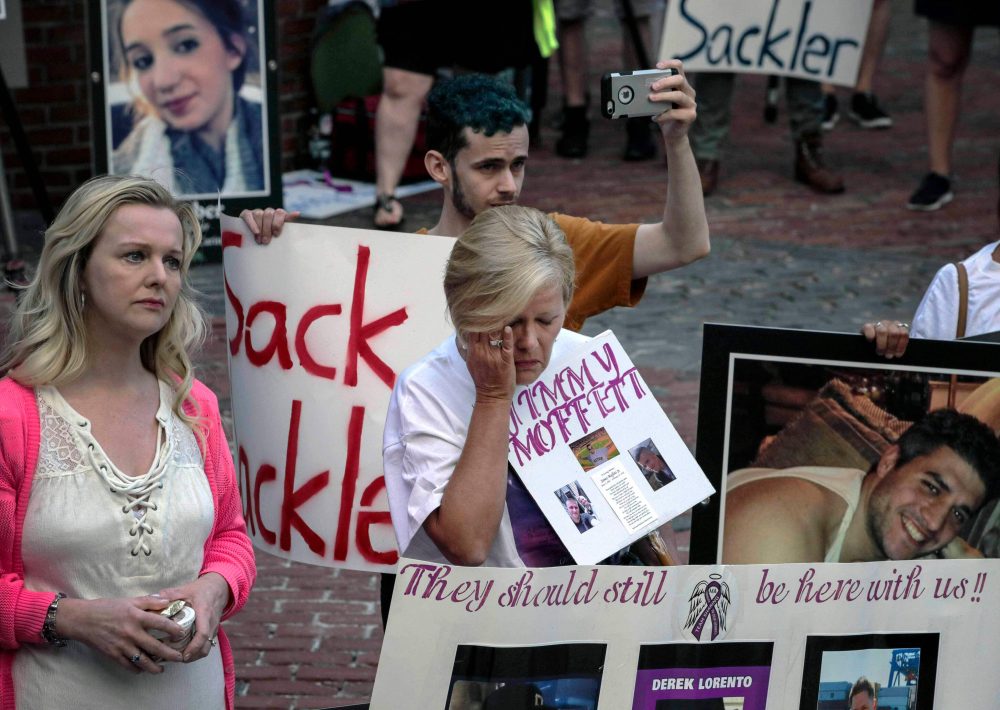
OxyContin manufacturer Purdue Pharma faces a federal court sentencing Tuesday where a judge will likely order the company to surrender $225 million to the Justice Department, enabling a comprehensive resolution of thousands of opioid-related lawsuits.
The financial penalty stems from a 2020 agreement that resolved federal civil and criminal investigations. Once approved by the court, additional penalties will be waived in exchange for Purdue’s participation in the broader lawsuit settlement.
Following extensive legal proceedings, the settlement received judicial approval last year and is scheduled to become effective May 1. The agreement mandates that Sackler family members who control the pharmaceutical company contribute as much as $7 billion over time to state, local and tribal governments, along with individual victims and other parties.
In November 2020, Purdue entered guilty pleas to three federal criminal counts.
The Connecticut-based pharmaceutical company acknowledged failing to maintain adequate safeguards preventing its potent prescription pain medications from reaching illegal markets, despite assuring the Drug Enforcement Administration otherwise.
The company also confessed to compensating physicians through speaker programs to promote prescriptions and paying an electronic health records firm to provide doctors with patient data designed to increase opioid prescribing.
Although Purdue manufactured only a small percentage of opioid pills that saturated markets during the 2000s, critics have consistently pointed to OxyContin’s aggressive marketing as a catalyst for the crisis. During a 1996 sales meeting, Richard Sackler, who served as a senior executive and later company president, urged staff to create a “blizzard of prescriptions.”
Despite Purdue’s anticipated $225 million payment, federal authorities agreed through the plea arrangement to forgo collecting $5.3 billion in criminal penalties and fines plus $2.8 billion in civil damages. Instead, portions of those amounts are incorporated into the comprehensive settlement, with the federal government receiving a minimal share.
The extensive settlement requires Sackler family ownership to provide up to $7 billion across 15 years. The majority of funds will support government efforts to combat the opioid epidemic.
This represents one of the largest among numerous recent settlements involving pharmaceutical manufacturers, distributors and pharmacies, and stands as the sole major agreement providing compensation for individual victims or their families.
Combined, these settlements exceed $50 billion in value, with most resources designated for addressing the overdose crisis.
The Purdue agreement provides lawsuit protection for Sackler family members regarding opioid claims from parties accepting the settlement terms.
Purdue will dissolve and be succeeded by Knoa Pharma, a new entity operating for public benefit with state-appointed board oversight.
This corporate restructuring ranks among the most complex ever undertaken. By late last year, Purdue had compensated legal firms and other professionals representing all parties more than $1 billion, according to court documents.
Sackler family members have faced widespread criticism as primary figures in the opioid crisis, accused of prioritizing profits despite mounting evidence of OxyContin addiction and overdoses.
However, no family members faced criminal charges.
Between 2008 and 2018, family members collected $10.7 billion from Purdue. Company payments to the family ceased in 2018, and the final family member departed the board in 2019.
The settlement allows for removal of their names from museums and institutions they have supported, a process already underway at various organizations.
More than 54,000 individuals with personal injury claims supported the settlement, while 218 opposed it.
Nevertheless, some victims and relatives continue challenging the agreement, arguing both the settlement and guilty plea fail to deliver adequate justice for a crisis connected to 900,000 American deaths since 1999.
Tuesday’s sentencing provides another opportunity for critics to present their concerns to the court.
Susan Ousterman lost her son Tyler Cordiero at age 24 in 2020 following a fatal overdose involving fentanyl after years struggling with heroin and other opioids. She coordinated other bereaved families to submit victim impact statements before sentencing.
Her goal was convincing the judge to reject the plea agreement and encouraging the Justice Department to pursue individual criminal charges, including against Sackler family members.
“It shouldn’t be going to states and municipalities,” Ousterman stated, highlighting that some governments haven’t utilized received funds while others have spent money on initiatives barely connected to fighting the drug crisis. “They’re not using that money effectively.”
Four international leaders are participating in intensive public questioning sessions this week as they compete for the position of United Nations Secretary-General, seeking to lead the struggling global organization starting next year.
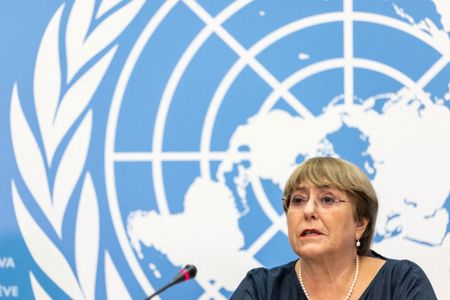
The candidates include Michelle Bachelet from Chile, Rafael Grossi from Argentina, Rebeca Grynspan from Costa Rica, and Macky Sall from Senegal. Each is pursuing a five-year leadership role for the 193-nation organization, with the possibility of extending for an additional five years.
Although these four represent the only announced candidates currently, additional contenders may enter the competition in upcoming months.
The future UN leader will inherit significant challenges in revitalizing an organization experiencing a crisis of relevance, as its influence has notably weakened in recent years. Global powers have demanded that the UN undergo reforms, reduce expenses, and demonstrate its importance, even while these same nations increasingly ignore established international standards.
Bachelet and Grossi will undergo three hours of intensive questioning at UN headquarters in New York on Tuesday from member nation representatives and civil society groups, with Grynspan and Sall facing similar sessions on Wednesday.
The current candidate pool is significantly smaller compared to 2016, when current Secretary-General Antonio Guterres from Portugal was selected from among 13 candidates, including seven women.
Throughout the UN’s 80-year existence, no woman has ever been selected for the top position, despite increasing pressure to break this pattern. Tradition typically calls for the role to alternate between global regions, with Latin America expected to provide the next leader.
An additional informal guideline prevents candidates from the five permanent Security Council members — Britain, China, France, Russia and the United States — from holding the position to prevent excessive power concentration, though support from these nations remains essential in the complex selection procedure.
Daniel Forti from the International Crisis Group recently emphasized the urgency of the situation, stating: “The need for a Secretary-General prepared to defend a clear, proactive vision for the U.N. on peacemaking and crisis management could not be more urgent.”
He added: “If candidates and member states miss this opportunity, there may be little left of the U.N. to defend.”
Bachelet, age 74, previously served as Chile’s president twice and held the position of UN High Commissioner for Human Rights. Her own nation withdrew support for her candidacy in March following a conservative political shift, though Brazil and Mexico continue backing her bid.
Conservative critics in the United States have questioned Bachelet’s pro-choice positions, and Washington’s UN representative recently appeared to undermine her candidacy by expressing concerns about her qualifications.
Grossi, a 65-year-old professional diplomat and father of eight children who communicates in English, Spanish, French and Italian, has led the UN nuclear monitoring agency for six years. In his campaign statement, Grossi stated: “even in times of division, multilateral institutions can deliver real, positive impact.”
Grynspan, 70, formerly served as Costa Rica’s vice president and currently leads the UN Conference on Trade and Development. She presents herself as a reform-focused multilateralist committed to UN principles of peace, development and human rights, having overcome gender obstacles throughout her career.
“I am not waiting for special treatment. I want equal treatment,” Grynspan explained to Reuters.
Sall, 64, governed Senegal for 12 years until 2024 and works as a geologist, having grown up as the son of a peanut vendor. More comfortable speaking French than English, he has advocated for African development and assistance for nations struggling with debt burdens. “More than ever, a reinvented multilateralism remains the best way to respond to the challenges of a world in full transformation,” he posted on X.
The selection process for the United Nations’ next leader is underway, as four candidates compete to succeed current Secretary-General Antonio Guterres in the role beginning January 1, 2027.
Leading the field appears to be Rafael Grossi, the 65-year-old Argentine diplomat who has headed the International Atomic Energy Agency for six years. Known for his energetic diplomatic style, Grossi has navigated complex international crises, including efforts to preserve elements of the Iran nuclear agreement after the U.S. withdrawal in 2018 under President Trump. His most notable achievement involved establishing an IAEA presence at Ukraine’s Zaporizhzhia nuclear facility despite the ongoing conflict with Russia.
The father of eight speaks multiple languages and has maintained relationships with all five permanent Security Council members – crucial support for securing the top position. “These experiences have confirmed a conviction I hold deeply: even in times of division, multilateral institutions can deliver real, positive impact,” Grossi stated in his campaign vision.
Rebeca Grynspan, 70, would make history as the first female Secretary-General if selected. The former Costa Rican vice president currently leads the U.N. Conference on Trade and Development and has temporarily stepped away from those responsibilities to avoid campaign conflicts. Born to European refugees after World War II, she connects her perspective directly to the U.N.’s founding principles.
“I am not waiting for special treatment. I want equal treatment,” Grynspan told Reuters. The economist positions herself as a reform-focused leader who would modernize the organization while preserving its core mission.
Michelle Bachelet faces significant obstacles despite her extensive resume as Chile’s two-time president and former U.N. Human Rights Commissioner. The 74-year-old lost Chilean government support following a political shift but continues her campaign with backing from Brazil and Mexico. U.S. officials have expressed concerns about her candidacy, with Representative Mike Waltz citing criticism from Senator Pete Ricketts regarding her human rights record and positions on reproductive rights.
Completing the field is Macky Sall, Senegal’s former president who served 12 years before stepping down in 2024. The 64-year-old geologist, whose father sold peanuts, emphasizes his executive experience and advocacy for African development. He supports Security Council reforms to include developing nations and focuses on debt relief for struggling countries.
“More than ever, a reinvented multilateralism remains the best way to respond to the challenges of a world in full transformation,” Sall posted on social media. However, his campaign faces mixed support across Africa, with his home country and Nigeria declining to endorse his bid.
If successful, Sall would become only the third African to hold the position, following Egypt’s Boutros Boutros-Ghali and Ghana’s Kofi Annan. The selection process will ultimately depend on consensus among the Security Council’s permanent members.
Two devastating incidents of domestic violence that claimed the lives of Black mothers in Louisiana and Virginia have ignited nationwide discussions about improving prevention resources and mental health services available to Black communities.
Community advocates responding to these tragic shootings emphasize that the incidents underscore disturbing patterns showing Black women face disproportionately higher risks of domestic violence. They view these deaths as a crucial moment to address how unequal access to care and resources leaves some women and children more exposed to household violence.
In Shreveport, Louisiana, authorities report that Shamar Elkins killed seven of his children and one additional child on Sunday morning. Family members indicate Elkins was going through a separation from his wife, who survived with injuries.
Meanwhile, last Thursday in Annandale, Virginia, police discovered the bodies of former Virginia Lt. Gov. Justin Fairfax and his estranged wife, Dr. Cerina Fairfax, at their suburban Washington, D.C. area residence. Authorities determined Justin Fairfax killed his estranged wife before taking his own life, while their two children present during the incident remained unharmed. Similar to the Louisiana case, Fairfax was separating from his wife and faced a court-ordered deadline to vacate their shared home.
Though investigators have not determined what triggered either the Shreveport murders or the Virginia murder-suicide, specialists note that the disturbing circumstances reflect common patterns occurring in households nationwide and highlight the urgent need for solutions targeting the fundamental causes of this disproportionate violence.
The Louisiana family had previously experienced gender-based gun violence: both Shaneiqua Elkins and the other shooting victim, Keosha Pugh, were sisters who lost their mother to gun violence before reaching age 10, their uncle Lionel Pugh confirmed.
“It’s sad. It just breaks you down,” Pugh said.
During a Monday press conference, Shreveport Councilman Grayson Boucher described the Louisiana killings as representative of “a true epidemic of domestic violence” throughout the southern city of approximately 180,000 residents.
These patterns extend far beyond Shreveport, as specialists emphasize how both race and gender create heightened vulnerability to domestic violence for Black women specifically.
According to 2014 Centers for Disease Control research, more than four out of ten Black women experience physical violence from intimate partners during their lifetimes — significantly higher rates than white, Hispanic, Asian or Pacific Islander women.
Paméla Tate, executive director of Black Women Revolt, which operates abuse prevention programs and survivor support services, explains that justified skepticism toward police and government child protective agencies rooted in institutionalized racism history makes Black women hesitant to seek assistance — leaving them particularly vulnerable to domestic violence.
Furthermore, Black women face twice the likelihood of being murdered by men compared to white women, according to a 2025 Violence Policy Center study analyzing 2023 federal data. The perpetrators typically know their victims, the research found, with more than nine out of ten Black female victims knowing their killers, and most of these deaths involving firearms.
Ultimately, Tate explained, “domestic violence doesn’t see color,” stemming primarily from widespread beliefs among men across all racial groups that women are subjects or property.
“Domestic violence is about exerting power over someone that you profess to love and controlling their behavior,” Tate said.
Mental health crises have generated significant discussion regarding their potential influence in both shootings.
A family member of Elkins’ wife informed The Associated Press that Elkins voluntarily admitted himself to a Department of Veterans Affairs hospital in January for approximately ten days seeking mental health treatment.
In Virginia, Justin Fairfax had been a promising Democratic Party figure until two women accused him of sexual assault, damaging his credibility as a political leader. Court documents indicate the former lieutenant governor’s “mental and emotional health” deteriorated before he killed his wife and himself, noting he consumed alcohol heavily and isolated himself from family after the 2019 allegations became public.
Adult and child psychiatrist Christine Crawford, who has not analyzed the Shreveport or Annandale cases, explained that financial difficulties, marriage problems and workplace issues — combined with existing mental health vulnerabilities — can cause someone to “crack.”
“It makes some think about the amount of pain, distress and hopelessness they found themselves in at that time,” said Crawford, who works at Boston’s Webster Clinic and serves as interim chief medical officer at the National Alliance on Mental Illness.
She observed that many Black individuals cannot afford mental health programs and care due to factors like private treatment costs and insurance gaps.
Such desperation can leave people feeling “completely out of options on how to deal with the pain he was in at that moment,” Crawford said.
Some experts point to social factors underlying these economic patterns.
“Mental health disparities in the Black community is not accidental,” said University of Michigan Social Work Professor Daphne C. Watkins. “They are the predictable result of structural racism” in educational systems, employment opportunities and other societal areas.
Watkins, who founded the YBMen Project providing young Black men safe spaces to discuss mental health, masculinity and social support, cited studies showing 10% of Black adults experience moderate to severe depression, while 18% have anxiety disorders.
However, Black men typically avoid mental health treatment due to cultural pressures in addition to financial barriers, Watkins noted. Without proper outlets, stress from family, work and relationships accumulates.
“For a long time, in the Black community, we didn’t talk about anxiety. Now, you have to talk about it hand in hand along with depression.”
Others strongly reject mental health as justification for domestic violence.
“To say they’re mentally ill, that doesn’t cut it,” Tate said. “There are people who are depressed or people who have schizophrenia and don’t harm the their partners, much less kill them.”
Both Shaneiqua Elkins and Cerina Fairfax might have faced mental health struggles too, Tate noted, and they both “had the same access or ability to go and purchase a gun” but chose differently.
“The mental illness is not what we’re talking about here,” she said.
LONDON (AP) — The memory of Queen Elizabeth II continues to dominate the British royal family at a souvenir store situated across from Buckingham Palace.
Nearly four years following the monarch’s passing, the Cool Britannia gift shop maintains strong sales of commemorative items including coffee cups, kitchen linens, and keychains featuring Britain’s longest-serving ruler as the country observes her 100th birthday anniversary on Tuesday. Merchandise showcasing her successor King Charles III remains far less popular.
“We still sell more than the king any day,” said Ismail Ibrahim, the store’s manager.
The deceased monarch’s influence continues to cast a shadow over the royal institution following her seven-decade rule, during which she transformed from an elegant young ruler who lifted British spirits in the difficult post-war era to a cherished national figure who provided comfort during the COVID-19 crisis.
At the time of her death in September 2022, Elizabeth represented the sole sovereign that most British citizens had experienced during their lifetimes. Today, references to “the queen” still commonly bring Elizabeth to mind rather than Queen Camilla, Charles’ spouse.
However, the years since her passing have also brought scrutiny to the late queen’s record. Though praised as an emblem of stability and consistency who helped bind together a Britain transformed by the end of its empire, economic hardships, and demographic changes, questions have emerged regarding her handling of former Prince Andrew’s connections to convicted sex offender Jeffrey Epstein and why she allowed the controversy to persist.
“Despite her absence, Elizabeth II remains this key presence whenever we think about the monarchy,” Ed Owens, author of “After Elizabeth: Can the Monarchy Save Itself?” told The Associated Press.
“She’s certainly the most significant figure in the history of the institution in the last 100 years and, I think, therefore deserves probably the attention that’s going to be focused on her in connection with what would have been her 100th birthday.”
Commemoration events include a Buckingham Palace gathering where Charles will honor centenarians born on the same date as his late mother, plus the unveiling of a memorial garden at London’s Regent’s Park. A display featuring the queen’s wardrobe is currently running.
Elizabeth Alexandra Mary Windsor was never intended for the throne. Born April 21, 1926, she entered the world not in a royal residence but at 17 Bruton St., a residence in London’s upscale Mayfair neighborhood.
As the firstborn child of King George V’s younger son, Elizabeth seemed destined for the typical existence of a lesser royal. A quiet life filled with pets and equestrian pursuits, a country estate, and an appropriate marriage appeared to await her.
However, fate altered her path. Ten years following Elizabeth’s birth, her uncle King Edward VIII gave up the crown to wed American divorcée Wallis Simpson. Elizabeth’s father ascended as King George VI, placing the young princess directly in line for succession.
Elizabeth assumed the throne upon her father’s death on Feb. 6, 1952. At just 25 years old, she received the news while in Kenya and immediately returned home to begin her royal responsibilities.
Throughout the following decades, she conducted the ceremonial opening of Parliament wearing her crown and ceremonial robes, welcomed foreign dignitaries at Buckingham Palace, and participated in countless public events throughout the United Kingdom, frequently dressed in vibrant outfits to ensure visibility among crowds.
She also served as an international representative for Britain, completing over 200 foreign visits that strengthened relationships with former colonies including India and Tanzania, previous adversaries like Germany and Japan, and longtime allies such as the United States.
During her later years, the queen gained internet fame through her collaboration with James Bond actor Daniel Craig in a staged parachute entrance at the 2012 London Olympics opening ceremony and her partnership with Paddington Bear to mark her 70th anniversary on the throne.
In an era of constant transformation, she adapted to changing times — celebrating national achievements and comforting citizens during challenging periods while maintaining political neutrality, according to Robert Hardman, author of “Elizabeth II: In private. In public. The Inside Story.”
Yet these successes make her inability to resolve the controversy surrounding her second son particularly notable.
Despite ongoing concerns about Andrew’s inappropriate conduct, questionable financial activities, and problematic associations, he served a decade as Britain’s special trade representative and retained his royal status until details of his Epstein relationship emerged recently. To protect the monarchy from continued damage, Charles ultimately removed his brother’s royal titles. He now goes by Andrew Mountbatten-Windsor.
“He was problematic and that gave her cause for worry,” Hardman said. “But I do think people let him have an easy ride because they thought if they came down hard on him, they might somehow upset the queen. Now that’s partly attributable to her, but partly attributable to others.”
Nevertheless, her “great achievements” far outweighed any mistakes, Hardman noted.
Elizabeth began her reign as a young mother of two small children during an era before commercial aviation and space exploration, then maintained her public presence throughout multiple generations.
“She just reigned through this vast span of the ages and was as authoritative and loved and respected at the end as she was at the beginning,” Hardman said. “And she was working till the very end, ’til her last day.”
While scholars continue evaluating the queen’s impact, ordinary people form their own opinions.
Consider Sylvie Deneux and her daughter Clara, who visited Cool Britannia during a London trip from their home in Lille, France.
They commended the late monarch for her grace and called her an icon. However, when questioned about Mountbatten-Windsor, Sylvie Deneux, 49, hesitated and glanced at her daughter. The failure to swiftly address the scandal was an error, she acknowledged. Yet Deneux maintained empathy for Elizabeth, recognizing those choices came from maternal instincts rather than royal duty.
SEOUL, South Korea — Authorities in Seoul announced Tuesday they are pursuing an arrest warrant for Bang Si-Hyuk, the music industry executive who chairs HYBE, the entertainment company that manages global K-pop phenomenon BTS. Officials allege Bang orchestrated a scheme that defrauded investors of over $100 million.
The Seoul Metropolitan Police Agency has formally requested prosecutors to seek a court-issued arrest warrant for Bang. HYBE representatives have not yet provided comment on the matter.
Investigators have been examining Bang’s activities since November, focusing on accusations that he deceived investors in 2019. The allegations center on claims that Bang falsely told investors HYBE would not pursue a public stock offering, convincing them to sell their ownership stakes to a private equity firm before the company actually went public. Authorities suspect the equity fund provided Bang with approximately 200 billion won ($136 million) through a secret arrangement guaranteeing him 30% of profits from post-IPO stock sales.
As the founder of HYBE, originally established as Big Hit Entertainment in 2005, Bang has become one of K-pop’s most influential executives. His company manages several major acts beyond BTS, including Seventeen, Le Sserafim, and Katseye.
The legal challenges represent a significant blow to HYBE’s reputation, particularly as BTS launches their worldwide tour following an almost four-year break while members completed South Korea’s required military service.
BTS recently performed for tens of thousands of international fans at a free reunion concert in Seoul and has since held additional shows in South Korea’s Goyang city and Tokyo. The group plans to begin their U.S. tour dates with a performance in Tampa, Florida, later this month.
PITTSBURGH (AP) — Pittsburgh’s media scene experienced a dramatic revival this spring, bouncing back from what seemed like certain doom just weeks earlier.
The historic Pittsburgh Post-Gazette found new life when its owners announced a sale to a nonprofit foundation committed to continuing operations. The publication, which existed before America’s Constitution was written, had been scheduled to shut down on May 3, potentially leaving Pittsburgh as the country’s biggest city without its own major newspaper.
Just weeks before that announcement, the Pittsburgh City Paper also made a stunning comeback under new ownership, after its staff discovered on New Year’s Day that the alternative weekly was closing after three decades of operation.
These developments stand out as rare bright spots in an industry that has faced devastating losses over the past twenty years — with newsrooms closing or drastically reducing staff, reporters losing jobs, and readers turning elsewhere for information. Nobody expects Pittsburgh’s media recovery to be simple, but the city’s brush with a complete news blackout may have helped prepare the community for change.
“It’s human nature that sometimes you have to be shaken a bit to realize what’s important in your life,” said Halle Stockton, co-executive director and editor-in-chief of the digital news outlet Public Source.
The Pittsburgh Gazette first published on July 29, 1786, becoming the inaugural newspaper west of the Allegheny Mountains. The publication underwent multiple name changes as the city’s newspaper market expanded and contracted, once supporting seven different papers at the start of the 1900s. Various iterations included The Commercial Gazette, the Gazette-Times, and briefly, the Pittsburgh Gazette and Manufacturing and Mercantile Advertiser.
When the Pittsburgh Post shut down in 1927, a merger created the Post-Gazette, a name that has endured for nearly a century.
The newspaper built a strong reputation over the decades, earning a Pulitzer Prize in 2019 for covering the Tree of Life synagogue shooting. “The Post-Gazette is really the paper of record for this city,” said Kevin Acklin, chief of staff to a former Pittsburgh mayor and former president of the Penguins hockey team. The city’s other major “paper of record,” The Pittsburgh Press, ceased operations in 1992 following a Teamsters Union strike.
Labor disputes also plagued the Post-Gazette’s final years. Most staff members went on strike from 2022 through 2025, while the publication struggled to continue operating. Owner Block Communications, Inc. announced the closure on the same January day the U.S. Supreme Court rejected its appeal regarding a health benefits ruling that favored former strikers.
Speculation about the newspaper’s fate continued for months afterward. Acklin collaborated with other investors during the winter to purchase the publication, but negotiations collapsed when Block demanded the union be excluded from any deal.
A hint about the newspaper’s future emerged across town in mid-March for those paying close attention.
“You thought we were dead and gone, didn’t you?” Ali Trachta, top editor at the Pittsburgh City Paper, wrote on the outlet’s revived website. “So did I. But, to be honest, only very briefly.” She revealed that the publication was resuming coverage of community news, politics, arts “and the creative, weird and uniquely Pittsburgh stories” that have characterized it since 1991.
A new nonprofit called Local Matters, headed by a former Apple engineering manager, had assembled investors to acquire the City Paper. The publication planned to resume monthly print editions and launch a membership program for reader support. Most previous staff members would return. The paper had printed weekly until its former owner decided in 2025 to reduce print editions to just four per year.
That previous owner was Block Communications.
When Block announced the Post-Gazette sale last week, the buyer was also a nonprofit. The Venetoulis Institute for Local Journalism, which operates the successful digital publication The Baltimore Banner, purchased the Post-Gazette despite Block stating they weren’t the highest bidder. Many Pittsburgh residents had worried about a sale to a hedge fund known for gutting newspaper resources.
Does this make Block, long viewed as a villain in local journalism circles, a hero in this situation?
“For better or worse, the Blocks will never get credit for that,” said Andrew Conte, a journalism professor at Point Park University who runs Pittsburgh’s Center for Media Innovation. “But it does seem like they made an effort to come up with the best outcome they could as they were leaving Pittsburgh. They could have just walked away and said, ‘You know, we’re done.’”
The real work now begins. Venetoulis officials didn’t respond to Associated Press inquiries. The institute’s benefactor, hotel magnate Stewart Bainum Jr., has announced plans to invest $30 million in both the Banner and Post-Gazette over five years. The Newspaper Guild of Pittsburgh expressed hope to participate in rebuilding efforts, though union involvement remains uncertain.
“This is going to be one of the most closely-watched newspaper acquisitions in years,” said Tim Franklin, founding director of the Medill Local News Initiative at Northwestern University. “Can a money-losing newspaper with serious labor strife be saved and resurrected as a non-profit? If Stewart Bainum and his team pull this off — and I hope they do — it could be a model for the nation.”
Other Pittsburgh news organizations had begun preparing to fill potential gaps in coverage and aren’t necessarily changing those plans despite the Post-Gazette sale.
The Pittsburgh Tribune-Review will restart Sunday print editions in Pittsburgh on May 9 after stopping city printing a decade ago. The Trib also plans to hire approximately a dozen journalists to expand coverage of business, healthcare, transportation and education, according to CEO Jennifer Bertetto. Based in Greensburg, 30 miles east of Pittsburgh, some city residents consider the Trib an outsider.
Stockton’s Public Source, established in 2011 primarily for investigative reporting, is expanding its focus. The organization has hosted town halls recently for residents to discuss their local news preferences and published a directory of 40 to 50 small regional outlets covering specialized topics like arts and business, or specific neighborhoods and communities.
People previously unengaged with news were seeking alternatives. “People are actively interested in where they get their information and who they can trust for it,” Stockton said. “So we’re leaning into that.”
With their careers uncertain for months, Post-Gazette content editor Erin Hebert and photographer Steve Mellon joined other journalists meeting regularly as the Pittsburgh Alliance for People-Empowered Reporting, or PAPER, exploring the possibility of creating a digital news site. Hebert said those plans remain undecided following recent developments.
Conte can walk from the university to show office space designated for journalists from small, local publications. He hopes to persuade the Tribune-Review to print periodic inserts featuring top reporting from these outlets.
The challenge facing news organizations in 2026 becomes clear when speaking with students in Conte’s journalism classes. When asked how many checked the Post-Gazette’s website that morning, only a few hands hesitantly rise.
Instagram and TikTok often serve as their news sources. These platforms are more convenient and don’t have paywalls, said Gabriela Wait. The journalism students know to verify information with reliable sources when uncertain about content credibility. Many of their peers don’t follow this practice.
Makenna Smith remembered her grandparents and parents reading newspapers during her childhood, staying informed and entertained. Few people her age maintain similar habits.
A recent Pew Research Center study revealed declining public interest in news across all age groups. Pew discovered that 37% of Americans closely followed local news in 2016, dropping to 21% in 2025.
For Conte, this emphasizes the importance of news organizations working together. As a former Trib reporter, he remembered intense rivalry with the Post-Gazette.
“Literally, they were trying to kill each other,” he said. “I don’t think any of us want to go back to a point where we’re doing that. We’ve evolved. We’re trying to work together. Even if we’re competing for scoops and clicks and dollars, there’s also a benefit to having us get around the same table once a month.”
NEW YORK — A fresh jury will hear opening arguments Tuesday in Harvey Weinstein’s rape retrial in New York, marking another chapter in a landmark #MeToo case that has remained unresolved for almost eight years since the former Hollywood mogul’s initial arrest.
The disgraced producer has faced mixed outcomes in sexual assault trials across the country since becoming a central figure in the #MeToo movement against sexual misconduct almost ten years ago. While some charges have resulted in convictions and others in acquittals, the rape allegation stemming from a 2013 incident at a Manhattan hotel continues to pursue him following a reversed conviction and subsequent hung jury.
Weinstein maintains his innocence, having entered a not guilty plea and rejecting claims of any non-consensual sexual activity. During a court appearance this winter, he acknowledged being “unfaithful to his then-wife” and stated he “acted wrongly, but I never assaulted anyone.”
The jury composition includes seven men and five women, selected through questioning conducted over multiple days last week. This differs from Weinstein’s previous New York jury, which was predominantly female, while his initial jury was mainly male.
Potential jurors underwent screening about their knowledge of Weinstein and their ability to remain fair and unbiased despite any prior information they may have encountered.
The 73-year-old defendant, currently incarcerated, previously held immense influence in Hollywood as an Academy Award-winning producer and studio executive. His credits include bringing celebrated films like “Pulp Fiction,” “Shakespeare in Love,” and “Gangs of New York” to theaters, along with the hit reality show “Project Runway” to television. He also maintained significant connections as a major Democratic political contributor.
His entertainment empire crumbled in 2017 when long-circulating Hollywood rumors about his treatment of women transformed into public allegations through news reports and social media. Criminal prosecutions in both New York and Los Angeles followed.
The complainant in this proceeding, Jessica Mann, worked as a hairstylist with aspirations of entering major film acting when she encountered Weinstein at a Los Angeles-area gathering in late 2012 or early 2013.
Mann previously testified that while seeking professional opportunities, she became involved in what she described as a conflicted, consensual relationship with the then-married producer.
According to Mann’s earlier court testimony, during a March 2013 visit to New York with a companion, she organized a breakfast meeting for all three parties with Weinstein. She alleged that Weinstein subsequently confined her in a hotel room, disregarded her statement that “I don’t want to do this,” ordered her to remove her clothing, and physically restrained her arms, leading her to comply because she “just wanted to get out.”
Weinstein’s previous legal representatives highlighted that Mann continued meeting with him afterward, accepting his invitations, seeking career assistance, and sending friendly communications. He has changed legal representation for this retrial, and their strategic approach remains to be determined.
Court proceedings are anticipated to continue for up to four weeks.
Voters in Virginia headed to the polls Tuesday to weigh in on a contentious redistricting proposal that could significantly improve Democratic prospects for gaining control of the narrowly split U.S. House of Representatives, marking Virginia as the newest battleground in a nationwide fight over congressional maps.
The constitutional amendment, supported by Democratic leaders, would circumvent Virginia’s nonpartisan redistricting commission and implement new congressional boundaries that state legislators approved during this year’s midterm cycle.
This ballot measure evaluates Democrats’ capacity to counter President Donald Trump, who initiated interstate competition over gerrymandering after successfully encouraging Texas Republicans to redraw their congressional maps favorably last year. Virginia represents the second state, following California this past fall, to present this question directly to voters.
The vote also examines voters’ acceptance of politically motivated district boundaries — occurring just six years after Virginians approved changes designed to reduce such partisan manipulation by removing redistricting authority from the legislature.
Should Democrats prevail Tuesday, the public decision may not represent the final outcome. The state Supreme Court is reviewing whether the redistricting proposal violates the law in a case that could nullify the referendum results.
Congressional map redrawing normally occurs once every ten years following each U.S. census. However, Trump encouraged Texas Republicans to redistrict before November elections, hoping to secure several additional seats and preserve the GOP’s slim House majority against political challenges that typically benefit the opposition party during midterm elections.
The Texas strategy sparked redistricting efforts across the nation. Republicans currently believe they can secure up to nine additional House seats through newly drawn districts in Texas, Missouri, North Carolina and Ohio.
Democrats anticipate winning up to five additional seats in California, where voters endorsed mid-decade redistricting last November, plus one more seat through new court-mandated districts in Utah. Democrats aim to close the remaining gap in Virginia, where they dramatically captured 13 state House seats and reclaimed the governor’s mansion last year.
Leadership from both major parties view Tuesday’s election as vital to their prospects for House control this fall. Former Virginia Gov. Glenn Youngkin, a Republican, joined opponents at a Monday night rally, describing the redistricting proposal as “dishonest” and “brazenly deceptive.” House Minority Leader Hakeem Jeffries told reporters at the Capitol earlier that day that approving the redraw “will serve as a check and balance on this out-of-control Trump administration.”
“He said he expected the election to be close,” Jeffries added.
The ongoing congressional district disputes are anticipated to extend to Florida, where the Republican-controlled legislature is set to meet April 28 for a special session that might produce a more advantageous map for Republicans.
Currently in Virginia, Democrats control six of 11 U.S. House seats under districts established by the state Supreme Court in 2021 after a bipartisan commission couldn’t reach agreement on a map using the most recent census information.
The proposed plan could enable Democrats to capture as many as 10 seats. Five would be centered in Democratic-stronghold northern Virginia, including one configured like a lobster that extends into Republican-favoring rural territories.
Changes to four additional districts spanning Richmond, southern Virginia and Hampton Roads would weaken conservative voting strength in those regions. A redesigned district covering portions of western Virginia combines three Democratic-leaning university towns to counterbalance other Republican voters.
The Virginia redistricting proposal is “pushing back against what other states have done in trying to stack the deck for Donald Trump in those congressional elections,” Democratic Gov. Abigail Spanberger stated during an online rally last week.
Television advertisements supporting the “yes to redistricting” campaign and featuring former President Barack Obama have saturated local media.
Opposition groups have circulated campaign literature highlighting previous statements from Obama and Spanberger condemning gerrymandering, though those comments preceded Trump’s push for Republican states to redraw congressional boundaries ahead of this year’s midterms.
Democrats “were all against gerrymandering before they were for it,” Virginia Republican Party Chairman Jeff Ryer stated.
Virginia legislators approved a constitutional amendment permitting their mid-decade redistricting last fall, then passed it again in January as part of a two-phase process requiring an intervening election before an amendment can appear on the ballot.
In February, they approved a new U.S. House map to become effective pending the redistricting referendum outcome. Republicans have filed numerous legal challenges against the initiative.
A Tazewell County judge determined that the redistricting effort was illegal for multiple reasons. Circuit Court Judge Jack Hurley Jr. stated lawmakers failed to follow their own procedures for adding the redistricting amendment to a special session.
He determined that their initial vote failed to occur before the public started casting ballots in last year’s general election and therefore didn’t count toward the two-phase process. He also concluded that the state failed to publish the amendment three months before that election, as legally required.
If the state Supreme Court upholds the lower court ruling, Tuesday’s vote results could become meaningless.
WASHINGTON — Kevin Warsh moves closer to his long-sought ambition of leading the Federal Reserve as he testifies before the Senate Banking Committee on Tuesday. However, the position he hopes to secure may present challenges far different from what he anticipated a decade ago when he first set his sights on the role.
Rising inflation driven by higher gas prices from the Iran conflict is complicating the Federal Reserve’s ability to deliver the interest rate reductions that President Donald Trump urgently wants. The ongoing war could also dampen economic growth and job creation. Should Warsh eventually become chair, he might find himself working alongside his predecessor Jerome Powell, who plans to remain on the Fed’s board — an awkward situation not seen since the 1940s.
The former Fed official and affluent investor is expected to encounter challenging questions during his appearance. Committee Democrats have already indicated they plan to grill him about what they view as insufficient transparency surrounding his extensive financial portfolio, which exceeds $100 million according to recent filings.
Senators will also likely focus on Trump’s persistent calls for lower short-term interest rates, raising concerns that Warsh was selected primarily to carry out the president’s wishes. Most current Fed officials favor maintaining the central bank’s benchmark rate at current levels as inflation shows signs of accelerating once more.
In prepared testimony released Monday, Warsh defended the Federal Reserve’s independence from political influence. He described such independence as “essential,” while noting it isn’t compromised when “elected officials — presidents, senators, or members of the House — state their views on interest rates.” Trump has consistently pushed Powell to reduce the Fed’s key rate from approximately 3.6%.
Warsh emphasized his dedication to the Fed’s inflation-fighting mandate in his written statement, though he didn’t reference the central bank’s employment goals. “Inflation is a choice, and the Fed must take responsibility for it,” he stated in his prepared remarks. This focus on price stability typically means officials prefer higher interest rates to restrain spending rather than cutting rates to stimulate growth, contrary to Trump’s preferences.
Although Tuesday’s hearing represents a crucial milestone for Warsh, the timing of a committee vote remains uncertain. A Justice Department investigation into Powell and the Fed regarding a building renovation has prompted Senator Thom Tillis, a North Carolina Republican, to threaten blocking Warsh’s nomination until the inquiry ends.
“Clearly there’s a majority of the committee that’s not going to move this nomination forward, especially while this sham of a criminal investigation is going on,” Minnesota Democrat Senator Tina Smith told reporters during a Monday conference call. “It feels a bit like we’re going through the motions when we really have not addressed the fundamental challenges that this nomination has.”
This uncertainty could create an unusually chaotic leadership transition at the world’s most influential central bank, which typically experiences seamless changes in command. A particularly disruptive handover might rattle financial markets and push up long-term borrowing costs.
Powell’s chairmanship expires May 15, and he has committed to continuing in the role until a replacement is confirmed. His separate position on the Fed’s governing board extends through January 2028. While Fed chairs traditionally step down from the board when their leadership terms conclude, Powell announced last month he would stay on the board even after a new chair takes over, at least until the Justice Department probe concludes.
When questioned about Powell’s intentions, Trump threatened to dismiss Powell if he attempts to remain at the Fed. However, Trump’s earlier effort to remove Fed Governor Lisa Cook remains tied up in litigation. During January oral arguments, most Supreme Court justices seemed inclined to allow Cook to retain her position.
A Charlotte federal jury has determined that Uber must be held responsible for a driver’s inappropriate behavior toward a female passenger, awarding the woman $5,000 in damages on Monday.
The incident involved a driver who touched the passenger’s inner thigh without permission and asked if he could “keep her” with him as she exited the vehicle’s front seat, according to court proceedings.
Attorney Ellyn Hurd, representing the passenger, confirmed the jury’s decision in what serves as a test case among numerous sexual assault claims filed against the transportation company across various states.
This marks the third such case to reach trial. Earlier this year, an Arizona federal jury ordered Uber to pay $8.5 million to a woman who alleged rape by a driver. Conversely, a California jury last year cleared Uber of liability in a separate assault allegation.
In response to the North Carolina verdict, Uber emphasized the relatively modest financial award and noted the jury classified the incident as battery rather than sexual assault.
“The jury’s award here should further bring these cases back to reality, as it represents a tiny fraction of previous demands,” Uber stated in an email, while indicating plans to appeal based on what they view as improper jury instructions regarding liability.
Hurd believes the outcome favors other plaintiffs, noting that Uber itself chose this North Carolina case as their preferred test scenario.
“This was a case that they thought going in that they were going to win,” Hurd explained. “They picked all the criteria — this is the case that they picked, that they wanted to try. And the jury believed the plaintiff and they lost.”
These legal challenges emerge from ongoing concerns about Uber’s safety practices, including thousands of reported sexual assault incidents involving both riders and drivers. The company has historically argued it bears no responsibility for driver misconduct since drivers work as independent contractors rather than employees.
However, U.S. District Judge Charles R. Breyer, who oversees this group of lawsuits, determined that Uber functions as a “common carrier” under North Carolina law, making it liable for driver actions. Breyer cited Uber’s public marketing as a transportation service and its operational control over rides and passenger safety.
Unlike Florida and Texas, which have specifically excluded rideshare companies from common carrier liability, North Carolina has not created such exemptions, the judge noted.
This ruling meant the jury only needed to determine whether the alleged incident occurred, Hurd said.
Uber maintains the driver denied any inappropriate contact and points out the passenger never filed a police report, with the company only learning of the allegations when the lawsuit was filed three years afterward.
Hurd countered that the absence of a police report doesn’t invalidate the claim. During the trial, which began Wednesday and concluded Monday, jurors heard testimony from the driver, the passenger, and friends who supported her account.
Judge Breyer, based in San Francisco’s Northern District of California, is scheduled to oversee two additional sexual assault test cases against Uber, with the next trial set for mid-September in San Francisco.
Elon Musk’s space exploration company is taking major steps toward what could become the most significant initial public offering ever recorded, hosting exclusive analyst meetings this week at facilities in Texas and Tennessee, according to three sources with knowledge of the plans.
The rocket and satellite manufacturer is conducting these private briefings with leading Wall Street aerospace and technology analysts as it seeks to secure $75 billion in funding, which would establish a new record for IPO size. Company leadership has set their sights on beginning public trading by the end of June.
The series of presentations begins Tuesday with a full-day session and facility tour at the company’s Starbase rocket launch complex in Boca Chica, Texas, sources revealed.
A different group of analysts representing major institutional investors, including large mutual funds and pension organizations, will participate in a separate Wednesday briefing at the same Texas location. Thursday’s agenda includes a visit to examine the company’s “Macrohard” initiative at its Colossus data processing facility in Memphis, Tennessee.
Participants must give up their electronic devices to join these meetings, one source indicated. All three individuals provided information anonymously since these details have not been made public. SpaceX has not responded to requests for comment.
These analyst presentations represent a typical component of the IPO timeline, where companies provide detailed briefings about their operations, financial projections, and strategic plans before going public.
Several attending analysts have also received SpaceX’s confidential registration documents, though these papers contained minimal details, two sources noted.
Standard IPO registration paperwork typically includes company operational descriptions, financial records, risk assessments, planned use of raised capital, and information about current major stakeholders.
Approximately two weeks following these analyst sessions, SpaceX plans to conduct a specialized “modeling” session for selected Wall Street analysts, including some whose firms are involved in the transaction, according to two sources.
During these modeling sessions, companies usually guide analysts through financial forecasts, business strategies, and other critical information that helps analysts develop earnings projections before the stock listing.
SpaceX Chief Financial Officer Bret Johnsen faces the challenge of convincing top Wall Street analysts and potential investors that the company justifies a nearly incomprehensible $1.75 trillion valuation over the next two months.
In February, Musk combined his artificial intelligence company xAI with SpaceX, creating a unified enterprise encompassing rockets, Starlink satellite services, the X social media network, and the Grok AI assistant.
This merger established an unprecedented technology and aerospace combination, though it complicates SpaceX’s valuation process. To support the $75 billion fundraising goal and substantial company worth, at least one major institutional investor has adopted unconventional comparison methods, as previously reported.
Instead of measuring SpaceX against traditional aerospace and telecommunications corporations like Boeing and AT&T, this investor has been comparing it to Palantir Technologies and artificial intelligence infrastructure firms such as GE Vernova and Vertiv, according to someone familiar with these valuation conversations.
Musk also intends to benefit individual investors who have driven Tesla’s electric vehicle stock to extraordinary levels, with trading values resembling a technology company rather than a traditional automaker.
He plans to reserve approximately 30% of SpaceX shares for individual investors, inviting 1,500 of them to tour Starbase following the roadshow beginning June 8, according to sources familiar with these arrangements.
Musk is additionally making initial share purchases available to international individual investors from the United Kingdom, European Union, Australia, Canada, Japan, and South Korea.
The transaction structure and exact percentage of individual investor allocation will be determined closer to the IPO launch date. Morgan Stanley, Bank of America, Citigroup, JPMorgan, and Goldman Sachs are serving as primary underwriters, with 16 additional banks handling smaller responsibilities across institutional, retail, and international markets.
South Korean President Lee Jae Myung is pushing back against allegations that his unification minister disclosed sensitive U.S. intelligence about North Korea’s nuclear program, calling such accusations completely unfounded.
Media outlets in South Korea have indicated that the United States has reduced its intelligence sharing regarding North Korea following public statements made by Unification Minister Chung Dong-young about a previously unverified uranium enrichment site in the communist nation.
The minister and his department maintain that Chung’s March statements regarding the nuclear facility located in Kusong, North Korea, were drawn from information already available to the public, including academic studies.
“It’s a clear fact that the existence of the Kusong nuclear facility was widely known globally even before Chung’s public comments through various research reports and news media,” Lee stated in a social media post on Monday evening.
“Any claim or action based on the idea that Minister Chung ‘leaked classified information provided by the U.S.’ is wrong. I’ll be looking closely into why something as absurd as this is happening,” the president added.
When asked about potential changes to U.S. intelligence sharing arrangements, South Korea’s defense ministry refused to provide details on Tuesday. However, officials confirmed that intelligence agencies from both nations continue to collaborate closely, particularly regarding North Korean missile activities.
The North conducted its most recent ballistic missile testing on Sunday, with both South Korean and Japanese forces monitoring the launches.
During testimony before a parliamentary panel last month, Chung revealed that North Korea has been producing weapons-grade uranium at the Kusong location, in addition to previously known or suspected facilities in Yongbyon and Kangson.
According to reporting by Yonhap news agency on Tuesday, the United States has restricted the sharing of certain intelligence collected through surveillance satellites.
Political opposition members are demanding Chung’s removal from office, arguing that his actions have harmed the crucial alliance between Seoul and Washington. The two nations maintain a defense agreement, and the U.S. stations approximately 28,500 military personnel in South Korea.
Authorities in South Korea have filed for an arrest warrant against Bang Si-hyuk, the chairman and creator of HYBE, the entertainment giant that manages world-famous K-pop group BTS, in connection with alleged securities fraud.
The Seoul Metropolitan Police Agency announced that Bang is accused of breaking financial market regulations by providing false information to early investors before HYBE’s stock market debut and directing them to transfer shares to a private equity firm connected to his business partners.
Investigators claim that following HYBE’s public listing, the equity firm disposed of its holdings, and Bang collected approximately 30% of the proceeds through a previously established shareholder deal, netting around 190 billion won ($129.1 million) in unauthorized profits.
Bang has previously denied any wrongdoing.
HYBE did not have an immediate comment when contacted by Reuters.
Bang is also the founder of HYBE, the music powerhouse behind global Kpop supergroup BTS.
Following news of the warrant request, HYBE’s stock price dropped 2.9% as of 0215 GMT, contrasting with a 1.8% increase in South Korea’s main KOSPI index.
The National Police Agency revealed that the American embassy in Seoul recently submitted a formal request asking officials to permit Bang to visit the United States, despite an existing travel restriction during the ongoing probe.
Police stated the embassy’s correspondence requested a temporary lifting of the prohibition, referencing scheduled appearances by Bang and other top company officials at a July 4th celebration and discussions regarding BTS’s continuing world tour.
The U.S. embassy in Seoul said it did not have anything to add on that matter.
Bang has been prohibited from departing South Korea since August of last year.
Asian stock markets delivered mixed results Tuesday while oil prices declined following escalating tensions between the United States and Iran.
Trading began sluggishly Tuesday after Wall Street posted modest losses, though U.S. futures showed slight gains.
As uncertainty surrounds diplomatic negotiations between Iran and the U.S. to resolve the conflict, Brent crude oil prices stayed above $95 per barrel, dropping a modest 0.4% to $95.10. American benchmark crude declined 0.9% to $86.66 per barrel.
Tokyo’s Nikkei 225 rose 1.1% to 59,485.54, boosted by technology companies including Tokyo Electron, which surged 4.4%. SoftBank Group Corp., the tech and energy conglomerate, gained 5.5%.
South Korea’s Kospi surged 1.8% to 6,327.73 while Taiwan’s Taiex increased 1.7%.
Hong Kong’s Hang Seng dropped 0.1% to 26,382.30 and Shanghai’s Composite index fell 0.3% to 4,068.28.
Australia’s S&P/ASX 200 decreased 0.1% to 8,942.80.
President Donald Trump criticized opponents after a second diplomatic session with Iran became uncertain due to the U.S. Navy’s capture of an Iranian cargo vessel. Trump announced Vice President JD Vance would travel to Islamabad, though Iranian officials made no promises for additional negotiations.
Monday saw oil prices rise due to increased U.S.-Iran tensions, though the increases were smaller compared to earlier periods of the conflict. American stocks meanwhile pulled back slightly from their record-setting performance.
Monday’s trading saw the S&P 500 decline 0.2% from its record high, while the Dow industrials dropped less than 0.1%. The Nasdaq composite decreased 0.3%.
Concerns about oil supply disruptions from the Persian Gulf region, particularly if Iran continues preventing tankers from leaving the Strait of Hormuz, are affecting investor confidence.
A critical deadline approaches Tuesday evening at 8 p.m. Eastern time, which corresponds to early Wednesday in Tehran, when the current ceasefire between the United States and Iran is set to end.
“The current dynamic is one of a precarious balance of truce,” Mizuho Bank said in a commentary, so “as the ceasefire draws to its 2-week deadline, the all-consuming question is whether both sides can seize on the talks to land on a US-Iran deal that ends the war.”
Currently, oil prices remain significantly below the $119 per barrel peak for Brent crude when concerns reached their highest point. The S&P 500 continues trading above pre-war levels.
Monday’s Wall Street session saw United Airlines drop 2.8% and American Airlines fall 4.2% after American rejected merger discussions with United. Airline shares had climbed last week following reports of United’s interest in combining with its competitor.
TopBuild, which distributes insulation and construction materials, jumped 19.4% on the positive side. QXO announced plans to acquire the company in a transaction worth approximately $17 billion, creating what it described as North America’s second-largest publicly traded building products distributor. QXO shares declined 3.1%.
American corporations have reported strong earnings for the first quarter of 2026, providing market support.
Major U.S. banks indicated last week their expectation that the American economy will maintain its strength, particularly due to robust consumer spending.
Approximately 10% of S&P 500 companies have released their early 2026 results. Nearly 90% exceeded analyst profit projections, according to FactSet data.
If remaining companies meet analyst forecasts, total earnings per share for S&P 500 firms are projected to increase 13% compared to the previous year.
Companies reporting earnings this week include UnitedHealth Group on Tuesday, Tesla on Wednesday, and Procter & Gamble on Friday.
In early Tuesday currency trading, the U.S. dollar strengthened to 158.98 Japanese yen from 158.82 yen. The euro weakened to $1.1782 from $1.1789.
Professional golf’s presence in Hawaii will come to an end after 2026, the PGA Tour announced Monday, marking the conclusion of more than 50 years of tournament play in the island state.
The decision follows the cancellation of the 2026 Maui tournament, which was scrapped due to severe drought conditions affecting the Plantation Course at Kapalua.
The Sentry tournament, previously called the Tournament of Champions, had traditionally kicked off each PGA Tour season in January. The event served this role from 1986 through 2013 and again in 2024-25. With this year’s cancellation, the tour began its season less ceremoniously at the Sony Open in Hawaii at Waialae Country Club in Honolulu, followed by The American Express tournament in La Quinta, California.
The elite Sentry tournament typically featured the top 50 players from the FedEx Cup standings along with all winners from the prior season.
Water rights conflicts with a local company at the Plantation Course proved impossible to resolve, prompting officials to announce the 2026 event’s cancellation last October.
The Sony Open on Oahu now faces an uncertain future as well. The tournament, which allowed golfers to spend two weeks in the Pacific by pairing with The Sentry, may be transferred to the Champions Tour and potentially combined with the senior circuit’s Mitsubishi Electric Championship at Hualalai.
Tour officials indicated that additional details regarding the 2027 schedule will be released later.
In an official statement, the PGA Tour expressed appreciation for the long-standing partnership: “We are grateful to The Plantation Course at Kapalua, Kapalua Resort, Maui County and the state of Hawaii for their longtime support of our season- opening PGA Tour event, as well as the fans, partners and volunteers across Maui who have supported the event throughout the years.”
Sentry maintains its title sponsorship agreement with the PGA Tour through 2035, requiring the organization to find a new tournament for the company to sponsor. Reports indicate executives have visited Torrey Pines in San Diego this season, as that venue’s partnership with Farmers Insurance is set to expire this year.
Chris Gotterup captured the Sony Open victory on January 18, officially launching the 2026 PGA season.
Investment activists who were previously unwelcome in Japan are now committing to extended campaigns in the country, buoyed by recent victories in a marketplace that historically gave them an icy welcome.
Elliott Investment Management, based in the United States, achieved a significant breakthrough against Toyota last month through public pressure tactics before reaching an agreement, demonstrating how these firms are adjusting their approaches to capitalize on opportunities created by government and regulatory demands for corporate changes.
This increased activist presence contrasts sharply with conditions twenty years ago, when Warren Lichtenstein’s Steel Partners faced legal obstacles in their attempted acquisition of Bull-Dog Sauce, with a Japanese court labeling the hedge fund an “abusive acquirer.”
“Activism has moderated how it conducts itself,” said Jeremy White, partner at law firm Morrison Foerster in Tokyo. “And the corporates have moderated in large part because of corporate governance reforms, with more independent directors, and an ethos of more accountability to shareholders.”
The increasing activist involvement ensures continued pressure on corporations to transform and highlights Japan’s continued appeal to international capital despite rising geopolitical tensions.
Elliott plans to expand its activist operations in Japan, according to two informed sources. The firm has recently revealed investments in air-conditioning manufacturer Daikin and shipping company Mitsui OSK Lines.
The investment fund accepted a share tender offer from Toyota Industries at a price below what it considered the forklift manufacturer’s true value, but sources indicate Elliott views the negotiated price as beneficial for investors.
According to one source, if Elliott accepted less than maximum value, the firm expects to recover more over the coming decade by establishing its Japanese presence.
Elliott previously invested in SoftBank, which subsequently implemented share buybacks. The firm also pursued Toshiba, where former portfolio manager Nabeel Bhanji obtained a board position.
“At Toshiba, they got someone on the board without putting things into the public domain. Now in Japan they’re a bit louder, putting out press releases and presentations,” said a shareholder adviser.
Elliott brought on Aaron Tai from Cornwall Capital in 2023 to lead Japanese investments, with the San Francisco-based portfolio manager answering to Gordon Singer, son of founder Paul Singer.
Paul Singer traveled to Japan last month for a conference, sources revealed, indicating Elliott’s growing focus on the Japanese market.
Due to Elliott’s substantial resources, other international investors including traditional funds and hedge funds are prepared to support their initiatives, according to a hedge fund manager with Japanese investments.
Activists typically focus on smaller Japanese companies requiring less capital investment, noted Travis Lundy, an analyst who writes for Smartkarma.
“The distinguishing factor for Elliott is size – it has no business going after $300 million companies, because it’s not going to move the needle,” he said.
Japan experienced a record number of activist campaigns last year, according to Jefferies brokerage data.
Government-led corporate reform initiatives have prompted companies to dissolve cross-shareholding arrangements, divest non-essential assets, and execute share repurchases.
The corporate governance framework debuted in 2015, with updates implemented this year, while the Tokyo stock exchange has intensified demands for improved capital utilization.
“There remains an enormous amount of momentum and we’re coming to an inflection point where the upside of that is even bigger,” said Seth Fischer, founder of activist fund Oasis Management.
Structural elements also support activist investing growth in Japan.
Over half of publicly traded Japanese companies maintain some form of family control, with their priorities often conflicting with minority shareholder interests, explained Toby Rodes, co-founder of Kaname Capital.
This arrangement has resulted in underutilized financial resources, stagnant employee compensation, and disappointing shareholder returns, he noted.
“Japan will have decades of activism ahead,” he said.
Some experts cautioned against excessive focus on shareholder profits.
“The danger is the arrival of short-termism and financialisation where everything is about short-term profit,” said Ulrike Schaede, professor of Japanese business at the University of California San Diego.
Others predicted activist involvement would become permanent in Japan.
“Provided that they learn from each other and that they take a less confrontational and more Japan-attuned approach, I imagine that they will continue to be successful,” said White of Morrison Foerster.
Atlanta Braves superstar Ronald Acuña Jr. exited Monday evening’s matchup with the Washington Nationals after taking a pitch to his left hand, though medical tests brought encouraging news for the team.
Team officials confirmed that X-rays on Acuña’s hand showed no fractures, listing the outfielder as day-to-day moving forward.
The incident marked the second time during the game that Acuña was struck by a pitch from Nationals starter Jake Irvin, both coming from four-seam fastballs. Earlier in the contest, Irvin’s pitch caught Acuña near his elbow protection on his left arm before the baserunner was subsequently picked off at first base.
The more concerning moment came in the sixth inning when another Irvin fastball struck Acuña’s left hand. The star player immediately leaped from the batter’s box, clearly in discomfort, and appeared to glance back toward the mound before heading to first base. Following the incident, Nationals manager Blake Butera pulled Irvin from the game.
Despite the injury, Acuña remained in the game long enough to cross home plate during Atlanta’s explosive five-run sixth inning. However, when Washington came to bat in the bottom half of the inning, Eli White had taken over Acuña’s position in right field.
The former National League MVP from 2023 has faced injury challenges in recent seasons, appearing in just 49 games during the 2024 campaign and 95 contests in 2025 following a torn left ACL suffered in May 2024 and the subsequent rehabilitation process.
Atlanta secured a 9-4 victory in the series opener, kicking off what will be a four-game set between the division rivals.
When John Ternus becomes Apple’s new chief executive on September 1, his leadership philosophy can be understood by examining what he chooses not to release to the public.
As competitors like Microsoft and Google invest hundreds of billions of dollars integrating artificial intelligence throughout their operations, the incoming leader of the globally recognized technology company approaches AI with calculated and methodical pragmatism.
“We never think about shipping a technology,” the 50-year-old Ternus explained during a recent conversation with tech review platform Tom’s Guide regarding AI. “We always think about how can we leverage technology to ship amazing products.”
This product-centered philosophy will prove crucial as Ternus replaces Tim Cook. His emphasis on creating exceptional devices positions him as a guardian of Apple’s core principles during a period when the Cupertino technology company has surrendered its position as the globe’s most valuable corporation to Nvidia.
The company’s postponed launch of its redesigned Siri assistant and its dependence on Google for underlying AI capabilities have prompted industry analysts to scrutinize its approach to emerging technology.
iPhone sales remain unaffected so far. However, technology specialists believe AI developments could trigger generational shifts that might challenge the smartphone’s dominant position in consumers’ daily routines.
Competitors such as Samsung and OpenAI view Apple’s missteps as potential opportunities. Meta has also achieved early victories with its Ray-Ban smart eyewear featuring AI capabilities.
“The question is whether he has the appetite for the kind of bold, occasionally uncomfortable decisions that defining a new platform requires,” explained Francisco Jeronimo, vice president of client devices at research company IDC.
“Building great hardware is a well-defined problem. Building an AI platform that developers and enterprises genuinely adopt is a different challenge entirely.”
Ternus brings 25 years of Apple experience to the executive role, beginning his career designing external monitors. He enters the position with extensive background as a hardware engineer who has consistently argued that superior devices provide the strongest competitive advantage.
During a 2023 Reuters interview discussing new Apple products manufactured with recycled components, Ternus demonstrated thoughtful and deliberate communication, showing comprehensive understanding of both product construction and supply chain modifications needed to incorporate more recycled materials throughout Apple’s product range.
This approach extends beyond professional settings. Speaking as the undergraduate commencement speaker at his former school, the University of Pennsylvania, in 2024, he advised graduates to “always assume you’re as smart as anyone else in the room, but never assume that you know as much as they do,” combining confidence with modest perspective.
He also shared his perfectionist tendencies with the graduates, describing how he once spent late evening hours debating with a supplier about grooves on a screw for a monitor’s back panel. Though customers would rarely see this component, Ternus had observed it contained 35 grooves rather than Apple’s specified 25.
“If you’re going to spend that much time on something, you should put in your very best effort.”
Industry analysts describe Ternus as highly regarded within Apple and supported strongly throughout the organization. “Everyone loves him at Apple. All the execs I know speak very highly of him,” stated Ben Bajarin, an analyst with Creative Strategies.
Through his device-focused priorities rather than pure software emphasis, the incoming CEO shares more similarities with Apple co-founder Steve Jobs than with Cook. Jobs similarly dismissed technology for its own merit, notably stating, “You’ve got to start with the customer experience and work back toward the technology – not the other way around.”
Ternus, who collaborated with Jobs during his early Apple tenure, pledged Monday to continue leading with the “values and vision that have come to define this special place for half a century.”
He has supervised development of Apple’s most significant hardware innovations, including the iPad and AirPods. Recent introductions include the ultra-thin iPhone Air and the MacBook Neo, a laptop beginning at $599, with pricing enabled by utilizing the same processor as the iPhone 16 Pro.
One major challenge for Ternus involved transitioning Mac laptops to Apple-designed processors, concluding over ten years of Intel dependence and representing a significant gamble by the company frequently criticized for conservative strategies.
This transition has enhanced Mac performance and battery longevity, generating renewed sales growth in recent periods.
Reflecting on the slimmer, faster Mac computers these new processors enabled, Ternus told CNBC in 2023 that “it was almost like the laws of physics had changed.”
WASHINGTON – Federal environmental regulators have taken legal action against the District of Columbia Water and Sewer Authority following a catastrophic pipe failure that sent massive amounts of untreated sewage flowing into the Potomac River.
The Environmental Protection Agency and the Justice Department’s Environment and Natural Resources Division announced Monday they have filed a federal complaint against D.C. Water over the January incident. A major section of the Potomac Interceptor sewer system failed, releasing more than 200 million gallons of raw sewage directly into the waterway.
Federal officials claim the utility company violated provisions of the Clean Water Act through the massive discharge. The government’s legal filing demands monetary penalties along with comprehensive infrastructure assessments, repair projects, and environmental cleanup efforts to address the contamination.
The timing of the federal action coincided with Maryland’s attorney general launching a separate lawsuit against D.C. Water on the same day over the sewer system breakdown.
TOKYO — Japan’s leadership has given final approval to eliminate longstanding restrictions on deadly weapons exports, representing a dramatic shift away from the nation’s post-World War II commitment to pacifism as it works to strengthen its defense manufacturing sector and enhance military partnerships.
Prime Minister Sanae Takaichi’s administration officially endorsed the new policy framework on Tuesday, removing the last obstacles to Japan’s expanded arms sales capabilities.
This policy transformation occurs as Japan rapidly expands its military capabilities in response to increasing security threats throughout the region. China has condemned the decision, while Japan’s defense allies including Australia have welcomed the change, and nations across Southeast Asia and Europe have expressed interest.
Critics argue the policy shift contradicts Japan’s peace-focused constitution and could escalate international conflicts while putting Japanese citizens at greater risk.
Since World War II, Japan has maintained strict limitations on weapons exports under its pacifist constitutional framework. Recent modifications were made due to escalating global and regional conflicts, though sales were restricted to five categories: rescue, transport, alert, surveillance and minesweeping equipment.
The updated policy eliminates these restrictions and permits sales of advanced military hardware including fighter aircraft, missile systems and naval destroyers — a dramatic expansion beyond previous exports like protective gear, gas masks and civilian vehicles sent to Ukraine, plus intelligence radar systems sold to the Philippines.
A young Rohingya woman survived a harrowing ordeal in the Andaman Sea this month, floating for two days on a piece of wood after her overcrowded vessel sank, leaving her as one of only a handful of survivors from a tragedy that claimed 250 lives.
Rahila Begum, 26, was among nearly 300 people aboard the doomed boat heading to Malaysia when disaster struck. She represents thousands of Rohingya Muslims who risk their lives annually on unsafe vessels, fleeing dire circumstances in refugee settlements in southeastern Bangladesh for hoped-for sanctuary in nations like Indonesia and Malaysia.
Each year, hundreds perish during these treacherous voyages from starvation or maritime accidents, yet the exodus continues to expand as reduced food allocations – triggered by declining international assistance – force even more to attempt the perilous journey.
“I never thought I would survive,” Begum said, her voice weak from illness and pain as she rested on a thin mat inside her family’s makeshift shelter constructed from plastic sheeting. “It felt like the end of my life.”
A Bangladeshi oil tanker crew pulled Begum from the water before transferring her to the nation’s Coast Guard following the vessel’s sinking earlier this month.
Cox’s Bazar, Bangladesh’s coastal region, houses approximately 1.2 million Rohingya refugees, most having escaped violence and oppression in Myanmar, a Buddhist-majority nation where they face accusations of being foreigners.
Confined for years without employment rights, receiving minimal educational opportunities and decreasing food assistance, many see no prospects in Bangladesh while fearing a return to Myanmar remains too dangerous.
According to the U.N. refugee agency UNHCR, nearly 900 Rohingya were reported dead or missing in the Andaman Sea and Bay of Bengal in 2025, establishing it as the most fatal year recorded for maritime crossings in the region, with over 6,500 attempts made.
From January through mid-April this year, more than 2,800 Rohingya have undertaken such dangerous voyages, the agency reports.
“The Rohingya population is very young and aspires to a better life, but that hope is increasingly turning into desperation,” said Astrid Castelein, a UNHCR official.
“That is why youths and families are deciding to take these dangerous boat journeys.”
Officials have increased coastal monitoring and camp surveillance to combat human trafficking operations, according to a Bangladesh government representative who requested anonymity, though they admitted the overwhelming scale of desperation makes enforcement challenging.
Begum’s limbs and torso bear burn scars from hot engine oil mixed with saltwater that splashed on her during the disaster.
She departed Myanmar in 2017 during a military offensive that forced over 730,000 Rohingya into Bangladesh amid reports of murders, widespread sexual assault and arson – actions a United Nations investigation later characterized as “genocidal,” which Myanmar disputes.
Her situation deteriorated following her marriage four years ago, she explained.
“I was beaten because I could not have children. I knew I had to flee. There was no life left for me here,” she said, noting that her spouse refused to accept her return.
This month, the U.N. World Food Programme implemented a new system for distributing food assistance in Cox’s Bazar based on families’ income potential.
Monthly payments now vary from $12 per person for the most vulnerable populations to $7 for those classified as food insecure, with households led by minors, women and elderly individuals receiving priority support.
“My ration has been cut from $12 to $7 because I have an 18-year-old son,” said Mohammed Rafiq, 50, a father of four. “But does he earn anything?”
The reduced amount only covers rice and cooking oil, leaving no funds for the fish or meat his children desire.
“We are living in inhumane conditions,” he said, struggling against inadequate nutrition, housing, freedom, education and employment opportunities. “Even if my children leave by sea one day, I would not be surprised.”
This widespread desperation creates opportunities for human traffickers, many of whom are Rohingya refugees themselves.
One such individual, a 24-year-old who uses the alias Faisal, revealed he arranged passage for 20 people on the ill-fated vessel, including three women and two children, but none survived the catastrophe.
He now avoids phone calls from grieving families seeking information, he admitted. “They keep calling again and again … sometimes I just switch off my phone.”
Faisal explained he first traveled to Malaysia in 2018 using traffickers’ services before returning to the camps to join the smuggling business himself.
Despite serving a year in a Bangladeshi prison in 2020 for human trafficking charges, he resumed operations after his release.
Reuters was unable to verify his statements independently.
These dangerous crossings typically increase during calmer winter weather, Faisal noted, but growing desperation now drives people to accept greater risks year-round.
“They come to us asking for a way out,” he said. “They know the risks – some make it, some are arrested, some die.”
TOKYO – Asian financial markets showed signs of recovery during Tuesday morning trading sessions, buoyed by emerging reports suggesting Iran might participate in diplomatic discussions with the United States scheduled to take place in Pakistan. The optimism was further supported by renewed interest in artificial intelligence investments.
Market participants are also closely monitoring today’s Senate confirmation proceedings for Kevin Warsh, whom President Donald Trump has selected to head the Federal Reserve. Trump has been vocal in his criticism of the Fed for not implementing rate cuts earlier and with greater intensity.
The MSCI Asia-Pacific stock index excluding Japan climbed 0.9%, while South Korea’s Kospi surged 2.1% to reach a new all-time high – the first such milestone since the conflict with Iran commenced. S&P 500 electronic futures showed a modest 0.1% increase, though Brent crude oil prices declined 0.4% to settle at $95.09 per barrel.
Japan’s Nikkei 225 advanced 1.2%, while Australian markets moved against the regional trend, dropping 0.3%.
The fragile truce between Washington and Tehran has become increasingly strained following America’s announcement of seizing an Iranian cargo vessel, which prompted Tehran to threaten retaliatory measures. Iran initially declared it would boycott a second round of negotiations planned for the weekend, though a high-ranking official subsequently informed Reuters that the nation might still dispatch representatives to the anticipated Islamabad meetings.
Contributing to the diplomatic uncertainty, Vice President JD Vance stayed within U.S. borders on Monday, according to a separate Reuters source, contradicting earlier reports suggesting he was already traveling to Pakistan for the discussions.
The escalating tensions have driven oil prices higher overnight, as shipping activity through the strategically important Strait of Hormuz remains severely disrupted.
“While potential talks in Islamabad remain likely, rhetoric from Washington and Tehran continued to point to fragile and strained negotiations,” analysts from Westpac wrote in a research report.
During Monday’s U.S. trading session, the S&P 500 fell 0.2% amid concerns about the sustainability of the U.S.-Iran ceasefire, while the Nasdaq Composite ended its remarkable 13-session winning streak – the longest such run in over thirty years.
Warsh’s Senate panel appearance is set to commence at 10 a.m. Eastern Time on Tuesday, with senators expected to focus heavily on his ability to maintain independence from the Trump administration. According to his prepared testimony, Warsh plans to state he is “committed to ensuring that the conduct of monetary policy remains strictly independent.” Economic experts indicate his views on the central bank’s quantitative easing policies will also face scrutiny.
“In the past, Warsh was a vocal critic of the Fed’s ‘bloated’ balance sheet, as he called it, and argued that it creates a distortionary impact on asset prices,” explained Bansi Madhavani, senior economist at ANZ in London. “His preference for a smaller balance sheet is quite clear, but any guidance around what he thinks will be the optimal size, we think that will be relevant,” she noted during a podcast discussion.
The U.S. dollar index, which tracks the greenback’s performance against six major currencies, remained stable at 98.08, staying within its recent weekly trading range.
The euro was trading at $1.1782 while the British pound exchanged at $1.35225, both showing slight daily declines. The Australian dollar, sensitive to market risk sentiment, also weakened 0.1% to $0.7171 during early Asian trading.
The benchmark 10-year U.S. Treasury yield increased by 0.8 basis points to reach 4.256%.
Speculation about dollar devaluation remained subdued. Gold prices edged up 0.1% to $4,824.83 following a month of sideways movement. Digital currencies continued fluctuating within their established February trading ranges, with bitcoin declining 0.3% to $76,072.61 and ethereum falling 0.8% to $2,320.92.
Currency markets showed signs of uncertainty Tuesday as the US dollar experienced downward pressure while investors closely monitor ongoing diplomatic discussions between the United States and Iran.
The current ceasefire is scheduled to end this week, leaving the future of peace negotiations in limbo as Tehran continues to deliberate its next steps in the diplomatic process after recent tensions escalated.
Despite the uncertainty, market participants believe both nations have strong incentives to reach an agreement. President Donald Trump indicated that negotiations are progressing “relatively quickly” and would produce superior terms compared to earlier deals.
Currency trading showed mixed results, with the euro positioned at $1.1782 and the British pound at $1.35225, both experiencing modest declines of approximately 0.1% during Tuesday’s session. The Australian dollar, known for its sensitivity to market risk, dropped 0.1% to $0.7171 in morning trading.
The dollar index, which tracks the greenback’s performance against major currencies including the yen and euro, remained stable at 98.087 following Monday’s 0.2% decrease.
“I think the talks between those two parties will be the key driver in the next 24 hours,” said Carol Kong, currency strategist at the Commonwealth Bank of Australia. “Markets are just in a wait-and-see mode.”
Kong noted that while Trump seems motivated to secure an Iranian agreement and conclude the conflict swiftly, success hinges entirely on negotiation outcomes.
“We still see two-sided risks to the U.S. dollar,” she added.
The Japanese yen maintained its position at 158.955 against the dollar, remaining close to the critical 160 threshold that market participants view as a potential trigger point for government intervention.
Sources with knowledge of Bank of Japan deliberations indicate the central bank will probably postpone interest rate increases at next week’s meeting, citing uncertainty about the Middle East situation’s impact on Japan’s economic and inflation projections.
New Zealand’s currency gained 0.3% to trade at $0.59085 after inflation data showed the annual rate held steady at 3.1% during the first quarter, exceeding the central bank’s target range and raising expectations for additional rate increases this year.
In domestic developments, Kevin Warsh, Trump’s Federal Reserve nominee, plans to assure senators during Tuesday’s confirmation hearing that he remains “committed to ensuring that the conduct of monetary policy remains strictly independent.”
Market watchers are also anticipating US retail sales figures for March, with economists forecasting a substantial 1.4% monthly increase.
Amazon founder Jeff Bezos is on the verge of securing $10 billion in new funding for his artificial intelligence startup, potentially pushing the company’s worth to $38 billion, according to a Financial Times report released Monday.
The venture, known as Project Prometheus, represents the latest example of massive investor interest in AI technology as companies across industries pour resources into artificial intelligence capabilities.
Financial giants JPMorgan and BlackRock are reportedly participating in this funding round, though the deal has not yet been completed, sources told the Financial Times. The investment is expected to finalize in the near future.
Project Prometheus specializes in developing artificial intelligence solutions for engineering and manufacturing applications, particularly in the computer, automotive, and aerospace industries, according to published reports.
Bezos, who stepped down as Amazon CEO, serves as one of the initial backers of the company and has been spearheading the fundraising campaign alongside co-chief executive Vikram Bajaj. The startup was co-founded by Sherjil Ozair and William Guss.
When contacted for comment, BlackRock declined to provide a statement. JPMorgan, along with the project’s co-founders Ozair and Guss, did not respond to requests for comment. Bezos was also unavailable for comment.
The Salisbury University men’s golf team brought their spring season to a close Monday afternoon, placing seventh overall at the Franklin & Marshall Spring Invitational held at Bent Creek Country Club in Lititz, Pennsylvania.
The Sea Gulls demonstrated resilience in their final round of competition, delivering an improved performance to cap off their spring campaign at the prestigious tournament.
Delaware Department of Transportation crews are conducting construction work that has forced the closure of the right lane on southbound Interstate 96 near Frawley Stadium.
The lane restriction began earlier today and is expected to continue through 2:00 AM, according to DelDOT traffic officials.
Motorists traveling through the area should expect delays and are advised to use caution while navigating around the work zone. Drivers may want to consider alternate routes or allow extra travel time when passing through this section of I-96.
DelDOT has not provided details about the specific nature of the construction work being performed in the area.
Morning commuters traveling on southbound Route 896 should expect delays due to ongoing construction work that has forced the closure of the left lane.
The Delaware Department of Transportation reports that the left lane remains blocked between Welsh Tract Road and Old Baltimore Pike as crews continue their work.
The lane restriction is scheduled to remain in place until 6 AM, which could affect early morning rush hour traffic in the Newark area.
Drivers are advised to allow extra travel time and use caution when approaching the work zone. Traffic is being directed around the construction area using the remaining open lanes.
Drivers using northbound Route 896 are encountering periodic lane restrictions this morning as construction work continues along a busy stretch of roadway.
The Delaware Department of Transportation reports that lanes are being temporarily closed at various times between the Interstate 95 interchange and Welsh Tract Road while crews complete ongoing construction activities.
Officials say the lane restrictions are expected to remain in effect until 6 a.m., after which normal traffic patterns should resume.
Motorists are advised to allow extra travel time and use caution when driving through the work zone area.
ANAHEIM, Calif. — Technical problems with their charter aircraft left the Toronto Blue Jays with no choice but to travel by bus from Phoenix to Southern California on Sunday evening, enduring a six-hour journey through the desert that brought them to their Orange County accommodations around 12:30 a.m.
“I felt like I was back in the Northwest League,” manager John Schneider said before Monday night’s series opener against the Los Angeles Angels. “But we made the best of it, we all got here safe, and we’re ready to go.”
According to Schneider, Blue Jays traveling secretary Rodney Hiemstra notified him about the aircraft malfunction around 4 p.m. Sunday, just as the team was wrapping up their 10-4 win against the Arizona Diamondbacks.
“There was an issue with the joystick, which is pretty important — apparently, it’s used for takeoffs and landings,” Schneider said. “So the options were to get a new plane, which would have had to fly down from Vancouver and wouldn’t have landed until 10 p.m., or drive. We took a team vote, and the team voted to bus.”
Starting pitcher Dylan Cease, slated to pitch Monday evening, chose to take a commercial flight from Phoenix to Orange County, while the rest of the team transferred their luggage and provisions from the charter aircraft to three buses — two designated for players and one for the remaining traveling group of approximately 40 people, including coaching personnel.
“The math was a little off,” Schneider said. “It worked out way better for the players, but there was a whole lot of doubling up for us. I had my own two seats, and I still had cases of water around me, and you feel bad reclining on people.”
Veteran pitcher Max Scherzer opposed the team’s decision to take the bus route, preferring air travel to Orange County, but the experienced right-hander managed to inject some levity into the circumstances.
“I got reprimanded by Max for electing to travel that way,” Schneider said as he showed reporters a letter Scherzer printed out for the manager. “So we’re going to go to a trial in kangaroo court.
“I was like, ‘Max, why don’t you just buy a plane? You’ve got plenty of cash.’ Most of the guys who were playing (Monday night) wanted to get out of there.”
WELLINGTON, New Zealand — Christopher Luxon, New Zealand’s Prime Minister, successfully retained his leadership position on Tuesday following an internal confidence vote within his National Party caucus, addressing mounting concerns over recent polling declines ahead of the nation’s upcoming election.
During a closed-door session with fellow National Party members of parliament, Luxon requested the confidence measure to address growing doubts about his leadership. The meeting extended well beyond its typical one-hour duration, lasting approximately two and a half hours at the Wellington Parliament building.
“The last week, there has been intense media speculation about my leadership,” Luxon stated to reporters following the vote, explaining that he initiated the confidence measure “to put that media speculation to rest.”
The former airline industry leader, who joined Parliament in 2000 and assumed party leadership in 2021, currently heads New Zealand’s conservative coalition administration that took power following the 2023 electoral victory. His National Party has been experiencing a downturn in public support, fueling political observers’ predictions of potential leadership challenges.
This leadership test occurs approximately six months ahead of New Zealand’s scheduled national election on November 7. Following the extended caucus session, Luxon delivered a prepared statement regarding the vote’s outcome before leaving without entertaining media questions.
Historical precedent shows that while former New Zealand leaders like National’s John Key and Labour’s Jacinda Ardern chose to step down voluntarily, parliamentary removal of an incumbent prime minister remains exceptionally rare in the country’s political landscape.
Motorists traveling on northbound Interstate 95 near Christiana Road are experiencing delays after a vehicle caught fire, forcing the closure of two right lanes at the off-ramp.
Delaware Department of Transportation officials report that the incident has blocked the rightmost travel lanes, causing traffic to merge into the remaining open lanes.
Emergency crews are on scene working to extinguish the blaze and clear the roadway. Drivers are advised to expect delays and consider alternate routes if possible.
The cause of the vehicle fire has not yet been determined, and there is no word on when the lanes will reopen to normal traffic flow.
WELLINGTON – Christopher Luxon, serving as New Zealand’s Prime Minister, announced Tuesday that he continues to have the backing of his party’s legislative members following an internal party session.
The Prime Minister’s statement came after party lawmakers convened for their scheduled meeting in the nation’s capital.
TOKYO, April 21 – Japan announced Tuesday a sweeping transformation of its defense export policies, marking the most substantial change in decades by eliminating barriers that previously restricted overseas weapons sales and clearing the path for international sales of warships, missiles and military equipment.
This policy shift represents Japan’s continued departure from the pacifist constraints that have defined its post-World War II security approach, as the nation works to strengthen its defense manufacturing sector.
Global conflicts in Ukraine and the Middle East have stretched American weapons manufacturing capabilities, creating new market opportunities for Japanese defense contractors. Meanwhile, U.S. partners across Europe and Asia are seeking to diversify their military supply chains amid uncertainty about Washington’s security guarantees under President Donald Trump’s administration.
Reuters has learned from Japanese officials and diplomatic sources that nations from Poland to the Philippines are investigating potential procurement deals as they upgrade their military capabilities. Sources indicate that among the initial transactions could involve selling used naval vessels to Manila.
Prime Minister Sanae Takaichi’s administration approved modifications that eliminate five export restrictions which had previously confined most military sales to rescue, transport, warning, surveillance and mine-clearing equipment. Going forward, ministers and officials will evaluate each proposed sale individually.
Japan will maintain three core export principles requiring rigorous vetting, oversight of third-party transfers, and prohibitions on sales to nations engaged in conflicts. However, government presentations indicate exceptions may be granted when considered essential for national security interests.
The nation anticipates these defense exports will fortify its industrial foundation by increasing production volumes, reducing individual unit costs, and creating manufacturing capacity that could be utilized during military emergencies.
Defense companies like Mitsubishi Heavy Industries possess capabilities to manufacture sophisticated systems including submarines, fighter jets and missile systems, but have historically depended on limited orders from Japan’s Self-Defense Forces as their sole customer.
Japan continues pursuing historic military expansion efforts, acquiring missiles, stealth aircraft and unmanned systems officials say are essential to counter potential threats from neighboring China to Japanese territory, particularly around islands along the East China Sea near Taiwan.
Beijing maintains its regional and global intentions remain peaceful.
Tokyo is also collaborating with Britain and Italy on developing next-generation fighter aircraft for mid-2030s deployment, representing a strategy to share development expenses and access emerging technologies.
Japan has progressively increased defense expenditures to reach 2% of GDP in recent years, with Takaichi’s government expected to announce additional increases when releasing its new security strategy this year.
SAN FRANCISCO — Golden State Warriors star Draymond Green shared his doubts about head coach Steve Kerr’s future with the team during his podcast appearance Monday, suggesting the veteran coach may not return for another season.
“I hope he’s our coach next year. You want my opinion? I think not, just because it just feels like that, it felt like that was it,” Green stated on “The Draymond Green Show.” “I also hope I’m on this team next year. We also don’t know that.”
The Warriors organization faces an uncertain summer after their season concluded with a 111-96 defeat to Phoenix in the play-in tournament, leaving many questions about the team’s direction moving forward.
Kerr recently finished a two-year deal valued at $35 million with the franchise.
During his dozen seasons with Golden State, the 60-year-old coach has captured four NBA titles, though this past season proved challenging with season-ending injuries to Jimmy Butler and Moses Moody, plus Stephen Curry’s extended absence. The Warriors managed only a 10th-place finish in the Western Conference standings. While they defeated the Los Angeles Clippers in their initial play-in matchup, Friday’s loss in Phoenix ended their championship hopes.
Following that final game, Kerr gathered Curry and Green near the sideline, telling them: “I don’t know what’s gonna happen next, but I love you guys to death and I thank you. I appreciate you.” The heartfelt moment was later shared by the NBA on social platforms, though Kerr hadn’t anticipated the public nature of the exchange.
“I’ve never been so uncertain since early in my career on what happens next, but I’m truly at a loss now because you just don’t know what direction will be what,” Green explained. “Steph, myself, Steve, shared a moment in what could be our last time playing with Steve as our coach. I’m happy we got to share that moment and he didn’t miss the moment. It was a big deal.”
Young forward Gui Santos expressed his desire to see the core group remain intact.
“They did so much for the organization. Steve, Steph, Draymond, all of them are a big part of the organization,” Santos commented. “I love being coached by Steve. Draymond, I love having Draymond on the team. Steph, I don’t need to say nothing about him. Steph is Steph. It would be great to have all of them together next year, too.”
The trio has worked together throughout Kerr’s entire tenure with the Warriors. His overall coaching record stands at 604-353, while his postseason mark of 104-48 ranks among the elite. With a .684 playoff winning percentage among coaches who have led at least 100 postseason contests, Kerr trails only his former Chicago Bulls mentor Phil Jackson, who posted a .688 mark with a 229-104 record.
Following Friday’s elimination, Kerr indicated he would sit down with Warriors owner Joe Lacob and general manager Mike Dunleavy within the next couple of weeks.
“We’ll talk about what’s next for the Warriors, what the plan is this offseason,” Kerr explained. “And we will come to a collaborative decision on what’s next. I don’t know what’s going to happen. I still love coaching. But I get it. These jobs all have an expiration date. There’s a run that happens, and when the run ends, sometimes it’s time for new blood and new ideas and all that.”
“And, if that’s the case, then I will be just nothing but grateful for the most amazing opportunity any person could have to coach this franchise, in front of our fans in the Bay and to coach Steph Curry, to coach Dray and the whole group.”
While Santos and other Warriors players conducted their season-ending meetings with Kerr on Monday at Chase Center, many found it difficult to envision the organization’s future without his leadership.
“I owe Steve everything,” guard Pat Spencer shared. “He’s been like a second father to me since I’ve been here as far as just giving me guidance day in and day out.”
Los Angeles Dodgers relief pitcher Edwin Díaz faces a three-month absence after the team revealed Monday he needs elbow surgery to clear loose debris from the joint.
Díaz will go under the knife Wednesday at Los Angeles’ Kerlan-Jobe Orthopedic Clinic, with his return not anticipated until the season’s latter half.
The organization moved the 32-year-old right-handed pitcher to the 15-day injured list while bringing up southpaw Jake Elder from their Triple-A affiliate in Oklahoma City. Elder joined the Dodgers organization on April 1 in a cash transaction with Washington and has surrendered just two runs across 5 1/3 innings at Oklahoma City this year.
This season, Díaz carries a 1-0 record alongside a troubling 10.50 ERA, recording 10 strikeouts and converting four of five save chances through seven outings. His struggles peaked during Sunday’s 9-6 defeat in Colorado, where he surrendered three runs before being pulled without recording an out. Over his last two appearances, he has given up three earned runs in each outing.
The Dodgers committed significant resources to acquire the three-time All-Star last December, signing him to a three-year, $69 million contract after he walked away from his remaining two years and $38 million with the New York Mets.
The back-to-back World Series champions were scheduled to wrap up their four-game set against Colorado on Monday evening before heading to San Francisco for a Tuesday series opener as part of their seven-game road swing.
Every morning, preschool teacher Angela Hall begins her day by having her students sit in a circle at their Shreveport, Louisiana classroom. The children laugh together, share stories, and notice which friends aren’t present.
On Monday, one student observed: “Braylon, he’s not here,” Hall remembered.
Five-year-old Braylon Snow was among eight family members — seven siblings and their cousin — who died Sunday when their father opened fire in a tragic shooting that has devastated the Shreveport community and left educators struggling with grief.
At the Johnnie L. Cochran Head Start center where Hall teaches, students typically spot absent classmates right away during their daily routine of checking for missing friends.
“When they come back tomorrow, we can tell them, ‘Hey, we missed you, we’re glad you’re back,’” Hall explains to her students during this exercise.
However, Hall found herself unable to explain to the children that the boy she fondly called a “cool little dude” would never be coming back. She continued with the morning routine but, overwhelmed with grief, had to leave at midday.
“I’m no good to my babies right now because I just feel like I need to be in a moment of silence and just pray,” she explained.
The Head Start program has been busy preparing for graduation ceremonies scheduled for next month. Hall, who plays organ and piano at her Baptist church, composed a special song for the event.
The young students have been practicing in their caps and gowns, eagerly anticipating their transition to kindergarten this fall. Hall had been working diligently to ensure all her students were prepared for this milestone.
During Thursday’s morning arrival, Hall had excitedly told Braylon’s mother about his progress, sharing how he was now writing both his first and last names. The boy had also become more self-sufficient, pouring syrup on his pancakes independently and remembering to wash his hands without prompting.
“Braylon doesn’t give me any problems,” she had told his mother just days earlier.
Each day, Braylon would greet Hall — whom students called “Mrs. Hall” — with a gentle wave.
Throughout the school year, she had coaxed more smiles from the boy. He enjoyed outdoor playtime, engaging in games of chase and tag, and even some “a little wrassling,” which made her chuckle to recall.
“He was for the majority of the time kind of a quiet little soul in the classroom,” she reflected. “When he did get a little extra energy or something, it was just a joy to see him smile and laugh.”
Sunday changed everything. After attending church services, Hall visited her mother’s home, where she discovered news coverage of the shooting.
The massive scale of casualties initially seemed incomprehensible to her. When she learned Braylon was among the victims, along with one of his brothers who had attended Head Start the previous year, the reality hit hard.
“I just broke down and just started crying,” she said.
Monday morning brought another emotional moment when she made eye contact with a parent during drop-off. With young children present, neither adult could speak about what had happened.
“I just immediately broke down,” she recalled. The parent and a teaching assistant also became emotional.
Hall is now turning to her religious faith for comfort, praying for the victims, their families, and fellow educators.
“And I’m just praying for all the educators that were connected to these children because it’s tough because my parents’ babies, they become my babies. And I treat them like they’re my own. So I’m just really praying that he sustains us all during this time.
SEATTLE — A 44-year-old Iranian national has arrived in Seattle to face charges stemming from a decade-old case involving the illegal shipment of military sonar technology to Iran, federal authorities announced Monday.
Reza Dindar faces multiple charges including conspiracy, smuggling and money laundering after being indicted in 2014. U.S. authorities requested his arrest in Panama last July, and he was transported to Seattle on Thursday, according to the Department of Justice. Officials have not disclosed Dindar’s whereabouts during the years between his indictment and arrest.
Dindar appeared before a U.S. District Court judge Monday afternoon, with his formal arraignment scheduled for May 1. His legal representative, Farhad Alavi, declined to provide statements to The Associated Press on Monday.
Federal prosecutors allege that Dindar operated New Port Sourcing Solutions, a business based in Xi’an, China. The recently unsealed indictment details how Dindar and co-conspirators allegedly deceived a Washington state company in 2011 and 2012 to acquire components for three military sonar systems. Authorities say the group hid the equipment’s final destination and falsely claimed export licenses were unnecessary.
The sonar systems, valued at $97,600, were initially delivered to China before being secretly transported to Iran, violating U.S. trade restrictions first established in 1995 and extended in 2001, according to court documents.
In a separate incident, federal authorities announced the Saturday evening arrest of a 44-year-old Los Angeles woman at LAX airport. She faces allegations of assisting Iran in weapons trafficking to Sudan, which continues to experience civil conflict in its fourth year.
A California man has entered a guilty plea in connection with a devastating wrong-way collision that resulted in the death of a Los Angeles County sheriff’s recruit and left numerous others injured during a training exercise.
Nicholas Gutierrez, 25, of Diamond Bar, California, admitted guilt on Monday to charges including vehicular manslaughter with gross negligence and nine counts of reckless driving causing injuries, according to the Los Angeles County District Attorney’s Office. The court sentenced him to an eight-year suspended prison term along with five years of probation.
The incident occurred over three years ago in 2022 when Gutierrez’s SUV crossed into oncoming traffic in the Whittier area, striking 25 law enforcement recruits who were participating in a morning training run. At the time of the collision, 76 recruits from the Los Angeles Sheriff’s Department and various local police departments were running together in formation along the roadway.
Investigators concluded that Gutierrez had apparently dozed off behind the wheel before the crash occurred. The collision left ten recruits with severe injuries, including Alejandro Martinez, who succumbed to his injuries eight months following the incident.
Los Angeles County District Attorney Nathan J. Hochman described the guilty plea as representing “a step toward justice and a measure of closure for the victims and their families whose lives have been forever changed.”
Efforts to reach Gutierrez’s former defense attorney, Alexandra Kazarian, for comment were unsuccessful.
For the first time in the 41-year history of the NBA Defensive Player of the Year award, a player has achieved perfect unanimity in the voting process.
San Antonio Spurs center Victor Wembanyama made basketball history Monday when the NBA revealed he captured all 100 first-place votes to claim the defensive honor without a single dissenting ballot.
At 22 years and 98 days old, Wembanyama becomes the youngest recipient of this prestigious recognition while also marking his third consecutive season leading the NBA in blocked shots with 3.1 per contest.
The two-time All-Star posted personal bests this season with 25.0 points and 11.5 rebounds per game, adding one steal per contest as San Antonio posted the league’s second-best record at 62-20 and ranked third in defensive efficiency.
With his perfect 500-point voting total, Wembanyama joins Spurs legend David Robinson as the only players since the 1991-92 campaign to capture the award within their initial three NBA seasons.
This achievement extends an impressive organizational legacy, as San Antonio now boasts four different Defensive Player of the Year winners across five total awards: Alvin Robertson in 1986, Robinson, Kawhi Leonard in both 2015 and 2016, and now Wembanyama – more than any other franchise in league history.
Oklahoma City Thunder’s Chet Holmgren claimed second place with 239 points, earning 76 second-place selections, while Detroit Pistons’ Ausar Thompson finished third with 60 points from nine second-place votes. Minnesota’s Rudy Gobert received 41 points for fourth place, followed by Toronto’s Scottie Barnes with 21 points.
Trail Blazers head coach Tiago Splitter praised the young star’s impact following San Antonio’s 111-98 playoff victory over Portland on Sunday. “He changes the game so much,” Splitter said after watching Wembanyama establish a franchise playoff debut record with 35 points while contributing two blocks defensively.
Los Angeles Dodgers relief pitcher Edwin Diaz faces a lengthy recovery after team officials announced Monday he will need surgical intervention on his throwing arm.
The 32-year-old closer is scheduled for an operation Wednesday at the Kerlan-Jobe Orthopedic Clinic in Los Angeles to extract loose bone fragments from his right elbow. Medical staff anticipate Diaz won’t return to action until the latter portion of the 2025 season.
Team management has moved Diaz to the 15-day injured list while bringing up left-handed pitcher Jake Eder from their Triple-A affiliate in Oklahoma City.
The veteran reliever, who earned All-Star recognition three times during his tenure with Seattle (2018) and the New York Mets (2022, 2025), joined the Dodgers organization this year. Through seven outings in his debut season with Los Angeles, Diaz has recorded one victory and four saves, though he’s struggled with a concerning 10.50 earned run average after surrendering seven runs across six innings of work.
His statistical troubles reached a peak during Sunday’s contest against Colorado, when he allowed three runs on three hits without recording a single out during the eighth inning.
Throughout his nine-year professional career that began with Seattle in 2016, Diaz has compiled a 29-36 record with a 2.91 ERA over 527 relief appearances. The right-hander has accumulated 849 strikeouts while issuing 187 walks in 525 1/3 innings pitched.
Meanwhile, the newly recalled Eder brings limited major league experience at age 27. The southpaw made his big league debut last season with Chicago, appearing in one game before logging eight appearances with the Los Angeles Angels in 2025. His major league statistics show an 0-1 record with a 4.87 ERA, while posting a 3.38 ERA through three games and 5 1/3 innings at Oklahoma City this season.
Drivers traveling northbound on Interstate 95 should expect delays tonight due to ongoing construction work that has shut down two left lanes.
The Delaware Department of Transportation reports that the lane closures affect the stretch of I-95 North between Route 1 and Airport Road. Traffic restrictions are scheduled to remain in effect until 1:00 AM.
Motorists are advised to allow extra travel time and use caution when passing through the work zone area.
NBA history was made Monday when Victor Wembanyama achieved something no player had ever done before: earning every single vote for Defensive Player of the Year.
The San Antonio Spurs center’s unanimous selection was widely anticipated after a dominant defensive season. The 7-foot-4 phenom previously finished runner-up for the award as a rookie and was favored to win last season before a medical issue cut his campaign short.
Wembanyama, who won’t turn 23 until January, becomes the youngest player ever to claim the defensive honor.
“The real struggle might have been getting to 65 games,” Wembanyama said on NBC Sports Network, referencing the minimum games required for award consideration. “But I’m super, super happy to win this award and actually super proud to be the first-ever unanimous.”
Oklahoma City’s Chet Holmgren finished second in voting, while Detroit’s Ausar Thompson took third place, both helping their teams earn top playoff seeds. However, the outcome was never truly in question after Wembanyama dominated shot-blocking statistics for his third straight season and consistently disrupted opposing offenses.
“Best player in the world,” declared Spurs teammate Keldon Johnson.
The league will announce its Clutch Player of the Year award Tuesday, with finalists including Minnesota’s Anthony Edwards, Oklahoma City’s Shai Gilgeous-Alexander, and Denver’s Jamal Murray. Wembanyama also remains in contention for MVP, with that announcement scheduled for next week at the earliest.
Monday’s announcement brought several historic milestones along with Wembanyama’s victory.
Previous winners had all been at least 23 years old when they claimed the award, making Wembanyama the youngest by nearly a full year.
The Spurs organization now boasts four different Defensive Player of the Year winners since the award’s inception in 1982-83. Alvin Robertson won in 1986, David Robinson in 1992, and Kawhi Leonard captured back-to-back honors in 2015 and 2016.
Wembanyama joins Robinson and Michael Jordan as the only players in league history to win both Rookie of the Year and Defensive Player of the Year during their careers.
“I’ve had the chance to have great coaches over my career who have taught me great habits on defense,” Wembanyama said.
Perhaps most remarkably, Wembanyama achieved complete consensus among voters – a rare feat in professional sports awards.
Stephen Curry’s unanimous MVP selection in 2016 was the last time every voter agreed on a major award. In the decade since, only two other instances of 100% first-place vote agreement have occurred: Wembanyama’s Rookie of the Year win in 2024 and now this defensive honor.
No player in at least five decades has claimed two major individual awards unanimously, making Wembanyama’s achievement even more extraordinary. Historical voting records show this level of consensus is unprecedented, with even legendary players like LeBron James and Michael Jordan never achieving unanimous recognition for major awards.
The unanimous selection represents just the tenth known instance across all major NBA awards including MVP, Rookie of the Year, Sixth Man, Most Improved Player, Defensive Player of the Year, and Coach of the Year.
“I feel like he is one of the hardest workers that I’ve ever been around,” Johnson said. “He takes his craft very seriously. I feel like this is just a small token of what’s to come for Victor. He’s a special player now. He’s a special player on the court and even more special person off the court as well. This is just a small token, small flowers that’s given to him for Defensive Player of the Year.”
Both Holmgren and Thompson received their first career votes for the award. A panel of league reporters and broadcasters submitted ballots ranking their top three choices, with voting completed before playoff action began.
Minnesota’s Rudy Gobert, a four-time winner, placed fourth in this year’s voting. The remaining top ten included Toronto’s Scottie Barnes, Boston’s Derrick White, Oklahoma City’s Cason Wallace, Houston’s Amen Thompson, Atlanta’s Dyson Daniels, and New York’s OG Anunoby.
Detroit’s Jalen Duren, Golden State’s Draymond Green (2017 winner), and Miami’s Bam Adebayo shared eleventh place in the final tally.
As an MVP finalist alongside Oklahoma City’s Shai Gilgeous-Alexander and three-time winner Nikola Jokic of Denver, Wembanyama appears likely to earn All-NBA first-team recognition. Combined with his guaranteed All-Defensive team selection, the French star will collect at least four major honors from this award season.
“We often overlook the team aspect,” Wembanyama said. “I’m sitting here. I happen to be the guy who’s put in the spotlight, but I am part of a system and I couldn’t get this award and I couldn’t do what I do if it wasn’t for my teammates … and my coaching staff.”
Federal prosecutors have launched legal action against Washington DC and its water utility following a catastrophic sewage pipeline failure that released hundreds of millions of gallons of untreated waste into the Potomac River earlier this year.
The Justice Department filed the federal court action Monday targeting both the District of Columbia and DC Water over the environmental disaster that occurred when a massive 72-inch sewer main known as the Potomac Interceptor ruptured on January 19th. The pipeline failure sent raw sewage shooting from underground directly into the river in Montgomery County, Maryland, just outside the nation’s capital.
Officials say the rupture discharged approximately 244 million gallons of untreated sewage into the Potomac, highlighting serious concerns about America’s crumbling infrastructure systems. The damaged pipeline was originally constructed during the 1960s and had been showing signs of deterioration, according to DC Water officials.
The water authority acknowledged it was aware of the pipe’s declining condition and had started rehabilitation efforts on a nearby section about a quarter-mile away from where the break occurred. That repair work had begun in September and was recently finished when the catastrophic failure happened.
Federal prosecutors claim DC Water violated regulations by failing to adequately operate and maintain its sewage infrastructure to prevent untreated waste from entering the Potomac River and its tributaries, as well as other areas where people might be exposed.
“DC Water’s failure to maintain the Potomac Interceptor resulted in raw sewage flowing into the Potomac River and the surrounding environment, posing a direct risk to public health,” Principal Deputy Assistant Attorney General Adam Gustafson stated. “As cities grow and infrastructure ages, cities must invest in their wastewater system to prevent such catastrophes.”
The federal case represents one of two legal actions filed against DC Water on Monday. Maryland Attorney General Anthony Brown simultaneously filed a separate lawsuit in Montgomery County Circuit Court demanding civil penalties and compensation for environmental cleanup costs.
“The utility must take full responsibility for the damage caused and take immediate and lasting action to prevent future spills,” Maryland Department of the Environment Secretary Serena McIlwain said in her statement.
In response, DC Water issued a statement emphasizing its “fully committed to the long-term rehabilitation” of the Potomac Interceptor pipeline. The utility said its top priority was containing the overflow and fixing the damaged pipe section, which it accomplished by “all discharges to the Potomac River within 21 days. The repairs of the affected segment were completed in 55 days. DC Water is working now to accelerate the rehabilitation of more than 2,700 linear feet of pipeline in this area that was previously scheduled for improvement.”
The agency said both lawsuits were currently “under review.”
The environmental crisis generated political controversy, with President Donald Trump criticizing local Democratic officials, particularly Maryland’s Democratic Governor Wes Moore. Washington Mayor Muriel Bowser issued an emergency declaration in February and requested federal assistance from Trump, who approved an emergency declaration several days later that provided federal aid.
Emergency repairs were completed last month, allowing the pipeline to resume normal operations. While the leak has been largely contained, complete restoration of the damaged infrastructure may require several additional months. DC Water continues working with the Environmental Protection Agency to address the leak and assess the river’s environmental impact.
Comedy news website The Onion has submitted a fresh proposal to temporarily control the digital platforms belonging to conspiracy broadcaster Alex Jones while his media company undergoes liquidation proceedings stemming from massive defamation awards exceeding $1 billion to Sandy Hook shooting victims’ families.
According to a Monday filing with a Texas state judge, The Onion seeks an exclusive temporary license to operate the intellectual property of Free Speech Systems, Jones’ parent company. This arrangement would allow the satirical publication to publish its own material across Infowars’ website and social media channels.
The Onion’s CEO Ben Collins indicated the arrangement could take effect by April 30 if Austin Judge Maya Guerra Gamble gives approval. Collins revealed his company has already brought on staff to transform Infowars into a comedy platform, including comedian Tim Heidecker from the Tim and Eric comedy partnership known for Cartoon Network’s Adult Swim programming.
“We’ll build this into a bigger comedy network,” Collins explained during a Monday phone conversation, noting that Sandy Hook families would benefit financially from the new venture’s earnings.
“A big part of it for us is that the way people consume news now is they see somebody who has no idea what the (expletive) they’re talking about staring into their camera and just like coming up with conspiracy theories or telling you health hacks that will actually get you poisoned, things like that,” he said. “We’re going to create a bunch of characters and worlds around those kinds of things.”
Following the 2012 Sandy Hook massacre that claimed the lives of 20 young students and six staff members in Newtown, Connecticut, Jones falsely characterized the tragedy as a fabricated event involving paid actors designed to promote stricter gun regulations. Numerous family members of victims, plus an FBI investigator who worked the scene, filed lawsuits against Jones and his business for defamation and causing emotional harm.
During his Monday broadcast, Jones promised to challenge the licensing arrangement in court while recognizing he and his team might be forced from their current facility by month’s end. He indicated plans to continue broadcasting from an alternative studio he’s establishing, with shows streaming on his personal X profile and other emerging social platforms and websites, plus dozens of radio outlets. He’s also established separate websites for his product sales, including nutritional supplements and apparel that generate millions annually.
“I’m going to continue the exact same show,” he said. “It’ll just be called the ‘Alex Jones Show.’ So, it’s the same satellite, same system. It’s a different news site and news studio. So I’m not going anywhere.”
The proposed Onion licensing agreement would span six months with renewal options for an additional six-month period while a court-designated receiver works toward eventually selling Free Speech Systems’ assets and distributing proceeds to Sandy Hook families. The receiver backs this proposal, which requires The Onion to contribute $81,000 monthly for building rent housing Infowars’ studios, plus utilities and additional expenses.
During 2022 defamation trial proceedings in Connecticut, victims’ family members described how individuals they identified as Jones supporters targeted them with death and sexual assault threats, face-to-face intimidation, and hostile social media messages related to the false claims. Jones maintained no evidence connected him to others’ actions.
A Connecticut jury and judge granted the families and FBI agent damages exceeding $1.4 billion. In separate Texas litigation, parents of a Sandy Hook victim received nearly $50 million. Jones challenged both verdicts. His Connecticut appeal failed, while his Texas appeal remains active.
Jones declared bankruptcy in late 2022. During those proceedings, a November 2024 auction aimed at liquidating Infowars’ assets to satisfy defamation judgments resulted in The Onion being declared the successful bidder. However, the bankruptcy judge invalidated the auction outcome, pointing to procedural issues and problems with The Onion’s offer.
Efforts to liquidate Infowars’ assets subsequently transferred to Texas state court, where Guerra Gamble designated a receiver to handle Jones’ company’s asset liquidation. Jones is also challenging that decision, which has temporarily halted the liquidation process.
Legal representation for the Sandy Hook families involved in the Connecticut lawsuit confirmed their backing of The Onion’s proposal.
ALEXANDRIA, Va. — Defense attorneys argued Monday that federal authorities have charged an innocent man in connection with the devastating 2021 suicide bombing at Kabul’s airport that claimed nearly 200 lives during America’s turbulent exit from Afghanistan.
Mohammad Sharifullah faces accusations of reconnaissance work for the bomber who targeted the airport, resulting in the deaths of approximately 13 American military personnel and 160 Afghan civilians as the United States concluded its two-decade military presence in the region.
During opening statements at the Virginia federal courthouse, defense counsel Geremy Kamens maintained his client played no part in the terrorist plot and argued that Sharifullah’s admission of guilt was coerced.
“The U.S. government got the wrong man,” Kamens told the jury. “That is why we are proud to represent Mohammad Sharifullah in this trial.”
Federal prosecutor John Gibbs presented a different narrative, describing how Sharifullah, who also goes by Jafar, expressed violent intentions against American forces to a reporter, referring to them as invaders who entered his homeland following the September 11 attacks.
“The feeling was just to catch the crusaders and kill them,” Sharifullah reportedly stated to the journalist, according to Gibbs.
The defendant allegedly admitted to federal investigators that he became affiliated with ISIS-K, the regional Islamic State faction, around 2016. While denying direct involvement in planning the airport attack, Sharifullah reportedly acknowledged participating in numerous other operations for the terrorist organization, prosecutors said.
President Trump revealed Sharifullah’s apprehension during his March 2025 State of the Union speech. The suspect was transported to American soil the following day to face federal charges that could result in a life sentence upon conviction.
A panel of twelve jurors plus three alternates was selected Monday for the federal proceeding in Alexandria, where Sharifullah stands accused of providing material assistance to a designated terrorist group that resulted in fatalities. Court officials expect the trial to conclude within approximately one week.
The devastating attack occurred on August 26, 2021, as American forces coordinated massive evacuation efforts at Kabul’s airport. A single suicide bomber detonated an explosive device near the facility’s Abbey Gate entrance, killing 13 U.S. military personnel and roughly 160 Afghan nationals.
An investigation conducted by U.S. Central Command identified the Abbey Gate attacker as Abdul Rahman al-Logari, an Islamic State operative who had been freed from an Afghan detention facility by Taliban forces. According to FBI documentation, Sharifullah identified the bomber as someone he had encountered during his own imprisonment.
Congressional testimony from a former Marine revealed that he and fellow service members had observed two individuals acting suspiciously on the morning of the bombing but were denied authorization to intervene. The Central Command investigation ultimately determined that the snipers had not spotted the actual bomber and that the attack could not have been prevented.
The tragic incident sparked intense criticism of President Biden’s administration regarding the management of America’s Afghanistan withdrawal after twenty years of conflict. During his successful presidential campaign, Trump frequently condemned Biden’s handling of the chaotic evacuation and held him responsible for the Abbey Gate casualties.
The Justice Department dismissed one of the prosecutors working on the Abbey Gate case last year following public criticism from a conservative media personality regarding his service during the Biden presidency. Michael Ben’Ary’s removal was part of a wider elimination of Justice Department officials considered insufficiently aligned with Trump’s Republican administration.
Authorities also accuse Sharifullah of involvement in additional ISIS-K operations. Federal investigators claim he provided weapons training before other group members executed a March 2024 assault on a Moscow entertainment venue that resulted in approximately 140 deaths.
Defense attorney Kamens suggested his client made false admissions while under pressure during detention in Pakistan. The lawyer proposed to jurors that the airport bombing may have been facilitated from within by Taliban sympathizers who controlled airport security operations that day.
“The Pakistanis wanted him to confess, and their intelligence service tortures people,” Kamens stated.
Thirteen people aboard a hot air balloon got an unexpected close-up view of a California family’s backyard Saturday when their pilot was forced to make an emergency touchdown in Temecula.
Hunter Perrin had no clue about his surprise visitors until a neighbor knocked on his door to deliver the startling news. The massive balloon, carrying a pilot and dozen passengers, touched down flawlessly on Perrin’s narrow strip of grass.
“I was watching TV and my wife was doing yoga,” Perrin explained to The Associated Press. “There was a man standing in front of my door saying, ‘They just landed.’ What? I was very confused.”
The anxious group of travelers found themselves relieved to reach solid ground in Perrin’s compact backyard, which measures just 10 feet across.
“It was unbelievable, like something out of a Disney fairy tale,” Jenna Perrin remarked. “The balloon didn’t hit our house or our trees. It was kissing the fence.”
Among the passengers were Brianna Avalos and her spouse, who had chosen the balloon ride to mark their decade of marriage. According to Avalos, the pilot announced the need for an emergency touchdown due to insufficient fuel and changing wind conditions.
“At first I was like, ‘Oh my God! We’re in a backyard! This is crazy!’” Avalos shared with KABC-TV.
The striking blue balloon, decorated with golden stars and a crescent moon design, created quite a sight as it settled into the yard, dwarfing the Perrin residence. After helping all passengers exit safely, the pilot took the balloon back up and set it down on a nearby street for dismantling.
“He was an amazing pilot,” Avalos praised.
Denni Barrett, who owns Magical Adventure balloon company, chose not to reveal the pilot’s identity but commended his decision-making skills, saying he had “exercised great judgment” and “done the right thing.”
“Most of our landings are in wine country,” Barrett noted, speaking about the typical vineyard locations in Riverside County. “Usually they’re bigger backyards.”
Iran has promoted Ahmad Vahidi to lead its Islamic Revolutionary Guard Corps, a move that security experts say represents a troubling shift toward more aggressive military policies in Tehran.
Security analysts warn that Vahidi’s promotion concentrates substantial power in the hands of someone with a long history in Iran’s overseas military operations and intelligence activities. Before Qassem Soleimani took over, Vahidi led the Quds Force between 1988 and 1998, where experts say he played a key role in establishing Iran’s network of proxy organizations throughout the Middle East, especially in Lebanon.
The promotion occurs as Iran’s power structure appears to be shifting away from civilian leadership toward informal networks connected to the Islamic Revolutionary Guard Corps. Behnam Ben Taleblu from the Foundation for Defense of Democracies explained to Fox News that the Iranian system functions as “a system of men, not laws, but one whose success rested on institutionalizing their power,” with key decisions flowing through military-connected officials.
Iran expert Beni Sabti from Israel’s Institute for National Security Studies told Fox News that Vahidi now holds a central role in strategic planning. “In my view, he is more dominant right now, even if they are coordinated. This is not a time for internal competition,” Sabti said.
Western intelligence agencies and analysts have connected Vahidi to numerous major terrorist attacks, including the 1983 Beirut barracks bombing that claimed 241 American military lives, the 1996 Khobar Towers assault in Saudi Arabia, and a 2008 strike on the US Embassy in Yemen. Authorities in Argentina have also implicated him in the 1994 AMIA Jewish community center bombing in Buenos Aires that killed 85 people, as well as the 1992 Israeli Embassy bombing in the same city.
Middle East policy journalist Lisa Daftari told the news agency, “By any standard, Vahidi is considered a radical even within the regime’s hardline elite, and his rise is a warning that Tehran’s war machine now calls the shots.”
Yigal Carmon, who founded and leads the Middle East Media Research Institute, told Fox News, “Trusting him is a grave mistake. He belongs to the hard ‘DEATH TO AMERICA’ corps.”
Vahidi continues to face sanctions from both the United States and European Union related to Iran’s nuclear and missile development programs as well as alleged violations of human rights.
Growing tensions between Gulf Cooperation Council nations and the Arab League have sparked discussions about potential withdrawal from the decades-old regional organization, following what many see as an inadequate response to Iranian aggression.
Questions surrounding the GCC states’ continued participation in the Arab League have intensified after the organization faced criticism for its handling of the Israeli-American-Iranian conflict and subsequent Iranian strikes against Gulf nations and Jordan.
Critics from Gulf nations, including social media commentators and individuals connected to government circles, contend that the Arab League has failed to adopt “decisive stances” or issue strong condemnations of Iranian attacks on Gulf territories. Many argue the organization primarily follows Egyptian policy directions rather than seeking broader Arab consensus, pointing to its Cairo headquarters and the tradition of appointing former Egyptian officials as secretaries-general.
Following the Iranian attacks on Gulf states and Jordan, the Arab League released multiple condemnatory statements. The initial declaration on February 28 “condemned these attacks and affirmed its full solidarity with the Arab states in confronting them and its support for any measures they take to defend themselves and protect their people.”
The organization’s Ministerial Council convened an emergency virtual session on March 8, 2026, explicitly denouncing attacks on Arab nations’ sovereignty and territorial integrity, according to the post-meeting statement.
However, controversy erupted from comments made by Arab League Secretary-General Ahmed Aboul Gheit during a March 8, 2026 media appearance, when he characterized Iranian escalation against Gulf civilian targets as a “huge mistake.”
Aboul Gheit further stated that “no member of the Arab League has asked us to sever relations with Iran.”
These remarks triggered sharp criticism from Gulf officials, media personalities, and government-connected figures who viewed them as evidence that the Arab League was failing to effectively address the crisis.
During the March 29, 2026 Arab League meeting, Kuwaiti Foreign Minister Sheikh Jarrah Jaber Al-Ahmad Al-Sabah declared that “successive experiences have revealed the limited effectiveness of the joint Arab action system within the framework of the Arab League, which necessitates a frank and responsible review. Despite its symbolic status, the Arab League has proven a clear inability to keep pace with rapidly evolving challenges and to play an effective role in safeguarding Arab security.”
Lieutenant General Dhahi Khalfan Tamim, Dubai’s deputy police and public security chief known for his outspoken political commentary, wrote on his official X account on March 24, 2026: “The Gulf States’ announcement of their withdrawal from the Arab League is not a true Arab League.”
Jamal Sanad Al-Suwaidi, vice chairman of the Emirates Center for Strategic Studies and Research Board of Trustees and someone with close ties to Gulf leadership, posted on March 31, 2026: “The Gulf States are considering withdrawing from the Arab League.”
Dr. Khaled Al-Subaie, director of the Khaled Center for Media Studies and Consultations in Saudi Arabia and an individual close to Saudi decision-making circles, used his official X account on April 4, 2026, to advocate for “the Gulf states to refuse to attend the meetings of the League of Arab States, not to recognize it and its decisions, and to close its offices in these countries.” He also urged “not paying any amounts into the budget of the League of Arab States.”
Saudi political analyst Qasim Sultan explained to The Media Line: “The role of the Arab League has been weakening over time, and I believe this is due to the weakness of successive secretaries-general. Most of them are former Egyptian officials, over 70 years old. Therefore, this position, despite its importance, has become a place for some former Egyptian officials to retire, profit, and gain.”
“I believe it is necessary to move the headquarters of the Arab League from Egypt to Riyadh, and the established practice of the Secretary-General being Egyptian should not be changed, as it is not exclusive to any one country,” he continued.
“Its charter should also be amended to make its decisions more binding on Arab states, to expedite its decision-making process, and to work more effectively on joint coordination, as is the case in the European Union, rather than functioning as a forum that accomplishes virtually nothing,” Sultan added.
Kuwaiti political journalist Abdullah Al-Khamis informed The Media Line that “The Gulf states pay the majority of the Arab League’s budget, as previously announced at Arab League meetings.” He condemned the League’s inaction during Iranian attacks on Gulf states and its “weak” responses, noting: “It has also failed to engage in any international coordination, contenting itself with a few feeble statements.”
“I believe that an Arab coordination council should be formed, a better alternative to this League. This council should consist of the Gulf states, Jordan, Morocco, and Syria. These countries largely agree on their decisions and are also influential in international affairs,” Al-Khamis suggested.
Al-Khamis delivered harsh criticism of the Arab League’s effectiveness: “This Arab League was stillborn. It has never taken any decisive action throughout its history, nor has it been able to be influential in international decisions. It has not taken any real action, whether economic, political, or in negotiations with any of the other major blocs.”
Former Iraqi Army General Amin Abdul Aziz told The Media Line: “What needs to be activated first in the Arab League is military unity.” He expressed frustration over the absence of military exercises and coordination, stating: “Therefore, in the absence of any unified Arab military force, we shouldn’t expect any effective decisions from the Arab League.”
He added: “Many events have taken place in the Arab world, and we haven’t seen any unified positions, only a few weak statements that are ineffective. Therefore, the Arab League needs a complete overhaul, or it should be dissolved outright.”
Abdul Aziz identified the selection process as a fundamental problem, explaining that “the mechanism for selecting the Secretary-General of the League, which has traditionally been to choose him permanently from Egypt and to be a former Egyptian official—a requirement not stipulated in any law or charter of the Arab League—is the crux of the matter.”
He noted that “when a former Egyptian official, whether a foreign minister, prime minister, or someone else, serves in a position, he still carries Egyptian thinking and policies, and therefore doesn’t represent all Arabs.”
Egyptian political analyst and journalist Sarah Azab dismissed allegations that Egypt bears responsibility for the Arab League’s ineffectiveness, describing such claims as politically motivated. She characterized these accusations as “simply attempts to undermine Egypt, and these claims are untrue.”
Azab highlighted Egypt’s historical role in the organization, explaining that leadership positions have traditionally been filled by individuals with international credibility and that Cairo enjoys broad regional support. “Egypt, being the largest Arab country and the most experienced in international politics, enjoys Arab consensus to assume this responsibility,” she stated, adding that she would welcome an alternative candidate “if they found someone better to head this organization from outside Egypt, but perhaps they haven’t found anyone.”
Azab characterized the League’s difficulties as institutional rather than leadership-related, arguing that divisions among member nations represent the primary challenge. “The problem within the Arab League lies in the conflicting interests of its members, not in the League itself,” she explained, pointing to varying responses to Iranian actions in the Gulf region. She observed that some nations maintain diplomatic relationships with Tehran and have avoided condemning attacks, making consensus difficult to achieve.
She also questioned why criticism seems concentrated primarily on Egypt while overlooking other nations. “Why don’t we see these media attacks on the Sultanate of Oman … or even semi-official attack on Algeria, Mauritania, or other countries that did not take a position?” she asked.
Azab contended that the focus of criticism misrepresents the real issue. “Why only on Egypt, and to show as if the weakness of the Arab League is because of Egypt?” she said, concluding that “the Arab League is weak only because of the conflict of interests of the members.”
WASHINGTON — Labor Secretary Lori Chavez-DeRemer has stepped down from President Donald Trump’s Cabinet, the White House announced Monday, following numerous accusations of misconduct including an inappropriate relationship with a staff member and consuming alcohol during work hours.
This marks the third departure from Trump’s Cabinet, coming after the president dismissed Homeland Security Secretary Kristi Noem in March and removed Attorney General Pam Bondi earlier this month.
In contrast to previous Cabinet exits, Chavez-DeRemer’s departure was revealed through a White House staff member rather than Trump’s own social media announcement.
“Labor Secretary Lori Chavez-DeRemer will be leaving the Administration to take a position in the private sector,” stated White House communications director Steven Cheung on X. “She has done a phenomenal job in her role by protecting American workers, enacting fair labor practices, and helping Americans gain additional skills to improve their lives.”
Cheung announced that Keith Sonderling, currently serving as deputy labor secretary, will step into the acting labor secretary role. NOTUS initially broke the story of Chavez-DeRemer’s resignation.
Her exit comes after investigations that began emerging in January regarding her conduct in office.
Last Wednesday, The New York Times disclosed that the Labor Department’s inspector general was examining evidence showing Chavez-DeRemer and her senior staff and relatives regularly sent personal communications and requests to junior employees.
According to the newspaper, both Chavez-DeRemer’s spouse and father had text exchanges with young female workers. Some employees received instructions from the secretary and her former deputy chief of staff to give special attention to her family members, sources familiar with the probe told the Times.
These communications came to light during a wider examination of Chavez-DeRemer’s management style that started after the New York Post reported in January about a complaint filed with the Labor Department’s inspector general alleging she had a relationship with a subordinate.
Additional accusations included drinking alcohol while on duty and directing staff to organize official travel primarily for personal purposes.
Initially, both the White House and Labor Department dismissed the misconduct reports as unfounded. However, official denials became less emphatic as additional allegations surfaced, making her potential departure a topic of speculation in Washington.
At least four Labor Department personnel have already been removed from their positions as the investigation continued, including Chavez-DeRemer’s former chief of staff and deputy chief of staff, plus a security team member with whom she allegedly had the affair, according to The New York Times.
“I think the secretary demonstrated a lot of wisdom in resigning,” commented Sen. John Kennedy, R-La., on Monday following the announcement of her departure.
The Senate confirmed Chavez-DeRemer to Trump’s Cabinet with a 67-32 vote in March 2025. She previously served as a House Republican representing a competitive Oregon district and had garnered uncommon union support for a Republican before losing her reelection bid in November 2024.
During her congressional term, Chavez-DeRemer supported measures that would simplify federal unionization processes and separate legislation designed to protect Social Security benefits for government workers.
Several major labor organizations, including the International Brotherhood of Teamsters, endorsed Chavez-DeRemer for Labor Secretary, noting she is the daughter of a Teamster member. Trump’s selection of her was seen by political analysts as an attempt to attract voters connected to labor organizations.
However, other influential labor leaders remained doubtful when she was chosen, questioning whether Chavez-DeRemer would pursue pro-union policies within a Republican administration. During her Senate confirmation process, some senators wondered if she could maintain her labor-friendly reputation in an administration that terminated thousands of federal workers.
Beyond the recent misconduct allegations, Chavez-DeRemer maintained a relatively low profile among Trump’s Cabinet selections but implemented significant measures supporting the administration’s deregulation goals.
The Labor Department moved to revise or eliminate over 60 workplace regulations deemed outdated during her time in office. These rollbacks affected minimum wage standards for home health care workers and individuals with disabilities, along with regulations covering exposure to dangerous materials and mining safety protocols. These changes faced criticism from union representatives and workplace safety advocates.
The proposed modifications also included removing requirements for employers to provide proper lighting at construction sites and seat belts for agricultural workers in most employer-supplied vehicles.
Under Chavez-DeRemer’s leadership, the Trump administration terminated millions of dollars in international funding that a Labor Department unit managed to fight child labor and forced labor globally, halting efforts that had contributed to reducing child laborers worldwide by 78 million over twenty years.
The Labor Department oversees extensive responsibilities regarding the American workforce, including publishing unemployment statistics, regulating workplace health and safety standards, investigating minimum wage, child labor and overtime violations, and enforcing laws related to union formation and wrongful terminations.
WASHINGTON — The White House announced Monday that Labor Secretary Lori Chavez-DeRemer has departed from President Donald Trump’s Cabinet amid mounting allegations that she misused her authority, including claims of an inappropriate relationship with a staff member and consuming alcohol during work hours.
This marks the third Cabinet official to exit Trump’s administration, following the president’s dismissal of Homeland Security Secretary Kristi Noem in March and the removal of Attorney General Pam Bondi earlier this month.
In a departure from typical protocol, Chavez-DeRemer’s resignation was not announced through Trump’s social media channels but rather by a White House spokesperson.
White House communications director Steven Cheung posted on X that “Labor Secretary Lori Chavez-DeRemer will be leaving the Administration to take a position in the private sector. She has done a phenomenal job in her role by protecting American workers, enacting fair labor practices, and helping Americans gain additional skills to improve their lives.”
Cheung announced that Keith Sonderling, who currently serves as deputy labor secretary, will step into the acting secretary role. The resignation was initially reported by NOTUS.
Her resignation comes after investigations that began emerging in January regarding her conduct in office.
Last Wednesday, The New York Times published findings that the Labor Department’s inspector general was examining evidence showing Chavez-DeRemer and her senior staff and family members regularly sent personal communications and requests to junior staff members.
According to the newspaper’s reporting, both Chavez-DeRemer’s spouse and father had text message exchanges with young female employees. Sources familiar with the investigation told the Times that some staff members received instructions from the secretary and her former deputy chief of staff to “pay attention” to her family members.
These communications came to light during a wider probe into Chavez-DeRemer’s management style that started after The New York Post reported in January about a complaint filed with the Labor Department’s inspector general alleging she had a relationship with a subordinate.
Additional accusations included claims that she consumed alcohol while on duty and directed staff to organize official travel that served primarily personal purposes.
Initially, both the White House and Labor Department dismissed the misconduct reports as unfounded. However, their denials became less emphatic as additional allegations surfaced, leading to speculation in Washington about her job security.
The New York Times reported that at least four Labor Department officials have already been removed from their positions as the investigation advanced, including Chavez-DeRemer’s former chief of staff and deputy chief of staff, plus a security detail member with whom she allegedly had the affair.
“I think the secretary demonstrated a lot of wisdom in resigning,” commented Sen. John Kennedy, R-La., on Monday following the announcement of her departure.
The Senate confirmed Chavez-DeRemer to Trump’s Cabinet with a 67-32 vote in March 2025. A former GOP House member, she previously represented a competitive district in Oregon and had garnered uncommon union support for a Republican before losing her reelection bid in November 2024.
During her congressional tenure, Chavez-DeRemer supported measures that would facilitate federal-level unionization efforts and backed separate legislation designed to protect Social Security benefits for public sector workers.
Several major labor organizations, including the International Brotherhood of Teamsters, endorsed Chavez-DeRemer for Labor Secretary, noting her background as a Teamster’s daughter. Political analysts viewed Trump’s selection of her as an attempt to court voters with labor union connections.
However, other influential labor leaders remained doubtful when she was nominated, questioning whether Chavez-DeRemer would pursue pro-union policies within a Republican administration. During her Senate confirmation proceedings, some senators expressed concerns about her ability to maintain that reputation in an administration that terminated thousands of federal workers.
Beyond the recent misconduct allegations, Chavez-DeRemer maintained a relatively low profile among Trump’s Cabinet appointments while implementing significant steps to advance the administration’s deregulation objectives.
The Labor Department under her leadership initiated efforts to revise or eliminate over 60 workplace regulations deemed outdated. These rollbacks affected minimum wage standards for home health care workers and individuals with disabilities, along with regulations covering exposure to dangerous materials and mining safety protocols. Union leaders and workplace safety advocates criticized these efforts.
The proposed modifications also included removing requirements for employers to provide sufficient lighting at construction sites and seat belts for agricultural workers in most employer-supplied vehicles.
Under Chavez-DeRemer’s leadership, the Trump administration terminated millions of dollars in international grants that a Labor Department division managed to fight child labor and forced labor globally, halting programs that had contributed to reducing the worldwide number of child laborers by 78 million over two decades.
The Labor Department oversees extensive responsibilities related to the American workforce, including publishing unemployment statistics, regulating workplace health and safety standards, investigating disputes over minimum wage, child labor and overtime compensation, and enforcing laws regarding union organization and wrongful terminations.
Satirical news publication The Onion has announced it reached an agreement to acquire Infowars, the media platform owned by conspiracy theorist Alex Jones.
The comedy website revealed its plans to purchase the controversial media company, with intentions to transform it into a satirical version of its current format if the deal receives necessary approvals.
Under the proposed arrangement, The Onion would take control of Jones’ media empire and potentially convert the platform that has been known for promoting conspiracy theories into a parody operation.
The acquisition represents an unusual turn for both organizations – The Onion gaining control of a serious conspiracy-focused outlet while Infowars would transition from its current format to becoming the subject of satire rather than producing controversial content.
The deal still requires approval before The Onion can officially assume ownership and begin implementing its vision for the transformed platform.
The tech giant Apple announced that Chief Executive Officer Tim Cook will be leaving his leadership position, concluding an almost 15-year tenure that witnessed the company’s market worth climb by over $3.6 trillion throughout a period of remarkable success driven by iPhone sales.
The 65-year-old Cook will transfer his executive responsibilities to John Ternus, Apple’s hardware engineering chief, effective September 1st, while continuing his association with the California-based tech company in the role of executive chairman. This leadership change mirrors similar moves by Amazon’s Jeff Bezos and Netflix’s Reed Hastings when they concluded their successful runs as chief executives.
“It has been the greatest privilege of my life to be the CEO of Apple and to have been trusted to lead such an extraordinary company,” Cook said in a statement. “I love Apple with all of my being, and I am so grateful to have had the opportunity to work with a team of such ingenious, innovative, creative, and deeply caring people.”
The 50-year-old Ternus brings 25 years of experience at Apple to his new position, having spent the last five years managing the engineering behind the iPhone, iPad and Mac product lines — experience that positioned him as a leading choice to replace Cook.
“I am profoundly grateful for this opportunity to carry Apple’s mission forward,” Ternus said in a statement.
This leadership change occurs during a crucial period for the technology company. The rise of artificial intelligence has created significant industry disruption not seen since the original iPhone launch in 2007. Apple has faced challenges in the AI space after difficulties delivering promised new AI-powered features that were announced almost two years ago.
Recently, Apple partnered with Google — a frontrunner in artificial intelligence development — to enhance the iPhone’s Siri virtual assistant, making it more conversational and capable.
Despite facing criticism that he didn’t possess the same visionary qualities as his predecessor, Cook successfully built upon the iPhone’s success and other innovations from the Steve Jobs era, elevating Apple to extraordinary levels of success far beyond what seemed possible when the company nearly faced bankruptcy in the 1990s.
After nearly 15 years leading Apple, CEO Tim Cook has announced his departure from the role he took over following Steve Jobs’ death. Cook, 65, will transfer his responsibilities to John Ternus, Apple’s hardware engineering chief, effective September 1st, while continuing with the Cupertino, California-based company in an executive chairman position.
Cook’s leadership tenure witnessed Apple’s market capitalization grow by more than $3.6 trillion, primarily driven by the iPhone’s massive success. His transition follows a pattern similar to other tech giants like Amazon’s Jeff Bezos and Netflix’s Reed Hastings, who also moved to chairman roles after successful CEO runs.
“It has been the greatest privilege of my life to be the CEO of Apple and to have been trusted to lead such an extraordinary company,” Cook said in a statement. “I love Apple with all of my being, and I am so grateful to have had the opportunity to work with a team of such ingenious, innovative, creative, and deeply caring people.”
Ternus, 50, brings 25 years of Apple experience to the top role, with the last five years spent directing engineering for the iPhone, iPad, and Mac product lines. His extensive background in hardware development positioned him as the leading candidate for succession.
“I am profoundly grateful for this opportunity to carry Apple’s mission forward,” Ternus said in a statement.
The leadership change arrives during a challenging period for Apple as the company navigates the artificial intelligence revolution that has transformed the tech landscape since Jobs introduced the original iPhone in 2007. Apple has faced difficulties implementing AI features it promised nearly two years ago, eventually partnering with Google this year to enhance Siri’s conversational capabilities.
Despite facing criticism that he lacked Jobs’ innovative vision, Cook successfully built upon his predecessor’s foundation, elevating Apple to unprecedented heights from a company that nearly faced bankruptcy in the 1990s.
NEW YORK — New York Yankees pitcher Cam Schlittler remains undeterred about making his first appearance at Fenway Park Thursday night, despite disclosing that Red Sox supporters have sent threatening messages to him and his family.
The right-handed pitcher has previously handled similar hostile situations and delivered strong performances against Boston in high-pressure playoff scenarios, giving him confidence heading into his Fenway debut.
Born and raised in Walpole, Massachusetts, Schlittler originally cheered for the Red Sox during his childhood. However, he revealed to the New York Post that he and his relatives have been targeted with death threats in anticipation of Thursday’s matchup. The 25-year-old athlete characterized these messages as typical fan harassment and indicated he doesn’t believe police intervention is necessary.
“Most normal fans could care less, right?” Schlittler told the newspaper. “It’s just those diehards that just have nothing else in their lives other than baseball or sports that really care about this, and the fact that I play for the Yankees makes it worse for them.”
When his family faced similar online harassment during last year’s AL Wild Card Series against Boston, Schlittler delivered a masterful response on the mound. He made history as the first playoff pitcher to throw at least eight shutout innings while recording 12 strikeouts and issuing zero walks, leading the Yankees to a 4-0 series-clinching victory at home.
The towering 6-foot-6 hurler has continued his impressive form this year. Through five appearances, he holds a 2-1 record with an outstanding 1.95 ERA, striking out 36 batters across 27 2/3 innings pitched.
Schlittler acknowledges that his early-season success will likely intensify the hostile reception from Boston faithful.
“It’s gonna be bad, it’s gonna be bad,” Schlittler told the Post. “I’m not nervous about it, but it’s gonna be loud. … They’re gonna probably have dudes that are my age or a little bit younger, sitting right outside the bullpen, yelling whatever, probably throwing stuff at me, trying to grab me.
“That’s kind of what I expect. So I know the guys are excited for it and I’m excited for it.”
SHREVEPORT, La. — In what marks the nation’s most devastating mass shooting in more than two years, a 31-year-old Louisiana man murdered eight children, seven of whom were his own offspring, while also injuring his wife and another woman during a Sunday morning rampage.
The tragic events unfolded across two residential locations in a Shreveport neighborhood, with the perpetrator identified as Shamar Elkins. Following the attacks, Elkins perished during a high-speed chase that concluded when law enforcement officers opened fire, according to police officials.
Authorities have yet to establish a clear motive behind the killings, though relatives indicated that Elkins and his spouse were going through a separation. Community advocates are now demanding action on domestic violence issues as the tragedy continues to impact the city, particularly affecting schools where the victims were students.
The violence commenced in the early morning hours within a neighborhood located south of Shreveport’s downtown area.
Emergency dispatchers received their initial call at approximately 5:55 a.m. from someone reporting they were positioned on a rooftop where a shooting victim was located, according to Shreveport Police Chief Wayne Smith. Within five minutes, authorities were informed that Elkins had opened fire on everyone inside the residence on 79th Street.
Troy Brown, who is Elkins’ brother-in-law, revealed that his spouse and 12-year-old daughter managed to flee by climbing onto the home’s roof.
Law enforcement personnel responded rapidly, but at 6:07 a.m., dispatchers received another emergency call regarding a second assault on nearby Harrison Street. The caller reported being shot by Elkins before he escaped the scene, Smith explained. Police subsequently learned the shooter had taken a vehicle, sparking a chase that ultimately resulted in gunfire.
Approximately one hour after the first emergency call, Elkins was declared deceased. Smith noted that investigators have not determined whether the gunman was killed by police bullets or took his own life.
Legal documents reveal that Elkins received probation in 2019 following a guilty plea for unlawful weapon use. The police report from that incident stated Elkins discharged five shots at a vehicle, later telling officers that someone inside had threatened him with a firearm.
Louisiana state law prohibits individuals convicted of illegal weapon use from possessing firearms for a minimum of 10 years following completion of their sentence and probation period. Police spokesman Chris Bordelon stated that investigators were unaware of previous domestic violence incidents involving Elkins.
Officials have not disclosed how or where Elkins acquired the firearm used in Sunday’s attack.
Military records show Elkins enlisted in the Louisiana National Guard from 2013 to 2020, achieving the rank of private without any overseas deployments, a guard representative confirmed. His military roles included signal support system specialist and fire support specialist.
Brown disclosed that Elkins had voluntarily admitted himself to a Department of Veterans Affairs medical facility in January for slightly more than a week. He noted that Elkins seemed “better when he came home” and appeared normal just one day prior to the shooting.
The child victims ranged from 3 to 11 years old. In addition to Elkins’ seven children, his nephew was also killed, the Caddo Parish coroner’s office confirmed.
Relatives portrayed the shooter’s wife, Shaneiqua Elkins, as a devoted mother who took pride in her children’s academic achievements and ensured they were well-dressed for family gatherings.
Francine Monro Brown, a cousin of Shaneiqua Elkins, shared that she frequently observed the children enjoying themselves in their yard on Sunday mornings while driving to church services. She described them as “happy” and “joyful.”
Crystal Brown, a relative of one of the shooting victims, explained that Elkins and his wife were in the process of separating and had been having disputes about their marriage before the tragedy occurred.
This Shreveport incident represents the most fatal shooting in the United States since January 2024, when eight individuals were killed in a Chicago-area community, based on data compiled by The Associated Press and USA Today working with Northeastern University.
SACRAMENTO, Calif. — A federal judge ruled Monday that Carlos Ivan Mendoza Hernandez will not be released from custody, citing concerns that he may attempt to flee before trial. Mendoza sustained multiple gunshot wounds when Immigration and Customs Enforcement officers opened fire during his arrest in April.
The 36-year-old man, who holds citizenship in both El Salvador and Mexico, faces federal charges for allegedly assaulting an officer. Authorities claim he struck an ICE agent’s vehicle with his car and then backed into another law enforcement vehicle during a traffic stop on April 7.
Defense attorney Patrick Kolasinski argues that his client acted out of panic when ICE agents surrounded his vehicle and had no intention of harming anyone. Kolasinski also challenges government assertions that Mendoza was a suspected gang member sought by Salvadoran authorities for murder-related questioning.
According to his legal team, court records from El Salvador show Mendoza was cleared of murder charges, and he has consistently denied any gang affiliation.
Mendoza has required multiple surgical procedures to treat his gunshot injuries.
The Department of Homeland Security maintains that ICE officers discharged their weapons in self-defense after Mendoza attempted to drive toward them. The incident occurred in Patterson, located approximately 75 miles southeast of San Francisco, during what DHS described as a targeted enforcement operation.
This shooting is part of a pattern of similar incidents that occurred during heightened immigration enforcement efforts under the Trump administration. Several of these cases have raised questions about the circumstances surrounding the use of force, with some incidents involving video evidence that contradicted initial official statements.
Mendoza’s case is set to return to court in early May.
Federal authorities have requested that Wayne County, Michigan hand over all voting records from the 2024 election, marking an expansion of similar efforts previously focused on 2020 election materials in Georgia and Arizona.
While earlier federal requests targeted 2020 presidential election documents from the race former President Trump lost, this new demand centers on the most recent election cycle in a battleground state that Trump carried.
The April 14 correspondence from U.S. Assistant Attorney General Harmeet K. Dhillon seeks ballots and additional documentation from Wayne County, home to Detroit and its heavily Democratic voter base. The county recorded nearly 865,000 votes in 2024, according to state officials.
Michigan’s top Democratic leaders have united in opposition to the federal request. In a joint Sunday statement, Democratic Attorney General Dana Nessel accused the current administration of turning the Justice Department into a political weapon aimed at meddling in state-run elections.
“If this administration wants to bring this circus to our state, my office is prepared to protect the people’s right to vote,” Nessel stated.
The federal letter cites concerns about potential voting irregularities in the 2024 contest, pointing to three documented fraud cases from 2020 and a civil court challenge involving absentee ballot handling. However, Nessel’s office notes that Michigan authorities already identified and prosecuted those three incidents, while a judge threw out the civil case after determining that allegations of “sinister and fraudulent motives” were “incorrect and not credible.”
Governor Gretchen Whitmer joined the criticism in the coordinated response. “Michigan’s elections are safe and secure,” Whitmer said in the joint statement. “This demand is a poorly disguised attempt to justify more doubt and misinformation about our elections as well as direct federal interference.”
State officials have 14 days from receiving the request to provide the materials, or federal authorities could pursue a court mandate. However, Nessel appears unlikely to cooperate quickly, raising several procedural objections including the outdated nature of the cited fraud cases, their rarity, and jurisdictional issues since the request targets Wayne County Clerk Cathy Garrett while voting materials remain with 43 individual municipal clerks throughout the county.
Garrett has not yet responded to requests for comment on the matter.
This Michigan request follows successful federal efforts to obtain election documentation from other competitive states. FBI agents executed a court-approved search warrant in January at the election offices of Fulton County, Georgia, a Democratic stronghold that has faced numerous conspiracy theories related to Trump’s 2020 defeat. Fulton County authorities are currently fighting in court to recover their confiscated records.
In Arizona, federal prosecutors used a grand jury subpoena last month to compel the state Senate to surrender FBI records connected to a controversial 2020 election review in Maricopa County, which encompasses Phoenix. State Democrats criticized the Republican Senate leader for cooperating, emphasizing that numerous independent reviews, investigations and legal challenges have found no evidence supporting claims of widespread electoral fraud.
JACKSONVILLE, Fla. — A wildfire burning through northeast Florida forced major disruptions to Amtrak passenger rail service on Monday, with multiple routes canceled or rerouted due to safety concerns.
Officials suspended the Auto Train service that typically runs between Sanford, Florida near Orlando and Lorton, Virginia in the Washington area for Monday. This popular route allows travelers to bring their vehicles along for the journey.
The Silver Meteor line, which normally connects Miami with New York City, was modified to begin and end in Jacksonville rather than continuing to South Florida on Monday. Railway officials also scrapped one of the route’s two daily departures scheduled for Tuesday.
Similarly, the Floridian line that travels from Miami to Chicago through Washington was rerouted to start and finish in Savannah, Georgia, with one of its Tuesday runs also eliminated.
To assist stranded passengers, Amtrak arranged bus transportation between Jacksonville and Miami for those affected by the Silver Meteor and Floridian route changes on Monday.
The Florida Forest Service reported the wildfire has consumed approximately 2,700 acres along the boundary between Putnam and Clay counties, located south of Jacksonville in the state’s northeastern region.
NEW YORK, April 20 – Apple’s stock dropped slightly in after-hours trading Monday following news that CEO Tim Cook will retire from his leadership position after almost 15 years running the technology giant. The 65-year-old executive’s announcement caught investors off guard, with many questioning whether his replacement can continue the company’s remarkable growth trajectory.
Cook will transition to executive chairman starting September 1st, passing leadership duties to John Ternus, Apple’s longtime hardware engineering chief. This leadership change comes as the iPhone manufacturer prepares for major industry shifts driven by artificial intelligence technology. Cook originally took the helm following Apple founder Steve Jobs’ departure, transforming the company into a worldwide technology leader producing hundreds of millions of devices each year.
According to Apple’s official statement about Cook’s tenure: “Under Cook’s leadership Apple has grown from a market capitalization of approximately $350 billion to $4 trillion, representing a more than 1,000% increase, and yearly revenue has nearly quadrupled, from $108 billion in fiscal year 2011 to more than $416 billion in fiscal year 2025. … Apple operates over 500 retail stores and has more than doubled the number of countries in which its customers can visit an Apple Store. During his tenure, Apple has grown by more than 100,000 team members and increased its active installed base to more than 2.5 billion devices.”
The leadership announcement means Apple’s upcoming earnings report scheduled for April 30th will receive heightened scrutiny from investors and analysts.
Financial experts shared their perspectives on Cook’s departure:
Rick Meckler from Cherry Lane Investments in New Vernon, New Jersey said: “Tim Cook did an amazing job. And I’m not surprised that the initial reaction is for the stock to be a little bit lower. But he will be executive chairman. I imagine he’ll still be part of the larger strategy of the company. He has been an incredibly successful CEO coming into a situation that you thought would be hard to replace the person before. I hate to see him leave the CEO spot, as an investor.”
Art Hogan, chief market strategist at B. Riley Wealth Management in Boston, commented: “He would never leave if the numbers were going to be bad, so I think that that’s the important thing. They’re about to report numbers, and you know they’re going to be good. You know the guidance is going to be positive. And you know we’re going to start hearing more about how they are going to use artificial intelligence to improve their products. He’s been a transformational Apple CEO that’s always had a steady hand at the wheel. I think that will be his legacy. He had massive shoes to step into, and he was the right person for the job. That’s the way he’ll be remembered.”
Tim Ghriskey, senior portfolio strategist at Ingalls & Snyder in New York, noted: “The company has done very well. And you know, its stock price, the value of the company, have increased dramatically. A lot of that is being in the right place at the right time, but I think they’ve made the right moves, and I think they’ve grown their user base. Earnings are upcoming, so he probably wanted to get it out there, so it didn’t become an issue in the earnings.”
Jacob Bourne, an analyst at eMarketer in New York, observed: “This transition shouldn’t come as a shock, as Cook is at retirement age and Ternus has long been rumored as the successor. Cook staying on as CEO through September before continuing as executive chairman should provide some degree of reassurance to investors even as markets react negatively to the near-term uncertainty. Cook successfully steered Apple through multiple periods of turbulence, and handing the reins over during another turbulent moment, which includes supply chain disruptions, tariffs and the AI race, is notable timing, though a fresh CEO also brings the opportunity for fresh solutions. Ternus’ hardware engineering background signals that Apple’s commitment to consumer hardware isn’t going anywhere, even as the company works to close the gap on AI.”
The tech world received major news Monday when Apple announced that John Ternus, the company’s senior vice president of hardware engineering, will step into the chief executive role beginning September 1.
This leadership transition signals a significant shift for one of the globe’s most influential technology companies, occurring as competitors increasingly focus on artificial intelligence products that could challenge Apple’s dominance in consumer electronics.
Ternus brings more than two decades of experience within Apple to his new position. He originally came aboard the company’s product design division in 2001 and earned promotion to vice president of hardware engineering twelve years later in 2013.
His ascent continued in 2021 when he joined Apple’s executive leadership team as senior vice president of hardware engineering, working directly under Cook’s supervision.
Throughout his tenure, Ternus has supervised Apple’s major hardware initiatives across multiple product lines, including the iPhone, iPad, Mac computers, Apple Watch, and AirPods. His leadership has been particularly instrumental in revitalizing Mac computer sales, helping that product category gain increased market presence in recent years.
Most recently, Ternus presented the company’s iPhone Air during last fall’s product announcement, representing the most significant iPhone redesign since 2017.
The incoming CEO will assume his duties on September 1, taking over from Cook, who has guided Apple since 2011. Cook will remain with the company as executive chairman following the transition.
At 50 years old, Ternus matches the same age Cook was when he succeeded Apple co-founder Steve Jobs in 2011. Ternus will also receive appointment to Apple’s board of directors effective September 1.
Prior to his Apple career, Ternus worked as a mechanical engineer at Virtual Research Systems. He earned his bachelor’s degree in Mechanical Engineering from the University of Pennsylvania.
Electric vehicle manufacturer Tesla has reached a settlement agreement in a wrongful death case involving a fatal 2018 crash in Florida that claimed a teenager’s life, according to court documents.
The legal resolution came just as the case was scheduled to go to trial today in Fort Lauderdale state court. Court filings from last week indicated that Tesla had agreed to settle the claims against the company, and a Sunday court order formally removed Tesla from the lawsuit.
The tragic incident involved an 18-year-old driver operating a 2014 Tesla Model S at 116 mph around a curve with a posted speed limit of 25 mph. The driver lost control of the vehicle, which crashed into two concrete barriers, killing both the driver and a teenage passenger.
Central to the lawsuit were allegations that a Tesla service technician had secretly deactivated speed-limiting technology that prevented the car from exceeding 85 mph. The driver’s parents claimed they were unaware this safety feature had been disabled, according to court records.
Tesla consistently rejected any responsibility for the crash, arguing that the driver’s “reckless” behavior behind the wheel caused the accident “with or without a speed limiter.” Defense attorneys for the driver’s estate similarly disputed the allegations made against them.
Neither Tesla representatives nor legal counsel for either side responded to requests for comment regarding the settlement. The financial terms of the agreement remain confidential, though a court official confirmed Monday that the case had been resolved.
This settlement represents another in a series of legal resolutions for Tesla regarding vehicle crashes. The company settled a separate wrongful death case last year involving a 2021 incident near Dayton, Ohio, where a Tesla caught fire after crashing, killing the driver. Tesla denied fault in that case as well, and settlement details were not made public.
However, Tesla has not been successful in all crash-related litigation. In February, a federal court in Florida rejected the company’s attempt to overturn a $243 million jury award stemming from a 2019 Autopilot-involved crash that killed a 22-year-old woman and seriously injured her boyfriend. Tesla is currently appealing that verdict.
The University of Maryland Eastern Shore Hawks athletics program reached new heights this weekend, securing a fourth-place finish at the NEC Championships that marks the best result in the program’s history.
The achievement represents a breakthrough moment for the Hawks, who have been working toward this level of competitive success in conference championship competition.
This historic finish at the NEC Championships demonstrates the continued growth and development of the University of Maryland Eastern Shore’s athletic programs as they compete at the highest levels of collegiate sports.
A freeze warning is in effect for New Castle County tonight through Tuesday morning as temperatures are expected to plummet to dangerous levels for this time of year. The National Weather Service issued the warning at 2:30 PM today, forecasting sub-freezing temperatures as low as 27 degrees from midnight tonight until 9:00 AM Tuesday morning. The warning also extends into southeastern Pennsylvania, affecting Delaware and Philadelphia counties. These unseasonably cold conditions pose a serious threat to crops, gardens, and sensitive vegetation across the region. Frost and freeze conditions could kill tender plants and potentially damage unprotected outdoor plumbing. Residents are urged to take immediate action to protect their gardens and outdoor plants by covering them or bringing potted plants indoors. Property owners should also check that outdoor pipes are properly insulated or consider letting faucets drip slightly to prevent freezing. The freeze warning is set to expire at 9:00 AM Tuesday morning, with temperatures expected to gradually warm throughout the day. This late-season freeze is unusual for late April and serves as a reminder that spring weather can be unpredictable in our region.
A Freeze Warning is in effect for much of the Delmarva Peninsula from 2 AM to 9 AM Tuesday morning, as temperatures are expected to plummet to as low as 28 degrees.
The National Weather Service in Mount Holly issued the warning Monday afternoon for Kent and inland Sussex counties in Delaware, along with Caroline, Kent, Queen Anne’s, and Talbot counties in Maryland.
The sub-freezing temperatures pose a significant threat to crops and sensitive vegetation that may have already started sprouting with recent warmer weather. Frost and freeze conditions could kill tender plants and potentially damage unprotected outdoor plumbing.
Residents are urged to take protective action now. Cover or bring indoors any sensitive plants, disconnect and drain garden hoses, and ensure outdoor pipes are properly insulated. Farmers and gardeners should consider covering crops with blankets or tarps overnight.
This late-season freeze warning is particularly concerning as many plants have already begun their spring growth cycle. The warning expires at 9 AM Tuesday, with temperatures expected to rise above freezing as the sun comes up.
Stay with TV Delmarva for continued updates on this developing weather situation.
Apple’s longtime chief executive Tim Cook is preparing to transition out of his leadership position, marking the end of an era for the tech giant. The 65-year-old executive will pass the CEO torch to John Ternus, who currently oversees Apple’s hardware product development, effective September 1st.
Cook won’t be leaving Apple entirely, however. He will continue his involvement with the technology company based in Cupertino, California, by taking on the role of executive chairman following the leadership change.
Ternus, who will assume the top executive position, has been leading Apple’s hardware products division and will now guide the company’s overall strategic direction as it moves forward under new leadership.
Labor Secretary Lori Chavez-DeRemer has stepped down from her cabinet position while facing an internal investigation into alleged misconduct.
Chavez-DeRemer’s departure represents the third cabinet official to exit during President Trump’s second administration.
The former secretary had been serving in the role when the internal probe began, though specific details about the nature of the misconduct allegations have not been disclosed.
Her resignation adds to the ongoing turnover within the Trump administration’s senior leadership positions.
The intensity of playoff hockey is on full display as the Stanley Cup playoffs kick into high gear, with physical confrontations dominating the ice in the opening round.
Teams are delivering punishment at an unprecedented rate, recording an average of 86.9 hits per game across the first seven matchups. The Carolina Hurricanes set the pace with a crushing 57-hit display during their 2-0 victory against Ottawa.
This level of aggression surpasses last year’s playoff intensity, when teams combined for 79.2 hits per game through the initial 10 contests and maintained a 78-hit average throughout the tournament. The heightened physicality typically peaks during the first round as teams establish their playoff identity.
“Sometimes, the best way to manage your emotions is to get into it, get physical, give a hit, take a hit,” explained Avalanche captain Gabriel Landeskog, whose squad holds a 1-0 series advantage over the Los Angeles Kings entering Tuesday’s Game 2. “Whatever you’ve got to do to get involved physically, that tends to settle you down a bit.”
Despite their reputation for speed, Colorado demonstrated they could match opponents’ physical intensity during their 2-1 triumph over Los Angeles. The Avalanche recorded 35 hits – with only Utah registering fewer at 30 – a dramatic increase from their regular season average of just over 16 hits per contest.
Los Angeles responded with 49 hits in Sunday’s opener.
“You’re battling against the same team, so it’s going to be like that all playoffs,” noted center Scott Laughton.
The post-whistle confrontations add another layer to the playoff atmosphere, featuring scrums, shoves and glove-to-face encounters that often escape penalty calls.
Teammate protection remains paramount. Landeskog confronted Adrian Kempe after the Kings forward delivered a hit to defenseman Cale Makar’s back, resulting in roughing penalties for both players.
Players must navigate the delicate balance between delivering impactful hits and avoiding costly penalties.
Montreal’s Josh Anderson exemplified this challenge when his high hit on Lightning defenseman Charle-Edouard D’Astous behind the net removed the player from the game midway through the second period. Tampa Bay capitalized on the resulting power play after Anderson received a charging penalty. The Canadiens ultimately prevailed 4-3 in overtime on a power-play goal following Jake Guentzel’s high-sticking infraction.
Buffalo continued their season-long commitment to physical hockey during their 4-3 comeback victory, out-hitting Boston 53-38. Top-line forward Alex Tuch dominated with 10 hits after recording just 82 throughout the entire regular season.
Tensions boiled over during the Knights-Mammoth matchup, with forward Nic Dowd exchanging heated words with Utah’s Logan Cooley. Late in the third period, Cooley shoved Dowd following a faceoff, leaving Dowd bloodied near his eye after the ensuing scrum.
“It’s an emotional game,” Dowd observed.
Monday brought additional consequences when Mammoth defenseman Sean Durzi received a $5,000 fine for head-butting Knights defenseman Rasmus Andersson during the first period. Durzi was penalized for roughing on the play.
Game 2 matchups continue Tuesday with Montreal leading Tampa Bay 1-0 (7 p.m. EDT on ESPN2). The Lightning have struggled in recent playoff openers, losing four of their last five Game 1s since capturing consecutive Stanley Cup championships in 2020 and 2021.
“Game 1s are Game 1s,” Lightning coach Jon Cooper remarked. “I’ve been part of series where we’ve won them and lost the series, lost and won the series, and everything in between. That isn’t as much of a concern as how we lost it. If that’s going to be the way we keep going, then this series may not go as long as we thought.”
Buffalo leads Boston 1-0 with Game 2 scheduled for Tuesday at 7:30 p.m. EDT on ESPN. The Sabres transformed from Eastern Conference cellar-dwellers in early December to division champions, partly through their refusal to back down during physical contests.
“That’s been part of our strength, where we can wear people down,” coach Lindy Ruff recently explained. “Some of the guys that maybe aren’t quite as tenacious become tenacious.”
Vegas holds a 1-0 series lead over Utah heading into Tuesday’s 9:30 p.m. EDT Game 2 on ESPN2. The Golden Knights dominated the third period with a plus-47 goal differential during the regular season and outscored the Mammoth 3-0 in that frame during Game 1.
“Love the way we played,” said forward Cole Smith, sporting a cut on his lip.
Colorado leads Los Angeles 1-0 with Game 2 set for Tuesday at 10 p.m. EDT on ESPN. The Kings employed a grinding style that limited the league’s highest-scoring team to just two goals.
“Holding them to two, I think they’ve asked themselves the same question: Are they going to continue to win with two goals?” Kings interim coach D.J. Smith questioned.
LIMA, Peru — Officials in Peru now have a firm deadline to complete their presidential election vote counting after the country’s electoral tribunal established May 15 as the final date for results.
The electoral tribunal announced Monday that Peru’s elections agency ONPE must publish complete vote tallies by that date and identify the two candidates who will compete in the runoff election.
The April 12 election featured more than 30 presidential hopefuls, with the top two vote-getters scheduled to face off in a June 7 runoff since no candidate secured a majority of votes.
The race has been complicated by an extremely narrow gap between the second and third-place finishers, along with voting irregularities that required some polling locations in Lima to remain open an extra day.
Election officials continue processing vote tallies from distant regions and overseas consulates. ONPE must now examine hundreds of tally sheets that electoral observers have disputed.
Current results with 93.5% of ballots tallied show conservative candidate Keiko Fujimori in the lead with 17.05% of votes, making her advancement to June’s runoff nearly certain.
Nationalist congressman Roberto Sánchez, who previously served as a minister under former President Pedro Castillo before his imprisonment, holds second place with 12% of votes. Ultra-conservative Rafael López Aliaiga, Lima’s former mayor, trails closely behind with 11.91%.
The eventual winner will become Peru’s ninth president within a decade, taking over from José María Balcázar, who assumed the interim presidency in February. Balcázar replaced another temporary leader who was removed due to corruption charges after serving only four months.
LOS ANGELES — The competitive race for California’s governorship has lost another Democratic contender as former state controller Betty Yee withdrew her candidacy on Monday.
Yee’s departure comes just over a week following the exit of former U.S. Representative Eric Swalwell, who also dropped out amid sexual assault allegations he has disputed.
The former controller had hoped to make history as California’s first female governor but struggled with campaign fundraising and consistently ranked low in voter polls since launching her bid in 2024. Throughout her campaign, she marketed herself as a pragmatic leader “who focuses on solutions rather than soundbites” and embraced the nickname “boring Betty” to highlight her steady approach.
Despite these two departures, the race to succeed outgoing Democratic Governor Gavin Newsom remains highly competitive with no frontrunner emerging. Following Yee’s withdrawal, six prominent Democrats and two major Republican candidates remain among more than 50 names appearing on the ballot.
Voters will receive mail-in ballots in early May ahead of the June 2 primary election. Due to timing constraints, Yee’s name will still appear on ballots despite her campaign suspension.
While Swalwell’s departure significantly altered the race dynamics given his position among top Democratic contenders, Yee’s exit has less impact as she remained at the bottom of polling with minimal voter backing.
Democratic Party leaders worry that having too many candidates could result in being completely excluded from November’s general election. California’s primary system advances only the two highest vote recipients to the general election, regardless of their party affiliation.
Recent polling conducted in late March and early April by the nonpartisan Public Policy Institute of California showed several candidates in tight competition: Democrats Tom Steyer and former U.S. Representative Katie Porter, along with Republicans Steve Hilton and Chad Bianco, plus Swalwell. Other candidates trailed significantly behind. This polling data was gathered before Swalwell’s withdrawal from the race.
A 70-year-old pilot remains hospitalized in critical condition after his small aircraft went down Monday morning in the parking area of a California auto parts retailer, fire department officials report.
Emergency responders received the crash report at approximately 11 a.m. at an O’Reilly Auto Parts location in Pacoima, a neighborhood in northern Los Angeles, the Los Angeles Fire Department confirmed.
Fire crews pulled the elderly man from the wreckage and transported him to a nearby medical facility where he remains in serious condition. Authorities verified that no passengers were aboard the aircraft and no additional people sustained injuries in the incident.
Images captured by area media outlets reveal the aircraft completely inverted in the store’s parking area, positioned mere feet from customer vehicles. The front section of the plane sustained significant damage in the impact.
The aircraft struck electrical power lines during the incident, prompting law enforcement to clear out surrounding businesses and homes as a precautionary measure, authorities reported.
Drivers in Delaware will need to find alternate routes as a major road closure is now in effect for nearly two years of construction work.
Governor Lea Road has been shut down in both directions between Red Lion Road and South Old DuPont Highway, according to DelDOT officials. The extensive closure is scheduled to remain in place through May 8, 2026.
Motorists who regularly travel this route should plan for significant delays and seek alternative paths during the construction period. DelDOT has not yet released specific details about detour routes or the nature of the construction work being performed.
The lengthy timeline suggests major infrastructure improvements are planned for this section of roadway. Drivers are advised to check DelDOT’s traffic updates regularly for any changes to the closure schedule.
Motorists traveling southbound on Old Mill Bridge Road are facing lane restrictions today due to ongoing construction work.
The Delaware Department of Transportation reports that the right lane is currently closed to traffic in the stretch between County Lane and Waters Run. The construction-related closure is expected to remain in effect until 6 PM this evening.
Drivers are advised to use caution when traveling through the work zone and to allow extra time for their commute while crews complete their work.