
SpaceX founder Elon Musk will maintain his grip on the aerospace company even after it goes public, according to confidential IPO documents obtained by Reuters that reveal a special voting structure designed to keep control in the hands of company insiders.
The rocket manufacturer submitted its IPO paperwork confidentially this month, outlining plans for what could become the biggest initial public offering ever recorded. SpaceX is seeking a market valuation of approximately $1.75 trillion while raising $75 billion from investors.
According to the filing details, Musk will continue serving in his triple role as CEO, chief technical officer, and board chairman following the stock market launch. The company’s board will consist of nine members total.
The documents reveal SpaceX will implement a two-tier share system where insiders receive Class B stock carrying 10 votes per share, while everyday investors get Class A shares with single voting rights. This arrangement ensures Musk and his inner circle retain decision-making authority despite selling ownership stakes to the public.
While Musk’s official salary was just $54,080 in the previous year, his equity holdings are expected to generate billions in value once trading begins. Meanwhile, President and COO Gwynne Shotwell earned $85.8 million in total pay, and CFO Bret Johnsen received $9.8 million.
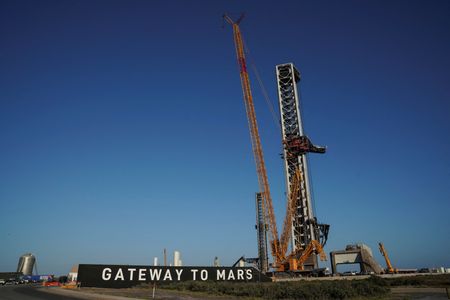
Company leadership is courting Wall Street this week through a three-day analyst presentation series, beginning with facility tours and briefings at the Starbase launch site in Boca Chica, Texas.
The filing also includes provisions that could restrict shareholder influence over board selections and legal challenges, pushing disputes into arbitration rather than traditional courts. Such governance structures are typical among tech companies led by their founders, though they reduce public investors’ ability to challenge management decisions.
For the first time, investors can examine SpaceX’s financial position following Musk’s acquisition of his social media and AI venture xAI earlier this year. The merged entity finished 2025 holding $24.8 billion in cash, with $92 billion in total assets offset by $50.8 billion in liabilities.
The company shifted to a $4.94 billion loss in 2025 on $18.67 billion in revenue, compared to an $791 million profit on $14.02 billion in sales the previous year. The 2023 figures showed a $4.63 billion loss on $10.4 billion in revenue.
SpaceX’s red ink stems largely from massive AI infrastructure investments, with capital spending jumping nearly five times over two years to reach $20.74 billion in 2025. More than half of that expenditure went toward artificial intelligence projects.
The profitable Starlink satellite internet division is helping fund this expansion, generating $4.42 billion in operating profits while representing less than 25% of total capital investments. AI segment spending alone surged from $5.6 billion to $12.7 billion year-over-year, driving overall capital expenditures above $20.7 billion.
However, this investment level remains well below tech giants like Meta, which spent $72 billion on capital expenditures in 2025 despite having a similar $1.7 trillion market value.
SpaceX has not yet responded to requests for comment regarding the IPO filing details.