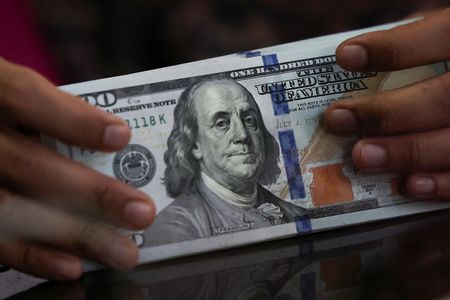

Currency markets showed signs of uncertainty Tuesday as the US dollar experienced downward pressure while investors closely monitor ongoing diplomatic discussions between the United States and Iran.
The current ceasefire is scheduled to end this week, leaving the future of peace negotiations in limbo as Tehran continues to deliberate its next steps in the diplomatic process after recent tensions escalated.
Despite the uncertainty, market participants believe both nations have strong incentives to reach an agreement. President Donald Trump indicated that negotiations are progressing “relatively quickly” and would produce superior terms compared to earlier deals.
Currency trading showed mixed results, with the euro positioned at $1.1782 and the British pound at $1.35225, both experiencing modest declines of approximately 0.1% during Tuesday’s session. The Australian dollar, known for its sensitivity to market risk, dropped 0.1% to $0.7171 in morning trading.
The dollar index, which tracks the greenback’s performance against major currencies including the yen and euro, remained stable at 98.087 following Monday’s 0.2% decrease.
“I think the talks between those two parties will be the key driver in the next 24 hours,” said Carol Kong, currency strategist at the Commonwealth Bank of Australia. “Markets are just in a wait-and-see mode.”
Kong noted that while Trump seems motivated to secure an Iranian agreement and conclude the conflict swiftly, success hinges entirely on negotiation outcomes.
“We still see two-sided risks to the U.S. dollar,” she added.
The Japanese yen maintained its position at 158.955 against the dollar, remaining close to the critical 160 threshold that market participants view as a potential trigger point for government intervention.
Sources with knowledge of Bank of Japan deliberations indicate the central bank will probably postpone interest rate increases at next week’s meeting, citing uncertainty about the Middle East situation’s impact on Japan’s economic and inflation projections.
New Zealand’s currency gained 0.3% to trade at $0.59085 after inflation data showed the annual rate held steady at 3.1% during the first quarter, exceeding the central bank’s target range and raising expectations for additional rate increases this year.
In domestic developments, Kevin Warsh, Trump’s Federal Reserve nominee, plans to assure senators during Tuesday’s confirmation hearing that he remains “committed to ensuring that the conduct of monetary policy remains strictly independent.”
Market watchers are also anticipating US retail sales figures for March, with economists forecasting a substantial 1.4% monthly increase.