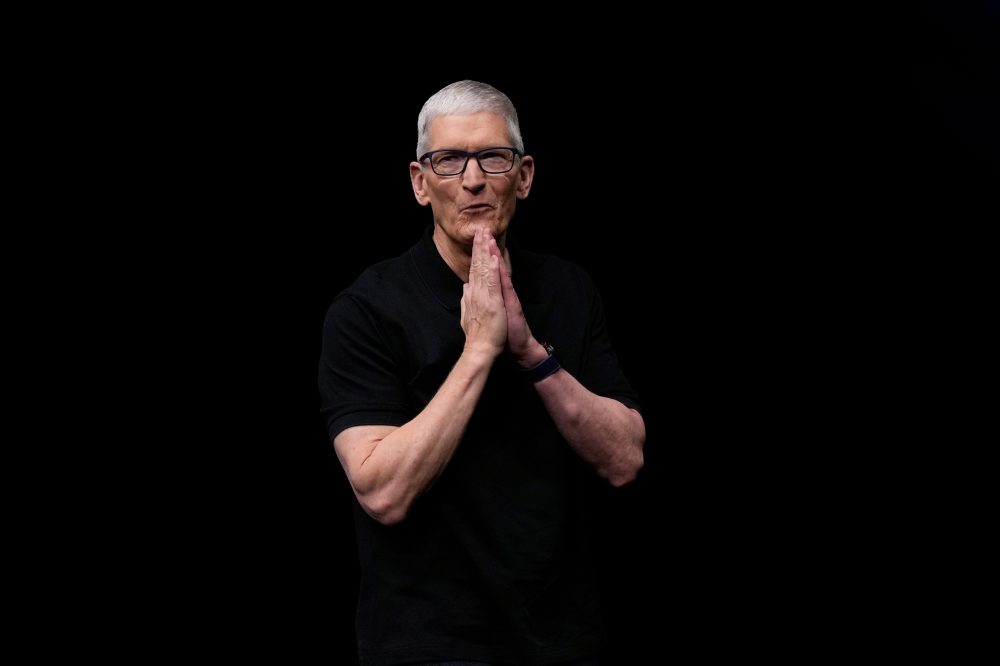

The tech giant Apple announced that Chief Executive Officer Tim Cook will be leaving his leadership position, concluding an almost 15-year tenure that witnessed the company’s market worth climb by over $3.6 trillion throughout a period of remarkable success driven by iPhone sales.
The 65-year-old Cook will transfer his executive responsibilities to John Ternus, Apple’s hardware engineering chief, effective September 1st, while continuing his association with the California-based tech company in the role of executive chairman. This leadership change mirrors similar moves by Amazon’s Jeff Bezos and Netflix’s Reed Hastings when they concluded their successful runs as chief executives.
“It has been the greatest privilege of my life to be the CEO of Apple and to have been trusted to lead such an extraordinary company,” Cook said in a statement. “I love Apple with all of my being, and I am so grateful to have had the opportunity to work with a team of such ingenious, innovative, creative, and deeply caring people.”
The 50-year-old Ternus brings 25 years of experience at Apple to his new position, having spent the last five years managing the engineering behind the iPhone, iPad and Mac product lines — experience that positioned him as a leading choice to replace Cook.
“I am profoundly grateful for this opportunity to carry Apple’s mission forward,” Ternus said in a statement.
This leadership change occurs during a crucial period for the technology company. The rise of artificial intelligence has created significant industry disruption not seen since the original iPhone launch in 2007. Apple has faced challenges in the AI space after difficulties delivering promised new AI-powered features that were announced almost two years ago.
Recently, Apple partnered with Google — a frontrunner in artificial intelligence development — to enhance the iPhone’s Siri virtual assistant, making it more conversational and capable.
Despite facing criticism that he didn’t possess the same visionary qualities as his predecessor, Cook successfully built upon the iPhone’s success and other innovations from the Steve Jobs era, elevating Apple to extraordinary levels of success far beyond what seemed possible when the company nearly faced bankruptcy in the 1990s.