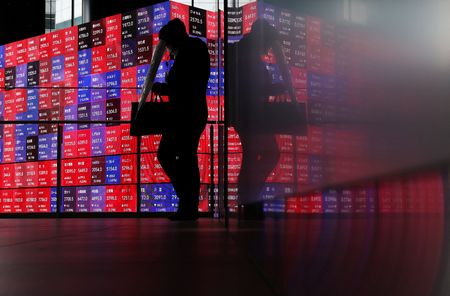

TOKYO – Asian financial markets showed signs of recovery during Tuesday morning trading sessions, buoyed by emerging reports suggesting Iran might participate in diplomatic discussions with the United States scheduled to take place in Pakistan. The optimism was further supported by renewed interest in artificial intelligence investments.
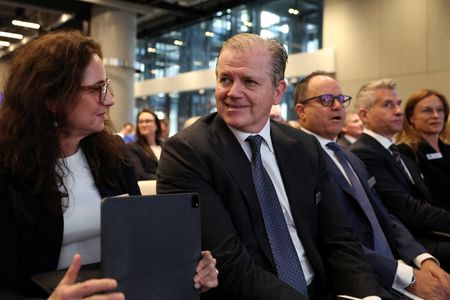
Market participants are also closely monitoring today’s Senate confirmation proceedings for Kevin Warsh, whom President Donald Trump has selected to head the Federal Reserve. Trump has been vocal in his criticism of the Fed for not implementing rate cuts earlier and with greater intensity.
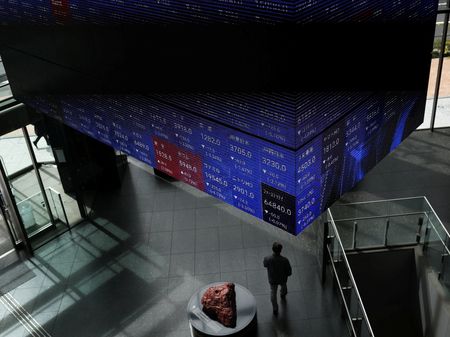
The MSCI Asia-Pacific stock index excluding Japan climbed 0.9%, while South Korea’s Kospi surged 2.1% to reach a new all-time high – the first such milestone since the conflict with Iran commenced. S&P 500 electronic futures showed a modest 0.1% increase, though Brent crude oil prices declined 0.4% to settle at $95.09 per barrel.
Japan’s Nikkei 225 advanced 1.2%, while Australian markets moved against the regional trend, dropping 0.3%.
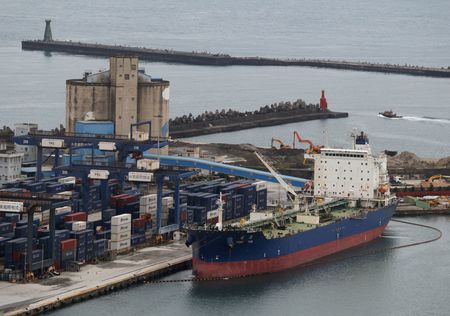
The fragile truce between Washington and Tehran has become increasingly strained following America’s announcement of seizing an Iranian cargo vessel, which prompted Tehran to threaten retaliatory measures. Iran initially declared it would boycott a second round of negotiations planned for the weekend, though a high-ranking official subsequently informed Reuters that the nation might still dispatch representatives to the anticipated Islamabad meetings.
Contributing to the diplomatic uncertainty, Vice President JD Vance stayed within U.S. borders on Monday, according to a separate Reuters source, contradicting earlier reports suggesting he was already traveling to Pakistan for the discussions.
The escalating tensions have driven oil prices higher overnight, as shipping activity through the strategically important Strait of Hormuz remains severely disrupted.
“While potential talks in Islamabad remain likely, rhetoric from Washington and Tehran continued to point to fragile and strained negotiations,” analysts from Westpac wrote in a research report.
During Monday’s U.S. trading session, the S&P 500 fell 0.2% amid concerns about the sustainability of the U.S.-Iran ceasefire, while the Nasdaq Composite ended its remarkable 13-session winning streak – the longest such run in over thirty years.
Warsh’s Senate panel appearance is set to commence at 10 a.m. Eastern Time on Tuesday, with senators expected to focus heavily on his ability to maintain independence from the Trump administration. According to his prepared testimony, Warsh plans to state he is “committed to ensuring that the conduct of monetary policy remains strictly independent.” Economic experts indicate his views on the central bank’s quantitative easing policies will also face scrutiny.
“In the past, Warsh was a vocal critic of the Fed’s ‘bloated’ balance sheet, as he called it, and argued that it creates a distortionary impact on asset prices,” explained Bansi Madhavani, senior economist at ANZ in London. “His preference for a smaller balance sheet is quite clear, but any guidance around what he thinks will be the optimal size, we think that will be relevant,” she noted during a podcast discussion.
The U.S. dollar index, which tracks the greenback’s performance against six major currencies, remained stable at 98.08, staying within its recent weekly trading range.
The euro was trading at $1.1782 while the British pound exchanged at $1.35225, both showing slight daily declines. The Australian dollar, sensitive to market risk sentiment, also weakened 0.1% to $0.7171 during early Asian trading.
The benchmark 10-year U.S. Treasury yield increased by 0.8 basis points to reach 4.256%.
Speculation about dollar devaluation remained subdued. Gold prices edged up 0.1% to $4,824.83 following a month of sideways movement. Digital currencies continued fluctuating within their established February trading ranges, with bitcoin declining 0.3% to $76,072.61 and ethereum falling 0.8% to $2,320.92.