The immigration case of Kilmar Abrego Garcia has become a lightning rod in discussions surrounding President Donald Trump’s border enforcement strategies since he first made headlines in March 2025 following his removal to El Salvador, which occurred despite a judicial order that should have stopped it.
Garcia’s complex legal battle has energized advocates on both sides of the immigration policy discussion. His situation involves two separate legal proceedings: a civil lawsuit in Maryland challenging the Department of Homeland Security’s efforts to send him to various African nations, and a criminal matter in Tennessee where federal prosecutors had accused him of human trafficking.
The Tennessee criminal case was recently thrown out by a judge who determined the Justice Department engaged in “vindictive prosecution.”
The following chronology outlines major developments in Garcia’s case:
Garcia departed El Salvador for the United States as a minor.
Law enforcement apprehended Garcia near a Maryland hardware store, alleging gang connections before transferring him to U.S. Immigration and Customs Enforcement custody.
An immigration judge in Maryland determined Garcia could not be sent back to El Salvador due to gang threats against his relatives. He received employment authorization and was placed under federal monitoring.
ICE officers detained Garcia in Baltimore as he drove home with his young son, age 5.
Garcia was wrongfully removed to El Salvador and imprisoned in a facility known for harsh conditions.
The nation’s highest court directed the Trump administration to facilitate Garcia’s return to the United States.
Upon his return, Garcia faced human trafficking charges stemming from a 2022 traffic incident in Tennessee.
Federal immigration officials announced intentions to send him to multiple African nations, but a Maryland federal judge issued a restraining order preventing this action.
Garcia was released from the Tennessee detention facility where he had been held since June to rejoin his family in Maryland while awaiting court proceedings. ICE immediately issued a notice of their plan to deport him to Uganda following his release.
Garcia appeared at a Baltimore immigration facility and was taken into federal custody.
A Maryland federal judge ordered Garcia’s immediate release from ICE detention.
The same Maryland federal judge prohibited ICE from detaining Garcia again.
A Tennessee federal judge dismissed all human trafficking charges against Garcia, citing evidence that prosecutors engaged in “vindictive prosecution.”
George Russell claimed the top starting spot for Saturday’s Canadian Grand Prix sprint race, leading a Mercedes front-row sweep with teammate Kimi Antonelli securing second place during Friday’s qualifying session in Montreal.
Lando Norris of McLaren, the current reigning champion, earned the third starting position at Circuit Gilles Villeneuve, while his teammate Oscar Piastri will begin the race from fourth place.
Ferrari drivers Lewis Hamilton and Charles Leclerc claimed the fifth and sixth starting positions for Saturday’s sprint competition.
The 19-year-old Antonelli, who has claimed victory in the previous three grand prix events, currently holds the championship lead with a 20-point advantage over Russell following four completed race weekends, making him the youngest driver ever to lead the Formula One standings.
WELLINGTON, May 23 – The New Zealand government announced a major defense investment of NZ$1.58 billion ($924.62 million) as part of its 2026 budget, with maritime security taking center stage, according to Defence Minister Chris Penk on Saturday.
The country’s naval combat operations currently rely on two Anzac-class frigates, HMNZS Te Kaha and HMNZS Te Mana, which entered service in 1997 and 1999 respectively. These vessels, along with most of the nation’s fleet, are projected to reach their operational limits by the mid-2030s. Last year, the government committed to doubling defense expenditures to approximately 2% of GDP over an eight-year period to strengthen the nation’s military capabilities.
The funding breakdown includes NZ$880 million for additional operational expenses and NZ$700 million in capital investment for defense initiatives and priority projects outlined in the Defence Capability Plan.
Under the Maritime Fleet Renewal initiative, resources will support the development of two distinct drone platforms: extended-range surveillance aircraft for intelligence gathering across the South-West Pacific region, and specialized polar-capable units designed to operate from Royal New Zealand Navy ships in Southern Ocean missions.
The budget allocation will also support essential repairs and upgrades to the Anzac-class frigates and HMNZS Canterbury, extending their service life until replacement vessels become operational.
Penk noted that combined defense investments have totaled NZ$5.8 billion since the Defence Capability Plan’s introduction just over twelve months ago.
The complete budget details are scheduled for public release on May 28.
Bolivian officials announced Friday that law enforcement and military personnel will establish humanitarian corridors Saturday in the La Paz region to allow essential goods to bypass protest blockades that have disrupted supply chains.
The demonstrations have escalated over recent weeks as various groups including labor unions, mining workers, transportation employees, and rural communities demand that President Rodrigo Paz reverse austerity policies and tackle increasing costs of living. Several groups have demanded the president step down, signaling growing opposition to the current administration.
Boston Red Sox shortstop Trevor Story faces an extended absence from the field following Thursday’s surgical procedure in Philadelphia to address a sports hernia.
The Red Sox announced the operation on Friday without providing a specific recovery timeline. However, the 33-year-old infielder shared with media members last Saturday that “the basic prognosis is six to 10 weeks, give or take.”
The injury first surfaced during spring training when Story experienced discomfort but continued playing despite the pain. Team officials initially classified the problem as a groin issue until additional medical examinations revealed it was actually a hernia.
Story’s performance this season has reflected his physical struggles, posting a .206 batting average alongside three home runs, 19 RBIs and 57 strikeouts across 41 games. His slugging percentage sits at just .303, significantly lower than his career average of .483.
When discussing his declining statistics on Saturday, Story acknowledged the injury’s impact while taking responsibility. “I hate to (make excuses). I’m not going to be blaming it all on that, but it plays a part, for sure. I think the main thing is getting it right, and I’m not so much worried about what has happened, and I’m more worried about problem-solving it and moving forward with the next steps, whatever that may be,” he said.
Throughout his 11-season career spanning 1,106 games with the Colorado Rockies (2016-21) and Red Sox, Story maintains a .262 batting average with 207 home runs and 655 RBIs. He earned National League All-Star recognition twice during his time with Colorado in 2018 and 2019.
Boston manager Chad Tracy announced Friday that second baseman Marcelo Mayer will transition to shortstop starting Sunday and continue at that position during Story’s recovery period. Nick Sogard took over shortstop duties for Friday’s matchup against the Minnesota Twins.
A U.S. missionary who contracted Ebola is receiving experimental medications designed to combat the virus at a German medical facility, according to American health authorities who spoke Friday.
The rare Bundibugyo variant of Ebola currently spreading in the Democratic Republic of Congo has no approved vaccines or established treatments. This outbreak has sickened nearly 750 individuals and claimed 177 lives.
Officials from the Centers for Disease Control and Prevention declined to reveal the specific medications being administered to the patient, who the Serge Christian mission organization has named as Dr. Peter Stafford, citing medical privacy regulations.
The World Health Organization declared this outbreak a global health emergency and indicated Friday that an experimental antiviral medication called obeldesivir from Gilead Sciences shows potential. WHO estimates vaccine development could require six to nine months.
Thomas Geisbert, an Ebola researcher at the University of Texas Medical Branch in Galveston who contributed to creating Merck’s Ervebo vaccine for Zaire Ebola, has collaborated with Gilead on obeldesivir development.
Geisbert’s team evaluated the Gilead medication against Ebola Zaire and Ebola Sudan strains, along with the related Marburg virus in primate studies, though they haven’t tested it against Bundibugyo.
The medication completely prevented Ebola Sudan infection in test animals and provided 80% to 100% protection against Marburg and Ebola Zaire variants, Geisbert reported to Reuters.
No evidence exists regarding the drug’s effectiveness in patients already showing Ebola symptoms, and it hasn’t been evaluated against the current outbreak’s strain, according to Geisbert.
However, obeldesivir underwent testing in hundreds of COVID patients during advanced clinical trials and demonstrated general safety.
“I think that that’s something that potentially has some utility here,” he said.
Geisbert explained these treatments could serve as temporary measures to control outbreaks while vaccines are being developed.
Gilead representative Ashleigh Koss confirmed the company maintains communication with international and regional health officials, stating that laboratory research suggests obeldesivir should work against this Ebola strain.
An alternative treatment involves an experimental antibody combination designated MBP134, developed by Geisbert alongside Dr. James Crowe from the Vanderbilt Vaccine Center and licensed to San Diego’s Mapp Biopharmaceutical.
Mapp, creator of the ZMAPP antibody treatment used during the 2014-2016 West African Ebola crisis, is partnering with the Biomedical Advanced Research and Development Authority to provide the treatment for high-risk cases, a U.S. official announced Wednesday.
This antibody mixture, derived from two antibodies found in an Ebola survivor’s blood, aims to combat various Ebola strains including Sudan, Zaire, and Bundibugyo variants.
Geisbert’s research team administered the cocktail to monkeys infected with Bundibugyo, waiting seven days until symptoms appeared before providing the antibody therapy.
“This is mimicking somebody that walks into a clinic,” he explained. “We were able to protect five or six of those from lethal disease, so that was pretty convincing,” he noted, expressing confidence in the product’s potential against Bundibugyo.
Mapp confirmed its collaboration with WHO and other agencies responding to the Congo outbreak. Company president Larry Zeitlin stated via email that he couldn’t reveal whether Americans in Europe are receiving this therapy.
Good evening, Delmarva! We’re wrapping up Friday with steady rain moving across the peninsula, and this wet pattern isn’t going anywhere just yet.
Tonight, expect light rain to continue with temperatures holding steady around 50 degrees. We’ve got an east wind picking up at 10 to 15 mph with gusts up to 25 mph, so you might hear some blustery conditions outside your window. The good news? Rainfall amounts will stay light – less than a tenth of an inch expected.
Saturday brings more of the same with rain continuing and temperatures climbing to a more comfortable 60 degrees. The wet weather persists into Saturday night with lows around 56.
Looking ahead to Sunday, things get more interesting as temperatures jump to 74 degrees, but we’re tracking the possibility of showers transitioning to thunderstorms. It’s shaping up to be a soggy but mild weekend across Delmarva.
Keep those umbrellas handy and drive safely on wet roads. We’ll keep you updated as conditions develop. Stay dry out there, Delmarva!
Drivers on southbound I-295 are facing lengthy delays this morning as heavy congestion creates a 10 to 15 minute backup between Landers Lane and the Churchmans Marsh area.
The traffic slowdown is impacting the southbound lanes of the interstate, with vehicles moving at reduced speeds through the affected stretch.
Motorists planning to travel through this corridor should allow extra time for their commute and consider alternate routes if possible.
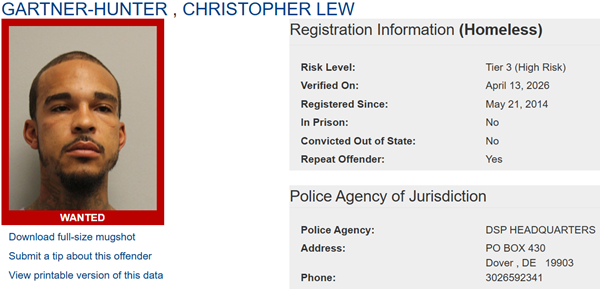
Delaware State Police’s Sex Offender Apprehension and Registration Unit (SOAR) has released public alerts regarding sex offenders who are wanted or currently without permanent housing.
Authorities are actively searching for several sex offenders who have failed to comply with registration requirements or update their current addresses. Among those being sought are Christopher Gartner-Hunter and Bruce Chandler.
Anyone with information about the location of these wanted individuals is urged to contact authorities at (302) 739-5882. Tips can also be submitted anonymously through Delaware Crime Stoppers at (800) 847-3333.
Police emphasize that the individuals highlighted in this alert represent just a fraction of those currently being sought. The complete list of wanted sex offenders can be found on the Delaware Sex Offender Registry website.
Additionally, SOAR has issued notifications about sex offenders who are currently homeless but are not wanted for registration violations. These individuals include Quentrae Carroll, Robert Cooper, Kevin Woods, and Moises Torres-Paddilla.
While these homeless individuals are not considered wanted, police ask the public to report any information if they believe these people are residing at a specific address. The same contact numbers apply for reporting this information.
Officials note that those listed as homeless represent only recently reported cases and make up a small portion of the total number of homeless sex offenders tracked by the registry. The full homeless sex offender list is available on the Delaware Sex Offender Registry website.
A federal judge has thrown out criminal charges against Kilmar Abrego Garcia, a Salvadoran man, citing concerns about prosecutorial misconduct.
U.S. District Judge Waverly Crenshaw determined that the Justice Department engaged in vindictive prosecution against Garcia, leading to the dismissal of the criminal case.
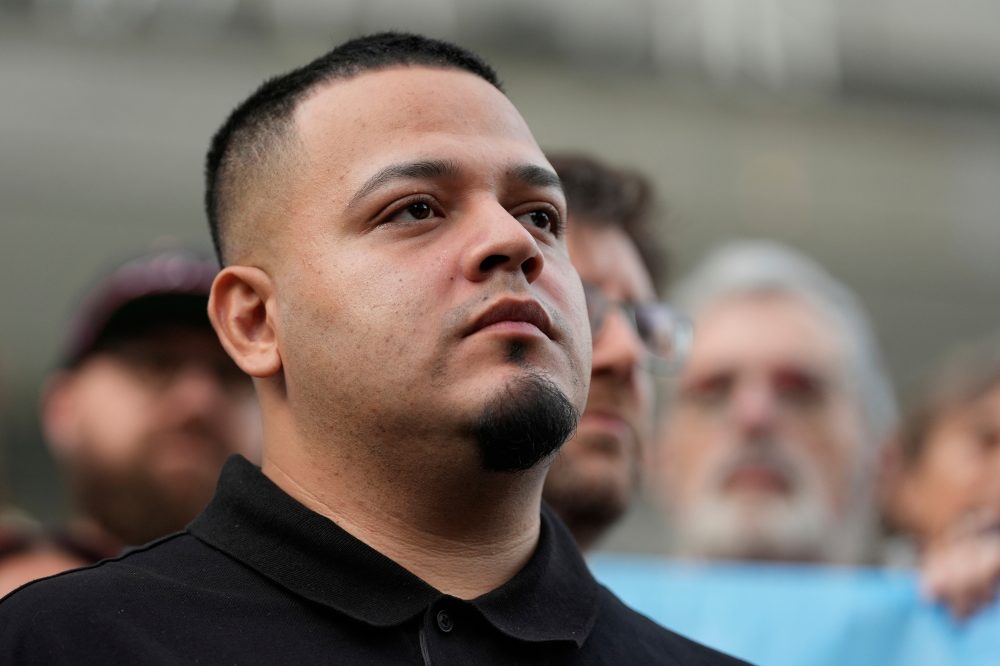
The ruling represents a significant legal victory for Garcia, who had previously attended a rally and prayer vigil before reporting to a U.S. Immigration and Customs Enforcement field office in Baltimore, Maryland in August 2025.
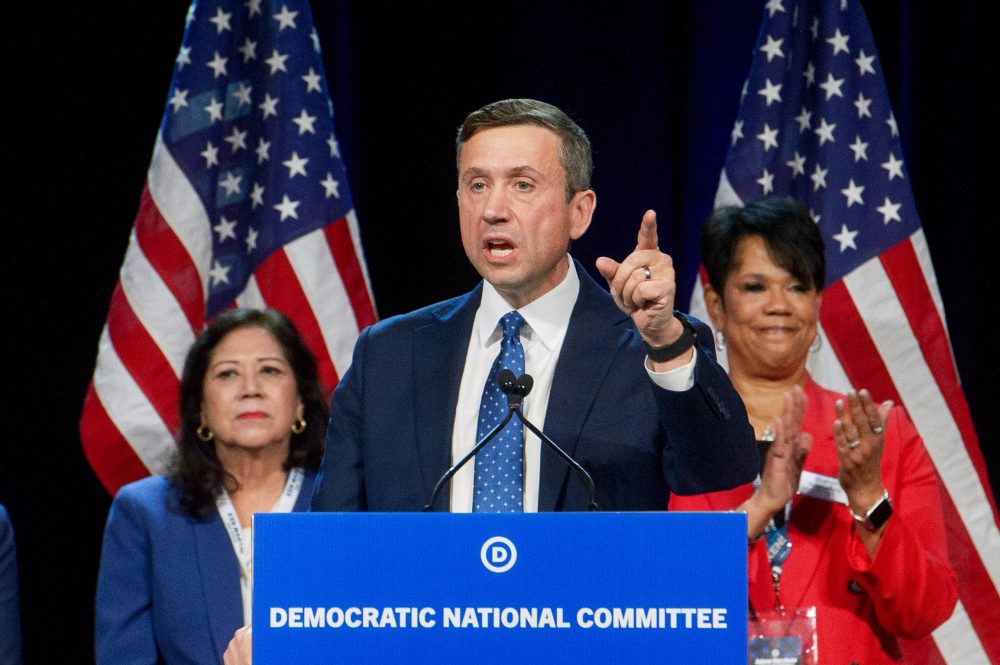
Democratic National Committee leadership is struggling to move forward following yesterday’s problematic release of their 2024 election analysis, while party chairman Ken Martin confronts growing demands for his resignation from fellow Democrats.
Martin, who leads the national committee, is receiving pressure from lawmakers and party operatives who believe he poorly handled a document meant to serve as a thorough review of the party’s shortcomings and potential blueprint moving forward. The chairman held the report back for several months, creating speculation about what it contained, before finally making it public this week while simultaneously declaring it too defective to provide value.
“There doesn’t seem to be a plan to turn things around and the clock is ticking. November is literally around the corner,” Rep. Marc Veasey, D-Texas, told Semafor. “I believe it’s time for him to move on.”
“He should resign,” Rep. Seth Moulton, D-Mass., said to Axios.
And in a radio interview, Rep. Mark Pocan, D-Wisc., said he agreed with a caller saying Martin should be replaced.
Despite the criticism, Martin retains backing from numerous state party officials who have received consistent financial support from the national organization since his appointment. During a Thursday discussion with committee staff members, Martin expressed regret for his management of the analysis and stated his commitment to remaining in his leadership role.
“This was a major mistake. I own it, and now it’s time for us to move forward at the DNC, and I hope that you’ll move forward with me,” Martin said, according to a person with knowledge of the call who was not authorized to disclose a private conversation.
Martin, who was relatively unknown as a Minnesota political operative before ascending to lead the national party’s official political apparatus last year, has previously drawn criticism for poor fundraising performance and his inability to build confidence among the party’s diverse membership.
However, there was no sign that a serious alternative was emerging. The Associated Press contacted a half dozen Democratic presidential prospects to gauge their support for Martin and all of them declined to weigh in.
The internal party conflict creates a significant distraction for Democrats who appear to be gaining political traction in their effort to challenge President Donald Trump’s control over Washington. The party aims to recapture control of both the U.S. House and U.S. Senate during November’s midterm contests, with Republicans potentially at risk due to Trump’s poor approval numbers, public dissatisfaction regarding the conflict in Iran, and ongoing economic concerns.
Martin’s supporters nationwide criticized Democrats who are contributing to the election-year turmoil, characterizing them as disgruntled consultants and backers of Martin’s former competitors for committee leadership.
Kansas Democratic Party Chair Jeanna RePass described calls for the first-term chair to step down as “ridiculous and dangerous.”
“It is dangerous for Democrats to be playing politics with our leadership when these elections are five and a half months away,” she said. “The American people are counting on us.”
Janet Kleeb of Nebraska, who leads her state party and the DNC’s association of state committees, said the fighting “is nuts.”
“I haven’t had a single chair come to me saying I think Ken needs to resign,” she said. “Ken was elected by the DNC members to do a four-year term, and he has not violated any of our rules or bylaws where there would be a two-thirds vote, right? Because that’s what it would take to remove the chair.”
Kleeb added, “These reports are such distraction.”
The much-anticipated post-election analysis concluded that Kamala Harris “wrote off rural America” during the 2024 presidential campaign and failed to attack Trump with sufficient “negative firepower,” among other key findings.
Martin distributed the 192-page document only after experiencing significant internal pressure from party operatives. He had initially promised to make the analysis public before assuming committee leadership last year, but chose to withhold it due to concerns it would disrupt Democrats’ concentration on the November midterm elections.
“I didn’t want to create a distraction,” Martin wrote on Substack. “Ironically, in doing so, I ended up creating an even bigger distraction. And for that, I sincerely apologize.”
While the analysis criticizes Democrats’ emphasis on “identity politics,” it avoids addressing some of the most contentious aspects of the 2024 campaign. The document fails to examine former President Joe Biden’s decision to seek reelection, the hurried process of selecting Harris as his replacement after he withdrew, or the party’s bitter disagreement over the war in Gaza.
A former Columbia University graduate student and pro-Palestinian activist plans to petition the U.S. Supreme Court following a federal appeals court decision that brings the government closer to removing him from the country, according to his legal representatives.
The 3rd U.S. Circuit Court of Appeals in Philadelphia rejected a request for a full court review by a narrow 6-5 margin on Friday. Earlier this year in January, a three-judge panel from the same circuit determined that a New Jersey federal judge lacked authority when he sided with Mahmoud Khalil and ordered his release from immigration custody last year.
Legal representatives from the American Civil Liberties Union, who are part of Khalil’s defense team, announced they will seek an emergency order from the 3rd Circuit to halt enforcement of the ruling and prevent Khalil’s detention or removal while pursuing Supreme Court review.
The high court petition is anticipated within the coming months, potentially by late summer.
“Today’s decision is not the final word, and we still strongly believe in our arguments going forward,” stated ACLU senior counsel Brett Max Kaufman.
The January appeals court ruling determined that Khalil’s legal challenge to his detention and subsequent federal court decisions were filed too early, as federal law mandates such disputes must first proceed through the immigration court system under the Justice Department rather than the judicial branch.
The ruling did not address the central constitutional question in Khalil’s situation: whether the Trump administration’s attempt to remove him based on his campus activism and criticism of Israel violates constitutional protections.
Judge Cheryl Ann Krause, who supported the court’s review of the decision, criticized the majority in her dissent, writing that the court was “abdicating our duty to meaningfully review Khalil’s constitutional claims.” She argued the Judicial Branch cannot serve as a proper check on other government branches “if we write ourselves out of relevance and leave the Executive Branch to check itself.”
The 31-year-old Khalil has simultaneously appealed to the 5th U.S. Circuit Court of Appeals in Louisiana, where he was held in custody, challenging the Board of Immigration Appeals’ decision to uphold his removal order.
Khalil’s legal team contends the immigration judge failed to properly evaluate relevant evidence and incorrectly upheld allegations that he provided false information on his permanent resident application. His attorneys maintain this charge was filed as retaliation for his protest activities.
The immigration court suggested Khalil could be sent to Algeria, where he holds citizenship through a distant family connection, or Syria, his birthplace in a refugee camp to Palestinian parents. His legal team warns he would face life-threatening dangers if returned to either location.
As a prominent voice in Columbia’s pro-Palestinian movement, Khalil was taken into custody in March 2025 and subsequently held for three months at a Louisiana immigration facility, causing him to miss his child’s birth.
Government officials have alleged Khalil led activities “aligned to Hamas,” though they have not provided supporting evidence and have not filed criminal charges. They also claim he omitted required information from his green card application.
Khalil has rejected these accusations as “baseless and ridiculous,” describing his arrest and detention as a “direct consequence of exercising my right to free speech as I advocated for a free Palestine and an end to the genocide in Gaza.”
The government based the arrest on a rarely invoked law permitting removal of non-citizens whose beliefs are considered threatening to U.S. foreign policy objectives. In June 2025, Judge Michael Farbiarz determined this justification would likely be found unconstitutional and ordered Khalil’s release.
The Trump administration challenged that decision, maintaining that deportation matters should be decided by immigration judges rather than federal courts. The 3rd Circuit sided with the administration in a 2-1 ruling.
Judge Emil Bove, who previously investigated student protesters as a senior Justice Department official, did not take part in the 3rd Circuit’s vote on whether to review the case. He subsequently denied a motion from Khalil’s lawyers requesting his recusal, declaring the request moot.
Federal tax authorities are contemplating whether to mandate that taxpayers reveal their citizenship status on upcoming tax documents, three sources with knowledge of the discussions told Reuters on Friday.
Officials at the Internal Revenue Service are reviewing two different versions of the standard Form 1040 that individuals use to report income and request tax benefits, according to the sources who requested anonymity due to concerns about workplace consequences.
One version features routine modifications reflecting updated tax regulations. The alternative includes these same changes plus an additional checkbox stating: “Check this box if you are a non-U.S. citizen or have dual citizenship.”
Treasury Department spokespeople, who oversee the IRS, refused to provide comment on Friday regarding the potential changes.
All immigrants, including those without legal documentation, must file annual tax returns using identical IRS paperwork as citizens. Filing taxes has historically served as an important pathway for undocumented individuals seeking to achieve legal immigration status.
Throughout 2025, the Treasury Department and Department of Homeland Security worked to establish data-sharing agreements, providing confidential taxpayer information to immigration authorities supporting the administration’s removal operations.
A federal court judge issued an order in November preventing the IRS from releasing such information, though the federal government has challenged this decision on appeal. In February, the IRS acknowledged to the court that it had mistakenly provided DHS with confidential data belonging to over 42,000 taxpayers.
WASHINGTON, May 22 – Two senior House Democrats sent a letter Friday demanding Secretary of State Marco Rubio provide answers about whether his top aide assisted in fast-tracking a visa that enabled a fugitive former Polish Cabinet official to escape to America from Hungary, dodging Poland’s extradition efforts.
“These events and decisions constitute a massive abuse of power and disregard for the legal immigration processes of the United States,” Representatives Gregory Meeks and James Raskin stated in their letter to Rubio, which Reuters obtained.
Both lawmakers hold ranking Democratic positions on the House foreign relations and judiciary panels.
The visa approval amounts to “an unprecedented level of interference in the domestic politics and judicial systems of two longstanding U.S. treaty allies,” the representatives stated, referencing Poland and Hungary, which are both NATO partners.
The Democrats’ correspondence referenced a Monday Reuters investigation revealing that Deputy Secretary of State Christopher Landau instructed high-ranking State Department personnel to process and fast-track a U.S. visa for former Polish Justice Minister Zbigniew Ziobro.
Polish authorities seek Ziobro on 26 criminal counts primarily connected to his purported mishandling of funds from a crime victims program. Ziobro maintains his innocence, claiming he faces a politically driven prosecution by Poland’s current pro-European Union governing alliance.
Neither the State Department nor White House provided immediate responses to comment requests.
Polish Prime Minister Donald Tusk’s administration states it plans to prosecute Ziobro and that legal officials have drafted an extradition petition to the United States.
Ziobro escaped to Hungary in January and obtained refuge under former Prime Minister Viktor Orban. Warsaw anticipated that Orban’s electoral loss to pro-EU challenger Peter Magyar in April would result in Ziobro’s return to Poland. Magyar had pledged to extradite him immediately upon taking office.
However, Landau instructed senior personnel within the State Department’s Consular Affairs Bureau in Washington to direct the U.S. embassy in Budapest to provide Ziobro with a visa, according to three sources, with one indicating it was a journalist visa.
Ziobro obtained his visa before Magyar’s May 9 inauguration and, per Polish prosecutors, journeyed to Italy before reaching the U.S. using a refugee document since his Polish passport had been canceled.
In their correspondence, Meeks and Raskin highlighted that Ziobro could face up to 25 years imprisonment if found guilty on his charges, which include accusations he utilized crime victims compensation money to purchase surveillance software for targeting political opponents.
The legislators warned that approving Ziobro’s visa risked “invite a significant diplomatic crisis” with Poland. They insisted the Trump administration honor any extradition demands from Warsaw.
They requested Rubio provide written responses to questions regarding the matter and conduct an in-person briefing for their committees by June 21.
Their inquiries included whether U.S. President Donald Trump or his staff participated in authorizing Ziobro’s visa and the legal basis for its approval.
The duo also requested all documentation and correspondence involving Landau, the Bureau of Consular Affairs, the U.S. embassies in Warsaw and Budapest, and any materials concerning potential involvement by Tom Rose, the U.S. ambassador to Poland.
Lantheus Holdings is considering a possible sale following a takeover proposal from Curium Pharma that puts the company’s value at approximately $7 billion, according to a Bloomberg News report published Friday citing sources with knowledge of the situation.
According to the report, both companies have been engaged in talks regarding a possible transaction that could be finalized within weeks, though sources noted that no definitive agreement has been reached and negotiations may not lead to a completed deal.
The report indicated that Curium received a valuation of roughly $7 billion in the previous year when CapVest Partners, the company’s owner, secured funding for a continuation vehicle for the nuclear medicine business.
Neither Lantheus nor Curium provided immediate responses to requests for comment from Reuters.
The radiopharmaceutical company’s stock declined almost 2% during after-hours trading. The shares have climbed 54.8% year-to-date, bringing the company’s market value to approximately $6.15 billion.
MONTREAL, May 22 – Red Bull’s team leader Laurent Mekies maintained his position that Max Verstappen’s race engineer Gianpiero Lambiase will move to McLaren as team principal, even as current principal Andrea Stella insisted he would remain in his role.
Mekies initially made this claim during the Miami Grand Prix earlier this month, prompting McLaren Chief Executive Zak Brown to respond that the Frenchman apparently “knows something I don’t.”
“Look, it’s certainly my understanding that GP (Lambiase) is going to McLaren to become a team principal,” Mekies stated during an FIA news conference at the Canadian Grand Prix on Friday, with Stella present when questioned about the matter again.
“That’s what I told you at the time (in Miami).”
“Obviously we had a number of conversations before he was going to make that decision. Now, don’t ask me if it’s going to happen. The timing of it is none of my business. I can just tell you the content of our conversations.”
McLaren revealed Lambiase’s transfer in April, setting his arrival for no later than 2028 when his current contract expires.
The team also stated he would take on the position of Chief Racing Officer, working in a support capacity alongside Stella.
Stella, leading a team that has captured two straight constructors’ championships and Lando Norris’s drivers’ title last season, has faced media rumors linking him to Ferrari, while speculation surrounds their Australian driver Oscar Piastri potentially moving to Red Bull.
Questions have also emerged about whether four-time world champion Verstappen might follow Lambiase to McLaren, though Mekies expressed no concern about this possibility.
Stella dismissed the various rumors on Friday, with the Italian affirming his complete dedication to McLaren, noting Piastri’s contentment and suggesting the ‘Silly Season’ had begun early.
“For us, it’s important to employ the best talents in Formula One because Zak and I want to build the strongest team,” he continued.
“I have been part of the Ferrari team in the early 2000s, and I know what level of seniority, expertise, leadership you need to be successful in the present and in the future.
“And employing GP is part of this vision … of creating additive leadership that can integrate with the present leadership and create a stronger and stronger team at McLaren.
“I very strongly wanted GP to join McLaren. I am personally very stretched in my role as team principal, and I need a strong group of leaders working with me. So, I think the plan is very clear. Any other speculation leads us back to the silly season.”
The New York Mets promoted right-handed pitcher Jonah Tong from Triple-A Syracuse on Friday, while simultaneously releasing veteran closer Craig Kimbrel to make room on the roster.
Tong, who is 22 years old, holds the distinction of being the organization’s second-ranked prospect according to MLB Pipeline. The team brought him up just before beginning a three-game series against the Miami Marlins.
Selected by the Mets in the seventh round of the 2022 MLB Draft, Tong made his major league debut during the previous season, where he compiled a 2-3 record with a 7.71 ERA across five starting assignments.
The organization may deploy the Canadian pitcher in a bulk relief role on Friday following Tobias Myers’ start in the opening game.
This season, Tong has been among the minor league leaders in strikeouts, entering Friday tied for sixth place with 55 strikeouts. Last season, he led all minor leaguers with 179 strikeouts. Through nine starts with Syracuse this year, he holds a 1-3 record and 5.68 ERA.
Meanwhile, Kimbrel, who will celebrate his 38th birthday on Thursday, struggled in his time with the Mets after signing a minor-league contract in January, posting a 6.00 ERA across 14 appearances.
The veteran reliever sits fifth on the all-time saves list with 440 career saves. During his peak years with the Atlanta Braves, he topped the National League in saves for four consecutive seasons beginning with his Rookie of the Year season in 2011.
Kimbrel achieved 39 saves with the San Diego Padres in 2015 and notched more than 30 saves in three consecutive campaigns with the Boston Red Sox from 2016-18, before his effectiveness began to wane.
Over the last seven seasons, he has played for seven different major league organizations. During the previous season, Kimbrel appeared in 42 minor league contests across the Braves, Texas Rangers and Houston Astros systems, while making only 14 major league appearances – 13 with Houston and one with Atlanta.
Throughout his career, Kimbrel has compiled a 56-50 record with a 2.65 ERA over 865 relief appearances.
A culture of volunteerism and community support continues to thrive in a Missouri town fifteen years after a devastating tornado brought widespread destruction to the area.
The powerful storm caused extensive damage throughout Joplin, Mo., destroying large portions of the community. In the disaster’s wake, close to 100,000 volunteers arrived to assist with reconstruction efforts.
That remarkable outpouring of support has left a lasting impact on the community, with the volunteer spirit that emerged during the recovery period continuing to shape how residents approach community service today.
Two separate Memorial Day observances have been organized by Delaware’s veterans organizations for this year’s commemoration.
The Delaware Department of Veterans Affairs (DDVA) working alongside the Delaware Commission of Veterans Affairs (DCVA) will present ceremonies on different dates to honor fallen service members.
The initial observance is scheduled for Saturday, May 23, 2026, beginning at 10 a.m. The Delaware Veterans Memorial Ceremony will serve as the venue for this event, located in Bear, Delaware.
Details regarding the second planned ceremony have not yet been released by the organizing veterans groups.
WASHINGTON — A group of President Donald Trump’s opponents filed a federal lawsuit Friday seeking to halt distributions from a newly established $1.776 billion Anti-Weaponization Fund designed to compensate Trump supporters who claim they were targeted by government persecution.
The legal challenge intensifies growing opposition to the Trump administration’s establishment of the settlement fund, which emerged from the Republican president’s legal dispute with the Internal Revenue Service concerning the disclosure of his tax documents.
Lawyers representing the challengers from Democracy Forward, a legal advocacy organization, are requesting judicial intervention to stop the fund’s operation and block the Trump administration from making any payments through the program.
The group bringing the lawsuit includes a dismissed prosecutor and a college professor who was cleared of charges related to allegedly attacking federal agents during a demonstration.
Additionally, two law enforcement officers who participated in defending the U.S. Capitol during the January 6, 2021 assault filed their own legal action this week aimed at preventing Capitol riot participants from accessing settlement payments.
When questioned during Tuesday’s congressional testimony, Acting Attorney General Todd Blanche declined to exclude the possibility that individuals who attacked police officers on January 6 might qualify for compensation from the settlement fund.
Federal immigration officials have no active agreements or connections with surveillance software company Paragon Solutions, according to the Department of Homeland Security.
The agency clarified that Immigration and Customs Enforcement maintains no existing contracts or business relationships with the spyware manufacturer.
Despite this denial, ongoing concerns remain about whether ICE utilizes commercial surveillance technology in its operations.
WASHINGTON (AP) — The current White House approach toward Cuba mirrors the tactics used against Venezuela: petroleum sanctions, increased American naval presence, criminal indictments and ongoing intervention warnings.
However, analysts caution that identical pressure strategies don’t guarantee identical outcomes, despite President Donald Trump frequently stating that “Cuba is next.”
“President Trump viewed the Venezuelan intervention as a fantastic success,” said Brian Finucane, a senior adviser with the International Crisis Group and a former State Department lawyer. “And he’s sought to replicate the Venezuela model elsewhere, including in Iran. But obviously, Cuba, like Iran, is a very different country than Venezuela.”
Should Washington succeed in removing Cuba’s current government, no clear replacement exists who would collaborate with the Trump administration, Finucane noted. This contrasts sharply with Venezuela, where American forces apprehended leader Nicolás Maduro in January, allowing his deputy, Delcy Rodríguez, to assume control with Washington’s backing.
Cuban officials, speaking anonymously due to lack of authorization for public statements, assert “there is no Delcy in Cuba.”
Current American military deployment in Caribbean waters remains significantly smaller and less intimidating compared to the extensive naval buildup preceding Maduro’s removal, Finucane observed. Additionally, prosecuting 94-year-old former Cuban leader Raúl Castro carries less weight than charging Venezuela’s active president with narcotics crimes to justify his detention.
The following outlines key parallels and contrasts between Washington’s pressure strategies targeting Venezuela and Cuba:
Following his established pattern, Trump established groundwork for American involvement in Venezuela — and potentially Cuba — through escalating warnings months ahead of any military intervention.
The president has cautioned Caribbean nation leaders to comply or confront American military power. Prior to the bold operation that removed Maduro from office, Trump appeared alongside senior national security officials in Florida, delivering what became his final public warning to the authoritarian ruler.
“If he wants to do something, if he plays tough, it’ll be the last time he’ll ever be able to play tough,” Trump declared in December. Following Maduro’s transport to America for prosecution, Trump redirected attention toward regional targets, particularly Cuba.
“Cuba is ready to fall. Cuba looks like it’s ready to fall. I don’t know if they’re going to hold out,” he informed reporters on Jan. 5.
Trump proceeded to threaten trade penalties against nations selling or providing petroleum to Cuba, suggesting America might have “the honor of taking Cuba” after military actions in Venezuela and Iran.
Thursday brought renewed warnings, with Trump labeling Cuba “a failed country.”
“Other presidents have looked at this for 50, 60 years, doing something,” Trump stated. “And, it looks like I’ll be the one that does it.”
American petroleum sanctions targeting Cuba and Venezuela aim for identical outcomes: applying severe pressure on governing authorities through completely opposite approaches.
Regarding Venezuela, the administration focused on blocking the nation’s oil sales to deprive Maduro’s regime of income. Post-Maduro, efforts shifted toward preventing Venezuela from shipping oil to specific nations — especially Cuba, which provided no monetary compensation — while demanding compliance with American terms for such exports.
Most Venezuelan crude now flows through American refineries.
Cuba faces restrictions on oil imports, though Washington has permitted limited shipments to reach the island nation, which recently announced depleted reserves. These petroleum sanctions, expanding the decades-old American trade embargo, have severely hampered the government’s ability to supply electricity and fuel to citizens.
Such measures risk going too far, Finucane warned, potentially driving many Cubans to attempt the 90-mile journey to Florida in improvised vessels, similar to 1990s exodus patterns.
“President Trump especially cares about immigration. And if they push too hard on Cuba and destabilize the island, there’s the possibility of some kind of a refugee crisis,” he explained.
Federal prosecutors charged Maduro with narco-terrorism conspiracy and additional counts during Trump’s initial presidency in 2020.
These charges justified Maduro’s capture, leading to his current detention in New York where he awaits trial after entering not guilty pleas. This action transformed Venezuela’s relationship with America, permitting previously banned Venezuelan oil sales to American companies and international markets — a dramatic reversal after years of blocked government and petroleum sector dealings.
The indictment targeting Castro for the 1996 destruction of civilian aircraft operated by Miami-based exiles represents another escalation step in the administration’s pressure strategy, according to William LeoGrande, an American University professor specializing in Latin American politics.
However, he noted that apprehending Castro on murder and aircraft destruction charges wouldn’t alter Cuban government operations.
Castro “still has influence and the leadership seeks his opinion on major decisions, but he is not running the government on a day-to-day basis,” LeoGrande explained.
Months before Maduro’s capture, Washington deployed naval vessels near Venezuelan waters in what became the largest Latin American military buildup in decades.
The USS Gerald R. Ford aircraft carrier, America’s most sophisticated warship, was redirected from European operations to participate. Three amphibious assault vessels transported Marine expeditionary forces along with helicopters and Osprey aircraft.
American forces spent months targeting suspected drug-smuggling vessels in Caribbean and eastern Pacific waters — operations that continue — while fighter aircraft conducted flights over the Gulf of Venezuela.
Maduro’s actual capture involved over 150 aircraft deployed throughout the Western Hemisphere.
Current Caribbean Sea military presence remains smaller, including two amphibious assault ships carrying Marines. Officials highlighted the USS Nimitz aircraft carrier’s arrival with accompanying vessels coinciding with this week’s Castro charges announcement.
However, the Nimitz is conducting final regional maritime exercises before decommissioning.
“They’re very different situations, and it’s very difficult to see similar outcomes,” Finucane concluded. “A snatch-and-grab raid against Raúl Castro or someone who’s actually in a leadership position doesn’t seem like it’s going to have the same outcome in Cuba as in Venezuela.”
WASHINGTON — Lawmakers from both political parties are confronting the Department of Defense over stalled distribution of $600 million in military assistance for Ukraine and eastern European partners, sending correspondence to Defense Secretary Pete Hegseth on Friday demanding immediate release of the funds.
Tensions have escalated between Capitol Hill and the current administration in recent weeks as members of Congress seek answers about the status of $400 million designated for Ukraine and an additional $200 million earmarked for defense initiatives in Estonia, Latvia and Lithuania. Congress approved this funding during the previous year. Even members of the president’s own party have expressed dissatisfaction as President Donald Trump’s administration distances itself from Ukraine and European partnerships.
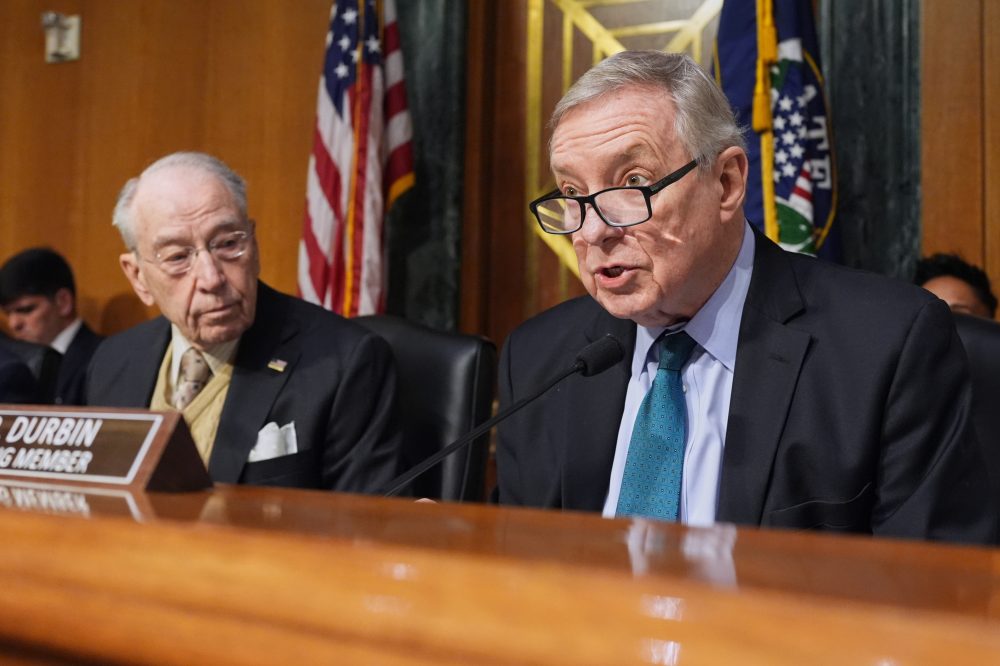
“Ukraine has persistently and bravely repelled a four-year Russian onslaught, but its military needs and deserves continued American support,” said Democratic Sen. Dick Durbin and Republican Sen. Chuck Grassley in the joint letter.
Republican Sens. Kevin Cramer and Thom Tillis and Democratic Sens. Michael Bennet and Catherine Cortez Masto also signed onto the letter.
More than three weeks ago during congressional testimony, Hegseth informed legislators that the Ukraine assistance had been “released” and promised a distribution plan would be forwarded to lawmakers shortly. However, the senators indicate the Pentagon has not delivered on its commitment to provide that plan by the May 15 deadline.
“Any further delays — particularly as the Department reportedly plans troubling U.S. troops withdrawals from the region — risks our ability to adequately deter Russia,” the senators said.
This correspondence represents another indication of Senate Republican dissatisfaction with the current administration following a week where the president backed a primary opponent against Texas Sen. John Cornyn, creating widespread anger.
Through social media exchanges with the president on Friday, Tillis criticized Trump’s advisors for policies he claims are damaging the party politically, including, “Firing our very best generals and not holding Putin accountable for his systematic kidnapping, rape, torture, and murder of Ukrainian civilians.”
Multiple party members have also questioned Hegseth’s decision to dismiss Army Chief of Staff Gen. Randy George last month. George had advocated for restructuring Army combat tactics to include drone technology and had collaborated with Ukrainian forces to gain battlefield insights.
In the House, a proposal backed by opposition party members to implement comprehensive Russian sanctions and provide $1 billion in military support to Ukraine has gained traction. Although this aid package faces slim chances of becoming law, it’s contributing to renewed congressional momentum for backing Ukraine’s defense efforts.
The $400 million in security assistance for Ukraine represents a modest amount compared to the multi-billion dollar packages that Congress initially authorized in the months and years following Russia’s invasion, but for lawmakers, this provision has become symbolic of their ongoing commitment.
A traffic incident has resulted in lane restrictions on a major roadway, according to transportation officials.
The right lane of southbound Route 1 at Exit 95 is currently blocked following a vehicle collision. The closure is affecting traffic flow in the area as emergency responders and cleanup crews work at the scene.
Drivers traveling through this corridor should anticipate potential delays and may want to consider alternative routes until the roadway is fully reopened.
New Castle County police are working to piece together the details of a crash between a vehicle and pedestrian that occurred Thursday in the 3900 block of Old Capital Trail.
The collision has prompted authorities with the New Castle County Division of Police to shut down traffic along Old Capital Trail from Gray Avenue to Highland Avenue while the investigation continues.
Drivers planning to travel through the area are being urged to find alternative routes and stay away from the closure zone until further notice.
The condition of the pedestrian and additional details about the circumstances of the crash have not yet been released by police.
CONCORD, N.C. — Emergency dispatch recordings obtained Friday by The Associated Press reveal NASCAR star Kyle Busch suffered breathing problems, felt overheated, and was coughing up blood on the day prior to his passing.
The 41-year-old racing champion died Thursday. While no official cause of death has been announced, his family previously disclosed he had been receiving hospital treatment for a “severe illness” just three days ahead of his planned participation in the Coca-Cola 600 at Charlotte Motor Speedway.
Sources with knowledge of the incident, speaking anonymously due to the sensitive nature of undisclosed details, told the AP that Busch collapsed while working in a Chevrolet racing simulator facility in Concord on Wednesday and was rushed to a Charlotte-area hospital.
The emergency call, made that Wednesday afternoon from the General Motors training center, captured an unidentified person calmly reporting to dispatchers: “I’ve got an individual that’s (got) shortness of breath, very hot, thinks he’s going to pass out, and is producing a little bit of blood, coughing up some blood.”
Audio released by the Cabarrus County Sheriff’s Office shows the caller described finding Busch on a restroom floor within the facility, noting “He is awake.” The caller provided location details for emergency crews and requested they arrive without sirens.
NASCAR CEO Steve O’Donnell has scheduled a press conference for later Friday at Charlotte Motor Speedway.
Busch’s sudden passing has devastated the racing community during one of motorsports’ most significant weekends, coinciding with the Indianapolis 500.
Thursday evening’s NHL conference final between the Carolina Hurricanes and Montreal Canadiens began with a moment of silence honoring the driver.
Vice President JD Vance posted on social media: “I had the opportunity to meet Kyle, one of NASCAR’s greatest racers, on the campaign trail in 2024. Usha and I are praying for him and his family. Eternal rest grant unto him, O Lord.”
Richard Childress Racing, Busch’s team for the past four seasons, announced they will retire his No. 8 Cup Series car and switch to No. 33 starting with Sunday’s Coca-Cola 600 race.
The team stated the No. 8 will remain available exclusively for Busch’s son, Brexton, when he begins his NASCAR career.
At 11 years old, Brexton Busch has already gained recognition for his racing abilities.
“Kyle Busch was instrumental in the design of RCR’s stylized No. 8 and it has become synonymous with Kyle and an important symbol for fans and the NASCAR community,” RCR posted on X. “No one can carry it forward to the level that he did.”
Overcast conditions and unusually cool temperatures created a somber atmosphere at the track Friday, complementing the memorial tribute to Busch displayed on the venue’s video screen.
Driver Christopher Bell plans to compete in Friday night’s NASCAR Trucks Series event, a race Busch was originally scheduled to enter.
Busch claimed victory in last week’s Trucks competition at Dover — his final career triumph — bringing his total wins across NASCAR’s three national divisions to 234, more than any other driver in history.
His most recent Cup Series performance was a 17th-place finish in Sunday’s All-Star race.
“It’s going to be very strange to be out there without Kyle in the field,” Bell said. “It’s going to take a long time before things feel back to normal.”
Bell described Busch’s death as creating a “gutwrenching feeling.”
He recalled speaking with Busch before the recent Trucks Series race, saying he appeared “normal, like completely normal.”
Just Monday, Busch shared a birthday celebration post for his son Brexton on Instagram, writing “Your mom & I are so proud who you’re turning out to be!”
The father and son had spent Tuesday evening in Durham, North Carolina, attending the launch of a go-kart facility with the Andretti family.
“I guess it is a very stark reminder of how fragile life can be,” Bell reflected.
A massive $7.25 billion settlement agreement intended to resolve thousands of cancer-related claims against the manufacturer of Roundup weed killer may face significant delays due to ongoing legal challenges.
Legal counsel opposing the settlement submitted documents on Friday seeking to transfer the proceedings from Missouri state court to federal jurisdiction, potentially disrupting the June 4 deadline for individuals to withdraw from the settlement agreement. This jurisdictional dispute over which court should oversee the proposed resolution may interfere with established timelines and postpone any final decision on approval.
This legal maneuvering occurs while the U.S. Supreme Court considers a separate case that might prevent thousands of state court lawsuits against Bayer, the agrochemical company that obtained Roundup through its 2018 purchase of Missouri-headquartered Monsanto. Bayer argues that state-level claims alleging inadequate cancer risk warnings should be prohibited since the company complied with federal labeling requirements that don’t mandate such warnings.
The German-based corporation also challenges claims that glyphosate, Roundup’s primary active component, causes non-Hodgkin lymphoma.
The Environmental Protection Agency has concluded that the substance is unlikely to cause cancer in humans when used according to instructions. However, plaintiffs reference a 2015 determination by the World Health Organization’s International Agency for Research on Cancer, which designated the chemical as “probably carcinogenic.”
The Supreme Court case represents John Durnell, who claims he developed non-Hodgkin lymphoma following more than two decades of applying Roundup in a St. Louis community garden. While Durnell isn’t included in the proposed class-action settlement, his lawyer, Ashley Keller, submitted objections withdrawing several other clients from the settlement before also filing documentation to transfer the settlement case to federal jurisdiction.
“This is a huge settlement that is extinguishing the rights of tens of thousands of cancer victims,” Keller stated on Friday. “It was rushed in to state court.”
The federal court transfer attempt will likely encounter resistance.
Christopher Seeger, the attorney designated as a potential claimants’ representative in the settlement, criticized the court transfer as “a baseless delay tactic that should be promptly denied.”
Bayer issued a statement calling the move one that “has no merit,” and indicated it would work to maintain the proceedings in state court.
The proposed nationwide settlement was submitted in February to St. Louis Circuit Court in Missouri. The agreement aims to resolve most current Roundup litigation, plus any future cases filed by individuals exposed to Roundup in coming years. However, Bayer maintains the option to withdraw from the settlement if too many claimants choose to opt out.
A settlement hearing is set for July 9 in state court. The Supreme Court is anticipated to render its decision in Durnell’s case before the end of June.
Under the proposed settlement terms, Bayer would contribute annual payments to a designated fund for up to 21 years, reaching a maximum of $7.25 billion. Individual compensation amounts would differ based on Roundup usage patterns, age at diagnosis, and the severity of their non-Hodgkin lymphoma condition.
Agricultural, industrial, or turf workers with extensive Roundup exposure would receive approximately $165,000 if diagnosed with an aggressive form of the disease before age 60, based on the proposed settlement structure. However, those diagnosed at 78 years or older would receive approximately $10,000.
NASHVILLE, Tenn. — A federal court has dismissed human smuggling charges against Kilmar Abrego Garcia on Friday, after his wrongful deportation became a flashpoint in immigration policy debates during President Donald Trump’s administration.
Garcia’s removal to El Salvador last year created significant problems for Trump administration officials when courts ordered his return to the United States. Garcia argued that both when the criminal charges were filed and inflammatory public comments made by senior Trump officials proved the case against him was retaliatory.
From Nashville, U.S. District Judge Waverly Crenshaw approved Garcia’s request to dismiss the case due to “selective or vindictive prosecution.”
The decision represented a significant criticism of a Justice Department that faced repeated allegations under President Donald Trump of pursuing defendants for political reasons. The Trump administration highlighted the charges against Garcia during a news conference last year where then-Attorney General Pam Bondi stated, “This is what American justice looks like.”
“Kilmar Abrego Garcia is a victim of a politicized, vindictive White House and its lawyers at what used to be an independent Justice Department,” Garcia’s defense team said following Friday’s decision. “We are so pleased that he is a free man.”
The Justice Department promised to challenge the ruling, describing the judge’s decision as “wrong and dangerous.”
Crenshaw noted that without Garcia’s “successful lawsuit challenging his removal to El Salvador, the government would not have brought this prosecution,” while rejecting government claims of “new evidence” against him.
While Crenshaw didn’t conclude the government demonstrated “actual vindictiveness,” a difficult standard typically requiring evidence such as prosecutors admitting charges were filed for revenge, the judge determined sufficient evidence existed for “presumptive vindictiveness.” This included when the indictment was filed, public statements by then-U.S. Deputy Attorney General Todd Blanche, and continued oversight by other senior Justice Department officials that thoroughly compromised the case against Garcia.
Crenshaw found the government’s explanations unconvincing.
Garcia faced charges of human smuggling and conspiracy to commit human smuggling, with federal prosecutors alleging he received payment to transport individuals who were illegally present in the United States.
The accusations originated from a 2022 Tennessee traffic stop for speeding. Body camera video from a Tennessee Highway Patrol officer captured a peaceful interaction with Garcia. Nine passengers were in the vehicle, and officers privately discussed potential smuggling concerns. Ultimately, Garcia was permitted to leave with just a warning.
In Friday’s decision, Crenshaw emphasized that when the charges were filed was key to presuming vindictiveness. Homeland Security knew about the traffic incident for two years and had concluded the case against Garcia when they deported him. After the U.S. Supreme Court determined he should return to the U.S., they revived the case. Though the government needed to counter the vindictiveness presumption, prosecutors failed to call the person who reopened the case to testify about their reasoning, providing only “secondhand testimony” instead.
Garcia’s deportation violated a 2019 immigration court ruling that protected him from removal to his native country, after the judge determined he faced threats there from a gang targeting his family. Garcia is a Salvadoran national with an American spouse and child who resided in Maryland for years despite entering the U.S. illegally as a minor. The 2019 ruling permitted him to live and work in the U.S. under Immigration and Customs Enforcement monitoring, though he didn’t receive permanent residency.
Current Trump administration officials have stated Garcia cannot stay in the U.S. They have pledged to remove him to a third nation, most recently Liberia.
WASHINGTON, May 22 – Two federal banking agencies have given their approval to emergency shutdown blueprints submitted by America’s biggest financial institutions, outlining procedures for safely dissolving operations during bankruptcy proceedings.
The Federal Reserve and Federal Deposit Insurance Corporation found no deficiencies in these emergency plans, known as “living wills,” from the country’s 8 biggest banks and 56 foreign banking organizations. On Friday, the regulatory agencies also revealed that previously identified problems in submissions from Bank of America, Goldman Sachs, JPMorgan Chase and Citigroup have been properly resolved. These four institutions had received criticism from regulators in 2024 for failing to demonstrate adequate methods for safely dismantling their derivatives portfolios during potential bankruptcy scenarios.
A recently obtained 911 emergency call reveals that NASCAR champion Kyle Busch was suffering from severe breathing problems and coughing up blood just 24 hours before his passing, according to USA Today reports released Friday.
The racing legend, who claimed two NASCAR Cup Series championships and is regarded as among the sport’s greatest competitors, passed away Thursday at the age of 41.
His death was confirmed by the Busch family, Richard Childress Racing and NASCAR officials, coming just hours after they had announced his hospitalization earlier in the week and his absence from Sunday’s upcoming Coca-Cola 600 race at Charlotte Motor Speedway.
The emergency call originated Wednesday from a General Motors facility located in Concord, N.C.
During the 911 call, an unidentified male caller described finding Busch collapsed on a bathroom floor in severe distress. The caller specifically requested that emergency vehicles arrive without sirens activated.
“I’ve got an individual that’s (experiencing) shortness of breath, very hot and thinks he’s going to pass out and he’s producing a little bit of blood, coughing up some blood,” the caller told the dispatcher.
Medical personnel transported Busch to a Charlotte-area hospital following the emergency response.
Officials have not yet disclosed the cause of death.
Busch leaves behind his wife Samantha, along with his 11-year-old son Brexton and 4-year-old daughter Lennix. He was the younger sibling of NASCAR Hall of Famer Kurt Busch, 47.
Throughout his career, Busch accumulated an impressive 234 victories spanning NASCAR’s three premier series: 63 Cup Series wins, 102 O’Reilly Auto Parts Series victories, and 69 Craftsman Truck Series triumphs. His most recent victory came at Dover in the trucks division on Friday, just six days prior to his death.
The Las Vegas-born driver captured NASCAR Cup Series titles in both 2015 and 2019. While the Daytona 500 victory eluded him throughout his career, he earned his first pole position for the race this season before completing the event in 15th place.
His most notable victories included the 2008 Southern 500, back-to-back Brickyard 400 wins in 2015 and 2016, and the 2019 Coca-Cola 600.
Two top-level Walmart officials are stepping down in what represents significant organizational changes happening under CEO John Furner, according to reports from May 22.
Tom Ward, who serves as COO of the warehouse chain Sam’s Club, will be retiring from his position by month’s end. Meanwhile, Cedric Clark, who oversees store operations for the retailer’s U.S. business, is also exiting, though his departure has not received an official announcement.
The Wall Street Journal broke this story on Friday.
These executive departures come one day after the retail giant restated its cautious yearly sales and earnings projections.
The company had previously disclosed multiple leadership transitions earlier this year when CEO John Furner assumed control in February, taking over from Doug McMillon.
A federal judge has thrown out criminal charges against Kilmar Abrego, a Salvadoran migrant whose case became a focal point of immigration enforcement efforts during the previous administration.
The judge ruled on Friday that the charges would not have been brought if Abrego had not fought against his removal from the country, effectively dismissing the indictment.
Abrego had entered the country without authorization and later became a high-profile case when he was deported to a large detention facility in El Salvador this past March. His removal occurred despite an existing court directive that prohibited sending him back due to potential persecution risks.
Following a Supreme Court directive requiring the government to bring him back to American soil, Abrego was returned to the United States in June. However, his return came only after federal prosecutors had obtained criminal charges against him for alleged human smuggling activities.
Abrego entered a plea of not guilty to the charges and maintained through his legal team that the prosecution was launched as payback for his lawsuit demanding his return to the United States.
State transportation officials have issued an emergency road closure in New Castle County after infrastructure damage forced the immediate shutdown of a local roadway.
The Delaware Department of Transportation reports that Lorewood Road has been closed between Ratledge Road and Tami Trail following a significant structural failure.
Transportation crews responded to the scene on Thursday, May 21, 2026, after two large corrugated metal drainage culverts partially gave way beneath Lorewood Road where it crosses over Joy Run.
Department personnel were sent to the location right away to block off the affected area and evaluate the extent of the structural damage to the roadway infrastructure.
Drivers on Route 1 southbound are experiencing traffic backups this morning between US 9 and Camelot Drive.
The Delaware Department of Transportation reports that congestion in the area is causing delays of approximately 5 to 10 minutes for motorists traveling through this stretch of roadway.
Commuters are advised to allow extra travel time or consider alternate routes if possible while crews work to clear the congestion.
Weather officials have issued a high surf advisory for coastal areas, effective from Wednesday afternoon through Friday morning.
The National Weather Service office in Mount Holly, New Jersey issued the advisory on May 22 at 3:54 PM EDT, with conditions expected to persist until May 24 at 8:00 AM EDT.
Residents and visitors in affected coastal areas should exercise caution near the water during this period.
Maritime safety advocates successfully extracted 10 derelict boats from Virginia waters during a coordinated three-day cleanup operation that ran from April 14-16. The BoatUS Foundation partnered with Lynnhaven River and TowBoatUS crews from Gwynns Island and Portsmouth to tackle the removal project in Gloucester and Portsmouth areas.
The cleanup represents part of a larger initiative targeting up to 100 abandoned vessels throughout the region. Lynnhaven River NOW spearheaded the collaborative effort, bringing together nonprofit organizations, government agencies, and private sector partners to combat the mounting environmental and safety concerns created by derelict boats. The project receives backing from a 2023 grant awarded by the National Oceanic and Atmospheric Administration Marine Debris Program.
“Abandoned boats don’t just disappear. They become a burden on communities, the environment and local economies,” said Alanna Keating, Director of Outreach at BoatUS Foundation. “By connecting trusted partners, we are addressing the issue of ADVs and making real progress toward cleaner, safer Virginia waterways.”
The extraction of derelict vessels delivers immediate advantages for waterway health and surrounding communities. When left to deteriorate, these boats can discharge fuel into the water, create dangerous obstacles for navigation, and cause lasting harm to marine habitats and coastal areas. Successful removal operations improve safety conditions for boaters, protect natural environments, and prevent long-term ecological damage.
Two TowBoatUS operators handled the challenging removal work: Chris Parker from Gwynns Island and Donald Duck from Portsmouth. Both contractors donated considerable time and equipment while navigating the complexities of extracting vessels in various states of decay.
“Every removal is different, and often more complex than people realize,” Parker said. “Some vessels can be refloated and towed, while others need to be taken apart piece by piece. It takes time and coordination, but the impact on the community and the bay is significant once removed.”
“These boats pose real risks to navigation and safety,” Duck said. “We see how they can break free, damage property, or require emergency response. Prevention through proper insurance and responsible disposal can make a big difference.”
The BoatUS Foundation operates a comprehensive abandoned vessel program that includes the Turning the Tide Summit and maintains a national tracking database for derelict boats across the country.
Several local officials attended the cleanup activities, including Gloucester County Administrator Greg Gentry, Virginia Department of Environmental Quality Coastal Zone Manager Jeff Flood, and Portsmouth Mayor Shannon Glover.
Boaters who spot abandoned or deteriorating vessels in waterways are urged to file reports with appropriate authorities.
American tennis star Emma Navarro dominated her compatriot Ann Li with a commanding 6-1, 6-3 victory on Friday, securing her spot in the championship match of the Internationaux de Strasbourg tournament in France, where she’ll face top-seeded Victoria Mboko.
The American player demonstrated exceptional defensive skills by saving seven out of eight break point opportunities while capitalizing on five of her eight break point chances, wrapping up the WTA 500 clay-court semifinal match in just 77 minutes. Navarro is now pursuing her third professional title and her first victory since capturing the Merida Open championship in Mexico this past March 2025.
Mboko required nearly three hours to secure her finals berth, defeating Romania’s Jaqueline Cristian in a grueling 7-6 (3), 3-6, 6-2 battle that lasted two hours and 52 minutes. The 19-year-old Canadian player mounted an impressive comeback after trailing 4-1 and 5-2 in the first set. She’s also chasing her third professional title and first victory since winning the Hong Kong Open last November.
Grand Prix SAR La Princesse Lalla Meryem
In Morocco’s capital city of Rabat, sixth-seeded Croatian player Petra Marcinko will square off against unseeded Ukrainian competitor Anhelina Kalinina in Saturday’s final of this tournament.
Marcinko advanced by defeating Switzerland’s Jil Teichmann with scores of 7-6 (2), 6-3 in their semifinal clash at this WTA 250 clay-court event. The Croatian player dominated her service game, winning 83.3% of first-serve points (30 out of 36), delivering four aces and successfully converting five of ten break point opportunities during the match that lasted one hour and 45 minutes.
Kalinina will be pursuing her first-ever WTA Tour championship after recording an impressive 6-0, 6-3 triumph in just 60 minutes against Hungary’s seventh-seeded Panna Udvardy. The Ukrainian player never allowed her opponent a single break point opportunity while successfully converting five of her eight break point chances.
A new survey from pollster Datafolha reveals Brazilian President Luiz Inacio Lula da Silva has opened up a lead over opposition Senator Flavio Bolsonaro in this year’s presidential race, with the incumbent benefiting from recent news stories connecting his right-wing opponent to a discredited banking figure.
According to the poll released Friday, the leftist president would capture 47% of the vote compared to 43% for Flavio in a hypothetical second-round matchup. This marks a shift from a survey conducted May 16 that showed the two candidates in a dead heat.
The polling was conducted in Sao Paulo and released on May 22.
A Chinese technology company has initiated fresh legal proceedings against a Dutch semiconductor firm, seeking massive financial compensation in a dispute that could reignite international tensions over chip manufacturing control.
Wingtech Technology, along with a subsidiary, has taken legal action against Nexperia B.V. and five additional entities, claiming that restrictions on its authority over the Dutch chipmaker continue to impact operations. The company is provisionally requesting 8 billion yuan, equivalent to approximately $1.18 billion, to cover economic damages.
The legal filing was accepted by a court in China’s southern Guangdong province, according to documents submitted to the Shanghai Stock Exchange on Friday.
Nexperia responded to the lawsuit announcement, stating: “Nexperia has taken note of Wingtech’s announcement and understands that the relevant court has not opened the case for trial.”
The Dutch company expressed disappointment with the legal approach, adding: “We regret that Wingtech appears not to be interested at all in reaching a solution that would be beneficial to all stakeholders, including Wingtech’s shareholders, and continue to urge Wingtech to engage in an open dialogue.”
This renewed legal battle traces back to events that unfolded last September, when Dutch authorities assumed control of the Netherlands-based semiconductor company. Officials cited concerns that the firm was relocating operations and transferring intellectual property to China. The Dutch government subsequently reversed this decision.
The ongoing dispute has significantly impacted Wingtech’s financial performance. The company reported that its net losses expanded to 8.7 billion yuan in 2025, compared to a 2.8-billion-yuan loss the previous year, with the Nexperia control conflict contributing to the deteriorating results.
Earlier this year in January, Wingtech pursued international arbitration proceedings, seeking damages that could reach as high as $8 billion.
The current legal action references China’s anti-foreign sanctions law, which Beijing has been implementing with increased strictness. Wingtech Technology and Yucheng Holdings claim they are legally entitled to seek compensation under this framework.
In Friday’s court filing, Wingtech argued: “The defendants’ unlawful implementation of, or assistance in implementing, the discriminatory restrictive measures of the Dutch side has caused the plaintiffs irreparable and enormous losses.”
This latest lawsuit represents a potential escalation in a conflict that had remained relatively dormant since late last year. At that time, China agreed to reduce export restrictions on Nexperia semiconductor products in exchange for the Netherlands postponing its plans to seize operational control of Nexperia from Wingtech.
ISTANBUL — Internal turmoil within Turkey’s primary opposition political organization intensified Friday following a court decision that has created competing claims to party leadership.
A judicial panel in Ankara ruled Thursday to invalidate the Republican Peoples’ Party’s November 2023 leadership convention, where Ozgur Ozel won election to succeed former party head Kemal Kilicdaroglu.
The court’s action has temporarily removed Ozel and current executive committee members from their positions. Kilicdaroglu and officials who served prior to the November 2023 gathering will assume control on an interim basis.
Party officials contend the judicial ruling stems from political interference.
Previously, a trial court had dismissed challenges regarding voting irregularities and improper conduct during Ozel’s selection, but Thursday’s appellate decision reversed that earlier judgment.
Government representatives supported the legal challenge against the Republican Peoples’ Party, stating that party members themselves raised the corruption allegations. The most prominent complainant was former Antakya Mayor Lutfu Savas, who faced party expulsion for disciplinary violations in December 2024 before filing his lawsuit two months afterward to invalidate the leadership convention.
The party quickly challenged Thursday’s decision, but the court denied their request Friday. An evening appeal to the Supreme Election Council also failed, though the Supreme Court agreed to hear Ozel’s petition.
Friday saw Kilicdaroglu dismiss three party attorneys who had submitted the appeals. News outlets reported he began contacting previous associates to form his leadership team and updated his social media profile from “7th chairman of the CHP” to “chairman of the CHP.”
The 77-year-old Kilicdaroglu stepped down after 13 years leading the organization during which it never secured national electoral victory. In contrast, Ozel achieved significant success against Erdogan’s ruling Justice and Development Party in his first major test during 2024’s municipal contests.
Thursday’s decision represents another significant challenge for the struggling party as it confronts numerous legal proceedings targeting its members and elected representatives.
The country’s next presidential contest is scheduled for 2028, though Erdogan retains authority to schedule an earlier vote. His primary political rival, Istanbul Mayor Ekrem Imamoglu from the Republican Peoples’ Party, has been incarcerated since March and faces corruption trial proceedings.
Justice Minister Akin Gurlek, who previously handled multiple cases against the party as Istanbul’s top prosecutor, characterized the court’s action as strengthening “our citizens’ trust in democracy.”
Political analysts widely view the legal actions against the Republican Peoples’ Party — primarily involving corruption accusations — as politically driven efforts to weaken the organization before upcoming elections. Government officials maintain that Turkish courts operate independently without political influence.
Erdogan has governed Turkey since 2003, serving first as prime minister then president. His electoral dominance faced challenges in 2019 when the opposition captured control of several major urban areas. Imamoglu’s victory in Istanbul established him as an appealing leader whom many believed capable of defeating Erdogan.
BOGOTA, Colombia — More than 500 Colombian military personnel flooded into the southwestern municipality of Silvia on Friday after deadly fighting erupted between two Indigenous communities over disputed land, killing at least seven people and injuring more than 100 others.
Military officials announced on social media that over 500 troops, supported by air units, would be sent to the region to secure the communities and stop further violence from breaking out.
Defense Minister Pedro Sánchez told reporters Friday that preliminary casualty figures show at least seven fatalities and more than 110 wounded — the majority suffering gunshot wounds. “This figure could rise,” he warned.
The violent confrontation occurred in a rural section of the Cauca department, where the Misak and Nasa Indigenous communities are fighting over the same piece of land that both groups say belongs to them.
According to a statement from Colombia’s government-run National Land Agency, officials have been working since April when conflicts first began to help resolve the dispute through mediation meetings and technical committees aimed at “providing clarity regarding the territorial boundaries of the two groups.” The agency called on both communities to continue participating in negotiations.
On Thursday, the Office of the United Nations High Commissioner for Human Rights in Colombia released a statement calling for peace between the communities and demanding that government officials investigate and bring charges against those who caused the deaths and injuries.
Criminal armed organizations operate throughout the area, including breakaway groups from the former Revolutionary Armed Forces of Colombia, FARC, that refused to accept the historic 2016 peace deal with the government.
Farmers across the nation saw a modest increase in what they earned for peanuts during the week that concluded on May 16, according to new agricultural data.
Growers received an average of 23.7 cents per pound for all farmer stock peanuts, representing an uptick of 0.8 cent from the previous reporting period.
The pricing information reflects what agricultural producers earned for their peanut crops during that specific weekly timeframe.
Dairy production showed strong growth last month across the country’s leading milk-producing regions, according to new federal data.
The 24 major milk-producing states generated a combined 19.2 billion pounds of milk in April, marking a 2.8 percent increase compared to April of the previous year.
The uptick in production reflects continued strength in the nation’s dairy industry during the spring season when output typically begins to rise.
The number of cattle being fattened in feedlots nationwide has grown by 2 percent, according to new federal agricultural data.
The increase reflects current livestock market conditions as ranchers and agricultural operations continue preparing cattle for eventual processing and sale to consumers.
Federal agriculture officials regularly track these numbers as part of ongoing monitoring of the nation’s livestock industry and food supply chain.
The poultry industry has recorded a notable increase in ready-to-cook weight, showing a 6 percent rise from the previous year’s numbers.
According to recently released data, this uptick indicates growth in poultry processing operations across the country.
The weight measurement represents birds that have been processed and prepared for consumer purchase, providing insight into industry production levels and market trends.
Refrigerated warehouse facilities across the country reported mixed trends in natural cheese inventory levels as of the end of April 2026, according to new data.
The total volume of natural cheese held in cold storage facilities showed a 1 percent increase compared to March levels, indicating a modest monthly gain in stockpiled dairy products.
However, when measured against the same timeframe in the previous year, the cheese inventory figures revealed a 1 percent decrease from April 30, 2025 totals.
The data reflects the ongoing fluctuations in dairy product storage levels that warehouse operators and industry stakeholders monitor to track market conditions and supply chain dynamics.
A pet food manufacturer has issued an expanded voluntary recall of dog food products due to potential contamination with Listeria monocytogenes.
Raaw Energy announced it is alerting consumers about recalled items manufactured during a period spanning from July 17, 2025 through December 23, 2025. The company is also recalling its Beef and Turkey Medley product with a batch date of March 31, 2026.
According to the company’s notice, not every product manufactured during the specified timeframe has tested positive for the harmful bacteria. However, the recall is being implemented as a precautionary measure.
The recall notice appears to be incomplete in the original FDA safety alert, cutting off mid-sentence while explaining the reasoning behind the expanded recall action.
With summer arriving, Maryland state parks are showcasing significant improvements designed to enhance visitor experiences across the state’s public lands network.
Over the past year, teams of park rangers, construction crews, historians, and planning experts with the Maryland Department of Natural Resources have worked to launch a new state park, construct additional trails, rehabilitate historic buildings, and create improved harbor facilities for public use.
The Maryland Park Service is currently operating two recreational challenges with prizes for participants – Miles for Maryland, which encourages visitors to complete 250 miles of hiking in state parks during 2026, and America in Miniature, featuring a photography treasure hunt throughout state parks to commemorate America’s semi-quincentennial celebration. Officials recommend purchasing an Annual State Park and Trail Passport for those interested in participating in these year-long outdoor activities.
Reservation System Grows
Following the effective implementation of a day-use booking and visitor management system at the state’s most popular parks in 2025, the Maryland Park Service will broaden day-use reservations during the current summer season.
Advance booking is required at Swallow Falls State Park daily from May 23 through Sept. 7.
Weekend and holiday reservations are mandatory at these locations: Greenbrier, Point Lookout, North Point, Newtowne Neck State Parks and Sandy Point. Bookings become available seven days ahead of time.
Additional public lands and attractions scheduled for inclusion in the reservation system are: Elk Neck – Turkey Point Lighthouse, Gunpowder Falls – Hammerman Area, Rocks, and Rocky Gap state parks, plus Fair Hill Natural Resources Management Area (NRMA).
Visitors should watch for further announcements throughout the year. To secure your reservation, visit the online booking system. Officials encourage advance planning and recommend using the Park Dashboard to verify if your chosen park is operational, closed, or has any special conditions or events.
New Park Chronicles African-American Family’s Journey from Enslavement
This May, DNR and the Maryland Park Service held the opening ceremony for Freedman’s State Park, a 1,000-acre facility in Montgomery County. The park sits on land previously owned and cultivated by Enoch George and Harriet Howard, along with their descendants, who played important roles in Maryland’s Civil Rights Movement.
The park takes its name from “freedman,” referring to someone who gained freedom from enslavement. The Maryland General Assembly established Freedman’s State Park in 2022 to honor all Marylanders who were liberated from slavery.
Renovated structures and new exhibits planned for the location will chronicle the African-American family’s journey from enslavement to becoming a successful and influential presence in northern Montgomery County, Baltimore, and Canada. Plans include a trail system connecting different areas of the park.
Earlier this year, the Maryland Park Service received a two-acre land donation that includes a historic African-American burial ground, where enslaved skilled laborers from the historic Catoctin Furnace were laid to rest. The cemetery and adjacent property now belongs to Cunningham Falls State Park.
Catoctin Furnace began operations in 1776, supplying iron for the revolutionary war effort and George Washington’s military forces. The furnace ruins already exist within Cunningham Falls State Park, and adding the workers’ burial ground will allow Maryland Park Service to present the location’s full historical narrative.
The Maryland Park Service recognizes the contributions of the Catoctin Furnace Historical Society, which helped discover, document, and maintain the cemetery’s history while managing the property.
The related nonprofit Catoctin Furnace Friends Group Inc. is actively raising money on behalf of DNR and the Historical Society to create a conservation and preservation management strategy and perform a ground-penetrating radar study for a planned trail connection to the location.
North Point Trolley Station Pavilion Restoration
The Historic Trolley Station Pavilion at North Point State Park has reopened following major renovations. Deteriorated concrete flooring was replaced with new decorative concrete designed to resemble winding trolley tracks approaching the station.
The structure received a new roof and updated electrical systems, with fresh shingles and lighting fixtures that reflect the former amusement park’s early 20th century era. The walkway linking the station, a historic fountain and the visitor center was also rebuilt, with over 2,000 feet of new pavement installed.
Flexible Recreation Options
Those seeking hiking or biking trails with adaptable difficulty levels can explore new Western Maryland paths that opened recently, featuring connected routes that allow users to switch between easier and more challenging sections.
The Margraff Plantation Trails launched last July within Savage River State Forest, offering six miles of newly-built trail systems.
Located in the Western Maryland mountains near Accident in Garrett County, the Margraff features a 1.4-mile beginner route, a 1.4-mile intermediate path, a 1.2-mile advanced trail and a 2-mile intermediate-level adaptive trail.
The trail network traverses varied terrain including pine forests, deciduous woodlands, mountain laurel groves and open meadows. At 2,800 feet elevation, the location provides spectacular mountain vistas.
Further east at Dans Mountain State Park, a small connector trail has expanded options for hikers on the Lonacona Loop. The 4.5-mile Lonacona Loop travels through hardwood and conifer stands, and with 650 feet of elevation change, the complete circuit presents a significant challenge. A new quarter-mile connecting path through the middle now allows hikers to take a shorter route without retracing their steps.
Also in Allegany County, trail users seeking variety can experience the Bear Ridge Area of Rocky Gap State Park – four miles of pathway featuring two connecting loops. The red-marked trail is less demanding, the blue-marked trail is more challenging, and both are wide enough for adaptive mountain bike users, with consistent grade changes.
Boating Improvements
Rocky Gap visitors will notice an enhanced campground boat launch on Lake Habeeb. When operational, users will benefit from numerous ADA improvements including a vault restroom, boat trailer parking spaces, additional standard parking, beach access using MobiMat, a beach wheelchair, and an ADA compliant kayak launch. The facility is currently closed due to low water conditions from drought.
DNR has also finished major improvements to Rogues Harbor boat launch at Elk Neck State Park. A protective breakwater now shields users from wind and boat wakes, creating safer conditions for launching and retrieving watercraft. The breakwater will minimize seasonal maintenance requirements by protecting the ramp and pier from ice damage and floating debris.
The pier remains available for fishing and crabbing activities, continuing to serve as a popular venue for bass fishing tournaments with capacity for up to 50 boats.
Assateague Facility Upgrades
At the Atlantic coastline, Assateague State Park has completed extensive renovations to its beachside amenities, featuring completely new fixtures, updated restrooms, fresh changing areas and new shower facilities.
Key improvements include 12 new ADA-compliant showers positioned along the boardwalk for visitors to wash away salt and sand. The renovated restroom facilities feature abundant natural lighting through solar tube systems, highlighting new lighter-colored tile and durable non-slip flooring materials.
NCPR has announced plans for an upcoming community event called Play All Day VA, set to take place on Saturday, June 20, 2026.
The organization is inviting residents to participate in what they’re describing as a passport-themed adventure that will span across Northampton County.
Details about specific activities and locations within the county have not yet been released, but organizers are encouraging community members to save the date for this summer adventure event.
Delaware’s legislature has approved new legislation that significantly strengthens the state’s stalking laws by expanding definitions and imposing harsher criminal penalties on offenders.
The legislation broadens what constitutes a “course of conduct” under Delaware’s stalking statutes, giving prosecutors more tools to address threatening behavior patterns. At the same time, the law includes safeguards requiring courts to exclude evidence if they determine the alleged conduct falls under constitutionally protected activities.
Under the new penalties, certain stalking violations will now carry much stiffer consequences. Offenses previously classified as class F felonies will be elevated to class D felonies, while other violations will jump from class G to class E felony status.
The measure also includes technical language updates to bring the stalking statutes in line with current Delaware Legislative Drafting Manual standards.
Delaware lawmakers are considering legislation that would rebrand a state government division focused on workplace culture and employee relations.
House Bill 254 would modify state code to rename the Division of Diversity, Equity, and Inclusion, giving it a new title: the Division of People and Culture.
According to the bill’s language, the name change represents a shift toward a more expansive strategy for building an inclusive work environment. The proposed new title emphasizes the division’s role in shaping employee experiences and workplace culture across state agencies.
The legislation describes the rebranding as positioning the division to play a central role in both cultural transformation and organizational effectiveness within Delaware’s Department of Human Resources.
Delaware public schools will soon be required to include crisis hotline information on student identification cards under new legislation targeting grades 7 through 12.
The measure mandates that schools print specific contact information on student ID cards, including the Teen Dating Violence Hotline at 1-866-331-9474 or text “loveis” to 22522, and the Stop Bullying Now Hotline at 1-800-273-8255 (TALK). Previously, including this information was at the discretion of individual schools.
The legislation also eliminates previous application deadlines from earlier versions of the law that covered both middle and high school ID cards as well as college student identification cards. Lawmakers removed these dates to prevent confusion about whether the requirements were only temporary measures for specific academic years.
Under the updated law, the hotline requirements will become mandatory starting July 1, 2026. The bill also includes technical language adjustments to align with current legislative drafting standards.
Historical truth advocates are marking a significant milestone – two centuries and three decades since Ona Judge made her brave break from bondage under George Washington’s ownership.
Born into enslavement on Washington’s estate, Judge was just 22 when she made her bold move on May 21, 1796, fleeing from the president’s official Philadelphia home. She concealed herself aboard a vessel bound for New Hampshire, where she eventually wed and bore three children.
Philadelphia has officially recognized May 21st as Ona Judge Day, with Thursday’s demonstration held at the President’s House location. This site became a focal point of the Trump administration’s campaign to eliminate what it considered “disparaging” content about Americans from government properties. Rally attendees shouted “Tell the truth! Restore our history!” while listening to speakers involved in the battle to reinstate displays about Judge and others who were enslaved there.
The informational displays were suddenly taken down this past January after President Donald Trump issued an executive directive. While some exhibits returned following a court ruling, that restoration work stopped when the administration filed an appeal.
Judge’s display panel has been reinstalled, and her memory lives on through a series of bronze footprint markers placed in the pavement to represent her journey to liberty.
“We remember her courage, her passion, her determination, that we make sure that in no way, shape or form she is ever forgotten,” said Cindy Bass, a member of the Philadelphia City Council. “Each one, teach one. Everyone, tell someone.”
Dawn Chavous, a volunteer for the Avenging the Ancestors Coalition, said it’s important to acknowledge the contributions of all people who shaped the country.
“You can’t love America without knowing the good, the bad and the ugly,” she said. “Slavery was part of our American story, and that is not something that we should hide or run away from.”
Meanwhile in Portsmouth, New Hampshire, a large-scale artwork honoring Judge will be revealed Saturday – a 13-by-25-foot wall painting on property belonging to the Black Heritage Trail of New Hampshire. This group has highlighted her narrative through guided tours and educational initiatives for many years.
“At a time when stories of struggle and freedom are being erased, New Hampshire is choosing something different: to make the quest for freedom visible, permanent, and undeniable,” the organization said in announcing the mural project.
WASHINGTON — The nation’s intelligence chief announced her departure on Friday, with Tulsi Gabbard stepping down from her position as director of national intelligence to care for her husband who is fighting cancer. Her exit marks the fourth Cabinet departure since President Donald Trump began his second term.
Through a resignation letter shared on social media, Gabbard informed Trump of her intention to leave her post on June 30. She explained that her spouse had received a recent diagnosis of an uncommon bone cancer type and “faces major challenges in the coming weeks and months.”
“At this time, I must step away from public service to be by his side and fully support him through this battle,” she stated in the letter, which Fox News initially reported.
Trump acknowledged her departure through his own social media announcement, stating “Tulsi has done an incredible job, and we will miss her.” He named her principal deputy, Aaron Lukas, as the interim intelligence director.
Lukas previously worked as an intelligence assistant to the acting director of national intelligence, Ric Grenell, during Trump’s first presidency in 2020. The former policy researcher at the Cato Institute, a libertarian think tank, also held the position of deputy senior director for Europe and Russia at the National Security Council during Trump’s initial administration’s final year.
Speculation had emerged about potential tensions between Gabbard and Trump following the president’s choice to attack Iran, creating divisions within his administration. Joe Kent, who heads the National Counterterrorism Center, stepped down in March, stating he “cannot in good conscience” support the war.
The former Democratic representative from Hawaii and military veteran established her political reputation through her opposition to international military conflicts. This stance created complications when the United States partnered with Israel to launch strikes against Iran on Feb. 28.
Her cautious remarks during a March congressional hearing stood out for their deliberate avoidance of endorsing Trump’s Iran strike decision. She consistently avoided answering questions about whether the White House received warnings regarding potential consequences from the conflict, including Iran’s effective blockade of the Strait of Hormuz.
In written statements to the Senate Intelligence Committee, Gabbard reported that Iran had made no attempts to reconstruct its nuclear capabilities following U.S. attacks that “obliterated” its nuclear program the previous year. This assessment conflicted with Trump’s repeated claims that military action was essential to prevent an immediate threat from the Islamic Republic.
These differences led to uncomfortable moments with legislators who sought Gabbard’s assessment of Iran’s danger level in her role as the country’s chief intelligence officer. She consistently maintained that the strike decision belonged to Trump, not her.
“It is not the intelligence community’s responsibility to determine what is and is not an imminent threat,” she stated.
Her resignation comes after Trump removed Homeland Security Secretary Kristi Noem in late March amid growing criticism of her department leadership, particularly regarding immigration enforcement and disaster response management.
Attorney General Pam Bondi became the second Cabinet member to depart, responding to increasing frustration over the Justice Department’s management of Jeffrey Epstein-related documents. Labor Secretary Lori Chavez-DeRemer resigned in April following various misconduct investigations.
Despite her military background, Gabbard lacked intelligence experience, making her selection to lead the Office of the Director of National Intelligence unexpected. This office supervises the country’s 18 intelligence organizations. She pursued the presidency in 2020 with a progressive agenda centered on opposing U.S. participation in foreign military operations.
Drawing on her military service, she contended that American wars in the Middle East had created regional instability, reduced U.S. security, and resulted in thousands of American casualties. Gabbard eventually withdrew from the presidential race and supported the eventual victor, President Joe Biden.
She departed the Democratic Party two years later to become an independent, criticizing her former party as controlled by an “elitist cabal of warmongers” and “woke” ideologues. She subsequently supported several prominent Republicans and joined Fox News as a contributor.
Her endorsement went to Trump, who similarly criticized previous U.S. Middle Eastern wars and promised to prevent unnecessary conflicts and overseas nation-building efforts.
However, disagreements with the president emerged shortly after he started his second term and selected Gabbard to head ODNI, an agency established following the Sept. 11, 2001, attacks to enhance intelligence agency coordination.
Soon after assuming her role, Gabbard told lawmakers that no intelligence indicated Iran’s pursuit of nuclear weapons development. Following Trump’s June attacks on Iranian nuclear facilities, he declared Gabbard incorrect and dismissed her assessments.
She seemed to regain Trump’s favor when she took a prominent role in his efforts to challenge his 2020 election defeat to Biden, whom Gabbard had previously endorsed. She participated in an FBI search of election offices in Fulton County, Georgia, despite her agency’s focus on foreign espionage rather than state elections.
This week, she testified during an annual threats hearing that last year’s Iranian nuclear site strikes had “obliterated” their nuclear program without subsequent rebuilding efforts.
Her statement appeared to contradict Trump’s ongoing claims about Iran’s immediate threat level, leading to uncomfortable exchanges with legislators seeking her professional opinion on Iran’s danger as the nation’s top intelligence official. She maintained that strike decisions belonged to Trump.
“It is not the intelligence community’s responsibility to determine what is and is not an imminent threat,” she reiterated during this week’s hearings.
Gabbard promised to end what she characterized as intelligence politicization by government insiders. However, she quickly utilized her position to advance Trump’s partisan arguments, including his claims of winning the 2020 election.
She also worked to undermine previous investigations into Trump’s Russian connections.
During her tenure, Gabbard supervised significant intelligence workforce reductions and established a new task force to consider major intelligence service modifications.
An intelligence sector whistleblower filed a complaint earlier this year alleging that Gabbard withheld intelligence for political purposes, prompting Democratic calls for her resignation.
The 44-year-old was born in American Samoa, grew up in Hawaii, and spent part of her childhood in the Philippines. She won election to Hawaii’s House of Representatives at age 21 but had to leave after one term when her National Guard unit deployed to Iraq.
As the House’s first Hindu member, Gabbard took her oath with her hand on the Bhagavad Gita, the Hindu devotional text. She also became the first American Samoan elected to Congress.
Throughout her four House terms, she gained recognition for challenging her party’s leadership. Her early backing of Sen. Bernie Sanders’ 2016 Democratic presidential primary campaign elevated her profile in national progressive politics.
WASHINGTON — Kevin Warsh officially became the new Federal Reserve chair during a White House ceremony on Friday, with President Donald Trump presiding over the oath-taking and expressing optimism about economic cooperation while stressing the central bank’s independence.
Trump had repeatedly criticized Warsh’s predecessor, Jerome Powell, for hesitating to reduce interest rates, with the Republican president contending that decreased borrowing costs would boost the economy. The decision to conduct the ceremony in the East Room rather than at Federal Reserve headquarters demonstrated Trump’s satisfaction with the leadership change.
Rising gas prices, unsettled financial markets, and inflation worries stemming from the war with Iran have created economic uncertainty. These factors have raised questions about whether Warsh might respond to Trump’s appeals and advocate for the Fed to reduce rates.
However, Trump expressed confidence that Warsh would focus on economic strength.
“Thankfully, unlike some of his predecessors, Kevin understands that when the economy is booming, it is, that’s a good thing,” the president said. Trump said it was not necessary “to go crazy. Just let it go. We want it to boom.”
Supreme Court Justice Clarence Thomas conducted the oath administration. House Speaker Mike Johnson, R-La., Justice Brett Kavanaugh, CIA Director John Ratcliffe and Cabinet members attended the event.
“I expect he will go down as one of the truly great chairmen of the Federal Reserve that we’ve ever had,” Trump said of Warsh.
Republican President Ronald Reagan conducted Alan Greenspan’s Fed chair swearing-in at the White House in 1987. Republican President George W. Bush participated in the 2006 ceremony at central bank headquarters when Ben Bernanke assumed the role.
However, hosting the event at the White House creates additional concerns about the Fed’s independence during a period when Trump has repeatedly attempted to influence the independent central bank according to his preferences.
Trump’s Department of Justice initiated an investigation into Powell and the Fed’s extensive building renovations. Lawmakers criticized this action and the department abandoned the investigation. The Fed’s internal watchdog now oversees the matter. Powell’s term as chair concluded last week, although he has chosen to continue serving on the Fed board for the time being.
Trump emphasized during his comments, “Honestly, I really mean this. This is not said in any other way: I want Kevin to be totally independent.”
“I want him to be independent and just do a great job,” Trump said. “Don’t look at me, don’t look at anybody. Just do your own thing.”
In the next breath, however, Trump said that “in the eyes of many, the Fed has lost its way in recent years” under his predecessor, Democratic President Joe Biden. Trump also suggested that Warsh is looking to lead policies that promote “positive economic growth” and that doing so did not have to mean higher inflation.
Trump also noted that the stock market had risen Friday. “That means they like you,” he said of Warsh.
Warsh once harshly criticized Fed’s policies, including its low interest rate policies coming out of the coronavirus pandemic, which he says contributed to the largest U.S. inflation spike in four decades in 2021-2022. More recently, he has sometimes echoed Trump’s demands for lower rates.
Warsh says productivity gains from artificial intelligence will help the economy grow more quickly without spurring inflation, enabling the Fed to reduce borrowing costs. Many Fed officials, however, disagree that AI’s development will support rate cuts, especially because the technology has also been blamed for large-scale layoffs in the computer sector and other parts of the economy.
On Friday, Warsh promised “to lead a reform oriented Federal Reserve, learning from past successes and mistakes, both escaping static frameworks and models and upholding clear standards of integrity and performance.”
He told Trump that he believes “these years can bring unmatched prosperity that will raise living standards for Americans from all walks of life. And the Fed has something to do with it.”
Warsh further noted that the Fed’s mandate “is to promote price stability and maximum employment. When we pursue those aims with wisdom and clarity, independence and resolve, inflation can be lower; growth, stronger; real take home pay, higher and America can more prosperous.”
As he left the ceremony, Treasury Secretary Scott Bessent reinforced Trump’s message, predicting to reporters that Warsh will “do the right thing for inflation and growth.”
DOVER — Speed enforcement cameras monitoring northbound I-95 through the Churchmans Marsh construction area will begin issuing actual violations this Saturday, May 23, 2026.
The Delaware Department of Transportation (DelDOT) and Delaware State Police launched the Electronic Speed Safety Program (ESSP) at this location on May 2, 2026.
For the initial three weeks of operation, drivers caught speeding received only warning notices without any financial penalties.
Starting this weekend, vehicle owners cited for their first violation will face a $20.00 base fine, plus additional charges calculated by how many miles per hour they exceeded the 55 MPH work zone speed limit, according to Delaware law.
The nation’s top intelligence official has announced her departure from the Trump administration, stepping down from her role as Director of National Intelligence due to her husband’s battle with cancer.
Tulsi Gabbard’s resignation marks another high-profile exit from the current Cabinet, joining what has become a pattern of departures from key administration positions.
The decision comes as Gabbard prioritizes her family during this challenging health crisis, choosing to leave her national security role to focus on personal matters.
Her exit continues a trend of Cabinet-level officials departing the Trump administration, though this departure appears to be driven by personal rather than political circumstances.
LIV Golf is presenting a streamlined 10-tournament international calendar to prospective investors as the organization searches for new financial backing, according to reports from Sportico and CNBC.
The professional golf circuit is actively pursuing between $250 million and $350 million in investment capital to sustain operations past the current season, following Saudi Arabia’s Public Investment Fund’s announcement that its financial support will conclude when this season ends.
The reports indicate that LIV Golf’s presentation to investors centers on a strategy emphasizing global tournaments, highlighting strong attendance numbers from events in Australia and South Africa as examples of the league’s international appeal.
The organization’s original 2026 schedule included 14 tournaments, with five planned for the United States. However, a tournament that was set for New Orleans from June 25-28 has been delayed.
Earlier this week, Bloomberg published a report suggesting LIV Golf is making preparations for a possible bankruptcy proceeding.
A spokesperson for LIV Golf provided Golf Digest with an extensive response to that report.
“LIV Golf is firmly focused on securing a transaction that positions the organization for the long-term,” the statement said. “As we begin presenting our go-forward business plan to prospective capital partners, we are focused on achieving a sustainable future and there are multiple pathways under active exploration.
“We continue to see great momentum on the course and with support through the 2026 season and a clear plan to raise capital, leadership is focused on identifying the right long-term strategic partners who believe in our mission to grow the game of golf worldwide. These conversations are just getting underway, and as they progress, the company expects to gain further clarity around the structure and timing of a potential transaction.”
Beyond losing PIF funding, LIV Golf may also face challenges retaining players. Golf Digest has reported that representatives for multiple players have contacted the PGA Tour regarding possible routes for their clients to return to that organization.
The Chicago Cubs brought up highly-rated infield prospect Pedro Ramirez from Triple-A Iowa on Friday as the team continues to struggle on the field.
In a corresponding roster move, infielder/outfielder Matt Shaw was placed on the 10-day injured list due to mid-back tightness.
The Cubs are mired in a difficult stretch, having lost five consecutive games and nine of their last 11 contests as they prepared to begin a three-game home series against the Houston Astros on Friday.
The 22-year-old Ramirez has never appeared in a major league game. He was not included in Friday afternoon’s starting lineup at Wrigley Field.
MLB Pipeline ranks Ramirez as Chicago’s second-best prospect and 85th overall. This season at Iowa, he’s posted impressive numbers with a .312 batting average, .942 OPS, nine home runs, 40 RBIs and 19 stolen bases across 43 games.
In 2025, Ramirez earned a minor league Gold Glove award while playing both second and third base at Double-A Knoxville.
Shaw, 24, has struggled this season with a .242 batting average, three home runs and 12 RBIs in 42 games. The 2023 first-round draft selection has demonstrated versatility by playing every defensive position except catcher and shortstop this season.
President Donald Trump announced Friday that he will skip his eldest son’s wedding this weekend, citing urgent government responsibilities that require him to remain in Washington.
The president revealed his decision in a Truth Social post, explaining that he cannot attend Donald Trump Jr.’s marriage to Palm Beach socialite Bettina Anderson due to official duties.
“While I very much wanted to be with my son, Don Jr., and the newest member of the Trump Family, his soon to be wife, Bettina, circumstances pertaining to Government, and my love for the United States of America, do not allow me to do so,” Trump wrote in his social media announcement.
“I feel it is important for me to remain in Washington, D.C., at the White House during this important period of time,” the post continued.
According to CNN reports from Thursday, the ceremony is scheduled to occur this weekend on a small island in the Bahamas, with sources familiar with the arrangements providing the details. A spokesperson for Donald Trump Jr. did not immediately respond to a request for comment.
During remarks to reporters Thursday, Trump indicated that his son wanted him present for the celebration, describing it as a “small private affair.”
Trump mentioned Thursday that he would attempt to attend the wedding but acknowledged the difficult timing.
“I have a thing called Iran and other things,” Trump said on Thursday.
The administration is currently participating in Pakistan-mediated diplomatic discussions aimed at reaching an agreement to conclude the conflict with Iran that the U.S. and Israel initiated on February 28, which has disrupted the worldwide economy.
This marks Donald Trump Jr.’s third engagement. His previous marriage to Vanessa, a former model and actress, lasted 12 years and produced five children before she initiated divorce proceedings in 2018. He subsequently became engaged to Kimberly Guilfoyle, a television personality, until their separation in 2024.
A massive $40 billion beauty industry merger crumbled Thursday evening when negotiations between American cosmetics giant Estée Lauder and Spanish fragrance company Puig suddenly collapsed after months of detailed planning.
The combination would have united major beauty brands including Tom Ford, Clinique and MAC with Carolina Herrera and Charlotte Tilbury, creating a luxury beauty powerhouse appealing to social media influencers and wealthy younger consumers.
However, information leaks, disputes between the influential founding families, and specific requirements from beauty entrepreneur Charlotte Tilbury caused the discussions to break down, according to five individuals with direct involvement in the negotiations who spoke to Reuters.
During Thursday evening Barcelona time and morning hours in New York, Puig executive Marc Puig contacted Estée Lauder chairman William Lauder by telephone to evaluate the worsening circumstances, one source revealed.
Following that conversation, representatives from both companies began sending messages back and forth, a second knowledgeable source reported. Among those communications was a skull emoji indicating the merger was finished.
Representatives from both Puig and Estée Lauder refused to provide statements.
The final obstacle involved requirements connected to Charlotte Tilbury, who established the beauty company bearing her name that Puig controls through majority ownership, concerning her minority ownership terms, all five sources confirmed.
Charlotte Tilbury’s company also declined to comment.
The five sources, who had access to both negotiating parties, requested anonymity due to the private nature of the discussions.
Three individuals said both organizations had repeatedly approached the point of announcing their combination.
Estée Lauder had organized an advisory team that spent the previous weekend working on Puig’s valuation, which Spain’s securities regulator required for the planned deal, one source stated.
Conversations between the companies started in late 2023, according to one source.
After becoming publicly known in March, investors considered the potential agreement more beneficial for Puig than Estée Lauder. Puig’s stock price jumped while the American company’s shares declined.
The opposite occurred when negotiations failed, with Estée Lauder climbing approximately 10% Friday while Puig dropped 13%.
Estée Lauder shareholders’ opposition to the merger presented another challenge during talks, three sources indicated.
The company’s return to improved earnings performance in its latest quarterly report boosted its determination to stay independent, the same three sources noted.
The extended negotiations featured sessions in Paris, New York and Barcelona, reaching apparent preliminary agreements on matters including the new organization’s leadership structure.
Additional topics covered a potential stock exchange listing in both New York and Madrid, maintaining Barcelona as headquarters for the unified fragrance operations, and specifics for achieving the combined company’s cost savings, two people explained.
Both founding families, the Lauders and Puigs, sought to maintain influence in the merged organization, two knowledgeable sources said.
The companies also faced difficulties determining how to handle assets like Charlotte Tilbury and sun care brand Isdin – two of Puig’s primary revenue sources where the group lacks complete ownership, two sources revealed.
The Colorado Avalanche will be without their standout defenseman Cale Makar for Friday’s Game 2 showdown against the Vegas Golden Knights in the Western Conference finals.
Makar, dealing with an upper-body injury, was also sidelined during Colorado’s 4-2 defeat in the series opener on Wednesday. Despite participating in Friday morning’s optional practice session and working with the top power-play group, he remains unavailable for game action.
In the first game, Jack Ahcan saw 7 minutes and 34 seconds of action, finishing with a minus-1 rating. Defenseman Nick Blankenberg was held out as a healthy scratch, though coach Jared Bednar hasn’t revealed which defender will take the ice Friday night.
The Avalanche, who claimed the Presidents’ Trophy during the regular season, eliminated the Los Angeles Kings with a four-game sweep before defeating the Minnesota Wild in five contests. Throughout those nine playoff games, Makar contributed four goals and one assist while logging nearly 25 minutes per game.
During the Minnesota series, Makar left both the first and fifth games after taking heavy hits, though he managed to return in both instances.
The 27-year-old defender claimed the Norris Trophy as the league’s top defenseman in both 2021-22 and 2024-25, and remains a candidate for this year’s award.
Four years ago, Makar earned the Conn Smythe Trophy when Colorado claimed the Stanley Cup championship.
Throughout his seven-year career with the Avalanche, Makar has accumulated 507 points on 136 goals and 371 assists across 470 games. This past regular season, he recorded 20 goals and 59 assists in 75 appearances during the 2025-26 campaign.
Delaware has enacted new legislation that will allow terminally ill patients to access medical marijuana while receiving care at healthcare facilities throughout the state.
The newly passed measure requires healthcare facilities to permit patients with terminal illnesses who hold valid medical marijuana registry cards to consume cannabis on facility grounds. The law establishes specific guidelines and limitations for this access.
Healthcare facilities retain the authority to restrict or halt medical marijuana use in certain situations. These include instances where medical professionals determine that cannabis consumption could negatively affect patient care or treatment, or when such use is medically inadvisable.
The legislation also includes provisions related to federal oversight. Facilities may prohibit medical marijuana use if federal agencies such as the United States Department of Justice or the Centers for Medicare and Medicaid Services take enforcement action against the facility due to cannabis use on premises, or if these agencies issue rules or guidance banning marijuana use at healthcare locations.
The new law provides legal protections for individuals who follow its requirements, shielding them from civil or criminal penalties and professional sanctions. These protections do not apply in cases involving gross negligence, recklessness, or intentional misconduct.
Delaware’s legislation draws inspiration from a 2021 California statute referred to as “Ryan’s Law.”
Delaware lawmakers are considering legislation that would force electric utilities to modernize their procedures for connecting solar panels and other renewable energy systems to the power grid.
The proposed bill would mandate that electric companies update their connection standards to match the Interstate Renewable Energy Council’s Model Interconnection Procedures for net-metering customers. Under the legislation, utilities would have 12 months from when the national guidelines are published to bring their rules into compliance.
The measure specifically targets net-metering, a system that allows property owners with solar panels to sell excess electricity back to the grid. Currently, electric suppliers maintain their own interconnection requirements, which can vary between companies.
If passed, the legislation would standardize how renewable energy systems connect to Delaware’s electrical grid by requiring all utilities to follow the same nationally-recognized procedures.
Delaware lawmakers have enacted sweeping revisions to the municipal charter governing the Village of Arden, implementing changes that expand the community’s boundaries and update its administrative processes.
The legislation, which serves as a replacement for Senate Bill No. 220, incorporates two new areas into the village limits: the Sherwood Forest Addition and the Mill Race Addition. The measure also reinforces the state legislature’s authority to establish municipal boundaries.
Several governance modifications are included in the updated charter. Town Assembly regular meetings will now take place at the Gild Hall or another appropriate public location, whether in-person or virtual within the village. The legislation also streamlines procedures for calling special meetings and establishes new protocols for creating, modifying, and eliminating local ordinances.
Under the revised charter, referendums can be initiated through a majority decision at Town Assembly gatherings. The Board of Assessors will gain a non-voting alternate position, while election procedures for this board will be moved to ordinance rather than charter level. Additionally, the board must now evaluate community living standards alongside the traditional assessment of rental values for leased properties.
Budget-related changes transfer election procedures for the Budget Committee to ordinance status and establish a contingency plan: if voters reject a proposed budget, the previous year’s budget remains in effect until a replacement receives approval.
The updated charter modifies penalty structures and appeal processes for Charter and ordinance violations handled by Justices of the Peace. It also streamlines law enforcement provisions and requires a second village official to witness all municipal contracts alongside the Town Assembly Chair’s signature.
The legislation eliminates charter sections addressing fire safety, zoning, and housing regulations, as New Castle County already manages these areas. Throughout the document, gender-specific terminology has been replaced with gender-neutral language, and various minor linguistic updates have been incorporated.
Delaware lawmakers are updating the name of a key legislative committee to better match what it actually does day-to-day.
House Bill 287 would rename the Joint Legislative Oversight and Sunset Committee to simply the Joint Legislative Oversight Committee, dropping the word “sunset” from its title.
The committee’s naming history shows how its role has evolved over more than four decades. Originally established in 1980 as the Joint Sunset Committee, lawmakers added “Legislative Oversight” to the name in 2016 because the “sunsetting” function was creating public confusion about the committee’s broader responsibilities.
The numbers tell the story of why the name change makes sense. During the past seven years, the committee has examined 40 different government entities but chose to eliminate only six of them. Before 2016, the committee had reviewed numerous organizations but “sunsetted” just two.
In January 2026, committee members voted to modify their name once again to more accurately represent their primary work. Delaware’s approach now mirrors that of similar oversight committees in other states, which have moved away from emphasizing the “sunsetting” process in favor of conducting performance reviews and general oversight.
The legislation makes clear that the committee retains full power to eliminate government entities when reviews show that step would serve the public interest best. The name change does not reduce the committee’s authority or alter its fundamental mission.
The bill also includes a minor technical fix to a chapter title in Delaware’s legal code.
Summer recreation gets a boost at Killens Pond Waterpark where DNREC has unveiled an expanded swimming pool complete with fresh aquatic features.
The upgraded facility now boasts a significantly larger pool area equipped with new spray attractions and floating lily pad elements for swimmers to enjoy. Additionally, thrill-seekers can experience the excitement of four towering water slides, each measuring 54 feet in length.
The enhanced waterpark amenities provide families and visitors with expanded options for beating the summer heat and enjoying outdoor water recreation.
Delaware lawmakers have enacted new legislation that will require the state’s developmental disability services division to produce yearly transparency reports about their programs and services.
The measure, known as HB 288, emerged from a comprehensive examination by the Joint Legislative Oversight and Sunset Committee of adult day programs and employment services offered through the Division of Developmental Disabilities Services.
Under the new requirements, the division must compile annual documentation of their services to enhance public transparency and identify areas where service delivery falls short of community needs.
The legislation mandates that the division include specific data points in their yearly reports. They must provide information about the number of people served, incoming applications, demographic breakdowns of client populations, and details about the size and variety of service providers in the system.
The law also gives the division authority to show how their programs and access methods evolve over time. Additionally, officials will have the flexibility to report on service requests they cannot fulfill, explain the reasons behind service gaps, and identify other challenges within the service delivery system.
Beyond the reporting requirements, the legislation includes technical modifications to bring existing statutes in line with current Delaware Legislative Drafting Manual standards.
Delaware is overhauling its alcohol regulations through legislation that modernizes provisions dating back to the 1930s and introduces new licensing opportunities for businesses and events.
The comprehensive bill updates the state’s Liquor Control Act with technical corrections and creates two new permit categories: special event licenses for festivals and outdoor gatherings, and bottle club licenses for creative arts businesses such as painting studios, pottery workshops, and candle-making establishments.
Under the new special event licensing system, the Delaware Alcoholic Beverage Control Commissioner can approve permits for festivals, arts and crafts fairs, and similar outdoor events. Property owners or tenants can obtain these licenses to serve and sell alcoholic beverages on their premises during approved events. Each applicant is limited to one special event license, and venues must have controlled entry and exit points plus adequate food service whenever alcohol is available.
Event organizers must submit applications at least 30 days before their planned gathering, and local government approval is required. Violations can result in license suspension, denial of future permits, or fines up to $10,000.
The bottle club license addresses creative arts businesses where customers already bring their own wine or other alcoholic beverages. This new permit formally allows patrons to bring alcohol onto business premises for personal consumption during activities like painting classes or pottery workshops, provided food is available.
The legislation makes numerous administrative updates, including changing terminology from “retailer” to “package store” throughout the code and modernizing reporting requirements. The state alcohol office will now post licensing information on its website rather than submitting annual reports to state officials.
Other changes streamline the hearing process for license applications. The office will only be required to hold public hearings when at least five people who filed protests pre-register to testify. This change aims to reduce costs and delays when protesters don’t follow through with testimony.
The bill removes production caps for distilleries and updates notification procedures, allowing protests to be filed by email. It also eliminates an outdated provision that allowed family members to request prohibition of alcohol sales to specific individuals.
New requirements mandate proper labeling of batched cocktails and infused beverages so customers understand ingredients. The legislation also adds beer garden license holders to the list of businesses paying fees for the state’s responsible alcohol server training program.
Implementation of the special event and bottle club licenses will be delayed up to six months to allow the alcohol control office time to develop regulations. The bill requires a three-fifths majority vote in both legislative chambers due to its creation of new license fees.
Delaware has updated its driver education certification requirements to accommodate changes in how high schools structure their academic schedules.
The new legislation addresses challenges created as many schools have transitioned away from the traditional seven-period school day to implement various block scheduling formats. Under the updated law, the Department of Education will be required to develop regulations that establish how equivalent credit gets calculated for classes taught using block scheduling or when courses run for less than a full academic year.
The legislation also expands the range of academic courses students can use to meet credit requirements by including world language classes among the approved options.
Additionally, the new law includes technical updates to bring existing statutes in line with current standards outlined in the Delaware Legislative Drafting Manual.
NORFOLK, Va. — Delaware State University’s men’s track and field squad concluded their performance at the MEAC Outdoor Track & Field Championships by capturing five conference titles along with numerous top-three finishes and establishing new marks in the program’s record books.
The Hornets competed in the three-day championship event that took place from May 14-16, showcasing their athletic prowess across multiple events during the outdoor season finale.
The strong showing at the conference championships highlighted the team’s preparation and competitive spirit as they faced off against other MEAC institutions in Norfolk, Virginia.
Economic pressures and rising prices dominated headlines this past week, affecting American families from shopping trips to major financial decisions. The combination of economic uncertainty and inflation continues to shape choices for both consumers and businesses nationwide.
Here’s what key economic developments from the week could mean for your finances.
Home loan rates jumped significantly this week, reaching their peak in almost nine months and making it more expensive for potential buyers during the spring housing season’s most active period.
According to mortgage buyer Freddie Mac’s Thursday report, the standard 30-year fixed rate mortgage increased to 6.51% from the previous week’s 6.36%. While this represents a notable jump, current rates still sit below the 6.86% level recorded one year ago.
Mortgage costs have generally moved upward since conflict with Iran started. Energy markets have been disrupted by the Strait of Hormuz closure, pushing crude oil prices significantly higher and fueling inflation concerns.
Rising oil price projections and concerns about expanding government debt levels have driven long-term bond yields upward, pushing mortgage rates in the same direction.
Retail companies across the nation have been managing challenging economic conditions for months, dealing with President Donald Trump’s tariff policies and the effects of rising fuel costs from the Iran conflict. AAA reported that regular gasoline averaged approximately $4.55 per gallon by Friday, marking another weekly increase. Current gas prices stand roughly 45% higher than the same period last year.
Financial earnings reports from major retailers including Walmart, Target, Home Depot, Lowe’s and TJX show consumers remain careful but continue purchasing, supported by larger tax refund amounts. However, many economists predict spending will decline once these refunds are exhausted. Since consumer purchases drive the majority of U.S. economic activity, any pullback would create widespread effects.
On Thursday, Walmart released current quarter projections that fell short of Wall Street predictions. Target increased its yearly revenue projections Wednesday, indicating expected continued momentum through year-end. However, even these improved sales forecasts remained below first quarter performance levels.
Unemployment benefit applications decreased last week as job cuts stay minimal despite ongoing economic uncertainties.
The Labor Department reported Thursday that U.S. unemployment benefit applications for the week ending May 16 dropped by 3,000 to 209,000. This figure came in below the 213,000 new claims that FactSet-surveyed analysts had predicted.
These weekly unemployment filings serve as an indicator for U.S. job losses and provide near real-time insight into employment market conditions.
While job losses remain historically minimal, economists describe the current labor market as being in a “low-hire, low-fire” phase. This situation maintains the unemployment rate at a low 4.3%, but creates difficulties for job seekers trying to find new positions.
The gap between Wall Street performance and typical American household experiences widened Friday, as U.S. stock markets climbed toward completing their eighth consecutive winning week, the longest such run since 2023. This occurred despite survey results showing declining consumer confidence about economic conditions.
Stock prices for Workday and Zoom Communications increased after both companies reported quarterly profits exceeding analyst predictions.
These companies join growing numbers that have surpassed profit expectations for early 2026. This series of positive earnings reports has helped maintain U.S. stock values near record levels. Over time, stock market performance typically aligns with corporate profit trends.
NORFOLK, Va. — Delaware State University’s women’s track and field squad delivered an outstanding performance at the MEAC Outdoor Track & Field Championships, capturing two conference championships while establishing new program records.
The Hornets wrapped up their competition at the three-day meet, which took place from May 14-16, with numerous athletes earning spots on the podium and adding their names to the university’s record books.
The strong showing included multiple top finishes across various events, showcasing the depth and talent of the Delaware State program during the championship competition held in Norfolk, Virginia.
Authorities are working to solve a deadly shooting that claimed the life of a teenager in Seaford Thursday evening.
Delaware State Police say they received a call about a vehicle crash in the 24000 block of German Road around 8:45 p.m. on May 21, 2026. Upon arrival, officers discovered the car’s driver – a 17-year-old male from Laurel, Delaware – suffering from what appeared to be a gunshot wound. Emergency responders immediately began life-saving measures and transported the teen to a nearby hospital, but he succumbed to his injuries. Authorities are withholding the victim’s name pending family notification.
Given the circumstances surrounding the incident, Delaware State Police’s Homicide Unit has taken over the case. Initial findings suggest the teenager was shot by an unidentified gunman near the Concord Pond boat ramp area on German Road.
Investigators with the Delaware State Police Homicide Unit are continuing their work on this case. Officials are urging anyone who may have information to reach out to Detective B. McDerby at (302) 741-2821. Tips can also be submitted through private messages to the Delaware State Police Facebook page or by calling Delaware Crime Stoppers at (800) 847-3333.
Those affected by crime or sudden loss can access support through the Delaware State Police Victim Services Unit and Delaware Victim Center, which provides around-the-clock assistance via their hotline at 1-800-VICTIM-1 (1-800-842-8461). The Victim Services Unit can also be reached by email at [email protected].
LJUBLJANA, Slovenia — Slovenia’s legislative body voted Friday to install right-wing populist politician Janez Jansa as the nation’s new prime minister, marking a political transition for the small European Union member previously led by a liberal administration.
Parliamentary members supported Jansa by a margin of 51-36 in the 90-seat legislature. The newly appointed prime minister must return to Parliament in the coming 15 days for an additional vote to approve his proposed Cabinet.
Jansa’s selection ends a political deadlock in Slovenia following parliamentary elections two months prior that resulted in virtually even results. Previous liberal Prime Minister Robert Golob’s Freedom Movement secured victory by a narrow margin, but he could not secure enough parliamentary support to govern.
Jansa and his populist Slovenian Democratic Party finalized a coalition deal this week with multiple right-wing organizations. The incoming administration also receives support from a nonestablishment Truth party that originated as an anti-vaccination movement during the COVID-19 pandemic.
This upcoming term marks the fourth time in office for the experienced Slovenian politician. Jansa, 67, is an admirer of U.S. President Donald Trump and maintained close ties with former populist Hungarian Prime Minister Viktor Orbán, who suffered a decisive electoral defeat last month.
During his address, Jansa outlined the economy, anti-corruption efforts, reducing bureaucracy, and decentralization as primary objectives for his upcoming administration. He has pledged to reduce tax burdens for wealthy citizens and boost private education and healthcare sectors.
Criticizing what he called the outgoing government’s “inefficiency,” Jansa stated his new administration would transform Slovenia into “a country of opportunity, prosperity and justice, where each responsible citizen will feel safe and accepted.”
Similar to Orban, Jansa maintained strong anti-immigration positions during Europe’s major migration crisis in 2015. Also resembling Orban, Jansa has encountered criticism for allegedly restricting democratic institutions and media freedoms during his previous 2020-2022 tenure. These actions sparked public demonstrations and drew European Union oversight.
In his remarks, Golob characterized Jansa as “the greatest threat to Slovenia’s sovereignty and democracy.”
Claiming that Jansa had made threats of arrest against him, Golob stated that Jansa’s “idea of democracy is that anyone who dares speak a word against you deserves only the worst.”
Jansa, who supports Israel, has also been a vocal opponent of the Golob government’s 2024 decision to recognize a Palestinian state.
The March 22 election faced claims of foreign interference and corruption. The approximately 2 million residents of the Alpine country remain sharply split between liberal and conservative viewpoints.
Ukraine’s President Volodymyr Zelenskiy called for renewed diplomatic efforts to end the ongoing conflict with Russia during his Friday evening video address, stating he anticipates American suggestions for new negotiation formats.
During his nightly remarks following a virtual conference with leaders from Britain, France and Germany, Zelenskiy emphasized that current battlefield conditions favor Ukraine.
“Right now everything must be done to intensify diplomacy,” Zelenskiy said. “I am also expecting a response from the American side regarding possible formats and the schedule of meetings.”
The Ukrainian leader described the military situation as unfavorable for Russian forces, stating the battlefield trend was “not in the interests of the occupier. We continue to increase the rate at which we are destroying Russian personnel. This, together with sanctions of all forms, is forcing Russia towards choosing diplomacy.”
Zelenskiy reported that he briefed French President Emmanuel Macron, British Prime Minister Keir Starmer and German Chancellor Friedrich Merz on current military developments along the front lines.
According to the Ukrainian president, his country has regained control of 590 square kilometers (228 square miles) of previously occupied land since January began.
A statement from Britain indicated that Zelenskiy updated the three leaders about “the progress made by Ukraine’s military in recent weeks, as it continues to ramp up its defence in the face of (Russian President Vladimir) Putin’s continued attacks.”
The British statement noted that all three leaders “confirmed they would double down on their support in the coming months” and reached consensus that “standing up to Russian aggression remains vital for European and global security.”
Officials in Taiwan stated Friday they have received no notification regarding potential delays in American weapons sales, following comments from a high-ranking U.S. official who indicated such sales were temporarily halted.
The island nation, which Beijing considers part of its territory, has been anticipating approval of a new weapons package from Washington that could reach $14 billion in value, according to previous reports.
President Donald Trump indicated uncertainty about approving the package after meeting with China’s Xi Jinping in Beijing the previous week.
During a Senate Appropriations Defense Subcommittee hearing Thursday, U.S. Acting Navy Secretary Hung Cao addressed questions about future weapons sales to Taiwan.
“We have done some foreign military sales to them. It’s just right now we’re doing a pause in order to make sure we have the munitions we need for Epic Fury – which we have plenty,” he stated, referencing American operations against Iran.
“But we’re just making sure we have everything, but then the foreign military sales will continue when the administration deems necessary,” he added, noting that Defense Secretary Pete Hegseth and Secretary of State Marco Rubio would determine approval of Taiwan sales.
Taiwan Presidential Office spokesperson Karen Kuo addressed reporters in Taipei, acknowledging the official’s comments.
“However, at present we have not received any relevant information about the U.S. adjusting these military sales,” she stated.
Taiwan’s defense ministry also confirmed no notification of weapons sale delays had been received.
The ministry continues to “monitor U.S. security cooperation policy” and maintain close coordination and communication with the U.S. to ensure that arms sales proceed according to plan, according to their statement.
American law requires the U.S. to provide Taiwan with defensive capabilities. Beijing has consistently demanded Washington cease weapons sales.
Taiwan’s leadership disputes China’s territorial claims, maintaining that only Taiwan’s citizens can determine the island’s future.
NEW YORK — On a New York Knicks squad that has maintained a serious approach throughout the NBA playoffs, Josh Hart serves as the team’s primary source of humor.
However, there was little to find amusing early in Thursday’s Game 2 of the Eastern Conference finals, as Hart failed to connect on three consecutive three-point attempts, extending his playoff shooting struggles. His anger was visible as he repeatedly slammed the basketball down, questioning why his practice performance wasn’t carrying over to game situations.
“I’m just like, bro, it’s not translating right now,” Hart commented while eating a slice from the pizza box he brought to his postgame press conference.
His fellow players — especially those who also played alongside him at Villanova — remained confident that his hard work would eventually show results.
“I know we joke around a lot about his practice habits, but he does work hard,” Jalen Brunson commented.
Hart’s breakthrough came with five successful three-pointers and a playoff personal-best 26 points, helping the Knicks secure a decisive 109-93 win over Cleveland that puts them just two victories away from reaching their first NBA Finals since 1999. He left the court to enthusiastic applause from fans, a stark contrast to two nights earlier when he spent most of New York’s fourth-quarter rally from a 22-point deficit on the sideline.
Despite all his contributions to the Knicks, keeping Hart in the lineup during that previous game proved challenging. The Cavaliers, similar to several NBA franchises, consider the forward’s perimeter shooting among the vulnerabilities in an otherwise strong starting five featuring All-Stars Brunson and Karl-Anthony Towns, often assigning their center to defend him. He understands he’ll get open looks from distance because opposing teams prefer that option.
Understanding this dynamic, Hart dedicated extra effort to perfecting his shooting mechanics before Game 2.
“When you have guys that are gamers, they do stuff that people don’t think that they can do at any time,” Knicks coach Mike Brown explained. “And he knows the work that he puts in, we know the work that he puts in, and his confidence is not going to waver. He’s going to put pressure on himself to take that next one and make that next one.”
Hart entered the contest converting only 26.7% of his three-point attempts during the playoffs, making the defensive strategy of giving him space statistically logical — though Hart shouldn’t be evaluated based purely on statistics.
“I’m never a huge analytics guy,” Hart stated. “At a certain point they’re a lamppost to a drunk person. You can lean on them, but it won’t get you home.”
While Towns, sitting beside him at the press table, took off his sunglasses to look at Hart with confusion, Hart clarified that the saying came from Jay Wright, his former coach at Villanova.
Hart, who was slightly older than Brunson and Mikal Bridges, became the primary offensive weapon during his final years with the Wildcats. Following their 2016 NCAA championship victory, he posted a career-best 18.7 points per game while shooting 40.4% from three-point range and earning Big East player of the year honors as a senior.
While Brunson now handles the primary scoring responsibilities, Hart’s importance to the Knicks stems from his numerous other contributions. He’s played a significant role in defending Cavs All-Star Donovan Mitchell, and his defensive rebounding ability, despite standing just 6-foot-4, enables the Knicks to quickly transition up court.
“He’s the perfect example for any basketball player who wants to learn how to truly impact the winning of a team and he does that at the highest level,” Towns observed. “What he does not only talentwise but mentally for our team, when he goes out there, he’s hustling, he’s playing that hard, you feel like you’ve got to match his intensity.”
On evenings like Thursday, Hart can make opposing teams pay for challenging him to shoot. Similar to his performance two years ago in the opening round, when he knocked down the series-deciding three-pointer against Philadelphia in Game 6.
Therefore, Brunson, who recorded a playoff career-high 14 assists in Game 2, will continue seeking him out.
“I mean, I’m really not trying to look for him. He just happens to be open, so I give him the ball,” Brunson said with a grin reminiscent of his teammate. “I have the utmost confidence in him, watching the things he does and after practice with his routine and everything. He works hard.”
Slovenia’s legislative body confirmed Janez Jansa as the country’s prime minister-designate on Friday, breaking a political stalemate that has persisted since March elections failed to produce a clear majority winner.
The right-leaning politician, who is pursuing his fourth term in office, obtained 51 votes from the 90-member parliament on May 22, clearing the path for establishing a new administration committed to business-friendly policies and tax reductions.
The coalition supporting Jansa consists of five center-right political parties that have outlined key objectives including financial relief for companies and families, assistance for emerging businesses and rapidly expanding enterprises, plus establishing a special fund to support the nation’s retirement system. The alliance has also promised to reduce bureaucratic obstacles, address government corruption, and transfer greater authority to municipal governments.
“Our goal is Slovenia as a highly developed, competitive, and socially cohesive state based on knowledge, innovation, fairness, and quality of life,” Jansa told lawmakers.
During the March 22 parliamentary contest, Jansa’s Slovenian Democratic Party (SDS) finished in second place with 28 seats, trailing the liberal Freedom Movement (GS) led by former prime minister Robert Golob, which captured 29 seats. Golob’s political organization moved into opposition status last month following unsuccessful attempts to build a governing majority.
On Thursday, the SDS joined with four other center-right organizations – New Slovenia, Democrats, Slovenian Peoples Party and Focus – to finalize their governing partnership agreement.
This five-party alliance holds 43 parliamentary seats and gained extra support from the right-wing Resnica party, though that group will remain outside the formal government structure. Representatives of national minority groups also endorsed Jansa’s selection as prime minister-designate.
Ten people died Friday in Israeli military strikes targeting southern Lebanon, with six paramedics and a Syrian child among the casualties, Lebanon’s Health Ministry reported. The deadly attacks represent the most recent violence in ongoing cross-border hostilities that persist despite a fragile, U.S.-negotiated ceasefire between Israel and Hezbollah.
The ministry detailed that the initial strike targeted Hanouiyeh village, resulting in four deaths among paramedics employed by Hezbollah’s Islamic Health Association. Two additional paramedics sustained injuries in that attack.
A second Friday morning strike hit Deir Qanoun al Nahr village in the coastal Tyre province, claiming six lives including a Syrian child and two paramedics from the Al-Rissala Scouts Association, a medical group connected to Amal movement, which allies with Hezbollah. Six others suffered injuries, among them three paramedics and a Syrian woman.
Lebanon’s Health Ministry characterized both strikes as violations of international law.
The U.N. World Health Organization reported Thursday that 169 documented attacks against healthcare personnel and medical facilities have occurred in Lebanon since the current Israel-Hezbollah conflict started, causing 116 fatalities.
Israeli military officials did not provide responses to requests for comment. The military has previously claimed that the Iran-backed Hezbollah militant organization uses ambulances to conceal military operations, though no supporting evidence has been presented.
Cross-border violence between Israel and Hezbollah continues despite the U.S.-negotiated ceasefire agreement.
Lebanon’s Health Ministry announced earlier this week that casualties from the most recent round of Israel-Hezbollah fighting in Lebanon have exceeded 3,000 deaths.
The current Israel-Hezbollah conflict commenced on March 2, following Hezbollah’s rocket attacks on northern Israel two days after joint U.S.-Israeli strikes against Iran, a primary supporter of the Lebanese militant organization.
Friday also saw statements from Lebanon’s army and General Security Directorate emphasizing their officers’ discipline, professionalism and exclusive loyalty to their institutions and country.
These declarations followed Thursday’s announcement by the U.S. Department of the Treasury imposing sanctions on multiple Hezbollah-connected legislators, state security personnel and militant group allies for allegedly working to maintain the Iran-supported organization’s control over Lebanese government institutions while hindering disarmament initiatives.
Washington sanctioned sitting Lebanese state security officials for the first time, targeting one official from the General Security Directorate and another from military intelligence. Both face accusations of supplying Hezbollah with unauthorized support and intelligence throughout the current conflict.
Officials in Rehoboth Beach are looking for residents to apply for an open position on the city’s Planning Commission. The available seat comes with a term that runs through September 18, 2026. Whoever gets selected will have the opportunity to be considered for reappointment to a full three-year term in mid-September.
The Planning Commission consists of nine members who are chosen by the Mayor & Commissioners, with each serving three-year terms. This commission handles requests for land subdivision, offers recommendations to city leadership on zoning and rezoning matters, reviews land use issues referred by the Mayor and Commissioners, and works on developing and updating the city’s Comprehensive Development Plan. The commission operates under Delaware Code, Chapter 7, Title 22, and focuses on ensuring compliance with City Code Chapter 236 dealing with land subdivision and Chapter 270 covering zoning regulations.
Commission meetings take place on the fourth Friday of every month at 1:30pm in City Hall, though meeting times may vary as needed.
To be eligible for appointment, applicants must meet one of these criteria: be a Rehoboth Beach resident, own property in the city, be registered to vote in Rehoboth Beach, or be eligible to register as a voter within city limits.
Those interested can submit applications through the city’s website at https://cityofrehoboth.civicweb.net/Portal/MeetingTypeList.aspx. Anyone with questions can reach out to City Secretary Ann Womack by email at [email protected] or by calling (302) 227-6181.
Drivers on DE Route 24 westbound are facing significant delays this morning due to heavy traffic congestion.
The backup is occurring between Robinsonville Road and Indian Mission Road, with motorists experiencing delays of 10 to 15 minutes as they travel through the affected area.
The Delaware Department of Transportation is monitoring the situation and advises drivers to plan extra time for their commute or consider alternate routes if possible.
Chase Harvell pulled into Airport High School’s parking lot Friday morning in southeastern Michigan for his final time before graduation next week.
While Harvell was operating a family vehicle like he had many times previously, this particular ride had a maximum speed of about 25 mph.
Harvell joined dozens of other graduating students who ditched their regular cars and trucks, instead showing up in farm equipment, all-terrain vehicles, golf carts and other unconventional transportation.
The festivities were part of Tractor Day, an annual tradition at the Carleton, Michigan school that began in the 1980s. The school sits approximately 35 miles south of Detroit. While most students made it to campus by 7:30 a.m., the celebration continued all day with games, music and catered food from a nearby restaurant.
This yearly gathering serves both as an enjoyable farewell event for graduating students and a way to pay tribute to the region’s farming roots.
“We’re just a farm school,” Harvell said. “It’s a tradition. Everyone’s done it before us. We just carry it on.”
The fourth-generation farmer operated a Case 305 Magnum on Friday, the identical piece of equipment his family uses to work the fields where they cultivate soybeans and corn. His older brother had driven the same tractor to the celebration three years earlier.
Myah Hoppert showed up early in a John Deere 8300 that was so familiar with the route it could nearly navigate to school independently. The same machine had transported Hoppert’s two sisters and eight cousins to Airport High during previous Tractor Day events.
“Last day with all my friends,” said Hoppert, who intends to pursue nursing studies at Monroe County Community College in the coming year.
Friday represented “one final hurrah,” according to Austin Neddo, who potentially had the oldest vehicle of the day. He drove a refurbished 1940 Farmall A, equipment that previously belonged to Neddo’s great-great-grandfather.
Jocelyn Kleman, serving as class treasurer, helped coordinate Friday’s activities, which she called “our last recess.” She anticipated that 150 of approximately 180 seniors would participate in Tractor Day.
Kleman and two classmates arrived in an off-road vehicle called a “side-by-side.” She had eagerly awaited this day for four years, having previously only watched the annual celebration from classroom windows like other underclassmen.
“You could just see how much fun the seniors are having,” said Kleman, who plans to attend Michigan State University in the fall. “What a nostalgic event this really is.
“And how much the seniors look forward to it each year.”
WASHINGTON — Key staff members at the Food and Drug Administration’s tobacco division were caught off guard by new policy changes that could allow additional unauthorized vaping products and nicotine pouches into the American marketplace, according to information obtained by The Associated Press.
The new rules, published online this month prior to former FDA Commissioner Marty Makary’s departure, permit companies to introduce specific nicotine products before receiving complete regulatory approval.
Several FDA employees responsible for vaping oversight weren’t included in discussions about these modifications and discovered them only the evening before publication, two agency workers told the AP while requesting anonymity to discuss internal matters. The unexpected release created internal questions about the policy’s development and approval process, these sources indicated.
Agency leadership has recently held extensive meetings to determine how to execute the six-page directive, which departs from established FDA requirements mandating scientific proof of health advantages for smokers before introducing new products.
Creating new policies without input from implementation staff represents an uncommon practice for the FDA.
“It begs the question of whether the true subject matter experts may have actually opposed this policy and were ordered to do it anyway,” said Mitch Zeller, who retired as FDA’s tobacco director in 2022. “And that goes to the ability of the public to have trust and faith in institutions like FDA.”
The vaping policy avoided the federally mandated public comment period for revisions. The FDA instead released the completed policy following months of industry lobbyist criticism regarding Makary from groups with White House connections. He stepped down last week.
A Health and Human Services representative didn’t discuss the guidance’s development in their written response.
“This approach strengthens protections against youth nicotine addiction while supporting evidence-based alternatives for adult smokers seeking to move away from combustible tobacco products,” Andrew Nixon said in a statement.
Attempts to reach Makary for comment weren’t successful Friday.
Health experts generally acknowledge that electronic cigarettes pose significantly fewer risks than conventional cigarettes, with these products being endorsed in the United Kingdom and other European nations as smoking alternatives.
The FDA has faced challenges regulating this market for more than ten years. Five companies have received agency approval for vaping products while millions of other requests were denied, primarily because of fruit, candy and sweet flavoring considered attractive to minors. Despite this, unapproved vapes remain widely accessible.
Recent developments in Washington and nationwide indicate changing circumstances.
Teen vaping rates have dropped to their lowest point in over a decade, following pandemic disruptions and new regulatory measures at state and federal levels.
President Donald Trump assumed office last year after promising to “save” the vaping sector. Large tobacco corporations including Reynolds American and Altria have donated millions to political action committees backing Trump and administration initiatives, including Trump’s inauguration and his proposed White House ballroom.
Despite lobbying efforts, vaping matters received limited attention at FDA during Makary’s tenure. When Makary occasionally discussed e-cigarettes, he questioned data indicating reduced underage usage.
While FDA staff prepared to modify flavor policies, Makary and agency leadership stepped in.
In February, one of Makary’s deputies prevented an FDA authorization for the first fruit-flavored vapes, internal documents later revealed. FDA evaluators had concluded the products were unlikely to attract children when paired with digital age-verification systems.
The mango and blueberry-flavored items received approval during Makary’s final full week leading the FDA, just before the agency released new guidelines permitting unauthorized nicotine products.
The guidance requires FDA to create a list of e-cigarettes and pouches awaiting authorization but subject to “enforcement discretion,” allowing sales without regulatory removal efforts. Though no public product list exists, the policy is anticipated to permit new flavors previously rejected by regulators.
“What we’re seeing is a broader opening up and responsiveness to flavored products by the agency both in terms of a stronger appetite for authorization but also less appetite to take enforcement action against flavored products,” said Brian King, former FDA tobacco director now with the Campaign for Tobacco-Free Kids.
While FDA’s new strategy represents a policy shift, it may minimally affect flavors currently sold at gas stations, vape retailers and convenience stores.
Unauthorized vapes containing mango, gummy bear, strawberry and numerous other flavors have saturated the American market for years.
These disposable devices replaced Juul products after the company removed its high-nicotine flavored items following their widespread presence in American schools starting around 2017. The company currently sells only FDA-approved tobacco and menthol flavored e-cigarettes.
Juul and similar companies now have opportunities to compete directly with disposable Chinese vapes, which some estimates suggest represent 80% of American sales.
“The choice we face is not whether flavored vaping products should be sold in the U.S. They already are,” said Robyn Gougelet, a Juul vice president. “The choice is whether those products should be regulated and responsibly marketed — or illegal, untested, and smuggled into the country.”
Instead of focusing on flavors, the FDA indicated its new enforcement strategy will target vapes with youth-appealing characteristics, including designs resembling children’s toys.
“The reality is they’re just deluged by illegal products coming across the border,” said Jonathan Foulds, a tobacco-addiction specialist at Penn State University. “So they’re making it clear what should be common sense: ‘We’re going to focus on the worst actors.’”
Whether the vaping industry will broadly accept FDA’s new approach remains uncertain, given the sector includes multinational tobacco companies and hundreds of smaller businesses selling imported Chinese devices.
The guidance indicates only e-cigarettes under “scientific review” will qualify for launch without FDA authorization. Few applications typically reach this stage, requiring comprehensive health data on smokers switching to new products, King observed.
“This is certainly going to benefit the larger tobacco companies, which have the resources to get far enough into the application review process and thus won’t be prioritized for enforcement,” King said.
Representatives for smaller companies say it’s premature to determine whether the policy will help or hurt their clients, though they worry about being excluded.
“The big companies would love nothing more than to see their largest swath of competitors out of the marketplace,” said Tony Abboud of the Vapor Technology Association.
A delegation of eight female senators from both political parties is embarking on a diplomatic journey to Arctic territories to strengthen relationships with American allies in the strategically crucial northern region.
The entire delegation, including senators, staff members, and military liaison personnel, consists exclusively of women who will conduct official visits with government leaders across four Arctic territories, observe military operational challenges in extreme conditions, and travel to a Norwegian island chain so isolated that polar bear protection escorts will be required.
“I want them to experience, first of all, the awesomeness of the Arctic,” said Republican Sen. Lisa Murkowski of Alaska, who is leading the trip alongside Democratic Sen. Jeanne Shaheen, the top Democrat on the Senate Foreign Relations Committee.
This diplomatic mission emerged from both senators’ efforts to strengthen ties with American partners in North America and northern Europe during a period when President Donald Trump has adopted an aggressive, unilateral approach in the area. This week alone, the Pentagon announced a suspension of U.S. involvement in a joint continental defense board with Canada that has operated since World War II.
Both Murkowski and Shaheen believe this represents a misguided strategy for an Arctic region gaining increasing strategic importance and facing distinctive challenges.
“We will reassure our allies that we recognize and appreciate the importance of our allies and partners in the Arctic as in so many other areas,” Shaheen told The Associated Press, adding that she expected the group to discuss “what more we can do as members of Congress to support those relationships.”
The delegation maintains equal representation from both parties, with Republican Sens. Cindy Hyde Smith, Katie Britt and Cynthia Lummis joining Democratic Sens. Maggie Hassan, Kirsten Gillibrand and Catherine Cortez Masto. Beginning Friday, they will travel to Arctic or sub-Arctic areas in Canada, Greenland (an autonomous Danish territory), Svalbard (a Norwegian archipelago among Earth’s northernmost inhabited locations), and Iceland.
Both Murkowski and Shaheen hope the delegation gains enhanced understanding and appreciation for Arctic communities experiencing climate change effects, along with the distinctive obstacles of military operations in these conditions.
“It’s to understand what it means to go into a remote, isolated community that has no access by road,” Murkowski said, adding that the group would see how military sites need airplane hangars because aircraft cannot be kept outside overnight in the Arctic cold.
NATO has recently worked to encourage High North cooperation through multiple joint military training exercises, particularly as nations including China and Russia expand their presence in the region.
As climate change reduces Arctic ice thickness, it may potentially open a northwest trade passage while rekindling competition with Russia, China and other nations for access to regional mineral deposits. The area also houses numerous undersea cable installations with strategic significance.
The delegation will also meet with Indigenous populations who have inhabited the region for centuries and possess deep environmental knowledge. Murkowski expressed hope that the senators return from the journey “excited and intrigued and hopefully inspired.”
Following Trump’s earlier threats regarding Greenland acquisition, Shaheen and Murkowski collaborated on legislation preventing U.S. attacks against NATO member nations. They are among legislators working to incorporate language in this year’s defense bill that would block the Trump administration from abandoning military commitments to NATO partners.
“I also want to know if there are policy directives that we should be thinking about. And it will be great to have a strong bipartisan group there to discuss what we might want to do when we get back,” Shaheen said.
For several destinations on their itinerary, substantial female representation represents standard practice. Iceland’s parliament consists of approximately 46% women, ranking among the world’s leading countries for female political participation.
Shaheen noted that research indicates “when women are the negotiating table, that agreements that are made have a much better chance of lasting for a longer period of time.”
She emphasized that data demonstrates female government representation creates more stable societies and increases community investment.
“There are very real reasons why we need to make sure that women are at the table,” she added.
The autonomous vehicle company Waymo has temporarily shut down its self-driving car operations in Atlanta and Texas following severe weather that left one of its vehicles trapped in floodwater, raising concerns about more dangerous storms expected during the holiday weekend.
The National Weather Service has forecast severe thunderstorms with large hail and strong winds for Friday across Texas and other areas of the Southern and Central Plains.
Weather experts are warning about potential flash flooding along the Gulf Coast areas of Texas and Louisiana on Saturday, with rain and thunderstorms anticipated throughout much of the central and eastern United States.
One of the company’s autonomous vehicles became trapped during heavy rainfall in Atlanta on Wednesday that caused street flooding and inundated part of a downtown highway. The vehicle had no passengers inside and was successfully retrieved afterward, according to a company statement. At least one additional vehicle from the fleet was also affected by the storm.
The company’s operations are limited to Atlanta city limits in Georgia, while it provides services across multiple Texas cities.
Operations in Texas were suspended “out of an abundance of caution for the forecasted severe weather,” according to the company’s statement.
WASHINGTON (AP) — Acting Attorney General Todd Blanche’s approval of a nearly $1.8 billion compensation fund for President Donald Trump’s supporters who claim they faced political persecution may have satisfied his boss, but it has sparked fierce opposition from Republican legislators whose support he needs for permanent confirmation.
While Blanche denies he’s campaigning for the attorney general position, a series of high-profile actions the Justice Department has implemented during his temporary leadership since last month, including bringing charges against former FBI Director James Comey, clearly demonstrate his effort to impress the president who selected him.
The compensation fund has positioned Blanche in the middle of intense Republican criticism just as he works to demonstrate he’s the ideal candidate for the role during Trump’s remaining term. The situation has intensified worries from Democrats and other critics that he hasn’t abandoned his role as the president’s private lawyer.
“So the nation’s top law enforcement official is asking for a slush fund to pay people who assault cops? Utterly stupid, morally wrong — Take your pick,” Republican Sen. Mitch McConnell of Kentucky, the former majority leader, said in a statement.
Previously a federal prosecutor in New York, Blanche gained national attention through his leading position on Trump’s legal defense team, including representing the Republican during his hush money trial in New York. This experience gave him what he describes as direct insight into what he claims was the weaponization of the criminal justice system targeting Trump.
He joined the Justice Department as deputy attorney general, the second-highest position, before being promoted last month following Trump’s dismissal of Pam Bondi.
He now faces the familiar challenge confronting Trump-appointed attorneys general: balancing expectations from staff to maintain institutional standards while meeting the president’s demands for personal loyalty.
Trump’s initial attorney general, Jeff Sessions, was pushed out following the 2018 midterms after angering the president by recusing himself from an investigation examining connections between Russia and the 2016 presidential campaign. William Barr, another attorney general, stepped down after their relationship deteriorated when Barr declined to support Trump’s unfounded allegations of widespread election fraud. Bondi was dismissed after failing to successfully prosecute Trump’s political adversaries.
Two weeks into his role as acting attorney general, Blanche named Joseph diGenova, an 81-year-old former Justice Department prosecutor from the Reagan era, to a special role within the department. DiGenova will supervise a Florida-based probe examining whether former law enforcement and intelligence officials conspired during the past decade to undermine Trump.
“At some point, at the right time, that will be made public and the American people will see exactly what happened to this administration and President Trump over the past decade,” Blanche told Fox News.
Previous government examinations of the FBI’s Trump-Russia investigation, which forms the core of the current conspiracy probe, have not resulted in criminal charges against senior officials or uncovered evidence of criminal behavior by them. Whether the ongoing investigation has uncovered any new information remains unclear.
The Justice Department also secured an indictment last month against Comey, a Trump critic whose prosecution the president has long demanded, charging him with threatening Trump through a social media image of seashells arranged in the pattern “86 47” — a case legal experts believe will present significant challenges for prosecutors. Comey has indicated he expects the Justice Department may pursue additional charges.
In additional actions, Blanche announced charges against the Southern Poverty Law Center, a nonprofit that has drawn conservative criticism, alleging it misled donors about its operations, and has publicly supported a Justice Department campaign against media leaks, including issuing subpoenas to journalists.
Perhaps the most bold display of allegiance to Trump occurred this week when the Justice Department revealed the establishment of a $1.776 billion fund to compensate individuals who believe they’ve faced unjust investigation and prosecution, along with guaranteeing immunity from tax audits for Trump and his oldest sons.
Following mounting Republican opposition, Blanche conducted a heated meeting with GOP legislators Thursday. Soon after, Senate Republicans suddenly departed Washington without voting on approximately $70 billion legislation to fund immigration enforcement agencies.
Blanche, who supported the fund during a congressional hearing this week, has stated that anyone believing they’ve faced persecution can seek compensation regardless of political party. However, the fund is widely viewed as benefiting Trump associates who were investigated during the Biden presidency.
“It’s pretty clear that he’s not the attorney general for the United States as much as he’s the attorney general for President Trump,” said Stephen Saltzburg, a George Washington University law professor and senior Justice Department official in the 1980s. He said Blanche would get an A+ if report cards were issued for fealty to Trump.
David Laufman a former chief of staff to the deputy attorney general in President George W. Bush’s administration, said that rather than protecting the Justice Department’s independence, Blanche has been a “willing and ardent accomplice for carrying out any partisan or corrupt scheme the White House may devise.”
Blanche’s allies reject claims he’s attempting to gain Trump’s favor to obtain the permanent position.
“What he is doing is he is seeking justice based on facts and the law,” said Jay Town, who served as a U.S. attorney in Alabama during the first Trump administration. “And I don’t think that will ever change about him, whether he is the attorney general going forward or doesn’t spend another day in the administration. He is an honorable man and anybody that knows him knows that to be true.”
Blanche also denies he’s maneuvering to retain his position or experiencing pressure to appease Trump.
He has informed reporters he would be honored to receive a nomination but, “if he chooses to nominate somebody else and asks me to go do something else, I will say, ‘Thank you very much. I love you, sir.’ I don’t have any goals or aspirations beyond that.”
Recently, he’s served as the fund’s primary spokesperson and most prominent advocate, a position that matches his ease with public attention. He frequently conducts multiple press conferences weekly and provides interviews to various news organizations, contrasting with Bondi, who primarily appeared on Fox News.
His supporters argue his background as a federal prosecutor has made him a more skilled department communicator than Bondi, though his public statements have sometimes generated controversy, including his refusal to exclude the possibility that violent Jan. 6 participants could receive compensation.
While Blanche will select the five commissioners responsible for processing applications, his exact involvement in the fund’s operation remains uncertain. He informed CNN the fund was created through discussions with Trump’s private attorneys, not through him.
For some Democrats, that distinction holds little meaning.
“Mr. Attorney General, you are acting today like the president’s personal attorney,” Sen. Chris Van Hollen, a Maryland Democrat, told Blanche during a confrontational exchange in a Senate hearing, “and that’s the whole problem.”
Three major international shipping companies have urged European Union finance ministers to adopt a gradual implementation strategy for upcoming customs duty regulations affecting small-value shipments.
DHL, FedEx and UPS submitted their request on Friday, advocating for a stepped approach to the new rules rather than implementing all provisions simultaneously.
According to a correspondence reviewed by Reuters, the shipping giants stated: “We therefore call on Ministers to endorse a phased approach: proceed with the EUR 3 flat-rate duty per item from 1 July 2026, while deferring the more complex and unresolved elements until they are legally certain and operationally viable.”
The companies are seeking to have the straightforward flat-rate fee of 3 euros per package take effect as scheduled in July 2026, while pushing back more complicated aspects of the regulation until operational concerns can be addressed.
The private space exploration company is preparing an innovative stock release strategy that would break from traditional market practices when it eventually goes public, according to recent regulatory documents.
Rather than following the standard 180-day waiting period that prevents early investors from selling shares after an initial public offering, the rocket manufacturer wants to implement a gradual release system tied to company performance metrics.
This departure from conventional practice is designed to prevent a massive dump of shares flooding the market simultaneously, which typically occurs when the standard restriction period expires for most newly public companies.
The space company is wagering on its own success to justify this accelerated timeline. Given the firm’s goal of reaching a $1.75 trillion market value, even modest share sales could generate tens of billions in transactions.
“It is probably better for the market that there will not be one big lock-up cliff,” explained Mayer Brown attorney Ali Perry, who focuses on public market debuts.
This uncommon but not unheard-of framework would permit select stockholders to begin selling as soon as the first quarterly financial report following the public debut, assuming strong company results.
Should the business and its stock price exceed expectations, the majority of restricted holdings could become available for sale over subsequent months, with any leftover shares freed up after the standard six-month window.
These limitations typically affect current stakeholders, staff members, major institutional backers, and individuals with access to confidential company information.
According to the filing, Musk controls 85.1% of voting authority and 12.3% of economic stake in Class A shares, and has committed to a 366-day sales restriction.
AI processor company Cerebras, worth over $100 billion, has similarly embraced a phased selling approach, which became more popular during the 2020-2021 IPO surge when businesses had greater negotiating power.
The gradual rollout distributes potential sales across time and promotes more stable post-IPO trading, though it may create extended volatility throughout the six-month timeframe instead of concentrated on one date, legal experts note.
“The staggered approach smoothes out the initial impact, but doesn’t eliminate the impact, just redistributes it,” Perry noted.
The proposal allows up to 20% of restricted holdings to be sold soon after second-quarter earnings are announced. Another 10% depends on the stock price climbing at least 30% beyond its initial offering value.
Additional 7% portions would become available at five intervals between 70 and 135 days post-listing, followed by another 28% after a subsequent earnings announcement.
Any remaining shares would become sellable at the 180-day milestone.
The space company has not yet revealed the total share count subject to the staged restrictions or the precise percentage of outstanding stock eligible for early release, with crucial numbers currently blacked out.
Beyond stock stabilization, companies often use staggered restriction periods to create different liquidity options for various shareholder categories, including workers and early backers, or to maintain tighter sales controls on senior leadership.
The rocket manufacturer has also not disclosed which holders make up the early-eligible group — such as those with privileged access versus institutional investors — and how achievable the performance-linked stock price targets will prove.
Beyond Musk, other major investors have similarly agreed to 366-day sales restrictions, though the filing doesn’t specify what portion of total holdings they represent.
Phased releases echo the previous major IPO wave of 2020 and 2021, when investment capital was plentiful and market appetite was strong. Some of that period’s largest public debuts — including Airbnb, DoorDash and Snowflake — implemented staged frameworks allowing certain shareholders to sell portions earlier while keeping directors and executives restricted for extended periods.
Recently, though, the market has mostly returned to straightforward structures. When variations do emerge, they tend to be focused rather than comprehensive.
Cerebras has also employed a phased insider release framework in its recent public listing, while Rubrik introduced performance-driven triggers connected to stock price benchmarks and earnings schedules.
Reddit and Ibotta have similarly used combined mechanisms linking share releases to earnings periods and trading blackout windows.
President Donald Trump declared Friday that additional late-night television hosts will lose their positions following his celebration of CBS ending Stephen Colbert’s program.
The president has consistently pushed the Federal Communications Commission to revoke broadcasting licenses from networks, demanded Walt Disney terminate ABC’s Jimmy Kimmel, and called for Comcast’s NBC to dismiss Seth Meyers.
“Stephen Colbert’s firing from CBS was the ‘Beginning of the End’ for untalented, nasty, highly overpaid, not funny, and very poorly rated Late Night Television Hosts,” Trump posted on Truth Social. “Others, of even less talent, to soon follow. May they all Rest in Peace!”
Colbert led the highest-rated Late Show for 11 seasons before CBS announced its cancellation last year, attributing the decision to financial considerations. Late-night programming, a staple of American television since the 1950s, has experienced declining audiences and advertising revenue for several years.
NBC, CBS and ABC remained silent on the matter Friday.
CBS revealed in July it would terminate Colbert’s program shortly after the network’s parent company settled Trump’s $16 million lawsuit regarding edited footage from a “60 Minutes” interview with then-Vice President Kamala Harris. Following that settlement, the FCC greenlit Paramount’s $8 billion acquisition by Skydance.
The cancellation of the leading late-night program generated significant backlash from Democrats and critics who observed that Paramount was pursuing merger approval during the show’s termination. Multiple critics argued the decision aimed to appease the administration and represented an attempt to suppress political comedy in defiance of First Amendment speech protections.
Democratic FCC Commissioner Anna Gomez stated Wednesday that Trump has openly attempted to remove programming he opposes from television.
“This administration cannot tolerate any critics, whether it’s late-night comedies, whether it’s ‘The View’,” Gomez remarked. “They are using every regulatory lever in their arsenal to go after content.”
The FCC is examining whether ABC’s “The View” breached equal time regulations during an interview with Democratic Senate candidate James Talarico of Texas. CBS prevented Colbert from broadcasting a Talarico interview in February, referencing an FCC directive from January.
“Donald Trump’s administration wants to silence anyone who says anything bad about Trump on TV, because all Trump does is watch TV,” Colbert commented at that time.
Trump referenced a Kimmel joke last month as justification for the host’s termination, which Disney refused. The following day, FCC Chairman Brendan Carr initiated an uncommon early license examination of Disney’s eight ABC television stations. Disney faces a May 28 deadline for license renewal submissions.
In September 2025, Carr pushed broadcasters to remove Kimmel from programming. ABC temporarily halted Kimmel’s show following his remarks about the assassination of conservative activist Charlie Kirk. Carr’s actions received widespread condemnation from various political perspectives.
Carr rejected claims that government pressure forced Colbert’s departure. “He’s just not as popular or as funny as he once was, if he ever was,” Carr informed Reuters in March.
After Trump demanded NBC fire Meyers in November, Carr shared the statement on X.
Lebanon’s health ministry announced Friday that six emergency medical workers lost their lives in two separate Israeli attacks on southern Lebanon over a 24-hour period, denouncing the strikes as breaches of international law.
The ministry reported that four paramedics with the Islamic Health Association died in an Israeli attack that occurred overnight from Thursday into Friday in Hanaway, a town in southern Lebanon. A second strike Friday morning claimed the lives of two emergency workers from the Al-Rissala Scouts Association in Deir Qanoun En-Nahr, according to ministry officials.
Israeli military officials did not immediately respond to Reuters’ inquiries about the attacks.
The ministry released video footage purportedly from Deir Qanoun En-Nahr showing two individuals wearing yellow vests assisting someone along a roadside. As an ambulance draws near the pair, a bright flash appears followed by a loud explosion. The same two men are subsequently visible lying on the ground.
Reuters verified the video’s location as the western perimeter of Deir Qanoun En-Nahr by comparing buildings, vegetation and street patterns with archived satellite images of the region.
Ministry officials stated that six people total perished in Deir Qanoun En-Nahr, including the two medical workers and a Syrian child. The community had already suffered an earlier airstrike this week that claimed 14 lives, marking the most deadly single attack since a fragile ceasefire was declared last month.
Since March 2, when the Lebanese armed group Hezbollah launched attacks against Israel in the initial phase of renewed conflict, more than 3,100 people have died in Lebanon.
The casualties include 123 medical personnel, along with over 210 children and nearly 300 women, based on data released by the health ministry Friday.
International humanitarian law provides special protections for emergency responders, medical staff and civilian infrastructure, particularly healthcare facilities.
The World Health Organization reports that multiple hospitals in southern Lebanon have sustained damage or been completely disabled by Israeli strikes.
Thursday saw an Israeli attack near Tebnine Hospital in southern Lebanon that caused damage across all three levels of the facility, affecting the emergency department, intensive care unit, surgical wing and ambulances stationed outside, the health ministry reported.
Drivers will encounter lane restrictions on Collins Road this Wednesday, May 27th, according to a traffic advisory issued Friday.
The partial roadway closure will affect traffic flow in the area. Motorists are advised to plan alternate routes or allow extra travel time when commuting through the affected section.
The advisory was posted Friday afternoon to give drivers advance notice of the upcoming traffic disruption.
Maryland property owners will soon have better access to funding for natural shoreline protection projects under new legislation signed into law.
The governor signed the Supporting Inclusive Community Adaptation Act on April 14, which updates the state’s approach to helping residents build living shorelines. The Maryland Department of Natural Resources backed the legislation, which eliminates upfront financial barriers and creates opportunities for partial loan forgiveness.
“Living shorelines are critical protections for Maryland’s coastal areas, and this new law will help ensure that resilient, nature-based solutions remain accessible to all,” said Dr. Natalie Snider, DNR’s Watershed and Climate Services Director.
The legislation also makes DNR’s Resilience Through Restoration a permanent program and allows the state to better support community involvement in climate adaptation planning. Additionally, it enables the use of public lands to demonstrate nature-based climate resilience solutions.
Maryland’s Shoreline Challenge
With over 7,000 miles of tidal shoreline, Maryland faces significant vulnerability to coastal flooding and rising sea levels. The Shore Erosion Task Force Final Report indicates that nearly 4,600 miles of the state’s shoreline are experiencing active erosion, leading to approximately 260 acres of land loss each year. Since roughly 90% of these tidal shorelines belong to private owners, the state’s coastal resilience relies heavily on individual landowners, communities, and nonprofit organizations taking action.
DNR’s Shoreline Conservation Service has been helping protect Maryland’s coastlines for more than six decades. The program has offered both technical knowledge and financial assistance since 1964 to help navigate complex shoreline management challenges.
Following the passage of the Living Shoreline Protection Act in 2008, the Shoreline Conservation Service shifted to focus exclusively on nature-based solutions instead of traditional infrastructure like bulkheads and revetments. Living shorelines incorporate native vegetation, sand, and carefully positioned stone structures to stabilize coastal areas.
Traditional bulkheads can speed up erosion on adjacent properties and eventually require replacement, while living shorelines absorb wave impact, create important wildlife habitat, and become more effective as native plants establish themselves. Research has shown that living shorelines demonstrate greater resilience than bulkheads and need less ongoing maintenance.
Since September 2022, the Shoreline Conservation Service has handled more than 1,800 individual requests, showing strong statewide demand for shoreline erosion expertise. The program currently oversees 50 active loan repayments, bringing in $559,903 in FY26 revenue, with five additional loans worth $334,554 in future payments. Total active loan balances now surpass $4 million.
Despite the program’s success, costs have presented major obstacles for many Maryland residents. Living shoreline projects can cost anywhere from $300 to more than $1,500 per linear foot, depending on wave conditions and construction methods. Previously, the program required property owners to pay 50-80% of costs upfront—a prohibitive expense for many. Faced with these financial demands, some owners chose cheaper but less durable traditional infrastructure, missing opportunities to install longer-lasting natural shorelines that benefit both local ecosystems and coastal communities.
The new legislation officially eliminates the substantial upfront cash requirement for private property owners in the Shore Erosion Loan Program. The law’s partial loan forgiveness framework will follow ecological, performance-based, and equity standards, with implementation planned for spring 2027.
Property owners along shorelines can submit technical assistance requests to the Shoreline Conservation Service. This specialized financing option provides zero-interest, long-term funding (5-20 years) for living shoreline installation.
Project Examples
Anne Arundel County, West River – Private Property Living Shoreline (2023)
Loan Award: $73,500 (64% of total cost) Owner Cash Match: $20,500 (36%) Total Project Cost: $94,000 Status: Constructed 2023
This project used six sand-containment groins, sand fill, and native marsh grass plantings to protect a 19th-century historical structure on a Maryland Historical Trust easement along the West River. The living shoreline stabilizes the property and improves wetland habitat next to this historically important site.
“When we first noticed signs of erosion on our farm, we wanted to act quickly while still preserving the natural character of the shoreline. A living shoreline was the clear choice. The DNR’s Shoreline Conservation Officers were instrumental in making the project possible helping us define the scope….While the project was a significant investment, the shoreline improvement loan allowed us to move forward promptly….It was a major undertaking that we could not have accomplished without the help of the Maryland DNR, and we are extremely pleased with the results,” said a private property owner on the West River in Anne Arundel County.
Talbot County, Pickering Creek Audubon Center Shoreline Resiliency Project (2024)
Positioned in front of the Chesapeake Audubon Society’s main campus office and program meeting space, this 600-linear-foot living shoreline project protects an essential educational facility. DNR technical staff helped the organization navigate the complex permitting process and worked directly with contractors to ensure proper project execution.
“For us, the loan made the impossible possible. The available funding and structure of the loan was beneficial to our financial needs, but most importantly, the technical assistance provided important guidance that led our project to a successful outcome….DNR was especially helpful in liaising with contractors and helping to translate our needs into reality with a superb on-the-ground project,” said Mark Scallion, Director of Pickering Creek Audubon Center.
The sustainable clothing retailer that challenged fast-fashion practices by offering ethically-made affordable apparel is now owned by China’s leading fast-fashion company, Shein.
The Associated Press obtained a communication to Everlane staff from CEO Alfred Chang on Friday that confirmed the acquisition.
Financial terms of the transaction were not revealed by Everlane. Shein did not provide a statement when contacted.
Michael Preysman and Jesse Farmer established Everlane in 2011 with goals of creating environmentally responsible and reasonably priced garments. The brand promoted transparency through regular reviews of worker compensation, workplace conditions, and environmental effects. The digital-first company launched its initial brick-and-mortar location in 2017.
However, recent years brought scrutiny over the company’s employee relations practices, based on published reports.
Investment firm L Catterton purchased controlling interest in Everlane starting in September 2020. The private equity company also holds major positions in Boll & Branch, Etro and Birkenstock.
Preysman departed his leadership role in 2022.
“Like many brands, we’ve faced increasing pressure in a rapidly changing retail landscape,” Chang wrote in the letter. “This partnership allows us to remain independent, and gives us the stability and resources to make a larger impact, without compromising on the quality and standards that make Everlane, Everlane.”
Chang, who assumed the CEO position in 2024, stated the agreement would allow increased investment in products, innovation and personnel. He stressed that Everlane would maintain its independence while honoring its “sustainability” principles.
Chang confirmed he would stay as CEO with existing management remaining intact.
The acquisition comes as Everlane faces challenges. Revenue has declined while debt has increased, according to Neil Saunders, managing director of GlobalData Retail. The retailer requires new ownership for survival and Shein offers that financial support, he explained.
Through Everlane, Shein can expand beyond fast fashion, Saunders noted, as expansion within that sector becomes more challenging. Trade barriers and restrictions under the Trump administration have disrupted imports of low-cost garments that fuel fast fashion.
However, Everlane and Shein make an unusual pairing, Saunders observed.
While Shein probably won’t completely restructure Everlane’s supply chain, Saunders said, simply being connected to the Shein organization could be “somewhat jarring for core Everlane customers.”
“Ultimately, the deal likely saves Everlane,” he said. “But that salvation comes at a price.”
Motorists traveling on E Chestnut Hill Rd (Route 4) should expect delays due to ongoing construction work affecting traffic flow in the area.
The right shoulder is currently blocked between Salem Church Rd and Augusta Dr while crews complete road work. The closure is scheduled to remain in place until 3 PM today.
Drivers are advised to use caution when traveling through the construction zone and allow extra time for their commute.
Dover Police have published updated sex offender community notifications as required under Megan’s Law for residents within the city limits. The notifications include multiple offender profiles that are now available for public viewing.
Residents who have questions or concerns about these notifications are encouraged to reach out to the Dover Police Sex Offender Enforcement Unit for additional information or assistance.
These community notifications are part of ongoing public safety efforts to keep Dover residents informed about registered sex offenders in their area as mandated by Megan’s Law requirements.
WASHINGTON, D.C. — Federal agriculture authorities announced this week that China has removed bird flu-related export bans on poultry products from 17 American states, with the changes scheduled to begin May 15, 2026.
The USDA’s Animal and Plant Health Inspection Service (APHIS) revised its China export restrictions webpage to show the policy update. The affected states include Alabama, Alaska, Arizona, Kentucky, Massachusetts, Nebraska, Nevada, New Hampshire, New Mexico, Ohio, Oklahoma, Oregon, Tennessee, Texas, Utah, and Virginia.
The restrictions had been put in place due to highly pathogenic avian influenza concerns affecting poultry operations across these states.
Thousands of seafarers continue to endure harsh conditions aboard vessels trapped in the Gulf as Iran strengthens its grip on the Strait of Hormuz, a crucial global oil shipping route.
Approximately 20,000 maritime workers remain stranded on roughly 2,000 ships in the Gulf, with many unable to disembark and facing shortages of food and fresh water while living in fear of potential attacks in what has become a war zone.
Recent interviews conducted by Reuters with affected sailors have revealed the severe hardships and anxiety they face daily, with a maritime workers’ federation warning of desperate circumstances.
“The only thing we do here is plan how to spend the night and pray to God that we do not get hit during an attack,” said Indian sailor Salman Siddiqui during a phone call from his trapped vessel last month.
For almost three months, these maritime workers have lived in isolation with small groups of crewmates, confined to cramped living spaces, shared dining rooms, and blistering hot decks under the scorching sun.
The waterway was shut down by Tehran after U.S.-Israeli military actions against Iran commenced on February 28. With thousands of ships now trapped and peace talks at a standstill, Iran continues to strengthen what amounts to an effective maritime blockade.
On Wednesday, the Persian Gulf Strait Authority, an organization established by Iran to handle transit requests, released a map reinforcing Tehran’s territorial claims over extensive waters surrounding the strategic chokepoint.
Vessel operators attempting to free their ships and valuable cargo must work through a complex web of fees and approvals established by Iran, according to a Reuters investigation.
“Seafarers’ vulnerability and exposure is more, let’s say, extreme because of the war,” explained Mohamed Arrachedi, network coordinator for the Arab World and Iran at the International Transport Workers’ Federation.
Arrachedi outlined numerous problems including delayed wages, refusal to assist with sailor repatriation, insufficient supplies, and constant fear of missile and drone attacks. He noted that some seafarers have contacted him while crying.
Since the conflict began, the ITF has received contact from over 2,000 Gulf sailors requesting assistance or guidance with various issues including abandonment, wage delays, and supply shortages, according to Arrachedi.
From the Saudi port of Dammam, approximately seven large vessels could be seen anchored offshore – an unusually high number under normal circumstances. As a supply boat approached a tanker amid strong winds, crew members shouted across the water while loading large bags of medical supplies.
Mohit Kohli, captain of a large freight ship caught in the Gulf when hostilities erupted after departing Singapore, said when he initially learned the Strait might close he “could not even fathom that this was remotely possible.”
While his German-owned vessel secured safe anchorage near Dammam, just over a week into the conflict, the crew began witnessing and hearing missiles and drones that Iran was launching at Gulf nations.
“The crew who was usually loud and happy were now silent. Meals got shorter. Conversations were more guarded,” he explained, describing the ship’s atmosphere during a Reuters interview this month following his return to India.
Kohli and his fellow crew members were fortunate to be on a vessel whose operators arranged for replacement crew, he noted.
Many sailors endure far worse conditions, Arrachedi explained. In cases he’s handling, some sailors haven’t received their modest salaries of $100 to $200 monthly since last year, and ship operators refuse repatriation assistance or only provide it if workers surrender back wages.
Some mariners report surviving on just one daily meal of rice or lentils and having only brief internet access to reach family members or request outside assistance, Arrachedi added.
“They need a collective intervention because they are key for our economies, for the supply chains, but also because they are active seafarers and they are civilians,” he stated.
Gulf nations are making efforts to support sailors by enabling supply deliveries and crew transfers.
“Seafarers stuck on a vessel in uncertain waters, the most important thing in the world is knowing that there is a shore open to reach,” said Suliman Almazroua, president of the Saudi Ports Authority.
The authority has assisted hundreds of vessels with resupplying food, fresh water, fuel, and medical supplies, while helping more than 500 sailors transfer from their ships, Almazroua said, describing thank-you messages from sailors he’s helped evacuate as the most fulfilling aspect of his work.
INDIANAPOLIS — Racing officials announced Friday that NTT will continue serving as the title sponsor for the IndyCar series through a newly signed multiyear contract extension.
The deal was revealed on Friday ahead of the final practice session before Sunday’s sold-out Indianapolis 500 race. Officials did not release financial terms of the agreement. The Japanese telecommunications firm has held the title sponsorship position since 2019.
Under the expanded partnership, NTT and NTT Data Group will also provide artificial intelligence and data services to both IndyCar and its parent organization, Penske Entertainment.
“Leading into another iconic edition of ‘The Greatest Spectacle in Racing,’ we are thrilled to continue our world-class partnership with NTT,” said Roger Penske, chairman of Penske Entertainment. “Their significant expertise as a global leader in AI, digital business and technology services is integral to how we build engagement across IndyCar’s fanbase and provide a top-notch customer experience at the Racing Capital of the World.”
The telecommunications company has broadened its involvement beyond traditional race data analysis and fan interaction to deliver sophisticated artificial intelligence and data solutions for Penske’s organization, the racing series, and the Indianapolis Motor Speedway.
Family members of a detained Belarusian journalist are sounding the alarm about his deteriorating health condition, demanding his immediate release from prison to prevent his death.
Kiryl Pazniak, age 49, has been held in custody since authorities arrested him in September on extremism-related charges, which critics say are commonly used to silence opposition voices. The former YouTube show host could face up to seven years in prison if found guilty.
His 20-year-old daughter has also been detained on similar extremism charges. Human rights defenders have classified both as political prisoners.
According to his former wife Elena, Pazniak is battling pneumonia and COVID-19, and was transferred to a prison medical facility this month in critical condition. She contends that authorities have failed to provide him with appropriate medical treatment, putting his life at serious risk.
Government officials in Belarus have not yet responded to reports about Pazniak’s medical status or allegations of inadequate healthcare.
“Freedom of speech in Belarus has a specific price, and today 21 journalists behind bars, including Pazniak, are paying for it with their health and ruined lives,” said Andrei Bastunets, head of the Belarusian Association of Journalists. “Belarus has already become a black hole of Europe and leads the continent in the number of arrested journalists.”
The nation’s authoritarian president, Alexander Lukashenko, has maintained strict control over the country of 9.5 million people for over thirty years. Western countries have imposed multiple sanctions on Belarus for its human rights violations and for permitting Moscow to launch attacks on Ukraine from Belarusian territory starting February 24, 2022.
Mass demonstrations erupted following the 2020 presidential election, with hundreds of thousands of citizens protesting what they believed was a fraudulent vote. The government responded with widespread arrests, detaining tens of thousands of people and subjecting many to police violence. Key opposition leaders either fled abroad or were jailed.
After U.S. President Donald Trump resumed office in January 2025, Lukashenko freed hundreds of political detainees through agreements negotiated by American officials, which resulted in the removal of certain U.S. sanctions as the isolated leader seeks better relations with Western nations.
Despite these releases, human rights organizations report that Belarusian officials continue suppressing opposition activities. The Viasna human rights center reports that 841 political prisoners remain in custody throughout Belarus.