
WASHINGTON — Key staff members at the Food and Drug Administration’s tobacco division were caught off guard by new policy changes that could allow additional unauthorized vaping products and nicotine pouches into the American marketplace, according to information obtained by The Associated Press.
The new rules, published online this month prior to former FDA Commissioner Marty Makary’s departure, permit companies to introduce specific nicotine products before receiving complete regulatory approval.
Several FDA employees responsible for vaping oversight weren’t included in discussions about these modifications and discovered them only the evening before publication, two agency workers told the AP while requesting anonymity to discuss internal matters. The unexpected release created internal questions about the policy’s development and approval process, these sources indicated.
Agency leadership has recently held extensive meetings to determine how to execute the six-page directive, which departs from established FDA requirements mandating scientific proof of health advantages for smokers before introducing new products.
Creating new policies without input from implementation staff represents an uncommon practice for the FDA.
“It begs the question of whether the true subject matter experts may have actually opposed this policy and were ordered to do it anyway,” said Mitch Zeller, who retired as FDA’s tobacco director in 2022. “And that goes to the ability of the public to have trust and faith in institutions like FDA.”
The vaping policy avoided the federally mandated public comment period for revisions. The FDA instead released the completed policy following months of industry lobbyist criticism regarding Makary from groups with White House connections. He stepped down last week.
A Health and Human Services representative didn’t discuss the guidance’s development in their written response.
“This approach strengthens protections against youth nicotine addiction while supporting evidence-based alternatives for adult smokers seeking to move away from combustible tobacco products,” Andrew Nixon said in a statement.
Attempts to reach Makary for comment weren’t successful Friday.
Health experts generally acknowledge that electronic cigarettes pose significantly fewer risks than conventional cigarettes, with these products being endorsed in the United Kingdom and other European nations as smoking alternatives.
The FDA has faced challenges regulating this market for more than ten years. Five companies have received agency approval for vaping products while millions of other requests were denied, primarily because of fruit, candy and sweet flavoring considered attractive to minors. Despite this, unapproved vapes remain widely accessible.
Recent developments in Washington and nationwide indicate changing circumstances.
Teen vaping rates have dropped to their lowest point in over a decade, following pandemic disruptions and new regulatory measures at state and federal levels.
President Donald Trump assumed office last year after promising to “save” the vaping sector. Large tobacco corporations including Reynolds American and Altria have donated millions to political action committees backing Trump and administration initiatives, including Trump’s inauguration and his proposed White House ballroom.
Despite lobbying efforts, vaping matters received limited attention at FDA during Makary’s tenure. When Makary occasionally discussed e-cigarettes, he questioned data indicating reduced underage usage.
While FDA staff prepared to modify flavor policies, Makary and agency leadership stepped in.
In February, one of Makary’s deputies prevented an FDA authorization for the first fruit-flavored vapes, internal documents later revealed. FDA evaluators had concluded the products were unlikely to attract children when paired with digital age-verification systems.
The mango and blueberry-flavored items received approval during Makary’s final full week leading the FDA, just before the agency released new guidelines permitting unauthorized nicotine products.
The guidance requires FDA to create a list of e-cigarettes and pouches awaiting authorization but subject to “enforcement discretion,” allowing sales without regulatory removal efforts. Though no public product list exists, the policy is anticipated to permit new flavors previously rejected by regulators.
“What we’re seeing is a broader opening up and responsiveness to flavored products by the agency both in terms of a stronger appetite for authorization but also less appetite to take enforcement action against flavored products,” said Brian King, former FDA tobacco director now with the Campaign for Tobacco-Free Kids.
While FDA’s new strategy represents a policy shift, it may minimally affect flavors currently sold at gas stations, vape retailers and convenience stores.
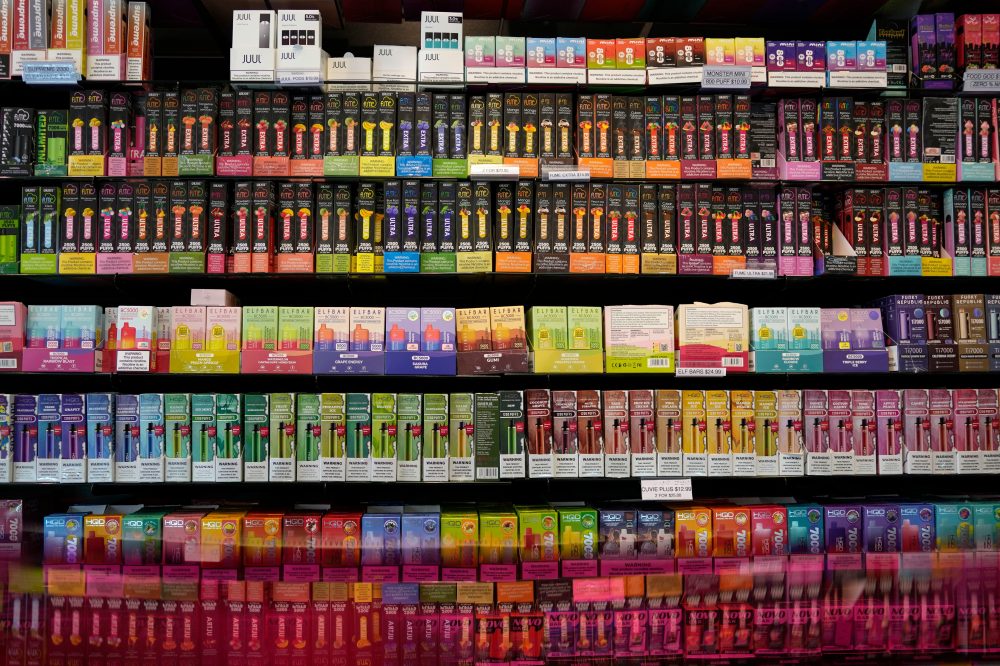
Unauthorized vapes containing mango, gummy bear, strawberry and numerous other flavors have saturated the American market for years.
These disposable devices replaced Juul products after the company removed its high-nicotine flavored items following their widespread presence in American schools starting around 2017. The company currently sells only FDA-approved tobacco and menthol flavored e-cigarettes.
Juul and similar companies now have opportunities to compete directly with disposable Chinese vapes, which some estimates suggest represent 80% of American sales.
“The choice we face is not whether flavored vaping products should be sold in the U.S. They already are,” said Robyn Gougelet, a Juul vice president. “The choice is whether those products should be regulated and responsibly marketed — or illegal, untested, and smuggled into the country.”
Instead of focusing on flavors, the FDA indicated its new enforcement strategy will target vapes with youth-appealing characteristics, including designs resembling children’s toys.
“The reality is they’re just deluged by illegal products coming across the border,” said Jonathan Foulds, a tobacco-addiction specialist at Penn State University. “So they’re making it clear what should be common sense: ‘We’re going to focus on the worst actors.’”
Whether the vaping industry will broadly accept FDA’s new approach remains uncertain, given the sector includes multinational tobacco companies and hundreds of smaller businesses selling imported Chinese devices.
The guidance indicates only e-cigarettes under “scientific review” will qualify for launch without FDA authorization. Few applications typically reach this stage, requiring comprehensive health data on smokers switching to new products, King observed.
“This is certainly going to benefit the larger tobacco companies, which have the resources to get far enough into the application review process and thus won’t be prioritized for enforcement,” King said.
Representatives for smaller companies say it’s premature to determine whether the policy will help or hurt their clients, though they worry about being excluded.
“The big companies would love nothing more than to see their largest swath of competitors out of the marketplace,” said Tony Abboud of the Vapor Technology Association.