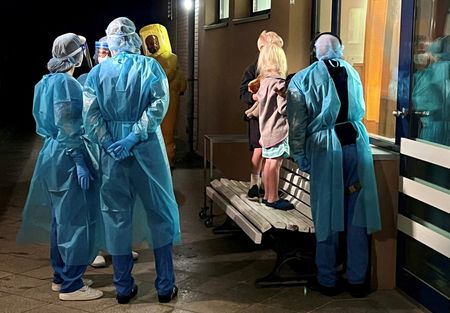

A U.S. missionary who contracted Ebola is receiving experimental medications designed to combat the virus at a German medical facility, according to American health authorities who spoke Friday.
The rare Bundibugyo variant of Ebola currently spreading in the Democratic Republic of Congo has no approved vaccines or established treatments. This outbreak has sickened nearly 750 individuals and claimed 177 lives.
Officials from the Centers for Disease Control and Prevention declined to reveal the specific medications being administered to the patient, who the Serge Christian mission organization has named as Dr. Peter Stafford, citing medical privacy regulations.
The World Health Organization declared this outbreak a global health emergency and indicated Friday that an experimental antiviral medication called obeldesivir from Gilead Sciences shows potential. WHO estimates vaccine development could require six to nine months.
Thomas Geisbert, an Ebola researcher at the University of Texas Medical Branch in Galveston who contributed to creating Merck’s Ervebo vaccine for Zaire Ebola, has collaborated with Gilead on obeldesivir development.
Geisbert’s team evaluated the Gilead medication against Ebola Zaire and Ebola Sudan strains, along with the related Marburg virus in primate studies, though they haven’t tested it against Bundibugyo.
The medication completely prevented Ebola Sudan infection in test animals and provided 80% to 100% protection against Marburg and Ebola Zaire variants, Geisbert reported to Reuters.
No evidence exists regarding the drug’s effectiveness in patients already showing Ebola symptoms, and it hasn’t been evaluated against the current outbreak’s strain, according to Geisbert.
However, obeldesivir underwent testing in hundreds of COVID patients during advanced clinical trials and demonstrated general safety.
“I think that that’s something that potentially has some utility here,” he said.
Geisbert explained these treatments could serve as temporary measures to control outbreaks while vaccines are being developed.
Gilead representative Ashleigh Koss confirmed the company maintains communication with international and regional health officials, stating that laboratory research suggests obeldesivir should work against this Ebola strain.
An alternative treatment involves an experimental antibody combination designated MBP134, developed by Geisbert alongside Dr. James Crowe from the Vanderbilt Vaccine Center and licensed to San Diego’s Mapp Biopharmaceutical.
Mapp, creator of the ZMAPP antibody treatment used during the 2014-2016 West African Ebola crisis, is partnering with the Biomedical Advanced Research and Development Authority to provide the treatment for high-risk cases, a U.S. official announced Wednesday.
This antibody mixture, derived from two antibodies found in an Ebola survivor’s blood, aims to combat various Ebola strains including Sudan, Zaire, and Bundibugyo variants.
Geisbert’s research team administered the cocktail to monkeys infected with Bundibugyo, waiting seven days until symptoms appeared before providing the antibody therapy.
“This is mimicking somebody that walks into a clinic,” he explained. “We were able to protect five or six of those from lethal disease, so that was pretty convincing,” he noted, expressing confidence in the product’s potential against Bundibugyo.
Mapp confirmed its collaboration with WHO and other agencies responding to the Congo outbreak. Company president Larry Zeitlin stated via email that he couldn’t reveal whether Americans in Europe are receiving this therapy.