Motorists traveling eastbound on Naaman’s Road are experiencing traffic delays due to an ongoing construction project that has shut down the left lane.
The lane closure affects the stretch of roadway between Peach Tree Road and Hickman Road, with work expected to continue until 6 AM.
Drivers are advised to plan for potential delays and consider alternate routes during the construction period.
Motorists traveling on US-13 should expect delays as both right lanes remain shut down in the northbound and southbound directions between Voshell Mill Road and Shamrock Avenue.
According to traffic authorities, the lane restrictions are in place due to traffic conditions and are scheduled to continue until 6 AM.
Drivers are advised to use caution in the area and allow extra travel time while navigating around the lane closures.
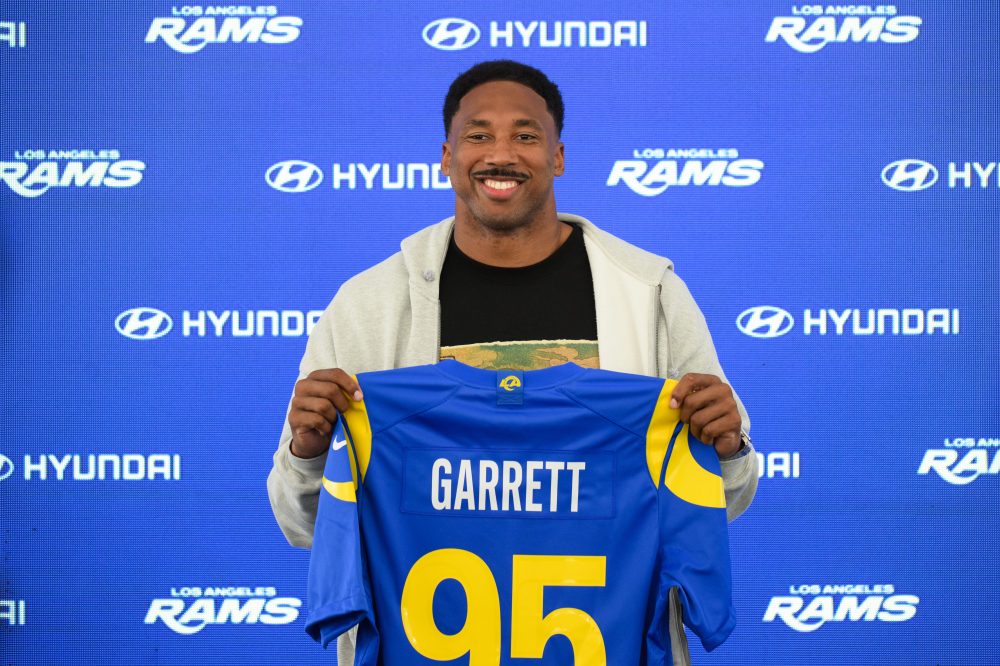
LOS ANGELES (AP) — Apart from capturing a Super Bowl championship, Myles Garrett accomplished nearly everything possible for a defensive player during his initial nine NFL campaigns.
Currently part of a Los Angeles Rams squad expected to hoist the Lombardi Trophy this coming February, Garrett is prepared to address the one significant gap in his professional accomplishments.
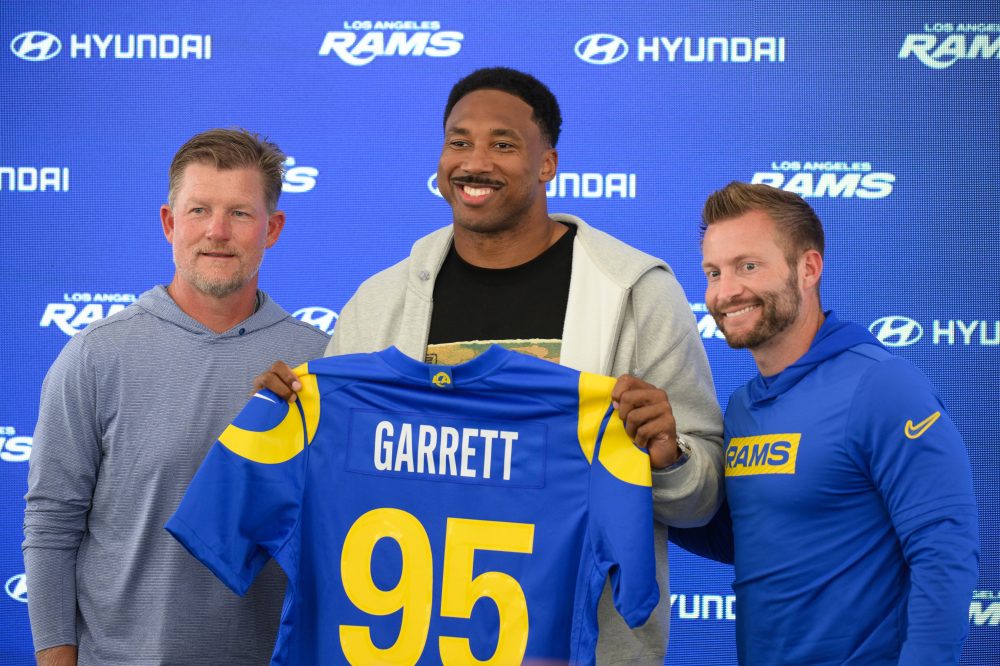
“Since the very beginning, it’s always been about winning. … And to have an opportunity to do that immediately? That was the opportunity that was too difficult to pass up,” Garrett said at his introductory news conference Tuesday, one day after the blockbuster deal that sent him from Cleveland to Los Angeles.
Garrett had reached the playoffs with the Browns in 2020 and 2023, representing his only two successful seasons in Cleveland following his selection as the top overall pick in 2017. Joining the Rams, the 30-year-old pass rusher has become part of a franchise that has qualified for the postseason in seven of head coach Sean McVay’s nine years leading the team, captured the Super Bowl after the 2021 season, competed in another championship game, and fell just short against Philadelphia and Seattle squads that ultimately claimed titles over the previous two years.
The Rams used the offseason to strengthen their roster for another championship attempt by fixing the defensive weaknesses that hurt them in the 31-27 NFC championship defeat to the Seahawks. They acquired All-Pro cornerback Trent McDuffie through trade, brought in fellow Chiefs defensive back Jaylen Watson via free agency, and completed their upgrades by obtaining a two-time AP Defensive Player of the Year and five-time first-team All-Pro in Garrett.
These additions have Garrett anticipating significant achievements.
“I see a position to solidify myself here as well among the very greats,” he said.
After a campaign where he established the NFL single-season mark with 23 sacks while also recording a personal-best 33 tackles for loss, Garrett thinks the Rams’ framework and resources could enable him to achieve even loftier goals. He becomes part of a defensive unit that already finished among the top 10 in points surrendered and quarterback takedowns, and Garrett anticipates an offensive attack featuring quarterback Matthew Stafford, who earned NFL MVP honors after throwing for 46 touchdowns, will provide him numerous opportunities to seal victories in the final quarter.
Such chances were rare in Cleveland, where Garrett accumulated 125 1/2 sacks across 134 career contests. The Browns posted a 58-90-1 record throughout Garrett’s tenure there.
“I mean, that did play into the decision as well, knowing I have the ability, you know, late game, to pin my ears back, not just because we need a play to be made, but because we have the lead and it’s obvious passing downs, being able to make those game-changing plays to win the game for us, those are things that appealed to me,” Garrett said.
Garrett has already begun adjusting to his new environment, reaching an agreement with nose tackle Poona Ford to obtain the No. 95 jersey.
Garrett is also eager to connect with NBA superstar LeBron James, who has played the last eight seasons with the Los Angeles Lakers, for additional insight about the city. Garrett characterized James as a “positive force in my life,” having gained counsel and guidance from the Akron, Ohio, native and four-time NBA champion throughout the years since joining the Browns.
Garrett possesses some existing knowledge of the area. His girlfriend, Olympic gold medalist snowboarder Chloe Kim, hails from Torrance, California, in Los Angeles County. His father, Lawrence, was born in Los Angeles.
Despite all the early enthusiasm surrounding the trade, Garrett recognizes it will ultimately be evaluated based on how he and the Rams perform during competition.
“Nothing changes for me,” he said. “I don’t feel any pressure to be anything else, be anything different. As long as I’m myself and I come here to work every day and I’m a leader, the success will follow.”
Federal authorities have filed criminal charges against two government laboratory researchers accused of illegally transporting deactivated mpox virus samples into the United States and providing false statements to investigators, officials announced Tuesday.
Vincent Munster, who leads the virus ecology section at Rocky Mountain Laboratories in Hamilton, Montana, and his colleague Claude Kwe face charges outlined in a criminal complaint filed in Detroit federal court.
The pair were detained at Detroit Metropolitan Airport in January following their return from Paris after spending nine days in the Republic of Congo. The central African nation has been battling an mpox outbreak responsible for over 2,000 fatalities, though health officials declared a two-year outbreak concluded in April.
According to FBI documentation, Munster “adamantly denied” carrying any biological materials or samples upon his return to the United States.
However, laboratory analysis later confirmed that both researchers possessed vials containing deactivated mpox virus, which they failed to properly declare or secure authorization for, FBI officials stated.
“Any deliberate effort to conceal and smuggle biological materials into the United States without proper authorization is a breach of the public’s trust and could have placed the public at risk,” stated Marcus Sykes from the Office of Inspector General at the Department of Health and Human Services.
Neither researcher responded to requests for comment. Both are scheduled to make their initial court appearance in Missoula, Montana, on Wednesday. Officials also reached out to HHS, the laboratory’s oversight agency, for additional comment.
The government’s court documents do not explain the researchers’ motivation for transporting the deactivated mpox samples to their facility. However, FBI records indicate both are virologists with extensive experience studying mpox.
During questioning at the Detroit-area airport, Munster informed investigators that required documentation was stored on his laptop, stating “but you don’t need them. I do this all the time,” according to FBI records.
“It is reasonable to believe that Munster’s statements regarding the possession of the required documentation to (customs officers) were materially false,” FBI officials concluded.
According to the World Health Organization, mpox typically presents with rash and fever symptoms, though severe cases can occur. Most patients make complete recoveries.
Scientists first discovered mpox, formerly called monkeypox, in 1958 during outbreaks of a “pox-like” illness in monkeys. Until recently, human infections primarily occurred in central and West Africa among individuals with close contact to infected animals.
In 2022, researchers confirmed sexual transmission of the virus for the first time, leading to outbreaks across more than 70 nations that had never previously documented mpox cases.
BAKERSFIELD, Calif. — Authorities in Bakersfield, California responded Tuesday afternoon to a dangerous situation where a suspect trapped himself inside a financial institution along with multiple civilians following a bomb threat.
Law enforcement arrived at the Chase Bank facility in the city’s downtown core around 1 p.m. after receiving reports of the explosive threat, according to the Bakersfield Police Department. Officials discovered that a man had locked himself inside the building “with several community members,” the department announced in an official statement.
Authorities reported that some civilians managed to flee the building safely. No one sustained injuries during the incident, and surrounding structures including city hall and police headquarters were secured as a precaution.
Crisis negotiation specialists established telephone communication with the individual, while officers created a security perimeter around the facility and neighboring businesses, officials confirmed.
“We are on scene at the Chase Bank Building on Chester Avenue and 17th Street for a confirmed bomb threat,” the police department wrote on X. “Please stay out of the downtown area. Road closures are in effect and will remain in effect until further notice.”
Media outlets reported approximately twelve patrol vehicles, one tactical unit, and numerous emergency personnel responded to the scene.
Jacob Davidson, a livestreamer known as Dad’s Gone Live, was one block away at his family’s tattoo business when subscribers began calling to inform him about the bomb threat.
“I went into the bank’s parking garage and watched the cops enter the back of the bank. This is the biggest police presence I’ve ever seen in this town,” Davidson said. “Now I’m watching them set up the trauma tents with the green, red and yellow tags, and black tags too, along with a command center about a block away.”
Emergency response teams routinely establish medical triage stations with color-coded systems to categorize potential casualties by injury severity as a precautionary measure during crisis situations.
Marcelo Salinas, who served as Bolivia’s defense minister, stepped down from his position on Tuesday according to local news outlets, after prolonged civil demonstrations and widespread protests that have disrupted traffic in the nation’s principal cities throughout the past month.
An official from the ministry verified Salinas’ departure to Reuters.
Wide receiver Drake London has reached agreement with the Atlanta Falcons on a four-year contract extension valued at $141 million with $100 million in guaranteed money, according to an ESPN report Tuesday that cited London’s agent.
The contract gives London an annual average of $35.25 million, making him the third highest-paid wide receiver in the league. Only Seattle’s Jaxon Smith-Njigba at $42.15 million and Cincinnati’s Ja’Marr Chase at $40.25 million earn more per year. London’s deal also represents the largest average annual salary in Atlanta franchise history, ESPN reported. Smith-Njigba inked his extension with the Super Bowl champion Seahawks during the earlier portion of this offseason.
Atlanta selected London with the eighth pick in the 2022 NFL Draft, and he became an instant contributor in the starting lineup. London topped the team in receiving yards during each of his initial three campaigns before tight end Kyle Pitts edged him by a mere nine yards in 2025, though London appeared in five fewer contests.
Across 62 career appearances (60 as a starter), the 24-year-old London has recorded 309 catches for 3,961 yards and 22 touchdowns while wearing an Atlanta uniform. His most productive campaign came in 2024, when he participated in all 17 games and established personal bests with 100 receptions, 1,271 yards and nine touchdowns.
London will compete during the 2026 season under his fifth-year rookie option valued at $16.82 million. The new extension will then carry him through the 2030 season.
The Falcons are beginning a fresh chapter this year under head coach Kevin Stefanski and with franchise icon and former quarterback Matt Ryan assuming a newly established position as president of football. Tua Tagovailoa was acquired to battle Michael Penix Jr. for the starting quarterback position.
New Zealand professional golfer Lydia Ko has an opportunity to surpass Annika Sorenstam’s record as the top earner in women’s golf history during this week’s U.S. Women’s Open, but Ko questions whether such comparisons are appropriate.
“We’re playing in a very different generation right now,” the 29-year-old Ko stated to media members at Tuesday’s press conference held at Riviera Country Club in Pacific Palisades, Calif., where this year’s tournament kicks off Thursday.
“It’s cool to be, I guess, compared to that record and hopefully surpass it at some point,” Ko commented, “but it’s like very hard to kind of like compare it because we are playing for a lot more money than she did back in that day.”
Currently, Ko has accumulated $21.8 million in career earnings, trailing Sorenstam’s $22.5 million total. Ko has captured 23 LPGA Tour victories throughout her career, while the Swedish golfer Sorenstam claimed 72 victories between 1995 and 2008, ranking third in history behind Americans Kathy Whitworth (88 wins from 1962-85) and Mickey Wright (82 wins from 1956-73).
“For me, like the win count is probably a little bit more meaningful,” explained Ko, who holds three major championship titles. “Not that the money isn’t meaningful. Obviously, we’re very grateful that we get to play for a lot more money… I just feel like I’m like an ant and (Sorenstam) is — I don’t know what the biggest bug or living thing is, but she’s that.
“So, it’s kind of hard to compare that just because we’re playing for so much more now. Hopefully in years time, they play for so much more than what we do.”
The venue, Riviera Country Club, will serve as the location for both men’s and women’s golf events when Los Angeles hosts the 2028 Summer Olympics. Ko has competed for New Zealand in three Olympic Games, earning gold in Paris 2024, silver in Rio 2016, and bronze in Tokyo 2021 (which was delayed from 2020).
However, she does not intend to participate in another Olympics.
“The only thing that I would be like very excited for is because they’re adding the mixed team component. I love team play,” Ko mentioned. “That will be the only thing that I’m very jealous that I’m not a part of. Who knows? I could be a part of it in a different place rather than just competing, and I do take pride in competing for New Zealand at the Olympics, and I really hope that I can be a part of it somehow in some shape or form. But, no. Three Olympics, and that stress was enough.”
San Diego has sidelined outfielder Ramon Laureano due to right hip inflammation, officially placing him on the 10-day injured list Tuesday.
The roster move was made effective from Sunday. To fill the vacancy, San Diego promoted outfielder Jase Bowen from Triple-A El Paso. The 25-year-old Bowen was set to make his major league debut Tuesday evening, taking the starting position in left field and hitting seventh in the lineup against the visiting Philadelphia Phillies.
The 31-year-old Laureano’s most recent appearance came Saturday, where he finished 0-for-3 with one walk during a 9-4 defeat to the Washington Nationals on the road.
This season marks Laureano’s second year with San Diego, where he’s posted a .203 batting average alongside seven home runs and 21 RBIs across 53 contests. His performance started strong with a .357 average through four March games before settling to .252 by April’s conclusion.
Throughout his major league career, Laureano has maintained a .250 batting average with 113 home runs and 349 RBIs over 795 regular-season appearances. His career has included stints with the Athletics (2018-23), Cleveland Guardians (2023-24), Atlanta Braves (2024), Baltimore Orioles (2025), and currently the Padres (2025-present).
Bowen was originally drafted by the Pittsburgh Pirates in the 11th round of the 2019 MLB Draft. He joined San Diego’s organization on a minor-league deal before this season began.
At El Paso this year, Bowen has compiled impressive numbers with a .292 batting average, .362 on-base percentage, and .600 slugging percentage, along with 13 home runs and 36 RBIs in 49 games.
Additionally, San Diego moved right-hander Nick Pivetta from the 15-day to the 60-day injured list due to right elbow inflammation, creating the necessary 40-man roster space for Bowen’s addition.
In women’s professional golf right now, one question stands out: Can anyone challenge Nelly Korda when she’s performing at this elite level?
After experiencing her season’s poorest result at the Kroger Queen City Championship with an eighth-place tie, Korda stepped away from tournament play for two weeks. That disappointing finish followed an extraordinary opening to 2026, where her initial six tournaments produced three victories and three second-place finishes.
Her most significant triumph came at the Chevron Championship, this year’s opening major tournament. Now preparing for the second major championship, the world’s top-ranked player expresses an unquenchable competitive appetite.
Speaking to media on Tuesday before this week’s U.S. Women’s Open at Riviera Country Club in Pacific Palisades, Calif., Korda explained her motivation. “I’m just motivated to put myself into that position, to grind on off weeks, to just play the game,” she said. “It’s really hard to explain, but it’s really there’s nothing better when you’re a very competitive person than being in the hunt on a back nine at a tournament. There’s a really big rush of emotions. Even if it doesn’t work out, you constantly want to put yourself back into that because all that work that you’ve put in in your off weeks, that’s what makes it worth it.”
The golfer outlined her demanding weekly routine, which includes early morning starts, extensive practice sessions, physical training, physiotherapy treatments, and early bedtimes following dinner.
“All those days, you kind of sacrifice your time at home with your friends or with family, but it’s just so worth it because there’s no better rush of emotions than being in the hunt,” Korda explained.
This dedication paired with her exceptional abilities makes Korda a formidable competitor. Following a winless 2025 campaign, she had previously captured seven titles in 2024, including her inaugural Chevron Championship victory. Her 2026 performance mirrors that successful 2024 season, helping her reclaim the top ranking from Thailand’s Jeeno Thitikul.
During last year’s championship at Erin Hills in Wisconsin, Korda remained competitive throughout the final round but couldn’t overtake Sweden’s Maja Stark at the U.S. Women’s Open. Her second-place finish represented her strongest showing in that tournament.
Reflecting on that near-miss, she said her main lesson was “That I was just hungry for more.”
“Last year was just a weird year of kind of not necessarily playing my best, but also when I did, not getting the bounces or just missing by a centimeter here and there,” Korda noted. “But I also learned a lot about myself. It made me hungrier to be in those positions.”
A championship this week would mark Korda’s fourth major title. Betting markets favor her heavily, with odds of +340 on DraftKings and +400 on BetMGM.
However, despite her success and status as the most accomplished American female golfer of her generation at age 27, Korda dismissed suggestions that she represents the sport’s public face.
“Definitely don’t think of myself as the face of the sport, but I would say that it’s growing,” Korda responded. “I’ve seen like from my rookie year, or even just maybe 2023, I’ve seen a big interest in girls, little girls coming out, supporting us.”
She continued: “It’s amazing to see how many dads and little girls come out to our events. It is absolutely amazing to see. It has grown every single year. There are times where (caddie Jason McDede) and I catch ourselves, and we kind of look around to the crowd and we’re like, wow, it’s amazing to see how many people are here on a Thursday. So I do think that we are growing. Obviously, there’s always room for improvement in everything that you do, but I’ve seen a really big trend in the fans coming out.”
Drivers traveling on Route 13 should expect intermittent lane restrictions due to ongoing construction work in the area.
The construction activity is taking place on the stretch of Route 13 that runs between American Legion Drive and Lorewood Grove Road, with lane closures expected to remain in effect until 5:30 AM.
Motorists are advised to plan for potential delays and consider alternate routes if possible during the construction period.
PLANO, Texas — The NHL’s Dallas Stars have revealed their intention to relocate from downtown to the suburban community of Plano within the next five years, coinciding with the expiration of their current arena lease.
Team representatives announced Tuesday they have signed a preliminary letter of intent for constructing a hockey-focused arena and entertainment complex approximately 20 miles north of their current downtown venue, the American Airlines Center, which has housed both the Stars and the NBA’s Dallas Mavericks since opening in 2001.
Both franchises face lease expirations at the AAC in 2031. The organizations have been engaged in legal battles regarding their partnership arrangement and facility management responsibilities.
The Stars revealed their relocation plans just one day following the Mavericks’ announcement of a tentative agreement for their own new facility roughly 10 miles north of downtown, remaining within Dallas city boundaries. The basketball team’s proposal involves 104 acres where Valley View Mall previously stood before demolition three years ago.
The proposed Stars venue would be integrated into an extensive redevelopment initiative at The Shops at Willow Bend, where Texas’s final enclosed shopping mall faces upcoming demolition.
The Stars have submitted their preliminary agreement to Plano city officials, who have scheduled the proposal for City Council review during Monday’s upcoming session. The document outlines plans for both the mixed-use development and arena design and construction phases.
“This project would present a once-in-a-lifetime opportunity for our franchise,” Stars owner Tom Gaglardi said in a statement. “We eagerly await the vote by the Plano City Council and look forward to continuing the conversation to be part of the redevelopment of The Shops at Willow Bend.”
The shopping center, spanning roughly 90 acres, opened in 2001 and currently features operating restaurants and parking structures. The proposed arena would serve as the centerpiece for redevelopment potentially incorporating sports facilities, entertainment venues, retail establishments, restaurants and community gathering areas.
The hockey franchise operated as the North Stars before relocating from Minnesota and commencing Dallas operations during the 1993-94 season. In 1999, the Stars became the inaugural Sun Belt hockey organization to capture a Stanley Cup championship.
The team secured that title while competing at Reunion Arena, another facility they shared with the Mavericks following their Dallas arrival. That downtown venue, located approximately one mile from the AAC, underwent complete demolition in 2009.
LOS ANGELES (AP) — The Los Angeles Rams aren’t ruling out the possibility of Aaron Donald coming out of retirement, and head coach Sean McVay says the decision rests entirely with the former superstar defensive tackle if he chooses to suit up again and play with Myles Garrett.
Talk about Donald potentially ending his two-season retirement heated up right after the Rams completed their major trade on Monday, bringing Garrett over from the Cleveland Browns. The 35-year-old Donald stepped away from football in March 2024 following an outstanding decade-long career entirely with the Rams organization.
During Garrett’s introduction to the media on Tuesday, McVay addressed questions about Donald but offered no definitive answer about whether the retired star would return to action — though he didn’t dismiss the speculation either.
“Aaron is a guy that I stay really close in touch with, and I know the respect that he has for Myles,” McVay said. “Talked to him about the opportunity to be able to bring (Garrett) on board. If Aaron decides he wants to dust them off at the age of 35, I bet you he could still do it at a pretty high clip.”
ESPN personality Pat McAfee fueled comeback rumors on Tuesday, revealing he had exchanged messages with Donald about a possible return. According to McAfee, Donald indicated that Garrett’s move to LA “for sure got me thinking,” adding that he’s “gotta see if that fire can light back up.”
Throughout his 10 seasons in St. Louis and Los Angeles, Donald earned eight All-Pro honors, 10 Pro Bowl appearances, three AP Defensive Player of the Year titles, and a Super Bowl championship. He concluded his career at the peak of his abilities, setting a franchise record with 111 sacks while establishing himself as the league’s premier interior pass rusher before deciding he was prepared to move away from the demanding routine needed to compete at that elite level.
Since Donald retired at what’s considered a relatively early age for defensive linemen, discussions about his potential comeback have persisted throughout his two years away from the game in Los Angeles, where the Pittsburgh-born player continues to live with his family. Rams supporters actively hoped for his return during last season as the team looked positioned for another Super Bowl attempt, but Donald remained unmoved by those appeals.
Donald even trained with Jared Verse, the first-round draft selection and emerging edge rusher who was sent to Cleveland as part of the package with three valuable draft picks. The Rams sacrificed significant assets to land Garrett, the two-time AP Defensive Player of the Year and one of the few players who matches Donald’s elite status in recent NFL history.
Garrett has expressed admiration for Donald’s abilities in the past, and the Rams’ newest star player listened approvingly on Tuesday as McVay spoke highly of Donald.
The Rams’ defensive front is already formidable, with Garrett now joining 12-sack edge rusher Byron Young and solid interior defenders Kobie Turner, Braden Fiske and Poona Ford. Garrett has already obtained his preferred No. 95 jersey from Ford, who had been wearing that number with the Rams last season.
“There was a conversation,” Garrett said with a laugh.
“A conversation and a couple of bucks?” McVay interjected.
“Maybe more than a couple of bucks,” Garrett said with a laugh. “He was open to it.”
Citizens across South Korea headed to polling stations Wednesday for mayoral and local elections that political observers are watching as a key indicator of how much backing President Lee Jae Myung has after completing his first year leading the nation’s liberal administration.
Polling data indicates Lee’s Democratic Party is positioned to capture more victories than the conservative opposition People Power Party, which continues to struggle with internal divisions roughly 18 months following former conservative President Yoon Suk Yeol’s controversial martial law declaration.
Political analysts say that with such favorable conditions, the DP needs to achieve an overwhelming win and secure critical contests like the Seoul mayoral race to provide Lee with significant momentum.
“The conservatives’ support base has been fractured and weakened in the wake of Yoon’s impeachment, while the liberals’ support base has grown stronger. Considering that, results of the elections will determine whether their dominance would prolong for a considerable time,” said Jeong Han-Wool, director of the Korean People Research Institute.
Voters are selecting candidates for 16 mayoral and provincial gubernatorial positions on Wednesday, with the PPP currently holding 12 of those seats. Additionally, 14 new lawmakers will be elected to the 300-seat National Assembly through special elections.
Voting began at 6 a.m. local time at approximately 14,300 locations nationwide and will conclude at 6 p.m. The election commission reports that roughly 44.6 million people are eligible to participate.
Initial polling suggested the DP could secure as many as 15 of the 16 available positions. However, more recent surveys indicate that opposition or independent contenders have narrowed the margin with their DP opponents or even moved ahead in five to seven contests.
The DP benefits from continuing public anger over Yoon’s December 2024 martial law decision that triggered a major political upheaval. Additionally, the relatively new Lee administration may still enjoy voter goodwill rather than facing attempts to limit its authority, according to Choi Jin, director of the Seoul-based Institute of Presidential Leadership.
Choi explained that a decisive DP triumph would mean capturing at least 12 races. He emphasized that the party must also secure the highly competitive Seoul mayoral contest or the Lee administration would face “a tremendous blow.”
The Seoul competition features the DP’s Chong Won-o, a former Seoul district head whose political profile grew after Lee commended his leadership last October, running against incumbent mayor and prominent political figure Oh Se-hoon from the PPP.
“A Seoul mayor isn’t a post that someone whose campaign solely relies on the president’s coattails can afford,” Oh told reporters Tuesday. “Our country would be safer when the rival forces keep each other in check than one side controlling every things. Please, leave Seoul, the last stronghold, in our hands.”
During a Tuesday press briefing, Chong stated he anticipated Seoul residents would issue “a stern verdict” on Oh regarding what he characterized as the mayor’s incompetent and irresponsible leadership approach.
Lee will mark his first anniversary in office Thursday, maintaining approval ratings above 60%. He secured victory in a special election held after the Constitutional Court decided to remove Yoon from office due to his martial law implementation. A Seoul district court found Yoon guilty of rebellion in February and imposed a life sentence.
Yoon’s removal created significant internal conflict within the PPP between reform-minded members who supported the DP-led impeachment effort and Yoon supporters who tried to defend the former leader.
Han Dong-hoon, who leads the reform faction and was ultimately kicked out of the PPP, is among those seeking one of the 14 parliamentary seats in the special elections. Polling shows Han with a narrow advantage over the DP’s Ha Jung-woo, a former Lee adviser on AI, in a Busan race in the nation’s second-largest city in the southeast.
Jeong noted that a Han win might enable anti-Yoon reformers to reorganize and become a new conservative movement in South Korea. However, Choi suggested Han’s victory could deepen conservative divisions as Yoon supporters might feel threatened and become more unified in response.
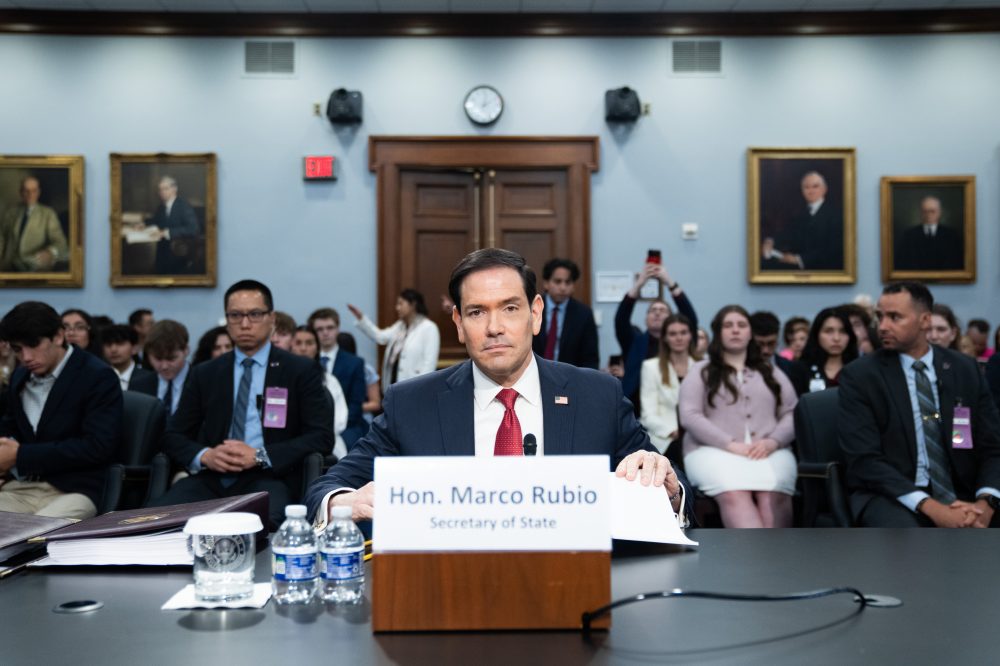
During congressional testimony on Tuesday, Secretary of State Marco Rubio revealed that America continues negotiating with multiple nations to relocate over 1,000 Afghan allies who supported U.S. military operations, while justifying the current administration’s approval of refugee status for thousands of white South Africans.
Rubio’s appearance before lawmakers occurred over a month following reports from The Associated Press and other news organizations that war-ravaged Congo was being evaluated as a potential destination for the 1,100 Afghans and family members of U.S. military personnel who remain stuck in Qatar for over 12 months.
Advocacy organizations warn that these refugees face only one alternative: returning to Afghanistan where Taliban retaliation awaits them.
During the annual budget hearing, Democratic members of House and Senate panels pressed Rubio about America’s failure to honor commitments to accept hundreds of allies who underwent extensive screening before President Donald Trump issued executive orders in January 2025 restricting asylum and refugee cases.
“We’re obviously operating right now under a directive that prohibits the entry of Afghans into the United States,” Rubio said. Despite the restrictions, he said officials had been “engaging every single day” on this issue and that several countries have already indicated their willingness to take in some of those waiting in limbo.
Rep. Grace Meng, a Democrat from New York, told Rubio that regardless of U.S. immigration policy, Congo would be “a death sentence” for those living at the camp in Doha, including Afghans who served as interpreters and with Special Operations Forces as well as the immediate families of more than 150 active-duty U.S. military members.
The African nation has endured prolonged conflict between government troops and Rwanda-supported insurgents in its eastern territories and currently faces an Ebola epidemic.
“Can we rule out deporting people to conflict zones?” Meng asked Rubio. After some deflection, he responded that he doesn’t think any of the countries being discussed would be conflict zones.
However, he noted that the challenge remains determining how many Afghan refugees each nation will accept.
“I don’t think there’s one country that’s going to take all 1,000, but it has to be countries that are willing to assume some of this responsibility and numbers that are manageable to them, but also places that give more options to these individuals that they would be comfortable going to,” Rubio said.
Discussions between America and cooperative nations, including Botswana and Malaysia, began several months ago, according to Shawn VanDiver, a Navy veteran who heads a coalition that supports Afghan resettlement efforts called #AfghanEvac.
VanDiver and fellow advocacy organizations have criticized the administration’s approach to Afghan allies during the past 18 months, claiming America is abandoning those who fought beside U.S. troops throughout the nation’s longest military conflict.
“These are not strangers. They are the spouses, the children, and the parents of men and women wearing our uniform right now,” VanDiver said in a statement Tuesday. “We told them, with the full faith of the United States, that if they stood with us we would stand with them.”
He added, “That promise did not come with an expiration date, and it did not come with conditions.”
Rubio justified certain restrictions, explaining why Afghans who completed extensive background checks and biometric screening face obstacles while the administration has opened America’s refugee program to Afrikaners — a group of white South Africans descended mainly from Dutch settlers.
“Everything we do has to be geared by the national interest, and it is in our national interest if we are allowing people to enter our country — be people who can quickly assimilate into society and be successful,” Rubio said.
Meng challenged this reasoning, pointing to the substantial Afghan community in her Queens, New York district who have integrated successfully, contributed to society and paid taxes.
“We’ve already assumed a lot of Afghan refugees, as you said, you have them in your district. We’ve already assumed a large number in the past,” Rubio responded.
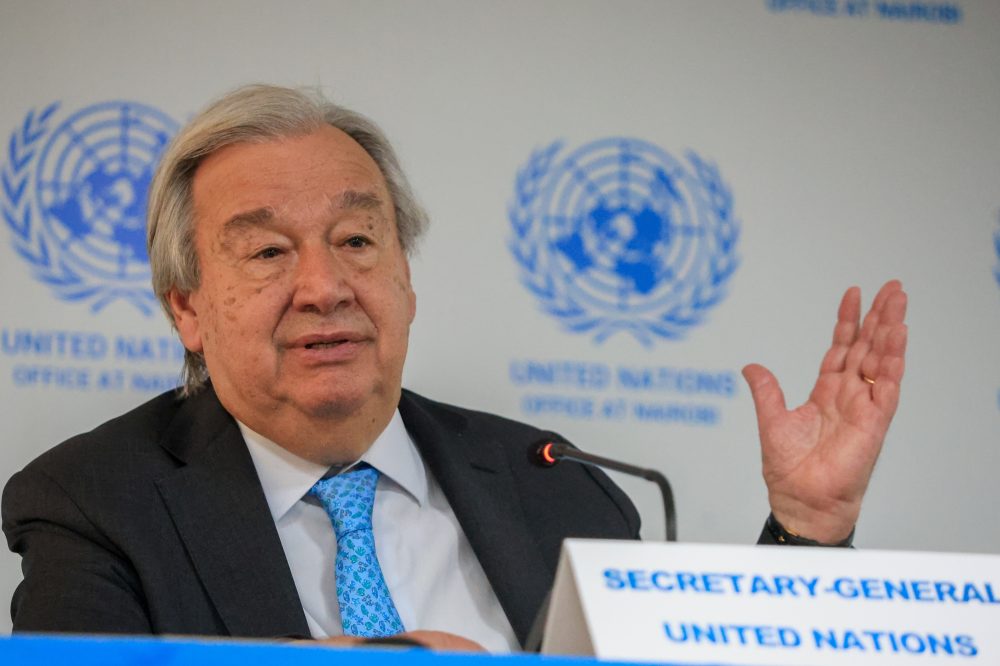
UNITED NATIONS (AP) — The head of the United Nations has outlined three alternative approaches to continue efforts toward resolving the long-standing conflict between Israel and Lebanon’s Iran-supported Hezbollah fighters once the current 8,100-strong UN peacekeeping operation in southern Lebanon concludes on December 31.
Each proposal submitted to the UN Security Council by Secretary-General Antonio Guterres would maintain UN military oversight of the Israel-Lebanon border, assist Lebanese military forces in expanding their presence nationwide, and enhance diplomatic initiatives to halt the ongoing violence that continues despite an existing ceasefire agreement.
For many years, UN peacekeeping forces have served a crucial function in overseeing security conditions in southern Lebanon, an area where Hezbollah maintains strong influence. In recent months, six peacekeepers have lost their lives.
Following pressure from the United States and its ally Israel, the Security Council unanimously decided in August 2025 to end the peacekeeping operation called UNFIL and directed Guterres to develop alternatives for enforcing a 2006 resolution that concluded a month-long conflict between Israel and Hezbollah.
That resolution calls for Hezbollah to give up its weapons, Israeli military withdrawal, and full deployment of Lebanese army forces as the country’s only armed force. These requirements remain unfulfilled.
In his Monday correspondence to the Security Council, Guterres emphasized that the repeated clashes between Israel and Hezbollah demonstrate the urgent need to enforce the 2006 resolution, which serves as the roadmap to peace.
The secretary-general described UN military oversight of the UN-established border between Israel and Lebanon, called the Blue Line, as “paramount.”
Across all alternatives, he explained, “a uniformed United Nations presence working to facilitate de-escalation, dialogue, liaison and coordination, and support for the Lebanese Armed Forces would be necessary.” The UN military component would work alongside the enhanced UN special coordinator for Lebanon, who would maintain leadership of efforts to implement the 2006 resolution.
Guterres outlined three alternatives for the UN military presence, with personnel numbers ranging from 5,525 down to 1,980, including some unarmed military observers. He noted the largest deployment would be capable “to most credibly observe developments along the length of the Blue Line.”
UN spokesman Stephane Dujarric informed reporters Tuesday that the secretary-general anticipates the Security Council will reach a decision promptly.
Drivers using northbound Interstate 95 should expect delays this morning as construction crews have shut down the right lane along a busy stretch of highway.
The lane closure affects the section of I-95 north between Route 141 and the point where the interstate splits into I-95 and I-495. Transportation officials say the restriction will stay in place until 5 a.m.
Motorists are advised to allow extra time for their commute and use caution when traveling through the work zone.
Federal Reserve Chairman Kevin Warsh has sent a message to the central bank’s more than 20,000 workers outlining his approach as he begins his four-year leadership role, promising to honor “the best of the Fed’s traditions” while examining opportunities for reform.
The internal communication offers insight into Warsh’s strategy as he works to implement what he has called a comprehensive reform plan for a central bank he believes has lost focus on its core mission, while simultaneously rebuilding relationships with staff and colleagues whose previous work he has questioned.
“Our highest priority will be to get policy right in service to our remit and the national interest. We will ensure an environment that supports our people in doing their life’s best work,” Warsh stated in the Tuesday memo that Reuters obtained.
“We won’t rely on past practices when we find better alternatives,” Warsh added. “In the coming quarters, I expect that together we will have open, clear-eyed discussions of Fed strategies, policies, and operations.”
Additionally, Warsh has brought on two conservative policy experts as advisers during his transition into the role, replacing former Fed Chair and current Governor Jerome Powell, according to someone with knowledge of the new chairman’s initial staffing choices. These appointments, initially reported by the Wall Street Journal, are described as temporary consulting roles to assist Warsh in developing his early initiatives as chair.
Daniel Heil serves as a policy fellow at Stanford University’s Hoover Institution, the same organization where Warsh was employed before assuming the Fed chairmanship. Paul Winfree previously worked at the Heritage Foundation and created the Federal Reserve reform section featured in the organization’s disputed Project 2025 conservative reform proposal.
According to the source, both advisers have collaborated with Warsh on various research and writing endeavors over recent years. Through his position at the Hoover Institution and involvement with the Group of Thirty think tank, Warsh has maintained regular publication of speeches and opinion pieces.
Warsh has outlined his vision for Fed changes, including reducing the Fed’s $6.7 trillion balance sheet, providing less specific guidance about future interest rate moves, and exploring whether alternative inflation measurements might better reflect economic price pressures.
During his consideration period for the chairmanship, Warsh frequently criticized the Powell Fed’s policy approach and expressed concerns that the Fed system, including its 12 regional reserve banks, had expanded beyond its monetary policy mandate.
Now at the helm of the institution he previously criticized, Warsh adopted a more encouraging tone in his employee memo.
“This new chapter at the Fed finds us in a time of great consequence for our nation. New technologies and new ways of doing business are arriving with unmatched speed,” Warsh stated. “I could not be more optimistic about all that we can achieve together.”
Warsh’s initial meeting as chair — and likely his first substantial remarks about economic conditions and monetary policy — is scheduled for June 16-17. While the Fed is anticipated to maintain current interest rates, new economic forecasts will indicate policy direction under Warsh’s leadership and reveal whether his colleagues worry that inflation, still above the Fed’s target, might worsen.
His leadership begins under unique circumstances.
The Fed awaits a Supreme Court decision regarding President Donald Trump’s attempt to remove Governor Lisa Cook, viewed as a direct challenge to the Fed’s independence in monetary policy decisions, potentially its most fundamental principle.
Furthermore, Warsh will lead an organization that includes its previous chief, Powell, who chose to retain his position on the Fed’s Board of Governors due to the administration’s attempts to influence the Fed.
OpenAI’s popular ChatGPT application has achieved an unprecedented milestone by becoming the first app to reach 1 billion monthly active users at record speed, new data from market research company Sensor Tower reveals.
This achievement occurs as competition intensifies between OpenAI and Anthropic in the fast-growing artificial intelligence sector.
Key findings from the data include:
• ChatGPT achieved the 1 billion user mark in May, approximately three years following its initial release, beating the timeline previously established by major platforms such as Google Maps, TikTok, Instagram and YouTube, according to Sensor Tower’s analysis.
• Research indicates that American ChatGPT users who downloaded Anthropic’s Claude application during the first quarter of 2026 reduced their ChatGPT usage by 5% within one month of installing Claude, compared to their typical usage over the previous eight months.
• Anthropic submitted confidential paperwork for a U.S. initial public offering on Monday, while Reuters has indicated that OpenAI is similarly preparing to file IPO documents in the near future.
• Current second quarter data shows Claude has accumulated 56 million monthly active users worldwide, with its annual user growth rate of approximately 640% far exceeding ChatGPT’s 62% growth rate, Sensor Tower reported.
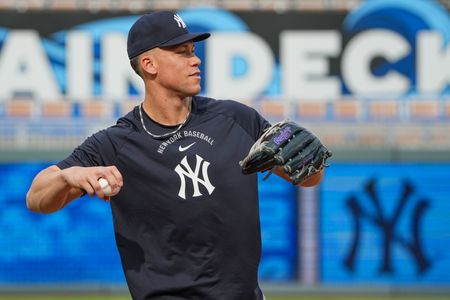
The New York Yankees will be without their team captain and star outfielder Aaron Judge, who is listed as day-to-day due to a bone bruise affecting his upper right rib.
This marks Judge’s first absence from the lineup this season as the Yankees kick off their homestand Tuesday facing the Cleveland Guardians. Jose Caballero will take over duties in right field during Judge’s absence.
Manager Aaron Boone explained to reporters before the game that Judge had been experiencing persistent right shoulder discomfort for several weeks, prompting medical imaging. The tests revealed a bone bruise on his rib, which doctors determined was the source of the shoulder pain Judge had been experiencing.
The three-time American League MVP currently shares the team’s home run leadership with Ben Rice, both having hit 17 long balls this season. Judge’s 2024 statistics also include 10 doubles, 38 RBIs and five stolen bases, though he’s batting .248 across 59 games. This batting average represents his lowest performance since his rookie season in 2016, when he hit .179 over 27 games.
Judge brings an impressive resume to the Yankees, having earned All-Star recognition in each of the past five seasons and seven times throughout his career. Over his time with the team, he has maintained a .291 batting average while accumulating 385 home runs, 868 RBIs, 213 doubles and 70 stolen bases across 1,204 games.
Jalen Brunson’s quest in these NBA Finals extends beyond pursuing a championship trophy.
A title victory could establish him among the greatest players to ever wear a New York Knicks uniform while securing his place in the city’s sports legend status.
Despite only four seasons with the team, he has already made his mark throughout the franchise record books for an organization that spans all 80 NBA seasons. His playoff scoring total ranks third in team history. Since Brunson joined in 2022, the Knicks have reached the postseason each year, a stark contrast to winning just one playoff series in the previous two decades.
The team now finds itself in the NBA Finals for the first time since 1999, seeking their first championship since 1973.
Patrick Ewing, Walt Frazier and Willis Reed are commonly considered the franchise’s greatest players in various orders. Should Brunson guide the Knicks to victory, he could potentially claim the top spot among them.
“Well, right now a lot of people say he’s the greatest Knick ever because of getting them to the finals and obviously if he wins a championship,” Frazier said. “So I don’t think he’s the greatest Knick ever — I always say it’s Willis, and Willis said it’s Patrick, and Patrick says it’s Patrick. So he would definitely be on Mount Rushmore. We’ll put him up there if he can bring this title.”
Brunson’s postseason scoring average of 26.9 points exceeds his regular season mark of 26 per game. The Eastern Conference finals MVP is creating history simply by reaching the finals, as he and his father, Rick, a Knicks assistant who played for them in 1999 when Jalen was just shy of 3 years old, will become the first father-son duo to play in the finals for the same franchise.
These achievements weren’t anticipated when Brunson joined New York. This situation differs from Victor Wembanyama’s arrival in San Antonio from France as the No. 1 draft selection, a 7-foot-4 talent whose skills clearly suggested potential greatness.
Standing at 6-2 without apparent explosive athleticism, Brunson’s path led him to become only a second-round selection in 2018 despite being a two-time NCAA champion and college player of the year at Villanova. He joined Dallas alongside Luka Doncic, and observing the Slovenian star’s natural ability caused Brunson to reflect on his own capabilities.
“It made me kind of question myself to see how hard I actually had to work to be in the position I wanted to be,” he said.
He primarily served as a reserve during his four Dallas seasons before the Knicks invested over $100 million to acquire him. This decision ranks among their finest ever — and considering Brunson’s New York performance at that price for a now consistent All-Star, it represents one of the greatest free agent signings in league history.
With only two NBA championships in franchise history, the decades-long wait for a third title means Brunson could easily join New York sports legends like Joe Namath, Derek Jeter or Reggie Jackson, figures still celebrated throughout the five boroughs years after their victories, if he captures one championship now.
Achieving this goal would confirm the second-team All-NBA selection as a genuine superstar. However, the reverse scenario remains possible. Should Brunson falter against the Spurs’ strong defensive guards and the Knicks fall short, critics will quickly argue the team requires additional talent because Brunson lacks true superstar qualities.
“I mean, I don’t really care what people say, so at the end of the day I’m not going to base my judgment or evaluation of him as a player off people that never played the game and just never been in that situation,” teammate and close friend Josh Hart said. “So I know he doesn’t really care about it, I don’t really care about it. At the end of the day those quote-unquote people are irrelevant.”
Throughout New York, Brunson’s influence is unmistakable. Mets slugger Juan Soto hit a home run and performed the hand gesture Brunson uses to celebrate a 3-pointer. Jets coach Aaron Glenn said the impact the captain has on the club is evident.
“I mean, you can tell that the leadership, the fight, everybody follows that, and it’s easy to follow that,” Glenn said. “He’s a guy, and I continue to say this, that leadership really comes down to one word and that’s ‘influence.’ You really see the influence that he has, and it’s not always verbal. It’s a lot of just what he does and how he operates.”
While Brunson avoids seeking attention and lacks the flashy presence of Frazier, the stylish “Clyde” famous for his vibrant wardrobe, a championship would place him in the same exclusive group, offering enduring rewards.
“I can’t walk the street, it’s like I’m in a parade. Anywhere I go people are like, ‘Oh, there he is, there’s Clyde! There’s Clyde!’” Frazier said. “So if these guys win another title — man, I can’t spend money now in New York. I’ll never have to spend money again in this city.
“And that’s what I want to show the players. Hey man, I’ve been doing this for 50 years. Fifty years just for winning two titles! So you guys can have it if you just win one title.”
NEW YORK — New York Yankees star Aaron Judge will be absent from Tuesday’s starting lineup in the matchup against Cleveland due to a bone bruise in his upper right rib that’s causing discomfort in his right shoulder, with the possibility of missing several games.
“He’s been kind of the last couple of weeks kind of dealing with some shoulder soreness, just kind of more nagging,” manager Aaron Boone explained before the series opener against the Guardians. “Then over the weekend, the last couple of games in Sacramento, I think it became a little more than just that, where I noticed with some swings and stuff. It became a little more than just nagging. I think it was affecting him.”
According to Boone, medical examinations conducted during Monday’s off day uncovered the bruise, and Judge was set to consult with a team physician later on Tuesday.
The slugger is currently batting .248 with 17 home runs and 38 RBIs. The three-time AL MVP has managed just one home run over his past 18 contests since May 10 and broke an 11-game drought without a homer or RBI by delivering a walk-off, two-run blast in the ninth inning that secured a 2-0 victory over Tampa Bay on May 24.
Prior to that Tampa Bay game, Judge was mired in a 1-for-24 cold streak that had pushed his batting average down to .246. He had gone hitless through 15 at-bats before connecting for a single in the opening frame.
“I think probably something that’s been affecting him a little bit here recently, especially this weekend,” Boone noted. “So, hopefully, it is something that we just get calmed down here and put it behind us.”
Last season, Judge captured the batting crown with a career-best .331 average along with 53 homers and 114 RBIs across 152 games. He was sidelined for 10 games from July 26 through August 4 due to a flexor strain in his right elbow suffered during a throw home on July 22 in Toronto. He received a plasma-rich injection and avoided offseason surgery, though he didn’t return to outfield duties until September 5.
During Judge’s injury absence last year, Giancarlo Stanton covered 17 games in the outfield. Stanton has been unavailable since April 24 with a strained right calf.
For Tuesday’s game, José Caballero got his 22nd career start in right field and third since joining the team from Tampa Bay in the July 31 trade.
Judge had been in the starting lineup for 52 of New York’s initial 59 games in right field. Rookie Spencer Jones made four right field starts before being sent down on May 23, while Cody Bellinger has started two games there.
WASHINGTON — The president attempted to establish a settlement fund worth nearly $1.8 billion that could have benefited his supporters while resolving a lawsuit he brought against the federal government, claiming he “gave up a lot of money in allowing” the arrangement.
Following significant criticism from Congress and legal challenges, acting Attorney General Todd Blanche informed legislators Tuesday that the administration was abandoning the fund proposal. This development could revive the original lawsuit and maintain the possibility of future financial gain for the president.
The current administration has not hesitated to leverage the presidency for personal financial advantage, spanning merchandise sales to cryptocurrency investments to expensive political gatherings at properties owned by the president.
When questioned about potential self-dealing, the White House dismissed such concerns as “the same, tired narrative that Democrats have pushed against President Trump, his family, and his administration for a decade.”
“President Trump only acts in the best interests of the American public — which is why they overwhelmingly re-elected him to this office, despite years of lies and false accusations against him and his businesses from the fake news media,” spokesperson Anna Kelly said in a statement. “There are no conflicts of interest.”
Several notable examples illustrate how the president has generated financial benefits for himself, his family members and associates during his current term:
The previous year, the president filed a compensation claim demanding $230 million from the Justice Department following an FBI search of his Mar-a-Lago property in Florida during an investigation into potential classified document violations.
This January, the president, his two oldest sons and the family business, the Trump Organization, initiated a $10 billion legal action against the IRS and Treasury Department after a former IRS employee illegally disclosed the president’s tax information.
To settle these disputes, the administration proposed distributing $1.776 billion in public money to individuals claiming they faced politically motivated prosecution by previous administrations — including supporters who were jailed for assaulting law enforcement during the 2021 Capitol breach.
After receiving criticism from some Republican lawmakers, the Justice Department announced it would honor a court order temporarily halting the fund. Blanche provided clearer confirmation Tuesday, telling a House committee that, “We’re not moving forward with the fund.”
However, another aspect of the agreement allowing the government to cease ongoing IRS audits of the president and relatives received less attention. Blanche confirmed the Justice Department was maintaining that portion of the arrangement.
Additionally, the Air Force has committed to buying interceptor drones from Powerus, a Florida company with family connections. ProPublica also revealed that White House intervention preceded the Pentagon’s decision to provide $620 million in loans to Vulcan Elements, a North Carolina startup associated with Donald Trump Jr.
Trump Organization spokesperson Kimberly Benza rejected claims of ethical conflicts between the White House and family business operations.
“The Trump Organization operates completely separate from the presidency and is in full compliance with all ethics and conflict-of-interest laws,” Benza stated.
Regarding Powerus, Benza explained that Eric Trump was “a passive investor in a vehicle that, among many others, holds an interest” in the company, but wasn’t involved in its decision-making or management.
The president has engaged in stock and bond trading at levels unprecedented for a current U.S. president.
Office of Government Ethics records indicate the president completed over 3,600 stock transactions during the first quarter of 2026 alone — deals worth more than $100 million combined.
Numerous transactions included substantial purchases of technology and artificial intelligence company shares like Nvidia, Dell, Oracle and Palantir before administrative policy decisions that benefited these corporations.
Previous year’s filings reveal the president acquired over $300 million in bonds from various companies, states and local governments while repeatedly urging the Federal Reserve to reduce interest rates — a policy change that could increase his investment values.
The president’s family has generated substantial cryptocurrency profits since the reelection. A primary factor has been the $TRUMP meme coin, announced one day before taking office. Approximately 220 major investors received invitations to a private presidential reception.
The family also controls World Liberty Financial, a cryptocurrency company co-founded with the president’s special envoy Steve Witkoff and managed by his son Zach. The firm operates its own stablecoin, USD1, and received significant support when a United Arab Emirates-linked investment fund purchased a major stake before the inauguration.
MGX, an Abu Dhabi government-backed investment company, later committed to using $2 billion worth of USD1 to buy into Binance, the world’s largest cryptocurrency platform — a transaction that further strengthened World Liberty Financial.
Outside digital ventures, numerous companies pay licensing fees to use the president’s name on physical merchandise, including Bibles, guitars and sneakers as well as watches, fragrances and a gold-colored cellphone.
The president has advertised many such items on social media, especially during his 2024 campaign, and they have also appeared prominently at the White House.
During visits from French President Emmanuel Macron and Ukrainian President Volodymyr Zelenskyy last summer, the president showed them a merchandise room adjacent to the Oval Office filled with items sold on his website. Months later, video surfaced of the president at the White House spraying Syrian President Ahmad al-Sharaa with bottles of his “Victory 47” cologne and perfume, which he presented as gifts.
The president placed hats reading “Trump 2028” on the Resolute Desk during meetings with congressional Democrats last year. During a televised Cabinet session in May, red hats commemorating America’s 250th anniversary were positioned at every seat.
Each hat retails for $55 on the president’s website.
The Republican National Committee and various political organizations connected to the president and GOP have conducted fundraising events at Mar-a-Lago, plus the president’s Bedminster, New Jersey estate and golf facilities in Doral, Florida, and Sterling, Virginia.
The LIV Golf league, managed by the Saudi Public Investment Fund under Crown Prince Mohammed bin Salman’s leadership, has organized tournaments at Doral. The president will host the G20 summit there in November.
This arrangement means world leaders, staff members, business leaders, media representatives and numerous other participants will pay the Trump Organization, which bought Doral in 2012, for attendance. The president has attempted to address self-dealing criticism regarding the summit, stating that government participants will be charged “at-cost” and “We will not make any money on it.”
Qatar provided the president with a $400 million aircraft he plans to use as Air Force One, then house at his presidential library after leaving office. The aircraft has received extensive taxpayer-funded modifications and security enhancements that legislators estimate may cost over $1 billion.
The president has also commissioned numerous renovation projects designed to establish his legacy in Washington while transferring expenses to taxpayers.
He previously claimed wealthy donors would fund the $400 million ballroom he built after demolishing the White House’s East Wing — only to later request $1 billion in federal money for security improvements he says military and Secret Service officials requested for the project.
Public funding of at least $15 million is supporting a ceremonial arch construction. The National Park Service is also paying a contractor $13.1 million to complete the president-ordered renovation of the Lincoln Memorial Reflecting Pool.
MUSCATINE, Iowa — A school district leader in Iowa has confirmed that two students and two staff members were among the six people killed in a deadly family shooting that occurred Monday, with authorities saying a family member carried out the attack.
The gunman, identified as 52-year-old Ryan Willis McFarland from Muscatine, ended his own life when law enforcement officers confronted him later that same day, officials reported.
Muscatine Community School District Superintendent Clint Christopher chose not to reveal the identities, ages, or grade levels of the two students who were killed.
Christopher informed the school community that along with the two students, two district staff members also lost their lives in the tragedy.
“Our hearts are broken for the family members, friends, colleagues, classmates, and all those affected by this unimaginable loss,” Christopher said.
The school district made counseling services available to students on Tuesday.
During a short press briefing, Muscatine Police Chief Anthony Kies announced he would provide additional victim information, including their ages, at a Tuesday evening vigil. He did not reveal what motivated the shootings or describe how the events occurred.
“We just need the community to understand that the most powerful piece for us to move forward is to continue to love each other through this,” he said, his voice breaking with emotion.
Law enforcement discovered four victims at a residence in Muscatine. The community has approximately 24,000 residents and sits roughly 50 miles southeast of Cedar Rapids.
Police later located McFarland on a city trail, where he took his own life while officers were speaking with him, according to Kies.
Two additional men, also believed to be McFarland’s relatives, were subsequently found shot to death at separate locations within the city. One victim was discovered at his residence, while the other was found deceased inside a local business.
Authorities have verified that McFarland had previous criminal charges, though they have not provided specific information about his record.
According to James Alan Fox, a criminologist at Northeastern University who oversees a mass killing database maintained by The Associated Press and USA Today with Northeastern, the Iowa incident marks the sixth family mass killing this year. A seventh occurred near Buffalo, NY, also on Monday. Mass killings are classified as events where four or more people die within 24 hours, excluding the perpetrator. Thirteen mass killings have occurred nationwide so far this year.
EDITOR’S NOTE — This story includes discussion of suicide. If you or someone you know needs help, the national suicide and crisis lifeline in the U.S. is available by calling or texting 988. There is also an online chat at 988lifeline.org.
A retired New York state trooper began serving a prison sentence Tuesday after being handed 2½ to 7½ years behind bars for his involvement in a fatal high-speed pursuit that resulted in the death of an 11-year-old girl.
Christopher Baldner, age 47 and a resident of Catskill, was immediately taken into custody following his sentencing in Ulster County, located approximately 84 miles north of New York City.
In March, Baldner was found guilty of manslaughter in connection with the December 2020 death of Monica Goods, 11, who was a passenger in the SUV involved in the crash. A jury had previously cleared him of murder and reckless endangerment charges.
Prosecutors alleged that Baldner struck the family’s SUV twice while on the New York State Thruway, which caused the vehicle to spin out of control and overturn. Defense attorneys for Baldner claimed the collision happened when the SUV moved in front of the trooper’s vehicle as he drove alongside it during the chase.
The incident began when Baldner stopped Monica Good’s father, Tristin Goods, for driving over the speed limit on the highway near Kingston shortly before midnight on December 22, 2020. Goods was traveling north from New York City with his wife and two daughters to see relatives.
An altercation broke out between Baldner and Goods, during which the trooper used pepper spray inside the family’s vehicle. Goods then fled the scene, prompting Baldner to give chase.
Defense lawyers for Baldner maintained that Goods struck the trooper’s vehicle twice during the pursuit. A crash reconstruction specialist testifying for the defense stated that Goods lost control of his SUV when he oversteered following “a very minor impact.”
Baldner ended his career with the state police in 2022 after serving nearly two decades with the force.
A violent kidnapping attempt on a tree-lined Connecticut street during summer 2024 has unraveled into a complex case involving a massive cryptocurrency theft and a California man who dubbed himself a crypto ‘Godfather.’
The shocking incident occurred when attackers forced a couple out of their Lamborghini SUV in broad daylight, assaulted them, and dragged them into a van. Multiple bystanders witnessed the attack, including an off-duty FBI agent who was driving by, prompting immediate police calls.
What investigators discovered next was extraordinary.
The violent kidnapping was connected to a $245 million Bitcoin theft that had occurred the previous month, targeting the victims’ son. This week, a 25-year-old California cryptocurrency executive who law enforcement says went by ‘The Godfather’ confessed to planning the kidnapping in an attempt to obtain part of the son’s stolen digital fortune.
Adam Iza entered a guilty plea Monday to conspiracy to interfere with commerce by robbery. Federal prosecutors are requesting a minimum 14-year prison sentence when he appears for sentencing.
Iza’s attorney, William Paetzold, did not return Tuesday phone calls and emails requesting comment.
This case represents part of a growing global pattern where cryptocurrency crimes escalate into physical violence.
According to an FBI affidavit, one month prior to the kidnapping attempt, one of Iza’s alleged partners had a confrontation with the couple’s son, Veer Chetal, at a Miami nightclub. The man, James Schwab, subsequently instructed an associate to rob Chetal and his companions at their Miami rental property, authorities stated. Whether this robbery occurred remains unclear.
Schwab’s legal representatives did not respond to phone messages requesting comment.
The Bitcoin theft followed shortly after. Several weeks following the nightclub altercation, Chetal and two additional men developed a sophisticated online fraud scheme where they posed as technical support representatives for Google and a cryptocurrency platform. They successfully stole 4,100 Bitcoins — valued at approximately $245 million during that period — from a Washington, D.C., resident, according to legal filings.
Following the theft, the three men spent extravagantly, purchasing millions of dollars worth of vehicles, designer clothes, expensive jewelry, luxury rental properties, and financing nightclub celebrations before their arrests, prosecutors stated. Chetal entered a guilty plea last November and is awaiting sentencing, while his two co-defendants have entered not guilty pleas.
Meanwhile, Iza and Schwab developed a plan to kidnap Chetal’s parents as leverage to obtain portions of his stolen wealth, the FBI reported, based on information from informants. Schwab and Iza’s brother, Saif Faiq, also face charges related to the kidnapping plot and have entered not guilty pleas.
They enlisted six additional men for the Connecticut operation, covering their transportation and accommodation costs, authorities reported. One week following the Bitcoin theft, the group conducted surveillance on Chetal’s parents hours before executing the kidnapping, court records indicate.
Sushil and Radhika Chetal were traveling in the Lamborghini on Aug. 25, 2024, near Danbury High School when another vehicle struck them from behind. A white van then blocked the SUV’s path while several men encircled them, police reported.
The attackers dragged the Chetals from the SUV and forced them into their van, striking Sushil Chetal with a baseball bat and pulling Radhika Chetal by her hair. The couple were restrained with duct tape as the van departed, according to legal documents.
Following witness reports to police, officers quickly located the van and initiated a pursuit. The van ultimately crashed and four men exited and attempted to escape on foot but were captured shortly afterward. The remaining two men were later discovered at a residence the group had rented in a neighboring town. The Chetals received hospital treatment and were released.
The six men, all Florida residents, have entered guilty pleas in connection with the kidnapping. Two have received 11-year prison sentences while the others await sentencing.
Prior to Iza’s arrest in the Connecticut case, he was being investigated by federal authorities in California for extorting money and assets from victims in Los Angeles and other locations, court records indicate. He was charged in that case one month after the kidnapping and subsequently pleaded guilty.
Iza, who also used the name Ahmed Faiq, resided in a mansion in Los Angeles’ Bel Air neighborhood, adopting ‘The Godfather’ persona while operating a crypto trading business called Zort. While stealing millions of dollars and moving it through shell companies, Iza spent lavishly on luxury vehicles and other extravagances, including cosmetic surgery to lengthen his legs, prosecutors stated.
Starting in August 2021, Iza paid approximately $100,000 monthly for personal security services to a private firm established by a Los Angeles County sheriff’s deputy that also employed other deputies, prosecutors reported.
Iza, authorities stated, employed off-duty deputies as enforcers against individuals involved in personal and business conflicts. He utilized the deputies for extortion, intimidation, arranging false arrests, and manipulating legal processes, prosecutors reported.
The deputies accessed law enforcement databases to gather information about Iza’s adversaries and secured search warrants using false information, authorities stated. During one incident, two deputies held a victim at gunpoint inside Iza’s residence, coercing the victim to transfer $25,000 to Iza’s bank account, prosecutors reported.
When he entered his guilty plea in that case in January, Iza also confessed to stealing more than $37 million through fraudulent access to business manager accounts of Meta Platforms, owner of Facebook, and their credit lines from 2020 to 2022. He awaits sentencing after pleading guilty to wire fraud, conspiracy against rights and tax evasion.
His California attorney, Josef Sadat, declined to comment Tuesday.
Several deputies also face charges in the investigation.
An Australian investment firm announced Tuesday it has reached an agreement to divest its majority ownership in a Brazilian agricultural port terminal company to a United Arab Emirates-based operator for $835 million.
Macquarie Group revealed that its asset management division, along with Brazil’s IG4 Capital, will transfer controlling ownership of Corredor Logística e Infraestrutura S.A (CLI) to AD Ports Group in the massive deal.
Key aspects of the transaction include:
• CLI’s leadership structure will remain intact following the sale, with Gabriel Motta continuing in his role as CEO, according to Macquarie’s announcement.
• For AD Ports, this acquisition marks their biggest purchase to date and will allow the company to establish direct shipping connections between Brazil and both Khalifa Port and Abu Dhabi Food Hub, the UAE-based ports operator stated.
• CLI, headquartered in Sao Paulo, runs Brazil’s top sugar export facility along with a major terminal for corn and soybean exports, AD Ports noted.
• The agreement involves Macquarie Asset Management operating through Macquarie Infrastructure Partners V and IG4 Capital through its Private Equity Fund II, and requires approval from regulatory and antitrust authorities.
Fernando Lohmann, who leads Macquarie Asset Management’s Brazil operations, commented on the deal: “As a long-term investor in the country, Macquarie remains committed to acting as a responsible custodian of essential infrastructure assets that help drive economic development, improve connectivity and support Brazil’s role in global trade.”
When approached for additional information, Macquarie declined to provide complete details about the transaction terms.
The Philadelphia Eagles brought aboard running back Elijah Mitchell on Tuesday, adding another veteran to their backfield roster.
The 28-year-old Mitchell joins a crowded running backs room that features three-time Pro Bowl performer and 2024 first-team All-Pro Saquon Barkley at the top, along with Tank Bigsby, Will Shipley, Dameon Pierce and Carson Steele.
Mitchell entered the NFL when San Francisco chose him in the sixth round of the 2021 draft. During his three-year tenure with the 49ers, he accumulated 1,523 rushing yards and nine touchdowns across 327 carries in 28 regular-season appearances, starting 12 of those contests. His postseason performance included 237 yards rushing and two scores over eight playoff contests with two starts, but a hamstring injury sidelined him for the entire 2024 campaign.
In 2025, Mitchell appeared in a single game for the Kansas City Chiefs before being released in December and joining New England’s practice squad. The Patriots gave him a futures contract in February but cut him in April.
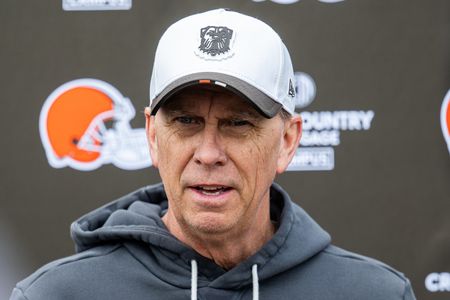
Cleveland’s first-year head coach Todd Monken believes the team should avoid potential risks if they consider selecting Texas Tech quarterback Brendan Sorsby in a possible NFL supplemental draft, given his loss of college eligibility due to gambling violations.
Speaking personally rather than for the Cleveland organization, Monken described pursuing Sorsby as a “slippery slope” despite the player’s demonstrated abilities and talent level.
“I don’t think we’re in a position to want to go down that road,” Monken stated during the Browns Foundation Golf Tournament. “That’s my opinion. That’s not (general manager Andrew Berry’s).”
“I like the quarterbacks that we have. I think that’s a slippery slope when you go down that, irrespective of talent, right?” Monken added. “In terms of the situation he’s (put) himself in, we all know what that is. He put himself in that situation. And we’ve seen in other sports with players that have been banned for life from playing in professional sports.”
“But from my end of it, kind of a tough angle to go down that road and think that’s going to be your franchise quarterback if he’s ever eligible to even play in the NFL,” he concluded.
After transferring from Cincinnati during the offseason, Sorsby was expected to be Texas Tech’s starting quarterback for 2026. ESPN rated him as the top transfer in this year’s class.
However, Sorsby’s college career hit a roadblock when extensive betting activity caused the NCAA to strip his eligibility in April and reject his reinstatement appeal in May. NCAA regulations forbid athletes and staff from placing wagers on NCAA championship events, including football.
While Sorsby pursues a court injunction to compete in 2026, entering the NFL’s supplemental draft remains a backup plan if legal efforts fail.
When questioned about Sorsby on Tuesday, Cleveland’s general manager Berry provided a less definitive response than his coach.
“No different than we do every year,” Berry commented. “We’ll do the work on all the prospects, and then we’ll make the appropriate decision for the organization.”
Cleveland’s current quarterback roster features veteran Deshaun Watson, second-year players Shedeur Sanders and Dillon Gabriel, plus 2026 sixth-round selection Taylen Green.
Following Monday’s hearing in Lubbock County, Texas, Judge Ken Curry has not yet ruled on Sorsby’s temporary injunction request. Curry asked for additional paperwork before making his decision, which could come within days, ESPN reported.
Sorsby’s lawyer, Jeffrey Kessler, asked for a ruling by June 15 to give his client time to decide about applying for the NFL supplement draft, which has a June 22 application deadline.
During the hearing, Curry listened to arguments from both Sorsby’s legal team and the NCAA regarding whether the quarterback should return to competition after allegedly placing thousands of unauthorized bets on college and professional sports — including wagers on his former team at Indiana.
Court records show Sorsby made at least 40 bets on Indiana football during his redshirt freshman season with the Hoosiers.
These wagers ranged from $1 to $114, totaling at least $850 during September and October 2022 while he was redshirting. In correspondence with the NCAA, Sorsby stated he never wagered on games he participated in or bet against his own team.
Over four years, the quarterback placed approximately $90,000 in bets through sportsbook accounts registered under family members’ and friends’ names, with 2,900 bets worth more than $30,000 occurring between June 2022 and December 2023 alone. Recently, Sorsby disclosed completing a 35-day inpatient rehabilitation program in Arizona for “a diagnosed gambling addiction and anxiety disorder.”
NCAA attorney Taylor Askew argued Monday that granting an injunction would effectively make the collegiate organization the first U.S. sports league unable to penalize its athletes for betting on their own competitions.
The NFL last conducted a supplemental draft in 2019. Established in 1977, this process was designed to provide players facing “sudden eligibility changes” with a pathway from college to professional football. Nevertheless, the league would likely thoroughly examine the investigation into Sorsby’s off-field conduct before deciding whether to conduct the special draft in July.
Legendary golfer Jack Nicklaus voiced his disapproval of how the PGA Tour currently arranges its tournament schedule during a Tuesday press conference before this weekend’s Memorial Tournament at Muirfield Village Golf Club.
“I don’t want to comment on the tour’s schedule because I’m not exactly in favor of what they’re doing right now,” Nicklaus stated, though he went on to outline what he views as upcoming difficulties for the tour.
“I hate to see tournaments bunched too much together with too many big tournaments too close together. That’s a problem, I think. And I think that’s going to be a problem for the tour in the future,” Nicklaus explained during the media session in Dublin, Ohio.
The golf icon, whose tournament debuted in 1976 as a pioneering event when active players didn’t typically host competitions, argued that the present scheduling format prevents individual tournaments from distinguishing themselves.
“If you looked at the schedule, we’re involved in the Cognizant down in Florida, and, you know, we have Pebble Beach and Los Angeles, Tiger’s event, and then Cognizant, and then we had Bay Hill and The Players. I mean, what chance does that tournament have? I mean, it sits right in the middle of those. They don’t have a chance.”
The 18-time major champion also expressed concern that the compressed schedule creates excessive demands on the golfers themselves.
“The other tournaments also say, you know, I got four out of five. It’s hard for guys to play that. See, the problem is not so much from the standpoint of players, it’s hard for the players to really be focused to play that much and be on top of their game,” Nicklaus explained.
“I look at it from the way I was as a player. I could play a couple weeks in a row, maybe three weeks in a row, but I needed some time off to be able to recharge the batteries. And I think everybody needs to recharge their batteries. So to jam it all in in one period of time, and then leave the rest of the year open, I think it’s tough.
“I don’t think it’s a problem yet, but I think it will be if we don’t address it.”
Nicklaus mentioned he has not yet discussed this matter but intends to speak with PGA Tour CEO Brian Rolapp and outgoing commissioner Jay Monahan, joking, “I probably shouldn’t have brought it up here. I’ll get chastised for that later.”
The NBA revealed its 12-person officiating team for the 2026 Finals on Tuesday, marking a milestone moment for Curtis Blair who will referee his first championship series alongside Scott Foster, who returns for his 19th Finals appearance.
The championship matchup kicks off Wednesday evening at 8:30 p.m. ET when the New York Knicks visit the San Antonio Spurs for Game 1.
“Being selected to work the NBA Finals is the highest honor for an NBA official, and I congratulate them on an outstanding and well-earned achievement,” said Byron Spruell, NBA President, League Operations. “We are grateful for their unwavering dedication to the game and pursuit of excellence in their craft.”
NBA Referee Operation management chose the crew after evaluating their performance scores for accurate calls and additional criteria throughout both the regular season and playoffs.
Joining Blair and Foster on the Finals roster are Tony Brothers (15th Finals), Marc Davis (15th), James Capers (14th), Zach Zarba (13th), John Goble (10th), Josh Tiven (seventh), James Williams (sixth), Courtney Kirkland (fifth), Sean Wright (third) and Tyler Ford (second).
The 55-year-old Blair previously worked as a Finals alternate in both 2021 and 2022. Since joining the NBA in 2008, he has officiated over 1,000 games.
“Very emotional moment, very emotional moment for me, because I’ve been right there on the doorstep for so many years,” Blair told The Associated Press. “Yeah, very emotional. This is my 18th year and one thing I had to realize going through this journey is that everybody has their own journey. Everybody has their own timetable. You become a referee, become an umpire, you get to the first round, the second round, third round. You just have to worry about yourself and your journey.”
Among the selected crew, Foster leads with 26 Finals games under his belt, while Davis has worked 23 and Brothers has officiated 19.
The league has designated Nick Buchert, JB DeRosa, Mitchell Ervin and Justin Van Duyne as this year’s backup officials.
Specific referee assignments for each game will be published on the league’s official website around 9 a.m. ET on game days.
Motorists traveling on northbound Route 13 should expect delays today as construction crews have shut down the right shoulder between Big Woods Road and Big Oak Road.
The shoulder closure is scheduled to last until 4 PM this afternoon while construction work continues in the area.
Drivers are advised to use caution when traveling through the work zone and allow extra time for their commute.
Global financial markets climbed to new record levels Tuesday as investors maintained their buying momentum, buoyed by steady conditions in U.S.-Iran relations and calm currency and bond trading environments. Smaller companies and non-technology sectors led gains in American markets.
Market analyst Jamie McGeever highlighted an under-the-radar surge in small-cap stocks throughout this year. While media attention has focused on large-scale technology companies and major tech corporations, smaller technology firms have actually emerged as the primary beneficiaries of artificial intelligence investment enthusiasm.
Several major market indices achieved new peaks, including global stock measures and the S&P 500. European markets gained 0.8% driven by technology optimism, while cyclical stocks pushed British markets up 0.3%.
Individual stock performance varied significantly. Seven S&P 500 sectors advanced while four declined. Utility companies rose 2% while communication services dropped 2.6%. Notable gainers included Marvell Technologies jumping 32%, Hewlett Packard climbing 20%, and Super Micro Computer advancing 7%. Alphabet fell 4%, Microsoft declined 4%, Dell dropped 7%, and Boeing decreased 3%.
Currency markets saw the dollar-yen exchange rate approaching 160, putting traders on alert for potential Japanese intervention. Bitcoin fell 6% toward $66,000.
In major corporate news, Google’s parent company Alphabet surprised investors Monday evening by announcing an $80 billion equity financing plan, with $10 billion coming from Berkshire Hathaway. While the move addresses rising debt costs and massive AI infrastructure spending, concerns arise about the company’s financial direction. Despite having $126 billion cash at March’s end, Alphabet faces nearly $200 billion in AI capital expenditures this year and has already issued over $85 billion in debt over the past year.
U.S. job market data revealed mixed signals Tuesday. April job openings rose to two-year highs with the fastest increase in five years, showing continued worker demand and little evidence of AI-related job losses. However, 90% of openings concentrated in professional and business services, while hiring rates, layoffs, and resignations all declined, suggesting market stagnation rather than strength.
European inflation data virtually guaranteed central bank action, with euro zone inflation exceeding 3% for the first time since September 2023. This development makes a 25-basis-point rate increase from the European Central Bank next week nearly certain, with traders anticipating an additional 50 basis points of tightening by year-end.
Wednesday’s market-moving events include Middle East developments, manufacturing data from multiple countries, speeches from central bank officials including Bank of Japan Governor Kazuo Ueda and European Central Bank board members, plus U.S. employment and economic indicators.
GameStop announced Tuesday that its quarterly revenue increased by 14% while revealing that company directors have authorized a $2 billion share repurchase initiative.
The video game retailer’s stock price soared 9% during after-hours trading sessions following the financial disclosure.
WASHINGTON — The United States announced new financial penalties Tuesday against Iran’s top cryptocurrency trading platform and three additional digital asset exchanges, continuing the Trump administration’s strategy to apply economic pressure on Iran amid current military conflicts with the U.S. and Israel.
The penalties target Nobitex, Iran’s biggest digital currency firm, along with its chairman and co-founder, Amir Hossein Rad. According to Treasury officials, Nobitex handled over half of all Iranian cryptocurrency transactions in the previous year and plays a key role in Iran’s extensive network for circumventing sanctions.
These financial restrictions arrive as two semi-official Iranian media outlets reported Tuesday that Iran has ceased discussions with intermediaries regarding extending a ceasefire in the conflict involving the U.S. and Israel.
U.S. President Donald Trump has challenged this assertion and stated that negotiations remain active.
Treasury officials allege that Nobitex has transferred assets and money overseas to protect government resources following the beginning of U.S. military actions in Iran. Attempts to contact Nobitex representatives via email were unsuccessful.
American authorities assert that Iran depends significantly on digital currencies and similar assets to bypass sanctions. Treasury Secretary Scott Bessent stated at the Reagan National Economic Forum this month, “We have seized about a billion dollars of their crypto.”
The Trump administration’s newest action represents one of several steps designed to impose economic hardship on Iran. The administration has also established secondary financial penalties against nations conducting business with individuals, companies, and vessels under Iranian influence — including partners like the United Arab Emirates and rivals like China. Financial institutions have been cautioned about processing Iranian funds.
Additionally, last week the U.S. placed sanctions on Iran’s recently established Persian Gulf Strait Authority, an organization designed to oversee maritime traffic through the strategic Strait of Hormuz. Treasury officials describe this agency as a “scheme to extort international shipping.”
Simultaneously, U.S. military forces have intercepted commercial ships attempting to breach a U.S.-coordinated blockade of Iranian harbors. The U.S. initiated this blockade on April 17 following Iran’s effective closure of the strait after Middle Eastern hostilities commenced with U.S. and Israeli attacks on Feb. 28.
BOGOTA, Colombia (AP) — European Union election monitors have rejected Colombian President Gustavo Petro’s allegations of voting irregularities following Sunday’s heated presidential contest, describing the ballot counting process as conducted in a “transparent, orderly and fluid” manner.
Mission leader Esteban González Pons stated that none of the 12 presidential hopefuls approached his team with concerns about voting problems. A runoff election is set for June 21 between attorney Abelardo de la Espriella and Sen. Iván Cepeda, who received the highest vote totals.
Cepeda, who represents Petro’s Historical Pact party, declined Sunday to accept preliminary vote tallies showing him in second place, stating he would await the comprehensive count supervised by judicial officials and notaries before commenting. Before Cepeda’s remarks, Petro posted on X platform claiming 800,000 people were unlawfully added to voting lists. Over 23 million citizens voted Sunday, with de La Espriella capturing 43.7% and Cepeda earning 40.9%, according to official tallies.
By Monday, Cepeda moderated his position, noting that election watchers from his party had not discovered “irregularities of a sufficient dimension to speak of fraud.” He also predicted victory over de La Espriella in the runoff and proposed a debate.
Petro, who is constitutionally barred from seeking another term, reinforced his fraud allegations Tuesday through another X post, claiming without evidence that 885,000 voters registered past a March 31 cutoff date.
The president additionally alleged that certain polling locations recorded unusually high ballot numbers.
Colombia’s National Registrars Office, responsible for election administration, announced Monday evening that after reviewing 99.98% of polling stations, they found only a tiny 0.06% difference from Sunday’s preliminary count.
The EU monitoring team stated Tuesday they examined randomly chosen vote tallies from across Colombia and compared them with actual ballots, discovering no discrepancies.
“We can discard any manipulation of data in the quick count and in the final count,” González Pons declared.
Colombian election law requires judges, not the president, to verify and certify results, usually within two weeks.
Political watchers have cautioned that Petro’s unsupported fraud claims might deepen political divisions and encourage violence before the June 21 runoff.
WASHINGTON — Speaking rapidly, Dr. Mehmet Oz outlined the administration’s initiatives to reduce prescription medication costs, fight healthcare fraud, and prevent Ebola’s international spread during his White House briefing appearance.
However, when journalists attempted to question the Centers for Medicare & Medicaid Services administrator about urgent current events — the very purpose of the administration briefing he was conducting — Oz offered minimal responses, repeatedly stating his limitations.
The briefing highlighted the administration’s challenges in addressing breaking news developments — a significant vulnerability as public opinion has grown increasingly critical of the president. This occurs while President Donald Trump has been less accessible to media inquiries than typical.
When questioned about Trump’s selection of Bill Pulte as acting director of national intelligence, given that the Federal Housing Finance Agency head lacks obvious national security experience, Oz expressed confidence in the president’s decision-making, adding, “I think Bill’s a great guy. I know him socially.”
Following additional questioning on the same matter, he responded, “Ma’am, you’re asking me a question that’s out of my lane.”
A reporter noted that the administration had provided so few details about Pulte’s appointment that seeking answers from Oz during the briefing was necessary, despite it falling outside his expertise. Oz responded, “I appreciate you want an answer. I’m not not going to be the one giving it to you.”
Further persistence finally led him to declare, “I don’t know anything more about Bill Pulte than you do. I did not think that the questions would even come up here. I hadn’t even heard the news when I walked out.”
The administration has featured some of its most telegenic officials to conduct briefings during White House press secretary Karoline Leavitt’s maternity leave. The series began with Vice President JD Vance, followed by another potential 2028 presidential candidate, Secretary of State Marco Rubio. Treasury Secretary Scott Bessent took his turn last week.
“I did watch them all, by the way,” Oz explained, describing how it helped him prepare. “I’m a doctor. I try and do my homework. I prepped for the case.”
While Vance, Rubio and Bessent addressed questions about the conflict in Iran and various other subjects, Oz, a former unsuccessful Pennsylvania Senate candidate and former television doctor, focused primarily on healthcare matters.
According to the administration, Oz appeared to reveal that 160 additional medications would join the government’s reduced-price drug platform TrumpRx, increasing the site’s total drug offerings to over 750.
“Dr. Oz authoritatively and articulately discussed the latest updates on several key Trump administration priorities, from lowering prescription drug prices to rooting out pervasive fraud in federal programs,” White House spokesman Kush Desai stated, while also criticizing reporters for inquiring about “topics that President Trump himself has already weighed in on.”
Reporters repeatedly questioned Oz about Trump’s four publicly reported health examinations since his White House return, receiving varying responses, including “I think he likes the results,” while offering extensive praise for his supervisor, who reaches age 80 this month.
“That amount of energy, and that amount of mental acuity does not exist in a vacuum,” Oz stated. “You have to have a vessel to carry it.”
A muralist who created a massive whale artwork covering a downtown Dallas building has filed a $25 million federal lawsuit against soccer’s global governing body and other parties, claiming they unlawfully covered his creation to make room for World Cup promotional materials.
The artist Wyland states he created the expansive mural by hand, spanning approximately 17,000 square feet across two walls of the structure.
The artwork remained in place for almost 30 years until crews started covering it with paint last month, sparking outrage from local residents who appreciated both its impressive size and ocean conservation message.
The regional World Cup organizing committee released a statement explaining that new artwork will replace Wyland’s mural “that captures this current historical moment and reflects the energy, unity, and global spirit surrounding the World Cup 2026.” The committee indicated that part of Wyland’s original work would remain intact.
Wyland submitted his lawsuit Monday in U.S District Court in Dallas, alleging that World Cup organizers, the building owner, and its management company covered his artwork without obtaining his permission or even informing him. He claims their conduct violated a 1990 federal statute designed to shield visual artists from having their publicly displayed creations destroyed.
Wyland demands at least $25 million in compensation. His legal filing states that world soccer’s governing body, FIFA, and other defendants “hastily and irrevocably destroyed a civic landmark” for World Cup promotion.
“Though FIFA claims they were working to develop art for the host city, in truth, they defaced an historic fixture of the host city,” the artist’s lawsuit says.
A FIFA spokesperson stated Tuesday that the federation “has no involvement in this whatsoever” and directed inquiries to the tournament’s local organizing committee.
A spokesperson for the North Texas FWC Organizing Committee refused to provide comment. The committee is not listed as a defendant in the legal action.
A spokesperson for Slate Asset Management, which oversees the building where the mural was covered, explained in a statement that local World Cup organizers approached Slate in March requesting donation of the mural space for “a new public art installation.”
“Slate is not being compensated in any way for the use of the wall space and was told by the local groups that Mr. Wyland had been notified,” the management company’s spokesperson said in an email.
Dallas will host more World Cup games than any other venue in the tournament shared between the U.S., Canada and Mexico, with nine matches scheduled at AT&T Stadium in suburban Arlington, home of the Dallas Cowboys.
Wyland’s Dallas mural, called “Whaling Wall 82,” was completed in 1999 and represents one of more than 100 comparable murals known as Whaling Walls the artist created worldwide to advocate for ocean life conservation.
An online petition opposing the mural’s removal and demanding protection for public artwork in Dallas has gathered more than 2,600 signatures.
Wyland’s lawsuit claims violations of the Visual Artists Rights Act, a 1990 federal statute that safeguards artwork of “recognized stature” regardless of who owns the physical piece.
A judge referenced that statute in 2018 when ordering a property owner to compensate a group of New York graffiti artists $6.7 million for whitewashing dozens of their spray-painted murals on buildings that previously housed a factory in Queens. The decision was confirmed on appeal.
Palo Alto Networks boosted its yearly revenue and earnings projections on Tuesday following robust demand for artificial intelligence and cloud-based cybersecurity services, causing the company’s stock to jump 7.4% in after-hours trading.
The cybersecurity firm, headquartered in Santa Clara, California, now anticipates fiscal 2026 revenue between $11.415 billion and $11.425 billion, marking an increase from its previous estimate of $11.28 billion to $11.31 billion.
Artificial intelligence has become a significant growth catalyst for the business, as increasing cyber threats powered by AI technology are driving companies to boost their cybersecurity investments and seek comprehensive platform solutions like those offered by Palo Alto Networks.
The firm specializes in delivering comprehensive network, cloud, identity and artificial intelligence security services.
For fiscal 2026, Palo Alto Networks projects adjusted earnings per share ranging from $3.77 to $3.79, representing an improvement from its earlier guidance of $3.65 to $3.70.
Third-quarter revenue climbed 31% to reach $3 billion, surpassing analyst expectations of $2.94 billion based on LSEG data.
A major cosmetics retailer announced an improved annual profit outlook this week, anticipating that reduced inventory losses and continued strong demand for premium products will offset increased expenses from store growth and advertising efforts.
The beauty chain bucked trends in the struggling luxury market, reporting robust sales performance across its locations as wealthy and younger customers continued purchasing trendy, high-margin fragrance and skincare products. Company stock prices surged 7% during after-hours trading following the announcement.
“From a market-share perspective, we gained share in prestige beauty, and we were roughly flat in mass beauty,” CEO Kecia Steelman said on the post-earnings call.
Sales at comparable locations increased 5.3% during the quarter that concluded May 2, surpassing the 2.9% growth recorded in the same period last year. Wall Street analysts had projected a 4.5% sales increase, according to LSEG data.
The retailer has expanded its appeal by adding celebrity-backed product lines including Rihanna’s Fenty Beauty, Selena Gomez’s Rare Beauty and Beyonce’s Cecred to better connect with shoppers.
“The company continues to outperform other beauty retailers, such as department stores,” said David Swartz, analyst at Morningstar.
The beauty chain now projects annual earnings per share between $28.36 and $28.80, up from its previous guidance of $28.05 to $28.55.
First-quarter earnings reached $7.74 per share, exceeding analyst expectations of $6.86.
Professional golfer Aaron Rai believes his disappointing performance at the Myrtle Beach Classic last month, where he dropped from the lead to fifth place, actually played a crucial role in preparing him for his later PGA Championship victory.
The 31-year-old Englishman is now drawing on those same experiences as he gets ready for this week’s Memorial Tournament at Muirfield Village Golf Club in Dublin, Ohio.
Speaking at Tuesday’s press conference, Rai explained how valuable the Myrtle Beach experience proved to be. “That experience at Myrtle Beach was absolutely invaluable for the PGA, and I’m not sure I would have handled the situation as well as I did at the PGA if I hadn’t experienced it the week before at Myrtle Beach,” he stated.
The English golfer highlighted that being in the final group at Myrtle Beach was particularly beneficial, since he hadn’t been in that position for at least five months beforehand. He described the experience as “huge.”
Rai also pointed to specific challenges during his final round that better prepared him for his breakthrough major championship win. “Bits from the crowd, bits from a couple of mistakes that I made in the midsection of the round. I think I made four bogeys in a row around the turn. I think just kind of where my mind went, certain things that I could have dealt with better, I was very aware of even on the Saturday of the PGA,” he explained.
He emphasized how the recent timing of that experience made it easier to make necessary adjustments. “I think when you’ve had that experience so recently before, it’s a lot fresher in the mind and it’s a lot easier to make those adjustments. So, yeah, that was crucial, really,” Rai said.
Looking ahead to this week’s competition, Rai expressed enthusiasm about returning to Muirfield, describing it as one of his preferred venues on the professional tour. “It’s an absolutely incredible event, a course that I absolutely love,” he commented. “Very demanding. I think it requires a complete game no matter what your skill set is, whether you’re a little shorter, whether you’re a little longer, whether you’re straight, whether the short game is good. It requires everything to be successful around this event.”
This marks Rai’s fourth tournament appearance at Muirfield. While he achieved a T26 finish in 2022, he failed to make the cut in both 2023 and 2025.
Reflecting on his previous struggles at the venue, Rai acknowledged the course’s difficulty but expressed confidence in his improved preparation. “Certainly after playing it a little bit more, it definitely requires a little bit more understanding, and I probably haven’t done as good of a job as I could in terms of my preparation, especially last year,” he said, referring to his 9-over-par performance that included rounds of 79 and 74.
“I think just trying to approach it a little bit better. Got here slightly earlier this week as well in order to do so. And to just learn from a couple of the mistakes that I’ve made in previous years,” Rai added.
Rai faces stiff competition from two-time defending champion and World No. 1 Scottie Scheffler, who claimed victory last year with a 10-under finish, defeating Ben Griffin by four strokes.
New Federal Reserve Chair Kevin Warsh has brought on board two seasoned policy experts to help guide him as he begins his tenure at the nation’s central bank, according to a Wall Street Journal report published Tuesday.
The newspaper, citing unnamed sources, reported that Warsh has selected Paul Winfree and Daniel Heil, both described as conservative policy veterans, to serve in advisory roles during his early days on the job.
According to the Journal’s reporting, both Winfree and Heil will serve as temporary contractors, focusing on policy analysis and strategic planning as Warsh establishes his leadership approach. The report noted that the new chair has not yet made final determinations regarding permanent appointments within the Federal Reserve’s structure.
Reuters was unable to independently confirm the Wall Street Journal’s reporting at the time of publication.
According to ESPN reports on Tuesday, the Miami Dolphins have added wide receiver Jalen Reagor to their roster. The contract details have not been made public.
The 27-year-old receiver will be playing for his fifth NFL franchise after being selected as a first-round draft pick by the Philadelphia Eagles in 2020.
Reagor did not appear in any games during the 2025 season, having spent portions of the year on the Los Angeles Chargers’ injured reserve list and practice squad.
Throughout his professional career spanning 64 games with 27 starts, Reagor has recorded 86 receptions for 1,037 yards and four touchdowns while playing for the Eagles from 2020-21, the Minnesota Vikings in 2022, the New England Patriots in 2023, and the Chargers in 2024.
In the 2020 draft, Reagor was chosen 21st overall, picked just one selection before current Minnesota Vikings star wide receiver Justin Jefferson.
Three individuals affiliated with the Exit 4 gang have received substantial prison sentences following their convictions for the killings of Carrie Mondell and Khalil Ameer-Bey, along with additional criminal charges.
The Department of Justice announced that Nyair Small, 26, from New Castle, along with Nasiir Watson and Daeshawn Shields, both from Wilmington, were sentenced for various charges including second-degree murder and manslaughter related to the deaths of Mondell and Ameer-Bey.
Small received a 22-year prison sentence on June 1st for his role in the homicides, as well as his involvement in a separate shooting incident that occurred in Middletown during May 2023, which resulted in no injuries.
The convictions represent a significant victory for prosecutors in their efforts to combat gang-related violence in the region.
I apologize, but the provided article content appears to be incomplete or corrupted. The original article text only contains a single period and HTML markup without the actual news content about the NOAA PORTS system’s 35-year milestone.
Based on the headline referencing the NOAA PORTS system’s 35 years of bringing ships to port safely, this appears to be a story about maritime navigation technology, but the full article content was not successfully provided for rewriting.
The USS Ford has completed its extended deployment and returned to its home port after spending close to twelve months at sea. The homecoming allows sailors aboard the $13 billion aircraft carrier to begin their earned rest and recreation time following the lengthy mission.
However, the vessel’s return also presents an opportunity for maintenance crews to tackle significant plumbing issues that have developed on the massive warship. These repairs can now be properly addressed while the carrier is docked at its home base.
SAN ANTONIO (AP) — During Tuesday’s practice sessions, both the San Antonio Spurs and New York Knicks worked out on a court featuring the NBA Finals logo painted at center court. Players conducted interviews against the backdrop of the championship emblem and encountered finals branding throughout their surroundings.
While this scene appeared routine, it represented anything but ordinary circumstances.
The championship stage represents uncharted territory for nearly every player on both the Spurs and Knicks rosters, leaving very few athletes on either team with genuine understanding of what Wednesday night will bring when the league’s 80th championship series begins in San Antonio.
Both teams share two significant characteristics: the experience will be fresh for most, and reaching this point required extensive journeys for all involved.
“Falling in love with basketball happened really early on in my life,” San Antonio star Victor Wembanyama said. “I mean, I have pictures of myself with a basketball at an age where I was not even old enough to have memories.”
Additional memorable moments will undoubtedly unfold during the upcoming four to seven games. San Antonio pursues their sixth championship and first since 2014, while New York seeks their third title and first since 1973.
This pairing represents a matchup that marketing executives might have conceived: New York stands as a global metropolis, the Knicks represent an legendary franchise, the Spurs bring championship pedigree, and their top performer is a 7-foot-4 French athlete who commands massive international attention.
“The best player in the world,” Spurs guard Stephon Castle said of Wembanyama.
Knicks guard Jalen Brunson — who earned Eastern Conference finals MVP honors — expressed tremendous admiration for Wembanyama, the Western Conference finals MVP.
“Watching him as a player, it’s pretty unbelievable,” Brunson said Tuesday. “The things he’s able to do on both sides of the ball, people have never really seen before from a person of his size. So, it’s incredible to watch. … He’s pretty incredible.”
San Antonio reached the championship series by capturing 62 regular season victories, defeating Portland in the opening round, eliminating Minnesota in round two, then completing a seven-game marathon that ended Oklahoma City’s reign as defending champions.
New York arrived through an 11-game postseason victory streak — claiming the final three games against Atlanta in round one, then sweeping both Philadelphia and Cleveland. Their scoring margins during those 11 victories are unprecedented in any 11-game span throughout the NBA’s 80-year existence.
“It’s a great team,” Wembanyama said. “It’s a great team of experienced guys who are not here by chance, but by relentless effort over the years. Very different career paths for all of them. They’re right where they’re supposed to be, in my opinion.”
Among all participants in this championship series, only the Spurs’ Harrison Barnes (with Golden State) and the Knicks’ Mikal Bridges (with Phoenix) have previously started finals contests. Since Barnes usually comes off San Antonio’s bench while Bridges typically starts for the Knicks, nine of the ten opening-game starters will face unfamiliar circumstances.
“When you can prepare the right way, when you do your routines, you treat it like a normal game, it allows you to be as normal as possible,” Brunson said.
Several players maintain connections to championship history despite lacking personal finals experience. Spurs guard Dylan Harper’s father is Ron Harper, who captured five NBA titles as a player. Brunson’s father — Knicks assistant Rick Brunson — competed for New York during the 1999 finals, and Knicks guard Jordan Clarkson witnessed previous Spurs championship celebrations firsthand. Growing up in San Antonio, his stepmother worked at a hotel offering prime parade route views.
“Being able to take pictures and run up on players for autographs, I was definitely that kid,” said Clarkson, whose father previously detailed vehicles for some Spurs players. “Seeing this energy and seeing how alive the city comes when the Spurs are in the finals and winning championships, it’s a great experience.”
Upon conclusion, a new champion will emerge. That franchise will become the NBA’s eighth different title winner across the past eight seasons — extending an unprecedented streak in league history. San Antonio enters as favorites, while New York embraces their underdog status.
“We’re here now, so there’s nothing more for us to say or talk about or to think,” Spurs guard Devin Vassell said. “We’re just going to keep doing what we’re doing and that’s been successful for us.”
The White House Correspondents’ Association is moving forward with a second attempt at their annual dinner following April’s violent interruption by a gunman who authorities say was attempting to kill President Donald Trump.
Association president Weijia Jiang announced the July 24 date for the rescheduled gathering, promising “significantly enhanced safety measures and new access procedures” for what she described as a “more intimate gathering.”
While Jiang didn’t reveal the location in her announcement, President Trump disclosed on his Truth Social platform that the event would take place at the Waldorf Astoria Hotel on Pennsylvania Avenue, which previously housed the Trump International Hotel.
Trump confirmed his acceptance of an invitation to return and address the gathering, describing the decision to reschedule as “a sign of Strength and Fortitude.”
“This announcement is a very good thing in that we cannot allow Lunatics to change our way of life, or even its scheduling,” Trump posted.
The president remained undecided about delivering his original remarks, which many anticipated would target the press. “I don’t know whether or not I will give the same rather nasty statements, at least as it concerns certain people, but we will soon find out,” he wrote. “In any event, it will be a ‘HOT’ ticket!”
Jiang stressed that “rescheduling was not automatic” and required extensive deliberation among board members.
She highlighted the dinner’s core mission as “a celebration of a free press and the vital role of journalism in our democracy for over a century.”
“We will not allow an act of violence to have the last word, especially during a year when we are reflecting on the 250th anniversary of America and everything we stand for,” Jiang stated.
Details about the size and format of the July event remain unclear. The original gathering at the Washington Hilton drew nearly 3,000 attendees, but Jiang indicated the rescheduled version would be considerably smaller, with specifics to be communicated directly to participants.
Her comments aligned with recent discussions suggesting any rescheduled event would need to be scaled back due to both financial and security considerations.
Jiang also acknowledged the Secret Service officer wounded in April’s incident, who continues to recover. “Our thoughts remain with the officer who was injured and with everyone who experienced that evening,” she said. “We are indebted to the US Secret Service, law enforcement and the hotel staff whose swift response protected our guests and our staff.”
Despite Jiang’s consistent advocacy for rescheduling, the decision faced opposition from some quarters.
Critics argued the entire event should be permanently canceled, citing not only security risks but concerns about the appropriateness of journalists socializing formally with those they cover.
“It undermines the public faith in how the press does its work, and it makes it look like we are pals with the people we cover,” said Kelly McBride, an ethics expert at the Poynter Institute, a journalism think tank, in May.
BOSTON (AP) — Voting rights advocates and representatives from two dozen states presented their case Tuesday before a federal judge, seeking to block President Donald Trump’s executive order that would establish a national voter database and impose restrictions on mail-in voting.
In separate legal challenges, the groups contended that Trump’s directive — designed to ensure only citizens participate in elections — violates the Constitution by giving the president authority that belongs to states and Congress. They warned the court that implementing the order would create expensive burdens for state election administrators and could intimidate officials with threats of prosecution.
“This is going to be a sea change in way that some states administer their ballots,” said Michael Cohen, who was part of a team representing California, adding that “it will be difficult to overstate the disruption that this will cause.”
The American Civil Liberties Union, representing the League of Women Voters in a separate case, has described the order as “a dangerous attempt to disenfranchise eligible voters nationwide.” The organization claims the directive converts “the U.S. Postal Service from a neutral mail carrier to an arbiter of who may cast a ballot by mail.”
“This case challenges an extraordinary and abusive assertion of executive power over the administration of federal elections,” the organization stated in its legal filing.
Tuesday’s proceedings follow another judge’s decision last week to reject a similar request to suspend the order. U.S. District Judge Carl Nichols, appointed by Trump and based in Washington, sided with the Republican administration’s position that blocking the order would be premature since implementation has not yet begun.
The Trump administration’s legal team argued in their dismissal motions that the challengers do not have proper standing to file their complaints. They also contended the requests are too early and that the groups lack proper legal grounds for their Administrative Procedure Act claims, which govern federal agency rule-making processes.
Stephen Pezzi, representing the Trump administration, characterized the alleged harms cited by opponents as speculative, noting that significant changes could occur with the voter database before completion. He assured the court that no prosecutions would result from violations of the executive order.
Missouri Solicitor General Lou Capozzi, speaking on behalf of states that support the database, maintained it was premature to determine how his state might utilize the system but called it “unlikely” that any voters would be removed from registration rolls this year because of it.
“We are not exactly sure how we would use it,” Capozzi stated, adding that “we don’t want this process to be strangled in the crib so to speak.”
U.S. District Judge Indira Talwani said she would consider both the requests to block the order and the motions seeking case dismissals.
During the courtroom proceedings, Talwani voiced worries about whether the federal system could be operational for approaching elections and potential risks for election workers who depend on state lists that differ from the federal version. She also questioned the accuracy of a federal database — pointing out, for instance, that women who changed surnames after marriage or individuals who relocated between states might not be included.
“Isn’t there a reasonable fear and concern on behalf of voters that they will be precluded?” Talwani inquired.
Trump signed the order in March following the stalling of voting reform legislation he had endorsed in Congress. The directive would require the federal government to compile a registry of qualified voters and instruct the Postal Service to deliver mail ballots exclusively to individuals on that registry. Election administrators have warned the plan could lead to misuse and create disorder, while the postal workers’ union has opposed the concept of mail carriers monitoring ballots.
The Postal Service has released a proposed regulation mandated by Trump’s executive order in the Federal Register. The rule would exclude primary elections and overseas ballots from its requirements, among other provisions.
Following his 2020 presidential defeat to Democrat Joe Biden, Trump has repeatedly made unsubstantiated claims that mail-in voting involves widespread fraud and has initiated a federal probe into that election, despite numerous audits and investigations — including Republican-led ones — confirming it was conducted without significant fraud. Trump has also expressed intentions to “take over” election oversight in Democratic regions.
Drivers using Jupiter Road should plan for delays as construction crews continue work that requires periodic lane restrictions in the area.
The roadwork is taking place on the stretch of Jupiter Road that runs between Venus Drive and Sun Court, with lane closures happening intermittently throughout the day.
According to traffic officials, the construction-related lane restrictions are expected to remain in effect until 5PM today.
Motorists are advised to allow extra travel time when using this route and to consider alternate paths if possible to avoid potential delays.
Sources close to the matter revealed Tuesday that President Donald Trump’s deal with the Justice Department blocking future tax investigations into his and his family’s financial records will continue, despite uncertainty surrounding his controversial weaponization fund.
Two anonymous sources indicated that while the $1.8 billion fund has been temporarily suspended, Trump hasn’t made a final decision on whether to permanently shut it down. White House staff reportedly spent Monday reaching out to Congress members to promise no fund disbursements would occur following significant Republican opposition.
These assurances haven’t satisfied Republican critics who plan to confront acting Attorney General Todd Blanche during his House subcommittee appearance Tuesday afternoon. Lawmakers want a clear commitment that the fund will be eliminated entirely.
Republican Senator John Kennedy described the situation as a “multi-vehicle pile-up,” explaining that his fellow Republicans need clarity from Blanche before supporting a $72 billion immigration enforcement measure.
Congressional anger stems from the fund’s creation as part of a Justice Department settlement with Trump, where he agreed to withdraw his $10 billion legal action against the Internal Revenue Service.
White House insiders suggest Blanche’s prospects for attorney general nomination depend heavily on his testimony performance.
“He has to come back with some answers,” one official stated.
The Justice Department declined to comment on the matter. On Monday, DOJ confirmed it would follow a court directive temporarily halting the fund until June 12, but avoided discussing the fund’s long-term status.
Trump addressed the controversy Tuesday afternoon by sharing a Substack article titled “The Truth the Media Won’t Tell You About the Anti-Weaponization Fund.” The piece defended Trump’s efforts to compensate individuals claiming government mistreatment while criticizing media outlets and Democrats for characterizing it as a slush fund.
Following a Republican Senate meeting Tuesday, Senate Majority Leader John Thune reported speaking with Blanche earlier and expressed confidence the acting attorney general would address lawmakers’ concerns during the House hearing.
“I think his statement is going to be very definitive,” Thune commented.
Thune has advocated for keeping the immigration bill focused solely on enforcement measures, opposing inclusion of $1 billion for securing a 90,000-square-foot ornate ballroom on White House property that Trump desires.
Democratic leaders are pushing for legislation to eliminate the fund entirely.
“Let’s be clear, Trump has not killed this slush fund,” Senate Minority Leader Chuck Schumer told reporters Tuesday. He emphasized that any legislation should also cancel the tax audit protection agreement.
Meta has reduced portions of its initiative to gather employee computer activity data for artificial intelligence training following significant worker opposition, according to a company internal communication released Tuesday.
The social media giant had planned to monitor staff mouse movements, keyboard activity, and other computer interactions to help develop AI systems. However, employees voiced strong objections to the data collection program over several weeks.
In the internal communication, the company acknowledged the workforce concerns while defending its original privacy safeguards. “While we remain confident in the privacy protections we put in place at launch, which went through several layers of risk review, we have heard your concerns about personal data on work devices, battery life, and wanting more control over when capturing happens,” the company stated in the memo.
The company emphasized that its initial privacy measures had undergone multiple security assessments before implementation, but ultimately decided to modify the program in response to employee feedback about data privacy, device battery performance, and user control over the monitoring system.
A groundbreaking digital trading connection between Jordan and the United Arab Emirates went live on June 1, 2026, creating direct investment pathways between the nations’ stock markets through an innovative electronic platform called Tabadul.
The historic launch ceremony took place in Amman, with Jordan’s capital market institutions and the Abu Dhabi Securities Exchange (ADX) making the joint announcement. The Amman Stock Exchange (ASE) released a statement explaining that this digital bridge represents a key component of an expanded strategic alliance between the two nations, designed to create new investment pathways and strengthen financial market connections.
Through this electronic connection, investors can now conduct international trades via authorized brokerage companies operating in either country. The trading mechanism functions within the Tabadul network, a specialized regional system created to enable shared access across Middle Eastern capital markets.
The ASE’s official statement outlined several key objectives for the program: expanding the pool of investors across both nations, boosting market performance, increasing available liquidity, and advancing the technological capabilities of regional financial market infrastructure.
Jordan Securities Commission Chairman Emad Abu Haltam characterized the platform’s debut as a major strategic milestone for Arab financial markets. He said the connection would strengthen integration among regional exchanges, increase liquidity, improve efficiency, and provide investors with wider opportunities.
ADX Group CEO Abdulla Alnuaimi said the Tabadul platform represents an advanced model for cooperation among regional financial markets. He said the system offers a secure trading environment designed to enhance the attractiveness of the region’s financial sector.
ASE CEO Mazen Wathaifi said the electronic link reflects broader economic cooperation between Jordan and the UAE. He said the initiative would help the Amman Stock Exchange expand its access to regional and international financial markets while supporting efforts to attract Arab and foreign investment.
This financial market collaboration builds upon a comprehensive partnership between the two countries that encompasses significant infrastructure development, including the $2.3 billion UAE-Jordan railway project that began earlier this year.
The Tabadul platform originally debuted in 2022 as an ADX initiative, specifically engineered to facilitate shared market access through a unified regulatory structure while promoting enhanced connectivity throughout regional capital markets.
Motorists traveling on Route 9 should be aware of ongoing work that has resulted in a lane shift between Emerson Way and Fawn Lane.
The lane shift is currently in effect as crews continue their operations in the area. The temporary traffic pattern is expected to remain in place until 4PM today.
Drivers are advised to use caution when traveling through the work zone and allow extra time for their commute.
Conflicting messages emerged this week regarding U.S.-Iran relations, with a high-ranking Iranian military official declaring that armed conflict with America cannot be avoided while President Donald Trump maintained optimism about reaching a diplomatic solution in the coming days.
Mohammad Jafar Asadi, who serves as deputy head of Iran’s central military command known as Khatam al-Anbiya, dismissed any possibility that his country would comply with American demands, according to reports from Iranian state television.
“The United States demands our total surrender, and the Iranian nation will never surrender,” Asadi stated. “Without surrender, war is inevitable.”
These comments stand in stark contrast to President Trump’s optimistic outlook regarding ongoing diplomatic discussions.
During a Monday telephone conversation with ABC, President Trump predicted that a peace deal with Iran could be finalized “over the next week.” He emphasized that reaching an agreement through negotiations would be more desirable than pursuing military action.
“It’s not an easy thing for them. It’s actually not easy from our standpoint either. But we’re getting what we need to get,” President Trump explained.
The president noted that while he had previously suggested on May 24 that a memorandum of understanding was close to completion, he has not yet signed off on the document because “I still have to get a few more points.”
These divergent positions emerged as hostilities persist between Washington and Tehran in the strategically important Strait of Hormuz region.
Iran’s Revolutionary Guard announced Monday that it had fired a cruise missile at the MSC Sariska V, describing the targeted ship as having connections to both the United States and Israel. The organization claimed this attack served as payback for an American strike against the Iranian commercial vessel Lian Star in the Gulf of Oman. Maritime officials from Britain reported that the MSC Sariska V suffered damage from a major explosion in waters near Iraq.
This latest incident occurred as military confrontations between Iran and the United States have intensified around the crucial shipping corridor. Both nations have conducted military operations in recent days, with disagreements centered on control of the Strait of Hormuz, a waterway that handles 20% of global oil and gas transportation.
NEW ORLEANS – A Salisbury University track and field standout has earned national recognition for his outstanding performance on the track this season.
Kai Smith has been selected as the USTFCCCA 2026 Outdoor Male Track Athlete of the Year, as announced by the U.S. Track & Field and Cross Country Coaches Association (USTFCCCA).
Smith dominated at the championships, earning recognition as the Most Outstanding Men’s Track Performer while claiming victory in both the 100-meter and 200-meter sprint events.
The prestigious award recognizes Smith’s exceptional achievements during the 2026 outdoor track season and his commanding performance at the national championship meet in New Orleans.
Delaware State Police are searching for a suspect who robbed a Walgreens pharmacy in Wilmington on Sunday afternoon.
Authorities responded to the store at 1509 Philadelphia Pike around 4:45 p.m. on June 1, 2026, following reports of a theft. According to investigators, the suspect was making a purchase when a store worker opened the cash register. At that moment, the man reached into the drawer, took cash, and fled the scene. During the incident, the suspect grabbed the employee’s arm as she attempted to prevent the theft, though she did not suffer any injuries.
Police describe the wanted individual as an unknown black male who was last observed wearing a blue hooded sweatshirt and black pants.
The investigation remains active under Delaware State Police Troop 1. Authorities are requesting anyone who saw the incident or has information that could help to reach out to Corporal K. Kelleher at (302) 761-6677. Tips can also be submitted through a private Facebook message to the Delaware State Police or by calling Delaware Crime Stoppers at 1-800-847-3333.
Crime victims, witnesses, or those who have lost loved ones to sudden death can receive support through the Delaware State Police Victim Services Unit and Delaware Victim Center, available around the clock at 1-800-VICTIM-1 (1-800-842-8461). The unit can also be contacted via email at [email protected].
GREEN BAY, Wis. — Green Bay Packers running back Josh Jacobs has returned to team practice while Wisconsin prosecutors deliberate on potential charges stemming from domestic abuse allegations that led to his arrest last month.
The three-time Pro Bowl player participated in Tuesday’s organized team activities, marking the Packers’ second week of such sessions. Head coach Matt LaFleur addressed the situation before practice, stating that Jacobs’ legal issues haven’t disrupted the team’s focus.
“I would say business as usual,” LaFleur said.
Authorities arrested Jacobs on May 26 in Brown County, Wisconsin, facing allegations of strangulation and suffocation along with additional charges. According to Hobart/Lawrence Police Chief Michael Renkas, officers responded to a complaint involving Jacobs on the morning of May 23.
Through his legal representatives, Jacobs has released a statement saying he “vehemently denies the allegations.” He was freed from a Wisconsin detention facility on May 27 during the team’s initial week of organized activities as the investigation continues.
District Attorney David Lasee indicated that a formal charging decision remains premature.
“Our office has requested additional investigation, as there is reason to believe that additional evidence may exist that would impact whether criminal charges are appropriate, and what charges would be issued. … The investigation remains open and is ongoing,” Lasee stated last week.
During the previous season, Jacobs accumulated 929 rushing yards and scored 13 touchdowns. The team currently lacks any other player who achieved even 200 rushing yards for them in the past year.
This performance came after a 2024 campaign where Jacobs gained 1,329 yards on the ground with 15 touchdowns, earning his third Pro Bowl recognition.
The 28-year-old has amassed 7,803 rushing yards and 74 touchdowns throughout his seven-season professional career, spending five years with the Raiders. He received All-Pro recognition and led the NFL with 1,653 rushing yards while playing for Las Vegas in 2022.
A deadly stabbing incident involving a British teenager has sparked intense discussions about law enforcement practices and racial dynamics after video emerged showing police restraining the victim while dismissing his pleas for help.
Henry Nowak, an 18-year-old student, was fatally wounded in December, but the case gained widespread attention this week following the sentencing of his attacker and the release of disturbing footage from the scene.
Vickrum Digwa, 23, who is Sikh, received a life sentence with a minimum 21-year term Monday after being convicted of murder. Digwa had falsely told responding officers that Nowak, who was white, had racially attacked him.
Law enforcement personnel responding to the scene in Southampton, a coastal community in southern England, initially accepted Digwa’s account. However, court proceedings revealed that Digwa had fabricated the racism allegations.
Prime Minister Keir Starmer expressed his revulsion at the footage and questioned how “accusations of racism informed the decision-making in this case.”
Demonstrators assembled outside Southampton’s police headquarters to voice their outrage over Nowak’s death.
Video evidence shows the university student lying on the ground, informing officers of his stab wounds while they restrained his arms and attempted to force him upright. He repeatedly stated he was unable to breathe.
“You’ve been stabbed? Whereabouts?” an officer said in the video. “Don’t think you have, mate.”
Following the court proceedings, the victim’s father, Mark Nowak, emphasized that the tragedy wasn’t centered on racism or religion, expressing hope that his son’s death would contribute to improved street safety rather than fostering “further division, hatred or tension.”
However, Nigel Farage, leader of the anti-immigrant Reform UK party, characterized the incident Tuesday as evidence of so-called two-tier policing — a far-right assertion that ethnic minorities receive preferential treatment over white individuals.
Farage urged people to respond with “pure cold rage,” demanding an end to “anti-white prejudice” and promoting the concept “that white lives matter just as much as Black lives.”
Home Secretary Shabana Mahmood dismissed claims of differential policing standards across communities and appealed to Parliament members not to “allow this murder to turn communities against one another.”
Mahmood acknowledged public shock over the tragic footage and emphasized the government’s commitment to dramatically reducing knife-related violence.
She appealed for restraint while the Independent Office for Police Conduct examines the actions of Hampshire and Isle of Wight Constabulary officers. She noted that online misinformation had resulted in death threats against an uninvolved officer.
“Misinformation and inflammatory commentary is making a dreadful situation even worse,” she said. “We must all together condemn it.”
Two years prior, a stabbing attack that claimed three young lives and injured 10 others at a dance class in northern England triggered nearly a week of widespread unrest after social media users incorrectly identified the teenage perpetrator as a Muslim asylum-seeker. The violent confrontations with law enforcement primarily targeted migrants and Muslims.
The British-born attacker’s parents were Rwandan Christians, and while investigators couldn’t determine his motivation, they ruled out terrorism. Authorities discovered materials about Nazi Germany, the Rwandan genocide and car bombs on his electronic devices.
In Nowak’s case, the first-year University of Southampton student had been socializing with friends when officers arrived at what was reported as an assault. Nowak was visible on a driveway, supported by someone who mentioned he had blood in his mouth.
Digwa stood close by and informed officers he had also sustained injuries, indicating his allegedly swollen eyelid. He alleged that Nowak had removed his turban and grabbed his hair.
Following Nowak’s restraint, officers positioned him on his side while searching for stab wounds. He appeared unconscious when an officer announced his arrest for assault and recited his legal rights.
Upon discovering his injuries, officers removed the handcuffs and began CPR, according to police statements.
Digwa faced conviction for murder at Southampton Crown Court.
Judge William Mousley told Digwa he rejected the claim that Nowak made racist remarks toward him.
“You are the only person to make that claim and it is completely at odds with his previous character,” he said.
In Britain, where firearm possession faces strict regulation, knives frequently serve as weapons in violent incidents and face similar restrictions. Generally, individuals cannot carry bladed implements except pocketknives with cutting edges under 3 inches. However, Sikhs may carry ceremonial knives called kirpans for religious purposes.
Mousley noted that Digwa possessed a small kirpan, which Sikhs are religiously required to carry, but also had an 8-inch sheathed Sikh dagger that served as the murder weapon. He stated that the religious connection of the weapons had put other Sikhs at risk.
“Your actions have stirred up racial tension in Southampton and across the country which have made many Sikhs worried about their own safety even though they have done absolutely nothing wrong,” the judge said.
Law enforcement officials apologized to Nowak’s family and stated that Digwa’s deception had misled responding officers.
“It is devastating the officers did not believe Henry when he said he’d been stabbed and couldn’t breathe,” Police and Crime Commissioner Donna Jones said. “The details of the police response raises serious concerns about police impartiality, fairness and judgment.”
Digwa’s mother, Kiran Kaur, 53, was found guilty of assisting an offender after attempting to conceal the murder weapon. Her sentencing is scheduled for July 17.
Images from primary election contests nationwide showcase the competitive landscape as political hopefuls work to earn spots on midterm election ballots.
The visual documentation highlights the electoral process taking place across various states as candidates participate in primary races that will determine who advances to the general election.
These primary competitions represent a crucial step in the electoral timeline, with winners moving forward to compete in the upcoming midterm elections.
WASHINGTON — The head of the Department of Homeland Security faced questioning from senators Tuesday regarding the agency’s funding needs during a period of heightened focus on immigration policies and upcoming World Cup preparations.
Secretary Markwayne Mullin testified before the Senate appropriations subcommittee on homeland security as lawmakers consider legislation to provide long-term funding for immigration enforcement through the remainder of President Donald Trump’s administration. This approach would eliminate the need for Democratic support, though Democrats have insisted on restrictions before approving agency funding.
However, efforts to secure extended funding for these agencies have hit roadblocks due to Republican resistance to a $1.776 billion settlement fund intended to compensate Trump allies who claim they faced political persecution.
Mullin, selected by Trump to head Homeland Security following the dismissal of his predecessor Kristi Noem, made his first Senate appearance since his March confirmation hearing. He is scheduled to testify before the House Wednesday on budget matters.
The secretary, who has positioned himself as bringing stability to a department that experienced turmoil under Noem’s leadership, has recently caused concern in the travel sector by suggesting he might remove U.S. Customs and Border Protection personnel from airports in designated “sanctuary cities.”
This potential action could disrupt international travel just as millions of visitors prepare to visit the United States for the World Cup.
During a Monday press conference, Mullin revealed he has developed contingency plans to reassign CBP officers from airports to assist with security at the Delaney Hall ICE facility in Newark, New Jersey, where protesters have been demonstrating against facility conditions. However, he noted that state cooperation in providing security makes this unnecessary at present.
New Jersey state police stepped in Friday to replace federal immigration enforcement personnel who had been confronting protesters at the location for several days. Newark’s mayor also established a curfew around the facility Sunday.
“As long as we continue to have this partnership with local and state law enforcement then there will be no need to do so,” Mullin stated to reporters at a Dallas news conference Monday when asked about relocating CBP officers from airports.
The secretary also anticipated facing inquiries about a recent U.S. Citizenship and Immigration Services policy change requiring most green card applicants to seek permanent residency from their home countries rather than from within the United States. This shift from established procedures has created widespread uncertainty among immigration attorneys and their clients.
A diplomatic exchange between President Donald Trump and Prime Minister Benjamin Netanyahu has drawn attention after Trump expressed gratitude for Israel’s decision to cancel a planned military strike in Beirut, though private reports suggest their conversation was far more contentious.
Trump posted on Truth Social about his discussion with Netanyahu, stating he had requested the Israeli leader avoid conducting what he characterized as a significant operation in Lebanon’s capital city.
“I had a conversation with Bibi Netanyahu today, asking him not to go into a major raid of Beirut, Lebanon. He turned his Troops around. Thank you Bibi!” Trump wrote.
The president also revealed he had reached out to Hezbollah through intermediaries and stated the organization had committed to ceasing hostilities.
“I also had a conversation with representatives of the leaders of Hezbollah, and they agreed to stop shooting at Israel, and its soldiers,” Trump posted.
“Likewise, Israel agreed to stop shooting at them. Let’s see how long that lasts — Hopefully it will be for ETERNITY!” he added.
Israeli military sources indicated that no forces were actually en route to Beirut on Monday, despite earlier announcements from Netanyahu and Defense Minister Israel Katz that the Israel Defense Forces would strike Hezbollah infrastructure in and near the Lebanese capital.
Even with the ceasefire declaration, Israel noted that Hezbollah deployed drones against forces in southern Lebanon, causing alert sirens to sound in northern Israel. The IDF retaliated with attacks on Hezbollah locations.
According to an Axios report, Trump and Netanyahu had an intense disagreement about Israel’s military tactics and the ceasefire agreement. The report, citing two administration officials and another source, described Trump questioning plans to demolish buildings in Beirut to target Hezbollah commanders, asking Netanyahu: “What the f*ck are you doing?”
The report indicated Trump also mentioned his previous support for Netanyahu regarding legal matters in Israel, telling the prime minister: “You’re f*cking crazy. You’d be in jail if it weren’t for me. I’m saving your ass. Everyone hates you now, and everyone hates Israel because of this.”
Axios reported that White House frustration grew after Iran threatened to withdraw from negotiations with Washington due to Israeli activities in Lebanon. The United States and Iran are currently in talks about a comprehensive memorandum of understanding that includes provisions to end the fighting in Lebanon.
Sources indicated that US officials back Israel’s right to defend against Hezbollah attacks but have disagreements about the extent of IDF operations in Lebanon. A senior US official quoted by Axios said Netanyahu replied: “Okay, okay, just make sure everything is handled.”
The Prime Minister’s Office refused to provide an official comment on the details reported by Axios.
Netanyahu subsequently offered a different version of their conversation, stating he had told Trump that Israel would conduct strikes in Beirut if Hezbollah continued launching attacks into Israeli territory. He also indicated that operations in southern Lebanon would proceed and that Israel’s stance remained unchanged.
Multiple Israeli political leaders openly condemned the choice to abort the planned Beirut strikes. Former IDF chief of staff and Yashar! Party leader Gadi Eisenkot described Trump’s instruction as “a humiliating demand, one that is blatantly unreasonable.” Eisenkot noted that Netanyahu “is the man who preached morals to everyone about the basic need to be a prime minister and know how to say ‘no’ to the President of the United States.”
Opposition leader Yair Lapid criticized Netanyahu for behaving as if Israel were a protectorate of the United States. Lapid also demanded a “powerful response” to the rocket fire from Lebanon, stating that “the responsibility for the security of Israeli citizens lies solely with the Israeli government.”
Developers behind an ambitious maritime project are working to secure billions in funding for what they envision as a revolutionary floating metropolis that would house 80,000 people on the open ocean.
The Freedom Ship concept has been in planning stages for many years, but Freedom Cruise Line CEO Roger Gooch recently told The Telegraph that organizers now believe the massive undertaking is achievable.
“We feel very confident that we can put this together, but capitalization is key,” Gooch said.
The ambitious venture carries a price tag of $16.16 billion and would create living space for roughly 50,000 full-time inhabitants, 10,000 visitors, and 20,000 crew members.
Freedom Cruise International emphasizes that their vision differs significantly from traditional cruise vessels, positioning it instead as a perpetually functioning maritime metropolis.
“The Freedom Ship is envisioned as a permanently mobile city at sea—designed for long-term residence rather than short-term travel,” the company said.
“It is not a cruise ship and not defined by destinations or itineraries.”
The massive structure would stretch approximately one mile in length and operate as a complete urban ecosystem. Blueprints include educational institutions from elementary through college level, retail establishments, financial services, recreational venues, park areas, and an internal transportation network linking various districts.
“We started with the view that the ship should not be a monolithic piece but visually comfortable, so we softened all the edges,” Gooch said.
“We also want it to breathe, so we’ve gone to great lengths to allow walkways and green spaces.”
“It is meant to feel familiar, accessible, and unremarkable in the best sense—an ordinary part of life within a city that happens to move.”
Due to its enormous scale, the floating community would operate exclusively in international waters and rely on nuclear power for energy. The maritime city would complete a journey around the world approximately every two to three years.
Transportation to and from the vessel would rely on ferry services and small aircraft, with helicopter landing areas incorporated into the design to facilitate access.
Israeli Parliament members are scheduled to cast secret ballots this week for the nation’s next state comptroller in what has transformed from a routine selection process into a significant challenge for Prime Minister Benjamin Netanyahu’s coalition unity.
The competition features two contenders: former Supreme Court Justice Yosef Elron and attorney Michael Rabilo, who maintains strong connections to Netanyahu. The victor will take control of one of Israel’s most crucial watchdog positions, overseeing audits of government departments, public institutions, and state actions during a period when wartime choices, governmental operations, and institutional confidence face intense political examination.
During Monday’s faction gatherings, opposition leaders centered their discussions on the position’s autonomy and whether the incoming comptroller could effectively investigate the very administration currently attempting to influence the selection process.
Opposition Leader Yair Lapid stated that Elron could help rebuild the office’s reputation specifically because he isn’t associated with the left. “I believe that not only in the opposition, but also in the coalition, there will be people who say to themselves that our role in this building is to serve the State of Israel and its interests,” Lapid said.
Lapid characterized Elron as “a respected Supreme Court justice” and “someone politically identified with the right,” suggesting he could rebuild “the importance and prestige” of the State Comptroller’s Office. He drew a distinction with Rabilo, whom he labeled “Netanyahu’s personal lawyer,” and maintained that Netanyahu’s favored nominee might protect the prime minister from upcoming oversight.
Yisrael Beitenu party chairman Avigdor Liberman indicated he would honor the custom of a private, confidential vote but clearly stated he would not back Netanyahu’s selection. “We will preserve the Knesset tradition regarding personal votes,” Liberman said. “But I can already reveal one thing: I will not vote for the prime minister’s candidate.”
Yair Golan, chairman of The Democrats, avoided naming specific candidates but connected the ballot to what he characterized as a broader trend in government selections, declaring that anyone whose “loyalty is to the king and not to the kingdom will have to go home.”
The confidential voting occurs while Netanyahu’s coalition already faces tension over the military draft controversy. Should Rabilo prevail, Netanyahu can demonstrate that his alliance remains unified during crucial moments. A loss would indicate that dissatisfaction within the coalition has progressed beyond public rhetoric into concrete opposition.
The Kingdom of Bahrain has imposed an immediate ban on its citizens traveling to Iraq and Iran, according to an announcement from the country’s Ministry of Interior.
Officials from Bahrain’s Ministry of Interior made the declaration through the state news agency BNA, stating the restriction was put in place to ensure national security and protect the wellbeing of Bahraini nationals.
“Due to the continued tense security situation resulting from the repercussions of the sinful Iranian aggression, and in order to safeguard national security and the safety of all citizens, the Ministry of Interior announces the decision to ban citizens from traveling” to Iraq and Iran, the ministry said.
The travel prohibition will continue “until further notice,” according to ministry officials, who also cautioned that authorities plan to pursue enforcement action against anyone who defies the ban. Bahraini officials stated they will implement appropriate measures against “violators” of the order.
This move comes amid escalating regional instability throughout the Middle East and follows Iranian attacks that hit targets within Bahrain during the latest period of conflict.
Weapons including missiles and drones from Iran hit vital infrastructure throughout the nation, sparking significant blazes at a fuel storage facility in Muharraq Governorate and at the kingdom’s primary oil refinery located on Sitra Island.
Military installations linked to US forces were also hit during the assault. Officials from Bahrain reported that facilities housing American personnel, such as the US Navy’s Fifth Fleet headquarters and Sheikh Isa Air Base, were struck in the opening round of attacks.
Residential neighborhoods were also impacted by the strikes, Bahraini authorities confirmed. The bombardment caused deaths and forced thousands of residents from their homes.
Anti-Israel messages including “Zionism is a death cult” and “Glory for Gaza” have appeared as graffiti and signage at universities nationwide, reflecting a surge in campus tensions following the conflict in Gaza that began with attacks on Israeli civilians by Hamas.
Recent Rutgers University graduate Lillian Russ witnessed this hostile graffiti being removed and reappearing repeatedly on campus. “Yes, there is security, but I don’t think there’s enough security,” she stated, explaining her concerns about safety at Jewish organizations like Hillel and Chabad, and her nervousness about displaying Jewish symbols due to campus harassment.
Faculty members have also become targets. “There has been a professor who got doxxed, and he had to flee the country, even though that’s in regards to academic freedom,” Russ noted. “For a Jewish student, it doesn’t feel like there’s enough, and I don’t know if there will ever be enough. But it’s just important that every day I keep going outside and saying to myself, okay, I’ll be fine, I’ll be fine.”
Following months of vandalism, disruptive demonstrations, and what she characterized as a threatening atmosphere for Jewish students, Russ pursued federal civil rights action. She collaborated with Hillel to file a Title VI complaint against the university after witnessing repeated incidents, including what she called a “fake encampment” serving as a daily protest location, and demonstrators invading academic buildings and dining facilities. “Enough was enough, and I felt very unsafe,” she explained, remembering how narrowly a BDS resolution missed approval.
With help from a Hillel rabbi, Russ connected with lawyers at Arnold & Porter and started gathering student accounts and documentation. “Something needs to be done,” she told them. “It’s not acceptable having to live in fear and having to walk around and see graffiti everywhere.”
Her efforts to challenge campus antisemitism showed results: “The reaction, I feel the university has taken a step forward in addressing things.”
Russ credited recent administrative changes with moving the institution toward what she considers a more positive approach. “Our former president resigned, and we have a new one, President Tate, and I feel that he has addressed things in a very appropriate way.”
Government intervention proved significant in influencing the university’s actions. “The resolution from the government, the Office of Civil Rights, they clearly stated that there’s a poll outline that needed to be followed,” she explained, adding that she is “very happy that this outline has been implemented.”
At UC Santa Barbara, a sign reading “No Zionists allowed” was displayed and shared on a university social media account. After removing the sign, administrators issued a statement declaring that neither antisemitism nor Islamophobia would be permitted on campus.
Alan Levine, who leads the campus advocacy organization Hasbara Fellowships, criticized this response as downplaying antisemitism and weakening the message. He told The Media Line that administrators “had to condemn Islamophobia in the same sentence. Not on the same page, same sentence. … They couldn’t possibly say, ‘We condemn antisemitism,’ period. It had to be, ‘We condemn all forms of antisemitism and Islamophobia and all forms of hate.’”
The critique wasn’t merely about word choice in an official statement; Levine remembered that harsh criticism was directed at those who responded “All Lives Matter” to “Black Lives Matter” because they were diminishing racial issues. Yet, generalizing when confronting antisemitism and deflecting attention appears to be standard practice in some administrations.
As antisemitic incidents have reached crisis levels on campuses, Levine observes that many administrations have “not demonstrated any ability or desire to really help their students and clamp down on antisemitism.” Students meanwhile report harassment, intimidation, belittling, and even death threats. One approach is to empower students to advocate for Israel and address antisemitism on their campuses. This is where Levine’s Hasbara Fellowships serves an essential function.
Hasbara Fellowships operates as a North American nonprofit that prepares university students for Israel-focused advocacy. Working on more than 95 campuses, it conducts summer and winter educational trips to Israel featuring briefings, location visits, and workshops covering history, media literacy, and public engagement.
Program participants receive ongoing support, materials, and guidance when they return to their campuses. The organization’s declared goal is to provide students with knowledge and communication abilities to take on leadership positions and engage in pro-Israel advocacy during the academic year.
The Media Line interviewed multiple Hasbara fellows about difficulties they encountered on campus and before joining the Hasbara Fellowship.
A first-year student at Brandeis University says she anticipated finding sanctuary from antisemitism on a campus established with strong Jewish connections, but instead faced hostility, intimidation, and what she calls academic prejudice.
Ella Friedman, who is half-Israeli, states, “I’ve faced a lot of antisemitism, like the majority of the people on this trip. I faced death threats, lost friends, even had my own professors, who I thought I could trust, turn on me.”
A communications and Near Eastern and Judaic studies major from the Boston area, Friedman said she came to Brandeis hoping to “breathe and feel free of this and just study,” after experiencing harassment in high school, but she said the campus situation has also been disturbing.
“I wasn’t expecting to have this much at Brandeis,” she said. She described a student organization calling itself the “Jewish Bund,” a name she linked to Nazism, that she said organizes disruptive protests in libraries and once displayed a casket wrapped in a keffiyeh.
Friedman also reported experiencing pressure in academic settings. She claimed that some professors, including Jewish and Israeli faculty, incorporate anti-Israel perspectives into coursework. One Israeli professor, she said, “would get upset or take points out of your grade if you did not agree with his political ideas of Israel.” Consequently, she said, students feel “scared to speak up and say something because you know that your professor will take points off your grade.”
Gabriela Rubin, 21, from Bergen County, New Jersey, said conditions at Rutgers University in New Brunswick have improved somewhat but remain concerning. “No matter where we are, we just feel like we’re in constant danger on campus,” she said, describing protesters as “very violent” and “aggressive.”
Sara Weinstein, a senior at the University of Maryland studying international relations and global terrorism, said serving in student government has positioned her at the center of repeated anti-Israel initiatives that she believes have transformed the campus climate for Jewish students.
Multiple Jewish student representatives, she noted, withdrew from student government because the environment felt too hostile. Weinstein observes divisions within the Jewish student community. “There’s pro-Palestinian Jews, there’s indifferent Jews, and then there’s the advocates for Israel,” she said, arguing many students lack deeper understanding of why Israel matters beyond religious connection. As a result, she said, many withdraw into Hillel rather than confronting what she calls misinformation.
On some campuses, antisemitism may appear more subdued, but the silence can be overwhelming.
Tehila Bendaat, a 19-year-old sophomore at Lafayette College in Pennsylvania, said there are no large protests and relatively little open antisemitism. Instead, she sees what she views as a different problem: silence. “I think silence is worse,” she said. “Jews being silent, people being silent.” She noted that an October 7 memorial on campus attracted only one student.
While she describes the general atmosphere as positive, Bendaat said students often feel uncomfortable discussing Israel—even within Hillel. “I have a friend who feels uncomfortable talking about the fact that she’s Israeli at our Hillel,” she said, adding, “If we’re going to keep on being silent, then something God forbid can happen.”
Michael Eglash, co-founder of Israelambassadors.com and a longtime campus activist, said the surge of antisemitism after October 7 pushed student advocacy into what he called “an unbearable situation” across North American universities, but also motivated pro-Israel students to respond more forcefully.
“I’ve always been involved in Israel activism,” Eglash said, recalling his own days as a student activist in Milwaukee, a city he associates with Golda Meir through family connections. After October 7, long-standing campus hostility toward Jewish students intensified everywhere. “Even if there aren’t Jews on campus, you’re going to find antisemitism,” he said. “On October 7th, everything was elevated and amplified.”
He described the post-attack encampments as the most troubling development. Students who denied the events of October 7, set up protest camps, creating a climate that was “very intimidating” for Jewish and pro-Israel students. Still, he said, “the pro-Israel students did fight back, and now we’re at an advantage on many of those campuses.”
Eglash said the Hasbara Fellowship, in partnership with his organization, equips student leaders with “the tools, the techniques, the knowledge, and the content” to return to campus prepared. During a 10-day program in Israel, students visit sites such as Kibbutz Be’eri and the Nova festival grounds, meet survivors, hear from soldiers, and travel north to understand the security threats from Lebanon and the Golan Heights. “They can tell what they’ve seen,” he said, rather than rely on secondhand narratives.
The challenge, he noted, is countering what he called misinformation. “A refuted lie is a difficult thing,” he said, describing how students struggle to answer claims they see as distorted or false.
Over decades of work, Eglash said he remains in contact with alumni who now serve as community and business leaders. “That seed was planted within them,” he said. “It’s never going to get out of their system.”
He also advises students facing campus dilemmas, from swastikas on dorm doors to BDS votes and professors making anti-Israel claims in class. Strategies range from filing complaints to mobilizing alumni and community pressure.
Levine said his group focuses on bringing student leaders to Israel to counter what he called widespread misinformation online. “We have 80 students here now meeting with October 7th survivors, meeting with hostage families, released hostages,” he said. “We live in a world of lies. … You just step on the ground here, and it empowers you so much.”
For example, Levine cited the 2021 campaign surrounding Sheikh Jarrah. Social media portrayed the neighborhood as “an occupied Palestinian village,” amplified by celebrities and activists. But when students visited, the reality was different. “You get off the bus, and in one second you realize, wait a second … there’s an ancient Jewish holy site here,” he said, referring to the tomb of Shimon HaTzaddik, where Jews have prayed for centuries. “It’s five minutes from the Old City of Jerusalem. It is Jerusalem, it is Israel, it is Jewish.” While Arab families live there, he argued, describing the area as a Palestinian village from which residents were being expelled “is a lie.”
Levine said the program, which has brought more than 3,000 students from the US and Canada since 2001, trains leaders to counter BDS efforts, build alliances, and respond to campus hostility.
“The core issue really goes beyond campus,” Levine said. “There’s a propaganda war against Israel. … I think it’s time for really all Western societies to wake up.”
After attending the fellowship, Bendaat reported that she recently helped start a Students Supporting Israel chapter and, as the incoming vice president of social action at Hillel, plans to apply what she learned on the trip.
Friedman said that participating in a Hasbara Fellowship trip to Israel helped her develop knowledge and communication skills to address what she observes on campus. Visiting locations discussed in class, she said, allowed her to “see for myself” what she had previously learned through opinion-driven lectures. “I definitely think skill-wise, it taught me how to be a better advocate, better with social media, better with talking communication.”
Simone Schwartz, a 20-year-old student at Washington and Lee University, said the trip helped her understand places often portrayed differently in the media. “I came here to learn the truth about the land of Israel,” she said. Meeting families in Judea and Samaria, visiting Hebron, and speaking with journalists, soldiers, and survivors from Kibbutz Be’eri, she said, provided a perspective she could not gain from afar. “These are just regular people trying to raise a family in their homeland.”
The experience, she said, strengthened her resolve to be “an Israel advocate on campus and … in my life.”
Iranian Foreign Minister Abbas Araghchi issued a stern warning Monday following Israel’s decision to expand military operations against Hezbollah, claiming the actions violate existing ceasefire agreements after Prime Minister Benjamin Netanyahu and Defense Minister Israel Katz authorized the Israel Defense Forces (IDF) to target Hezbollah positions in and around Beirut.
Through a social media post on X, Araghchi stated: “The ceasefire between Iran and the US is unequivocally a ceasefire on all fronts, including in Lebanon,” and clarified that breaking the agreement on one front would constitute a violation across all areas.
The Iranian official cautioned, “The US and Israel are responsible for the consequences of any violation.”
These threats emerged as Israeli leadership indicated plans for expanded operations against Hezbollah. On Monday morning, Netanyahu and Katz announced that Hezbollah command centers in Beirut’s Dahieh neighborhood would no longer receive protection from Israeli military strikes.
“There will be no situation in which Hezbollah attacks our cities and citizens while the terror headquarters in Dahieh remain off-limits,” Netanyahu declared in a recorded statement.
The Prime Minister also noted that Israeli military units were broadening their activities in southern Lebanon while focusing on Hezbollah facilities.
“We are continuing to deepen our operations on the ground in southern Lebanon, eliminating Hezbollah strongholds. Hezbollah is on the run. We are determined to restore security to the residents of the north, just as we did for the residents of the south,” Netanyahu stated.
Previously, Israel had avoided attacking the Lebanese capital following requests from the Trump administration.
During a separate military event, Katz announced that the IDF was maintaining both aerial and ground campaigns against Hezbollah while making “significant gains” against the organization.
“If there is no quiet in the north, there will be no quiet in Beirut … We will not allow a situation in which our communities and citizens are harmed while calm is maintained in Beirut,” Katz declared.
Katz outlined the military’s goal to “turn the Litani area into a zone under IDF security control, free of weapons and terrorists.”
These escalating threats occurred while combat between Israel and Hezbollah persists despite ceasefire arrangements and active negotiations in Washington.
A key disagreement centers on Hezbollah’s unwillingness to surrender weapons, despite ceasefire terms mandating the armed organization relinquish its arsenal.
A member of Israel’s parliament has formed a new legislative group dedicated to exploring the possibility of future peace and diplomatic relations with Lebanon, making the case that Israel should reach out directly to Lebanese communities seeking stability and freedom from armed group control.
Dr. Akram Hasson leads the newly established Caucus for Peace Between Israel and Lebanon, which he chairs. He tells The Media Line that his motivation stems from years of observing what he views as a nation held captive by Hezbollah’s influence.
“Lebanon was taken hostage by Hezbollah,” Hasson told The Media Line. “It does whatever it wants there. It destroyed the Switzerland of the Middle East. It threatens Lebanon’s president, it threatens the government, and of course it harms the residents of northern Israel.”
The parliamentary group has modest structure but broad ambitions, calling for diplomatic, economic, and civilian cooperation, assistance for northern Israeli communities, and a wider regional approach to shared security threats. Hasson notes that his proposal to create the caucus received approval within days of submission, which he interprets as evidence that fellow lawmakers recognize the value of maintaining political dialogue beyond the current reality of rockets, evacuations, and border conflict.
His position centers on viewing Lebanon through the lens of its various communities rather than solely through its armed groups – communities he believes have genuine interests in stability, economic recovery, and reduced Iranian influence in their country.
“The Lebanese people, in the latest survey, the Druze, more than 80%, want peace and relations with the State of Israel,” Hasson said. “Seventy-two percent of the Christians also want peace with the State of Israel, and there are Sunnis there who want it too. So the time has come for us to strengthen this alliance.”
Hasson clarifies that the caucus does not replace official government diplomacy or indicate that formal negotiations are currently happening. Rather, he describes it as a political and public platform designed to provide legitimacy and visibility to Lebanese figures who might support normalization but fear retaliation from Hezbollah. His stated objective is encouraging them to speak more openly, both within Lebanon and among Lebanese communities living abroad.
“I want to encourage every person on the Lebanese side who seeks peace and believes in peace to stand up and say what he thinks, like in the latest survey, and begin to apply pressure,” Hasson said. “Because in the end, if the people want peace and security and freedom, nothing can stand in the way of that will.”
The political complexities are clear. Israel and Lebanon have no peace treaty, and Hezbollah remains the primary armed force along the Lebanese side of their shared border. For Israelis living in the north, this has created concrete challenges. The ongoing conflict has transformed border towns and surrounding communities into an active front line, featuring evacuations, missile and rocket attacks, Israeli military strikes in Lebanon, and persistent concerns about escalation.
Hasson contends that precisely because of this instability, Israel should start preparing for the possibility that border dynamics may not always remain as they are today. He mentions that his first speech in Arabic from the parliament podium was addressed to the Lebanese people and demonstrated respect for a society he characterizes as educated, sophisticated, and unwilling to be defined by terrorism.
“The Lebanese people are a people of books, a people of culture,” he said. “They do not want terrorism, and they do not want Hezbollah there. They are suffering terribly from them.”
The parliament member’s vision remains far from official policy at this point. He speaks openly about a future where embassies might operate in Beirut and Tel Aviv, connecting this concept to Prime Minister Benjamin Netanyahu’s broader rhetoric about a “new Middle East.” Hasson suggests that if regional alignments continue shifting, Lebanon could eventually join a larger group of countries engaging Israel openly.
However, the most significant aspect of his proposal may not be the diplomatic end goal, but rather the comparison he makes with Israel’s existing peace agreements. When asked whether relations with Lebanon might one day mirror Israel’s relationship with Jordan, Hasson offered a more ambitious assessment.
“In my opinion, normalization with Lebanon would be better than with Jordan,” he said.
He contends that the peace with Jordan, while strategically valuable, has remained distant and unbalanced. Israel provides Jordan with water, Israeli business leaders have invested there, and Israeli tourists travel east, Hasson notes, but the relationship has not created the type of mutual public acceptance he would hope to see in a future agreement.
“You do not see one tourist from Jordan in Israel,” Hasson said. “They do not contribute anything to us. On the contrary.”
For Hasson, the key difference lies between Hezbollah and Lebanon as a whole. He highlights particularly Druze and Christian voices, as well as historical memories of contact across the border, including periods when Lebanese workers entered Israel.
“Lebanon is a completely different people,” he said. “They do not have that hatred. They do not teach jihad.”
Yet there exists a significant gap between frustration with Hezbollah and public support for normalization with Israel. In Lebanon, even people who resent Hezbollah’s power may avoid expressing anything that resembles support for peace with Israel. War memories, internal Lebanese politics, the Palestinian issue, and fear of being accused of collaboration all influence the situation.
Hasson does not claim Lebanon is prepared to sign an agreement immediately. His argument is more focused: Israel should not wait for official diplomacy to exist before communicating with Lebanese who may already be thinking differently.
The caucus documentation outlines potential areas of cooperation, including tourism, trade, infrastructure, industry, energy, agriculture, innovation, environmental collaboration, and support for local authorities in northern Israel. Hasson believes both sides could benefit from a practical peace centered on economic recovery and border stability.
“We can contribute to Lebanon’s economy,” he said. “It is win-win. Everyone, in the end, will bless this important step.”
He also frames the issue as one that should not be limited to either the Israeli right or left. Peace, he argues, can gain support across Israel’s political spectrum if presented not as rhetoric, but as a security achievement that protects Israeli citizens and weakens Iranian-backed terrorism.
“The people of Israel know how to unite and rise above themselves when there is real peace, and when they know it will bring security to all the residents of the State of Israel,” Hasson said. “I know many people in Israel, both on the left and on the right, who, when they hear about peace, real peace and not talk and slogans, will support it.”
The initiative emerges at a time when the concept of “peace” has largely vanished from Israel’s wartime political discourse, replaced by terms such as deterrence, victory, pressure, disarmament, and security control. Hasson attempts to reintroduce it, but in a format anchored less in traditional peace advocacy and more in the language of regional power, anti-Iranian alignment, and Israeli security interests.
This may represent the caucus’s political opportunity. It does not ask Israelis to ignore Hezbollah. It begins with Hezbollah as the primary obstacle. It does not present Lebanon as already prepared for peace. It argues that segments of Lebanon may be ready, or could become ready, if they are strengthened and if Hezbollah is forced to retreat from its current position.
“We are stronger,” Hasson said. “We are the only ones standing against Hezbollah. And in the end, we can eliminate this terrorism, because the Lebanese state, as a state, as a government, as a presidency, cannot do much against Hezbollah.”
The caucus remains a parliamentary initiative, not a diplomatic process. Its significance lies elsewhere: an Israeli parliament member is attempting to bring into the legislature a conversation that typically remains in private meetings, research forums, or military assessments. Hasson wants parliament to address directly the possibility that Lebanon’s future may not be permanently connected to Hezbollah’s present.
Whether that message can reach Lebanese audiences, and whether anyone there can safely respond to it, remains unclear. Hasson believes the situation is less rigid than it appears.
“We want a real Middle East,” he said. “A Middle East without terrorists, without people who believe in jihad and brainwashing, and cause enormous damage to the Arab and Muslim population in the world. That is the final goal.”
A parliamentary committee in Israel voted unanimously Monday to move forward with legislation that would dissolve the government and pave the way for early elections.
The House Committee of the Israeli parliament approved the dissolution bill by an 8-0 margin, sending the measure to the full parliament for its initial reading.
Should the full parliament approve the legislation, it would return to committee for additional preparation before undergoing second and third readings. Final passage would establish a timeline for scheduling a national election and officially begin the country’s 2026 election cycle.
Coalition Chairman Ofir Katz outlined a potential voting period spanning from September 8 to October 20. He noted that ongoing talks are focused on identifying a date within this window that all parties can accept.
Monday’s committee action follows the parliament’s initial endorsement of the dissolution measure. Lawmakers supported the bill unanimously with a 110-0 vote before sending it to the House Committee for additional legislative work.
According to the country’s legal framework, national elections must occur within five months after final approval of the dissolution legislation. Using this timeline, voting would need to happen by October 27 at the latest, making mid-to-late October the final practical window for holding elections.
Political negotiations have also addressed when elections might take place. Media reports indicate that ultra-Orthodox political parties prefer scheduling the vote for early September, during the weeks before the High Holidays.
Prime Minister Benjamin Netanyahu has reportedly discouraged the ultra-Orthodox parties from pursuing a September election timeline. According to reports, he has privately cautioned that such timing would “endanger” the right-wing bloc’s prospects for electoral success.
A physician who once had to study outdoors among weeds because her family couldn’t afford a table has been honored for becoming a groundbreaking figure in Israeli medicine. Dr. Nadia Khir recently received the “Habama Shelahen” (“Their Stage”) award from Jewish philanthropist Miriam Adelson for her historic achievement as Israel’s first female Druze doctor.
Speaking to The Media Line following the ceremony, Khir shared how a quote commonly linked to Mahatma Gandhi has shaped her journey: “Strength does not come from physical capacity. It comes from an indomitable will.” These words, she explained, captured the resolve that enabled her to overcome obstacles and create opportunities for future generations of Druze women.
Currently practicing at four Clalit Health Services clinics throughout the Galilee region – including Julis where she resides, plus Tamra, Jatt, and Yanuh – Khir notes that approximately 40 female Druze doctors now work in Israel. However, when she enrolled at the Technion—Israel Institute of Technology during the mid-1980s, she stood alone as the only one.
Growing up in extreme poverty in Peki’in in northern Galilee, Khir recalled that she “studied on the weeds,” since her family lacked even basic furniture like a table. The village was then a diverse community housing Jews, Christians, Muslims, and Druze residents. When Jewish neighbors relocated to nearby Nahariya, she would use the steps of their vacant houses as a quiet study space.
“There was too much noise at our house, and I couldn’t study,” she remembered.
Khir’s challenging upbringing continues to affect her today. Her father left the family when she was just five years old, and during a recent phone interview, she became emotional discussing her mother, who battled a serious illness while single-handedly raising five children.
Observing her mother’s medical struggles and witnessing how healthcare providers could assist people during their most vulnerable times “was a very strong motive” for pursuing medicine, she explained.
“It touches a painful place for me,” Khir acknowledged. “It still hurts,” she said regarding her childhood experiences. “But I was strong. I overcame it.”
Watching her mother – who served as both the family’s sole income source and only parent – repeatedly fall ill was frightening. Each time her mother required medical treatment, Khir observed directly how physicians could provide crucial help during people’s most desperate moments.
“I said to myself, ‘I also want to help people. I also want to be someone who can take care of others and take care of my mother,’” Khir stated. “I had no support growing up, no one to lean on, so I wanted to grow up and become support for my daughters.”
She admits uncertainty about how she managed to achieve her medical career given the overwhelming challenges she faced. Beyond her economic disadvantages, Druze society maintained very conservative traditions, and women were typically discouraged from seeking advanced education, particularly in medical fields. Many community members worried that girls who left their villages for university studies would abandon their religious beliefs. Consequently, she needed to demonstrate that pursuing higher education was compatible with maintaining loyalty to her cultural traditions.
Two individuals provided crucial encouragement during this period. Her brother offered both financial assistance for her education and emotional support for her goals. He eventually departed from the faith before facing “excommunication,” according to Khir.
Despite her brother’s backing, she remained terrified that her devout mother might face social isolation, which could have devastated their family. Khir witnessed the punishment imposed on families of two nursing students, who were banned from religious services and excluded from community activities.
However, shortly before beginning her studies, Khir encountered former Druze religious leader Sheik Farag Fadool on the street. When she expressed her educational aspirations but voiced concerns about potential consequences for her mother, she recalled that he promised to protect her family from community ostracism. This assurance provided the confidence she needed to proceed with her plans.
Khir understood that her choice would help transform the community.
“I wanted that change to come,” Khir remembered.
However, she never anticipated becoming such an influential symbol for her community of approximately 180,000 people in Israel.
“Dr. Nadia Khir’s story is one of courage, faith, and perseverance,” stated Dr. Yaffa Ashur, director of Yoseftal Medical Center and head of Clalit Health Services’ Eilat region, who participated in presenting the award last week. “One woman who refused to give up on her dream and, in doing so, opened doors for an entire generation of women. She is a tremendous source of pride for Clalit and for Israeli society as a whole.”
When asked whether she ever contemplated abandoning her goals during difficult periods, Khir responded, “That was never an option. Even today, I’m an extreme person in that sense. Once I start something, it has to be completed fully.”
The Technion presented particular difficulties. Accustomed to communicating in Arabic, she suddenly needed to study, attend classes, and interact in Hebrew. She also found herself among some of Israel’s most academically elite students.
“Being among people from wealthy backgrounds was not easy for a girl from a struggling family in Peki’in in the Galilee,” she observed.
During particularly challenging times, she would visit the head of the student advancement unit and break down emotionally in her office. “She used to encourage me,” Khir said. “She would tell me, ‘Nadia, they’ll write a book about you.’ She always treated me like I was some kind of historical figure.”
Khir chose to specialize in gynecology specifically to serve Druze women and advance her community’s progress.
“It’s something I bless every day,” she said. “Being a gynecologist is so essential to women’s lives. … If they get married, they need guidance. If they want birth control, they need a gynecologist. If they become pregnant, they need a gynecologist. … It contributes tremendously.”
She always knew gynecology would be her specialty because strict cultural rules governing physical contact between men and women in Druze society meant that treating male patients would not have been socially acceptable. She needed to select a medical specialty that operated within those cultural parameters.
Currently, she noted, women’s status and societal attitudes toward women have transformed dramatically. Women are no longer regarded as property or merely as household laborers. Women are recognized as human beings with ambitions, desires, and the capacity to make independent decisions. She also credited some of this advancement to the laws of the State of Israel.
She also plays an important role in conversations about contraception within the Druze community, where the topic is not always readily embraced.
“Women often need convincing. Also, today there is more sexual freedom, so I see more women in the clinic with sexually transmitted diseases. But it’s still very uncomfortable to openly lecture in villages about sex, sexually transmitted diseases, and related issues. There isn’t enough openness,” she explained.
Currently, her three daughters are pursuing similar paths. One works as a doctor at Rambam Health Care Campus in Haifa. Another is studying electrical engineering at Tel Aviv University, and a third is studying software engineering at the Technion.
“When I left to study medicine, I never imagined I would become a symbol. I simply wanted to fulfill a dream and help people,” Khir said. “Today, when I see young women choosing to study and advance without fear of breaking boundaries, I understand that the journey was worth everything. It is a great privilege for me to be an inspiration to my daughters and to the next generation.”
She described Israeli society as “wonderful,” and believes it is not as divided as people perceive. “I’m a Druze woman, an Arab woman, so you would expect me to encounter racism from Jews. But the opposite has happened. The greatest encouragement I received came specifically from Jewish people. They were the ones who supported me and believed in me.”
She added that during the past two-and-a-half years of war, she observed that people from all sectors of society had come together and supported one another.
“The people who unite society are the ones worthy of leadership, not those who divide us,” Khir declared.
She also expressed appreciation for how Israel supported the Druze community in Syria. “I never imagined that one day Israel would be the country protecting the Druze in Syria,” she admitted. “The State of Israel, strong and stable, is an anchor and support for Druze throughout the Middle East, especially in Syria.”
Forty high school seniors from across Delaware received special recognition for their dedication to arts education during the second annual Future in the Arts celebration held at the Smyrna Opera House.
The ceremony took place on May 12 and was organized through a partnership between the Delaware Department of Education (DDOE) and the Delaware Division of the Arts (DDOA).
The event specifically honored graduating seniors who have demonstrated exceptional commitment to pursuing arts education throughout their high school careers.
The historic Smyrna Opera House served as the venue for this year’s celebration, providing an appropriate artistic setting to recognize these accomplished students.
A weekend celebration of water recreation is set to take place June 6-7 at Janes Island State Park, giving visitors a chance to discover the salt marsh waterways and aquatic trails at Maryland’s southernmost state park.
The park features over 30 miles of aquatic pathways that wind through 2,900 acres of salt marsh terrain that make up the island. Visitors can experience both the scenic views and natural resources of the Chesapeake Bay at this location.
The festival will feature nine organized paddling excursions along with activities designed for those who prefer to stay on land – pontoon vessel tours, children’s craft activities, a live musical performance, and evening campfire treats. This event welcomes families, and children may participate in paddling activities when accompanied by adults. A complete event schedule can be found on the Department of Natural Resources website.
Entry to the festival is complimentary. Food and refreshments will be sold on-site. Attendees need to provide their own kayaks or paddleboards, though equipment can be rented from the park store based on availability.
Pre-registration for the festival is recommended. Overnight camping accommodations are offered at Janes Island State Park. Reservations are strongly suggested and may be secured at parkreservations.maryland.gov or by calling 1-888-432-2267.
Water Activities
Saturday morning begins at 8 a.m. with the Janes Island Challenge Paddle. This demanding 13-mile journey around the island’s perimeter will challenge participants’ stamina and abilities, including portions through the rough open waters of Tangier Sound. Completing paddlers receive a commemorative challenge coin.
Later Saturday morning offers multiple specialized paddling options: the Wetland Wings Birding Paddle focusing on bird watching, the Reel Therapy Fishing Paddle for angling enthusiasts, and the Seining the Sound Paddle for net fishing exploration. Each activity provides education about the unique ecosystem at Janes Island.
From 1:30-3:30 p.m., the Still Life on Water Art Paddle allows participants to create paintings while on the water.
Saturday concludes with live entertainment and either a sunset paddling trip or fireside treats. The Sunset Serenity Paddle covers three miles round-trip to Flatcap Beach.
Land-Based Activities
The festival accommodates all visitors, including those who don’t participate in water sports. Families can find entertainment options for everyone.
Those staying on land can take hour-long pontoon boat excursions around the island, available throughout Saturday. Children can participate in craft projects, educational activities, and games at the Nature Center from 10 a.m. to 3 p.m. Saturday. A land-based yoga class begins Saturday morning at 8:15 a.m.
Musical performers Valerie Lankford and Medium Wave Joy will provide acoustic rock and pop entertainment from 3-5 p.m. Saturday. The day concludes with s’mores served around a fire outside the Nature Center at 7 p.m.
Sunday Schedule
Sunday concludes the festival with three morning paddling activities – note that pontoon tours and children’s crafts are not available Sunday.
The Focus on Feather Birding Paddle begins at 7 a.m., followed by the Floating Zen SUP/Paddleboard Yoga session at 8 a.m. Participants will practice balance while performing yoga positions on paddleboards – expect to get wet.
The final activity is the Cast and Kayak Paddle, starting at 10 a.m. A park ranger will guide paddlers to prime fishing locations around Janes Island. Fishing equipment is supplied, though participants may bring personal gear.
Visitor Recommendations
Be ready for insects. Biting flies, ticks, mosquitoes, and other bugs inhabit the island. The most effective approach is accepting their presence – they only become problematic if you allow them to be.
– Apply insect repellent or use citronella candles when remaining stationary.
– Mesh barriers work well against bugs – either netted shelters for stationary activities or netted head protection for mobile activities.
– Choose light-colored clothing – this makes you less visible to mosquitoes and helps spot ticks on your garments.
Alternative Options
For those unable to attend, paddling is available at these Maryland parks with equipment rentals:
SALISBURY, MD — Salisbury Fire Department has received the American Heart Association’s Mission: Lifeline® EMS Silver Achievement Award, honoring the department’s excellence in treating patients suffering from the most critical types of heart attacks and strokes.
The national recognition celebrates the department’s focus on enhancing patient outcomes for those facing severe cardiovascular emergencies through prompt, scientifically-backed medical care that begins before hospital arrival.
“We are proud to be recognized by the American Heart Association for our team’s commitment to excellence and our shared mission to improve patient outcomes. The Mission: Lifeline program enables us to apply best practices and clinical guidelines every day to give our patients the best possible chance of survival.”
Emergency medical services providers serve as a vital component in the survival chain, frequently beginning treatment up to an hour sooner than patients who transport themselves to hospitals. EMS teams receive training in quickly identifying heart attacks and strokes, performing resuscitation procedures, and ensuring swift transport, all contributing to faster medical interventions once patients reach the hospital.
The American Heart Association’s Mission: Lifeline® EMS represents a nationwide effort focused on strengthening care systems for patients facing high-risk, time-critical medical emergencies. This program fosters cooperation between EMS departments, emergency dispatch centers, and hospitals to remove obstacles to immediate treatment from the moment of the initial 911 call through hospital discharge.
“Arguably the most important link in the chain of survival for acute stroke and cardiovascular emergencies is emergency medical services and prehospital professionals,” said Kacey Kronenfeld, M.D., FAEMS, Chair of the American Heart Association’s Mission: Lifeline EMS Taskforce. “Early identification, stabilization, and coordination within regional systems of care give patients the best chance for rapid, definitive therapies and positive outcomes.”
“This recognition reflects the dedication and excellence of the Salisbury Fire Department. We are proud of our firefighters and EMS personnel for the lifesaving care they provide to our community every day,” said Mayor Randy Taylor.
The Mission: Lifeline EMS Silver Achievement Award honors agencies for their work to enhance comprehensive care and patient outcomes. Through achieving specific program benchmarks, The Salisbury Fire Department has shown its commitment to providing exceptional care throughout each phase of patient treatment.
TRUJILLO, Peru — Along Peru’s northwestern Pacific coastline, market vendor Gladys Saavedra watches warily as unfamiliar faces approach the small marketplace where she and other women workers face a grim reality: collectively pay $300 monthly to criminal extortionists or face devastating consequences.
When the women at the Trujillo market refused the demands last June, criminals torched their workplace. The vendors protested and demanded government protection in the following days, but received no help. This lack of response came as no shock to Saavedra, whose home was bombed with explosives during another extortion scheme in August 2024.
As Peruvians prepare to choose their next president in Sunday’s runoff election, this escalating gang violence has become voters’ primary concern. Many citizens will venture to polling locations with deep anxiety about becoming crime targets during their journey.
“You can’t even stick your head out for fear of being shot,” Saavedra, 49, said.
While extortion first appeared in Trujillo over two decades ago, the criminal activity has exploded across Peru during the past five years. Government statistics show extortion reports jumped fivefold to 28,948 cases in the previous year, while homicides doubled to reach 2,226 in 2025.
Law enforcement officials and security analysts link the criminal organizations’ growth in Trujillo to their connection with unlawful gold mining operations. These groups initially earned money by offering protection services to illegal miners in nearby areas, then invested those profits in hiring assassins, purchasing firearms, and expanding their urban influence.
Government figures reveal that illegal mining produces roughly $7 billion each year, significantly exceeding the approximately $1.2 billion generated annually through drug trafficking.
Transportation companies became the initial extortion targets, with drivers facing death if payments weren’t made. These workers remain prime victims, as at least 239 drivers were murdered nationwide last year, according to the independent Observatory of Crime and Violence.
More than half of those killed operated motorcycle taxis, commonly used in city outskirts where paved roads are scarce. However, bus driver murders have sparked transportation strikes and public demonstrations.
Security specialists connect organized crime’s growing influence in Peru to profits that long-established criminal organizations earn from illegal gold extraction in the Andes and Amazon regions. Peru exported 100 tons of illegally extracted gold in 2025, nearly equaling the 109 tons of legally mined gold it exported.
In a Trujillo district that produces one-fourth of the nation’s footwear, union representative Máximo Varas reported that approximately 1,500 small business operators in the shoe industry make payments to extortionists to continue operating.
“Everyone pays — even I get extorted. No one is safe,” he said.
Throughout Trujillo, numerous buses, restaurants, corner shops, nightclubs, and educational institutions display stickers on their building fronts. These markers include puma images, crosses, and Batman symbols. Law enforcement officials explained that these stickers signal businesses have made extortion payments. Authorities sometimes patrol Trujillo removing these markers and replacing them with police stickers.
Business owner Iván Díaz, 58, believes violence has grown “unreasonably” in Trujillo. Criminals disguised as law enforcement officers abducted him from his workplace in 2023, holding him captive for 11 days. To secure a $250,000 ransom, his kidnappers severed portions of two fingers on his right hand and transmitted torture videos to his relatives to “advance the payment.”
“I had to adapt to reality and keep a cool head,” Díaz said.
Courts sentenced four members of the criminal organization Los Pulpos to life imprisonment in May for Díaz’s kidnapping. This group originated in Trujillo during the 1990s and later spread operations into neighboring Chile.
The Ministry of Economy calculated in July that criminal activity costs Peruvians approximately $5 billion annually. This amount encompasses government investment in police operations plus private expenditures on surveillance equipment and security personnel.
Peru’s peripheral neighborhoods lack paved streets, clean water, and electrical service, but most critically, they lack police presence. By comparison, affluent municipalities like the capital’s San Borja, where both presidential candidates — conservative Keiko Fujimori and progressive Roberto Sánchez — reside, maintain large numbers of uniformed officers plus additional private security forces patrolling their areas.
Security professionals argue that fighting crime requires eliminating corruption within the national police force, which employs approximately 130,000 officers, plus substantial funding for investigations.
An investigator working on organized crime cases, who requested anonymity because he lacks authorization to speak with media, told The Associated Press that technology limitations prevent police from tracking phones linked to digital payment systems that criminals use for collecting extortion money.
Congressman-elect and former police officer Harvey Colchado stated that each of the nation’s 70 police investigative divisions received $29,000 monthly budgets five years ago, but currently operate without funding as the government redirected money to other purposes. He noted this problem worsens due to recent legislation supported by both Fujimori’s and Sánchez’s parties that complicates criminal prosecutions.
The legislation Colchado mentioned removed preliminary detention in specific situations and increased requirements for seizing criminal property and conducting searches.
“This is a cancer,” Saavedra said. “(Police) don’t have the resources to trace the calls, to know where the messages are coming from. That’s the only way to stop it.”
The city of Trujillo in Peru is grieving for victims lost to violent criminal activity that has swept through this urban center. Local entrepreneurs face mounting challenges as gang-related extortion spreads throughout numerous communities across this South American nation.
Public safety concerns have become a dominant issue as Peru approaches its presidential runoff election this Sunday, affecting how citizens conduct their everyday activities and view their nation’s prospects.
Statistics reveal a dramatic escalation in criminal activity over recent years. Extortion incidents have multiplied five times in the last half-decade, with nearly 29,000 cases documented in 2025. Homicides have similarly escalated, more than doubling during this timeframe, as officials report 2,226 fatalities occurred in the previous year.
Organized crime syndicates are increasingly focusing on small-scale entrepreneurs, including transportation workers, marketplace sellers, and various business operators, forcing them to make routine payments to continue their operations.
The consequences reach well beyond financial damage. Throughout Peru, citizens report experiencing persistent feelings of insecurity as explosive attacks, abductions, murders, and intimidation tactics have escalated dramatically.
Nearly every Peruvian appears to have personal connections to criminal victimization. Community members and family members have faced extortion demands to maintain their businesses, or have suffered kidnapping or murder.
Discovering bodies in public areas or recovered from remote locations has become a regular occurrence.
Certain districts see businesses posting markers showing they comply with extortion demands, while other establishments spend significant amounts on private protection services due to insufficient police coverage.
Specialists in public safety link the expansion of criminal organizations to revenue from unauthorized mining operations and additional illegal enterprises, combined with persistent underfunding of police investigative departments and obsolete equipment. They additionally cite recent legislative modifications that have complicated authorities’ ability to arrest suspects, confiscate criminal proceeds, and eliminate criminal organizations.
Claymont — The Delaware Department of Transportation (DelDOT) is notifying drivers about upcoming ramp closures at the I-95/Naamans Road interchange for dangerous tree removal operations.
Traffic restrictions will affect multiple ramps in the area, with each ramp being shut down individually. The first closure will impact the ramp leading from Naamans Road to northbound I-95 on Saturday, June 13th between 6:00 am and 3:00 pm.
Later that same day on June 13th, crews will also close the ramp connecting southbound I-95 to Naamans Road for the tree removal work.
PARIS, June 2 – The French President and Rwanda’s leader joined together on Tuesday to dedicate a new memorial in Paris honoring those killed in the 1994 genocide targeting Tutsis in Rwanda.
The French President stated the memorial positions the Tutsi genocide “at the heart of our capital and our history,” describing it as “the culmination of a long and painstaking quest for the truth.”
During a May 2021 trip to Rwanda, the French President acknowledged his nation’s role in the Rwandan genocide and expressed hope for forgiveness, attempting to repair relations following years of Rwandan claims that France played a role in the 1994 massacre of approximately 800,000 people — primarily ethnic Tutsis. He did not, however, offer a formal apology.
This followed findings from a commission appointed by the French President that determined in March 2021 that France had been blinded by colonial perspectives regarding events preceding the genocide and carried “serious and overwhelming” responsibility for not anticipating the massacre.
The memorial, located along the Seine river in central Paris, is called “L’Archive.” Portuguese artist Grada Kilomba created the design, which features two black monuments and includes an engraved dedication to the hundreds of thousands of men, women, and children killed between April and July 1994.
WASHINGTON – President Donald Trump announced Tuesday that he will participate in the annual White House Correspondents’ Association dinner after accepting their speaking invitation.
The traditional event has been rescheduled and will take place on July 24, Trump confirmed.
Federal officials announced Tuesday they have chosen two mining initiatives to receive $134 million in government funding aimed at harvesting rare earth elements from industrial waste materials.
The federal government has been working to increase domestic production of these critical minerals while reducing America’s reliance on China, which controls most of the world’s rare earth supply network.
Approximately $67 million will go toward an initiative headed by the Colorado School of Mines and ElementUSA to construct a processing center in Louisiana. This facility will extract and process rare earth materials from bauxite waste products.
Officials expect the Louisiana plant to test commercial-scale operations and generate between 150 and 1,000 metric tons of rare earth materials each year from mining waste.
The Department of Energy also chose Phoenix Tailings for a second project to construct a testing facility in Oklahoma. Working alongside the Massachusetts Institute of Technology, this initiative will transform industrial waste materials into pure rare earth metals while creating a new domestic supply chain.
Last month, the federal agency had already chosen rare earth magnet manufacturer USA Rare Earth to receive as much as $19.3 million for a pilot processing operation designed to strengthen domestic supply networks.
MOSCOW – Russia’s major economic conference, officially called the St. Petersburg Economic Forum, begins Wednesday with an unusual mix of American attendees drawn to Moscow’s stance against what they call “anti-wokery” and its promotion of “traditional values.”
Several notable U.S. figures are scheduled to participate in the event:
CANDACE OWENS
The conservative social media personality and podcast host, known for her sharp criticism of Israel, U.S. aid to Israel, feminism and other topics, will address a panel about managing parenting responsibilities in large families while maintaining career success. The 37-year-old currently faces a prominent defamation case in the U.S. brought by French President Emmanuel Macron and his spouse Brigitte over false statements Owens made claiming Brigitte was born male.
“I have been wanting to go to St Petersburg for a very, very long time just as a Christian in general just to see some of those cathedrals and churches,” Owens stated before her journey.
STEVEN SEAGAL
The former action movie star and martial arts practitioner has maintained a longtime appreciation for President Vladimir Putin, who granted him Russian citizenship in 2016. Seagal currently serves as a special representative for Russia’s Foreign Ministry focusing on humanitarian connections with the United States and Japan.
The frequent Russia visitor endorsed Moscow’s 2014 takeover of Ukraine’s Crimea region as “very reasonable,” became a member of a pro-Kremlin political organization in 2021, and has expressed support for Russia’s military action in Ukraine. He is scheduled to participate in a cultural discussion panel.
RODNEY MIMS COOK JR.
As Chairman of the U.S. Commission of Fine Arts, Cook is managing U.S. President Donald Trump’s disputed White House ballroom addition project and is leading the official American delegation to the conference.
According to the Kremlin, he represents the first U.S. official to participate since 2017/18, and the first since Russia deployed tens of thousands of soldiers into Ukraine in 2022. Cook will participate in discussions about U.S.-Russian cultural exchange.
Speaking to Russia’s TASS state news service before the conference, Cook explained he was attending as a cultural minister and Christian rather than in a political capacity. He mentioned his previous work helping restore Russian churches and on Tuesday presented a religious icon to a male monastery in St. Petersburg.
ANDREW AND TRISTAN TATE
Andrew Tate shared footage of himself and his brother receiving a musical Russian greeting at Moscow’s airport before the forum. However, the siblings, known for keeping their supporters uncertain about their plans, have not yet confirmed they will attend the conference.
Both have faced criminal investigations in Romania on allegations including human trafficking since December 2022, though neither case has reached trial. They also confront charges in Britain including rape, actual bodily harm and human trafficking. Both deny any wrongdoing.
The brothers are former kickboxers holding both U.S. and British citizenship. Andrew Tate, who describes himself as a misogynist, has attracted millions of online followers by advocating an extremely masculine lifestyle that critics argue involves degrading women.
Federal dairy farmers saw improved conditions in April as the Margin Coverage Program administered by USDA reported a margin of $10.54 per hundredweight, representing an increase of $0.97 per hundredweight compared to the previous month. This marked the second month in a row during 2024 where the Program did not trigger payments at any coverage tier. The improved margin resulted from a $1.10 per hundredweight jump in the all-milk price compared to March, along with a $0.13 per hundredweight rise in the April DMC feed cost calculation, which was influenced by modest increases across all three feed ingredients in the formula.
By the conclusion of May, USDA’s DMC Decision Tool website indicated projections showing no additional DMC payments expected for the remainder of the year, with the exception of a potentially minor payment in August. The forecast covering the final eight months of the year revealed an uncommon pattern with two margin peaks, both reaching slightly over $11.00 per hundredweight in May and November, separated by a low point of $9.70 per hundredweight in August, with an annual average of $10.05 per hundredweight.
The latest “Masters of the Universe” film appears confused about its target demographic. While contemporary blockbusters typically aim for broad appeal to justify massive production budgets for movies based on vintage toys, He-Man will never achieve the cultural impact that Barbie has accomplished.
The character and visual style — featuring muscular physiques and distinctive hairstyles — remains firmly anchored in 1980s culture. The toy line debuted in 1982 as competition for Star Wars merchandise. An animated television show followed in 1983, leading to a 1987 film starring Dolph Lundgren that failed both critically and commercially during the franchise’s peak years.
While some fans have embraced that original “Masters of the Universe” movie as an entertaining cult favorite, and several animated shows have appeared over recent decades, He-Man appears culturally frozen in that era. The property became a nostalgic artifact alongside Saturday morning cartoons — except for an internet meme featuring “What’s Up?” by 4 Non Blondes, which gets a nod in this new film. However, even that viral video dates back to 2005.
Travis Knight directed this version after successfully creating something appealing from “Transformers” with “Bumblebee.” However, this production seems uncertain about its identity. It functions as an expensive B-movie that’s simultaneously cartoonish and campy while constantly making excuses for those qualities. The violence level likely excludes children under ten years old. The filmmakers attempt something similar to Taika Waititi’s “Thor” films or “Guardians of the Galaxy,” but fail to fully embrace what that HEYYEYAAEYAAAEYAEYAA internet video understood perfectly: He-Man is fundamentally absurd. Not just the character, but everything — the appearance, the character names, even the catchphrase “by the power of Greyskull, I have the power.”
The screenplay, credited to numerous writers, tries to make much of this material into repetitive humor. The story explains awkward character names like Fisto and Ram Man as products of a child’s creativity. The plot establishes a scenario where Prince Adam (portrayed as a child by Artie Wilkinson-Hunt) gets evacuated from Eternia for safety when Skeletor (Jared Leto) conquers the realm. After fifteen years stranded on Earth, he works a mundane human resources position, shares an apartment with a roommate, and desperately searches for the Power Sword that represents his only chance to return home. Though he’s developed into an attractive adult (Nicholas Galitzine), he remains extremely socially awkward and openly discusses his background. Predictably, everyone considers him mentally unstable.
Fortunately, his Earth-based scenes are brief (though perhaps not brief enough in a film that stretches to an excessive 142 minutes, including a Lundgren appearance) before he returns to Eternia attempting to restore the kingdom. Initially, everyone dismisses him, including his childhood friend Teela, who has become a warrior with model-like features (played with detached coolness by Camila Mendes), until he learns to wield the sword that immediately grants him superhuman abilities. It’s challenging to convey how unexciting and undramatic this simple solution feels.
The extensive cast performs admirably given the material. Galitzine displays charm and sweetness in his awkwardness, but his character lacks development. Idris Elba contributes amusing seriousness to a defeated warrior struggling with lost confidence. As Skeletor, Leto embraces theatrical excess with a dramatic British accent that evokes Paul F. Tompkins’ Andrew Lloyd Webber impression more than Bane. This isn’t necessarily negative — Leto and Alison Brie, playing his mistreated assistant, appear to enjoy themselves most, resembling refugees from “Power Rangers” — but it raises questions about why they didn’t simply hire an English character actor initially. Other performers fare worse: Morena Baccarin serves mainly atmospheric purposes as The Sorceress, while Kristen Wiig delivers a forgettable performance as a robotic warrior.
The film attempts to explore themes about masculine expectations and authority, but these elements remain disorganized and unclear while failing to meaningfully include female characters in the conversation.
The movie might have succeeded better by fully embracing Saturday morning cartoon sensibilities with fewer self-mocking jokes. However, that approach would have demanded greater certainty about the project’s fundamental purpose.
“Masters of the Universe,” distributed by Amazon MGM Studios and opening in theaters Friday, receives a PG-13 rating from the Motion Picture Association for “sequences of violence and action, some suggestive material and language.” The runtime is 142 minutes. Rating: Two stars out of four.
Drivers traveling on Dairy Farm Road should plan for delays today as construction crews have closed the southbound lane between Route 9 and Beaver Dam Road.
The lane restriction is expected to remain in place until 5 PM, according to traffic officials.
Motorists are advised to use alternate routes or allow extra travel time when passing through the construction zone.
The planet’s fourth documented mass coral bleaching crisis appears to have concluded in 2025, marking the end of a devastating period for marine ecosystems worldwide.
Environmental scientists have been tracking this global phenomenon, which caused widespread damage to coral reef systems across multiple regions. The bleaching event affected numerous coral formations, including those in the Florida Keys where extensive white, colorless coral sections were observed.
Mass coral bleaching occurs when coral organisms expel the algae living in their tissues, causing them to turn completely white. This process typically happens when corals experience stress from environmental changes, particularly rising water temperatures.
Documentation from locations like Cheeca Rocks in the Florida Keys in 2023 showed large areas of bleached coral, illustrating the scope of the crisis. These images captured the stark contrast between healthy coral and the bleached sections that had lost their vibrant colors.
This marks only the fourth time scientists have recorded a mass bleaching event of this global scale, highlighting the increasing threats facing the world’s coral reef ecosystems. The conclusion of this event in 2025 provides researchers with an opportunity to assess the long-term impacts on affected reef systems and marine biodiversity.
President Donald Trump issued an executive order concerning artificial intelligence on Tuesday, nearly two weeks following his decision to delay a White House event due to worries that a comparable policy might weaken America’s competitive advantage in AI development.
The directive creates a system for federal agencies to evaluate national security threats posed by the most sophisticated AI technologies for as long as a month prior to their public launch. According to the order, the government will collaborate with reliable partners “that will have early access to covered frontier models to promote secure innovation and strengthen the cybersecurity of critical infrastructure.”
The degree to which this order differs from the version he chose not to sign on May 21 remains unclear.
Trump called off an Oval Office meeting with technology industry leaders last month due to his dissatisfaction with the earlier draft’s language. “We’re leading China, we’re leading everybody, and I don’t want to do anything that’s going to get in the way of that lead,” Trump stated to reporters during that time.
The previous proposal was described as a voluntary partnership with participating American technology firms, including Anthropic, OpenAI and Google.
President Donald Trump modified import duties on steel, aluminum and copper through an executive order issued Monday, reducing rates on certain farming machinery and broadening coverage for other industrial equipment.
Through the executive action, Trump reduced import duties on farm machinery such as combines and harvesters, along with heating, ventilation, and air conditioning systems, bringing the rate down to 15% from the previous 25%.
The president also broadened the existing industrial equipment category that receives a 15% tariff rate to encompass mobile industrial machinery like bulldozers and forklifts — provided they come from nations that maintain trade agreements with the United States.
The executive action establishes that nations using a minimum of 85% melted and poured or smelted and cast steel or aluminum by weight may receive a reduced 10% duty rate, designed to incentivize foreign companies to utilize American metals.
The modifications became effective Monday and are scheduled as temporary measures ending in 2027.
“In my judgment, this temporary modification appropriately accounts for these products’ roles in productive economic activity in the United States,” Trump stated in his executive order.
Import duties on copper, steel and aluminum were first established during Trump’s initial presidency in 2018 through Section 232 of the Trade Expansion Act of 1962 — legislation that permits tariffs on imports considered threats to national security. He reinstated those duties in April 2025.
Trump has continued modifying metal and metal product tariffs since that time. In June 2025, he increased nearly all steel and aluminum import duties to a severe 50% from the previous 25%.
In April 2026, he established a uniform 50% rate for items manufactured entirely or nearly entirely from aluminum, steel, or copper — including steel coils or aluminum sheet — while creating a 25% tariff rate for derivative items made “substantially” from steel, aluminum or copper.
Barry Appleton, a law professor and co-director New York Law School’s Center for International Law, suggested the modifications seem more connected to upcoming midterm elections than genuine assistance for agricultural producers.
“Farm bankruptcies are soaring, farm sentiment is declining, and Republican senators are openly warning their party is heading toward midterm losses in key agricultural states,” he stated. “This proclamation is the White House’s response: throw the farm belt a bone before voters go to the polls.”
Two embattled U.S. Senate candidates made their way to Washington Tuesday, seeking to solidify party backing despite mounting concerns about their troubled campaigns. Texas Republican Ken Paxton and Maine Democrat Graham Platner are both working to convince party leaders they can win crucial races this November.
Both politicians are visiting the nation’s capital as their respective parties worry these candidates might jeopardize winnable seats during the midterm elections, with Senate control hanging in the balance for Trump’s remaining two years in office.
Paxton’s Washington agenda includes a White House meeting with President Donald Trump, following the president’s endorsement that helped him defeat Sen. John Cornyn in last month’s Texas runoff. A source familiar with the president’s schedule confirmed the planned meeting but wasn’t authorized to speak publicly about it.
Republican senators have expressed doubts about Paxton’s viability against Democratic challenger James Talarico this fall. The Texas attorney general carries significant baggage, including criminal charges, impeachment proceedings, and public revelations about extramarital affairs.
Paxton is also scheduled to sit down with Senate Majority Leader John Thune, who had supported Cornyn in the primary race. During the campaign, the Senate Republicans’ fundraising organization harshly criticized Paxton, calling his conduct “repulsive and disgusting” and highlighting his estranged wife’s statement that she sought divorce “on biblical grounds.”
On the Democratic side, Platner plans to meet with multiple Democratic senators following recent revelations about his marriage troubles and counseling sessions after he allegedly sent explicit text messages to other women.
Sen. Martin Heinrich, scheduled to meet with Platner today, expressed doubt that Maine voters care much about Platner’s marital issues. When asked about Platner’s chances in the race, Heinrich responded “we’ll have to see” and “I suspect so.”
These latest personal revelations have intensified Democratic concerns about Platner, who previously faced criticism over old Reddit comments that minimized sexual assault and a tattoo associated with Nazi imagery. Platner has issued apologies for the posts and had the tattoo covered.
Similar to Paxton’s situation in Texas, Platner wasn’t the party establishment’s preferred choice, as Senate Minority Leader Chuck Schumer had endorsed Maine Gov. Janet Mills. However, Platner became the likely nominee after Mills ended her campaign several weeks ago due to fundraising challenges.
Maine’s primary election is set for June 9, where Platner would face Sen. Susan Collins, a Republican seeking her sixth term. Unseating Collins represents a key component of Democratic efforts to reclaim Senate control.
Collins has successfully fended off Democratic challengers repeatedly throughout her career. During the 2020 election, she secured reelection despite Democrat Joe Biden winning Maine by nearly nine percentage points over Trump.
In Texas, some Republicans worry they may need to redirect valuable resources to help Paxton compete against Talarico, who has emerged as a national fundraising success story.
Despite Republican dominance in Texas spanning decades, leading party figures acknowledge this race could genuinely be competitive.
During Trump’s first term midterms eight years ago, Texas Sen. Ted Cruz barely survived a challenge from Democratic fundraising star Beto O’Rourke, winning by fewer than 3 percentage points.
Republicans currently maintain a 53-47 Senate majority and appeared well-positioned to keep control earlier in the election cycle. However, as Trump’s approval ratings decline and primary battles produce challenging nominees, Democrats have grown increasingly optimistic about their opportunities.
With Senate control at stake, party members have generally rallied behind both Platner and Paxton, despite reservations about their political vulnerabilities.
“My priority is to make sure that Republicans control the majority so we can continue the agenda that we’re on,” said Sen. Roger Marshall, R-Kansas, on Tuesday. “Ken Paxton is absolutely necessary as far as keeping that majority. I have faith that the people of Texas will support him, and he’ll get across the finish line.”
Sen. Bernie Sanders, a Vermont independent who caucuses with Democrats, confirmed Monday his continued support for Platner. “Of course,” he said. “Why would I not?”
The independent senator, who plans to meet with Platner, suggested the nation should “focus on issues more important than the Platner marriage.”
Democratic lawmakers in New York have entered the national battle over congressional district boundaries, though any changes won’t impact this year’s midterm contests.
State legislators introduced legislation Monday aimed at gaining greater influence over how district lines are drawn, potentially setting the stage for more favorable congressional maps in the 2028 election cycle.
The initiative represents Democrats’ response to Republican redistricting activities in other states, though current state constitutional requirements prevent immediate map changes. Any constitutional modification must receive legislative approval twice across separate years before appearing on a voter referendum.
The proposed changes would alter existing redistricting regulations in the state constitution, making it easier for Democrats to create new districts while eliminating current restrictions on politically advantageous boundary drawing.
While the amendment wouldn’t influence this year’s congressional races, it could become significant in future cycles following a U.S. Supreme Court decision that weakened key Voting Rights Act protections, sparking intensified redistricting conflicts nationwide.
Similar efforts are developing in other states. Maryland’s Democratic-controlled legislature may examine a constitutional amendment this summer for congressional redistricting before 2028. Georgia’s Republican legislators plan to modify congressional and state legislative boundaries following the Supreme Court decision.
Mississippi’s Republican governor has indicated expectations that lawmakers will redraw districts for the U.S. House, state legislature and state Supreme Court by 2027.
This redistricting activity followed President Donald Trump’s encouragement for Republicans to utilize available methods for creating district lines that could help maintain the GOP’s slim House majority in November’s midterm elections. Democrats responded with counter-efforts in various states, though anti-gerrymandering regulations sometimes limited their options.
Democratic Gov. Kathy Hochul described her state’s proposal as giving “New Yorkers the power to fight back against attempts by Donald Trump and his allies to rig our elections.”
“As Republicans across the country redraw maps to shield themselves from accountability, it’s more important than ever that New Yorkers have a voice in the process,” she said.
The constitutional amendment maintains the existing bipartisan independent redistricting commission while establishing stricter deadlines for redistricting proposals. It would also permit map approval through simple legislative majority votes.
Legislative passage is anticipated this week, but another approval will be required next year before the measure reaches voters in 2027. If voters approve, Democrats could begin adjusting districts for 2028 elections.
New York Republicans have criticized Democrats for attempting to undermine the state’s redistricting procedures.
“New York Democrats, who proclaim to want to protect democracy, they only protect it when it’s convenient, when it suits their purpose, when it helps them gain power,” said U.S. Rep. Mike Lawler, a Republican who controls a purple district in New York’s Hudson Valley.
“They don’t care one iota about our elections, they don’t care one iota about the integrity of our elections when it doesn’t serve their purpose,” he said.
Earlier this year, the U.S. Supreme Court dismissed a Democratic challenge to the boundary lines of New York City’s sole Republican-controlled congressional seat.
State legislative Democrats modified the congressional map in 2024 to provide modest advantages in several competitive districts, helping their party secure additional seats. Democrats presently hold most of the state’s congressional districts.
Canada is pushing the United States and Mexico to extend their trilateral trade pact for an additional 16 years, timing the request as U.S. President Donald Trump renews his rhetoric about incorporating Canada as America’s 51st state.
On Tuesday, Dominic LeBlanc, Canada’s minister for U.S. trade, dispatched correspondence to United States Trade Representative Jamieson Greer and Mexico’s Secretary of Economy Marcelo Ebrard expressing Canada’s position on the matter.
“The Agreement is highly beneficial to each of our countries and to the integrated North American economy,” LeBlanc wrote.
The correspondence arrives before the planned July assessment of the United States-Mexico-Canada Agreement, known as USMCA, which represents the current version of a North American trade framework that has connected the three nations’ economies since the early 1990s.
Both LeBlanc and Canada’s Chief Trade Negotiator, Janice Charette, traveled to Washington on Tuesday for discussions with Greer. LeBlanc has previously cautioned that the trade pact might face yearly assessments and suggested such uncertainty could be an aim of the Trump administration.
Trump shared “51st State!” on social media Monday, linking to coverage about Canada potentially entering a technical recession. U.S. Ambassador to Canada, Pete Hoekstra, subsequently shared the same post.
“I can’t believe I have to say this again, but Canada will never be the 51st state. Canada is not for sale,” Ontario Premier Doug Ford posted in response on Tuesday.
Prime Minister Mark Carney admitted to some economic challenges in Canada while entering Cabinet meetings Tuesday. Carney noted that the U.S. maintains roughly 30 trade disputes with Canada versus nearly 60 with Mexico.
The United States has the option to exit the agreement with six months’ notice, implement yearly reviews moving forward, or approve another 16-year extension.
“There is a possibility of a new partnership there,” Carney said.
The USMCA has protected Canada and Mexico from many of Trump’s protectionist policies since numerous goods from both nations fall under the free trade framework. However, certain targeted tariffs on products like aluminum continue to harm the interconnected North American economic system.
Trump’s repeated suggestions about making Canada the 51st state have angered Canadians, leading to significant numbers canceling travel plans to the United States.
Three dairy organizations have formally requested that the Office of the U.S. Trade Representative include protections for common food names as a mandatory requirement in the modernization of the African Growth and Opportunities Act. NMPF, USDEC, and the Consortium for Common Food Names filed their official request on May 13.
The African Growth and Opportunities Act is federal legislation that grants sub-Saharan African nations tariff-free entry to American markets provided they satisfy specific economic and human rights criteria.
In their formal request, the dairy groups praised the Trump administration for emphasizing and incorporating common name provisions into nine mutual trade deals so far, which allow American dairy producers to sell products using internationally recognized generic names such as “parmesan” and “feta.” The organizations called on USTR to carry this approach forward into AGOA by establishing common name protections as a mandatory requirement for participating nations.
The issue carries considerable weight because the European Union has systematically employed geographical indication clauses in trade deals to exclude American competitors by claiming exclusive rights to generic cheese terminology. The modernization of AGOA presents an important opportunity to counter this pattern, and NMPF is working alongside congressional partners and administration officials to establish fair competition for American dairy products throughout Africa.
During May, cooperatives belonging to NEXT finalized 93 export agreements, representing 21.4 million pounds of dairy products for NEXT-supported international sales in 2026. The shipments are destined for buyers across Asia, the Americas, and the Middle East-North Africa region, with deliveries scheduled between May and December.
International sales play a vital role in supporting dairy farmers and their cooperatives nationwide. Regardless of whether cooperatives directly participate in overseas trade, accessing global markets remains crucial. NEXT serves as a bridge to connect American dairy products with international buyers by addressing competitive challenges facing U.S. dairy exports.
The dairy product volumes mentioned represent existing delivery contracts rather than finalized export shipments. NEXT will distribute export support payments to successful bidders only after confirming actual product shipment and delivery through proper documentation requirements.
The National Milk Producers Federation and the U.S. Dairy Export Council joined forces with Farmers for Free Trade to organize a roundtable discussion about the U.S.-Mexico-Canada Agreement on May 6 at the Belgioioso facility in Green Bay, Wisconsin. The event brought together Congressman Tony Wied, R-WI, Land O’Lakes producer Amber Horn-Leiterman, and leaders from Wisconsin’s agricultural and business sectors.
During the gathering, the National Milk Producers Federation advocated for specific enhancements to dairy-related sections of the trade agreement, focusing on stopping Canada’s continued mishandling of dairy tariff-rate quota management, tackling Canadian workarounds of dairy protein export rules, and making sure Mexico maintains complete U.S. cheese market access.
The organization continued its advocacy efforts two days later in Arizona, where Jim Boyle, Jr. from United Dairymen of Arizona took part in a May 8 Phoenix roundtable discussion with the governor. The Arizona Chamber of Commerce & Industry and Farmers for Free Trade organized the event.
Boyle spoke about the increased export possibilities that dairy farmers have received through both the North American Free Trade Agreement and the current trade deal, while stressing the significance of enhancing and extending the existing agreement.
As the required July 1, 2026, joint review of the trade agreement draws near, the National Milk Producers Federation and the U.S. Dairy Export Council are working to ensure that unresolved dairy disputes with Canada are settled, that trade with Mexico stays completely open, and that all three countries agree to continue the trade partnership.
According to a Tuesday report from The Athletic, the National Women’s Soccer League championship match for 2026 is scheduled to take place on November 21 at Audi Field in Washington, D.C.
This will mark only the second occasion since the league began in 2013 that the championship will be held in the nation’s capital, which serves as home to the Washington Spirit. The previous time was during the 2022 season, when the Portland Thorns claimed victory over the Kansas City Current with a 2-0 win in front of 17,624 spectators.
League officials have not provided any statement regarding the reported plans.
Since the league’s first season in 2013, only one other location has welcomed the championship game more than once – Providence Park in Portland, Oregon, which hosted the event in both 2015 and 2018.
The championship will cap off a playoff format featuring eight qualifying teams from what will be a 16-team league, with quarterfinal and semifinal rounds preceding the final match.
WASHINGTON, June 2 (Reuters) – America’s premier intelligence agency has withdrawn from participating in key national security assessments, including reports on the Iran conflict, as tensions with the nation’s top intelligence office reach a breaking point, according to sources with knowledge of the situation.
The conflict between the CIA and the Office of the Director of National Intelligence (ODNI) has been escalating for over twelve months, undermining the cooperative intelligence analysis that presidents have historically depended on for navigating international crises, according to a government official and three individuals with direct insight into the matter.
The sources requested anonymity when discussing confidential internal issues.
Central to these disputes is disagreement over a special team established in April 2025 by Tulsi Gabbard, the director of national intelligence, according to the sources.
The CIA, under Director John Ratcliffe’s leadership, argues that Gabbard’s Director’s Initiatives Group has operated irresponsibly by bypassing established intelligence-sharing and declassification procedures, according to two sources. ODNI representatives counter that the CIA has repeatedly prevented the team from accessing intelligence materials.
This breakdown in intelligence agency cooperation occurs during a critical period for the Trump administration, as the United States remains engaged in the Iran conflict while confronting security threats from Chinese military buildup to Russia’s ongoing war in Ukraine.
The situation also indicates that reforms implemented after September 11, 2001, which established a director of national intelligence to coordinate America’s 18 intelligence organizations, have failed to eliminate institutional dysfunction.
“ODNI is supposed to be the oil in the system that keeps the arteries of the intelligence community flowing, that removes blockages,” said Beth Sanner, a former deputy director of national intelligence during President Donald Trump’s first term.
“When you’re not doing that, then you set up the potential that agencies are just going to kind of pull back into their stove pipes and you set yourself up for intelligence failures.”
Gabbard announced last week her intention to resign as Trump’s top intelligence official on June 30, citing her husband’s health issues. Trump announced Tuesday his selection of Federal Housing Finance Agency chief Bill Pulte as acting director of national intelligence.
“The president and policymakers continue to receive the best intelligence and analysis” from the intelligence agencies, said Olivia Coleman, an ODNI spokeswoman, adding that ODNI and the agencies it oversees “communicate and collaborate daily with CIA counterparts across the full spectrum of intelligence products and operations.”
The Director’s Initiatives Group “operated within ODNI’s oversight authorities and in support of the president’s executive orders,” Coleman said.
Reuters reported in February that Gabbard had disbanded the team and moved its staff to other positions within her agency following congressional examination of its operations.
“Under Director Ratcliffe, CIA quickly moved out on President Trump’s priorities with a more aggressive agency taking smart risks to outmaneuver our adversaries and give the United States a decisive advantage,” CIA Director of Public Affairs Liz Lyons said.
White House spokesman Davis Ingle said Trump’s “peace through strength foreign policy is a tried-and-true approach that keeps America safe and deters global threats,” and media efforts to sow internal division would fail.
“President Trump has full confidence in his entire exceptional national security team,” Ingle said.
REDUCED PARTICIPATION IN INTELLIGENCE REPORTS
The CIA’s decision to substantially reduce its involvement in reports produced by Gabbard’s office represents one of the most significant outcomes of the agencies’ mutual mistrust.
The CIA has traditionally been a primary contributor to analyses produced by the National Intelligence Council (NIC), America’s leading intelligence analytical organization. These reports hold considerable influence, particularly during wartime.
Two sources with direct knowledge indicated that reports concerning Iran — where U.S. military forces have been engaged since February — are among those the agency no longer routinely contributes to.
The CIA and ODNI now function essentially as separate analytical entities, the sources indicated.
At one time last year, the CIA, responding to tensions between the agencies, temporarily stopped publishing NIC reports on the internal intelligence community distribution platform it manages, briefly restricting access to the analytical products, sources said.
A government official described the reports being withheld for “a few hours” due to a “processing issue.”
The inter-agency tensions began shortly after Gabbard took office in February 2025, the four sources indicated.
One of her initial actions was to establish stronger oversight of the Presidential Daily Brief production, sources said. The CIA had historically played a leading role in assembling the brief, a top-secret daily collection of intelligence reports prepared for the president.
Relations deteriorated further with the establishment of the Director’s Initiatives Group to “root out” alleged politicization of the intelligence community, sources said.
The team also worked to declassify materials concerning the assassination of former President John F. Kennedy, while investigating election voting machine security and COVID-19 origins.
Critics, including former intelligence professionals, allege the team was created as a mechanism for retaliation against Trump’s perceived political opponents.
Team members repeatedly requested the CIA provide intelligence and materials necessary for ODNI-directed investigations, but felt insufficient information was supplied, according to two knowledgeable sources.
REMOVAL OF CIA PERSONNEL
In May 2025, Gabbard removed two senior CIA officials who headed the NIC.
An intelligence official speaking anonymously about internal government affairs said ODNI dismissed the two “because they created a toxic work environment, as documented in a workforce survey, and because they had a history of politicizing intelligence.”
The official provided no evidence supporting these allegations.
In August, Gabbard revoked security clearances from 37 current and former officials, inadvertently exposing the identity of an undercover CIA operative working abroad.
Gabbard accused the 37 of politicizing and leaking intelligence, but provided no supporting evidence.
Former officials and others alleged the action was partially retaliatory for a 2017 intelligence assessment concluding Russia had conducted an extensive influence campaign to favor Trump in the 2016 presidential election.
The CIA-ODNI disputes became public last month when a CIA officer assigned to the Director’s Initiatives Group testified to a Senate committee that the agency prevented the group from accessing intelligence regarding COVID-19 origins.
This disagreement has prompted an investigation by the intelligence community inspector general’s office, an independent oversight body located at ODNI, according to two sources familiar with the inquiry.
Reuters was unable to establish the investigation’s parameters.
The House of Representatives voted on May 13 to pass bipartisan legislation known as the Combatting Organized Retail Crime Act (CORCA), with strong backing from NMPF and the U.S. Dairy Export Council.
NMPF has led advocacy efforts for this legislation, with staff conducting meetings with Congressional members and the White House National Economic Council to emphasize the serious harm that organized cargo theft inflicts on dairy shipping operations. On April 30, NMPF President & CEO Gregg Doud held discussions with Sen. Chuck Grassley, R-IA, who is the bill’s primary sponsor, to discuss how dairy operations face exposure to container break-ins and to express appreciation for his leadership on the matter.
While dairy products typically aren’t the primary target of organized criminal operations, they have increasingly become unintended victims, resulting in expensive shipment returns, limited insurance options, and genuine threats to food safety and the reputation of U.S. dairy as a reliable global supplier.
The legislation would create a coordination center under the Department of Homeland Security to streamline investigation and prosecution activities. NMPF actively worked to guarantee that food and agriculture sectors remained part of the final bill, which now moves forward to the Senate for consideration.
Staff members dedicated to supporting young dairy farmers from various cooperatives came together on May 19-20 to explore ways to better nurture the dairy industry’s emerging leaders.
The two-day conference took place in Middleton, WI, with Foremost Farms USA serving as host. Seventeen staff members from nine different member cooperatives participated, joined by representatives from industry organizations such as the American Jersey Cattle Association, Professional Dairy Producers, Dairy Girl Network and Dairy Management Inc.
Conference attendees shared successful strategies and discussed various approaches to enhance young farmer participation in cooperative programs and to find and obtain sponsorship funding. The gathering also featured a presentation by Courtney Berner from the University of Wisconsin Center for Cooperatives, who outlined methods cooperatives can implement to facilitate smoother leadership changes and provide better support for up-and-coming leaders in the dairy sector.