
A physician who once had to study outdoors among weeds because her family couldn’t afford a table has been honored for becoming a groundbreaking figure in Israeli medicine. Dr. Nadia Khir recently received the “Habama Shelahen” (“Their Stage”) award from Jewish philanthropist Miriam Adelson for her historic achievement as Israel’s first female Druze doctor.
Speaking to The Media Line following the ceremony, Khir shared how a quote commonly linked to Mahatma Gandhi has shaped her journey: “Strength does not come from physical capacity. It comes from an indomitable will.” These words, she explained, captured the resolve that enabled her to overcome obstacles and create opportunities for future generations of Druze women.
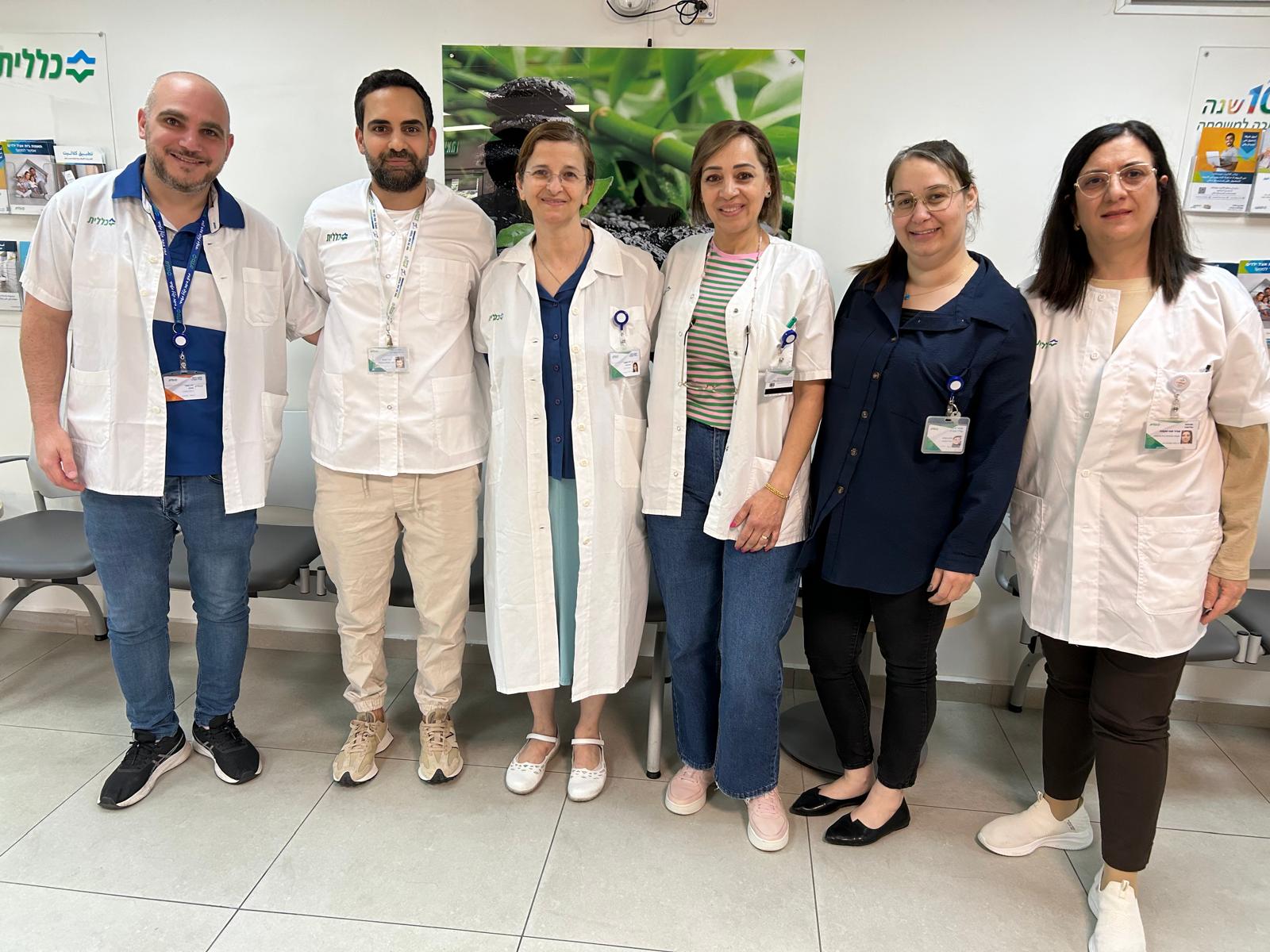
Currently practicing at four Clalit Health Services clinics throughout the Galilee region – including Julis where she resides, plus Tamra, Jatt, and Yanuh – Khir notes that approximately 40 female Druze doctors now work in Israel. However, when she enrolled at the Technion—Israel Institute of Technology during the mid-1980s, she stood alone as the only one.
Growing up in extreme poverty in Peki’in in northern Galilee, Khir recalled that she “studied on the weeds,” since her family lacked even basic furniture like a table. The village was then a diverse community housing Jews, Christians, Muslims, and Druze residents. When Jewish neighbors relocated to nearby Nahariya, she would use the steps of their vacant houses as a quiet study space.
“There was too much noise at our house, and I couldn’t study,” she remembered.
Khir’s challenging upbringing continues to affect her today. Her father left the family when she was just five years old, and during a recent phone interview, she became emotional discussing her mother, who battled a serious illness while single-handedly raising five children.
Observing her mother’s medical struggles and witnessing how healthcare providers could assist people during their most vulnerable times “was a very strong motive” for pursuing medicine, she explained.
“It touches a painful place for me,” Khir acknowledged. “It still hurts,” she said regarding her childhood experiences. “But I was strong. I overcame it.”
Watching her mother – who served as both the family’s sole income source and only parent – repeatedly fall ill was frightening. Each time her mother required medical treatment, Khir observed directly how physicians could provide crucial help during people’s most desperate moments.
“I said to myself, ‘I also want to help people. I also want to be someone who can take care of others and take care of my mother,’” Khir stated. “I had no support growing up, no one to lean on, so I wanted to grow up and become support for my daughters.”
She admits uncertainty about how she managed to achieve her medical career given the overwhelming challenges she faced. Beyond her economic disadvantages, Druze society maintained very conservative traditions, and women were typically discouraged from seeking advanced education, particularly in medical fields. Many community members worried that girls who left their villages for university studies would abandon their religious beliefs. Consequently, she needed to demonstrate that pursuing higher education was compatible with maintaining loyalty to her cultural traditions.
Two individuals provided crucial encouragement during this period. Her brother offered both financial assistance for her education and emotional support for her goals. He eventually departed from the faith before facing “excommunication,” according to Khir.
Despite her brother’s backing, she remained terrified that her devout mother might face social isolation, which could have devastated their family. Khir witnessed the punishment imposed on families of two nursing students, who were banned from religious services and excluded from community activities.
However, shortly before beginning her studies, Khir encountered former Druze religious leader Sheik Farag Fadool on the street. When she expressed her educational aspirations but voiced concerns about potential consequences for her mother, she recalled that he promised to protect her family from community ostracism. This assurance provided the confidence she needed to proceed with her plans.
Khir understood that her choice would help transform the community.
“I wanted that change to come,” Khir remembered.
However, she never anticipated becoming such an influential symbol for her community of approximately 180,000 people in Israel.
“Dr. Nadia Khir’s story is one of courage, faith, and perseverance,” stated Dr. Yaffa Ashur, director of Yoseftal Medical Center and head of Clalit Health Services’ Eilat region, who participated in presenting the award last week. “One woman who refused to give up on her dream and, in doing so, opened doors for an entire generation of women. She is a tremendous source of pride for Clalit and for Israeli society as a whole.”
When asked whether she ever contemplated abandoning her goals during difficult periods, Khir responded, “That was never an option. Even today, I’m an extreme person in that sense. Once I start something, it has to be completed fully.”
The Technion presented particular difficulties. Accustomed to communicating in Arabic, she suddenly needed to study, attend classes, and interact in Hebrew. She also found herself among some of Israel’s most academically elite students.
“Being among people from wealthy backgrounds was not easy for a girl from a struggling family in Peki’in in the Galilee,” she observed.
During particularly challenging times, she would visit the head of the student advancement unit and break down emotionally in her office. “She used to encourage me,” Khir said. “She would tell me, ‘Nadia, they’ll write a book about you.’ She always treated me like I was some kind of historical figure.”
Khir chose to specialize in gynecology specifically to serve Druze women and advance her community’s progress.
“It’s something I bless every day,” she said. “Being a gynecologist is so essential to women’s lives. … If they get married, they need guidance. If they want birth control, they need a gynecologist. If they become pregnant, they need a gynecologist. … It contributes tremendously.”
She always knew gynecology would be her specialty because strict cultural rules governing physical contact between men and women in Druze society meant that treating male patients would not have been socially acceptable. She needed to select a medical specialty that operated within those cultural parameters.
Currently, she noted, women’s status and societal attitudes toward women have transformed dramatically. Women are no longer regarded as property or merely as household laborers. Women are recognized as human beings with ambitions, desires, and the capacity to make independent decisions. She also credited some of this advancement to the laws of the State of Israel.
She also plays an important role in conversations about contraception within the Druze community, where the topic is not always readily embraced.
“Women often need convincing. Also, today there is more sexual freedom, so I see more women in the clinic with sexually transmitted diseases. But it’s still very uncomfortable to openly lecture in villages about sex, sexually transmitted diseases, and related issues. There isn’t enough openness,” she explained.
Currently, her three daughters are pursuing similar paths. One works as a doctor at Rambam Health Care Campus in Haifa. Another is studying electrical engineering at Tel Aviv University, and a third is studying software engineering at the Technion.
“When I left to study medicine, I never imagined I would become a symbol. I simply wanted to fulfill a dream and help people,” Khir said. “Today, when I see young women choosing to study and advance without fear of breaking boundaries, I understand that the journey was worth everything. It is a great privilege for me to be an inspiration to my daughters and to the next generation.”
She described Israeli society as “wonderful,” and believes it is not as divided as people perceive. “I’m a Druze woman, an Arab woman, so you would expect me to encounter racism from Jews. But the opposite has happened. The greatest encouragement I received came specifically from Jewish people. They were the ones who supported me and believed in me.”
She added that during the past two-and-a-half years of war, she observed that people from all sectors of society had come together and supported one another.
“The people who unite society are the ones worthy of leadership, not those who divide us,” Khir declared.
She also expressed appreciation for how Israel supported the Druze community in Syria. “I never imagined that one day Israel would be the country protecting the Druze in Syria,” she admitted. “The State of Israel, strong and stable, is an anchor and support for Druze throughout the Middle East, especially in Syria.”