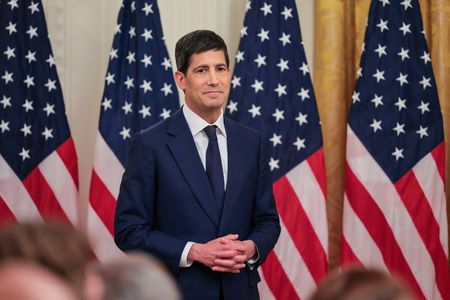

Federal Reserve Chairman Kevin Warsh has sent a message to the central bank’s more than 20,000 workers outlining his approach as he begins his four-year leadership role, promising to honor “the best of the Fed’s traditions” while examining opportunities for reform.
The internal communication offers insight into Warsh’s strategy as he works to implement what he has called a comprehensive reform plan for a central bank he believes has lost focus on its core mission, while simultaneously rebuilding relationships with staff and colleagues whose previous work he has questioned.
“Our highest priority will be to get policy right in service to our remit and the national interest. We will ensure an environment that supports our people in doing their life’s best work,” Warsh stated in the Tuesday memo that Reuters obtained.
“We won’t rely on past practices when we find better alternatives,” Warsh added. “In the coming quarters, I expect that together we will have open, clear-eyed discussions of Fed strategies, policies, and operations.”
Additionally, Warsh has brought on two conservative policy experts as advisers during his transition into the role, replacing former Fed Chair and current Governor Jerome Powell, according to someone with knowledge of the new chairman’s initial staffing choices. These appointments, initially reported by the Wall Street Journal, are described as temporary consulting roles to assist Warsh in developing his early initiatives as chair.
Daniel Heil serves as a policy fellow at Stanford University’s Hoover Institution, the same organization where Warsh was employed before assuming the Fed chairmanship. Paul Winfree previously worked at the Heritage Foundation and created the Federal Reserve reform section featured in the organization’s disputed Project 2025 conservative reform proposal.
According to the source, both advisers have collaborated with Warsh on various research and writing endeavors over recent years. Through his position at the Hoover Institution and involvement with the Group of Thirty think tank, Warsh has maintained regular publication of speeches and opinion pieces.
Warsh has outlined his vision for Fed changes, including reducing the Fed’s $6.7 trillion balance sheet, providing less specific guidance about future interest rate moves, and exploring whether alternative inflation measurements might better reflect economic price pressures.
During his consideration period for the chairmanship, Warsh frequently criticized the Powell Fed’s policy approach and expressed concerns that the Fed system, including its 12 regional reserve banks, had expanded beyond its monetary policy mandate.
Now at the helm of the institution he previously criticized, Warsh adopted a more encouraging tone in his employee memo.
“This new chapter at the Fed finds us in a time of great consequence for our nation. New technologies and new ways of doing business are arriving with unmatched speed,” Warsh stated. “I could not be more optimistic about all that we can achieve together.”
Warsh’s initial meeting as chair — and likely his first substantial remarks about economic conditions and monetary policy — is scheduled for June 16-17. While the Fed is anticipated to maintain current interest rates, new economic forecasts will indicate policy direction under Warsh’s leadership and reveal whether his colleagues worry that inflation, still above the Fed’s target, might worsen.
His leadership begins under unique circumstances.
The Fed awaits a Supreme Court decision regarding President Donald Trump’s attempt to remove Governor Lisa Cook, viewed as a direct challenge to the Fed’s independence in monetary policy decisions, potentially its most fundamental principle.
Furthermore, Warsh will lead an organization that includes its previous chief, Powell, who chose to retain his position on the Fed’s Board of Governors due to the administration’s attempts to influence the Fed.