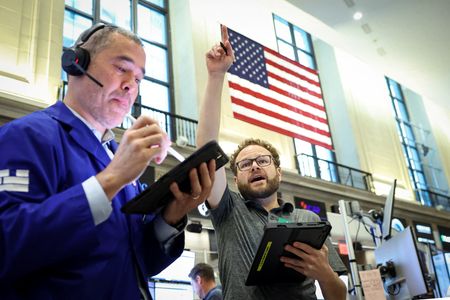

Global financial markets climbed to new record levels Tuesday as investors maintained their buying momentum, buoyed by steady conditions in U.S.-Iran relations and calm currency and bond trading environments. Smaller companies and non-technology sectors led gains in American markets.
Market analyst Jamie McGeever highlighted an under-the-radar surge in small-cap stocks throughout this year. While media attention has focused on large-scale technology companies and major tech corporations, smaller technology firms have actually emerged as the primary beneficiaries of artificial intelligence investment enthusiasm.
Several major market indices achieved new peaks, including global stock measures and the S&P 500. European markets gained 0.8% driven by technology optimism, while cyclical stocks pushed British markets up 0.3%.
Individual stock performance varied significantly. Seven S&P 500 sectors advanced while four declined. Utility companies rose 2% while communication services dropped 2.6%. Notable gainers included Marvell Technologies jumping 32%, Hewlett Packard climbing 20%, and Super Micro Computer advancing 7%. Alphabet fell 4%, Microsoft declined 4%, Dell dropped 7%, and Boeing decreased 3%.
Currency markets saw the dollar-yen exchange rate approaching 160, putting traders on alert for potential Japanese intervention. Bitcoin fell 6% toward $66,000.
In major corporate news, Google’s parent company Alphabet surprised investors Monday evening by announcing an $80 billion equity financing plan, with $10 billion coming from Berkshire Hathaway. While the move addresses rising debt costs and massive AI infrastructure spending, concerns arise about the company’s financial direction. Despite having $126 billion cash at March’s end, Alphabet faces nearly $200 billion in AI capital expenditures this year and has already issued over $85 billion in debt over the past year.
U.S. job market data revealed mixed signals Tuesday. April job openings rose to two-year highs with the fastest increase in five years, showing continued worker demand and little evidence of AI-related job losses. However, 90% of openings concentrated in professional and business services, while hiring rates, layoffs, and resignations all declined, suggesting market stagnation rather than strength.
European inflation data virtually guaranteed central bank action, with euro zone inflation exceeding 3% for the first time since September 2023. This development makes a 25-basis-point rate increase from the European Central Bank next week nearly certain, with traders anticipating an additional 50 basis points of tightening by year-end.
Wednesday’s market-moving events include Middle East developments, manufacturing data from multiple countries, speeches from central bank officials including Bank of Japan Governor Kazuo Ueda and European Central Bank board members, plus U.S. employment and economic indicators.