England walked away with third place at the World Cup on Saturday after defeating France 6-4 in a high-scoring contest held in Miami — a match that also saw France captain Kylian Mbappe etch his name into the history books as the tournament’s all-time leading scorer with 22 goals. The game served as the farewell match for French head coach Didier Deschamps, who ends a 14-year tenure in charge after 185 total matches.
England built a commanding lead before halftime, putting four goals on the board through Declan Rice, Ezri Konsa, and a two-goal performance from Bukayo Saka. Saka then completed his hat-trick in the 87th minute by converting a penalty kick.
France mounted a response in the second half, with Mbappe finding the net twice and Bradley Barcola adding a third goal in between. Ousmane Dembele then pulled France to within two, scoring six minutes into stoppage time, but Jude Bellingham sealed the result with England’s sixth goal to close out the match.
Mbappe’s two goals brought his tally for this World Cup to 10, putting him atop the Golden Boot standings — two goals ahead of Argentina forward Messi, who is set to play in Sunday’s final against Spain. Mbappe also leads Messi by one in the all-time World Cup scoring records.
Midfielder Michael Olise set a new World Cup record with seven assists during the tournament, surpassing the previous mark of six set by Pele back in 1970.
France’s performance got off to a rocky start before Deschamps made defensive adjustments, bringing in Dayot Upamecano and Lucas Digne to stabilize a backline that had looked disorganized early on.
Salem Church Road is closed between Elm Drive and DE 4 following a downed wire incident, according to Delaware Department of Transportation officials.
Motorists traveling in the area are advised to use alternate routes and avoid the affected stretch of roadway until crews can address the situation and reopen the road.
No additional information regarding the cause of the downed wires or an estimated time for the road to reopen was immediately provided. Drivers should use caution in the surrounding area and plan for delays.
The National Weather Service out of Mount Holly, New Jersey issued a Severe Thunderstorm Warning on July 18, beginning at 7:11PM EDT and set to remain in effect until 7:45PM EDT.
Residents in areas covered by the warning are urged to seek shelter immediately, stay away from windows, and avoid any unnecessary travel until the warning has expired.
No additional details regarding storm location, movement, or specific hazards were included in the alert text. Check back for updates as more information becomes available.
France’s Kylian Mbappe made World Cup history on Saturday, surpassing every player who has ever competed in the tournament to become the all-time leading scorer.
The 27-year-old accomplished the feat by netting two goals during France’s third-place match against England. His brace lifted his career World Cup goal tally to 22, helping Les Bleus cut the deficit to 4-3 in the second half.
With that milestone, Mbappe moved past Argentina’s Lionel Messi, who had previously held the record at 21 goals. Messi is set to take the field Sunday when Argentina faces Spain in the tournament final.
The National Weather Service office in Mount Holly, New Jersey issued a Severe Thunderstorm Warning on the evening of July 18, effective from 7:09 PM EDT through 7:30 PM EDT.
Residents in the warned area were advised to seek shelter immediately, move away from windows, and remain indoors until the warning expired. Severe thunderstorms can bring dangerous lightning, damaging winds, and large hail.
If you are under a severe thunderstorm warning, officials recommend staying off roads, unplugging electronics, and avoiding contact with water during the storm. Monitor your local weather for updates as conditions can change rapidly.
The Houston Astros suffered a tough blow Saturday when two key position players — shortstop Jeremy Pena and first baseman Christian Walker — were forced out of their game against the Baltimore Orioles due to injuries.
Pena began showing signs of discomfort during his second time at the plate against Orioles left-handed pitcher Trevor Rogers. He eventually struck out in the bottom of the third inning. Astros manager Joe Espada and a member of the training staff came out to check on Pena during the at-bat, and he was pulled from the field before the top of the fourth inning, with Nick Allen stepping in at shortstop.
The team confirmed that Pena suffered a hamstring cramp. This isn’t the first time he’s dealt with hamstring trouble — earlier in the season, he missed 32 games due to a Grade 1 hamstring strain.
Walker ran into trouble of his own in the bottom of the fourth inning. Espada and a trainer visited him during his second at-bat, and Walker left the game right away. Pinch-hitter LaMonte Wade Jr. took his place at the plate. The Astros said Walker departed with tightness in his right hip.
Despite the injury concerns, both players have had productive seasons so far. Pena has hit six home runs, driven in 22 runs, and posted a .357 on-base percentage across 52 games. Walker has been even more productive, slugging 20 home runs and collecting 58 RBIs in 97 games.
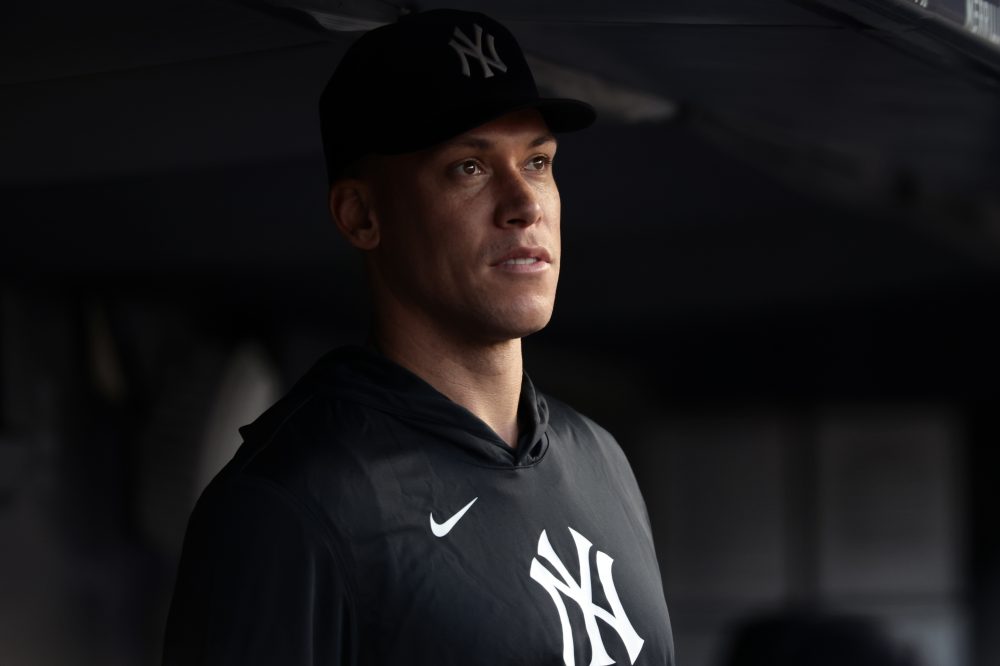
NEW YORK (AP) — The New York Yankees have transferred captain Aaron Judge to the 60-day injured list, and team officials say the slugger will require an additional medical scan before doctors allow him to significantly increase his workload as a fractured rib continues to mend.
Judge has been out of action since May 31. During the All-Star break, he underwent a scan that was examined by Dr. Gregory J. Pearl, who chairs the department of vascular surgery at Baylor Hamilton Heart and Vascular Hospital in Texas.
Yankees manager Aaron Boone addressed the situation following the postponement of a scheduled game against the Los Angeles Dodgers due to rain — a contest rescheduled as part of a Sunday doubleheader. “Obviously healing going on, which is good, but still not able to start any baseball activities or anything,” Boone said.
Boone explained that Judge must first reach a pain-free state before doctors can push him harder. “He needs to get to a point to where he’s asymptomatic to where you really start ramping up more upper body stuff,” the manager said.
At the time of his injury, Judge was batting .248 with 17 home runs and 38 RBIs, though he had managed just one homer across his final 18 games before landing on the injured list.
Boone offered some encouraging news regarding Judge’s discomfort. “The good news is, you know, the pain is subsiding somewhat over the last couple weeks and changing from that sharp to more of that pull,” he said. “So hopefully he continues to improve there and then we can start upping things.”
The manager added that the timing of Judge’s next scan will be dictated by how the 34-year-old outfielder feels day to day.
New York’s record stood at 36-23 when Judge last took the field, but the team has gone just 18-20 in his absence.
The move to the 60-day IL was largely procedural, freeing up a spot on the 40-man roster for right-handed pitcher Bradley Hanner, whose contract was selected from Triple-A Scranton/Wilkes-Barre. Hanner was subsequently optioned back to the RailRiders.
On a more optimistic note, right-hander Clarke Schmidt reached a significant milestone in his own recovery Saturday, facing live hitters in batting practice for the first time since undergoing Tommy John surgery on July 11 of last year. The 30-year-old said he topped out at 95 mph during the session.
Schmidt worked through 15 pitches to Anthony Volpe and Ali Sánchez, mixing four-seamers, sinkers, and cutters — though he held off on sliders, sweepers, and knuckle-curves.
“Not full game feeling with the butterflies and stuff like that, but close to it,” Schmidt said. “To be able to put your stuff on display and be able to get back out there after a year is a good feeling.”
This was actually Schmidt’s second Tommy John procedure. His first came in May 2017, just a month before the Yankees selected him with the 16th overall pick in the amateur draft. This most recent surgery included an internal brace.
Schmidt noted that the recovery has felt different this time around. “The first one, when you kind of start the bullpen phase, it feels a little yucky at times and you just have a lot more days where you’re like, ah, it doesn’t feel great,” he said. “It just feels a little more easier where it’s like I don’t have to reach back and have those days where you’re grinding a little bit.”
His next batting practice session is planned for four or five days from now. Schmidt may return before the season ends as a reliever and expressed openness to pitching as an opener or a bridge arm. “I know that we have a little more limited time for me this year as far as ability to build up the pitch count,” he said. “Obviously I’m open to everything as long as I’m out there competing and being able to help the guys. … I know I’ll be able to be back at some point in some facet this year.”
Boone also shared an update on designated hitter Giancarlo Stanton, who has been sidelined since April 24 with a strained right calf. “He is a week into the running progression, been hitting,” Boone said. “Obviously had a setback, whenever, three, four weeks ago now, but he seems to be moving in a good direction so hopefully getting close.” Stanton has not yet run the bases.
Left-hander Max Fried, who has been out since May 14 with a left elbow bone bruise, made his first rehab appearance Friday for Triple-A Scranton/Wilkes-Barre against Worcester. He allowed two runs and five hits over three innings, striking out three without issuing a walk. “He looked really good. I watched his whole outing,” Boone said. “He felt really good. So 52 pitches, so another one in five days. We’ll up that and we’ll see what we’re at from there.”
Shortstop prospect George Lombard Jr. also made his return Friday night, going 2-for-3 with a home run and a walk for the RailRiders. The 21-year-old son of a former major leaguer had been out since June 16 with sprained fingers on his left hand. Lombard is hitting .239 with five home runs, 16 RBIs, and eight stolen bases in 43 Triple-A games. “Obviously it’s no secret how highly we think of George,” Boone said. “Had a good game last night, obviously, so he’s certainly more and more in his development pushing himself into the conversation.” Boone added that he wants Lombard to build on the momentum. “I want him to get going here coming off the injury and start stacking some days.”
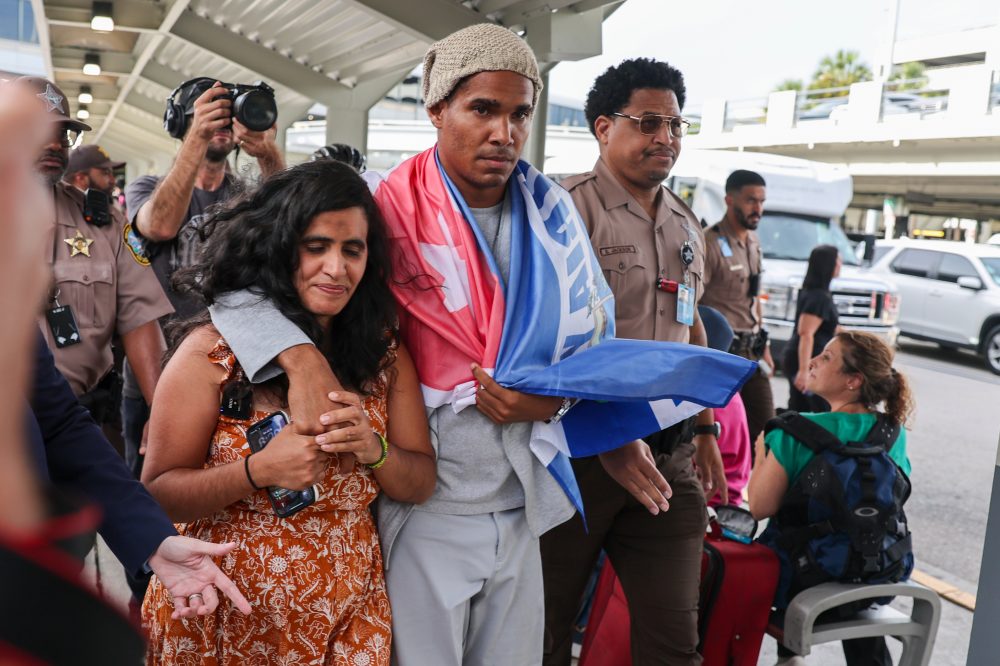
MIAMI (AP) — Celebrated Cuban artist, musician, and dissident Luis Manuel Otero Alcántara landed in Miami on Saturday following his release from a five-year prison term — a freedom that came with a steep price: permanent exile from his homeland.
The 38-year-old was welcomed at the airport by an enthusiastic crowd of supporters who cheered, sang, and held up their phones to capture the moment. Supporters wrapped him in a Cuban flag emblazoned with the phrase “Patria y Vida” — meaning “Homeland and Life” — the name of a song he co-wrote that earned him a Grammy and became a rallying anthem for those opposing political repression in Cuba.
Earlier in the week, the United States had approved his parole into the country, according to a social media page run by his friends and supporters. They noted that Alcántara accepted exile as the only path available to escape ongoing persecution and to continue his work as an artist and activist.
Alcántara helped establish a collective of artists, writers, and musicians based in Havana known as the San Isidro Movement, named after the neighborhood where he lived.
He was taken into custody on July 11, 2021, during a public demonstration. The following year, in 2022, a Cuban court found him guilty of public disorder, contempt, and disrespecting national symbols, handing down a five-year prison sentence.
His imprisonment drew condemnation from human rights groups and the U.S. government alike. Organizations such as Amnesty International labeled him a political prisoner — a characterization the Cuban government denied.
Alcántara was held in a maximum-security facility. Although he had been expected to walk free the previous week, his advocates spent several days unable to reach him or confirm his whereabouts. In response, the organization Cubalex — which provides legal support to dissidents and documents human rights abuses from abroad — filed a habeas corpus petition on his behalf on Monday.
His supporters remained uncertain of his location and whether he was truly free right up until the moment he boarded a plane Saturday.
Upon arriving on American soil, Alcántara said his first destination would be the Shrine of Our Lady of Charity, where he planned to make an offering.
His advocates noted that other political prisoners remain behind bars in Cuba, including fellow artist Maykel “Osorbo” Castillo Pérez. They expressed hope that Alcántara’s release would increase pressure on Cuban authorities to free Pérez as well.
Alcántara carried with him from Cuba a broken statue of the Virgin Mary, which he described as a symbol of hope and healing — representing the possibility of making something whole again from broken pieces.
Taylor Farms has widened a voluntary recall of its iceberg lettuce products after the items were linked to a multistate outbreak of cyclospora, a parasite that has made people sick across the United States.
The California-based company announced Friday that products potentially contaminated with the illness-causing parasite were distributed to 27 states, among them Texas, Florida, Pennsylvania, Illinois, and New Jersey.
“We are actively removing the implicated products,” the company said in a statement, noting that it has also stopped sourcing lettuce from the affected lot in central Mexico.
Earlier this week, U.S. health officials identified lettuce from a Mexican supplier as a source of cyclospora contamination in food served at Taco Bell locations across five Midwestern states.
The recall covers 25 different shredded lettuce and salad mix products sold under eight brand codes. Taylor Farms did not respond to a request for the full names of those brands or the retailers carrying them. Some of the recalled products were shipped as recently as Thursday and carry “best by” dates as late as August 3.
Sysco, the country’s largest food distributor, has suspended distribution of all Taylor Farms iceberg lettuce products originating from Mexico and has directed its customers to destroy any they have on hand.
Cyclospora is a tiny parasite that gets into food when it comes into contact with human feces — most often through contaminated water used for irrigation or washing produce. The CDC says that once ingested, the parasite triggers intestinal illness characterized by “frequent and sometimes explosive bowel movements.”
So far in 2026, cyclospora has sickened at least 1,645 people nationwide and put 141 in the hospital, according to the CDC. Health officials are also looking into more than 5,000 additional cases that may be connected to the parasite. By comparison, only 249 cases had been reported at this same point last year.
The CDC initially advised consumers to avoid shredded lettuce served at Taco Bell restaurants in Indiana, Kentucky, Michigan, Ohio, and West Virginia.
“Taco Bell worked swiftly to voluntarily remove the product from restaurants and the affected ingredient has been removed from our supply chain nationwide,” the fast food chain said in its own statement Friday.
The U.S. Food and Drug Administration announced Saturday that a sample of shredded iceberg lettuce linked to Taylor Farms has come back positive for cyclospora, a microscopic parasite that can cause intestinal illness.
Despite the alarming test result, Taylor Farms has stated that the contaminated product falls outside the scope of its current recall effort, according to the FDA.
Federal health officials are working urgently to bring the outbreak under control, describing it as the most significant foodborne illness outbreak to hit the United States in recent memory.
Maria Sakkari is one win away from claiming a trophy in her hometown after beating Russia’s Alina Korneeva 6-1, 7-5 in the semifinals of the Athens Open on Saturday.
The fourth-seeded Sakkari dominated the first set before Korneeva put up more of a fight in the second, but the Greek crowd favorite wrapped up the victory in 1 hour and 23 minutes. The run carries special meaning — it comes exactly 40 years after Sakkari’s mother, Angeliki Kanellopoulou, made her own run to the final of a WTA event in Athens.
Standing between Sakkari and the title is No. 3 seed Barbora Krejcikova of the Czech Republic. Krejcikova punched her ticket to the final by ousting top-seeded Clara Tauson of Denmark 6-1, 4-6, 6-3. After surrendering the second set, Krejcikova regrouped and closed out the match in 2 hours and 45 minutes — nearly double the length of the other semifinal — to reach her first final of the season.
UniCredit Iasi Open
In Iasi, Romania, Spain’s Paula Badosa pushed her winning streak to nine consecutive matches by rallying past Slovenia’s Tamara Zidansek 3-6, 7-5, 7-6 (1) in the semifinals.
Badosa dropped the opening set but battled back through the next two, ultimately taking command in the deciding tiebreaker by reeling off six straight points. The former world No. 2 advances to her second consecutive final after capturing last week’s Nordea Open title.
Egypt’s Mayar Sherif secured the other spot in the final with a commanding 6-3, 6-1 victory over third-seeded Oleksandra Oliynykova of Ukraine. Sherif dominated the closing stretch, winning 10 of the last 11 games to reach her first tour-level final in two years.
The Cincinnati Reds made a major investment in their pitching future on Saturday, announcing a seven-year, $105 million contract extension with standout right-hander Chase Burns.
The 23-year-old Burns set a historic benchmark with the deal, securing the largest guaranteed contract ever given to a pitcher with fewer than four years of major league service time. The agreement kicks off next season and runs through 2033, featuring a $2 million signing bonus with no options or deferred money involved.
Burns said the magnitude of the moment hasn’t fully sunk in yet. “It doesn’t feel real yet,” he told The Cincinnati Enquirer. “I’m sure here soon, next year and the year after, it’ll start hitting me.”
The young pitcher also reflected on keeping the right perspective. “God can get you an opportunity, and he can also take it away. The biggest thing is staying humble, staying hungry,” Burns said.
Selected second overall in the 2024 MLB Draft, Burns has put together an outstanding first full season after appearing in 13 games during his 2025 debut. Through 18 starts this year, he carries an 11-1 record, placing him tied for second in the majors in wins behind Milwaukee’s Aaron Ashby, who is 12-2. Burns also ranks fifth among qualified pitchers with a 2.54 ERA, has struck out 118 batters against just 37 walks, and opposing hitters are batting only .206 against him. His next scheduled outing is Tuesday on the road against the Seattle Mariners.
Reds president of baseball operations Nick Krall expressed strong confidence in the young ace. “We think the sky’s the limit for him,” Krall said. “We know he works his butt off. He’s trying to get better. He’s a young pitcher in the big leagues, so he’s still developing and he’s been pretty successful in developing at this level.”
The extension strengthens what is shaping up to be one of baseball’s most formidable pitching duos. The Reds previously locked up right-hander Hunter Greene with a six-year, $53 million contract back in 2023.
Burns is already looking ahead to what the team can accomplish. “We’re going to build something great here. I think we have a great set of guys,” he said. “I think we’re going to keep getting better every year and that’s the end goal, to win a championship.”
Manager Terry Francona also weighed in on the signing, calling it a positive sign for the organization. “It’s exciting for Chase,” Francona said. “As far as the organization goes, I think it sends a great message. It’s a really good thing.”
The Reds boast an average roster age of 28.5, according to ESPN, reflecting the team’s youthful foundation.
Krall emphasized the importance of retaining homegrown talent. “We love our core group, and we do think that they’ve got a lot of talent,” he said. “We’ve tried to lock a few guys up over the years, and we’re successful with Chase and Hunter. We think this is a really good building block to build on for the future.”
The signing ceremony on Saturday hit a small snag when a cup of coffee was accidentally spilled on the contract before Burns could sign it. A fresh copy was printed and the deal was officially completed shortly after.
Burns earned his first All-Star Game selection this season but did not pitch in Tuesday’s Midsummer Classic for the National League, citing a minor groin injury. He last took the mound on July 8.
The Baltimore Orioles made a major commitment to one of their top starters on Saturday, reaching a five-year contract extension with right-handed pitcher Kyle Bradish.
According to ESPN, the deal is valued at $90 million. The contract structure covers Bradish’s remaining two years of arbitration eligibility as well as the first three years that would have otherwise been available to him on the open market.
The 29-year-old has been a reliable presence in the Orioles rotation over the past five seasons. In 465 innings of work, he has compiled a 25-24 record, a 3.50 ERA, a 1.206 WHIP, and 485 strikeouts.
His current season has been consistent with those career numbers. Through his most recent outings, Bradish is 6-9 with a 3.61 ERA, a 1.351 WHIP, and 106 strikeouts across 107 and one-third innings pitched.
Orioles owner David Rubenstein praised the move in an official statement. “Keeping players of Kyle’s caliber in an Orioles uniform is an important part of our long-term vision,” Rubenstein said. “We are grateful to Kyle for his commitment to our organization and to Baltimore. Thanks to (president of baseball operations and general manager) Mike Elias and the entire baseball operations department for their dedication throughout this process.”
Seattle Mariners standout outfielder Julio Rodriguez made his return to the field Saturday, coming off the 7-day concussion injured list and stepping into the starting lineup as designated hitter in the club’s matchup with the San Francisco Giants.
Rodriguez had been sidelined since July 2, when he was hit in the back of the head by a thrown ball while running toward second base during a game against the Los Angeles Angels. The 25-year-old, who has earned three All-Star selections, sat out 10 games over the following two weeks — a stretch that also included the All-Star break.
Before going down with the injury, Rodriguez had built an eight-game on-base streak, posting a .414 batting average along with three RBIs, two stolen bases, and three walks during that run. Heading into Saturday, his overall 2025 numbers stood at a .259 average, 14 home runs, 40 RBIs, and 12 stolen bases across 87 games.
The Mariners struggled without their star player, going just 3-7 during his absence. The team enters Saturday’s game at 48-50 on the season, sitting in second place in the American League West — one and a half games back of the Texas Rangers.
To make room on the roster, utility player Miles Mastrobuoni was designated for assignment. In 13 appearances this season, Mastrobuoni batted .192 with three runs scored and one RBI.
The National Weather Service out of Mount Holly, New Jersey issued a Severe Thunderstorm Warning on the evening of July 18, beginning at 6:55 PM EDT and set to remain in effect until 7:30 PM EDT.
Residents under the warning are urged to seek shelter immediately, stay away from windows, and avoid outdoor activities until the warning has been lifted. Severe thunderstorms can bring dangerous lightning, strong winds, and heavy rainfall in a short period of time.
Check the National Weather Service website or your local weather alerts for the most up-to-date information on which areas are included in this warning and any changes to the forecast.
The National Weather Service office in Mount Holly, New Jersey has issued a Severe Thunderstorm Warning that went into effect at 6:54 PM EDT on July 18 and is set to expire at 7:45 PM EDT the same evening.
Residents in the areas covered by this warning are urged to take shelter immediately and remain indoors until the warning has been lifted. Severe thunderstorms can bring dangerous conditions including damaging winds, large hail, and heavy rainfall.
Stay tuned to TV Delmarva for the latest updates as this storm system moves through the area.
The National Weather Service office located in Mount Holly, New Jersey issued a Severe Thunderstorm Warning on July 18, taking effect at 6:42 PM EDT and set to expire at 7:00 PM EDT.
Residents in the areas covered by the warning were advised to seek shelter immediately and remain indoors until the warning expired. Severe thunderstorms can bring dangerous lightning, damaging winds, and heavy rainfall.
The alert was issued through official NWS channels. Anyone in the warned area was encouraged to monitor local weather updates and avoid unnecessary travel until conditions improved.
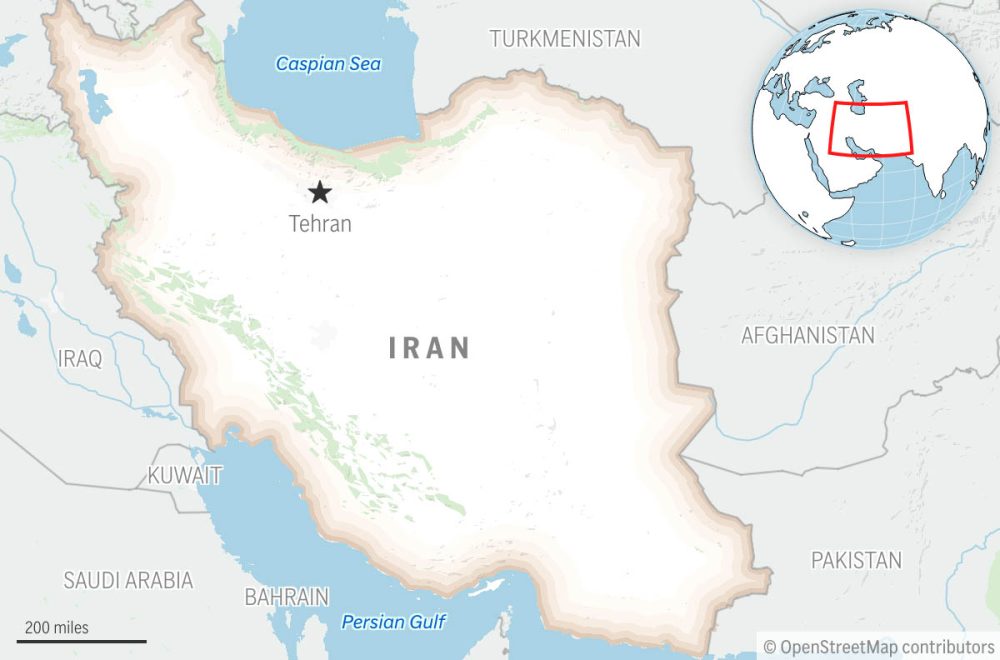
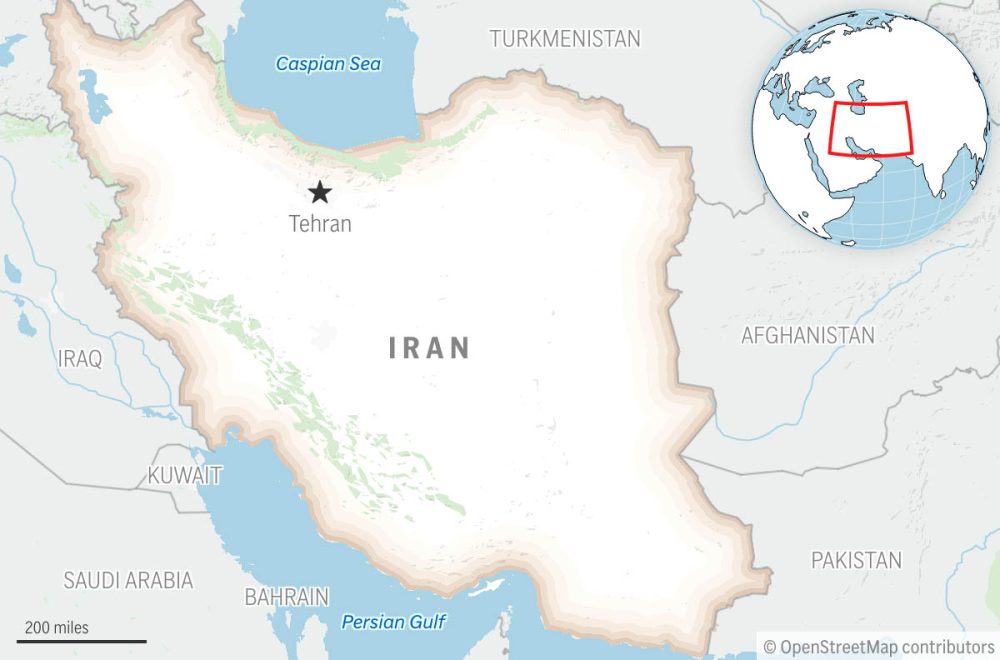
Iran has ordered Hezbollah and other allied militant groups across the region to gear up for a broader, more intense conflict, as military clashes between the United States and Iran continue to intensify and fighting persists in Lebanon.
Lebanon’s Nidaa Al Watan newspaper reported Friday that Iranian officials delivered the directive to leaders of the so-called “Axis of Resistance,” including Hezbollah, during meetings held in Tehran at the funeral of former Iranian supreme leader Ali Khamenei. According to the report, those officials told the group’s leaders to make military readiness their top priority and signaled that a period of waiting was coming to a close.
The report emerged against a backdrop of ongoing U.S. airstrikes on Iranian infrastructure and Iranian drone counterattacks across the Persian Gulf. American forces have struck bridges, airports, and military installations inside Iran. In response, Tehran launched attacks on U.S. military bases in Jordan, Kuwait, and Qatar, and also targeted commercial ships in the Strait of Hormuz.
Iran’s Supreme Leader Mojtaba Khamenei publicly echoed the warning his government reportedly delivered to its regional allies. “Now that the American enemy seeks to ignite further war, impose even heavier costs, and suffer even greater disgrace, it should know that the noble Iranian nation and the Axis of Resistance have unforgettable lessons in store for it,” he declared.
The report also indicated that Iran continues to view Hezbollah as its most critical regional proxy. Iran’s Islamic Revolutionary Guard Corps is said to be working to rebuild the Lebanese militant group’s weapons stockpile, specifically by supplying advanced drone technology — including first-person-view systems and fiber-optic hardware.
Israel has largely stayed out of the direct military exchanges between Washington and Tehran, though the reported Iranian directive raised the possibility that Hezbollah could take on a more active combat role going forward.
In a separate development, the Israel Defense Forces announced that the Israeli Air Force carried out a strike in southern Lebanon, killing a Hezbollah cell near the security zone. The strike came after Commando Brigade troops operating under Division 36 identified the operatives using explosive drones in the village of Tabnit.
Also in southern Lebanon, one Lebanese army soldier was killed and two others were injured when an explosive device went off near a military vehicle in the village of Al-Mansouri. Lebanese media initially described the blast as a deliberate attack on army personnel, but later reporting suggested it was most likely caused by leftover munitions rather than a targeted strike.
The National Weather Service out of Mount Holly, New Jersey issued a Severe Thunderstorm Warning on July 18, beginning at 6:40 PM EDT and running through 7:30 PM EDT.
Anyone in the affected area is urged to seek shelter indoors immediately, stay away from windows, and avoid any unnecessary travel until the warning has expired.
Severe thunderstorms can bring dangerous lightning, large hail, and strong damaging winds. Residents should stay tuned to local forecasts for updates as conditions develop.
The National Weather Service out of Mount Holly, New Jersey issued a Tornado Warning on the evening of July 18, effective beginning at 6:38 PM Eastern Time.
The warning was scheduled to expire at 7:00 PM Eastern Time, giving residents a narrow window to seek safe shelter immediately.
When a Tornado Warning is issued, it means a tornado has been detected on radar or spotted by a trained weather observer. Residents in the warned area should move to the lowest level of a sturdy building, away from windows, and protect their heads and necks until the warning has passed.
The United States military announced Saturday that two American soldiers lost their lives and a third is still unaccounted for after Iranian missile and drone strikes targeted US forces in Jordan, as the fighting between Washington and Tehran stretched into a seventh consecutive night.
US Central Command reported that four other service members were taken to medical facilities following the attack but have since been released. Officials offered no additional details regarding the missing soldier or the specific circumstances of the casualties.
With these latest deaths, the total number of American fatalities in the conflict has reached 16. That figure already included a US Navy pilot who had been reported missing earlier this month and was subsequently declared dead. This marks the second time this week that the death toll has risen.
Jordan had previously reported intercepting 10 incoming missiles without suffering any damage to its territory.
In the span from Friday evening into Saturday, the US military carried out its seventh straight night of strikes. Iran responded by launching attacks against American assets in Bahrain, Jordan, and Kuwait.
As the military conflict continued, the war of words between the two governments also grew louder. Iran’s Supreme Leader Mojtaba Khamenei declared in a statement that a previous memorandum of understanding meant to bring the conflict to an end was now “useless,” blaming what he called violations by the United States.
“Now that the American enemy seeks to ignite further war, impose even heavier costs, and suffer even greater disgrace, it should know that the noble Iranian nation and the Axis of Resistance have unforgettable lessons in store for it,” Khamenei added.
Last week, President Donald Trump declared the ceasefire finished, signaling a continued breakdown in relations between the US and Iran. Despite that, White House Press Secretary Karoline Leavitt stated on Thursday that diplomatic negotiations with Iran were still ongoing.
The National Weather Service out of Mount Holly, New Jersey issued a Tornado Warning on the evening of July 18, effective from 6:27 PM Eastern Time until 7:00 PM Eastern Time.
Residents in the warned area were advised to take shelter immediately and stay away from windows. A Tornado Warning means that a tornado has either been spotted or indicated by weather radar, making it a serious and immediate threat to life and property.
Authorities encouraged anyone in the path of the storm to move to the lowest level of a sturdy building, away from exterior walls, and to avoid seeking shelter under highway overpasses or in vehicles.
Stay with TV Delmarva for any additional updates as this weather situation develops.
The U.S. military announced Saturday that two more service members have been killed in the war with Iran, pushing the total American death toll to 16.
The growing casualty count underscores a sobering reality: American troops do not have to be fighting on the ground to face deadly danger. The conflict — waged primarily through drones, missiles, and aircraft — has put U.S. forces stationed throughout the Middle East at risk, and has made the nations hosting those forces targets of Iranian aggression as peace negotiations have collapsed and fighting has intensified.
President Donald Trump has stated that the war is essential to prevent Iran from obtaining nuclear weapons. As of Saturday afternoon, Trump had not personally commented on the latest deaths, which took place in Jordan. Instead, the White House directed attention to a statement released by U.S. Central Command.
The first major loss of life came shortly after the conflict began on February 28, when an Iranian drone strike hit a civilian port in Kuwait, killing six American soldiers. Those soldiers belonged to a supply and logistics unit from Iowa and were working inside a shipping container-style structure that had no defensive capabilities.
A seventh soldier died more than a week after sustaining wounds during an Iranian attack on the Prince Sultan Air Base in Saudi Arabia on March 1.
Later in March, six more service members lost their lives when a KC-135 aerial refueling aircraft, which had been supporting U.S. military operations against Iran, went down in Iraq. U.S. Central Command stated the aircraft was operating in friendly airspace when an unspecified incident involving another aircraft occurred.
On Monday, the military reported that a Navy pilot died in a helicopter crash in the Arabian Sea. The Navy initially described the July 1 incident as an emergency landing and said there was “no indication the emergency was caused by hostile action.” The other three crew members aboard the helicopter were successfully rescued.
On Saturday, U.S. Central Command confirmed that the two most recent fatalities occurred in Jordan, where American forces came under attack from Iranian ballistic missiles and drones. The military also disclosed that one U.S. service member is currently unaccounted for following that attack.
Officials stated they are withholding the names of the fallen service members until 24 hours after their families have been notified.
American troops are not the only ones losing their lives in this conflict. Iranian authorities report that at least 50 people have been killed and more than 500 others wounded in U.S. strikes over the past three weeks alone, including eight people killed in a strike on a bridge on Friday.
The war has also claimed the lives of maritime workers, foreign nationals, and civilians in Gulf nations, Israel, and Lebanon.
The National Weather Service office in Mount Holly, New Jersey has issued a Severe Thunderstorm Warning that went into effect at 6:16 PM EDT on July 18 and is set to expire at 7:00 PM EDT the same evening.
Residents in the warned area are urged to take immediate precautions. Severe thunderstorms can bring dangerous lightning, damaging winds, and heavy rain in a very short period of time.
Stay away from windows, avoid using electrical appliances, and do not venture outside until the warning has been lifted. If you are driving, pull over to a safe location away from trees and power lines.
TV Delmarva will continue to monitor this storm and bring you the latest information as it becomes available.
Samsung Electronics America is moving to cut 739 jobs at its facility in Englewood Cliffs, New Jersey, according to a Worker Adjustment and Retraining Notification reviewed by Reuters.
The WARN notice, which companies are legally required to file when conducting large-scale layoffs, confirmed the workforce reduction at the New Jersey location. No additional details regarding the reason for the cuts or a specific timeline were provided in the filing.
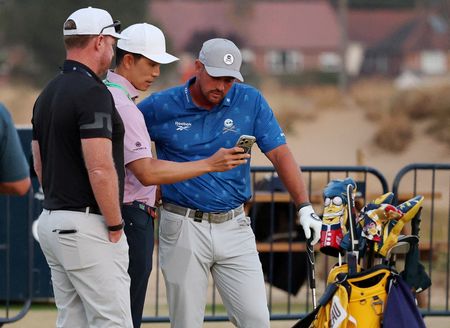
Tommy Fleetwood heads into the final round of the British Open on Sunday with a long shot at glory — but with thousands of passionate hometown fans behind him, the 35-year-old is not giving up hope.
Fleetwood, who grew up just down the road from Royal Birkdale in Southport, England, carded a third-round 69 on Saturday, leaving him tied for ninth place and six strokes back of leader Sam Burns. Despite the gap on the leaderboard, the roars from the crowd following his every move made it feel like anything was possible.
“Like walking up to every green, it’s like the most amazing ovation that you can imagine,” said Fleetwood, a veteran of the Ryder Cup who finished second at the 2019 Open and was also runner-up at the U.S. Open the year before. “I sort of acknowledge them in my way because I still want to stay in my bubble, but it just happens that there’s like thousands of people in my bubble with me that are willing me on.”
“Like there’s a lot of people I know out there. But I just try and be myself and I try and focus as much as I can on my game and have everybody on the journey with me.”
Fleetwood, who has an Academy at nearby Formby Hall Golf Club and used to sneak onto Royal Birkdale as a child, showcased the links course skills that have made him a fan favorite. He drained a birdie at the fifth hole and followed it with a lengthy birdie putt at the seventh to enormous applause. At one point, after a brilliant approach shot set up a birdie at the 11th, he reached seven under par and was just one stroke off a share of the lead.
His momentum stalled with bogeys at the 15th and 18th holes, though even his final bogey putt drew a thunderous ovation from the galleries when it dropped in.
Playing partner Jon Rahm, who shot a level-par 70 to also sit six shots off the pace, praised the atmosphere surrounding Fleetwood as something special.
“The best part is they cheer him on, but they’re respectful to everybody else playing,” the Spanish golfer said. “That’s what makes it so fun for all of us.”
“No matter how late in the round, how bad things get, everybody is almost cheering for everybody in the group. I felt plenty of support even playing with Tommy.”
Rahm also outlined what it might take for Fleetwood to make a run on Sunday: “Tomorrow if he gets going early, makes two, three birdies the first four or five holes, you can ride that wave, and everybody on the course will know where Tommy is and what’s going on.”
Fleetwood stands as the top-ranked British player in the field and is chasing history — a win would make him the first English golfer to lift the Claret Jug since Nick Faldo claimed the title back in 1992.
American golfer Sam Burns almost skipped the 154th British Open entirely — his wife Caroline’s due date fell just two days before the championship teed off at Royal Birkdale in Southport, England.
As it turned out, daughter Belle had other plans. She arrived ahead of schedule, giving Burns just enough time to catch a flight overseas. Now, heading into Sunday’s final round, the 29-year-old finds himself two shots clear of the field with a chance to claim his first major championship title and the iconic Claret Jug.
“This golf tournament was honestly so far off of my radar and expectations of playing,” Burns told reporters. “I mean, Caroline’s due date was Tuesday this week. She was like four days late with our son. I just didn’t think there was any possible way, and little Belle had different plans for us.”
Even after his daughter was born, Burns wasn’t certain he should leave his family behind. It was his wife who pushed him to go.
“I wasn’t thinking much about it. Caroline was kind of like, so what are you thinking for next week? I was like, I don’t know. Should we talk about it? She was like, yeah,” he recalled.
“Ultimately she’s the one that really encouraged me to come over and play. She basically said I’ve got this at home. Go over there and give it your best, and here we are.”
Burns got off to a shaky start, carding a three-over 73 in his opening round on Thursday — including three consecutive bogeys to close — and it appeared he might be headed home to Louisiana early. But another conversation with his wife helped him refocus.
“I was pretty upset. That’s an understatement,” said Burns, a five-time winner on the PGA Tour. “Talked to Caroline, texted with her, and she basically told me like, you know, you’re over there, and I’m good at home.
“You need to be where your feet are. I think that was really what I needed to hear in that moment. It’s probably what I didn’t want to hear, but I needed to hear it.
“I really think she was the one that kind of gave me that encouragement that I needed and kind of a kick in the butt.”
That mental reset proved transformative. Burns came back with a men’s major record-equaling round of 62 on Friday, then added a 65 on Saturday to vault to the top of the leaderboard. He also finished runner-up at the U.S. Open earlier this year.
With the final round ahead, Burns said he isn’t focused on what his competitors are doing — only on his own game.
“I haven’t looked at the leaderboard. I think ultimately it comes down to I can’t control anything anyone else does,” he said. “Someone’s going to go out and play a great round of golf tomorrow, maybe a few people. It’s pretty much a given. That happens every single week.
“So I’m going to have to do the same. I’m going to have to go out and execute. Ultimately whatever happens, I know that I can accept the outcome, and life’s going to move on. I’ll get to go home and see my family. I hope I’m taking some hardware with me, but if I’m not, that’s fine too.”
The National Weather Service office in Mount Holly, New Jersey issued a Severe Thunderstorm Warning on the evening of July 18, effective from 5:59 PM EDT through 6:15 PM EDT.
Residents in the areas covered by the warning were advised to seek shelter immediately and stay away from windows. Severe thunderstorms can bring dangerous lightning, damaging winds, and heavy rainfall in a short period of time.
The warning was issued as part of the NWS’s ongoing effort to alert the public to rapidly developing dangerous weather conditions. Residents are encouraged to monitor local forecasts and heed all warnings issued by the National Weather Service.
The National Weather Service out of Mount Holly, New Jersey issued a Severe Thunderstorm Warning on the evening of July 18, beginning at 5:58 PM EDT and set to expire at 6:15 PM EDT.
Residents in the areas covered by the warning were advised to seek shelter immediately and remain indoors until the warning expired. Severe thunderstorms can bring dangerous lightning, damaging winds, and heavy rainfall in a short period of time.
As always, officials recommend that people stay away from windows, avoid using electrical appliances, and refrain from going outdoors during an active severe thunderstorm warning. If you are driving, pull over safely and wait for conditions to improve.
Stay with TV Delmarva for the latest weather updates as conditions develop in your area.
The National Weather Service office located in Mount Holly, New Jersey issued a Severe Thunderstorm Warning on July 18, beginning at 5:43 PM EDT and remaining in effect until 6:15 PM EDT.
Those in the warned area are urged to seek shelter immediately and remain indoors away from windows until the warning has expired. Severe thunderstorms can bring dangerous lightning, damaging winds, and heavy rainfall in a short period of time.
No additional specifics regarding storm location or expected impacts were included in the alert. Residents should monitor local forecasts and official weather channels for any updates or extensions to this warning.
The National Weather Service out of Mount Holly, New Jersey issued a Severe Thunderstorm Warning on July 18, taking effect at 5:39 PM EDT and remaining in place until 6:15 PM EDT.
Residents in the warned area should seek shelter indoors, stay away from windows, and avoid travel until the warning has expired. Severe thunderstorms can bring dangerous lightning, strong winds, and heavy rainfall in a short period of time.
No additional details about storm location or specific impacts were included in the official alert. Viewers are encouraged to monitor local forecasts and follow guidance from the National Weather Service as conditions develop.
The National Weather Service office located in Mount Holly, New Jersey issued a Severe Thunderstorm Warning on July 18, taking effect at 5:26 PM EDT and remaining in place until 6:15 PM EDT.
Residents in the areas covered by this warning are urged to seek shelter indoors immediately, stay away from windows, and avoid any unnecessary travel until the warning has expired.
Severe thunderstorms can bring dangerous lightning, damaging winds, and large hail. Authorities recommend staying informed through local weather alerts and waiting for an official all-clear before resuming outdoor activities.
The National Weather Service office in Mount Holly, New Jersey issued a Severe Thunderstorm Warning on July 18, effective from 5:14 PM EDT through 6:15 PM EDT.
Residents in the warned area are urged to take cover immediately. Severe thunderstorms can bring dangerous lightning, damaging winds, and large hail that pose serious risks to people caught outdoors.
Authorities recommend moving indoors, staying away from windows, and avoiding travel until the warning has expired. Do not wait until conditions worsen before taking action.
Check the National Weather Service for the latest updates and watch for any additional warnings or advisories that may be issued as storms develop.
MANCHESTER, England — When Andy Burnham steps into the role of British prime minister on Monday, one of his first moves will be to cancel the government’s struggling digital ID program, according to a spokesperson for the incoming Labour Party leader.
The spokesperson said funds and staff previously committed to the program — which a cross-party panel of lawmakers called a “fiasco” — will be shifted toward Burnham’s other priorities.
Burnham was chosen as leader of the governing Labour Party on Friday, making him Britain’s seventh prime minister in just ten years. He takes over from the widely unpopular Keir Starmer.
The former mayor of Greater Manchester has made it a central goal to counter the rise of Reform UK, the right-wing populist party that has held a commanding lead in British opinion polls.
It was Starmer who first introduced the digital ID initiative back in September, proposing that every worker in Britain carry a digital identity document as a way to address illegal immigration and blunt Reform UK’s political momentum. Following a significant public backlash, Starmer walked back the mandatory requirement in January.
Burnham’s spokesperson framed the cancellation as a matter of redirecting resources: “All the time and resource that was going to be spent on a national ID scheme will go instead to where it’s most needed, such as helping with the cost of living.”
The financial watchdog, the Office for Budget Responsibility, estimated in November that the digital ID program would have cost approximately £1.8 billion — roughly $2.4 billion — between the 2026/27 and 2028/29 financial years.
The decision drew criticism from the opposition. Julia Lopez, a lawmaker with the Conservative Party, pushed back on the move, saying, “Labour have wasted millions of pounds on this project and now Andy Burnham is trying to pretend he’s riding to the rescue.”
Identity cards have not been used in the United Kingdom since they were abolished following World War Two. British residents generally rely on passports and driver’s licenses to verify their identities.
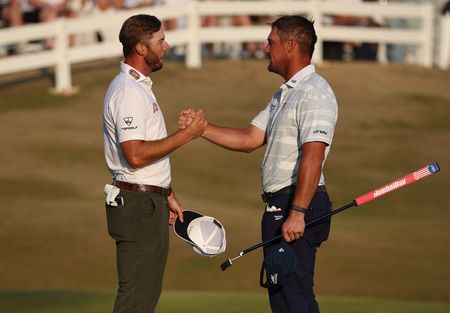
American golfer Sam Burns has positioned himself atop the leaderboard at the British Open, holding a two-stroke advantage as the tournament heads into its final round at Royal Birkdale in Southport, England.
Burns, 29, built on his scorching second-round 62 by shooting a five-under 65 on Saturday, bringing his total to 10 under par. His fellow American Bryson DeChambeau, who faced uncertainty about whether he would even tee off Saturday after receiving a two-stroke penalty for an inadvertent rules violation late Friday, rallied to post another solid round and remains four shots behind Burns heading into Sunday.
New Zealand’s Ryan Fox electrified the field with a record-tying 62 — the third such score in just 24 hours at the tournament — and sits at eight under alongside South Korea’s Kim Si-woo. American Ryan Gerard and Australian Lucas Herbert, who led the field at the halfway point, are both at seven under.
Burns’ path to the top of the leaderboard wasn’t without early turbulence. After bogeying the final three holes of his opening-round 73, it appeared the trip to England might be cut short — he had hoped to return home to his wife Caroline and their newborn daughter Belle. But he has been nearly unstoppable since that rough start.
Looking ahead to Sunday’s final round, Burns said: “I’m going to have to go out and execute. I know that I can accept the outcome, and life’s going to move on. I’ll get to go home and see my family. I hope I’m taking some hardware with me, but if I’m not, that’s fine too.”
Burns also had kind words for DeChambeau, who was cheered by the galleries despite the Friday controversy. “Props to him,” Burns said. “He came out and played a really nice round of golf today, and that takes a lot of grit to be able to come out and do that. So I was impressed.”
DeChambeau had said the Friday penalty drama would “fire him up,” and he largely delivered — until a careless bogey on the 18th hole left him four shots off the pace.
World number one Scottie Scheffler, the defending champion, had a rough go of it Saturday, managing just one birdie in a level-par 70. That leaves him six strokes behind Burns, and barring a remarkable final round, the Claret Jug appears destined for a first-time major winner — which would mark the 13th consecutive year that has happened.
“A little bit frustrating, but if I hole some putts tomorrow, I could shoot a really low round and move my way up the leaderboard,” Scheffler said.
English golfer Tommy Fleetwood, playing in front of enthusiastic home crowds, is tied for ninth at five under after a 69.
Fox’s 62 on Saturday was the third score of that mark recorded in just 24 hours, joining Burns and Herbert from Friday. Prior to this week’s 154th Open Championship, only five rounds of 62 had ever been recorded in the history of men’s major golf — including Branden Grace’s effort at the 2017 Open, also held at Royal Birkdale, as well as rounds by Rickie Fowler and Xander Schauffele at the 2023 U.S. Open, and Schauffele and Shane Lowry at the 2024 PGA Championship. That total has now grown to eight.
Fox had a chance to make history with a 61 on the 18th hole but his putt didn’t fall. “Standing on the last tee, I’m going if I can get one on the fairway here, you can get a wedge or a 9-iron in and have a putt for 61,” Fox said. “If you execute, you can score around here. If you don’t, it will bite you pretty quickly.”
Herbert, meanwhile, had a difficult Saturday — nine shots worse than his Friday round, during which he narrowly missed a five-foot putt that would have given him the first-ever 61 in men’s major championship history.
Despite his own struggles, Herbert offered a candid assessment of what Sunday holds. “Sam Burns is going to be a man possessed. Given his results in majors and him not winning one, I think he’s going to be very tough to beat,” Herbert said. “I’m not thrilled about giving him a three-shot head start, but we are where we are.”
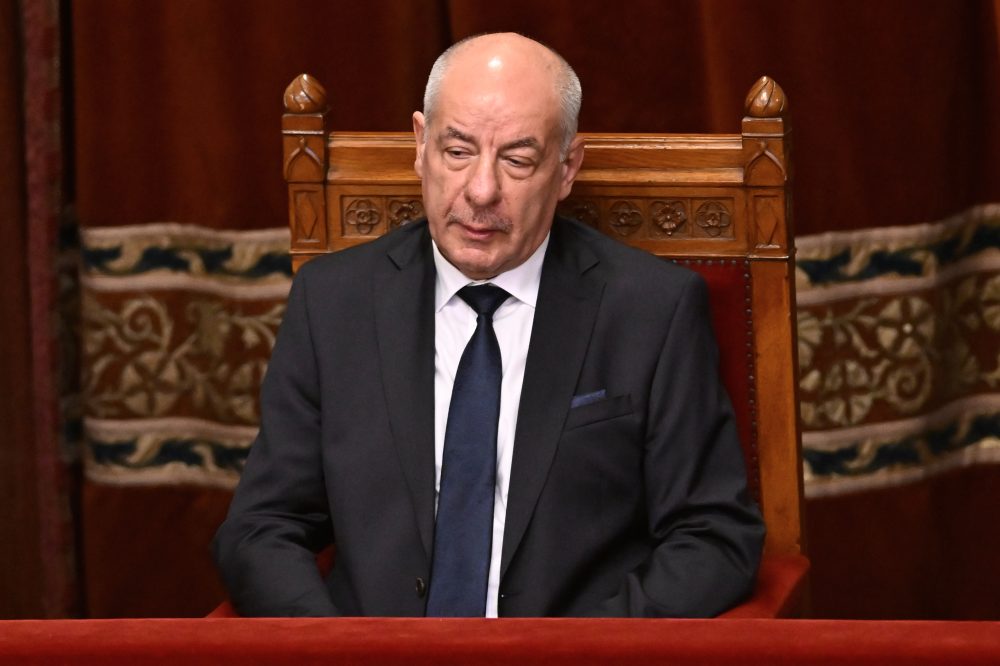
BUDAPEST, Hungary — Hungary’s president put his signature on a constitutional amendment Saturday that brings his time in office to an early end, closing out a bitter power struggle between him and the country’s new government, which had been working to remove officials tied to the previous administration of Viktor Orbán.
Prime Minister Péter Magyar, who dealt a decisive defeat to the long-serving Orbán in an April election, had repeatedly demanded that President Tamás Sulyok — an Orbán appointee — step down. Magyar’s argument was that Sulyok had failed in his duties as president by not pushing back against what he described as antidemocratic actions carried out under Orbán’s government.
After Sulyok declined to resign, lawmakers from Magyar’s pro-European, center-right Tisza party moved forward this week with a constitutional amendment calling for an immediate end to his presidency. Sulyok had five days to sign the measure into law and did so on the last possible day before the deadline.
In a Facebook video posted Saturday evening, Sulyok — whom Magyar had often called Orbán’s “puppet” — described being compelled to sign the amendment as “lasting proof that the fundamental values of a free society, the rule of law, democracy, the principle of power-sharing, have been trampled on in the interest of power.”
His term will come to an official close at midnight Monday, at which point Parliament Speaker Ágnes Forsthoffer will automatically take over his responsibilities. Lawmakers will then have 30 days to elect a new president.
Since coming to power in May, Magyar’s administration has moved aggressively to dismantle what he refers to as Orbán’s “mafia” — removing political appointees and institutional leaders seen as having enabled Orbán’s style of governance.
The new government has already suspended the news operations of Hungary’s public television and radio, which Magyar has characterized as a “propaganda factory” for Orbán’s party, and shut down Hungary’s Sovereignty Protection Office, an agency that Orbán’s critics viewed as a mechanism for silencing dissent and intimidating independent media.
Beyond removing Sulyok, the constitutional amendment also introduced judicial reforms, established an office to investigate financial misconduct during the Orbán era, and set a 12-year term limit on members of Parliament.
Orbán responded to the signing on Facebook Saturday, writing that “tyranny is no longer a threat, but a reality.” He added, “If this could be done to the president of the republic, then tomorrow no one will be safe.”
Magyar, for his part, pushed back in his own Facebook video statement Saturday, saying the passage of the amendment meant “we have fulfilled several of our important commitments and returned what the Orbán regime tried to take away from the Hungarian people for many years.” He announced he would bring his party together Monday to begin discussions on who to nominate as the next president.
British police announced Saturday that their investigation into an alleged threat against an Islamic religious event in eastern England last weekend has turned up no evidence sufficient to charge anyone with a terrorism-related offense.
The incident prompted the arrest of thirteen individuals between Sunday and Thursday, after authorities learned of what they described as a “potential serious threat” directed at a religious gathering attended by roughly 15,000 people at a country house in Suffolk.
Eight of those arrested were detained under the Terrorism Act. By Saturday, seven of the eight had been released without any charges filed against them.
The eighth man, age 42, was charged — but not in connection with the alleged threat. He faces charges related to possession of offensive weapons, specifically extendable batons, as well as possession of a stun gun. Those items were discovered during searches conducted as part of the investigation. Police clarified that those charges are not believed to be tied to the original threat.
Commander Helen Flanagan, who leads Counter Terrorism Policing London, addressed the outcome in an official statement: “We have found no evidence to support anyone being charged with any offences linked to the alleged threat.”
Flanagan added that the investigation remains active and that authorities will not hesitate to act if any new threats to public safety are identified.
During the course of the investigation, officers searched homes and vehicles and confiscated more than 35 digital devices.
The development comes after Britain elevated its national terrorism threat level to “severe” back in April — a designation indicating that an attack is considered highly likely.
Interior minister Shabana Mahmood acknowledged last week that the arrests would likely be a source of concern for British Muslims. Flanagan echoed that sentiment Saturday, saying she wanted to offer reassurance to the Muslim community that the inquiry is continuing.
NEW YORK — Back in 2016, Lionel Messi stood at MetLife Stadium with tears in his eyes after Argentina fell short in the Copa America final. Devastated by the loss, he told the world he was done with international football, saying, “I’ve done all I can.”
At 29 years old, Messi had already earned more individual and club honors than nearly any player alive. But after coming up short in three Copa America championship matches and the 2014 World Cup final, it seemed like a major international title might never be his.
Of course, an entire nation refused to let him walk away. Argentina persuaded Messi to pull the jersey back on, and this Sunday he’ll return to that very same stadium — now called New York-New Jersey Stadium for this tournament — with a chance to win his second straight World Cup gold medal.
Debates about the greatest footballer ever will never truly be settled, but to find someone who shaped World Cup outcomes as powerfully as Messi has, you’d need to go back to Diego Maradona or Pele.
While Sunday’s opponents Spain rely on a strong collective identity, Messi’s role has been absolutely central to five straight years of success for Argentina, known as the Albiceleste.
His impact goes well beyond goals and assists. Messi serves as a symbol of national pride — a rallying point for a remarkably tough team that has repeatedly found ways to win when the odds were against them.
After Lautaro Martinez scored a stoppage-time winner from a Messi assist in the semifinal against England, Martinez captured the team’s spirit: “It’s all happiness, and it’s all thanks to this group which, in the face of adversity, keeps going and going and never gets tired. We have the best player in the world as our example.”
Beyond his brilliance with the ball, Messi has shown impressive physical endurance, playing every single minute of Argentina’s knockout-round matches at this World Cup — two of which extended into extra time.
Making predictions about the future of the little magician from Rosario has always been a risky bet, but by any measure, a fourth world title for Argentina on Sunday would stand as the defining achievement of an extraordinary career.
His 2022 World Cup victory, along with Copa America championships in 2021 and 2024, have filled his trophy shelf with international honors — even as his club career shifted to the comparatively lower-stakes world of Major League Soccer.
Messi is under contract with Inter Miami through the end of the 2028 MLS season and has given no hint that Sunday’s match will be his farewell in Argentina’s sky blue and white. He has worn that shirt 206 times over 21 years.
One thing, however, is beyond question: he has more than earned the right to decide that for himself.
The stage is set for an all-top-two-seeds final at the Nordea Open in Bastad, Sweden, as No. 1 seed Andrey Rublev and second-seeded Luciano Darderi each came through hard-fought three-set semifinal victories on Saturday.
Rublev, representing Russia, took down third-seeded Alejandro Tabilo of Chile by a score of 6-4, 4-6, 6-4. On the other side of the bracket, Italy’s Darderi edged out unseeded Adolfo Daniel Vallejo of Paraguay 6-4, 6-7 (11), 6-3. The 28-year-old Rublev, a former champion at Bastad in 2023, is chasing his 18th ATP Tour title. The 24-year-old Darderi, who is the defending champion at this event, will be looking to claim his sixth career tour-level win.
Rublev reached his 30th career tour-level final in impressive fashion, winning 77.6 percent of his first-serve points — converting 38 of 49 — and blasting 12 aces, three of which came in the deciding set. Tabilo mounted a strong effort, saving 10 of 13 break points and even surviving three match points before ultimately falling short.
Darderi’s path to the final was equally dramatic. He needed his 13th set point to close out the opening set, then watched three match points slip away during a second-set tiebreak as Vallejo fought back to force a third set. In total, Darderi successfully defended seven of eight break points and converted three of his five break point chances throughout the match.
At the EFG Swiss Open Gstaad in Switzerland, Sunday’s final will feature No. 7 seed Raphael Collignon of Belgium and unseeded Stefanos Tsitsipas of Greece, both of whom also came through in three sets on Saturday.
Collignon, who had never before reached an ATP Tour final, pulled off a remarkable comeback against No. 6 seed Juan Manuel Cerundolo of Spain, winning 1-6, 7-6 (5), 7-5. The 24-year-old Belgian saved a match point while serving at 3-5 in the second set, then broke back to win the tiebreak. Trailing 2-5 in the third set, he reeled off five consecutive games to seal the victory.
Tsitsipas, the former World No. 3 and 12-time tour champion, defeated Alexander Shevchenko of Kazakhstan 6-4, 3-6, 6-3 to reach his first ATP Tour final in 16 months. The Greek star leaned on a powerful serve in the final set, dropping just one of 12 first-serve points to pull away decisively.
A Lebanese soldier died Saturday after an explosive device detonated within an army vehicle traveling through the southern Lebanese town of Mansouri, according to a statement from the Lebanese army. An officer and one additional soldier sustained injuries in the blast.
The Israeli military also commented on the incident, stating that the vehicle had driven over an explosive device in the Al-Mansouri area. Following a review, Israeli forces concluded the device did not originate from the Israeli military and was most likely planted by Hezbollah.
Israeli officials further noted that their soldiers had not been operating in that area recently. They also stated that the Lebanese army vehicle had entered what they referred to as a security zone without first coordinating with Israel — a step they say is required under an existing coordination agreement between the two sides.
The Lebanese army said its investigation into the incident is ongoing and offered no additional details at this time.
CHICAGO — A trip back to Wrigley Field turned into an unexpected moment for former Chicago Cubs first baseman Anthony Rizzo on Saturday, when he found himself retrieving a home run ball in the right-field bleachers hit by current Cubs first baseman Michael Busch.
Busch’s solo shot off Minnesota in the first inning was his 12th homer of the season. Rizzo didn’t snag it out of the air, but after the ball bounced off the concrete, he reached back, picked it up, and raised it above his head while a young boy sat on his shoulder.
Rizzo was at the ballpark as part of a pregame ceremony honoring the 10th anniversary of the Cubs’ 2016 World Series title. The festivities included the unveiling of a 31-foot-wide arching structure called the “Champions Gate” on the west side of Wrigley Field.
A three-time All-Star, Rizzo spent 10 of his 14 major league seasons with Chicago. During the 2016 regular season, he batted .292 with 32 home runs and 109 RBIs, then added three homers and 10 RBIs during the postseason as the Cubs broke a 108-year championship drought.
Team owner Tom Ricketts, former manager Joe Maddon, and Rizzo each addressed the crowd during the ceremony, which also featured around 20 players from that championship squad. Maddon and the players later returned to the field, where pitcher Kyle Hendricks threw out a ceremonial first pitch.
BAMAKO, Mali — A deadly ambush on a Malian military convoy in the country’s troubled north on Saturday left scores of soldiers either dead or taken captive, according to the rebel groups who carried out the attack.
Mali’s army acknowledged the assault in an official statement, confirming that armed groups targeted a convoy of Malian soldiers and their partners in a remote area of the northern Gao region. The military offered few additional details, stating only that “a counterattack is underway.”
Two separate armed factions — the regional al-Qaida affiliate known as JNIM and the separatist Azawad Liberation Front, or FLA — each issued statements claiming they carried out the attack together. Both groups described “great human losses” and “serious material damage” suffered by the Malian army.
According to the rebel groups, the convoy included both Malian army personnel and members of Russia’s Africa Corps, a force that has been operating alongside Mali’s military in the region.
Security analysts say the growing cooperation between JNIM and the FLA represents a significant and dangerous threat to Mali’s stability and its ruling military government.
FLA spokesperson Mohamed Elmaouloud Ramadane described the scale of the attack, saying: “There were many soldiers killed, others captured alive. Army cars including armored cars were destroyed and others seized in good condition.”
The convoy had been traveling from the northern town of Anefis toward Gao city when it was struck in the Sahara desert. The exact purpose of the convoy was not immediately known, though the presence of fuel tankers in the column suggested it may have been a logistics mission.
Videos shared by the rebel groups purportedly showed soldiers lined up and appearing to surrender while surrounded by militants and military vehicles. One video appeared to show rebels firing on soldiers lying on the ground, while other footage showed soldiers being transported in vehicles belonging to the armed groups. The Associated Press was unable to independently verify the authenticity of the videos.
The attack is the most recent in a string of militant strikes against Malian security forces in recent months, as armed factions compete for power and territory across the broader Sahel region. Mali is a landlocked country situated within the Sahel, a vast stretch of land running along the southern edge of the Sahara Desert that has become a hotbed of extremist activity in recent years.
In northern Mali, Tuareg-led separatist movements have long sought to establish an independent state called Azawad. In 2024, these groups united under the banner of the Azawad Liberation Front, or FLA.
The FLA and JNIM have been increasingly coordinating their operations against Malian forces. Their partnership was on full display in April, when they carried out what was described as the largest coordinated attack in the West African nation in more than a decade.
MEXICO CITY (AP) — Mexican President Claudia Sheinbaum has confirmed she will be in attendance at Sunday’s World Cup final, accepting a personal invitation extended by U.S. President Donald Trump. The appearance will mark their first face-to-face meeting since December, following months of friction between the two leaders.
Notably, Sheinbaum had skipped the tournament’s opening match held in Mexico City, where her country’s national team defeated South Africa 2-0. Rather than attending herself, she passed her ticket along to a young Indigenous woman.
Speaking to Mexican media, Sheinbaum explained her decision: “I decided to go because it is a direct invitation from the president of the United States. Canadian Prime Minister (Mark) Carney will also be there, and tomorrow I will record a message with more details.”
The two heads of state have navigated a strained relationship, with disagreements spanning trade policy and security concerns. Their most recent in-person meeting took place at the World Cup draw event back in December.
This year’s World Cup marks a historic first, with the United States, Mexico, and Canada jointly hosting the tournament as three neighboring North American nations. The championship game will be played in New Jersey, where defending titleholders Argentina will face Spain in a bid for the trophy. Spain’s King Felipe VI is also anticipated to be among those in attendance.
A father and son from Northern California are expected to be charged with kidnapping federal employees after two U.S. Forest Service workers were held captive at gunpoint inside a trailer near Mt. Shasta.
Forest Service Chief Tom Schultz confirmed the two employees were carrying out routine field operations in the Shasta-Trinity National Forest when they were seized on Thursday. After being held for over 12 hours near Gunboot Lake, they were freed in the early hours of Friday morning.
“I want to say how profoundly grateful and relieved that we are, that our two employees were released safely. Their well-being continues to be our highest priority,” Schultz said.
The 49-year-old suspect and his adult son gave themselves up around 2:30 a.m. Friday, walking out of the trailer with an assault rifle and knives in hand. The father also claimed to authorities that he was in possession of grenades.
Deputies from the Siskiyou County Sheriff’s Office arrived at the remote location around noon Thursday and quickly deployed drones to help track down the trailer. They also called in additional law enforcement agencies, including the FBI, to assist with the standoff.
FBI Sacramento Acting Special Agent in Charge Brian Tosh said the outcome could have been far worse.
“Crisis situations like this don’t often result in everyone leaving the scene safely,” Tosh said.
U.S. Attorney Eric Grant announced plans to charge both men with kidnapping federal employees. As of Saturday afternoon, however, no formal charges had yet appeared in online court records.
The Florida Panthers moved quickly to suspend their equipment manager, Teddy Richards, on Friday after he was arrested on misdemeanor charges of battery related to domestic violence and the unauthorized use of 911 services.
Richards was taken into custody at his residence in Coral Springs, Florida. He has served as the Panthers’ equipment manager since the start of the 2016-17 season.
Before joining Florida, Richards built his career in hockey operations starting with the Wilkes-Barre/Scranton Penguins — the Pittsburgh Penguins’ AHL affiliate — where he worked from 2002 to 2013. He then stepped into the role of assistant equipment manager with Pittsburgh from 2013 to 2016 before making the move to the Panthers organization.
The 43-year-old also took on equipment duties for Team USA during the NHL’s 4 Nations Face-Off in 2025 and at the 25th Winter Olympics held in Italy in 2026.
The Panthers have offered little in the way of public comment, releasing only a social media statement confirming that Richards has been “suspended from all team activities and facilities pending investigation.”
Ron Hunt, the tough-as-nails second baseman who carved out a place in baseball history as the first New York Met ever to start in an All-Star Game, passed away Wednesday at 85 years old.
Hunt had spent his final month in hospice care. During his playing days, he set a Modern Era record by being struck by pitches 50 times in the 1971 season alone — a testament to his fearless approach at the plate.
Over the course of his 12-year major league career, Hunt suited up for five different teams: the New York Mets from 1963 to 1966, the Los Angeles Dodgers in 1967, the San Francisco Giants from 1968 to 1970, the Montreal Expos from 1971 to 1974, and the St. Louis Cardinals in 1974. He finished his career with 1,429 hits and a reputation for giving everything he had on the field.
Jay Horwitz, the Mets’ vice president of media relations, paid tribute to Hunt in a July 4 post on Medium. “No one played the game harder than Ron Hunt, our first All-Star,” Horwitz wrote. “He would do anything to help win a game.”
Hunt was a two-time All-Star selection and is perhaps most remembered for his extraordinary willingness to absorb pitches. He was hit by a pitch 243 times throughout his career, placing him sixth on the all-time MLB list.
He once summed up his philosophy with a now-famous quip: “Some folks give their bodies to science. I gave mine to baseball.”
Hunt was born on February 23, 1941, in St. Louis. After excelling in both baseball and football during his high school years, he signed with the Milwaukee Braves. The expansion Mets later acquired his contract after their first season in 1962, installing him as their starting second baseman. He made his major league debut in 1963.
That debut season was statistically the finest of his career — Hunt posted 145 hits, 28 doubles, 10 home runs, and 42 RBIs. He finished second in the National League Rookie of the Year voting, edged out by a 22-year-old Cincinnati Reds standout named Pete Rose. Even so, Hunt continued to win over fans and teammates alike with his no-nonsense style of play.
When he started the 1964 All-Star Game — known as the Midsummer Classic — he singled in his first plate appearance, doing so at his home ballpark, Shea Stadium, while playing for the National League.
Hunt’s relentless, hard-charging style earned him a career bWAR of 32.7, but it also took a physical toll. He underwent 16 baseball-related surgeries over the years, and his aggressive play may have contributed to the development of Parkinson’s disease, which affected him in his later years.
He is survived by his wife, Jackie; his daughter, Tracy; and his son, Ron Jr.
The Trump administration is reportedly getting ready to announce a set of grants targeting MAGA-aligned projects in Europe and other parts of the world, as part of a sweeping restructuring of how the United States distributes foreign aid, according to a report published Saturday by the Financial Times.
Among the proposed funding outlined in the report is $2 million designated to “counter censorship” tied to European Union regulations — specifically the Digital Services Act and the Digital Markets Act. The Financial Times said it obtained a copy of a notice the State Department sent to members of Congress.
Reuters, which first carried the story, noted it was unable to immediately verify the Financial Times report independently.
If you were hoping to snag a last-minute ticket to watch Lionel Messi and Argentina take on Lamine Yamal and Spain in the World Cup final, you had better have a very large credit limit — or access to a bank vault.
Sunday’s championship match in East Rutherford, New Jersey is shaping up to be one of the most expensive sporting events to attend in recent memory.
On Saturday morning, FIFA’s official ticket resale platform was showing its lowest-priced tickets at $6,411.25 — for a mid-level seat behind the goal. Those bargain-by-comparison seats were gone before lunchtime.
Seats in the upper deck corners were going for close to $10,000, while getting closer to the field would set buyers back roughly $16,000. Special hospitality seating was listed at nearly $60,000.
Other resale platforms, including SeatGeek and StubHub, were also listing upper deck seats starting around $10,000, with some lower bowl seats climbing toward $35,000.
For many fans, the steep price may feel justified. Messi, widely regarded as the greatest soccer player of all time, will be chasing history against Yamal, one of the sport’s most exciting young talents.
Argentina is competing for its fourth World Cup title overall and is looking to become the first nation to win back-to-back championships since Brazil accomplished the feat in 1958 and 1962. Spain last lifted the trophy in 2010.
Two U.S. military personnel serving in Jordan were killed Friday as they worked to repel an assault involving Iranian missiles and drones, according to a statement released Saturday by U.S. Central Command.
The announcement confirmed that the service members died while actively defending against the incoming attack. No additional details about the circumstances were immediately provided in the official statement.
Iran’s Supreme Leader Mojtaba Khamenei released a written statement Saturday declaring that President Donald Trump’s signature is “utterly worthless and devoid of credibility,” pointing to what he described as repeated U.S. violations of a memorandum of understanding that had been signed by the leaders of both Iran and the United States.
The sharp condemnation comes as tensions between Washington and Tehran have sharply escalated. The two nations have exchanged military strikes after a ceasefire agreement between them broke down last week, stoking fears of a return to full-scale conflict.
Khamenei also issued a warning in his statement, saying the United States should understand that the Iranian people and the so-called “resistance front” have “unforgettable lessons” in store for it.
The National Weather Service office in Mount Holly, New Jersey has issued a Tornado Watch for the region, beginning at 1:55 PM EDT and running through 9:00 PM EDT this evening, July 18.
A Tornado Watch means that weather conditions are favorable for the development of tornadoes. Residents are urged to stay weather-aware and keep a close eye on updated forecasts throughout the remainder of the afternoon and evening.
If a Tornado Warning is issued for your area, you should immediately move to the lowest floor of a sturdy building, away from windows, and take cover. Do not wait to see or hear a tornado before taking action.
TV Delmarva will continue to monitor this weather situation and provide updates as conditions develop. Stay tuned for the latest information from your local forecast team.
Southbound travelers on Coastal Highway, also known as Delaware Route 1, should expect slow going between Dartmouth Drive and Rehoboth Avenue Extension.
According to Delaware Department of Transportation, heavy congestion in that stretch is adding 15 to 20 minutes to travel times for drivers heading in that direction.
Motorists are encouraged to allow extra time or consider alternate routes to avoid the backup.
BUDAPEST — Hungarian President Tamas Sulyok put his signature on a constitutional amendment Saturday that brings his own tenure as head of state to an immediate end, according to a statement he released.
The measure was passed by Prime Minister Peter Magyar’s ruling Tisza party, which has been working to dismantle the political infrastructure built by former Prime Minister Viktor Orban. Magyar has said voters gave him a clear mandate to do exactly that after his party removed the right-wing leader in a sweeping April election victory.
The constitutional change ends Sulyok’s presidency right away, pointing to what it describes as a “serious loss of confidence” that society holds toward a leader who was originally elected in early 2024 by lawmakers loyal to Orban’s Fidesz party.
Sulyok, a former Constitutional Court judge, said he felt compelled to sign the legislation because it technically complied with existing law — but he made clear he believes the reform has done real damage to Hungary’s democratic foundations.
“The seventeenth amendment to the Constitution has marked a watershed in Hungary’s constitutional democracy,” Sulyok stated.
He added: “By removing public office holders in a manner that openly violates the rule of law … it sets a negative precedent that inflicts a deep wound on the constitutional values of democracy, the separation of powers, and the rule of law.”
The Tisza party holds a two-thirds supermajority in parliament, giving it the power to alter any law in the country. Parliament will now choose a new president, either until a new constitution takes effect or for up to five years.
The amendment goes further than just removing Sulyok. It also puts a 12-year cap on how long lawmakers can serve and sets a mandatory retirement age of 70 for Constitutional Court judges. That provision will force the court’s current president — considered an ally of Orban — Peter Polt, to step down.
Magyar had repeatedly demanded that Sulyok resign since taking power in April, accusing him of failing to represent the country’s interests and instead acting on behalf of Orban and his allies. Until now, Sulyok had refused to leave voluntarily.
The Israeli military announced Saturday that it launched a strike targeting a Hezbollah cell located near the town of Tebnit in southern Lebanon, following the detection of a Hezbollah drone by Israeli soldiers in the region.
According to a military statement, the Israeli air force tracked down fighters who had been operating drones while taking cover in close proximity to Israeli troops. Officials stated that this behavior was a direct violation of ceasefire understandings that had been in place. As of the time of the report, Hezbollah had not issued any public comment in response to the strike.
Mexican health and agricultural authorities announced Friday they are looking into a widespread foodborne illness outbreak in the United States tied to shredded iceberg lettuce grown in Mexico and served at Taco Bell restaurants.
Mexico’s sanitary regulator, Cofepris, and its agricultural and food safety regulator, Senasica, released a joint statement saying an interagency technical working group has been formed to examine the situation and put preventive measures in place.
The group has conducted inspections and traceability analyses that the agencies described as “strictly preventive in nature” and “aimed at mitigating any potential health risk.”
According to the CDC, approximately 100 people have been hospitalized after contracting cyclosporiasis — a parasitic infection that can trigger severe diarrhea and other gastrointestinal problems — following meals at Taco Bell locations in Indiana, Kentucky, Michigan, Ohio, and West Virginia.
On Friday, Taylor Farms, a California-based lettuce supplier, and Sysco, the largest food distributor in the United States, announced they are pulling iceberg lettuce sourced from central Mexico from circulation, acting on guidance from the U.S. Food and Drug Administration.
An anonymous industry source, who spoke to Reuters without authorization to do so publicly, said the lettuce was packaged into 5-pound bags at Taylor Farms’ facility in Guanajuato, in central Mexico. That same source noted that Sysco distributes those bags broadly to hospitals, sports venues, and fast-food chains.
Despite the ongoing probe, Mexico’s health and agricultural ministries stressed in their statement that “the investigation remains ongoing, and it is important to emphasize that identifying a product’s country of origin through traceability does not, by itself, confirm that contamination occurred in Mexico.”
This is not the first time Taylor Farms’ Mexican operations have been connected to a U.S. cyclosporiasis outbreak. A 2013 outbreak sickened more than 600 people across 25 states and was ultimately traced back to salad mix produced at Taylor Farms de Mexico in Guanajuato, according to the CDC.
A Heat Advisory is in effect for Inland Sussex County through 8 o’clock tonight, as dangerously hot and humid conditions push heat index values as high as 106 degrees.
The National Weather Service out of Mount Holly issued the advisory this afternoon, warning residents that the combination of soaring temperatures and oppressive humidity could quickly lead to heat-related illness if proper precautions aren’t taken.
Health officials urge everyone in the affected areas to take the heat seriously. Residents should drink plenty of fluids — even before feeling thirsty — and stay inside an air-conditioned space as much as possible. Avoid prolonged time in direct sunlight, and if you must be outdoors, take frequent breaks in the shade or indoors.
Authorities are also asking neighbors to look out for one another. Check in on elderly relatives, young children, and anyone who may not have access to air conditioning — they face the greatest risk in these extreme conditions.
The advisory remains in effect until 8 p.m. this evening. Conditions are expected to become more comfortable after sunset. TV Delmarva will continue to monitor the forecast and bring you any updates as conditions change.
The National Weather Service office in Mount Holly, New Jersey has issued a Heat Advisory that took effect at 12:43 PM EDT on Friday, July 18, and is set to expire at 8:00 PM EDT that same evening.
Residents are encouraged to take steps to stay safe during the advisory period. Health officials generally recommend staying hydrated, limiting time outdoors during peak heat hours, and checking on elderly neighbors and young children during periods of elevated heat.
The advisory was issued to alert the public to potentially dangerous heat conditions expected through the early evening hours.
GAZA CITY — At least nine Palestinians, including three children, lost their lives Saturday following Israeli airstrikes in Gaza City, according to hospital officials.
One of the strikes targeted an apartment building in the Nasr neighborhood, claiming the lives of at least five people. Among the dead were children ranging in age from 8 to 18 years old. Mohammed Abu Selmiya, director of Shifa Hospital — where the victims were brought — confirmed the deaths and noted that six additional people sustained injuries, four of them children between the ages of 8 and 16.
The Israeli military stated it had identified Hamas infrastructure and located militants in the area as the basis for the strike, though it provided no further details.
A second Israeli strike struck a group of people gathered in the Zeitoun neighborhood, killing four individuals and leaving one more in critical condition, according to health officials.
Regarding that strike, the Israeli military said it had targeted what it described as a “Hamas terrorist” and indicated it was still assessing the outcome of the operation.
Residents across Gaza have reported a noticeable escalation in the frequency and intensity of Israeli strikes over the past several days.
Although Israel and the Hamas militant group reached a ceasefire agreement in October, Israeli forces have continued to carry out attacks across the territory on an almost daily basis. Israel maintains that its operations are focused on Hamas and other armed groups that it considers a threat. Both Israel and Hamas have accused the other of violating the terms of the ceasefire.
Since the ceasefire took effect, Gaza’s Health Ministry reports that at least 1,127 Palestinians have been killed, including no fewer than 260 children. Five Israeli soldiers have also died during that same period.
The conflict was ignited by a Hamas-led militant assault on October 7, 2023, which killed approximately 1,200 people in Israel and resulted in 251 others being taken hostage. Israel’s military response has since killed 73,250 Palestinians, according to figures from Gaza’s Health Ministry.
The Health Ministry operates under the Hamas-led government and is staffed by medical professionals who keep detailed records. United Nations agencies and independent analysts generally consider those records to be reliable. The ministry does not separate civilian deaths from militant deaths in its reporting, but indicates that women and children account for roughly half of all fatalities.
BUNIA, Congo (AP) — More than twelve attacks on health facilities and workers have been documented amid Congo’s ongoing Ebola outbreak, with safety concerns now severely limiting the ability of responders to operate in the hardest-hit area of Ituri province, officials announced Saturday.
The crisis has been made worse by a strike among many unpaid health workers and other frontline personnel, creating additional obstacles for those trying to contain what has been declared the fastest-growing Ebola outbreak ever recorded. To date, 2,181 cases have been confirmed, with 864 people having lost their lives.
Pierre Akilimali, the incident manager overseeing the Ebola response, told reporters at a press briefing in Bunia — the capital of Ituri — that a significant number of the attacks have been carried out by angry crowds who have stormed treatment centers or gone after response teams working in the field.
Ituri province is responsible for roughly 90% of all cases, and in recent days locals told The Associated Press they have witnessed health and aid workers departing remote communities considered hot spots and retreating to Bunia.
The exodus follows the most recent attack, which took place Wednesday in the Ituri town of Nyakunde, where residents protested following the death of a woman at a nearby hospital.
Wisconsin Gov. Tony Evers has announced his endorsement of Milwaukee County Executive David Crowley in the state’s Democratic primary for governor — a surprise move that comes just one day after the race was dramatically reshuffled by a rival candidate’s exit.
At a formal event planned for Saturday, Crowley was set to deliver remarks — provided in advance to The Associated Press — stating that Evers’ backing “reflects his confidence that I have the experience, the judgment, and the record to build the coalition we need, defeat Tom Tiffany, and lead effectively from the very first day in office.”
The 40-year-old Crowley is jumping back into a wide-open primary that was thrown into turmoil Friday when Lt. Gov. Sara Rodriguez announced she was ending her campaign. Rodriguez cited a campaign finance scandal, having fired her campaign manager earlier in the week after learning her campaign had hundreds of thousands of dollars less money available than anticipated.
Crowley had actually paused his own campaign two weeks ago to throw his support behind Rodriguez. Now he’s back in the race, competing against democratic socialist Francesca Hong, former Lt. Gov. Mandela Barnes, state Sen. Kelda Roys, and Joel Brennan, a former top aide to Evers. If elected, Crowley would make history as Wisconsin’s first Black governor.
Evers, a Democrat who chose not to seek a third term, had previously pledged to stay out of the primary — a position he had maintained throughout his eight years in office. By endorsing Crowley, he is passing over both his current and former lieutenant governors, each of whom has won statewide elections, in favor of someone who has never run a statewide race.
Evers was not expected to appear at Saturday’s event, as he is currently on a trade-related trip to Africa.
Crowley’s political story is one of personal perseverance. During the first phase of his campaign, he highlighted how his family once experienced homelessness in Milwaukee. He went on to become a community organizer and won a seat in the state Assembly in 2016 at just 30 years old. In mid-2020, he was elected as executive of Milwaukee County — the state’s most populous county — becoming both the first Black person and the youngest individual, at age 33, to hold that position.
Wisconsin’s Democratic primary is scheduled for August 11. Democrats are hoping not only to retain the governor’s office but also to flip control of the state Legislature, which Republicans have held since 2011. The Democratic nominee will face Republican Rep. Tom Tiffany in the general election, with Tiffany encountering only minimal opposition in his own primary.
Jet engine maker CFM International has secured approval from both U.S. and European authorities for an upgrade that promises to boost the durability of engines used on Boeing 737 MAX aircraft.
CFM International, the world’s largest engine maker by units sold and a joint venture between GE Aerospace and France’s Safran, announced the new ‘durability kit’ for its LEAP-1B engines. The company said the upgrade mirrors improvements that were already made available for Airbus A320neo jets, which are powered by the related LEAP-1A engine model.
According to CFM executives speaking at a briefing ahead of the Farnborough Airshow in England, the upgrade will double what the industry calls ‘time on wing’ — meaning the length of time an engine can operate between major maintenance events. That improvement is especially significant for airlines flying in hot and demanding climates, such as those in the Middle East and India.
Long repair wait times have been a persistent headache for airlines in recent years, leaving portions of their fleets out of service. The root cause traces back to the latest generation of engines, which deliver significant fuel savings but came with unexpectedly high levels of wear and tear — a trade-off that stretched repair schedules and forced some carriers to ground planes.
CFM said it has now brought the number of LEAP-powered aircraft grounded due to maintenance backlogs to a ‘near zero’ level.
Meanwhile, rival engine maker Pratt & Whitney, which also competes to power A320neo jets, has separately reported steady progress in addressing its own maintenance delays and issues related to metal contamination.
CFM noted that the new durability update can be installed during routine maintenance visits and will also be incorporated directly into the production of new engines going forward.
Spain’s preparations for Sunday’s World Cup final hit a weather-related snag on Saturday after thunderstorms forced the cancellation of the team’s final practice session in East Hanover, New Jersey.
World soccer’s governing body FIFA announced the cancellation and confirmed that no alternative training time would be made available to the Spanish squad. It remained unclear whether Argentina’s session, which was scheduled for 11:30 a.m. local time (3:30 p.m. GMT), would proceed as planned.
Spain’s soccer federation, known as the RFEF, released a statement explaining what happened on the ground. “The Spanish national team’s training session on the pitches at the Melanie Lane Training Ground in New Jersey has been suspended in accordance with the US storm safety protocol,” the federation said.
The statement also noted that players were not left completely idle, adding, “The players are currently taking part in a warm-up session indoors.”
Despite the disruption, Sunday’s championship match between Spain and Argentina remains on schedule, with kickoff set for 3 p.m. local time (7 p.m. GMT).
Switch on any World Cup broadcast and you will likely be greeted by crowds of cheering, perspiring male supporters dominating the screen. However, one of the most rewarding experiences of reporting on this year’s tournament has been the opportunity to sit down and talk with women who have a genuine passion for soccer.
In Houston, Texas, a local nail salon became an unexpected hub of World Cup excitement, with FIFA-inspired nail art on display as of June 26, 2026. The salon’s owner and a customer proudly showed off their soccer-themed designs, reflecting just how widely the tournament’s energy has spread — reaching well beyond the stadium and into everyday life.
Female fans, it turns out, have plenty to say about the sport they love, and their voices add a dimension to World Cup coverage that is too often left out of the spotlight.
KYIV, Ukraine — Ukrainian prosecutors have made public surveillance video of what they describe as the bombing in Monaco that left wealthy businessman Vadym Yermolaiev and members of his family with serious injuries.
The explosion occurred on June 30 and sent shockwaves through the exclusive and famously private Mediterranean principality. The reason behind the attack has not been established. Investigators from Monaco, France, and Ukraine have all been working on the case, alongside international policing organization Interpol.
The woman suspected of carrying out the bombing, Anastasiia Berezovska, was discovered dead in Ukraine just days after the attack. A Ukrainian military intelligence officer later admitted to killing her, but claimed he acted entirely on his own without authorization from his superiors, according to Ukraine’s Security Service, known as the SBU.
In the footage shared with The Associated Press on Saturday, an individual wearing a hat and carrying a bag can be seen leaving an object in the entryway of a building before walking away. In the background, a man, a woman, and a child can be seen approaching the same entryway. As the three near the entrance, an explosion occurs and the video becomes distorted.
Ukrainian chief prosecutor Ruslan Kravchenko stated in a post on Telegram that the footage came from a surveillance camera that the suspected perpetrators had set up themselves to confirm the attack happened. He added that the footage had been erased but was successfully recovered by SBU technical experts.
The prosecutor’s office in Monaco did not respond to requests for comment regarding the video or where the investigation currently stands.
Lawyers representing Yermolaiev sent a letter this week alleging that Ukrainian security services were responsible for organizing the bombing and calling for protection for his family.
In the letter, which was provided to French media outlets, Yermolaiev stated that Ukrainian military intelligence was directly involved in what he described as an assassination attempt against his family. He wrote that he remains in the hospital, that his partner Anna has suffered injuries described as “irreversible,” and that their 13-year-old son sustained burns and fractures.
In an unusual turn, the letter also expressed gratitude toward Ukrainian President Volodymyr Zelenskyy for his personal attention to the situation and for unspecified help he reportedly provided, according to the French media reports.
Yermolaiev was placed under sanctions by Zelenskyy’s government in 2023 due to his connections to Russia, and he has stated that he gave up his Ukrainian citizenship. Zelenskyy has not addressed whether he played any role in assisting Yermolaiev.
ATLANTA (AP) — About ten years ago, Jon Ossoff was a 30-year-old Democratic candidate for Congress who pitched Georgia suburban voters on cutting wasteful spending and holding both political parties accountable. His Republican opponent at the time even remarked that Ossoff sounded like a Republican.
That description would not apply today. After falling short in that 2017 race and then narrowly capturing a U.S. Senate seat in a 2021 runoff, Ossoff is now campaigning for reelection with an unrestrained assault on President Donald Trump, whom he labels a ‘national disgrace’ running a ‘Mar-a-Lago mafia’ and ‘the most corrupt administration of all time.’
The 39-year-old senator has long served as a focal point for anti-Trump energy, regardless of his specific campaign message. But only now has he fully leaned into that role. Democrats across the political spectrum are taking notice — from grassroots activists searching for the right message heading into the 2026 midterms to party members hoping to identify strong presidential contenders for 2028.
This week, as Trump once again pushed debunked claims of voter fraud in the 2020 election — the very race that sent Ossoff to Washington — the senator seized every opportunity to call Trump the ‘world’s most famous sore loser.’
‘The senator is definitely having a moment, and these breakout moments can certainly become a launching pad for something bigger,’ said Lis Smith, a Democratic strategist who helped Pete Buttigieg transform from an obscure Indiana mayor into a presidential candidate in 2020. Smith said Ossoff’s strategy — connecting Trump’s personal financial interests to his economic record — is ‘one that more Democrats should adopt.’
Ossoff says his attention is squarely on ‘providing Georgians with the best possible service, investigating and exposing corruption and abuse, and winning this pivotal Senate race’ against Rep. Mike Collins, who secured the Republican nomination after Trump offered a last-minute endorsement ahead of a primary runoff.
Collins has pushed back, calling Ossoff ‘out-of-touch, far-left liberal’ and labeling him ‘weak’ and ‘woke.’
Still, Ossoff’s rising national profile — combined with exceptional fundraising numbers — has placed him in a far stronger position for reelection than many political analysts anticipated when Trump returned to the White House less than two years ago. As the only Democratic senator seeking reelection in a state Trump carried in 2024, holding this seat is essential for Democrats working to flip at least four seats and reclaim control of the Senate.
Maryland Gov. Wes Moore, himself up for reelection and mentioned as a potential 2028 presidential candidate, recently traveled to Georgia to campaign alongside Ossoff and Democratic gubernatorial nominee Keisha Lance Bottoms.
Moore called both candidates ‘fighters’ and said Ossoff is delivering the right message for voters who ‘want someone that will disrupt the status quo and do what’s necessary to make their lives easier as the Trump administration raises prices on everything from gas to groceries.’
Ossoff was largely unknown in political circles when he entered the 2017 congressional race. It was the first special election of Trump’s first presidency, triggered when Trump tapped Tom Price to serve as health secretary — a move that opened up a seat the administration assumed was safely Republican, given it had once been held by House Speaker Newt Gingrich.
At the time, Ossoff had worked as a congressional aide and founded a production company that made investigative documentaries. Despite his low profile, he quickly became a fundraising phenomenon as Democrats nationwide searched for ways to push back against Trump. He topped an initial all-party primary, drawing intense national focus to the runoff that followed.
‘The atmosphere of disarray and gridlock and dysfunction and chaos in Washington doesn’t serve the American people, and it’s not just this administration or this White House — it’s career politicians in Congress,’ he said during that campaign.
Ossoff ultimately lost that race to Karen Handel, a Republican who had previously served as Georgia’s secretary of state.
When he ran against Republican Sen. David Perdue in 2020, Ossoff maintained a methodical, policy-focused style. Georgia was not seen as a major battleground, and what early attention the state received was directed more toward Democrat Raphael Warnock, who was running in a special Senate election against Sen. Kelly Loeffler. Loeffler was viewed as more vulnerable than Perdue, having been appointed to her seat following the retirement of Johnny Isakson, who stepped down due to health problems.
The political landscape shifted dramatically when Democratic presidential nominee Joe Biden carried Georgia and both Senate contests headed to runoffs, with control of the chamber at stake. Trump moved to challenge Biden’s victory and began a prolonged campaign of falsely claiming American elections are rigged, with Georgia at the center of those allegations.
Throughout his 2020 campaign, Ossoff kept his messaging trained on Perdue’s personal business dealings and the Republican response to the COVID-19 pandemic. During one debate, he did not bring up Trump at all. In another, when pressed on the president, he offered only a broad response.
‘That kind of leadership really only grows when there’s already been a destruction of faith in our political institutions,’ he said.
As a senator, Ossoff has developed relationships and a constituent services network across Georgia. He regularly announces funding for infrastructure, hospitals, and other programs — including in areas that lean heavily Republican. He spearheaded a congressional investigation into failures within Georgia’s child services system and has made veterans’ care a signature issue.
His 2026 campaign, however, has been defined by a stump speech built around a blistering critique of the president. He mocks Trump’s activity on Truth Social and his proposals to feature his own face on U.S. currency.
‘When he’s not posting, he’s been trying to rob us. Have you seen it?’ Ossoff asks crowds, before pivoting to what he describes as corruption and incompetence.
He runs through a list of grievances: Trump’s lawsuit against the Internal Revenue Service, a proposed restitution fund that could benefit January 6th rioters, and foreign business dealings involving Trump’s sons, whom Ossoff refers to as ‘Prince Don and Prince Eric.’
He also attacks Trump’s tax cuts as benefiting the wealthy, his efforts to keep the Jeffrey Epstein case files sealed, and what he calls an Iran war ‘no one voted for and no one can explain.’
‘All this while you pay more for gas, for groceries, for healthcare,’ he tells audiences.
Ossoff still references a broader ‘rot’ in a ‘coin-operated’ political system that extends beyond Trump. But the lines that draw the biggest applause — which campaign staff clip and post across social media in real time — are aimed directly at the president.
‘He’s a failed president and a national disgrace,’ Ossoff says repeatedly on the trail.
Ossoff won his Senate seat while Trump was actively contesting Georgia’s 2020 results, and Trump has revived those claims as Ossoff seeks reelection. Trump has directed his administration to reopen the 2020 election investigation, and federal agents have seized hundreds of boxes of ballots from Fulton County, a Democratic stronghold that includes Atlanta.
Refusing to confirm that Biden legitimately defeated Trump has emerged as an informal requirement for serving in the current administration — a point Ossoff drove home while questioning Jay Clayton, Trump’s nominee for national intelligence director.
‘Who won the 2020 election?’ Ossoff asked.
‘I’m not going to get into that with you,’ Clayton replied.
As Clayton continued to sidestep the question, Ossoff pressed: ‘Isn’t it humiliating to be unable to answer this question, to have to indulge the president’s delusions?’
Ossoff raised $20 million in the second quarter of 2026 and had $42 million remaining to spend. Collins raised approximately $2.1 million and held a similar amount in reserve. A 20-to-1 financial advantage gives Ossoff a significant edge as he works to hold his seat — and maintain his national visibility.
Smith offered one note of caution about Ossoff’s trajectory.
‘You can’t live off one great speech or one viral exchange,’ she said. ‘You have to prove you can perform in every format.’ The real test, she added, is how a politician goes ‘from flavor of the month to a more serious national political figure.’
A Republican congressman from South Carolina has announced his intention to seek the U.S. Senate seat that became vacant following the death of longtime Senator Lindsey Graham.
Representative Ralph Norman made the announcement Saturday on Fox News, saying he plans to enter the race for the open Senate seat in his state.
Following Graham’s passing, his sister, Darline Graham Nordone, was sworn in on Tuesday to temporarily hold the newly vacated Senate position.
President Donald Trump stated Friday that he had personally asked Darline Graham to pursue the seat on a permanent basis, with a special Republican primary set for August 11 in South Carolina.
Delaware State Police are looking into a shooting that took place in the early morning hours of Saturday, July 18, 2026, outside a Waffle House restaurant in Newark, leaving four people with gunshot wounds.
Troopers were called to the Waffle House at 1450 Pulaski Highway at around 12:10 a.m. after reports of a shooting. Upon arrival, officers discovered three victims in the parking lot who had been struck by gunfire. A 20-year-old man from New Castle, a 19-year-old man from Bear, and an 18-year-old woman from Wilmington were all transported to a nearby hospital with serious but non-life-threatening injuries. A fourth victim, a 17-year-old girl from New Castle, later drove herself to the hospital and was also treated for injuries that were not life-threatening.
Early findings in the investigation indicate that one or more unidentified suspects opened fire on the victims from within a large crowd that had assembled in the parking lot before fleeing the area.
The Criminal Investigations Unit out of Delaware State Police Troop 2 is continuing to work the case. Detective H. Carroll is leading the investigation and can be reached at (302) 365-8467. Tips can also be submitted through a private Facebook message to the Delaware State Police or by contacting Delaware Crime Stoppers at (800) 847-3333.
Anyone who has been affected by this incident or has lost a loved one to a sudden death can reach the Delaware State Police Victim Services Unit and the Delaware Victim Center around the clock by calling the toll-free hotline at 1-800-VICTIM-1 (1-800-842-8461), or by emailing [email protected].
The state of the American economy took center stage this past week, with new data revealing both encouraging signs and fresh concerns for everyday consumers and businesses alike.
One of the biggest emerging threats to price stability is the enormous wave of money being poured into artificial intelligence infrastructure. Investment in data centers is expected to surpass $700 billion this year, driving up the cost of memory chips, computer processors, related equipment, and electricity. Economists warn this spending surge will likely keep inflation elevated at least through the end of 2025.
While the situation isn’t expected to mirror the severe inflation spike of 2021 through 2023 — when prices peaked at a 9.1% annual increase — the AI-driven cost pressures could prompt the Federal Reserve to raise its key interest rate later this year. When the Fed raises rates, borrowing costs for car loans, home mortgages, and business financing typically go up as well.
On a more positive note, inflation actually cooled in June. The cost of gasoline, clothing, and used vehicles all declined, giving consumers some breathing room. The Labor Department reported Tuesday that prices fell 0.4% between May and June — the steepest single-month drop in four years. Year-over-year, inflation came in at 3.5%, down from 4.2% in May and better than most economists had predicted.
However, oil prices climbed for a second straight day Tuesday after the United States launched renewed attacks on Iran and President Donald Trump announced a new blockade of the Strait of Hormuz — a critical shipping corridor that handles roughly one-fifth of the world’s oil supply. The ongoing conflict and years of elevated prices have left many Americans feeling pessimistic about the economy, which could create political headwinds for Trump and Republicans heading into the midterm elections.
Home financing also got more expensive this week. The average 30-year fixed mortgage rate climbed to 6.55%, up from 6.49% the previous week, according to mortgage buyer Freddie Mac. That’s still below the 6.75% average recorded one year ago, but the increase adds to the affordability struggles facing prospective homebuyers. Higher monthly payments reduce how much home buyers can afford, keeping many would-be owners on the sidelines.
Consumer spending showed signs of slowing down. Retail sales grew just 0.2% in June, a significant pullback from the revised 1% gain in May, the Commerce Department reported Thursday. Excluding gas station sales, retail was up 0.7%. Clothing and accessories stores saw a 0.3% decline, while online shopping surged 1.9%, boosted by Amazon’s Prime Day event, which ran from June 23 through June 26.
Wholesale inflation — which tracks price pressures before they reach consumers — also fell in June. The Labor Department’s producer price index dropped 0.3% from May, driven largely by a 12% plunge in gasoline prices. Still, compared to a year ago, wholesale prices were up 5.5% in June, slowing from a 6% annual increase in May. Gasoline remains nearly 43% higher than it was in June 2025, largely due to the ongoing conflict with Iran. Stripping out food and energy, core wholesale prices rose 4.7% from a year ago and 0.2% from May.
The job market offered some encouraging news. New unemployment claims fell by 8,000 during the week ending July 11, landing at 208,000 — the lowest level in 10 weeks and well below the 219,000 applications analysts had forecast. Weekly jobless filings are closely watched as a near real-time gauge of layoffs and overall labor market health.
That said, a broader government jobs report released earlier this month painted a more cautious picture. Employers added only 57,000 jobs in June — less than half of the previous month’s total — suggesting many companies remain hesitant to expand their workforces.
Stock markets ended the week on a down note. The S&P 500 fell and was on pace for its first losing week in three and only its third losing week out of the last 16. The Dow Jones Industrial Average and the Nasdaq composite also declined. Computer chip companies led the losses, continuing a weeks-long slide fueled by concerns that their valuations may have climbed too high and that demand for AI-related hardware might not hold up if the technology fails to deliver the profits and productivity gains investors are counting on.
SAO PAULO — A justice on Brazil’s Supreme Court has rejected a formal request from lawyers representing former Brazilian President Jair Bolsonaro, who sought to allow Argentine President Javier Milei to pay him a visit while he remains under house arrest.
The meeting had been planned for July 25 in Brazil’s capital city of Brasilia.
Justice Alexandre de Moraes, who also presided over the trial that resulted in Bolsonaro being sentenced to more than 27 years in prison for his role in a coup attempt, ruled against the visit. In his decision, Moraes pointed to an existing prohibition barring the former president from receiving any visitors for purposes described as “political-electoral in nature.”
Milei is expected to travel to Sao Paulo to attend a Liberal Party convention. That gathering will formally certify Sen. Flávio Bolsonaro — one of the former president’s sons — as the party’s candidate to challenge sitting President Luiz Inácio Lula da Silva.
The relationship between Lula and Milei has been described as chilly. Lula has long been allied with political figures who are considered rivals of Milei, including former Argentine presidents Cristina Fernández and Alberto Fernández.
This is not the first time Moraes has blocked such a request. Back in March, he denied a similar appeal from U.S. State Department official Darren Beattie — a conservative author who served as undersecretary for public diplomacy and public affairs during the Trump administration — who had sought to visit Bolsonaro while he was still in prison.
CARACAS (AP) — Venezuelan authorities announced late Friday that the combined death toll from two powerful earthquakes that struck the country last month has reached 5,069.
A statement from the interim government of President Delcy Rodriguez confirmed that the number of people injured remains at 16,740 — a figure that has held steady for the past 11 days.
The rising death toll is being attributed to ongoing recovery efforts and debris removal operations, especially in the coastal state of La Guaira, which sits near the Caribbean Sea and was the most severely affected area. As of Friday, authorities had recorded a total of 1,331 aftershocks following the initial quakes.
The Venezuelan government reports that 856 buildings sustained damage and 190 were completely destroyed following the 7.2 and 7.5 magnitude earthquakes that struck on June 24. Hundreds of additional structures, including roads and bridges, were also impacted by the disaster.
SOUTHPORT, England — The head of the R&A is standing firmly behind the two-stroke penalty handed to American golfer Bryson DeChambeau following his second round at the British Open on Friday.
DeChambeau had just completed an impressive round of 66, putting him alone in second place on the leaderboard — just one stroke off the lead — when tournament officials determined he had unintentionally improved the area around his intended swing on the fifth hole.
Video footage captured DeChambeau stomping down long grass near where his tee shot had come to rest. After finishing his round, he was transported back to that location in a golf cart alongside an official, where the two were seen in what appeared to be a heated exchange.
He later exited the scorer’s tent having been informed of the two-stroke punishment.
R&A chief executive Mark Darbon addressed the situation Saturday on BBC Radio 5 Live, saying, “It was an unfortunate decision but really clear-cut from a rules perspective.”
Darbon also addressed a lighthearted question about whether President Trump — who has a close relationship with the two-time U.S. Open champion — had weighed in. “No. I have not received a call from President Trump and we will see what happens from here,” Darbon replied.
The controversy sparked speculation that DeChambeau might withdraw from the tournament entirely, but he took to X late Friday to say the situation had “fired him up” ahead of the weekend.
He will begin Saturday’s round three strokes behind leader Lucas Herbert, teeing off at 1430 GMT.
Darbon expressed understanding for DeChambeau’s emotional reaction to the ruling. “There was some emotion but I empathise with that. Bryson has played a great round of golf, is in contention at a major championship, he wants to win the golf’s original major,” Darbon said. “We were focused on the ruling and making a fair assessment.”
Fellow American Russell Henley offered some sympathy for DeChambeau on Saturday, suggesting that a player with a lower profile might never have been flagged for the same action. “The issue with that to me is the fact that he’s on TV every shot. If I played that hole yesterday and I did the same thing, maybe they don’t penalise me because maybe they don’t see me do it. That’s the tough part; he’s on TV every single shot,” Henley said after posting a third-round 68.
SOUTHPORT, England — New Zealand’s Ryan Fox wasted no time making his presence felt in the third round of the British Open at Royal Birkdale on Saturday, carding an outward nine of just 29 strokes as calm, peaceful conditions set the stage for low scoring.
Fox rattled off birdies at the second, third, fifth, sixth, and eighth holes before adding two more at the 10th and 14th. His lone bogey of the round could not dampen the momentum, as Fox climbed into a share of second place at six under par overall.
Australia’s Lucas Herbert holds the top spot at eight under par, a position he earned after firing a record-equalling round of 62 on Friday.
The gentle winds on Saturday opened the door for several other players to make their move. The 2024 champion Xander Schauffele took full advantage, reaching four under for his round through 14 holes. American Justin Thomas also reached four under on the day.
Not everyone is thriving in the favorable conditions, however. Rory McIlroy stumbled with two early bogeys in his third round, leaving him eight strokes off the lead and struggling to stay in contention.
American Bryson DeChambeau, who was handed a two-stroke penalty during Friday’s play, sits at five under and was scheduled to tee off at 1430 GMT. Herbert was set to head out alongside Jackson Suber at 1450 GMT.
FIFA’s Social Media Protection Service has flagged more than 7 million potentially harmful or abusive posts on social media platforms during the current World Cup, the global soccer organization announced Saturday.
The staggering number is 14 times greater than what was recorded during the 2022 World Cup, when 470,000 such posts were removed.
The protection service team has personally reviewed more than half a million messages that were initially flagged by artificial intelligence — all of them targeting players, coaches, or officials connected to the tournament. Of those, more than 1,000 were deemed serious enough to be reported to authorities, including law enforcement agencies.
In total, the team has reviewed and moderated more than 53 million posts and comments since the tournament began. The World Cup wraps up Sunday when Argentina and Spain meet in the championship match.
Earlier this month, FIFA revealed that racial abuse made up 11% of all offensive messages detected during the tournament so far.
Canadian military forces were gearing up Saturday to airlift residents out of a remote northwestern Ontario community as massive forest fires continued to push dangerous smoke across a wide stretch of the United States — including right here in Delaware.
Federal Emergencies Minister Eleanor Olszewski announced late Friday that armed forces aircraft would be used to evacuate the roughly 600 people living in Fort Hope, located in a sparsely populated region of northwestern Ontario where some of the most severe fires are raging. The area has limited road access and depends largely on air transportation. Thousands of others from fire-affected zones have already been moved to communities farther south in Ontario.
Canada’s federal natural resources ministry reported Saturday that 69 new fires broke out overnight, pushing the total number of active fires to 955 across the country. The total land burned so far has reached nearly 11,000 square miles — or about 28,500 square kilometers — which remains well below the five-year average. However, wind patterns have driven the smoke across the U.S. border, leading officials to issue air quality alerts and health advisories across multiple states.
As of 8 a.m. Eastern Time Saturday, the U.S. Environmental Protection Agency’s AirNow monitoring site listed air quality as “unhealthy” across a broad region that included southern Ontario, eastern Ohio and West Virginia, most of Pennsylvania and New Jersey, much of Virginia, and all of Maryland, Delaware, and Washington, D.C.
Conditions were even worse in parts of western Pennsylvania, including the Pittsburgh area, where air quality was rated “very unhealthy.” AirNow projected that those areas would see gradual improvement as the day went on.
The smoke is also expected to have minimal effect on Sunday’s soccer World Cup final at New York New Jersey Stadium, according to forecaster AccuWeather, which made that assessment on Friday.
President Donald Trump weighed in on Friday, blaming what he described as poor Canadian forest management practices for the smoke situation. He stated he would factor in the “incalculable cost” of addressing the pollution when determining tariffs on Canadian goods.
Following the president’s remarks, Minister Olszewski pushed back, noting that Canada has put C$12 billion — roughly $8.56 billion U.S. — into forest sustainability and fire prevention efforts since 2020 as the nation faces increasingly dry and warm weather conditions.
Climate experts have long pointed to rising temperatures as a driver of drier forest conditions and greater wildfire risk. Large-scale forest fires have now become a near-annual event across Canada, which is home to some of the largest forested landscapes on the planet.
Levels Road southbound is closed at Middletown Warwick Road, also known as Delaware Route 299, following a vehicle fire in the area.
Motorists traveling southbound on Levels Road should plan for delays and consider using an alternate route until the road reopens. No further details regarding the incident have been made available at this time.
Drivers are urged to stay alert and follow any instructions from emergency personnel on scene.
A right lane closure is currently affecting westbound Maryland Avenue at Boxwood Road, according to traffic officials.
The lane restriction is expected to remain in place until 2 p.m. Drivers traveling through the area should anticipate potential slowdowns and consider using alternate routes to avoid delays.
Iranian authorities announced Sunday that a man convicted of fatally shooting a member of the country’s security forces during the 2022 nationwide protests has been executed.
Officials said the deadly incident occurred during civil unrest in Tehran, where demonstrators blocked streets and confronted security personnel.
Authorities identified the executed man as Aref Khoshkar, saying he used a pellet gun to shoot at security forces, striking Salman Amirahmadi, who later died from his injuries at a hospital.
According to officials, Khoshkar admitted to firing the weapon from the rooftop of a building before discarding it in a trash bin.
This execution is among the most recent carried out in connection with the 2022 protest movement, which spread rapidly across Iran after Mahsa Amini — a 22-year-old Kurdish woman — died while in police custody. She had been detained for allegedly breaking the country’s strict dress code requirements.
Human rights organizations have spoken out against the legal proceedings tied to deaths of security personnel during the protests, arguing that those charged were not given fair due process under the law.
WASHINGTON — President Trump once used Jimmy Carter as a go-to political punching bag, regularly invoking the late 39th president as a symbol of Democratic weakness to make himself appear stronger and more decisive by contrast.
But that tone has changed. Trump has grown noticeably more reflective when discussing Carter, and observers say it may be because he is now wrestling with some of the very same problems that defined — and ultimately doomed — Carter’s presidency.
Chief among those parallels: an ongoing conflict with Iran that shows no signs of ending, and in fact is intensifying as the United States moves to assert control over the Strait of Hormuz. Add to that a stubborn inflation problem that Trump promised his business background would eliminate, and the similarities are hard to overlook.
Trump himself appears aware of the comparison. When asked last month why he hadn’t sent U.S. Special Forces into Iran to seize its enriched uranium by force, he replied, “I didn’t feel like being Jimmy Carter.” The remark was a clear reference to the disastrous 1980 rescue mission that attempted to free American hostages held in Iran — a mission that failed and claimed the lives of eight U.S. servicemen.
In March, Trump also noted that the failed raid “cost them the election” against Ronald Reagan in 1980 — a comment that suggested a more politically aware understanding of Carter’s downfall than his earlier mockery implied.
The change in how Trump speaks about Carter lines up with a broader pattern of the president focusing more on his personal legacy. Asked about Trump’s evolving tone and the overlapping challenges the two presidents have faced, White House spokesperson Olivia Wales said, “Trump will never allow Iran to have a nuclear weapon” and “remains laser-focused on implementing his proven economic agenda to lower costs.”
“The president is a one-of-a-kind leader who will always unapologetically advance America’s interests,” Wales said in a statement. “The only legacy he is concerned with is making America greater than ever before.”
Not everyone sees a deeper rethinking at play. Kori Schake, a former member of George W. Bush’s National Security Council, was skeptical that Trump is genuinely reassessing Carter. “He doesn’t stitch facts together and create theories,” she said.
Still, the shift is notable. During Trump’s 2024 reelection campaign, he routinely described Joe Biden as “the worst” president in history, adding that Biden made Carter look “brilliant” by comparison. Trump still brings up Carter, who passed away two years ago at the age of 100, but now it’s usually to make the inaccurate claim that Carter was opposed to mail-in voting.
The differences between the two men remain vast. Carter was married to his wife, Rosalynn, for 77 years, was deeply religious, and pledged to “never knowingly lie to the American people.” Trump has been divorced twice, openly enjoys using profanity in public, and has a well-documented history of making false statements.
As president, Carter placed his family’s peanut farming business into a blind trust. While control of the Trump Organization has been handed off to Trump’s sons, the president pulled in nearly $1.2 billion from his cryptocurrency ventures last year and has made no secret of using his presidency to generate personal financial benefit in various other ways.
In a 1977 speech, Carter declared, “We are now free of that inordinate fear of communism.” Trump, by contrast, has seized on primary victories by progressive Democrats as an opportunity to repeatedly stir up fears about communism.
Carter was also awarded the Nobel Peace Prize in 2002. Trump has not received the honor, despite claiming he deserves it more than any previous recipient.
While both presidents dealt with inflation, Carter’s situation was far more severe — consumer prices peaked at a 14.7% annual rate in April 1980. Under Trump, consumer prices rose 4.2% in May compared to a year earlier, a three-year high. Prices did drop from May to June, partly because a ceasefire with Iran brought gas prices down, but that truce has since collapsed, sending oil prices back up.
Trump has suggested he doesn’t factor Americans’ financial hardships into his decision-making on Iran — a war he initiated alongside Israel in February. He has also recently brushed off concerns about inflation. Meanwhile, U.S. military strikes have ramped up again after Iran launched attacks on commercial ships passing through the Strait of Hormuz.
Carter faced his own version of that crisis. In his 1980 State of the Union address, he said the situation in the strait “demands the participation of all those who rely on oil from the Middle East and who are concerned with global peace and stability.”
Another shared thread: Carter once weighed military action to seize Kharg Island but held back to protect the American hostages. Trump, by contrast, ordered strikes on the island early in the conflict to cut off Iranian oil exports and has threatened further action there.
Schake, who is a senior fellow and director of foreign and defense policy studies at the American Enterprise Institute, pointed out a critical distinction: “While the Carter administration gave serious consideration to attacking Kharg Island, the reason they didn’t do it was they didn’t want to be at war with Iran. And we’re already at war with Iran,” she said.
Johnathan Adler, author of “His Very Best: Jimmy Carter, A Life,” said Iran worked to undermine Carter’s reelection and suggested they could try the same playbook against Trump’s Republican Party heading into the November midterm elections. “These people are master diplomats, and they proved that during the Carter administration,” Adler said. “They’re proving that again. They’re really good at rope-a-dope.”
Adler also offered a blunt assessment of Trump’s situation: “I think it is dawning on him — it’s getting through even his thick skull — that he’s kicked over a hornet’s nest and his presidency might be remembered for some of the same things Jimmy Carter’s presidency is.”
Trump has been invoking many past presidents lately. He has praised William McKinley’s backing of tariffs, called Teddy Roosevelt a “great he-man,” and said he pushed for the now-collapsed June ceasefire with Iran partly to avoid the “economic catastrophe” that he associated with Herbert Hoover. “I’m a student of a lot of history,” Trump said this week.
During his first term, Trump frequently compared himself to Andrew Jackson. He still praises Jackson but has recently broadened his admiration to include other presidents, including Democrats like Franklin Delano Roosevelt. He even included some of Carter’s accomplishments on a “Walk of Fame” he created along the White House Colonnade — though displays for other Democrats, such as Barack Obama and Biden, were sharply critical.
James P. Pfiffner, a professor emeritus at George Mason University and author of several books including “The Character Factor: How We Judge Our Presidents,” offered a sobering take via email: “Trump is thinking of his legacy, and he might have thought that attacking Iran would have enhanced it. But, in fact, it will seriously hurt.”
Adler also recounted that after his presidency, Carter reached out to Trump asking for a donation toward his presidential library. Trump later wrote that Carter had requested $5 million — and that he never responded. During Trump’s first term, Carter sent the president a letter, and Trump called to thank him. The conversation left Carter with the impression he might be named a special envoy to China — a role that never came to pass.
“If he had learned anything from Carter’s experience — and listened to predictions about the Strait of Hormuz — he would have hesitated,” Pfiffner said of the decision to go to war with Iran. “But he ignored lessons of history and geography.”
WASHINGTON — The Associated Press partnered with NORC to survey 1,022 Jewish adults across the United States, seeking to understand how they view Israel’s military actions in Gaza, their feelings about political parties, and their personal experiences with antisemitism in America.
The survey included both people who identify as Jewish by religion and those who consider themselves Jewish through culture, ethnicity, or family background but hold no specific religious affiliation. The results offer a rare, detailed look at a community that finds itself at the center of some of the country’s most contentious political conversations.
Views on Israel’s military campaign are split — and increasingly critical
Roughly 7 in 10 Jewish adults identify with a religious affiliation, while the remaining 3 in 10 describe themselves as atheist, agnostic, or without a specific religion — yet still consider themselves Jewish.
Among religiously affiliated Jewish adults, about 8 in 10 considered Israel’s immediate military response to Hamas’ October 7 attack to be justified. However, support drops significantly when it comes to the ongoing military operations in Gaza — only about half of that group still views those continued actions as justified. Among Jewish adults without a religious affiliation, support is even lower: only about half approved of the initial response, and just 2 in 10 now consider the ongoing operations acceptable.
About one-quarter of religiously affiliated Jewish adults believe Israel has committed genocide against Palestinians in Gaza — an accusation raised by major human rights organizations and a team of independent experts appointed by the United Nations, but firmly rejected by Israel and the U.S. government. Among Jewish adults without a religious affiliation, that figure rises to roughly 4 in 10.
Many Jewish Americans feel unsafe — and that’s a recent shift
About 6 in 10 Jewish adults say that antisemitism is an “extremely” or “very” serious problem in the United States right now.
When it comes to personal safety, the community is divided. About one-third of Jewish adults say they feel “very” or “somewhat” safe as a Jewish person in the U.S., while another third say they feel “very” or “somewhat” unsafe. The remaining roughly 3 in 10 say they feel neither safe nor unsafe.
The survey also found that about 3 in 10 Jewish adults — or someone in their household — experienced physical assault, verbal harassment, online abuse, or property damage in the past year because of their Jewish identity. The poll suggests that feelings of personal safety have shifted notably in a short period of time, particularly as more Americans have grown critical of U.S. support for Israel and the ongoing war in Gaza. Jewish adults who feel a strong emotional connection to Israel were especially likely to report feeling unsafe.
Few Jewish adults feel well-supported by Trump or either political party
Only about 2 in 10 Jewish adults say President Donald Trump supports Jewish people in the U.S. “extremely” or “very” well. That figure is similar to how they rate both the Republican and Democratic parties — though Jewish adults are more likely to say the Democratic Party is at least “somewhat” supportive.
Interestingly, the general American public views Trump as more supportive of Jewish people than Jewish adults themselves do. About 3 in 10 U.S. adults overall say Trump is highly supportive, compared to just 2 in 10 Jewish adults.
Overall, about 7 in 10 Jewish adults hold an unfavorable view of Trump, while roughly 3 in 10 view him favorably.
What counts as antisemitism? That depends on who you ask
The conflict in Gaza has sparked widespread protests, including demonstrations against events held in support of Israel. The poll found that about half of Jewish adults do not consider protesting a pro-Israel event to be a form of antisemitism, while roughly 4 in 10 say it is. About 1 in 10 were unsure.
There is much stronger agreement on other behaviors. The vast majority of Jewish adults say vandalizing synagogues or Jewish-owned businesses because of Israel’s actions is antisemitic, as is denying the Holocaust, blaming American Jews for Israel’s conduct, or claiming Israel should not exist as a Jewish state.
Younger and older Jewish adults define their identity differently
For many older Jewish adults, support for Israel is a central part of their religious identity. About half of religiously affiliated Jewish adults aged 45 and older say supporting Israel is “extremely” or “very” important to their Jewish identity. Among younger religious Jewish adults, that drops to about 4 in 10.
Younger Jewish adults tend to place greater emphasis on cultural and religious practices. About 7 in 10 Jewish adults under 45 say celebrating Jewish holidays is at least “very” important to their identity, compared to only about half of older Jewish adults.
Background on the conflict
The war in Gaza began when Hamas launched an attack on Israel on October 7, 2023, killing approximately 1,200 people, the majority of them civilians. Israel launched a military counteroffensive that has continued for years and has resulted in more than 73,000 deaths, according to the Gaza Health Ministry, which operates under Hamas governance. United Nations agencies and international organizations generally consider those casualty figures to be reliable, though they do not separate civilian deaths from militant deaths.
JOHANNESBURG — Kenya’s Ministry of Information, Communications and the Digital Economy announced Saturday that it is looking into a cybersecurity incident that struck the president’s official website, while stressing that no evidence has emerged pointing to unauthorized access to sensitive information or any loss of data.
According to the ministry, the government’s ICT Authority first detected the incident and quickly put cybersecurity response protocols into motion. As a precaution, access to the presidential website was temporarily shut down to help contain the situation and allow investigators to conduct a thorough forensic review.
The ministry noted that appropriate steps to address the threat have since been put in place, and efforts to bring the website back online are currently in progress.
Cabinet secretary for the ministry William Kabogo Gitau addressed the situation in a statement posted to X, saying: “At this time, there is no evidence of unauthorised access to sensitive data, data exfiltration, or loss of information. Government systems and digital services remain secure and operational.”
The ICT Authority is continuing to work alongside relevant government agencies and technical partners to carry out the forensic investigation and determine exactly what happened during the incident, according to the statement.
Westbound Foulk Road is closed at the intersection of Silverside Road following a crash, according to traffic officials.
Motorists traveling in the area are advised to seek alternate routes and allow extra travel time until the roadway is reopened. The closure is currently in effect, and drivers should use caution near the scene.
No additional details regarding the crash have been made available at this time. Updates are expected as conditions change.
Taylor Farms de Mexico, based in Guanajuato, Mexico, has announced a voluntary withdrawal of all iceberg lettuce originating from central Mexico from the United States market.
The company is taking this precautionary step due to the possibility that the lettuce may be contaminated with Cyclospora, a microscopic parasite that can cause intestinal illness in humans.
According to health officials, the majority of people who become infected with Cyclospora will experience diarrhea along with frequent bowel movements. Additional symptoms may also accompany the infection.
Consumers who have recently purchased iceberg lettuce are encouraged to check where the product was sourced and to avoid consuming any that may be part of this recall. Anyone experiencing symptoms consistent with Cyclospora infection should contact a healthcare provider.
LOS ANGELES (AP) — Indie musician Alex Cameron has built a reputation on pushing boundaries with his lyrics. So when he launched into a heartfelt song about Jesus during a performance in a trendy Los Angeles neighborhood, the audience wasn’t quite sure whether to laugh or bow their heads.
“Jesus never had no porno / Jesus never had cocaine / Jesus never had Ibiza / He never even went to Spain,” the Australian singer-songwriter sang, drawing scattered laughter from the crowd.
That tension between the absurd and the earnest reflects a growing artistic trend — one that resonates especially with people who have drifted away from organized religion. Scholars have begun calling it “reverent irreverence.”
As Cameron moved into the chorus, the laughter faded. “But every time he spoke / The people gathered round / When he washed their feet / The demons all came out / So when’s he gonna come again?” he sang over a melancholy electric guitar.
Whether funny, offensive, or somewhere in between, there’s an unmistakable genuineness to “Jesus Never Had No Porno” and other Cameron songs that wade into similar territory.
“You’ve been disarmed with laughter. Now you’re kind of open to anything. You’re open to profound sadness or hope,” Cameron told the Associated Press ahead of his album, “Late to Set,” due out July 24. “That’s my entire life. It’s serious, but it’s funny.”
Scholars are beginning to interpret this blending of irony and sincerity as a way for younger generations to wrestle with questions of ritual, meaning, and authenticity — even as involvement in organized religion across the United States has declined sharply over recent decades.
“Religion is understood as a source of power, whether or not you believe in it,” said Kathryn Lofton, who studies religion and pop culture at Yale University.
As the world feels more chaotic and morally unmoored, Lofton has noticed more skeptics gravitating toward sacred spaces in search of community and transcendence.
Despite the surge of Americans with no religious affiliation — often called “nones” — faith remains a powerful creative reference point. Its staying power as a shared cultural language reaches the highest levels of pop culture, from Beyoncé’s exploration of Yorùbá religion and African diasporic spirituality to Rosalía’s 2025 concept album “Lux,” which draws on Catholicism, female saints, and mysticism.
These themes aren’t confined to explicitly Christian outlets like contemporary Christian radio. But when comedians or artists known for humor invoke religion, it can carry a unique appeal — especially for those who consider themselves immune to the cultural or political baggage tied to traditional faiths.
“Someone who is playing with it, is humorous about it, has a sense of irony — it’s a way for them to engage these kinds of questions and at the same time retain plausible deniability that they really are interested in religion,” said Leigh Eric Schmidt, a professor at Washington University in St. Louis.
Religion threads its way throughout Nathan Fielder’s HBO docuseries “The Rehearsal,” where he examines interfaith relationships, antisemitism, forgiveness, and numerology.
“I was raised Jewish and I still do all the holidays and stuff,” Fielder narrates in one episode, adding he “hadn’t been to synagogue in years because it’s so boring.”
For many fans, that ambiguity is exactly the draw. “You never know if he’s serious or not,” said Shelah Marie, a 41-year-old wellness influencer from Atlanta.
“There’s an increasing level of disassociation that we have to feel in order to maintain sanity. It is psychotic, the amount of information that we receive,” she said. “Maybe being absurd is our protection.”
Cameron Winter, the front man of the rock band Geese, plays with these same blurred lines on his debut solo album “Heavy Metal.” “God is real, God is real / I’m not kidding, God is actually real,” he declares.
While claiming “I’m not kidding” might seem to invite doubt, the sheer force of his delivery makes it difficult to write off as pure sarcasm.
“It’s a fine line,” said Schmidt, who helped organize a 2024 lecture series titled “Reverent Irreverence: Parody, Religion, and Contemporary Politics.” “You’re not going to convince people that you’re not just making fun of them sometimes.”
One of those lectures focused on The Church of Stop Shopping, led by director Savitri D and the character of the Reverend Billy, portrayed by actor and playwright William Talen. The anti-consumerist collective satirizes tropes from conservative Protestant traditions, yet “irony gives way to an articulation of communal values that are sincerely held,” according to sociologist George González, who authored a book about the group.
As evidence of that sincerity, Neil Young invited the Stop Shopping Choir to open for him on his 2024 tour.
“We’re an adopted church for lots of post-religious people,” said Talen, reflecting on what it means to be “seriously full of God at the same time that you’re seriously full of bull(asterisk)(asterisk)(asterisk)(asterisk).”
Christian theologian Harvey Cox wrote in the 1960s about how humor can draw people toward spiritual questions, noting that when society’s familiar symbols are used “to say something different in an ironical manner, we heap nuance upon nuance and combine satire, hope and playfulness.”
Today’s artists are exploring that same relationship between humor and faith with audiences grappling with the rapid rise of artificial intelligence and its effect on creativity.
“We can no longer tell surface from depth and treasure from knockoff,” González said. “Is my art real or did an algorithm produce it?”
Cameron is keenly aware of this anxiety, joking that humans are headed toward a future where they exist purely in service of technology companies. “Aren’t we all just eventually going to be in gestating pods where they fill up every orifice with a way to extract experience out of us?”
Yet that unease has also fueled a personal search for something deeper. Though Cameron didn’t grow up attending church, he has made an effort to go as an adult.
“Just to try and ground myself in something ritualistic,” he said. “Magic is real and God is real, and you know those things are pretty widely accepted, I think.”
DUBAI, United Arab Emirates — American and Iranian forces exchanged blows against infrastructure and military targets on Saturday as their ongoing battle for control of the Strait of Hormuz grew more intense.
The region has been caught in a cycle of back-and-forth attacks in a conflict centered on the strait, a critical waterway that once carried one-fifth of the world’s crude oil. The breakdown of a temporary ceasefire has left no clear path toward ending the war, which the U.S. and Israel launched more than four months ago.
U.S. Central Command announced early Saturday that its seventh consecutive night of strikes had targeted “surveillance sites, military logistics infrastructure, underground weapons storage, and maritime capabilities.”
The most serious damage on Saturday came in Kuwait, where Iran struck a water desalination plant and an oil facility, according to Kuwaiti authorities and the Kuwait Petroleum Corporation. Neither organization disclosed the locations of the strikes.
The attack on the oil facility left several people injured, while the strike on the desalination plant triggered a fire and knocked multiple power generation units offline. This marked the second assault on a Kuwaiti desalination facility in two days — a particularly alarming development for the small desert nation, which relies on desalination for 90 percent of its drinking water.
The Kuwait Fire Force reported that several firefighters and a worker were also hurt while fighting two additional fires ignited by Iranian strikes.
Kuwait temporarily shut down its airspace Saturday morning in response to missile threats, and Kuwait Airways announced it was rescheduling the majority of its flights to and from the capital.
Elsewhere in the region, Iraq reported shooting down attack drones over the city of Irbil. Jordan’s state-run Petra news agency said the country’s air defense systems intercepted Iranian missiles, and air raid sirens sounded multiple times in Bahrain, according to that government.
Iranian officials have stated that recent U.S. strikes have killed dozens and wounded hundreds inside Iran. The U.S. military also confirmed that additional American service members had been injured.
Iran effectively shut the strait to shipping after the war began on Feb. 28, causing oil prices to spike and giving Tehran considerable leverage in negotiations. Oil prices climbed above $86 per barrel on Friday — near their highest point in a month — as vessel crossings through the strait dropped to a three-week low, according to an international shipping tracker.
In a Thursday evening address to the American public, Trump expressed confidence in the war’s progress. “We are likewise winning big in Iran, and you will see the fruits of that labor very, very shortly,” he said.
Before hostilities began, the U.S. had been engaged in diplomatic talks with Iran over its nuclear program. Trump now faces mounting political pressure to end the conflict and avoid the kind of drawn-out Middle East war he campaigned against.
U.S. airstrikes struck an electricity and desalination plant in Iran’s southern Hormozgan province, according to Iranian state television. The attacks hit Bonji, a coastal village on the Strait of Hormuz. Overnight strikes also damaged two tunnels and a bridge, disrupting a major highway leading toward Bandar Abbas — a city near the narrowest section of the strait — Iran’s state-run news agency reported. Iran additionally reported strikes on the strategically important Qeshm Island within the strait.
The day before, Iranian state media reported that U.S. forces had struck highways and railway bridges, in what appeared to be an effort to cut off Bandar Abbas, Iran’s main port, from roads connecting it to the country’s central region and ultimately to Tehran, the capital.
For the first time during the U.S. airstrike campaign, Iran’s Energy Ministry acknowledged “attacks on power infrastructure” on Friday, issuing a call for residents in southern provinces “experiencing extreme heat” to reduce their electricity consumption. The ministry did not identify which specific facilities had been hit.
Iranian authorities reported that at least 50 people have been killed and more than 500 wounded in U.S. strikes over the past three weeks, including eight people killed in a bridge strike on Friday.
Iran’s Islamic Revolutionary Guard Corps escalated its warnings Saturday, stating that countries hosting U.S. forces should be “prepared to receive a corresponding response,” according to Iranian state TV. Pro-Iranian demonstrators continued their nightly protests in the capital for more than the 100th consecutive day.
U.S. officials confirmed that 13 additional service members — 10 Army soldiers and three Navy sailors — had been injured since Monday, though no further details were provided. Since the war’s start, 14 U.S. service members have been killed and 427 wounded.
Iran has asserted that the strait must fall under its exclusive control and that ships passing through should pay fees to Tehran — a position that conflicts with the international community’s longstanding recognition of the waterway as open to all nations.
Trump has renewed threats in recent days to target Iranian power stations and bridges in an effort to pressure Iran into relinquishing its grip on the strait, through which roughly one-fifth of all globally traded oil and natural gas once flowed during peacetime. The U.S. has also reinstated a naval blockade on Iranian ports to stop its crude oil exports.
According to MarineTraffic.com, only eight vessels crossed the strait on Thursday — a three-week low. While more regional energy is being routed through pipelines, the volume is far from enough to compensate for the dramatic decline in strait shipping.
Drivers traveling along Paper Mill Road (Route 72) should be aware of a traffic adjustment currently in place in both directions.
A lane shift affecting eastbound and westbound travel is active between Willow Creek Lane and Limestone Road (Route 7). The shift is expected to remain in place until 9PM.
Motorists are encouraged to slow down and proceed with caution through the affected stretch of roadway.
BERLIN — A senior figure in Germany’s ruling conservative bloc resigned Saturday following intense backlash over his decision to have a child via a surrogate mother in the United States.
Jens Spahn, 46, served as the parliamentary leader of Chancellor Friedrich Merz’s Christian Democrat party and its allied Christian Social Union — together known as CDU/CSU. The controversy erupted after it became public that Spahn and his husband had welcomed a baby through a surrogate, a practice that runs counter to the party’s official position.
In Germany, surrogacy is against the law, though raising a child born through surrogacy in another country is not prohibited.
In his resignation letter, Spahn explained his decision: “Over the past few days, I have come to realise that my personal happiness — starting a family with my husband and becoming a father — is incompatible with my political office.”
The CDU had reaffirmed its opposition to surrogacy within Germany at a party conference back in February. Once news surfaced that Spahn had used a surrogate in the U.S., voices from within the party began calling on him to step aside.
Eight sources with inside knowledge of Venezuela’s disaster response have told Reuters that delayed commands from senior military leaders, a shortage of basic equipment, and widespread confusion crippled the country’s ability to mobilize troops in the critical first days following two massive earthquakes that struck its coastline last month.
The two quakes, measuring 7.2 and 7.5 in magnitude, claimed approximately 5,000 lives according to government figures — though experts, including the United States Geological Survey, have estimated the final death toll could reach nearly double that number. The hardest-hit area was La Guaira state, which is home to the country’s primary airport, a major port, and hundreds of high-rise residential buildings, many of which collapsed entirely or partially.
Acting President Delcy Rodriguez, who has the backing of U.S. President Donald Trump, has forcefully defended her administration’s handling of the disaster in the face of widespread criticism that military personnel and government officials arrived too late and provided little meaningful assistance to survivors, including those trapped beneath rubble.
While Rodriguez stated that 4,000 officials were deployed immediately following the quakes, residents, Reuters journalists on the ground, and multiple sources familiar with the situation said military and police were barely visible in the early hours after the disaster struck.
Ordinary civilians took the lead in rescue efforts — particularly during the first two days — bringing food and using basic tools to pull survivors and victims from the wreckage. International rescue teams, firefighters, civil protection workers, and a small number of Venezuelan soldiers eventually joined the effort. Those soldiers told Reuters they had volunteered for the often-grim work rather than being formally ordered to participate.
Active and retired military officers, along with diplomatic community sources, attributed the thin security presence to late deployment orders, uncertainty about who held authority over the crisis, and a lack of proper equipment.
“We don’t act on our own; we receive direct orders,” said one active-duty officer who spoke anonymously. “I can’t tell my unit, ‘Let’s go help in La Guaira,’ if I haven’t been ordered to do so. We didn’t have a plan like the ones that exist for defending the nation. There was no plan for dealing with something like this.”
Soldiers from that officer’s unit traveled to La Guaira the day after the June 24 earthquakes, following orders to reinforce personnel already there.
“We weren’t going to leave without preparation or logistics because obviously nobody is prepared for something like this,” the officer said. “The troops in Caracas should at least have been sent to provide security and help however they could.”
A source familiar with diplomatic circles described the overall situation as one of confusion. “There was no plan and the chain of command was weak; many people simply didn’t know what to do,” the source said. That same source noted that delays in issuing orders also held back international rescue teams who had arrived within the first 48 hours, squandering precious time during which more lives might have been saved.
“Everyone looks upward waiting for an order. They would rather do nothing than act and risk being reprimanded,” the source said, referring to delays in assigning search zones to rescue teams. “The loss of those hours was enormously frustrating.”
“The Marine Infantry Brigade was ready to move but never received instructions to do so,” said one source with knowledge of military affairs.
A separate military source said their unit lacked enough vehicles to transport personnel to the disaster zone. Three additional sources said units were missing equipment ranging from hammers and pickaxes to helicopters fitted with night vision capability. Another source said the vice minister responsible for disaster response arrived in La Guaira around midnight on the night of the quake without the communications equipment necessary to report the full scale of the devastation.
Venezuela’s Communications Ministry did not respond to a request for comment. Rodriguez, however, has been vocal in defending her government’s actions. When pressed by reporters on July 2 about who had issued orders to the military, she claimed that “media laboratories” had manufactured a false impression of chaos — though she offered no supporting evidence. Days later, at a public event, she declared: “I gave the order, and I take responsibility for our Bolivarian National Armed Force.”
Rodriguez designated National Guard commander Juan Sulbaran Quintero as the “single authority” overseeing the disaster response, while simultaneously issuing a decree granting authority to Interior Minister Diosdado Cabello. Four sources said that overlapping command structure generated confusion over who was actually directing military and police operations, including disagreements over whether to deploy military police or the national police force.
Sources noted that years of economic hardship have eroded military readiness, with budgets prioritizing payroll over equipment maintenance and upgrades. By contrast, when La Guaira was devastated by a massive mudslide in 1999, the military launched a full-scale response using boats and helicopters to rescue and evacuate survivors.
“The armed forces have a concept known as operational readiness — the capacity to respond to threats and emergencies — but that readiness is limited,” said one source with knowledge of military matters.
The earthquakes struck on Army Day, a national holiday during which many military personnel were off duty and away from their assigned posts. “When the earthquakes hit, the strategic operational commander and the regional commander should have ordered an immediate recall of military personnel. That order never came,” the source said.
“The earthquake was the moment for the military to distinguish itself,” the active-duty officer said. “They should have been there at dawn with armored vehicles and cables pulling people out. The psychological impact would have been enormous — people seeing the troops helping. But we didn’t have a plan.”
Fresh rainfall soaking Texas this week is bringing back heartbreaking memories for those who survived the catastrophic Hill Country floods that struck one year ago.
Lorena Guillen finds herself reflecting on that harrowing experience as the rain returns. She and her husband risked their lives attempting to rescue a family who had been caught in the floodwaters near their RV park during last year’s massive flooding event in the Hill Country region.
For survivors like Guillen, the sound and sight of heavy rain is a painful reminder of the destruction and loss that unfolded during the deadly 2025 floods — a disaster that left deep emotional scars that have yet to fully heal.
Questions are mounting about a federal immigration enforcement officer following the fatal shooting of a man in Maine earlier this month.
The ICE agent, who shot and killed the man on July 13, is now facing additional scrutiny after allegations of domestic violence came to light, raising further concerns about the officer’s conduct.
The shooting is one of two recent incidents in which men were fatally shot by federal immigration agents, and both cases are drawing significant public attention.
Authorities have not yet released full details surrounding the circumstances of the Maine shooting, but the domestic violence allegations are compounding the controversy around the case as investigators continue their review.
Hunter Biden is speaking out about one of the most challenging chapters of his life — his battle with addiction and the long road toward getting clean.
In a candid interview with NPR’s Scott Simon, Biden opened up about what his struggle with substance abuse has looked like, the treatments he has undergone, and how he has worked to rebuild his life.
The conversation also addressed the significant political scrutiny Biden has faced, which has played out in a very public way in recent years.
Simon’s interview gave Biden the opportunity to speak in his own words about experiences that have frequently been discussed and debated by others in political and media circles.
In Portland, Oregon, two individuals with a deep appreciation for nature have come up with a one-of-a-kind way to share that passion with the public — by pairing it with the dazzling world of drag performance.
The pair leads guided walks through a local park, weaving together detailed lessons about the natural environment with all the glam and showmanship that drag is known for. The result is an experience that’s equal parts science and spectacle.
Less than a year after catastrophic flooding claimed more than 100 lives across Texas’ Hill Country, a fresh round of powerful storms unleashed devastating flash floods this week in many of the same communities — putting newly installed warning systems to the test for the first time.
At least two people lost their lives in the latest disaster, and hundreds of others had to be rescued from rising waters. But unlike the deadly floods of July 2025, many residents said they received timely warnings that gave them a chance to reach safety.
New flood sirens wailed in the middle of the night. Cell phones buzzed with emergency alerts that never came during last year’s disaster. For some, that made all the difference.
Still, the flooding exposed ongoing challenges. Some residents were caught completely off guard, underscoring how difficult it remains to build a reliable early warning network across a vast, rural stretch of Texas long known as Flash Flood Alley.
An Associated Press investigation following last summer’s floods — which killed 136 people, including 28 children at a sleepaway camp for girls — found that state and local agencies had missed multiple opportunities over the past decade to put flood warning systems in place along the Guadalupe River.
That reporting helped spark action. In Kerr County, local officials had acknowledged being hesitant to “cry wolf” during last year’s disaster and failed to send wireless emergency alerts. This time around, Kerr County issued four alerts and the city of Kerrville issued one early Thursday as flood conditions developed, according to an AP review of available data. Residents near Quinlan Creek were told to evacuate to higher ground and warned of “extremely dangerous” flash flooding. The National Weather Service also pushed out flood watches, warnings, and emergency messages through broadcast stations, weather radios, and mobile phones. Those who had signed up for Kerr County’s CodeRED notification system received text message warnings as well.
Kerrville resident Suzanne Sutphin Gschwind said the contrast with last year was striking. “Last year, we got no alarms. We had no idea what was going on,” she said. “This year, very different” — with texts and calls arriving from local authorities, a weather channel, and even her doorbell camera. On one night, alerts came in “about every two hours.” She added, “I think we would all like to err on the side of too much.”
Between early Tuesday morning and approximately 9 a.m. Thursday, the National Weather Service sent 38 alerts to residents in certain southwest Texas communities, including 14 tornado warnings and 24 flood warnings describing conditions as occurring or imminent and potentially “life threatening.”
However, those National Weather Service alerts often lack the highly specific local information that county and city emergency agencies can provide — and those local alerts can be more critical for people deciding whether to evacuate.
An AP review of wireless emergency alert data found no alerts listed as sent by agencies in Uvalde County, which was heavily impacted by flooding, though local agencies there may have used other methods to notify residents.
Jaclyn Gonzales was jolted awake at 2 a.m. Wednesday by a friend calling to warn about a possible tornado near her Uvalde-area home. When she got out of bed, the floor was already wet. “It was the shock of the water to my feet that made me really wake up,” she said.
Kat Sprawls, who lives in Batesville, only found out floodwaters were approaching after a friend called her at 3:30 a.m. Friday. It took five or six calls before she woke up — her phone had been set to do-not-disturb mode. “There’s no warning system at all. It’s just like the flood in Kerrville last year — we had no warnings,” Sprawls said. “Over half of Batesville is under water now.”
Jessica Belmarez, secretary of the Zavala County Sheriff’s Department, said the department was posting evacuation information on Facebook and that officers were going door-to-door in flooded areas, including Batesville.
State Sen. Paul Bettencourt, who authored legislation in 2025 to help fund flood sirens, said newly installed sirens in Ingram and in Kerr and Kendall counties were activated this week. He noted that 28 additional counties are eligible for flood warning funding and that most are working on implementation plans for review by the Texas Water Development Board. “Between the outdoor sirens, and the cellphone alerts, the response was very positive in getting people out of the way and to higher ground,” Bettencourt said. “It’s an enormous improvement over a year ago.”
Tara Bushnoe, manager of the Upper Guadalupe River Authority, said three of the six newly installed sirens in Kerr County were activated to alert people to seek higher ground. The remaining three were located in areas that experienced only minor flooding.
In the small town of Comfort, the volunteer fire department recently added two more sirens to the single one that had been in place for years. Assistant Fire Chief Danny Morales said some residents were reluctant to leave even after the sirens sounded. “Some people just don’t want to leave — that’s our problem here,” he said. “But we did set them off twice, probably an hour from one to another, just because we had people just lingering, and not wanting to move.”
Ian Cunningham launched a company called River Sentry following the 2025 floods, building siren towers for privately owned locations such as RV parks, camps, and hotels. The sirens are triggered automatically by rising water levels. The company has now installed 104 sirens along the Guadalupe River, Cunningham said, including several near the site of an RV park where more than three dozen people perished in 2025. “We installed them about three months ago and did not expect them to be used so soon,” he said.
A company called Hononu, which developed water-level sensor technology and a real-time data network, was awarded a state contract making it easier for agencies to purchase its flood warning technology. The fire-tracking app Watch Duty, used by millions of people, also expanded earlier this year to help monitor flood conditions.
Texas Gov. Greg Abbott credited the lessons learned from 2025 with improving this year’s emergency response. “Everybody in Texas has been far more prepared to deal with what has happened this year,” Abbott said at a news conference in Uvalde. “Lives have been saved.”
SHANGHAI — Shanghai Xingshu Tiansuan Space Technology Co. announced Saturday that it has successfully launched the first constellation of satellites as part of a sweeping space-computing initiative that ultimately aims to place 1,000 satellites into orbit.
Space-based computing refers to the practice of processing data directly in orbit — including artificial intelligence and remote-sensing tasks — rather than transmitting all raw data back down to Earth for processing.
The company said the milestone brings China one step closer to the commercial launch of what would be the country’s first space-based computing network.
The timing of the announcement was notable: it came as Chinese President Xi Jinping attended the World Artificial Intelligence Conference in Shanghai, where he positioned Beijing as a leading force in shaping a new global order around artificial intelligence.
Meanwhile, on the other side of the globe, Elon Musk’s SpaceX — which completed a merger with xAI in February — is also pushing forward with its own space-based computing plans, aiming to speed up AI development.
Supporters of space-based computing argue that sending processed results back to Earth, rather than massive amounts of unprocessed raw data, can help reduce delays and ease pressure on data transmission systems.
Opponents of the booming data center industry are taking their frustration to the streets this Saturday, with demonstrations planned at more than 125 sites across the country in what organizers are calling the first nationwide coordinated effort to push back against the rapid growth of artificial intelligence infrastructure.
The effort is being led by a grassroots organization known as HumansFirst, which was co-founded by a former leader of the modern-day Tea Party movement. The co-founder has drawn comparisons between the growing data center opposition and that right-wing populist wave that rose up in 2009 to fight what it viewed as government overreach and excessive taxes.
HumansFirst says protesters are rallying against what they describe as an “unaccountable” expansion of data centers and an “unacceptable infringement on our liberty.”
The backlash has been building at the local level, with towns and counties leading the charge against data center projects that have sometimes been approved by local officials who signed non-disclosure agreements with developers — often over the objections of residents and without meaningful regulatory review. Now state and national politicians are scrambling to respond to growing voter anger over concerns including higher electricity costs, the strain on water supplies, and environmental pollution.
Opposition to data centers has become one of the rare issues bringing together Americans of different political beliefs. A Reuters/Ipsos poll conducted in June found that only about one-third of Americans approve of the current pace of data center construction in the U.S. Even fewer — just 14% — said they would welcome a data center being built in their own community to support AI projects for major tech companies including Meta, Alphabet, Amazon, Microsoft, and Elon Musk’s xAI.
The Data Center Coalition, which represents and lobbies on behalf of the industry, did not respond to requests for comment on the planned protests. The group has previously stated that data centers are committed to being good neighbors in the communities where they are located.
HumansFirst co-founder Amy Kremer acknowledged the Tea Party comparison but was clear that anger over data centers crosses party lines.
“They just woke up one day and found out they’re going to have this monstrosity in their community, and they don’t want it,” Kremer said. She also predicted that data centers will become a defining issue heading into November’s midterm elections and the 2028 presidential race.
Kremer has taken aim at Republicans for giving Big Tech a “free pass,” but she and fellow organizers have also said they don’t back policies like moratoriums on data center approvals — such as the one adopted in the Democratic state of New York. Instead, organizers say they want more transparency in the development process, stronger protections for natural resources and environmental health, community benefits like well-paying union jobs, and real accountability for developers who fail to keep their promises.
As of Friday evening, Texas — a Republican stronghold and a hotspot for data center development — was on pace to have the highest number of protests with 16. Georgia had 11, while California, Florida, and Pennsylvania each had 7 planned demonstrations.
Eva Cardona, 31, a first-time activist who describes herself as a “political nomad,” is organizing one of the Texas protests. “I’ve been hearing about unregulated AI and the rapid growth was alarming me. I wanted to do something more hands-on than just your standard Facebook post,” she said.
In California’s Imperial County, located in the desert, left-leaning activist Ivan DelSol, 54, is helping lead a protest against a proposed data center that could draw as much as 260 million gallons of water per year from the Colorado River. “It’s dystopian that you would use this much fresh water for AI,” DelSol said.
Water usage is frequently cited as a top concern among data center opponents, particularly in regions already dealing with water scarcity. The data center industry, however, argues that its water consumption is not as significant as that of other industries.
Russian officials reported Saturday that seven people lost their lives and 51 others were injured following a large-scale Ukrainian drone assault carried out overnight across multiple Russian regions.
Ukraine has been maintaining a persistent aerial campaign targeting energy infrastructure and military-related sites inside Russian territory, with the goal of weakening Moscow’s ability to wage war and bringing the reality of the conflict home to Russian citizens. The invasion of Ukraine is now well into its fifth year.
According to Russian officials, Ukrainian drones struck two large warehouses belonging to Wildberries, one of Russia’s biggest online retailers. One warehouse was hit in the town of Kotovsk, located in the Tambov region approximately 360 kilometers — or about 220 miles — from the Ukrainian border. A second warehouse was struck in the city of Elektrostal, roughly 50 kilometers, or about 30 miles, east of Moscow.
In a Saturday post on Telegram, Ukrainian President Volodymyr Zelenskyy confirmed that long-range Ukrainian strikes had hit two “significant logistical facilities in the Moscow and Tambov regions.”
“These facilities were used by the aggressor to supply sanctioned components for the production of drones and navigation equipment,” Zelenskyy wrote, adding that an oil facility was also struck in the attacks.
Zelenskyy also noted that Ukrainian special operations forces carried out additional strikes against targets in the Sea of Azov and in Russian-occupied Ukrainian territory.
Tambov regional governor Yevgeny Pervyshov confirmed that seven workers on the night shift were killed at the Kotovsk warehouse, with another 25 people wounded there. In Elektrostal, 24 people were injured, according to Moscow region governor Andrei Vorobyov.
Vorobyov also reported that two additional people were wounded in the Moscow region city of Noginsk, just north of Elektrostal, where a Ukrainian drone strike set an oil depot ablaze. As a safety precaution, a nearby maternity hospital and a residential building were evacuated, he added.
In the city of Vladimir — located about 180 kilometers, or more than 110 miles, east of Moscow — a Ukrainian drone struck a residential building and briefly ignited a fire. Vladimir governor Alexander Avdeyev said no one was hurt in that incident.
Russia’s Defense Ministry reported that its air defense systems intercepted a total of 379 Ukrainian drones overnight, with the strikes spanning 19 Russian regions as well as the illegally annexed Crimea, the Sea of Azov, and the Black Sea.
Less than a month after the United States and Iran reached a preliminary agreement to end their conflict, the two nations are lurching back toward all-out war — and the fragile deal they signed appears to be in ruins.
The unraveling began on June 25, just one week after the agreement was signed, when an Iranian drone struck a cargo ship traveling through the Strait of Hormuz. No one was killed and the damage was limited, but the attack set off a cycle of strikes and counterstrikes that has steadily dismantled the foundations of the peace deal.
Red lines declared by both countries have now been crossed, and while some diplomatic efforts to salvage the agreement are still underway, the prospect of renewed full-scale war — one that could further destabilize the Middle East and shake the world economy — is growing more likely by the day.
Here is a look at how the situation deteriorated.
The drone attack on the cargo ship came after Iran had warned ships not to use an alternative passage through the Strait of Hormuz — a route overseen by the U.S. military and designed to operate outside of Iran’s authority.
Iran had largely closed off the strait — which in peacetime carries about one-fifth of the world’s traded oil and gas — following a surprise U.S.-Israeli attack on February 28 that triggered the war. Tehran has since treated control over the strait, and the enormous economic leverage it provides, as a critical tool in its standoff with Washington.
The preliminary deal had called for the strait to be fully reopened, but it also included language that suggested Iran could manage ship traffic and potentially collect fees going forward. Iran has latched onto that provision, arguing it has the legal right to govern the strait and that the alternative route violates the terms of the agreement.
The United States and other nations reject that interpretation, maintaining that the strait should remain open to all vessels without tolls, just as it was before the war began.
The day after the June 25 drone strike, the U.S. launched its own strikes on Iran, targeting what the military described as missile and drone storage sites and coastal radar installations.
Iran responded the next day by attacking a tanker using the alternative route. The U.S. struck back again, and Iran escalated further — this time hitting nearby Gulf states, launching attacks on Kuwait and Bahrain, both of which are home to American military personnel.
The following week, both sides stepped back from the brink and sent delegations to Qatar, which had played a central role in brokering the original agreement. However, the two sides did not hold direct talks.
Iran repeated its warnings against use of the alternative route as it prepared for the multi-day funeral of Supreme Leader Ayatollah Ali Khamenei, who had been killed in the opening U.S.-Israeli strikes of the war. The funeral began on July 4, drawing large crowds calling for revenge against U.S. President Donald Trump.
Days after the funeral, Iran struck three ships in the Strait of Hormuz.
The U.S. responded with a broad wave of strikes it said targeted Iranian air defense systems, radar installations, and more than 60 small watercraft operated by Iran’s paramilitary Revolutionary Guard — vessels that have been used to harass commercial ships in the strait.
Washington also revoked a waiver that had allowed Iran to sell its oil on international markets in U.S. dollars for the first time in years. That waiver had been a key component of the interim deal.
Iran condemned both the strikes and the reimposition of oil sanctions as violations of the agreement, while continuing to insist on its right to control the strait — which its military leadership has called an “unbreakable red line.” Iran also widened its retaliatory strikes to include Bahrain, Kuwait, and even Qatar, the country that had served as a mediator.
President Trump, speaking after departing a NATO summit, sent mixed signals. He warned that the U.S. strikes were a direct response to attacks on shipping and cautioned that “if it happens again, it will get much worse!” At the same time, he appeared to rule out a prolonged military campaign, saying “anything that happens is going to happen very fast.” He also hinted that the U.S. military might “just finish the job.”
The conflict has continued to intensify. On Wednesday, the U.S. reinstated its blockade on Iranian ports, which had been suspended under the interim agreement. In recent days, American strikes have expanded into northern Iran, hitting targets well beyond the strait region. On Friday, the U.S. struck bridges and power stations in southern Iran, including a communications tower it said was used by the Revolutionary Guard to monitor maritime activity at one of Iran’s main ports.
Iran reported Friday that U.S. strikes since the resumption of hostilities have killed at least 46 people and left more than 400 others wounded.
Trump has repeatedly threatened to go after civilian infrastructure in Iran — at one point earlier in the war vowing to destroy Iran’s “whole civilization” — though he had consistently pulled back from those threats when diplomatic progress appeared possible.
Iran’s leadership may now believe yet another boundary has been crossed. On Friday and again on Saturday, Iran attacked a water desalination plant in Kuwait, a country with an extremely dry climate that depends heavily on such facilities.
Trump has also floated the idea of seizing control of the strait by force, potentially by taking over one or more strategic islands currently held by Iran — a move that analysts say would require a significantly larger naval force and possibly tens of thousands of ground troops.
Good morning, Delmarva! It’s going to be a rough one out there today, so pay close attention to this forecast. We’re dealing with smoky skies to start the day, and that hazy air combined with the heat will push our heat index as high as 101°F — even though our actual high will reach near 93°F. Make sure you’re staying hydrated and limiting time outdoors if you can.
Storms will be developing through the afternoon, and some of those storms could turn severe. We’re looking at an 80% chance of showers and thunderstorms, with rainfall totals between a quarter and half an inch possible. If you hear thunder, get inside immediately.
Tonight, storm chances linger into the evening before gradually tapering off, with a mild low around 74°F.
The good news? Sunday looks beautiful! Mostly sunny skies and a comfortable high of 86°F with a clear night dropping to 69°F — a perfect summer weekend rebound.
Stay weather-aware today, Delmarva. I’ll see you on TV Delmarva with updates throughout the day!
Sunday’s World Cup final is bringing the curtain down on a tournament that pushed the boundaries of what sports fans are willing to spend — and found that boundary was higher than almost anyone predicted.
The championship match at New York New Jersey Stadium — widely described as the single most expensive sporting event ever staged in the United States — pits Lionel Messi’s Argentina against Spain and their teenage sensation Lamine Yamal.
It’s a fitting conclusion to a competition that has stress-tested fan spending limits, with FIFA’s aggressive pricing approach ultimately paying off despite early worries about U.S. visa restrictions and domestic political tensions.
“What FIFA did a very good job of was determining what demand would be because people (were) paying these absurd prices for just about all the 104 matches,” said Scott Friedman, a ticketing expert who previously worked for the Cleveland Cavaliers.
“A year ago, we didn’t think people would be traveling with Trump’s ICE stuff and all this other conspiracy stuff. But it’s the most popular tournament in the world by far globally and FIFA, to their credit, they set the prices high and people ended up paying them,” Friedman added.
A Reuters review of FIFA attendance figures showed that more than half of the 72 group stage matches reached full capacity, with most of the remaining games falling only a few hundred seats short of sold out. FIFA reported that roughly 99.7% of available seats were occupied during the group stage.
Those numbers helped put to rest early fears sparked by rows of empty seats visible at the Guadalajara Stadium during the June 11 contest between South Korea and the Czech Republic. FIFA had reported an attendance of 44,985 at the nearly 46,000-seat venue, but witnesses on the ground painted a different picture at the time.
As the tournament grew to its largest-ever format — featuring 48 nations — fan interest grew right along with it. Group stage tickets started at $575 each, more than double the top group ticket price from the 2022 tournament, and FIFA’s dynamic pricing system pushed many buyers to spend considerably more than that.
Just days before the final, hundreds of tickets were still showing up on FIFA’s platform at just over $7,000 apiece, leading some to wonder whether the organization had finally overplayed its hand on pricing. But Friedman offered another explanation — a tactic known as “slow ticketing,” a common strategy at major events where organizers deliberately hold back inventory to keep demand elevated.
“They can act like they already sold their seats and kind of just dribble them in accordingly to obviously increase market demand,” said Friedman, who runs the Ticket Talk Network, a platform focused on how tickets for major sporting events are bought and sold.
“Like ‘Oh, there’s only so-and-so amount of tickets left available in the section, I better buy now’,” he added.
By Friday, nearly all tickets appeared to have been purchased, with a handful still listed on FIFA’s platform at around $32,000 each.
FIFA introduced dynamic pricing for the first time at this World Cup, allowing ticket values to shift based on real-time demand and other variables — a system that has drawn both interest and frustration from fans.
“One reason for the frustration over the last few months is that no one really knows how this works,” said Adam Elmachtoub, an associate professor of industrial engineering and operations research at Columbia University.
“People are willing to accept dynamic pricing — we deal with it for airfare, we deal with it even (for) buying clothes — but I think when it’s such a high-profile event, transparency will help a lot,” Elmachtoub said.
In response to public backlash over costs, FIFA made a limited number of lower-priced tickets available. Politicians, including New York City Mayor Zohran Mamdani, had pushed for local residents to have access to affordable seats.
The quality of the soccer on display also helped fuel demand. For the first time since the global rankings system was established, the four highest-ranked teams reached the semi-finals. Sunday’s final will also likely mark 39-year-old Messi’s last appearance at a World Cup.
“The notion of what is fair pricing here is complex because entertainment is not like a necessity,” Elmachtoub noted.
The relatively loose resale market regulations in the United States further drove up costs, with secondary ticket sellers largely free to charge whatever the market would bear. That stands in sharp contrast to co-host Mexico, where resellers are banned from pricing tickets above their original purchase price.
On resale platform SeatGeek, a wave of last-minute final listings brought prices down somewhat, but the average ticket for Sunday’s match was still listed at more than $11,000 as of Friday — making it the most expensive event the platform had ever handled, surpassing the 2024 Super Bowl by 8%.
“What we’re seeing with this year’s World Cup is that demand fluctuates with every round and every matchup reveal,” said Chris Leyden, senior director for marketing at SeatGeek. “The appetite for this tournament has held up remarkably well from the group stage through the knockouts.”
Despite the financial success, human rights advocates sounded a note of caution. FIFA President Gianni Infantino had promised the most inclusive World Cup ever, but the Sport & Rights Alliance reported that supporters from multiple countries were unable to secure visas to attend.
“It’s been a World Cup for a happy few,” said Ronan Evain, executive director of Football Supporters Europe. “Those in Europe, Norwegians, Scottish, who have enough purchasing power to travel to the U.S., don’t need a visa to enter the country and can afford the extortionate ticket prices.”
U.S. Defense Secretary Pete Hegseth issued an order this week requiring annual testosterone-deficiency screening for active-duty and reserve military personnel who are 30 years of age or older. Hegseth says the program is designed to strengthen military readiness.
Despite that stated goal, a large number of medical professionals are skeptical. Many warn the screening could actually put service members at risk of infertility and other health complications if testosterone therapy is handed out when it isn’t truly needed.
This mandate is part of a broader wave of healthcare policy shifts coming from Hegseth and other members of the Trump administration’s cabinet — changes that have drawn pushback from medical experts who question whether solid scientific evidence supports them.
Hegseth previously reversed the military’s longstanding flu vaccine requirement, a decision that was later reversed again following a flu outbreak. Separately, the Department of Health and Human Services removed 17 members from its vaccine advisory panel and made changes to vaccine recommendations.
Reuters reached out to six men’s health specialists about the testosterone screening announcement. Five of the six said they were baffled by the move and worried it could result in unnecessary — or even dangerous — medical treatment.
Hegseth has said that any treatment following the screening would be voluntary and that soldiers would receive guidance to help them make informed decisions. His stated goals include ensuring troops have optimal testosterone levels to perform at their best and to strengthen their resilience, endurance and overall performance in support of combat readiness.
Despite those goals, four of the six physicians told Reuters there is no strong evidence that screening all military personnel aged 30 and older for low testosterone would actually improve combat readiness.
“We hear from patients that when you treat low T, things like cognitive alertness and stamina improve. But the evidence is not concrete, and it comes from patients who were treated because they were symptomatic,” said Dr. Kevin McVary, a urologist who serves on the medical advisory board of Rugiet, a telehealth platform that provides testosterone supplements.
The Pentagon declined to offer any additional comment beyond its brief official statement on the matter.
Screening Guidelines Call for Symptoms First
Both the American Urological Association and the Endocrine Society recommend testosterone supplementation only when a patient has a confirmed deficiency along with symptoms — things like reduced libido, erectile dysfunction, fatigue, decreased muscle mass, or low bone density.
McVary said prescribing testosterone in the absence of those symptoms leads to overtreatment, which carries its own set of health risks.
Testosterone levels do naturally begin to decline around age 30, but that doesn’t make 30 the right age to start screening, according to Dr. Haleem Mohammed, chief medical officer of men’s wellness and medical clinic network Gameday Health.
“There is a population-level decline of 1% per year after ages 30-40 that accelerates as you get older,” Mohammed said, adding that the pattern varies from person to person.
Dr. Ugis Gruntmanis, an endocrinologist at Dartmouth Hitchcock Medical Center, pointed out that most testosterone replacement research has focused on older men. He acknowledged the new mandate could create an opportunity to gather data on younger men — but cautioned that rolling out widespread screening before any preliminary study data exists is putting the cart before the horse.
FDA Label Change and Heart Concerns
The U.S. Food and Drug Administration recently updated testosterone drug labels to remove a previous warning about increased risks of heart attack or stroke. That decision was based in part on a study led by Dr. Steven Nissen of the Cleveland Clinic, which followed more than 5,200 men between the ages of 45 and 80 who had low testosterone and a high risk of heart disease.
However, participants in that study showed elevated rates of atrial arrhythmia — an irregular heart rhythm — as well as bone fractures. Nissen said those findings could have particular significance when it comes to military personnel.
Every expert Reuters spoke with also raised concerns about the impact of testosterone therapy on male fertility.
“Many in our armed forces are young men who are not done having their families,” McVary said. “If you just dole out the testosterone, the testes will shrink. And you can’t reliably count on them coming back.”
Additional risks associated with testosterone therapy include blood thickening, prostate problems, acne, hair loss, breast tissue growth and mood swings.
Operator Syndrome vs. the Broader Military Population
In announcing the screening mandate, Hegseth cited a condition known as Operator Syndrome, which affects special forces personnel such as Delta Force members and Navy SEALs. The syndrome encompasses low testosterone along with traumatic brain injury, hormonal and metabolic dysregulation, sleep disruption and other serious health problems.
But Dr. B. Christopher Frueh of the University of Hawaii — whose research team first identified the syndrome in 2020 — cautioned that special forces operators are not a good stand-in for the military as a whole.
“These operators are at an extreme end of a spectrum,” Frueh said. “They have much higher exposures to blasts, airplane jumps, firing all kinds of different weapons, shoulder-fired rockets, machine guns.”
He acknowledged other soldiers might show elements of the syndrome, but questioned whether universal screening makes sense. “Should we be screening 100% of everybody? Maybe. I don’t know,” he said.
Frueh also suggested that many younger service members might be able to bring their testosterone levels back up naturally — through improved sleep, rest and diet — rather than resorting to hormone replacement therapy.
Potential Benefits of Broader Testing
Despite widespread skepticism, some medical professionals did acknowledge potential benefits to broader testosterone testing when done appropriately.
Mohammed of Gameday Health noted that military reservists in the general population may struggle with being overweight — a correctable condition that can contribute to low testosterone levels.
“Testosterone is one of the most useful blood tests we have to gauge health in men,” Mohammed said. “Broader screening would identify many men with reversible causes and some with true deficiency. Both groups would benefit from clinician-guided care, whether that means correcting reversible causes or starting treatment when it is truly warranted.”
The Pentagon has not yet released detailed guidance on how abnormal test results will be evaluated or whether the screenings will apply equally to male and female service members.
Frueh suggested that widespread screening could also yield new insights into female soldiers’ hormone levels. “Females aren’t going to need testosterone replacement in all likelihood, but they may need other hormonal interventions,” he said.