
Sunday’s World Cup final is bringing the curtain down on a tournament that pushed the boundaries of what sports fans are willing to spend — and found that boundary was higher than almost anyone predicted.
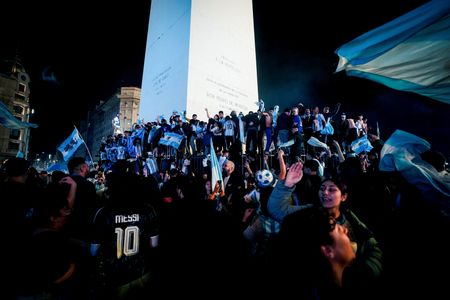
The championship match at New York New Jersey Stadium — widely described as the single most expensive sporting event ever staged in the United States — pits Lionel Messi’s Argentina against Spain and their teenage sensation Lamine Yamal.
It’s a fitting conclusion to a competition that has stress-tested fan spending limits, with FIFA’s aggressive pricing approach ultimately paying off despite early worries about U.S. visa restrictions and domestic political tensions.
“What FIFA did a very good job of was determining what demand would be because people (were) paying these absurd prices for just about all the 104 matches,” said Scott Friedman, a ticketing expert who previously worked for the Cleveland Cavaliers.
“A year ago, we didn’t think people would be traveling with Trump’s ICE stuff and all this other conspiracy stuff. But it’s the most popular tournament in the world by far globally and FIFA, to their credit, they set the prices high and people ended up paying them,” Friedman added.
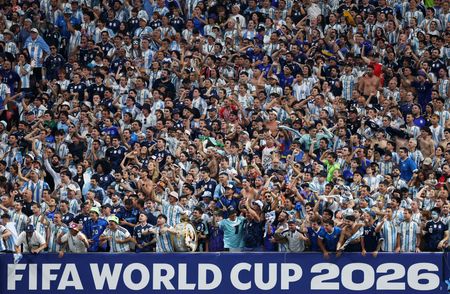
A Reuters review of FIFA attendance figures showed that more than half of the 72 group stage matches reached full capacity, with most of the remaining games falling only a few hundred seats short of sold out. FIFA reported that roughly 99.7% of available seats were occupied during the group stage.
Those numbers helped put to rest early fears sparked by rows of empty seats visible at the Guadalajara Stadium during the June 11 contest between South Korea and the Czech Republic. FIFA had reported an attendance of 44,985 at the nearly 46,000-seat venue, but witnesses on the ground painted a different picture at the time.
As the tournament grew to its largest-ever format — featuring 48 nations — fan interest grew right along with it. Group stage tickets started at $575 each, more than double the top group ticket price from the 2022 tournament, and FIFA’s dynamic pricing system pushed many buyers to spend considerably more than that.
Just days before the final, hundreds of tickets were still showing up on FIFA’s platform at just over $7,000 apiece, leading some to wonder whether the organization had finally overplayed its hand on pricing. But Friedman offered another explanation — a tactic known as “slow ticketing,” a common strategy at major events where organizers deliberately hold back inventory to keep demand elevated.
“They can act like they already sold their seats and kind of just dribble them in accordingly to obviously increase market demand,” said Friedman, who runs the Ticket Talk Network, a platform focused on how tickets for major sporting events are bought and sold.
“Like ‘Oh, there’s only so-and-so amount of tickets left available in the section, I better buy now’,” he added.
By Friday, nearly all tickets appeared to have been purchased, with a handful still listed on FIFA’s platform at around $32,000 each.
FIFA introduced dynamic pricing for the first time at this World Cup, allowing ticket values to shift based on real-time demand and other variables — a system that has drawn both interest and frustration from fans.
“One reason for the frustration over the last few months is that no one really knows how this works,” said Adam Elmachtoub, an associate professor of industrial engineering and operations research at Columbia University.
“People are willing to accept dynamic pricing — we deal with it for airfare, we deal with it even (for) buying clothes — but I think when it’s such a high-profile event, transparency will help a lot,” Elmachtoub said.
In response to public backlash over costs, FIFA made a limited number of lower-priced tickets available. Politicians, including New York City Mayor Zohran Mamdani, had pushed for local residents to have access to affordable seats.
The quality of the soccer on display also helped fuel demand. For the first time since the global rankings system was established, the four highest-ranked teams reached the semi-finals. Sunday’s final will also likely mark 39-year-old Messi’s last appearance at a World Cup.
“The notion of what is fair pricing here is complex because entertainment is not like a necessity,” Elmachtoub noted.
The relatively loose resale market regulations in the United States further drove up costs, with secondary ticket sellers largely free to charge whatever the market would bear. That stands in sharp contrast to co-host Mexico, where resellers are banned from pricing tickets above their original purchase price.
On resale platform SeatGeek, a wave of last-minute final listings brought prices down somewhat, but the average ticket for Sunday’s match was still listed at more than $11,000 as of Friday — making it the most expensive event the platform had ever handled, surpassing the 2024 Super Bowl by 8%.
“What we’re seeing with this year’s World Cup is that demand fluctuates with every round and every matchup reveal,” said Chris Leyden, senior director for marketing at SeatGeek. “The appetite for this tournament has held up remarkably well from the group stage through the knockouts.”
Despite the financial success, human rights advocates sounded a note of caution. FIFA President Gianni Infantino had promised the most inclusive World Cup ever, but the Sport & Rights Alliance reported that supporters from multiple countries were unable to secure visas to attend.
“It’s been a World Cup for a happy few,” said Ronan Evain, executive director of Football Supporters Europe. “Those in Europe, Norwegians, Scottish, who have enough purchasing power to travel to the U.S., don’t need a visa to enter the country and can afford the extortionate ticket prices.”