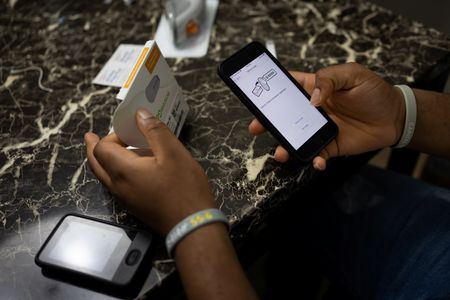

A recent clinical study has demonstrated that a wearable blood sugar monitoring device can significantly help type 2 diabetes patients who don’t require insulin injections better manage their condition.
The medical device company presented findings at the American Diabetes Association on Saturday showing their continuous glucose monitor G7 provided superior blood sugar management compared to traditional monitoring methods.
The 26-week clinical trial involved 283 diabetic patients not using insulin treatment. Researchers divided participants into two groups – half received the G7 monitoring system while the other half continued with standard blood glucose self-testing. The majority of study participants were taking typical diabetes medications including metformin, GLP-1s and SGLT2s.
Results showed those wearing the G7 device achieved an average 1.6% decrease in blood sugar levels over the study period, representing a 0.9% greater improvement than participants using conventional monitoring methods.
“Our hope is that this will substantially influence (the standard of care) and it’ll improve access for all people with type 2, including those not on insulin to CGMs,” said Tamara Oser, professor at the University of Colorado Anschutz and the study’s principal investigator, in comments to Reuters.
Continuous glucose monitoring devices are worn on the body and track blood sugar levels without requiring finger stick blood tests. These devices are gaining popularity due to increased awareness, expanded insurance coverage and user-friendly design.
The research found that combining the G7 monitor with standard diabetes medications produced even better blood sugar control results.
Participants taking GLP-1 medications who also used the monitoring device experienced a 1.4% drop in blood sugar levels, while the comparison group saw only a 0.2% reduction.
“…it proves without a doubt that there’s significant benefit here for these users. I think both the clinical community as well as the health care system and payers, they will, with this type of result, recognize both the health benefits, as well as the economic benefit,” the company’s CEO Jake Leach told Reuters.
Leach stated in a company announcement that these findings “will help establish a new standard of care in the U.S. and around the world.”
Researchers are currently conducting an additional six-month extension of the study, which will provide effectiveness data covering up to one full year of device use.