Blog

  • Alabama Fights to Resume Nitrogen Gas Executions After Court Block

    Alabama Fights to Resume Nitrogen Gas Executions After Court Block

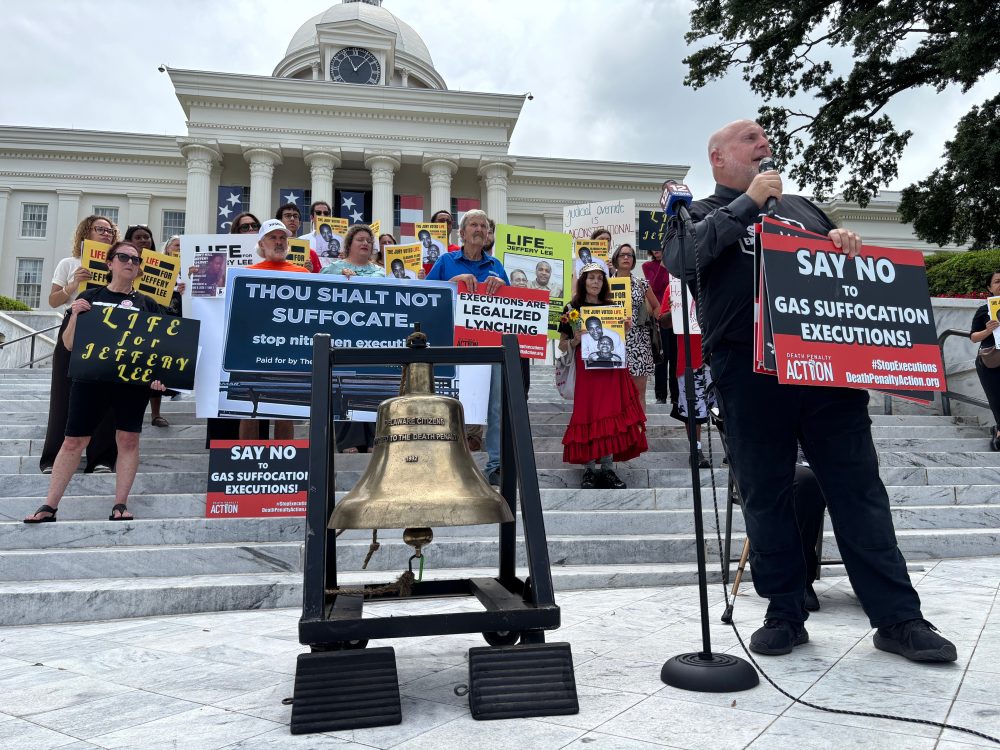
    Alabama officials are mounting an urgent legal challenge to proceed with a nitrogen gas execution scheduled for Thursday evening, petitioning the U.S. Supreme Court to overturn a federal judge’s determination that the procedure violates constitutional protections against cruel and unusual punishment.

    On Tuesday, a federal judge declared Alabama’s nitrogen execution protocol unconstitutional and prevented the state from using the method to execute Jeffery Lee, 49. State attorneys are now challenging that ruling.

    This urgent legal dispute will decide whether Lee’s Thursday night execution proceeds using nitrogen gas. The case could also shape the future of the disputed execution technique that Alabama started implementing in 2024.

    “As Alabama continues to defend its execution protocol in the courts, the governor remains prepared to move forward with the planned execution,” Mike Lewis, a spokesman for Alabama Gov. Kay Ivey, wrote in an email.

    The procedure involves securing a breathing mask to the condemned person’s face and substituting regular air with pure nitrogen gas, leading to death through oxygen deprivation. Eight executions in the United States have employed nitrogen – seven in Alabama and one in Louisiana. Lee would have been the ninth person executed using nitrogen.

    U.S. District Judge Emily Marks determined Tuesday, following an appeals court’s reversal of her earlier constitutional approval, that Lee had demonstrated by a “preponderance of the evidence that the protocol constitutes cruel and unusual punishment in violation of the Eighth Amendment.” The 11th U.S. Circuit Court of Appeals, in a 2-1 Wednesday night ruling, denied Alabama’s request to halt the decision. The court previously stated that the three minutes potentially required for an inmate to lose consciousness represents an “intolerable” timeframe, “given the suffering that would likely take place under Alabama’s nitrogen hypoxia protocol.”

    A representative for the Alabama attorney general’s office confirmed Wednesday night that the state is taking the matter to the Supreme Court. The nation’s highest court has never determined that a particular execution method breaches the Constitution.

    The situation has renewed focus on the nitrogen execution procedure and the intense debates surrounding its implementation.

    In previous Alabama nitrogen executions, condemned individuals trembled, struggled against restraints and displayed difficult breathing when the procedure began. During the state’s most recent nitrogen gas execution, 30 minutes passed between Anthony Boyd showing effects from the gas and officials drawing the viewing room curtain to indicate the execution’s completion.

    State officials have argued the procedure is constitutional and produces no greater suffering than alternative execution methods.

    “If nitrogen hypoxia violates the Eighth Amendment because of a risk of anxiety and emotional discomfort, then so too must every other method of execution, many of which carry inherent risks of real physical pain,” state lawyers wrote in a Wednesday court filing to the 11th Circuit.

    Lee’s legal team stated Alabama is trying to proceed with an execution method that courts have deemed unconstitutional. His advocates have pressed Ivey to reduce his sentence to life imprisonment, which matches the recommendation made by jurors during his trial.

    “Alabama Attorney General Steve Marshall wants to execute Jeffery Lee under a death sentence the jury rejected using a nitrogen gas method that two federal courts have ruled unconstitutional. This execution is simply too flawed to move forward,” Lee’s lawyers said in a statement.

    “We remain hopeful that Governor Ivey will intervene,” they added.

    A jury found Lee guilty of two capital murder charges for the deaths of Jimmy Ellis and Elaine Thompson during a pawnshop robbery on Dec. 12, 1998. Prosecutors stated Lee entered Jimmy’s Pawnshop carrying a sawed-off shotgun and killed Ellis, the shop’s owner, and Thompson, a worker there.

    Jurors voted 7-5 for Lee to receive life imprisonment. A judge, however, overruled that recommendation and imposed a death sentence. Alabama eliminated the judicial override practice in 2017 and no longer permits judges to disregard jury sentencing decisions in capital cases. The law ending judicial override did not apply retroactively.
  • New Mexico Judge Weighs Challenge to Universal Childcare Program

    New Mexico Judge Weighs Challenge to Universal Childcare Program

    A New Mexico district court judge was set to hear arguments Thursday in a legal challenge targeting the state’s pioneering universal childcare initiative, which aims to provide free daycare services to all working families.

    Former Republican gubernatorial candidate Duke Rodriguez and additional plaintiffs filed the lawsuit questioning the authority used by Democratic Gov. Michelle Lujan Grisham’s administration to remove income limits and co-payment requirements for childcare assistance without first securing legislative approval or funding authorization.

    “This is executive overreach. The program was launched unlawfully,” Rodriguez stated. Rodriguez was unsuccessful in securing his party’s nomination during New Mexico’s recent primary election.

    State childcare officials reject these claims, contending in legal documents that legislators have subsequently “expressly authorized” and provided funding for the program expansion, making the legal challenge irrelevant. In February, Lujan Grisham approved legislation that formally established the program in state law, contingent on maintaining adequate state finances.

    District Judge Elaine Lujan may deliver a decision Thursday regarding whether the legal challenge can move forward. Any temporary suspension of the program would force thousands of New Mexican families to resume paying for daycare services and create operational difficulties for businesses.

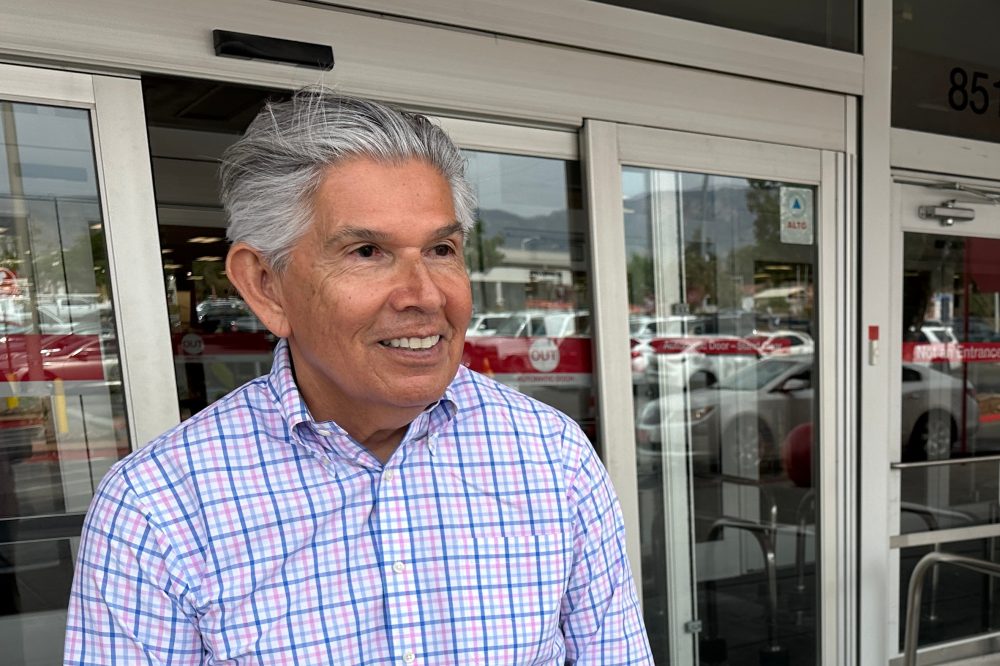
    Ilene Harding, who operates seven daycare facilities in the Albuquerque region, reported that the program expansion has increased enrollment numbers and simplified the billing process.

    “We’ve always been financially solvent, but it’s given us stability,” Harding commented.

    This legal battle emerges as New Mexico works to establish itself as the first state in the nation to provide daycare coverage for all working families without income restrictions. The implications reach beyond state borders as officials from New York to California seek effective approaches to lower family costs and increase public childcare investment.

    New Mexico’s initiative, funded primarily through state oil and gas production revenues, ranked among the country’s most generous programs even before the November expansion, eliminating fees for families earning up to 400% of the federal poverty threshold, approximately $132,000 annually for a four-person household.

    State legislative analysts have already questioned the long-term viability of New Mexico’s expanded initiative, noting earlier this year that the state Early Childhood Education and Care Department began exceeding spending projections just weeks after the November implementation.

    The state department confirmed at that time that participation levels exceeded projections, resulting in increased expenses, but challenged claims that it had surpassed its allocated budget.

  • Intelligence Surveillance Program Faces Shutdown Over Trump’s Controversial Pick

    Intelligence Surveillance Program Faces Shutdown Over Trump’s Controversial Pick

    WASHINGTON — A critical intelligence-gathering program faces potential shutdown as President Donald Trump continues backing his controversial temporary choice to lead the nation’s spy agencies despite widespread opposition from both parties in Congress.

    Trump remains committed to Bill Pulte, currently a federal housing finance regulator, as his interim selection for director of national intelligence, despite Pulte’s limited background in intelligence work. Democratic leaders have declared they will block renewal of Section 702 of the Foreign Intelligence Surveillance Act, commonly called FISA, until Trump removes Pulte and selects a permanent nominee.

    Congressional leaders plan to attempt passage of a temporary FISA extension Thursday morning in the House, though success appears doubtful. Senate leadership may also pursue similar action to avoid what would be an historic interruption of the surveillance authority.

    This standoff threatens to restrict American intelligence collection capabilities overseas just as World Cup matches commence in various U.S. cities and before upcoming celebrations marking the country’s 250th birthday. The current authorization ends Friday at midnight.

    “We can’t let them extort us,” Trump said of Democrats.

    Trump has maintained his support for Pulte as interim leader, ignoring legislative pressure for a more experienced candidate. He requested Congress approve a temporary law extension to “provide time for the selection and confirmation” of a permanent director. He indicated his intention for Pulte to begin reducing the size of intelligence organizations.

    Both political sides have assigned responsibility for the possible disruption of what many consider a vital, though long-contested, surveillance capability for national security.

    “We’re going to ask every member here to do the right thing,” said House Speaker Mike Johnson, R-La. “We cannot allow that to go dark.”

    House Democratic leader Hakeem Jeffries stated that if Trump desires consideration of a temporary extension, he must withdraw the Pulte nomination. Pulte represents a “disgraceful individual” and a “partisan political hack” who lacks proper qualifications for the role, Jeffries declared.

    Republican congressional members have pressured Trump throughout the week to swiftly nominate a permanent successor. However, he maintains he requires additional time for the decision.

    Senate Majority Leader John Thune, R-S.D., indicated Republican leadership has “made our views known” to the White House.

    Trump has revealed he is conducting interviews with five potential candidates for the permanent agency leadership position, following the departure of Tulsi Gabbard.

    Johnson explained the president has clearly communicated that Pulte will fulfill a “very short term — a sort of renovation role” to help the Office of the Director of National Intelligence undergo “renovation and downsizing.”

    However, Democratic members of the House Intelligence Committee, headed by Rep. Jim Himes of Connecticut, wrote to the president describing Pulte as a “uniquely poor choice” even for temporary service.

    Lawmakers from both parties who question Pulte have highlighted his absence of intelligence background and his tenure at the Federal Housing Finance Agency. In that role, he has been connected to criminal referrals regarding alleged mortgage fraud by public officials Trump aimed to target, including New York Attorney General Letitia James, a Democrat; Sen. Adam Schiff, D-Calif.; and Lisa Cook, a Federal Reserve board member.

    “He has distinguished himself only as someone who will do or say anything to stay in your good graces,” Himes and fellow lawmakers stated, “qualities that are precisely the opposite of what our nation needs.”

    Section 702 of FISA permits organizations like the CIA, National Security Agency and FBI to gather communications from foreign subjects abroad without obtaining warrants.

    Although legislators from both parties citing privacy concerns have historically sought to restrict this power, broad bipartisan agreement existed for renewal, particularly after Republicans and Democrats recently negotiated a compromise measure.

    Virginia Sen. Mark Warner, the leading Democrat on the Senate Intelligence Committee, has collaborated with Republicans on the compromise legislation for renewing the authority. Yet he described Pulte’s selection to succeed Gabbard as “a live hand grenade” disrupting the proceedings.

    Warner stated his sole condition for supporting a temporary surveillance law extension would be having the principal deputy director of national intelligence, Aaron Lukas, serve as acting leader throughout that extension period.

    Sen. Tom Cotton, the chairman of the Senate Intelligence Committee, and Sen. Chuck Grassley, chairman of the Senate Judiciary Committee, have cautioned the administration that the surveillance capability will likely expire.

    The administration should prepare “for a potential significant gap in foreign intelligence collection,” they stated in correspondence.

    Following bipartisan resistance to Pulte’s temporary selection, Trump announced last week he would not permanently nominate him for the position. Yet Democrats, along with some Republicans, demand immediate withdrawal of his appointment and Trump’s nomination of a replacement confirmable by the Senate.

    On Tuesday, however, Trump revealed that Pulte would not only assume acting director duties — he would also begin earlier than anticipated, on June 19.

    Among several possible successors could be Pete Hoekstra, Trump’s ambassador to Canada and former chairman of the House Intelligence Committee. The White House has contacted Hoekstra regarding the position and discussions continue, according to someone familiar with the outreach who requested anonymity to discuss the private conversations.

  • California Progressive Candidate Will Test Anti-Establishment Appeal in GOP District

    California Progressive Candidate Will Test Anti-Establishment Appeal in GOP District

    A recent Democratic primary contest in California’s Central Valley represented more than just another battle between the party’s progressive faction and moderate establishment forces.

    The race was ultimately won by populist candidate Randy Villegas, but what makes this outcome significant is what happens next.

    Rather than competing for a safely Democratic seat, Villegas will now face Republican Rep. David Valadao in November, representing one of the Democratic Party’s best opportunities to regain control of the U.S. House and counter President Donald Trump’s agenda.

    The upcoming November election will put to the test a theory embraced by the political left: that voters will rally behind progressive, anti-establishment candidates even in areas that have historically leaned Republican.

    “A populist message isn’t just for blue districts or certain parts of the country,” said Ravi Mangla, a spokesperson for the Working Families Party, one of the progressive groups that backed Villegas. “It can win anywhere people feel like politics is not working for them.”

    “More than ever, voters across the political spectrum want candidates who are willing to stand up to power,” Mangla said.

    The National Republican Congressional Committee has written off Villegas’ prospects, despite recent redistricting by state Democratic leaders that was designed to make the seat more competitive this cycle.

    “Democrats know Villegas can’t beat Congressman David Valadao, as he embraces the same failed policies that have made California more expensive, less safe, and harder for working families in the Central Valley,” said spokesperson Christian Martinez.

    Villegas’ win reflects a broader pattern this election cycle where significant portions of the Democratic base are turning away from candidates that party leadership views as having the best chances of winning Congressional seats.

    In Maine this week, Graham Platner secured a decisive victory in the Democratic Senate primary after Senate Minority Leader Chuck Schumer’s preferred choice, the governor, withdrew from the race due to weak support just weeks before the election.

    Platner, a combat veteran and oyster farmer who has never served in elected office, has faced scrutiny over past relationships with women, controversial social media posts, and a now-covered tattoo that has been identified as a Nazi symbol.

    Michigan presents another battleground where Rep. Haley Stevens finds herself in a three-candidate fight for the Democratic Senate nomination against state Sen. Mallory McMorrow and progressive favorite Abdul El-Sayed. With the primary scheduled for Aug. 4, El-Sayed recently gained momentum by securing a major endorsement from the United Auto Workers union, a significant political force in the state that serves as the heart of America’s automotive industry.

    Minnesota’s U.S. Senate race features progressive Lt. Gov. Peggy Flanagan locked in intense competition with U.S. Rep. Angie Craig, who has garnered backing from labor organizations, LGBTQ advocacy groups, and centrist Democrats before the Aug. 11 primary.

    Colorado will provide another crucial test on June 30, where progressive Manny Rutinel will compete against establishment-supported Shannon Bird in the Democratic primary to challenge Republican Rep. Gabe Evans. Similar to Valadao, Evans represents a priority target for Democrats, and like the California contest, the Colorado race centers on debates over electability in the general election.

    In California’s primary system, Valadao placed first while Villegas came in second, with both advancing to the general election as the top two vote-getters.

    About a month before primary voting commenced, the Democratic Congressional Campaign Committee made an unusual public endorsement of Jasmeet Bains, a physician and state Assembly member who had secured endorsements from numerous elected officials, labor unions, and healthcare organizations.

    “Dr. Jasmeet Bains has fought on the frontlines of health crises and built a track record of delivering for the Central Valley,” DCCC Chair Suzan DelBene said in a statement at the time. While she refrained from criticizing Villegas directly, the public backing of his opponent sent a clear message to Democratic donors and activists that party leadership considered Bains the stronger contender. It’s rare for Congressional leadership and the party infrastructure to openly intervene in competitive primaries for open seats.

    The choice to support Bains angered many progressive activists, who viewed it as yet another instance of Washington establishment figures being disconnected from both the Democratic grassroots and frustrated voters who contributed to Trump’s electoral successes.

    “I think the moderates are wrong. People don’t want status quo, pro-corporate candidates,” said Joseph Geevarghese, executive director of Our Revolution, a progressive organization that emerged from Vermont Sen. Bernie Sanders’ 2016 presidential campaign. “They want people who are going to shake things up.”

    Following Villegas’ victory, Washington Democrats are now expressing confidence in his candidacy and his ability to defeat Valadao. They highlight the grassroots enthusiasm that carried him through the primary and note that Democratic candidates collectively received 59% of primary votes compared to Valadao’s 41%, though general election turnout is expected to be much higher.

    Any friction between Villegas and party officials appears to have been resolved by Wednesday, with both sides presenting a unified message. California Congressional members, including some who had previously supported Bains, released enthusiastic endorsements, while Villegas responded graciously.

    “We’re all in to elect Randy and flip this seat,” said Anna Elsasser, a spokesperson for the DCCC, the Democratic Party’s House campaign arm. The district represents “a must-win seat for the House majority, and we are confident in winning with Randy as the Democratic nominee,” she added.

  • Chinese City Targets BYD, Xiaomi for Electric Vehicle Manufacturing Hub

    Chinese City Targets BYD, Xiaomi for Electric Vehicle Manufacturing Hub

    A major Chinese industrial city has unveiled an ambitious strategy to overhaul its automotive manufacturing sector, with plans to court leading electric vehicle companies as part of a broader transformation effort extending through 2030.

    The northeastern city of Changchun, which houses the nation’s most established automaker FAW Group, published the preliminary proposal this week through its industry and information technology bureau. The initiative represents a significant shift for a region built around traditional automotive manufacturing.

    According to the proposal, several major developments are anticipated in China’s automotive landscape:

    • The nation’s car manufacturing sector is projected to undergo substantial consolidation, with industry analysts expecting the current 71 automaker groups to shrink to approximately 15 by 2030.

    • FAW Group has seen declining production volumes and sales figures in recent years, creating potential pressure for organizational restructuring of the government-owned company.

    • City officials plan to capitalize on FAW’s corporate headquarters location to draw partnerships with companies like Leapmotor for developing new vehicle offerings.

    • Municipal leaders are specifically courting rapidly expanding automakers including BYD and Xiaomi to establish northern manufacturing facilities, advanced vehicle research and development centers, or critical component manufacturing operations as part of efforts to broaden the region’s industrial foundation.

  • Vietnamese Company Rushes to Build Massive 135,000-Seat Stadium Despite Doubts

    Vietnamese Company Rushes to Build Massive 135,000-Seat Stadium Despite Doubts

    Vietnam’s biggest corporation by market value is pushing forward with an ambitious plan to construct what it describes as the globe’s largest stadium, despite concerns about whether sufficient demand exists to support the enormous venue.

    The company is speeding up work on the 135,000-seat facility located approximately 25 kilometers (15.5 miles) south of central Hanoi, with crews laboring continuously to meet a July 2027 deadline, according to a company representative who spoke with Reuters during a recent site tour. This timeline represents a one-year acceleration from the original schedule announced in December.

    The venue will boast “the world’s largest seating capacity” and will include the biggest completely retractable roof ever built, according to the Vietnamese conglomerate, which is simultaneously pursuing various other major initiatives including a high-speed rail line, urban development projects, and wind energy facilities.

    Currently, the International Olympic Committee recognizes the Rungrado Stadium in Pyongyang, North Korea, as the world’s largest venue, with an official capacity of 150,000, though some analysts have disputed this number and estimated the actual seating at under 120,000.

    The Vietnamese company stated that the project’s massive scope reflects ambitions to accommodate major sporting competitions and cultural performances, including musical concerts.

    “While football is hugely popular in Vietnam, it is unlikely that a 135,000-seat stadium could be justified on domestic football demand alone,” said James Walton, sports business group leader at Deloitte Asia Pacific. He pointed out that Vietnam’s premier V.League 1 drew an average of fewer than 6,000 spectators per game during the 2023-24 season.

    The company refused to provide financial projections but expressed confidence that the facility would achieve commercial viability over time.

    The corporation is dealing with significant financial pressures from its debt obligations, which totaled $36.7 billion last year, representing more than 4% of Vietnam’s entire private sector debt in 2025. This amount does not include additional borrowing by privately affiliated entities.

    The Trong Dong Stadium, which takes its name from Vietnam’s traditional bronze drum, forms part of the company’s $35-billion initiative to create an “Olympic Sports City” capable of hosting premier international competitions across more than 9,000 hectares (22,200 acres) on the capital’s periphery.

    “Being part of a broader urban development can improve the project’s long-term financial sustainability,” said Walton, who observed that most contemporary national stadiums typically accommodate between 60,000 and 80,000 spectators.

    This initiative represents part of an extensive campaign to upgrade Vietnam’s infrastructure and maintain economic expansion of at least 10% per year through the decade’s end, which constitutes an official objective of the ruling Communist Party.

    Government officials have revealed hundreds of major projects valued at an estimated $200 billion through 2030, encompassing airports, seaports, bridges and rail systems.

    Quynh Nguyen, finance lecturer at Hoa Sen University in Ho Chi Minh City, said modernization was essential, but urged careful consideration of banking sector exposure and financing risks.

    “In a growing country like Vietnam, infrastructure often needs to precede demand,” said Tran Thi Mong Tuyen, a researcher at the Hawaii-based Pacific Forum, while also highlighting concerns about underutilized infrastructure and postponed investment returns.

  • E-commerce Giant Hit with Record $409M Fine for Massive Data Breach

    E-commerce Giant Hit with Record $409M Fine for Massive Data Breach

    South Korean authorities have imposed a record-breaking 625 billion won ($409.30 million) penalty on e-commerce company Coupang following a major customer data breach and unauthorized personal information gathering, marking the nation’s heaviest corporate fine for data privacy violations.

    The Personal Information Protection Commission announced that the company, which trades on the New York stock exchange, exposed personal information belonging to more than 33 million customers and did not identify the security breach within the legally mandated 72-hour window.

    Based on calculations, the financial penalty represents 1.4% of Coupang’s 45 trillion won revenue for 2025.

    “This accident occurred due to Coupang’s lack of safety measures and systems, not sophisticated hacking,” Song Kyung-hee, the chairperson of the privacy regulator, told a briefing on Thursday.

    Following the penalty announcement, Coupang issued an apology for creating public and customer concerns.

    The company expressed disappointment, stating that “we regret that our proactive measures to prevent secondary harm from last year’s data leak incident, as well as our explanations based on clear facts, were not sufficiently reflected” in the regulator’s decision.

    The Seattle-headquartered company earns the majority of its income in South Korea through rapid delivery services for groceries, meals and various merchandise.

    This punishment stems from a government-conducted investigation completed earlier this year that attributed the security failure to inadequate management oversight.

    The science ministry previously revealed that a former worker who held Chinese citizenship took a security key and obtained unauthorized entry to customer profiles.

    Song explained that Coupang’s protection systems enabled unauthorized access to all customer personal data, continuing even after the individual departed from the organization.

    The company additionally failed to notice abnormal spikes in customer database traffic until a customer complaint brought it to their attention, she noted.

    In a separate violation, regulators determined the company’s promotional activities unlawfully gathered online behavior data from approximately 11 million customers without obtaining proper consent, Song reported.

    The data breach investigations contributed to diplomatic tensions with Washington, as concerns arose that Korean officials may have treated the U.S.-listed corporation too harshly while both nations work out specifics of a trade agreement reached last year.

    South Korea maintained that its Coupang investigation represents neither a trade nor security matter and should remain distinct from ongoing Washington discussions.

    According to Seoul-based IM Securities, the company commands roughly 40% of South Korea’s delivery market, representing the dominant position among competitors.

    “Coupang has grown its e-commerce service significantly based on vast customer data,” Song said. “But the company did not have a system to protect and manage customer information despite its business scale.”

  • Trump Praises Armenian Leader’s Election Victory Amid Russian Interference

    Trump Praises Armenian Leader’s Election Victory Amid Russian Interference

    Former President Donald Trump offered his congratulations Wednesday to Armenian Prime Minister Nikol Pashinyan following his Civil Contract party’s victory in weekend elections.

    The prime minister’s political party secured 49.8% of the vote in Sunday’s election, providing enough support for a parliamentary majority according to Armenia’s voting structure. International election monitors reported obvious meddling by Russia during the electoral process.

    “I was very proud to have Endorsed him for Re-Election, and have no doubt that, with him as the Leader of the beautiful Country of Armenia, it will attain levels of Greatness and Success beyond everyone’s wildest expectations!” Trump stated in a social media message.

    The prime minister’s victory occurs while Russia continues applying increased pressure on the South Caucasus nation that was previously under Moscow’s control. Since taking office in 2018, Pashinyan has pursued closer relationships with the European Union and strengthened connections with Washington.

    Moscow, which has implemented extensive trade limitations against Armenia, blamed Western nations for election interference and supported Armenian opposition claims of voting irregularities.

    Russian officials stated Wednesday that Armenia’s continued participation in both a military partnership of former Soviet nations and a distinct economic alliance needs immediate resolution.

    According to TASS news agency reporting Thursday, Russia has requested Armenia halt certification for the Russian market for all Armenian fish exporters except two companies, while Russian agriculture watchdog chief Sergei Dankvert confirmed the country has moved trout procurement to Iran and Turkey.

  • Middle East Tensions Rise as Iran and US Trade Military Strikes

    Middle East Tensions Rise as Iran and US Trade Military Strikes

    Military tensions between Iran and the United States reached new heights Thursday as both countries engaged in retaliatory strikes following the breakdown of diplomatic efforts, with U.S. President Donald Trump declaring that Tehran would “pay the price” for negotiations that have reached an impasse.

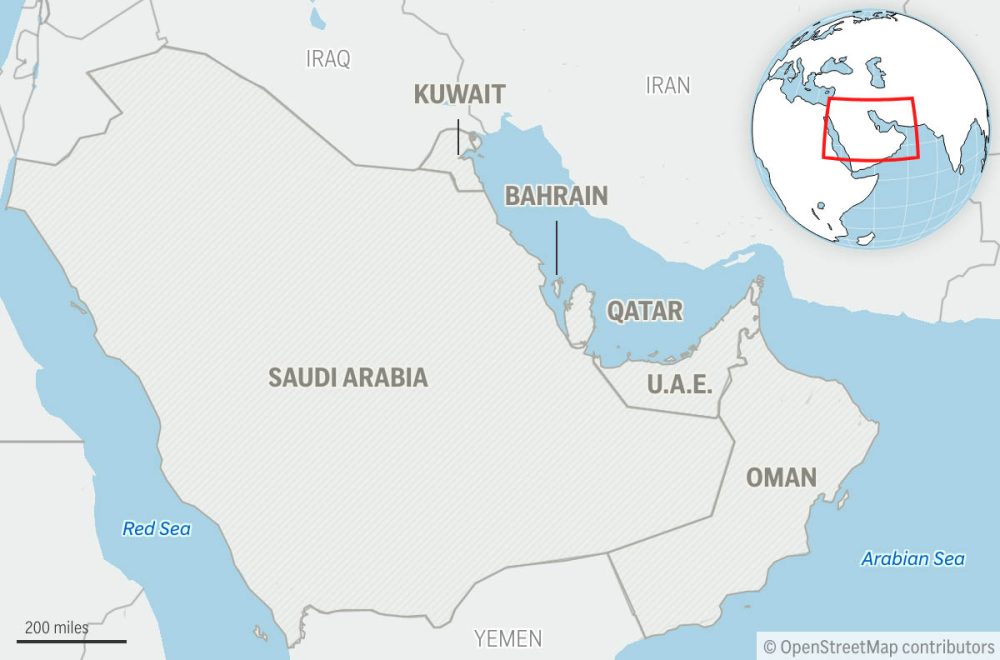
    The military confrontation intensified after American forces conducted their second wave of overnight bombing missions Thursday. Bahrain, which serves as home base for the U.S. Navy’s 5th Fleet, found itself targeted in the escalating conflict.

    The expanded military operations targeting several Iranian population centers occurred as diplomatic solutions to end the conflict appeared to have collapsed, with Iran declaring its intention to continue controlling the Strait of Hormuz. Peace negotiations have also broken down due to Israeli military operations against Hezbollah, the Iranian-backed militant organization operating in Lebanon. Earlier this week, both Iran and Israel launched attacks against one another.

    During the initial round of military action Wednesday, Iran fired missiles while the U.S. conducted aerial bombardments, with Iranian forces targeting Bahrain, Kuwait and Jordan with missile attacks. These strikes followed American military responses to Iran’s downing of a U.S. helicopter over the strait.

    According to U.S. Central Command, American forces finished their most recent bombing campaign just as dawn broke Thursday across Iran. Military officials reported that the operations focused on destroying Iranian military observation posts, communication networks and defensive installations, utilizing aircraft from the U.S. Air Force, Marines and Navy. Officials declined to provide details about the extent of destruction caused by the attacks.

    The sound of explosions from American strikes could be heard throughout Iran’s capital city, Tehran, and also reached the coastal city of Bandar Abbas along with other southern regions near the strait.

    Kuwait’s armed forces reported that their defensive systems were actively responding Thursday morning following Iranian threats of retaliation for the overnight American bombing campaign. Meanwhile, Bahrain activated its missile warning systems across the island nation that houses the U.S. Navy’s 5th Fleet command center.

  • Major Singapore Bank Launches Digital Gold Trading for Everyday Investors

    Major Singapore Bank Launches Digital Gold Trading for Everyday Investors

    Singapore’s largest financial institution by assets, DBS Group, announced Thursday its plans to launch a digital gold investment service for everyday customers as precious metal demand increases and Singapore works to establish itself as a major gold trading center.

    The new service arrives while gold continues attracting investors seeking value protection despite recent market fluctuations. The precious metal reached an all-time high of $5,600 per ounce earlier this year due to inflation worries, international tensions, and market instability, though spot gold dropped to $4,111.95 on Wednesday, marking its lowest point since March 23 and representing a 27% decline from its peak.

    The financial institution, which also holds the position as Southeast Asia’s largest bank, announced in a release that DBS Physical Gold Tokens will become accessible via its digibank mobile application during the latter half of 2026.

    According to the bank, this service will mark Singapore’s first offering allowing everyday customers to digitally access, possess, and exchange tokenized physical gold using one unified platform.

    The tokenization process involves converting ownership of tangible assets into digital tokens that can be electronically traded.

    Every token will represent one gram of actual gold stored by DBS in a designated Singapore vault. As of Thursday, one gram of gold carries a value of approximately S$200 ($155).

    The bank stated that customers will have the ability to purchase smaller gold quantities, conduct transactions continuously, and exchange tokens for actual gold.

    “Gold as an asset class has taken off in recent years,” said James Tan, the bank’s group head of investment products and advisory services, adding that tokenization would allow more retail customers to invest in gold.

    DBS indicated it is considering options to feature the token on its DBS Digital Exchange for qualified investors and institutional clients.

    According to DBS, physical gold investments among its wealth management customers have increased by more than 100% during the previous three years.

  • Global Refugee Displacement Drops for First Time in Decade, UN Reports

    Global Refugee Displacement Drops for First Time in Decade, UN Reports

    Global displacement from conflict and persecution declined in 2025, marking the first decrease in ten years, according to a Thursday report from the U.N. refugee agency. Despite this improvement, the organization warns that millions continue to face extended displacement with little hope of resolution.

    During 2025, 5.4 million individuals were forced to leave their homes, pushing the worldwide total of refugees and those in similar circumstances to 41.6 million people, which includes 6 million Palestinian refugees, UNHCR reported.

    Simultaneously, approximately 14.7 million refugees and internally displaced individuals went back to their home countries, representing a 50% jump from the prior year and marking the second-largest return figure documented since 1965.

    The majority of these homecomings occurred in six nations: the Democratic Republic of the Congo, Sudan, Syria, Afghanistan, Ukraine and Myanmar.

    Nevertheless, many who returned encountered challenging circumstances including restricted access to essential services, extensive infrastructure destruction and continued security threats, creating questions about whether these returns are sustainable and safe, according to UNHCR.

    Approximately 2.9 million Afghans went back home in 2025, with 1.9 million being refugees — a fivefold increase from the previous year — primarily due to tougher policies in neighboring Iran and Pakistan, with many stating they had no alternative but to depart, the agency discovered.

    This dramatic increase brought down the global Afghan refugee population from 5.8 million in 2024 to 3.7 million in 2025, the report indicated.

    Syria, which had represented one of the globe’s most significant displacement emergencies for over ten years, witnessed around 1.3 million people returning in 2025 — almost three times the previous year’s number — after Bashar al-Assad’s government collapsed in December 2024. This brought the worldwide Syrian refugee population down from 6 million to 4.9 million by 2025’s end.

    “However, many returnees face serious challenges, including insecurity, widespread destruction, weak economic conditions, limited services and jobs, and continued sporadic violence in parts of the country,” the report said.

    The report highlighted that the Middle East crisis has already influenced worldwide displacement patterns in 2026. Roughly 3.2 million people have experienced temporary displacement in Iran since joint U.S.-Israeli strikes in late February, while approximately one million individuals have been displaced from their homes in Lebanon since warfare began on March 2, due to Israeli strikes and evacuation directives, UNHCR stated.

    UNHCR has established a goal to reduce by half the number of refugees and others experiencing prolonged displacement who need humanitarian aid by 2035, through supporting employment creation and educational opportunities, especially in low- and middle-income nations that host most refugees.

    Worldwide, 70% of refugees have lived in exile for five years or longer, frequently in nations like Lebanon, Jordan, Turkey and Iran.

    “Asylum and protection are life-saving and not up for debate, but we cannot accept a future in which millions of refugees remain trapped for years or decades without realistic prospects of rebuilding their lives,” said UNHCR High Commissioner Barham Salih.

    The initiative includes encouraging voluntary returns and helping refugees gain access to education and jobs in host nations so they can achieve financial independence and reduce their reliance on aid.

  • Justice Department Officially Requests Dismissal of Turkish Bank Criminal Case

    Justice Department Officially Requests Dismissal of Turkish Bank Criminal Case

    Federal prosecutors on Wednesday officially requested a judge dismiss criminal charges against Halkbank, stating the government no longer intends to pursue the case against the Turkish state-owned financial institution.

    Legal representatives for Halkbank have not yet provided a response to requests for comment.

    The formal request follows a settlement reached in March between Halkbank and federal authorities to conclude the extended criminal proceedings. The resolution was expected to eliminate a persistent source of tension between NATO partners Turkey and the United States. News of the settlement caused Halkbank stock prices to surge on Istanbul’s exchange.

    The bank faced accusations during the previous administration of assisting Iran in circumventing U.S. economic sanctions. Turkish President Recep Tayyip Erdogan previously described the case as unlawful and “ugly.” However, diplomatic relations between the nations have reached their strongest point in years following recent political changes.

    Justice Department officials stated that ending the prosecution would advance American objectives in reducing Iranian support. The settlement prohibits Halkbank from conducting transactions that aid Iran and mandates oversight to ensure the bank follows sanctions and anti-money-laundering regulations.

    The agreement involves no financial payments and the bank has not acknowledged any criminal conduct. Halkbank had entered a not guilty plea to all charges.

    Following the deal’s announcement, Manhattan-based U.S. District Judge Richard Berman suspended proceedings for 90 days to allow the bank to prove adherence to settlement conditions. Halkbank retained Ernst & Young to examine its compliance procedures.

    In Wednesday’s court document filed after the 90-day review period concluded, Manhattan U.S. Attorney’s office prosecutors reported the examination found no compliance violations by Halkbank and requested Judge Berman approve their dismissal motion.

    The legal proceedings have followed a complex route through federal courts.

    In October, the U.S. Supreme Court upheld a lower court ruling permitting the prosecution to continue. Halkbank had contended that its status as a Turkish government-owned institution should provide immunity from foreign court proceedings.

    The settlement announcement came after the U.S.-Israeli conflict with Iran commenced in February.

    Federal prosecutors alleged Halkbank covertly moved $20 billion in restricted funds, transformed oil revenues into gold and cash for Iranian benefit, and created fraudulent food shipment records to justify oil proceeds transfers.

    Following meetings between Erdogan and the former president last year, the Turkish leader expressed optimism for resolving the Halkbank situation. Erdogan stated in October that he was told during a September White House meeting and subsequent phone conversation that “the Halkbank problem is finished for us.”

  • Asian Markets Drop as AI Stock Selloff Continues, Oil Prices Surge

    Asian Markets Drop as AI Stock Selloff Continues, Oil Prices Surge

    Asian stock markets experienced declines following a continued selloff in artificial intelligence companies that sent U.S. markets tumbling.

    U.S. market futures showed gains while oil prices jumped more than $1 per barrel.

    Japan’s Nikkei dropped 0.5% to 63,878.60, while South Korea’s Kospi declined 0.2% to 7,720.75.

    Hong Kong’s Hang Seng managed a slight 0.2% increase to 24,468.82, though the Shanghai Composite index fell 0.2% to 3,983.80.

    Australia’s S&P/ASX 200 also dropped 0.2% to 8,632.50.

    Taiwan’s Taiex declined 0.4%.

    On Wednesday, Wall Street’s previous high-performing stocks remained under intense pressure.

    The S&P 500 fell 1.6% for its first consecutive decline in three weeks, closing at 7,266.99 and returning to early May levels.

    The Dow Jones Industrial Average plummeted 953 points, or 1.9%, to 49,918.78. The Nasdaq composite led market losses with a 2% drop to 25,169.50.

    Wall Street has experienced volatility since last week when AI stocks shifted from record-breaking gains to sudden declines. Concerns center on whether stock prices rose too rapidly due to artificial intelligence enthusiasm. The current question is whether this downturn has eliminated excessive investor optimism or signals the beginning of a prolonged decline.

    Super Micro Computer, an AI server manufacturer, plunged 28% after announcing Tuesday evening plans to raise $7 billion through stock and convertible preferred stock sales. Such fundraising typically occurs when stock prices are elevated and can reduce existing shareholders’ ownership percentages.

    Micron Technology experienced dramatic swings, moving from an early 4% loss to modest gains before settling at a 4.7% decline. The company has endured extreme volatility, dropping 7.7% last Thursday, falling another 13.3% Friday, then surging 9.9% Monday. Despite these fluctuations, the memory chip manufacturer’s stock remains up 212.5% year-to-date.

    Nvidia, the semiconductor company that has grown to nearly $4.9 trillion in value due to the AI surge, was the S&P 500’s biggest drag after falling 3.7%. Broadcom, another AI beneficiary, was the second-largest negative influence with a 5.1% decline.

    AI stock pressure may also stem from investors withdrawing funds in preparation for upcoming high-profile U.S. market debuts of several AI companies. SpaceX’s initial public offering could occur later this week, for example.

    Companies with substantial fuel expenses also weighed on markets. United Airlines dropped 6.2%, while cruise operator Carnival fell 6.3% as oil prices climbed due to escalating conflict in the war with Iran.

    Brent crude oil prices rose 1.8% to $93.10 on Wednesday after President Donald Trump warned Iran would “pay the price” for stalled war negotiations. The conflict has effectively closed the Strait of Hormuz to oil tankers, preventing Persian Gulf crude deliveries to global customers.

    Rising oil costs have increased inflation, with Wednesday’s report showing U.S. consumer prices jumped in May at the fastest pace in three years.

    Traders anticipate the Federal Reserve will need to raise its benchmark interest rate at least once this year due to pricing pressures and robust job market conditions.

    Elevated yields can slow economic growth and reduce investment values across stocks and cryptocurrencies. They particularly impact investments considered overpriced, with some critics labeling AI as a bubble with excessive investment inflation.

    Early Thursday, Brent crude oil gained $1.34 to $94.44 per barrel. U.S. benchmark crude oil increased $1.50 to $91.53 per barrel.

    The U.S. dollar weakened to 160.44 Japanese yen from 160.56 yen late Wednesday. The euro strengthened to $1.1555 from $1.1537.

  • OpenAI May Slash Prices in Battle for AI Users, Report Says

    OpenAI May Slash Prices in Battle for AI Users, Report Says

    Artificial intelligence company OpenAI is reportedly exploring significant price reductions for its services as it battles for market share with competitor Anthropic, according to a Wall Street Journal report published Wednesday.

    Sources familiar with the discussions told the publication that the company may cut costs for tokens, which serve as the standard measurement for pricing artificial intelligence services. However, the conversations remain ongoing and subject to change, the report noted.

    The Reuters news agency stated it was unable to independently confirm the Wall Street Journal’s reporting.

  • US Dollar Fluctuates Amid Middle East Tensions and Inflation Concerns

    US Dollar Fluctuates Amid Middle East Tensions and Inflation Concerns

    The American dollar experienced instability on Thursday following fresh military action by the United States in the Middle East, which weakened market sentiment, while May’s consumer inflation spike to a three-year peak left investors concerned about Federal Reserve policy direction.

    Currency trading has remained muted throughout the week as market participants balanced the tenuous Middle East ceasefire against renewed retaliatory strikes between America and Iran, diminishing expectations for an imminent peace settlement.

    The euro traded at $1.1553, moving slightly higher from last week’s 10-week bottom, though it has surrendered most advances made since April’s early ceasefire agreement. Market attention will focus on the European Central Bank’s policy session later today, with expectations of rate increases to combat inflation.

    The British pound held at $1.33905. The dollar index, tracking the American currency versus six major trading partners, declined to 99.903 following military confirmation of completed strikes on various Iranian targets.

    America launched another wave of strikes during overnight hours in Iran, according to military officials, while President Donald Trump promised additional attacks without a peace agreement.

    This recent escalation maintained market nervousness, driving oil costs upward. Brent crude climbed more than 2% to reach $95.40 per barrel.

    However, market responses showed less dramatic swings than previously, with the dollar staying relatively calm during early Asian sessions.

    “We still have a bit of news fatigue in the market, this kind of escalation a few weeks ago would probably have had Brent back up through $100 a barrel and the dollar surging,” said Nick Twidale, chief market analyst at ATFX Global.

    “It comes down to the markets craving a bit of certainty again,” said Twidale. “Is this conflict and closure of the Strait going to be the new status quo … or another ‘negotiating tactic’ that brings peace hopes back to the table.”

    Despite the Consumer Price Index climbing 4.2% over the 12-month period ending in May—the steepest increase since April 2023—economists maintain that conditions for monetary tightening remain challenging to meet.

    Core CPI advanced 0.2% monthly after April’s 0.4% rise, supporting optimism that energy-related price pressures might stay controlled.

    James Knightley, chief international economist at ING, noted that labor costs represent corporate America’s biggest expense, and continued wage growth moderation should help reduce core inflation pressures.

    “This should all help to keep inflation expectations in check, so while we no longer expect the Fed to cut interest rates this year given improved economic momentum, we don’t expect a rate hike either,” Knightley said.

    Market participants have completely factored in a 25-basis-point increase for December, representing a dramatic shift from earlier expectations of two rate reductions this year before the Iran conflict began in late February.

    The Japanese yen traded at 160.52 against the dollar, keeping traders alert for potential official intervention from Tokyo.

    Bank of Japan Governor Kazuo Ueda has been admitted to hospital for medical care and will be absent from the June 15-16 policy gathering, where the central bank is anticipated to implement rate increases.

    “We do not expect Ueda’s absence to impact on the BOJ’s policy decision,” said Carol Kong, a currency strategist at Commonwealth Bank of Australia. “We and the market continue to expect a 25bp rate hike next week.”

    Among other currencies, the Australian dollar traded at $0.7006 after reaching a nine-week minimum earlier in trading. The New Zealand dollar remained stable at $0.5797.

  • Kansas City’s Seth Lugo Injured by Line Drive to Head During Rangers Game

    Kansas City’s Seth Lugo Injured by Line Drive to Head During Rangers Game

    A frightening moment occurred during Wednesday evening’s baseball game when Kansas City’s starting pitcher Seth Lugo was forced to leave the contest after being hit in the head by a hard-hit ball from Texas Rangers player Brandon Nimmo.

    The incident happened in the fourth inning with one batter out when Nimmo connected with a blazing 106.6 mph line drive that struck Lugo directly in the forehead, sending the pitcher to the ground. The right-handed hurler managed to stand up on his own, though he displayed a visible swelling on his forehead from the impact.

    In a show of sportsmanship, Nimmo, who had safely reached base on the play, requested a timeout and jogged over to the pitcher’s mound to check on Lugo’s condition. The two players had previously been teammates during their time with the New York Mets. Following consultation with Kansas City’s medical team, Lugo was able to exit the field walking independently to the team’s dugout.

    Mason Black, another right-handed pitcher, took over pitching duties for Kansas City, who held a 1-0 advantage at the time. The Rangers managed to tie the game when Nimmo came home on a walk with the bases loaded to Evan Carter, and Texas took a 2-1 lead by the end of that inning.

    Before his departure, Lugo had pitched 3 1/3 innings, giving up one run on three hits and one walk while recording two strikeouts.

    The veteran pitcher, age 36, came into Wednesday’s game with a 2-4 record and 3.91 ERA this season, having issued 24 walks and struck out 64 batters across 76 innings in 13 starting appearances.

    Throughout his major league career, Lugo has compiled a 66-51 record with 16 saves and a 3.52 ERA, walking 300 batters and striking out 1,018 across 1,069 innings in 373 regular-season appearances, including 136 starts. His career has spanned time with the Mets from 2016-22, the San Diego Padres in 2023, and now the Royals. During his inaugural campaign with Kansas City, Lugo earned All-Star recognition and finished as the runner-up in Cy Young Award voting for 2024.

  • Asian Markets Drop as US-Iran Tensions Send Oil Prices Soaring

    Asian Markets Drop as US-Iran Tensions Send Oil Prices Soaring

    SINGAPORE, June 11 – Stock markets throughout Asia dropped Thursday morning, dragged down by Wall Street’s decline after US inflation data came in higher than anticipated, while fresh American military action against Iran pushed oil prices higher.

    The MSCI Asia-Pacific index excluding Japan slipped 0.9%, with South Korea’s KOSPI leading declines with a 3% fall. Futures for the S&P 500 traded 0.3% in the red.

    America launched new military strikes targeting several Iranian locations, according to US military officials Wednesday, coming just hours after President Donald Trump promised additional attacks unless a peace agreement is reached. Iran responded by announcing it would shut down the Strait of Hormuz. When Asian trading opened, Brent crude jumped 2% to reach $94.93 per barrel.

    Market analysts suggest that Asian equities which posted the strongest gains over the previous two months may continue their recent slide, as investors doubt whether the elevated profit growth projections that fueled earlier rallies can be sustained.

    “Given already stretched valuations, these extreme bullish expectations set a vulnerable backdrop for momentum in Korea, Taiwan and the Asia tech sector,” stated Rupal Agarwal, Asia quant strategist at Bernstein in Singapore, in a client note.

    Reducing holdings in these equities would be “most prudent,” she continued, observing that “the re-escalation on the war front could further accelerate this unwind.”

    During Wednesday’s session, the S&P 500 declined 1.6% while the Nasdaq Composite fell 2.0% following reports that US inflation picked up pace last month at its quickest rate since April 2023, though matching market forecasts. Brent crude finished at $93.10 per barrel, gaining $1.65 or 1.8%, as President Donald Trump warned of potential renewed strikes against Iran.

    The US dollar index, tracking the currency’s performance versus six major counterparts, remained stable at 100.03, staying within the narrow band where it has traded over the past week. Safe-haven demand has pushed the world’s primary reserve currency to its highest point since US-Iran ceasefire talks began in early April.

    At the same time, market bets on when the next interest rate increase might occur shifted slightly, though sentiment remains evenly split. Federal funds futures now indicate a 51.6% likelihood that the Federal Reserve will raise rates at its October 28 two-day session, compared to yesterday’s 50.1% odds that the central bank would wait until December, based on CME Group’s FedWatch tool.

    The 10-year US Treasury yield climbed 2.6 basis points to 4.564%.

    Bitcoin declined 0.5% to $61,445.19, while ether dropped 0.6% to $1,619.04, as the pending SpaceX IPO prompted investors to move away from cryptocurrencies and other high-risk investments.

    Gold fell 0.3% to $4,059.59.

  • Chinese Export Controls on Key AI Material Disrupt Global Data Center Plans

    Chinese Export Controls on Key AI Material Disrupt Global Data Center Plans

    A critical material shortage is threatening the expansion of artificial intelligence data centers globally, as China tightens export controls on indium phosphide, a compound essential for manufacturing high-speed optical components.

    The situation became urgent enough that Coherent’s CEO Jim Anderson joined a U.S. business delegation accompanying President Donald Trump to China, partly to address delays in Chinese export licensing for the strategic material, according to three sources with knowledge of the matter.

    Trade representatives from both nations also discussed the export control issues during meetings in Seoul before Trump’s May 14-15 summit with China’s President Xi Jinping, two U.S. government officials and a person briefed on the discussions confirmed.

    The compound, known as InP, has become what experts describe as a powerful trade tool for Beijing that could significantly slow AI data center construction worldwide.

    “InP is one of several supply chain bottlenecks collectively gating AI data centre buildouts,” explained Konrad Wang, a research analyst at SemiAnalysis.

    As artificial intelligence demands grow rapidly, indium phosphide has become increasingly valuable because it’s an irreplaceable component in new photonic technology that uses light through optical fibers rather than electrical signals through copper wiring for data centers.

    Major technology investments reflect this shift, with Nvidia announcing $2 billion investments in both Coherent and Lumentum in March. Custom-chip manufacturer Marvell Technology also acquired semiconductor startup Celestial AI last year to access its photonics expertise.

    However, China’s export limitations on InP that started in February 2025 have created significant obstacles for companies racing to develop the fastest and most energy-efficient AI data center components.

    China’s commerce ministry did not respond to requests for comment.

    Beijing’s control over this material demonstrates its willingness to expand beyond its established rare earth export restrictions, which have already disrupted global automotive, semiconductor and aviation supply chains amid ongoing trade tensions with Washington.

    “Beijing is developing a more granular ‘materials chokepoint’ toolkit,” noted Paul Triolo, a partner at consulting firm Albright Stonebridge Group.

    “Rather than blocking finished photonics products outright, it can slow or condition the export of the upstream compounds, substrates, metals … that determine whether the optical-module ecosystem can scale quickly enough to meet hyperscaler demand.”

    China dominates indium production globally, accounting for 70% of worldwide output as of 2024, according to U.S. Geological Survey data.

    The impact is spreading throughout the industry. AXT, the world’s second-largest InP substrate producer and a key Coherent supplier, stated in May that “InP export permits represent the most significant challenge we currently face.”

    The company, which produces most of its InP substrates in China, reported that its Chinese subsidiary only obtained its first export permits last June and faces a substantial order backlog.

    Wang from SemiAnalysis said “the restrictions ripple through the entire optical supply chain,” affecting companies beyond AXT and Coherent.

    Lumentum has sold out its production through 2028 despite increasing output fourfold, while Taiwanese optical manufacturers VPEC and LandMark Optoelectronics have experienced InP substrate supply disruptions due to AXT permit delays, according to Wang.

    Since China implemented the InP export restrictions, the average cost for a 6-inch InP wafer has jumped 250% to $5,000.

    Facing increased costs and extended supply disruptions, at least two major U.S. photonics chipmakers have contacted industry organizations seeking assistance with export licenses, a source familiar with the situation reported.

    American photonics companies are attempting to develop their own InP substrate production and find alternative suppliers like Japan’s Sumitomo Electric Industries. However, capacity expansion is limited and slow, as new manufacturing facilities typically require two to three years to become operational, analysts explained.

    Coherent announced in May it would double its InP wafer capacity at its Texas facility this year and plans to more than double that capacity again by the end of 2027.

    AXT, Coherent, Lumentum, VPEC and LandMark did not respond to requests for comment. LandMark signed a long-term InP supply agreement with Sumitomo in April.

    Sumitomo told reporters it had not experienced any production impact from China’s InP export controls thus far.

    However, a person familiar with China’s photonic chip industry noted that Sumitomo uses much of its InP substrate production internally, leaving the broader global market undersupplied.

    Market leaders AXT and Sumitomo together control nearly 80% of global InP substrate manufacturing, while JX Advanced Metals holds approximately 10% of the market.

    China’s export restrictions have opened opportunities for domestic InP substrate manufacturers, with Yunnan Germanium, Guangdong Xiandao and Zhuhai Dingtai Xinyuan leading the local market.

    Many Chinese companies are rapidly expanding production capabilities. Yunnan Germanium announced a 189 million yuan ($28 million) investment in April to increase production capacity to 450,000 individual InP wafers annually. The company’s 2025 annual report showed InP wafer shipments increased by 74%.

    Guangdong Xiandao also initiated a new investment project this year through its subsidiary Guangdong Xianrui, targeting annual production of 40 tons of InP crystals, the raw material for substrates.

    Both Yunnan Germanium and Guangdong Xiandao are negotiating with Chinese officials for export approvals, but their international shipments, if authorized, will likely remain limited, according to a source at a major Chinese InP manufacturer.

    The source indicated his company was concentrating on domestic markets in the near term, as there was no indication the Chinese government would favor domestic companies over firms like AXT seeking to export InP substrates from China.

    Additionally, companies such as Coherent, primarily supplied by AXT, and Lumentum, mainly supplied by Sumitomo and JX Advanced Metals, are unlikely to change suppliers easily, as transitioning to new suppliers requires extensive qualification processes, the person explained.

    Neither Yunnan Germanium nor Guangdong Xiandao responded to requests for comment.

  • Explosion in China’s Guangxi Region Kills Seven, Injures Seventeen

    Explosion in China’s Guangxi Region Kills Seven, Injures Seventeen

    A deadly explosion in China’s southwestern Guangxi region has claimed seven lives, according to a statement released by local officials on June 11th.

    The blast also wounded seventeen additional people who were transported to area hospitals for treatment. Authorities reported that none of the hospitalized victims sustained life-threatening injuries.

    Local officials confirmed they have eliminated gas pipeline malfunctions as a potential cause of the explosion. The investigation into what triggered the deadly incident remains active.

  • Taylor Swift Spotted at Knicks-Spurs NBA Finals Game Amid Wedding Rumors

    Taylor Swift Spotted at Knicks-Spurs NBA Finals Game Amid Wedding Rumors

    NEW YORK (AP) — Pop superstar Taylor Swift made an appearance at Wednesday night’s NBA Finals Game 4 matchup between the New York Knicks and San Antonio Spurs at Madison Square Garden, fueling ongoing speculation about the venue potentially hosting her wedding to Travis Kelce.

    The singer sported a blue shirt featuring “Stevie Knicks” in orange text while sitting courtside during Wednesday evening’s game. Swift was joined by musicians Este and Alana Haim, who wore their own Knicks-themed apparel displaying “Knickole Kidman” and “Knickleback.”

    Wedding speculation has intensified in recent months, nearly a year following the couple’s engagement announcement in August. Media outlets including TMZ and the New York Post’s Page Six have recently reported claims that Swift and Kelce plan to wed at Madison Square Garden in early July, despite their various connections to locations ranging from Kansas City, Missouri, and Nashville, Tennessee, to Cleveland and Rhode Island.

    The entertainment power couple was part of a celebrity-filled crowd that included familiar faces like Ben Stiller and Spike Lee. Swift and Kelce previously attended Game 3 of the Eastern Conference finals featuring the Knicks and Cavaliers, held near the Kansas City Chiefs tight end’s hometown of Cleveland Heights, Ohio.

    The NBA Finals appearance marks another sporting event for Swift, who accompanied Kelce to an NHL Stanley Cup Final game in Sunrise, Florida, last year.

    Wedding rumors surrounding Madison Square Garden have not been verified, and a spokesperson for Swift has not responded to The Associated Press’ requests for comment about the wedding plans. The arena’s calendar of upcoming events lists nothing from June 29-July 6.

    Swift’s history with Madison Square Garden dates back to 2009 when she first performed there during her “Fearless” tour, and she celebrated her 30th birthday at the venue a decade later as part of iHeartRadio’s “Jingle Ball.” She has since moved to larger venues when touring the New York area; her Eras tour shows were held at MetLife Stadium in East Rutherford, New Jersey.

  • Canada Proposes Social Media Ban for Kids Under 16 with Safety Requirements

    Canada Proposes Social Media Ban for Kids Under 16 with Safety Requirements

    Canadian officials unveiled new legislation Wednesday aimed at preventing children under 16 from accessing social media platforms unless those companies can demonstrate their services are adequately protected for young users.

    The proposal represents Canada’s entry into a worldwide movement to strengthen online safety measures for minors. Government representatives explained that social media companies could receive exemptions by implementing appropriate protective measures.

    “We are failing our children. Enough is enough,” Marc Miller, Canada’s culture minister, said. “We need basic protection in place.”

    The proposed law addresses seven categories of dangerous material, including posts that encourage self-harm among youth, violent and hateful content, and intimate images shared without permission.

    Officials plan to establish the Digital Safety Commission of Canada as a new oversight body. Details about exemption requirements will be released later, with Miller estimating the regulatory setup could require up to 18 months.

    Miller emphasized that platforms must demonstrate their safety credentials, and age verification systems will be implemented.

    Several nations including Australia, Brazil and Indonesia have already enacted or announced age-related limitations for children’s social media use. Meanwhile, Britain, France, Spain, Denmark, Thailand and South Korea are exploring or developing comparable policies.

    Canadian platforms featuring adult material would be ineligible for exemptions under the proposed rules.

    The legislation would also oversee artificial intelligence chatbot companies by requiring responsible practices, including emergency response procedures.

    Australian officials reported that social media companies have removed approximately 4.7 million accounts belonging to children since that country implemented its under-16 ban. The Australian law sparked significant discussion about technology usage, privacy concerns, youth safety and mental health issues, inspiring other nations to explore similar policies.

    A Canadian government representative told reporters that officials plan to study Australia’s experience for guidance.

    Lianna McDonald, Executive Director of the Canadian Centre for Child Protection, praised the initiative, highlighting the significant increase in social media sextortion cases.

  • Japan’s Nuclear Plant Restart Reveals Major Radioactive Waste Storage Crisis

    Japan’s Nuclear Plant Restart Reveals Major Radioactive Waste Storage Crisis

    KASHIWAZAKI, Japan (AP) — The world’s biggest nuclear facility has returned to operation in Japan as the nation grapples with massive electricity needs during a worldwide oil crisis, but the restart exposes a critical issue: the country is approaching maximum capacity for storing used nuclear fuel with no workable strategy for permanent radioactive waste disposal.

    The return to service of the No. 6 reactor at Kashiwazaki-Kariwa Nuclear Power Station this year was intended to encourage additional nuclear facilities to come back online. According to the Federation of Electric Power Companies of Japan, Kashiwazaki-Kariwa represents one of three facilities where cooling pools will reach maximum capacity within five years.

    “Without solid (fuel management) plans, our power generation will stall sooner or later,” said Kashiwazaki-Kariwa General Manager Takeyuki Inagaki.

    Following decades of searching for permanent storage solutions for highly radioactive used fuel, officials are examining Minamitorishima, an isolated Pacific island located south of Tokyo. However, this choice has encountered doubt and opposition due to Japan’s inconsistent approach to used fuel and radioactive waste handling.

    Just 15 of Japan’s 54 reactors have returned to operation following the March 2011 Fukushima catastrophe, when a 9.0 earthquake near Japan’s northeastern shore and resulting tsunami triggered meltdowns at three reactors managed by Tokyo Electric Power Company Holdings, or TEPCO. Approximately 160,000 residents evacuated from Fukushima, with certain regions still uninhabitable.

    Kashiazaki-Kariwa, which TEPCO also operates, was closed following the Fukushima catastrophe during a countrywide nuclear power shutdown.

    The used fuel stored in a cooling pool at Kashiwazaki-Kariwa No. 6 reactor, currently 88% full, is visible from an upper-floor viewing area. TEPCO has added filtered venting systems and equipment to prevent hydrogen explosions as part of enhanced safety measures developed from Fukushima experiences.

    Prime Minister Sanae Takaichi advocates for activating additional nuclear facilities, which will generate more used fuel. Without a practical permanent storage solution, concerns exist that reactors may need to shut down once storage capacity is exhausted.

    Two approaches exist for managing used nuclear fuel: immediate disposal as waste or recycling to recover plutonium and uranium for future use.

    Japan maintains its commitment to recycling, claiming this approach will support the resource-scarce country’s energy requirements while decreasing radioactive waste toxicity and volume. However, a reactor built for plutonium reuse, essential to the recycling process, has malfunctioned. Reprocessing cannot manage all used fuel, contributing to a plutonium inventory already sufficient for thousands of nuclear weapons.

    Specialists suggest Japan should examine the immediate disposal alternative as well.

    By December 2025, cooling pools at 17 Japanese nuclear facilities contained over 17,000 tons (15,422 metric tons) of used fuel, occupying almost 80% of available storage space, according to the Ministry of Economy, Trade and Industry.

    Besides the substantial radioactive waste from standard reactors, Japan must also “deal with massive and largely unknown high-level nuclear waste from the Fukushima disaster,” stated Lila Okamura, a Senshu University professor specializing in environmental politics and nuclear waste management.

    Selecting a permanent disposal location for used fuel and constructing a facility would require 100 years plus tens of thousands of years for monitoring the deep underground storage. For such a multi-generational undertaking, Japan should proceed cautiously rather than rushing the current plan filled with uncertainties, Okamura explained.

    Following Kashiwazaki-Kariwa’s No. 6 reactor returning to service for the first time in 14 years since the Fukushima disaster, Industry Minister Ryosei Akazawa contacted Ogasawara village requesting a feasibility study for a high-level radioactive waste facility on Minamitorishima, an island under Ogasawara’s administration, which belongs to Tokyo.

    “With a lot of spent fuel accumulating at nuclear power plants across the country, a final disposal of radioactive waste is a crucial challenge that must be resolved,” Akazawa wrote to Ogasawara Mayor Masaaki Shibuya.

    The government-controlled Minamitorishima, approximately 2,000 kilometers (1,242 miles) south of Tokyo, has no permanent inhabitants. The Japanese army is building a firing range for long-range, surface-to-ship missiles as a deterrent to China. The island also contains deep sea deposits abundant with rare earth minerals.

    “The move seems political,” commented Satoshi Takano, a participant on a government panel examining permanent disposal of used fuel. “There will be little opposition from a government-owned remote island.”

    Several specialists believe the island, positioned on a geologically stable tectonic plate, might be appropriate. Many inhabitants on Ogasawara and two neighboring islands expressed concerns regarding safety and tourism.

    “I was baffled when I heard about the plan,” Ogasawara assembly member Yusuke Hirano stated during an assembly meeting. “I think nuclear waste is incompatible with islands that are a UNESCO Natural World Heritage site.”

    Locating a community willing to accommodate a highly radioactive disposal facility has proven challenging, despite substantial financial incentives. Minamitorishima marks the fourth location for a feasibility study since the government began searching in the early 2000s.

    The complete review process will require approximately two decades. Municipalities joining the initial phase can receive up to 2 billion yen ($12.8 million) in government subsidies. The subsequent phase would provide up to 7 billion yen ($44.7 million). Funding specifics for a final study remain undisclosed.

    The world’s first permanent disposal facility for used nuclear fuel is scheduled to open in Finland this year. Britain, Germany and the United States have discontinued reprocessing primarily due to high costs and technical difficulties, while various other nations are discussing plans for direct disposal facilities.

    Inagaki, the Kashiwazaki-Kariwa general manager, explained that TEPCO is moving used fuel from No. 6 reactor to other reactors at the facility with additional space, but the utility hopes to restart shipments to dry cask storage in northern Japan as a short-term solution. Other utilities with nearly full pools have announced intentions to construct dry-cask storage at their facilities.

    Many inhabitants are concerned about Japan’s increasing stockpile because high-density storage of used fuel could also elevate overheating dangers.

    Mie Kuwabara, a civil activist in Niigata, questioned “where will it go next?”

    “It’s irresponsible to accelerate restarts and produce more spent fuel without deciding its final destination,” said Kuwabara, who also doubts using Minamitorishima.

    “It’s like saying that it’s OK to put a facility there because nobody is around to complain if there is a problem,” Kuwabara said. “It’s scary.”

  • Jury Awards $22M More to Family After Fatal Hit-and-Run in California

    Jury Awards $22M More to Family After Fatal Hit-and-Run in California

    LOS ANGELES (AP) — A jury in Los Angeles decided Wednesday that socialite Rebecca Grossman must pay an additional $21 million in punitive damages to the family of two young brothers killed when she struck them with her vehicle in a deadly hit-and-run crash in 2020.

    Former Los Angeles Dodgers pitcher Scott Erickson was also ordered to pay $1.17 million in punitive damages.

    These penalties come on top of $176 million in wrongful death and emotional distress damages that jurors awarded to parents Nancy and Karim Iskander last week, after determining both Grossman and Erickson acted negligently in the deaths of 11-year-old Mark and 8-year-old Jacob.

    “This verdict sends a clear message that everyone must be held accountable when their selfish actions put innocent lives at risk,” said Brian Panish, who represents the Iskander family, in a Wednesday statement.

    Jeff Braun, representing Erickson, said they accepted the jury’s decision.

    “In the coming days, we will review the verdict with our client and discuss the appropriate path forward,” Braun stated. “Today, however, our focus is on acknowledging the extraordinary loss the Iskander family has endured. We extend our sincere condolences to them and continue to keep them in our thoughts.”

    Esther Holm, Grossman’s legal representative, did not respond immediately to requests for comment.

    In 2024, Grossman received a sentence of 15 years to life in prison following her conviction on charges of second-degree murder, gross vehicular manslaughter and hit-and-run driving in a criminal case. She helped establish the Grossman Burn Foundation and is married to a well-known burn specialist.

    The parents of the deceased boys pursued civil litigation against both Grossman and Erickson, who was traveling in front of her vehicle when the Iskander children were fatally struck. The civil trial commenced in April.

    The fatal collision happened during the evening hours of Sept. 29, 2020, in Westlake Village, located on the western border of Los Angeles County.

    The Iskander family’s lawyer, Panish, contended that both defendants drove recklessly following an evening of consuming margaritas together. The pair were romantically involved during a period when Grossman had separated from her spouse.

    According to Panish, Grossman was traveling at 73 mph (117 kph) when her vehicle hit the children as they crossed the street, despite the posted speed limit of 45 mph (72 kph) on that roadway.

    He stated that Grossman was trailing behind Erickson, who was also exceeding the speed limit and barely avoided hitting the family.

    Grossman’s lawyer, Holm, disputed claims that her client was under the influence of alcohol. She maintained that Grossman became distracted after witnessing the boys’ mother leap away from Erickson’s approaching car.

    Erickson’s attorney, Braun, acknowledged the tragic nature of the children’s deaths but stressed that his client’s vehicle “made no contact with the children.”

  • Ukraine Strikes Disrupt Fuel Supply in Russian-Controlled Crimean City

    Ukraine Strikes Disrupt Fuel Supply in Russian-Controlled Crimean City

    Officials in the Russian-controlled Crimean city of Sevastopol announced Wednesday that fuel rationing distribution has been halted after delivery trucks were prevented from entering the city due to recent Ukrainian strikes on supply lines.

    Governor Mikhail Razvozhayev stated that gasoline rationing vouchers would temporarily not be accepted, as Ukrainian President Volodymyr Zelenskiy highlighted the success of Ukraine’s ongoing strategy of targeting energy infrastructure in Russia and territories under its control.

    The Crimean peninsula, which Russia took control of in 2014 before launching its full invasion of Ukraine in 2022, began fuel rationing last month due to supply shortages across the region.

    “Unfortunately, oil tanker trucks were unable to come to the city tonight,” Razvozhayev posted on Telegram, noting that refueling priority on Thursday would go to public transportation, utilities, emergency services and government vehicles.

    “I am addressing everyone: there is no point in lining up at… the gas stations tomorrow,” he wrote late Wednesday, explaining that current fuel rationing vouchers would be voided and replacement ones distributed Thursday.

    Razvozhayev later reported on Telegram that more than two dozen Ukrainian drones were shot down early Thursday during another assault on Sevastopol, the peninsula’s second-largest city and headquarters of Russia’s Black Sea fleet.

    The fuel shortage crisis comes as Ukraine escalates its campaign of medium and long-range drone and missile attacks on Russian industrial targets, which has already compelled Moscow to reduce oil production in the world’s third-largest producing nation.

    “In recent months, we are especially grateful for the mid-strikes: Russian military logistics throughout the entire depth of the temporarily occupied territory are now within reach of Ukrainian drones,” Zelenskiy stated in his evening address.

    Ukrainian forces attacked the Russian-occupied Mariupol port, Kyiv announced Wednesday, marking the latest in a series of drone strikes on logistics infrastructure across a vital section of Moscow-controlled southern Ukraine that connects Russia to Crimea.

    The port assault, which Ukraine’s military reported caused a complete power outage at the facility, came after two earlier strikes this week on a bridge connecting the Russian-occupied Kherson region to the Crimean peninsula.

    Thursday brought reports from authorities in Russia’s southern Krasnodar region, located across from Crimea, that a blaze erupted near the Afipsky refinery due to falling drone fragments as air defense systems fought off an aerial assault.

    Regional governor Veniamin Kondratyev reported on Telegram that three individuals were wounded when drone debris sparked a fire in a Krasnodar city apartment building and during a drone strike on the neighboring Seversky district, though he provided no additional information. The Ilsky refinery is also situated in that area.

    This followed a major Wednesday drone offensive against Russia’s Volga region of Samara, located more than 900 kilometers (550 miles) from the battle lines, which according to sources compelled state oil company Rosneft to stop operations at its Kuibyshev oil refinery.

    “Our impact reaches Russia’s border regions as well. The enemy feels it, and we will continue to expand it,” Zelenskiy posted on Telegram late Wednesday.

  • Oil Prices Jump Over $2 After Iran Shuts Key Shipping Route Following US Attacks

    Oil Prices Jump Over $2 After Iran Shuts Key Shipping Route Following US Attacks

    Crude oil prices surged more than $2 per barrel on Thursday following Iran’s announcement that it was shutting down the Strait of Hormuz, a vital shipping lane for global energy supplies, in response to fresh US military strikes against Iranian targets.

    Brent crude futures jumped $2.30, representing a 2.47% increase to reach $95.40 per barrel. US West Texas Intermediate crude saw an even steeper climb of $2.60, or 2.89%, settling at $92.63. Earlier during trading, US crude futures had gained more than $3.

    Iran’s top joint military command declared Thursday that the Strait of Hormuz was now closed to all vessels, including oil tankers and commercial ships, warning that any ship attempting to pass through would face gunfire.

    The US military countered these claims on X Wednesday, stating that commercial vessels were still moving through the waterway without incident.

    Military officials also denied Iranian state media reports that US ships near the strait had been hit by missiles and drones, confirming that no US warships sustained damage in the area.

    American forces initiated new strikes against multiple Iranian targets beginning at 5:15 p.m. EDT (21:15 GMT), marking the latest development in an escalating conflict that threatens to restart full-scale warfare. The two nations had maintained a fragile ceasefire agreement reached in early April.

    The strait, which typically handles one-fifth of worldwide oil and gas transportation, has been under Iranian blockade for months, contributing to sustained higher oil prices.

    In related energy market news, the EIA reported Wednesday that US crude inventories dropped by 7.2 million barrels to 426.5 million barrels for the week ending June 5. This decline exceeded analyst predictions from a Reuters survey, which had forecast a 4 million-barrel decrease.

    Since the conflict with Iran began on February 28, US crude inventories, including strategic reserves, have declined by 79 million barrels as the nation has worked to compensate for supply disruptions caused by the strait’s effective closure.

  • Target Shareholders Vote Down Independent Board Chair Proposal

    Target Shareholders Vote Down Independent Board Chair Proposal

    Shareholders at Target Corporation voted down a proposal Wednesday that would have split the company’s board chair and executive leadership positions, according to two individuals with direct knowledge of the voting results.

    The outcome enables former CEO Brian Cornell to continue in his role as executive chair, even as investors have increasingly called for more independent oversight.

    During Target’s annual shareholder meeting, investors also rejected a proposal that would have required the company to publish reports about pesticides used in its private-label products and efforts to minimize microfiber emissions from merchandise, sources confirmed.

    Although specific vote tallies have not yet been disclosed, all nominated directors successfully won election to the board, the sources added.

    Target representatives declined to provide comment on the voting outcomes.

    The retail giant has faced challenges keeping up with competitors like Walmart and Costco as budget-conscious shoppers increasingly seek lower prices amid ongoing inflation concerns, putting pressure on both sales figures and profit margins.

    The company’s market value has dropped by approximately 50% since 2021, sparking questions about its strategic direction and operational performance.

    While recent financial reports have indicated some improvement, Target has warned that challenging economic conditions may continue to impact consumer demand.

    Governance questions became more prominent after Target moved longtime CEO Brian Cornell into the executive chairman role, which provides operational oversight of his replacement Michael Fiddelke.

    During Cornell’s tenure as CEO, Target faced various merchandising challenges and made decisions including stepping back from diversity, equity and inclusion programs, moves that negatively affected sales and customer relationships.

    Fiddelke, who assumed the CEO position in February, is allocating $2 billion this year toward maintaining adequate inventory levels and adjusting pricing strategies to better compete with aggressive discounting from Walmart, Amazon and discount retail chains.

  • US Tennis Players Anisimova, Jovic Advance to London Championship Quarterfinals

    US Tennis Players Anisimova, Jovic Advance to London Championship Quarterfinals

    Two American tennis players dominated their Round of 16 matches Wednesday in London, earning spots in the quarterfinals of the HSBC Championships where they will face each other.

    Amanda Anisimova, seeded second in the tournament, dispatched Germany’s Laura Siegemund with a commanding 6-1, 6-3 victory that lasted only 66 minutes. The American, who had received a bye into the Round of 16, was nearly flawless on her first serve, losing only four points. She successfully defended her lone break point while breaking Siegemund’s serve four times, clinching the match on the final point with another service break.

    Anisimova, who reached the finals at both this tournament and Wimbledon in 2025, will next face sixth-seeded Iva Jovic, who also secured a straightforward win. Jovic defeated Alexandra Eala of the Philippines 6-2, 6-2 in one hour and 17 minutes. Despite hitting four double faults, Jovic countered with four aces and converted five of seven break point opportunities against Eala.

    The tournament saw an unfortunate injury to Canada’s Victoria Mboko, the third seed, who was forced to withdraw from her match against Czech player Karolina Pliskova due to a left knee injury. Pliskova advanced to the quarterfinals as a result. Mboko is partnering with Serena Williams in doubles competition at this event, with Williams attempting a return to professional tennis at age 44. The pair is set to play against Leylah Fernandez and Siegemund in Thursday’s quarterfinal doubles action.

    Weather conditions forced the postponement of the Round of 16 clash between Croatia’s Donna Vekic and Czech Marie Bouzkova. Play was halted due to rain and poor lighting with Vekic holding a 6-5 advantage in the first set. The match will resume Thursday.

    At the Libema Open in ‘s-Hertogenbosch in the Netherlands, American Caty McNally completed a remarkable comeback victory over compatriot Emma Navarro, the tournament’s fourth seed, winning 4-6, 6-0, 6-4 in a match that began Tuesday but was interrupted by rain.

    Navarro claimed the opening set despite twice losing break advantages, finally securing the set with a break in the tenth game. The second set belonged entirely to McNally, ranked 59th globally, who broke Navarro’s serve three times while never facing a break point herself. Rain delayed the decisive third set when McNally led 2-1. Serving at 5-4, McNally closed out the upset victory.

    McNally’s next opponent in the Round of 16 will be Argentina’s Solana Sierra, who also mounted a comeback after losing the first set, defeating France’s unseeded Lois Boisson 6-4, 5-7, 6-3. Additional winners included Austria’s fifth-seeded Anastasia Potapova, Australia’s Ajla Tomljanovic, and Belgium’s Hanne Vandewinkel.

    Another match affected by weather saw Hungary’s Panna Udvardy leading Ukraine’s Daria Snigur 4-2 in the third set when play was suspended. The match will conclude Thursday. Snigur had taken the first set 6-4 before Udvardy leveled the match with a 6-3 second-set victory.

  • Knicks Owner Cancels Fan Party, Calls NYC Officials ‘Party Poopers’

    Knicks Owner Cancels Fan Party, Calls NYC Officials ‘Party Poopers’

    The owner of the New York Knicks launched a scathing attack against city officials Wednesday, calling off a planned fan gathering for Game 4 of the NBA Finals due to what he described as overly restrictive security protocols around Madison Square Garden.

    James Dolan directed his criticism at Mayor Zohran Mamdani and NYPD Commissioner Jessica Tisch on Tuesday, labeling them New York’s “biggest party poopers.” His company, MSG Sports, escalated the rhetoric Wednesday by claiming Mamdani had transformed “the streets around MSG into a police state.”

    City officials defended their position, noting they had approved Madison Square Garden’s permit application for a watch party accommodating 500 to 999 attendees on Wednesday. Police had arranged for participants to access the event through a designated security perimeter that required street closures for the ticketed gathering.

    However, Dolan characterized the city’s authorization as “disingenuous at best” and suddenly scrapped Wednesday’s viewing event, which has been a longstanding tradition at Madison Square Garden during playoff runs.

    The team, playing their first NBA Finals home contests in 27 years, was looking to build on their 2-1 advantage in the best-of-seven matchup against the San Antonio Spurs on Wednesday.

    Dolan argued the 1,000-person capacity restriction would leave “tens of thousands of people who want to come to The Garden to celebrate the Knicks out in the cold.” He explained his decision to cancel by saying it would be unjust to those unable to participate.

    Mamdani responded that the cancellation was “breaking hearts across our city.”

    This security dispute marked the second such controversy this week. U.S. President Donald Trump’s attendance at Monday’s Game 3 required additional Secret Service protection, while the NYPD blocked several surrounding blocks to non-authorized foot traffic.

    The NBA Finals contests in midtown Manhattan have energized the city, with supporters paying premium prices for tickets to one of the most expensive sporting events in recent history at the venue known as the “World’s Most Famous Arena.”

    Trump occupied a luxury suite with Dolan on Monday and faced crowd disapproval when shown on the arena’s video board during the national anthem, having previously dismissed criticism about the steep ticket costs.

    Excitement built again Wednesday as the New York Post reported that pop sensation Taylor Swift would join other celebrities in attendance.

    The Knicks and Spurs are scheduled for Game 5 on Saturday in San Antonio, with a potential Game 6 return to New York if needed.

  • Route 13 Construction Causes Lane Closures Overnight in Both Directions

    Route 13 Construction Causes Lane Closures Overnight in Both Directions

    Drivers on US-13 should expect intermittent lane restrictions due to ongoing construction work affecting both travel directions.

    The lane closures are occurring between Hyetts Corner Road and Bayview Road, impacting both northbound and southbound traffic lanes.

    Construction crews are scheduled to complete their work by 5:00 AM, at which point normal traffic patterns should resume.

    Motorists are advised to allow extra travel time and exercise caution when driving through the construction zone.

  • World Cup Tickets Still Available But Prices Reach Record Highs

    World Cup Tickets Still Available But Prices Reach Record Highs

    As the World Cup kicks off Thursday, soccer fans face record-breaking ticket prices at the tournament’s 16 venues across the United States, Mexico, and Canada. FIFA has implemented dynamic pricing strategies and continuously increased costs since sales launched last fall, drawing criticism for prices that have climbed into five-figure territory.

    FIFA’s president defended the steep costs Wednesday, arguing they reflect North American market conditions. However, the pricing structure has faced backlash as list prices have soared to unprecedented levels.

    On Wednesday, tournament organizers reported that 29 matches had reached capacity, though wheelchair-accessible seating remained available for some of these games. Meanwhile, 75 contests still had tickets for purchase, including both semifinal matches, all four quarterfinal games, five round-of-16 contests, and 14 of the 16 new round-of-32 matches. Additional knockout round tickets will become available once FIFA determines which teams advance to specific games.

    Most remaining seats fall into FIFA’s premium category one and category two pricing tiers, which were introduced in April.

    The Arlington, Texas semifinal had several hundred available seats, all priced in four-figure amounts, while the Atlanta semifinal showed just over 20 tickets for sale on FIFA’s official platform.

    The tournament’s most affordable category three seats remained for only three matches, two of which carried high price tags from the start.

    For Thursday’s U.S. opener against Paraguay in Inglewood, California, the cheapest available tickets were priced at $1,120, with only two remaining at that level. Other options for the match ranged from $1,645 to $4,105, with more than 100 seats still available.

    Canada’s opening match against Bosnia-Herzegovina Thursday in Toronto offered category three tickets at $980, alongside options priced at $1,645 and $2,240.

    Only one match featured category three seats at $180 — Egypt versus Iran in Seattle on June 26 — with over 370 tickets available. That same game also offered several hundred additional seats at $550, $875, and $1,000.

    FIFA’s president stated that “there are always tickets on sale.”

    Beyond tickets returned to FIFA, the organization intentionally reserves certain seats.

    “We also need always to keep some tickets for those teams who qualify for the additional rounds,” he explained.

    FIFA operates its own resale platform, collecting a 15% fee from both buyers and sellers. Additional resale options include StubHub and SeatGeek.

    On FIFA’s resale site, Paraguay-U.S. tickets started at $661.25, while SeatGeek offered them beginning at $920. England’s June 17 match against Croatia in Arlington, Texas, was listed starting at $850 on FIFA’s platform and $880 on SeatGeek.

    The July 19 championship game at MetLife Stadium in East Rutherford, New Jersey, showed starting prices of $7,986 on SeatGeek, $8,775 on StubHub, and $9,085 on FIFA’s official site.

  • Massive UFC Event on White House Lawn Costs $60M, Involves 7 Federal Agencies

    Massive UFC Event on White House Lawn Costs $60M, Involves 7 Federal Agencies

    An elaborate UFC event planned for this weekend on the White House South Lawn has demanded extensive coordination from more than seven federal agencies, hundreds of daily workers, and a minimum of $60 million in expenses, court documents reveal.

    The mixed martial arts spectacle forms part of America’s 250th anniversary celebration, with seven fights scheduled for Sunday as the centerpiece attraction.

    However, the event could face cancellation if a federal judge grants a request from two Virginia residents who have sued the National Park Service, the agency responsible for overseeing the South Lawn.

    In a Tuesday court filing responding to the lawsuit, the agency outlined the massive scope of preparations for the event.

    “Well over $60 million and tens of thousands of hours of labor have been expended,” the filing stated, noting that the UFC and its associated organizations provided the funding.

    The centerpiece of the constructed arena features the traditional eight-sided cage where fighters will compete, sometimes resulting in bloodied contestants.

    Organizers expect 4,000 spectators in the arena itself, while an additional 120,000 visitors who secured tickets through an online lottery system will view the action from the nearby Ellipse.

    Construction activities commenced on May 20, with the Secret Service collaborating with the UFC to inspect between 20 and 30 equipment trucks and screen “700 and 900” personnel arriving daily for setup operations.

    While the filing doesn’t detail specific government expenditures, it notes that seven agencies, including Homeland Security and the Federal Aviation Administration, have “allocated significant resources and manpower.”

    Weekend festivities begin Saturday with an official weigh-in ceremony at the Ellipse, followed by a performance from country music act Zac Brown Band.

    Throughout the weekend, a UFC Freedom 250 Fan Fest will feature “interactive experiences,” live performances, celebrity appearances, “exclusive on-stage moments,” meet and greets, live music and athlete interviews.

    The seven competitive matches are set for Sunday evening. Following the event’s conclusion, the president plans to depart for France to attend the G7 summit.

    Teardown operations will commence the following day, with complete removal expected by June 23.

    Fourteen fighters will participate, following intense preparation regimens that begin months ahead of competition, culminating in severe weight reduction and dietary modifications during the final week, including fasting, extended sauna sessions and hot Epsom salt baths.

    Competitors may shed up to 20 pounds before official weigh-ins, a process intended to ensure fair competition between athletes of similar weight classes.

    The Public Integrity Project filed the lawsuit Saturday representing the two Virginia residents, contending that the president’s event approval violates National Park Service rules that prohibit sporting competitions on federal parkland.

    Attorney Brendan Ballou described the event as a “corrupt use of our most sacred national monuments for private gain.”

    The National Park Service disputed this characterization while detailing the event’s extensive preparations to emphasize potential consequences.

    “All these hopes could be dashed at the very last moment,” the agency wrote, “by the whim of two people who believe they have superior taste and want to spoil the event for everyone else.”

  • Pentagon Denies US Navy Ships Hit in Strait of Hormuz Attack Reports

    Pentagon Denies US Navy Ships Hit in Strait of Hormuz Attack Reports

    The Pentagon on Wednesday rejected claims that American naval vessels were hit in the Strait of Hormuz, contradicting Iranian state media reports that suggested U.S. ships near the waterway had been targeted by missiles and drones from Iranian military forces.

    Despite Iran’s top joint military command declaring the strait closed to all vessel traffic, the U.S. Central Command stated in a post on X that commercial shipping continues to move through the Strait of Hormuz in both directions.

  • Venezuelan Military Launches Operation Against Illegal Gold Mining Groups

    Venezuelan Military Launches Operation Against Illegal Gold Mining Groups

    Military forces have been sent to combat illegal mining operations in Venezuela’s gold-rich southern region, as confirmed by local residents and human rights monitors on June 10th.

    The military deployment has focused on areas surrounding Las Claritas in southern Bolivar state, according to those living in the region and activists tracking the situation. This community serves as a central location for unauthorized gold extraction within the mineral-abundant Orinoco Mining Arc, an expansive zone located close to the borders with Guyana and Brazil.

    Officials from Venezuela’s Communications Ministry have not yet responded to requests for information, and no public statements about the military action have been released by the government.

    Local residents, numbering five who spoke with Reuters, reported hearing blasts and shooting, which has led many to avoid public areas and caused commercial establishments to shut down temporarily.

    “Bombs and gunfire could be heard in the jungle,” a 45-year-old resident said. “There are mines in those areas. This is bad; you can’t go out.”

    A business owner operating in Las Claritas described unmanned aircraft flying at low altitudes throughout the nighttime hours. All individuals who provided information requested anonymity due to safety concerns.

    International non-profit organizations and investigators backed by the United Nations have reported that criminal organizations and militant groups control much of the mining operations throughout this territory.

    “The Venezuelan Army is deploying a massive operation in Las Cristinas and at Km 88 in Bolivar state,” rights group Provea said in a post on X. “We warn of the risk of extrajudicial executions and arbitrary detentions against the civilian population in the area.”

    This military action occurs while Venezuela’s current administration attempts to reopen economic sectors that have been closed to international investment for extended periods. Following developments in January when U.S. forces captured Venezuelan President Nicolas Maduro, leaving Delcy Rodriguez to assume leadership on a temporary basis, discussions between Washington and Caracas have focused on revitalizing petroleum and mining investments.

    New mining legislation was enacted by Venezuela in April with the goal of encouraging international investment, while U.S. Interior Secretary Doug Burgum indicated that security assurances for incoming corporations had been promised by the government.

    The Las Cristinas gold development project had been planned by Canadian mining company Crystallex until former President Hugo Chavez stopped the initiative in 2008 during a widespread government takeover campaign that included electricity, telecommunications, cement, steel and petroleum industries.

    Following these government acquisitions, international mining investment remained minimal. Some analysts currently believe there is potential for short-term export recovery, especially in gold, but caution that the industry will need substantial investment along with renewed exploration efforts.

  • Florida High Court Allows GOP Congressional Map to Stand for Midterms

    Florida High Court Allows GOP Congressional Map to Stand for Midterms

    Florida’s highest court has refused to halt a controversial congressional map drawn by Republicans, clearing the way for its use in this November’s midterm elections.

    The state Supreme Court issued a 6-1 ruling Wednesday that allows the disputed map to remain in effect, potentially giving Republicans a significant advantage in their battle to maintain control of the U.S. House of Representatives.

    The contested redistricting plan could result in flipping up to four seats currently held by Democrats. With candidate filing deadlines approaching Friday and primary elections set for August, the court’s decision virtually ensures the map will be used for this fall’s contests.

    The justices determined they lacked authority to step in while the case continues working its way through a lower appeals court.

    Democratic challengers argue the new boundaries violate state constitutional rules that prohibit drawing district lines to favor one political party over another – a practice called partisan gerrymandering. They had requested the Supreme Court freeze the map and require officials to use the prior version while litigation proceeds.

    This redistricting battle represents part of a broader national trend that began last summer when President Donald Trump encouraged Texas Republicans to implement new, more favorable district lines. The move sparked an unusual mid-decade redistricting push, even though such boundary changes typically happen only once every ten years following the census.

    Both Republican and Democratic-controlled states have since pursued similar efforts to redraw districts for political gain.

    Florida Republicans gave final approval to their new map in late April, coinciding with a U.S. Supreme Court decision that weakened Voting Rights Act protections for districts with substantial racial minority populations. Multiple Republican-led Southern states quickly moved to take advantage of that ruling by removing majority or near-majority Black districts, which tend to support Democratic candidates.

    These combined redistricting efforts have given Republicans an overall edge in the national map-drawing battle, although Democrats could still win House control due to President Trump’s low approval numbers.

    Genesis Robinson, who leads the advocacy organization Equal Ground that brought the lawsuit, criticized the court’s action. “The Florida Supreme Court’s failure to stop this brazen partisan power grab is not only an assault on democracy, but an abdication of its duty to the people of Florida,” Robinson stated.

    Republicans currently control 20 of Florida’s 28 House seats.

  • Trump Administration Stands by Cuba Sanctions Despite UN Human Rights Concerns

    Trump Administration Stands by Cuba Sanctions Despite UN Human Rights Concerns

    WASHINGTON – The Trump administration is standing firm on its Cuba sanctions policy following criticism from the United Nations’ top human rights official, who cautioned that American measures are inflicting “widespread harm to the population and endangering lives.”

    A White House official responded to the UN concerns by telling Reuters that “These sanctions target the leaders and entities who sustain the regime’s malicious campaign to subvert and destabilize U.S. national security.”

    The United States has placed sanctions on numerous Cuban organizations and individuals, including the country’s president, as part of efforts to increase pressure on the island’s communist government. These measures come after Washington declared a national emergency earlier this year, implementing tariffs on nations that provide oil to Cuba, which has led to recurring power outages across the island.

    U.N. High Commissioner for Human Rights Volker Turk criticized the sanctions on Monday, stating they are impacting Cuban citizens’ human rights, particularly their ability to access basic necessities like water, food and medical care.

    “Such severe sanctions packages that target entire sectors of an economy and produce broad, indiscriminate and harsh effects on populations are incompatible with basic principles of international human rights law,” Turk said.

    The White House official referenced earlier statements from U.S. Secretary of State Marco Rubio, emphasizing that Washington remains willing to begin fresh relations with Havana.

    According to the official, Cuba’s current leadership is the sole obstacle to improved relations, warning that the country’s “leaders should make a deal with the United States before it is too late.”

    While the Cuban foreign ministry has not yet provided comment, Cuban Foreign Minister Bruno Rodriguez wrote on social media that America’s energy blockade has damaged the Cuban people and obstructed international organizations.

    U.S. President Donald Trump has consistently discussed potential American action regarding Cuba. Cuban officials have condemned U.S. suggestions of possible military intervention, with Rodriguez calling such threats potential international crimes.

  • Construction Closes Right Lane on Eastbound U.S. 40 Until 7AM

    Construction Closes Right Lane on Eastbound U.S. 40 Until 7AM

    Morning commuters traveling eastbound on U.S. 40 are facing lane restrictions due to ongoing construction activities.

    The right lane is currently blocked between Wilton Boulevard and U.S. 13, with the closure expected to remain in effect until 7 a.m. today.

    Motorists should plan for potential delays and consider alternate routes during the morning rush hour period.

  • Gates Testifies to Congress About Epstein Ties, Denies Knowledge of Crimes

    Gates Testifies to Congress About Epstein Ties, Denies Knowledge of Crimes

    Microsoft founder Bill Gates appeared before congressional investigators on Capitol Hill to discuss his connections to Jeffrey Epstein. During his testimony to House lawmakers, Gates stated he had no knowledge of Epstein’s criminal activities.

  • Construction Closes Right Lane on E Main St Between Library and Tyre Avenues

    Construction Closes Right Lane on E Main St Between Library and Tyre Avenues

    Motorists traveling on E Main Street will encounter lane restrictions due to ongoing construction activities. The westbound right lane is currently closed between Library Avenue and Tyre Avenue.

    The lane closure is scheduled to remain in place until 5:00 AM, according to traffic officials. Drivers are advised to plan for potential delays and consider alternate routes if possible.

    Construction crews are working in the area, and motorists should exercise caution when passing through the work zone.

  • White Sox Rookie Still Buzzing After Historic Walk-Off Home Run Debut

    White Sox Rookie Still Buzzing After Historic Walk-Off Home Run Debut

    CHICAGO (AP) — When Braden Montgomery arrived at Rate Field on Wednesday, the excitement from his major league debut the previous evening showed no signs of diminishing.

    Montgomery finished with two hits in five at-bats, culminating in a game-winning two-run home run during the 10th inning that secured a 6-5 victory for the Chicago White Sox over the Atlanta Braves. The achievement placed him among just five players in major league history to connect on a walk-off homer during their debut, joining Billy Parker (1971), Josh Bard (2002), Miguel Cabrera (2015) and Carlos Pérez (2023).

    Hours after his 343-foot opposite-field blast sailed over the left field wall, Montgomery remained energized by the experience.

    “I don’t know if I would be considered calmed down at this point,” Montgomery said. “Just been enjoying it, sharing it with my family.”

    White Sox manager Will Venable expressed confidence that the 23-year-old won’t let the spectacular debut affect his approach moving forward.

    “We haven’t had anybody with a debut like that, but I think he’s as grounded as they come,” Venable said. “This is a guy that has really high expectations of himself. I’m sure he envisioned himself doing this, what he did last night. To be honest, his idea of what he can do in this league is as high as anybody else’s. It was exactly what he expected.”

    Montgomery dedicated his second day in the majors to answering the flood of congratulatory messages — “The number shrinks and grows as I answer them, but more come in,” Montgomery said — and celebrating with his parents and relatives, who occupied seats behind home plate Wednesday evening.

    His mother, Gretchen Montgomery Willock, shared footage of the family’s jubilant reaction from the stands that became a social media sensation. Wednesday brought another post from her: “Let me tell you about a dream I had last night.”

    “It’s not really something you can imagine,” Montgomery said. “You just kind of go into it with your expectations and do whatever the game brings.”

    Considered among the White Sox organization’s premier prospects, Montgomery came to Chicago from the Red Sox through the December 2024 deal that moved Garrett Crochet to Boston. He maintained a .315 batting average with Triple-A Charlotte before his call-up. His debut made him the 12th White Sox rookie to appear this season, representing the second-highest rookie count before the All-Star break since the 1944 Cincinnati Reds featured 13, per the Elias Sports Bureau.

    The wave of young talent has propelled the White Sox to a 29-18 record since April 17, trailing only the New York Yankees (30-17), even while dealing with injuries to players including Munetaka Murakami and Everson Pereira. Since Murakami, the Japanese rookie who paces the team with 20 home runs, suffered a right hamstring injury on May 29, the White Sox have posted a 5-4 record.

    Colson Montgomery became the latest addition to the injury list Tuesday. Dealing with back soreness, he’s considered day-to-day and missed Wednesday’s lineup. The second-year shortstop, who has appeared in 135 MLB contests, believes his younger colleagues are drawing energy from one another to maintain team performance.

    “You get up here, and it’s like, these are my boys, my teammates, this is nothing new,” Colson Montgomery said. “That’s why a lot of our young rookie guys are coming up here and they’re thriving because they’re just being themselves and they know they can be themselves. … We have a lot of guys in the minor leagues who are coming up and they’re ready to show their impact.”

  • Trump’s 250-Foot Arch Near Lincoln Memorial Could Require Round-the-Clock Work

    Trump’s 250-Foot Arch Near Lincoln Memorial Could Require Round-the-Clock Work

    WASHINGTON — Federal officials are proposing an aggressive construction timeline that would involve nearly round-the-clock work to build President Donald Trump’s massive triumphal arch near the Lincoln Memorial, according to a new National Park Service evaluation.

    The proposed structure would stand 250 feet tall and require construction crews to work in two 10-hour shifts daily throughout the year to meet the administration’s three-year completion goal, the preliminary Park Service analysis reveals.

    Building the monument would demand tower cranes reaching heights of 320 feet, along with forklifts, concrete pumping systems and other heavy machinery. The finished arch would tower more than double the height of the nearby Lincoln Memorial, according to the 24-page assessment released last week.

    The evaluation was made public as part of an expedited historic preservation review that commenced Friday. The National Park Service manages the federal land where officials want to construct the arch.

    Last week, the National Capital Planning Commission decided to request additional details from the Interior Department, which supervises the park service. This decision effectively allows the project to move forward while officials examine potential impacts on aviation and other construction-related concerns including area traffic patterns.

    The June 4 decision followed almost three hours of public testimony from approximately 20 citizens, including representatives from historical and architectural groups. Most speakers voiced opposition to the arch, which represents one of multiple projects the Republican president is advancing to establish his legacy in Washington.

    Site surveys and testing at the proposed location started last month, with other approvals currently in progress. The U.S. Commission of Fine Arts, which reviews designs but has no authority over actual construction or project funding, has given its approval to the arch’s design.

    The capital planning commission wants more justification for the monument’s proposed height, plus additional information about illumination plans, stormwater management and visitor traffic and parking arrangements.

    The selected location sits across the Potomac River from the memorial and lies within a flight corridor near Ronald Reagan Washington National Airport. The Federal Aviation Administration announced Wednesday it is examining whether the structure’s planned height could threaten aircraft operations in the vicinity. Last year, an American Airlines aircraft and an Army Black Hawk helicopter crashed in the busy airspace near the airport, resulting in 67 deaths.

    The FAA analysis “found no adverse impacts to operations” at Reagan Airport from the proposed monument, but concluded that red obstruction lights would be required at the structure’s peak — a standard safety measure, according to spokesman Donnell Evans. The FAA plans to conduct a comprehensive aeronautical study working with the National Park Service, he added.

    In its documentation, the park service stated that federally mandated aviation safety lighting would be built into the arch design “using the least intrusive technology available, ensuring compliance with aircraft visibility requirements while limiting unnecessary light emission.”

    Will Scharf, who previously worked as Trump’s White House staff secretary, leads the commission and has expressed his view that federal height restrictions for new Washington construction should not cover the arch. Current law caps most building construction in Washington at 130 feet maximum.

    Opponents contend the arch would overwhelm the skyline and interfere with the intentionally planned sightlines connecting the Lincoln Memorial and Arlington National Cemetery. The structure would exceed twice the height of the Lincoln Memorial at 99 feet and reach nearly half the elevation of the Washington Monument at approximately 555 feet.

    Trump has advocated for the 250-foot monument to commemorate America’s 250th anniversary, stating the project could be funded through private contributions remaining from the new White House ballroom construction. The White House East Wing was torn down to accommodate the large ballroom.

    Officials are still developing cost projections for the arch, though a combination of public and private funding is anticipated. A coalition of veterans and a historian have filed a federal lawsuit against the Trump administration seeking to halt the project due to concerns about visual disruptions.

    Democratic Sen. Richard Blumenthal of Connecticut has criticized the administration for what he termed its “persistent lack of transparency” in promoting Trump’s Washington-area building initiatives. Along with the planned ballroom, Trump is also updating the Lincoln Memorial’s Reflecting Pool and reconstructing a public golf course along the Potomac River. None of these projects have undergone standard legal reviews or Congressional oversight.

    “Your disregard for legal process and public interest has been apparent in projects ranging from the construction of a White House Ballroom and triumphal arch to the resealing of the Lincoln Memorial Reflecting Pool,” Blumenthal stated in a Tuesday letter to Interior Secretary Doug Burgum and acting park service director Jessica Bowron.

  • GOP House Members Set to Meet Taiwan Opposition Leader in Washington

    GOP House Members Set to Meet Taiwan Opposition Leader in Washington

    WASHINGTON — A pair of prominent Republican House members are scheduled to hold discussions with Taiwan’s opposition party leader during her Washington visit this week, as China closely watches the Trump administration’s approach toward the island territory that Beijing claims as its own.

    House Foreign Affairs Committee Chairman Brian Mast, R-Fla., and Rep. Young Kim, R-Calif., have arranged meetings with Cheng Li-wun, who heads the Kuomingtang Party and advocates for peaceful reunification between Taiwan and Beijing.

    During an interview, Mast explained he had no particular agenda for his session with Cheng, noting that as Foreign Affairs Committee chairman, “I take intelligence from anywhere I can get.”

    A representative for Kim, who chairs a subcommittee focused on East Asian policy matters, indicated the congresswoman intends to urge Cheng and her political party to back increased defense expenditures as an “important demonstration of Taiwan’s commitment to self-defense and deterrence.”

    Last month, Taiwan’s opposition-dominated legislature approved a $25 billion emergency defense budget designated for significant U.S. weapons acquisitions. Officials in the Trump administration voiced frustration that the final approved sum represents a substantial decrease from Taiwan President Lai Ching-te’s initial $40 billion request.

    Kim additionally seeks to address Cheng’s April meeting with Chinese President Xi Jinping and “seek greater clarity on the substance of those discussions,” according to Ellie Gilchrist, the congresswoman’s spokesperson.

    Cheng’s Washington trip occurs while President Donald Trump publicly contemplates the possibility of conducting a direct conversation with his Taiwanese counterpart.

    The U.S. president has suggested his desire to communicate with Lai while his administration weighs whether to proceed with a $14 billion weapons sale to Taipei that received congressional approval earlier this year but remains suspended.

    Trump stated last month upon his return to the U.S. from China that he plans to speak with Lai, which would mark the first direct communication between current U.S. and Taiwanese presidents in multiple decades. China has opposed such contact.

    “I’ll always talk to him,” Trump informed reporters aboard Air Force One on Friday when questioned about whether he continues to consider a telephone conversation with Lai.

  • Construction Closes Right Lane on Route 72 South Until 7AM

    Construction Closes Right Lane on Route 72 South Until 7AM

    Motorists should expect delays on southbound Route 72 this morning due to ongoing construction activities.

    The right lane is currently blocked between Bellevue Road and Brookhill Drive, with the closure expected to remain in effect until 7AM.

    Drivers are advised to allow extra travel time and use caution when passing through the construction zone.

  • Traffic Alert: Westbound Naamans Road Lane Blocked After Vehicle Collision

    Traffic Alert: Westbound Naamans Road Lane Blocked After Vehicle Collision

    Motorists traveling on westbound Naamans Road are experiencing delays after a vehicle accident forced authorities to shut down the right lane near Dartmouth Woods Road.

    The lane closure remains in effect as emergency responders work at the crash site. Drivers are advised to use caution when traveling through the area and expect possible delays.

    No additional details about the collision have been released at this time.

  • Federal Agents Execute Search Warrant at California Aerospace Facility

    Federal investigators executed a search warrant Wednesday at an aerospace manufacturing facility in Southern California, where a chemical tank malfunction last month led to the mass evacuation of 50,000 area residents.

    The FBI action comes after the overheating of a chemical tank at the facility raised serious safety concerns, with officials worried the situation could lead to an explosion that would endanger the surrounding community.

    The large-scale evacuation affected tens of thousands of people in the vicinity of the aerospace plant as emergency responders worked to address the potentially dangerous chemical emergency.

  • Indonesian Daycare Workers Arrested After Police Find Toddlers Tied Up

    Indonesian Daycare Workers Arrested After Police Find Toddlers Tied Up

    A father in Indonesia thought his 3-year-old daughter’s tears before daycare were just typical toddler reluctance to leave home. Aldewa Anjasmara Halip never imagined his child was among dozens of youngsters facing physical abuse at their childcare facility.

    Authorities in Yogyakarta, Indonesia’s cultural hub, took 13 daycare workers into custody in late April following allegations of child abuse and neglect at the Little Aresha daycare center. The arrests have triggered widespread public anger and demands for enhanced government supervision of the nation’s expanding childcare industry. Law enforcement also discovered the facility had been running without proper permits.

    “I thought it was just a normal thing because she was simply too lazy to go … but it turns out she has been traumatised there,” Aldewa explained. Both he and his spouse are employed at local shopping centers.

    During their April raid, officers discovered the majority of the center’s more than 100 enrolled children with restraints on their hands and feet, according to Apri Sawitri, who leads child protection efforts for Yogyakarta’s police criminal investigation division. Some youngsters were secured to doorways, she revealed during a Reuters interview.

    Diyah Puspitarini, a commissioner with Indonesia’s child protection agency, told Reuters that numerous children faced regular slapping and pinching.

    Staff members informed police the physical discipline aimed to make children “more manageable,” Diyah reported.

    The 13 accused individuals are all female, including the facility’s owner, director, and staff members, police confirmed. Following standard Indonesian procedure before court proceedings, authorities have only released the suspects’ initials rather than full names.

    Reuters could not reach any defendants or locate their legal representation for statements. Phone calls to Little Aresha’s registered number received an automated message stating the line was disconnected. No suspect has made public comments regarding the charges.

    Child rights advocates describe this as Indonesia’s largest single alleged child violence incident, generating major newspaper headlines, widespread social media attention, and strong criticism from advocacy organizations and government officials.

    Following these arrests, government leaders have committed to increased supervision and regulation, plus improved coordination between national and local authorities.

    “We hope Yogyakarta can serve as a starting point for a national review to ensure that all daycare centres in Indonesia meet child protection standards to the highest possible standard,” said Minister for Women’s Empowerment and Child Protection Arifah Fauzi, whose department supervises daycare facilities.

    Little Aresha ranked among Yogyakarta’s pricier childcare options in this nearly 4 million-person cultural tourism destination. Monthly fees reached 1 million rupiah ($55.74), according to child protection agency official Diyah, in a city where typical monthly earnings average about 3.2 million rupiah.

    Since the case became public knowledge, vandals have covered the center’s walls and windows with spray-painted obscenities.

    Diyah said the accusations surfaced when a staff member came forward as a whistleblower.

    Workers told investigators children were restrained following the director’s instructions as a method to maximize the child-to-staff ratio, she explained.

    The five-room facility, housed in a residential building, was overcrowded with up to 30 children crammed into single 3-by-3 meter rooms, she noted. Staff lacked proper training and each caregiver supervised 10 children, she added. Government staffing recommendations, though non-mandatory, suggest one caregiver per four children.

    Indonesian law sets maximum penalties for child abuse and neglect convictions at five years imprisonment plus 100 million rupiah ($5,574) in fines.

    Police additionally accused the center of violating national education statutes by operating without licensing, an offense carrying up to 10 years imprisonment.

    Little Aresha had operated since 2018, Diyah confirmed. A sign Reuters observed at the location advertised services for infants as young as 2 months, featuring rainbow imagery and children at play.

    Indonesia hosts thousands of childcare centers, though the concept remains relatively recent in a nation where extended families traditionally provide child supervision.

    “The government does not have an official figure of the total number of daycares in Indonesia,” Minister Arifah stated, noting authorities now require all such facilities to register.

    These childcare centers function under different organizational structures, she explained. Some connect to early childhood education programs or kindergartens, others operate community-based or home-based models, and many lack registration with any government body.

    Diyah’s agency has called on government officials, police, and local community leaders to conduct regular inspections at all childcare facilities.

    The organization has also pressed for higher qualification standards for caregivers and improved facility requirements, she said.

    Police reported that Imedia Dwi Anjani’s 4-year-old son was discovered tied to a door during their raid.

    She had previously noticed bruises and bumps on her child’s body, but staff explained these resulted from normal toddler roughhousing. Her son has delayed speech development, preventing him from describing his experiences, she said.

    “Everything they have done is despicable,” she stated.

    Police anticipate completing their investigation by late June, Apri confirmed, after which their report will go to the provincial prosecutor’s office for potential formal charges.

  • Thailand’s Rice Farmers Face Mounting Debt Crisis as Government Struggles

    Thailand’s Rice Farmers Face Mounting Debt Crisis as Government Struggles

    BANGKOK, June 11 – Before Thailand’s February general election, political candidates frequently visited farmers like 69-year-old rice grower Chaon Taiupok in Ayutthaya, located approximately 80 kilometers north of Bangkok.

    “Once they won and formed the government, they disappeared,” said Chaon, who faces financial hardship as increasing fuel and fertilizer expenses caused by the Iran war, combined with declining rice prices, devastate agricultural workers.

    Thailand’s retail diesel costs jumped over 60% at their highest point due to the conflict, while fertilizer expenses have climbed more than 30%.

    “The government is not tackling the problem,” Chaon said.

    Chaon’s frustration illustrates the mounting political danger facing Prime Minister Anutin Charnvirakul, who secured an overwhelming electoral win with rural voter support but now confronts pressure as war-related price increases worsen Thailand’s agricultural debt emergency.

    Just months into the four-year administration, public backing for Anutin’s government is already declining.

    Approximately 57% of participants in a Suan Dusit University poll conducted in May reported having minimal or no confidence in the government’s capabilities, a dramatic shift from March when 68% of respondents expressed hope.

    “The government will roll out further measures to support people and boost confidence in its work,” said deputy government spokesperson Ploythalay Laksameesaengjan, noting that elevated oil costs driven by the war were outside the administration’s influence.

    Thai farmers’ difficulties highlight the wider challenges affecting Southeast Asia’s second-biggest economy, which has battled sluggish expansion.

    Thailand has also fallen behind regional competitors since the pandemic due to its dependence on slowly recovering tourism while internal consumption stays weak, limited by elevated household debt. Almost 78% of May poll participants demanded immediate action regarding increasing living expenses.

    ‘CRISIS OF CONFIDENCE’

    Finance Minister Ekniti Nitithanprapas has already characterized the circumstances as a “cost-of-living crisis,” recognizing the mounting pressure on regular families.

    Nevertheless, following years of stimulus spending, the government’s budgetary policy choices are restricted, while inflation is expected to exceed the Bank of Thailand’s 1% to 3% target this year, as the central bank has maintained its primary interest rate at 1%.

    Total household debt in Thailand reaches 86.7% of gross domestic product, ranking among Asia’s highest levels, showing weak income growth, previous easy credit access and economic disruptions, reducing government stimulus effectiveness.

    To alleviate difficulties, Anutin’s government has implemented support programs and initiated a 176-billion-baht ($5.4 billion) consumer subsidy initiative, part of a broader 400-billion-baht borrowing measure facing legal opposition from rival parties.

    Even focused government programs, including subsidies of roughly 1,000 baht ($30) per rai (0.16 hectares) for rice farmers, have barely countered rising fertilizer and fuel costs, as they fail to cover farmers’ expenses, said Pramote Charoensilp, president of the Thai Agriculturists Association.

    “The pressure on the government is not just economic,” said Ngamprawan Ehsomnuk, dean at Suan Dusit University’s school of law and politics.

    “It’s a crisis of confidence in whether the government can govern effectively.”

    ‘NOTHING LEFT BUT DEBT’

    For many people, including 64-year-old Ayutthaya rice farmer Phayong Saengthong, the present circumstances seem impossible to overcome.

    Following decades of agricultural work, Phayong owes over 1 million baht ($30,628) to creditors. The increasing fertilizer and fuel expenses, worsened by poor rice prices, created an additional 200,000 baht ($6,125) in losses following his recent harvest.

    Thai rice values dropped last year, with export prices reaching an 18-year low, primarily because of abundant global supply and fierce competition from India.

    “The debt is overwhelming,” Phayong said.

    He faces this challenge alongside many others. Over half of the 3.73 million farm borrowers at the state-owned Bank for Agriculture and Agricultural Cooperatives are caught in a “debt trap” they will probably not escape before retirement, according to an April report from the central bank’s research institute.

    With official loans depleted, Phayong said he depends on suppliers to provide him credit.

    “If they stop giving me goods on credit, I may have to stop growing rice,” he said, reflecting the concerns of many among the approximately 4.6 million rice farming households throughout rural Thailand who expected greater government aid.

    “There are no clear measures to help farmers,” said Pramote, who intends to advocate for stronger support at a national rice policy board meeting on Thursday.

    If paddy prices moved closer to 10,000 baht ($306) per ton, compared to approximately 7,800 currently, farmers might still discover an escape route, said Chaon, who cultivates 72 rai (11.5 hectares) of land in Ayutthaya and owes the state lender roughly half a million baht.

    “With costs so high and rice prices so low, there’s nothing left but debt,” he said.

    ($1 = 32.81 baht)

  • Police Confiscate Nazi Items from Online Seller’s Home in Argentina

    Police Confiscate Nazi Items from Online Seller’s Home in Argentina

    Law enforcement officials in Buenos Aires announced Wednesday they have confiscated Nazi-related materials, including uniforms, weapons, and ammunition, from the residence of an individual who was marketing items through online platforms.

    According to authorities, they became aware on April 8 of a Facebook Marketplace listing posted by someone using the username Fernando Martinsohn, which displayed a U.S. military star image and advertised military uniforms and related items for sale. Police identified the individual as Diego Fernando Martinez.

    Armed with a search warrant issued by the court, officers visited Martinez’s residence located in Buenos Aires’ suburban area, where they discovered the entrance featured floor tiles decorated with swastikas, according to an official statement. The confiscated materials included a copy of Adolf Hitler’s “Mein Kampf” and knives bearing swastika symbols.

    Attempts to reach Martinez for comment through the Facebook profile identified by authorities were unsuccessful.

    Law enforcement did not detail what criminal charges Martinez might encounter. Under Argentine law, distributing materials that advocate racial superiority concepts is forbidden.

    Argentina periodically sees discoveries of Nazi-related items, as the country welcomed both Holocaust survivors and numerous Nazi war criminals following World War Two, including Adolf Eichmann and Josef Mengele.

    In the previous year, Dutch systems specialist Paul Post’s review of his father’s wartime journals from the Nazi period resulted in Buenos Aires officials filing charges against the daughter of a senior Nazi official for hiding an 18th-century artwork stolen during the Holocaust.

  • Tech Stock Selloff Drags Markets Down as AI Boom Shows Signs of Cooling

    Tech Stock Selloff Drags Markets Down as AI Boom Shows Signs of Cooling

    Technology stocks took another beating on Wednesday, sending U.S. and international markets tumbling as investor enthusiasm for artificial intelligence companies continues to wane. Market volatility increased further when oil prices surged following U.S. President Donald Trump’s threat to strike Iran “very hard.”

    The artificial intelligence investment boom that has driven much of this year’s market gains is showing clear signs of fatigue, creating an ironic backdrop as the world’s largest initial public offering prepares to debut. Technology and AI-focused companies are facing mounting pressure, dragging broader market indexes down alongside them.

    The semiconductor index known as “SOX” has dropped 13% over the past week, while the Nasdaq has declined on five of the last six trading sessions – marking its worst streak this year. Both the Nasdaq and the S&P 500 technology index closed at their lowest levels in more than a month.

    On the inflation front, annual U.S. consumer price increases have climbed above 4%, more than doubling the Federal Reserve’s 2% target. This trend is expected to continue in coming months, creating additional financial strain for consumers and households as November midterm elections approach.

    However, some positive signals emerged from the data. Monthly core inflation decelerated to 0.2% from 0.4%, falling short of the expected 0.3%. Core goods inflation turned negative for the first time this year, indicating that tariff effects may be diminishing, while oil price impacts on core inflation remain contained.

    In Japan, Bank of Japan Governor Kazuo Ueda was admitted to a hospital Wednesday and will be absent from next week’s policy meeting. This marks the first time a central bank governor will miss a scheduled policy session since the current decision-making structure was established in 1998.

    The central bank is anticipated to increase rates by 25 basis points to 1.00%, reaching a three-decade peak. From a currency standpoint, a firm commitment to additional monetary tightening might be necessary to prevent the yen from falling to multi-decade lows, but Ueda’s absence complicates this messaging.

    Wednesday’s Market Performance:

    • EQUITIES: South Korea fell 5%, while China and Japan dropped 2%. The three major U.S. indexes declined nearly 2%.

    • SECTORS: Eight S&P 500 sectors declined, three advanced. Technology fell 2.3%, industrials dropped 3.4%, while consumer staples gained 1.7%. Super Micro Computer plunged 28%, Nvidia decreased 3.8%, and the chip index lost 3.6%.

    • CURRENCIES: The dollar-yen pair rose to 160.50, reaching its highest level since April 30 when Japan last intervened.

    • FIXED INCOME: U.S. bond yields increased modestly. The 10-year Treasury auction attracted robust demand, particularly from indirect bidders representing foreign central banks.

    • COMMODITIES: Oil prices rebounded 2%, while gold fell 4%.

    Thursday’s Market Catalysts:

    • Middle East developments

    • Turkey’s interest rate decision

    • European Central Bank rate announcement

    • U.S. weekly unemployment claims

    • U.S. producer price inflation data for May

    • $22 billion U.S. Treasury 30-year bond auction

  • Humana Sells $900M Hospice Stake to Investor Group

    Humana Sells $900M Hospice Stake to Investor Group

    Health insurance company Humana announced Wednesday that it has reached an agreement to divest nearly its entire ownership position in Gentiva, a hospice and palliative care provider, in a transaction valued at approximately $900 million.

    The healthcare giant will transfer its ownership to an investor group, though additional financial details of the arrangement were not revealed.

    Humana intends to allocate the sale proceeds toward general corporate operations and indicated the transaction will not impact its projected 2026 financial performance.

    The deal is anticipated to finalize during the third quarter of 2026, pending regulatory clearance and standard closing requirements.

    Gentiva operates hospice care services and provides support for critically ill patients across more than 430 facilities spanning 35 states.

    Humana’s ownership in Gentiva originated from its 2021 acquisition of Kindred at Home, following which the company announced plans to divest non-essential hospice and personal care operations.

    In 2022, Humana previously sold a controlling interest in Kindred at Home’s hospice and personal care divisions to private equity firm Clayton, Dubilier & Rice.

  • Legal Proceedings Begin for Defendant in Devastating Palisades Fire Case

    Legal Proceedings Begin for Defendant in Devastating Palisades Fire Case

    Legal proceedings have begun for the defendant facing charges in connection with igniting the Palisades Fire, with lawyers presenting their opening arguments to the court. The devastating blaze that erupted in January 2025 stands as one of the most catastrophic wildfires in California’s recorded history.

  • Military Launches Second Day of Strikes Against Multiple Iranian Targets

    American forces have launched attacks against numerous Iranian positions for the second consecutive day, marking a significant escalation in military tensions between the two nations.

    The renewed military action raises concerns about the potential impact on diplomatic efforts aimed at bringing the ongoing conflict to an end. President Trump has issued a stern warning to Tehran, stating the country would “pay the price” for negotiations that have reached an impasse.

    The series of strikes represents a continuation of military operations that began the previous day, with American forces targeting what officials describe as multiple strategic positions within Iran.

  • Mahomes Signs Record $504.75M Extension with Chiefs Through 2033

    Mahomes Signs Record $504.75M Extension with Chiefs Through 2033

    KANSAS CITY, Mo. — Kansas City’s star quarterback Patrick Mahomes has reached agreement on a contract restructure that extends his tenure with the franchise by two years and elevates his total pay package beyond half a billion dollars, according to a source with knowledge of the agreement who spoke to The Associated Press on Wednesday.

    The source provided details to the AP under the condition of anonymity since Kansas City does not make contract financial details public.

    In 2020, Mahomes inked a decade-long $450 million agreement that established new standards not just for signal-callers but across all of professional football. This newest extension keeps the two-time MVP with Kansas City until the 2033 campaign, at which point Mahomes will reach age 38, with the contract valued at $504.75 million including incentives and performance escalators that may drive the total beyond $520 million.

    Kansas City and Mahomes routinely adjust his contract during the offseason, providing the franchise with salary cap flexibility needed to build a championship-caliber roster around him. This most recent agreement, however, features a substantial salary boost following recent quarterback contracts — including those for Dak Prescott, Jordan Love, Joe Burrow and Josh Allen — that have elevated the position’s market value.

    Prescott’s four-year contract featured a league-high $60 million annual average. Mahomes will now earn $63.1 million per season on average.

    Mahomes had season-ending surgery this past December following torn ligaments in his left knee sustained in the closing moments of a defeat to the Chargers. He has dedicated his entire offseason to injury rehabilitation in Kansas City and has participated fully in the team’s offseason activities, which wrap up Thursday with the final session of their required three-day minicamp.

  • Trump Selects Brian Johnson to Lead Consumer Financial Protection Bureau

    Trump Selects Brian Johnson to Lead Consumer Financial Protection Bureau

    President Donald Trump has selected Brian Johnson to serve as the permanent director of the Consumer Financial Protection Bureau, choosing a former agency insider who previously worked in the administration during Trump’s first presidency.

    Johnson previously served as deputy director at the agency when Kathy Kraninger led the CFPB during Trump’s initial term. During that time, Johnson was recognized as an influential aide to Kraninger who wielded considerable authority in determining the bureau’s priorities and focus areas.

    Should the Senate approve his nomination, Johnson would take control of an agency that has largely ceased normal operations since Trump returned to the White House and placed budget director Russell Vought in temporary charge. The bureau’s recent efforts have primarily focused on reversing its prior initiatives.

  • Florida Supreme Court Approves GOP-Drawn Congressional Maps for Elections

    Florida Supreme Court Approves GOP-Drawn Congressional Maps for Elections

    Florida’s highest court has declined to block newly drawn congressional districts created by the Republican party, delivering another win for GOP redistricting efforts across the country as the party works to maintain its narrow control of the House of Representatives.

    On Wednesday, the state’s Supreme Court rejected a petition for an emergency order that would have prevented the use of these new electoral boundaries. Legal representatives for citizens who filed the lawsuit contended that these congressional districts breach a state constitutional rule that forbids redistricting for partisan advantage, requesting the court mandate continued use of the prior election’s district lines.

    The GOP currently controls 20 out of Florida’s 28 congressional seats. These new electoral boundaries, which became law through Republican Gov. Ron DeSantis following a rapid two-day special legislative session, may boost the party’s opportunity to secure four more seats in the upcoming election.

    Those opposing the maps referenced a constitutional amendment passed by voters in 2010 that bars congressional districts designed to benefit or harm any political party or sitting lawmakers.

    Florida joins other Republican-controlled states conducting redistricting in the middle of the decade as part of President Donald Trump’s strategy to maintain a narrow House majority in November by redrawing electoral boundaries to benefit the GOP.

    The state legislature gave final approval to the new House map on April 29 — coinciding with a U.S. Supreme Court decision that reduced federal Voting Rights Act safeguards for minorities by overturning a predominantly Black congressional district in Louisiana. Following this ruling, multiple Southern states have moved to try eliminating minority districts that typically elect Democrats.

    DeSantis had convened lawmakers for a special session prior to the high court’s decision, though he had expected this result. The governor’s office maintained that racial demographics were not considered in creating the map he submitted to the Legislature. The revised map includes changes to a southeastern Florida district that DeSantis’ office claimed was originally designed to help elect a Black representative to meet federal Voting Rights Act requirements.

    Beyond prohibiting partisan gerrymandering, Florida’s constitution also forbids districts from being designed to deny or reduce the voting power of racial or language minorities to choose their preferred representatives. The constitution additionally mandates that districts be geographically compact and, when possible, follow existing political and geographic borders.

    In correspondence to legislators, DeSantis’ General Counsel David Axelman claimed that the racial redistricting section of Florida’s Fair Districts Amendment conflicts with the U.S. Constitution. Axelman argued that if any part is unconstitutional, then the complete 2010 amendment becomes invalid, including sections preventing partisan gerrymandering.

    Legal counsel for state officials presented comparable arguments to the Florida Supreme Court, following a lower court judge’s refusal last month to grant a preliminary order blocking the new map. They also contended that changing back to previous maps would be too disruptive this close to the election.

    In documents submitted to the Florida Supreme Court, attorneys for state officials described the new map as “cause for celebration” during America’s 250th anniversary. “Perhaps for the first time in Florida’s history, the State has a truly colorblind map; a map that refuses to assault the dignity of men and women by color-coding them,” their court filing said.

    Legal representatives for the voters who filed suit claimed the new districts were designed with political bias in mind. They contended in Supreme Court documents that the new congressional districts represent “among the most extreme partisan gerrymanders enacted in any state over the past half-century.”

    According to the new House map, 82% of voters in districts represented by Republicans stay in the same districts as the previous map, stated attorney Chris Shenton, who represented Common Cause and other organizations challenging the map. Only 41% of voters in districts represented by Democrats remain in their current districts, he noted.

  • Heat Advisory Issued for Northern Delaware as Temperatures Expected to Reach 104 Degrees

    Heat Advisory Issued for Northern Delaware as Temperatures Expected to Reach 104 Degrees

    A Heat Advisory is now in effect for parts of the Delmarva Peninsula as dangerously hot weather moves into our region. The National Weather Service has issued the advisory for New Castle County in Delaware, with heat index values expected to climb as high as 104 degrees. The advisory runs from 11 AM Thursday through 8 PM Friday, affecting not only northern Delaware but also portions of southeastern Pennsylvania and southern New Jersey, including the Philadelphia metro area. Health officials are urging residents to take precautions during this potentially dangerous heat wave. Stay indoors in air-conditioned spaces when possible, drink plenty of water, and avoid strenuous outdoor activities during peak heat hours. Wear lightweight, loose-fitting clothing if you must go outside. Check on elderly relatives and neighbors, as they face higher risks during extreme heat events. If you don’t have air conditioning at home, call 211 for information about cooling centers in your area. There is some good news ahead – scattered thunderstorms Thursday and Friday afternoons may provide temporary relief, and a cold front will bring less humid conditions this weekend. The current heat advisory expires Friday evening at 8 PM.
  • Right Lane Blocked on Route 40 Near Elkton for Construction Work Until 3PM

    Right Lane Blocked on Route 40 Near Elkton for Construction Work Until 3PM

    Motorists traveling on Route 40 should expect delays this afternoon as construction work has forced the closure of the right lane in both directions.

    The affected stretch runs between Wilton Boulevard and Route 13, with crews working to complete their project by 3PM today.

    Drivers are advised to allow extra travel time and use caution when passing through the construction zone.

  • Saudi Arabia Ends 5-Year Trade Ban with Lebanon, Improving Regional Relations

    Saudi Arabia Ends 5-Year Trade Ban with Lebanon, Improving Regional Relations

    Saudi Arabia declared Wednesday it would terminate its comprehensive trade embargo against Lebanon that has been in place for five years, representing a significant development in efforts to restore diplomatic relationships between Lebanon and Gulf nations.

    The Saudi government initially prohibited Lebanese fruit and vegetable imports in 2021, citing their use as vehicles for illegal drug trafficking. In a prominent incident, Saudi authorities reported confiscating more than 5 million Captagon amphetamine tablets concealed within a pomegranate shipment from Lebanon.

    Several months afterward, the oil-rich Gulf nation expanded the prohibition to encompass all Lebanese goods following public statements by Lebanon’s then-Information Minister George Kordahi condemning Saudi Arabia’s military campaign against Iran-supported rebels in Yemen.

    The underlying cause of the diplomatic breakdown stemmed from Saudi Arabia’s geopolitical competition with Iran and concerns over the Iran-allied militant organization Hezbollah’s power within Lebanon. The trade restrictions arrived during Lebanon’s severe economic downturn and currency devaluation.

    The Saudi foreign ministry announced Wednesday that Crown Prince Mohammed bin Salman ordered the ban’s removal following “positive steps taken by the Lebanese state.”

    While the ministry didn’t detail these measures, Lebanon’s government has recently outlined initiatives to disarm non-governmental armed organizations, including Hezbollah. Prior to the recent Israel-Hezbollah conflict, Lebanese military forces had advanced in executing this strategy in the country’s southern region.

    In his official response, Lebanese President Joseph Aoun expressed gratitude to bin Salman for the move, stating it “will contribute tangibly to reviving the national economy and providing support to broad segments of Lebanese producers and exporters.”

    Lebanon’s current administration, which assumed office last year pledging reforms, has worked to restore connections with Gulf states. Before the latest military conflict began, Lebanese authorities were encouraging Gulf visitors to return, hoping to stimulate economic recovery, while several Gulf nations had already removed travel restrictions on their citizens visiting Lebanon.

  • Trump Calls Maine Senate Candidate ‘Thug’ While Facing Own Misconduct Questions

    Trump Calls Maine Senate Candidate ‘Thug’ While Facing Own Misconduct Questions

    WASHINGTON — President Donald Trump launched harsh verbal attacks against Graham Platner on Wednesday, branding the Maine Senate hopeful a “thug” and a “pig” while accusing Democrats of double standards for supporting a candidate facing questions about his past behavior toward women.

    The criticism appeared ironic given Trump’s own history of alleged misconduct with women, including recorded comments about grabbing women by the genitals and a New York jury’s finding that he committed sexual abuse.

    Trump has also backed numerous Republican candidates despite their personal controversies, yet criticized Democrats for similar support.

    “He’s a thug, and they’re trying to make excuses for him,” Trump stated regarding top Democrats. “I mean, he’s worse than any human being that’s ever run for office, probably.”

    Platner secured the Democratic nomination Tuesday night amid controversy over several issues, including previous inflammatory social media posts, a covered-up tattoo recognized as a Nazi symbol, and sexually explicit messages sent to women after his marriage. He will challenge five-term Republican Sen. Susan Collins in November.

    When asked about Trump’s remarks, Platner’s campaign responded that the candidate was concentrating on Maine’s challenges.

    The Democratic Senatorial Campaign Committee responded by targeting Collins, viewed as among the most vulnerable senators seeking reelection this cycle.

    “Susan Collins is facing backlash in Maine after voting with Trump 96 percent of the time, being the decisive vote for the justices who overturned Roe v. Wade, and selling out to the special interests that fund her campaigns after three decades in the Senate, and that’s why Trump praised her today in the Oval Office,” spokesperson Josh Marcus-Blank said in a statement.

    The White House backed Trump’s statements by highlighting Platner’s social media history.

    “Graham Platner proudly referred to himself as a ‘communist,’ called all police ‘bastards,’ and said rural White Americans ‘actually are’ racist and stupid. President Trump is absolutely correct that Platner is both a thug and a pig. Attempting to compare President Trump to Graham Platner is exactly why trust in legacy media outlets like the failing Associated Press is at an all-time low,” White House spokesperson Kush Desai said in a statement.

    During White House remarks while signing immigration and deportation funding legislation, Trump told reporters, “Nobody’s ever had a record like that.”

    “He’s like a pig,” the president declared, joking that perhaps “pigs would be very upset” to be linked with Platner, prompting laughter from Republican lawmakers present in the Oval Office.

    Trump also referenced his past association with convicted sex offender Jeffrey Epstein, attempting to portray Democratic Senate leader Chuck Schumer as hypocritical by saying he “goes crazy over this or that or Epstein, Epstein, Epstein” but should focus on Platner instead.

    Trump later asked, “Can you imagine if the Republicans had him?”

    Beyond the allegations Trump has confronted over time, Republicans have fielded candidates accused of serious misconduct who still received Trump’s endorsement.

    This year, the president endorsed Republican Texas Senate candidate Ken Paxton over incumbent GOP Sen. John Cornyn, despite Paxton facing state and federal corruption probes and a 2023 state impeachment trial where he was cleared but his extramarital affair became public. Paxton has called wrongdoing allegations politically motivated.

    Trump also maintained his endorsement of 2017 Alabama Senate candidate Roy Moore, who faced accusations of sexual misconduct with teenage girls from decades past. Trump cited Moore’s denials and said his vote was essential for Republican goals. Moore’s defeat resulted in Alabama’s first Democratic senator in 25 years.

    He supported 2024 North Carolina gubernatorial candidate Mark Robinson and refused to withdraw backing after CNN revealed the candidate made lewd and racist remarks on a pornography website — though he attempted to create distance. Robinson, who later admitted to making the posts, lost decisively in the swing state.

    He similarly maintained support for Texas Rep. Tony Gonzales this year after the congressman admitted to an affair with a staff member who later died by suicide. Gonzales ended his reelection campaign, and Trump subsequently endorsed another candidate.

    Trump also selected officials for his second-term Cabinet and other important positions who faced accusations of sexual misconduct.

    This includes Defense Secretary Pete Hegseth, who faced sexual assault allegations and denied them, and Trump’s original attorney general pick, former Rep. Matt Gaetz, who was subject to a Justice Department sex trafficking investigation and a House Ethics Committee probe into sexual misconduct.

    Gaetz denied any wrongdoing and removed his name from consideration. The DOJ investigation concluded without federal charges against him.

  • Minnesota Shooting Suspect Avoids Death Penalty in Federal Plea Deal

    Minnesota Shooting Suspect Avoids Death Penalty in Federal Plea Deal

    Federal authorities announced Wednesday they will forgo pursuing capital punishment in a plea arrangement with the suspect charged in the fatal shooting of Minnesota’s leading House Democrat and her spouse, while also injuring another state legislator and his wife.

    Vance Boelter, the accused, has a plea modification hearing set for Thursday morning at the federal courthouse in Minneapolis.

    The victims include former Minnesota House Speaker Melissa Hortman and her spouse Mark, along with state Sen. John Hoffman and his wife Yvette Hoffman. All four were shot by an individual who approached their residences during the early morning hours of June 14, 2025, while impersonating a law enforcement officer and operating a counterfeit police vehicle.

  • Congressional Hopeful Awaits Court Decision on Protest Arrest

    Congressional Hopeful Awaits Court Decision on Protest Arrest

    NEW YORK (AP) — A candidate for Congress received his requested court hearing Wednesday to contest misdemeanor charges filed against him following his arrest last summer during a demonstration with fellow elected officials at a New York City immigration detention facility.

    The Democratic candidate took the witness stand in Manhattan federal court, defending himself against allegations that he blocked an elevator while sitting nearby during the demonstration on the 10th floor of a federal building in lower Manhattan housing 40 federal agencies, including the FBI.

    The magistrate judge presiding over the bench trial announced he will deliver his decision Thursday morning.

    Government attorneys argued Lander violated the law because he positioned himself in front of elevator doors that remained closed throughout the 20 to 25 minutes he sat on the floor in a circle with fellow politicians. If convicted, prosecutors indicated they would not pursue imprisonment.

    Lander, who previously served as the city’s comptroller and maintains an alliance with Mayor Zohran Mamdani, testified that no one instructed him to move away from the elevator or informed him he was blocking access before his detention.

    “We were chanting: ‘We shall not be moved,’” he said. “The idea is to say: ‘We’re here for our immigrant neighbors and we’re not going to stop showing up and defending their rights.’”

    Lander is mounting a challenge against U.S. Rep. Dan Goldman in a liberal district encompassing lower Manhattan and sections of brownstone Brooklyn.

    The candidate, who sought the mayor’s office last year, was detained alongside 10 other legislators on Sept. 18 following their attempt to examine detention facilities at 26 Federal Plaza, which also contains an immigration court.

    Several weeks later, he declined a plea agreement that would have dismissed the misdemeanor obstruction charges after six months.

    Following his detention, Lander faced criticism from then-Department of Homeland Security Assistant Secretary Tricia McLaughlin, who issued a statement characterizing him as “another sanctuary politician pulling a stunt in attempt to get their 15 minutes of fame while endangering DHS personnel and detainees.”

  • Federal Court Denies Request to Stop Trump’s $1.8B ‘Anti-Weaponization’ Fund

    Federal Court Denies Request to Stop Trump’s $1.8B ‘Anti-Weaponization’ Fund

    WASHINGTON — A federal court declined Wednesday to grant a government oversight organization’s emergency request to immediately halt the Trump administration’s controversial $1.776 billion compensation program designed to pay individuals who say they were targeted by weaponized federal agencies.

    However, the presiding judge concluded the court session by delivering a stern warning to President Donald Trump’s legal team: “Don’t play possum with this court,” U.S. District Judge Richard Leon cautioned a Justice Department lawyer.

    Leon delivered his decision from the bench, siding with the administration’s position that the oversight group’s legal challenge has become irrelevant since acting Attorney General Todd Blanche informed lawmakers last month that the government is abandoning its plans for the compensation program. Leon, who received his judicial appointment from Republican President George W. Bush, stated he is accepting Blanche’s assurance at this time.

    The judge’s decision to deny the temporary restraining order doesn’t represent the final resolution of the government’s “Anti-Weaponization Fund.” Leon indicated he will review a separate petition from the plaintiffs — Citizens for Responsibility and Ethics in Washington — seeking a preliminary injunction that would halt fund distributions on a longer-term basis.

    Another federal judge in Alexandria, Virginia, has already issued a temporary halt to the fund’s activities. However, that directive from U.S. District Judge Leonie Brinkema will lapse Friday unless she chooses to extend it following a hearing scheduled for the same date.

    The administration established the compensation program last month to settle Trump’s legal action against the Internal Revenue Service regarding the unauthorized disclosure of his tax documents. The Justice Department has not yet assembled the five-person panel that will establish payout guidelines, meaning no funds have been distributed and no applications have been processed.

    The compensation program has sparked intense opposition across party lines. Even numerous supporters of the Republican president oppose providing payments to individuals who participated in the U.S. Capitol riot on Jan. 6, 2021. During his appearance before Congress, Blanche declined to eliminate the possibility that rioters who attacked Capitol police officers could qualify for compensation.

    “We are not moving forward with the fund, period,” Blanche stated during the House committee hearing.

    “Not moving forward ever?” inquired Rep. Grace Meng, a New York Democrat.

    “Correct,” Blanche responded.

    Leon questioned Justice Department attorney Andrew Block about why Blanche hasn’t officially withdrawn his May 18 directive creating the fund.

    “I don’t know the reason for that,” Block replied.

    Block contended that Blanche’s congressional testimony is adequate to render the watchdog organization’s legal arguments moot. He further maintained that the group lacks proper legal standing to pursue their claims.

    The plaintiffs’ legal representative Nikhel Sus pointed out that Trump himself provided conflicting statements to Blanche’s testimony. In a June 3 interview, occurring one day following Blanche’s congressional appearance, Trump voiced his backing for proceeding with the fund despite the Virginia judge’s adverse ruling.

    “On paper, the fund is still a legally operating entity,” Sus argued. “Nothing has changed.”

    A federal judge in Florida overseeing Trump’s case against the IRS has directed Trump’s legal team to address “grievous allegations” from settlement opponents who claim the president dropped his lawsuit to evade judicial review of an unlawful agreement. U.S. District Judge Kathleen Williams has given them until Friday to provide written responses to accusations of collusion and whether the case should be reopened because the court was the “victim of a fraud.”

    In Virginia, lawyers from the legal advocacy organization Democracy Forward are pursuing a court directive to stop the fund’s launch and block the Trump administration from making any payments from it. The Virginia case plaintiffs include a terminated prosecutor and a college instructor who was cleared of charges related to assaulting federal officers during a demonstration.

  • Heat Advisory in Effect: Dangerous Heat Index Values Could Reach 104 Degrees

    Heat Advisory in Effect: Dangerous Heat Index Values Could Reach 104 Degrees

    The National Weather Service has issued a Heat Advisory for northern Delaware and surrounding areas, warning of dangerous heat index values reaching up to 104 degrees from Thursday morning through Friday evening. New Castle County and neighboring regions in southeastern Pennsylvania and southern New Jersey will experience the most intense heat from 11 AM Thursday until 8 PM Friday. The combination of high temperatures and humidity creates potentially dangerous conditions that could lead to heat-related illnesses. “This is serious heat that residents need to take precautions against,” said meteorologists, who are forecasting some relief in the form of afternoon thunderstorms both Thursday and Friday, though humidity levels will remain high. Health officials urge residents to drink plenty of fluids, stay indoors in air-conditioned spaces when possible, and avoid prolonged sun exposure. When venturing outside, wear lightweight, loose-fitting clothing and limit strenuous activities to early morning or evening hours. Pay special attention to elderly neighbors and relatives during this heat wave. If you don’t have air conditioning, call 211 or contact your local health department for information on cooling centers. Relief is expected this weekend when a cold front moves through, bringing much lower humidity levels to the region.
  • Traffic Backup on Route 1 North Near Rehoboth Causing Delays

    Traffic Backup on Route 1 North Near Rehoboth Causing Delays

    Drivers on northbound Route 1 are facing delays this evening as heavy traffic congestion slows movement between Rehoboth Avenue Extension and Route 20.

    According to traffic reports, the backup is adding between 5 and 10 minutes to typical travel times through the corridor.

    Motorists are advised to plan for extra time when traveling through the area or consider alternate routes if possible.

  • Capitol Hill Hosts Jerusalem Day Event with Bipartisan Congressional Support

    Capitol Hill Hosts Jerusalem Day Event with Bipartisan Congressional Support

    Congressional leaders from both political parties came together with religious figures on Capitol Hill Wednesday, June 10, 2026, for an annual Jerusalem Day commemoration organized by the Congressional Israel Allies Caucus.

    The gathering drew lawmakers, Jewish and Christian religious leaders, and advocates supporting American-Israeli relations to honor Jerusalem’s reunification and reinforce backing for the city as Israel’s capital.

    Four representatives serve as co-chairs for the Congressional Israel Allies Caucus that organized the ceremony: Rep. Chris Smith (R-NJ), Rep. Brad Sherman (D-CA), Rep. Ronny Jackson (R-TX), and Rep. Brad Schneider (D-IL).

    The attendee list included Congressional members, faith community representatives, and US-Israel alliance supporters. Among those scheduled to speak were Senator Ted Cruz, White House Faith Office Head Paula White, Special Envoy to Combat Anti-Semitism Leo Terrell, Pastor Larry Huch, and a senior Israeli official.

    Event coordinators emphasized that the ceremony demonstrated cross-party American backing for Jerusalem and US-Israeli ties. The program also spotlighted faith-centered diplomacy and collaboration between Jewish and Christian groups.

    Rep. Chris Smith (R-NJ) stated: “On Jerusalem Day, we join Israel in celebrating the 1967 restoration of its ancient capital city to Israeli sovereignty. This was a great day for the Jewish people and for everyone who believes in the right of every nation to exercise its sovereignty within secure borders.”

    “As Co-Chair of the Israel Allies Caucus, I am honored to join the Jerusalem Day Reception celebrating Jerusalem as Israel’s unified capital city,” Rep. Brad Schneider (D-IL) commented.

    Schneider continued: “For more than 3,000 years, Jerusalem has been the eternal capital of the Jewish people, the holy city to the three Abrahamic faiths and today is unique for its faith and history woven into the very fabric of the city. It is a place where people of diverse backgrounds and religions prosper together. I am proud to celebrate its enduring significance and the unbreakable bond between the people of the United States and Israel.”

    Jordanna McMillan, Israel Allies Foundation US Director, stated that acknowledging Jerusalem and moving the US Embassy there demonstrates “our shared Judeo-Christian values, commitment to religious freedom, and a strategic partnership that advances America’s interests in a more stable Middle East.”

    According to the Israel Allies Foundation, the organization works with over 1600 legislators across 64 parliamentary caucuses globally to promote faith-based diplomacy and support for Israel.

  • New Study Shows Deep Belly Fat Loss Protects Against Diabetes Long-Term

    New Study Shows Deep Belly Fat Loss Protects Against Diabetes Long-Term

    Scientists at Ben-Gurion University of the Negev and collaborating institutions announced Wednesday that reducing deep belly fat through lifestyle changes can offer long-lasting protection against type 2 diabetes, even when people put weight back on years later.

    The research, which appeared in the American Heart Association’s journal Circulation, drew from extended follow-up data spanning two clinical studies that tracked how dietary changes and exercise influence fat distribution and metabolic wellness. Study participants were monitored for five and 10 years following 18-month intervention programs, providing scientists with an unusual extended perspective on outcomes after structured weight management efforts conclude.

    The investigation centered on visceral adipose tissue, which represents fat deposits located deep within the abdominal cavity surrounding vital organs. This type of fat differs from subcutaneous fat found beneath the skin, and earlier research has established strong connections between visceral fat and insulin resistance, inflammation, heart disease, and type 2 diabetes development.

    Scientists discovered that decreasing visceral fat showed stronger connections to lasting metabolic improvements compared to general weight reduction. According to the research, a 10% decrease in visceral fat corresponded with a 28% reduction in type 2 diabetes development risk throughout the follow-up period. Study participants who achieved visceral fat reduction also demonstrated enhanced blood glucose control, better insulin function, and additional positive cardiovascular and metabolic indicators.

    Researchers noted that similar long-term protective benefits were not observed for reductions in liver fat, pancreatic fat, or subcutaneous fat deposits.

    These results contribute to expanding research evidence indicating that body composition and fat placement can be equally important as, or more significant than, scale weight. Medical professionals have traditionally relied on body weight and body mass index as general health risk indicators, but these metrics cannot reveal fat storage locations or metabolic activity levels.

    The research indicates that lifestyle modification programs focusing on enhanced nutrition and increased physical activity could deliver enduring health benefits even when weight reduction is not permanently sustained.

  • Delaware Football Places 14 Players on Phil Steele All-CUSA Preseason Teams

    Delaware Football Places 14 Players on Phil Steele All-CUSA Preseason Teams

    NEWARK, Del. – The University of Delaware football program received significant recognition Wednesday when Phil Steele’s publication released its Preseason All-Conference USA teams, featuring 14 Blue Hens players across all four team levels.

    Leading the way with first-team selections were offensive lineman Steven Demboski, linebacker Gavin Moul, safety KT Seay, running back Jo Silver, and wide receiver Sean Wilson.

    Three additional Blue Hens players claimed spots on the second team: offensive lineman Anthony Caccese, quarterback Nick Minicucci, and long snapper Maddox Sills.

    The third team featured cornerback Jamarion Kolagbodi, defensive end Noah Matthews, and tight end Elijah Sessoms.

    Completing Delaware’s impressive showing were four fourth-team selections: punter Josh Cupitt, linebacker Colin Gallagher, and linebacker Blake Matthews.

  • Traffic Backup on Route 1 North Causing 5-10 Minute Delays Near Rehoboth

    Traffic Backup on Route 1 North Causing 5-10 Minute Delays Near Rehoboth

    Drivers heading north on Route 1 are facing traffic delays this morning due to heavy congestion in the Rehoboth Beach area.

    The backup is occurring on the northbound lanes of Coastal Highway between the John J. Williams Highway intersection and Rehoboth Avenue Extension, according to DelDOT traffic reports.

    Motorists should expect an additional 5 to 10 minutes added to their commute time while traveling through this section of roadway.

    Drivers are advised to plan accordingly and consider alternate routes if possible to avoid the congested area.

  • FIFA Chief Defends World Cup Prices, Chiefs Lock in Mahomes Through 2033

    FIFA Chief Defends World Cup Prices, Chiefs Lock in Mahomes Through 2033

    FIFA’s leader Gianni Infantino is standing firm on World Cup ticket pricing, stating the costs are in line with North American sporting events. The 48-team tournament’s tickets begin around $140, while final game seats can cost as much as $32,970. After facing backlash, FIFA made some $60 tickets available through national federations. Infantino maintains the average ticket cost stays below $500 and matches pricing for U.S. sports events. He expressed no worry about ongoing investigations by state attorneys general. The FIFA president also commended the organization for permitting Iran’s participation despite U.S. tensions. He described the tournament as “the biggest event probably in the history of mankind.”

    The Kansas City Chiefs have secured quarterback Patrick Mahomes with a restructured agreement extending his contract by two years and pushing total compensation beyond half a billion dollars. A source familiar with the contract terms confirmed the details to The Associated Press on Wednesday, speaking anonymously since the Chiefs keep financial details private. Mahomes originally signed a 10-year, $450 million deal in 2020 that established new standards for quarterback contracts and NFL players overall. The new extension keeps the two-time MVP with Kansas City through the 2033 season, when he’ll turn 38, with total value reaching $504.75 million. Additional incentives and escalators could drive the contract value past $520 million.

    UFC heavyweight Josh Hokit is preparing for his bold fighting approach as the organization makes its White House debut. He’s set to compete Sunday on the South Lawn in a mixed martial arts event honoring President Donald Trump’s 80th birthday and America’s 250th anniversary. UFC CEO Dana White confirmed the event will continue regardless of weather concerns. The fight lineup includes two title matches, featuring Alex Pereira against Ciryl Gane and Ilia Topuria facing Justin Gaethje.

    The NBA Finals between New York and San Antonio continues its pattern of road team victories as Game 4 approaches. The Knicks have an opportunity Wednesday night to claim a commanding 3-1 series advantage over the Spurs, who are counting on 7-foot-4 Victor Wembanyama to shift momentum. Wembanyama dominated Game 3 on Monday with 32 points, eight rebounds, six assists and three blocks, leading the Spurs to victory. This marked the third consecutive road team win in the series, just the second time this unusual pattern has occurred in NBA Finals history.

    Texas Tech’s coaching staff is defending their decision to play quarterback Brendan Sorsby next season while he addresses his gambling addiction. Coach Joey McGuire acknowledged Wednesday the criticism they’ve received, including from the NCAA president. McGuire argued that society accepts other problems but rallies against gambling issues. Athletic director Kirby Hocutt emphasized their responsibility is supporting Sorsby’s recovery rather than manipulating eligibility rules. A court ruling suspended Sorsby for two games, though the NCAA plans to challenge the broader decision.

    The NHL Players’ Association has requested the league investigate Mike Babcock’s tenure with the Columbus Blue Jackets before any team brings him on as head coach. This comes as reports suggest the Edmonton Oilers have interest in Babcock. The NHL had ended its previous investigation when Babcock stepped down in September 2023 following criticism about privacy violations involving players. Babcock, formerly considered an elite coach, has faced bullying accusations. The Oilers are searching for new leadership after dismissing Kris Knoblauch. They also requested to speak with Bruce Cassidy, but Vegas refused since Cassidy remains under contract.

    Omar Artan, the Somali soccer referee who was refused U.S. entry for the World Cup tournament, has received a hero’s reception upon returning home from supporters and officials. Artan was poised to become Somalia’s first World Cup referee after earning a spot on FIFA’s final tournament list. He received recognition as Africa’s top male referee in 2025. The U.S. decision to block a FIFA-selected match official from entering a World Cup host nation sparked international criticism and questions about America’s hosting capabilities. Artan ranks among Africa’s premier referees and earned the continent’s best official designation in 2025.

    College athletics faces significant questions following the gambling controversy surrounding Texas Tech quarterback Brendan Sorsby’s legal victory. While college athletes betting on their own teams draws universal condemnation, finding solutions proves complicated. This week, Nebraska and Georgia advised their coaches against scheduling Texas Tech games. The Big 12 conference is weighing its response options. The situation exposes the difficulties in governing college sports, particularly with legal sports betting now widespread and profitable sponsorship deals in place. Without legal backing, the NCAA finds enforcement challenging, creating uncertainty about college sports’ regulatory future.

    New York Police Department restrictions are preventing fans from congregating outside Madison Square Garden before Game Four of the NBA Finals. Mayor Zohran Mamdani announced the city will instead allow fewer than 1,000 fans at a watch party near the venue. Bars and restaurants within the security area can operate with capacity limits, and security checks will extend several blocks from the arena. The policies have frustrated fans, local businesses and Knicks owner James Dolan, who criticized the mayor for creating what he termed a “police state” around the facility. Police cite public safety risks from unruly crowds as justification for the security measures.

    The Stanley Cup Final between Vegas and Carolina has delivered exceptional entertainment each game, with the defining characteristic being that no advantage feels secure. This marks the first NHL Finals where teams have recovered from multi-goal deficits to tie games in each of the opening four contests. Carolina’s comeback from a four-goal deficit in Game 3 at Vegas before falling in double overtime exemplified this trend. The Golden Knights and Hurricanes have totaled 33 goals, the highest four-game output since 1981. Television viewership through three games reached the highest levels since the Chicago-Tampa Bay finals in 2015.

  • Israeli PM Brands Turkish President ‘Antisemitic Dictator’ in War of Words

    Israeli PM Brands Turkish President ‘Antisemitic Dictator’ in War of Words

    Tensions flared Wednesday in a bitter war of words between Israeli Prime Minister Benjamin Netanyahu and Turkish President Recep Tayyip Erdogan, with both leaders trading harsh accusations in an escalating diplomatic confrontation.

    The clash began when Erdogan declared Wednesday that Israeli military actions in Syria and Lebanon have escalated to levels where they “also threaten Turkey.” The Turkish president condemned what he called Israel’s “aggression,” stating it poses dangers to the entire globe and must be halted.

    During his Wednesday remarks, Erdogan expressed alarm about Israeli operations in the region and raised concerns about what he characterized as Israeli activities in the Mediterranean Sea.

    “We see malicious initiatives led by Israel in the Mediterranean as well, and nobody should pursue adventures there,” Erdogan said.

    Netanyahu fired back with a scathing response, alleging that Erdogan backs Hamas while crushing political dissent within Turkey.

    “The antisemitic dictator Erdogan, who supports the Hamas terrorist organization, oppresses his own people and imprisons political rivals, is the last person who can preach morality to the State of Israel,” Netanyahu said.

    The Israeli prime minister further alleged that Erdogan is conducting “genocide against the Kurds.”

    Turkey’s Foreign Ministry quickly fired back, dismissing Netanyahu’s statements and claiming he was spreading lies. The ministry declared that Turkey will persist in pursuing legal action against Israeli officials through international courts.

    Later Wednesday, President Donald Trump attempted to calm worries about potential conflict between Israel and Turkey, referencing his personal ties with Erdogan.

    Following a domestic security signing ceremony in the Oval Office, President Trump expressed admiration for the Turkish leader and spoke favorably about their personal relationship.

    “He is a very good friend of mine, and we have worked together very well. I love him. He is a great leader and a very strong person,” the president said.

    When questioned by an Israeli reporter about whether Israeli-Turkish tensions might escalate into armed conflict, Trump rejected the possibility.

    “I have not heard of anything like that. If I did, I would call him and make sure everything was fine. I don’t think anything like that will happen with Turkey,” he said, adding, “He respects me, and I respect him. Beyond that, we have a good friendship.”

    The Moshe Dayan Center for Middle Eastern and African Studies reports that relations between the two nations have severely declined since October 7, 2023. The center noted that commercial exchanges have stopped, official diplomatic ties have been cut, and statements from Ankara have grown more aggressive.

  • World Cup Tickets Spark Controversy as FIFA President Defends Pricing

    World Cup Tickets Spark Controversy as FIFA President Defends Pricing

    The head of FIFA is standing firm on World Cup ticket costs, arguing they match pricing standards for North American sporting events. General admission for the 48-team tournament begins at $140, while seats for the championship match can cost as much as $32,970. Following public backlash, FIFA made some $60 tickets available through national federations. Infantino maintains the average ticket cost stays below $500 and mirrors pricing in U.S. sports. He expressed no worry about ongoing investigations by state attorneys general. The FIFA president also commended the organization for permitting Iran’s participation despite U.S. tensions, describing the tournament as “the biggest event probably in the history of mankind.”

    In other sports news, the Kansas City Chiefs have secured quarterback Patrick Mahomes through 2033 with a restructured agreement worth $504.75 million. A source familiar with the negotiations told The Associated Press the deal adds two years and pushes total compensation beyond half a billion dollars. Mahomes originally signed a 10-year, $450 million contract in 2020 that established new standards for quarterback compensation. The extension keeps the two-time MVP with Kansas City until the 2033 season, when he’ll be 38, with incentives potentially raising the value above $520 million.

    UFC fighters are expressing their excitement about competing at the White House this Sunday. Heavyweight Josh Hokit is preparing for the mixed martial arts event on the South Lawn celebrating President Donald Trump’s 80th birthday and America’s 250th anniversary. UFC CEO Dana White says the show will continue regardless of weather conditions. The card includes two title fights featuring Alex Pereira against Ciryl Gane and Ilia Topuria facing Justin Gaethje.

    The NBA Finals between New York and San Antonio continues its unusual pattern of road team victories. The Knicks can take a commanding 3-1 series lead Wednesday night at home against the Spurs. San Antonio won Game 3 behind Victor Wembanyama’s dominant performance of 32 points, eight rebounds, six assists and three blocks. This marks the third consecutive road team victory, only the second time this pattern has occurred in Finals history.

    Texas Tech is defending its decision to play quarterback Brendan Sorsby next season while he addresses his gambling addiction. Coach Joey McGuire acknowledged criticism, including from the NCAA president, arguing that society accepts other issues but rallies against gambling. Athletic director Kirby Hocutt said their responsibility is supporting Sorsby’s recovery rather than manipulating eligibility rules. A court ruling suspended Sorsby for two games, but the NCAA plans to challenge the overall decision.

    The NHL Players’ Association has requested a league investigation into Mike Babcock’s tenure with Columbus before any team hires him as head coach. This comes as Edmonton reportedly shows interest in Babcock. The NHL had ended its previous investigation when Babcock stepped down in September 2023 following criticism about player privacy violations. The former top coach has faced bullying allegations. Edmonton is searching for a new coach after dismissing Kris Knoblauch and was denied permission to speak with Vegas’s Bruce Cassidy.

    Somali referee Omar Artan received a hero’s welcome returning home after being refused U.S. entry for the World Cup. Artan was set to become Somalia’s first World Cup referee after making FIFA’s final tournament list. Named Africa’s top male referee in 2025, his denial by the U.S. sparked international criticism and questions about America’s hosting capabilities.

    College sports faces growing gambling controversies highlighted by Texas Tech quarterback Brendan Sorsby’s court victory. While players betting on their own teams draws universal condemnation, solutions remain complicated. Nebraska and Georgia have urged their coaches to avoid scheduling Texas Tech games, while the Big 12 debates its response. The situation underscores challenges in regulating college athletics amid widespread legal sports betting and lucrative sponsorship deals.

    New York police are restricting fan gatherings outside Madison Square Garden before Game Four. Mayor Zohran Mamdani says the city will allow fewer than 1,000 fans at an organized watch party outside the arena. Security measures include capacity limits for nearby businesses and screening checkpoints within several blocks. The restrictions have angered fans, local businesses and Knicks owner James Dolan, who accused the mayor of creating a “police state” around the venue.

    The Stanley Cup Final between Vegas and Carolina has produced historic entertainment with no lead proving safe. This marks the first time in NHL history that teams have rallied from multi-goal deficits to tie in each of the first four Final games. Carolina’s comeback from four goals down in Game 3 before losing in double overtime exemplified the drama. The teams have combined for 33 goals through four games, the most since 1981, making this the most-watched Final through three games since 2015.

  • AI Stock Plunge Drags Wall Street Down as Inflation Hits 3-Year High

    AI Stock Plunge Drags Wall Street Down as Inflation Hits 3-Year High

    Wall Street experienced a sharp decline Wednesday as artificial intelligence stocks continued their recent tumble, erasing gains from the past five weeks. The S&P 500 fell 1.6%, marking its first consecutive days of losses in three weeks and returning to early May levels. The Dow Jones Industrial Average plummeted 953 points, while the Nasdaq composite suffered the steepest decline at 2%. Markets have remained volatile since AI stocks shifted from record-breaking highs to sudden downturns last week. Concerns are mounting that these stock prices climbed too rapidly. Energy prices increased following President Donald Trump’s threats of additional strikes against Iran.

    AI company Anthropic announced a $200 million commitment to study artificial intelligence’s economic effects, as its chief executive outlined potential solutions for job displacement. CEO Dario Amodei released an essay Wednesday proposing government assistance for individuals financially impacted by AI technology. He cautioned that AI might trigger substantial and prolonged workforce disruptions. Amodei recommended data gathering, employment-focused policies, and potentially universal basic income. The company plans to support research initiatives and fellowship programs to broaden AI’s benefits. This move follows comparable commitments from OpenAI and conversations with political figures regarding public compensation programs.

    Increased gasoline costs drove inflation to a three-year peak last month, creating complications for the Federal Reserve and potential political difficulties for the Trump administration ahead of upcoming midterm elections. Wednesday’s data revealed consumer prices climbed 4.2% in May compared to the previous year, representing the third consecutive monthly rise. Price increases have outpaced wage growth for multiple months. Households are using savings to maintain spending levels, while more consumers are struggling with credit card payments. Major retail chains report observing shifts in customer habits, including purchasing smaller quantities of gasoline during station visits.

    Space Exploration Technologies Corp., commonly known as SpaceX, plans to target individual retail investors for its upcoming stock market debut, which could become the largest initial public offering in history. Elon Musk’s aerospace company is directing portions of its stock offering toward everyday investors who trade through mobile brokerage accounts, rather than focusing solely on large institutional investors like pension funds that use professional trading desks. However, potential buyers should carefully consider the associated risks before making investment decisions.

    A comprehensive guide explaining initial public offering terminology has been provided to help investors understand the various steps and elements involved in SpaceX’s planned public stock sale.

    Brazil’s soccer enthusiasts will need to rely on a digital influencer’s streaming service to watch all 104 World Cup matches, as FIFA embraces new ways to attract younger audiences. Traditional broadcast exclusivity is being replaced by digital platforms and streaming services. YouTube and TikTok users will have access to live match segments for the first time. This shift represents FIFA’s strategy to engage the next generation of soccer fans through increased digital access to the sport’s premier tournament.

    President Donald Trump offered an unexpected response to new inflation data showing the highest rate in three years, telling Oval Office reporters Wednesday that “I love the inflation.” With November midterm elections approaching, voters have identified the economy as a primary concern and given Trump poor ratings on economic issues. The situation has worsened as the Iran conflict has elevated oil prices. Democrats immediately shared Trump’s televised remarks across social media platforms. During Capitol Hill proceedings, Representative Emilia Sykes, a Democrat from Ohio, questioned Energy Secretary Chris Wright about whether he also supported inflation. Wright expressed preference for lower inflation while commending Trump’s efforts to limit Iran’s nuclear program.

    Visa has integrated its payment system with ChatGPT, enabling the AI chatbot to conduct shopping and complete purchases on behalf of users. This partnership allows ChatGPT to buy items from any Visa-accepting merchant, expanding beyond previous arrangements limited to specific retailers. OpenAI will supply the decision-making and purchasing technology, while Visa will ensure transaction security. The companies have not revealed financial arrangements or fee structures. Potential issues include excessive spending and unauthorized transactions, though Visa intends to establish protective measures such as spending caps. This development could affect businesses by allowing AI agents to handle procurement and billing processes. Mastercard is similarly working on AI-powered shopping capabilities.

    Hollywood directors have secured a tentative four-year contract with studios and streaming platforms following negotiations. The Directors Guild of America and the Alliance of Motion Picture and Television Producers reached the agreement Tuesday after four weeks of discussions. This marks the first negotiation led by new DGA President Christopher Nolan. Similar four-year contracts have recently been approved by unions representing writers and actors. The agreement increases prospects for extended labor stability in Hollywood despite industry changes. The contract requires approval from the guild’s national board and membership ratification.

    Court administrators overseeing the NFL’s billion-dollar-plus concussion settlement have prohibited five law firms from processing additional claims after discovering fraudulent practices. The firms allegedly directed clients to doctors who would provide Parkinson’s disease diagnoses regardless of whether patients showed symptoms. A federal court report filed in Philadelphia this week indicates the five firms represented or worked with 98 former players seeking Parkinson’s disease payments from the settlement in recent years. Dozens of these claims received approval totaling $95 million, with attorneys collecting approximately $20 million in fees.

  • New World Screwworm Detection Prompts Livestock Alert for Delmarva

    New World Screwworm Detection Prompts Livestock Alert for Delmarva

    Listen to the Evening Delmarva Farm Report Update — June 10, 2026

    DELMARVA — Livestock producers across the Delmarva Peninsula are being urged to increase surveillance of their animals following the detection of New World screwworm in the southern United States.

    Dr. Dusty Oedekoven, chief veterinarian for the National Pork Board, emphasized that visual monitoring is the most critical tool for early detection of infestation. Farmers and even pet owners should step up their vigilance, with Oedekoven stressing that “the most important thing we can put on our animals now is our eyeballs.”

    Markets

    Agricultural commodities showed mixed results Wednesday. July corn closed at $4.19/bu, down $0.005. Soybeans performed better, with July contracts finishing at $11.23/bu, up $0.0925. July wheat in Chicago ended at $5.875/bu, climbing $0.0225.

    Locally, Laurel Grain Company in Laurel, Delaware is offering $4.64/bu for July delivery corn. Soybeans there are trading at $10.63/bu for July.

    Forecast

    A Heat Advisory remains in effect through Thursday evening. Wednesday afternoon temperatures reached 81°F with a chance of showers and thunderstorms. Overnight lows are expected around 71°F with scattered storms possible.

    Thursday will see temperatures climb to 89°F with partly sunny skies turning to thunderstorms by afternoon. Showers and storms are likely Thursday night with lows around 72°F.

    This article is based on the Delmarva Farm Report Update Evening Edition, June 10, 2026. Hosted by Tom Bradley.

  • Federal Agents Shut Down Chinese Spy Websites Targeting US Security Workers

    Federal Agents Shut Down Chinese Spy Websites Targeting US Security Workers

    Federal authorities have shut down more than a dozen fraudulent websites that were allegedly being used by Chinese operatives to recruit American workers with access to classified government materials, the Justice Department announced Wednesday.

    According to officials, the 13 seized websites presented themselves as legitimate consulting firms posting job opportunities specifically targeting individuals who currently hold or previously held security clearances. However, investigators determined these companies were completely fabricated and the employment opportunities were fraudulent.

    This domain seizure represents part of a larger campaign by Western intelligence and law enforcement agencies to raise awareness about suspected Chinese government schemes aimed at recruiting workers who could be manipulated into revealing classified materials.

    Just last week, the Five Eyes intelligence alliance — consisting of Australia, Canada, New Zealand, the U.K. and the U.S. — released an advisory cautioning that China has been targeting personnel from member nations through employment websites to gain access to restricted information.

    The advisory revealed that Chinese military intelligence operatives have been impersonating employees of legitimate private companies or research organizations, posting fake positions such as foreign policy or defense analyst roles while pressuring job seekers to share “non-public” materials.

    Court documents filed by the FBI in connection with the website seizure indicate that the fraudulent sites used stolen identities and artificially generated photos to appear credible, while posting vague “consulting” positions aimed at current and former government workers.

    “These websites are often linked or referenced within the entities’ job postings on LinkedIn and other hiring platforms,” the affidavit said.

    The Justice Department stated that job seekers and recruits received monetary compensation for work-related reports and sensitive materials. Officials allege the scheme’s operators, believed to have connections to Chinese intelligence agencies, utilized digital currency and online payment platforms to conceal their true identities.

    Authorities discovered these websites through information provided by targets who reported suspicious contact attempts to law enforcement.

    “A lot of this information came from doing interviews, interviews with people who came forward that something didn’t seem right,” Dan Wierzbicki, the special agent in charge of the counterintelligence and cyber division of the FBI’s Washington field office, said in an interview.

    “They provided information and said, ‘Hey, this is kind of weird, we’re kind of getting paid by a cryptocurrency or an online payment system that’s not typical,” he added.

    Wierzbicki indicated the FBI suspects additional websites are operating with similar purposes and has requested public assistance in locating them.

    A spokesperson for the Chinese embassy in Washington called allegations of Chinese espionage “entirely fabricated” and “malicious slander.”

  • Environmental Groups Sue to Block SpaceX Land Deal in Texas Wildlife Refuge

    Environmental Groups Sue to Block SpaceX Land Deal in Texas Wildlife Refuge

    Conservation organizations filed a federal lawsuit Wednesday seeking to block a controversial land exchange that would grant SpaceX access to more than 700 acres of protected wildlife habitat in Texas. The environmental groups contend the deal would increase ecological damage to a Gulf Coast area already affected by rocket operations from billionaire Elon Musk’s space company.

    The Fish and Wildlife Service gave approval this month for the proposed agreement with SpaceX, under which the company would give up 683 acres it currently owns in return for federal property within the Lower Rio Grande Valley National Wildlife Refuge. The protected area covers 103,000 acres across four counties along the Texas border and contains critical animal habitats and historical sites.

    According to mapping data, the federal property SpaceX seeks to obtain sits closer to the company’s rocket launch facility near the border between the United States and Mexico.

    This proposed swap would mark the first instance of the federal government exchanging refuge land with SpaceX, according to Laiken Jordahl, a spokesperson with the Center for Biological Diversity, one of the organizations behind the legal challenge.

    The federal court filing in Washington seeks to prevent the land transfer, which has drawn opposition from local critics who have previously raised concerns about the company’s growing presence affecting beach access and creating safety risks from rocket explosions.

    “Rather than exercising its enforcement authority to protect the Refuge from SpaceX’s activities and to require mitigation to address the harm SpaceX has caused, the Service seeks to give SpaceX over 700 acres within the Refuge,” states the lawsuit, which was filed by the Center for Biological Diversity and other groups.

    A spokesperson for the Fish and Wildlife Service declined to provide comment regarding the pending legal action.

    The agency released a final environmental review earlier this month concluding the land exchange would not create significant environmental harm to the region. According to the assessment, federal officials believe the transaction would deliver a “net conservation benefit” and offer “substantial long-term conservation value and improving landscape-scale habitat connectivity across refuges in South Texas.”

    SpaceX representatives did not respond to requests for comment.

    The legal challenge comes as the company prepares for a public stock offering, which could position Musk to become the world’s first trillionaire.

    The aerospace company began construction in Texas over ten years ago and has grown substantially since then, with SpaceX workers voting last year to establish their own municipal government named Starbase.

  • AI Company Commits $200M to Study Technology’s Job Impact

    AI Company Commits $200M to Study Technology’s Job Impact

    Artificial intelligence company Anthropic announced Wednesday a $200 million commitment to study how AI technology affects jobs and economic conditions, adding its voice to industry discussions about protecting workers from technological disruption.

    The company, which developed the Claude chatbot, paired the funding announcement with policy recommendations from CEO and co-founder Dario Amodei, who published detailed thoughts on his personal website about government assistance for people economically affected by AI. According to Amodei, artificial intelligence may cause more significant and longer-lasting workplace disruptions than earlier technological changes.

    “The key challenge in such a world won’t be incentivizing growth, but finding a way for everyone to share in the benefits,” Amodei wrote.

    This development follows competitor OpenAI’s Monday announcement of objectives including making sure technological benefits are “widely shared.” OpenAI CEO Sam Altman recently held discussions with Sen. Bernie Sanders about allowing public ownership stakes in AI companies like OpenAI, potentially using company shares to establish a public wealth fund distributing profits from major AI corporations.

    During Wednesday’s Oval Office session, President Donald Trump informed reporters he plans upcoming meetings with top AI company executives to explore “giving back” to citizens.

    “We’re talking about giving back something to the public, and if we do that, the public will become very rich,” Trump said. “I think they’ll do that, and I think it’ll make it very popular.”

    Amodei explained in his essay that he discusses job displacement not because he wants to be a “prophet of doom” but to give “both policymakers and the private sector to have the best chance to adapt and respond.” His suggestions include improved data gathering to monitor AI-related job losses, employment-focused policy incentives to minimize displacement, and “mechanisms such as universal basic income” if job losses permanently reduce labor demand.

    Such universal basic income programs could receive funding through taxes on “relevant companies” or increased capital gains taxes, according to Amodei’s writing.

    Limited information was released Wednesday regarding Anthropic’s $200 million pledge, though the company indicated the money will support an Economic Futures Research Fund backing research studies and “program evaluation” of promising public policies. Additionally, the company plans a $150 million national fellowship initiative designed to help early-career workers “extend the benefits of AI to communities across America.”

    Both Anthropic and OpenAI recently revealed plans for initial public stock offerings, joining Elon Musk’s SpaceX, which markets itself as an AI-centered space enterprise while preparing for public trading.

    Anthropic’s Wednesday economic policy framework provided guidance for potential U.S. government responses to three levels of AI-caused economic disruption: scenarios where national unemployment hits 5%, 10%, and an undefined “unprecedented” level. Last week’s unemployment data showed a 4.3% rate.

    For the “unprecedented” situation, the company suggested more lasting support measures would be required, listing various methods to generate and distribute revenue broadly, such as basic income, sovereign wealth approaches, and equity-sharing systems. This would represent “novel economic territory,” according to the company.

    The company’s recommendations also included multiple suggestions for addressing safety and security concerns. Anthropic has built its reputation on safety emphasis and developing dependable, “steerable” AI systems, with Amodei and fellow co-founders leaving OpenAI to establish the new company in 2021.

  • Trump Makes Unexpected Statement: ‘I Love the Inflation’

    Trump Makes Unexpected Statement: ‘I Love the Inflation’

    WASHINGTON — President Donald Trump delivered an unexpected response Wednesday when confronted with rising costs affecting American families, declaring his affection for current economic conditions.

    When questioned about fresh data showing consumer prices rose 4.2% in May compared to the previous year, the president adopted an unusually positive stance toward the troubling economic news. Trump avoided his typical approach of labeling affordability concerns as a Democratic “hoax” or asserting he was reducing living costs.

    Following the government’s announcement that price increases reached their peak since April 2023, Trump offered praise for the figures.

    “You know what I really love?” Trump said. “I love the inflation.”

    The comment caught observers off guard, particularly since economic concerns rank among voters’ primary worries heading into November’s midterm elections — an area where Trump has received poor ratings. Democratic officials immediately began circulating his remarks across social platforms within moments of the televised statement.

    While Trump’s 2024 campaign promised swift action against inflation, he now attributes elevated prices entirely to the Iran conflict driving up energy expenses. Wednesday’s remarks included claims that relief approaches through covert military activities that allegedly moved 100 million oil barrels through the Strait of Hormuz, a crucial passage handling 20% of global oil transport that has remained largely blocked since the war’s start in late February.

    “Trump really said, ‘I love the inflation.’ On camera. For all of America to hear,” Senate Democratic Leader Chuck Schumer quickly posted on X. “His contempt for you knows no bounds.”

    House Democratic Leader Hakeem Jeffries said on X that with Trump’s stated love of inflation, “We finally found something that Donald Trump loves as much as he loves himself.”

    Rep. Emilia Sykes, D-Ohio, quickly pressed Energy Secretary Chris Wright at a hearing about whether he, too, loved inflation.

    “Do you love inflation?” Sykes asked.

    “I love ending Iran’s ability to have a nuclear weapon,” Wright answered. He only conceded after being pressed: “No, I would prefer lower inflation.”

    When asked about Trump’s specific comments, Wright said, “He’s an entertaining, hyperbolic guy who’s done tremendous leadership.”

    Trump attributed the covert transport operations to oil prices dropping under $90 per barrel after exceeding $110 in early April.

    “I’m just announcing today for the first time, but we’ve been taking out millions of barrels of oil, millions of barrels every night,” Trump said.

    Through social media, the president indicated the operation started last month and had “resulted in more than 100 MILLION Barrels of Oil making its way through the Strait, and into the Open Market. More than 200 Commercial Ships have safely traveled through the Strait.” No immediate verification existed for these numbers, and the U.S. military’s involvement remained unclear.

    For perspective, approximately 20 million oil barrels passed through the strait daily before hostilities began, suggesting Trump’s described mission equals roughly five days of typical oil movement.

    Addressing the latest inflation data, the White House highlighted certain May price decreases from the prior month: new vehicle costs, prescription medications, and auto insurance rates. However, combining overall inflation with wage changes reveals concerning evidence that consumer purchasing power compared to earnings has weakened.

    “President Trump has consistently maintained that oil and gas prices — and thus overall inflation — will plummet once the Iran situation is resolved, and the administration will continue pushing our affordability agenda to enable Americans to keep more of their hard-earned money,” White House spokesman Kush Desai said in an email.

    Financial markets remained skeptical of Trump’s assertions about reducing prices through strait oil transport — statements made as the United States conducted airstrikes against Iran while Tehran retaliated against regional targets.

    U.S. crude oil futures rose approximately 4% Wednesday afternoon, reaching nearly $92 per barrel.

  • Police Create Security Zone Around Madison Square Garden for Knicks Game

    Police Create Security Zone Around Madison Square Garden for Knicks Game

    NEW YORK (AP) — During the New York Knicks’ championship pursuit, thousands of ecstatic supporters have packed the sidewalks surrounding Madison Square Garden, frequently chanting their signature phrase: “We outside.”

    However, for Wednesday’s crucial fourth game of the NBA Finals, impromptu street celebrations will be prohibited in front of the iconic venue.

    The New York Police Department announced a security strategy that will prevent supporters from congregating near the Manhattan venue unless they possess game tickets or have “business specific to that area.”

    City officials said they would permit 1,000 supporters to attend an organized viewing event outside the Garden — a reduced version of earlier watch parties that the NYPD had initially tried to cancel due to unruly behavior before changing their position.

    Beyond that, supporters needed to demonstrate they had an “authorized reason” to enter a restricted area spanning multiple blocks around the venue. Local establishments and eateries could remain operational but faced “strict capacity limits,” according to police.

    The restrictions angered devoted supporters and area establishments, as well as Knicks owner James Dolan — whose game-three invitation to President Donald Trump created another restricted area and prevented an outdoor viewing event from proceeding.

    In a Wednesday statement, the Madison Square Garden Company criticized the mayor for turning the surrounding streets into a “police state” designed to “freeze out fans from celebrating.”

    Due to these limitations, Dolan announced Wednesday afternoon that he would not provide television screens for Wednesday’s viewing event. He also challenged the city’s assertion that MSG had only requested authorization for up to 999 attendees.

    To many New Yorkers, the security measures seemed to contradict Mayor Zohran Mamdani’s broader platform, which emphasized expanding public space access and reducing NYPD oversight of large gatherings. The dispute has renewed focus on the unstable relationship between the mayor and his police commissioner, Jessica Tisch.

    “The NYPD is historically extremely risk-averse to disorderly behavior by crowds, whether they be celebratory or protesting,” said Jeffrey Fagan, a law professor at Columbia University who studies policing. “The mayor now faces a difficult calculus between the strong emotions of Knicks fans and the political risks if crowd control isn’t airtight.”

    Recently, Mamdani administration officials have urged Tisch to permit some form of outdoor viewing events at Madison Square Garden, according to two sources familiar with the conversations, who spoke with The Associated Press anonymously because they weren’t authorized to discuss the meetings.

    In return, Tisch has pushed for the security boundary, emphasizing the need to manage disruptive crowds that have occasionally turned violent and chaotic. Some recent supporter gatherings in Manhattan have resulted in dozens of arrests and multiple injuries to officers.

    After Monday’s Knicks defeat, at least 21 individuals were arrested. The NYPD reported they are currently seeking members of a group that forcibly removed a San Antonio Spurs jersey from a man while attacking him.

    Shaun Geddes, a Knicks supporter who hosts a popular team podcast, said he had participated in multiple series-winning celebrations outside the venue and observed that most supporters behaved appropriately.

    “Then there’s a small group of people out there cosplaying as Knicks fans and doing performative things to go viral on TikTok,” Geddes added. “But being passionate as a Knicks fan doesn’t mean assaulting anyone.”

    The restrictions have also concerned businesses near the venue that they could experience a significant decline in customer traffic on what would have been one of their busiest days annually.
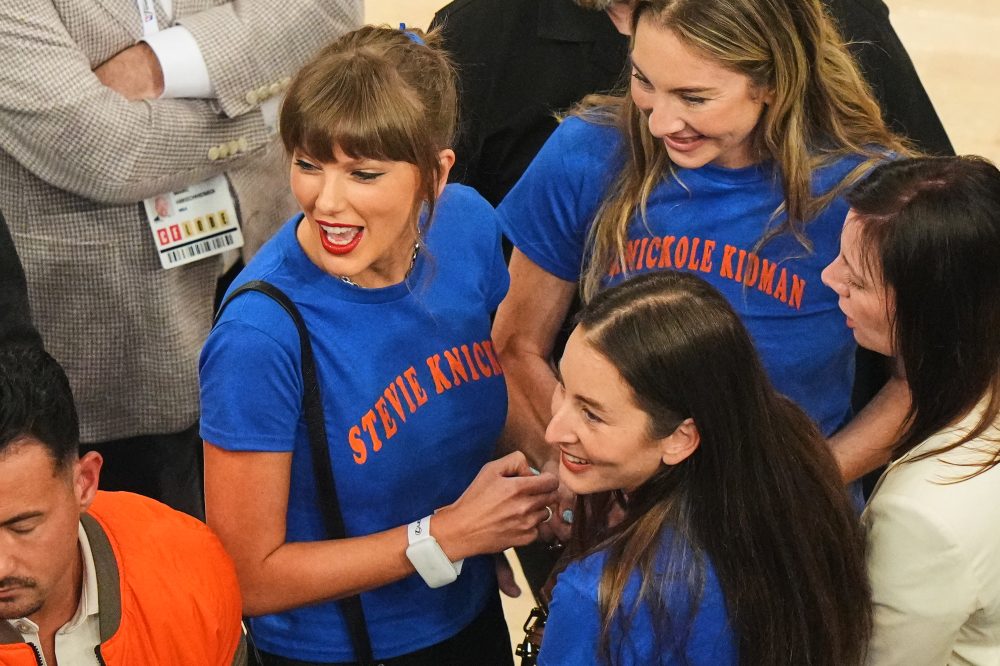
    “It’s ruining my business,” said Angela Reilly, the owner of Molly Wee, an Irish pub near the arena. “I haven’t seen anything like this level of security in 46 years.”

    Responding to criticism about the closure, city officials have pointed out there isn’t recent precedent for their current situation. The Knicks haven’t reached an NBA Finals since 1999. Most other major city sports teams compete in less densely populated outer boroughs or New Jersey.

    However, when the New York Rangers — who also compete at the Garden — last captured the Stanley Cup in 1994, the NYPD used a different strategy for managing celebrating supporters.

    Before the game, police announced they would remove potential projectiles like metal trash containers or debris from around the venue but would permit supporters to move freely.

    “We expect the fans to be extremely vocal,” Allen Hoehl, former NYPD chief, said at a news conference. “If they want to go from here to there, we’ll escort them in any direction.”

  • Canada Proposes Social Media Ban for Kids Under 16

    Canada Proposes Social Media Ban for Kids Under 16

    Canadian officials unveiled comprehensive digital safety legislation Wednesday aimed at restricting social media access for minors under 16, following Australia’s lead in establishing the world’s first such prohibition.

    The proposed measure would create exceptions for platforms that demonstrate compliance with specific safety requirements. Additionally, the legislation seeks to enhance AI chatbot security through the establishment of a digital oversight agency responsible for developing safety protocols, according to a government official.

    Parliament received the bill just weeks following legal action by families impacted by one of Canada’s deadliest mass violence incidents. The lawsuit targets OpenAI, claiming the company was aware through ChatGPT interactions that the suspected perpetrator was planning the attack but failed to alert authorities.

    Australia made history in December by implementing the first national social media restriction for children under 16. Within one month of enforcement, social media platforms had closed approximately 5 million teenage accounts.

    Several European nations are exploring similar protective measures for young users, including France, Denmark and Poland. Greece has already announced plans to implement access restrictions for those under 15, effective January 2027.

    During a technical briefing, government representatives indicated the legislative process could require up to one year for passage, with an additional 18 months needed to establish the digital regulatory body.

    Prime Minister Mark Carney maintains a narrow parliamentary majority as the legislative body prepares for its upcoming summer break.

  • FIFA Introduces New Anti-Time Wasting Rules for World Cup

    FIFA Introduces New Anti-Time Wasting Rules for World Cup

    By Mark Gleeson

    FIFA has implemented multiple rule modifications for the World Cup just weeks before the tournament begins, with changes specifically targeting time-wasting behaviors and broadening VAR technology use.

    “These amendments are aimed at combating discrimination, reducing time-wasting, improving the tempo of matches and enhancing the experience of players and fans,” FIFA explained.

    Key changes include:

    *Referees will conduct a visible five-second countdown with their hand when they determine a player or goalkeeper is delaying a goal kick. Should the ball remain out of play when the countdown concludes, the opposing team receives a corner kick. This same process applies to throw-ins.

    *Substituted players have 10 seconds to exit the field. Players who exceed this timeframe force their replacement to wait until the next stoppage in play occurring at least one minute later. This rule extends to injured players, who must leave the pitch after receiving treatment and cannot return for at least one minute after play resumes.

    *Players cannot cover their mouths during confrontations with opponents, and deliberate violations may result in ejection. This modification stems from controversies like the incident between Gianluca Prestianni and Vinicius Junior.

    In February, the Real Madrid forward accused his Benfica opponent of making racist remarks, but because the player’s mouth was covered, no offence of racism could be proven.

    *VAR technology can now examine clearly unjustified second yellow cards, cases of mistaken identity, wrongly awarded corners and attacking fouls before free-kicks or corners that directly affect goals, penalties or disciplinary outcomes.

    *Players who exit the field to protest a referee’s call may face red card ejection, and team officials who encourage such protests may also receive dismissal.

    This follows the controversy at January’s Africa Cup of Nations final where Senegal walked off in protest at a penalty awarded against them in the last minute against hosts Morocco.

    Senegal returned after 14 minutes, saw Morocco miss the spot kick and went on to win the match in extra time, only to be subsequently stripped of the title by the Confederation of African Football’s disciplinary appeal board.

  • Defense Secretary Announces Plans to Strike Iranian Facilities Wednesday

    Defense Secretary Announces Plans to Strike Iranian Facilities Wednesday

    Defense Secretary Pete Hegseth announced on June 10 that the United States plans to launch military strikes against Iranian targets this Wednesday, targeting what he described as important installations within the country.

    Speaking from Los Angeles, Hegseth indicated that American forces will conduct a significant assault on Iranian infrastructure, specifically mentioning plans to attack “key facilities.”

  • U.S. Stock Markets Drop Over 1% as Tech Stocks Fall, Iran Tensions Rise

    U.S. Stock Markets Drop Over 1% as Tech Stocks Fall, Iran Tensions Rise

    Major U.S. stock markets closed Wednesday with losses exceeding 1%, driven down by continued weakness in semiconductor stocks and growing concerns over escalating tensions with Iran.

    President Donald Trump warned that the U.S. would launch another attack on Iran if no peace agreement is reached. This statement came after one of the most serious exchanges of hostilities in the Middle East conflict over the past two months.

    Semiconductor stocks took a particularly hard hit, with their sector index dropping 3.6%. Companies like Nvidia and Broadcom were among the heaviest weights dragging down the S&P 500, as investors continue to worry about inflated valuations in the chip sector.

    The technology sector of the S&P 500 has now fallen 11% from its record closing high on June 2, officially entering correction territory.

    Wall Street’s fear gauge, the Cboe Volatility Index, continued its recent upward trend.

    Tom Hainlin, an investment strategist at U.S. Bank Wealth Management in Minneapolis, noted that investors continue to take profits from technology investments.

    He explained that market participants are now “pricing in maybe a higher interest rate” following recent economic reports and are also concerned about the ongoing conflict.

    “Perhaps that conflict continues on into the mid to late summer,” he stated.

    The market decline was worsened by drops in trucking company shares, including XPO, J.B. Hunt and Old Dominion, after Amazon revealed plans to expand its less-than-truckload freight operations across the U.S. The industrial sector led all declining sectors with a 3.4% drop.

    The Dow Jones Industrial Average dropped 953.33 points, or 1.87%, closing at 49,918.78. The S&P 500 decreased 119.66 points, or 1.62%, to finish at 7,266.99. The Nasdaq Composite fell 509.32 points, or 1.98%, ending at 25,169.50.

    The Federal Reserve is anticipated to keep interest rates unchanged at its June policy meeting. However, investors are factoring in at least one quarter-point rate increase before the year ends.

    Last Friday’s employment report exceeded expectations. Wednesday brought news that U.S. consumer prices rose 4.2% over the 12 months ending in May, marking the biggest increase since April 2023. The Middle East conflict has pushed up gasoline and other energy costs.

    The inflation rate matched economist predictions in a recent poll.

    Oracle stock declined approximately 1% in after-hours trading following its earnings announcement.

    During regular trading, Super Micro Computer plummeted 28% after revealing plans to raise $7 billion through various equity and equity-related financing deals to fund component purchases for its expanding AI server business.

    The shift away from high-performing technology stocks has benefited other market sectors that have underperformed this year, including healthcare, real estate and consumer staples.

    The highly anticipated $1.75 trillion SpaceX public offering scheduled for Friday, aiming for a record $75 billion fundraising goal, could add additional pressure to U.S. markets as worries grow about excessive enthusiasm in the technology sector.

    On the New York Stock Exchange, declining stocks outnumbered advancing ones by a ratio of 1.87-to-1. The exchange saw 179 new highs and 138 new lows.

    On the Nasdaq, 1,772 stocks gained while 3,129 declined, with falling issues outnumbering rising ones by 1.77-to-1. The S&P 500 recorded 22 new 52-week highs and 8 new lows, while the Nasdaq Composite saw 139 new highs and 141 new lows.

    Trading volume on U.S. exchanges reached 20.7 billion shares, slightly above the 20.6 billion average over the previous 20 trading sessions.

  • US Men’s Soccer Opens World Cup Friday Against Paraguay in High-Stakes Matchup

    US Men’s Soccer Opens World Cup Friday Against Paraguay in High-Stakes Matchup

    The United States men’s soccer team kicks off their World Cup campaign Friday night against Paraguay, carrying the weight of expectations as tournament co-hosts looking to start strong in what should be a winnable opener.

    Ranked 17th globally, the Americans enter as clear favorites in Group D, facing a Paraguay squad sitting at 41st in the world rankings – the lowest among all 48 tournament participants. The group also features Australia and Turkey.

    Recent history favors the US, who have defeated the South Americans in their last three encounters, most recently winning 2-1 in a November friendly. The nations first met during the inaugural World Cup in 1930, with the United States claiming victory.

    Friday’s match at Los Angeles Stadium in Inglewood promises an electric atmosphere as the home crowd rallies behind a potent American attack led by Weston McKennie, Christian Pulisic and Folarin Balogun, who will aim to find the net early and settle any opening-match jitters.
    However, defensive vulnerabilities remain a concern for the Americans. Inexperienced goalkeeper Matt Freese may face significant pressure, as the team has managed just one shutout across their previous 13 matches while surrendering 11 goals over their last four games.

    Paraguay presents a contrasting style, built around a rugged defensive foundation designed to neutralize the American offensive threat. “La Albirroja” return to the World Cup stage for the first time since their 2010 quarter-final defeat to eventual champion Spain.

    While the Americans received automatic qualification as co-hosts, Paraguay earned their spot through the grueling CONMEBOL qualifying process, finishing sixth among South American automatic qualifiers.

    The visitors’ attacking struggles were evident during qualification, managing only 14 goals across 18 matches. Their offensive challenges have been compounded by the loss of primary striker Julio Enciso, who will miss the opener due to a thigh injury.

    Paraguay will rely heavily on midfielder Diego Gomez to generate scoring opportunities and provide long-range shooting threats. The 23-year-old’s fitness remains a question mark following a knee injury sustained in April.

    Former US international Cobi Jones, a three-time World Cup veteran, emphasized the psychological importance of securing an opening victory, even within the expanded tournament format where only 16 of 48 teams face group-stage elimination.

    “That’s how you want to start off,” Jones told Reuters in LA on Tuesday.

    “It’s not the be all and end all, but getting three points at the beginning really helps your chances and establishes you as the leaders of the group.”

  • Traffic Alert: Northbound US 13 Lane Closure After Crash

    Traffic Alert: Northbound US 13 Lane Closure After Crash

    A traffic accident has resulted in the closure of the left lane on northbound US 13, also known as DuPont Parkway, according to state transportation officials.

    The lane blockage extends from American Legion Drive to Bayview Road as emergency crews respond to the crash scene.

    Motorists traveling northbound on this stretch of highway should expect delays and are advised to use caution while navigating around the incident area.

  • Vietnam Veterans File Lawsuit to Block Trump’s Proposed Cemetery Arch

    A group of three Vietnam War veterans has filed a lawsuit challenging President Trump’s proposal to construct an arch in close proximity to Arlington National Cemetery, according to court documents.

    The legal action seeks to prevent the construction of what has been described as a “Triumphal Arch” that would be built within walking distance of the cemetery grounds, where approximately 400,000 military personnel, veterans, and their family members have been laid to rest.

    Among the plaintiffs is Shaun Byrnes, an 83-year-old Navy veteran who served during the Vietnam conflict. Public Citizen, a legal advocacy organization, is representing Byrnes and the other veterans in their challenge against the Trump administration’s construction plans.

    The proposed arch would be situated in Memorial Circle, placing it in immediate proximity to one of the nation’s most sacred military burial grounds.

  • Investigation Finds ICE Squandered Millions at Nation’s Biggest Detention Center

    A newly released investigation has found that Immigration and Customs Enforcement squandered millions of taxpayer dollars while putting detainees in danger at the nation’s largest immigration detention center.

    The findings focus on Camp East Montana, located in Texas, which has been the subject of mounting criticism since it began operating last year.

    Immigration attorneys and civil rights advocates have been raising red flags about the conditions inside the facility since it opened its doors.

    The report highlights significant financial mismanagement and safety concerns at the detention center, which operates as the largest immigration facility of its kind in the United States.

  • Wealthy Tech Leaders Claim China Behind U.S. Data Center Opposition

    Wealthy technology executives are promoting a controversial theory that suggests China is secretly orchestrating local community opposition to data center developments throughout the United States.

    These tech millionaires are making allegations about foreign interference in grassroots resistance movements, but they are providing minimal concrete evidence to back up their assertions.

    The claims come as communities across the nation have been organizing against proposed data center projects, with protesters recently gathering at the Utah State Capitol building to voice opposition to the planned Stratos data center in Box Elder County during a May 23, 2026 demonstration in Salt Lake City.

    Despite the serious nature of the accusations involving foreign influence operations, the technology industry leaders pushing this theory have yet to present substantial proof supporting their claims about Chinese involvement in local opposition efforts.

  • Traffic Alert: Southbound US 13 Lanes Blocked After Accident

    Traffic Alert: Southbound US 13 Lanes Blocked After Accident

    Motorists should expect delays on southbound US Route 13 this evening as two left lanes remain blocked following a traffic accident.

    The lane closures stretch from White Oak Road to East Division Street on the southbound side of the highway, also known as North DuPont Highway.

    Drivers are advised to use alternate routes or allow extra travel time when passing through the affected area until the roadway can be fully reopened.

  • AI Stock Decline Sends Wall Street Tumbling on Wednesday

    AI Stock Decline Sends Wall Street Tumbling on Wednesday

    Wall Street experienced steep declines Wednesday as artificial intelligence stocks continued their recent retreat, pulling major market indexes significantly lower.

    The S&P 500 index declined 1.6% on Wednesday following a brief morning uptick. This marked the first consecutive daily losses for the benchmark index in three weeks. Meanwhile, the Dow Jones Industrial Average tumbled 1.9%, while the Nasdaq composite dropped 2%.

    Market volatility has persisted since the previous week when AI-related stocks shifted from hitting record highs to experiencing sudden reversals. Investors are increasingly concerned that valuations in this sector may have climbed too rapidly. Additionally, oil markets gained ground after President Donald Trump issued threats of additional military action against Iran.

    Wednesday’s closing numbers:

    The S&P 500 declined 119.66 points, finishing at 7,266.99, representing a 1.6% decrease.

    The Dow Jones Industrial Average dropped 953.33 points to close at 49,918.78, marking a 1.9% decline.

    The Nasdaq composite decreased 509.32 points to end at 25,169.50, down 2%.

    The Russell 2000 index tracking smaller companies fell 31.56 points to 2,835.46, a 1.1% drop.

    Weekly performance:

    The S&P 500 has declined 116.75 points, down 1.6% for the week.

    The Dow has fallen 948 points, representing a 1.9% weekly decrease.

    The Nasdaq has dropped 539.93 points, down 2.1% for the week.

    The Russell 2000 has gained 1.96 points, up 0.1% for the week.

    Year-to-date performance:

    The S&P 500 remains up 421.49 points, showing a 6.2% annual gain.

    The Dow has risen 1,855.49 points, reflecting a 3.9% yearly increase.

    The Nasdaq has climbed 1,927.51 points, up 8.3% for the year.

    The Russell 2000 has advanced 353.56 points, posting a 14.2% annual gain.

  • Intelligence Powers at Risk as Trump Keeps Controversial Pick Despite Pushback

    Intelligence Powers at Risk as Trump Keeps Controversial Pick Despite Pushback

    WASHINGTON — Lawmakers from both parties on Capitol Hill have urged President Donald Trump to quickly appoint a permanent intelligence director to help Congress extend crucial surveillance powers before they expire. However, Trump has refused to change course.

    Instead, Trump has reinforced his support for his interim choice to oversee intelligence operations, federal housing finance regulator Bill Pulte, despite his limited background in the field. Democrats are blocking votes on renewing Section 702 of the Foreign Intelligence Surveillance Act, commonly called FISA, which expires June 12. Trump requested Wednesday a brief extension of the legislation to “provide time for the selection and confirmation of a permanent Head of the Agency.”

    This standoff may soon restrict the U.S. government’s foreign intelligence gathering capabilities as World Cup matches start across the nation and before festivities marking America’s 250th anniversary.

    Senate Majority Leader John Thune, R-S.D., stated Wednesday that GOP leadership has “made our views known” to the White House regarding the simplest path to pass the legislation, and “we’re just doing what we can here to ensure that the White House understands what will be necessary in order to make that happen.”

    Trump announced Friday he is interviewing five potential candidates for the permanent agency leadership role, all with national security credentials.

    “It’s an important position and one that I think will be filled by a highly qualified person,” stated House Speaker Mike Johnson, who met with Trump recently about the FISA deadlock.

    However, securing FISA votes requires swift action — and Trump’s selection must appeal to lawmakers from both parties.

    Among potential successors is Pete Hoekstra, Trump’s ambassador to Canada and former House Intelligence Committee chairman. The White House has contacted Hoekstra regarding the position and discussions continue, according to someone familiar with the outreach who requested anonymity to discuss private talks.

    FISA’s Section 702 permits agencies like the CIA, National Security Agency and FBI to gather communications from foreign subjects abroad without warrants.

    Although lawmakers from both parties citing privacy concerns have long sought to restrict this authority, broad bipartisan backing exists for its renewal, particularly after recent compromise legislation. Yet Democrats now withhold support due to Pulte concerns.

    Mark Warner of Virginia, the leading Democrat on the Senate Intelligence Committee, helped craft the compromise bill with Republicans. But he labeled Pulte’s selection to succeed outgoing DNI Tulsi Gabbard “a live hand grenade” for passage efforts. GOP leaders attempted to begin the process last week, but seven Republicans joined nearly all Democrats in preventing a long-term extension.

    Warner declared Wednesday his only condition for backing a temporary surveillance law extension is having principal deputy director of national intelligence Aaron Lukas serve as acting leader throughout that period.

    Sen. Tom Cotton, the Senate Intelligence Committee chairman, and Sen. Chuck Grassley, Senate Judiciary Committee chairman, have cautioned the administration that the surveillance tool will likely expire.

    The administration should prepare “for a potential significant gap in foreign intelligence collection,” they stated in correspondence.

    Following bipartisan resistance to Pulte’s interim appointment, Trump said last week he would not permanently nominate him. But Democrats and some Republicans want his appointment withdrawn immediately and Trump to nominate a Senate-confirmable replacement.

    Tuesday, however, Trump declared Pulte would not only become acting director — he’d begin sooner than planned, on June 19. Trump maintained support for Pulte Wednesday, posting he needed additional time to locate a permanent successor and requesting a brief extension.

    “FISA 702 is very important to our Military, and keeping the American People safe, especially during the World Cup and America250 Celebrations,” Trump wrote.

    Trump said Pulte would reduce the agency’s size and blamed Democrats for delaying surveillance authority renewal.

    Senators from both parties questioning Pulte cite his intelligence experience deficit and Federal Housing Finance Agency record. In that role, he’s been connected to criminal referrals regarding mortgage fraud allegations against public officials Trump wanted to target, including New York Attorney General Letitia James, a Democrat; Sen. Adam Schiff, D-Calif.; and Lisa Cook, a Federal Reserve board member.

    Whether sufficient votes exist for temporary surveillance powers extension remained uncertain as Trump disregarded bipartisan pressure to withdraw Pulte’s appointment.

    After a White House ceremony Wednesday, Johnson told reporters the president is “working very hard” to select a permanent ODNI leader — possibly before Pulte assumes the role.

    Johnson described it as a “good faith gesture” from Trump that Democrats should accept for a short-term FISA extension agreement.

    Trump made clear, Johnson said, that Pulte will serve a “very short term – a sort of renovation role” to help the Office of the Director of National Intelligence be “renovated and downsized.”

  • Defense Chiefs Set to Meet White House on Weapons Production Boost

    Defense Chiefs Set to Meet White House on Weapons Production Boost

    WASHINGTON, June 10 – Administration officials are preparing to host leaders from major defense companies at the White House as early as next week to address the need for faster weapons manufacturing, according to sources familiar with the plans.

    This upcoming gathering represents the second time the administration has brought together top executives from the nation’s premier defense contractors to address production acceleration. The previous March session featured chief executives and senior leadership from BAE Systems, Lockheed Martin, Northrop Grumman, RTX Corporation, Boeing, Honeywell Aerospace and L3Harris Technologies, with Defense Secretary Pete Hegseth participating.

    Ongoing military conflicts with Iran along with weapons shipments to Ukraine over recent years have significantly reduced America’s weapons inventory.

    The planned session occurs while Pentagon officials continue urging contractors to substantially increase their production speed. These efforts center around manufacturing agreements established earlier this year.

    The completed arrangements include a multi-year contract to increase PAC-3 production threefold and expand THAAD interceptor manufacturing fourfold through Lockheed, plus additional multi-year contracts with RTX to enhance Tomahawk and AMRAAM air-to-air missile production. These arrangements, labeled as “framework agreements,” remain unconverted to actual contracts.

    The White House, Lockheed Martin, RTX, Boeing and L3Harris have not yet provided responses to comment requests.

  • 60 Minutes’ New Leader Brings in Consultant Amid Staff Upheaval

    60 Minutes’ New Leader Brings in Consultant Amid Staff Upheaval

    The newly appointed leader of CBS’s “60 Minutes” has brought in outside help to manage his entry into a newsroom experiencing significant upheaval, according to internal sources.

    Nick Bilton attended his inaugural staff meeting last week alongside Kelly Funke, a television production consultant he enlisted to assist with his newsroom transition, three “60 Minutes” employees revealed on condition of anonymity due to job security concerns.

    Staff members characterized Funke’s mission as rebuilding trust within the team, with one describing her function as Bilton’s “chief of staff.” The consultant, who brings more than ten years of television production experience, has not been publicly acknowledged in this role before. She is reportedly working under a 90-day agreement with possible extension.

    Bilton’s appointment reflects wider changes at CBS News that started when David Ellison — son of Larry Ellison, a longtime supporter of President Donald Trump — took control of Paramount in August. He placed Bari Weiss, founder of a successful media startup without broadcast journalism background, in charge of CBS News. David Ellison may soon oversee CNN as well, pending regulatory approval of his bid for Warner Bros Discovery.

    Representatives for Bilton, Weiss, Funke and CBS News all refused to provide statements.

    The decision to engage Funke indicates Bilton expected challenges in leading a newsroom that has struggled under Weiss’s direction.

    “I just think Nick vastly underestimated just how bad it was,” one staff member commented.

    Conflict erupted during the June 1 gathering when correspondent Scott Pelley challenged Bilton directly. “I find it impossible to imagine that you would take this job knowing that you would never be welcome here,” Pelley stated, according to a meeting attendee.

    CBS terminated Pelley following the staff meeting where he also criticized leadership and accused Weiss of “murdering” the program.

    Funke has organized meetings between Bilton and “60 Minutes” staff while working with assistants and producers to understand the newsroom’s organization, sources indicated.

    Some employees have raised concerns about Funke’s qualifications, pointing to her absence of journalism background, though one current staffer noted her efforts to understand the newsroom environment.

    Bilton has also hired Nick De Lucca, 24, who has introduced himself to staff as “Nick 2.0,” according to a fourth source. De Lucca received the title “operations manager,” a substantial position typically handling logistics. His LinkedIn profile shows he has served as an associate producer at Bilton’s production company since 2024.

    De Lucca did not respond to comment requests.

    Funke is accompanying Bilton — a former Vanity Fair contributor and documentary filmmaker who represents the first outsider from traditional television news to head “60 Minutes” — during a turbulent period for the show’s team. On May 28, CBS removed executive producer Tanya Simon, longtime producer Draggan Mihailovich, and correspondent Cecilia Vega. The previous day, the network chose not to renew correspondent Sharyn Alfonsi’s contract following her dispute with Weiss over a December report about a Salvadoran prison.

    Network executives offered no explanation for the dismissals. A CBS spokesperson stated the network cannot discuss personnel issues for legal and other considerations. “60 Minutes” concluded last season as the highest-rated news program, increasing its television viewership by 9% compared to the previous year, Nielsen data shows.

    Bilton informed employees he made “repeated attempts” to engage in direct discussions with Pelley before his termination and to “find common ground,” but Pelley declined, according to an email obtained by Reuters.

    Speaking with The New York Times after his exit, Pelley claimed Weiss was placing a “thumb on the scale” favoring Republican President Donald Trump’s interpretation of news events. He alleged Weiss attempted to modify his reporting on ICE’s activities in Minnesota and sought to portray protesters as more violent.

    The CBS spokesperson responded that Weiss’ input on the piece Pelley mentioned to the Times “had no political motivation” and was “proposed solely to make the piece as strong, fair, and accurate as possible.”

    In a staff email, Bilton emphasized the show’s “journalistic independence” — a message Ellison also delivered during a private conversation with correspondent Lesley Stahl, the Times reported. This personal discussion highlights “60 Minutes’” significance in Ellison’s plans for Paramount and the management difficulties facing the network.

    Stahl shared details about the call with staff during a Monday social gathering aimed at improving morale, one current employee told Reuters. The source said reactions to Ellison’s promises were mixed, with several people noting that Ellison had visited “60 Minutes” after acquiring Paramount and had previously made identical commitments.

    Before Skydance Media’s acquisition, Paramount paid $16 million to resolve a 2024 lawsuit Trump brought against “60 Minutes” regarding an interview with former Vice President Kamala Harris, which he claimed presented a distorted perspective of his White House opponent.

    The FCC has stated the settlement and the deal’s regulatory review were separate matters.

  • Australian Tennis Star Advances at Netherlands Tournament

    Australian Tennis Star Advances at Netherlands Tournament

    Australia’s Alex de Minaur, seeded second in the tournament, advanced to the next round of the Libema Open in ‘s-Hertogenbosch, Netherlands, after defeating Martin Damm in straight sets 7-6 (8), 7-5 during second-round play.

    The Australian player dominated with his serve, recording 27 winners while making only 17 unforced errors. De Minaur also held a 7-6 advantage in aces and committed just one double fault compared to four by Damm. His opponent struggled with consistency, making 44 unforced errors alongside 28 winners, though Damm managed to save 11 of 14 break point opportunities to keep the match competitive.

    In other tournament action, sixth-seeded Tallon Griekspoor defeated Botic van de Zandschulp 6-2, 6-7 (2), 6-4 in a match featuring two Dutch players that began Tuesday but concluded Wednesday due to suspension. Australian qualifier James McCabe upset eighth-seeded Zizou Bergs from Belgium with a 6-7 (2), 6-2, 7-6 (4) victory.

    Additional players advancing included Marton Fucsovics from Hungary, Kamil Majchrzak from Poland, and the Netherlands’ Thijs Boogaard.

    At the BOSS Open in Stuttgart, Kazakhstan’s Alexander Bublik, seeded third, overcame Germany’s Jan-Lennard Struff 7-6 (3), 3-6, 6-2 in second-round action. Bublik served 22 aces compared to 17 for Struff and recorded 38 winners against 22 unforced errors. This match was a rematch of their French Open first-round encounter where Struff had previously won in four sets. In the Stuttgart rematch, Struff posted 37 winners and 29 unforced errors.

    Additional Stuttgart results included Italy’s Mattia Bellucci defeating Germany’s Yannick Hanfmann 7-5, 6-7 (4), 6-2, and France’s Giovanni Mpetshi Perricard beating Belgium’s Gauthier Onclin 7-6 (1), 6-2.

  • Major Stock Indexes Drop Over 1% as Tech Stocks Fall, Middle East Tensions Rise

    Major Stock Indexes Drop Over 1% as Tech Stocks Fall, Middle East Tensions Rise

    Major U.S. stock markets experienced significant losses Wednesday afternoon, with all three primary indexes dropping more than 1% as technology stocks continued their downward trend and escalating Middle East tensions heightened investor concerns.

    President Donald Trump stated the U.S. would strike Iran again “very hard” after one of the most substantial overnight exchanges of gunfire since an April ceasefire in the Middle East conflict.

    Semiconductor stocks were particularly battered, with their index declining 2.6%. Companies like Nvidia and Broadcom were among the heaviest weights pulling down the S&P 500, while the technology sector index for the S&P 500 dropped 1.1%. Market participants have grown increasingly concerned about inflated stock prices in the technology space.

    Market volatility continued building on Tuesday’s gains, with the Cboe Volatility Index showing increased uncertainty in recent trading sessions.

    Tom Hainlin, an investment strategist at U.S. Bank Wealth Management in Minneapolis, noted that investors continue taking profits from technology investments.

    Additionally, market participants are now “pricing in maybe a higher interest rate” following recent economic reports while also expressing concern about the ongoing conflict, he explained.

    “Perhaps that conflict continues on into the mid to late summer,” he stated.

    The Federal Reserve is anticipated to maintain current interest rates at its June policy meeting. Market participants are factoring in at least one 25-basis-point rate increase before year-end.

    The Dow Jones Industrial Average dropped 721.32 points, or 1.42%, closing at 50,150.79. The S&P 500 declined 87.78 points, or 1.19%, finishing at 7,298.87. The Nasdaq Composite fell 382.36 points, or 1.49%, ending at 25,296.35.

    Friday’s employment report exceeded expectations. Wednesday’s data revealed U.S. consumer prices rose 4.2% over the 12 months ending in May, marking the steepest increase since April 2023, as Middle East hostilities drove up gasoline and energy costs.

    However, this inflation rate matched economist predictions according to a Reuters survey.

    Super Micro Computer shares plummeted 20.9% after revealing plans to generate $7 billion through various equity and equity-related financing deals to purchase components for expanding AI server demand.

    The shift away from heavily favored technology stocks has benefited other market sectors that have underperformed this year, including healthcare, real estate and consumer staples.

    The highly anticipated $1.75 trillion SpaceX public offering scheduled for Friday, seeking a record $75 billion in funding, could further pressure U.S. markets as worries grow about excessive technology sector enthusiasm.

    Transportation company stocks including XPO, J.B. Hunt and Old Dominion also declined after Amazon revealed plans to expand its less-than-truckload shipping services across the U.S. Industrial stocks led sector declines.

    Falling stocks outnumbered rising ones by a 1.41-to-1 margin on the NYSE. The exchange recorded 168 new highs and 103 new lows. On the Nasdaq, 2,038 stocks gained while 2,729 declined, with falling issues leading advancing ones by a 1.34-to-1 ratio.

  • White House Nominates Brian Johnson to Lead Consumer Financial Protection

    White House Nominates Brian Johnson to Lead Consumer Financial Protection

    WASHINGTON – The White House has formally submitted Brian Johnson’s nomination to lead the Consumer Financial Protection Bureau to the U.S. Senate for confirmation, according to an official announcement made Wednesday.

    Johnson’s nomination for the director position was transmitted to senators as part of the formal nomination process, based on information released in a public notice.

  • Traffic Backup on Route 1 South Near Rehoboth Beach Causing Delays

    Traffic Backup on Route 1 South Near Rehoboth Beach Causing Delays

    Drivers heading south on Route 1 near Rehoboth Beach should expect additional travel time this evening due to traffic congestion.

    The Delaware Department of Transportation reports that the southbound lanes between U.S. Route 9 and Delaware Route 1A are experiencing heavy traffic, resulting in delays of 5 to 10 minutes for motorists.

    The backup appears to be caused by congestion rather than any specific incident or accident. Drivers are advised to plan accordingly and allow extra time for their commute through this area.

  • Heat Advisory: Dangerous Temperatures Expected Across Delmarva Through Friday

    Heat Advisory: Dangerous Temperatures Expected Across Delmarva Through Friday

    A Heat Advisory is in effect for New Castle County and surrounding areas as dangerous heat index values are expected to reach 104 degrees through Friday evening. The National Weather Service issued the advisory for New Castle County in Delaware, along with portions of southeastern Pennsylvania and South Jersey, beginning Thursday at 11 AM and lasting until 8 PM Friday. The combination of hot temperatures and high humidity poses a serious risk for heat-related illnesses, particularly for those spending extended time outdoors. Residents should take immediate precautions: drink plenty of fluids, stay in air-conditioned spaces when possible, and avoid prolonged sun exposure. If you must be outside, wear lightweight, loose-fitting clothing and limit strenuous activities to early morning or evening hours. Check on elderly relatives and neighbors during this heat event, as they are particularly vulnerable to heat-related health issues. Some relief may come from scattered showers and thunderstorms expected Thursday and Friday afternoons, though humidity will remain high. Conditions will improve significantly this weekend as a cold front moves through the region, bringing much less humid air. If you don’t have air conditioning, call 211 for assistance finding cooling centers in your area.
  • Construction Closes Right Lane on Old Orchard Road Through This Afternoon

    Construction Closes Right Lane on Old Orchard Road Through This Afternoon

    Motorists traveling northbound on Old Orchard Road are dealing with lane restrictions today due to ongoing construction activities.

    The right lane has been shut down between Oyster Cove Drive and East Edgemoor Street, creating potential delays for drivers in the area.

    According to traffic officials, the lane closure is expected to remain in place until 5 PM today. Drivers are advised to plan alternate routes or allow extra travel time when passing through this construction zone.

  • Stanley Cup Final Between Vegas and Carolina Breaking Records with Wild Games

    Stanley Cup Final Between Vegas and Carolina Breaking Records with Wild Games

    Dramatic comebacks, record-setting performances, and nail-biting finishes have defined the Stanley Cup Final matchup between the Vegas Golden Knights and Carolina Hurricanes. The question now is whether this series ranks among the finest championship rounds in hockey history.

    “Everyone that texts me is saying it’s the best hockey they’ve ever watched,” Hurricanes defenseman Jaccob Slavin said. “It’s been fun to play. There’s a lot of momentum swings in the games, and I feel like it’s one of those series where you don’t know what’s going to happen.”

    The series’ unpredictable nature has created compelling television each evening since it started, resulting in the highest viewership numbers for a final in more than ten years. With the teams deadlocked at 2-2 heading into Thursday night’s Game 5 in Raleigh, a sixth game is assured, guaranteeing the Cup will be present Saturday evening in Las Vegas.

    Here’s what has elevated this series to legendary status:

    The opening game saw Carolina jump ahead 2-0 just over 12 minutes into the contest, then trail 3-2 before equalizing late in the game, ultimately falling when Tomas Hertl scored the decisive goal with 3:24 remaining in the final period.

    Game 2 featured Vegas holding a 2-0 advantage with under 10 minutes left in regulation, followed by a wild sequence of four goals — plus one that was disallowed — culminating with Mark Stone’s equalizer with 81 seconds on the clock. With Hertl serving a penalty, Seth Jarvis netted the overtime winner for the Hurricanes.

    The third contest saw the Golden Knights build a commanding 4-0 lead in the final period following Mitch Marner’s hat trick, which prompted Carolina to change goaltenders. The Hurricanes mounted a complete comeback with four consecutive goals, only to lose when Vegas defenseman Shea Theodore’s shot caromed off the boards and deflected off goaltender Brandon Bussi 5:38 into the second overtime.

    Game 4 witnessed Carolina establishing leads of 2-0 and 3-1, with Vegas responding both times to level the score. Hurricanes captain Jordan Staal netted the winning goal with 13:28 remaining to square the series.

    This marks the first championship series in NHL history where each of the opening four games featured a team overcoming a multi-goal deficit to tie the contest. The first two games both ended with comeback victories, just one short of the record of three such games established in both 1950 and 1987.

    Defense has been largely absent from this series. Both clubs entered having surrendered the fewest and third-fewest goals during the first three playoff rounds. Instead, they’ve combined for 33 goals through four games, the most since the New York Islanders and Minnesota North Stars totaled 36 in 1981.

    — At least four goals were recorded in each period spanning from the second period of Game 3 through the opening period of Game 4. This represents only the second occurrence of such scoring in three consecutive regulation periods, and the first since the Islanders and Flyers achieved this feat during Games 5 and 6 in 1980.

    — Vegas forward Brett Howden tops all playoff goal scorers this year with 14, surpassing the franchise mark established by Jonathan Marchessault during his Conn Smythe Trophy-winning performance as playoff MVP in the Golden Knights’ 2023 Stanley Cup championship.

    — Marner’s natural hat trick — three consecutive goals — occurred within 6 minutes and 10 seconds. This easily eclipses the previous championship series record of 11 minutes and 27 seconds set by Ted Lindsay for Detroit in 1955.

    — The Hurricanes became the third franchise to net four or more goals in each opening game of the final, joining Montreal in 1973 and Boston in 1970. Their Game 3 rally featured the three fastest goals in championship series history, scored within a 39-second span.

    — Staal’s gap between championship series goals — from June 9, 2009, with Pittsburgh, until Game 1 on June 2, spanning 6,202 days — exceeded brother Eric’s record of 6,198 days from 2006 to 2023, according to Sportradar. Jordan became the first player since Mario Lemieux in 1992 to score five goals in the opening four championship games and the first since Mike Bossy in 1982 to find the net in each of the first four contests.

    Only twice before has a Cup final seen the score tied at some point during the third period in each of the first four games. The last occurrence was between Chicago and Tampa Bay in 2015, with the previous instance being St. Louis and Montreal in 1968.

    The opening three games were each decided by a single goal for only the tenth time in history. An empty-net goal by Nikolaj Ehlers in Game 4, a long-distance clear that was itself a spectacular play, prevented a fourth consecutive one-goal decision.

    Despite featuring teams from smaller, non-traditional hockey markets, television audiences nationwide are watching. The first three games have drawn the largest viewership for a final since the Blackhawks faced the Lightning 11 years ago, averaging 4.9 million viewers on ABC. ESPN/ABC reported Game 3 attracted the most viewers for a championship game since Carolina-Detroit in 2002, reaching 5 million.

    Goaltending has not been the series’ strongest element, although Vegas’ Carter Hart and Carolina’s Frederik Andersen and Bussi have delivered several crucial saves.

    Hart, Andersen and Bussi have posted a collective save percentage of .855, which would represent the lowest mark in a final since .850 in 1973 during the Montreal-Chicago series. This figure falls well below the regular season league average of .896, which was already the lowest since 1993-94.

    Bussi became the third goaltender to make his inaugural NHL playoff appearance in the final and earn a victory, joining Hank Bassen in 1961 and Alfie Moore in 1938.

    With Andersen capturing the Game 2 win, the Hurricanes are the first team since Edmonton in 1984 to have two different goaltenders each record a victory in the final. Only the 1984 Oilers and 1972 Bruins have won the Cup with multiple goaltenders starting and winning games in the championship series.

  • Vegas Golden Knights Face Must-Win Game 5 Against Carolina in Stanley Cup Final

    Vegas Golden Knights Face Must-Win Game 5 Against Carolina in Stanley Cup Final

    LAS VEGAS — Vegas finds itself in familiar territory from earlier playoff rounds, but this time the circumstances are far more challenging for the Golden Knights.

    While Vegas previously enjoyed home-ice advantage against Utah and Anaheim, claiming both series in six games after being tied 2-2, the team now faces a tougher road. The Golden Knights must capture two victories in their final three Stanley Cup Final matchups, with potentially two games taking place in Carolina, including a possible decisive Game 7.

    Thursday night brings Game 5 in Carolina.

    However, Vegas confronts multiple challenges beyond simply securing a victory in one of the league’s most intimidating venues. How well the Golden Knights tackle these problems will largely decide whether they claim their second championship in four years or reflect on what might have been.

    Jack Eichel leads the team with 20 playoff points, trailing only teammate Mitch Marner’s 29 for the NHL lead.

    Yet Eichel has managed only two goals throughout the postseason and hasn’t scored in his last six contests dating to the Western Conference Final against Colorado. While he’s traditionally favored passing over shooting, Eichel has contributed just two assists in the series against Carolina.

    With star players expected to elevate their performance during playoff runs, Vegas desperately needs Eichel to return to the scoresheet. He nearly broke through during Tuesday’s 5-3 defeat, sending the puck just above the crossbar on what could have been a game-tying goal late in the final period. Had that shot found the net, Vegas might be traveling to Carolina with a chance to clinch the series.

    “I know Jack doesn’t have the goals,” Golden Knights coach John Tortorella said after the game. “He was close tonight. He had the game on his stick on the faceoff there, just missed, hit the crossbar, one-timer. I think they’re developing chances, but we do need to finish when we have some opportunities.”

    Goaltender Carter Hart, who excelled through the first three rounds, cannot shoulder all the blame. He’s faced numerous defensive lapses in front of the net.

    Nevertheless, the statistics tell a concerning story.

    Hart posted a 12-4 record with a .924 save percentage and 2.22 goals-against average entering the final series. He was considered a candidate for the Conn Smythe Trophy awarded to the playoffs’ top performer before surrendering four goals in each of the opening four final games.

    In the Carolina series, his save percentage has dropped to .861 with a 3.60 goals-against average.

    Hart has delivered clutch moments, particularly his double-overtime performance in Game 3 when he stopped several dangerous scoring chances to help Vegas secure the victory. However, he’s also allowed goals in clusters during moments when his team needed a crucial save to limit damage.

    Defensive support would prove valuable as well. Vegas managed only 12 blocked shots Tuesday, matching their postseason low.

    “Just trust our system, trust each other to step up, block shots, make plays and win our battles,” center Colton Sissons said. “Hartsy will be there when we need him.”

    Vegas entered the final series with a 23.9% power-play conversion rate, anchored by special teams that were instrumental in capturing the Western Conference. Against Carolina, that percentage has plummeted to 8.3%.

    During one Tuesday power play, the Golden Knights spent ninety seconds in the attacking zone cycling the puck while searching for an ideal scoring opportunity that never materialized. This approach essentially aided Carolina’s defensive efforts.

    The penalty kill presents similar struggles. Carolina began this series converting 12.5% of its power-play opportunities, but has succeeded on 36.4% against Vegas.

    This decline appears especially surprising given the Golden Knights’ penalty kill was operating effectively before facing Carolina, succeeding at an 87.5% rate while scoring a league-leading four short-handed goals.

    Carolina officially recorded one power-play goal in Game 4, though another came immediately after time had expired.

  • New Study: Climate Change Makes Extreme Coastal Flooding 12 Times More Likely

    New Study: Climate Change Makes Extreme Coastal Flooding 12 Times More Likely

    New research released Wednesday reveals that climate change caused by human activities has dramatically increased the occurrence of severe coastal flooding worldwide.

    Scientists emphasize these results are vital for developing coastal infrastructure and flood management strategies as global temperatures continue rising.

    Severe flooding incidents result from a mix of storm surges, elevated tides, and abnormal sea level increases combined with natural climate variations and human impacts. Hurricane Ian in 2022, which brought devastating flooding, represents an example of a storm that researchers determined was intensified by climate change. Coastal flooding poses threats to hundreds of millions of residents in low-elevation coastal regions globally each year, generates billions in damages, and can prove fatal.

    Severe sea level incidents that were historically uncommon — those with a 1% probability of occurring in any given year — now happen approximately 12 times more frequently on average, according to new research published Wednesday in the journal Nature Climate Change. These incidents have become roughly four times more probable due to climate change driven by human activities, the study demonstrates.

    Scientists analyzed the occurrence of extreme sea level incidents — which trigger coastal flooding — by examining long-term data from tide monitoring stations at over 100 locations combined with climate modeling. The research examined increases from 1900 through 2005. The timeframe ended at 2005 because of limitations in available models that connect events to human-caused climate change. The study authors noted their findings were cautious, considering that human contributions to coastal extreme changes have only grown since that time.

    The researchers distinguished between human activity impacts, natural influences, and local ground movement. While sea level variations early in the 20th century could mostly be linked to natural causes, beginning in the 1960s, human-caused warming became the main driver of rising sea levels, according to scientists.

    Additional research published Wednesday in the journal Science Advances also reinforces the idea that human-caused climate change drives extreme water levels. It determined climate change was responsible for 58% of days with extreme water levels during 2000 to 2018. Climate change has also roughly tripled the average number of days surpassing extreme water level thresholds since the 1970s, that study found.

    “Essentially every coastal flood today has human fingerprints on it through climate change,” said Ben Strauss, chief scientist at Climate Central and a co-author of the Science Advances study. “Without the extra bit of sea level rise caused by global heating, most of these events would not have reached the status of flood.”

    The Nature Climate Change research didn’t completely analyze individual human factors, said Sönke Dangendorf, the lead author, but he pointed out greenhouse gases — produced by burning fossil fuels like oil, gas and coal — represent the most important factor.

    “In particular since the 1970s, it’s by far the dominating factor, and this is of course not good news at the moment,” said Dangendorf, also an associate professor at Tulane University. “The risk is evolving and with the evolving risk we need to do more for adaptation.”

    Jeff Williams, a retired United States Geological Survey oceanographer who wasn’t involved in either study, said the research demonstrates that planners must account for heightened risks. They should also evaluate costs for enhancing coastal protection and decide who bears those expenses, he said.

    Current protections for New Orleans, for example, “will likely not be adequate beyond the next couple decades,” Williams said.

    Countries worldwide are increasingly adopting renewable energy sources like solar and wind. Last year, clean energy production surpassed total global electricity demand growth, and renewable energy’s portion reached more than one-third of global electricity generation for the first time. Even in the United States, where the Trump administration has promoted fossil fuels, solar energy is expanding while coal power decreases. Consequently, scientists recently indicated the world is no longer heading toward the worst-case warming scenario — but it’s also not moving toward the best-case outcome.

    Dangendorf, the Tulane author, said: “The impacts, even of a relatively little sea level rise, can be pretty impactful on our coasts.”

    “There is a silver lining because we have control about how much we emit, right?” he said. “So we can stop that development, at least to some degree.”