
Florida’s highest court has declined to block newly drawn congressional districts created by the Republican party, delivering another win for GOP redistricting efforts across the country as the party works to maintain its narrow control of the House of Representatives.
On Wednesday, the state’s Supreme Court rejected a petition for an emergency order that would have prevented the use of these new electoral boundaries. Legal representatives for citizens who filed the lawsuit contended that these congressional districts breach a state constitutional rule that forbids redistricting for partisan advantage, requesting the court mandate continued use of the prior election’s district lines.
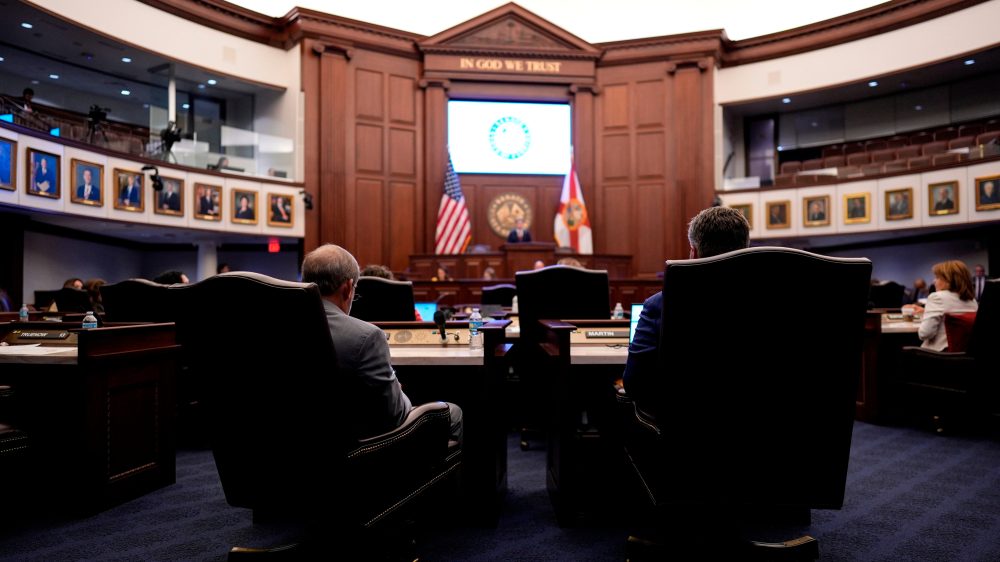
The GOP currently controls 20 out of Florida’s 28 congressional seats. These new electoral boundaries, which became law through Republican Gov. Ron DeSantis following a rapid two-day special legislative session, may boost the party’s opportunity to secure four more seats in the upcoming election.
Those opposing the maps referenced a constitutional amendment passed by voters in 2010 that bars congressional districts designed to benefit or harm any political party or sitting lawmakers.
Florida joins other Republican-controlled states conducting redistricting in the middle of the decade as part of President Donald Trump’s strategy to maintain a narrow House majority in November by redrawing electoral boundaries to benefit the GOP.
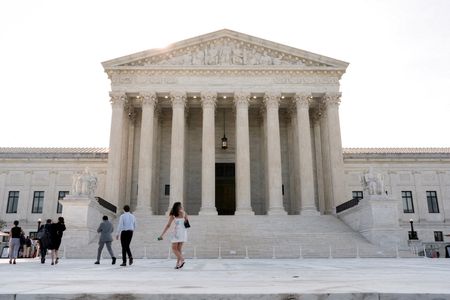
The state legislature gave final approval to the new House map on April 29 — coinciding with a U.S. Supreme Court decision that reduced federal Voting Rights Act safeguards for minorities by overturning a predominantly Black congressional district in Louisiana. Following this ruling, multiple Southern states have moved to try eliminating minority districts that typically elect Democrats.
DeSantis had convened lawmakers for a special session prior to the high court’s decision, though he had expected this result. The governor’s office maintained that racial demographics were not considered in creating the map he submitted to the Legislature. The revised map includes changes to a southeastern Florida district that DeSantis’ office claimed was originally designed to help elect a Black representative to meet federal Voting Rights Act requirements.
Beyond prohibiting partisan gerrymandering, Florida’s constitution also forbids districts from being designed to deny or reduce the voting power of racial or language minorities to choose their preferred representatives. The constitution additionally mandates that districts be geographically compact and, when possible, follow existing political and geographic borders.
In correspondence to legislators, DeSantis’ General Counsel David Axelman claimed that the racial redistricting section of Florida’s Fair Districts Amendment conflicts with the U.S. Constitution. Axelman argued that if any part is unconstitutional, then the complete 2010 amendment becomes invalid, including sections preventing partisan gerrymandering.
Legal counsel for state officials presented comparable arguments to the Florida Supreme Court, following a lower court judge’s refusal last month to grant a preliminary order blocking the new map. They also contended that changing back to previous maps would be too disruptive this close to the election.
In documents submitted to the Florida Supreme Court, attorneys for state officials described the new map as “cause for celebration” during America’s 250th anniversary. “Perhaps for the first time in Florida’s history, the State has a truly colorblind map; a map that refuses to assault the dignity of men and women by color-coding them,” their court filing said.
Legal representatives for the voters who filed suit claimed the new districts were designed with political bias in mind. They contended in Supreme Court documents that the new congressional districts represent “among the most extreme partisan gerrymanders enacted in any state over the past half-century.”
According to the new House map, 82% of voters in districts represented by Republicans stay in the same districts as the previous map, stated attorney Chris Shenton, who represented Common Cause and other organizations challenging the map. Only 41% of voters in districts represented by Democrats remain in their current districts, he noted.