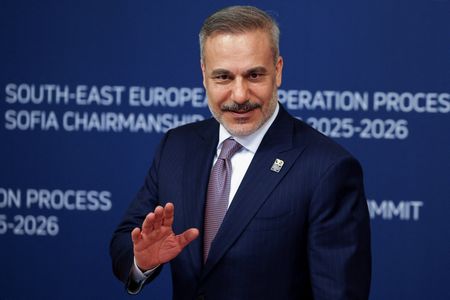
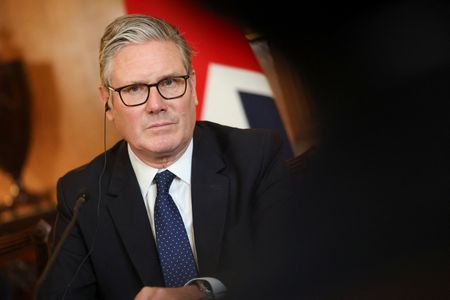
Turkey’s Foreign Minister Hakan Fidan is headed to Moscow this week, where he plans to renew his country’s offer to serve as a host for negotiations between Russia and Ukraine, according to a diplomatic source who spoke on Monday.
The two-day visit, scheduled for Tuesday and Wednesday, comes just ahead of a NATO summit that Turkey will host on July 7 and 8. It also follows a request made by Kyiv in April asking Ankara to step in as a mediator and host a meeting between top leaders. Turkey has managed to maintain working relationships with both Russia and Ukraine since Russia launched its invasion in 2022.
According to the Turkish diplomatic source, Fidan is expected to sit down with Russian Foreign Minister Sergei Lavrov and will also have a separate meeting with Russian President Vladimir Putin.
During those discussions, Fidan plans to caution against any further escalation of tensions in the Black Sea. He will also reiterate Turkey’s proposal for a limited ceasefire covering ports and energy infrastructure in the region. In recent months, both Ukraine and Russia have blamed each other for drone strikes targeting tankers near Turkey’s northern coastline.
On the Ukrainian side, an official indicated that Kyiv would be open to Turkey hosting direct bilateral talks — something President Volodymyr Zelenskiy has called for on multiple occasions.
Last month, Ukraine’s ambassador to Ankara told Reuters that his country was seeking a closer relationship with Turkey, including potential joint efforts in defense manufacturing.
Fidan’s agenda in Moscow will also include a discussion of the South Caucasus region, following the recent election victory of Armenian Prime Minister Nikol Pashinyan. That conversation is expected to touch on ongoing peace negotiations between Armenia and Azerbaijan — a process that could also help move forward Turkey’s own efforts to normalize relations with Armenia.
United Auto Workers President Shawn Fain is throwing his hat back into the ring for a second four-year term at the helm of the 400,000-member union. He enters the race as the frontrunner, riding the wave of a successful walkout three years ago that resonated strongly with workers.
Despite that momentum, setbacks in organizing efforts and accusations of mismanagement have stirred unease among some union members.
Fain, who has confirmed his intention to run, along with his challengers, is expected to be formally nominated by delegates at a UAW convention in Detroit this week. The actual election is scheduled for the fall.
The outcome will be closely monitored by Detroit’s major automakers — Ford Motor, General Motors, and Stellantis — whose U.S. factory employees are predominantly UAW members.
During the most recent contract negotiations in 2023, Fain emerged as the most aggressive union leader those companies had faced in decades. The 57-year-old, who previously worked as a Chrysler electrician, earned widespread backing from UAW members after steering a six-week strike against all three automakers simultaneously — a first in the union’s history. The effort resulted in landmark 25% wage increases.
Since those victories, though, Fain has hit some roadblocks. A $40 million effort to unionize non-union autoworkers across the country yielded one notable success at Volkswagen but lost steam in other locations, including a failed unionization vote at a Mercedes-Benz facility in Alabama.
Fain pushed back on criticism in an interview, saying,
FRANKFURT — Commerzbank’s chief executive expressed surprise Monday after rival financial institution UniCredit accused the German bank of misleading the public.
Speaking at a financial industry conference, CEO Bettina Orlopp said the bank was “taken aback” by the accusation, which came earlier the same day.
“We have, of course, simply presented the facts, and we will continue to do so, because we are the only ones who actually have access to them,” Orlopp told attendees at the conference.
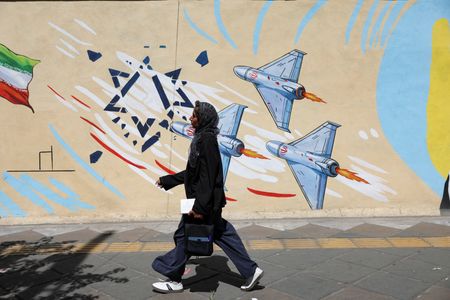
The United States and Iran, with Pakistan acting as mediator, have outlined the key terms of a preliminary agreement they say will bring an end to the war between the two countries.
TIMELINE AND STRUCTURE OF THE DEAL
Pakistan’s Prime Minister Shehbaz Sharif announced that both nations have declared an immediate and permanent halt to all military operations. The formal memorandum of understanding is scheduled to be signed in Switzerland on Friday, after which Iran’s Deputy Foreign Minister Kazem Gharibabdi confirmed it will be made public.
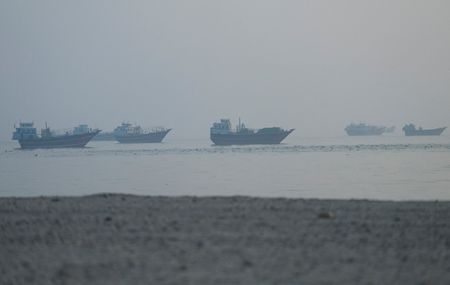
Both sides have stated that the Strait of Hormuz will begin reopening and the U.S. naval blockade on Iranian ports will start to be lifted as soon as the document is signed. More contentious issues — including Iran’s nuclear program and existing U.S. sanctions — will be addressed through negotiations over the following 60 days.
STRAIT OF HORMUZ AND PORT BLOCKADE
U.S. President Donald Trump announced that the Strait of Hormuz would reopen Friday and that he had ordered the blockade on Iranian ports to be lifted. A senior Iranian official confirmed the strait would be reopened to all commercial vessels upon signing of the memorandum. Iran’s semi-official Fars news agency reported that under the agreement, marine traffic through the strait would be managed by Iran in coordination with Oman.
IRAN’S NUCLEAR PROGRAM
Both countries have stated that Iran agrees it will neither develop nor obtain nuclear weapons — a commitment Tehran has made repeatedly over the past several decades. The senior Iranian official said that, pending a final agreement, Iran would freeze its nuclear activities, halting further uranium enrichment and stopping any expansion of nuclear facilities.
The official also said the U.S. agreed that Iran could dilute its stockpile of highly enriched uranium inside Iran as part of a future comprehensive agreement. Trump said Saturday there was no immediate urgency to remove Iran’s nuclear material from the country, stating the U.S. would retrieve it “when all is calm.” He also said any final deal would include a strong inspections regime, though he offered no specifics.
U.S. Senator Lindsey Graham stated that any final agreement on Iran’s nuclear program would need to be reviewed and approved by Congress.
SANCTIONS AND FINANCIAL TERMS
The senior Iranian official said the U.S. agreed not to impose any new sanctions on Iran until a final deal is reached. The official added that Washington would waive oil sanctions on Iran for a set period of time, and that once a final agreement is in place, all U.S. and U.N. sanctions would be lifted on an agreed schedule.
The official also said the U.S. agreed to release $25 billion in frozen Iranian assets through a combination of direct cash transfers, cooperation among regional countries, and financial credit lines. Additionally, Washington and its regional allies would develop a reconstruction and development plan for Iran, to be negotiated with Tehran within 60 days.
Trump, however, said Iran would not receive direct cash payments, though he acknowledged sanctions could potentially be lifted.
LEBANON
Prime Minister Sharif said the permanent halt to military operations would also apply to Lebanon. Iran’s Supreme National Security Council Secretariat stated that military operations, including those in Lebanon, would stop permanently beginning Monday night.
Iran’s Foreign Minister Abbas Araqchi called for a complete end to Israeli military strikes against Lebanon, saying the United States bears responsibility for carrying out the terms of the framework deal. Israel’s Defense Minister Israel Katz, meanwhile, said Israeli forces would remain in security zones they have taken in Lebanon, Syria, and Gaza, and noted that Israeli Prime Minister Benjamin Netanyahu had made that position clear to Trump.
Israel is anticipating a wave of new air and missile defense orders from European countries, with a senior Israeli defense ministry official saying at least one new contract is expected to be finalized within the coming weeks.
European nations are increasingly looking to strengthen their air defenses as concerns about Russia continue to grow, fueling interest in systems capable of countering both intermediate-range ballistic missiles and shorter-range rocket threats.
Moshe Patel, the director and general manager of the Israeli Missile Defense Organization, spoke about the rising demand while attending last week’s Berlin airshow. “There’s a huge interest from Europe, from Western Europe,” he said, though he declined to name the specific countries involved.
Among the systems drawing attention is Arrow, an Israeli air defense platform built to intercept intermediate-range ballistic missiles — including Russia’s Oreshnik missile. Arrow was developed by Israel Aerospace Industries in partnership with the U.S. Missile Defense Agency. Germany has already purchased the system.
Finland, meanwhile, has acquired David’s Sling, a shorter-range system engineered to intercept ballistic missiles launched from distances between 100 and 200 kilometers — roughly 62 to 124 miles. European nations are making these purchases as they prepare for potential Russian aggression, though Moscow has denied any such intentions.
Patel pointed to the ongoing conflict between Russia and Ukraine as the primary driver of European interest. “It’s mainly (driven) by what’s happening between Russia and Ukraine,” he said. “Of course, they’re looking very carefully what is happening in Iran and whatever will be good against Russia could be good for Iran. Whatever they’re doing, it will be good for all those kinds of threats.”
When asked whether European buyers were focused on Arrow or David’s Sling specifically, Patel noted that Iron Dome — a system designed to neutralize short-range threats — was also generating significant interest.
“It’s a huge advantage to those nations that have enemies right on their borders, this is the main capability, and the ability to protect a city, protect (a) strategic area,” Patel said.
On the timeline for additional contracts, Patel indicated that momentum is building. “And there are discussions that, maybe by the end of the year, we’re going to hear about more nations,” he said. “So, it looks like the decision making by those nations, it’s expedite.”
Patel declined to provide details on the financial scale of the anticipated deals, saying only that the negotiations involve “not minor numbers.”
Good Monday morning, Delmarva! We’re kicking off the work week with some beautiful weather across the peninsula. Expect plenty of sunshine today with a pleasant high near 80°F. A northwest wind of 10 to 15 mph will keep things feeling comfortable, and while there’s a very slight chance of a stray sprinkle, rainfall amounts would be less than a tenth of an inch — nothing that should interrupt your outdoor plans.
Tonight looks equally lovely, with mostly clear skies and temperatures dropping to a comfortable 60°F. Perfect sleeping weather with the windows open!
Heading into Tuesday, more of the same great weather is on tap. Sunshine returns with a high near 78°F — actually a touch cooler than today. Tuesday night brings some clouds moving in, with overnight lows around 62°F.
All in all, it’s a fantastic stretch of June weather for the Delmarva Peninsula. Get outside and enjoy it! I’ll have your updated forecast tonight on TV Delmarva. Stay weather-aware and have a wonderful Monday!
The 2026 FIFA World Cup has gotten off to an action-packed start, with host nations Mexico, Canada, and the United States all playing their part in what has been a dramatic opening stretch of matches.
As the tournament moves into its first full week of competition, several unexpected results have already shaken up expectations across the group stage.
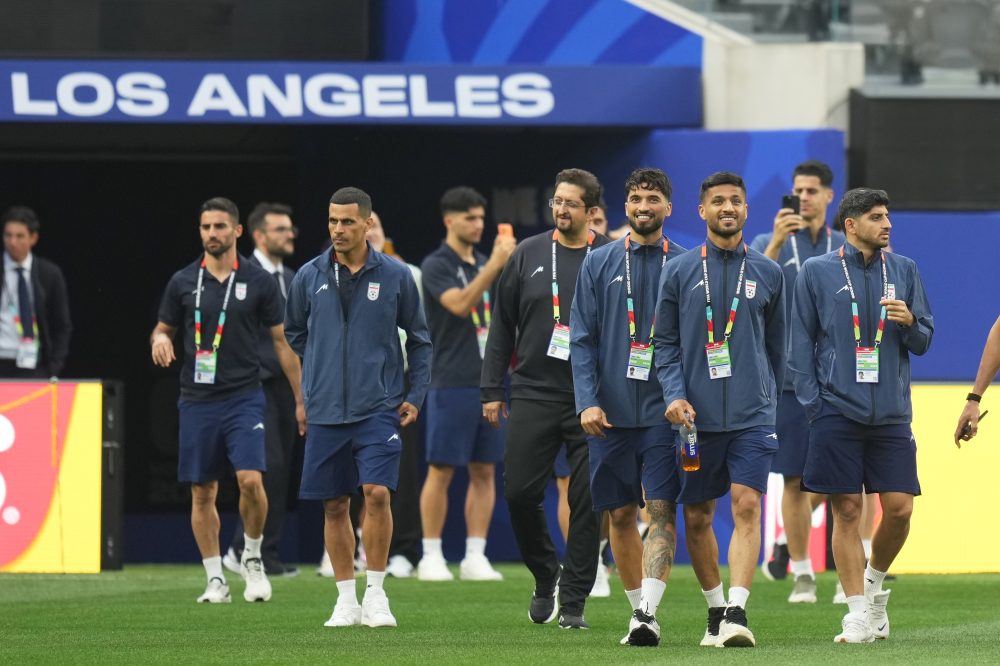
The United States opened their campaign in impressive fashion, rolling past Paraguay by a score of 4-1 at Los Angeles Stadium on June 12. Forward Folarin Balogun was a standout performer, netting two goals in the victory and sparking celebrations among his teammates on the pitch.
With early results already turning heads, soccer fans around the world are tuning in to see which nations can maintain momentum heading deeper into the tournament.
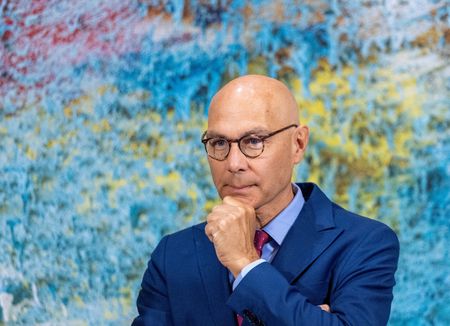
GENEVA — The top human rights official at the United Nations on Monday expressed strong support for the newly announced peace agreement between the United States and Iran, urging all parties across the region to exercise caution as the deal takes shape.
“I welcome the announcement that the United States and Iran have agreed on a peace deal that provides for an immediate and permanent ceasefire, the reopening of the Strait of Hormuz, and a framework for further negotiations,” said UN human rights chief Volker Turk.
Turk added, “At this fragile moment it is clear all sides need to exercise maximum restraint and work to implement the agreement reached quickly and in good faith.”
His statement followed word from both U.S. and Iranian officials that the two countries had reached an agreement to end their ongoing conflict and restore access through the Strait of Hormuz. While described as a preliminary pact, the announcement was enough to push oil prices lower. The future of Iran’s nuclear program, however, remains a subject for future negotiations.
Though still considered a framework agreement, the deal represents the most significant step forward in resolving a conflict that has claimed thousands of lives and thrown global energy markets into turmoil since it began with joint U.S.-Israeli strikes on Iran back in February.
Beyond the US-Iran situation, the UN rights chief also expressed serious concern about Israeli military strikes targeting populated areas and infrastructure in Lebanon, as well as cross-border attacks carried out by Hezbollah. Turk called for an immediate halt to the fighting, a withdrawal of Israeli forces from Lebanese territory, and thorough investigations into potential violations of international law by all parties involved.
The New Castle County Division of Police has issued a Gold Alert for a missing Wilmington man identified as 49-year-old Anthony Pezzullo.
Pezzullo was last seen in the unit block of Carousel Court at approximately 8:50 p.m. on Sunday, June 14, 2026. The area is located in the 19808 zip code in Wilmington.
Despite extensive efforts by officers to find him, authorities have been unable to locate Pezzullo or reach him by phone. Police say there is concern for his welfare.
Anyone with information on Anthony Pezzullo’s whereabouts is urged to contact the New Castle County Division of Police.
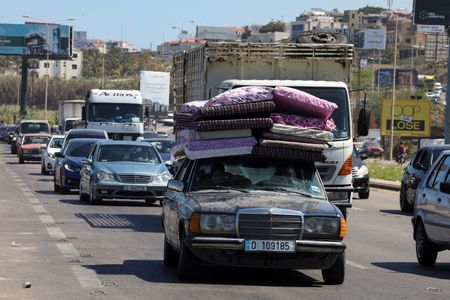
Officials in southern Lebanon are urging residents who fled the fighting to stay put for now, even after a deal between the United States and Iran aimed at ending the broader conflict — because Israel says it has no plans to pull its forces out of the region.
The war between Israel and the Iran-backed militant group Hezbollah has been devastating for Lebanon. Thousands of people have been killed, and roughly 1.2 million Lebanese have been forced from their homes since Israel launched its offensive after Hezbollah began firing on Israel in support of Tehran on March 2.
Pakistani Prime Minister Shehbaz Sharif, who played a central role as a mediator between Tehran and Washington, announced early Monday local time that a deal had been reached. He said the agreement calls for “the immediate and permanent termination of military operations on all fronts, including in Lebanon.”
Despite that announcement, municipal councils in southern Lebanon — where Israeli forces have established a self-declared security zone — issued statements urging residents not to return home yet, according to Lebanon’s state-run National News Agency.
Mona Mazeh, a displaced woman currently sheltering in Beirut’s Hamra district, said she has no plans to go back to her village near the southern city of Tyre anytime soon. “Frankly, we are hesitant; Israel cannot be trusted,” she said.
Israel is not a party to the US-Iran agreement, and Israeli Defence Minister Israel Katz made clear that his country intends to hold its ground. Katz said Israel will not pull back from security zones it has established in southern Lebanon, Gaza, or Syria, and warned that Israel would strike back if Iran attacked it over events in Lebanon.
Katz also said the security zone in southern Lebanon would be cleared of local residents and what he described as “all terrorist infrastructure, including houses in contact villages” — a reference to Hezbollah.
Hezbollah itself had not issued any statement on the agreement as of Monday. However, Parliament Speaker Nabih Berri, a political ally of the group and leader of the Shi’ite Muslim Amal Movement, said the deal established “the foundations for security and stability in the region, including Lebanon.”
In a written statement, Berri thanked both Iran and the United States for including a halt to Israeli attacks on Lebanon as part of the agreement, calling that provision binding.
The Israeli military has spent weeks demolishing villages in southern Lebanon, saying it is targeting Hezbollah fighters who operate within civilian communities in the predominantly Shi’ite Muslim area. Hundreds of thousands of Lebanese Shi’ites have taken refuge in other parts of the country.
In Nabatieh, a heavily damaged city in the south, resident Mohammed Daqdouq said he traveled back Monday morning to check on his home. “We’ll need a lifetime to rebuild — to rebuild it again and bring Nabatieh back to how it was,” he said.
Iran had insisted that any broader deal with the United States include a ceasefire in Lebanon. Iran’s Revolutionary Guards originally founded Hezbollah back in 1982.
TOKYO (AP) — She’s not old enough to walk through the doors of a nightclub, but that hasn’t stopped DJ Rinoka from becoming one of the most talked-about names in techno music.
At just 9 years old, this Japanese DJ has already made history — earning a spot in the Guinness World Records as the youngest DJ in the world, a title she claimed at age 6.
“It’s fun when people get excited at the live performances,” she shared with The Associated Press in a recent interview.
Her passion for DJing started at age 4, when she stumbled across videos of DJs Amelie Lens and Nina Kraviz on YouTube. She thought they were incredibly cool and wasted no time asking for a Pioneer DDJ-200 machine as a Christmas gift.
“I like a cool, fast, intense style,” she said during the interview, sporting a cap featuring her own personal logo.
Beyond the DJ booth, Rinoka is still very much a kid. She has a pet gecko at home and travels everywhere with a stuffed toy dog named Korochan — including up on stage. The gecko, however, stays behind.
Her performance schedule is anything but ordinary for a child her age. She regularly plays at games for Tokyo’s professional baseball team, the Yomiuri Giants, and shares the stage with DJs many years her senior.
When she performs, there’s a joyful confidence about her — pressing and turning buttons, bobbing along to the rhythm with pure enthusiasm.
Rinoka keeps her last name out of the public eye, and her parents have chosen to stay anonymous as well, hoping to give their only child as normal an upbringing as possible.
Outside of music, she takes hip-hop dance classes, enjoys making things out of paper and aluminum foil, and keeps up with her schoolwork like any other child her age.
Techno music itself has deep roots in American cities like Detroit and relies heavily on electronic instruments, including the now highly sought-after Roland machines. Among its many styles is the hypnotic, high-energy acid house genre that Rinoka is particularly drawn to.
The music is defined by its powerful, driving beat — the kind that makes listeners want to get up and move.
Over the decades, techno has grown into a global phenomenon, with top DJs crafting dance music for audiences around the world. And now, one of its most unlikely fans has become one of its rising stars.
“The music will continue,” Rinoka said with quiet thoughtfulness.
But when asked to choose between a career as a DJ or a life spent caring for a whole lot of geckos, she didn’t hesitate for a second.
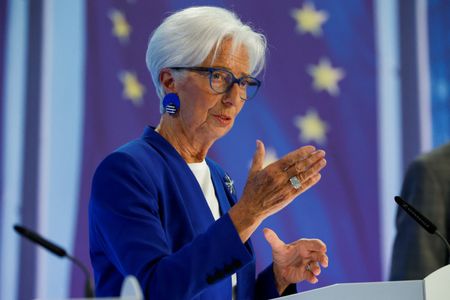
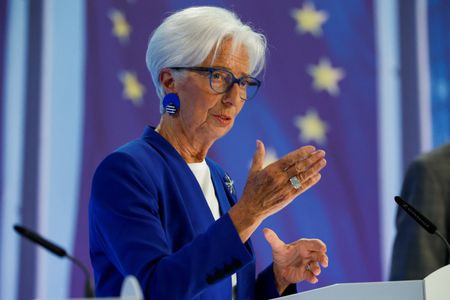
PARIS/FRANKFURT — The president of the European Central Bank expressed cautious optimism Monday over a reported U.S.-Iran ceasefire, while a fellow policymaker warned that high inflation across the euro zone is far from over.
ECB President Christine Lagarde welcomed the overnight announcement that U.S. and Iranian officials had reached a preliminary agreement to end their conflict and reopen the Strait of Hormuz — a critical passage for global energy shipments. The news sent oil prices lower and caused financial investors to scale back their expectations for future ECB rate hikes.
“If this news is confirmed by developments in the coming days and the signing of a memorandum of understanding … it is good news. We can only welcome it,” Lagarde said in an interview on France Culture radio.
The ECB had raised interest rates for the first time in nearly three years just last week, aiming to slow inflation that has been driven higher by energy supply disruptions tied to the Iran conflict.
Investors who had largely anticipated two more rate hikes over the coming year pulled back those expectations on Monday, now pricing in just one additional increase with only a slim chance of another move beyond that.
Speaking separately in Frankfurt, ECB Governing Council member Joachim Nagel acknowledged that financial markets appeared to be betting on a lasting resolution to the Iran conflict. But he urged caution, saying that even if the Strait of Hormuz were to reopen in the near term, it would take months for oil supply to return to pre-war levels.
“No relief is in sight for the foreseeable future,” said Nagel, who leads Germany’s Bundesbank. “On the contrary: even if the Strait of Hormuz were to become navigable again soon, it will take months for the oil supply to return to normal.”
Nagel said euro zone inflation would remain elevated even under the ECB’s more optimistic scenario, in which energy prices decline more quickly. He also noted that inflation could actually climb again once government measures designed to cap energy costs expire. Those measures — which include a fuel price discount at the pump in Germany — had reduced the euro zone’s inflation rate by 0.4 percentage points in May, he said.
The German central banker said all options remain on the table for the ECB’s next policy meeting on July 22-23, including both holding rates steady and raising them further.
Lagarde also tempered her optimism, noting in her radio interview that “the whole question of uranium enrichment remains to be debated, agreed and concluded in the form of an agreement.”
SpaceX stock was on track to rise more than 5.6% before markets opened Monday morning, continuing a remarkable run following one of the biggest stock market debuts in Wall Street history.
On Sunday, CEO Elon Musk said the company — which operates in both the rocket and artificial intelligence sectors — could generate as much as $1 trillion in annual revenue by the year 2030. The company posted $18.7 billion in revenue during 2025.
When SpaceX made its Nasdaq debut last Friday, shares soared 19%, catapulting the company to the sixth-largest U.S. firm by market value. The milestone also made Elon Musk the world’s first trillionaire.
Everyday investors who received roughly 20% of the IPO’s share allocation purchased $117.6 million worth of SpaceX stock on Friday alone, according to data from Vanda Research. That made it the most-bought stock of the session and broke the previous record for an IPO set by Coinbase back in April 2021.
Despite the excitement, analysts and portfolio managers are cautioning investors to prepare for potential price swings, especially early in SpaceX’s time as a publicly traded company. The relatively small number of shares available to trade, combined with the company’s high valuation, could fuel volatility.
Additional momentum may be on the horizon. SpaceX is expected to be fast-tracked into the Nasdaq 100 index, which would make it a significant holding for passive investment funds and exchange-traded funds that follow the index — creating new demand for its shares.
Index providers FTSE Russell and MSCI have also announced plans to add SpaceX to their respective indexes, with those changes set to take effect on June 26 and June 29.
Voters in Switzerland have turned down a proposal that would have placed a hard limit on the country’s population, with data from Sunday’s referendum revealing that older citizens and residents of major cities played a decisive role in the outcome.
The initiative, championed by the Swiss People’s Party, was rejected by a margin of 55% to 45% following a closely contested campaign. The debate centered on competing concerns — fears over unchecked immigration on one side, and the risk of Switzerland cutting itself off from Europe on the other.
The Swiss People’s Party, which is the country’s largest political party, had pushed the proposal as a way to address public worries about overcrowding straining public services, driving up crime, and increasing rental costs. Despite the defeat, the party vowed to continue pressing the issue of immigration.
Polling data revealed a clear generational divide in how voters felt about the cap. Among those 65 and older, 60% voted against the measure. Of voters aged 50 to 64, opposition stood at 57%, according to figures published by Swiss newspaper Tages-Anzeiger.
On the other side, voters between the ages of 35 and 49 were the most supportive, with 51% backing the cap. Among the youngest group surveyed — those aged 18 to 34 — support came in at 48%, based on data gathered for online news outlet 20 Minuten/Tamedia by polling firm Leewas.
Political scientist Cloe Jans of polling organization GFS Bern offered some insight into the result, telling 20 Minuten that while many voters sympathized with the goals of the proposal, they were reluctant to see strict numerical limits written into law.
“In geopolitically uncertain times people aren’t keen on experiments and burning bridges unnecessarily,” she said.
The vote came after a difficult stretch for Switzerland in 2025, during which the country faced some of the steepest U.S. tariffs in Europe after President Donald Trump pushed the wealthy nation to reduce its trade surplus with the United States.
Switzerland is also currently working to finalize an agreement with the European Union aimed at strengthening economic ties. Opponents of the population cap used that context in their campaign, running posters featuring an image of a smiling Trump alongside the message: “Breaking with Europe, now of all times?”
Business organizations, the national government, and parliament all came out against the cap, cautioning that it could limit Swiss companies’ ability to draw workers from the EU — a critical source of labor.
A geographic breakdown of the results showed that Switzerland’s largest cities — Zurich, Geneva, Basel, Lausanne, and Bern — firmly rejected the measure. Its strongest backing came from rural, conservative cantons in central Switzerland. The proposal also failed in Valais and Grisons, two lightly populated cantons known for their ski resorts, and generally underperformed in French-speaking parts of the country.
Under the terms of the initiative, Switzerland’s population — currently at 9.1 million — would have been required to stay below 10 million by the year 2050. Once the population hit 9.5 million, the government would have been obligated to tighten immigration restrictions.
Stock futures tied to Wall Street’s major indexes each jumped more than 1% Monday morning after investors welcomed a preliminary agreement between the United States and Iran to end a conflict that had lasted more than three months and to reopen the strategically important Strait of Hormuz.
While the framework agreement signals progress, it leaves unresolved significant issues including Iran’s nuclear program and the ongoing conflict between Lebanon and Israel. Officials expect the deal to be formally signed this Friday in Switzerland.
Oil prices reacted sharply to the announcement, falling more than 4% to their lowest point since March. The drop is expected to draw attention to stocks that are sensitive to energy costs, including airlines, cruise lines such as Delta and Norwegian Cruise, and energy companies like Occidental and Exxon when markets open later Monday.
Max Kettner, chief multi-asset strategist at HSBC Global Investment Research, offered a measured take on the development. “If the overnight news of a deal between the U.S. and Iran proves to be credible and lasting, this should be taken as a positive, whereas setbacks will likely be taken as less of a negative by risk assets,” he said.
Despite the optimism, analysts are cautioning that Brent crude prices may still hover near $80 per barrel even after the resolution, as energy shipments resume through the Strait and Middle Eastern nations work to restore infrastructure that was damaged during the conflict.
Economic data released last week showed that elevated energy costs had begun working their way into consumer prices, putting additional attention on the Federal Reserve’s upcoming monetary policy meeting. The yield on the benchmark 2-year Treasury note dropped 7 basis points to a two-week low, reflecting shifting interest rate expectations.
The Fed is widely anticipated to hold interest rates steady at this week’s meeting, though traders still expect the central bank to raise borrowing costs by at least 25 basis points before the end of the year, based on data from the CME Group’s FedWatch tool.
As of 4:03 a.m. ET, Dow E-minis were up 519 points, or 1.01%. S&P 500 E-minis gained 94.5 points, or 1.27%, and Nasdaq 100 E-minis rose 622 points, representing a 2.1% increase.
SpaceX shares climbed 6% in premarket trading following the company’s successful stock market debut. Led by Elon Musk, the company’s shares closed at $160.95 on their first day of trading, up from an IPO price of $135. The smooth launch on the Nasdaq was seen as a relief across Wall Street and is being viewed as a model for the anticipated IPOs of OpenAI and Anthropic later this year.
All three major indexes finished last week with gains, even after artificial intelligence-related stocks came under pressure early in the week. Analysts attributed that sell-off to the tech sector’s sensitivity to higher interest rates and to investors repositioning ahead of the SpaceX IPO.
This week, market watchers will also be focused on Fed Chair Kevin Warsh’s first meeting leading the central bank. Investors are closely watching his communication approach and looking to economic and interest rate projections for clues about where borrowing costs are headed.
Among other notable early movers, Paramount Skydance shares rose 5.8% after the U.S. Justice Department approved the company’s acquisition of Warner Bros.
U.S.-based cybersecurity company N-able Inc is setting its sights on significant growth in India, with CEO John Pagliuca announcing plans to increase the company’s Indian workforce by at least 50% before the close of 2026.
N-able, which delivers IT management, cybersecurity, and data protection software to over 500,000 organizations around the world, officially opened a Global Capability Center — known as a GCC — in Bengaluru this past Monday. The new facility already has more than 100 employees on staff.
The timing aligns with a surge in India’s broader GCC landscape. According to a report from industry organization Nasscom and consulting firm Zinnov, India’s GCC workforce is expected to climb to 2.36 million workers by the end of 2026, with demand largely fueled by growth in artificial intelligence and cybersecurity fields.
Pagliuca explained the company’s decision to plant its flag in Bengaluru during a recent interview. “The reason we’re in Bengaluru is capability,” he said. “Our priority is to build for the long term, with the right people and a strong foundation, not to pursue a short-term headcount play.”
The CEO was clear that cost savings were not the primary motivation behind the expansion — rather, gaining access to skilled talent was the driving force.
Despite Bengaluru’s reputation as India’s top technology hub, competition for AI and cybersecurity professionals is fierce. Multinational corporations and homegrown tech companies are all vying for the same limited pool of experts.
Pagliuca identified AI engineering, applied machine learning, cloud security, and threat research as some of the most difficult skill sets to recruit. To stand out, N-able is offering competitive compensation packages along with opportunities to contribute to global innovation and build meaningful careers locally.
The new center is also expected to play a central role in countering the growing threat of cybercriminals who are increasingly using generative AI to launch sophisticated, automated attacks. Pagliuca said the Bengaluru team will focus on building defensive AI tools, including systems for automated threat detection, continuous monitoring, and faster incident response.
N-able did not share details about its current reach among small and medium-sized businesses in India or reveal any specific revenue goals for the market.
President Donald Trump rang in his 80th birthday on Sunday with a pair of headline-grabbing moments — touting a preliminary deal aimed at ending the ongoing conflict in Iran, while also turning the White House’s historic South Lawn into a venue for professional cage fighting.
The president used the occasion to celebrate what he described as an initial agreement to bring the war in Iran to an end, marking what could be a significant foreign policy milestone on his birthday.
Adding to the festivities, Trump hosted a UFC event on the South Lawn, bringing the world of mixed martial arts to one of Washington’s most iconic outdoor spaces.
Twelve people are presumed dead after a single-engine turboprop plane carrying skydivers went down Sunday near Butler, Missouri, according to authorities.
Officials say the victims include 11 skydivers who were aboard the aircraft along with the pilot. All 12 are presumed to have perished in the crash.
President Trump’s name has been taken down from the Kennedy Center for the Performing Arts in Washington, D.C., following a court order requiring its removal.
The ruling directed that the president’s name be stripped not only from the iconic performing arts venue itself, but also from the organization’s official website. Both removals have since been completed.
New York City has created its own commission focused on making government run more efficiently, and the man leading it says the goal is straightforward: cut through red tape so the mayor can deliver on what he promised voters.
Patrick Gaspard serves as chair of New York City’s Commission on Government Efficiency. He recently sat down for a conversation about what the commission does and how it fits into the broader effort to make city government more responsive and effective.
The commission’s work centers on identifying and removing bureaucratic obstacles that slow down the delivery of city services and programs. By streamlining processes within city government, the body aims to help translate the mayor’s campaign pledges into real results for New York City residents.
Listen to the Morning Delmarva Farm Report Update — June 15, 2026
DELMARVA — An ammonia leak at a Perdue processing facility in Milford sent 9 people to the hospital Sunday morning. Officials say approximately 68 pounds of anhydrous ammonia escaped into the air at the plant, triggering an emergency response and medical treatment for those affected.
Food Safety
Maryland health officials have expanded a listeria warning to cover every cheese product made at Clover Hill Dairy in Mechanicsville, Maryland. The state had already suspended the facility’s operating license on May 30 and issued a narrower advisory on June 3 covering only the requesón and soft ricotta. That warning now covers the dairy’s entire cheese lineup.
Products are sold at farmers markets and through distributors across Maryland, Virginia, and several other states. Consumers should check packaging for manufacturer permit number 24-128. Any Clover Hill Dairy cheese should be discarded immediately.
Markets
At Laurel Grain Company in Laurel, Delaware, corn on the December contract is $4.51/bu. July corn is $4.53/bu. November soybeans are $10.79/bu, and July beans are $10.50/bu.
Forecast
Conditions Monday look favorable for fieldwork, with sunny skies, highs near 80°F, and northwest winds of 10-15 mph. A coastal flood advisory runs until 2 a.m. Tuesday for inland Sussex County and Delaware beaches, with minor tidal flooding possible on low-lying roads. Tuesday will remain clear and sunny with highs near 76°F.
This article is based on the Delmarva Farm Report Update Morning Edition, June 15, 2026. Hosted by Tom Bradley.
Motorists traveling on US Route 13 should plan for slowdowns as road crews are conducting work along the corridor overnight.
A rolling road blockage is currently active on US 13 in both the northbound and southbound directions, affecting the stretch of roadway between Big Oak Road and Cathleen Drive.
The blockage is expected to remain in effect until 6 AM. Drivers in the area are advised to use caution and allow extra travel time until the work is completed.
As Tesla pushes to gain regulatory approval for its “Full Self-Driving” (FSD) technology across Europe, the electric vehicle company has been sharing its own safety statistics with regulators in Sweden and the Netherlands — figures that independent traffic-safety researchers describe as little more than misleading marketing material.
A Reuters investigation published last month revealed that Tesla CEO Elon Musk and other company leaders have repeatedly cited statistics over the past year claiming FSD is up to 10 times safer than human drivers. However, the news agency’s review uncovered several faulty data comparisons at the heart of those claims that significantly overstate the system’s safety record.
According to correspondence obtained by Reuters through public records requests, Tesla has shared this inflated safety data with European regulators as it works to expand FSD’s footprint in a market where it is fighting to win back lost ground. The company approached RDW, the Dutch road regulator, in late 2024 to kick off the approval process.
In a letter sent to RDW in November 2024, Tesla included a link to its safety report and asserted that greater use of FSD “leads to safer roads.” The company sells access to FSD through a monthly subscription. While the system can handle driving under certain conditions, it still requires the human behind the wheel to remain attentive.
Following more than a year of testing and back-and-forth with Tesla, RDW gave FSD the green light for use in the Netherlands in April. The Dutch agency is now pursuing EU-wide approval on Tesla’s behalf.
RDW declined to address the specific problems Reuters identified with Tesla’s safety figures, but released a statement saying the agency “does not rely on marketing claims or external statistics” when making regulatory decisions, and instead conducts its own “tests, analyses and verifications” of the system on both public roads and test tracks. The agency did not clarify whether it evaluated Tesla’s U.S.-based safety statistics directly.
RDW noted that Tesla “collected a lot of data” throughout the testing period and that the agency “validated, tested and audited all of this data,” though it did not specify what type of data was gathered or what it measured. Tesla did not respond to requests for comment.
Shortly after the Netherlands announced its approval on April 10, a Tesla policy manager named Ivan Komusanac sent an email to Swedish regulators requesting similar approval for FSD. Attached to the email was a slide presentation featuring the disputed claim that Teslas operating with FSD can travel more than seven times farther between crashes compared to the average American human driver.
The presentation went further, suggesting FSD could have potentially saved 32,000 lives and prevented 1.9 million injuries.
Researchers who spoke with Reuters called those figures deeply misleading. They said the numbers rest on an unrealistic assumption — that every vehicle on U.S. roads, including freight trucks and crash-prone motorcycles, would be replaced by an FSD-equipped Tesla, and that each of those Teslas would be at least seven times safer than the vehicle it replaced.
Reuters also found that Tesla inflates its safety record by comparing the rate of crashes in FSD-operated vehicles that triggered airbag deployments against a broader U.S. crash rate that includes far less serious incidents. Additionally, Tesla compares its vehicles to the average American car, which is considerably older than the typical Tesla — a distortion that matters because newer vehicles come equipped with modern safety technology that reduces crashes.
Anders Eriksson, an investigator at the Swedish Transport Agency, declined to speak specifically about the data Tesla submitted but said Swedish regulators “look beyond headline figures” and that any evaluation of such a system would not be based “solely on aggregated safety claims, but on the overall evidence presented.” The agency did not respond to questions about what additional evidence Tesla provided.
Dudley Curtis, a spokesperson for the watchdog group European Transport Safety Council, said his organization is “certainly concerned” after Reuters informed the group about the correspondence showing Tesla had submitted what he called “unreliable safety data” from the United States to regulators in Sweden.
Curtis added that if Tesla wants to make safety claims, the company should “give the data to a university, have it independently verified by a qualified researcher, and then let’s talk.”
Tesla has stated that gaining FSD approval in Europe is critical to growing vehicle sales there. The company has been working to recover lost market share after sales dropped sharply last year amid public backlash over Musk’s political activities, including his alignment with far-right European political movements.
Without approval, Tesla could find it increasingly difficult to compete in a region where Chinese electric vehicle manufacturers are steadily gaining ground.
In the months ahead, representatives of member states accounting for 55% of EU membership and 65% of the bloc’s population must vote in favor for FSD to become legal across the entire European Union. In the meantime, individual countries can approve the technology on their own.
A regulator in Greece, which announced last month that it aims to approve FSD, cited data “from the other side of the Atlantic” showing “this system ultimately leads to a very significant drop in accidents.” The Greek transport ministry declined to answer questions about whether that data came from Tesla’s own safety report.
Regulators in other European countries have also been flooded with messages from Tesla drivers citing the company’s safety statistics and pushing for quick FSD approval. Several Tesla owners wrote to Norwegian road regulators last autumn referencing Tesla’s vehicle safety report, with one arguing the technology is “significantly safer than average manual driving” and could “reduce traffic accidents by up to 90% and thus save lives on Norwegian roads.”
Stein-Helge Mundal of the Norwegian Public Roads Administration responded to several of those Tesla enthusiasts, noting that Tesla’s figures “are self-produced,” which makes it “difficult to find correlation with the authorities’ accident statistics.”
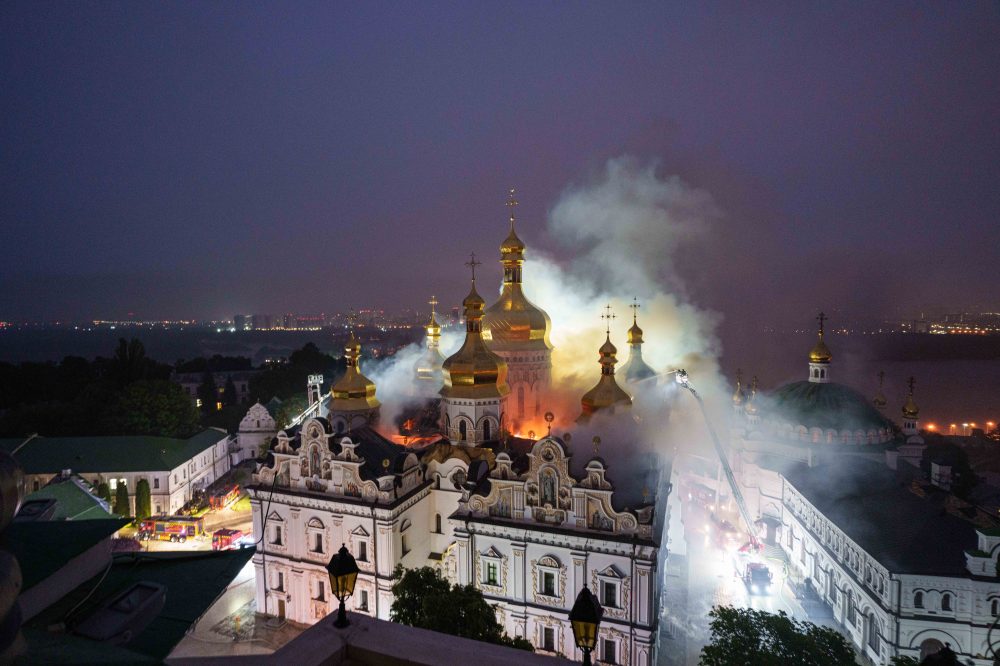
KYIV, Ukraine — A massive Russian military assault on Ukraine on Monday left a trail of destruction, including a devastating fire at one of the nation’s most cherished religious sites and the deaths of rescue workers responding to the attacks.
The Dormition Cathedral at Kyiv-Pechersk Lavra — a sprawling monastic complex known for its golden domes and commonly referred to as the Monastery of the Caves — was engulfed in flames and thick smoke. Associated Press photographers on the scene captured images of firefighters working to contain the blaze while members of the clergy watched helplessly or rushed to remove valuable items from the historic, centuries-old complex.
In the northeastern Ukrainian city of Kharkiv, the Russian strikes proved fatal for rescue workers who had responded to the scene. Meanwhile, in Kyiv, the country’s capital, many residents were wounded and others sought safety by taking shelter underground as the attacks continued.
This report is based on a photo gallery assembled by Associated Press photo editors documenting the destruction across Ukraine.
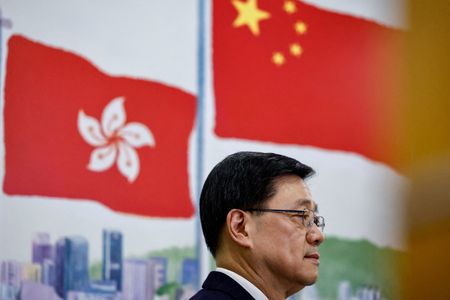
HONG KONG — Hong Kong took a politically significant step Monday, opening a public consultation period for its first-ever five-year development plan — a move that draws the territory closer to the way mainland China manages its economy.
Secretary for Constitutional and Mainland Affairs Janice Tse told reporters that mainland China launched its own 15th five-year plan covering 2026 to 2030 this year. Hong Kong has historically taken pride in keeping government involvement in the economy to a minimum, even as it has looked to Beijing for broader direction.
Tse said Hong Kong’s plan will work in step with China’s national development strategy while still maintaining the city’s free-market principles.
“Aligning with the national 15th five-year plan does not replace the free market,” she said. “Rather, it channels a clear vision and strategic planning through major policies, and that allows the market to develop more stably and clearly.”
The consultation window runs for two months, during which residents can share their thoughts through a dedicated website, by email, or by sending letters. The government also plans to hold events to gather input from residents, lawmakers, and industry representatives. Officials hope to unveil a finalized plan during the third quarter of the year.
According to Tse, the plan will reinforce Hong Kong’s role as a global hub for finance, shipping, and trade.
Among the proposals, officials want to speed up development of the Northern Metropolis — a large-scale project aimed at building a technology center and university town near the mainland Chinese tech city of Shenzhen, just across the border.
The plan also looks to deepen Hong Kong’s involvement in the Greater Bay Area, Beijing’s initiative to create an integrated economic and business zone that includes Hong Kong, Macao, and nine other mainland cities.
Hong Kong leader John Lee said on June 9 that the five-year plan would better blend what he called a “capable government” with “an efficient market,” with the government taking a leading role in boosting the market’s competitiveness. Lee added that the plan would help residents identify personal development opportunities and make business planning easier.
A Beijing official overseeing Hong Kong and Macao affairs was expected to visit the city Tuesday for a two-day trip focused on reviewing the territory’s alignment with the national 2026–2030 plan and progress on the Northern Metropolis project.
John Burns, a politics and public administration professor at the University of Hong Kong, acknowledged that the city had previously put itself at a disadvantage by lacking strategic planning. However, he was skeptical about the consultation process, noting that public consultations in Hong Kong have long lost credibility because officials rarely change direction based on public feedback.
“This is the government selling its notion of a local five-year plan to the community that dovetails with central government priorities,” Burns said, also pointing out that the consultation document lacks specific targets or timelines.
Since Britain handed Hong Kong back to China in 1997, the former colony has grown increasingly tied to the mainland through economic links, cultural connections, and shared transportation and border infrastructure.
Although Hong Kong maintains its own government, legislature, and court system under Beijing’s “one country, two systems” framework, China’s influence over the territory has grown considerably in recent years.
After widespread anti-government protests erupted in 2019, Beijing enacted a national security law that Hong Kong authorities say was needed to restore stability. Critics say the law has effectively crushed all political opposition. Many prominent activists have been imprisoned under it, and the city’s legislature is now dominated by politicians loyal to Beijing following a sweeping overhaul of the electoral system.
TEL AVIV, Israel — Israel’s defense minister announced Monday that the country has no intention of pulling back from territory it has captured in Lebanon, a stance that could complicate an interim agreement reached just hours earlier between the United States and Iran.
The U.S.-Iran deal includes provisions to open the Strait of Hormuz and extend a fragile ceasefire, though full details were not immediately made public. Iran indicated it would not begin carrying out the agreement until a formal signing ceremony, which key mediator Pakistan said is scheduled to take place Friday in Switzerland.
Even before the ink could dry, the agreement faced significant obstacles. Israel continued its military operations against the Iranian-backed militia Hezbollah in Lebanon — including airstrikes on Beirut’s southern suburbs on Sunday — nearly derailing the negotiations. Israel joined the United States in launching the war on February 28.
In Israel’s first official response following the deal’s announcement, Defense Minister Israel Katz stated that Israel intends to remain in the territories it controls in Lebanon, Syria, and the Gaza Strip “indefinitely.” Iran has made halting Israeli attacks on Hezbollah in Lebanon a condition tied to the interim agreement.
Katz went further, warning that if Iran retaliates against Israel for its strikes in Lebanon, Israel would respond with “great force.”
Over the past two and a half years, Israel has taken control of areas across Gaza, Lebanon, and Syria totaling roughly 1,000 square kilometers — approximately 386 square miles — a stretch of land slightly smaller than New York City.
The U.S.-Iran deal gives both sides just 60 days to reach an agreement on what to do with Iran’s stockpile of highly enriched uranium and its broader nuclear program. Resolving those same issues took years during Tehran’s 2015 nuclear agreement with world powers. U.S. President Donald Trump walked away from that deal during his first term in office, setting in motion the chain of events that eventually led to the current conflict.
Trump took to social media to celebrate the agreement, writing “Congratulations to all!” as he marked his 80th birthday Sunday with a UFC cage match event at the White House. He also wrote that he was authorizing “the toll free opening of the Strait of Hormuz” and “the immediate removal of the United States Naval blockade,” which had been imposed in response to Iran’s control of the critical shipping route. He later clarified that the strait would not reopen until Friday’s signing.
Iran’s deputy foreign minister, Kazem Gharibabadi, confirmed the deal on state television but echoed that implementation would not begin until the formal signing on Friday. He noted the agreement came out of talks that also involved Qatar, another mediator in the negotiations.
Pakistan was the first country to publicly announce the deal. Prime Minister Shehbaz Sharif said “both sides have declared the immediate and permanent termination of military operations on all fronts, including in Lebanon,” and noted that mediators would facilitate meetings this week to “lay the foundation for the technical talks.”
Two senior Pakistani officials, speaking anonymously because they were not authorized to discuss the matter publicly, said broader negotiations on issues such as Iran’s nuclear program would continue over the following 60 days, with the possibility of extending that timeline if needed.
Iranian state television, citing the secretariat of the Supreme National Security Council, reported that hostilities on all fronts “will end immediately and permanently beginning tonight” and that the U.S. naval blockade “will be terminated immediately and in full.”
Qatari mediators departed Tehran after 17 hours of negotiations, according to an official familiar with the situation who spoke on condition of anonymity given the sensitivity of the talks. Separate preparatory meetings with each party are expected to take place in Doha this week.
It remained unclear who from Iran would sign the agreement on Friday. U.S. Vice President JD Vance told Fox News that the White House was still working out the details of who would attend, saying, “I certainly plan to be there, but it’s possible the president himself could be there.”
Concern was already surfacing among some Republicans. U.S. Sen. Lindsey Graham of South Carolina, who referred to Vance as “the architect of the deal,” posted online: “I am somewhat concerned that Iran’s view of the agreement seems different than what the American negotiating team is claiming.”
Governments across the globe are cracking down on children’s use of social media, with an increasing number of countries passing laws or proposing new rules to limit how young people interact with platforms like TikTok, Instagram, and Facebook.
AUSTRALIA
Australia made history in December by becoming the first nation in the world to ban social media for anyone under the age of 16. The law, which took effect December 10, 2025, is considered one of the strictest tech regulations anywhere. Platforms that don’t comply could be hit with fines reaching A$49.5 million — roughly $34.9 million in U.S. dollars.
BRITAIN
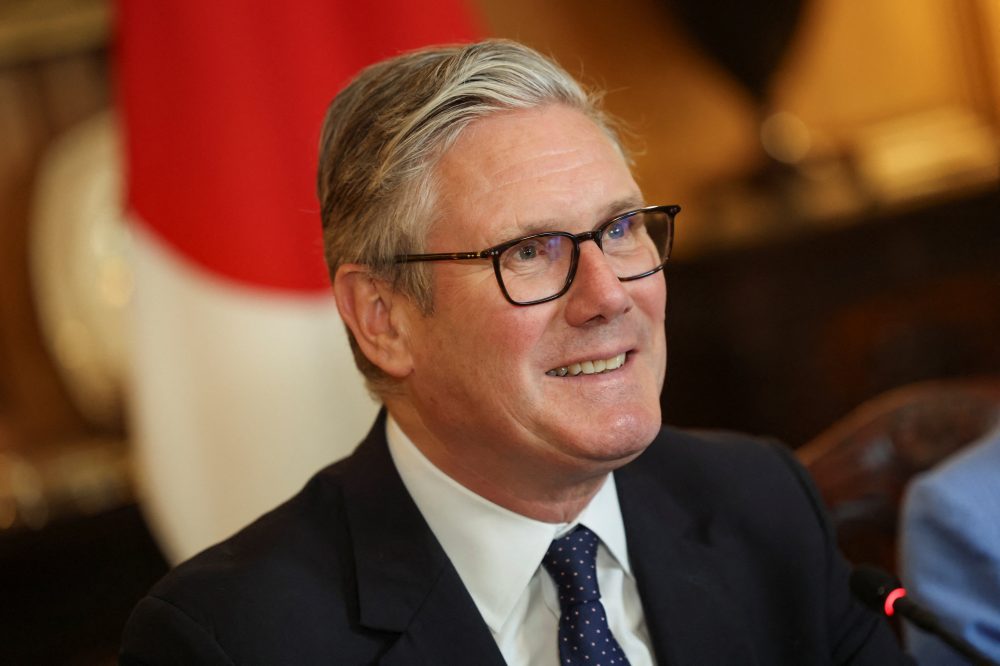
Prime Minister Keir Starmer announced on June 15 that Britain is on track to approve a similar ban on social media for children under 16 before Christmas, with the rules expected to go into effect around Spring 2027. Starmer also issued a warning on June 8 that tech giants operating in Britain must take action to prevent children from sharing nude images on their devices — or face laws requiring them to do so. Under the proposed plan, companies like Apple and Google would need to build or turn on tools that detect and block nude images for minors. Adults would still be able to access such content through an age verification process.
CHINA
China’s internet regulator has already rolled out what it calls a “minor mode” system, which imposes device-level restrictions and app-specific rules that limit screen time based on a child’s age.
DENMARK
Denmark announced in November that it would ban social media for children under 15, though parents would have the option to grant access to certain platforms for kids as young as 13.
FRANCE
France’s National Assembly voted in January to ban children under 15 from social media, driven by growing alarm over cyberbullying and mental health dangers. The legislation still needs to clear the Senate before returning to the lower house for a final vote.
GERMANY
In Germany, children between the ages of 13 and 16 may use social media only with parental approval. However, child safety advocates argue the current controls don’t go far enough.
GREECE
A senior Greek government source told Reuters on February 3 that the country is “very close” to announcing a ban on social media for children under 15.
INDIA
India’s chief economic adviser called for age restrictions on social media platforms in January, describing them as “predatory” in the way they keep users hooked. The comments came just two days after the tourist state of Goa said it was considering restrictions similar to those in Australia.
ITALY
Italian law currently requires children under 14 to have parental consent before creating a social media account, while those 14 and older can sign up without it.
MALAYSIA
Malaysia’s communications regulator announced on June 1 that the country has started blocking anyone under 16 from registering accounts on social media platforms.
NORWAY
The Norwegian government put forward a proposal in 2024 to raise the age at which children can independently agree to social media terms of service — from 13 to 15. Parents would still be allowed to give consent on behalf of younger children. The government is also working on legislation to set a firm minimum age of 15 for social media use.
POLAND
Poland’s ruling party announced on February 27 that it is crafting legislation to ban social media for children under 15 and to require platforms to handle age verification themselves.
SLOVENIA
Deputy Prime Minister Matej Arcon said on February 6 that Slovenia is working on a law that would bar children under 15 from accessing social media.
SPAIN
Spain’s Digital Transformation Minister Oscar Lopez told Reuters in May that the country will move forward with new rules to make social networks and artificial intelligence safer, despite heavy lobbying from the tech industry. Prime Minister Pedro Sanchez had announced in February that Spain would prohibit social media access for anyone under 16, with platforms required to put age verification systems in place.
SWEDEN
A government-appointed commission recommended on June 2 that Sweden set a minimum age of 15 for social media use. Investigator Lisa Englund Krafft, speaking at a news conference alongside Social Affairs and Public Health Minister Jakob Forssmed, said the ban could be structured so that platforms bear responsibility for verifying users’ ages.
TURKEY
Turkey’s parliament passed a law on April 24 banning children under 15 from social media and introducing new regulations for digital platforms, including companies that make game software.
UNITED STATES
In the U.S., a bill aimed at pushing social media companies to better protect young users cleared a major hurdle on May 12 when Republican Senator Ted Cruz announced his support. Cruz said he would back the Kids Online Safety Act, which would require social media companies to “exercise reasonable care” when designing features that could harm minors. This legislation is separate from the long-standing Children’s Online Privacy Protection Act, which already prohibits companies from collecting personal data from children under 13 without parental approval. While several individual states have passed laws requiring parental consent for minors to use social media, those laws have faced legal challenges on free speech grounds.
EUROPEAN UNION
European Commission President Ursula von der Leyen said on May 12 that the EU will pursue stronger protections for children against harmful social media features. She said the Commission plans to target “addictive and harmful design practices” through its upcoming Digital Fairness Act, expected to be formally proposed later this year, while an expert panel works on recommendations. The European Parliament had already passed a resolution in November calling for an EU-wide ban on social media access for children under 16 without parental consent, and an outright ban for those under 13.
TECH INDUSTRY
Major social media platforms — including TikTok, Facebook, and Snapchat — say users must be at least 13 years old to create an account. But child safety advocates say these measures fall far short, and official data from several European countries shows that large numbers of children under 13 already have active social media profiles.
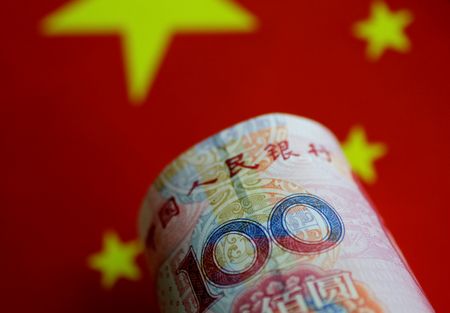
Global investment managers have been quietly shifting money into Chinese government bonds since the Iran war began, and not because of the returns they offer — but because of how little those bonds move in sync with markets in the West.
While sovereign debt in the United States, Britain, Europe, and Japan has taken a beating since March — with benchmark yields climbing between 35 and 60 basis points — yields on comparable Chinese government bonds have actually dropped by 8 basis points. That’s a dramatic contrast that has turned heads among serious institutional investors.
Sovereign wealth funds, central banks, and insurance companies are all taking a second look at how they build their portfolios, as Chinese bond yields have fallen to the lowest levels anywhere outside of Switzerland.
Wei Li, head of multi-asset investments at BNP Paribas Securities, said Chinese debt is pulling in investors focused on protecting capital. “Attractiveness is judged on a risk-adjusted footing. China delivers exceptional price stability,” Li said, describing the bonds as a low-volatility counterweight for regional portfolios holding riskier, higher-yielding assets.
Chinese bonds have stood out even more given that traditional safe havens have stumbled. Gold, for instance, has fallen roughly 25% from its peak in January.
Even with the Iran conflict appearing closer to resolution — after the U.S. and Iran struck a deal to end fighting and reopen the Strait of Hormuz — many of the factors supporting China’s bond market remain in place. Those include persistently low inflation, a central bank leaning toward looser policy, and heavy domestic investment flows.
Performance numbers tell the story clearly. The Guotai 10-Year China Treasury ETF has gained 1.26% so far this year. By comparison, the U.S.-focused iShares 7-10 Year Treasury Bond ETF has fallen 2.57%, and Invesco’s equivalent Euro bond ETF has slipped 1.23%.
Matthias Dettwiler, head of active fixed income at UBS Asset Management, pointed to the statistical independence of Chinese bonds from European rates. “If you look at correlations between CGBs and European rates, it’s close to zero. That has its attractiveness,” he said. For investors focused on protecting capital or spreading risk, “I would even go as far as to say the absolute yield doesn’t matter so much,” Dettwiler added.
Several structural factors are shielding China’s bond market from the turbulence triggered by the Middle East oil shock. The country holds substantial energy reserves, and consumer spending remains sluggish enough to keep price pressures minimal. On top of that, a large pool of household savings is being funneled by banks into the bond market, keeping yields in check.
Jerome Tay, senior investment manager of fixed income at Aberdeen in Singapore, noted that “liquidity plays a big part in driving the CGB markets, and liquidity conditions have remained extremely abundant.”
Chinese 10-year bond yields currently sit at 1.75%, now roughly one percentage point below Japan’s — a reversal from the dynamic that existed until late 2025, when Japan held the title of the world’s lowest-rate market.
Unlike Japan, however, where years of aggressive central bank stimulus drove capital to seek returns overseas, China’s strict controls on money leaving the country are keeping domestic investment at home.
Stephen Chang, a portfolio manager for Asia at PIMCO, said the contrast between China and other major economies helps explain the stability. “This divergence in macro conditions and policy stance helps explain why China’s bond market has remained relatively stable within a more volatile global rates environment,” Chang said. “We continue to maintain overall exposure to China bonds, focusing on relative value opportunities.”
Australia’s wealthiest individual, mining billionaire Gina Rinehart, has acquired a stake worth more than $1 billion in Elon Musk’s SpaceX through the company’s record-breaking $75 billion initial public offering, the Wall Street Journal reported Monday, citing a source with knowledge of the deal.
Rinehart’s firm, Hancock Prospecting, declined to confirm the exact size of its investment. However, Rinehart released a statement acknowledging the move: “This is a significant investment for Hancock, and we are pleased to have received an allocation in what has been an extremely popular and oversubscribed IPO.”
She went on to credit Musk with building two of the world’s ten largest companies and described SpaceX as a standout business opportunity.
“We see SpaceX as a rare business: led by a truly exceptional person, technically exceptional and operating in sectors that are crucial, and with long-term potential,” Rinehart said. Her fortune was built on iron ore extracted through her company, Hancock Prospecting.
Hancock, which holds major stakes in critical minerals ventures, has expressed hopes of partnering with SpaceX on mineral supply needs. Hancock CEO Garry Korte elaborated on that vision in the same statement: “In the future, we also see the possibility of mutually beneficial arrangements between SpaceX and Hancock Prospecting’s significant critical minerals investments, as demand grows for the materials and infrastructure needed to support advanced technology.”
The company holds notable positions in a range of rare earths businesses, including U.S.-based MP Materials and Rare Earths Americas, as well as Australia’s Lynas Rare Earths and lithium producer Liontown Resources, among others. Recent filings showed that Hancock expanded its defense, gold, and rare-earths holdings within its $3.3 billion U.S. investment portfolio earlier this year.
The SpaceX investment paid off quickly for Rinehart. Shares jumped 19% on their debut last Friday, vaulting the company’s total value past $2 trillion and making it the sixth-largest U.S. company. Investors rushed to get exposure to Musk’s wide-ranging business empire, which spans rockets, satellites, and artificial intelligence.
Beyond praising Musk’s business achievements, Rinehart also called him a patriot for his role in cutting federal government jobs through President Donald Trump’s Department of Government Efficiency, known as DOGE.
“SpaceX is yet another clear example of why the world needs more enterprise, more builders and much less bureaucracy,” Rinehart said.
Rinehart herself has become more politically active in recent years, reportedly encouraging some of Australia’s wealthiest voters to shift their support away from the country’s opposition Liberal-National conservatives toward the populist, anti-migration party One Nation.
MOSCOW — Russia is pushing back against accusations that it struck one of Kyiv’s most historically significant religious sites, claiming instead that a U.S.-manufactured Patriot air defense missile was responsible for damaging the Pechersk Lavra monastery.
The UNESCO World Heritage-listed monastery caught fire overnight Monday during what officials described as the most intense Russian aerial assault on the Ukrainian capital in two weeks. While Russia maintained its forces targeted drone production facilities and hit those targets successfully, Ukraine and numerous Western nations placed the blame squarely on Russian forces for the attack on the monastery.
Russia’s Defence Ministry went further, suggesting the Patriot missile may have malfunctioned due to expired munitions supplied by Western allies to Ukraine.
“The armed forces of the Russian Federation do not plan or carry out strikes against civilian infrastructure,” the Defence Ministry stated.
The ministry elaborated in its official statement: “According to confirmed reports, the complex of buildings at the Kyiv-Pechersk Lavra was struck by a missile from the American Patriot air defence system. One possible reason for the malfunction of this system could be that Western countries supplied the Kyiv regime with missiles that had expired.”
SYDNEY — Australia’s Department of Finance announced Monday that KPMG Australia has agreed to halt all bids for new federal government work for a period of roughly three months, as investigators look into serious allegations against the accounting giant.
A spokesperson for the department confirmed that KPMG will not pursue any new government contracts between June 16 and September 30, while authorities examine the firm’s governance practices, corporate culture, ethics, and overall integrity.
The agreement represents the latest consequence stemming from a widening scandal surrounding the firm.
Both state and federal agencies have said they are taking a closer look at their existing contracts with KPMG, and several private sector clients have already ended their relationships with the company.
One of those clients, Lendlease, confirmed Monday that it would no longer use KPMG as its auditor. According to whistleblower allegations that became public in March, confidential board documents from the real estate company were used to support KPMG’s bids for major audit contracts with a large bank called Westpac and property company Dexus.
KPMG has acknowledged that it mishandled an internal review of those claims, a misstep serious enough to prompt the resignation of both its chief executive and its audit leader.
The controversy has put a fresh spotlight on Australia’s professional services industry, which was already shaken by a 2023 revelation that rival firm PwC had shared confidential government information with potential clients.
PwC faced a similar restriction, refraining from bidding on new government contracts between April 2024 and July 2025 in the aftermath of its own scandal. The firm also sold off its government advisory division — which had represented about one-fifth of its total revenue — for just one Australian dollar in August 2024. That business, rebranded as Scyne Advisory, was subsequently permitted to compete for new government contracts.
A Coastal Flood Advisory is in effect for Kent County, Delaware tonight, with minor tidal flooding expected to impact low-lying roads and waterways.
The National Weather Service has issued the advisory from 8 PM this evening through 2 AM Tuesday. Residents near shorelines and tidal waterways should expect up to one foot of water above ground level in the most vulnerable areas.
The flooding could trigger partial or full road closures in coastal and bayside communities, particularly on roads that are historically prone to tidal flooding.
Authorities are urging drivers to take precautions before the water rises. Do not leave your vehicle parked in areas known to flood, and never attempt to drive through standing water — it may be deeper than it appears and could put your life at risk.
This advisory is classified as minor, but officials stress that even minor flooding can create dangerous conditions on local roads.
The advisory remains in effect until 2 AM Tuesday morning. Residents can monitor real-time water levels and local flood impacts by visiting the National Water Prediction Service at water.noaa.gov.
TV Delmarva will continue to monitor conditions and bring you updates throughout the evening.
A Coastal Flood Advisory has been issued by the National Weather Service out of Mount Holly, New Jersey, beginning at 3:10 AM on June 15 and lasting until 2:00 AM on June 16.
The advisory signals the potential for minor coastal flooding in affected areas during that timeframe. Residents living near the coast or in low-lying areas should take precautions and stay alert to changing water levels.
Coastal flood advisories are typically issued when minor flooding is expected in vulnerable spots, such as low-lying roads, parking lots near the shoreline, and properties close to tidal waterways. While this level of advisory does not indicate a severe threat, it does mean some nuisance flooding is possible.
Residents are encouraged to monitor updates from the National Weather Service and avoid driving through any flooded roadways. If you live in a flood-prone area, consider moving vehicles and valuables to higher ground as a precaution.
PARIS — The president of the European Central Bank expressed optimism Monday over a newly reached ceasefire agreement with Iran, describing the development as welcome news — particularly given its potential to reopen the Strait of Hormuz to international shipping.
Speaking on France Culture radio, the ECB president said, “If this news is confirmed by developments in the coming days and the signing of a memorandum of understanding … it is good news. We can only welcome it.”
Still, she urged caution, noting that “we have not yet finished the story,” and that “the whole question of uranium enrichment remains to be debated, agreed and concluded in the form of an agreement.”
Both U.S. and Iranian officials confirmed they had reached a preliminary agreement to bring an end to hostilities and reopen the Strait of Hormuz, a vital waterway for global oil transport. The announcement sent oil prices dropping, though the future of Tehran’s nuclear program remains subject to further negotiations.
A Coastal Flood Advisory is in effect for parts of the Delmarva region and southern New Jersey, with minor tidal flooding expected to impact low-lying coastal areas beginning this evening.
The National Weather Service out of Mount Holly has issued the advisory, which runs from 8 o’clock tonight through 2 in the morning Tuesday. Areas under the advisory include Inland Sussex County and the Delaware Beaches, along with Atlantic, Cape May, and Southeastern Burlington Counties in New Jersey.
Authorities say up to one foot of inundation above ground level is possible in low-lying areas near shorelines and tidal waterways. Residents should expect flooding to begin on the most vulnerable roads in coastal and bayside communities, with some partial or full road closures possible.
Officials are urging drivers to use caution and avoid flood-prone parking areas before heading out this evening. The National Weather Service also stresses — do not drive through standing water. Floodwaters can be deeper than they appear, putting both you and your vehicle at serious risk.
This advisory remains in effect until 2 AM Tuesday. Residents can monitor real-time water levels and local flood impacts at water.noaa.gov. Stay with TV Delmarva for continuing updates as conditions develop.
A Coastal Flood Advisory has been issued by the National Weather Service out of Mount Holly, New Jersey, starting at 3:10 AM Eastern Time on June 15 and remaining in effect until 2:00 AM Eastern Time on June 16.
A Coastal Flood Advisory means that minor flooding is possible in low-lying areas near the coast. Residents in vulnerable areas should take precautions and avoid parking vehicles in spots that could be impacted by rising water.
TV Delmarva will continue to monitor this advisory and bring you the latest weather information as it becomes available.
An Oslo court handed down a guilty verdict Monday against the stepson of Norway’s Crown Prince Haakon, convicting him on two counts of rape along with additional criminal charges and sentencing him to four years behind bars.
Marius Borg Hoiby, 29, became part of the Norwegian royal family when his mother, Mette-Marit, wed Crown Prince Haakon in 2001. He has maintained his innocence on the most serious accusations brought against him, including the rape charges, and retains the right to challenge the court’s decision through an appeal.
TOKYO — News of a planned halt to hostilities between Iran and the United States gave global markets a boost on Monday, but Japan’s yen was left largely unmoved, staying just above the 160-per-dollar threshold that triggered government currency intervention only last month.
Stocks and bonds rallied on the ceasefire announcement, which had raised hopes of easing global inflation pressures — especially in energy-importing nations like Japan. Despite that, the yen remained fragile, hovering near levels not seen in decades.
The Japanese currency now faces a pivotal stretch, with the country’s central bank set to meet and widely expected to raise interest rates to their highest point in 31 years. However, analysts caution the decision may fall short of what investors are hoping to see in terms of aggressive monetary tightening signals.
Attention will be focused on Bank of Japan Deputy Governor Shinichi Uchida, who will speak to the media in place of Governor Kazuo Ueda, who is currently hospitalized. Uchida is not expected to stray significantly from Ueda’s messaging, but any cautious tone could embolden those betting against the yen.
“The yen is still rather weak on the background of the BOJ still being behind the curve,” said Naka Matsuzawa, chief strategist at Nomura Securities. “I don’t really think the BOJ can satisfy the market expectations on hawkishness. The BOJ doesn’t want to go too much ahead of the government policy stance, only to become a scapegoat.”
Markets are nearly certain the Bank of Japan will lift its benchmark rate by 25 basis points on Tuesday to 1%. Even so, pessimism about the yen has grown, with speculative short positions climbing to their highest level since July 2024, according to futures data released Friday.
Ueda had recently emphasized the risk of energy prices feeding into broader inflation across the economy. With him now sidelined due to treatment for an infected liver cyst, Uchida steps into the spotlight — himself only recently discharged from the hospital last month, adding to the uncertainty surrounding what he might communicate after an extended period of public silence.
“Market players tried to read the difference in Ueda’s comments at each press conference to gauge his stance, but this time, they can’t do that,” said Kumiko Ishihara, a senior analyst at Sony Financial Group.
As a career central banker who rose to deputy governor, Uchida has previously offered strong hints about near-term policy direction, including the 2024 decision to wind down a massive decade-long stimulus program. While some observers consider him dovish, those who know him describe Uchida as a pragmatic and flexible communicator.
A formal peace agreement would fit within the central bank’s baseline outlook, under which it had sharply raised its inflation forecasts and flagged growing price pressures tied to the Middle East conflict. The central bank’s former top economist Seisaku Kameda said Monday that the latest developments in the region would not alter the BOJ’s anticipated course of two interest rate increases this year.
Had the war continued, inflation could have remained near 3% for two years — a scenario that might have justified a faster pace of rate hikes. A resolution to the conflict, however, changes that equation.
“Given the drop in oil prices, the risk for accelerating inflation may weaken,” said Masahito Sugawara, a senior strategist at Daiwa Securities. “Market players have been bracing for a hawkish stance from the BOJ, but the post-meeting comments from Deputy Governor Uchida may not be as hawkish as they had expected.”
Markets are currently pricing in one additional rate hike from the Bank of Japan later in the year. The BOJ had been the only major central bank still in a tightening cycle, but inflation stemming from the Gulf war has shifted that picture. Expectations are now building that the U.S. Federal Reserve’s next move could also be a rate increase.
“Overall, gradual yen appreciation is expected, but it will be important to watch for a rise in volatility around central bank events,” said Hirofumi Suzuki, chief FX strategist at SMBC. “If expectations for further rate hikes by the Fed continue against the backdrop of U.S. inflation, there is a meaningful possibility that the dollar will remain strong.”
When the BOJ chose to hold rates steady in April, the yen resumed its decline past the 160-per-dollar mark. That prompted Japan’s Ministry of Finance to spend 11.7 trillion yen — equivalent to roughly $73.12 billion — to support the currency, the largest monthly intervention on record.
With hopes for a more aggressive BOJ stance fading, analysts suggest that further government currency intervention may be the only remaining barrier to another yen slide.
“There is a risk that pressure will arise on the yen and dollar-yen rate could move toward 161,” said Masafumi Yamamoto, chief foreign exchange strategist at Mizuho Securities. “Concerns over intervention will likely increase.”
BEIJING — Myanmar’s Min Aung Hlaing touched down in Beijing on Monday, beginning a five-day state visit at the invitation of Chinese leader Xi Jinping, according to Chinese state media. The trip marks his first journey to the world’s second-largest economy since taking on the role of civilian president.
Min Aung Hlaing, 69, was the driving force behind a 2021 military coup that toppled Myanmar’s democratic government, plunging the country into civil war and triggering a broad wave of international sanctions. Earlier this April, he was chosen as president by a parliament filled largely with loyalists to the military.
His transition from top military commander to civilian head of state has effectively cemented his grip on power — a shift that brought an end to roughly a decade of fragile democratic progress and pushed foreign investors out of what had once been considered one of Asia’s most promising emerging economies.
During his time in Beijing this week, Min Aung Hlaing is scheduled to sit down with Xi Jinping. He will also hold meetings with Premier Li Qiang and Zhao Leji, who rank as China’s second and third most powerful officials, respectively.
Ahead of the visit, a spokesperson for China’s foreign ministry offered warm words about the bilateral relationship. “China and Myanmar have stood together through thick and thin, looked out for each other and forged solidarity and cooperation, promoting China-Myanmar relations to achieve considerable progress,” the spokesperson said.
China is not the first nation Min Aung Hlaing has visited since assuming the presidency. In late May, he made a five-day trip to India — a country that shares a lengthy and loosely monitored border with Myanmar — as part of his administration’s wider effort to rebuild international ties after years of diplomatic and economic isolation stemming from global sanctions.
Westbound travelers on Georgetown Lewes Highway, also known as US Route 9, are facing a right shoulder closure between Emerson Way and Grace Road.
The closure is the result of construction activity in that area. Drivers should be aware that the restriction is expected to remain active until 5 a.m.
Motorists passing through the area are urged to slow down and stay alert for construction crews and equipment near the roadway.
The Trump administration’s ambitious plan to reshape how critical minerals are priced and traded is encountering significant resistance — both from allied nations and from within the American mining industry itself — as G7 leaders gather in France for high-stakes talks.
The idea was first floated by U.S. Vice President JD Vance back in February. The goal is to create a Western trading bloc that would help reduce dependence on China, which has become the world’s dominant minerals producer by operating at a loss and keeping prices artificially low. Those minerals — including cobalt, lithium, and nickel — are essential building blocks for semiconductors, computer servers, military hardware, and countless other products.
By flooding markets with cheap minerals, China has made it nearly impossible for Western mining companies to compete, stunting new development and forcing some businesses to shut down entirely — a strategy Beijing has deployed in other industries as well.
The proposed trading bloc would look at price supports, market standards, government subsidies, or guaranteed purchase agreements to prop up production across multiple countries. Vance suggested the measures could be backed by “adjustable tariffs to uphold pricing integrity.”
Currently, many of the specialty minerals vital to technology and defense are traded with little transparency and are effectively priced according to Chinese market rates, which dominate globally due to China’s outsized production share.
Since Vance’s announcement, G7 member nations have privately pushed back against U.S. Trade Representative Jamieson Greer and have grown lukewarm toward a pricing approach derived from a Pentagon artificial intelligence model, according to three sources who spoke with Reuters.
European officials say the main sticking points include who would absorb the cost of paying a premium for minerals, how far along the supply chain those subsidies would reach, and how the overall governance structure would function.
On the domestic front, the U.S. mining industry is far from unified. More than 230 public submissions sent to Greer’s office — from miners, refiners, and their customers — reveal deep disagreements about what direction the U.S. should push its allies to take.
Analysts and consultants say the stakes are enormous. More than a dozen experts told Reuters that the outcome of these negotiations could reshape global minerals markets for years.
“It is a very hard thing to do, and I’m happy I’m not the one doing it,” said Ashley Zumwalt-Forbes, a minerals investor who previously managed the U.S. Department of Energy’s batteries and critical minerals portfolio under former President Joe Biden.
A draft U.S. proposal has been built around an AI-based pricing program developed by the Pentagon’s Defense Advanced Research Projects Agency, known as DARPA. Called the Open Price Exploration for National Security, or OPEN, the program attempts to calculate what a metal should cost based on labor, processing, and other real expenses — while stripping out the effects of alleged Chinese market manipulation. That draft has been delivered to the White House and the National Security Council, and U.S. representatives are expected to brief G7 allies on it during the current meeting, according to a U.S. official.
But European allies have so far resisted the idea of using a pricing system developed in Washington, with one source pointing to concerns that it would give the U.S. too much influence over the bloc’s pricing decisions.
Another source said Europeans are pushing for a broader set of tools and what they described as “agile governance” to allow flexibility depending on the specific mineral and its supply chain.
“For Europe, it would be better to have a price index based on real deals in the European market. The question is whether we can make these opaque pricing mechanisms more transparent, more market-driven, and less prone to manipulation,” said Nicola Beer, who oversees minerals financing at the EU-controlled European Investment Bank. “Different parts of supply chains and products across sectors are shaped by very different pricing mechanisms, which adds to the complexity.”
As a potential alternative, an EU-funded agency called EIT RawMaterials is collaborating with digital platform Metalshub to develop pricing indexes that operate independently of Chinese government-driven pricing. Those indexes could eventually include the United States, Australia, Canada, and Britain.
European and industry officials say they want more time to study the long-term effects of price supports rather than rushing into quick commitments — a stance that puts them at odds with the faster-moving American side.
Meanwhile, the Trump administration is resisting a French proposal to establish a permanent administrative secretariat within either the International Energy Agency or the OECD to track G7 critical minerals efforts as leadership rotates among member nations.
Canada and France — which currently holds the G7 presidency — are pushing for a trading bloc led by the full G7, while the United States prefers to bypass multilateral negotiations in favor of swift bilateral deals that could later be expanded, according to three sources familiar with the discussions.
“What we’re trying to do is take some of these approaches and turn them into an agreement,” Greer told reporters in early June at an OECD ministerial meeting in Paris. He added that the U.S. would use price supports “to protect production of critical minerals and derivative products. … We want to phase it in. … If other countries want to join us in that, they’re welcome to do that.”
Washington is aiming to present a proposal for binding bilateral agreements to Japan and the European Union before the end of June, two sources said. The first such agreement could cover five to ten minerals, including heavy rare earths, antimony, graphite, and tungsten — all of which are currently subject to Chinese export bans or restrictions.
Back home, the corporate world is equally divided. While submissions to Greer’s office broadly agree that the trading bloc should target niche minerals rather than widely traded metals like copper, and should also address downstream products such as cell phones and laptops, there is significant disagreement over how prices should be regulated.
Several major companies and mining trade groups have come out against price-setting. Divergent recommendations came from General Motors, recycler Umicore, platinum miner Sibanye Stillwater, the U.S. Chamber of Commerce, and rare earths company MP Materials, among others.
“There’s nervousness from all sides about what to do and how different actions could affect different parts of the supply chain,” said Blake Harden, a managing director focused on trade policy at the EY consultancy.
The National Mining Association advised Greer to avoid heavy price-fixing and instead focus on tax credits and other financial incentives. “While market interventions such as pricing mechanisms may play a role in certain circumstances, incentive-based approaches … are better suited to addressing challenges facing the domestic mining industry,” said Rich Nolan, the trade group’s CEO.
A metals analyst at the WoodMac consultancy, James Willoughby, summed up the current state of affairs bluntly: “There’s a very mixed message coming out of the U.S. right now on battery metals.”
DURBAN, South Africa — Princess Adjei was just a toddler when her family moved from Ghana to South Africa. By the time she was 33, she had built an entire life there — completing all of her schooling, making local friends, and even learning Zulu, the dominant language of the eastern port city of Durban. She had rarely thought of herself as a foreigner.
In November, Adjei opened a hair salon in central Durban, pouring 50,000 rand — more than $3,000 — into renovating the space just a few months later in February. Then, on May 18, everything changed.
Protesters taking part in an anti-migrant march broke into her shop and stripped it bare. Suddenly, people she had known for years were telling her to go back “home” — to a country she had visited only once in her life.
“They took everything,” Adjei said, standing amid shattered mirrors and broken chairs in her ransacked salon. “Those were hair pieces I was selling here. There were acrylic nails, six hair dryers, a range of shampoos. All gone.”
Adjei is among scores of victims caught up in a surge of attacks targeting African foreign nationals. An anti-immigration movement has accused these migrants of living in South Africa without authorization — yet many hold legal documents and have spent decades building their lives there.
Sleeping on the Streets
With her salon destroyed and no income to pay rent, Adjei moved out of her central Durban apartment. She and her 14-year-old son now sleep under a blanket on the sidewalk alongside roughly 200 other displaced migrants. The group has set up camp outside the local office of the government’s Department of Home Affairs, hoping officials can verify their legal residency status.
Elsewhere, other African migrants have fled into the mountains and onto open land to escape violence that has claimed at least five lives and created a serious diplomatic rift between South Africa and neighboring countries on the continent.
Reuters spoke with a dozen migrants in Durban, four of whom had lived in South Africa since childhood.
The organization behind the protests, March and March, denies that its movement is driven by xenophobia.
“Xenophobia applies to those people who come to a country illegally and make people from that country feel uncomfortable,” said Jacinta Ngobese, the founder of March and March, in an interview in Durban.
Ngobese argued that her group has actually helped protect migrants by channeling South Africans’ frustration toward the government rather than toward foreigners. Even so, the group’s demonstrations have repeatedly coincided with outbreaks of violence, including the looting of shops owned by foreign nationals and the destruction of homes.
“We are not responsible for the violence,” Ngobese said. “If we were violent, we would have been arrested.”
Police Response Questioned
Some arrests were made after protesters killed five Mozambicans last month and in connection with other incidents. However, law enforcement responses have been largely rare.
Following the unrest in Durban, around 200 migrants camped outside the central police station seeking safety. Four of those migrants — including Adjei — told Reuters that police first took them to a homeless shelter, then to a market warehouse, but they were turned away from both locations by people already there.
The next day, police reportedly ordered them to disperse and later fired rubber-coated steel bullets and tear gas at the group, according to the four migrants and some local media outlets.
“They told us to look for another shelter,” said Tchomba Kasongo, a Congolese refugee who walked with a limp and showed a bullet wound scar on his leg. The displaced migrants now live under the shadow of a June 30 deadline that protesters have issued, demanding all “illegal” migrants leave the country.
Durban police spokesperson Booysie Zungu denied the allegations. “We never tear gassed anyone, we never fired on anyone,” he told Reuters. When informed about the attack on Adjei’s salon and other anti-migrant incidents, he responded, “We don’t have cases of that nature reported. They must open a case.”
A spokesperson for Durban’s mayor declined to offer any comment.
Old Friends Turn Away
After discovering her salon in ruins, Adjei returned to her apartment and ran into a South African neighbor she had considered a close friend — someone with whom she had often chatted in the hallway and shared tea. He was now scowling at her, demanding to know when she planned to leave.
It was the third time in her life that Adjei had experienced South Africa’s periodic eruptions of xenophobic hostility. The first came in 2008, when classmates who had never previously shown any interest in her background began bullying her during a wave of protests.
Not all South African friends have turned away. Wivene Bahati, a 25-year-old Congolese refugee who has lived in South Africa since 2011 and now sleeps on the curb near Adjei, said a former classmate reached out after the latest violence.
“She felt bad. She asked me is everything ok?” Bahati told Reuters.
Analysts say migrants are frequently viewed as competitors for jobs and public services, making them easy targets when economic hardship sets in or government services break down. Anti-migrant sentiment often intensifies around election periods as some politicians tap into the issue for popular support — South Africa has local elections scheduled by November.
Thamsanqa Ntuli, the Premier of KwaZulu-Natal province, where Durban is the principal city, pushes back against the idea that politics is driving the xenophobia, placing the blame instead on illegal immigration.
“We agree with the entire society when they say: ‘government, you should have started to manage migration properly … a long time ago,’” Ntuli told Reuters.
PHNOM PENH, Cambodia — A well-known Cambodian opposition figure stepped out of his Supreme Court hearing Monday to a roaring crowd of supporters, expressing his hope that judges would throw out his incitement conviction and allow him to return to political life.
Rong Chhun, who serves as a top adviser to the Nation Power Party, was convicted last year of stirring up social unrest after he met with villagers who had been displaced by government construction projects. Many observers viewed the conviction as part of a broader pattern of legal actions taken by Prime Minister Hun Manet’s government to suppress dissent.
The 56-year-old received a four-year prison sentence and was prohibited from participating in elections — both as a candidate and as a voter. During his original trial, he maintained his innocence, arguing that he had done nothing more than post photographs of himself with the villagers along with written comments on Facebook.
As he exited the morning hearing, approximately 300 supporters greeted him with chants of “Drop the charges, release Rong Chhun!” and held signs calling for his release.
He addressed the crowd, saying that given the tensions between Cambodia and neighboring Thailand, a difficult economy, and other national challenges, his goal is to foster “national reconciliation and national unity” among Cambodia’s 17 million citizens.
“I hope the court will grant me freedom and justice so that I can continue to practice politics in the future,” he told supporters.
Police officers numbering in the dozens were stationed behind barricades on roads leading to the courthouse. Rong Chhun made his way to the hearing on foot, accompanied by supporters that included both local and international human rights advocates.
“We are not worried about going to prison,” he said. “We are willing to sacrifice everything and we are determined to use the resources our parents gave us to invest so that Cambodia can achieve true freedom and democracy.”
Incitement charges are a tool that Cambodian authorities have repeatedly used to target political opponents.
This is not Rong Chhun’s first brush with such accusations. In 2021, he was sentenced to two years on incitement charges after being accused of spreading false information about Cambodia’s border with Vietnam following meetings with farmers in that region. An appeals court later released him that same year.
Cambodia’s government maintains that it upholds the rule of law within an electoral democracy. However, political parties that have posed serious challenges to the ruling Cambodian People’s Party have repeatedly been dissolved by courts, while their leaders have faced imprisonment or harassment.
For nearly four decades, former Prime Minister Hun Sen led Cambodia under what critics described as autocratic rule, drawing widespread condemnation for human rights abuses including the suppression of free speech and freedom of association. His son, Hun Manet, who was educated in the United States, took over in August 2023, but signs of political reform have been scarce.
On Monday, Tim Ratha made a journey of several hours from Siem Reap province in the north to the capital to show her support for Rong Chhun.
“He has devoted everything to us, he had no wife, no children,” the 55-year-old vegetable vendor told The Associated Press.
The Supreme Court is scheduled to deliver its verdict on June 19.
Hong Kong’s top official, John Lee, brushed aside questions about whether he plans to run for a second term, according to a report published Monday by the South China Morning Post. Instead, Lee said his attention is firmly on getting more done during his final year in the role.
In an interview with the Post, Lee offered a familiar political phrase when pressed on the subject: “A year is a long time in politics.” Rather than addressing the possibility of another five-year term, he steered the conversation toward ensuring stable and consistent governance.
Lee, who previously served as a police officer and as Hong Kong’s security chief, assumed leadership of the territory in 2022. He took charge following the disruptions of the COVID pandemic and widespread anti-government demonstrations that prompted Beijing to enact a far-reaching National Security Law.
When the Post asked directly whether he was gearing up for a second term set to begin in July of next year, Lee responded: “I don’t think I should consider this question now. I mean, time will come when I see.”
His administration is currently concentrating on policy consistency, with the city preparing to release its first-ever five-year plan before the close of 2026. The move is part of a broader effort to bring Hong Kong’s policymaking more in line with how decisions are made on the Chinese mainland.
Under Lee’s leadership, Hong Kong’s economy has shown signs of recovery. However, his administration has also faced serious criticism in the wake of last November’s Wang Fuk Court fire, a blaze that claimed 168 lives, displaced thousands of residents, and stands as the deadliest fire the city has seen in decades.
President Donald Trump issued a sharp ultimatum to France on Monday, warning that the United States would impose 100% tariffs on French wines and champagnes if Paris refuses to eliminate its digital services tax targeting American technology companies.
Trump said he raised the issue directly with French President Emmanuel Macron, demanding that France scrap its 3% levy on U.S. tech giants or face steep duties on French alcohol products sold in the American market.
Speaking to the New York Post, Trump spelled out his position bluntly: “I asked him not to charge American companies, and if they do, I have no choice but to charge a 100% tariff on all champagnes and all wines coming out of France. All (Macron) has to do is get rid of the sales tax, and he wouldn’t have that kind of pressure.”
Neither the White House nor officials at the French presidential palace responded to requests for comment following the remarks.
The potential tariffs would hit a significant trade category. Alcohol ranks among the European Union’s largest exports to the United States, valued at roughly €9 billion — approximately $10.46 billion — in 2024, according to figures from Eurostat. Some products, including Remy Martin cognac and champagne, are required by regulation to be produced in specific regions of Europe.
France first put its digital services tax in place in 2019. The levy applies a 3% charge on revenue that digital companies earn within France, targeting firms with at least €25 million in French revenue and €750 million in worldwide revenue.
Elon Musk made a sweeping financial prediction on Sunday, claiming his rocket company SpaceX could generate more than $1 trillion in revenue by the end of the decade — a statement that came just two days after the company made its stock market debut.
Musk posted the forecast on his social media platform X, responding to journalist and financial commentator Jon Erlichman. “And I would be surprised if revenue is not greater than $1T in 2031,” he wrote.
SpaceX went public on Friday, instantly becoming the sixth-largest company in the United States and solidifying Musk’s standing as the world’s first trillionaire, with the company valued at more than $2 trillion.
Despite the lofty valuation, SpaceX currently earns far less than other tech giants of similar size, such as Broadcom and Amazon.com.
The company’s 2025 revenue climbed to $18.67 billion, up from $14.02 billion the previous year. However, SpaceX swung to a net loss of $4.94 billion during that same period, compared to a profit of $791 million the year before.
Not everyone on Wall Street is buying into Musk’s ambitious outlook. Goldman had estimated SpaceX’s revenue would surpass $470 billion by 2030, while Morgan Stanley projected the figure would reach close to $330 billion — both well short of Musk’s $1 trillion target — according to a Wall Street Journal report published earlier this month.
American fighter Justin Gaethje delivered one of the biggest upsets in recent UFC history Sunday, defeating Ilia Topuria to claim the lightweight championship at a landmark event held on the grounds of the White House.
Topuria appeared to be in control through the first two rounds of the contest, but Gaethje changed the momentum dramatically with a powerful right hand that rocked the Spaniard. He followed that up with a relentless combination of punches that left Topuria’s face badly swollen and bleeding.
By the fourth round, Topuria was visibly struggling and had difficulty seeing. A ringside physician examined him before allowing the fight to continue, but Topuria’s corner ultimately decided to stop the contest before the fifth and final round could begin.
A disbelieving Gaethje reflected on the victory afterward. “I cannot even believe it … I knew I was going to have to get through the first round, his skills are unmatched when he’s fresh,” he said. “But my durability, my tenacity and my heart were going to carry me through.”
The championship bout served as the headliner for “UFC Freedom 250,” which made history as the first professional sporting event ever staged at the White House. The occasion was a centerpiece of U.S. President Donald Trump’s festivities celebrating America’s 250th anniversary.
In the evening’s co-main event, France’s Ciryl Gane put on a dominant performance against Brazil’s Alex Pereira, finishing the fight with a spectacular second-round knockout to claim the interim UFC heavyweight title. Pereira, who previously held both the light heavyweight and middleweight championships, had been attempting to become the first fighter in UFC history to win titles across three weight classes.
American and Iranian officials announced Sunday that they have reached a preliminary agreement to end their war and restore access to the Strait of Hormuz, a critical waterway for global oil and gas shipments that Iran has effectively shut down for months. While the deal is still a framework, it represents the most significant step yet toward resolving a conflict that has claimed thousands of lives and rattled energy markets since U.S. and Israeli forces first struck Iran back in February.
U.S. President Donald Trump announced the news on his Truth Social platform around 5:30 p.m. Washington time on Sunday. “The Deal with the Islamic Republic of Iran is now complete,” he wrote. His post followed a separate announcement from Pakistani Prime Minister Shehbaz Sharif — whose country served as a mediator — who confirmed a deal had been reached early Monday local time.
The formal signing of the memorandum of understanding is scheduled for Friday in Switzerland. The full terms of the agreement were not immediately made public.
Sharif stated on X that the pact calls for “the immediate and permanent termination of military operations on all fronts, including in Lebanon.” Iran’s Supreme National Security Council secretariat echoed that, saying all military operations — including those in Lebanon — would permanently cease beginning Monday night.
Lebanon has been a sticking point throughout negotiations, with Israel and Hezbollah continuing to exchange attacks despite calls from Trump and others to stand down. Iran’s deputy foreign minister, Kazem Gharibabadi, said a broader agreement would be worked out during a 60-day ceasefire window, which would also include the possibility of sanctions relief for Iran. The future of Iran’s nuclear program — another deeply contentious issue — is also expected to be part of those upcoming discussions, according to sources who previously spoke with Reuters.
Israel, which has maintained it was not part of the U.S.-Iran talks, had not publicly responded to the announcement at the time of this report.
Trump said the Strait of Hormuz would reopen by Friday and confirmed he had ordered an end to the U.S. blockade of Iranian ports. “Ships of the World, start your engines. Let the oil flow!” he wrote.
Markets responded quickly. Brent crude futures dropped 4% in early Monday trading, while Asian stock markets surged. “The lack of details especially on freedom of shipping is a concern but not one that should constrain markets today as the surge in risk appetite plays out,” said Sean Callow, a senior FX analyst at ITC Markets.
Former State Department spokesperson Matthew Miller, who served under the Biden administration, argued that Trump had made meaningful concessions to Iran just to return to the situation that existed before the war began. “We have no assurances the nuclear program will ever be addressed, but Iran has shown the world it can take the global economy hostage and get something from the U.S. in return,” Miller said.
The conflict, which began when U.S. and Israeli forces attacked Iran on February 28, has resulted in thousands of deaths — mostly in Iran and Lebanon. Iran has struck Israel and Gulf states that host U.S. military bases, while also blockading the Strait of Hormuz and driving up global energy costs. American forces responded by blockading Iranian ports.
The war has become a growing political problem for Trump and Republican members of Congress, with polls showing Americans increasingly frustrated by climbing gas prices ahead of November’s midterm elections. At the same time, Trump has faced pressure from within his own party to ensure Iran’s nuclear program is fully dismantled.
Republican Senator Lindsey Graham, a prominent advocate for a tough stance on Iran, offered cautious praise for the deal. “Under our law, any nuclear deal with Iran will be sent to Congress for review and a vote,” he said. “Congratulations to all in getting us to this point.” Graham added that he would be “watching closely” the upcoming negotiations over Iran’s nuclear capabilities.
During his first term, Trump withdrew the U.S. from a 2015 multilateral agreement — negotiated under Democratic President Barack Obama — that had lifted sanctions on Iran in exchange for limits on its nuclear activities, including international inspections. In the years since, Iran has significantly increased its uranium enrichment, producing more than 400 kilograms — roughly 900 pounds — of material at close to weapons-grade purity. The fate of that stockpile is expected to be a central issue in the next phase of talks.
The deal was finalized even as Israel carried out a strike on Lebanon on Sunday, drawing condemnation from both Iran and Trump. Israeli Prime Minister Benjamin Netanyahu has clashed with Trump over U.S. demands that Israel scale back its military activity in Lebanon to allow the Iran negotiations to move forward. Israel has insisted it will maintain freedom to operate in Lebanon, while Iran has demanded a full ceasefire there as a core condition.
Trump spoke with Netanyahu by phone on Sunday to update him on the progress toward a peace deal, according to Israel’s N12 news outlet, citing a senior official. In a separate interview with the New York Times, Trump described Netanyahu as “a very difficult guy” and suggested the Israeli leader should be grateful to him for protecting Israel from a nuclear-armed Iran.
World leaders outside the region welcomed the news. Britain, Germany, France, and Italy issued a joint statement saying they were ready to lift sanctions on Iran in response to “clear, verifiable steps” to limit its nuclear program. British Prime Minister Keir Starmer said, “We are clear that toll-free freedom of navigation must now be restored in the Strait of Hormuz. Iran must never have a nuclear weapon.”
Before the deal was publicly announced, a senior Iranian official told Reuters that under the draft terms, the U.S. would agree to release $25 billion in frozen Iranian assets — though the Trump administration had previously said any such release would only happen once Iran met specific conditions. A U.S. official, also speaking before the announcement, said the agreement would ultimately lead to the dismantling of Iran’s nuclear program, with its stockpile of highly enriched uranium to be destroyed and removed. The Iranian official, however, said the draft would allow Iran — which denies pursuing a nuclear weapon — to dilute its enriched uranium within its own borders.
The United States and Iran have reached an interim agreement aimed at ending the war and reopening the Strait of Hormuz. A signing ceremony is scheduled for Friday in Switzerland, though previous announcements have collapsed before, and the precise contents of the deal were still being disputed as of Monday.
Below is a look at the long and complicated history of tensions surrounding Iran’s nuclear program:
1967 — Iran receives the Tehran Research Reactor, provided by the United States through the “Atoms for Peace” initiative.
1979 — Shah Mohammad Reza Pahlavi, a U.S. ally who was gravely ill, flees Iran amid a wave of popular uprisings. Ayatollah Ruhollah Khomeini returns to Tehran, and the Islamic Revolution brings him to power. Student protesters storm the U.S. Embassy in Tehran, launching a hostage crisis that would last 444 days. Iran’s nuclear ambitions stall under pressure from the international community.
August 2002 — Western intelligence agencies and an Iranian opposition group expose Iran’s secret nuclear enrichment facility at Natanz.
June 2003 — Britain, France, and Germany begin diplomatic engagement with Iran on nuclear matters.
October 2003 — Facing international pressure, Iran halts its uranium enrichment activities.
February 2006 — Following the rise of hard-line President Mahmoud Ahmadinejad, Iran declares it will resume uranium enrichment. Britain, France, and Germany withdraw from the stalled negotiations.
June 2009 — Iran holds a contested presidential election in which Ahmadinejad is declared the winner despite widespread fraud allegations. The result sparks protests known as the Green Movement, which are met with a violent government crackdown.
October 2009 — Under President Barack Obama, the U.S. and Iran quietly establish a secret back-channel for communications through the sultanate of Oman.
July 2012 — American and Iranian officials hold secret, in-person meetings in Oman.
July 2015 — World powers and Iran announce a sweeping, long-term nuclear agreement that restricts Iran’s uranium enrichment in exchange for relief from economic sanctions.
May 8, 2018 — President Donald Trump pulls the U.S. out of the nuclear agreement on his own authority, calling it the “worst deal ever.” He promises to negotiate better terms that would also address Iran’s missile program and its backing of regional militias — but those talks never materialize during his first term.
May 8, 2019 — Iran announces it will begin stepping back from the nuclear accord. A string of regional attacks on land and at sea, attributed to Tehran, follows.
Jan. 3, 2020 — A U.S. drone strike in Baghdad kills Gen. Qassem Soleimani, the man widely credited with building Tehran’s network of proxy forces across the Middle East.
Jan. 8, 2020 — Iran retaliates for Soleimani’s death by firing a volley of missiles at military installations in Iraq housing thousands of American and Iraqi troops. More than 100 U.S. service members sustain traumatic brain injuries, according to the Pentagon. While Iran braced for a counterstrike, its Revolutionary Guard mistakenly shoots down a Ukrainian passenger aircraft shortly after it departs Tehran’s international airport, reportedly confusing it for a U.S. cruise missile. All 176 people aboard are killed.
July 2, 2020 — A mysterious blast destroys a centrifuge manufacturing plant at Iran’s Natanz nuclear site. Iran points the finger at Israel.
April 6, 2021 — Iran and the U.S., now under President Joe Biden, begin indirect talks in Vienna on how to revive the nuclear agreement. Those discussions, along with separate talks between Tehran and European countries, ultimately fail to produce a deal.
April 11, 2021 — Natanz is struck again in a second attack within a year, also believed to have been carried out by Israel.
April 16, 2021 — Iran begins enriching uranium to 60% purity — the highest level it has ever achieved and just one technical step below the 90% threshold considered weapons-grade.
Feb. 24, 2022 — Russia launches a full-scale military invasion of Ukraine. Over time, Moscow turns to Iran for bomb-carrying drones and missiles to use in the conflict.
July 17, 2022 — An adviser to Iran’s supreme leader, Kamal Kharrazi, publicly states that Iran has the technical ability to build a nuclear weapon but has not yet decided whether to do so.
Oct. 7, 2023 — Hamas militants from Gaza launch a devastating attack on Israel, killing approximately 1,200 people and taking 251 hostages, triggering the most intense fighting ever seen between Israel and Hamas. Iran, which has provided weapons to Hamas, backs the militants. Tensions across the region escalate sharply.
Nov. 19, 2023 — Yemen’s Houthi rebels, long backed by Iran, seize the vessel Galaxy Leader, kicking off months of attacks on ships moving through the Red Sea corridor. The U.S. Navy describes the campaign as the most intense combat it has faced since World War II — tactics that echo those previously used by Iran.
April 14, 2024 — Iran carries out an unprecedented direct assault on Israel, launching more than 300 missiles and attack drones. Israel, working alongside a U.S.-led coalition, intercepts the majority of the incoming fire.
April 19, 2024 — A suspected Israeli strike damages an air defense system near an airport in Isfahan, Iran.
July 31, 2024 — Hamas leader Ismail Haniyeh is killed in Tehran while attending the inauguration of reformist President Masoud Pezeshkian. Israel later claims responsibility for the assassination.
Sept. 27, 2024 — An Israeli airstrike in Lebanon kills Hezbollah leader Hassan Nasrallah.
Oct. 1, 2024 — Iran launches a second direct missile attack on Israel, though a U.S.-led coalition and Israeli forces shoot down most of the projectiles.
Oct. 16, 2024 — Israel kills Hamas leader Yahya Sinwar in the Gaza Strip.
Oct. 26, 2024 — Israel publicly strikes Iran for the first time, targeting air defense systems and locations tied to Iran’s missile program.
Jan. 20, 2025 — Trump is sworn in for his second term as president.
Feb. 7, 2025 — Iran’s Supreme Leader Ayatollah Ali Khamenei dismisses proposed talks with the U.S., calling them “not intelligent, wise or honorable.”
March 7, 2025 — Trump reveals he sent a letter directly to Khamenei proposing a new nuclear agreement.
March 15, 2025 — Trump orders heavy airstrikes against Houthi rebels in Yemen, the last remaining members of Iran’s self-described “Axis of Resistance” still capable of launching daily attacks.
April 7, 2025 — Trump announces that the U.S. and Iran will hold direct talks in Oman. Iran characterizes the planned discussions as indirect talks.
April 12, 2025 — The first round of U.S.-Iran talks takes place in Oman, wrapping up with a commitment to hold additional sessions after U.S. Mideast envoy Steve Witkoff and Iranian Foreign Minister Abbas Araghchi briefly spoke with one another.
April 19, 2025 — A second round of talks between the two countries is held in Rome.
April 26, 2025 — The U.S. and Iran meet in Oman for a third round of negotiations, this time including expert-level discussions for the first time.
May 11, 2025 — A fourth round of negotiations takes place in Oman, ahead of Trump’s planned trip to the Middle East.
May 23, 2025 — The two sides gather in Rome for a fifth round of talks. Oman says the session produced “some but not conclusive progress.”
June 9, 2025 — Iran signals it will not accept a U.S. proposal regarding its nuclear program.
June 12, 2025 — The Board of Governors at the International Atomic Energy Agency formally finds Iran in violation of its nuclear obligations. In response, Iran announces it has constructed and will activate a third nuclear enrichment facility.
June 13, 2025 — Israel launches a military campaign against Iran. Over the following 12 days, Israeli forces strike nuclear and military installations, as well as other government facilities.
June 22, 2025 — The United States enters the conflict, striking three Iranian nuclear sites.
June 23, 2025 — Iran responds to the U.S. strikes by attacking a military base in Qatar used by American forces, causing limited damage.
June 24, 2025 — Trump announces a ceasefire in the war.
July 25, 2025 — Iranian and European diplomats convene in Istanbul for talks on Iran’s nuclear program.
Aug. 8, 2025 — France, Germany, and the United Kingdom send Iran a formal letter warning that U.N. sanctions will be reimposed if there is no “satisfactory solution” to the nuclear standoff by August 31.
Aug. 28, 2025 — France, Germany, and the United Kingdom announce they have formally initiated the process to “snapback” U.N. sanctions against Iran.
Sept. 9, 2025 — Iran and the International Atomic Energy Agency reach an agreement on potentially beginning inspections, though questions about how it would be carried out remain unanswered.
Sept. 19, 2025 — The U.N. Security Council declines to block the “snapback” sanctions on Iran.
Sept. 26, 2025 — The U.N. Security Council rejects a last-ditch effort by China and Russia to halt the “snapback” process.
Sept. 28, 2025 — The United Nations reimplements “snapback” sanctions on Iran, barring any eleventh-hour diplomatic breakthrough.
Dec. 28, 2025 — Protests erupt in two major markets in central Tehran after the Iranian rial plummets to a record low of 1.42 million rials to one U.S. dollar, intensifying inflation and driving up the cost of food and everyday goods.
Jan. 3, 2026 — Khamenei declares that “rioters must be put in their place,” a statement widely interpreted as authorization for security forces to crack down more forcefully on the demonstrations.
Jan. 8, 2026 — After a call to action from Iran’s exiled crown prince, crowds take to the streets and shout from their windows in nationwide protests. The government shuts down the internet and blocks international phone calls to isolate the country. A subsequent security crackdown results in thousands of deaths and tens of thousands of arrests.
Jan. 13, 2026 — Trump announces he has canceled any planned meetings with Iranian officials and vows that unspecified “help is on its way.”
Jan. 26, 2026 — The aircraft carrier USS Abraham Lincoln and three accompanying warships arrive in the Middle East as Trump’s threats of military action intensify.
Feb. 3, 2026 — A U.S. Navy fighter jet shoots down an Iranian drone as it approaches the Lincoln in the Arabian Sea. Iranian fast-attack vessels attempt to intercept a U.S.-flagged ship in the Strait of Hormuz.
Feb. 6, 2026 — Iran and the U.S. hold indirect nuclear talks in Oman, with the head of the U.S. military’s Central Command also in attendance.
Feb. 17, 2026 — Iran and the U.S. hold discussions in Geneva while Tehran announces it has temporarily closed the Strait of Hormuz — the narrow passage at the mouth of the Persian Gulf through which one-fifth of all globally traded oil flows.
Feb. 26, 2026 — Another round of talks takes place in Geneva as the United States assembles the largest concentration of warplanes and aircraft in the Middle East in decades.
Feb. 28, 2026 — Israel and the United States launch a joint military campaign against Iran, with Khamenei killed in the opening moments of the conflict.
March 9, 2026 — Iran designates Ayatollah Mojtaba Khamenei, son of the late supreme leader, as the country’s new paramount ruler.
April 7, 2026 — A fragile ceasefire in the Iran war is announced, with negotiations set to continue. Israel is not part of the talks.
April 8, 2026 — Israel unleashes a massive bombardment on Beirut, Lebanon’s capital, killing more than 300 people in a 10-minute assault.
April 11, 2026 — U.S. Vice President JD Vance leads an American delegation to Islamabad, where he meets with an Iranian team headed by parliament speaker Mohammad Bagher Qalibaf. The session marks the highest-level direct contact between the two nations since the 1979 Islamic Revolution. After 21 hours of talks, the parties leave without a deal.
May 31, 2026 — Israel’s ground offensive in Lebanon pushes to its deepest point in more than 25 years.
June 15, 2026 — The United States and Iran reach an initial agreement to reopen the Strait of Hormuz and further extend the fragile ceasefire in the Iran war.
An 8-year-old boy named Beckham balanced on a fence for more than three hours outside a Tennessee school, clutching a handwritten note and waiting for Spain’s national soccer team to appear.
The note was addressed to players Pedri and Lamine Yamal. “I love you and I look up to you,” it read. “Thanks for coming to my city. I hope you win the World Cup.”
When the players finally jogged onto the field, the boy’s eyes went wide. “Dad,” he whispered, “they’re real.”
His father, Jaxon McClure, a Marine Corps veteran who grew up in Chattanooga playing pickup soccer with trash cans as goalposts, was just as awestruck. McClure now coaches hundreds of local children and named his son after soccer legend David Beckham.
This summer marks 32 years since the United States last hosted the world’s largest sporting event, and several American cities have been designated as World Cup base camps — places where visiting national teams live and train between matches.
Spain, considered one of the tournament favorites, established its headquarters at a boarding school along the Tennessee River in Chattanooga. Iraq is training at a mountain resort community in West Virginia with a population of fewer than 3,000 people. Germany, meanwhile, has settled into Winston-Salem, North Carolina, where cobblestone streets and old tobacco warehouses now share space with German flags and roving television crews.
Back in Chattanooga, a 144-foot underground waterfall beneath Lookout Mountain has been illuminated in red, and the downtown Embassy Suites hotel where Spain’s squad is staying is draped in the team’s red and yellow national flag, known as la Rojigualda. When La Roja landed at Chattanooga Airport, giant banners bearing the players’ images and the message “Bienvenidos a Chattanooga” welcomed them to the city.
Chattanooga native Skip Schwartz noted that so many people are wearing Spanish jerseys around town that “you don’t know if they’re from Spain, hoping to get a glimpse, or they are locals who have bought into the La Roja bandwagon.”
Roughly 25,000 people entered a lottery for just 1,000 tickets to watch Spain practice at Baylor School, a 600-acre private academy serving students in grades 6 through 12. In Winston-Salem, tickets to observe Germany’s training session at Wake Forest University sold out in four minutes.
“It’s just fun to see everyone start to care about something they didn’t care about before,” said Savannah Lahey, who manages a soccer bar called Small Batch Beer Co. in downtown Winston-Salem. The bar has extended its hours for watch parties and put together a German-inspired menu featuring schnitzel sandwiches and sauerbraten timed to Germany’s opening match.
“It’s getting to make people feel at home, even when they’re not at home,” Lahey added.
In West Virginia, the Iraqi national team arrived at the Greenbrier, a storied resort that has previously hosted presidents and foreign dignitaries. Iraqi flags flew alongside the American flag to mark the occasion.
Teams selected their base camps from a list of FIFA-approved sites across North America, with higher-ranked nations getting first choice. Spain passed over larger cities — including Chicago and Los Angeles — in favor of Chattanooga, then partnered with Baylor School to build out a full training and media operation on the campus.
FIFA inspectors evaluated Baylor’s facilities in detail, including grass quality, drainage, and irrigation systems, according to the school’s operations and systems director Sam Green. To protect the pitches for Spain’s use, Baylor’s own players were moved to artificial turf for their spring training — a trade-off Green said graduating seniors accepted without complaint.
Spain’s daily training sessions take place on two grass fields tucked behind a tree line. The airport and the team’s downtown hotel are just minutes away, and Atlanta — where Spain is scheduled to play two group-stage matches — is easily accessible. After Spain’s first official practice, players reportedly headed to the campus pool to swim, relax, and enjoy themselves before returning to work.
For Schwartz, who now sits on Baylor’s board of trustees, Spain’s decision carries personal weight. He played soccer at Baylor in the late 1980s and early 1990s and helped lay Bermuda sod for a new soccer field during his time there. That field has since been replaced by an indoor tennis facility now serving as Spain’s media center, but the school has grown to include three soccer pitches and one of the region’s top programs.
“If somebody had told me then that 40 years later Spain would be using this campus as the foundation for a World Cup, I wouldn’t even have tried to fathom it,” Schwartz said.
Tina Ankar, a first-generation Palestinian American, said she became a soccer fan through the World Cup and her boyfriend, who grew up watching matches with his Mexican family. At Spain’s open practice, hundreds of fans chanted “Vamos, España!” after nearly every touch of the ball. Ankar found herself caught up in the excitement.
“I’ve got to watch these guys all the way to the end,” she said. “Now we really have someone to cheer on besides America.”
Before Spain’s first public practice, Baylor students sneaked into the locker room to photograph the freshly labeled stalls bearing the names of Spain’s top players, debating among themselves which star had ended up in “their” locker.
“I sat in that locker room almost every single day this spring,” said 17-year-old midfielder and graduating senior Heath Techasiriwan.
Techasiriwan, a Filipino American and lifelong Lionel Messi fan who cheered for Argentina during the 2022 World Cup, said there was no doubt where his loyalty lies this summer.
“Without a doubt, I’m cheering for Spain,” he said. “I can’t see players like Pedri, Gavi and Lamine Yamal literally right in front of me and not cheer for them.”
Goalkeeper Mathew Ramirez drives an hour each way from Calhoun, Georgia, to train at Baylor. He grew up watching FC Barcelona alongside his father, who emigrated from Guatemala, and plans to watch Spain’s World Cup games over carne asada with family and friends.
After one practice session, 18-year-old Yamal signed the 16-year-old goalkeeper’s custom Barcelona jersey. Ramirez told the star in Spanish, “Watching you play gives me happiness.”
Young Beckham, meanwhile, has been collecting autographs and taking selfies with players before heading home each day wearing the Spain jersey his father says he slept in the night before.
“Wait, Dad. They’re real,” Beckham kept saying. “Lamine Yamal is a real person. I just thought they were like superheroes. They’re on TV.”
Chattanooga has changed dramatically since the days when McClure played neighborhood soccer with makeshift goalposts. He now coaches around 850 children, and the city supports both a professional men’s and women’s team.
“They could have gone anywhere in this country,” McClure said of Spain’s decision to come to Chattanooga, “and they chose us.”
INGLEWOOD, Calif. — The Iranian American community is deeply divided over Iran’s presence at the World Cup, with some planning to rally outside the stadium and others gathering to cheer the team on as it faces New Zealand in its opening match Monday.
The planned protest will take place outside the stadium near Los Angeles, which is home to the largest Iranian community outside of Iran itself. Many of Southern California’s Iranian Americans came to the United States following the Islamic Revolution, and an area roughly 10 miles from the stadium — packed with restaurants, shops, and markets — has earned the nickname “Tehrangeles.”
Protesters intend to wear lion-and-sun T-shirts and carry the Iranian flag that was used before the 1979 Islamic Revolution, as a show of opposition to Tehran’s deadly crackdown on dissent this past January.
Ali Javahery, a 59-year-old consultant born in Iran who now lives in Orange County, California, said he will be standing outside in protest rather than watching the match. He believes soccer and politics cannot be separated, and while he has a deep love for the sport, he feels the national team’s players are pressured to align with the Iranian government’s stance.
“This is not ‘Team Melli,’” Javahery said, referring to the team’s Persian nickname. “This is Team Islamic Republic.”
Iran’s involvement in the tournament has been complicated by the country’s ongoing conflict with U.S. and Israeli forces. The team relocated its training base from Tucson, Arizona, to Mexico, and several key Iranian soccer officials were denied visas to enter the United States. Many in the diaspora are wrestling with how to express solidarity with the Iranian people — without appearing to support their government — through their shared passion for the sport.
Team captain Mehdi Taremi addressed the tension at a press conference Sunday. “We play for every Iranian, be it in the diaspora or in Iran. People have different opinions, but we are here to unite people and we will try to bring joy to all Iranians wherever they live,” he said. “We are here to bring joy to Iranian people. We do not get involved in politics. We are here to play football.”
Reza Garajedaghi, 57, said he plans to watch the game alongside his 96-year-old father in San Diego. He chose not to purchase tickets, in part due to the steep prices, but said he backs the team regardless of politics, while acknowledging the wide spectrum of opinions held by Iranians living abroad.
“I’m a football die-hard, and the boys, they’re representing all Persians, Iranians around the world,” said Garajedaghi, who left Iran at age 10. “To me, it has nothing to do with whatever government they have in Iran.”
Watch parties have been organized throughout Southern California, and when Iran was placed in the Los Angeles bracket last year, many fans snapped up tickets. However, in recent months, some have sold those tickets in frustration following January’s violent crackdown.
The political pressure surrounding the team is not new. In 2022, a well-known former member of the national squad was arrested for allegedly speaking out against the country’s leadership. This year, star striker Sardar Azmoun was reportedly left off the World Cup roster after a social media post drew the ire of authorities.
Iran’s coach, Amir Ghalenoei, called Azmoun “an excellent player” and said he wished the striker had been part of the squad.
When asked Sunday about the large Iranian diaspora expected near the stadium, Ghalenoei expressed gratitude. “I am just happy that they are coming to watch us and I hope that they will pray for us and I hope that they will encourage us,” he said, adding that he hoped the team would reward that support with a strong performance.
A separate dispute has emerged over FIFA’s ban on political flags inside the stadium. Many Iranian Americans wish to display the pre-revolution lion-and-sun flag, which is not Iran’s current official flag. The Iranian American Institute for Voices for Liberty announced it filed a lawsuit in California last week challenging that FIFA rule.
During Friday’s opening ceremony in Los Angeles, much of the predominantly American crowd booed when Iran’s flag was carried onto the field.
Late Sunday, President Donald Trump announced that the United States had reached an agreement with Iran to end the war and reopen the Strait of Hormuz. The conflict, which was launched by the U.S. and Israel on February 28, has destabilized the region and largely halted oil and natural gas shipments out of the Persian Gulf. A formal signing of the deal is expected Friday, though specific terms have not yet been released.
BERN, Switzerland — Switzerland’s top financial crime prosecutor is sounding the alarm over outdated laws that are letting defendants in major cases run out the clock, according to the country’s attorney general.
Last month, a Swiss criminal court was forced to drop charges against a former Credit Suisse compliance executive tied to a scandal that devastated Mozambique’s economy roughly ten years ago. The money-laundering case had simply exceeded its statute of limitations.
A similar situation played out in April, when Switzerland halted a trial involving Gulnara Karimova, the daughter of Uzbekistan’s late president Islam Karimov. She had been accused of leading a criminal organization that allegedly funneled hundreds of millions of dollars into Swiss bank accounts.
“In the end, we often have a race against time,” said Attorney General Stefan Blaettler, who has recently secured bribery convictions against commodity trading firms Trafigura and Gunvor, as well as money-laundering penalties against several banks.
Blaettler, a lawyer and former Bern cantonal police chief, made cracking down on white-collar crime a priority when he assumed office in 2022. While he has achieved some results, he continues to face obstacles rooted in regulatory gaps.
Rules that were written before the digital age allow defendants to seal evidence and contest the sharing of information with prosecutors in other countries. This delays access to massive amounts of digital data while the statute-of-limitations deadline continues to count down, Blaettler explained in a recent interview.
“People rightly ask us why our criminal proceedings sometimes take 15 years,” Blaettler said. A report from the Office of the Attorney General pointed to an investigation of Swiss private bank J. Safra Sarasin in a corruption scandal connected to Brazil’s state oil company Petrobras, in which evidence stayed sealed for more than five years before the bank was ultimately fined in 2025.
Blaettler noted that in roughly 90% of cases where defendants request evidence sealing, prosecutors are ultimately found to be in the right — but only after lengthy delays. “I find that untenable,” he said.
The Swiss government is currently weighing whether to work more closely with the European Union to speed up the seizure of digital evidence, according to the justice ministry. That initiative could help resolve the timing issues prosecutors have identified, the ministry added.
However, Swiss lawmakers have weakened recent government proposals aimed at preventing financial crime, arguing that the country must remain competitive as a global wealth management hub while rival financial centers continue to grow.
According to Public Eye, an advocacy and research organization, the political will to enforce financial crime laws has grown under Blaettler, but legislators remain unwilling to fix the legal gaps. “The right-of-centre majority in parliament is fighting tooth and nail any strengthening of the tools to combat white-collar crime, which is slowing the implementation of reforms that have long been identified,” Public Eye stated. Some reforms addressing due diligence standards for certain high-risk advisory services are set to take effect in October.
Transparency International, an anti-corruption watchdog, noted that Switzerland’s strong economy, stable currency, and political reliability continue to make it a target for financial crime. “Money launderers also seek security,” said Urs Thalmann, who leads the organization’s Swiss chapter. “We believe that only the tip of the iceberg ever reaches criminal prosecution.”
Over the past decade, Switzerland has moved away from banking secrecy practices that once drew illicit funds, and it now automatically shares client financial data with tax authorities in dozens of countries.
Blaettler said money-laundering prosecution has improved thanks to a steady flow of suspicious activity reports from Switzerland’s financial crime unit, adding that international cooperation is essential to achieving results.
Last year, Switzerland joined a trilateral anti-corruption task force with Britain and France to coordinate cross-border investigations. Blaettler noted that technical cooperation with the United States continues to function well.
“We have other cases in the pipeline that will come in the near future, either in the form of indictments or penalty orders,” he said. “I cannot say in advance how long such proceedings will take.”
PARIS — French automaker Renault Group announced Monday that it is teaming up with defense technology firm Thales to build a new military vehicle, marking another step in the company’s growing involvement in European defense initiatives.
The collaboration brings together Renault’s manufacturing expertise and Thales’s advanced secure communications technology with the goal of producing a versatile multi-mission vehicle that can be built quickly and at the best possible cost, according to the automaker.
The push for greater military capability across Europe has been driven in large part by Russia’s invasion of Ukraine, as well as changes in U.S. foreign policy under President Donald Trump — both of which have prompted European nations to significantly increase their defense spending.
Renault has previously indicated it responded to requests from France’s defense ministry to get involved in military-related projects. One such effort includes a plan to manufacture aerial drones in collaboration with drone maker Turgis Gaillard.
A prototype of the newly developed vehicle, given the name 4 TROOP, was unveiled Monday at the Eurosatory defense fair being held near Paris.
Gold’s extraordinary rally appears to be running out of steam, with prices hovering in vulnerable territory near $4,000 per ounce as expectations for tighter U.S. monetary policy and a stronger dollar take a toll on the metal’s momentum.
After reaching an all-time high of $5,595 per ounce in January, spot gold has dropped 25%, dragged lower by an oil-price surge tied to the Iran war that fueled bets on interest rate increases. That shift has dulled gold’s traditional appeal as a safe-haven investment and pushed prices to their lowest point in six months on Thursday.
“In the very short term, the market has to digest the risk of a Fed hike and a stronger dollar,” said Aakash Doshi, head of gold and metals strategy at State Street Investment Management.
Doshi believes gold could recover if tensions in the Middle East ease and oil prices fall back to $80 a barrel. Over a longer horizon, he says gold may reclaim its safe-haven status as government fiscal deficits grow and geopolitical fragmentation stemming from the Iran conflict deepens.
As of Friday, gold was trading at $4,188 per troy ounce, after bottoming out at $4,022 on Thursday — its lowest since November.
A strong U.S. jobs report last week intensified rate-hike expectations and pushed gold below its 200-day moving average for the first time in two and a half years. That key technical threshold, now acting as a resistance level at $4,446, signals a shift in market dynamics, according to one precious metals trader. For context, gold surged 64% in 2025 — the biggest annual gain in 46 years.
Gold’s remarkable climb in recent years was fueled by heavy central bank purchases and demand for safe-haven assets, as investors looked to hedge against risks tied to U.S. President Donald Trump’s trade tariffs, concerns over Federal Reserve independence, and Russia’s ongoing war in Ukraine.
“While analysts were fixated on Trump’s new world disorder, it now seems that last year’s huge gains were driven in good part by rate-cut expectations,” said Adrian Ash, head of research at online marketplace BullionVault.
Ash also noted that managed short positions on COMEX gold fell to their lowest level since January 2025 in the week ending June 2, leaving considerable room for bearish bets to accumulate.
Standard Chartered analyst Suki Cooper estimates that at least 270 tons of gold held in exchange-traded funds are currently underwater at prices below $4,250 per ounce. If prices fall to $4,000, that figure would climb to 298 tons. Gold-backed ETFs saw outflows of 16 tons in May and an additional 7 tons in the first week of June.
Physical demand is also providing little support, with the market in its seasonally slow period and gold trading at a steep discount in India.
Nicky Shiels, head of metals strategy at MKS PAMP, expects gold to trade in a relatively narrow range over the coming months “before more strategic tailwinds and catalysts emerge.”
A massive data center is being built in the desert of southern New Mexico, and not everyone in the area is happy about it.
Developers behind the project say the region has sufficient water resources to support the large facility. However, some local residents remain unconvinced, expressing concern about what a water-intensive operation could mean for an already dry landscape.
The construction site is located in Doña Ana County, New Mexico, where water availability is a longstanding and sensitive issue for the community.
As demand for data centers continues to surge — driven by cloud computing, artificial intelligence, and streaming services — these facilities are increasingly being built in areas that may not have traditionally hosted such infrastructure. Large data centers can consume significant amounts of water for cooling their servers.
The tension between technological development and natural resource conservation is at the heart of local concerns. While developers point to studies and projections suggesting the water supply can handle the added demand, skeptical community members worry about the long-term impact on a resource that is already precious in the desert Southwest.
The project represents a broader national conversation about where to build the data infrastructure powering the modern digital economy — and at what environmental cost.
Two bridges serving as key links between the Russian-held section of Ukraine’s Kherson region and the Crimean peninsula were damaged in an overnight drone attack carried out by Ukraine, according to an announcement made Monday on Telegram by Vladimir Saldo, the governor installed by Russia.
Following the strike, traffic on both bridges was suspended. The attack comes as the Russian-annexed Crimea peninsula has already been grappling with a fuel supply crisis brought on by a series of intensifying strikes in the area.
LAS VEGAS — Just hours before the opening game of the Stanley Cup Final, Carolina Hurricanes head coach Rod Brind’Amour had kind words for backup goaltender Brandon Bussi — while also admitting he was relieved the team hadn’t needed to call on him yet during the playoffs.
“Haven’t had to use him, (and) to be honest, I hope we don’t because something’s gone wrong,” Brind’Amour said.
As it turned out, the late-blooming netminder did get his call — and he made the most of it, guiding the Hurricanes all the way to the Stanley Cup championship.
Starter Frederik Andersen had been between the pipes for every single minute of Carolina’s first three playoff rounds and the beginning of the Final. But Bussi took over during Game 3 and never looked back. He turned aside 81 of the 87 shots he faced against Vegas, all while Andersen’s availability remained a mystery. It was only after the series ended that the team revealed the veteran Danish goaltender had been dealing with a knee injury, which kept him out of the lineup from Game 4 onward.
“Freddie battled,” Brind’Amour said. “He got a little nicked up, wasn’t 100%. I felt for him, but he got us here and then Bus took over. This is a team.”
When Game 6 wrapped up Sunday night, Bussi and Andersen shared an emotional embrace on the ice. Andersen — at 36, the second-oldest player on the roster — was the first person that captain and playoff MVP Jordan Staal handed the Stanley Cup to after receiving it from Commissioner Gary Bettman.
“It’s disbelief, really,” Andersen said. “I did not expect that. It really beat every emotion I could think of or what I’ve been feeling.”
Bussi, 27 and a native of Long Island, was far from a stranger to the Hurricanes organization. He had appeared in nearly half of Carolina’s regular-season games, winning 31 of his 39 starts and helping the team claim the top seed in the Eastern Conference. Back in February, he signed a three-year contract extension at a team-friendly $5.7 million total value.
But not long ago, his career trajectory looked far more ordinary. Going undrafted, Bussi spent several years working his way through the Boston Bruins’ farm system — suiting up for the Maine Mariners in the ECHL and the Providence Bruins in the American Hockey League. The Florida Panthers liked what they saw and signed him last summer to serve as their third goaltender, behind Sergei Bobrovsky and Daniil Tarasov.
When the Panthers attempted to send him to their AHL affiliate in Charlotte, they lost him — the Hurricanes scooped Bussi off waivers. He and his fiancée, Mary Raclawski, were already 10 hours into a drive from South Florida to North Carolina when his agent called with the news.
“The next thing you know, the following day I’m in Raleigh and I’m on the opening night roster,” Bussi said. “It’s crazy.”
Injuries to both Andersen and Pyotr Kochetkov pushed Bussi into a much bigger role for one of the league’s top contenders. That role grew even larger in the Final. He entered the game at the second intermission of Game 3 with Carolina trailing 4-0 and proceeded to stop all 18 shots he faced, fueling a remarkable comeback. The only blemish on his record came in double overtime, when a puck took an unlucky bounce off the end boards and Bussi inadvertently kicked it in for the Golden Knights’ winning goal.
In the championship-clinching Game 6, Bussi came up huge when it mattered most. He turned away playoff leading goal-scorer Brett Howden on a breakaway in the first period. In the second, he denied Tomas Hertl on a 2-on-1 rush — much to the delight of his family watching from the stands. Then, in the closing minutes of regulation, he robbed both Hertl and Mark Stone on high-quality scoring opportunities.
Hurricanes fans packed into the arena in Las Vegas chanted “Buss-i! Buss-i!” as their goaltender earned his third career shutout and secured the championship. The journeyman label is gone — Bussi is now a Stanley Cup champion.
So is Andersen.
“This is something everyone dreams of,” Andersen said. “You don’t really know what it feels like until you try it, and now we’re here.”
This week brings a wave of fresh content to streaming services, with new films, music, and games making their debuts across multiple platforms. Among the highlights selected by Associated Press entertainment journalists: the streaming premiere of a major sci-fi blockbuster, Colin Farrell playing an alien in disguise, and a debut album from a breakout singer-songwriter.
“Project Hail Mary,” one of the year’s biggest box office hits, begins streaming Thursday, June 18, on MGM+. Directed by Phil Lord and Chris Miller, the sci-fi adventure features Ryan Gosling as Ryland Grace, a science teacher who awakens aboard a spacecraft on a mission to rescue dying stars. Sandra Hüller co-stars alongside an alien character named Rocky, brought to life by puppeteer James Ortiz. AP Film Writer Lindsey Bahr described it as “a clever, sincere, most-ages crowd-pleaser that’s full of life, energy and a love of science.”
Also arriving June 19 on HBO Max is “How to Make a Killing,” starring Glen Powell as a working-class man who turns to murder in an attempt to reclaim his inheritance. Written and directed by John Patton Ford, the film draws inspiration from the classic Alec Guinness Ealing comedy “Kind Hearts and Coronets.” AP Film Writer Jake Coyle wrote in his review that the movie falls short, calling it “a disappointingly flat almost-remake that has neither the biting farce nor the chilling darkness to match its black-comedy ambitions.”
Netflix adds another romantic comedy to its lineup with “Voicemails for Isabelle,” debuting Friday, June 19. Written and directed by Leah McKendrick, the film stars Zoey Deutch as a woman coping with the loss of her sister by leaving voicemails on her late sibling’s old phone number. When that number gets reassigned to an Austin real estate agent played by Nick Robinson, the two find themselves unexpectedly connected.
On the music front, English singer-songwriter Myles Smith drops his debut album, “My Mess, My Heart, My Life,” on Friday. Despite being a newcomer with his first full-length release, Smith is no stranger to success — his 2024 track “Stargazing” earned triple platinum status and made him a household name in folk-pop circles.
Also arriving Friday is “Released At Last,” a three-song EP from New Orleans bounce music icon Big Freedia, recorded in collaboration with the late Scottish artist and producer Sophie back in 2016. Sophie, who had worked with artists including Madonna and Charli XCX, passed away in 2021 at age 34 following an accident in Athens, Greece. She had received a Grammy nomination during her career. AP Music Writer Maria Sherman notes the release serves as a reminder of Sophie’s lasting impact on both underground and mainstream music.
For reality TV fans, the new docuseries “Million Dollar Nannies” lands Thursday, June 18, on Hulu. All episodes drop at once, following a boutique babysitting agency based in Ibiza that caters to wealthy VIP clients. Expect private jets, non-disclosure agreements, and children with a taste for caviar.
Colin Farrell is back as an alien living undercover on Earth in Season 2 of “Sugar,” premiering Friday, June 19, on Apple TV+. Farrell’s character goes by the name John Sugar and works as a private investigator in Los Angeles. The noir-style drama carries a season-long central mystery, with Sugar balancing his detective casework while secretly keeping tabs on the human population around him.
In gaming, Square Enix releases “The Adventures of Elliot: The Millennium Tales” on Thursday, June 18, for PlayStation 5, Xbox X/S, Switch 2, and PC. Set in a land called Philabieldia, the game follows a young hero named Elliot and his fairy companion Faie on a time-traveling quest spanning 1,000 years. The pixelated visual style will feel familiar to fans of developer Clay Tech Works’ previous title “Octopath Traveler,” while the gameplay leans more toward arcade-style action. The time-hopping storyline draws comparisons to Square’s beloved 1995 classic “Chrono Trigger.”
The National Weather Service out of Mount Holly, New Jersey issued a Coastal Flood Advisory early Sunday morning, June 15, with the alert taking effect at 12:42 AM EDT and expiring at 1:00 AM EDT the same day.
The short-duration advisory signaled the potential for minor coastal flooding in affected areas during that early morning window. Coastal flood advisories are typically issued when water levels are expected to rise enough to cause nuisance flooding in low-lying and vulnerable coastal spots.
Residents in areas prone to tidal or coastal flooding were encouraged to take precautions, avoid flood-prone roadways, and stay aware of changing water conditions during the advisory period.
For the latest weather alerts and forecasts, residents can monitor updates from the National Weather Service.
Good news for coastal residents tonight — water levels along the Delmarva Peninsula have dropped back to safe levels, and a Coastal Flood Advisory has been allowed to expire for several Delaware communities.
The National Weather Service out of Mount Holly, New Jersey issued the advisory early Monday morning, affecting Kent County, Inland Sussex County, and the Delaware Beaches. However, water levels have since receded below minor flood thresholds, signaling an end to the immediate concern.
The advisory, which carried a minor severity rating, is set to fully expire at 1:45 a.m. this morning.
While conditions are improving, residents and visitors near low-lying coastal areas should remain cautious, especially in the overnight hours when visibility is reduced. Avoid walking or driving through any standing water that may remain on roadways or in parking areas near the shoreline, as water depth can be deceiving and currents can still pose a risk.
No additional flooding is expected at this time, but officials recommend staying tuned to local forecasts as summer coastal conditions can change quickly along the Delmarva Peninsula.
TV Delmarva will continue to monitor any developing weather situations and bring you the latest updates.
The National Weather Service out of Mount Holly, New Jersey issued a Severe Thunderstorm Watch in the early morning hours of June 15, alerting residents to the potential for dangerous storm activity.
The watch went into effect at 12:38 AM Eastern Time and was scheduled to remain active until 1:00 AM Eastern Time, giving a narrow but important window for residents to stay weather-aware.
A Severe Thunderstorm Watch means conditions are favorable for severe thunderstorms to develop in and near the watch area. Residents are encouraged to stay indoors, monitor local weather updates, and be prepared to take shelter quickly if a warning is issued.
A Norwegian court is scheduled to announce its verdict and sentence Monday in the rape trial of Marius Borg Høiby, the 29-year-old eldest son of Crown Princess Mette-Marit. The case has captivated Norway and is widely anticipated to result in prison time regardless of how the court rules on the most serious charges.
Høiby faces a total of 40 criminal charges, which include four counts of rape along with allegations of violence, threats, and abuse.
Prosecutors have asked Oslo District Court to impose a sentence of seven years and seven months behind bars. Defense attorneys, however, contend that Høiby should be cleared of the rape allegations entirely and receive no more than 18 months for the offenses he has already admitted to committing.
The six-week trial wrapped up in March following testimony from multiple accusers and the introduction of evidence that included messages, images, and videos recovered from Høiby’s cellphone. The rape charges involve four different women and span a period from 2018 to 2024. In each instance, the women are alleged to have been asleep or severely incapacitated at the time.
Høiby has denied the rape accusations and challenged key aspects of several other allegations. He has acknowledged committing some lesser offenses, including drug-related crimes, traffic violations, and violations of a restraining order.
The case has drawn significant international attention due to Høiby’s ties to Norway’s royal family. While he holds no royal title and carries no official responsibilities, he is the son of Crown Princess Mette-Marit from a relationship prior to her marriage to Crown Prince Haakon — the heir to Norway’s throne — and he was raised in the same household as the future king.
Public interest has grown even more intense in recent days as Crown Princess Mette-Marit’s health has declined. The crown princess suffers from pulmonary fibrosis and is currently awaiting a lung transplant. Her condition became a focal point in legal arguments over whether Høiby should be temporarily released from custody ahead of the verdict. Appeals courts ruled that he must remain detained while the judgment is pending.
The trial has also taken place against a backdrop of heightened scrutiny of the royal family, following revelations about Mette-Marit’s past connections to Jeffrey Epstein, the deceased sex offender. She has publicly apologized for the association, stating that she used poor judgment in maintaining contact with him. She has not been accused of any wrongdoing.
Editor’s Note: This story includes discussion of sexual assault. If you or someone you know needs help, please call 1-800-656-4673 for the national sexual assault hotline in the U.S., or +47 800 57 000 for the helpline for victims of sexual abuse in Norway.
LONDON (AP) — British Prime Minister Keir Starmer is set to unveil a social media ban targeting young teenagers on Monday, with the goal of shielding children from harmful online content and the dangers of excessive screen time.
The announcement would place the United Kingdom among a growing number of nations tightening online safety rules for minors. Australia, Canada, Brazil, and Indonesia have each introduced legislation or announced age-based restrictions on children’s social media access. France, Spain, Denmark, Thailand, and South Korea are among the countries exploring or developing similar policies.
“How we keep kids safe online is one of the biggest debates of our time,” Starmer said in a statement released Sunday. “This is a choice about whose side we’re on: families across the country, or a status quo that isn’t working.”
Starmer, who is facing calls from members of his own party to step down over concerns about his leadership, said the forthcoming announcement would represent “world-leading” action to protect children. He indicated the measures would be more restrictive than the Australian model, which bans social media for children under 16.
According to The Sunday Times, the United Kingdom would also move to restrict chatbots and certain features within gaming apps, and would establish a curfew designed to stop older teenagers from scrolling through social media late at night.
The under-16 ban would cover platforms including TikTok, Instagram, Facebook, X, YouTube, Snapchat, Threads, Twitch, Kick, and Reddit, the Times reported.
The decision follows a public comment period during which the government collected 116,000 responses from parents, children, and the technology industry. That figure ranks second only to the response generated by a public consultation on equal marriage back in 2012.
Culture Secretary Lisa Nandy said the overwhelming majority of those who responded favored an under-16 ban, including young people themselves. She noted, however, that a ban alone should be paired with additional measures.
“I don’t think banning social media on its own is the silver bullet solution, but I do think Australia has shown very clearly that it has a significant role to play,” Nandy told the BBC on Sunday.
The proposed ban could deepen tensions between the U.K. and the United States. The U.S. Embassy in London issued a statement warning that regulations should be narrowly tailored and must not infringe on free speech protections. The embassy also expressed concern that such rules would place added burdens on American technology companies.
Jon Crowcroft, a communications systems professor at the University of Cambridge, acknowledged that those backing social media bans have good intentions but argued the approach is likely misguided, warning that restrictions could cut children off from online resources they actually need.
“There is a real risk this will drive some users to worse sites and policing devices is close to impossible technically,” Crowcroft said. “Policing platforms is far easier, if only regulators would bother.”
A newly released survey is painting a striking picture of how Asian American and Pacific Islander adults view the United States amid the current immigration climate — and the results suggest a significant shift in confidence about America as a destination for immigrants.
The poll, released Monday by AAPI Data and The Associated Press-NORC Center for Public Affairs Research, found that roughly half of AAPI adults say that either they personally, or someone they know, has experienced notable disruptions over the past year tied to immigration enforcement. Those disruptions include being detained or deported, beginning to carry proof of immigration status or citizenship, canceling travel plans, or making significant changes to daily routines.
The survey results arrive after more than a year of intensified immigration enforcement under the Trump administration — a crackdown that has sparked confrontations between protesters and enforcement officers and contributed to the shooting deaths of two U.S. citizens in Minneapolis earlier this year.
AAPI adults represent one of the fastest-growing demographic groups in the country, and the majority were born outside the United States. The poll found that about 6 in 10 AAPI adults believe America was once a great country for immigrants but no longer holds that distinction. Only around 3 in 10 AAPI adults still view the U.S. as a welcoming place for immigrants, while just 5% say it was never a great destination for immigrants to begin with.
Despite this shift in sentiment, AAPI adults are more likely than the general U.S. population to view the blending of cultures and values from across the globe as a defining part of what makes America, America.
Karthick Ramakrishnan, founder and executive director of AAPI Data, underscored the gravity of the findings. “America’s success story has depended critically on the role of Asian Americans, but also immigrants in general,” he said. “When you have people who are already in this country, have been here for decades saying, ‘I’m not really sure that this is the best country anymore,’ that’s a warning sign.”
The effects of the administration’s immigration policies have reached even those with legal status. A proposed policy that would have significantly raised fees for certain visa categories was recently blocked by a federal court. Separately, another judge struck down a policy that had “categorically barred” immigrants from 39 countries across Asia, Africa, Latin America, and the Middle East from receiving final decisions on applications for asylum, work permits, green cards, and citizenship.
Khoa Tran, 27, of San Antonio, Texas, arrived in the U.S. from Vietnam in 2015 at the age of 15 and became a citizen four years later. In 2023, he sponsored his wife to come from Vietnam. Last year, Tran grew increasingly concerned as his social media feed filled with posts urging even legal immigrants to carry documentation at all times — something the couple had not previously thought necessary.
“It seemed like we needed to do it. It’s literally become like a second form of identification in addition to the driver’s license,” Tran said.
He has also noticed that international students in his community have been postponing visits to family in Asia out of worry over their student visa status. “They’re just scared. They don’t know the law around that,” Tran said. “Better safe than sorry.”
The survey found that about half of South Asian adults — compared to roughly 4 in 10 AAPI adults overall — know someone who has begun carrying proof of legal status or citizenship in the past year. South Asian adults are considerably more likely than East Asian or Southeast Asian American adults to have been born outside the U.S. Ramakrishnan noted that many of those immigrants may hold green cards or have become naturalized citizens, yet still feel “like their presence and their status in this country is under question.”
The poll also revealed that AAPI adults are more likely to say their family’s heritage or country of origin is central to their personal identity than their American identity. Just over half of AAPI adults said family ancestry or country of origin is important to who they are, while 44% said the same about their identity as an American. That trend holds even among U.S.-born AAPI adults — about 59% said their family heritage is important to their identity, compared to 47% who said the same about being American.
By contrast, a separate AP-NORC poll conducted in April found that 55% of U.S. adults overall say being American is important to their identity, while only 37% said that about their family ancestry.
Abigail Jeyaraj, 22, of South Hadley, Massachusetts, was born in Texas to Indian parents who built their lives in the U.S. — a fact she says she never takes for granted. She describes herself not simply as “American” but as South Asian American.
“Especially as a South Asian woman, I’m very sensitive to the fact that I have opportunities that my mother and my grandmother, all the women before that didn’t,” Jeyaraj said. “I really try to honor that culture. I try to maintain really strong connections to my family in India.”
Soonho Kwon, 30, of La Mirada, California, was born in Korea and moved with his family to New Jersey when he was 8 years old. “I think I still feel more Korean. I came right around the age where I had very solid memories from growing up in Korea. My immediate family’s back there now,” Kwon said. “I’m a naturalized citizen. I’m committed to living here, but identity is a different question.”
The poll found that 73% of AAPI adults consider the mixing of cultures and values from around the world to be “extremely” or “very” important to the national identity of the U.S. — compared to 55% of U.S. adults overall in the April AP-NORC survey.
Jeyaraj, who grew up in the Dallas and Houston areas, said those cities gave her the chance to interact with people of many different racial and cultural backgrounds, an experience she credits with shaping her empathy. Current restrictions on immigration and diversity, equity, and inclusion programs have left her with mixed feelings about celebrating the country’s 250th anniversary this year.
“I’m proud we made it this far as a country,” she said. “You have recent actors who are trying to undo that progress. They maybe view it as restoring an ideal, but it’s removing so much work that powerful and influential people made to bring us toward an ideal of equality and justice.”
For Tran, who works as a math teacher, the milestone anniversary feels less meaningful. “I don’t think this country is ‘founded’ at some point in time. It just changes from one form to another,” he said. “Even the Native Americans (were) a long time here. I’m pretty sure that was more than 250 years.”
The poll surveyed 1,075 U.S. adults who identify as Asian American, Native Hawaiian, or Pacific Islander. It was conducted April 20–28 using a sample from NORC’s probability-based Amplify AAPI Panel, designed to represent the AAPI population. The margin of sampling error is plus or minus 4.4 percentage points. The poll is part of a larger ongoing project focused on the views of Asian Americans, Native Hawaiians, and Pacific Islanders — groups that are frequently underrepresented in standard national surveys due to small sample sizes and limited language representation.
There’s a new piece of gear showing up on boats across America, and it’s stirring up one of the biggest debates the fishing world has seen in years.
Forward-facing sonar — a high-tech system that can cost around $2,500 for a complete setup — is giving anglers the ability to see exactly where fish are swimming in real time, right on a screen mounted to their boat. And not everyone is happy about it.
“You’ve got people that are concerned about what’s going to happen to the sport of fishing,” said Gary Korsgaden, who has spent decades writing about the sport.
Traditional fish-finding sonar works by sending sound frequencies from the bow or rear of a boat down into the water. The time it takes those pings to bounce off the bottom and return creates a picture on a screen. The newer forward-facing version goes further — anglers can attach it to a trolling motor and scan the water in all directions to pinpoint a fish’s exact location at any moment.
“With forward-facing sonar, you can attach it to a trolling motor and you can look around the water under you and you could find exactly, pinpoint where that fish exactly is at any given time,” said Dave Dunn, a sales executive at Garmin, one of the companies that makes the technology.
Dunn added that users can even see their lures moving through the water, allowing them to cast directly toward a fish. He acknowledged the equipment does take some time to learn.
For Minnesota angler Terry Rehm, the technology has been a welcome addition. Between work and his kids’ busy schedules, Rehm said he doesn’t get much time on the water, and forward-facing sonar helps him make the most of every trip.
“It’s just nice to be able to hone in on them a little quicker and find them quicker and catch more fish when I’m out here,” Rehm said.
Fishing remains one of the most popular recreational activities in the United States, with tens of millions of people casting a line each year. But anglers fish for many different reasons — and those who value the peace and quiet of a day on the lake sometimes find it jarring to see fellow fishermen glued to their screens.
Despite the pushback, use of the technology is growing fast. Surveys in Minnesota show roughly 30% of anglers now use forward-facing sonar. On one lake surveyed last fall, that number climbed as high as 63%, according to Walleye Alliance spokesperson Nate Blasing.
The debate has spilled across social media, podcasts, online fishing forums, trade shows, and tournaments.
“It’s much like politics now. It tends to get personal. You can agree to disagree,” Blasing said.
Korsgaden said the online arguments can turn ugly quickly, noting that tournament anglers have removed him from their Facebook pages simply for bringing up the subject.
“I think the unfortunate reality is fishing has gotten to be more about, shall we say, success or numbers or quantity, that type of thing, instead of the actual enjoyment of the engagement and making decisions on your own,” Korsgaden said.
But is the technology actually wiping out fish populations? So far, the science suggests otherwise.
Researchers in Wisconsin ran a controlled experiment last year, splitting anglers into two groups — one using forward-facing sonar, one fishing without it — while targeting smallmouth bass. Midway through the summer, the groups switched methods.
Surprisingly, the group fishing without the technology actually had higher catch rates, though the sonar users tended to land slightly larger fish. Greg Sass, fisheries research team leader with the Wisconsin Department of Natural Resources’ Office of Applied Science, said sonar users spent more time searching for fish before casting, while the traditional anglers spent more time actively fishing.
Sass said he’s cautious about applying those results to all fish species and water types, but acknowledged the findings “would be counterintuitive to what I’m hearing in the bait shops or from other people that are on both sides of the fence with technology.” Additional studies are planned, including research focused on the muskie.
In Minnesota, a fisheries specialist with the state’s Department of Natural Resources said a statewide lake analysis found no “negative impacts” tied to the use of forward-facing sonar. Wildlife officers conducting surveys found that anglers using the technology caught similar numbers and varieties of fish compared to those using traditional methods.
“To some degree, it can get scapegoated a little bit, and people’s perceptions of what other people are doing is often different than what the reality is,” said Marc Bacigalupi, a regional fisheries supervisor with the Minnesota Department of Natural Resources.
Still, the department has proposed cutting the daily walleye limit from six fish down to four. Forward-facing sonar is one factor in that proposal, along with a surge in ice fishing, social media attention drawing crowds to popular spots, and lower limits in neighboring states.
For Daren Schneider, a lifelong angler from Bismarck, North Dakota, the technology has completely changed his understanding of fish behavior. He once believed walleye needed to be caught near the lake bottom — but watching them on sonar revealed they “do all kinds of things that you never thought a walleye would do.”
Schneider says the technology has deepened both his knowledge and his love of fishing.
“Fishing isn’t necessarily about catching fish and getting your limit or whatever,” he said. “It’s about being out there and making memories, and if it’s making memories with forward-facing sonar, why is that such a bad thing?”
WASHINGTON (AP) — President Trump is on his way to France to sit down with a group of world leaders who share at least one thing in common: every one of them has either been on the receiving end of Trump’s criticism or has had to navigate an uncomfortable moment with the U.S. president.
Some G7 leaders have drawn Trump’s anger for questioning his decision to go to war with Iran. Others have clashed with him over trade disputes. And the leaders of Japan and Germany have each found themselves in awkward situations after Trump made offhand remarks touching on painful chapters in their nations’ pasts.
Over three days in the French Alps, the leaders are expected to tackle the recently reached deal aimed at bringing the Iran conflict to a close, China’s trade practices, and Russia’s ongoing war against Ukraine. The summit also gives everyone a chance to gauge where they stand with a U.S. president who appears increasingly inclined to act alone on major world issues.
One analyst at the Center for Strategic and International Studies, Max Bergmann, compared the summit atmosphere to a holiday family dinner where “there’s an uncle you don’t quite like.”
“And no one wants to have a confrontation, even if things get quite passive-aggressive at times,” Bergmann said. “But, you know, there’s always the possibility that things might snap, and it might get rather dramatic.”
Here is a closer look at some of the more notable clashes and uncomfortable exchanges between Trump and the leaders he will be meeting with in France.
Trump has taken aim at British Prime Minister Keir Starmer over the United Kingdom’s reluctance to support U.S. military strikes against Iran, the country’s immigration policies, and its approach to renewable energy.
His most pointed attack on Starmer came after the Labour leader initially refused to allow U.S. military aircraft to use a British base in the Indian Ocean for operations against Iran. Trump said of Starmer, “This is not Winston Churchill that we’re dealing with,” drawing an unfavorable comparison to Britain’s celebrated wartime leader.
Trump also lashed out at Starmer in the early days of the Iran conflict after the United Kingdom placed the aircraft carrier HMS Prince of Wales on heightened readiness for a possible Middle East deployment.
“We don’t need people that join Wars after we’ve already won!” Trump posted on social media.
Trump has long complained about trade imbalances with Canada, repeatedly floats the idea of annexing Canada as the “51st state,” and has taken to calling Prime Minister Mark Carney “governor.”
His harshest words toward Canada’s leader came after Carney, speaking at the World Economic Forum in Davos, Switzerland, spoke out against powerful nations using coercion against smaller ones — without naming Trump directly.
Trump fired back during his own remarks at the same event. “Canada lives because of the United States,” he said. “Remember that, Mark, the next time you make your statements.”
For his part, Carney has tried to stay composed in the face of Trump’s jabs. Earlier this month, the prime minister told reporters that Trump was an “exceptionally active user of social media” and said he had no intention of responding to every post.
At an Easter lunch held at the White House in April, Trump criticized France and other NATO members for not supporting U.S. and Israeli military action against Iran. In the middle of that conversation, Trump brought up a viral video from last year that appeared to show French President Macron’s wife, Brigitte, pushing the French leader’s face away as the couple stepped off a plane during a visit to Vietnam.
Trump told those in attendance that Brigitte treats Macron “extremely badly” and joked that the French president was “still recovering from the right to the jaw.”
Macron later told reporters that he and his wife had simply been joking around and called Trump’s comments “neither elegant nor appropriate.”
Trump also frequently entertains crowds by recounting trade conversations he says he has had with Macron, impersonating the French president’s responses in an exaggerated accent. In Trump’s version of events, Macron always backs down quickly.
Italian Prime Minister Giorgia Meloni was once among Trump’s favorites on the world stage. In October, when world leaders gathered in Egypt for a summit on post-war Gaza, Trump lavished praise on the conservative premier, calling her “a very successful, very successful politician” and “beautiful.”
That goodwill has since evaporated. Italy declined to support the U.S. war effort against Iran, and Meloni publicly rebuked Trump for his public dispute with Pope Leo XIV over the conflict.
In remarks to Milan newspaper Corriere della Sera, Trump said of Meloni, “Do people like her? I can’t believe it.” He added: “I thought she had courage. I was wrong.”
Trump has not directed any direct criticism at Japan’s Prime Minister Sanae Takaichi since she took office in October. However, comments he made during her first visit to the White House put her in an awkward spot.
When a Japanese reporter asked why the U.S. had not warned its allies in Europe and Asia before launching strikes on Iran, Trump casually brought up Pearl Harbor to explain his reasoning.
“Who knows better about surprise than Japan?” Trump said, with Takaichi standing beside him. “Why didn’t you tell me about Pearl Harbor, OK?”
The remark caught many in Japan off guard. American presidents have long avoided blunt references to Japan’s surprise attack on the U.S. Pacific Fleet in Hawaii, which drew the United States into World War II, instead choosing to emphasize the strong alliance the two countries have built since the war. Takaichi, a conservative hardliner, received both praise and criticism back home for not responding to Trump’s comment, instead simply glancing toward her ministers who were seated nearby.
German Chancellor Friedrich Merz triggered Trump’s anger in April when he said the United States was being “humiliated” by Iran and argued that the U.S. had entered the war without a clear strategy, making it harder to bring the conflict to an end.
Trump responded on social media the next day, telling Merz he “should spend more time on ending the war with Russia/Ukraine” and “fixing his broken Country, especially Immigration and Energy.”
Shortly after, the Pentagon announced it would withdraw roughly 5,000 U.S. troops from Germany, and Trump suggested he might cut the American military presence there “a lot further.”
There was also an awkward exchange between Trump and Merz during a White House visit the chancellor made last year, on the eve of the D-Day anniversary — the date marking the Allied landings that began the liberation of Western Europe, the defeat of Nazi Germany, and the end of World War II in Europe.
Merz referenced the anniversary while arguing that the U.S. was once again positioned to help resolve a high-stakes conflict in Europe — Russia’s war against Ukraine — when Trump interrupted to say that D-Day was “not a pleasant day for you.”
Merz calmly reminded Trump that the day also marked the beginning of “the liberation of my country from Nazi dictatorship.”
Trump acknowledged that the chancellor had made a fair point.
Leaders from the world’s seven most powerful economies have convened Monday at the French lakeside resort of Evian-les-Bains for a high-stakes summit covering everything from the wars in Ukraine and Iran to the rapid growth of artificial intelligence and threats to global financial stability.
WHAT EXACTLY IS THE G7?
The G7 — short for Group of Seven — is an informal alliance of wealthy nations with no permanent headquarters or legal standing. Its members include the United States, Britain, Canada, France, Germany, Italy, and Japan. The European Union participates in every summit but is not counted among the core seven, since it is a 27-nation bloc rather than a single country, and therefore does not hold the rotating presidency.
Russia was brought into what was then called the G8 back in 1997, but was removed in 2014 following its annexation of Crimea from Ukraine. France took over the group’s rotating presidency from Canada in 2026.
HOW DID THE G7 GET STARTED?
The group was established in the wake of the 1973 OPEC oil embargo, originally serving as a forum where the richest nations could coordinate responses to global economic crises. Together, its member countries represent a combined annual economic output of more than $50 trillion — roughly half of the entire world economy. In the 1980s, the group expanded its focus to include political matters as well.
In recent years, it has become common practice to extend invitations to other world leaders. This year’s summit includes the leaders of India, South Korea, Kenya, and Brazil, among others.
WHAT’S BEING DISCUSSED?
Ukraine
Demonstrating a unified front in support of Ukraine remains a top priority, as Russia’s war against the country enters its fifth year. Ukrainian President Volodymyr Zelenskiy has called for direct face-to-face talks with Russian President Vladimir Putin in hopes of ending the conflict. He has also pushed for European nations to take a more central role in the peace process, expressing concern that the United States is increasingly focused on the situation in Iran.
The G7’s European members are working to convince U.S. President Donald Trump that Ukraine’s military position has improved, that Europe is now carrying the bulk of the financial, military, and political support for Ukraine, and that the group should agree on a strategy for meaningful negotiations with Putin. Zelenskiy is expected to be present at Evian-les-Bains for the Ukraine discussions.
Iran
The summit is taking place just after the U.S. and Iran announced they had reached a framework agreement to end their conflict. While the deal is not set to be formally signed until Friday, G7 leaders are eager to learn the specifics — particularly how soon the critical Strait of Hormuz will reopen to international shipping. Trump has said the waterway will reopen Friday and that he has ordered an end to the U.S. blockade of Iranian ports.
In the lead-up to the summit, France had been pushing for a coordinated position among G7 members and Middle Eastern partners regarding what demands could be placed on Iran concerning its nuclear and ballistic missile programs. The leaders of Egypt, Qatar, and the United Arab Emirates will join that conversation.
Global Economic Imbalances
France has framed the core economic problem this way: China produces too much, the United States consumes too much, and European nations invest too little. Alarm is growing in Western countries over China’s record trade surplus and its push into higher-value industries. Beijing has defended its economic policies and rejected claims that Chinese exporters receive unfair government subsidies.
France’s leader has been pushing for a cooperative approach before the European Union decides whether to take a harder line on trade with China. Since China is not at the table, no major breakthroughs are expected — though France says even getting the group to acknowledge that a problem exists would be considered a victory.
Artificial Intelligence
France has brought in roughly a dozen top technology executives — including OpenAI’s Sam Altman and Anthropic CEO Dario Amodei — to engage in discussions about the latest AI developments and the opportunities and dangers they present. Protecting children online and building out digital infrastructure are also on the agenda, though taxing major tech companies is not.
Debt in Developing Nations
G7 leaders are expected to reaffirm their commitment to addressing the crushing debt loads carried by many developing and emerging-market countries, though it remains unclear what specific steps, if any, will follow from that pledge.
French President Emmanuel Macron has chosen Evian-les-Bains, a scenic lakeside community tucked between the Alps and Lake Geneva, as the setting for this year’s gathering of leaders from the Group of Seven wealthy nations.
A Small Town With an Outsized Legacy
Situated in the Haute-Savoie region of eastern France along the southern bank of Lake Geneva — directly opposite Switzerland — Evian-les-Bains is home to fewer than 10,000 residents. Despite its small footprint, the town has long attracted visitors with its thermal springs, picturesque lakeside views, and Belle Epoque-style architecture.
The town also holds significant historical weight: it was in Evian-les-Bains that the “Evian Accords” were signed, the agreement that brought the Algerian War to a close and recognized Algeria as an independent nation.
The Birthplace of a World-Famous Water Brand
Most people around the globe know Evian-les-Bains through its namesake mineral water. The water originates as rainfall and snowmelt that filters through layers of glacial moraine and alpine rock before emerging from natural springs. A French nobleman first discovered the springs in 1789, and seven years later, the town’s first thermal spa opened its doors. Commercial bottling of the water got underway in 1826.
Today, the Evian brand is owned by French company Danone, which produces approximately 6 million bottles of the mineral water every single day.
The Town Has Hosted World Leaders Before
This won’t be Evian-les-Bains’ first time on the world stage. Back in 2003, the town served as the host for a G8 summit — a time when the group still included Russia as a member. Among the leaders who attended were French President Jacques Chirac, U.S. President George W. Bush, British Prime Minister Tony Blair, Russian President Vladimir Putin, and German Chancellor Gerhard Schroeder.
The central focus of that summit was mending relationships among the allied nations following deep divisions sparked by the start of the Iraq War.
A Golfer’s Dream Destination
For U.S. President Donald Trump, who is well known for his passion for golf, the Evian-les-Bains area presents some world-class options on the course. The Evian Resort Golf Club, perched between the shores of Lake Geneva and the surrounding Alpine peaks, features the Champions Course — a venue that dates back to 1904 and annually hosts the Amundi Evian Championship.
Leaders of the world’s seven wealthiest nations convened Monday at a resort along a French lake, arriving just as the United States and Iran jointly announced they had reached an early-stage agreement to bring their war to a close.
The June 15-17 summit in Evian-les-Bains, France, will put the Iran situation front and center, but world leaders will also be working through other pressing matters — including the conflict in Ukraine, addressing lopsided global economic conditions, and finding sources for critical minerals that don’t rely so heavily on China.
U.S. President Donald Trump arrived in Evian-les-Bains Monday for the gathering. His attendance was welcomed by French officials, particularly after Trump departed last year’s G7 summit in Canada ahead of schedule. Many fellow G7 leaders have grown increasingly cautious about the United States, as Trump’s unpredictable moves on the world stage have shaken up the Middle East, international trade, and diplomatic relationships — raising broader doubts about America’s dedication to the global framework it helped build after World War II.
During the summit, Trump is scheduled to meet with leaders from the Middle East and to hold a working session with Ukrainian President Volodymyr Zelenskiy on Tuesday. That meeting comes as Russian military progress in Ukraine has stalled and Kyiv is pushing its allies for more financial and military support.
Zelenskiy’s negotiating position has strengthened since Trump famously told him in the Oval Office last year: “You don’t have the cards.” However, Zelenskiy may find it harder to win expanded U.S. backing as Trump focuses on putting the Iran conflict behind him — a conflict that has hurt Trump’s approval ratings at home.
On the Iran deal, G7 leaders are eager to learn the specifics. A formal memorandum of understanding is scheduled to be signed this Friday in Switzerland, though the exact terms had not been publicly released. Trump announced that the Strait of Hormuz — a critical waterway for global oil and gas shipments that Iran has effectively closed off for months — would reopen Friday, and that he had directed an end to the U.S. blockade of Iranian ports.
Iran’s Supreme National Security Council released a statement saying that military operations on all fronts, including in Lebanon, would permanently cease beginning Monday night. Iran’s deputy foreign minister, Kazem Gharibabadi, said a broader agreement would be worked out over a 60-day ceasefire window, which would include sanctions relief for Iran. Sources had previously told Reuters that Iran’s nuclear program would be part of those follow-up discussions.
The United Arab Emirates, which suffered direct harm from the war, along with key mediating nations Qatar and Egypt, have also been invited to participate in the G7 summit.
French President Emmanuel Macron welcomed Trump on Monday. For Macron, this summit carries special significance as a diplomatic highlight of his second and final term, which ends next year. While Macron is increasingly viewed as a weakened figure within France, he still commands influence internationally — and managed to secure Trump’s agreement to attend a lavish dinner at the Palace of Versailles on Wednesday.
Macron has used France’s leadership of the G7 to push for action on global economic imbalances, a topic long of interest to Washington, ahead of the United States taking over leadership of both the G20 this year and the G7 next year. France has characterized the problem as a shared one: China produces too much, the U.S. consumes too much, and Europe invests too little. Brazil, India, Kenya, and South Korea were also invited to join the conversation, and Macron has called on China to increase its domestic consumption.
SYDNEY — Coogee Beach in Sydney reopened its shores to the public Monday, but with significantly heightened security measures in place, following a shark attack Saturday that left a woman with life-threatening injuries.
The victim, 35 years old, was swimming roughly 30 metres — about 100 feet — from the shoreline Saturday morning when a shark estimated to be between three and four metres long attacked her. She suffered serious wounds to both arms and her lower left leg. As of Monday, she remained hospitalized in stable condition.
Authorities are urging anyone entering the water to exercise extra caution in the coming days.
“Our Lifeguards will continue JetSki patrols throughout the day, and Surf Life Saving NSW is operating a shark-spotting drone at Coogee Beach,” Randwick City Council announced in an official statement.
The council also announced plans to hold a community meeting about the incident this coming Saturday.
Coogee Beach sits just south of the world-famous Bondi Beach and is considered a defining symbol of Sydney’s beach culture. Located on the eastern edge of the city, the area is renowned for its golden sand and striking coastal cliffs, attracting millions of visitors from across the globe each year — making water safety a critical concern for local officials.
Saturday’s mauling is part of a troubling pattern of shark encounters along Australian coastlines in recent months. Just the week prior, a man lost his life after being attacked by a shark while fishing off the coast of Western Australia.
The month before that, a 39-year-old man died following a shark attack while fishing on Queensland’s Great Barrier Reef. Just ten days earlier, a 38-year-old was fatally attacked near an island off Perth in Western Australia.
In January, dozens of beaches along Australia’s east coast — including several in Sydney — were forced to close after four separate shark attacks occurred within a two-day span. Those incidents followed heavy rainfall that left the water murky, conditions believed to attract sharks while limiting their ability to see clearly.
Although shark encounters are considered statistically uncommon, a Reuters analysis of data from the Australian Shark Incident Database reveals a slow but steady increase in incidents. Over the past decade, Australia has averaged nearly 29 shark encounters per year — a notable jump from the roughly 16 incidents per year recorded during the 2000s.
The Saturday attack has also triggered a review of aerial surveillance protocols. While emergency drones were put into service Monday, Coogee Beach typically operates under strict restrictions on drone flights due to its location directly beneath the flight path serving Sydney’s airport.
New South Wales Agriculture Minister Tara Moriarty addressed the situation Monday, acknowledging that it had been an especially difficult summer when it comes to shark activity. She indicated that no options were being ruled out as the state evaluates potential safety responses, though she emphasized that technology-based solutions — such as drones — would be the priority.
Some experts believe the Saturday attack was carried out by a white shark, a species classified as vulnerable and protected under environmental legislation that prohibits targeting, capturing, or killing the animal without specific authorization.
Despite those protections, the attack has reignited debate over whether a shark cull should be considered — a deeply divisive topic in Australia.
“It’s so wrong that we don’t cull sharks after attacks,” said former conservative Prime Minister Tony Abbott, expressing his view in a video shared to his Facebook page.
BEIJING — China’s top market regulatory authority has called in a Walmart China executive for a formal meeting following recent food safety violations discovered at the company’s Sam’s Club supermarket chain, according to an official notice.
The regulatory body did not disclose the exact date of the meeting. However, it made clear that the U.S.-based retail company must take decisive action to eliminate food safety risks at every level of its supply chain and ensure the safety of consumers’ food.
Carolina Hurricanes head coach Rod Brind’Amour has a unique perspective on what his captain Jordan Staal is going through right now. Brind’Amour himself wore the captain’s ‘C’ when the franchise claimed the Stanley Cup two decades ago, and now he watched Staal lead the team to its second championship in franchise history.
Even before the Final against Vegas got underway, Brind’Amour made his feelings about Staal crystal clear.
“We’re not here today without Jordan Staal,” the coach said. “I can promise you that. We’re very lucky. And as a coach, you’re super fortunate to have a guy like that be your leader.”
Staal delivered the kind of performance that defines his entire NHL career — a shutdown center who dominates faceoffs and plays both ends of the ice — while also stepping up offensively when it mattered most. He led the team with six goals in the Final against the Golden Knights, and that combination earned him the Conn Smythe Trophy as the playoffs’ most valuable player.
At 37 years old, Staal is now the oldest player in history to receive that honor.
“He’s always really good, but yeah, he’s stepped it up at such a pivotal time,” said teammate Seth Jarvis. “It’s incredible to watch, and it’s so much fun playing with him and being around him.”
Staal has been with the organization longer than any current player. He arrived in 2012 via a trade from Pittsburgh — on his wedding day, no less — and after previously winning the Cup with the Penguins in 2009, he endured four to five years with Carolina without even making the playoffs.
“I don’t want to say that the losing that he had to do for four, five years when he got here might have fueled him even more, but I think it did,” said fellow veteran Jordan Martinook. “The fact that he’s seen some pretty dark days here and then to be on the other side of it … he stuck through it the whole time.”
Over the past seven seasons, Staal and the Hurricanes consistently reached the postseason but could never break through to the Final. He took over as captain in 2020, following in the footsteps of Brind’Amour, who held the role from 2005 to 2010, and his older brother Eric, who served as captain from 2010 to 2016.
Staal has carried the weight of those repeated early exits with him.
“Each scar, each moment just drives a hunger even deeper into you,” Staal said. “Being a part of this core and all the scars that we’ve gone through just brings that care factor for each other that we want it for each other that much more.”
While Staal has never taken home the Selke Trophy — awarded to the league’s top defensive forward — he has been a finalist, and this postseason run demonstrated exactly why. He won more than 56% of his faceoffs and is so critical on draws that the team even uses him at the start of power plays simply to win possession.
When told about his coach’s remarks crediting him as essential to the team’s run, Staal deflected the praise back toward Brind’Amour and insisted he hadn’t changed his approach. The two shared a lengthy embrace on the ice following the Game 6 victory.
“I’m just being me,” Staal said. “I’m not really anyone different. But just my day-to-day presence is showing up and working. That’s all I’ve done since I got here in Carolina, and being consistent with that must have been enough.”
His offensive explosion against Vegas ultimately pushed him past Logan Stankoven and Taylor Hall, who had been considered the leading Conn Smythe candidates for Carolina. Though Staal never reached 30 goals in a regular season, his six in the Final place him alongside Hall of Famers Mario Lemieux and Mike Bossy in the record books.
“I’m not really surprised,” Brind’Amour said. “You take the goals away, it’d be the same impact. It’s just added that extra element.”
The coach hasn’t changed. The system hasn’t changed. The core group of players hasn’t changed either.
That’s no knock on Rod Brind’Amour, widely regarded as one of the finest coaches in the NHL, or on cornerstones Jordan Staal, Jaccob Slavin, Sebastian Aho, and Seth Jarvis — the players who have kept the Carolina Hurricanes in the postseason year after year.
What made this season different was the wave of fresh talent that general manager Eric Tulsky brought in over the past 17 months. Those moves added up to the franchise claiming the Stanley Cup for the second time ever, and the first since 2006.
Tulsky made a high-stakes move by acquiring star winger Mikko Rantanen from Colorado in January 2025, also landing veteran Taylor Hall from Chicago in the same three-team deal. When it became apparent that Rantanen had no interest in staying long-term in Carolina, Tulsky shipped him to Dallas in exchange for center Logan Stankoven and two first-round draft picks. One of those picks was later used to land defenseman K’Andre Miller on July 1.
Just two days after that, the Hurricanes won the race to sign top free agent Nikolaj Ehlers, a swift winger who filled the exact void that had plagued the team through seven straight postseason trips without ever reaching the Stanley Cup Final. Ehlers, Stankoven, Hall, and Miller collectively answered the question that had haunted Carolina fans every spring.
All of the new arrivals proved to be a good fit under Brind’Amour, whose demanding style of play isn’t suited to every player.
“We’ve really focused on finding people who fit the way we want to play,” Tulsky said. “We ask players to play a very distinctive style, and our scouts have done a great job finding players who can come in and look their best playing the way Rod needs them to play.”
The Rantanen trade carried significant risk. Carolina gave up talented forwards Martin Necas and Jack Drury to Colorado on the bet that the Finnish winger was the missing piece. But Rantanen managed only six points in 13 games with the Hurricanes, and the pairing clearly wasn’t working. Talks with Toronto about Mitch Marner never resulted in a trade waiver, and Marner ultimately ended up in Las Vegas, where he played a key role in the Golden Knights’ run to the final.
Rather than watching the situation deteriorate with Rantanen likely to walk in free agency, Tulsky moved quickly and dealt him to Dallas for Stankoven and two first-round picks. One of those selections was sent to the New York Rangers to acquire Miller, who strengthened Carolina’s defensive depth.
“We never want to get worried about the what ifs,” Tulsky said. “That being said, sometimes it doesn’t go the way you hoped, and you’ve got to be ready to figure out how you’re going to move forward from there.”
Stankoven finished as the team’s leading scorer during the championship run, netting 11 goals across a dominant stretch of 16 wins in 19 games.
For years, the Hurricanes’ playoff struggles weren’t a matter of simply being a regular-season team that fell apart in the postseason. Under Brind’Amour’s first seven seasons, they won at least one series in six of them, including three trips to the Eastern Conference Final. The breakthrough just kept eluding them.
Tulsky — a former scientist who first entered the hockey world by writing about it as a fan on a blog, before being promoted to replace Don Waddell two years ago — didn’t tear the roster apart. But he wasn’t content to leave it as-is, either.
The moves paid off, including a seemingly routine decision to claim goaltender Brandon Bussi off waivers from back-to-back champion Florida just before the season opened in October. Making his NHL debut at age 27, Bussi went 31-8 in 39 starts during the regular season, then stepped in during the Stanley Cup Final for Frederik Andersen and carried the team the rest of the way — including a shutout in Sunday night’s Game 6 clincher.
“We have the confidence in Bus,” Brind’Amour said. “He makes a ton of big saves. Even when there’s breakdowns, we trust him back there, gives us tons of confidence to play our game and just be aggressive all night.”
Aggression has long defined the Vegas Golden Knights’ approach — pursuing every major free agent and trade target available — a strategy that delivered a Stanley Cup in 2023 and three final appearances in their first nine years. Now, Carolina has adopted that same mindset.
“Fundamentally, we want to be aggressive,” Tulsky said. “Rod has the team playing very aggressive on the ice. We want to be aggressive off the ice, too. And when you have a chance to add a really high-end player, we never want to miss out on it.”
Carolina did not miss on Ehlers, who proved to be a crucial piece and scored the empty-net goal that sealed the championship. The additions of Ehlers, Stankoven, Hall, Miller, and others also energized longtime veterans like Staal and forward Jordan Martinook, who felt the team had finally assembled what it needed to win it all.
“When your team is trying to get better all the time, it’s something that you can get behind,” Martinook said. “Obviously, we took a run at Mikko, it didn’t work out, but look what we got from it. Stanks and Key, those are two of the pieces that we got from it. Hallsy was part of that, too. Those are three incredibly important pieces to our team. It just shows that they’re ready to take chances all the time.”
The National Weather Service office in Mount Holly, New Jersey has issued a Severe Thunderstorm Watch for the region, running from 11:05 PM EDT on Saturday, June 14 through 1:00 AM EDT on Sunday, June 15.
A Severe Thunderstorm Watch means conditions are favorable for severe thunderstorms to develop across the affected area. Residents should remain alert and be ready to take shelter quickly if a warning is issued.
Forecasters urge the public to stay informed by monitoring local weather updates throughout the overnight hours. If severe thunderstorms do develop, they can bring dangerous lightning, large hail, and damaging winds.
Keep a weather radio or a trusted weather app handy, and have a plan in place in case conditions deteriorate quickly in your area.
The Carolina Hurricanes are Stanley Cup champions once again, defeating the Vegas Golden Knights 3-0 on Sunday to claim their second title in franchise history and their first in nearly two decades.
Taylor Hall, Jackson Blake, and Nikolaj Ehlers each found the back of the net for Carolina, while goaltender Brandon Bussi turned in a shutout performance to seal the victory. The Hurricanes closed out the NHL’s best-of-seven championship series on the road in six games.
Carolina’s last Stanley Cup title came back in 2006, making Sunday’s win a long-awaited return to the top of the hockey world.
Multiple reports indicate the Milwaukee Brewers are set to call up Triple-A shortstop Cooper Pratt to the major leagues before Tuesday’s home contest against the Cleveland Guardians.
Pratt, who is 21 years old, inked an eight-year deal with the Brewers back in April reportedly valued at $50.75 million, with two club options potentially adding at least $15 million per season. He entered the 2026 season ranked 50th overall by Baseball America and fourth among Brewers prospects according to MLB Pipeline.
Standing 6-foot-4 and weighing 210 pounds, Pratt has posted a .241/.349/.386 slash line across 58 games for Triple-A Nashville, adding six home runs and 17 stolen bases. A strong signal of the call-up came Sunday when he was pulled from the game against the Durham Bulls in the sixth inning and was spotted exchanging celebratory hugs with his teammates.
Selected by Milwaukee in the sixth round of the 2023 MLB Draft, Pratt has played exclusively at shortstop over his past three seasons as he rapidly worked his way through the organization’s minor league system.
Pratt is joining a Brewers club that carries a 43-26 record and leads the St. Louis Cardinals by five games in the National League Central. Manager Pat Murphy’s team, however, has some clear weaknesses to address.
Although Milwaukee’s offense ranks tied for second in all of baseball at 5.36 runs per game, production on the left side of the infield has been a trouble spot. Starting third baseman Luis Rengifo is hitting just .205 with a .534 OPS, while shortstop Joey Ortiz is batting .207 with a .561 OPS.
The National Weather Service office in Mount Holly, New Jersey issued a Flash Flood Warning late Saturday night, cautioning residents to be on alert for dangerous flooding conditions.
The warning was issued at 10:54 PM Eastern Time on June 14 and is set to expire at 2:45 AM Eastern Time on June 15.
Residents are urged to stay off roadways that may be flooded and to avoid driving through standing water. Remember: turn around, don’t drown. Even a small amount of moving water can sweep a vehicle off the road.
Stay with TV Delmarva for the latest updates on this developing weather situation.
The National Weather Service office in Mount Holly, New Jersey has issued a Flash Flood Warning for the area, beginning at 10:53 PM EDT on Saturday, June 14, and remaining in effect until 2:15 AM EDT on Sunday, June 15.
Residents are urged to take this warning seriously, as flash floods can develop quickly and become life-threatening. Avoid low-lying areas, do not attempt to drive through flooded roads, and move to higher ground if necessary.
Authorities remind the public that even a small amount of moving water can sweep a vehicle off the road. If you encounter a flooded roadway, turn around and find an alternate route.
Stay tuned to TV Delmarva and local emergency management channels for the latest updates as this situation develops overnight.
The National Weather Service office in Mount Holly, New Jersey issued a Flash Flood Warning late Saturday evening, June 14, at 10:38 PM Eastern Time.
The warning is set to remain active until 2:45 AM Eastern Time on Sunday, June 15. Residents in the areas covered by this alert are urged to take precautions and stay away from flood-prone locations such as low-lying roads, streams, and drainage areas.
Flash floods can develop rapidly and without much warning. Officials advise that people should never attempt to drive through flooded roadways, as even shallow moving water can be dangerous. The phrase “turn around, don’t drown” is a key safety reminder during any flash flood event.
Residents should monitor local conditions closely and check for updates from the National Weather Service as this warning remains in effect through the overnight hours.
The National Weather Service office out of Mount Holly, New Jersey issued a Severe Thunderstorm Warning on the evening of June 14, taking effect at 10:20 PM Eastern Time.
The warning was set to expire at 10:45 PM EDT, giving residents a narrow window to seek shelter and take protective measures against potentially dangerous storm conditions.
Residents in the affected areas were advised to stay indoors, away from windows, and to avoid any unnecessary travel until the warning expired.
LAS VEGAS — Despite playing countless games at the notoriously hitter-friendly Coors Field, the Colorado Rockies had never put up numbers like they did on a scorching Sunday afternoon in Las Vegas.
With temperatures hitting 101 degrees, the Rockies demolished the Athletics 23-9 at Las Vegas Ballpark, setting a new franchise record for runs scored in a single game.
Willi Castro was the offensive standout, finishing with seven RBIs and four hits — including a grand slam off Scott Barlow in the eighth inning. Hunter Goodman had a career-best five hits and drove in four runs, while Kyle Karros also added four hits. The Rockies piled up 24 total hits, just one short of the team’s all-time hit record set against Houston on September 25, 2011.
“You’ve just got to make contact and the ball’s gonna go,” Goodman said of the Las Vegas conditions.
Colorado launched six home runs in total, with Castro and Goodman each hitting two. Troy Johnston and TJ Rumfield also went deep for the last-place Rockies, who improved to 27-45 and snapped a three-game skid.
The Rockies took control in the fifth inning, scoring six times to push their lead to 14-6. Goodman’s home run started the rally, which was capped by a run-scoring triple from Tyler Freeman.
The Athletics, who are scheduled to permanently relocate to Las Vegas in 2028, wrapped up a six-game homestand this week against Milwaukee and Colorado at the ballpark that currently serves as home to their top minor league affiliate. The A’s went 4-2 during the homestand.
The six-game stretch produced a staggering 102 combined runs, beginning with a wild 15-14 Milwaukee victory over Oakland last Monday in a 12-inning game that featured 11 home runs and 34 hits.
While Sunday’s game offered a glimpse of what big league baseball could look like in the Nevada desert, Goodman isn’t ready to draw conclusions — because the A’s future Las Vegas home will be a very different environment. The team is building a new $2 billion enclosed stadium on The Strip, unlike the open-air ballpark used this week.
“I’ll be curious to see how it plays,” Goodman said. “I think time will tell. With it being indoors, I don’t know if it will play the same or not. I guess we’ll just have to wait and see.”
Rockies manager Warren Schaeffer, who has seen similar high-scoring affairs during his time in Triple-A Albuquerque, acknowledged the unique challenges of the desert environment.
“This is a very, very tough environment to play baseball,” Schaeffer said. “As you saw, obviously the ball flies in the thin air, the heat and the sun. It’s just a hard place to play.”
Starting pitcher Tomoyuki Sugano earned the win at 7-4, even after surrendering eight runs and nine hits over five innings. Eiberson Castellano pitched three scoreless frames to earn a save in his major league debut. Athletics starter Jeffrey Springs dropped to 3-7 after giving up eight runs — six earned — on seven hits in four innings.
For Oakland, Max Muncy and Tyler Soderstrom hit home runs. Lawrence Butler went 3-for-the-day, and Zack Gelof stretched his hitting streak to 18 consecutive games. A’s outfielder Carlos Cortes was pressed into pitching duty in the eighth inning and proved to be Oakland’s most effective arm, allowing just one run and three hits over the final one and two-thirds innings.
The Athletics now head back to their temporary home in West Sacramento, California, where they’ll open a series against the Pittsburgh Pirates on Monday.
The National Weather Service office in Mount Holly, New Jersey has issued a Flash Flood Warning beginning at 10:15 PM EDT on Saturday, June 14th, with the alert set to expire at 2:15 AM EDT on Sunday, June 15th.
Residents in the areas covered by this warning are urged to take precautions immediately. Flash floods can develop rapidly, and even shallow moving water can be extremely dangerous to both people and vehicles.
Authorities advise that if you encounter a flooded roadway, you should turn around and find an alternate route. Never attempt to drive through standing or moving floodwater, as it is impossible to judge the depth or current strength from inside a vehicle.
Stay tuned to TV Delmarva and local emergency management channels for updates as this warning remains in effect through the early morning hours.
KYIV, Ukraine — A sweeping Russian assault on Ukraine on Monday claimed the lives of five rescue workers in Kharkiv while injuring at least 20 people in the capital city of Kyiv, as missile and drone strikes set residential buildings on fire and caused major damage to one of the nation’s most revered religious landmarks.
Interior Minister Ihor Klymenko said the five rescuers in Kharkiv were killed when a second Russian strike hit while they were already battling a fire caused by an earlier attack. At least five additional emergency personnel were also wounded in the incident.
In Kyiv, a barrage of powerful explosions shook the city as ballistic missiles were followed by Shahed drones. Residents sought refuge underground as authorities urged everyone to take shelter immediately.
“Kyiv is under the main strike. There is significant destruction of civilian infrastructure,” Klymenko said.
Tymur Tkachenko, head of the Kyiv City Military Administration, reported that 20 people — including at least one child — sought medical attention in the capital following the attack.
Tkachenko said five strikes hit civilian locations in the city’s Shevchenkivskyi district within a span of less than 30 minutes. Among the targets hit were a 25-story apartment building, a market, and a grocery store. A nine-story residential building in the Obolonskyi district also took a direct hit.
Tkachenko placed blame on Russia for intentionally targeting residential areas. “This is their deliberate decision,” he said.
The Kyiv-Pechersk Lavra, a historic monastic complex, also suffered substantial damage, with a serious fire breaking out at the site. Tkachenko accused Russia of deliberately striking “the heart of one of the largest Christian shrines.”
Metropolitan Epiphanius, head of the Orthodox Church of Ukraine, confirmed that the roof of the Dormition Cathedral caught fire during the overnight attack. He condemned the strike as a Russian crime “against humanity, against history, against Christianity” and called on people around the world to pray for the site’s preservation.
The Kyiv-Pechersk Lavra — also called the Monastery of the Caves — is a vast complex of monasteries and churches, some of which are underground, constructed between the 11th and 19th centuries. The UNESCO-listed World Heritage site features a network of caves stretching more than 600 meters, or roughly 2,000 feet. Its cathedrals and churches sit along the right bank of the Dnipro River and have drawn pilgrims for hundreds of years.
The Colorado Rockies made history Sunday in Las Vegas, setting a franchise record for runs scored in a game by routing the Athletics 23-9. Willi Castro was the offensive standout, blasting two home runs and driving in seven runs while going 4-for-6 at the plate.
Castro got things going with a two-run homer in the second inning and capped his day with a grand slam in the eighth. Hunter Goodman also had a massive game, hitting two home runs, driving in four runs, and going 5-for-6 — falling just a triple short of the cycle. Troy Johnston chipped in with a home run and four RBIs as Colorado totaled 24 hits and six home runs, producing the most runs scored by any team in a single MLB game this season.
Rockies starter Tomoyuki Sugano improved to 7-4 on the year despite a rough outing, surrendering nine hits and eight runs over five innings. Eiberson Castellano earned a save in his major league debut, throwing three hitless and scoreless innings to close out the game.
Athletics starter Jeffrey Springs fell to 3-7 after giving up seven hits and eight runs — six earned — in four innings. The left-hander did not issue a walk and struck out five. Tyler Soderstrom and Max Muncy each homered for the A’s, who finished with 15 hits.
Marlins 4, Pirates 2
Heriberto Hernandez and Joe Mack each hit solo home runs, and Max Meyer outpitched Paul Skenes as visiting Miami took the rubber match of its series against Pittsburgh.
Meyer improved to 7-0, giving up just one run on six hits over six innings. Pete Fairbanks allowed a run but struck out two to earn his ninth save of the season. Liam Hicks added two hits and a run for Miami.
Skenes dropped to 6-6 after surrendering two runs on four hits. The reigning National League Cy Young Award winner struck out the side in both the fourth and sixth innings, but Pittsburgh has now lost six straight starts with Skenes on the mound. Bryan Reynolds went 2-for-3 with a home run, while Nick Gonzales and Jake Mangum each had two hits for the Pirates.
Yankees 8, Blue Jays 3
Ben Rice and Jose Caballero each homered during a five-run ninth inning as visiting New York defeated Toronto in the rubber game of a three-game series.
With Paul Goldschmidt on second base and one out in the ninth, Rice crushed a go-ahead two-run homer off Braydon Fisher, who fell to 2-2. Caballero then added a three-run blast to put the game out of reach. Starter Will Warren gave up two runs, eight hits, and three walks with one strikeout in four innings.
New York’s Camilo Doval improved to 3-0 after throwing a perfect eighth inning to earn the win. Goldschmidt finished with three hits. Davis Schneider hit a solo homer for Toronto, while starter Patrick Corbin allowed two runs and seven hits without a walk, striking out three in 3 2/3 innings.
White Sox 6, Dodgers 3
Colson Montgomery and Chase Meidroth each connected on two-run home runs during a six-run sixth inning as host Chicago won the rubber match of its three-game series with Los Angeles.
Trailing 1-0, Sam Antonacci led off the sixth with a solo homer. After Andrew Benintendi’s RBI double chased Dodgers starter Emmet Sheehan, Montgomery and Meidroth both went deep off reliever Jack Dreyer to push Chicago’s lead to 6-1.
Sheehan dropped to 3-4 after allowing three runs and four hits in five-plus innings. Erick Fedde threw 2 2/3 scoreless innings in the bulk role for the White Sox. Freddie Freeman and Mookie Betts hit solo homers for Los Angeles, which dropped its first series since May 8-10 against the Atlanta Braves.
Twins 5, Cardinals 4
Ryan Kreidler delivered a two-out double in the eighth inning to score the winning run as Minnesota held off St. Louis in Minneapolis.
Byron Buxton went 3-for-5, while Kody Clemens and Josh Bell each had two hits for the Twins. Starter Taj Bradley gave up four runs over 6 2/3 innings. Andrew Morris improved to 2-2 after striking out three in the eighth, and Yoendrys Gomez earned his sixth save.
JJ Wetherholt went 2-for-5 with a homer and three RBIs for St. Louis, while Alec Burleson homered to stretch his hitting streak to a career-best 14 games. Starter Michael McGreevy exited with a lead after allowing two runs over six innings, but relievers JoJo Romero and George Soriano — who fell to 3-1 — gave up six hits and three runs over two innings.
Rays 8, Angels 3
Junior Caminero and Victor Mesa Jr. each hit two-run home runs as Tampa Bay erupted for five runs in the eighth inning to break a 3-3 tie and beat Los Angeles in Anaheim.
Mesa, Jonathan Aranda, and Cedric Mullins each had two hits for Tampa Bay, while Ben Williamson added his first home run of the season. Kevin Kelly improved to 4-2, striking out three over two innings as the third of six Rays pitchers used in a bullpen game.
Donovan Walton homered and Jo Adell had two hits for the Angels, who turned to five relievers after Grayson Rodriguez exited in the third inning with lower back tightness. Sam Bachman fell to 1-1 after giving up all five eighth-inning runs on four hits and two walks.
Padres 5, Orioles 2
Rodolfo Duran drove in three runs with a home run and a double to power visiting San Diego past Baltimore.
Duran, Fernando Tatis Jr., and Jackson Merrill each had two hits for San Diego. Walker Buehler improved to 4-3 after allowing just one run over five innings. Mason Miller then finished off the bullpen effort by striking out three of the four batters he faced to collect his 19th save.
Jeremiah Jackson hit a solo homer for Baltimore, while Gunnar Henderson and Blaze Alexander each had two hits. Starter Trevor Rogers fell to 3-7 after giving up five hits and two runs over six innings.
Nationals 10, Mariners 1
James Wood fell just a triple short of the cycle, and Miles Mikolas threw seven scoreless innings as host Washington routed Seattle to win its third consecutive series.
After Seattle scored its only run off opener PJ Poulin in the first inning, Wood answered with his fifth leadoff home run of the season in the bottom half. He finished 3-for-4 with two runs scored and two RBIs. Keibert Ruiz also went 3-for-4 with a homer for the Nationals.
Mikolas improved to 2-5, scattering three hits over seven innings while striking out three. Seattle starter Emerson Hancock fell to 5-3 after surrendering nine hits and six runs in four innings. Reliever Anthony Munoz departed with lower back tightness, and first baseman Josh Naylor left after taking a foul ball off his right shin.
Mets 8, Braves 1
Freddy Peralta worked through a shaky first inning to deliver five strong frames as New York defeated visiting Atlanta in the rubber game of a three-game series.
A.J. Ewing went 3-for-5 with a homer and two RBIs for the Mets, who finished 3-3 on their homestand. Ewing, Jared Young, and Brett Baty each drove in a run during a four-run first inning, and Ewing and Marcus Semien both homered in the fifth. Juan Soto added two hits, including a two-run single in the eighth, and drew two walks. Baty, Carson Benge, and Bo Bichette each finished with two hits.
Peralta improved to 5-4, allowing one run on four hits and a walk while striking out two. He retired 14 consecutive batters between the first and fifth innings and allowed just one runner to reach second base or beyond after the opening frame. He opened the game by giving up three straight singles and one run on 28 pitches.
Diamondbacks 5, Reds 3
Tommy Troy, Geraldo Perdomo, and Gabriel Moreno each homered to lift visiting Arizona past Cincinnati in the rubber game of their three-game series.
Arizona starter Zac Gallen allowed three runs and six hits in six innings on 85 pitches, striking out four and walking two. He surrendered solo home runs to JJ Bleday and Noelvi Marte for the Reds, who have now dropped eight of their last ten games.
Cincinnati left-hander Andrew Abbott gave up one run and four hits in five innings, striking out five and walking three on 95 pitches. Moreno led off the eighth by hitting a high fly ball to right off Zach Maxwell — who fell to 0-1 — that just cleared the fence to give Arizona the lead for good.
Brewers 4, Phillies 0
Blake Perkins, who entered the game hitting just .113, belted a three-run homer and Kyle Harrison threw six innings of three-hit ball as Milwaukee shut out visiting Philadelphia.
Perkins put Milwaukee ahead 4-0 in the fourth inning with his first home run of the season, coming off Cristopher Sanchez, who fell to 8-3. Sanchez had gone 6-0 over his previous nine starts before surrendering four runs on eight hits in 5 2/3 innings — his first loss since April 18.
Harrison improved to 8-1, allowing three singles with no walks and a hit batter in an efficient 80-pitch outing. Abner Uribe followed with a scoreless seventh, and Aaron Ashby finished the game with two scoreless innings.
Royals 4, Astros 0
Stephen Kolek delivered 7 1/3 outstanding innings and Maikel Garcia went 3-for-the-day with three RBIs as Kansas City avoided a series sweep against visiting Houston.
Kolek improved to 4-1 as he and two relievers held the Astros to just four singles and a double — a stark contrast to Houston’s 18 runs and eight home runs over the first two games of the series. Jac Caglianone also drove in a run for Kansas City.
Brice Matthews led off the third with a double for Houston but was left stranded at second. Spencer Arrighetti fell to 7-2 after allowing all four Kansas City runs on eight hits, though he struck out seven over six innings.
Giants 5, Cubs 1
Logan Webb threw eight innings of one-run ball for the second straight start, Matt Chapman provided all the offense Webb needed with a two-run homer, and San Francisco salvaged one victory in a three-game home series against Chicago.
Six days after being pulled before the ninth inning with a lead and watching the Washington Nationals rally for a comeback win, Webb saw Caleb Kilian close things out by retiring the Cubs in order in the ninth — striking out two — to secure Webb’s second win in his last three starts. Webb improved to 4-4, allowing seven hits without a walk over his eight innings while striking out seven.
Cubs opener Ryan Rolison and bulk-innings reliever Colin Rea — who fell to 5-5 — matched Webb’s zeroes for four innings before giving up three runs in the fifth, highlighted by Chapman’s home run.
BOSTON — Thousands of Scotland soccer supporters flooding into Boston for the World Cup took a break from football on Sunday to experience something uniquely American: a baseball game.
Known as the Tartan Army, the traveling fan base paraded through Boston’s streets accompanied by the sounds of more than a dozen bagpipes, making their way to Fenway Park — home of the Boston Red Sox — just one day after celebrating their team’s first World Cup victory since 1990, a 1-0 win over Haiti.
Inside and outside the ballpark, where the Red Sox were hosting the Texas Rangers, the Scottish supporters treated the home crowd to their famously passionate singing, including spirited renditions of ‘Flower of Scotland,’ the anthem of the Scottish national team.
Scotland’s World Cup journey continues Friday in Boston, where they will face Morocco in their second group stage match. After that, the team heads to Miami to take on Brazil on June 24.
WASHINGTON — President Donald Trump appears to be charting a course out of an unpopular war with Iran after approving a peace framework that could ease the global energy crisis — but experts warn the agreement comes with significant risks and leaves several of his original war goals unfulfilled.
More than three months after the United States launched military strikes against the Islamic Republic, Trump on Sunday endorsed a “memorandum of understanding” that represents the biggest step forward in peace negotiations to date. A central element of the deal is Iran’s commitment to reopen the Strait of Hormuz — a critical global shipping lane whose closure has sent energy prices soaring and contributed to higher gasoline costs for American consumers.
However, the Pakistani-brokered agreement — whose full text has not yet been made public — reportedly requires major concessions from the United States, most notably the postponement of any talks aimed at dismantling Iran’s nuclear program, which Trump had identified as a primary reason for going to war.
Trump announced the deal in a social media post on his 80th birthday, writing: “The Deal with the Islamic Republic of Iran is now complete. Congratulations to all!” Iran subsequently confirmed the agreement, which is scheduled to be formally signed on Friday, though many critical details remain unresolved.
The two countries have offered differing interpretations of the framework, which is designed to extend the existing ceasefire for 60 days while negotiators work toward a permanent end to a conflict that has sent shockwaves through global energy markets. The war has killed thousands of people, drained U.S. military resources, and weighed on Trump’s approval ratings ahead of November’s midterm elections, in which his Republican Party is fighting to hold onto control of Congress.
Trump, who ran for a second term on pledges to steer clear of foreign wars and prioritize the American economy, has portrayed the outcome as a decisive U.S. win — even as Iranian officials have made similar boasts of their own.
Yet most analysts say Trump — who at one point called for Iran’s “unconditional surrender” — has been unable to achieve many of the objectives he set for the conflict. Iran’s religious government, which Trump encouraged Iranians to topple at the start of the war, remains largely in place. Leaders who stepped in after top officials were killed in joint U.S.-Israeli strikes are reportedly even more hardline than their predecessors.
Earlier demands that Iran shut down its ballistic missile program and cut ties with regional proxy forces also went unmet. Still, a U.S. official told reporters that the preliminary agreement achieves Trump’s core objectives.
The fate of Iran’s stockpile of near-bomb-grade uranium also remains uncertain. Trump posted on Saturday that the U.S. would retrieve the material and “downblend and destroy it,” but offered no timeline. An Iranian official said only that Iran had agreed to “dilute” the stockpile itself, with no mechanism yet in place.
Victoria Taylor, a former deputy assistant secretary of state now with the Atlantic Council think tank, offered a measured assessment of the outcome: “This deal is likely the best possible outcome to avert further conflict, but it is no better than what could have been achieved had the United States pursued diplomacy rather than war in the first place.”
Questions also remain about whether the final agreement will represent an improvement over the 2015 nuclear deal that former President Barack Obama negotiated with Iran — and which Trump walked away from in 2018 during his first term in office.
U.S. officials have said any release of frozen Iranian funds or loosening of sanctions will be done gradually and only if Tehran meets specific requirements. Iran, however, has signaled it expects some financial relief upfront — a dynamic that could expose Trump to the same criticism he directed at Obama for allegedly giving Iran economic breathing room.
Trump and his team have highlighted Iran’s stated commitment to never develop a nuclear weapon as a key achievement. But Iran had long maintained such a position, citing a religious decree issued by former Supreme Leader Ayatollah Ali Khamenei — who was killed in an airstrike at the war’s outset — that prohibited building a bomb.
While the agreement calls for Iran to lift restrictions on Strait of Hormuz shipping and for the U.S. to end its naval blockade of Iranian ports, Tehran has insisted it must retain a role in managing the waterway — a role it did not hold before the war began. Reopening the strait would essentially restore conditions to what they were before the conflict started.
Jon Alterman of the Center for Strategic and International Studies think tank in Washington cautioned against viewing the strait’s reopening as a lasting solution: “Iran has demonstrated that even in a starkly weakened state, it can shut the Strait of Hormuz at will. That’s not going away.”
The war has claimed thousands of lives, primarily in Iran and Lebanon, where fighting between Israel and Iran-aligned Hezbollah militants was reignited. Thirteen U.S. service members have also been killed. The financial cost to the U.S. military has reached tens of billions of dollars, and weapons stockpiles have been significantly depleted. The conflict has also strained relations with European allies, who were not consulted before Trump launched the war.
Israeli Prime Minister Benjamin Netanyahu, who built a close partnership with Trump during the conflict, has said Israel will not be party to the memorandum of understanding. The two leaders clashed on Sunday over Israel’s ongoing military operations in Lebanon. Meanwhile, U.S. Gulf allies — who were themselves targeted by Iranian missile and drone attacks — have pushed for a peaceful resolution but now face the reality of a weakened Iran that still retains enough military capability to pose a threat.
INGLEWOOD, California — Iran’s national soccer team coach and star forward spoke out ahead of their World Cup Group G opener, promising to represent all Iranians — both inside the country and across the globe — even as political tensions and protests surround the team’s appearance in Los Angeles.
Speaking through a translator at a pre-match press conference, forward Mehdi Taremi addressed the difficult circumstances head-on. “We respect all Iranians,” he said, referring to those living in Iran as well as members of the Iranian diaspora worldwide.
His comments came shortly after the team arrived in the United States, around the same time news emerged that a peace deal between the two countries is expected to be signed very soon.
“For many years the civilized country of Iran has been a united nation. We want to showcase that unity. And we are here at the World Cup to bring joy to Iranians wherever they are,” Taremi said.
Members of the Iranian American community have staged protests against Iran’s government this week in the Los Angeles area, including a demonstration Sunday near the stadium where Iran is scheduled to play Monday against New Zealand. Additional protests are anticipated both outside and inside the venue during the match.
The backdrop to the team’s World Cup journey is especially fraught. In January, mass protests inside Iran involving hundreds of thousands of people were met with a violent crackdown that left tens of thousands dead. The United States and Israel also launched military strikes against Iran in late February.
Adding to the team’s difficulties, the U.S. government declined to allow the Iranian squad to remain on American soil outside of their actual game dates and blocked certain team staff members from entering the country at all. As a result, the players are required to stay in Mexico between matches, creating ongoing travel uncertainty.
Coach Amir Ghalenoei acknowledged the hardships but remained focused. “We are accustomed to making opportunities out of hardships,” he said. “We don’t think of anything other than bringing joy to our people, and we will do our utmost, and the rest is up to God, the almighty.”
Both Ghalenoei and Taremi acknowledged that the “tensions” surrounding the team’s presence at the tournament have taken some of the usual excitement out of the World Cup experience for players and fans alike.
The pre-match press conference spent little time on typical soccer topics like team lineups, injuries, or tactics. One notable subject that did come up was the absence of Sardar Azmoun — who has scored 57 goals across 91 international appearances — from Iran’s final roster.
Iran has never advanced beyond the group stage at a World Cup, and expectations remain modest. In addition to New Zealand, the team will face Egypt and higher-ranked Belgium in Group G.
When asked whether he would instruct his players to stop the game if pre-revolutionary Iranian flags or anti-government chants were heard in the stadium, Ghalenoei did not give a direct answer, saying instead that his players were capable of tuning out distractions.
Los Angeles is home to the largest Iranian community outside of Iran itself, and Ghalenoei expressed hope that many of them would come out to support the squad. “I am just happy that they are coming to watch us and I hope they will pray for us. I hope they will encourage us. And I hope we will pay off by playing a very good game,” he said.
The San Francisco Giants have landed reliever Keaton Winn on the 15-day injured list after the right-hander developed a right elbow strain, the team announced Sunday. The IL placement is backdated to last Thursday.
To fill his roster spot, the Giants called up fellow right-hander Tristan Beck from their Triple-A affiliate in Sacramento.
Winn, 28, had pitched in three consecutive games on June 6, 7, and 8. His final outing of that stretch lasted just two-thirds of an inning, during which he surrendered three runs on three hits, blowing a save chance in a 4-3 home defeat to the Washington Nationals.
Giants manager Tony Vitello said Winn first noticed elbow soreness while playing catch on Saturday and subsequently underwent an MRI exam. Vitello indicated Winn would be held from throwing for “a handful of days at the most” and downplayed the severity of the issue, saying he doesn’t think it’s “anything too crazy.”
“It’s probably best for him to get a reset here,” Vitello said. “I think he’s in a fairly good spot. I think, more than anything, mentally, he’s a little frustrated. He wants to be out there.”
Through 29 relief outings this season covering 30 2/3 innings, Winn carries a 2-2 record with one save, a 3.23 ERA, nine walks, and 26 strikeouts.
San Francisco originally selected Winn in the fifth round of the 2018 MLB Draft out of Iowa Western Community College. His path to the majors has been interrupted by significant arm issues — he missed the entire 2021 season recovering from Tommy John surgery and underwent additional right elbow surgery in July 2024.
Over parts of four seasons since 2023, Winn holds a career record of 6-13 with two saves, a 5.33 ERA, 39 walks, and 118 strikeouts across 138 1/3 innings in 57 games, including 17 starts.
Beck, who will turn 30 on June 24, has appeared in games for San Francisco this season, posting a 9.00 ERA with two walks and three strikeouts across eight innings. With Sacramento this year, he was 2-1 with a save, a 3.91 ERA, nine walks, and 23 strikeouts over 23 innings in 17 relief appearances.
For his career with the Giants since 2023, Beck is 4-3 with four saves, a 4.18 ERA, 43 walks, and 126 strikeouts in 165 2/3 innings over 77 appearances, including five starts.
Travelers heading out on Interstate 495 should be prepared to ease off the gas pedal — the speed limit along the highway has been reduced to 55 miles per hour in response to current weather conditions.
The change is in effect as conditions on the roadway have prompted officials to lower the limit from its normal posted speed. Drivers are encouraged to allow extra travel time and remain alert while behind the wheel.
Authorities are asking all motorists to exercise caution and adjust their driving to match the conditions on the road until further notice.
The National Weather Service office in Mount Holly, New Jersey has issued a Severe Thunderstorm Warning effective until 10:45 PM EDT on Saturday, June 14.
The warning was put into effect at 9:54 PM EDT, giving residents a short window to seek shelter and take precautions ahead of potentially dangerous storm conditions.
Residents are urged to stay indoors, away from windows, and to avoid unnecessary travel until the warning has expired. Severe thunderstorms can bring damaging winds, large hail, and heavy rainfall that can lead to localized flooding.
Stay with TV Delmarva for updates as this storm system moves through the region.
The National Weather Service office out of Mount Holly, New Jersey issued a Severe Thunderstorm Warning on the evening of June 14, beginning at 9:27PM EDT and remaining in effect until 10:00PM EDT.
Residents in the warned area are urged to seek shelter immediately and remain indoors until the warning has expired. Severe thunderstorms can bring dangerous lightning, strong winds, and heavy rainfall in a short period of time.
Stay tuned to TV Delmarva for the latest weather updates as conditions develop throughout the evening.
Stock markets across Asia surged Monday after an agreement was reached to bring the Iran war to an end and restore access through the Strait of Hormuz.
Major indexes in Tokyo and Seoul each climbed more than 5% in early trading, while oil prices dropped by more than $3 a barrel. U.S. futures also reflected optimism, with the S&P 500 futures rising 1% and Dow Jones Industrial Average futures gaining 0.8%, signaling a positive open for Wall Street.
U.S. President Donald Trump confirmed the initial agreement and authorized an end to the U.S. naval blockade of Iranian ports. However, analysts caution that oil prices could take months to fully stabilize, as the wartime disruptions drove costs sharply higher for gasoline and numerous other goods.
Despite that uncertainty, financial markets responded with clear relief after months of turbulence caused by the conflict.
In Tokyo, the Nikkei 225 jumped 5.1% to close at 69,367.06. Seoul’s Kospi led the region with a 5.6% gain, reaching 8,577.62. Australia’s S&P/ASX 200 rose 1.4% to 8,930.50, and Taiwan’s Taiex climbed 2.6%.
U.S. markets had already been trending upward heading into the weekend. On Friday, the S&P 500 added 0.5%, closing out its 10th winning week in the past 11. The Dow Jones Industrial Average climbed 353 points, or 0.7%, while the Nasdaq composite edged up 0.3%. Stocks were also boosted Friday by another drop in oil prices and a highly anticipated Wall Street debut by SpaceX.
The peace agreement brings hope to the global economy more than three months after fighting first broke out, though specific terms of the deal have not yet been made public. Iran confirmed the agreement but indicated that formal implementation would not begin until a signing ceremony, which Pakistan said will take place Friday in Switzerland.
Wider negotiations — including discussions around Iran’s nuclear program — are expected to continue over the next 60 days.
The National Weather Service office out of Mount Holly, New Jersey put a Severe Thunderstorm Warning into effect on the evening of June 14, starting at 9:04PM EDT and running through 10:00PM EDT.
Residents in the warned area are urged to seek shelter immediately and remain indoors until the warning has expired. Severe thunderstorms can bring dangerous lightning, damaging winds, and heavy rainfall in a short period of time.
Stay tuned to TV Delmarva for the latest updates on this developing weather situation, and keep an eye on official National Weather Service alerts for any changes to the warning.
A Norwegian court is set to deliver its verdict Monday in the high-profile criminal trial of Marius Borg Hoiby, 29, the stepson of Crown Prince Haakon of Norway. Hoiby faces charges of rape, domestic violence, assault, and drug possession, among other offenses — a case that has riveted the Scandinavian nation.
Hoiby became part of the Norwegian royal family when his mother, Mette-Marit, wed Crown Prince Haakon in 2001. While he has denied the most serious allegations against him, including the rape charges, he has acknowledged guilt on some of the lesser counts.
Should the Oslo district court find him guilty on every charge, prosecutors have asked that he receive a sentence of seven years and seven months behind bars. However, the court has the authority to impose a longer or shorter term than what prosecutors requested.
The trial, which stretched across seven weeks, captivated the country with revelations about Hoiby’s drug dependency, self-recorded videos of sexual encounters, and more than 800 electronic messages submitted as evidence. Testimony in court also revealed that one of the alleged rapes occurred in the basement of the crown prince’s family residence.
Ketil Raknes, an associate professor in political communication at the Kristiania University of Applied Sciences, noted that public fascination with the case stemmed in part from the sharp contrast between the seemingly flawless image of the royal family and the troubling behavior alleged in court.
The scandal has been one of several factors dragging down the monarchy’s approval ratings. It overlapped with Crown Princess Mette-Marit’s public apology for what she called “poor judgment” in maintaining ties with the late American sex offender Jeffrey Epstein following his 2008 conviction.
A Norstat poll released on February 21, while the trial was still underway, found that support for keeping the monarchy had dropped to a record low of 60%, down from 70% in January. Meanwhile, the share of Norwegians favoring a different form of government climbed from 19% to 27%. By May, however, the royal family had partially recovered in public opinion, with 64% backing the monarchy and 23% preferring a different system, according to another Norstat survey.
Raknes described the situation as a compounded crisis. “It was … a perfect crisis for the royal family because they had two crises at the same time. And they had a lot of (criticism) for the way they handled the Epstein files,” he said.
The verdict arrives at a deeply painful time for Hoiby’s mother. This month, Mette-Marit was added to the national lung transplant list after her health took a severe turn for the worse. She has been living with pulmonary fibrosis, a progressive lung disease that makes breathing increasingly difficult. Her physicians have indicated that without a successful transplant, she may have roughly one year to live.
Raknes said that news of her condition appears to be softening the tone of public commentary ahead of the verdict. “The coverage is much more sober,” he said. “People are seeing: ‘OK, this is a family who’s really struggling and this is not the time for … playing … the moral card as high as we maybe have done earlier in this case.’”
Three people lost their lives and three others were wounded — among them a one-year-old child — after a drone strike hit the Russian city of Tula, situated south of Moscow, according to regional governor Dmitry Milyayev, who shared the news on Telegram.
The Tula region has been a repeated target of Ukrainian drone attacks. The area is home to several major industrial facilities and has seen ongoing strikes since Russia began its full-scale invasion of Ukraine in 2022.
KANSAS CITY, Missouri — England’s first match of the World Cup against Croatia on Wednesday comes with an unusual backstory: the referee assigned to the game is Frenchman Clement Turpin, a man their own head coach once publicly torn apart in a post-match interview.
Back in April 2023, Turpin was officiating a Champions League quarter-final second leg between Bayern Munich and Manchester City when he sent Bayern’s manager — who is now England’s coach, Thomas Tuchel — to the stands. Tuchel had been protesting after receiving two yellow cards from Turpin during the match, which ended in a 1-1 draw. Manchester City went on to win the tie 4-1 on aggregate.
Turpin’s officiating that night drew Tuchel’s fury. In addition to sending the coach off, the referee handed out five yellow cards in the first half alone and initially showed Bayern defender Dayot Upamecano a straight red card, though that decision was later reversed after a VAR review determined an offside had occurred.
Tuchel did not hold back when speaking to reporters after the match. “Two things couldn’t keep up with the level, the pitch wasn’t in good condition and also the referee, unfortunately, was Grade E,” he said. “I’d give him a one out of 10. He was absolutely terrible. It’s unbelievable at this level. He was whistling for everything and anything. Everything was against us.”
Tuchel added: “In the end, we were never in a position to turn things around with three men against us. That’s a fact.”
England midfielder Jude Bellingham has also had friction with Turpin. During a Champions League semi-final in 2024, the referee physically pushed Bellingham away from the penalty area when the Real Madrid player attempted to distract Bayern’s Harry Kane as he prepared to take a penalty kick.
Kane, now Bellingham’s international teammate with England, spoke about the moment afterward. “I’m sure (Bellingham) was saying something to try and put me off but, thankfully, it was OK,” Kane told reporters. “I don’t know what he was saying. I saw him there mumbling something.”
Despite the controversy surrounding him, Turpin is no stranger to high-profile assignments. He has refereed the 2021 Europa League final, the 2022 Champions League final, and England’s 0-0 draw with Slovenia at the 2024 European Championship.
The U.S. dollar slipped to a 10-day low against major world currencies on Monday after the United States and Iran announced they had agreed on a framework to end their conflict, a development that sent oil prices falling and encouraged investors to move money into riskier assets.
American and Iranian officials confirmed Sunday that both sides had reached an agreement in principle to end the war, lift the U.S. blockade of Iran, and reopen the Strait of Hormuz — a critical waterway for global oil shipments. In response, Brent crude oil futures dropped more than 4%, settling at $83.82 per barrel.
Despite the optimism, uncertainty remained in the markets. President Donald Trump told the New York Times on Sunday that if Iran failed to finalize a nuclear agreement with the United States, he would consider resuming military strikes on Tehran — or alternatively, positioning the United States as what he called “the guardian of the Middle East” in exchange for 20% of the region’s revenues.
Currency markets reflected cautious optimism. The euro climbed 0.35% to $1.1607 in Asian trading, while the British pound rose 0.3% to $1.3448. The Australian dollar, which tends to move with global risk appetite, gained 0.50% to $0.7075, and the New Zealand dollar was up 0.4% at $0.5854.
The dollar index — a measure of the greenback’s strength against a basket of currencies including the yen and the euro — dropped 0.31% to 99.492, its weakest reading since June 5.
Nick Twidale, chief market strategist at ATFX Global in Sydney, offered a measured outlook on what comes next. “I think we’ll see the dollar fall over the course of the next few sessions. We’ll probably see some of the risk currencies like Aussie and yen appreciate a little bit. But I don’t think we’re going to see any huge moves,” he said.
Twidale added that much depends on how quickly the Strait of Hormuz can return to full operation. “There’s going to be a lot of wait and see, on how quickly the Strait really reopens and how long it’s going to take for oil flow to really get back to normal. It’s certainly going to be months rather than weeks.”
Meanwhile, the Japanese yen weakened to around 160.15, continuing to hover near the 160 level — a threshold widely considered a trigger point for possible government intervention in currency markets.
Japan’s central bank, the Bank of Japan, is expected to raise interest rates to a 31-year high when its two-day policy meeting concludes on June 16. Officials are expected to signal continued willingness to raise borrowing costs further, even as the bank’s governor is temporarily absent, as it works to address inflation risks tied to the Middle East conflict.
That move would put Japan in step with other central banks tightening monetary policy, including the European Central Bank, which raised its own interest rates on Thursday.
NEW YORK (AP) — Sunday’s announcement of a deal to end the Iran war and reopen the Strait of Hormuz is welcome news, but energy experts are cautioning that relief from high oil and gasoline prices won’t come quickly.
According to energy analysts, it could be many months before energy companies are able to ramp operations back up to a level that meets global demand. They point to the slow nature of oil shipping and refining, as well as lingering concerns about the safety of traveling through the strait, as reasons why the impact won’t be felt right away.
For over three months, tankers loaded with crude oil have been stuck in the Persian Gulf, unable to safely pass through the waterway. Before the war began, roughly one-fifth of the world’s oil and gasoline supply moved through that route.
Daniel Evans, global head of fuels and refining research at S&P Global Energy, said the recovery process requires patience. “It’s going to take time for people to feel comfortable and for insurance to be in place … particularly to get people on the ground to restart some of these assets,” he said.
Evans explained that stranded vessels must first clear the strait before new tankers can enter to take on cargo. “To bring a ship in, you need to be confident that you’ve got a big enough window of safety to bring it in, load it and move it out,” he added.
He also noted that oil tankers travel slowly, and the journey from the strait to distant destinations — including stops at refineries for processing — can span several months.
Another complicating factor is that some Middle Eastern producers halted oil extraction, a process called a shut-in, after running out of places to store the oil. Getting those operations going again is not a fast process.
Alan Gelder, senior vice president of refining, chemicals and oil markets at Wood Mackenzie, an analytics firm, said nations like Saudi Arabia and the United Arab Emirates may bounce back more quickly because they have alternate pipelines or routes that don’t rely solely on the Strait of Hormuz. However, he noted that other countries face steeper challenges. “But places like Iraq could be much more challenged because they’ve had a much bigger shut-in, their fields are more difficult … it may well take about a year before they get back,” he said.
Gelder also pointed out that investment in energy infrastructure — which can take years to show results — came to a standstill after the strait closed, meaning that restarting that financial commitment will also take time.
Daniel Sternoff, senior fellow at the Center on Global Energy Policy at Columbia University, said oil-producing nations that shut down operations won’t be eager to restart until they are confident the strait will remain stable and that any ceasefire will hold well beyond 30 to 60 days. “We don’t know what open means or what the speed of evacuation of trapped material is going to be,” he said.
U.S. and Iranian officials announced Sunday that the two nations have struck a deal to bring their war to an end. The agreement also includes lifting the American blockade of Iran and reopening the Strait of Hormuz — a move that could drive down energy costs once oil begins flowing again through the strategically vital passage.
World leaders wasted no time responding to the announcement. Britain, France, Germany, and Italy issued a joint statement as E4 nations, declaring: “Iran must never acquire a nuclear weapon. We stand ready to work with the U.S., Iran and the IAEA to this end.”
British Prime Minister Keir Starmer also weighed in, saying: “We are clear that toll-free freedom of navigation must now be restored in the Strait of Hormuz … Iran must never have a nuclear weapon.”
Australia’s Sigma Healthcare announced Monday that it has stepped away from early-stage negotiations to acquire Boots, the well-known British pharmacy chain, after determining that a deal would not satisfy its strategic and capital investment goals.
Earlier this month, the pharmaceutical wholesaler and retailer had confirmed it was weighing a possible purchase of Boots after media outlets reported the company was among those bidding for the UK health and beauty retailer.
Sigma had viewed the potential acquisition as an opportunity to fast-track its growth in the United Kingdom by leveraging Boots’ recognized brand and wide-reaching presence across the country. However, after completing an initial review, the company chose not to move forward.
Despite walking away from this particular opportunity, Sigma reaffirmed that expanding internationally remains a central part of its long-term strategy. The company said it will continue to focus on growing in its primary overseas markets while also exploring possibilities in new regions around the world.