Drivers traveling along Strawberry Lane should expect intermittent lane closures between Levels Road (Route 15) and Main Street, which is Route 282 on the Maryland side, until 3:00 PM.
The lane restrictions may cause delays in the area, and motorists are encouraged to allow extra travel time or consider using alternate routes until the closures are lifted.
No additional details regarding the cause of the closures were provided at this time.
Summer is here in Maryland, and with school out for the season, families are heading outdoors to take advantage of some great fishing opportunities across the state. Here is a look at what anglers can expect for the week of June 24 through June 30.
Forecast Summary: June 24 – June 30
Water temperatures in the main Bay and at river mouths have climbed into the upper 70s and are expected to keep rising throughout the week. Smaller rivers and streams are also sitting in the upper 70s. As the water warms, oxygen levels near the bottom are dropping. Most Bay bottom waters still have adequate oxygen, though areas near Quantico to the Wicomico River on the Potomac River, and from Swan Point down to the Bay Bridge area, are exceptions.
River and stream flows are expected to run below average across most of Maryland. Water clarity throughout most of the Bay and its rivers should be near average. Anglers should be aware that tidal currents will be stronger than usual from Friday through Tuesday due to the full moon on Monday, June 29.
Upper Chesapeake Bay
The Conowingo Dam Pool and lower Susquehanna River remain a popular destination for upper bay anglers. Striped bass, flathead catfish, and blue catfish are being caught by casting and drifting cut bait near the turbine wash area. Other anglers are using topwater lures, crankbaits, and paddletails in the dam pool and river, picking up striped bass and Chesapeake Channa. The same mix of fish is being found along the edges of flats during the early morning and late evening hours.
Striped bass are being caught throughout the upper bay using several different methods. Live lining spot or drifting cut bait is popular along channel edges near Turkey Point, Pooles Island, Swan Point, and Love Point. Anglers are reminded that only non-offset circle hooks may be used when targeting striped bass with live or cut bait.
Those same areas are also productive for jigging with soft plastics or trolling with umbrella rigs. Anglers fishing in the Patapsco should note that access near what remains of the Key Bridge is limited to areas outside of the exclusion zones.
Blue catfish are widespread throughout the upper bay. Larger female blue catfish are still in their spawning phase but are being caught alongside smaller males. Channel catfish are also present in most areas, though they often get overlooked compared to blue catfish.
White perch fishing remains a challenge, but persistent anglers can find them. The knolls and reefs in the upper bay are worth checking using depth finders, then fishing bottom rigs baited with grass shrimp or bloodworm pieces. Creeks and tidal rivers are holding white perch near shoreline structure such as steep banks, rocks, old pier pilings, and points. Spin-jigs, spinners, small spinnerbaits, and soft plastic jigs work well during the early morning and late evening hours.
Middle Bay
Striped bass fishing at the Bay Bridge piers has been good this week. The most popular approach is live lining or drifting bait back toward the pier bases when the tide is moving. The 30-foot drop-off on the east side of the bridge is a favorite spot. Casting soft plastic jigs at pier bases, concrete abutments, and rock piles has also been productive. The shallower waters on the west side of the bridge are a good spot to catch spot and white perch.
The Kent Narrows continues to produce striped bass for anglers live lining spot or jigging. White perch fishing there has also been solid. One angler, Dave Haber, got a pleasant surprise when he landed a nice sheepshead while fishing the Kent Narrows. High salinity levels in the bay — a result of the ongoing drought — are drawing species farther up the bay than usual.
Channel edges from Kent Island down to Bloody Point are worth exploring for striped bass with depth finders. Once fish are located suspended off the bottom, live lining or jigging can be effective. Trolling is another solid option for covering channel edges. The channel edge from Buoy 84A down to Stone Rock, as well as the False Channel and Thomas Point, are also productive areas. The 30- to 35-foot depth range tends to be a sweet spot for suspended striped bass.
With water temperatures now in the upper 70s, anglers are encouraged to release striped bass quickly, particularly those that fall outside the legal slot size. Guidelines for safe catch-and-release practices are available through the Maryland Department of Natural Resources.
Shallow water fishing for striped bass during morning and evening hours continues to be very productive. Poppers, Zara Spooks, and paddletails are popular lure choices. Anglers should also watch for roving schools of cownose rays, which have been stirring up the shallows.
Blue catfish are being caught in the Choptank River from the Dover Bridge to Denton this week, with most catches consisting of smaller fish and a mix of channel catfish. Anglers fishing bottom rigs for white perch report being overwhelmed with small 12-inch blue catfish.
White perch fishing has been better in the lower sections of tidal rivers and creeks. Casting small spinnerbaits, spinners, and soft plastic jigs along shorelines during morning and evening hours is both fun and effective. Grass shrimp or bloodworm pieces fished near deep-water docks and oyster beds have also been producing results.
Lower Bay
The lower bay region offers a wide variety of fishing action this week. Large schools of red drum have moved in and anglers have experienced blitz-style fishing near the Target Ship, the Middle Grounds, Smith Point, and the Point Lookout area. Casting large soft plastic jigs and heavy chrome spoons into these schools has made for exciting catch-and-release fishing. These red drum are expected to stick around, so the action should continue throughout the week.
Cobia are also moving into the lower bay. Anglers have been attracting them into chum slicks off Smith Point and the Middle Grounds, and the areas around the Target Ship and Point Lookout are expected to be productive as well. Live eels are producing the best results. Anglers report that a fair number of the cobia being caught are coming in slightly under the 43-inch minimum total length. Cownose rays, bluefish, striped bass, and possibly inshore sharks may also show up in those chum slicks.
Striped bass opportunities are plentiful in the lower bay as well. The steep channel edges in the lower Potomac River between St. Georges Island and Piney Point are good for live lining spot or jigging. The lower Patuxent River, Cedar Point, and Cove Point are productive areas for finding striped bass suspended near the bottom. The 30-foot depth range has been consistently productive for those live lining, jigging, or trolling. Bluefish are also a significant part of the catch in these areas. Shore anglers at Point Lookout are reporting bluefish catches as well.
Shallow water fishing along shorelines and river mouths with light tackle is entertaining anglers casting topwater lures and paddletails during morning and evening hours. Good locations include marsh edges and grass beds on the eastern side of the bay, the St. Marys River, the Cedar Point Rocks, and the Hooper Island cuts.
Spot, croaker, and white perch fishing is excellent in the lower Potomac and Patuxent rivers, Tangier Sound, Pocomoke Sound, and the Hooper Island area. Larger spot are found in deeper water, while smaller ones suitable for live lining are in the shallows.
White perch in the lower bay can be found in tidal rivers and creeks. Oyster lumps are good spots to fish dropper rigs or bottom rigs baited with grass shrimp or bloodworm pieces. Small spinnerbaits, spin-jigs, and spinners are good choices for targeting larger white perch along structured shorelines during morning and evening hours.
Blue Crabs
Recreational crabbing has been challenging in some areas this week. Upper bay crabbers are having a particularly tough time. The lower bay, especially on the eastern side, has been the most productive. Middle and lower bay crabbers are finding the best catches in relatively shallow water, between 4 and 7 feet deep. Crabs dropping off trotlines has been a recurring problem. Most crabs being caught are around 6 inches or larger and reported to be full.
Freshwater Fishing
Vacationing anglers at Deep Creek Lake will find a variety of fishing options this summer. Younger anglers can enjoy catching bluegills off floating docks. Boat anglers can fish deep grass lines with live minnows to target yellow perch, smallmouth bass, chain pickerel, and possibly walleye. Smallmouth and largemouth bass can be found off rocky points in the early morning and in the shade of floating docks and fallen shoreline timber during the day.
The upper Potomac River received a small boost in water levels from recent rainfall, but flows are generally typical for summer. Low, clear water calls for careful, stealthy approaches, lighter line, and longer casts. Wading is popular in the summer heat, but anglers should watch their footing. Tubes, topwater lures, small crankbaits, and soft plastics are all effective options.
Recent fish survey work at Piney Reservoir found that some saugeye stocked as fingerlings a few years ago have now grown to 24 inches or more. Liberty and Triadelphia reservoirs hold true-strain walleye and a wide variety of other sought-after species. Prettyboy, Piney Run, and Loch Raven are also popular and productive reservoirs in the central region.
Largemouth bass have settled into their typical summer routine — seeking shade during the heat of the day and feeding in shallower waters near grass and structure at night. Wacky-rigged plastics are a great choice when fish are in a less active mood. During the morning and evening hours, topwater lures, spinnerbaits, jerkbaits, and paddletails worked near shallow grass can draw strikes.
Chesapeake Channa will also be part of the mix when fishing grass beds. Soft frogs, chatterbaits, and buzzbaits are productive choices. Anglers are catching some impressive Chesapeake Channa lately, which may indicate they are moving away from their fry balls and feeding actively to recover after spawning.
Atlantic Ocean and Coastal Bays
Beach fishing at Assateague Island and Ocean City has settled into a summer rhythm. The large migrating striped bass are long gone, but anglers fishing with large baits are finding red drum, bluefish, sandbar sharks, blacktip sharks, and stingrays. Kingfish can be caught on bloodworm or artificial bloodworm baits. Casting jigs with a strip of squid may produce a flounder or two.
At the inlet and Route 50 Bridge area, sheepshead are being caught on sand fleas. Bluefish and striped bass are being landed on jigs during early morning and evening hours. Drifting cut bait in the evening is a productive method for targeting striped bass and bluefish.
Flounder fishing is good throughout the back bays, with fish spreading out through the system. Anglers should be aware of heavy boat traffic in the back bay channels and inlet during peak summer hours. The area in front of the Ocean City Airport is often a reliable spot to drift for flounder.
During the early morning and evening hours, striped bass are being caught near the bridge piers of the Verrazzano and Route 90 bridges. Most are slightly under the 28-inch minimum size, but they offer fun catch-and-release action. Soft plastic jigs and paddletails are the most popular baits.
Outside the inlet, Spanish mackerel and bluefish are being caught by trolling a combination of Drone spoons and Clark spoons. Flounder are being caught on inshore lumps and shoals. Black sea bass fishing has been good at wreck and reef sites — limits are rare, but most anglers can put together a solid catch. Triggerfish have also arrived and are adding to the mix.
At the canyons, boats trolling are bringing in a mix of yellowfin and bluefin tuna. While catches could be better, most boats are managing to bring a few tuna back to the dock. Many captains are also incorporating deep drop fishing into their charter trips to bring back golden and blueline tilefish.
The Maryland Fishing Report is written and compiled by Keith Lockwood, a fisheries biologist with the Maryland Department of Natural Resources. The Forecast Summary is written by Tidewater Ecosystem Assessment Director Tom Parham. Maryland anglers are encouraged to participate in DNR’s Volunteer Angler Surveys, which allow citizen scientists to contribute valuable data to the monitoring and management of important fish species.
Attorney General Kathy Jennings spoke out Tuesday after the Delaware House of Representatives declined to pass Senate Bill 100, expressing her disappointment over the outcome.
In her statement, Jennings pointed to the General Assembly’s track record on civil rights issues. “For years now, Delaware’s General Assembly has repeatedly moved the needle forward on LGBTQ+ rights and civil rights writ large; in recent years that movement has been unflinching. That record makes it all the…” she said, noting the significance of the House’s failure to act on the legislation.
SB 100 did not receive the votes needed to advance through the Delaware House, marking a rare moment where the chamber did not continue what Jennings described as a consistent push toward expanding civil rights protections in the state.
A crash on Interstate 95 southbound near the Newport Industrial Park has resulted in the closure of three right lanes, along with the shutdown of Exit 5A.
Delaware Department of Transportation officials are reporting the incident, which is causing significant lane restrictions for southbound travelers in the area.
Motorists traveling through that stretch of I-95 are urged to allow extra travel time and consider using alternate routes until the lanes are reopened. No additional details regarding injuries or the number of vehicles involved have been released at this time.
TV Delmarva will continue to monitor this developing traffic situation and provide updates as they become available.
BUFFALO, N.Y. — The Buffalo Sabres are parting ways with veteran forward Alex Tuch, agreeing to a sign-and-trade arrangement that will send him to the Washington Capitals, according to a person familiar with the situation who spoke to The Associated Press on Wednesday.
To make the deal work, Buffalo first inked Tuch to an eight-year contract worth $84 million before completing the trade, the source told the AP. The individual requested anonymity since neither the signing nor the trade had been officially announced at the time.
The sign-and-trade format was the only remaining avenue for the Sabres to receive anything of value in return for Tuch. Earlier Wednesday, Sabres general manager Jarmo Kekalainen acknowledged that contract discussions with Tuch had stalled and that he expected the forward to enter free agency once the NHL’s signing window opened the following week.
By signing with Buffalo before the trade, Tuch was able to secure an eight-year deal — something he could not have obtained on the open market, where players signing with a new team are capped at seven-year contracts.
Tuch, who is 30 years old, has spent a decade in the NHL. During his five seasons in Buffalo, he surpassed 20 goals four times, including back-to-back seasons where he netted 33 or more goals.
As a Sabre, Tuch tallied 139 goals and 309 points across 360 games while playing a top-line role. Across his entire NHL career, he has accumulated 200 goals and 448 points in 615 games.
The departure of Tuch follows a busy stretch of roster changes in Buffalo. Just one day earlier, the Sabres traded defenseman Bowen Byram and checking-line forward Jordan Greenway to the Chicago Blackhawks. In return, Buffalo received Chicago’s fourth overall pick and a second-round selection heading into this weekend’s draft, as well as defenseman Louis Crevier.
Kekalainen also disclosed that Byram had made it clear he had no desire to stay in Buffalo once his contract expired next summer.
These moves come in the wake of a strong season for the Sabres, who captured their first Atlantic Division title and their first playoff series victory since 2007.
A newly filed federal lawsuit alleges that artificial intelligence software gave gas station operators in California the ability to illegally work together to push fuel prices higher, all without ever sitting down in the same room.
The proposed class action, filed Monday, names major fuel retailers including Marathon, Circle K, BP, Speedway, EG America, Walmart, and Albertsons as defendants. Together, those companies operate more than 1,700 gas stations throughout California, according to the lawsuit. The case centers on a fuel-pricing platform called Kalibrate, which the plaintiffs describe as the “central nervous system for a conspiracy to extinguish retail price competition among gas stations.”
According to the lawsuit, Kalibrate does more than just track competitor prices — it actively steers gas station operators away from lowering their prices, warning that cutting below competitors would set off a “downward spiral.” The lawsuit states that Kalibrate “promises that if gas stations surrender their pricing decisions and competitively sensitive cost and volume data to Kalibrate Fuel Pricing, the software will enable them to avoid competing with other area stations and to charge higher prices to consumers.”
The filing also highlights a specific feature described as a “restoration” tool, which allegedly helps nearly all stations in a given area raise their prices at the same time and by significant amounts. Research cited in the lawsuit found that algorithmic fuel-pricing software led to average price increases of roughly 6 cents per gallon, with increases reaching as high as 30 cents per gallon in markets where the technology is widely used.
“Because of the volume of fuel sold across California, a single cent increase at the pump will drain a whopping $134 million from California drivers’ wallets every year across the state,” the lawsuit states.
The lawsuit draws a sharp contrast between old-fashioned price-fixing schemes and today’s AI-driven version. Rather than competitors making backroom deals, the alleged coordination now happens through software. “As technology has advanced, so too have the mechanisms available to competitors to fix prices without the cigars, the smoke, or even the room,” the lawsuit reads.
California drivers already face some of the steepest fuel costs in the country, and prices have climbed further since the beginning of the Iran war.
This case fits into a broader legal pattern in which software platforms are being accused of inflating the cost of living for millions of Americans. Similar lawsuits include the Department of Justice’s case against RealPage, which allegedly helped landlords coordinate rent increases, and the DOJ’s action against Agri Stats, accused of enabling the meatpacking industry to raise grocery prices. The DOJ has reached settlements in both of those cases within the past year, though several state attorneys general continue to pursue their own legal actions against RealPage and property management firms.
The legal groundwork for this week’s California filing was partly laid last year, when Democratic California Gov. Gavin Newsom signed legislation clarifying that the state’s antitrust laws apply to pricing algorithms.
Kalibrate, which is headquartered in Manchester, England, and operates across more than 70 countries, did not respond to a request for comment. None of the named gas station defendants immediately responded to requests for comment either.
The lawsuit seeks to represent California drivers who purchased fuel at stations using Kalibrate’s software at any point since June 2022.
Well before soccer captured mainstream American attention, Philadelphia was already home to a flourishing soccer culture — one that was shaped significantly by Ukrainian immigrants who made the city their home.
That community helped lay the groundwork for a soccer tradition in Philadelphia that runs deep, both in terms of players on the field and passionate fans in the stands.
Today, the sport holds even greater meaning for Ukrainians in the Philadelphia area. As their home country continues to fight for its survival, soccer has become more than just a game — it serves as a place to come together, find common ground, and maintain a connection to their heritage.
Micron Technology announced Wednesday that it expects its upcoming quarterly revenue to come in well ahead of what Wall Street analysts had anticipated, a sign that surging demand for artificial intelligence infrastructure continues to fuel appetite for its memory chips.
The company projected fourth-quarter revenue of $50 billion, give or take $1 billion. That figure stands considerably higher than the average analyst estimate of $43.58 billion, based on data compiled by LSEG.
The forecast suggests that the relentless push to build out AI-related technology systems is showing no signs of slowing, with Micron positioned to benefit from that ongoing demand.
What does it take to live past 100 years old? Three sisters from Brazil, whose ages add up to 316 years, may help scientists find the answer. Guinness World Records officially recognized the trio this month as the oldest living set of siblings anywhere in the world.
A research initiative called the DNA Longevo Project, spearheaded by scientist Mayana Zatz at the University of Sao Paulo, is working to uncover the biological reasons behind human aging. The three sisters represent a remarkable opportunity for that research.
By studying people like them, scientists hope to learn why certain individuals stay physically strong and mentally sharp at extraordinarily advanced ages. The research involves comparing people in their 90s and beyond — including centenarians — against those who have experienced physical decline, memory loss, or chronic illness, in an effort to identify traits connected to a longer life.
“Through DNA testing, we look for protective genes, and we know there are several of them,” said Zatz, who leads the university’s Human Genome Research Center. “The more people we have who live past 100, especially families with multiple centenarians, the more accurate our research will be in identifying them.”
Researchers believe that inherited genetic traits may matter more than a person’s environment when it comes to staying healthy in old age.
The three sisters — Levita de Deus Nunes, 109, Zoraide de Deus Mota, 104, and Zulina de Deus Nunes, 103 — all live in Rio de Janeiro. They were brought to the attention of scientists through LongeviQuest, a worldwide organization that verifies extreme age records and works alongside Guinness World Records.
“When sisters reach that age, there is clearly a strong genetic component,” said Ben Meyers, CEO of LongeviQuest. “But because they live near each other, they also have a support network, with family able to help when needed. There is definitely a community aspect as well.”
The sisters themselves point to healthy eating habits and staying active as the reasons for their long lives. Zulina recalled growing up swimming and fishing in rivers. “Everything was fresh. We didn’t have a refrigerator,” she said.
Zoraide offered her own piece of wisdom: “Breastfeeding is incredibly important.”
By most measures, the sisters lived fairly typical lives. Levita worked as a craftswoman and later at a television network. Zoraide pursued a nursing career and raised five children. Zulina stayed home to raise six children of her own.
Looking back, Levita has no regrets. “I had a good childhood and adolescence. I can’t complain,” she said.
Beyond lifestyle choices, researchers are particularly interested in how genetics may shield the heart, muscles, and brain from the effects of aging. Fellow researcher Joao Paulo Guilherme, who collaborates with Zatz, explained that the study’s ultimate aim is “to reach 500 centenarians so we can draw more definitive conclusions about longevity.”
New York Mets right-hander Kodai Senga has been pulled from the starting rotation and moved to the bullpen after a brutal stretch of outings pushed his ERA to 10.08, including a 9-6 home loss to the Chicago Cubs on Tuesday.
Through seven starts this season, Senga holds a 0-6 record and has surrendered nine home runs in just 27 and two-thirds innings. He has struck out 34 batters while issuing 22 walks.
In his most recent outing against Chicago, the 33-year-old allowed seven runs on three hits — including two home runs — over three and two-thirds innings. He struck out six but walked five in the losing effort.
Mets manager Carlos Mendoza addressed the move ahead of Wednesday’s doubleheader against the Cubs, suggesting Senga could still play a meaningful role out of the bullpen. “Just like some of the other guys, he could be pitching like multi-inning guys,” Mendoza said. “He could be pitching high-leverage situations if we need him to. The game will dictate. We saw what he’s capable of doing. We’ve seen flashes of it.”
All 59 of Senga’s regular-season outings since joining the Mets in 2023 have come as a starter. His only relief appearance was in Game 6 of the 2024 National League Championship Series. He also served as an opener twice during that postseason, finishing with a 0-1 record and a 12.60 ERA in the playoffs.
Mendoza acknowledged there will be an adjustment period for the pitcher. “We told him, ‘You pitch an inning, you gotta be ready to go the next day,’” the manager said. “I know there’s going to be an adjustment here. We’ll take care of him, obviously, but he’s one of those guys in the bullpen.”
Senga made a strong impression in his first Mets season in 2023, finishing as the National League Rookie of the Year runner-up after going 12-7 with a 2.98 ERA in 29 starts following his move from Japan. He was limited to just one regular-season appearance in 2024 because of shoulder and calf injuries, then bounced back last season with a 7-6 record and a 3.02 ERA in 22 starts. This year, he also missed more than seven weeks due to a back injury before returning to the rotation.
In other Mets news, star outfielder Juan Soto was out of the starting lineup for Wednesday’s doubleheader after leaving Tuesday’s game early with back stiffness.
Meanwhile, shortstop Francisco Lindor, sidelined since April 22 with a left calf strain, was expected to be activated ahead of Game 2 of the doubleheader. Lindor is hitting .226 with two home runs and five RBIs through 24 games this season.
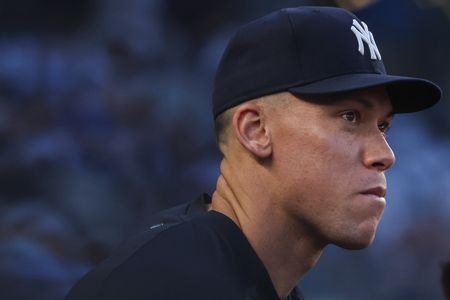
A jersey worn by New York Yankees slugger Aaron Judge during his very first major league game is expected to bring in between $3 million and $5 million when it goes under the hammer in July, according to a report by The Athletic.
The 2016 Yankees jersey will be part of Sotheby’s Summer Sports Marquee auction, alongside a jersey worn by former Yankees legend Derek Jeter during one of his most memorable moments on the field. Bidding for the auction opens July 1 and runs through July 20.
Judge made his big league debut on August 13, 2016, as the Yankees beat the visiting Tampa Bay Rays 8-4. Hitting in the eighth spot in the lineup and playing right field, Judge went 2-for-4 on the day. The highlight came in the second inning when, with two outs, he launched a home run off right-handed pitcher Matt Andriese.
That blast came right after a home run by teammate Tyler Austin, who was also making his major league debut that same afternoon. The two became the first pair of teammates in baseball history to homer in their first career at-bats in the same game.
Austin, a first baseman, wrapped up his major league career in 2019. Judge, meanwhile, has gone on to become one of the game’s biggest stars — earning American League Most Valuable Player honors in 2022, 2024, and 2025, along with AL Rookie of the Year recognition in 2017.
Now 34 years old and a seven-time All-Star, Judge carries a lifetime batting average of .291 with 385 home runs, 868 RBIs, 213 doubles, and 70 stolen bases across 1,204 games — all with the Yankees.
Brahm Wachter, who heads modern collectibles at Sotheby’s, explained to The Athletic why this particular jersey is so significant. “Obviously, he became an iconic Bronx Bomber and passed (Roger) Maris’ (single-season AL home run) record (with 62), he’s kind of known for being a home run hitter,” Wachter said. “So we have a rookie debut jersey where he hits a home run, not just wore it for his first game. He actually did something important in it.”
Judge has been sidelined since May 31 due to a stress fracture in his right rib. Through 59 games this season, he is hitting .248 with 17 home runs and 38 RBIs.
When it comes to Judge memorabilia, the highest price ever paid at public auction was $1.5 million — for the baseball he hit for his record-breaking 62nd home run in 2022. On the trading card side, auction house Fanatics Collect announced in March that a private sale of his 2013 Bowman Chrome Draft Pick Autographs one-of-one Superfractor fetched $5.2 million, making it the most expensive modern era card ever publicly sold.
Also featured in the Sotheby’s auction is a jersey tied to one of Jeter’s most iconic moments. On July 1, 2004, the Yankees shortstop made a spectacular catch on a foul ball in the 12th inning of a 5-4 win over the visiting Boston Red Sox — a game that went 13 innings. Jeter dove into the seats beyond the third base line and had to be helped out of the crowd, his face visibly bruised from the effort.
That Jeter jersey carries a pre-sale estimate of $500,000 to $700,000. For comparison, Jeter’s debut jersey sold for $369,000 back in 2020, which was a record for a modern era jersey at the time, per The Athletic. Jeter, who turns 52 on Friday, had a Hall of Fame career — inducted in the Class of 2020 — spending his entire big league run with the Yankees from 1995 to 2014.
The top price ever paid at public auction for a Jeter trading card is $600,000, for a 1993 Upper Deck SP Foil Premier Prospects graded PSA 10, according to the report.
Drivers traveling along Elderon Drive at the Elderon Drive Loop should be prepared for intermittent lane closures as construction work continues in the area.
The lane restrictions are expected to remain in effect until 6 p.m. Motorists are encouraged to use caution when passing through the construction zone and to budget extra time for their commute.
No additional details regarding the nature of the construction were provided. Drivers should stay alert for flaggers or signage in the area directing traffic.
Sussex County government offices will be closed on Friday, July 3, 2026, as the county observes the Independence Day holiday. Normal operations are set to resume when all county offices reopen on Monday, July 6, 2026.
The closure coincides with a landmark moment in American history — the semiquincentennial, marking 250 years since the birth of the United States. Sussex County is encouraging all residents to take time during this historic occasion to celebrate the country and reflect on the values of freedom and liberty that have defined the nation for two and a half centuries.
Duke guard Isaiah Evans walked into the NBA draft Tuesday night fully expecting to become a first-round selection after two seasons with the Blue Devils. Instead, he spent the evening watching from the green room in New York as 30 picks were made without his name being announced by the league commissioner.
Evans had earned a coveted seat in the green room — a space typically reserved for players projected to go in the first round — and was featured on the ESPN broadcast sitting at a table decorated with a gold basketball bearing his name. He dressed for the occasion in a dark double-breasted suit adorned with what the New York Post described as millions of dollars worth of diamonds in a broach and chain.
The floor-spacing guard had been viewed as a first-round prospect even before stepping up his performance last season. Over two years at Duke, he averaged 15 points per game while connecting on 38% of his three-point attempts. One of his standout moments came when he hit a clutch shot in the final minute to defeat reigning national champion Florida. The primary question surrounding his draft stock centered on his need to build strength on his 6-foot-6, 186-pound frame to withstand the physical demands of the NBA.
Despite the anticipation, Evans was not selected in Round 1.
He enters Wednesday’s second round alongside several other notable prospects. Here’s a look at the top players still on the board as the draft resumes, with the NBA champion New York Knicks holding the first pick:
Meleek Thomas, Arkansas: Thomas served as the second-leading scorer (15.6 points per game) for the Razorbacks, playing alongside eventual seventh overall pick Darius Acuff Jr. The 6-foot-3, 190-pound freshman guard struggled from beyond the arc early but caught fire after Christmas, shooting 47.9% from three-point range (56 of 117 attempts) over a 25-game stretch that included Arkansas’s SEC Tournament championship run and a trip to the Sweet 16.
Henri Veesaar, North Carolina: The fourth-year junior from Estonia had a breakout season with the Tar Heels after transferring from Arizona, posting 17.0 points and 8.7 rebounds per game. At 6-foot-11 and 227 pounds, Veesaar offers the kind of size-with-shooting combination that NBA front offices covet. He shot 42.6% from three at UNC (40 of 94), a significant improvement over his 31.6% mark (19 of 60) during his two seasons at Arizona. Synergy rated his catch-and-shoot jumper as “Excellent,” and evaluators note he runs the floor well.
Nolan Saunders: The 6-foot-5, 205-pound senior wing has built his reputation around his outside shooting, connecting on 37.6% of threes last season and 43.2% as a junior. Synergy ranks his jumper in the 89th percentile with an “Excellent” grade, and spot-up situations made up 35.2% of his possessions last year. The biggest concern surrounding Saunders is his recovery from a torn ACL suffered in February.
Yves Missi’s teammate (unnamed in source): A senior forward from Spain with a 6-foot-11, 208-pound frame and a nearly 7-foot-2 wingspan. He was among just eight combine participants to record a standing reach of 9 feet, 3 inches or better.
Demetrius Miller, Cincinnati: Miller previously played at Florida State and Florida Atlantic before landing with the Bearcats, where he averaged 13.0 points and ranked ninth nationally in rebounding at 10.3 per game.
Emanuel Sharp, Houston: The 6-foot-3, 208-pound redshirt senior flourished in a defense-first system under veteran coach Kelvin Sampson. He averaged a career-best 15.5 points last season and earned a spot on the Big 12’s all-defensive team. Over three seasons as a full-time starter, he shot 38.1% from three.
International prospect (originally signed with Gonzaga): The 6-foot-5, 185-pound combo guard averaged 12.5 points and 3.4 assists in Germany’s Bundesliga top league last season. According to Synergy, he operated as the ball-handler in pick-and-roll situations on 33.9% of his possessions.
Kobe Johnson, (program not specified): A senior and elite playmaker who earned second-team AP All-American honors and broke the Division I career assists record previously held by former Duke star Bobby Hurley since 1993. He ranked second nationally in assists as a sophomore (7.5), junior (8.7), and senior (8.8), and is a career 38.5% three-point shooter. His size is a concern — he was the shortest (5-foot-10) and lightest (167 pounds) player measured at the combine.
Additional players to watch in Round 2 include:
— Ryan Conwell: The 6-foot-4, 215-pound senior guard averaged 17.3 points over his last three seasons, including a career-high 18.8 last year as a second-team AP all-ACC selection at Louisville. He has knocked down 347 three-pointers in his college career.
— Bruce Thornton: The 6-foot, 223-pound senior guard is Ohio State’s all-time leading scorer. He averaged 19.9 points, 5.1 rebounds, and 3.9 assists while shooting 55.4% last season, and has connected on 41.2% of his threes over the past two years.
— Felix Okpara: The 6-foot-10, 237-pound senior from Tennessee projects as a rim-running lob target and defensive anchor. He earned SEC all-defensive team honors, boasts a 7-foot-2 wingspan, and ranked fourth at the combine in standing reach at 9 feet, 4 inches.
— Trevon Brazile: The 6-foot-10, 226-pound fifth-year senior from Arkansas also fits the rim-running mold. He averaged 13.0 points, 1.6 blocks, and 1.5 steals last season. At the combine, he ranked third in standing vertical leap (36.0 inches) and tied for fifth in maximum vertical (41.5 inches), with a nearly 7-foot-4 wingspan.
— Ugonna Onyenso: The 6-foot-11, 237-pound senior center from Virginia could be a late-round gamble as an elite shot-blocker with a nearly 7-foot-5 wingspan. In a notable performance, he held top pro prospect Cameron Boozer of Duke to 13 points on 3-for-17 shooting while rejecting four of his shots in the Atlantic Coast Conference Tournament championship game.
HARARE, Zimbabwe — Zimbabwe’s Senate gave overwhelming approval Wednesday to a set of constitutional amendments that would eliminate direct presidential elections, postpone the next scheduled vote, and extend the term of the nation’s 83-year-old president.
The measure passed with 75 senators voting in favor and only four opposed. Some lawmakers from the divided opposition crossed the aisle to support the bill alongside members of the ruling party. The president’s signature is now the only remaining step before the amendments become law.
Under the proposed changes, the presidential election currently set for 2028 would be pushed back to 2030, giving President Emmerson Mnangagwa an additional two years in office. The bill also fundamentally changes how Zimbabwe’s president is chosen — scrapping the direct popular vote in favor of selection by members of parliament. Additionally, the terms of both the president and parliament members would be extended from five years to seven.
The amendments have drawn sharp criticism from human rights lawyers, activists, and some opposition figures, who argue that lengthening presidential terms requires a public referendum rather than a simple parliamentary vote. Supporters of Mnangagwa counter that parliament has the authority to make these changes, pointing out that the constitutional two-term limit would still be preserved, even if each term becomes longer.
The political climate in Zimbabwe has grown increasingly tense since the amendments were introduced. Critics of the legislation have reportedly faced arrest and detention, while others have described harassment and intimidation. Courts in the southern African nation have not yet ruled on multiple legal challenges filed against the proposed changes.
Mnangagwa has held power since 2017, when the military facilitated the removal of his longtime mentor and former Zimbabwean ruler Robert Mugabe, who passed away in 2019. Though Mnangagwa had previously indicated he would leave office when his second term ended in 2028, his ruling ZANU-PF party has been a driving force behind the amendments. Parliament has even held late-night sessions to advance the legislation. The lower house passed the bill by a wide margin just last week.
RIO DE JANEIRO — Federal police in Brazil took a Spanish citizen into custody Wednesday at São Paulo’s Guarulhos international airport, marking the most recent in a growing string of high-profile racism-related arrests involving foreign visitors to the country.
Brazil has confronted a long history tied to slavery and has established some of the most stringent anti-racism legislation in Latin America. Those protections were written into the country’s 1988 constitution. Under Brazilian law, insulting someone based on their race can result in a prison sentence of two to five years, along with financial penalties.
According to police, the crew aboard a LATAM airlines flight that had arrived from the northeastern city of São Luís contacted authorities after the Spanish woman allegedly hurled racially offensive comments at the workers responsible for unloading the plane’s baggage. Officers took her into custody as she stepped off the aircraft. LATAM issued a statement saying there was no excuse for the aggression aimed at its staff and that the airline stands firmly against racism and discrimination in all forms.
This incident follows several similar cases in recent months. In January, Argentine national Agostina Páez was arrested in Rio after video spread widely on social media showing her making monkey gestures toward a waiter at a nightclub. Though initially prohibited from leaving Brazil, Páez was ultimately allowed to return to Argentina in April, where photographs captured her meeting with Sen. Patricia Bullrich, a close ally of Argentine President Javier Milei. Both were seen celebrating her homecoming. Legal proceedings in her case are still underway.
In May, another Argentine national, Eduardo Ignacio Murias, was arrested in Minas Gerais. Authorities allege he took unauthorized photos and video of a young child and then shared those images alongside racist messages written in Spanish. News outlet G1 reported on June 17 that a court formally indicted Murias, who continues to be held in pretrial detention.
Also in May, a Chilean citizen was arrested for making racial and homophobic slurs against flight crew members during a trip between Guarulhos and Frankfurt. That individual also reportedly attempted to open the aircraft door mid-flight and, when crew members intervened, directed racial and homophobic insults at them, according to a May 15 police statement.
Brazil’s ties to slavery run deep — the country imported more Africans into forced labor than any other nation and was the final country in the Western Hemisphere to abolish slavery, doing so in 1888. At the same time, Brazil has a long tradition of anti-racism advocacy driven by movements pushing for racial equality.
Irapuã Santana, a lawyer who specializes in anti-racism cases and a professor at the Getulio Vargas Foundation, a think-tank and university, noted the significance of that history. “Social movements played a very important role in ensuring that the Black population was recognized in the 1988 constitution,” which explicitly bans racism, he said.
In January 2023, Brazilian President Luiz Inácio Lula da Silva signed legislation that classified racial insults as equivalent to the crime of racism itself, giving courts stronger tools to address such cases.
Santana added that racism cases in Brazil are drawing increasing public attention as more people learn about the country’s legal protections and recognize that the justice system can and does respond to such offenses.
HONG KONG (AP) — Hong Kong police took two people into custody Wednesday, alleging they sold seditious publications and accepted money from foreign political organizations, invoking powers granted under a recently enacted national security law.
An official government statement released early Thursday declined to name the individuals who were arrested. However, local media outlets — among them the Chinese-language newspaper Ming Pao — cited unnamed sources claiming that one of the two was Leticia Wong, the owner of Hunter Bookstore.
Wong, a former district councilor known for her pro-democracy stance, has continued to speak out publicly at a time when many prominent activists have been imprisoned following a sweeping crackdown that came in the wake of large-scale anti-government demonstrations in 2019. Should her involvement be confirmed, many observers would likely view the arrest as another move to suppress dissenting voices in the city.
The Associated Press was unable to independently confirm the identities of those taken into custody. Police did not answer emailed questions, and Wong was unreachable by phone.
The two arrests happened exactly one week before Hong Kong marks the 29th anniversary of its transition from British colonial rule back to China. Critics argue that Beijing’s pledge to preserve the city’s Western-style civil liberties following the 1997 handover is becoming increasingly hollow.
According to Thursday’s official statement, the pair arrested operate a shop in the Sham Shui Po district — the same area where Wong’s bookstore is located. They face suspicion of sedition under the 2024 national security law, as well as charges related to handling assets believed to be proceeds of an indictable offense under a separate piece of legislation.
A pro-Beijing newspaper reported last year that an independent book fair held at Wong’s bookstore carried overtones of what it called “soft resistance.” That report drew attention to the store’s intention to sell a biography of jailed pro-democracy figure Jimmy Lai.
Authorities said their investigation found the pair allegedly displayed seditious items and offered for sale publications containing seditious content — including materials said to incite hatred toward the city’s government, its courts, and law enforcement. The statement also alleged the two received money transfers funded by foreign political organizations, though it did not name the specific publications or groups involved.
Wong had previously spoken about feeling pressure on her business. In an interview with the AP last year, she said her records documented 92 instances between July 2022 and June 2025 in which government authorities took action against her shop — including inspections, visible patrols outside the premises, and written warnings about alleged violations. She also described how an anonymous letter sent to an organization that had planned an event at her shop led that group to cancel the booking.
This past March, police arrested the owner and employees of a separate bookstore, reportedly also on suspicion of selling seditious materials, including the Lai biography. Those booksellers were subsequently released on bail.
The Hong Kong government maintains that both security laws are essential to maintaining stability in the city, and insists that freedom of expression remains fully protected.
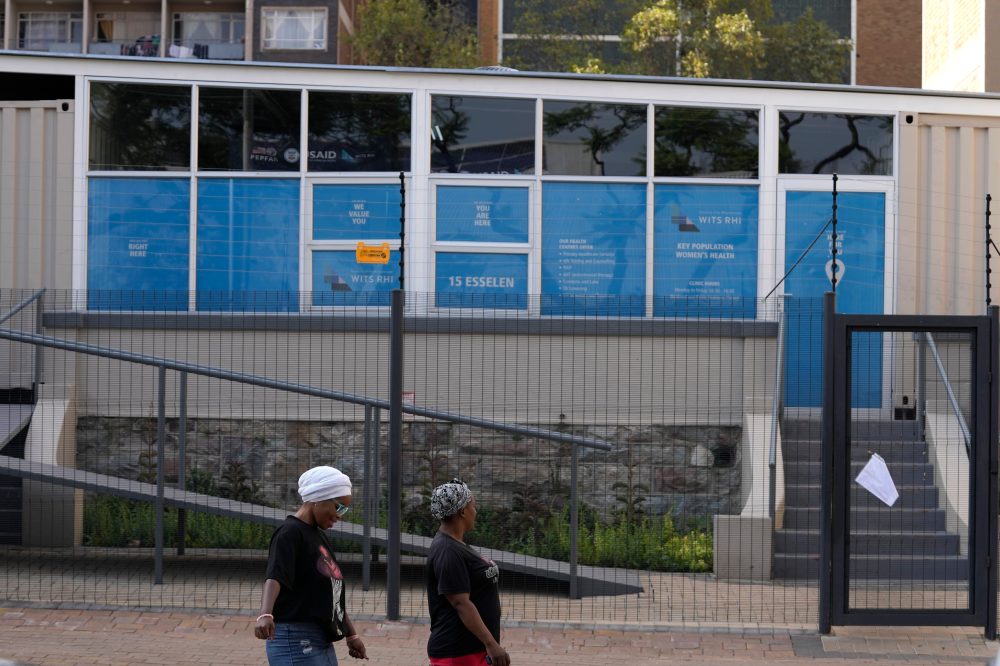
Civil society organizations in South Africa sounded the alarm Wednesday, warning that adolescent girls and women are among the first vulnerable populations bearing the burden of U.S. foreign aid cuts as the Trump administration moves to phase out more than $400 million in annual funding for the country’s HIV programs.
The U.S. State Department announced it would begin a gradual withdrawal of the President’s Emergency Plan for AIDS Relief — known as PEPFAR — a program that has backed South Africa’s fight against HIV and AIDS for two decades and is widely credited with saving more than 20 million lives during that time.
Most programs are expected to be fully wound down by the end of September, with critical personnel support continuing through March of next year, according to the State Department.
South Africa carries the world’s largest HIV burden, with roughly 8 million people living with the virus — approximately 12.7% of its 63 million residents.
The country was specifically targeted for a halt in financial assistance beyond the broader foreign aid cuts U.S. President Donald Trump ordered through an executive order in January 2025. The following month, Trump announced a complete freeze on financial aid to South Africa, pointing to political disputes including the country’s Black Economic Empowerment policies and widely contested claims of a genocide against the white Afrikaner minority community.
Trump also cited South Africa’s land expropriation laws as targeting white Afrikaners and condemned the country’s legal action against Israel at the International Court of Justice, where South Africa has accused Israel of committing genocide in Gaza. Israel strongly rejects that accusation and has characterized the Hamas-led militant attack on southern Israel on October 7, 2023 — which killed approximately 1,200 people — as itself a genocidal act.
A U.S. State Department spokesperson told The Associated Press this week that South African officials had been put on notice that PEPFAR would be pulled unless certain concerns were resolved. Among the requirements was that senior South African government officials must “unequivocally condemn all race-based incitement to violence, including the ‘Kill the Boer’ song, more frequently.” That anti-apartheid liberation song has been interpreted by some as inciting violence against Afrikaners.
The South African government has said the PEPFAR funding represented about 17% of its total HIV program budget. That figure did not include antiretroviral drug purchases, since 90% of those costs are covered domestically and the remaining 10% through the Global Fund.
Despite that, HIV-related programs across 27 districts throughout the country have been badly disrupted. Some support facilities have shut their doors entirely, and frontline workers and volunteers have been left without employment.
“The department has long been working on a self-reliance plan to minimize the impact of funding withdrawal since the initial freeze on foreign assistance and a cancellation of USAID grants in January 2025,” said South Africa health department spokesperson Foster Mohale.
Last year, South Africa unveiled a $45 million emergency fund aimed at filling some of the gaps left by the PEPFAR withdrawal.
Civil society group Section27, which examined the funding fallout in three high-HIV-prevalence districts, found that prevention services took a particularly hard hit. “As the health system started to feel the pressure, the response was to prioritize treatment continuity versus prevention,” said Tendai Mafuma, a senior legal researcher at Section27.
The Anova Health Institute reported that it has shut down all of its PEPFAR-funded programs and laid off roughly 3,000 health workers since last year. “Community delivery of PrEP (preexposure prophylaxis) and prevention services has been heavily impacted,” said Dr. Kate Rees, a public health medicine specialist at Anova. “Community delivery of prevention is important to reach the people that need it most.”
Dr. Rees noted that children, adolescents, and young people are among the hardest hit, as are key populations such as men who have sex with men and people who use drugs.
The White House is preparing to submit a request to Congress for more than $1.4 billion in new funding to tackle an escalating Ebola virus outbreak, possibly as early as Wednesday, according to a Trump administration official.
The funding package is expected to be folded into a larger supplemental spending request and includes several components targeting different aspects of the crisis.
A significant portion — $800 million — would be directed toward humanitarian crisis response efforts. That money would help establish a quarantine facility in Kenya for Americans who have been exposed to the virus, along with supplies, medical treatment, contact tracing, a regional logistics network, and infection control measures.
An additional $500 million in global health security funding is also being sought. Administration officials say that money is essential to keep the virus from reaching the United States. It would support disease surveillance, laboratory capabilities, coordination across international borders, and potential partnerships with multilateral organizations and private sector entities.
The remaining $90 million in the request would be used for diplomatic purposes, including evacuating American citizens and transporting those infected with the virus to appropriate treatment facilities.
The funding request had not been previously reported before this disclosure.
The latest figures from the national broiler hatchery report show a small but steady rise in poultry production activity across the United States.
According to the report, the number of broiler-type eggs set in the country increased by 1 percent compared to the previous period. At the same time, broiler-type chicks placed across the nation rose by 2 percent.
These numbers point to a modest growth trend in the U.S. broiler industry, which plays a significant role in the nation’s overall poultry and meat supply.
HARARE — Zimbabwe’s senate gave overwhelming approval Wednesday to a bill that would lengthen presidential terms from five years to seven, paving the way for President Emmerson Mnangagwa to hold onto power until 2030.
The vote was not particularly close — 75 senators backed the measure while just four opposed it, surpassing the two-thirds majority required for passage.
Beyond extending the length of presidential terms, the legislation also includes a significant change to how Zimbabwe’s president is chosen. Rather than being elected directly by voters, the president would instead be selected by parliament under the new framework. The bill will officially become law once Mnangagwa puts his signature on it.
Signs that Mnangagwa, who is 83 years old, was looking to remain in office past the end of his second term in 2028 began surfacing roughly two years ago. Supporters at rallies held by the ruling ZANU-PF party began chanting that he needed additional time to finish what he had started.
The ruling party formally committed to amending the constitution to extend presidential terms last year, and the proposal received cabinet approval in February.
Mnangagwa’s path to the presidency came through a 2017 military coup that removed longtime leader Robert Mugabe, who had governed Zimbabwe since the country gained independence in 1980.
Opponents of the bill argue it is simply a mechanism for Mnangagwa to cling to power beyond what voters originally agreed to. Supporters, however, contend the changes will improve government accountability and bring greater political stability to the country.
The Colorado Rockies made a roster move Wednesday, placing right-handed pitcher Jaden Hill on the 15-day injured list after he was diagnosed with right shoulder tendonitis.
To fill Hill’s spot on the roster, the organization called up fellow right-hander Seth Halvorsen from their Triple-A affiliate in Albuquerque.
Hill, who is 26 years old, had been one of the more active arms in Colorado’s bullpen this season. He holds a 0-2 record with a 5.06 ERA across 32 relief outings — a figure that puts him tied for second on the team in appearances — along with two saves.
Halvorsen, also 26, has already seen time with Colorado at the major league level this year, pitching in 18 relief appearances and posting a 3.31 ERA with no decisions to his name.
Goldey-Beacom College had plenty to celebrate academically, as a total of 14 student-athletes from its baseball and softball programs were named to the Central Atlantic Collegiate Conference All-Academic Team.
The combined recognition highlights the commitment of student-athletes from both squads to excellence both on the field and in the classroom.
Drivers traveling through the Ogletown area of New Castle County will need to find an alternate route starting next week. The Delaware Department of Transportation (DelDOT) is alerting motorists that the westbound Route 273 off-ramp leading onto Route 4 will be shut down beginning Monday, July 6th.
The closure is expected to remain in effect for approximately three weeks. During that time, westbound Route 273 travelers will be directed off at Cedarwood Road, which comes before the closed ramp, as part of the official detour route.
Drivers are encouraged to plan their trips accordingly and allow for extra travel time while the work is underway.
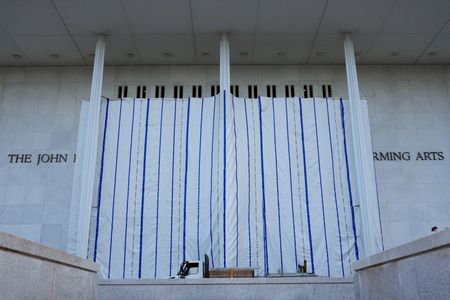
A federal judge in Washington has ordered the Trump administration to account for a tarp that is now covering the front of the Kennedy Center, the famous performing arts complex where the president’s name was recently removed under court mandate.
U.S. District Judge Christopher Cooper issued the directive Wednesday, requiring the administration to explain by July 31 “the purpose and status of the tarp and scaffolding” currently surrounding the landmark building.
The covering appeared after workers removed Trump’s name from the building’s exterior in an early-morning operation earlier this month. Judge Cooper had previously ruled that the Trump administration unlawfully added the president’s name to the facade back in December.
Neither the White House nor the Kennedy Center offered a response when asked for comment.
The legal dispute stems from a lawsuit filed by Democratic Representative Joyce Beatty, who serves as a Kennedy Center board member. Last month, Judge Cooper ordered Trump’s name taken down from the Washington theater complex and also blocked the administration’s plans to shut the venue for a two-year renovation period beginning July 4. The Trump administration has since appealed that ruling, asking a federal appeals court to pause the order.
Attorneys for Beatty filed documents this week with the U.S. Court of Appeals for the District of Columbia Circuit, arguing that the “semi-permanent tarp” blocking the late President John F. Kennedy’s name from public view appears to be the Trump administration’s “effort to frustrate the restoration of the status quo as it existed prior to the renaming.”
Beatty herself had sharp words for the move, calling the obstruction of the building’s facade an “act of petty defiance.”
NEW YORK (AP) — The New York Mets are facing uncertainty around star outfielder Juan Soto just as shortstop Francisco Lindor prepares to return from injury.
Mets manager Carlos Mendoza said he cannot rule out placing Soto on the injured list after the slugger left Tuesday night’s 9-6 loss to the Chicago Cubs following the fourth inning, citing a tight back. Soto was spotted in the dugout with a wrap around his back, and he underwent medical imaging ahead of Wednesday’s scheduled doubleheader.
Mendoza said he hoped Soto might be available at some point during Wednesday’s games, but expressed clear concern about the superstar, who is currently in the second year of a 15-year, $765 million contract.
“We’ve got to wait,” Mendoza said. “Obviously not ideal when a player like him come out of a game. Those guys are tough and they know how important they are and they take pride on being in the lineup everyday and posting. I just didn’t like how he looked yesterday. We’ve got to wait.”
Lindor, 32, is expected to be activated before Wednesday’s second game of the doubleheader. The shortstop has been out since straining his left calf while running the bases against the Minnesota Twins on April 22 — coincidentally the same day Soto returned from an 18-day stretch on the injured list due to a strained right calf.
Lindor played his third rehab game Tuesday with Triple-A Syracuse, going 2 for 5 with two runs scored. He made the four-hour drive back to New York after the game, which led the Mets to hold off on activating him until Wednesday.
“Everything checked out well after the game last night but he got in late, so we told him to kind of recover this morning,” Mendoza said. “We anticipate him being in the lineup.”
Mendoza noted the team will take a careful approach with Lindor, who is coming off the longest injured stint of his 12-year career. Having missed just 15 games over the previous four seasons combined, Lindor is expected to sit out Thursday and will get more opportunities as a designated hitter going forward.
The two stars have appeared in just nine games together this season for the last-place Mets, a team that has never fully bounced back from a 12-game losing streak that occurred during Soto’s earlier absence. New York — which last finished in last place back in 2003 — currently sits seven games behind the final National League playoff spot.
“I’m just worried about Soto,” Mendoza said. “I’m not thinking about Lindor back, Soto out. It is what it is, right? Hopefully we can get those two in the lineup for a long time here for the rest of the season and we can make a run at it.”
Mendoza also announced that struggling starting pitcher Kodai Senga is being reassigned to the bullpen. Senga surrendered seven runs in just 3 2/3 innings on Tuesday, pushing his ERA to 10.08. He has not recorded a win since June 12, 2025, when he also suffered a hamstring injury while covering first base in a game against the Washington Nationals.
Known as a creature of habit, Senga has made only one relief appearance in his time with the Mets — throwing the final 1 2/3 innings of Game 6 of the 2024 National League Championship Series against the Los Angeles Dodgers.
“We’re going to adjust his routine, he’s going to have to adjust his routine,” Mendoza said.
BOGOTA, Colombia — The emergence of Abelardo de la Espriella, a businessman and attorney set to become Colombia’s next president, is sparking debate over whether a broader political shift taking shape across Latin America could fundamentally alter the fate of the Amazon rainforest.
Colombia’s outcome arrives as Peru appears to be on the verge of electing Keiko Fujimori following a tight vote. At the same time, Brazil is gearing up for a presidential contest that could push the country rightward if Flávio Bolsonaro, son of former President Jair Bolsonaro, manages to unseat President Luiz Inácio Lula da Silva.
Taken together, these elections raise the prospect that the nations controlling the largest portions of the Amazon could shift toward policies that put greater weight on economic expansion, resource extraction, and cracking down on organized crime in remote territories.
“There’s an interesting alignment, particularly across the Andes region and the broader Amazon basin,” said Elizabeth Dickinson, deputy director for Latin America at the International Crisis Group, pointing to a growing view among some governments that economic development and environmental conservation can happen side by side.
In Colombia, de la Espriella — who received an endorsement from U.S. President Donald Trump — defeated lawmaker Iván Cepeda, who had the backing of outgoing President Gustavo Petro, by a margin of one percentage point, or roughly 251,000 votes. Cepeda acknowledged his defeat on Wednesday.
The Amazon rainforest stretches across much of northern South America and plays a vital role in slowing climate change by soaking up large quantities of carbon dioxide, a greenhouse gas responsible for warming the planet. Scientists have long cautioned that ongoing deforestation could push portions of the Amazon past a point of no return, beyond which vast areas might lose the ability to recover as rainforest.
Approximately 40% of Colombia’s land area falls within the Amazon basin. Under outgoing President Petro, the country became one of the world’s most vocal champions of rainforest preservation and a shift away from fossil fuel dependence.
On the campaign trail, de la Espriella — known by the nickname “The Tiger” — promised to reinvigorate Colombia’s oil industry, expressed support for fracking, which involves extracting oil and gas from underground rock formations, and argued that the nation should draw more heavily on its natural resources to fuel economic growth. Environmental advocates warn that ramping up oil and gas output could undermine emissions reduction goals and place added strain on ecologically sensitive regions.
De la Espriella stands in stark contrast to Petro, who blocked new fossil fuel exploration agreements and worked to establish Colombia as a global leader on climate policy.
Peru, which holds the second-largest share of the Amazon rainforest behind Brazil, appears close to electing Fujimori. Much like de la Espriella, Fujimori has indicated support for growing the mining sector and other industries as engines of economic development, while environmental organizations have voiced concern about what that could mean for forests and Indigenous communities.
Brazil, which contains roughly 60% of the Amazon, faces a presidential race with potentially sweeping consequences for forest protection. The contest comes after the country saw deforestation rates climb sharply under Bolsonaro, only to fall again under President Luiz Inácio Lula da Silva as environmental enforcement was stepped up.
Brazil’s track record demonstrates that government priorities can produce a tangible impact on the Amazon, according to Cristiane Mazzetti, zero deforestation lead at Greenpeace Brazil.
“The elected administration sets budgetary priorities, fills government positions and shapes regulations to either facilitate or hinder predatory exploitation and environmental crimes,” she said. “The result of this is measurable, as evidenced by the rate of deforestation in the Brazilian Amazon.”
Trump’s backing of de la Espriella comes as the U.S. president has rolled back domestic climate policies, pushed for expanded oil and gas production, and pulled the United States out of the 2015 Paris Agreement, the global accord designed to limit rising temperatures.
Sergio Guzmán, director of Colombia Risk Analysis, said environmental priorities may increasingly find themselves competing with demands for investment, energy production, and economic growth.
“Many of the concerns from environmentalists on emissions and fracking are going to take a second place to some of the economic concerns about energy self-sufficiency, investment and foreign direct investment in oil, gas and mining,” Guzmán said.
Illegal gold mining has emerged as one of the most destructive forces in parts of the Amazon, polluting rivers with mercury, stripping away forests, and funneling billions of dollars to criminal organizations.
Dickinson noted that many governments have adopted harder stances toward illegal mining, which has become a central issue in environmental policy across the region.
“It’s very hard to disagree with the idea of going after illegal mining, one of the most detrimental industries for the Amazon basin,” she said, adding that governments have typically concentrated on confiscating equipment or clearing miners from specific sites rather than dismantling the criminal and financial networks that drive the operations.
“What we really haven’t reached is an ability to tackle the intellectual authors of these operations,” Dickinson said.
Julio Cusurichi, a well-known Indigenous leader from Peru’s Amazon region, said Indigenous communities would press on with their organizing efforts and push for a stronger voice in decisions that affect their lands.
“Our biodiversity, our territories, our knowledge and our wisdom can contribute greatly to addressing climate change,” he said. “In our territories, we have shown that we can provide governance not only for our peoples, but for the planet.”
Throughout the Amazon, Indigenous territories frequently overlap with areas targeted for mining, oil development, and infrastructure construction. Indigenous organizations have long argued that governments routinely fail to properly consult communities before greenlighting projects.
Dickinson said friction over Indigenous autonomy and extractive projects has become increasingly visible in countries including Peru and Ecuador.
Analysts say some of the clearest early signals of how de la Espriella’s administration will approach environmental issues will come from how it manages Indigenous consultation procedures, environmental permitting, and decisions on new oil, gas, and mining projects in ecologically fragile areas.
Guzmán said de la Espriella’s plans to intensify military pressure on criminal organizations and potentially restart aerial spraying of coca crops — the plant from which cocaine is derived — could also carry consequences for Amazon communities.
Aerial fumigation has been a long-running source of controversy in Colombia. Advocates see it as a necessary tool against drug trafficking, while critics argue it can harm surrounding vegetation, affect water supplies, and push coca growers to clear new stretches of forest as they move further into remote Amazon territory.
Some analysts urge caution against assuming environmental safeguards will automatically erode under the new government.
Colombia’s courts, legislature, Indigenous organizations, and environmental agencies all retain significant influence, while advances in satellite technology are making it harder to conceal deforestation and environmental damage, analysts noted.
In the Colombian Amazon city of Leticia, Indigenous Ticuna resident Arnaldo Rufino said many in the community worry that policies encouraging greater resource extraction could ultimately come at the forest’s expense.
He said political leaders should be focused on safeguarding biodiversity and the Amazon rather than pursuing projects that risk heightening environmental pressures.
“It means cutting down the trees that allow humanity to breathe,” Rufino said.
LAGOS, Nigeria — Nigeria’s Senate has approved legislation that would permit individual states to form their own police forces, setting the stage for a sweeping overhaul of how law enforcement operates in the conflict-stricken country.
The proposed change to the nation’s constitution would shift policing authority away from the federal government, which currently holds exclusive control over the country’s police. The federal force has been stretched thin by a growing security crisis, and the new state-level forces would work alongside it rather than replace it.
Security experts say a shortage of police presence in large rural areas has allowed militant and criminal organizations to operate with little resistance. According to the United Nations, these groups — including jihadist factions — have been responsible for the deaths of tens of thousands of people across the country.
If enacted, the law would give each of Nigeria’s 36 states the authority to build a police force that meets a minimum national standard. The federal police would continue to handle counterterrorism operations, border security, organized crime, and other matters of national concern.
The bill has drawn support from both sides of the political aisle and is backed by President Bola Ahmed Tinubu. It has been discussed and debated on multiple occasions in the past and is widely seen as a potential remedy to the country’s worsening security situation.
Under President Tinubu’s administration, insecurity has continued to grow, with militant activity now spreading into the country’s southern regions. At least 80 schoolchildren remain in captivity after being kidnapped by armed groups operating in both the northern and southern parts of Nigeria.
Ikemesit Effiong, a partner at SBM Intelligence — a risk advisory firm based in Lagos — pointed to the recent wave of mass kidnappings as a driving force behind the push for reform. “In the light of recent mass kidnappings, the calls for a decentralized police have increased due to the sluggish nature of the government’s response to the events, which has been, in part, caused by the structural deficiencies of a centralized policing framework in Nigeria,” Effiong said.
While state governors are officially recognized as the top security authorities within their states, they currently have no direct operational control over police forces. That dynamic has fueled both support for and opposition to the proposed reform.
Opponents of the legislation warn that giving governors command over state police forces could open the door to abuse, with officials potentially using law enforcement to pursue personal or political goals and suppress dissent.
Before the bill can become law, it must receive approval from at least two-thirds of Nigeria’s state legislatures, as it involves an amendment to the country’s constitution.
PARIS (AP) — In an effort to dodge the brutal heat wave sweeping across much of Western Europe, Dior pushed its men’s Paris Fashion Week presentation to 9 a.m. Wednesday. Despite the early hour, the scorching temperatures still made their presence felt.
Attendees made their way to the Musée Nissim de Camondo as the city baked in extreme heat. Staff greeted guests at the entrance with cold towels, strawberries, and parasols in an attempt to offer some relief.
Inside the historic mansion, where Northern Irish designer Jonathan Anderson was presenting his newest Dior men’s collection, temperatures climbed rapidly. Some guests appeared to be struggling with the heat, and water was in short supply.
Despite the uncomfortable conditions, the front row was packed with well-known faces. Among those attending were LaKeith Stanfield, Little Simz, James Marsden, Drew Starkey, Mike Faist, 070 Shake, Alexander Ludwig, and Sam Nivola.
Anderson’s collection centered on the idea of formality coming undone — tuxedos worn loosely, denim torn and raw, sequins catching the light, and disco-ball boots striding through a venue steeped in old-world elegance.
Dior described the atmosphere behind the collection as “a soiree turning into a house party.” Anderson himself put it this way: “something quite formal becoming undone.”
The central concept was clear: the Dior man wasn’t just arriving at the party — he had been there all night and stayed until dawn.
Anderson opened with tailored looks, though he made them lighter and less rigid. Pinstripes and houndstooth patterns were printed onto silk chiffon rather than woven into heavier fabric, resulting in pieces that felt formal yet see-through.
The collection pushed Dior’s signature style into edgier territory. Sequined trousers were styled to resemble jeans, ripped denim was finished with delicate silver chains, tuxedos came in relaxed cuts, and pink denim shorts appeared beneath formal coats.
Accessories included crystal sunglasses, disco-ball boots, and patchworked Japanese denim shirts.
The standout pieces succeeded by keeping Dior’s identity recognizable while disrupting it. A scarf motif was drawn from a 1979 Dior haute couture piece, and silver embroidery was borrowed from an 18th-century gentleman’s coat.
Boots were intentionally styled to look worn and disheveled, decorated with tiny ladybird details.
The collection wasn’t a break from Dior’s history — it was a way of putting that history in motion.
The choice of venue added deeper meaning to the show. The Musée Nissim de Camondo, currently closed for restoration, was built around Moïse de Camondo’s collection of 18th-century decorative arts — the same era that captivated Christian Dior himself.
Anderson presented a collection about loosened formality inside a building also caught between its past and its future. Dior’s own show notes framed that “in-between” state as intentional, pointing to beauty found in imperfection.
The mansion also carries a painful history. Camondo’s son perished in World War I, and later generations of the family were deported and killed during the Holocaust. Today the building serves as both a museum and a memorial to that loss.
Set against that somber backdrop, the collection’s playful energy gave the clothing a certain tension. Anderson took elements already embedded in Dior’s identity — the tuxedo, the Bar silhouette, couture embroidery, 18th-century ornamentation — and recast them in a younger, more chaotic register.
The result stood as one of Anderson’s most focused and fully realized outings at Dior to date.
Alibaba, one of China’s largest technology corporations, has taken legal action against the U.S. Department of Defense, challenging its placement on a Pentagon list that identifies companies as Chinese military-linked entities — a label that bars them from receiving U.S. defense contracts and carries serious reputational consequences.
The legal petition was filed this week in the San Jose division of the U.S. District Court for the Northern District of California. Alibaba, which trades publicly on the New York Stock Exchange, contends that the designation — announced on June 8 — has “no basis in fact or law” and that the Defense Department failed to follow any fair process before reaching its conclusion.
This is not the first time a Chinese company has gone to court to fight such a label. The move is part of a growing pattern of legal challenges by Chinese firms targeting Pentagon national security classifications.
Back in 2021, with many in Washington growing increasingly concerned about China’s military expansion, Congress directed the Defense Department to compile a list of Chinese companies believed to be directly controlled by Chinese military or security forces, or those thought to have supported China’s defense industry.
That list currently includes 188 entities — ranging from government-owned defense firms to private technology companies like Alibaba and robotics manufacturer Unitree. Both the Chinese government and several of the named companies have pushed back against the designations.
Adding to the diplomatic tension, Beijing announced sanctions on Monday targeting 10 American companies with military ties — a move that risks further straining relations between the U.S. and China at a time when both governments have been working to ease tensions.
Another company caught up in similar controversy is WuXi AppTec Co., which provides research, development, and manufacturing services to hundreds of American pharmaceutical and life sciences firms. The Pentagon added the company to the list, stating it is “indirectly owned” by China’s state-owned Assets Supervision and Administration Commission and is also “indirectly affiliated” with both the State Administration of Science, Technology and Industry for National Defense and the People’s Liberation Army.
WuXi AppTec is fighting its designation in federal court in Washington, D.C. In a petition filed June 11, the company stated the label has “already caused and will continue to cause several and irreparable harms,” calling the classification “the product of political pressure and inaccurate, unsupported assertions.”
In its own petition filed Tuesday, Alibaba stated that the designation is driving away U.S. investors and causing significant damage, given how heavily the company relies on the confidence of its American business partners.
The Pentagon’s position is that Alibaba is connected to China’s Assets Supervision and Administration Commission and that it contributes to China’s military-industrial base through ties to China’s Ministry of Industry and Information Technology.
Alibaba disputes this, saying in its petition that the company is managed by an independent board of directors and holds no military certifications or licenses. The company denies any relationship with the Assets Supervision and Administration Commission and argues that complying with the Ministry of Industry and Information Technology is simply a legal requirement for any company operating in China — including American ones. As the petition bluntly states: “A regulator is not an affiliate.”
This legal battle has a precedent worth noting: a federal judge ruled against Chinese drone manufacturer DJI Technology last year when it sought to be removed from the same Pentagon list. DJI is currently appealing that ruling.
A woman linked to the cultlike organization known as the Zizians has been formally charged with murder in connection with the shooting deaths of her mother and father at their Pennsylvania home — a crime that took place on her 30th birthday — and prosecutors say they believe others were involved.
Michelle Zajko, who has been held in a Maryland jail since February 2025 on separate charges, now faces murder, burglary, and conspiracy counts in the deaths of Rita and Richard Zajko, according to Delaware County District Attorney Tanner Rouse, who made the announcement at a Wednesday news conference.
Rouse stated that Zajko was involved in her parents’ deaths to a significant degree, saying that “to the extent that if she wasn’t the one who actually pulled the trigger, she was certainly aligned with those who did.”
As of Wednesday, online court records did not show whether Zajko had legal representation in the Pennsylvania case. Her attorney in the Maryland case did not respond to a request for comment, and the Delaware County Public Defender’s office also declined to speak on the matter.
The couple was shot and killed inside their home on New Year’s Eve. Police say a neighbor’s doorbell camera recorded footage of a vehicle arriving at the Chester Heights property, followed by a voice calling out “Mom!” and another voice crying, “Oh my God! Oh, God, God!”
Zajko has maintained her innocence, and in court documents suggested her father may have shot her mother before taking his own life. In an April 2025 document she called an “Open Letter to the World,” she wrote plainly: “I didn’t murder my parents.”
Despite her denials, authorities had long considered Zajko a person of interest in what they describe as a double homicide connected to a broader pattern of violence. The Zajko killings are among six deaths tied to a group of young, highly educated computer scientists who reportedly share extreme views on veganism, animal rights, gender identity, and artificial intelligence.
Going back to 2022, group members have been connected to the death of one of their own during an assault on a California landlord, the subsequent killing of that landlord, the deaths of the Zajkos in Pennsylvania, and a highway shooting in Vermont that left a U.S. border agent and another Zizian member dead.
Zajko is also accused of supplying the firearm used to kill U.S. Border Patrol Agent David Maland in January 2025. She was arrested in Maryland weeks after that incident, along with Daniel Blank and Jack “Ziz” LaSota, who authorities identify as the group’s leader. Officers responding to a landowner’s report of suspicious individuals living in box trucks on his land noted that the group had “ties with the Zizians Cult” and said they would be investigated for crimes across the country.
All three face state charges of trespassing and illegal possession of firearms and drugs. LaSota additionally faces a federal charge of illegal gun possession as a fugitive. A judge recently approved a defense motion for a competency evaluation in that federal case.
In court filings, LaSota’s legal team stated that their client rejects the label “Zizian” and denies that she and her associates constitute a cult. Zajko, for her part, has claimed that the Maryland arrests were carried out to stop the group from helping clear Teresa Youngblut, who has entered a not guilty plea in Vermont to murder charges and could potentially face the death penalty if found guilty.
At the time of her parents’ deaths, Zajko was living in Vermont and was interviewed by police there shortly afterward. Weeks later, she was briefly detained at a Pennsylvania hotel but released without being charged. LaSota, who was also staying at that hotel, was charged with obstructing the homicide investigation and disorderly conduct.
The prosecutor revealed that Zajko had been estranged from her family in the year before the killings. On the night of the murders, her mother sent her a text message in an effort to mend their relationship. “Her mother reached out and explained that she was sorry for the rift that had grown between them,” Rouse said. “That text went unanswered.”
Within hours of that unanswered message, at least two individuals entered the home. As Rouse described it: “The lights go on in the home, and Richard and Rita Zajko are executed.”
A rural section of Northern California shook Wednesday morning when a preliminary magnitude 5.6 earthquake struck — the most powerful to hit the area in nearly nine decades — yet authorities reported no damage or injuries in the immediate aftermath.
According to the U.S. Geological Survey, the quake’s epicenter was located approximately 7 miles (12 kilometers) northwest of Willits, an agricultural town in Mendocino County. The tremor struck at 8:10 a.m. Pacific Time and was centered about 50 miles (80 kilometers) inland from the coastal city of Fort Bragg, at a depth of roughly 5 miles (8 kilometers). Shaking was felt across a wide area, including Fort Bragg itself.
Mendocino County, which is dotted with small farming communities, sits about 140 miles (225 kilometers) northeast of San Francisco.
At Club Calpella Restaurant in Calpella — a town roughly 10 miles (16 kilometers) south of the epicenter — employee Brie Leon had just unlocked the doors for the day when the building began to shake, sending plates and liquor bottles rattling.
“I had just turned the open sign on and went back into the kitchen, and that’s when it happened,” Leon said. “It almost felt like something hit the building.”
Leon said the quake knocked picture frames from the walls and sent bottles tumbling off shelves both inside the restaurant and in the adjacent stockroom. She and her coworkers quickly cleaned up the mess before opening for the breakfast crowd.
“It wasn’t a big, big quake, but things went everywhere,” she said.
At Cafe One in Fort Bragg, employee Andrea Medina also felt the tremor. “Things were shaking,” she said. “But it’s done, not too strong.”
Fawnell Dale, a dispatch supervisor with the Mendocino County Sheriff’s Office in Ukiah, described the shaking as mild and confirmed that no reports of damage or injuries had come in.
Veteran California seismologist Lucy Jones noted that this was the largest earthquake to strike the region in close to 90 years, pointing out that the area does not sit on a major fault line.
“The area is not without earthquakes, but they’re usually smaller than this,” Jones said. She added that while aftershocks are expected, they will “probably stay on the low side.”
Within an hour of the main quake, three additional tremors — each below a magnitude of 2.7 — were recorded near the same epicenter.
The California Governor’s Office of Emergency Services reported that nearly 657,000 earthquake early warning alerts were pushed out through the MyShake App to users across Northern California. The office said it had not received any damage or injury reports but was working with local authorities to assess the full impact of the quake.
The Chicago Cubs suffered a double blow to their pitching staff Wednesday, placing right-handers Edward Cabrera and Ben Brown on the 15-day injured list.
The moves come as left-hander Matthew Boyd is set to rejoin the rotation. Manager Craig Counsell announced Boyd will come off the injured list and take the mound Thursday when Chicago visits the New York Mets. Boyd had surgery on his left knee last month to fix a meniscus tear he suffered while playing with his children.
Cabrera’s injury happened dramatically on Tuesday, when he was carted off the field after hurting his left hamstring while running to cover first base during Chicago’s 9-6 win over New York at Citi Field.
Brown’s placement on the injured list — backdated to Sunday — stems from a neck strain.
The Cubs also made several other roster moves Wednesday. The team selected the contract of Vince Velasquez and named right-hander Tyler Ferguson as the 27th man for the team’s doubleheader against the Mets. Additionally, Gavin Hollowell was recalled from Triple-A Iowa, while right-hander Eduarniel Nunez was designated for assignment.
Cabrera, 28, is posting a 5-4 record with a 5.10 ERA across 14 starts this season — his first with Chicago after being acquired from the Miami Marlins during the offseason.
Brown, 26, has been one of the team’s standout arms, going 4-2 with one save and an impressive 1.85 ERA in 20 appearances, including eight starts.
Boyd, 35, holds a 2-1 record with a 6.00 ERA, six walks, and 31 strikeouts over 24 innings in five starts. He earned an All-Star selection for Chicago in 2025.
FIFA announced Wednesday that Qatar midfielder Assim Madibo has been suspended for five matches after being shown a red card for a tackle that left Canada midfielder Ismael Kone with a serious leg injury.
The match, a Group B contest, ended in a lopsided 6-0 victory for Canada. The damaging tackle came in the second half, when Madibo’s clumsy challenge resulted in Kone suffering a broken leg.
The FIFA Disciplinary Committee handed down the five-match ban, citing serious foul play as the basis for the punishment. The ruling can be challenged through the FIFA Appeal Committee if either party chooses to contest it.
Kone underwent surgery following the injury. In a show of concern, Madibo and Qatar’s sports minister traveled to the hospital to check on Kone’s condition, according to the Qatar Football Association.
Both teams are set to wrap up their group stage play later Wednesday, with Qatar facing Bosnia and Herzegovina and co-host Canada squaring off against Switzerland.
PARIS — French automaker Renault is looking at eliminating 800 positions within its engineering division in France before the close of 2027, according to the company’s top human resources official in the country.
The cuts would come from an engineering workforce that currently stands at 5,500 employees. Maximilien Fleury, the company’s human resources chief for France, told reporters on Wednesday that Renault intends to achieve the reductions through voluntary redundancies rather than forced layoffs.
Chief Technology Officer Philippe Brunet said the workforce reduction aligns with the automaker’s broader push to sharpen its competitive edge against growing pressure from Chinese rivals in the global automotive market.
The family of a 76-year-old Texas woman is taking Tesla to court after a driver using the company’s automated driving assistance feature crashed a Model 3 into her suburban Houston home, killing her, according to attorneys representing the family.
A complaint filed Tuesday names Tesla as liable for the wrongful death of Martha Avila, alleging the company showed gross negligence and failed to adequately warn consumers that its Autopilot and Full Self-Driving systems were defective.
Avila’s daughter, Jennifer Barbour, and her husband, Justin Barbour, stated that the Model 3’s driver, Michael Butler, told law enforcement he had turned on Autopilot before the vehicle crashed through the front wall of Avila’s home in Katy, Texas, on June 19, trapping her inside. She later died at a nearby hospital. Justin Barbour also reported sustaining injuries in the crash.
The lawsuit, filed in Harris County state court in Texas, is seeking more than $1 million in damages along with punitive damages, citing what it describes as Tesla’s “reckless disregard for a substantial risk of severe bodily injury.”
Tesla and its CEO did not respond to requests for comment. However, the CEO posted on X Monday evening stating, “FSD drives slowly through neighborhood streets and this was a high speed crash!”
Tesla’s vice president of AI software posted separately on X, claiming “the driver manually overrode self-driving by pressing the accelerator all the way to 100% of the accel pedal in this residential area.”
The National Highway Traffic Safety Administration is currently investigating the crash. Since 2016, the agency has launched nearly 50 special investigations into Tesla crashes believed to involve advanced driver assistance systems, with approximately two dozen deaths reported across those cases.
This past March, the NHTSA expanded its probe to cover 3.2 million Tesla vehicles equipped with Full Self-Driving, citing concerns the system may not properly detect hazards or warn drivers in low-visibility conditions. In 2023, Tesla also recalled roughly 2 million vehicles — nearly its entire U.S. fleet — to strengthen measures ensuring drivers remain attentive while using Autopilot.
Tesla has described Autopilot as a system that handles steering, acceleration, and braking within a lane, while Full Self-Driving is designed to respond to traffic signals and perform lane changes. The company has maintained that both systems require drivers to remain fully alert with their hands on the wheel at all times.
Michael Butler is also named as a defendant in the lawsuit. It is unclear whether he has legal representation, and efforts to contact him were unsuccessful. The Barbour family’s attorneys did not provide additional comment when contacted.
A Chinese cybersecurity firm says it has developed homegrown artificial intelligence tools designed to rival Anthropic’s Mythos system — a U.S.-developed program that has raised alarms across the global cybersecurity community.
360 Security Technology made the announcement Wednesday, framing Anthropic’s Mythos as a strategic cyber weapon that China simply cannot allow to go unanswered.
Mythos, which was previewed in April, is an AI system capable of detecting vulnerabilities in software. Cybersecurity experts have warned the technology could significantly amplify the threat of cyberattacks. This month, the U.S. government ordered Anthropic to halt exports of a less powerful version of the program, citing concerns about national security.
At the ISC.AI 2026 cybersecurity conference held in Beijing, 360 founder Zhou Hongyi took the stage to introduce two new AI security tools grouped under the name “Yitian Tulong” — a reference to a beloved Chinese martial arts novel, with the phrase translating roughly to “Heavenly Sword and Dragon Saber.”
Zhou explained that one of the tools, called “Tulongfeng,” is built to automatically find software vulnerabilities, and he referred to it as “China’s version of Mythos.” The second tool, “Yitianzhen,” is designed to automate cyber defense and incident response.
“This kind of powerful weapon that can change the landscape of cyber offence and defence cannot be held only by others,” Zhou said in remarks published by 360.
He characterized vulnerability-detecting AI as a national strategic asset, one that could serve both defensive and offensive purposes when it comes to critical infrastructure.
China and the United States have long traded accusations over offensive cyber operations targeting each other’s critical systems. The unveiling by 360 represents the most prominent Chinese response yet to the concerns sparked by Mythos.
Anthropic stated in April that its Mythos Preview tool had uncovered “thousands” of significant vulnerabilities across operating systems, web browsers, and other software. The U.S. government subsequently directed the company to suspend exports of a scaled-down version of Mythos to all international destinations and foreign nationals, again citing national security.
Zhou warned that China risked falling into a situation of “one-way transparency” — where U.S. entities could use Mythos-like systems to scan Chinese software and infrastructure, while Chinese companies had no comparable tools to do the same. His comments reflect a broader anxiety in China, with state media describing Mythos as displaying “unprecedented cyberattack capabilities.” Zhou himself sits on China’s top political advisory body.
360 reported that Tulongfeng has identified 3,432 software vulnerabilities, including 105 that have been confirmed by Chinese authorities. Reuters was unable to independently verify those figures.
Zhou said his company would not simply replicate the American approach, which he described as depending on “the strongest model, the strongest computing power and the strongest chips.” U.S. export restrictions on advanced chips, tightened since 2022, have limited China’s ability to keep pace with American AI developers, though that gap has reportedly narrowed over the past year. The U.S. has defended those restrictions by arguing the chips could be used to enhance the Chinese military’s AI capabilities.
“Objectively speaking, domestic models still have a 20%-30% gap in base capability,” Zhou acknowledged. “China cannot wait until model capabilities have fully caught up before starting vulnerability discovery, because we cannot afford to wait.”
Instead, Zhou said 360 is pursuing what he called an “agent” approach — combining AI models with security expertise, vulnerability databases, and automated tools. He claimed this strategy, which he said only 360 has successfully deployed, gives Tulongfeng capabilities on par with Mythos.
“If Mythos is a top-end chip, what we are building is a complete machine that can run stably, work 24 hours a day and make fewer mistakes,” Zhou said. “If the U.S. route is to cultivate a genius hacker, 360’s route is to organise a professional attack-and-defence team.”
The announcement comes against a backdrop of growing AI-related cyber threats. Anthropic previously disclosed that hackers exploited weaknesses in its Claude AI to attack roughly 30 organizations worldwide. A separate study by IBM and Palo Alto Networks found that 67% of 1,000 executives surveyed said they had been targeted by AI-driven attacks within the past year.
Zhou is a well-known figure in China’s technology sector. He founded 360, which built its reputation through antivirus software before expanding into cybersecurity services for businesses and government clients.
The Maryland Department of Natural Resources is offering area fishing enthusiasts a chance to land a free day on the water — and help protect the Chesapeake Bay at the same time. The agency is giving away 100 charter or guided fishing trips focused on catching blue catfish, an invasive species in the Chesapeake Bay watershed. Each trip is valued at up to $1,500.
The contest, called “Reel in the Blues Bonanza,” is accepting entries from June 24 through July 13. Anyone 18 years of age or older can submit one entry through a simple online form for a shot at winning a summer or fall fishing outing targeting these invasive fish.
One hundred winners will be chosen at random from all entries submitted. Those who win will need to reach out to a participating captain or guide to set up their trip. Winners are allowed to bring guests, up to the capacity of the charter boat they select. Charter fees and mate tips are covered as part of the prize.
Blue catfish are considered great eating, and mates can fillet the catch right on the boat so winners can take the fish home.
The giveaway serves several goals: removing blue catfish from the bay, encouraging more recreational fishermen to target this invasive species, and boosting Maryland’s charter and guided fishing industry. Blue catfish, known scientifically as Ictalurus furcatus, pose a serious threat to the ecosystem because of their aggressive feeding habits, rapid reproduction, and ability to crowd out native species that are important to both commercial and recreational fishing in Maryland.
This contest is one piece of a broader departmental effort to reduce the damage caused by invasive catfish. Other programs include collecting harvest data from charter captains, backing invasive species fishing tournaments, and coordinating with partners and other agencies to increase the number of fish removed. Anglers with a valid Maryland fishing license face no season restrictions or catch limits when targeting blue catfish recreationally.
Winners of the Reel in the Blues Bonanza will be notified and given a list of participating captains and guides by July 15. They must confirm acceptance of the prize by responding to the department no later than July 22. Trips are expected to take place between late July 2026 and October 2026. Winners are responsible for getting themselves to the dock where their charter departs.
Delaware State Police have arrested a 32-year-old Wilmington woman after she attacked two workers at a local tire shop and nearly struck one of them with her vehicle.
The incident took place on June 19, 2026, around 12:15 p.m. at Jose’s Tire Shop, located at 3700 North Market Street in Wilmington. Troopers were initially called to the scene for a reported hit-and-run collision.
According to investigators, Amadi Muhammad arrived at the business looking to have her vehicle repaired. When workers told her they were unable to perform the service she needed, the situation escalated into a verbal confrontation, and Muhammad refused to leave the property.
The dispute then turned physical. Muhammad grabbed one employee by the shirt and punched another. She then got into her vehicle and drove it toward one of the workers, coming close to hitting them before stopping. As she drove off the property, she struck an unoccupied parked vehicle belonging to an unrelated party.
Fortunately, neither employee suffered any injuries during the altercation. The owner of the damaged parked vehicle chose not to pursue criminal charges over the collision.
Investigators identified Muhammad as the suspect and secured an arrest warrant. On June 23, 2026, troopers located her in Wilmington and took her into custody without any issues. She was transported to Troop 1, where she was formally charged, arraigned through the Justice of the Peace Court, and remanded to the Delaware Department of Correction on a $5,000 secured bond.
Caitlin Clark picked up her fifth technical foul of the season during a heated Monday contest between the Indiana Fever and Phoenix Mercury — and the WNBA will not be overturning it, The Athletic reported Wednesday.
Under league rules, any player who accumulates eight technical fouls during the season is automatically suspended for one game. With 27 games still remaining on Indiana’s 44-game schedule, the call puts Clark in a precarious position.
The technical stemmed from an on-court confrontation in which Clark fouled Mercury forward DeWanna Bonner, leading to the two players needing to be separated. Clark then directed clapping toward the Mercury bench, which prompted referee Gerda Gatling to assess the penalty.
Clark, 24, had strong words about the call, describing it as “ridiculous” and calling out Gatling by name.
“I went to Gerda, and I said, ‘Why’d you give me a technical foul?’ She said because I was ‘clapping and instigating,’” Clark said, per The Athletic. “I said, ‘OK, then you just don’t like competitive basketball.’ And that’s just facts. That’s just reality.”
Clark was not alone in receiving a technical during the altercation. Bonner, Mercury teammate Alyssa Thomas, and Fever players Sophie Cunningham and Myisha Hines-Allen were all also assessed technicals.
Indiana head coach Stephanie White acknowledged Clark’s competitive fire but said the young star needs to exercise more judgment on the court.
“There are natural things that happen that the energy of the game creates when you do get those (technical fouls), but there are some that we can be a little bit more in control (of),” White said. “And so yes, we’ll continue to remind her, and I think she has to have an awareness.”
Despite the controversy, Clark continues to put up historic numbers. She is currently in the middle of a WNBA record streak, having posted at least 20 points and five assists in six straight games.
The Fever and Mercury are scheduled to face off again Wednesday evening in Indianapolis.
Financial markets are set to receive a fresh look at the condition of the country’s biggest banks on Wednesday, when the Federal Reserve is scheduled to release the outcomes of its most recent stress test evaluations.
The findings cover 32 banking institutions, among them JPMorgan and Bank of America. However, the results are expected to carry less weight than in past years. Back in February, the Fed announced it would not use this year’s test outcomes to adjust each bank’s so-called stress capital buffer — an extra layer of financial reserves that large institutions are required to hold, which can shift depending on their test performance.
Because those capital buffers are remaining unchanged for now, banks already have enough information to move forward with financial planning, including decisions about stock buybacks or dividend adjustments. Analysts at Raymond James said in a pre-release note that most banks will likely announce modest plans on both fronts, adding that bank leadership may lean toward caution given the current economic climate.
“Despite the accommodative regulatory backdrop, we believe some management teams could be somewhat conservative given the aforementioned geopolitical/macro uncertainty and inflationary pressures,” the analysts wrote.
Industry watchers say banks are more likely to hold off on bigger capital decisions until regulators finish rolling out several new capital rules that the banking sector has been pushing for — most notably a proposal tied to risk-based capital requirements known as the Basel proposal.
If those rule changes go through, they could free up billions of dollars that banks could either return to shareholders or reinvest in their own operations.
“The industry is in good shape with capital, as all the names have excess capital relative to the implied pro forma target capital ratios and requirements as the industry continues to be in a position to take advantage of de-regulatory momentum,” analysts at KBW wrote in a note previewing the tests.
The Federal Reserve has been working to overhaul the stress testing process after sustained criticism from the banking industry that the exams lack transparency and rely too heavily on subjective judgment. Since the Fed is still gathering public input on how to make the tests more open, officials chose to keep capital requirements at the same levels established by last year’s exam.
A spokesperson for the Fed declined to offer any comment ahead of the results, which were scheduled to be released to the public at 4 p.m. ET.
U.S. airline stocks posted strong gains Wednesday, climbing between 3% and 7%, after crude oil prices dropped to their lowest levels since before the Iran war began — sparking optimism that financial pressure on the aviation industry could begin to ease.
The S&P 500 Passenger Airlines index surged as much as 5%, hitting an all-time high. Since its closing value on June 12 — the day before the U.S. and Iran announced a peace agreement — the index has climbed nearly 13%. By comparison, the broader S&P 500 has slipped 0.5% during that same stretch.
Brent crude futures dropped below $74 per barrel on Wednesday, as signals emerged that more oil tankers are preparing to move through the Strait of Hormuz — a critical waterway that handles roughly one-fifth of the world’s oil supply.
As oil supplies loosen and prices come down, airlines are positioned to save billions of dollars. During the Iran war, jet fuel costs climbed far faster than airlines were able to raise ticket prices. However, analysts caution that passengers are unlikely to see lower fares right away, given that available seating remains limited.
Morningstar analyst Nicolas Owens explained the timing challenge airlines face: “Sudden movements in fuel prices mean that in the near term the airline’s profitability can change (in the opposite direction of the fuel price) because they have already sold many tickets assuming the previous fuel cost.”
In a note published Tuesday, UBS said it sees the possibility that airlines’ third-quarter earnings per share could beat Wall Street forecasts — provided fuel prices continue to moderate.
Analysts also note that while all airlines stand to benefit from cheaper jet fuel, carriers with smaller fleets and fewer premium-class seats are likely to see bigger gains. Those airlines tend to have profit margins that are more vulnerable to fuel price swings, meaning they have more to recover.
Among individual carriers, Frontier and Southwest each rose 3%, while Delta gained 3.7% and JetBlue climbed 4.5%. Alaska Air and United both added roughly 6%, and American Airlines led the pack with a gain of about 7%.
Jet fuel prices had averaged around $85 to $90 per barrel before U.S.-Israeli strikes on Iran in February. Prices eventually peaked at more than $170 per barrel before retreating to an average of $119.17 in the week ending June 19, according to the International Air Transport Association.
Michael Ashley Schulman, a partner at Cerity Partners, said the oil price decline is only part of what’s driving optimism in the sector. “The drop in oil prices is part of the story but also the ending of the conflict with Iran means a resumption of industrial ventures that were put on hold and a corresponding increase in profitable business and holiday travel,” he said.
Shares of online travel companies, including Booking Holdings and Expedia, also climbed sharply Wednesday, rising between 7% and 10%.
Francisco Lindor is back. The New York Mets activated their shortstop from the injured list Wednesday, ending an absence of more than two months caused by a strained left calf.
Lindor suffered the injury on April 22 and was placed on the injured list the following day. He made his final rehab appearance Tuesday with Syracuse, playing eight innings at shortstop and collecting two hits in five at-bats.
Given the length of his recovery and the fact that he hasn’t seen much game action, the Mets chose not to play him in both games of Wednesday’s scheduled doubleheader against the Cubs. He is slated to appear in Game 2.
The team has already been dealing with multiple injury setbacks this season. Juan Soto sat out the first game of the doubleheader due to back stiffness, and the Mets have rarely been able to field their full preferred lineup from top to bottom.
President of baseball operations David Stearns acknowledged the team needs to improve, while also tempering expectations for Lindor’s immediate impact. “We’ve got to start playing better baseball, win more games consistently. Francisco is a big part of that,” Stearns said. “We think he can help us. We’ve got a sense of urgency throughout our team right now. We also can’t put everything on Francisco to come back at a time when he hasn’t played baseball very much, and expect us to put him on his back.”
On the season, Lindor is hitting .226. He had been finding his stride in the nine games just before the injury, going 11-for-33 to climb from a .188 average.
The five-time All-Star had a strong 2024 campaign, batting .267 with 31 home runs, 86 RBIs, a .346 on-base percentage, and a .466 slugging percentage across 160 games. He led the National League with 644 at-bats and topped the entire major leagues with 732 plate appearances.
Over the course of his career with Cleveland from 2015 to 2020 and then New York, Lindor has appeared in 1,559 regular-season games, posting a .273 batting average with 281 home runs and 861 RBIs.
The Los Angeles Sparks announced Wednesday that guard Kelsey Plum will be sidelined for a minimum of four weeks due to a lower left leg injury.
The loss of Plum is a major blow to the Sparks’ season. The four-time All-Star is currently second in the entire league in scoring, averaging 23.9 points per game, and ranks sixth in assists at 6.4 per contest.
Plum first missed action on June 17, sitting out a 99-83 defeat to the Minnesota Lynx because of the injury. She made her way back onto the court Sunday with her left leg wrapped in tape, contributing 12 points and seven assists in a narrow 98-97 win over the New York Liberty.
The 31-year-old is now in her ninth WNBA season and her second year with Los Angeles. She was originally selected with the first overall pick in the 2017 draft by the San Antonio Stars/Las Vegas Aces franchise.
During her time with the Aces, Plum captured two championships and took home the Sixth Player of the Year award in 2021. She also earned All-Star recognition in four consecutive seasons from 2022 through 2025, including last year in her debut campaign with the Sparks.
Across 290 career games, including 248 starts, Plum has put up averages of 15.5 points, 4.4 assists, and 2.6 rebounds per game throughout her career.
Austin Reaves is set to remain a Los Angeles Laker for the foreseeable future, with the team agreeing to a four-year contract extension valued at $185 million, according to a person familiar with the situation who spoke to The Associated Press on Wednesday.
The source requested anonymity because the agreement has not yet been made official. The deal marks a significant milestone for Reaves, who solidifies his place among the most accomplished undrafted players in recent NBA history.
Rather than exercising his $14.9 million player option for the coming season, Reaves chose to commit to the franchise that brought him aboard out of Oklahoma following the 2021 draft. The versatile guard has steadily elevated his game each year, emerging as one of the league’s more reliable scorers and playmakers over his five seasons.
Last season, Reaves put up averages of 23.3 points, 5.5 assists, and 4.7 rebounds per game — impressive numbers considering he missed extended stretches due to injuries that lingered into the playoffs. He has also built a strong on-court partnership with NBA scoring champion Luka Doncic in the Lakers’ backcourt.
Reaves would have been among the most sought-after free agents available this summer, but instead he stays alongside Doncic as the Lakers and LeBron James sort out their futures. Los Angeles is also working through contract situations with impending free agents Rui Hachimura, Luke Kennard, and Jaxson Hayes.
After the Lakers — who won the Pacific Division — were eliminated in the second round of the playoffs by the Oklahoma City Thunder, general manager Rob Pelinka signaled that keeping Reaves was a top priority, noting that both sides had essentially already committed to working out an extension. A native of Arkansas who grew up rooting for the Lakers, Reaves has become a fan favorite in Los Angeles.
Pelinka summed up the mutual commitment, saying: “He started his journey here as a Laker, and has made it very clear to us that he wants his journey to continue as a Laker. And we feel the same way.”
A company that builds humanlike robots designed to haul bins and totes around warehouses is making its Wall Street debut, putting to the test whether investors believe AI-powered humanoid machines are ready for the workforce.
Agility Robotics, headquartered in Salem, Oregon, announced Wednesday a planned merger with an investment firm that would place the company’s value at $2.5 billion. The deal would make Agility the first publicly traded company focused exclusively on building and selling humanoid robots.
The company faces competition from several major players in the space, including Tesla, whose CEO Elon Musk has promoted the carmaker’s humanoid prototype, called Optimus, as a glimpse into the future.
Agility’s robot product line, known as Digit, is built to pick up and transport heavy containers. Michael Klein, co-founder and chairman of Churchill Capital Group — the special-purpose acquisition company planning to merge with Agility before year’s end — called Digit the “first humanoid robot employed and commercially operational in warehouse and industrial facilities.”
During an investor call Wednesday, Klein noted that the company has received backing from Amazon, Nvidia, SoftBank, and Taiwanese electronics manufacturer Foxconn. Early customers include Toyota, industrial parts supplier Schaeffler, and Latin American e-commerce giant Mercado Libre.
Though the company markets Digit as a humanoid, co-founder and chief robot officer Jonathan Hurst told investors Wednesday that “we’ve never set out to build a machine that looks like a person.” Unlike humanoids such as Tesla’s Optimus, Digit features legs that more closely resemble a bird’s than a human’s — a design choice intended to better suit the physical demands of warehouse work. Its hands function more like grippers or claws than human hands.
Agility CEO Peggy Johnson said Digit is built for the kind of manual labor that tends to be repetitive, hazardous, and physically taxing for human workers.
“The demand here is large and increasing,” Johnson said on the investor call. “We have companies reshoring production, older workers retiring, and younger generations just not opting for these types of menial jobs.”
Traditional industrial robots are typically large and fast-moving, requiring physical barriers to separate them from human workers. Hurst said future versions of Digit are being designed to operate safely alongside people on warehouse and manufacturing floors.
NEW YORK — A federal judge on Wednesday put a halt to efforts by federal prosecutors based in Texas to obtain the private medical records of transgender patients who received treatment at New York hospitals, declaring the move part of an unconstitutional government campaign to “demonize and eradicate an entire population of transgender” people.
Judge Katherine Polk Failla issued her ruling just one day after hearing arguments in Manhattan. She described the government’s attempt to access the most sensitive health records of a “uniquely vulnerable group” of patients — records spanning a six-year period — as “most egregious” and a violation of the Constitution.
The judge accused the Justice Department of turning to criminal investigations as a workaround to obtain private records related to transgender medical care, after courts around the country had repeatedly refused similar requests made through civil channels.
Federal prosecutors had sought the records as part of a criminal investigation into the possible “misbranding” of drugs that had been approved by the U.S. Food and Drug Administration.
A request for comment from the Justice Department was not immediately answered.
Omar Gonzalez-Pagan, an attorney representing the plaintiffs, described the ruling as “a victory for the basic privacy of our clients and all families like theirs across New York City.” In a written statement, he said using subpoenas to obtain the identities and sensitive health information of transgender young people “should send chills down the spine of every American.”
Judge Failla’s ruling came in response to a lawsuit filed this month on behalf of minors, their parents, and young adults who had received what the lawsuit described as medically necessary gender-affirming care in New York City.
Court documents indicate that NYU Langone Hospitals was among several medical institutions that received a federal grand jury subpoena on May 7, issued by the U.S. Attorney’s Office for the Northern District of Texas. The records request originated from a special agent with the Kansas City office of criminal investigation within the U.S. Food and Drug Administration.
Judge Failla noted that at least 40 individuals who were treated at NYU Langone alone fell within the subpoena’s scope, which covered the period from January 1, 2020, through May 5, 2026.
Most major medical organizations maintain that access to gender-affirming care is essential for individuals diagnosed with gender dysphoria. Transgender teens, their parents, and healthcare providers have described such treatment as life-saving for young people who experience depression or suicidal thoughts because their gender identity does not align with the gender they were assigned at birth.
Gender-affirming care can take many forms, including counseling, puberty-blocking medications, hormone therapy, or — in rare cases involving minors — surgery.
Twenty-seven states have placed restrictions on or outright banned gender-affirming care for minors. In June 2025, the U.S. Supreme Court ruled that states have the constitutional authority to do so.
President Donald Trump has made rolling back transgender rights a priority of his administration. During his second term, the U.S. Department of Health and Human Services has moved to use regulatory authority to restrict gender-affirming care for minors, while the Justice Department has pushed hospitals — many of which depend on federal funding — to hand over private patient records.
At the start of her ruling, which she read aloud during an electronic court proceeding, Judge Failla noted that the “current administration” had issued directives in its opening days that “sought to demonize and eradicate an entire population of transgender individuals.”
By the time she concluded — nearly an hour later — Failla had granted class-action status to the plaintiffs and found that the Justice Department’s use of subpoenas violated both the Fourth and Fifth Amendments to the U.S. Constitution. She also scheduled a July 8 hearing to consider additional evidence before deciding whether to issue a longer-lasting preliminary injunction, which would be the next legal step following Wednesday’s temporary restraining order.
A federal judge on Wednesday made permanent her earlier ruling blocking President Donald Trump’s administration from carrying out most of his first executive order targeting elections — an order that included a requirement for voters to show documentary proof of citizenship when signing up to vote.
U.S. District Court Judge Denise Casper, based in Boston, issued the permanent ruling, which builds on a preliminary injunction she put in place a year ago that had temporarily halted many of the administration’s proposed election changes.
Judge Casper dismissed the administration’s contention that the lawsuit — filed by Democratic state attorneys general — was filed too soon because the new rules hadn’t yet taken effect. She sided with the challengers, finding that the U.S. Constitution grants authority over elections to the states and Congress, not the president, and that Trump’s order crossed those boundaries.
In her written opinion, Casper stated that the Constitution “does not grant the President any specific powers over elections.”
The executive order in question would have mandated that individuals provide documentary citizenship proof when registering to vote, barred mail-in ballots from being counted if they arrived after Election Day — even if postmarked on time — and threatened to cut off certain federal funding to states that didn’t comply.
New York Attorney General Letitia James released a statement praising the court’s decision, saying she was thankful the ruling had stopped Trump’s “unconstitutional attempt to seize control of our elections” and pledging to keep defending voting rights in this year’s midterm elections.
“Generations of Americans fought tirelessly for the right to vote, and we honor their legacy by protecting that right against anyone who tries to undermine it,” James said.
The White House and Department of Justice did not respond to requests for comment.
Wednesday’s decision is the latest in a series of court defeats for the elections executive order Trump signed shortly after beginning his second term. He has since issued a second executive order on elections — this one aimed at creating a national voter list and restricting mail-in voting — which is also facing legal challenges on multiple fronts.
Last fall, a separate federal judge in Washington, D.C., overseeing a different legal challenge brought by civil rights and Democratic Party-aligned organizations, blocked the government from adding the citizenship proof requirement to the federal voter registration form. That same judge later prohibited the Secretary of Defense from requiring military members to show documentary proof of citizenship when registering to vote or requesting ballots.
Recognizing the legal obstacles to implementing a citizenship proof requirement through executive action, Trump has been pushing Congress to pass legislation achieving the same goal. The SAVE America Act cleared the House but has stalled in the Senate, prompting Trump to call for eliminating the filibuster that is holding up the bill.
In a related development Wednesday, Trump abruptly called off the expected signing of a bipartisan housing bill, announcing he would not sign any legislation until Congress first passes his proof-of-citizenship voting requirement.
Separately, the U.S. Supreme Court is expected to soon issue a ruling on whether mail-in ballots must be received by Election Day to be counted. That decision could immediately affect rules in 14 states that currently allow grace periods — ranging from a few days to several weeks — for ballots postmarked by Election Day.
Boston Celtics president of basketball operations Brad Stevens made clear Tuesday that All-Star guard Jaylen Brown isn’t going anywhere, calling him “a big part of us” — even as reports swirled about a failed trade attempt involving the star player.
Multiple news outlets reported that Boston put Brown forward as part of a trade offer to the Milwaukee Bucks in pursuit of two-time MVP Giannis Antetokounmpo. The Bucks ultimately chose to send Antetokounmpo to the Miami Heat instead.
Stevens addressed reporters at the NBA Draft in Brooklyn on Tuesday evening but declined to directly confirm or deny the reported package, which reportedly included Brown along with two first-round picks headed to Milwaukee.
Brown, 29, was selected by Boston with the third overall pick in the 2016 NBA Draft. The five-time All-Star averaged a career-best 28.7 points per game last season as the Celtics posted a 56-26 record — largely without fellow All-Star Jayson Tatum due to injury.
“Jaylen Brown is a big part of us,” Stevens told reporters, per ESPN. “I’m never going to predict the future. Every indication, everything I think about, over the last few years, has been building around those guys. You never know. But at the same time, the one thing I want to make very clear is how valued he’s always been. He’s been amazing. He’s been an amazing teammate and a great person to be around.”
Stevens also acknowledged that the constant trade speculation has been difficult for Brown to navigate, and said he made a point of staying in close contact with both the player and his agent.
“With all the rumor mill and all that stuff, and his name being splashed all over the place, that’s not easy,” Stevens said. “We certainly wanted to be as proactive and up-front with that as possible. I thought we had really good, candid conversations. … I’ll always keep our conversations private. I think it’s appropriate regardless of what the content of those conversations is like.”
Stevens added that the organization prefers to handle matters quietly rather than letting speculation run wild. “What I said is really true: I don’t love the fact any time it’s a big, public thing. We try to keep things as close to the vest and as quiet as possible. The rumor mill is the rumor mill, and there’s going to be a lot of noise out there.”
Brown still has three years left on a five-year, $285.4 million contract extension he signed in 2023. According to ESPN, he becomes eligible to sign an additional two-year, $141.9 million extension beginning July 26.
A recent survey from the Dallas Federal Reserve reveals that U.S. oil company executives anticipate a modest rise in domestic oil output at current price levels, though a murky global landscape and regulatory challenges are complicating their ability to plan for the future.
The survey, which gathered responses from 124 oil and gas companies between June 9 and June 17, found that industry activity climbed at its fastest rate in four years during the second quarter. However, that growth came alongside cost pressures that exceeded historical averages, according to Kunal Patel, a senior business economist with the Dallas Fed.
Companies providing oilfield services reported a sharp jump in input costs, driven largely by higher labor and fuel expenses, according to survey respondents.
Patel noted that most oil companies are projecting only a modest production increase at current prices. “Internally, we are expecting 2 to 3% (growth in production),” he said. U.S. West Texas Intermediate crude oil was trading near $70 per barrel on Wednesday.
Several key themes emerged from the survey responses. One executive in the exploration and production sector described rapidly shifting international geopolitics as creating a “cloudy windshield” when trying to gauge where oil prices and demand are headed. Another respondent in the same sector pointed to regulatory compliance as an increasingly significant cost burden.
The ongoing conflict involving Iran was cited as a major complicating factor. “Under the current conditions with the Iranian war, it is hard to predict the price of crude oil with any amount of certainty. My guess is that we will see higher prices for both crude oil and natural gas for several months even with a ceasefire agreement,” one exploration and production executive said.
When asked how high West Texas Intermediate prices could peak this year if the Iran conflict continues through year end, roughly two-thirds of survey respondents said prices would top out at $125 per barrel or below. About 20% of respondents projected a peak somewhere between $125 and $150 per barrel.
A number of executives expressed the view that the oil market has been fundamentally and permanently restructured, and that a sustained risk premium for oil originating from the Persian Gulf region is likely here to stay.
On the services side of the industry, one executive noted that despite stronger business activity in the second quarter, a 65% surge in diesel costs has eaten into revenue gains. A separate respondent pointed out that equipment pricing has failed to keep up with broader inflation trends.
Los Angeles Lakers guard Austin Reaves is heading back to Hollywood in a big way, with multiple media outlets reporting Wednesday that he will sign a four-year, $185 million maximum contract to remain with the franchise.
According to reports, the deal comes with a player option for the final season, covering the 2029-30 campaign. To make the new contract possible, Reaves opted out of his existing $14.9 million player option for the 2026-27 season.
ESPN reports the agreement stands as the largest contract ever signed by an undrafted player in NBA history.
The 28-year-old guard put together his best statistical season yet in 2025-26, averaging 23.3 points, 5.5 assists, and 4.7 rebounds across 51 games, including 45 starts. It was his fifth year with the Lakers, though the season was interrupted by calf and oblique injuries.
Reaves went undrafted in 2021 but has built an impressive resume over 331 career games, posting averages of 15.8 points, 4.5 assists, and 3.9 rebounds with 216 starts. He shoots 36.8% from beyond the arc and set a personal best with 200 three-pointers made during the 2024-25 season.
KUWAIT CITY — U.S. Secretary of State Marco Rubio made a firm pledge Wednesday that Washington will take no action to compromise the safety of its Gulf region allies as it navigates its relationship with Iran.
Speaking to reporters in Kuwait City before heading to Bahrain, Rubio emphasized the purpose of his regional visit. “We’re going to be completely aligned with our partners in the Gulf,” he said. “That’s why I’ve taken these trips now, and it’s the reason why I’m here.”
“We’re not going to do anything that undermines the security of our allies, our longstanding allies in the region,” Rubio added.
The nation’s top diplomat is currently visiting three Gulf countries in an effort to ease concerns among allies who believe a proposed Iran peace agreement is not tough enough on a regional power that attacked them during the war. Rubio had earlier met with the United Arab Emirates leader before sitting down with Kuwaiti officials, then departing for Bahrain.
The agreement between the U.S. and Iran, reached last week, marks the first deal signed by leaders of both nations since Iran’s Islamic Revolution in 1979. The accord includes a proposed $300 billion fund and the lifting of certain sanctions.
Since the memorandum of understanding was signed last week, both countries have begun technical-level discussions to work out the specifics of how the deal will be put into practice. The agreement has faced criticism from Democrats as well as military hawks within the Republican Party.
Rubio left the door open for further progress, saying, “If Iran wants to make a good and real deal, the United States is open to that. If they’re not, then of course the President has options.”
He also noted that technical negotiators are expected to pick up talks again before the end of the month and will likely convene once more in Switzerland.
Sales of new single-family homes across the United States took an unexpected dip in May, falling for the second month in a row as rising mortgage rates and steep prices continue to shut out would-be buyers, dimming hopes for a housing rebound in 2025.
The Commerce Department released the data Wednesday, highlighting the steep obstacles facing Americans trying to purchase a home. Economists and real estate professionals point to persistently elevated mortgage rates — which have climbed following the U.S.-led conflict with Iran — as a key reason buyers are being priced out of the market.
On Tuesday, Congress passed a bipartisan housing affordability bill aimed at addressing some of those pressures. The legislation would, among other things, limit Wall Street investment firms from buying single-family homes and streamline environmental reviews for new construction. However, housing experts say the bill alone won’t solve the problem.
“There was not a lot in there to help traditional single-family home buyers. There are not enough homes on the market and those that are listed are at mostly unaffordable levels,” said Christopher Rupkey, chief economist at FWDBONDS.
Rupkey added: “The housing price bubble is still inflating, a slower rate of advance than it had been, but home prices overall are still moving higher except for some regional markets that had seen prices run-up too high.”
Despite its bipartisan support, the bill hit a roadblock Wednesday when President Donald Trump canceled plans to sign it, using the delay as leverage to push fellow Republicans to approve voting restriction measures he supports.
According to the Commerce Department’s Census Bureau, new home sales fell 7.3% last month to a seasonally adjusted annual rate of 580,000 units — the lowest figure recorded since January. Sales in the West plunged to a seven-month low, while the South also saw a decline. The Northeast and Midwest were the only regions to post gains.
New home sales, which are tallied when a purchase contract is signed, represent a relatively small slice of overall U.S. home sales. Compared to May of last year, sales were down 6.8%. The nearly four-month conflict has pushed oil prices higher, fueling inflation and lifting Treasury yields, which in turn drive mortgage rates upward.
Data from mortgage finance agency Freddie Mac showed the 30-year fixed mortgage rate has risen roughly 50 basis points since the conflict began at the end of February, averaging 6.47% last week.
A report released Tuesday by the Bank of America Institute found that consumer sentiment around homeownership improved this year for the first time since 2023 — but affordability remains the biggest obstacle. About 47% of consumers said high interest rates were a key reason they were putting off buying a home, up from 40% in 2025. Meanwhile, 58% cited high home prices as a factor in delaying a purchase, compared to 46% the previous year.
Roughly 71% of consumers said they are waiting for both prices and interest rates to come down before making a move. The affordability crisis is shaping up to be a significant issue for voters heading into November’s midterm elections.
“This is progress but it is no silver bullet,” said Shamus Roller, chief executive officer at the National Housing Law Project. “We call on Congress to go further in addressing the housing crisis for poor and working people by making significant financial investments to build new housing, including new public housing.”
The median price of a new home was essentially flat at $424,900 compared to a year ago, though the average price climbed 5.0%, according to the Census Bureau. The bulk of homes sold last month were priced between $300,000 and $499,999. Builders have been slashing prices and offering incentives in an effort to attract buyers.
As sales slowed, the inventory of new homes grew to 496,000 units in May — the highest level since July 2025 — up from 485,000 units in April. Despite that increase in supply, the country still faces a significant housing shortage, particularly when it comes to starter homes. The National Association of Home Builders estimates the national shortfall at around 1.2 million homes.
At May’s current sales pace, it would take 10.3 months to work through the available supply of new homes on the market — the longest such timeline since 2009 and up from 9.3 months in April. Residential investment, which encompasses homebuilding, has now contracted for five straight quarters.
“Unfortunately, builders may have jumped the gun in assuming that their inventory problems were over, no doubt penciling in a better spring selling season than what has transpired,” said Stephen Stanley, chief U.S. economist at Santander U.S. Capital Markets. “We could see a leveling off before the end of the year, but with demand for new homes tepid … it is beginning to look like we may have to wait for 2027 to get to a long-awaited improvement in the housing market.”
Electric bicycles are showing up on Delaware roads and trails more than ever before, and with that growing popularity comes the need for riders to know the rules of the road.
Delaware has specific laws in place that govern how e-bikes can be used, and understanding those rules is key to staying safe and avoiding trouble. That means following traffic laws, riding in a responsible manner, wearing the right safety equipment, and knowing which roads and trails allow e-bike use.
Authorities say that when riders take the time to understand and follow these guidelines, it helps protect not just themselves, but everyone sharing Delaware’s roads, trails, and communities.
Whether you’re a longtime cyclist making the switch to electric or a first-time rider, getting familiar with Delaware’s e-bike regulations before you head out is an important first step toward a safe riding experience.
A test tsunami warning was issued by the National Weather Service National Tsunami Warning Center on June 24, running from 12:30 PM EDT through 1:30 PM EDT.
This alert was a test message only and did not represent an actual tsunami threat or emergency situation.
LEXINGTON — For 30 years, Jade Knick has dedicated her career to serving Farm Bureau members, helping families protect what matters most through insurance coverage that marks life’s milestones and guards against unexpected hardship.
This past March, that decades-long commitment was recognized when Knick was named the 2025 Ralph Stokes Career Achievement Award Honoree at Virginia Farm Bureau Mutual Insurance Co.’s annual Sales Conference. It is the highest honor the organization bestows upon its sales leaders, and it carries the name of the late Ralph Stokes — a 32-year Smyth County agent and disabled veteran.
Knick’s path to Rockbridge County was anything but planned. After earning a bachelor’s degree in agriculture from West Virginia University in 1991, she moved to Virginia for her first job — and had never even heard of Rockbridge County before arriving.
Armed with her agriculture degree and a genuine desire to work alongside farmers and rural residents, she was hired by the U.S. Department of Agriculture Farmers Home Administration, an agency now known as USDA Rural Development. She spent five years conducting property inspections and appraisals before her office relocated to Augusta County.
Rather than follow her office, Knick chose to stay in Rockbridge County. Retired Agency Manager Jack Ingle brought her on as a Rockbridge County Farm Bureau agent, where she was mentored by retired agent Geoff Goodbar — a friend, neighbor, fellow churchgoer and the 2009 Ralph Stokes honoree himself.
SALISBURY, Md. — A standout volleyball player from Salisbury University has earned top recognition from her athletic conference. Senior Gwen Eustace has been selected as the Coast-to-Coast Athletic Conference (C2C) Female Athlete of the Year for the 2025-26 cycle.
The C2C presents this distinguished honor to recognize an athlete’s exceptional contributions to their sport. Eustace’s impressive play throughout the 2025 volleyball season earned her the recognition from the conference.
The Salisbury University volleyball program announced the award with pride, highlighting Eustace’s outstanding impact as a senior competitor.
Sporting Kansas City announced Wednesday that it has brought in defender Emir Karic from Austrian side Sturm Graz, adding an experienced presence to its backline.
Karic, 29, agreed to a two-year deal running through the 2027-28 season, with the club holding an option for the following year. The Austrian left back will fill an international roster spot on the MLS squad.
Over the course of his professional career in Austria and Germany, Karic has accumulated seven goals and 21 assists across 343 appearances.
SKC general manager David Lee expressed enthusiasm about the addition, saying, “Emir is a very experienced left back at a fantastic age that will be able to make an immediate impact on our roster. With over 300 senior matches in his career, he has gained valuable experience in both the German Bundesliga and European competition.”
Lee continued, “He has good technical traits and excellent physical attributes that will fit into our team and style of play. … We are delighted that Emir really wanted to be a part of the club and we are pleased that he is joining us before we start the second half of the campaign.”
In the most recent season, Karic contributed five assists in 44 outings for Sturm Graz, who were involved in UEFA Champions League qualifying as well as the UEFA Europa League.
Sporting KC is set to resume play on July 16 at St. Louis City FC following the FIFA World Cup break.
Tuesday night’s 15-race program at Harrington Raceway featured two standout $20,000 Delaware Standardbred Breeders’ Fund (DSBF) divisions for 3-year-old filly pacers.
In the opening division, Warrens Charm crossed the wire first for driver Ryder Skinner. The filly went postward as the overwhelming 1-to-5 favorite and rewarded backers with a $2.40 win payout.
The two DSBF filly divisions served as the marquee events of the evening’s full card at Harrington Raceway.
Despite objections from a top member of the U.S. Congress, President Donald Trump’s administration is preparing to finalize a deal selling dozens of jet engines to Turkey worth hundreds of millions of dollars, four sources familiar with the situation confirmed Wednesday.
The engines, manufactured by General Electric, are intended to power Turkey’s first homegrown combat aircraft, known as the Kaan. That aircraft program was launched in 2016 as part of the NATO member nation’s push toward greater independence in its defense capabilities. One source indicated the overall package would exceed $700 million in value.
The planned sale represents a meaningful show of goodwill toward Ankara ahead of a NATO summit scheduled to be held in Turkey on July 7 and 8. The gathering of NATO leaders is taking place amid internal alliance tensions over defense spending, burden-sharing, and U.S. concerns about allies’ involvement in keeping the Strait of Hormuz open during the ongoing U.S.-Iran conflict.
Relations between the U.S. and Turkey have largely been positive under Trump, who has frequently spoken favorably of Turkish President Tayyip Erdogan. Still, friction has persisted over Washington’s earlier decision to exclude Turkey from the F-35 fighter jet program and impose sanctions following Ankara’s purchase of Russian-made S-400 air defense systems — a move the United States has characterized as a security risk.
Representative Gregory Meeks of New York, the leading Democrat on the House Foreign Affairs Committee, raised concerns during the informal review process and has not given his approval for the deal, according to two of the sources, one of whom is a U.S. official.
Even so, the sale is expected to move forward in the coming days, after which the State Department is anticipated to formally notify Congress. The State Department declined to offer any comment on the matter.
The decision to proceed comes roughly a year after Turkey’s Foreign Minister Hakan Fidan publicly expressed frustration over what he described as delays in the approval process.
Phillips 66 CEO Mark Lashier appeared at the Reuters Global Energy Forum in New York on Wednesday, cautioning that disruptions in the Strait of Hormuz are contributing to increased uncertainty and earnings swings in the company’s refining and petrochemical divisions.
Lashier shared that the company has already trimmed approximately $1 per barrel from its refining costs and has set a goal of reaching $5.50 per barrel. He noted that operating costs in California currently run around $15 per barrel, making it a comparatively expensive market.
On improving efficiency, Lashier said, “We actually have improved our yield of high-value products for our refineries, and we’ve enhanced our utilization, running our refiners at higher rates as we’ve lowered the cost.”
The CEO also pointed to the company’s investment in integration as a key factor in its ability to respond to market opportunities. That strategy allowed Phillips 66 to ship refined products into California when the state was heavily reliant on more expensive supplies tied to Asian markets.
Additionally, the company moved North American crude oil to its East Coast refineries — which typically draw from the Atlantic basin — during a stretch of elevated oil prices, further capitalizing on favorable conditions.
Top-seeded American tennis player Taylor Fritz has pulled out of the Eastbourne Championships, bringing an end to his bid for a third straight title at the prestigious ATP grasscourt tournament.
Fritz’s exit follows the earlier withdrawal of second seed Joao Fonseca of Brazil, leaving the event without its top two players.
Fritz took to social media platform X to break the news to fans. “Unfortunately, I have to withdraw from Eastbourne this year,” he wrote. “I waited up until after the match warmup to make the decision today because I really did want to play.”
He added: “This is never an easy decision for me, especially when it involves a tournament that means so much to me. While I know it’s the right call, it doesn’t make it any less disappointing.”
The 28-year-old, currently ranked seventh in the world, has captured the Wimbledon warm-up event four times throughout his career. Despite sitting out Eastbourne, Fritz is still expected to be a serious contender when play begins at the All England Club.
Fritz has been in impressive form on grass surfaces this season, advancing all the way to the final at both the Halle and Stuttgart tournaments.
A federal judge in New York announced Wednesday that she will prevent the U.S. Department of Justice from using grand jury subpoenas to access the medical records of transgender patients who received gender-affirming care as minors from New York City healthcare providers.
U.S. District Judge Katherine Polk Failla, based in Manhattan, said she would issue a temporary restraining order following a lawsuit brought by several families and patients. The legal action was triggered after NYU Langone Health disclosed that it had received a grand jury subpoena connected to the Trump administration’s broader effort to restrict gender-affirming treatments for transgender youth.
Meyer Shank Racing announced Wednesday that Indianapolis 500 champion Felix Rosenqvist will part ways with the team at the end of the current season, with the driver confirming he has accepted an offer from a competing IndyCar outfit for 2027.
The 34-year-old Swedish driver notified MSR of his decision to move on, though the name of his future team has not been officially disclosed. Industry reports have suggested his next destination could be Andretti Global or Arrow McLaren.
MSR co-owner Mike Shank expressed disappointment over the departure in a statement to RACER. “It’s unfortunate that Felix has decided to move on from MSR at the end of the season, particularly given everything we’ve accomplished together, including this year’s Indy 500 victory,” Shank said.
Shank also acknowledged Rosenqvist’s broader impact on the organization. “Over the past several years, Felix has played an important role in helping build this program into what it is today, and we’re grateful for his contributions both on and off the track.”
Rosenqvist drove the No. 60 MSR Honda to victory at the Indianapolis 500 on May 24, a win that marked his second career victory and his first since triumphing at Road America in 2020 while racing for Arrow McLaren. Earlier in the season, he also claimed a second-place finish at Long Beach on April 19, giving him two podium appearances so far this year.
Rosenqvist joined Meyer Shank Racing in 2024 and currently sits sixth in the overall IndyCar Series standings.
Despite the news, Shank made clear the team remains focused on the remainder of the season. “There are still eight races left on the schedule, and everyone at MSR remains fully committed to achieving the strongest results possible in the championship and delivering for our partners,” he said.
“While we wish Felix nothing but success in the next chapter of his career, our focus at MSR is on the future and ensuring we have the right driver in place for the 2027 season,” Shank added.
WASHINGTON — House Speaker Mike Johnson said Wednesday that he anticipates President Donald Trump will put his signature on an affordable housing bill within the next 10 days.
Johnson also indicated that House Republicans are working to put together a reconciliation bill that would incorporate voter ID legislation under the Save America Act.
Earlier Wednesday, Trump had called off a previously scheduled signing of the bipartisan legislation, which is designed to accelerate the construction and availability of affordable housing. The president said he would hold off on signing the housing bill until the voter ID measure was approved.
State alcohol enforcement officials have arrested a Dover woman following an investigation into an unlicensed wine manufacturing operation linked to her business.
Margaret Munro, 60, of Dover was taken into custody by the Delaware Division of Alcohol & Tobacco Enforcement — known as DATE — on charges connected to the operation of Pale Moon Wine LLC without the required state licenses.
The investigation was triggered when the Maryland Alcohol, Tobacco, and Cannabis Commission alerted DATE that products bearing the Pale Moon Wine LLC name were showing up for sale at locations in Maryland. Investigators traced those products back to Delaware and determined that the company did not hold the necessary licenses to manufacture or sell alcoholic beverages.
NEW YORK — Some of the greatest players in New York basketball history were not lottery picks — they were second-round finds.
Take Jalen Brunson, who was seen carrying the Larry O’Brien Trophy through the streets of Manhattan just last week during a championship parade celebration. Or Willis Reed, the legendary player who famously hobbled onto the court for Game 7 of the NBA Finals and helped lead the Knicks to their very first title.
With the NBA draft set to continue Wednesday night, every franchise will be hoping to uncover their own diamond in the rough. The Knicks, who hold the No. 31 pick after acquiring it through a series of trades, will be among the teams taking the floor when players and teams gather once again at Barclays Center in Brooklyn. The first round, which opened with Washington selecting AJ Dybantsa, wrapped up late Tuesday night.
Reed’s story unfolded in a very different era of professional basketball. He was the No. 8 overall selection in the 1964 draft — which, under the format of the time, made him the first pick of the second round. The Hall of Famer went on to guide New York to championships in 1970 and 1973, earning NBA Finals MVP honors on both occasions.
Brunson’s path followed a similar second-round trajectory. Selected 33rd overall in the 2018 draft by the Dallas Mavericks, he later joined the Knicks as a free agent in 2022. New York has been on an upward climb ever since, capping it off with a five-game series victory over the San Antonio Spurs earlier this month — a run in which Brunson was named series MVP.
BOGOTA, Colombia — Progressive candidate Iván Cepeda formally conceded Colombia’s presidential race on Wednesday to conservative political newcomer Abelardo de la Espriella, who carried an endorsement from U.S. President Donald Trump heading into the vote.
According to election results, de la Espriella — a businessman and attorney who had never previously sought public office — beat out Cepeda, a sitting lawmaker, by roughly one percentage point, a margin of nearly 251,000 votes.
In a nationally televised address, Cepeda acknowledged the outcome, saying: “We assume with serenity, responsibility, and absolute resolve — and let there be no doubt about it — the role that circumstances demand of us. We will exercise a democratic, vigilant and constructive opposition.”
Political observers view the outcome as a repudiation of outgoing President Gustavo Petro’s administration, whose agenda Cepeda had pledged to carry forward. That agenda included a largely unsuccessful initiative to negotiate with various armed factions under a program called “total peace.”
Election authorities released nearly all vote totals within hours of polls closing on Sunday. Both Petro and Cepeda initially refused to accept those figures, with Cepeda indicating he would hold off on conceding until a recount was completed.
De la Espriella, who is 47 years old, is set to begin a four-year term on August 7. His campaign had not issued a response to Cepeda’s concession as of Wednesday.
The win places Colombia among a growing number of nations that have turned toward political outsiders to address difficult challenges related to public safety, social conditions, and economic pressures.
Describing himself as the candidate of “the never-before-seen,” de la Espriella appealed to voters worried about a return to widespread internal conflict. He promised a tough-on-crime approach modeled after strategies used by Salvadoran President Nayib Bukele, including the construction of large-scale prisons. Those methods have reduced homicide rates in El Salvador but have also drawn criticism over alleged human rights violations.
Known by the nickname “The Tiger,” de la Espriella holds dual citizenship in both Colombia and the United States, identifies as a Trump supporter, and is a registered member of the Republican Party.
SEOUL, South Korea — The founder of a secretive South Korean religious organization was taken into custody Wednesday as investigators expanded their probe into claims that he illegally steered thousands of church members into a conservative political party to sway election outcomes.
The Shincheonji Church has pushed back against the allegations targeting Lee Man-hee, 95, who established the congregation in the 1980s and describes himself as a messenger of Jesus. The church claims a membership of roughly 200,000 followers.
A special team of prosecutors and police has been working since January to examine alleged connections between religious organizations — including Shincheonji and the Unification Church — and political figures. The investigation falls under a wider government effort by South Korea’s current liberal administration to scrutinize the tenure of former conservative leader Yoon Suk Yeol, who was removed from office and found guilty of rebellion after briefly imposing martial law in December 2024.
Lee arrived at Seoul Central District Court on Wednesday afternoon walking with a cane and supported by a church official. He did not answer reporters’ questions as he appeared before the court for a hearing on whether prosecutors’ arrest request would be granted.
That same evening, the court issued the arrest warrant, citing concerns that Lee posed a risk of destroying evidence. The church, which had previously raised worries about Lee’s age and physical condition, had not yet released a statement in response to his arrest.
Authorities suspect Lee directed the church’s regional chapters to pressure more than 50,000 members into joining the People Power Party, or PPP, between 2021 and 2024. The alleged goal was to shape the party’s presidential and legislative primary contests. Investigators believe the effort, which reportedly included backing for Yoon’s presidential campaign, was intended to gain favorable treatment for the church — such as permits to expand its buildings and facilities.
The arrest of Lee follows the earlier arrest and indictment of Unification Church leader Hak Ja Han. She faces allegations that she directed church officials to bribe Yoon’s wife and a conservative lawmaker with close ties to him, in exchange for business favors. Han, who is the widow of the church’s founder Sun Myung Moon, has denied those claims.
In April, an appeals court sentenced Yoon’s wife, Kim Keon Hee, to four years in prison after convicting her on several charges, among them accepting luxury gifts from a Unification Church official.
Yoon himself was formally removed from office in April 2025 following his impeachment over the martial law episode in December 2024, which came after a standoff with the liberal-controlled legislature. He was arrested in July 2025 and is now facing multiple trials. He has appealed both a life sentence for rebellion and a separate 30-year prison term stemming from allegations that he ordered drone flights over North Korea’s capital to heighten tensions and provide justification for imposing martial law.
Liberal President Lee Jae Myung, who won a special presidential election following Yoon’s removal, has authorized numerous investigations into Yoon’s martial law declaration and other allegations tied to his administration and wife.
Lee Man-hee founded Shincheonji in 1984, choosing a name that translates to “new heaven and new earth.” He has drawn criticism from other Christian groups who have labeled him a false prophet or cult leader. The church refers to Lee as “the Promised Pastor,” describing him as an attendant of Jesus sent to bear witness to what he claims are fulfilled prophecies from the Book of Revelation.
Han leads the Unification Church — officially known as the Family Federation for World Peace and Unification — which her late husband Moon established in 1954. Moon, who proclaimed himself a messiah and preached conservative family values alongside new interpretations of the Bible, grew the organization into a global movement with millions of members and wide-ranging business interests. The church is perhaps best known for its mass weddings, in which thousands of couples — often from different countries — are paired together.
A newly published scientific critique is putting Microsoft’s quantum computing research back under the microscope, casting doubt on findings the tech giant has used to support its bold claim that it will have a fully operational quantum computer ready by 2029.
The critique, appearing in the peer-reviewed journal Nature, was authored by Henry Legg, a quantum physics lecturer at the University of St. Andrews in Scotland. His analysis targets a paper Microsoft published in Nature in February 2025 — a study that has become the cornerstone of the company’s entire quantum computing program going forward.
Quantum computers represent a potential leap beyond today’s conventional machines, capable of tackling complex scientific and cybersecurity challenges that current technology simply cannot handle. The field has attracted significant attention from the federal government, with U.S. President Donald Trump’s administration committing $2 billion to quantum research and this week announcing a goal of achieving a scientific quantum system by 2028.
Microsoft is competing in this space alongside tech industry heavyweights including IBM and Alphabet’s Google. However, while those rivals are building machines using more established quantum technologies, Microsoft has spent close to two decades pursuing a different, more experimental scientific path — one it believes could allow it to leap ahead of the competition.
The February 2025 Nature paper at the center of the controversy made a specific claim: that Microsoft had developed software capable of detecting a tiny gap in an otherwise highly conductive wire. That gap is significant because qubits — the basic building blocks of quantum computers — are extremely sensitive and tend to lose their operational state within fractions of a second. Microsoft argues that identifying a stable gap in a conductive wire is a key step toward creating qubits that last longer and perform more reliably.
Legg’s critique, however, challenges that conclusion. He found that Microsoft’s software “yielded inconsistent and misreported outcomes.” He also pointed to a larger dataset that Microsoft made publicly available but did not include in the published paper, saying it showed only random noise with no convincing evidence of the gap the company claimed to have found.
In an interview, Legg used a colorful analogy to describe his concern — comparing the effort to finding an image of Jesus on a piece of toast by searching through an entire bakery’s supply of bread.
“If you’re looking into something which is essentially just random physics, eventually you will find the Jesus in your toast,” Legg said.
Microsoft pushed back in a formal reply also published in Nature, describing the software as a “practical tuning tool” used to identify optimal locations on its chips for placing qubits. Chetan Nayak, who leads Microsoft’s quantum hardware division, told Reuters the software works well enough that the company uses it routinely to configure chips that are now actively performing quantum computing operations.
“It’s almost like arguing, is flight possible or not? And then you’re standing next to an airplane,” Nayak said. “Well, why don’t you hop in and take a ride?”
This is not the first time Microsoft’s quantum research has faced serious scrutiny. Two earlier Microsoft-backed papers were retracted from Nature, while editors issued alerts flagging potential research problems in two additional papers — one in Nature and one in Science. Microsoft has said those previously retracted papers were produced outside its own laboratories and that it did not review the underlying data before they were published.
Microsoft also announced last year that it had identified the Majorana, a long-theorized subatomic particle that is central to its quantum approach. That discovery, however, has not been published in a peer-reviewed journal.
Sergey Frolov, a physicist at the University of Pittsburgh who has previously criticized Microsoft’s quantum research, said the company lacks the track record of reliable experimental evidence that supports the approaches taken by competitors like IBM and Quantinuum — approaches that do not depend on the existence of the Majorana particle.
“Neither Microsoft nor anyone else has laid a foundation where it is clear that these advances are plausible, through a series of reliable experiments,” Frolov said. “On the contrary, we have a series of papers that keep being challenged at the very basic level, by different people.”
Fans pouring into World Cup stadiums across the United States are getting an unwelcome surprise at the gates — their regular purses and backpacks are not allowed inside, thanks to a clear-bag security policy that many never knew existed.
Caught off guard, countless fans have found themselves rushing to move their belongings from their own bags into clear plastic ones. Vendors outside most venues have been quick to capitalize on the situation, selling clear bags — typically for around $20 each — to fans who arrive unprepared.
“It shocked and surprised me,” said Ethan Magda, 19, from Arizona, who was attending a match at the Los Angeles stadium. “I bought my ticket like two months ago, and I looked on the website. I looked for why I can bring in what I can’t bring in. Obviously I can’t bring knives and guns and stuff like that, obviously, but it didn’t say anything about clear bags.”
The confusion is not limited to American fans. Visitors from countries outside the U.S. and Europe are particularly caught off guard, as clear-bag requirements are not commonly enforced at sporting events in many parts of the world.
“I didn’t know we can’t bring this bag,” said Ken Son, 27, from Taiwan, as he retrieved his small grey bag from a paid storage locker at the venue. “And I think this bag is really small, so I’m really surprised that I cannot bring it into the game.”
Clear-bag policies have become standard practice at major events in the United States, where widespread handgun ownership and ongoing terrorism concerns have pushed security measures to a higher level. Most U.S. stadium events now enforce the rule.
In Europe, bag restrictions have been gradually tightened as well, though the continent has not universally adopted the clear-bag requirement. Security concerns there have escalated following high-profile attacks, including the 2015 terrorist strikes near the Stade de France in Paris during a France-Germany soccer match, and the 2017 bombing at a Manchester arena following an Ariana Grande concert.
Because security rules differ so widely from country to country, international fans are frequently left confused when attending events abroad.
FIFA has made the clear-bag policy a top priority in its communications, listing it as the first item on its online Fan Safety and Support page for the World Cup.
For fans already familiar with the rule — particularly Americans who regularly attend stadium events — the policy is seen as a reasonable precaution. Several fans told reporters they feel safer because of it and noted that security lines move more quickly as a result.
“I think it’s really safe, like as many shootings as there are, as many problems there are,” said Adriene Napolitano, 16. “Even though you might have to buy your own bag, like, it’s keeping everyone in the stadium safe, you know.”
For the thousands of first-time World Cup attendees from around the globe, however, the surprise bag policy is just one more unexpected expense — adding to the already steep cost of experiencing the world’s biggest soccer tournament.
BUCHAREST — Romania’s Social Democrats, the leftist party holding the most seats in parliament, announced Wednesday that they are nominating their own leader, Sorin Grindeanu, to serve as prime minister. The move is part of a broader effort by political parties to piece together a functioning government after a pro-European coalition collapsed last month.
The Social Democrats themselves set off the political turmoil in early May when they walked away from the coalition and joined forces with far-right opposition lawmakers to bring down Liberal Prime Minister Ilie Bolojan.
The three remaining parties from that dissolved coalition have since made clear they have no intention of entering into a new government alongside the Social Democrats. The problem is that without them, no other grouping holds sufficient parliamentary seats to command a majority.
A candidate put forward by the president to lead a new government was unable to secure enough backing. Under Romanian political rules, if a second candidate is nominated and also falls short, the country would be required to hold new parliamentary elections.
The pro-European parties have expressed a desire to form a minority government as a way to head off a snap election, but they have yet to reach a consensus on whether the Social Democrats or the center-right parties should lead that arrangement.
The U.S. Department of Justice announced Wednesday that The Chemours Company has reached a $450 million settlement tied to the release of what are commonly known as “forever chemicals” across three states.
According to federal officials, the settlement addresses contamination that occurred in West Virginia, North Carolina, and New Jersey.
Shane Lowry is heading into this week’s Travelers Championship in Cromwell, Connecticut, with a caddie he knows well — one who was by his side for the first ten years of his professional career.
Lowry reached out to Dermot Byrne to take on the caddie role on short notice, reuniting the two after a period apart. When asked about what comes next for the partnership, Lowry kept his answer open-ended.
“We’ll see what the plan is going forward. No idea really,” Lowry said, according to Golfweek.
The move comes after the 39-year-old golfer split with caddie Darren Reynolds following a missed cut at last week’s U.S. Open at Shinnecock Hills Golf Club.
Lowry, who claimed the 2019 Open Championship title, has three victories on the PGA Tour to his name. His major championship near-misses include a runner-up finish at the 2016 U.S. Open, a third-place result at the 2022 Masters, and a fourth-place showing at the 2021 PGA Championship.
In honor of America’s 250th birthday, SRN News has launched a new series titled Faith and Freedom.
The series, now in its eleventh installment, takes a closer look at the relationship between faith and the freedoms that have shaped the United States since its founding.
CAPE TOWN, South Africa — A wave of anti-immigrant anger is driving thousands of African migrants out of South Africa, as tensions build ahead of a self-imposed June 30 deadline set by anti-immigration protest groups demanding action from the government.
The protest groups have been staging demonstrations and marches across the country for months, blaming immigrants — without evidence — for South Africa’s high unemployment rate, failing public services, and rising crime. They have threatened to launch a “national shutdown” if the government does not take steps against what they describe as a serious illegal immigration problem by the end of the month.
South Africa’s police minister confirmed that authorities are on high alert, with large-scale protests expected on the deadline day itself.
In the meantime, thousands of migrants have taken refuge in makeshift shelters and near embassies, fearing for their safety. Multiple African countries have begun bringing their citizens home while publicly condemning what they call a climate of xenophobia in South Africa.
The issue has dominated national politics since March, when protests erupted in several major cities. South African President Cyril Ramaphosa addressed the nation on television earlier this month in an effort to calm the situation. He accused some protest organizers of using immigration as a political tool, and stated that “illegal immigration is not the cause of our social and economic difficulties.” However, Ramaphosa also acknowledged that the country’s border control systems have fallen short.
South Africa has long been a destination for migrants from other parts of Africa due to its comparatively stronger economy. According to 2022 census data, roughly 2.4 million foreign nationals were living in South Africa at the time, making up less than 4% of the country’s 62 million residents. Critics argue those numbers don’t capture the full picture, since many undocumented individuals would not be counted.
Over the past two years, South Africa’s home affairs ministry says it has deported more than 100,000 people found to be living in the country without proper documentation, while turning away approximately 500,000 more at border crossings. Anti-immigration groups have pointed to those numbers as proof the problem is significant.
Violence has accompanied the rising tensions. Police are investigating the deaths of two Mozambican nationals killed this month in a small coastal town, where more than 50 homes in an immigrant neighborhood were also set on fire, according to local officials. In a separate incident last week, a man from Malawi was allegedly stoned to death during anti-immigration protests, triggering another police investigation.
South Africa has a long and troubled history with xenophobic violence. Migrants from neighboring countries such as Zimbabwe, Mozambique, and Malawi often settle in low-income communities where unemployment is high and tensions run deep. In 2008, more than 60 people — both South Africans and foreign nationals — were killed when anti-immigrant violence erupted in Johannesburg and spread across the country. Sporadic outbreaks have occurred ever since.
A spokesperson for United Nations Secretary-General Antonio Guterres said the UN chief was “deeply concerned by reports of xenophobic attacks and acts of harassment and intimidation against migrants and foreign nationals in parts of South Africa.”
Nigeria, Ghana, and Mozambique are among the African nations that have spoken out strongly against the treatment of their citizens. Nigeria and Ghana together have repatriated nearly 2,000 people on government-funded flights and say more evacuations are planned. Zimbabwe and Mozambique have also brought back smaller numbers of nationals.
In the eastern city of Durban, approximately 10,000 Malawian migrants gathered at a temporary shelter last week hoping to return home. More than 8,000 of them have since departed on buses arranged by the Malawian government or private sponsors, though more continue to arrive. South African authorities said they assisted with the repatriation process, but also formally deported many of those individuals for lacking valid residency documents.
WASHINGTON (AP) — Despite losing tens of thousands of workers, the IRS managed to process tax refunds during the 2026 filing season better than many feared — but taxpayers who needed direct help from the agency were largely left struggling, according to a federal watchdog report.
Erin M. Collins, who heads the independent watchdog agency that oversees the IRS, put it plainly: “Taxpayers who required assistance from the IRS often struggled to get it.”
Collins had sounded the alarm earlier this year, warning that the 2026 filing season could be rough for anyone who ran into trouble with their taxes, given the large number of IRS employees who had departed since the start of the Trump administration.
The agency entered 2025 with roughly 102,000 employees on its payroll. By the time the year wrapped up, that number had dropped to around 74,000 — the result of firings and layoffs tied to the Department of Government Efficiency, led by trillionaire Elon Musk. During the previous tax season in 2025, IRS customer service workers had been barred from accepting a buyout offer until after the filing deadline. This year, many of those same workers were gone.
In a newly released mid-year report issued Wednesday, Collins said the agency’s overall performance exceeded her expectations. “The vast majority of taxpayers filed their returns successfully and received their refunds without significant delay,” she wrote.
The report credits technology upgrades and increased automation with helping the IRS avoid a complete breakdown during the filing season.
But when it came to answering the phone, the agency fell well short. On major account management lines, about 59% of calls were answered. For taxpayers calling compliance lines, that figure dropped to just 34%. And for those dealing with identity theft, only 19% of calls got through to a live person.
Identity theft victims are facing an especially long road, the report found. More than 500,000 people caught up in identity theft cases are waiting an average of roughly 20 months — nearly 600 days — for their cases to be resolved. The watchdog noted this is not a new problem for the agency, but one that continues to drag on without a fix.
WASHINGTON — The Trump administration has struck a major settlement with chemical company Chemours Co. over years of unlawful releases of synthetic “forever chemicals” — substances used to make products resistant to water, grease, and stains. Federal officials say it is the first settlement of its kind in which the U.S. government has resolved enforcement claims against a manufacturer of harmful per- and polyfluoroalkyl substances, known as PFAS.
The Associated Press obtained details of the agreement ahead of an official announcement expected Wednesday.
As part of the deal, Chemours will pay a $22.5 million civil penalty for the alleged violations and commit $90 million over the next 15 years toward reducing PFAS discharges in West Virginia, North Carolina, and New Jersey. When combined with other relief measures, the total estimated cost of the settlement reaches approximately $450 million, according to the Justice Department.
Chemours — a company that was spun off from chemical manufacturer DuPont — also agreed to install pollution control systems for water and air emissions at its West Virginia facility, provide clean drinking water to residents living near its West Virginia and New Jersey sites, and take steps to reduce releases of PFAS and other toxic chemicals at its North Carolina plant.
The settlement allows Chemours to keep producing PFAS for both commercial and military purposes, while putting safeguards in place to prevent future contamination and address existing pollution.
“The Trump administration recognizes the important role of Chemours for its commercial and military obligations,” said Adam Gustafson, principal deputy assistant Attorney General for the Environment and Natural Resources Division. “The settlement protects public health while preserving that important balance.”
Jeffrey Hall, assistant EPA administrator for enforcement and compliance assurance, said the agreement “delivers on the Trump administration’s promise to make polluters pay and stop PFAS contamination at the source.” Hall added that the deal will significantly reduce PFAS contamination in water, land, and air, and begin to address damage already done. “This settlement brings Chemours into compliance with the law and holds it fully accountable,” he said.
The settlement comes as the Trump administration is also expected to propose rolling back drinking water limits on forever chemicals that were established under the previous administration. Those limits had been finalized after officials determined PFAS exposure increased the risk of cardiovascular disease, certain cancers, and low birth weight in newborns. The new proposal would soften some of those restrictions while delaying but keeping tougher standards for two common types of PFAS.
EPA Administrator Lee Zeldin said the agency remains committed to addressing PFAS in drinking water while ensuring that regulations are legally sound and achievable for water systems to comply with.
Investigators determined that Chemours facilities in all three states had discharged PFAS into major waterways — the Ohio River in West Virginia, the Cape Fear River in North Carolina, and the Delaware River in New Jersey — in violation of Clean Water Act permits and state laws. The company also violated requirements under the federal Toxic Substances Control Act at all three locations.
Officials say those violations exposed nearby residents to illegal levels of PFAS for more than a decade. Scientific research has linked exposure to certain PFAS chemicals to harmful health effects in both humans and animals. The facilities had previously been owned by DuPont for many years, though Wednesday’s settlement does not resolve DuPont’s own liability for past PFAS violations.
A federal judge issued an order last August requiring Chemours to halt unlawful discharges of cancer-causing chemicals into the Ohio River from its Washington Works plant in West Virginia. U.S. District Judge Joseph Goodwin wrote that the pollutants posed a danger to the environment, aquatic life, and human health. The West Virginia Rivers Coalition had sought the order after the company exceeded its permit limits for more than five years.
In a separate matter, DuPont, Chemours, and a third company, Corteva, agreed last year to pay New Jersey up to $2 billion to settle environmental claims tied to PFAS contamination. The new federal settlement does not impact that state-level case.
Under the federal consent decree, Chemours must install 14 specific treatment systems to reduce PFAS in wastewater, stormwater, and groundwater at its West Virginia plant. The company will also test drinking water near its West Virginia and New Jersey facilities and supply treated or alternative clean water to those communities.
A prolonged stretch of dangerous heat appears increasingly likely across the Mid-Atlantic beginning this weekend and continuing into the first week of July as a strong upper-level ridge builds over the eastern United States.
Forecast guidance indicates temperatures will climb well into the 90s across much of the region, while high humidity levels push heat index values above 100 degrees. Some locations could experience heat indices between 100 and 105 degrees, with isolated areas approaching 110 degrees during the hottest afternoons.
The greatest concern may be the lack of overnight relief. Overnight lows are expected to remain in the mid to upper 70s, allowing heat stress to accumulate over several consecutive days.
Long-range outlooks from the Climate Prediction Center continue to show a strong signal for above-normal temperatures across the Mid-Atlantic through at least July 7. Meanwhile, the Weather Prediction Center’s Extreme Heat Outlook highlights much of the region for a moderate to high risk of dangerous heat during the July 1-7 period.
Major cities such as Washington, Baltimore, Philadelphia, and surrounding communities could see multiple days of oppressive heat and humidity. Delmarva is also expected to be impacted, with temperatures likely running well above seasonal averages heading into the Independence Day holiday.
With confidence growing in a prolonged heat event, residents are encouraged to begin preparing now by staying hydrated, limiting outdoor activities during peak heating hours, and ensuring access to air conditioning or other cooling options.
While specific temperature forecasts will continue to be refined over the coming days, all signs point toward one of the hottest stretches of weather so far this summer across the Mid-Atlantic.
Federal civil rights investigators are now looking into a Brooklyn coffee shop after it went public with claims that it turned away a pro-Israel congressman, a move that could run afoul of laws protecting people from discrimination at public businesses.
The Justice Department’s Civil Rights Division confirmed the probe after Poetica, a cafe located in the Williamsburg neighborhood, posted — and then removed — a message on social media directed at Rep. Dan Goldman following his visit to the shop during a Democratic primary campaign stop.
Assistant Attorney General Harmeet Dhillon announced the inquiry Monday on X, writing: “The Civil Rights Division has opened an investigation and will bring an enforcement action if warranted.”
Dhillon went on to note that “Federal law prohibits public accommodations such as coffee shops from discriminating against patrons based on their race, religion, or national origin.”
In the now-deleted social media post, the cafe addressed Goldman directly, writing: “Hey Congressman Dan Goldman, we see that you stopped by our shop today for a coffee. Do you see how it doesn’t taste like genocide juice? Or are you still having a hard time telling the difference?”
The shop also stated it had returned Goldman’s payment without him requesting it, adding: “We don’t need your money (it’s probably coming from AIPAC anyways,” a reference to the American Israel Public Affairs Committee.
Goldman later appeared on CNN with anchor Laura Coates, where he described his actual experience inside the cafe as friendly and uneventful. He explained that he stopped in because his seven-year-old daughter needed to use the restroom. After a barista accommodated her, Goldman said he purchased a coffee and left a generous tip.
“I had such a nice interaction with the barista in the coffee shop,” Goldman said.
He continued: “She was wearing a hijab, I didn’t know her, but she couldn’t have been nicer and allowed my daughter to go use the bathroom, and I honestly was so grateful for her kindness that I felt like I should buy a coffee, and so I did, and I gave her a large tip.”
Goldman said the incident pointed to a deeper problem in today’s political climate, stating: “It’s a reflection, I think, of a sad state of affairs that without knowing me, we could have had such a nice interaction.”
The incident came to light on the eve of Goldman’s Democratic primary contest against former New York City Comptroller Brad Lander, who had made Goldman’s previous support from AIPAC a central theme of his campaign.
High-stakes diplomatic talks between the United States and Iran held in Switzerland did not yield a final agreement, but they did mark meaningful progress in turning a fragile memorandum of understanding into a more structured diplomatic process.
The delegations gathered at Bürgenstock, a venue overlooking Lake Lucerne, where American and Iranian officials agreed to press forward with technical negotiations under the framework of the Islamabad MoU. Qatar and Pakistan served as mediators throughout the process.
On the American side, US Vice President JD Vance joined other senior envoys at the table. Iran sent Foreign Minister Abbas Araghchi along with other top officials. Qatar and Pakistan not only helped shape the structure of the talks but also jointly issued the official statement and took on the role of mediators in a wider effort to steer the crisis away from military confrontation.
According to the joint statement released by Qatar and Pakistan on June 22, the discussions resulted in the creation of a high-level committee for political oversight, along with working groups focused on nuclear matters, sanctions, monitoring, and dispute resolution. The two sides also agreed on a roadmap aimed at reaching a final deal within 60 days. Additionally, the US and Iran committed to establishing a direct communication channel to help prevent incidents in the Strait of Hormuz, as well as a de-confliction mechanism involving Lebanon, both parties, and the mediators.
The Switzerland meeting went beyond a simple two-way negotiation between Washington and Tehran. It reflects a broader regional realignment in which the United States appears to be drawing on a wider network of partners — including Gulf nations and Pakistan — rather than relying solely on its traditional coordination with Israel to handle the political and security fallout from the crisis.
Washington faces a two-part challenge going forward: determining whether Iran is genuinely willing to accept meaningful nuclear monitoring and additional technical arrangements, while also keeping related regional issues — Lebanon, maritime security, sanctions relief, and frozen assets — from derailing the overall process. For Tehran, the Swiss talks present an opportunity to maintain leverage while securing economic and political concessions, though it also means entering a more formalized process of verification and implementation.
One of the most sensitive topics under discussion is the return of international nuclear inspectors. Vance stated that Iran had agreed to invite International Atomic Energy Agency inspectors back into the country, describing it as an initial step toward addressing American concerns about Iran’s nuclear activities. However, Iranian officials have been careful not to frame this as a one-sided concession, stressing that any final arrangement would hinge on implementation, sanctions relief, and decisions from Iran’s top political and security leadership.
The question of sanctions is equally complicated. Iranian officials have suggested that restrictions on oil and petrochemical exports have been waived, that a blockade has been lifted, and that some frozen assets have been released. American officials have been more guarded in their language, emphasizing mechanisms, waivers, and limits on how any released funds can be used. The gap between what each side is saying publicly and what can actually be enforced is expected to define the next phase of negotiations.
For Gulf nations, the more pressing concern is not about claiming a diplomatic win — it is about whether this agreement can genuinely reduce risk across the region. The crisis had placed pressure on shipping lanes, energy markets, Lebanon, and Gulf security more broadly. Abdulaziz Alshaabani, a Saudi political analyst, said the agreement is being received with restrained optimism in Saudi Arabia.
The U.S. Department of Justice has launched a civil rights investigation into a Brooklyn coffee shop after the business publicly announced it had turned away Rep. Dan Goldman due to his stance on Israel — a move that federal officials say may have broken the law.
Assistant Attorney General Harmeet Dhillon announced the probe Monday on the social media platform X, stating: “The Civil Rights Division has opened an investigation and will bring an enforcement action if warranted.”
Dhillon further noted that “Federal law prohibits public accommodations such as coffee shops from discriminating against patrons based on their race, religion, or national origin.”
The controversy centers on Poetica, a cafe located in the Williamsburg neighborhood of Brooklyn, which published and then removed a social media post following Goldman’s visit to the shop during a Democratic primary campaign stop.
In the now-deleted message, the cafe wrote: “Hey Congressman Dan Goldman, we see that you stopped by our shop today for a coffee. Do you see how it doesn’t taste like genocide juice? Or are you still having a hard time telling the difference?”
The business also stated it had issued Goldman a refund without him requesting one, adding: “We don’t need your money (it’s probably coming from AIPAC anyways,” — a reference to the American Israel Public Affairs Committee.
Goldman spoke about the incident during an interview on CNN with anchor Laura Coates, describing the in-person experience at the cafe as entirely pleasant. He explained that he had originally entered the shop because his seven-year-old daughter needed to use the restroom. After a barista accommodated his daughter, Goldman said he purchased a coffee and left a generous tip.
“I had such a nice interaction with the barista in the coffee shop,” Goldman said. “She was wearing a hijab, I didn’t know her, but she couldn’t have been nicer and allowed my daughter to go use the bathroom, and I honestly was so grateful for her kindness that I felt like I should buy a coffee, and so I did, and I gave her a large tip.”
Goldman said the situation pointed to a deeper divide in the country. “It’s a reflection, I think, of a sad state of affairs that without knowing me, we could have had such a nice interaction,” he said.
The episode unfolded just before Goldman’s Democratic primary race against former New York City Comptroller Brad Lander, who has made Goldman’s previous support from AIPAC a central issue in the campaign.
WASHINGTON (AP) — Every online search powered by artificial intelligence is quietly adding to our environmental burden, consuming energy and water at a scale most people never consider.
AI technology and the massive data centers that support it are voracious consumers of both electricity and water — and the companies behind them offer little transparency about just how much of those resources they’re burning through, according to experts. That means every time you ask an AI tool a question, precious natural resources are being used up.
“AI is going in the opposite direction to decarbonization efforts,” said cognitive computer scientist Sasha Luccioni, co-founder and chief scientific officer of the Sustainable AI Group. “We should be thinking about where we are going towards. If you’re recycling and a vegan but then you’re using ChatGPT to do your multiplication for you, well that’s kind of against the trend.”
Luccioni also offered a more hopeful perspective: “It’s like one other thing among many to think about when you’re like developing these daily habits. It is not too late. You are not obliged to use AI for everything. You can opt out, you can have a say and you can kind of just like think about how you engage with this technology.”
At the same time, she noted that major technology companies are making it increasingly difficult by “integrating generative AI into everything. … There’s like this bait-and-switch going on. I feel that nowadays you use the same tools that you used to use, but now they’re generative AI.”
Several experts in water use, artificial intelligence, data center placement, and environmental sustainability say individuals aren’t completely without options.
Their primary recommendation is straightforward: use AI less.
“The cleanest form of AI use is no use,” said Kaveh Madani, a water scientist and director of the United Nations University Institute for Water, Environment and Health in Canada. “So when you could avoid using AI, don’t use it.”
Experts say people should avoid turning to AI for simple everyday tasks like math calculations, getting directions, checking store hours, finding recipes, or building a shopping list — things people handled just fine before AI existed.
“Yeah, it’s great. You can generate a chocolate chip cookie recipe with Claude, or you can open a damn book. Like, those still exist. You really don’t need Claude,” Luccioni said. “You really don’t need all of these generative AI technologies to do day-to-day tasks. I do agree there are some productivity gains to be had but I think that it’s a pretty small percentage of what people are currently using.”
When you do need to use AI, experts advise keeping your queries short and to the point. More words mean more computing power, which means more energy and water consumed. There’s no need to be polite or provide unnecessary background details, Madani and others said.
The scale of the problem is enormous. Last year, data centers worldwide consumed 448 trillion watt-hours of electricity — more than all but 10 countries on Earth — and that figure is projected to more than double within the next four years, according to a new report from the United Nations University. By that point, data center electricity use would rank just behind five nations globally.
By 2030, the electricity alone needed to run data centers — not even counting the water used to cool them — would require nearly 2.5 trillion gallons (9.3 trillion liters) of water to generate. That’s enough drinking water to supply the entire world for nearly two years, according to Madani, who co-authored the study.
To put individual queries in perspective: receiving a text-based AI response uses about as much energy as running an efficient light bulb for two and a half minutes. That may sound small, but it’s happening 2.5 billion times every day on ChatGPT alone, according to the report. Generating a complex AI video, meanwhile, is the equivalent of burning that same bulb for 42 hours and uses about a gallon of water (4 liters).
Adding to the frustration, private AI companies provide almost no meaningful data about how much energy and water their tools consume, said Luccioni and other researchers who have attempted to calculate those figures. That forces experts to rely on estimates drawn from less common open-source AI systems.
“We have no way of knowing and getting a sense of the amount of energy,” said a University of Michigan computer science professor who tracks energy consumption of open-source models.
“If there’s no transparency, we have no choice. We’re really not choosing. We are being given whatever is being given to us,” said a former top sustainability official for Amazon Web Services, who also previously directed a university water security center and worked as a data scientist at NASA and the National Oceanic and Atmospheric Administration. “That’s the power. The power is to say ‘I actually want to understand what I’m consuming’.”
Many popular search engines, including Google, now automatically route queries through AI without users requesting it. Luccioni argues that users should have to actively choose AI — not opt out of it.
“End users, you and me, we have absolutely no control other than saying ‘OK we don’t want to use any of it’ and even then the companies force it onto us,” said the University of Michigan professor.
There are practical workarounds available. In Google, you can disable AI responses by adding “-ai” to the end of your search, or by selecting “Web” from the search options, Luccioni said. Search engines like Ecosia work to offset their carbon footprint by planting trees and use less energy-intensive AI. DuckDuckGo and Startpage both offer options to search without AI.
The former Amazon Web Services sustainability official believes consumer pressure can genuinely move the needle. “The big power I think the consumer has is the market message because I’ve seen that when I worked at Amazon. They listen. They listen if everybody suddenly starts caring about not having a footprint,” she said.
Community pushback against data centers is already growing. Where these facilities once went up without much resistance, residents near high-population areas are now speaking out. As one example, data centers in two Virginia counties near Washington consumed 2.1 billion gallons (8 billion liters) of water in 2023.
The chief operating officer of a company that builds energy-ready data center campuses acknowledged the shift: “The moment you say that you’re building a data center, there’s a backlash. The data center is the new boogeyman.”
He said that community pressure is actually driving improvements. “AI is not going anywhere. It has to be done. But it has to be with the help of the community, where we’re understanding the concerns of the community,” he said.
A book featuring early public writings by the man who would become Pope Leo XIV is set to reach English-speaking readers for the first time this autumn.
The volume, titled “Freedom Under Grace: Reflections on the Spiritual Tradition That Formed Me,” is slated for release on September 15, according to Image Books, which operates as an imprint of the Penguin Random House Christian Publishing Group.
The book was originally published in Italian by the Vatican Publishing House earlier this year under the title “Freedom from Grace.” It brings together homilies, addresses, and other writings authored by Robert Prevost during his time as prior general of the Order of Saint Augustine, a role he held from 2001 to 2013.
Campbell Wharton, senior vice president and publisher of Penguin Random House Christian, described the book’s significance in a statement released Wednesday. “Each chapter is a window into the spiritual depth and vision of the man who would eventually become Pope Leo, with an urgent message of love and service to address the challenges of the world today,” Wharton said. “It’s a book for any Catholic, but also any Christian or spiritual seeker looking for guidance and hope for living a life that transforms the world.”
Candidates endorsed by New York City Mayor Zohran Mamdani and the Democratic Socialists of America pulled off a string of wins in Democratic congressional primaries Tuesday, knocking out several establishment incumbents and pushing forward a group of candidates who placed criticism of Israel at the heart of their campaigns.
One of the notable victors was Brad Lander, a Jewish progressive and vocal critic of Israel, who unseated incumbent Rep. Dan Goldman. Lander has vowed to fight against U.S. military assistance to what he called the “apartheid state” of Israel.
Lander’s campaign received unexpected attention when a Brooklyn café refused service to his opponent, incumbent Rep. Dan Goldman, due to Goldman’s stance on Israel. Goldman was at the café with his 7-year-old daughter when he was handed an unsolicited refund. The café then posted on social media, writing: “Do you see how it doesn’t taste like genocide juice? Or are you still having a hard time telling the difference?”
Following that incident, the Justice Department launched an investigation into the Poetica coffee shop for alleged illegal discrimination after the establishment publicly boasted about turning Goldman away.
In another closely watched race, Darializa Chevalier — a doctoral student at Columbia University and anti-Israel activist — was leading veteran Rep. Adriano Espaillat 49% to 46% in New York’s 13th Congressional District, which covers upper Manhattan and portions of the Bronx, with most ballots counted. Chevalier previously organized a pro-Palestinian protest encampment at Columbia University, attended a rally the day after the October 7, 2023, terrorist attack on Israel that appeared to celebrate the assault, has written online that “Israel doesn’t exist,” and has voiced support for Palestinian activist Rasmea Odeh.
Mamdani also threw his support behind Claire Valdez, who defeated Reynoso by a wide margin of 56% to 36%. Throughout the campaign, Valdez criticized her opponent for not labeling Israel’s military campaign a “genocide” quickly enough. She began accusing Israel’s military of war crimes in October 2023, shortly after the Hamas attack that killed 1,200 people and took 251 captives. Israel launched its ground operation on October 27, 2023, just weeks after the massacre. Valdez also alleged that Reynoso had accepted money from AIPAC, a claim that was later found to be false.
The results further cemented Mamdani’s growing clout within New York Democratic politics and broadened the footprint of candidates aligned with the Democratic Socialists of America. All three winning candidates are considered strong favorites in their heavily Democratic districts come November.
In other New York political news, State Comptroller Thomas DiNapoli held onto his seat despite pressure from activists pushing for divestment from Israel-linked investments. In upstate New York, President Donald Trump secured a Republican primary win with the nomination of businessman Anthony Constantino.
The director general of the International Atomic Energy Agency stated Wednesday that inspections of Iran’s nuclear sites will go forward under a recently signed memorandum of understanding, pushing back on claims that Tehran has not consented to granting inspectors access.
IAEA Director General Rafael Mariano Grossi made the remarks during a press conference held at Japan’s Fukushima Daiichi nuclear power plant, where he emphasized that the agreement — signed by the presidents of both Iran and the United States — explicitly calls for IAEA oversight of nuclear activities.
“I can understand political statements, they are part of the reality, but the fundamental thing I would like to remind you and draw your attention to is that there has been a Memorandum of Understanding, signed by both presidents,” Grossi told reporters.
His comments come amid ongoing uncertainty about whether Iran has truly agreed to allow IAEA inspectors back inside its borders.
Earlier this week, Vice President JD Vance described nuclear talks between the U.S. and Iran held in Switzerland as a “very, very good day,” stating that Tehran had agreed to permit IAEA inspectors into the country and calling it a “major milestone.”
Iranian officials quickly pushed back on that description. Tasnim reported Monday that neither Iran’s negotiating team nor top government officials had approved the return of inspectors to the country.
Iranian Foreign Ministry spokesman Esmail Baghaei stated that any cooperation with the UN nuclear watchdog would occur within the boundaries of Iran’s safeguards obligations and in line with decisions made by the country’s parliament and Supreme National Security Council.
Despite the back-and-forth public statements, Grossi stood firm, saying the memorandum itself lays out a clear foundation for inspections to take place.
“The accord,” he said, “says explicitly that the nuclear activities that are going to be carried out with regards to the nuclear material facilities will be supervised by the IAEA — in all letters.”
While Grossi acknowledged the exact timeline for inspections remains unclear, he was adamant that the process will not be stopped.
“Obviously, to do that, we will have to inspect. Whether this happens the day after tomorrow or in one week or in 10 days, it’s important, but not essential. This is going to happen,” he added.
Iran’s current stance is shaped by legislation passed last summer that scaled back cooperation with the IAEA and suspended inspections. However, IRNA reported that the law still allows inspectors to visit certain active nuclear facilities under limited conditions.
JERUSALEM (AP) — A panel of independent experts working under a United Nations mandate has accused Israel of intentionally shooting children in Gaza, while also repeating prior accusations that Israel has carried out genocide in the territory.
Israel strongly and repeatedly denies that it has committed genocide during its two-and-a-half-year military campaign in Gaza.
The Independent International Commission of Inquiry on the Occupied Palestinian Territory, which operates under the U.N. Human Rights Council, released a report Tuesday stating that approximately 30% of Palestinians killed between October 2023 and October 2025 were children — a total exceeding 20,000. Investigators believe additional children may be missing or buried in unmarked graves.
Israel has consistently denied deliberately targeting civilians and has pushed back against genocide accusations from both the commission and various human rights organizations. Israel’s Foreign Ministry dismissed the report as a “libelous sham,” saying the allegations had not been verified. The ministry also attacked the commission itself, describing it as “a fundamentally flawed mechanism whose very purpose is to single out and vilify Israel rather than seek the truth.”
The report concluded that the devastating impact of the conflict on children in Gaza constitutes both war crimes and genocide — an escalation of accusations the commission first raised in September.
“Even after the October 2025 ceasefire, children continue to be killed and seriously injured, with continued disregard by Israel for the ceasefire and for the protection owed to Palestinian children under international law,” said Srinivasan Muralidhar, the commission’s chair.
The report named specific Israeli military divisions operating in areas where children — some as young as infants — were killed, and identified the types of weapons used. Investigators paid particular attention to cases where children were killed by quadcopter drones or sniper fire, frequently from a single gunshot.
Medical professionals interviewed by the commission said autopsies from those incidents “indicate a high degree of precision in the use of force, suggesting that the shot was carefully aimed rather than incidental or the result of indiscriminate fire.”
The report also documented cases of children being killed even after a ceasefire was reached in October 2025, including instances involving children who were reportedly gathering firewood near the yellow line that marks the boundary of Israeli military-controlled territory.
“By maintaining that the children killed were ‘suspects,’ the Israeli security forces have deflected responsibility to Palestinian children, portraying them as ‘terrorists’ rather than casualties,” the report states.
Israel has broadly criticized the United Nations and firmly rejected the commission’s previous findings, including the genocide accusation, asserting that it takes measures to minimize civilian casualties and protect children. The current conflict began with the October 7, 2023, Hamas-led attack on southern Israel, which killed approximately 1,200 people and resulted in 251 individuals being taken hostage. Israel’s subsequent military offensive in Gaza has killed more than 73,000 Palestinians, including those who died after the ceasefire, according to Gaza’s Health Ministry.
The Health Ministry, which operates under the Hamas-led government, is staffed by medical professionals and maintains detailed casualty records that United Nations agencies and independent experts generally regard as reliable. The ministry does not separate civilian deaths from militant deaths, but reports that women and children account for roughly half of all fatalities.
VATICAN CITY (AP) — A breathtaking Renaissance corridor inside the Vatican’s Apostolic Palace — a passageway that popes and world leaders have walked for centuries — is about to receive its first significant restoration in more than 500 years.
The Vatican Museums officially announced Wednesday the launch of a five-year, $5.5 million effort to clean and restore the Raphael Loggia, a corridor stretching 65 meters long and 4 meters wide that stands as one of the finest examples of Renaissance figurative art in existence.
The windowed second-floor passageway overlooks the palace’s San Damaso courtyard and is not accessible to the general public. However, select visitors granted audiences with the pope or the Secretariat of State pass through it and are treated to a stunning display of biblical scenes from both the Old and New Testaments, along with botanical designs rendered in paint and stucco.
Pope Leo XIV, who returned to live in the Apostolic Palace after his predecessor famously chose not to reside there, has his private quarters on the floor above and regularly walks through the corridor on his way to audiences.
The loggia’s decoration was conceived by Renaissance master Raphael between 1517 and 1519, serving as one of his final commissions for Pope Leo X. It stands alongside his more widely known works — including the recently restored Raphael Rooms and his tapestries — which are centerpieces of any visit to the Vatican Museums.
Tucked deep within the heart of the Holy See, the corridor’s 13 arched bays have long been celebrated as a masterpiece of figurative painting. Their fame inspired numerous copies, including a full-scale replica housed at the Hermitage Museum in St. Petersburg, Russia.
Paolo Violini, who oversees painting restoration at the Vatican Museums, explained that the loggia was exposed to the open air until 1813, leaving it vulnerable to rain and weather damage. Even after windows were added, the enclosed space trapped heat and humidity, pushing the artwork into an especially fragile condition that demands careful handling.
To address this, restorers will employ handheld lasers to clean and treat both the stucco and painted surfaces. Violini noted that a “dry” cleaning approach is essential because the paints are water soluble and could be further damaged by traditional cleaning methods or chemical solvents.
The restoration is being carried out in collaboration with the World Monuments Fund and is financed by the Stephen A. Schwarzman Foundation, a philanthropy based in New York. At Wednesday’s press conference, Schwarzman revealed that the foundation’s total contribution to the broader project exceeds $14 million — with $5.5 million directed toward the restoration itself, and the remainder funding efforts to digitize images of the loggia for public access, produce a documentary about the renovation, and establish a training program for art restorers at a Swiss university.
In addition to the restoration work, the Vatican also plans to replace the corridor’s arched windows with specially designed glass capable of filtering out the sun’s harmful ultraviolet rays.
Great Britain, France, and Germany issued an unusual joint statement Wednesday expressing serious concern about Chinese activities in waters east of Taiwan, where China had recently deployed coast guard patrols.
The de-facto embassies representing the three European countries in Taipei, Taiwan’s capital, described the actions as “novel Chinese activity” — without specifying exactly what those activities involved — and warned that they posed a threat to stability across the region.
China considers Taiwan its own territory, claiming the democratically governed island is a breakaway province. Beijing has not ruled out using military force to bring Taiwan under its control. Chinese authorities described the recent operations as a “maritime traffic enforcement and hydrographic survey operation.”
Chinese state media characterized the activities as “sending a pointed warning” to Japan and the Philippines, following an announcement that those two countries intended to discuss their shared maritime boundaries in waters that China also claims.
On Tuesday, China sent its newest and most powerful aircraft carrier through the Taiwan Strait — the stretch of water that separates mainland China from Taiwan — just hours after Taiwan kicked off a five-day military exercise designed to test the island’s readiness in the event of a Chinese attack.
The joint European statement was direct in its criticism: “These actions threaten regional stability and the freedom of navigation and safety of international shipping. We reiterate our opposition to any unilateral change to the status quo, particularly by threat or use of force or coercion.”
The three nations’ offices also called on all parties to respect navigational rights, freedoms, and the safety of those at sea. China’s Foreign Ministry had not responded to requests for comment at the time of publication.
In recent years, China has steadily increased its pressure on Taiwan, sending military ships and aircraft near the island on an almost daily basis and periodically staging live-fire military drills.
Tensions between Beijing and Tokyo have also grown since Japanese Prime Minister Sanae Takaichi suggested last year that Japan’s military could become involved if China takes aggressive action against Taiwan.
Taiwan’s Defense Ministry said the current military exercises are intended to improve combat readiness and test how quickly military units can be deployed — particularly in response to a sudden escalation of what is known as Chinese grey-zone warfare.
Grey-zone tactics include a broad range of aggressive but non-combat actions, such as navy ship patrols and drone flights, that stop short of open warfare.
Earlier this month, Taiwan reported that Chinese coast guard vessels had been stopping commercial ships near Taiwan and demanding that those vessels disclose their planned routes.
Camp Mystic, the Texas all-girls Christian camp devastated by deadly floodwaters last year, filed for Chapter 11 bankruptcy reorganization on Wednesday — nearly a year after the disaster claimed the lives of 25 girls and two teenage counselors.
Court documents submitted to the U.S. Bankruptcy Court in the Southern District of Texas, based in Houston, show the camp’s debt surpasses $10 million. The camp, which sits along the Guadalupe River, reported its total assets fall somewhere between $100,001 and $500,000.
In November, families of those who died brought a lawsuit forward, alleging that camp operators failed to take adequate protective measures as dangerous floodwaters moved in on July 4. Camp owner Richard Eastland also lost his life in the flooding.
In total, the deadly flood claimed at least 136 lives along a stretch of the river spanning several miles, prompting widespread questions about how such a catastrophic loss of life could occur.
The bankruptcy filing follows the camp’s recent decision to abandon its plans to reopen this summer. That reversal came after victims’ families and lawmakers expressed outrage that the century-old camp intended to resume operations while legal action and investigations were still actively underway.
NEW YORK — The former chief of staff to ex-New York City Mayor Eric Adams is now in federal custody, arrested alongside his brother and two additional individuals as part of an alleged bribery scheme connected to a city contract, according to a source familiar with the investigation.
That source identified Frank Carone as one of four people taken into custody. The source spoke under the condition of anonymity, noting they were not authorized to publicly discuss the matter.
Few additional details were made available right away, though formal indictments were anticipated to be unsealed later on Wednesday.
Carone’s defense attorney, Arthur Aidala, wasted no time firing back at the charges, describing the indictment as “weak” and “based on purely circumstantial evidence that’s not worth the paper upon which it is printed.”
Aidala issued a pointed statement, saying: “Today’s indictment is a sad day for our criminal justice system. It epitomizes the government first finding a target and then spending three years and enormous taxpayer resources to find a crime.”
A spokesperson for Adams, Todd Shapiro, also released a statement, describing Carone as someone who “dedicated decades of his life to public service, the legal profession, and helping countless individuals, businesses, and charitable organizations throughout New York.”
“This is an ongoing legal matter and my prayers are with his family,” Shapiro’s statement concluded.
Switzerland has launched contract talks with defense manufacturers from France, Israel, and South Korea as the neutral nation looks to add a second air defense system to its arsenal, the Swiss government announced Wednesday.
The move follows major setbacks to Switzerland’s 2022 order of Patriot missile defense systems, built by Raytheon and Lockheed Martin. Originally scheduled for delivery between 2026 and 2028, that timeline has been pushed back four to five years as a result of the ongoing war in Ukraine diverting production and supply.
The Swiss defense ministry confirmed it has resumed previously suspended payments to the United States for the Patriot system and said it wants to minimize any further delays or additional costs tied to that order.
At the same time, officials said negotiations are now underway with manufacturers from France, Israel, and South Korea for a separate, complementary system. The ministry did not identify the specific companies involved in those discussions.
Swiss officials cited a “deteriorating security situation” as the driving force behind the decision, saying the country needs the ability to defend itself from attack as rapidly as possible and requires capacity beyond what the Patriot system alone can provide.
“In addition, a second system reduces dependence on a single provider and a single supply chain, thereby strengthening security of supply,” the ministry stated.
Last month, when Switzerland first signaled it was exploring missile defense options beyond the Patriot system, Germany had also been mentioned as a possible supplier country, though it was not included in the latest round of announced negotiations.
Wealthy buyers from Poland, the United States, and Gulf-based nations are flooding into Spain’s capital city of Madrid and its famous Costa del Sol coastline, searching for a secure luxury retreat amid the ongoing wars in Ukraine and the Middle East, as well as political upheaval in the United States.
Spain’s Mediterranean coast has historically attracted sun-seekers from Britain and Germany, but a more diverse group of investors looking to protect their assets against global instability has entered the market in recent years, according to half a dozen real estate agents, European housing market analysts, and a property attorney who spoke with Reuters.
Official government figures back up that observation.
“Whether it’s Ukrainians or Poles settling on the Costa del Sol, or Americans coming to Spain, the common factor is the geopolitical situation,” said Rebeca Caballero, who leads the international department at realtor Gilmar.
Property registration data from last year shows that foreign buyers were involved in more than 39% of all home sales across major tourist provinces, including Malaga on the Costa del Sol, Alicante on the Costa Blanca, and the Balearic Islands.
That wave of foreign investment has contributed to soaring property prices in a country where housing has become a significant political flashpoint. Spain’s central bank has called for coordinated government action to increase housing supply, citing an estimated shortage of 750,000 homes nationwide.
Polish buyers, hailing from one of Europe’s fastest-growing economies, have been purchasing Spanish coastal properties since 2020. However, their activity has tripled since the COVID-19 pandemic, and last year they made up 4% of all foreign purchases — up from just 1.6% in 2019.
“The strongest wave of investment came after the outbreak of the war in Ukraine … with a frenzy of purchases made over the phone,” said Agnieszka Marciniak-Kostrzewa, who founded a Marbella-based real estate agency.
Marlena Bartkowiak represents that wave of buyers. The 46-year-old, who runs a transport company in Poland, bought an apartment in Benalmadena on Andalusia’s Costa del Sol as a contingency plan when the war began.
“Spain came to mind as it was somehow the least involved in all sorts of political manoeuvring on the European stage,” said Bartkowiak, who continues to live primarily in Poland.
Neinor, one of Spain’s largest property developers, sold 70% of its upscale 102-home Santa Clara development completed in Marbella last year to Polish clients. Polish buyers also dominate purchases in a 64-floor skyscraper currently under construction in the coastal city of Benidorm.
“Spain right now is a diversification play on security grounds,” said Paloma Perez Bravo, CEO of real estate firm Dils-Lucas Fox.
Just as conflict near Poland’s eastern border has fueled Polish investment, real estate professionals are now seeing a fresh wave of demand from Gulf-based investors following the outbreak of the Iran war. Three real estate companies told Reuters they are currently negotiating luxury property deals on the Costa del Sol with buyers from Dubai, as the conflict has damaged the emirate’s reputation as a peaceful sanctuary for the wealthy. At least two transactions have already been finalized.
Marciniak-Kostrzewa recently completed a sale to a Polish client living in Dubai who was looking for a safer home base for their family.
While Dubai has attracted wealthy foreigners with its zero property tax policy, realty lawyer Maria Ruiz Lopez noted that regional wealth tax exemptions and allowances in Madrid and the Costa del Sol make those areas particularly appealing to high-net-worth buyers compared to other parts of Spain.
“We believe there will be an opportunity to attract those seeking an alternative to Dubai … partly because conflicts make Spain appear as a calmer option,” said Mario Lapiedra Vivanco, deputy CEO at Neinor, which has already closed a transaction with a buyer from Dubai.
American buyers have also entered the picture in growing numbers. Gilmar’s Caballero pointed to a surge in U.S. investors — many of them of Hispanic heritage — purchasing Spanish property since President Donald Trump returned to the White House last year.
“It’s not just violent conflict, but also the political and social pressure,” Caballero said. “Many do it as an investment. And others see it as a Plan B, because they don’t know what’s going to happen in the United States.”
Between 2024 and 2025, Gilmar reported that U.S. investments jumped from 0.5% to 6.2% of its total property transactions, with Americans surpassing British buyers as the top foreign purchasers on the Costa del Sol.
Across Spain as a whole, Americans represented 2% of all foreign property purchases and paid the third-highest average price of any nationality, trailing only Swedes and Germans, according to data from the General Council of Notaries.
The growing pool of international buyers has pushed home values upward. Real estate agents handling properties priced between €1 million and €20 million (roughly $1.13 million to $22.68 million) say the rising values make Spanish real estate an increasingly attractive investment, reinforcing the buying trend and distinguishing the market from others in Europe.
Spain’s warm climate and stable economy are additional draws for prospective buyers.
Jack Harris, a London-based partner in Knight Frank’s international residential team, said luxury home prices in Spain have climbed by as much as 9.5% year-over-year — a faster pace than comparable markets in France and Italy.
“Spain has been something of an outlier in terms of performance across Europe over the last 12 months,” Harris said.
Turkish President Tayyip Erdogan indicated Wednesday that a private meeting with U.S. President Donald Trump is expected to take place when Trump arrives in Ankara for the upcoming NATO summit next month.
Turkey is preparing to welcome all 32 NATO member leaders, along with officials from the alliance’s Gulf and Asia-Pacific partner nations, for a summit scheduled July 7-8. The gathering comes at a time of internal tensions within the alliance over how costs and defense responsibilities should be shared, as well as U.S. frustrations over allies’ roles in efforts to reopen the Strait of Hormuz during the U.S.-Iran war.
When reporters in parliament asked Erdogan whether he and Trump planned a separate face-to-face meeting outside of the main summit proceedings, he responded that “it will most likely happen,” though he offered no additional details.
Erdogan has previously emphasized that Trump’s presence at the summit is critical for demonstrating unity among NATO members.
The two leaders have developed a strong working relationship since Trump returned to the White House in 2024, expanding cooperation across several regional issues and settling some long-standing disputes, including a sanctions-evasion case involving Turkish state lender Halkbank.
Burhanettin Duran, who serves as Erdogan’s communications director, addressed Turkish media representatives in Ankara, saying that burden-sharing would be one of the central items on the summit’s agenda.
“The changing security architecture is pushing NATO allies to re-evaluate their defence spending. In that framework, Turkey aims to reach the 3.5% + 1.5% target by the end of 2030,” Duran said, according to a summary of his remarks released Wednesday.
The summit will also be attended at the foreign ministers level by representatives from the Istanbul Cooperation Initiative — a partnership forum involving select Middle Eastern nations — as well as Japan, New Zealand, South Korea, and Australia, collectively referred to as the Indo-Pacific Four.
OpenAI pulled back the curtain Wednesday on its first custom-built artificial intelligence chip, created alongside semiconductor partner Broadcom, as the company pushes to accelerate the growth of its computing infrastructure.
AI companies like OpenAI and Anthropic are facing a serious crunch when it comes to securing enough computing power to run their most advanced chatbots and coding tools. Some organizations, including OpenAI, have begun developing their own chips as a way to cut costs and establish an alternative to the graphics processing units made by Nvidia, which have become the go-to hardware for AI workloads.
The new chip, called Jalapeño, was engineered by OpenAI’s team working alongside Broadcom. It is built specifically to handle inference — the process by which an AI system processes data to respond to a user’s question on platforms like ChatGPT.
Broadcom CEO Hock Tan told Reuters the chip performs on par with Nvidia’s Blackwell processors and the tensor processing units developed by Alphabet’s Google.
OpenAI’s hardware chief Richard Ho said the Jalapeño chip was built to work quickly and efficiently with the large language models, or LLMs, that drive many of today’s AI applications. “It will be performant on, we think, all kind of future iterations of LLMs,” Ho told Reuters.
OpenAI said it plans to roll out Jalapeño before the close of this year, describing it as the opening move in a multi-generational chip development strategy.
Canadian electronics manufacturer Celestica will be responsible for assembling the server systems that house the chips. Both the chips and the server systems will be used exclusively by OpenAI.
The company said it already has chip samples running inside its labs, operating at the intended power and performance levels with its GPT-5.3-Codex-Spark AI model.
OpenAI’s engineers spent approximately nine months completing the chip’s design before sending it to Taiwan’s TSMC for manufacturing. The company said AI tools helped speed up certain parts of that design process.
Reuters first reported back in 2023 that OpenAI was looking into building its own chip.
Other major tech players, including Meta Platforms, Amazon, and Google, have similarly turned to companies like Broadcom and Marvell for chip design services and intellectual property that are difficult to develop entirely in-house.
Anthropic, meanwhile, is also weighing whether to develop its own AI chip, according to sources who spoke with Reuters in April.
Tan noted that, for now, Broadcom’s profit margins on custom AI chips are not as strong as on some of its other products, such as networking switches. He attributed this to surging demand for the high-bandwidth memory that AI chips require. Tan said South Korea’s SK Hynix and Samsung Electronics are among the suppliers providing Broadcom with that memory.
Drivers traveling along Cherry Road should be aware of intermittent lane closures currently in effect between Ivy Lane and Ridge Drive.
The closures are the result of construction activity in the area and are expected to continue until 5:30 PM. Motorists may experience delays or brief stoppages as work crews operate in the roadway.
Travelers are advised to allow extra time when planning trips through the affected stretch or consider using an alternate route to avoid potential slowdowns.
Shares of chip designer Cerebras dropped roughly 14% in pre-market trading on Wednesday, June 24, after the company issued a full-year profit margin outlook that fell short of what it delivered in its first quarter — its debut earnings report following a high-profile initial public offering.
If those losses carried into the regular trading session, the stock would hit its lowest point since going public more than a month ago, potentially erasing more than $6 billion in market value.
Cerebras projected adjusted gross margins of between 38% and 41% for 2026. That compares unfavorably to the 47% margin the company posted in its first quarter. While the forecast came in above the 29.58% that analysts had expected, it still falls significantly behind industry rivals — Nvidia operates in the mid-70% range and Advanced Micro Devices sits in the mid-50% range.
Analysts noted that the company’s margins face pressure from two factors: the relatively large size of the chips it manufactures, and the fact that it is currently leasing back its own systems from an existing client to handle near-term demand while it expands its data center capacity.
Cerebras stock is now down more than 27% from its market debut, as investor enthusiasm for artificial intelligence companies has cooled amid concerns about the enormous costs of building out AI infrastructure.
Still, not all the news was negative. Morgan Stanley raised its price target on the stock to $273, up from $250. Analysts at TD Cowen highlighted that recently signed agreements with Amazon and OpenAI are critical to the company’s long-term growth prospects.
The California-based firm announced a $20 billion multi-year agreement with OpenAI. During a post-earnings call, CEO Andrew Feldman stated that OpenAI’s GPT 5.4 is already running on Cerebras chips, and that the ChatGPT developer plans to deploy 750 megawatts worth of Cerebras semiconductors under the deal.
Feldman also said that Amazon Web Services will begin using Cerebras chips in its data centers in the near future, with revenue from that partnership expected to flow in within the next year.
Travelers passing through the intersection of Navaho Court and East Seneca Drive should be aware of intermittent lane closures currently in effect due to construction work in the area.
The lane restrictions are expected to remain in place until 5:30 PM. Drivers are encouraged to use caution when traveling through the affected zone and to consider alternate routes if possible.
No additional details regarding the nature of the construction were provided. Updates may be available as conditions change.
Northbound travelers on Frederica Street are facing a right lane closure between Water Street and East David Street as a result of ongoing construction work.
The lane restriction is expected to remain in effect until 4 PM, according to traffic officials. Drivers in the area should allow for extra travel time or consider using an alternate route to avoid delays.
NEW YORK (AP) — Chicago Cubs manager Craig Counsell had plenty to be unhappy about Tuesday, from a second straight rainout to getting tossed from the game over a rule he called flat-out bad.
The Cubs’ series opener Monday night in New York against the Mets was pushed back due to weather conditions and rescheduled as part of a day-night doubleheader set for Wednesday at Citi Field.
Chicago had also been rained out the previous Sunday at home when they were set to finish a series against Toronto. That makeup game is now scheduled for August 6.
Speaking from the dugout Tuesday afternoon — with a tarp stretched over the infield on yet another damp day in Queens — Counsell didn’t hide his irritation about the Monday postponement.
“Look, consecutive rainouts are, they’re troublesome for pitching, for sure. And frankly, yesterday’s game did not need to be rained out. It didn’t rain, and for some reason we didn’t play,” he said.
According to reports, Monday saw a couple of heavy thunderstorms near the ballpark in the late afternoon and again after 11 p.m., but there was a window between roughly 7 p.m. and 10:30 p.m. when rain had largely stopped. First pitch was scheduled for 7:10 p.m. but was called off about 40 minutes before that. The Mets announced the postponement citing weather.
It marked the first time the Cubs had suffered back-to-back weather postponements since April 2018 — and the first time those rainouts occurred in two different cities since early October 1986.
When asked whether he received any explanation for the Monday cancellation, Counsell was blunt: “Major League Baseball tells you the game’s canceled, and that’s it. Especially on the road. That’s all you get.”
Pitcher Shota Imanaga had been lined up to start Monday against fellow Japanese pitcher Kodai Senga, but with the evening’s uncertainty, the Cubs instead had Imanaga throw a bullpen session and pushed his start to Wednesday. “Just to give him a chance to touch the mound and be a little more in routine,” Counsell explained.
Edward Cabrera took the mound Tuesday night against Senga in the first game of a four-game series, which got underway following an 11-minute rain delay. Chicago won 9-6, but Cabrera hurt his left leg during the game and is expected to go on the injured list.
The doubleheader situation created roster headaches for Counsell. “You stack a doubleheader, which affects — you’re not going to have enough starters available, so we’re either going to end up with a bullpen game or we’re going to call up (someone) later in the week,” he said before Tuesday’s game.
A strange play unfolded in the seventh inning when Michael Busch drew a walk that appeared to move Pete Crow-Armstrong from first to second base. But Crow-Armstrong had been running on the pitch, and a replay review after a challenge by Mets manager Carlos Mendoza determined that Crow-Armstrong had briefly lost contact with second base and was tagged out — despite Busch’s walk standing.
“No comment. Pretty confusing stuff,” said Crow-Armstrong, who tried to argue the call with umpires before being led away.
Counsell had received an explanation from the umpires about what was being challenged, but when the call was reversed, he came back out to argue and was ejected. Afterward, he didn’t hold back on the rule itself.
“Umpires interpret rules correctly. They don’t get that stuff wrong,” Counsell said. “It’s a bad rule. It’s a terrible rule. I mean, I don’t know what else to say. Like, not a good rule.”
On the roster front, right-handed pitcher Jayden Murray joined the Cubs’ bullpen after being acquired Saturday from the Houston Astros in exchange for minor league first baseman Cameron Sisneros.
“This is a guy that’s had a lot of success in the minor leagues. He’s pitched really well in the minor leagues. In the big leagues, he’s gotten just a limited opportunity,” Counsell said. “We’ve got options, obviously, so there’s going to be some flexibility, but we like his performance right now in the minor leagues and think he’s ready to pitch big league innings.”
Murray made his debut with Chicago in the ninth inning but gave up three runs, including a home run by Bo Bichette, before recording the final out. To make room on the roster, the Cubs sent right-hander Gavin Hollowell down to Triple-A Iowa.