
WASHINGTON — The Trump administration has struck a major settlement with chemical company Chemours Co. over years of unlawful releases of synthetic “forever chemicals” — substances used to make products resistant to water, grease, and stains. Federal officials say it is the first settlement of its kind in which the U.S. government has resolved enforcement claims against a manufacturer of harmful per- and polyfluoroalkyl substances, known as PFAS.
The Associated Press obtained details of the agreement ahead of an official announcement expected Wednesday.
As part of the deal, Chemours will pay a $22.5 million civil penalty for the alleged violations and commit $90 million over the next 15 years toward reducing PFAS discharges in West Virginia, North Carolina, and New Jersey. When combined with other relief measures, the total estimated cost of the settlement reaches approximately $450 million, according to the Justice Department.
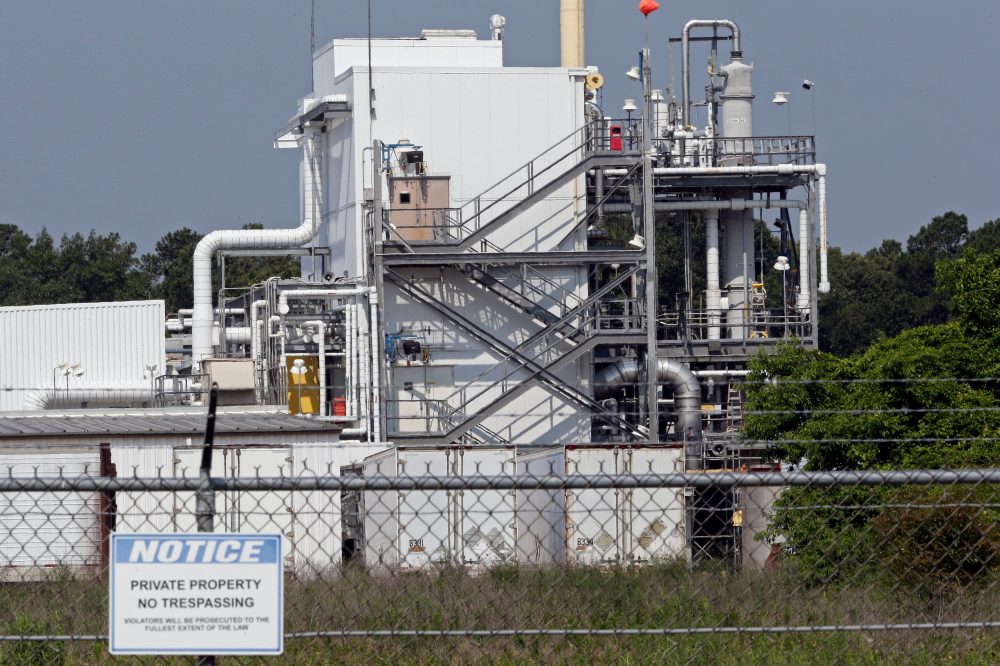
Chemours — a company that was spun off from chemical manufacturer DuPont — also agreed to install pollution control systems for water and air emissions at its West Virginia facility, provide clean drinking water to residents living near its West Virginia and New Jersey sites, and take steps to reduce releases of PFAS and other toxic chemicals at its North Carolina plant.
The settlement allows Chemours to keep producing PFAS for both commercial and military purposes, while putting safeguards in place to prevent future contamination and address existing pollution.
“The Trump administration recognizes the important role of Chemours for its commercial and military obligations,” said Adam Gustafson, principal deputy assistant Attorney General for the Environment and Natural Resources Division. “The settlement protects public health while preserving that important balance.”
Jeffrey Hall, assistant EPA administrator for enforcement and compliance assurance, said the agreement “delivers on the Trump administration’s promise to make polluters pay and stop PFAS contamination at the source.” Hall added that the deal will significantly reduce PFAS contamination in water, land, and air, and begin to address damage already done. “This settlement brings Chemours into compliance with the law and holds it fully accountable,” he said.
The settlement comes as the Trump administration is also expected to propose rolling back drinking water limits on forever chemicals that were established under the previous administration. Those limits had been finalized after officials determined PFAS exposure increased the risk of cardiovascular disease, certain cancers, and low birth weight in newborns. The new proposal would soften some of those restrictions while delaying but keeping tougher standards for two common types of PFAS.
EPA Administrator Lee Zeldin said the agency remains committed to addressing PFAS in drinking water while ensuring that regulations are legally sound and achievable for water systems to comply with.
Investigators determined that Chemours facilities in all three states had discharged PFAS into major waterways — the Ohio River in West Virginia, the Cape Fear River in North Carolina, and the Delaware River in New Jersey — in violation of Clean Water Act permits and state laws. The company also violated requirements under the federal Toxic Substances Control Act at all three locations.
Officials say those violations exposed nearby residents to illegal levels of PFAS for more than a decade. Scientific research has linked exposure to certain PFAS chemicals to harmful health effects in both humans and animals. The facilities had previously been owned by DuPont for many years, though Wednesday’s settlement does not resolve DuPont’s own liability for past PFAS violations.
A federal judge issued an order last August requiring Chemours to halt unlawful discharges of cancer-causing chemicals into the Ohio River from its Washington Works plant in West Virginia. U.S. District Judge Joseph Goodwin wrote that the pollutants posed a danger to the environment, aquatic life, and human health. The West Virginia Rivers Coalition had sought the order after the company exceeded its permit limits for more than five years.
In a separate matter, DuPont, Chemours, and a third company, Corteva, agreed last year to pay New Jersey up to $2 billion to settle environmental claims tied to PFAS contamination. The new federal settlement does not impact that state-level case.
Under the federal consent decree, Chemours must install 14 specific treatment systems to reduce PFAS in wastewater, stormwater, and groundwater at its West Virginia plant. The company will also test drinking water near its West Virginia and New Jersey facilities and supply treated or alternative clean water to those communities.