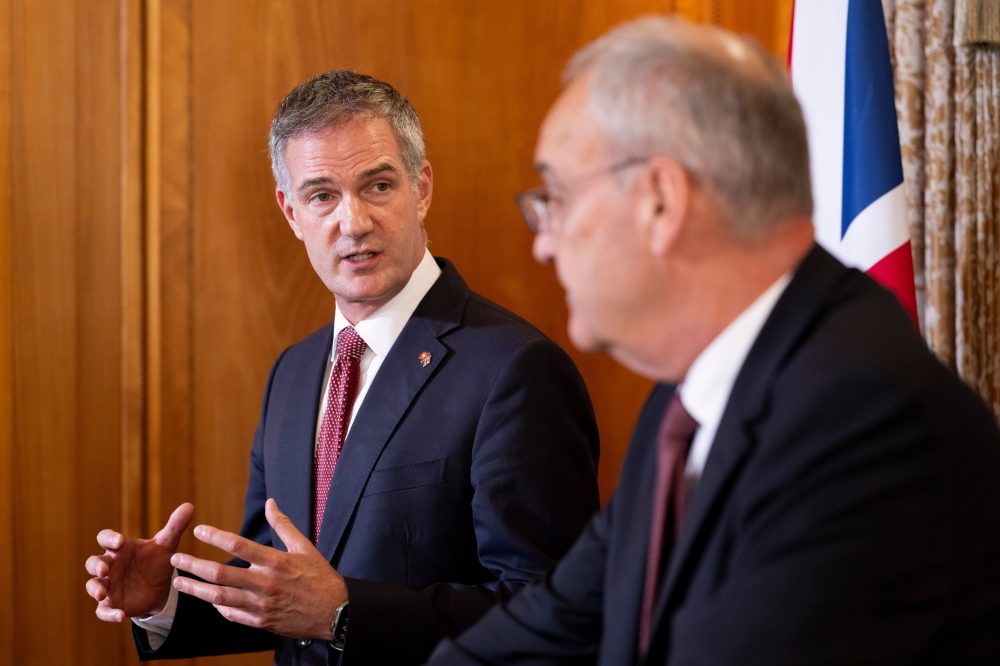

BOGOTA, Colombia — The emergence of Abelardo de la Espriella, a businessman and attorney set to become Colombia’s next president, is sparking debate over whether a broader political shift taking shape across Latin America could fundamentally alter the fate of the Amazon rainforest.
Colombia’s outcome arrives as Peru appears to be on the verge of electing Keiko Fujimori following a tight vote. At the same time, Brazil is gearing up for a presidential contest that could push the country rightward if Flávio Bolsonaro, son of former President Jair Bolsonaro, manages to unseat President Luiz Inácio Lula da Silva.
Taken together, these elections raise the prospect that the nations controlling the largest portions of the Amazon could shift toward policies that put greater weight on economic expansion, resource extraction, and cracking down on organized crime in remote territories.
“There’s an interesting alignment, particularly across the Andes region and the broader Amazon basin,” said Elizabeth Dickinson, deputy director for Latin America at the International Crisis Group, pointing to a growing view among some governments that economic development and environmental conservation can happen side by side.
In Colombia, de la Espriella — who received an endorsement from U.S. President Donald Trump — defeated lawmaker Iván Cepeda, who had the backing of outgoing President Gustavo Petro, by a margin of one percentage point, or roughly 251,000 votes. Cepeda acknowledged his defeat on Wednesday.
The Amazon rainforest stretches across much of northern South America and plays a vital role in slowing climate change by soaking up large quantities of carbon dioxide, a greenhouse gas responsible for warming the planet. Scientists have long cautioned that ongoing deforestation could push portions of the Amazon past a point of no return, beyond which vast areas might lose the ability to recover as rainforest.
Approximately 40% of Colombia’s land area falls within the Amazon basin. Under outgoing President Petro, the country became one of the world’s most vocal champions of rainforest preservation and a shift away from fossil fuel dependence.
On the campaign trail, de la Espriella — known by the nickname “The Tiger” — promised to reinvigorate Colombia’s oil industry, expressed support for fracking, which involves extracting oil and gas from underground rock formations, and argued that the nation should draw more heavily on its natural resources to fuel economic growth. Environmental advocates warn that ramping up oil and gas output could undermine emissions reduction goals and place added strain on ecologically sensitive regions.
De la Espriella stands in stark contrast to Petro, who blocked new fossil fuel exploration agreements and worked to establish Colombia as a global leader on climate policy.
Peru, which holds the second-largest share of the Amazon rainforest behind Brazil, appears close to electing Fujimori. Much like de la Espriella, Fujimori has indicated support for growing the mining sector and other industries as engines of economic development, while environmental organizations have voiced concern about what that could mean for forests and Indigenous communities.
Brazil, which contains roughly 60% of the Amazon, faces a presidential race with potentially sweeping consequences for forest protection. The contest comes after the country saw deforestation rates climb sharply under Bolsonaro, only to fall again under President Luiz Inácio Lula da Silva as environmental enforcement was stepped up.
Brazil’s track record demonstrates that government priorities can produce a tangible impact on the Amazon, according to Cristiane Mazzetti, zero deforestation lead at Greenpeace Brazil.
“The elected administration sets budgetary priorities, fills government positions and shapes regulations to either facilitate or hinder predatory exploitation and environmental crimes,” she said. “The result of this is measurable, as evidenced by the rate of deforestation in the Brazilian Amazon.”
Trump’s backing of de la Espriella comes as the U.S. president has rolled back domestic climate policies, pushed for expanded oil and gas production, and pulled the United States out of the 2015 Paris Agreement, the global accord designed to limit rising temperatures.
Sergio Guzmán, director of Colombia Risk Analysis, said environmental priorities may increasingly find themselves competing with demands for investment, energy production, and economic growth.
“Many of the concerns from environmentalists on emissions and fracking are going to take a second place to some of the economic concerns about energy self-sufficiency, investment and foreign direct investment in oil, gas and mining,” Guzmán said.
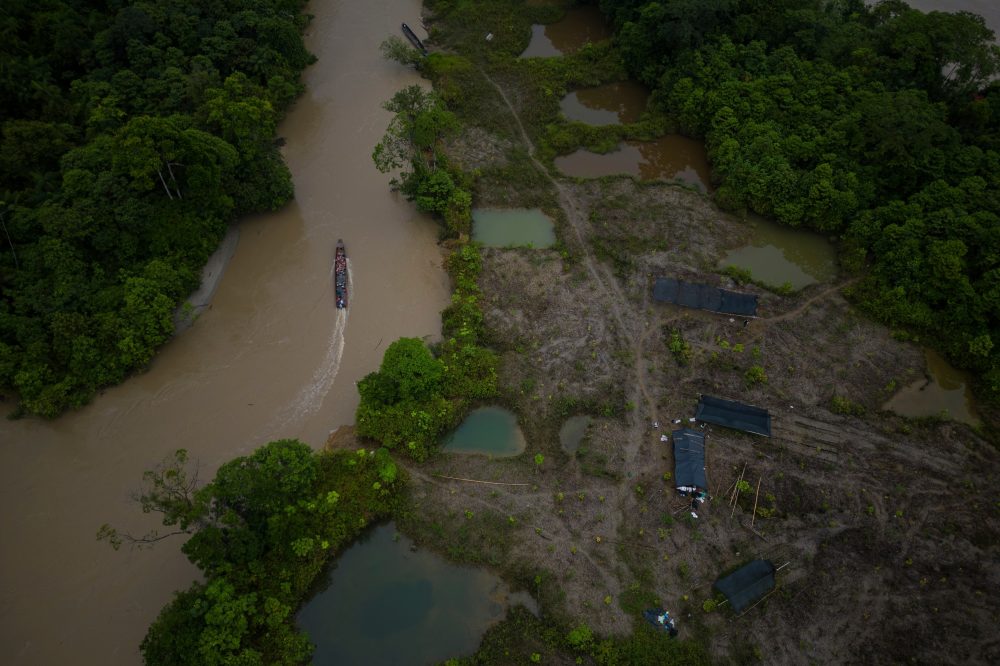
Illegal gold mining has emerged as one of the most destructive forces in parts of the Amazon, polluting rivers with mercury, stripping away forests, and funneling billions of dollars to criminal organizations.
Dickinson noted that many governments have adopted harder stances toward illegal mining, which has become a central issue in environmental policy across the region.
“It’s very hard to disagree with the idea of going after illegal mining, one of the most detrimental industries for the Amazon basin,” she said, adding that governments have typically concentrated on confiscating equipment or clearing miners from specific sites rather than dismantling the criminal and financial networks that drive the operations.
“What we really haven’t reached is an ability to tackle the intellectual authors of these operations,” Dickinson said.
Julio Cusurichi, a well-known Indigenous leader from Peru’s Amazon region, said Indigenous communities would press on with their organizing efforts and push for a stronger voice in decisions that affect their lands.
“Our biodiversity, our territories, our knowledge and our wisdom can contribute greatly to addressing climate change,” he said. “In our territories, we have shown that we can provide governance not only for our peoples, but for the planet.”
Throughout the Amazon, Indigenous territories frequently overlap with areas targeted for mining, oil development, and infrastructure construction. Indigenous organizations have long argued that governments routinely fail to properly consult communities before greenlighting projects.
Dickinson said friction over Indigenous autonomy and extractive projects has become increasingly visible in countries including Peru and Ecuador.
Analysts say some of the clearest early signals of how de la Espriella’s administration will approach environmental issues will come from how it manages Indigenous consultation procedures, environmental permitting, and decisions on new oil, gas, and mining projects in ecologically fragile areas.
Guzmán said de la Espriella’s plans to intensify military pressure on criminal organizations and potentially restart aerial spraying of coca crops — the plant from which cocaine is derived — could also carry consequences for Amazon communities.
Aerial fumigation has been a long-running source of controversy in Colombia. Advocates see it as a necessary tool against drug trafficking, while critics argue it can harm surrounding vegetation, affect water supplies, and push coca growers to clear new stretches of forest as they move further into remote Amazon territory.
Some analysts urge caution against assuming environmental safeguards will automatically erode under the new government.
Colombia’s courts, legislature, Indigenous organizations, and environmental agencies all retain significant influence, while advances in satellite technology are making it harder to conceal deforestation and environmental damage, analysts noted.
In the Colombian Amazon city of Leticia, Indigenous Ticuna resident Arnaldo Rufino said many in the community worry that policies encouraging greater resource extraction could ultimately come at the forest’s expense.
He said political leaders should be focused on safeguarding biodiversity and the Amazon rather than pursuing projects that risk heightening environmental pressures.
“It means cutting down the trees that allow humanity to breathe,” Rufino said.