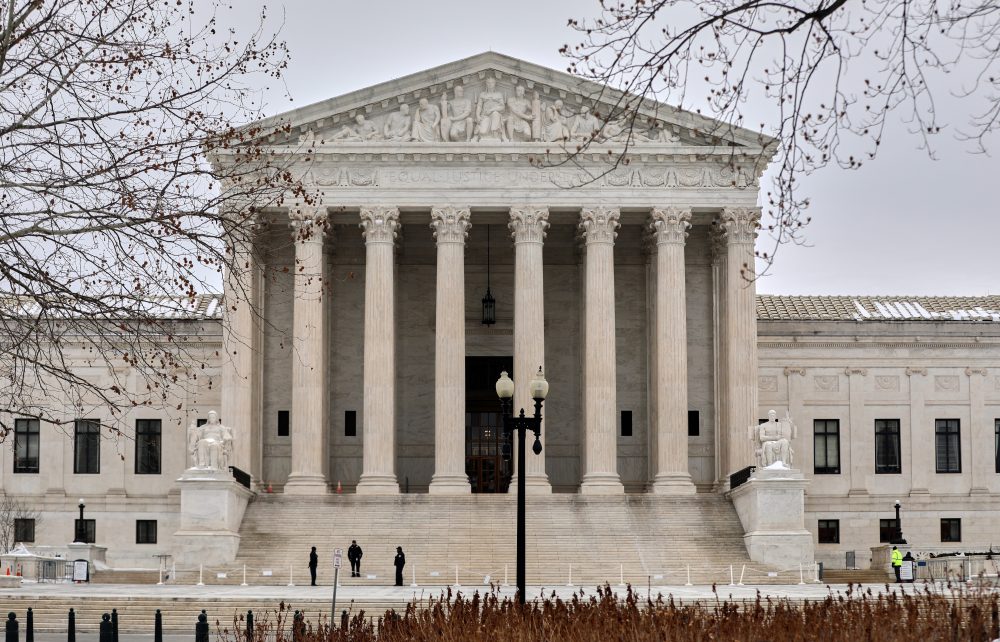

America’s highest court is examining whether President Donald Trump has the authority to strip citizenship rights from children whose parents lack legal immigration status or hold temporary permits when born on U.S. soil.
Wednesday’s legal challenge centers on an executive directive Trump issued during his second term’s opening day, targeting the elimination of automatic citizenship—a constitutional protection extending to virtually all individuals born within American borders.
Although this citizenship guarantee has remained a cornerstone of American law for more than 150 years, such policies are uncommon globally.
This automatic citizenship concept operates under the legal doctrine known as jus soli, meaning “right of soil.”
America established this constitutional right following the Civil War, primarily to secure citizenship for formerly enslaved individuals.
“All persons born or naturalized in the United States and subject to the jurisdiction thereof, are citizens of the United States,” according to the 14th Amendment.
The late 19th century saw courts extend this citizenship right to immigrant children.
The landmark case involved Wong Kim Ark, an American-born individual with Chinese immigrant parents, who filed suit after being barred from reentering the United States following international travel. The nation’s top court ultimately determined that the constitutional amendment grants citizenship to all U.S.-born individuals, regardless of their parents’ immigration standing.
Currently, only limited exceptions exist to this birthright rule, including children born to diplomatic personnel from foreign nations.
Approximately three dozen nations worldwide, predominantly located throughout the Americas, provide automatic citizenship to children born within their borders.
The majority of global nations operate under jus sanguinis, or “right of blood,” where children inherit citizenship through their parents’ nationality rather than their birthplace.
All 27 European Union member nations, for instance, do not provide automatic, unrestricted citizenship to children born within their territories to non-citizen parents. Similar policies exist throughout most of Asia, the Middle East, and Africa.
Certain nations employ mixed approaches, considering factors like parentage, residency duration, and ethnic background when determining childhood citizenship.
Australia maintained birthright citizenship until 1986, when new rules required at least one parent to hold Australian citizenship or permanent residency for children to gain automatic citizenship.
Germany moved in the opposite direction, updating its citizenship regulations in 2024.
Previously, German citizenship by birth required German parentage. Under 2024 changes, children born in Germany to foreign parents automatically receive German citizenship when one parent has maintained legal residence for over five years with unlimited residency rights.
German officials liberalized these laws because “studies have shown that the education prospects of children and teenagers with a migration background are better, the sooner they were granted German citizenship,” according to government statements.
American birthright citizenship opponents focus on specific constitutional language: “subject to the jurisdiction thereof.”
This wording, they contend, allows the United States to refuse citizenship to children born to women without legal immigration status.
Multiple judges have rejected the administration’s position, with various courts repeatedly suspending the executive order.
Wednesday’s case originated from New Hampshire, where a federal district judge determined the directive “likely violates” both constitutional and federal legal standards.