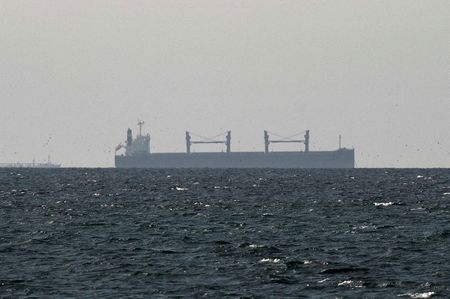

BASRA, Iraq – The leader of Iraq’s state-operated Basra Oil Company announced that the nation could revive crude oil shipments to approximately 3.4 million barrels daily within seven days, contingent on the conclusion of hostilities with Iran and the reopening of the Strait of Hormuz.
According to a Reuters analysis, Iraq has experienced the most severe decline in petroleum revenues among Persian Gulf oil-producing nations due to the waterway’s effective shutdown, primarily because the country has limited alternative shipping pathways.
However, Iraq, which ranks as OPEC’s second-largest oil producer, has the capability to rapidly resume production levels that existed before U.S.-Israeli military strikes against Iran in late February resulted in the strategic waterway’s closure. The Strait normally handles approximately one-fifth of worldwide oil and liquefied natural gas shipments.
IRAN’S ASSURANCES REMAIN UNOFFICIAL
Bassem Abdul Karim revealed that Iran has only offered oral commitments that would grant Iraqi oil tankers clearance to navigate through the Strait.
“We have not received any formal documents regarding permission for Iraqi tankers to pass,” he said in an interview with Reuters.
Abdul Karim explained that current output from Iraq’s southern petroleum fields stands at roughly 900,000 barrels daily, though he emphasized that ending the conflict and securing safe transit through the Strait could push exports to 3.4 million barrels per day within one week.
President Donald Trump has issued ultimatums to Tehran, warning of unleashing “hell” unless an agreement is reached by Tuesday’s end to restore traffic flow through the Strait of Hormuz.
DRAMATIC DECLINE IN IRAQI PETROLEUM PRODUCTION
Iraqi energy officials reported to Reuters last month that the country’s oil output fell approximately 80% to roughly 800,000 barrels daily as warfare prevented exports and filled storage facilities to capacity.
With restricted distribution channels for Iraqi petroleum, the Rumaila field’s production decreased to about 400,000 barrels per day from its pre-conflict level of 1.35 million barrels daily, while the Zubair field dropped to 300,000 barrels per day from 340,000 barrels daily before hostilities began, Abdul Karim stated.
Multiple smaller drilling sites continue operating at reduced capacity to maintain associated gas production needed for domestic electricity generation, while shutdowns at other locations have provided opportunities for maintenance activities, he noted.
Iraq’s total field production reached 4.3 million barrels daily before the war commenced, which should provide sufficient capacity to export 3.4 million barrels per day despite conflict-related infrastructure damage.
Natural gas production from Basra region fields has fallen to approximately 700 million standard cubic feet daily, compared to about 1.1 billion standard cubic feet per day before the war, mainly due to reduced petroleum extraction, Abdul Karim reported.
SATISFYING DOMESTIC REFINERY NEEDS
To meet internal consumption requirements, the Basra Oil Company transports around 400,000 barrels per day of crude to northern Iraq, including approximately 150,000 barrels daily by truck and roughly 250,000 barrels per day through domestic pipeline infrastructure, supplying refineries with demand totaling 500,000 barrels daily.
The northern Kirkuk fields currently produce about 380,000 barrels per day, Abdul Karim confirmed.
When questioned about drone strike impacts, Abdul Karim described attacks on petroleum facilities as causing “major losses to the continuity of production and oil operations,” noting that both international and Iraqi service companies have been targeted.
A dual-drone assault targeting the Rumaila oilfield on Saturday injured three Iraqi employees, according to security and energy sources who spoke with Reuters.
Abdul Karim said the attack on Rumaila field’s northern section struck locations used by American oilfield service corporations Schlumberger and Baker Hughes, sparking a fire that crews subsequently extinguished.
Both Schlumberger and Baker Hughes did not immediately provide responses to comment requests.