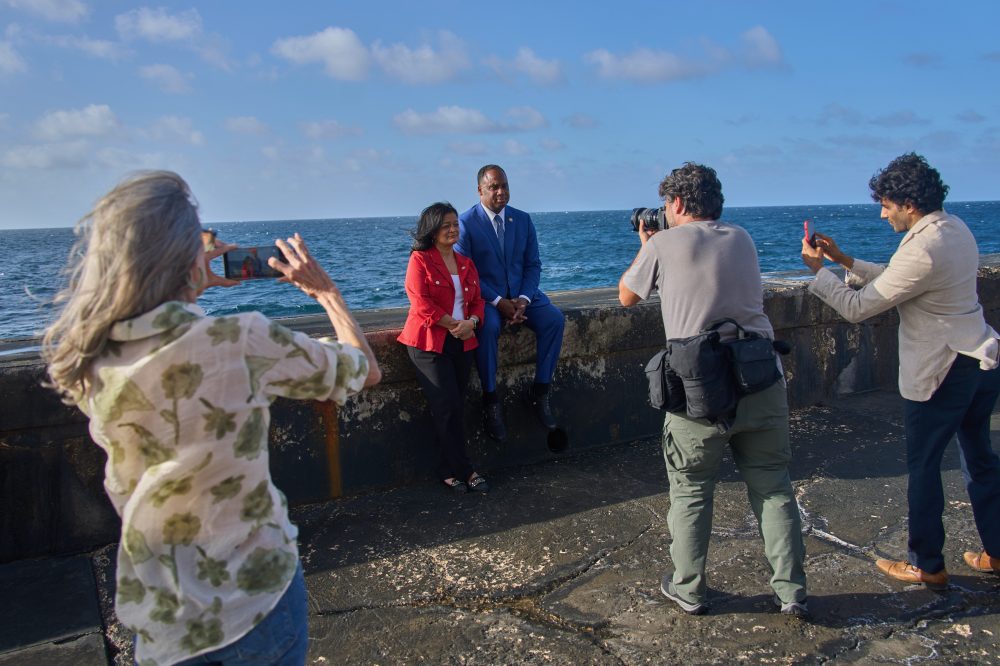

Two Democratic members of Congress are urging Washington to reconsider its approach toward Cuba after completing a diplomatic visit to the Caribbean nation, where they observed the severe effects of America’s energy restrictions firsthand.
Representatives Pramila Jayapal from Washington state and Jonathan Jackson from Illinois spent five days on the island, concluding their trip on Sunday. During their stay, they held meetings with Cuban President Miguel Díaz-Canel, Foreign Minister Bruno Rodríguez, and parliamentary officials.
Following the meetings, President Díaz-Canel posted on social media platform X that he had “denounced the criminal damage caused by the #blockade, particularly the consequences of the energy embargo imposed by the current US administration and its threats of even more aggressive actions.”
The Cuban leader also stated: “I reiterated our government’s willingness to engage in serious and responsible bilateral dialogue and find solutions to our existing differences.”
Officials from both nations have confirmed that high-level discussions are currently underway, though specific details remain confidential.
Representative Jayapal expressed optimism about recent Cuban initiatives, including opening certain investment opportunities to Cuban Americans living in the United States, announcing pardons for over 2,000 prisoners, and allowing FBI agents to assist in investigating a deadly incident involving an American-flagged vessel. She told journalists these developments “indicate that the moment is here for us to have a real negotiation between the two countries and to reverse the failed U.S. policy of decades, a Cold War remnant that no longer serves the American people or the Cuban people.”
Cuban authorities have already freed the pardoned inmates, who faced charges for various offenses, though none appear to have been imprisoned for political reasons.
In late January, President Donald Trump issued warnings about imposing tariffs on nations that supply petroleum to Cuba, though he allowed a Russian vessel carrying 730,000 barrels of crude oil to reach the island last week. This marked the first fuel delivery in three months to Cuba, which only produces 40% of its petroleum needs domestically.
“This is cruel collective punishment — effectively an economic bombing of the infrastructure of the country — that has produced permanent damage. It must stop immediately,” the two lawmakers declared in their Sunday statement.
Venezuela had been providing essential oil supplies until the U.S. took action against the South American nation in early January and detained its president, Nicolas Maduro.
The fuel shortage has severely impacted Cubans already enduring five years of economic hardship, resulting in nationwide power outages, gasoline scarcity and rationing, reduced public transportation, shortened work schedules, hospital shutdowns and delayed surgeries, plus canceled flights.
While Russia has pledged another petroleum shipment, the timing remains uncertain. Energy analysts estimate the recent Russian delivery could yield approximately 180,000 barrels of diesel fuel, sufficient to meet Cuba’s daily requirements for nine to ten days.
Jayapal acknowledged that while these deliveries provide crucial relief, they represent only short-term fixes: “We need a longer, permanent solution for the Cuban people and the American people.”
Jackson drew parallels between efforts to prevent Iran from blocking the Strait of Hormuz and the oil restrictions affecting Cuba, noting that the island nation “is the most sanctioned part of Earth.”
“Our government is fighting to keep the Strait of Hormuz open so there is a free flow of oil around the world. We want, for humanitarian reasons, a free flow of oil, fuel, and energy in our own hemisphere,” Jackson explained.
Both representatives announced plans to compile a comprehensive report and advance legislative proposals from House colleagues aimed at removing sanctions against Cuba to address the ongoing humanitarian situation.