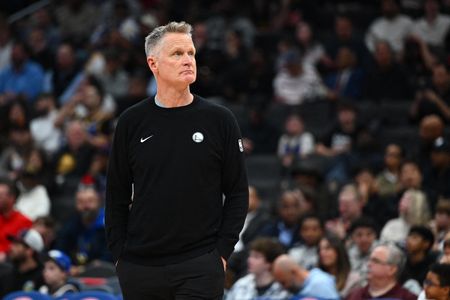

Golden State Warriors head coach Steve Kerr sat down with team owner Joe Lacob and general manager Mike Dunleavy for a lengthy two-hour discussion on Monday regarding his future role with the organization, sources revealed Wednesday.
The conversation was described as constructive despite numerous unresolved issues remaining on the table. The trio plans to reconvene for another meeting in the coming week.
Kerr currently has no contract in place for the upcoming season. The 60-year-old coach has spent 12 seasons leading Golden State and delivered four NBA championships to the franchise in 2015, 2017, 2018, and 2022. His regular-season coaching record stands at 604-353, a .631 winning percentage.
Despite his successful track record, the Warriors failed to reach the playoffs this year after falling to the Phoenix Suns in a play-in tournament game. This marks the second playoff absence in three seasons for the team.
The Warriors also struggled to a 37-45 record, finishing with a losing record for only the second time during Kerr’s coaching tenure.
Following Golden State’s elimination earlier this month, Kerr acknowledged the possibility that it could have been his final game leading the team.
“I still love coaching, but I get it,” Kerr said to reporters. “These jobs all have an expiration date. There is a run that happens, and when the run ends, sometimes it’s time for new blood and new ideas.”
Complicating matters further are veteran stars Stephen Curry and Draymond Green, who may be reluctant to enter a rebuilding phase under different leadership.
Another potential factor involves Kerr’s tendency to voice opinions on controversial political topics, often while positioned in front of the team’s official branding.
According to a SF Gate report from last week, senior organization officials have grown frustrated with Kerr’s ongoing commentary, including his criticisms of President Donald Trump. The report indicated these continued public statements have created “internal frustration” within the organization.