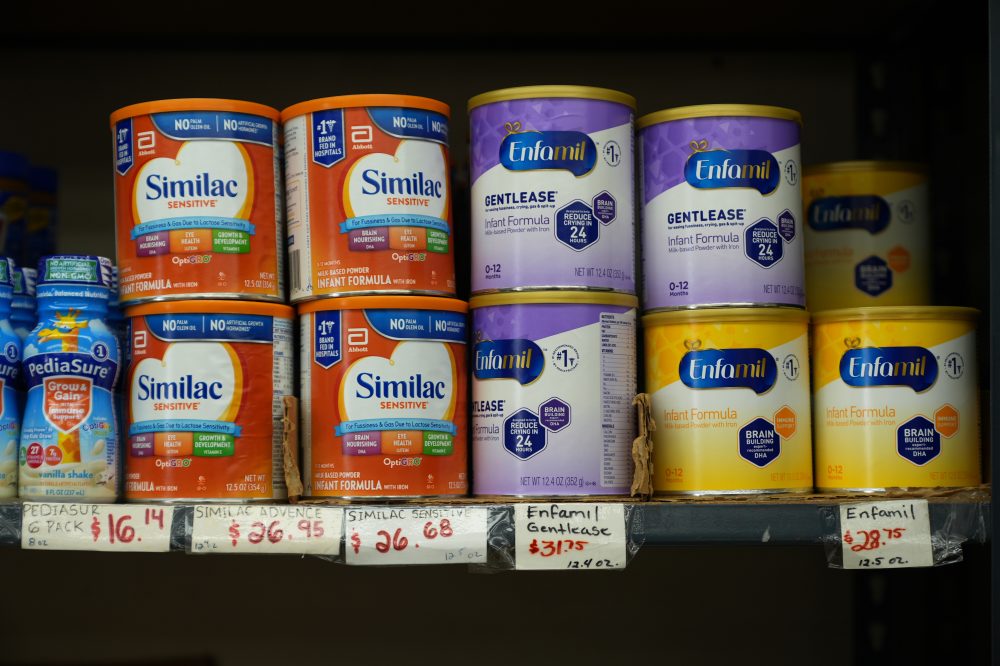

Federal health authorities announced Wednesday that American baby formula contains minimal levels of harmful substances following an extensive contamination study described as the most comprehensive analysis ever conducted.
The examination was part of the Food and Drug Administration’s Operation Stork Speed initiative, which officials characterized as the most thorough investigation of its kind. Results indicated the nation’s infant formula supply poses no safety concerns, according to agency representatives and independent specialists.
“There’s no reason not to use any available formula” in the U.S., said Dr. Steven Abrams, a pediatrics professor at the University of Texas at Austin who reviewed the findings.
Between 2023 and 2025, FDA researchers examined more than 300 commercial infant formula samples, screening for heavy metals like lead, arsenic, cadmium and mercury. The investigation also looked for pesticides, plastic-related chemicals called phthalates, and PFAS compounds, commonly referred to as “forever chemicals.”
All contamination levels registered as either undetectable or extremely minimal, officials reported. Heavy metal concentrations fell significantly below Environmental Protection Agency standards for drinking water. Pesticides were absent in 99% of tested samples. Among 30 different PFAS compounds examined, 25 showed no presence whatsoever.
Independent specialists largely supported the government’s conclusions, explaining that trace amounts of substances like heavy metals occur naturally in the environment. However, other compounds including phthalates and PFAS are manufactured.
“These chemicals are completely synthetic,” said Dr. Sheela Sathyanarayana, a pediatrics professor at UW Medicine and the Seattle Children’s Research Institute. “The detection of some of these compounds at all is concerning.”
She emphasized the importance of continued formula monitoring and broader food supply oversight.
The Trump administration initiated Operation Stork Speed in March 2025, pledging to examine infant formula safety and quality standards for the first time in decades.
This effort expanded upon earlier FDA investigations into substances like heavy metals in baby foods, which can harm brain development, learning capabilities and behavior in children, Abrams explained.
Currently, the FDA lacks enforceable heavy metal limits for infant formulas, unlike the European Union, Canada and Australia.
Consumer advocacy organizations have pressed the FDA for years to establish concrete contamination limits. Last year, Consumer Reports analyzed 41 American infant formulas and suggested many contained troubling levels of heavy metals and other contaminants.
That analysis applied its own safety standards, setting thresholds far stricter than European Union requirements. The report received widespread attention and caused some parents to abandon commercial formula even when medically necessary, Abrams observed.
Abrams urged the FDA to maintain ongoing formula monitoring and publish findings regularly.
Abbott, among the country’s major formula manufacturers, encouraged the FDA to establish scientific contamination standards for infant formula.
“We believe that producing infant formula at scale in the U.S. is a matter of national security,” Abbott spokesman John Koval said in an email. “These results affirm the safety of our current domestic supply.”