
International financial markets reached unprecedented levels Wednesday as major Asian exchanges reopened following holidays, with investors driving up technology stocks amid continued enthusiasm for artificial intelligence investments.
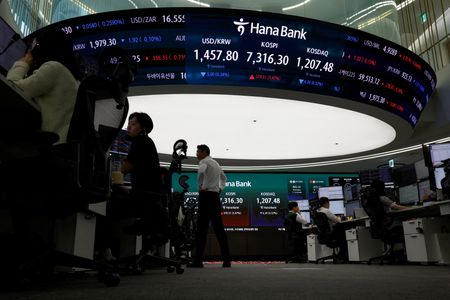
South Korea’s main stock index, the KOSPI, broke through the 7,000-point threshold for the first time in history as trading resumed in Seoul. Samsung Electronics led the charge with a remarkable 13% increase, pushing the company’s market value beyond the $1 trillion milestone. The electronics manufacturer has now surpassed Warren Buffett’s Berkshire Hathaway in total value and is approaching retail giant Walmart.
Meanwhile, crude oil prices dropped for the second consecutive day following comments from U.S. President Donald Trump on Tuesday. Trump announced he would halt operations designed to protect shipping vessels traveling through the Strait of Hormuz, pointing to what he called “great progress” in negotiations toward a broader deal with Iran.
China’s stock markets also performed strongly, reaching their highest levels since January 2022 when trading resumed. The gains came after private sector data revealed the country’s services industry grew at an accelerated rate in April, boosted by increased new business activity. Japan’s financial markets remained shuttered for a national holiday.
Several major international stock indices set new records, including MSCI’s comprehensive global index, its emerging markets benchmark, and its Asia-Pacific measure excluding Japanese stocks.
Currency markets saw significant movement as well, with the Australian dollar climbing 0.7% to nearly $0.72400, marking a four-year peak. New Zealand’s currency gained 0.9% to reach $0.59380, its strongest position in almost eight weeks.
European market futures indicated positive opening trends, with continent-wide indicators up 0.6%, German DAX projections rising 0.4%, and British FTSE expectations gaining 1%.