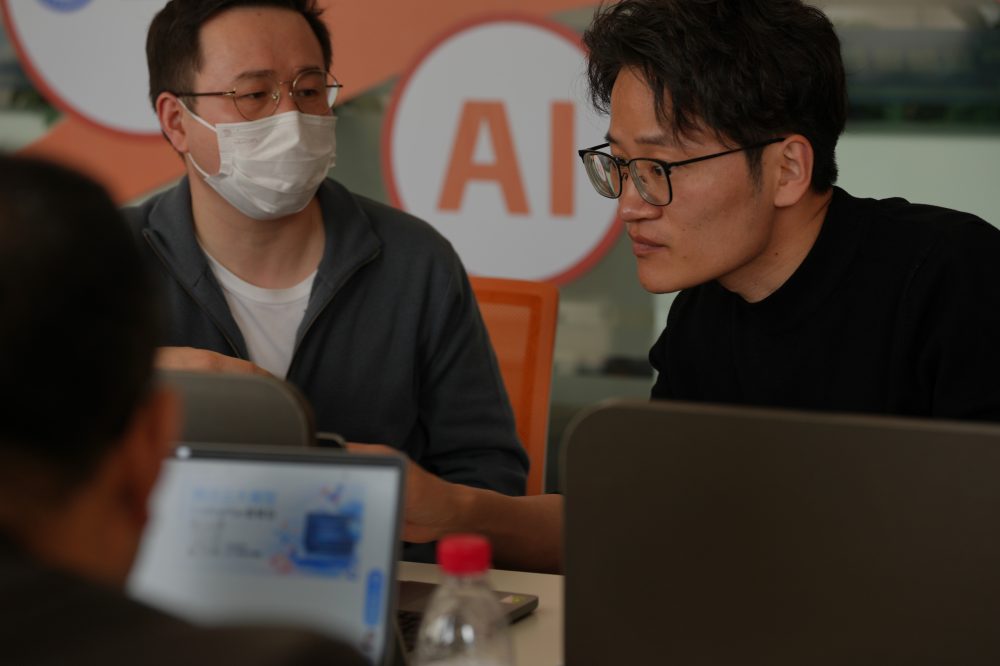

Crowds of approximately 50 individuals recently assembled outside a Chinese mobile internet company’s headquarters in Beijing, seeking assistance with setting up an artificial intelligence assistant on their devices.
Similar gatherings occurred repeatedly across multiple events in Beijing and the technology center of Shenzhen during March, where technical staff assisted people installing the widely-used AI “agent” called OpenClaw on their computers.
“I’m worried about falling behind in technological developments,” expressed Sun Lei, a 41-year-old human resources manager attending the Cheetah event. She explained her hope that the technology could assist her in finding and evaluating resumes from different hiring platforms.
Following more than a year since OpenAI’s Chinese competitor DeepSeek amazed the global community with its sophisticated AI system, China has transformed into a massive laboratory for widespread AI tool implementation. While AI systems developed in America continue to lead in pure computational strength, Chinese citizens and companies have quickly adopted the technology, enabling rapid and extensive integration across virtually all sectors.
With worldwide AI usage expanding rapidly in workplaces and personal activities, everyday Chinese citizens employ AI for numerous purposes including travel booking and planning, food ordering, and ride-hailing services. Government data from the China Internet Network Information Center shows that over 600 million people from the nation’s 1.4 billion population were utilizing generative AI by December, marking a 142% jump from the previous year.
The recent increase in “agentic” AI usage like OpenClaw, particularly among Chinese enterprises, has also elevated AI model data consumption. Using measurements called tokens – data units representing portions of words – Chinese AI models’ weekly usage has recently exceeded that of U.S. models, according to OpenRouter, an AI “gateway platform” that monitors data and manages security across various AI systems.
Jason Tong, a 64-year-old retired IT engineer from Shanghai, has utilized AI chatbots including Doubao and Kimi for daily inquiries since their introduction several years ago.
After becoming more health-conscious, he enrolled in March with a Shanghai company’s blood glucose monitoring program that employs an AI system to create customized health recommendations. The personalized and quick responses have proven valuable to him.
Tong believes widespread AI application adoption in everyday activities is unavoidable, stating “Just as carriages were eventually replaced by trains, this is bound to happen.”
Chinese AI-integrated products including vehicles and robots are achieving significant progress, ranging from humanoid robots with sophisticated thinking abilities to AI systems enabling drivers to handle complex tasks such as restaurant bookings.
“The (AI) competition is clearly shifting from models to ecosystems,” noted Lizzi Lee, a fellow at the Asia Society Policy Institute’s Center for China Analysis who focuses on economics and technology. “Chinese users are basically acting as real-time testers at scale.”
Chinese technology corporations including Tencent, Alibaba and Baidu are competing to bring AI to market. Tencent incorporated OpenClaw into WeChat, China’s comprehensive “super-app” that functions primarily as messaging software but also enables activities like food ordering and payment processing. Alibaba is incorporating “agentic” AI throughout its business operations.
OpenClaw, initially developed by Austrian software creator Peter Steinberger in the previous year, gained rapid and enthusiastic adoption due to its capability to utilize multiple tools for completing complex assignments.
Zhao Yikang, a Chinese university student in Macao, employs OpenClaw for both academic work and personal tasks.
He was impressed by its affordability and effectiveness, using it to automatically create marketing videos and handle social media accounts during his internship with a real estate company in Zhuhai, a southern Chinese city.
“AI can understand things in a second,” Zhao explained. “You just need to act as a commander and tell it what to do.”
While preparing to launch a photography services company after graduation, Zhao requested AI assistance in building a business website. Within 10 minutes, it produced a completely operational site for under 5 yuan (70 cents).
Despite Chinese officials issuing multiple warnings about potential security concerns regarding OpenClaw AI “agents” such as data breaches as installations increased dramatically, widespread interest has persisted.
Chinese businesses are increasingly establishing internal goals for expanding AI usage to enhance productivity, according to Janet Tang, a partner and managing director specializing in technology at consulting firm AlixPartners.
There are “a lot of application scenarios,” stated Wang Xiaogang, co-founder of Chinese AI software company SenseTime and chairman of ACE Robotics. “The industry is developing very fast and the people, they are very open and they’re eager to try the AI in a lot of scenarios.”
China has worked to position itself advantageously by investing substantially in talent development and securing access to plentiful, cost-effective electricity for energy-intensive AI developments and innovations.
To accomplish technological breakthroughs including AI advances, Chinese leadership has committed to an annual average increase of at least 7% in national research and development expenditure through the country’s five-year plan extending to 2030. An “AI plus” national strategy details measures to incorporate AI into numerous life areas, from medical care to education. Courts in Shenzhen handled 50% more cases last year, officials reported, partially through an AI tool supporting legal procedures.
Nevertheless, restricted access to some of the world’s most sophisticated computer chips due to U.S. limitations continues to hinder China’s AI progress.
“Export controls on tools have slowed China’s chipmaking capabilities, and are the Achilles’ heel of many AI labs that need advanced AI chips,” explained Samm Sacks, a senior fellow at New America who specializes in Chinese technology policies.
However, the restrictions have also resulted in better coordination of design, production and implementation throughout China’s technology supply network. “Over time this dynamic could fuel, not foil, China’s ambitions,” Sacks stated.
When China’s DeepSeek unveiled its highly anticipated V4 AI model preview last month, one significant modification was its partial support by computer chips manufactured by Chinese technology giant Huawei. This represents reduced reliance on leading U.S. chip producers like Nvidia.
A recent Stanford University Institute for Human-Centered AI report indicates the U.S.-China performance gap in leading AI models has “effectively closed.”
U.S. government officials and major AI companies including Anthropic and OpenAI have claimed Chinese AI startups are appropriating U.S. AI technologies. China maintains such accusations lack foundation.
Lian Jye Su, a chief analyst at research and advisory firm Omdia, expects any AI gap between America and China will continue shrinking, despite U.S. export restrictions and China’s Great Firewall, the ruling Communist Party’s extensive internet filtering and censorship apparatus.
Analysts including Su believe obstacles like the Great Firewall will probably affect China’s AI usage in restricted ways, considering the technology is already undergoing testing, integration and expansion within China’s controlled internet system.
“It won’t be long before China moves from fast follower to parallel innovator,” he concluded.