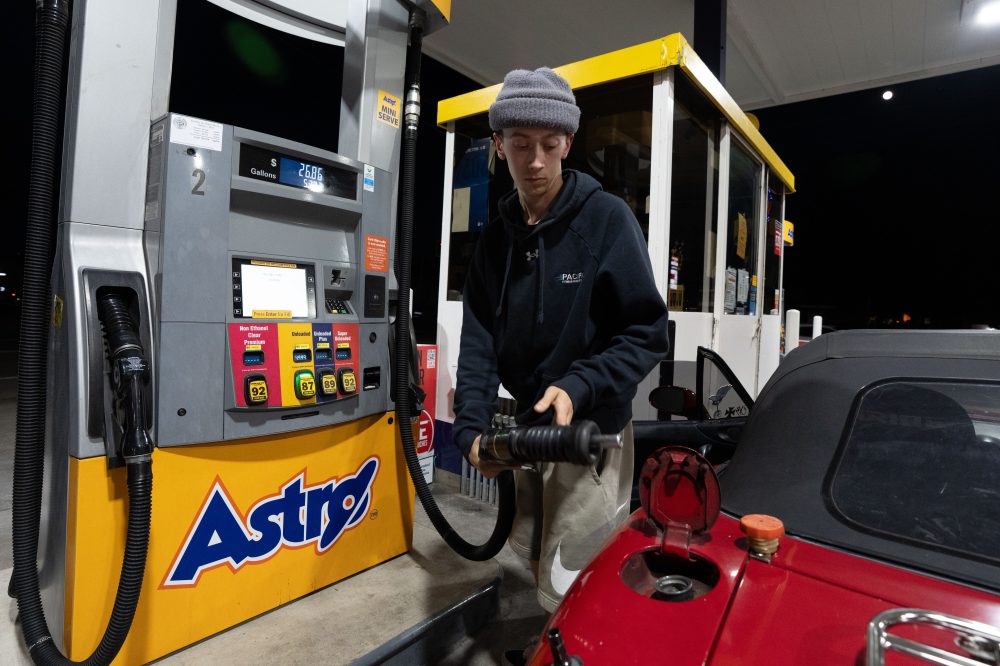

Delaware drivers are feeling the pinch at gas stations across the First State as fuel costs continue their dramatic climb. Regular unleaded gasoline now averages $4.48 per gallon nationwide after jumping 31 cents over the past seven days, according to AAA data released Tuesday.
The surge represents a staggering 50% increase since the Iran conflict began, creating financial strain for motorists throughout the region. The primary culprit behind these escalating pump prices is the ongoing Iran war, which has created a global energy supply crisis.
Crude oil costs have been steadily rising over the past two months due to the effective closure of the Strait of Hormuz, a critical waterway in the Persian Gulf. This narrow channel typically handles one-fifth of the world’s crude oil shipments, but stranded tankers are now unable to complete their deliveries.
There was a brief period of relief for drivers in mid-April when the conflict appeared to be de-escalating. Gas prices dropped consistently for nearly two weeks as optimism grew about a potential resolution.
“After the announcement of the initial ceasefire, there was kind of optimism that this really could be the beginning of the end of the conflict,” said Rob Smith, director of global fuel retail at S&P Global Energy. “And so crude prices came down correspondingly, gasoline spot prices followed, and so on … the retailers lowered prices as well.”
However, as hostilities resumed, fuel costs reversed direction and began climbing once again. The ongoing supply constraints continue to create upward pressure on prices across the market.
“There’s a fundamental shortfall that will exist globally or fundamental struggle to meet that demand that will drive up price,” Smith explained. “No matter what a government says or what any market person thinks, there is a true kind of upward pressure that’s being exerted on prices every day the Strait of Hormuz is constrained. And it is still severely constrained.”
While individual gas station operators determine their pump prices, multiple factors influence their pricing decisions. Crude oil costs represent the largest component, accounting for approximately 51% of gasoline prices in the United States during 2025, according to Energy Information Administration data.
When crude oil prices increase, gasoline costs typically follow the same trend. Reduced oil availability in global markets drives up prices for both crude and refined products. The Strait of Hormuz blockade has created the most significant supply disruption in oil market history, according to the International Energy Agency, pushing crude prices as high as $112 per barrel in early April.
Research conducted by Bob Kleinberg, adjunct senior research scholar at Columbia University’s Center on Global Energy Policy, shows a clear correlation between gasoline prices and WTI crude oil costs over recent weeks.
“Not much of a mystery here,” Kleinberg noted. “It’s not exactly proportional but the shape of the curves follows the same pattern, and really with very little delay.”
Beyond crude oil costs, federal and state taxes contribute roughly 17% to pump prices, while refining expenses and profits add another 14%. Distribution and marketing account for an additional 17%, according to EIA analysis. States like California see even higher prices due to increased taxes and refining costs.
A significant development occurred in April when the United States imposed a blockade on Iranian ports to prevent the country from exporting oil, further impacting global supply.
“Iran had been moving an unusually high amount of oil to global markets, so that was helping moderate prices,” explained Jim Krane, energy research fellow at Rice University’s Baker Institute. “The Trump administration decides they’re going to punish Iran, and try to put more pressure on Iran by blocking their exports, so of course that does put pressure on Iran, but also puts pressure on global oil prices and forces them up. That was probably a big factor.”
Oil markets react dramatically to breaking news about Persian Gulf shipping attacks or stalled diplomatic negotiations. According to Kleinberg, “The oil market is exquisitely sensitive to what’s coming out of the White House.”
The current situation echoes previous energy crises. When the Iran war began in early March, gasoline prices spiked 48 cents in a single week. The largest weekly increase on record occurred in March 2022, when prices jumped 60 cents following Russia’s invasion of Ukraine, AAA reported.
Predicting future price movements remains challenging for industry experts. Current national average prices exceed levels seen in early May 2022, and during that period, costs continued rising through Memorial Day weekend.
According to Smith, prolonged constraints on oil flow through the Strait of Hormuz will drive prices higher and extend the recovery period once normal operations resume.
“Even if there was a true and lasting resolution of the conflict, both sides agree to play nice and truly do commit to keeping Hormuz open, it will still take months to get back to what it was pre-war, if not even longer,” Smith predicted. “There will still be within the industry a risk premium associated with going through that region. Not that it was ever a perfectly safe journey, but the past few months have shown that it’ll be hard to convince shippers and insurance companies that the risk level will be similar to what it was in February. It’ll be a long time before anyone can be convinced of that.”