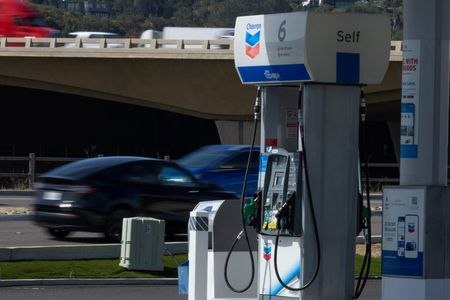

Drivers across the country are facing steep fuel costs as gas prices have climbed to $4.52 per gallon, marking the highest level seen since July 2022, according to new data from GasBuddy.
The price increase comes at a challenging time as Memorial Day weekend approaches, traditionally kicking off the busy summer travel period. The escalating costs at the pump create significant political challenges for President Donald Trump and Republican candidates heading into November’s midterm elections.
GasBuddy reported the national average reached $4.52 per gallon by Tuesday evening at 5:20 p.m. Eastern Time. Fuel costs first crossed the $4 threshold in late March, a price point not witnessed since August 2022 following Russia’s military action in Ukraine.
West Coast drivers are experiencing the most severe impact, with California averaging $6.14 per gallon according to the tracking service.
The price surge mirrors rising crude oil markets amid concerns about extended disruptions in the Persian Gulf region. International Brent crude has spiked 58% since military actions began.
“The Strait of Hormuz shutdown continues to slowly push oil and gasoline prices higher, but we’ve also seen refining issues that have enhanced some of those increases,” explained GasBuddy analyst Patrick De Haan.
Refinery problems have compounded the supply concerns. BP’s major facility in Whiting, Indiana, which processes 440,000 barrels daily, recently suffered a power failure that temporarily halted one processing unit. The company has since resumed normal operations.
“If the Strait of Hormuz does not open, I would expect that gas prices this summer would probably stay above $4.50 a gallon,” De Haan warned.
The strategic waterway typically handles about 20% of worldwide oil shipments daily before the February 28 attacks by U.S. and Israeli forces on Iran.
Financial analysts at Morgan Stanley note that gasoline stockpiles are declining more rapidly than typical seasonal trends. Their projections suggest inventories could drop below 200 million barrels by late August, approaching historically low summer levels.
Government data reveals gasoline reserves dropped by more than 6 million barrels last week, settling at 222.3 million barrels by April 24 – the lowest December reading and over 2 million barrels beneath the five-year seasonal norm. Consumer demand averaged 8.95 million barrels over four weeks, representing a 1% increase from the previous year.
Despite elevated pump prices exceeding $4, consumer demand remains steady. “It is not driving the draws but it’s also not soft enough to slow the supply-driven stock draws,” Morgan Stanley researchers noted.
Gasoline futures contracts were trading near $3.64 per gallon Tuesday, hovering at their strongest levels since 2022.