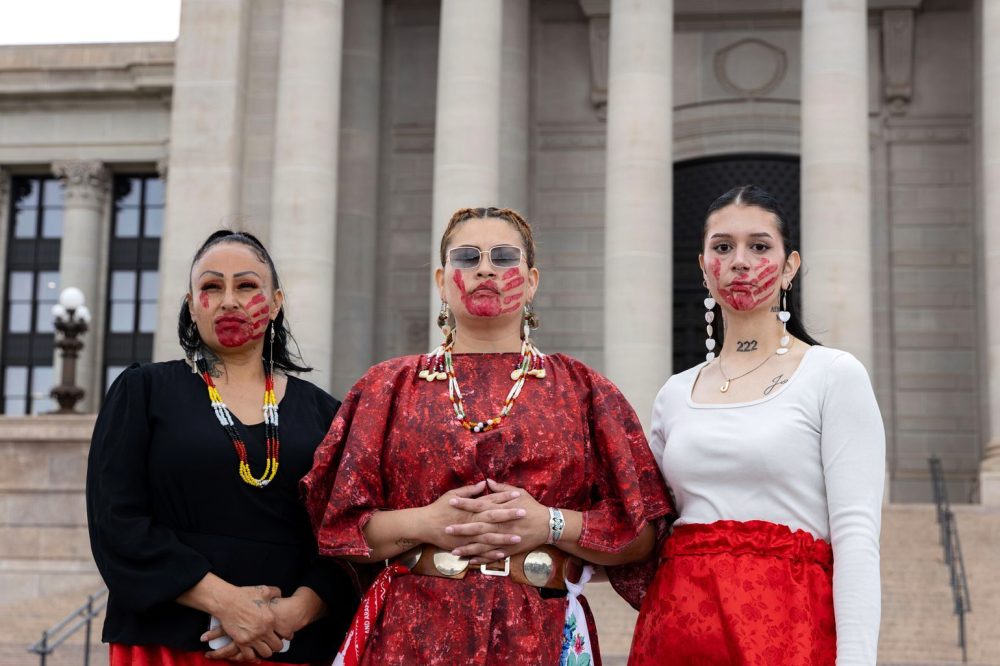

Native American communities throughout the nation are coming together this week to remember family members who have disappeared or been murdered while demanding stronger government action to address the ongoing crisis.
The gatherings, taking place during the week of May 5th which marks the national awareness period for Missing and Murdered Indigenous Peoples, include memorial marches, community discussions, self-defense training, and candlelight ceremonies from tribal territories to state government buildings.
These events represent both the profound sorrow and strength of Indigenous communities, where the federal government holds legal obligation for public safety but often fails to provide adequate resources for violence prevention and response.
Participants frequently dress in red clothing, which has become the recognized color for remembering Indigenous violence victims throughout the United States and Canada.
Statistics reveal that Native Americans experience violence at alarming rates, with advocates linking this crisis to historical land seizure and government attempts to destroy Indigenous cultures.
Data from the U.S. Department of Justice shows Native Americans and Alaska Natives face violent crime at more than double the rate of other populations, while Native women experience homicide at twice the national average. Federal records from late 2025 show nearly 1,500 open cases of missing Native Americans.
Researchers believe these figures significantly underestimate the actual problem due to jurisdictional complications, incorrect racial identification, and unreliable record-keeping practices.
Abigail Echo-Hawk, who leads the Urban Indian Health Institute and belongs to the Pawnee Nation of Oklahoma, acknowledged improvements in documenting the crisis but criticized slow law enforcement response.
“Don’t look at the numbers and feel sorry for us,” Echo-Hawk said. “Look at the numbers and say, ‘How do we ensure that this doesn’t continue?’”
Former President Donald Trump enacted Savanna’s Act and the Not Invisible Act in 2020, legislation designed to combat violent crime in tribal areas through better data tracking and law enforcement improvements.
However, putting these laws into practice has been sluggish and inconsistent. During the Biden presidency, a federal study commission finally assembled in 2022, two years late. The group’s comprehensive suggestions—including expanded tribal police authority and better family communication—became public in 2023.
These recommendations disappeared from government websites last year as the current Trump administration eliminated programs it considers related to diversity, equity and inclusion efforts.
Recognized tribes maintain sovereign nation status within the United States.
The Trump Justice Department has maintained Operation Not Forgotten, deploying FBI agents, analysts and support staff to offices near tribal lands on rotating assignments. The FBI reports these deployments have resulted in over 200 arrests and convictions for murder, domestic violence and sexual assault since 2023.
The Interior Department announced Tuesday the formation of a task force focused on preventing violent crime in tribal areas. Officials describe the initiative as coordinating investigative resources to enhance case handling and prosecution success while prioritizing missing person and murder investigations.
Michael Henderson, who oversees public safety for the Navajo Nation, sees both benefits and drawbacks to increased FBI presence in tribal territories. Federal agents can provide new perspectives and advanced forensic technology for unsolved cases. However, Henderson noted many agents lack experience working with tribal communities or investigating violent crimes.
“More manpower from the FBI on reservations, that’s not a good solution in my mind,” Henderson said, suggesting federal money would be better used supporting tribal police departments with staff and funding.
During a Saturday memorial walk in Colorado Springs, Colorado, participants chanted “No more stolen lives on stolen land” while carrying photographs and stories of dozens of Indigenous people who have been killed or vanished.
Denise Porambo joined the march to honor her daughter, Destiny Jeriann Whiteman, who was murdered last August on the Ute Mountain Ute reservation in southwestern Colorado. Whiteman was 24 years old and left behind an infant son.
“It hurts every day,” Porambo said, her voice breaking.
Similar gatherings occurred in Madison, Wisconsin, and Duluth, Minnesota, to build awareness. Outside Duluth’s City Hall, trees displayed red dresses as symbols of remembrance.
In Oklahoma, relatives and supporters wore red shirts and traditional ribbon skirts while holding photographs of lost loved ones. Some painted red handprints over their mouths as a solidarity gesture.
At an Albuquerque memorial walk, participants called out the names of Emily Pike, Ella Mae Begay, Zachariah Shorty and others who have disappeared or been murdered.
Jessica Montoya traveled three hours from the Jicarilla Apache Nation to bring attention to her son Jamian Reval’s 2023 murder. He was 16 when family members say a classmate robbed and shot him on the first day of his junior year.
“He had a lot of goals. He had a lot to look forward to,” Montoya said, holding a sign demanding an end to gun violence.
Dealing with multiple tribal and federal law enforcement agencies has left Montoya and her family feeling dismissed and excluded, adding to their grief.
Without a coordinated national approach to these cases, Missing and Murdered Indigenous Peoples advocates say families often must conduct their own searches and investigations for missing relatives.
Grace Bulltail’s 18-year-old niece, Kaysera Stops Pretty Places, was discovered dead several days after disappearing from her Crow Reservation home in Montana during August 2019. Her family continues organizing marches, vigils and courthouse protests while persistently pressuring law enforcement for action and answers.
No one has been arrested, and officials ruled the death cause inconclusive.
“We have had to advocate for ourselves and for Kaysera every step of the way,” Bulltail said.