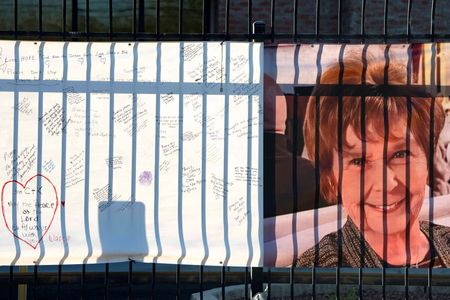
A Newark man will spend the rest of his life behind bars after being sentenced for the 2024 killing of Tracy Nyariki.
Nobert Matara, 33, received a life sentence on June 26, 2026, after entering a guilty plea to a first-degree murder charge in New Castle County Superior Court. The conviction stems from the December 2024 death of 33-year-old Tracy Nyariki.
The Delaware Department of Justice announced the sentence, crediting the outcome to the dedicated efforts of those involved in building the case.
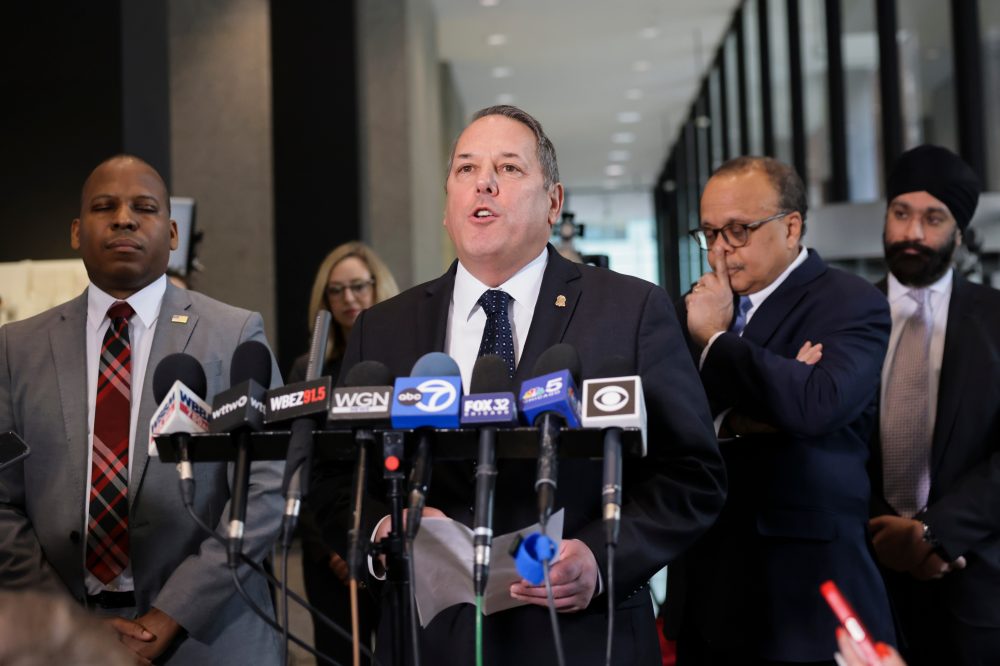
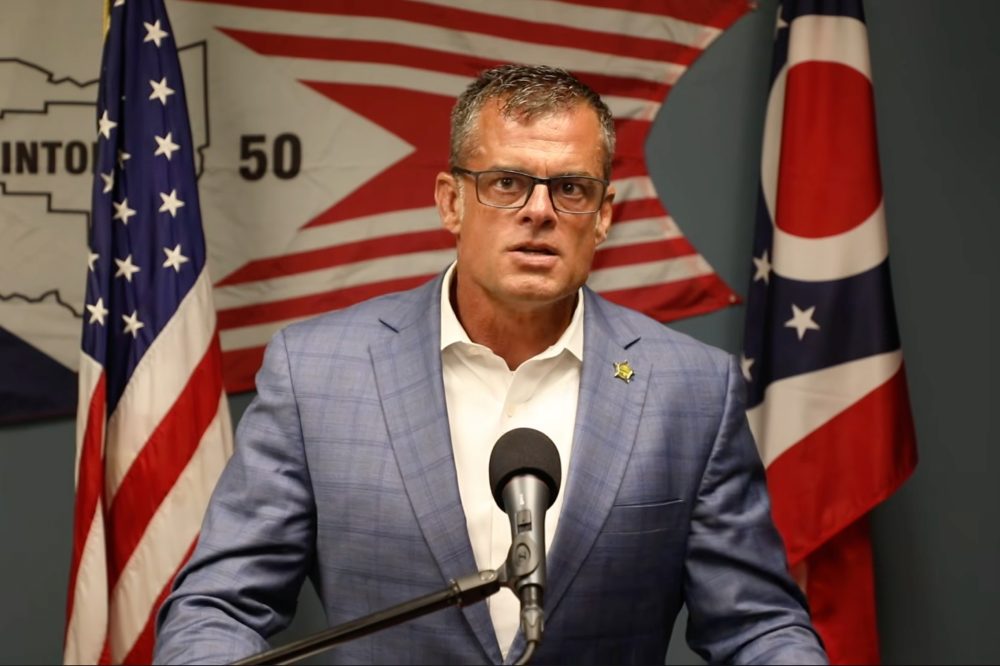
The top FBI official overseeing the Chicago field office is abruptly departing his role after sources say he was pressured to retire. Douglas DePodesta sent a farewell message to fellow bureau employees, and multiple individuals with knowledge of the situation — speaking anonymously because of the sensitive nature of personnel matters — confirmed he had been pushed out.
DePodesta has served as special agent in charge of the Chicago office, one of the largest in the FBI, for close to two years. He originally joined the bureau in Chicago back in 2002, working drug cases before moving on to senior positions at FBI headquarters in Washington, as well as offices in Detroit and Memphis. He was appointed to lead the Chicago field office in August 2024.
In his farewell note, DePodesta hinted at an internal conflict that he said led to his exit, though he did not spell out the specifics. “I’ve never backed down from a fight, as long as it meant our personnel could continue serving the FBI’s mission,” he wrote. “Unfortunately, that has proved unpopular over time and my departure is a consequence of that.”
His exit is part of a broader wave of departures at the FBI, as Director Kash Patel has moved to push out both rank-and-file agents and supervisors who are viewed as not aligned with the Trump administration’s priorities. The shake-up also comes during a period of significant turbulence in Chicago’s federal law enforcement community. The city’s top federal prosecutor, Andrew Boutros, announced this week a sweeping review of more than 1,000 grand jury presentations made by Illinois prosecutors, following the dismissal of a high-profile case tied to alleged misconduct.
The FBI did not offer a comment on Thursday. However, the bureau’s official rapid response account on the social media platform X responded to a post about DePodesta’s departure, stating: “It’s simple: Anyone who is not on board with THIS FBI under the leadership of President Trump — which has achieved the lowest murder rate ever — is free to leave.”
In his farewell note, DePodesta also included a passage from a message written by former FBI Director Chris Wray, Patel’s predecessor, who reminded agents that “you have been who the American people have turned to in their darkest moments” and praised the workforce for having “stayed true to the values that define who we are, and to the qualities for which we stand: Fidelity, Bravery and Integrity.”
NEW YORK — A man who makes a habit of scaling skyscrapers told police he and his girlfriend climbed to the very top of the Empire State Building’s antenna because he wanted to do something extraordinary to pop the question, prosecutors revealed Thursday during the couple’s arraignment on felony charges.
The pair, known publicly as Angela Nikolau and Ivan Beerkus, said almost nothing as they exited the courthouse. However, when a reporter asked Beerkus about the daring stunt, he offered a brief response: “We believe in love.”
Prosecutors charged the two with felony reckless endangerment, burglary, and additional offenses. Authorities say the couple — who were featured in a 2024 Netflix documentary called “Skywalkers: A Love Story,” which documented their “rooftopping” adventures and growing relationship — didn’t just create a spectacle on Wednesday. They also put lives at risk by scaling the iconic skyscraper’s broadcast antenna.
Once they reached the summit, standing 1,454 feet (443 meters) above midtown Manhattan, the climbers held up a black banner bearing the message: “When the power of love beats the love of power the world knows peace.” The moment was captured by news helicopters circling overhead.
After rolling up the banner, the couple moved down to a slightly lower ledge, where Beerkus apparently proposed — and Nikolau said yes. She later shared photos from the adventure on her social media pages, including a striking image showing an engagement-style ring held up against a sweeping aerial view of Manhattan below.
According to the court complaint, police waited roughly 30 minutes for the antenna to be powered down before Emergency Services Unit officers began their own ascent. They eventually caught up with the climbers on their way back down. Officers climbed approximately 1,250 feet (381 meters) above street level — a detail the complaint highlighted as evidence of the danger involved. Court documents listed the couple’s legal names as Angelina Nikolau and Ivan Kuznetsov.
The Netflix documentary portrays Beerkus, now 32, and Nikolau, 33, climbing tall structures around the world — often without permission — and occasionally disguising themselves as construction workers to gain entry.
Investigators found a broken lock on a restricted security door on the building’s 104th floor, which is the access point for the antenna. The highest floor open to the public is the 102nd, which features an observation deck. Reaching any floor above that requires a key card, according to the complaint.
Empire State Building management has described the climb as “unauthorized” but has declined to address questions about whether the couple had any contact with security personnel before making their ascent. The building screens all visitors and prohibits large packages, sports equipment, costumes, and masks, among other items.
Both Beerkus and Nikolau were released without bail, consistent with New York state laws that limit when bail can be imposed. Their attorney, Jason Krinsky, said outside the courthouse that once the defense receives the prosecution’s evidence, the team will review it and decide how to proceed.
Krinsky also had a bit of praise for his client’s romantic ambitions. “What a way to propose — something you can only dream of,” he said. “So you’ve got to, you know, give him some credit for that.”
The Empire State Building has seen other unauthorized climbs over the years, including ascents of the antenna and other sections of the structure. One notable exception came in 2023, when actor and musician Jared Leto was given permission to climb to the base of the antenna from the 86th floor as part of a tour promotion.
Motorists traveling eastbound on Fieldsboro Road should plan for a lane closure currently in effect between Driver Street and Avon Bridge Drive.
The closure is the result of ongoing construction in the area and is expected to last until 5 p.m. Drivers are encouraged to allow extra travel time or consider alternate routes to avoid potential delays.
Drivers heading northbound on I-95 between Newark and Wilmington should be aware of an active trash removal operation currently underway along the shoulder of the highway.
Workers are expected to remain in the area until 1 p.m. Motorists traveling through this stretch are encouraged to slow down and stay alert for crew members and equipment near the roadway.
NOAA announced on July 2, 2026, a series of region-specific priorities designed to breathe new life into the American seafood industry. The plan focuses on cutting red tape for domestic fishermen, boosting production, expanding access, and improving the financial bottom line for the fishing sector.
The effort, coordinated through the Department of Commerce via NOAA Fisheries, comes in direct response to a presidential executive order titled “Restoring American Seafood Competitiveness,” which called for increasing the sustainable harvest of seafood and supporting American fishermen and women.
“These regional priorities are a critical step in our efforts to fulfill the President’s vision of making the United States the world’s dominant seafood leader,” said NOAA Administrator Neil Jacobs, Ph.D. “We look forward to partnering with the councils to advance seafood competitiveness and support our American fishermen.”
The process began in August 2025, when NOAA Fisheries asked stakeholders — including regional fishery management councils — to weigh in on how to better manage fisheries and science. The goal was to stabilize markets, widen access, boost profitability, and prevent fishery closures. More than 700 individuals and organizations submitted comments, and each regional council provided a detailed action plan.
After reviewing input from councils, the fishing industry, and the general public, NOAA identified priority actions for each region. Here is a breakdown of what each area can expect:
In the New England region, NOAA will focus on easing the financial burden of industry-funded monitoring, modernizing fleet capacity, and re-examining static area closures to restore fishing yields and economic health.
In the Mid-Atlantic region — which covers waters relevant to Delmarva-area fishermen — the priorities are modernizing fleet capacity and improving how fishing quotas are distributed.
In the South Atlantic region, the focus will be on improving access and flexibility while building state-led data partnerships.
In the Caribbean region, NOAA will review the effectiveness of marine protected areas, evaluate the role of territories in managing spiny lobster and queen conch, and work to significantly increase economic returns to island communities.
In the Gulf of America region, priorities include defending the domestic shrimp fleet from trade imbalances and making Individual Fishing Quota access more efficient.
In the Pacific region, NOAA will look at reducing redundancies in trawl observer requirements and review the science and management of Pacific sardines.
In the North Pacific region, the agency will review Steller sea lion closure boundaries, work to eliminate unnecessary requirements, and increase operational flexibility.
In the Western Pacific region, NOAA aims to open up commercial fishing opportunities that were previously blocked by what it describes as punitive monument closures, while also considering additional management changes consistent with the Endangered Species Act.
For Highly Migratory Species, NOAA’s priorities include pursuing international quota increases and maximizing the retention of targeted catch.
A full list of priority actions is available on the NOAA Fisheries website. Media inquiries can be directed to Rachel Hager at [email protected].
WASHINGTON (AP) — As the United States marks a quarter-millennium of existence, many Americans are choosing to block out the partisan noise and the endless scroll of social media outrage, and instead reconnect with what the country personally means to them.
In the days leading up to the Fourth of July, the Associated Press sat down with everyday citizens to get a sense of the national mood. What emerged was not the chest-thumping patriotism often associated with American celebrations, but something more measured — a blend of gratitude, worry, and a desire for common ground.
In Topeka, Kansas, auto technician Joe Fuqua-Bejarano said the strength of this country lies not in its politics but in its people. Speaking from a fireworks stand where he runs a busy side business, he pointed to resilience as the defining American quality. “We’ve just all got to find unity somewhere, whether that’s in laughter or perseverance, and keep everybody cool,” he said.
Christina Zhou, a 25-year-old research assistant from Cambridge, Massachusetts, acknowledged the divisions but refused to dwell on them. “There are lots of points of contention going around,” she said, “yet there are still a lot of beautiful things that are happening.” Her approach: focus on what’s close to home. “What I’m trying to do is think about just things that are happening locally. It feels a little bit more like within our own personal control.”
In Mont Vernon, New Hampshire, 50-year-old farmer Mindy Dean said the big anniversary has barely registered in her household. She and her family will spend Saturday milking goats and possibly catching some local fireworks. “We’re just happy Americans,” she said. “We kinda do our own thing and just enjoy our freedom as Americans.”
Meanwhile, 81-year-old retiree Neil Casey of Nashua, New Hampshire, and his friend Maureen Regan of Cambridge are taking a more active approach, touring Boston’s historic landmarks — including Paul Revere’s house — and attending as many Fourth of July events as they can. Regan drew inspiration from international soccer fans who visited the country for the World Cup. “They love everything we have,” she said, “and I want people to not forget that and remember how lucky we are.” Her message to fellow Americans: “Just enjoy the moment. Enjoy that we’ve been here for 250 years.”
For others, the celebration is harder to embrace. Some find it difficult to separate the holiday from President Donald Trump’s decision to tie the National Mall festivities to what he said would culminate in a Trump rally on Saturday.
“When you’re celebrating the Fourth of July right now, it feels like that’s like a Republican thing to do,” said Madeline Capodilupo, a 26-year-old special-education teacher from Boston, who planned to spend the weekend at her fiancé’s family beach house in Maine. “It’s just hard to celebrate something when it doesn’t feel like we should be celebrating anything.”
At Detroit’s Eastern Market, Ronald Hall — an Air Force veteran who served 18 months near the end of the Vietnam War — and his wife Karen, who spent two years in the Army and participated in Operation Desert Storm, reflected on what the holiday has always meant to them. As a Black man, Ronald said the celebration was never about the country as it was, but about its promise. “I grew up remembering the promise,” he said. “That’s what we celebrated: the promise, not the country.”
Veterans were well-represented in the conversations. At the New Hampshire Veterans Home in Tilton, residents are anticipating an upcoming community celebration featuring a National Guard Black Hawk helicopter, a World War II ambulance, food trucks, live music, and even Uncle Sam on stilts.
Leo LeClerc, 83, an Air Force veteran who served in Vietnam, said his faith in America runs deep — but it is being tested. “I believe this country is the greatest that ever existed,” he said. “Our democracy is strong and it will continue to be strong as long as people participate in it.” Still, he added, “I don’t like what’s going on in this country” and “I don’t feel very good about the 250th.” An independent who voted for Trump in 2016, LeClerc said he now believes a “cult of personality has taken over” around the president.
Tom Gaumont, 74, an Army veteran and former history teacher, looked back at the 1976 bicentennial as a more optimistic moment, even in the shadow of President Richard Nixon’s resignation under threat of impeachment. “I’m kinda sad at this point with what I anticipate,” he said. “I’ve seen and taught about how these things kind of crumble, so I’m concerned.” He added: “We’ve lasted this long, and this is a very existential time in our history.”
Allan Bailey, 83, a Republican and Vietnam veteran who later owned a motel, echoed that concern. “I’m worried about how the country is going, I really am,” he said. “I don’t know what we’re going to leave our children, and that bothers me a lot.”
In Dearborn, Michigan, a more hopeful voice came from Nabeel Mawari, 38, an immigrant from Yemen who is now a U.S. citizen. While he planned to work his security guard job on Saturday as his wife and two young sons celebrated with relatives, Mawari spoke warmly about his adopted homeland from his backyard. “My life is here,” he said. “We try to make the U.S.A. the greatest. That’s why I’m here. I love this country. The Fourth of July, it is very important.”
Perhaps the most straightforward sentiment came from Gary MacGrath, 77, a caricaturist who has worked a suburban Philadelphia fair for 14 years. This year, his booth happened to be squeezed directly between the local Democratic and Republican Party clubs. A former bartender, MacGrath said he long ago learned to “never talk about religion or politics” — a rule he was sticking to. But he allowed himself one brief observation: “It’s 250 years. Let’s keep democracy going.”
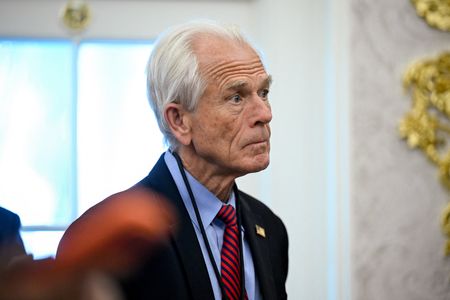
WASHINGTON — The federal government is taking steps to ease regulations on the nation’s fishing industry, including unlocking the northern edge of Georges Bank — a well-known fishing ground off New England — for scallop fishing, according to White House trade and manufacturing adviser Peter Navarro.
Navarro announced the two actions on Thursday, saying they grew out of a meeting held in the Oval Office between President Donald Trump and scallop fishermen. He described the moves as part of a wider initiative to breathe new life into the U.S. seafood sector.
The announcements build on an executive order Trump signed in April 2025, which directed the Commerce Department to roll back fishing regulations and open marine monuments to commercial fishing operations — all with the goal of boosting American seafood production.
The U.S. fishing industry, valued at $320 billion, is overseen in large part by the National Oceanic and Atmospheric Administration, a federal agency responsible for managing coastal fisheries.
Under a law passed in 1976, NOAA’s National Marine Fisheries Service is tasked with creating management plans for 45 different fisheries. That includes setting catch quotas and determining when fishing seasons begin and end, a process that involves input from federal scientists and local fishermen.
The Delaware Department of Transportation is warning drivers about upcoming lane and road closures at the intersection of US 40, Glasgow Drive, and Salem Church Road in New Castle as crews prepare to carry out roadway reconstruction work.
Starting Friday, July 10 through Sunday, July 12, the westbound right turn from US 40 onto Glasgow Drive will be shut down. Glasgow Drive will also be completely closed at its US 40 junction during that same period to allow for full-depth roadway construction, which includes work on pedestrian islands.
A second phase of closures is set to begin Monday, July 20 and run through Thursday, July 30. During that time, northbound Salem Church Road will be closed for approximately 300 feet from the US 40 intersection as part of what officials are calling Phase 1A construction.
Drivers are encouraged to allow extra travel time and seek alternate routes while the work is underway.
A flagging operation is currently in effect at the intersection of Galewood Road and Wilson Road, according to traffic officials.
The operation is expected to remain active until 6:00 PM. A flagger is directing traffic in the area, which may cause slowdowns for drivers passing through.
Motorists are encouraged to allow extra travel time or consider using an alternate route until the flagging operation concludes.
While the Maryland Department of Natural Resources is primarily focused on protecting the environment, its role as caretaker of more than half a million acres means it is also guardian of the state’s deep historical roots.
Nearly every Maryland state park contains some piece of history, but several offer visitors the rare opportunity to literally walk the same ground as figures who shaped the American story.
One starting point is St. Clement’s Island State Park, located in the Potomac River off Colton’s Point in St. Mary’s County. This is where the Ark and the Dove arrived on March 25, 1634, carrying Maryland’s first English settlers. Like those original arrivals, today’s visitors can only reach the island by boat.
Jumping ahead to the French and Indian War era, Savage River State Forest in Garrett County features an unimproved trail with signage tracing the 1755 Braddock Military Road Expedition. That original road was constructed under British General Edward Braddock, with support from the Virginia Militia — which included a then-young officer named George Washington — in an effort to push the French out of Western Pennsylvania and gain access to the Ohio Valley. The mission ultimately failed, and the conflict dragged on for several more years.
As that war continued, Maryland’s colonial government erected the stone-walled Fort Frederick in 1756 to shield settlers from attack. The fort later served as a prison for British soldiers during the American Revolution and was used by Union troops to guard the C&O Canal during the Civil War. Its stone wall and two barracks have since been restored to their 1758 appearance, and the park regularly hosts historical reenactments and educational programming.
Maryland played a significant role in the American Revolution. Smallwood State Park is home to Smallwood’s Retreat, the plantation estate of Major General William Smallwood — a Continental Army officer who later served as governor of Maryland. The surrounding outbuildings reflect what is known or believed to have stood on the property, offering a window into daily life on an 18th-century tidewater plantation.
Earlier this year, the department accepted a land donation that included a historic African American cemetery — the final resting place of enslaved, skilled laborers at the Catoctin Furnace in Frederick County. The furnace was founded in 1776 by Thomas Johnson and three of his brothers; Johnson would go on to become Maryland’s first elected governor. The furnace produced iron goods for George Washington’s army, including cannonballs used in the Revolutionary War’s closing battle at Yorktown, Virginia. The site is now managed as part of Cunningham Falls State Park, with a commitment to honor this ground with dignity and share these stories truthfully.
During the War of 1812, British forces targeted Maryland communities throughout the Chesapeake Bay region. North Point State Park, located north of Baltimore, is home to the Defenders Trail — the same path soldiers traveled during that conflict.
In the early years of the United States, the ability to move people and goods was critical to the nation’s expansion, and Maryland was at the center of that effort. The National Road became the first highway built entirely with federal dollars, with construction kicking off in Cumberland in 1811. The road eventually stretched through central Ohio and Indiana before reaching Vandalia, Illinois in the 1830s, where funding ran dry, according to the National Park Service. One well-preserved remnant of that road is the Casselman River Bridge, now part of the state park that bears the same name. When it was built, its 80-foot span was the largest of its kind in the country. The bridge is currently being refurbished by the department and is expected to reopen within the next few years.
Maryland’s seafaring heritage is on display at the historic lighthouses found at Turkey Point within Elk Neck State Park and at Point Lookout State Park in St. Mary’s County.
The nation’s first major steam railroad — the Baltimore and Ohio — was responsible for building the Thomas Viaduct, which is still in use today. Completed in 1835, it holds the distinction of being the world’s largest multiple-arched stone railroad bridge with an arc. The structure played a strategic role during the Civil War and today stands above Patapsco Valley State Park near Ellicott City.
Civil War history is woven throughout Maryland’s landscape. South Mountain State Battlefield marks the site of the first major Civil War battle fought in Maryland — three days before Antietam. The Union victories there in September 1862 helped create the conditions that led President Abraham Lincoln to issue the Emancipation Proclamation. The battlefield is also the only major Civil War site that crosses the Appalachian National Scenic Trail.
In Southern Maryland, Point Lookout State Park stands on the site of a camp that held as many as 52,264 Confederate prisoners of war during the Civil War. Its serene surroundings today contrast sharply with the suffering that took place there.
Many of the state’s public lands also grapple with the history of slavery — what historians have called America’s “original sin” for the way it shaped the nation’s economy, culture, and politics. Several parks share the stories of enslaved Marylanders and their struggles, while also honoring those who fought for freedom and the African Americans who lived through emancipation.
On the Eastern Shore, the Harriet Tubman Underground Railroad and Visitor Center brings to life the courageous journeys of Tubman and others who risked everything in pursuit of freedom.
One of the state’s newest parks tells the story of an African American family that rose from enslavement to become a prosperous and respected presence in northern Montgomery County. At Freedman’s State Park, visitors can explore the story of emancipation through the life of Enoch George Howard, his family’s resilience, and the community that formed around them. Their legacy stands as an inspiring chapter in the state’s stewardship of natural, historical, and cultural heritage.
These are only a handful of the countless historical moments preserved across Maryland’s public lands. Walking where history happened, these places remind us of how far the nation has come in its pursuit of liberty — and how much work remains.
As Secretary Josh Kurtz puts it, America’s story isn’t only etched in stone and marble — it is still very much alive and continuing to grow.
Josh Kurtz is Secretary of the Maryland Department of Natural Resources.
Hog Range Road is closed between Hickman Road and Cattail Branch Road following a crash, according to transportation officials.
Drivers in the area should plan for delays and find alternate routes while crews work to clear the scene. No additional details about the crash have been released at this time.
Motorists are urged to use caution near the affected area and watch for emergency personnel on scene.
Southbound Interstate 95 is currently shut down at the point where it splits with Interstate 495, near Naamans Road, as crews work to remove a tree on an emergency basis.
Motorists traveling southbound through that corridor should plan for significant delays and are encouraged to find an alternate route until the roadway is cleared and reopened.
No estimated time for the closure to be lifted has been announced at this time. Drivers are urged to stay alert for updates as conditions change.
Westbound travelers on Churchill Drive should be aware of intermittent lane restrictions currently in place between North Hillside Boulevard and Marsh Road.
The lane closure is the result of construction activity in the area and is expected to remain in effect until 5 PM.
Drivers are advised to use caution when passing through the construction zone and to budget additional travel time if their route takes them through that stretch of road.
The Delaware Department of Transportation (DelDOT) is warning drivers about upcoming traffic restrictions at the I-95 and SR 896 interchange in New Castle County.
During daytime hours on weekdays, the northbound SR 896 on-ramp to northbound I-95 will be narrowed. Drivers should expect reduced lane widths in that area Monday through Friday.
In addition, daytime shoulder closures are planned on both northbound and southbound SR 896, as well as on the northbound SR 896 on-ramp to northbound I-95 and the northbound I-95 off-ramp to SR 896. Those closures are being made to accommodate electrical work in the area.
Motorists traveling through this interchange on weekdays are encouraged to allow extra time and use caution in the work zones.
LEWES, Del. — Drivers heading through the Lewes area should expect a significant detour as the Delaware Department of Transportation has closed a stretch of Minos Conaway Road between SR 1 and SR 9/Lewes-Georgetown Highway.
The closure began Monday, July 13th and is expected to remain in effect through Monday, September 14th, weather permitting. The road is being shut down to allow construction of a new roundabout as part of the Minos Conaway Road Grade Separated Intersection Project.
Motorists heading southbound on SR 1 should continue past Minos Conaway Road, then turn right onto SR 9 Lewes-Georgetown Highway, and then make another right to get back onto Minos Conaway Road.
Drivers heading eastbound on SR 9 Lewes-Georgetown Highway should bypass Minos Conaway Road entirely, continue along SR 9, and then use the jug handle at the Five Points Intersection to head northbound on SR 1.
Drivers are encouraged to allow extra travel time and follow posted detour signs throughout the construction period.
Dover Police have released the most recent round of Megan’s Law sex offender notifications for the City of Dover.
The notifications, which include identifying images of registered sex offenders, are made available to help keep the public informed about individuals living in the community.
Residents who have questions or concerns regarding the notifications are encouraged to contact the Dover Police Sex Offender Enforcement Unit directly through the department’s official website.
WASHINGTON — The Trump administration is set to officially launch Trump Accounts on Saturday, timing the rollout to coincide with America’s 250th birthday. The goal of the program is to help build long-term financial security for children across the country.
Through the program, parents can open investment accounts for children born during President Trump’s second term and receive an automatic $1,000 contribution from the federal government. Accounts can also be opened for older children — provided they don’t turn 18 before the end of the current calendar year — though those children will not receive the $1,000 seed money.
Once deposited, that money — along with any additional contributions from employers, charitable organizations, or family members — is placed into the stock market through private investment firms. Children cannot access the funds until they reach age 18, and even then, withdrawals are limited to specific purposes such as paying for college tuition, starting a business, or making a down payment on a home.
The program has already attracted significant private donations beyond the government’s initial contribution. Michael Dell, founder of Dell Technologies, and his wife Susan pledged $6.25 billion to benefit children who don’t qualify for the government’s $1,000. On Wednesday, President Trump announced via Truth Social that Sanjay Mehrotra, CEO of Micron Technology, would contribute $250 million to the effort.
Trump wrote that the donation “will help jumpstart the American Dream for these fabulous children as we celebrate America’s 250th Anniversary! This MASSIVE Investment will help MILLIONS of American children and families get a strong start in life, and give them REAL Financial Security.”
The launch is happening at a time when many Americans are feeling financial pressure. The Federal Reserve’s preferred measure of inflation climbed to a three-year high in May, driven in part by rising gas prices during the conflict with Iran. Food prices have also gone up since the start of the current administration. At the same time, some Americans are concerned about potential reductions to programs like Medicaid and the Supplemental Nutrition Assistance Program, known as SNAP — both of which were trimmed under the same legislation that established Trump Accounts.
Families can already sign up at trumpaccounts.gov. After a parent or guardian opens an account, the U.S. Treasury Department will deposit $1,000 for qualifying newborns. Private banks and brokerages will manage the funds, which must be invested in U.S. equity index funds that track the broader stock market and charge no more than 0.10% in annual fees.
Parents can contribute up to $2,500 each year using pretax income — similar to how retirement accounts work. Employers, relatives, friends, local governments, and charitable organizations can also add money. Annual contributions are capped at $5,000, though donations from governments and charities do not count toward that limit.
“We’re doing something much better than giving the next generation a handout,” Trump said. “We’re giving them ownership of America’s future.”
To be eligible for the $1,000 from the government, a child must be a U.S. citizen, have a Social Security number, and be born between January 1, 2025, and December 31, 2028. Any parent can open an account for a qualifying child, regardless of the parent’s immigration status.
It’s worth noting that children cannot touch the money until they turn 18, except in rare situations, meaning the funds cannot help cover immediate household expenses. Withdrawals from the accounts will also be subject to taxes.
Some children who are too old to receive the $1,000 government contribution may still benefit from private donations. The Dells’ $6.25 billion pledge will provide $250 in seed money to some children age 10 or under whose parents live in ZIP codes with a median family income of $150,000 or less.
Hedge fund founder Ray Dalio and his wife Barbara pledged $75 million for children under age 10 in Connecticut, where Dalio lives. That funding would amount to $250 for roughly 300,000 children in qualifying areas.
In January, Trump announced that investor Brad Gerstner would donate $250 to Trump Accounts for every child under age 5 in Indiana.
Several major corporations — including Uber, Intel, IBM, Nvidia, and Steak ‘n Shake — have also announced plans to include Trump Account contributions as part of their employee benefits packages. The administration has been encouraging such corporate giving through what U.S. Treasury Secretary Scott Bessent refers to as the “50 State Challenge.”
Supporters of the program say it will introduce more Americans to the stock market and give children born into poverty a chance to build wealth. Backers also argue the accounts reinforce capitalism at a time when openly socialist political candidates are gaining popularity.
“The answer to more socialism is more capitalism,” investor Brad Gerstner said at a White House event in January. “This makes every child in America a capitalist from birth.”
According to the U.S. Securities and Exchange Commission, about 58% of American households owned stocks or bonds in 2022, though the wealthiest 1% held nearly half of all stock value that year.
Before Trump Accounts were created, California, Connecticut, and the District of Columbia had already been piloting similar so-called baby bond programs. Several other states, including Maryland, are weighing comparable efforts. However, those existing programs are targeted specifically at children growing up in poverty or foster care, as well as children who lost a parent to COVID-19 — and they are managed by state governments rather than private firms.
Critics of Trump Accounts argue the program does little to help children during their earliest and most financially vulnerable years. They also say the accounts don’t make up for cuts to programs like food assistance and Medicaid that benefit young children and their families — cuts that were included in the same legislation that created Trump Accounts.
Opponents also warn the program could widen the wealth gap. Families who can afford to make the maximum pretax contribution each year will see the greatest financial gains, while lower-income families who can’t set aside extra money will benefit the least. Based on a projected 7% annual return, the $1,000 in seed money alone would grow to roughly $3,570 over 18 years.
Boaters who use the George Island Landing Road boat ramp in Worcester County will need to make other arrangements starting this weekend.
According to an announcement from Worcester County, the boat ramp is scheduled to close beginning July 6 to allow for a rehabilitation project to take place.
Further details about the expected duration of the closure or the scope of the work were not included in the county’s announcement. Boaters are encouraged to plan accordingly and seek alternative launch sites during the closure period.
A record number of Americans are expected to travel this Fourth of July weekend, though rising fuel costs and soaring airfares are putting a damper on what could have been an even bigger surge in holiday movement.
According to AAA data, roughly 72.2 million Americans will travel at least 50 miles from home between June 27 and July 5 — up slightly from 71.8 million during the same period last year. However, that increase is smaller than the gains seen in recent years, as war-related spikes in crude oil and jet fuel prices push up costs and force many families to scale back their plans. An expected heat wave is also adding another layer of uncertainty for travelers.
“While the overall number of Independence Day travelers appears to be plateauing, we’re still expecting record volumes this year,” said Stacey Barber, vice president of AAA Travel.
AAA anticipates that road and air travel numbers will remain largely unchanged from last year, while travel by bus, train, and cruise ship is projected to climb sharply. John Grant of OAG Aviation noted that domestic flight capacity is flat compared to last year, suggesting demand will be on par with 2024 levels as well.
Two major events are helping sustain travel interest despite the financial pressures: the United States’ 250th anniversary and the ongoing FIFA World Cup. Major cities are bracing for heavy crowds, with AAA pointing to strong demand for destinations including New York, Chicago, and Boston, where fireworks and holiday events are drawing large numbers of visitors.
Washington, D.C., is seeing particularly dramatic interest — hotel bookings for the holiday weekend have jumped fivefold compared to last year, while average room rates have climbed 35%, according to online travel agency HotelPlanner.
“The notable anniversary is probably leading to less cancellations or changes even if heat is a concern for people,” said Steve Schawb, CEO of Casago, a vacation rental management company.
The World Cup is also driving a significant boost in certain host cities. Vacation rental demand in Miami has jumped 68% ahead of the high-profile knockout match featuring Lionel Messi’s Argentina against Cape Verde, according to data firm AirDNA.
Texas is another standout, benefiting from the rare combination of FIFA matches being held in both Dallas and Houston alongside 250th anniversary festivities across the state. The Lone Star State has also recorded the highest number of RV bookings on the RVshare platform for the July 4 weekend, the rental company reported.
Southbound travelers on US-301 are facing a lane restriction near the Jamison Corner overpass as construction crews work in the area.
The left lane of US-301 southbound at the Jamison Corner overpass is currently closed, according to traffic officials. The closure is expected to remain in effect until 5 p.m.
Drivers in the area should anticipate possible slowdowns and allow extra travel time. Choosing an alternate route may help avoid delays during the construction period.
When Lulu Gribbin was 15 years old, she survived a terrifying shark attack off the Florida coast — but not without a devastating cost. The Alabama teen lost her left hand and part of her right leg in the incident.
What made the ordeal even harder to accept was learning afterward that another woman had been bitten by a shark just 90 minutes before her attack, only 3 miles — about 4.8 kilometers — down the same beach. Gribbin says if she had known about that earlier bite, she never would have gone into the water.
That realization has now driven a change in federal law. President Donald Trump recently signed legislation known as “Lulu’s Law,” which directs the Federal Communications Commission to permit emergency alert messages to be sent to mobile phones when a shark attack occurs nearby. The law classifies a shark attack as an event that qualifies for an emergency alert, similar to how Amber Alerts notify the public when a child is abducted. Individual states will be responsible for putting the warning systems into practice. Gribbin’s home state of Alabama had already established such a system last year.
“It’s really just common-sense legislation. It says that whenever there has been a shark attack in a certain area where you are near, it will send an alert to your phone, exactly like how an Amber Alert system works when a child is abducted,” Gribbin said.
She added that she is optimistic about what the law can accomplish. “I definitely see this law working in the future and I’m really excited to hopefully save lives,” she said.
Gribbin was one of three people bitten by sharks on June 7, 2024, off the Florida Panhandle. She had been on a mother-daughter trip to the area and was diving for sand dollars with a friend when the situation turned dangerous.
“All of the sudden my best friend yelled, ‘Shark!’ and so we all started swimming for our lives,” Gribbin recalled. Remembering that sharks are drawn to frantic movement, she called out for everyone to stay calm. Being the closest to the animal, she was the one who was bitten.
“The shark bit off my hand first, and I raised my arm out of the water, and there was just flesh and bone there,” Gribbin described. The shark then grabbed hold of her leg. A nearby man punched the animal to drive it away, and strangers on the beach rushed to assist her. She was airlifted by helicopter to a hospital.
Doctors managed to save her life, though they were forced to amputate part of her right leg.
During her hospital recovery, Gribbin made a conscious choice to embrace a positive outlook. She struggled at first with the reality that her body and her life had been permanently changed.
“I would cry, and I would ask my mom, ‘Why is it happening to me?’ And on that day, we put a Bible verse on my bedside table that said, ‘With God, all things are possible.’ And then she told me that what you look like doesn’t define you, it’s who you are on the inside. And so, I think that stuck with me throughout my whole recovery the past two years. It doesn’t matter what I look like, as long as I’m spreading positivity and inspiring others to stay strong and to never give up,” she said.
Gribbin was fitted with prosthetic limbs, regained her ability to walk relatively quickly, returned to playing sports, and earned her driver’s license. She has also returned to the ocean, learned to surf, and even met professional surfer Bethany Hamilton, who herself lost an arm in a shark attack.
U.S. Sen. Katie Britt, the Alabama Republican who championed the legislation in Congress, credited Gribbin’s determination for making the law a reality. “Because of her strength, lives will be changed. We should all be inspired by her,” Britt said, noting that the law came to be because of the teenager’s “courage, perseverance, and advocacy to protect future beachgoers.”
While sharks are a common presence in U.S. coastal waters, actual bites remain uncommon, according to Gavin Naylor, director of the Florida Museum of Natural History’s shark research program. He said there are between 60 and 80 documented unprovoked bites worldwide each year, and it is extremely unusual for multiple people to be bitten in the same area on the same day. A database known as the International Shark Attack File shows only a handful of such occurrences on record.
When clusters of bites do happen, Naylor said environmental conditions are usually to blame — such as sharks trailing schools of bait fish closer to shore, or murky water that causes a shark to confuse a person with a fish or seal.
In the area where Gribbin was attacked, Naylor noted that roughly 20 to 30 bull sharks are present about 1,312 feet — or 400 meters — offshore at any given time. Great white sharks have been spotted with increasing frequency in the colder waters off New England and Atlantic Canada, according to conservation groups. A smartphone application called Sharktivity also allows people to report shark sightings in real time.
Despite the attention those sightings can generate, Naylor emphasized that the threat is still quite low. “If sharks wanted to eat people, we’d have about 10,000 bites a day. The fact that we have so few is basically testament to the fact that the sharks are doing their level best to avoid people, not to target them,” he said.
Gribbin said her goal is simply to make sure people have access to information before they enter the water, rather than going in unaware of potential dangers nearby.
Braxton Rocha, who was bitten by a large tiger shark while spearfishing off the north shore of the Big Island of Hawaii in 2015, said he supports the idea of an alert system. He believes it is the kind of information that beachgoers — especially tourists — would want to have.
Rocha described the shark as enormous when he first spotted it. “Looked like a bus or submarine. She was the biggest thing I’d seen in the ocean at that time,” he said. As he headed toward shore and looked back, the shark was suddenly right in front of him. He tried to push it away, but the animal overpowered him and bit down on his leg. Rocha punched it in the nose, and the shark released him and swam off.
“Everything happened so fast. It was almost like being struck by lightning. I was still kind of out of it. I looked down and see giant clouds of blood just bursting out of my leg,” Rocha said.
It took nearly 100 staples to close the wound on his leg. Even so, the encounter did not shake his love of the ocean. “I’ve always loved sharks,” Rocha said.
Motorists traveling southbound on Edgemoor Road should plan for a lane restriction currently in effect.
The southbound right lane on Edgemoor Road, between Philadelphia Pike and Governor Printz Boulevard, is closed due to ongoing construction work. The closure is expected to remain in place until 3 p.m.
Drivers in the area are encouraged to allow extra travel time or consider alternate routes until the lane reopens.
A right lane closure is currently in effect for westbound traffic along Vernon Road/Walt Messick Road, affecting the stretch between Farmington Road and Whiteleysburg Road.
The closure is the result of ongoing construction activity in the area and is expected to remain in place until 4 PM.
Drivers traveling through that corridor are encouraged to use caution, reduce speed near the work zone, and consider alternate routes if possible to avoid delays.
New York City is preparing to ring in the Fourth of July in a big way — and the heat is not slowing anyone down.
Despite temperatures expected to climb close to 100 degrees this weekend, the city has a full slate of Independence Day festivities planned. Among the highlights are fireworks shows, a gathering of tall ships, and the always-anticipated hotdog eating contest.
Organizers and city officials are moving forward with all events as the region braces for what could be one of the hottest Fourth of July weekends in recent memory.
Motorists traveling southbound on US 301 should plan for delays as construction crews have closed the right lane and right turn lane in the area between Bunker Hill Road and Warwick Road, also known as Levels Road (DE 299).
The lane restrictions are expected to remain in place until 12:00 p.m. Drivers are advised to allow extra travel time or consider alternate routes to avoid the construction zone.
A right lane closure is in effect on Janice Road between Route 1 and Siham Boulevard as a result of ongoing construction work.
The closure is scheduled to begin at 5PM. Drivers traveling through that stretch of roadway should expect delays and are encouraged to use alternate routes if possible.
No additional details regarding the duration of the closure or the nature of the construction project were provided at this time.
President Trump made a stop in North Dakota on Wednesday to visit the nation’s newest presidential library, a facility built to honor the legacy of former President Theodore Roosevelt.
The newly opened library marks the latest addition to the country’s collection of presidential memorial institutions. NPR was granted a tour of the new facility in the days leading up to the president’s visit.
Former President Trump and members of his family reportedly took in more than $1 billion in cryptocurrency earnings over the course of last year, according to new reporting that is drawing significant attention.
On the political front, Democratic Socialists are emerging as a notable challenge to the broader Democratic Party, creating tension within the left side of the political spectrum as the two groups navigate their differences.
And in sports, the United States men’s national soccer team advanced in the World Cup, defeating Bosnia-Herzegovina in a knockout round matchup.
The U.S. National Highway Traffic Safety Administration announced Thursday that it has officially closed a preliminary investigation it opened in 2022 into 695,000 Tesla vehicles that were experiencing sudden, unexpected deceleration.
The probe focused on Tesla’s Model 3 and Model Y vehicles, and regulators said the decision to close the case was based on the low level of danger posed to drivers and a significant decrease in the number of complaints received.
According to the agency, Tesla rolled out software updates in early 2022 specifically designed to address the unexpected slowing issue. The updates appear to have made a measurable difference — when the investigation first launched, there were 300 incident reports on file. That number fell to 45 in 2024, dropped further to 19 in 2025, and only three reports have come in since the beginning of 2026.
Regulators also noted that the sudden deceleration events did not cause vehicles to drift out of their lanes, nor did they result in dangerous reductions in following distance that could have led to rear-end collisions.
This closure comes just one week after the same agency separately wrapped up an expanded investigation into approximately 376,241 Model 3 and Model Y vehicles that had been flagged for issues related to loss of steering control.
A construction project is temporarily blocking the eastbound right turning lane at the intersection of Salem Church Road and Porter Road.
The lane closure is expected to remain in place until 6 a.m., according to traffic officials. Drivers traveling through that area should be prepared for the restriction and may want to consider alternate routes to avoid delays.
No additional details about the nature of the construction work were immediately available. Motorists are encouraged to use caution in the area.
Without waiting to formally take over Infowars, the satirical publication The Onion is moving ahead with its own spoof of Alex Jones’ conspiracy-driven media platform — and it’s putting money directly in the hands of Sandy Hook families to do it.
After more than a year of legal efforts to purchase Infowars, The Onion is set to launch a parody version on its own website this Thursday. A portion of the revenue will go toward families of victims from the 2012 Sandy Hook Elementary School shooting in Connecticut.
Those families have yet to see a single dollar from Jones, even though courts have ordered him to pay more than $1 billion after he repeatedly and falsely claimed the shooting — which killed 20 first graders and six adults — was staged.
The Onion’s CEO Ben Collins said the company will kick things off by sending the families $100,000 raised through merchandise sales. The products blend Infowars branding with The Onion’s own logo, rendered in rainbow colors. Collins’ company is still fighting in court to gain full control of Infowars.
“Don’t give comedy writers a grudge for 18 months,” Collins said.
The parody is set to include a lineup of shows and other content produced under the Infowars name, mocking Jones’ signature style — a chaotic mix of conspiracy theories, questionable health claims, attacks on tragedy victims, and aggressive marketing of supplements and survival products.
Jones’ followers, fueled by his false claims that Sandy Hook families were “crisis actors,” went on to harass those families and even issue death threats against them.
At its height, Jones’ Infowars drew 10 million visitors per month and brought in more than $50 million in yearly revenue, according to the company. But defamation judgments totaling $1.4 billion — handed down in both Connecticut and Texas, where Jones is based — pushed him into bankruptcy and effectively dismantled his media operation.
“All he’s been left with is an iPhone and a fancy microphone,” said Chris Mattei, an attorney representing nine of the Sandy Hook families.
Jones has since relocated his show to a different website. A request for comment sent to his team went unanswered.
The families acknowledged they could never fully silence Jones or stop him from spreading his message. But Mattei said they could make sure he never profits from it again.
“Every dime Alex Jones makes from here until the end of eternity is going to be claimed by the families,” Mattei said.
Collins said he decided to get involved after spotting that Infowars’ assets were headed to auction. He reached out to the Sandy Hook families, who were initially skeptical. But they quickly came around when they understood how The Onion’s team could use Jones’ own style and branding against him — reclaiming the platform to mock those who caused them so much suffering and, in their view, did lasting damage to society.
Collins held back details about the new content ahead of Thursday’s launch, but offered a few hints. The parody site will feature a section selling a fictional penis-flattening device, a fake supplement pill called “pro oxygen” that a host claims can replace breathing, and a lengthy debate over how many Bozo the Clowns exist.
“It’s old-fashioned Infowars — using the tricks that they use to get people addicted to outrage and, I would say, addicted to anticipation, trying to find the thing that’s around the corner that’s going to save your life,” Collins said.
The Onion is continuing its legal push to seize more of Jones’ assets. Collins said he expects the company to soon gain control of the Austin, Texas, studio that Infowars once operated out of. One Sandy Hook parent, Robbie Parker, whose daughter was killed in the shooting, has expressed plans to read from his book about grieving and fighting Jones — while sitting in the very spot where Jones once broadcast.
While the families originally hoped to see Infowars shut down for good and Jones permanently silenced, they have since warmed to the idea of what The Onion has in store, according to attorney Mattei.
“The idea that it could be turned to some social good. I think it’s even better,” Mattei said. “So, yeah, I think the families are both pleased and amused with what they’ve been able to achieve here.”
NEW YORK (AP) — For 25 years, scholar Jane Calvert has been fighting a battle that very few historians have taken up: defending the legacy of John Dickinson, a founding father best known today — when he is remembered at all — as the man who refused to put his name on the Declaration of Independence.
“It has been a constant struggle,” says Calvert, a former associate professor at the University of Kentucky who has written extensively about Dickinson and founded the John Dickinson Writings Project, an effort to make his body of work more widely accessible.
As the country prepares to mark the 250th anniversary of independence this Saturday, most Americans will be celebrating and reflecting on the nation’s founding. But for Calvert and a small group of like-minded scholars, the milestone is also an opportunity to push back against the enduring image of a man who has been dismissed, mocked, or simply left out of the story altogether.
Dickinson was born in Maryland and spent much of his life in Delaware and Pennsylvania. In his day, he was considered one of the most influential and admired founders. His “Letters from a Farmer in Pennsylvania” — a series of twelve essays published in the 1760s — were widely circulated critiques of Britain’s authority to tax the colonies, and they helped forge a common sense of identity among Americans. He also wrote the lyrics to one of the young nation’s earliest patriotic songs, “The Liberty Song.” Admirers gave him the title “Penman of the Revolution.”
Yet Dickinson also pushed for a peaceful resolution with Britain long after the first shots rang out at Lexington and Concord. In July 1775, he was a key author of the Olive Branch Petition, an appeal for reconciliation that King George III effectively rejected. When the Continental Congress voted for independence in July 1776, Dickinson and fellow Pennsylvanian Robert Morris chose to abstain. Morris eventually signed the Declaration — Dickinson never did.
“He wasn’t opposed to independence per se, but he thought it should happen gradually and without bloodshed,” Calvert explains.
“America wasn’t prepared in any sense, including militarily, and there was no constitution, no foreign allies, and no domestic manufacturing. Neither was there unanimity on the independence question,” Calvert adds. “But as critical as all these things were, Dickinson’s main concern was that there were no legal protections for the most vulnerable Americans. He was most worried about religious dissenters, particularly the Quakers in Pennsylvania.”
His reputation as a man of hesitation rather than action has followed him ever since. At the Signers’ Hall exhibit inside Philadelphia’s National Constitution Center, Dickinson’s statue stands alone in a corner, posed in quiet reflection. Prominent storytellers of the Revolution — from documentary filmmaker Ken Burns to “Hamilton” playwright Lin-Manuel Miranda — have largely left him out. In the musical “1776,” he appears as a smug, pro-British character. In the 2008 HBO miniseries about John Adams, he is cast as a compromising obstacle to Adams’ bold patriotism.
“It’s pretty egregious,” Calvert says. “He is depicted as a scowling and sunken-eyed naysayer of the Patriot cause. We know that he was a compelling and charismatic figure, well-liked among his colleagues and seen as a devoted Patriot leader. He did not wear a wig, don fancy clothes, walk with a cane or speak with a Scottish brogue — all things added in the show to make him appear aristocratic.”
After independence was declared, Dickinson did not retreat from public life or align himself with the British. He served in both the Pennsylvania and Delaware militias. He helped draft the Articles of Confederation, supported the U.S. Constitution as a Delaware delegate, and served as president of both Delaware and Pennsylvania. He and his wife, Mary, lent their name to the first college chartered after the founding of the United States — located in Carlisle, Pennsylvania. When Dickinson died in 1808, President Thomas Jefferson remembered him as “one of the great worthies of the revolution.”
Calvert believes Dickinson deserves a place in the top tier of founders, alongside figures like Adams and Jefferson. Thomas Donnelly, lead scholar at the Constitution Center, says Calvert has deepened his appreciation of Dickinson, and he speculates that the statue’s contemplative pose was intended as a nod to Dickinson’s “scholarly nature.”
Not all historians agree. Joseph Ellis, the Pulitzer Prize-winning author of “Founding Brothers,” acknowledges Dickinson as the leading voice of colonial resistance in the decade before 1776, but regrets that he failed “to take the last step.” Fellow Pulitzer winner Jack Rakove describes Dickinson’s 1776 decision as a “quirk of his conscientious political personality” that shouldn’t overshadow his other contributions — but he still wouldn’t place Dickinson in the first rank of founders. He puts him just below that level, alongside figures such as Benjamin Rush and John Jay. “Perhaps his qualms of conscience in 1776 have affected his reputation,” Rakove says.
Dickinson himself acknowledged the damage, calling his opposition to the Declaration a “finishing blow” to his “diminished popularity.” John Adams was among his harshest critics, dismissing him as a “piddling genius whose fame has been trumpeted so loudly.” In the 1840s, historian George Bancroft helped cement a negative view of Dickinson by condemning him for how he “dulled the resentment of the people, and paralyzed the manly impulse of self-sacrificing courage,” according to Calvert.
Calvert has not been alone in making the case for Dickinson. His defenders include the late conservative commentator William Murchison, who authored a 2013 biography drawing on Calvert’s research, as well as historians and Dickinson Project editors Ian Iverson and Nathan R. Kozuskanich. Calvert even credits the creators of “South Park” for a 2003 episode, aired during the Iraq War, in which the character Cartman travels back to 1776 and witnesses the independence debate — finding echoes of modern-day protests along the way.
“It’s the only pop culture representation of Dickinson I’ve seen that portrays him as being motivated by principle — that we shouldn’t found a country based on war,” Calvert says.
“Here Dickinson is the forefather of those antiwar protesters,” she adds. “Whether he would have gone so far as to say that the reasons for the Revolution were trumped up, I don’t know. Maybe. In any case, there is a lot to like!”
NEW YORK (AP) — The city is glowing right now. Draped in the afterglow of a Knicks championship, buzzing with World Cup energy, and swirling with rumors of a Taylor Swift wedding, New York is experiencing a summer unlike any in recent memory — one where confetti, fireworks, parades, and pure elation seem to be colliding all at once.
“This city has always known how to celebrate big moments. But this summer, so many of them have collided at once,” said Rabbi Yael Buechler, 40, of the Riverside section of the Bronx. She is planning a “Swiftie Shabbat” this weekend, complete with friendship bracelet cookies and a bedazzled challah bread she describes as being inspired by her “Chuppah Era.” “When I look back on the summer of 2026, I won’t remember just one event. I’ll remember a season when New York felt united in celebration.”
New York has never been an easy city to love unconditionally. The subway struggles, the sky-high prices — $9 boxes of cereal, $32 burgers — the microscopic apartments with enormous rent tags, the sidewalk trash piles, and the occasional unsavory surprise underfoot have a way of wearing people down. For some, it all eventually becomes too much.
But then there are those magical days when the city transforms into something almost storybook — impromptu classical concerts on stoops, parks that look like paintings, affordable dumplings, perfect pizza, and fresh bagels. On those days, everything clicks, and the city feels like it was made for dreaming.
This summer, many New Yorkers feel like those days have been strung together into something special. The city’s usual edge has softened a bit. Even the beaming young mayor, fresh off announcing that a large number of the city’s renters would face no rent increase, was spotted jumping into a public pool in a suit and tie.
“It’s easy to feel alone in the big city, but we all feel a bit closer right now,” said Dallas Short, a 38-year-old publicist who lives in the Two Bridges neighborhood of Manhattan. “Anything seems possible and attainable right now.”
At the heart of it all is the Knicks’ championship run — a story of underdogs swinging back, rallying from behind, and delivering clutch moments that left millions of fans breathless. Jalen Brunson’s steady play and OG Anunoby’s improbable tip-in shot had the city sliding into what one observer called “a warm bath of delight.”
Filmmaker Spike Lee, a longtime courtside fixture and one of New York’s most recognizable faces, had once captured the city’s dark side in his film “Summer of Sam,” set during the notorious summer of 1977. This year, he was beaming long before the final buzzer.
“This is truly Fun City,” he declared in The New York Times, “born again!”
Before that excitement could even fade, the World Cup arrived, turning Times Square into a festival of flags and drums. In a city whose most famous landmark stands as a symbol of welcoming newcomers, fans from Cape Verde to Paraguay to Congo found local supporters and fellow countrymen alike.
“There is electricity in the air,” said Steven Gottlieb, a real estate agent and lifelong New Yorker who lives in the Flatiron neighborhood of Manhattan. “Many of us have a love-hate relationship with New York City, but there’s a lot to love right now.”
And then there is Taylor Swift. After relocating to New York more than a decade ago, she wrote “Welcome to New York,” a song that described the city as a “true love” — “ever-changing,” “drives you crazy,” “keeps you guessing.” When asked about her new home at the time, she told Rolling Stone, “In terms of being happy, I’ve never been closer.”
Swift was seen courtside at Madison Square Garden during Game Four of the Knicks’ championship run. Now, rumors are swirling that she may return to the arena this week for a wedding ceremony with football player Travis Kelce. If true, the celebration would fall during a week already packed with festivities marking the country’s 250th anniversary of independence — complete with fireworks and tall ships.
No New Yorker is naive enough to believe the good times will roll forever. Rents will climb again. The complaints will return. The city will go back to being its complicated, maddening self.
But for now, as one observer put it: for a blissful stretch in the summer of 2026, joy is ruling New York City.
Chicago Police Superintendent Larry Snelling announced Wednesday that he plans to retire, ending a three-year run at the helm of one of the country’s largest law enforcement agencies.
Snelling took charge of the 12,000-officer department three years ago, making community trust and reducing violent crime central priorities of his leadership. He emphasized innovation and stronger relationships between officers and the neighborhoods they serve.
Crime statistics from the department show that murders and shootings — traditionally the key indicators of crime trends in Chicago — have dropped significantly this year, falling 32% and 41%, respectively, compared to 2023.
In a written statement, Snelling did not specify what motivated his decision to leave, but expressed appreciation for the support he received. “I am closing out this chapter of my life with a heart full of gratitude for every Chicagoan and every community partner who embraced me during my time at the Chicago Police Department,” he said.
The superintendent’s role in Chicago has long been a challenging one. Many of Snelling’s predecessors lasted only a few years before stepping down amid pressure from various interest groups, including the local police union.
Among the more difficult periods of his tenure, Snelling oversaw the department as hundreds of National Guard troops were deployed to Chicago as part of President Donald Trump’s immigration enforcement efforts targeting cities with Democratic leadership. He had to balance maintaining public safety without appearing to align too closely with federal immigration authorities — a position that risked damaging community trust and sparking protests.
In 2024, Snelling helped coordinate security for the Democratic National Convention, during which then-Vice President Kamala Harris formally accepted her party’s presidential nomination. Officers received training in constitutional policing and de-escalation techniques, while a select group underwent specialized preparation for responding to civil unrest and riots.
Snelling also guided the department through its ongoing compliance with a federally monitored reform plan — known as a consent decree — approved by a federal judge in 2019. The plan was put in place following a U.S. Justice Department report that identified widespread civil rights violations within the department. It called for expanded community policing efforts and enhanced training on the use of force.
Mayor Brandon Johnson praised Snelling’s service in a statement of his own. “We’re grateful for Superintendent Snelling’s dedicated leadership and the work we’ve accomplished together to advance a community safety strategy rooted in strong partnerships and deep community engagement across Chicago,” Johnson said.
Snelling, who grew up on Chicago’s South Side, joined the police department in 1992 as a patrol officer, according to the mayor. He later rose to lead the department’s counterterrorism division. In 2023, the City Council voted unanimously to confirm him as superintendent.
His retirement takes effect July 15. Fred Waller will serve as interim superintendent while officials conduct a search for a permanent replacement, Mayor Johnson said.
Federal authorities confirmed Wednesday that the case of a missing elderly woman — mother of a well-known television news personality — is still being handled as a kidnapping for ransom investigation, even after several purported ransom notes were found to be fraudulent.
The FBI’s Phoenix field office released a statement on the social media platform X, saying that over the five months since 84-year-old Nancy Guthrie vanished from her Tucson, Arizona home, investigators have received multiple notes that lacked legitimacy.
“Some have been determined to be extortion attempts without legitimacy. Other ransom demands may potentially be legitimate and are still being investigated as such,” the FBI stated.
“This case continues to be investigated as a kidnapping for ransom case,” the agency added.
An FBI official had told Reuters on Tuesday, speaking under the condition of anonymity, that investigators concluded three high-profile kidnapping-related messages were not credible. Two of those messages had been characterized as ransom notes, and the third was a message reported by a celebrity news outlet.
Nancy Guthrie, the mother of “Today” show co-host Savannah Guthrie, was 84 years old and in fragile health with limited mobility when she was last seen on January 31 at her residence. A friend alerted family members the following day after she failed to appear at church as expected. When relatives went to check on her, they found her gone.
A search of her home revealed she had left behind critical personal belongings, including her wallet, cellphone, hearing aid, and medication. DNA testing later confirmed that blood discovered on her front porch was hers.
The first of the three widely publicized notes was received by a CBS-affiliated television station in Tucson on February 2 — two days after Nancy Guthrie was reported missing. That note set two deadlines for ransom payment in Bitcoin cryptocurrency. The FBI acknowledged the note at the time but said it had not yet confirmed its authenticity.
A second note, reported by NBC News last week, reportedly referenced Guthrie as having died, but did not include a demand for payment or any offer to return her remains.
The celebrity news website TMZ.com also reported last week that it had received a third note from someone claiming to know who carried out the abduction, saying they possessed video footage of the person they described as the “main guy” involved, as well as video of Guthrie on the day she allegedly died.
The anonymous FBI official told Reuters that the first two notes were traced to the same sender and were both ruled not credible, as was the third note obtained by TMZ.
Separately, the head of the Phoenix FBI field office, Heith Janke, disclosed at a February 5 news conference that an individual had been taken into custody in connection with a fraudulent ransom demand sent to Guthrie’s family members.
Court documents from that date show that Derrick Callella was charged with two counts of harassment by telecom devices. Prosecutors allege he sent a fake ransom demand by text message to Savannah Guthrie’s sister and brother-in-law on February 4.
Callella entered a not guilty plea, but court records indicate a change-of-plea hearing in his case was scheduled for Thursday in federal court in Tucson.
A California man has been handed a one-year jail sentence in connection with the death of a Jewish man during a clash between pro-Israeli and pro-Palestinian protesters in late 2023.
Loay Abdel Fattah Alnaji was sentenced to one year in Ventura County Jail along with two years of felony probation for the November 2023 death of Paul Kessler. Ventura County District Attorney Erik Nasarenko announced the sentence in a statement Wednesday.
Alnaji entered a guilty plea in May to felony involuntary manslaughter and felony battery causing serious bodily injury, according to prosecutors.
Prosecutors say Alnaji turned a verbal dispute with Kessler into a physical confrontation during competing street demonstrations in Thousand Oaks — a community located roughly 35 miles west of Los Angeles. The two men were participating in opposing pro-Palestinian and pro-Israeli rallies at the time.
During the altercation, Alnaji hit Kessler in the head with a megaphone, causing Kessler to fall and strike his head on the pavement. Prosecutors noted that Alnaji remained at the scene, dialed 911, and gave a statement to investigators. Kessler later died from the injuries he sustained. Alnaji was taken into custody within days and formally charged with causing Kessler’s death.
Prosecutors pushed for a state prison term and formally objected to the court’s decision to impose the one-year jail sentence combined with probation rather than a harsher punishment.
Civil rights advocates have raised concerns about a surge in threats against Jewish, Muslim, and Arab Americans since Israel launched its military campaign in Gaza following Hamas’s October 2023 attack.
A series of deadly incidents has deepened those concerns. Among them: a 2023 fatal stabbing of a 6-year-old Palestinian American child in Illinois, whose killer was sentenced to 53 years in prison and later died in custody; a 2026 shooting at a San Diego mosque that left five people dead, including two teenage suspects; a 2025 shooting that killed two Israeli embassy staff members in Washington; and a 2025 fire-bomb attack in Colorado that killed one woman, with the attacker receiving a life sentence.
Motorists traveling southbound on Route 13 near the Route 40 split leading toward Schafer Boulevard should plan for a lane restriction currently in place.
The right lane in that area is closed, and drivers are advised to use caution and allow for extra travel time when passing through the affected stretch.
The lane closure is expected to be lifted by 6 a.m.
While the FBI has dismissed certain ransom notes tied to the disappearance of Nancy Guthrie as fraudulent extortion attempts, the agency announced Wednesday that other notes received in the case are still being assessed and may be legitimate.
The FBI declined to give a specific count of how many notes have been received, saying only that there have been “several.” The agency reaffirmed its position on the case, stating, “This case continues to be investigated as a kidnapping for ransom case.”
The Pima County Sheriff’s Department is also working the investigation alongside the FBI. While the department would not comment specifically on the ransom notes Wednesday, officials said they are treating every lead and tip in the case with full seriousness.
Tucson television station KOLD reported that it received two notes — one demanding millions of dollars in Bitcoin in exchange for Guthrie’s safe return, and a second claiming she had died. Entertainment outlet TMZ also reportedly received a note.
Nancy Guthrie is the mother of Savannah Guthrie, who has long hosted the “Today” show. Investigators believe she was kidnapped or otherwise taken against her will on February 1. Blood was discovered near the front entrance of her home located just outside Tucson, and the FBI later released surveillance video capturing a masked individual on her porch that same evening.
In the weeks following her disappearance, volunteers and search teams combed through the surrounding desert landscape — an area dense with cactuses, bushes, and boulders. More recently, a volunteer group conducted a search for her remains near the Arizona-Mexico border.
SAN JUAN, Puerto Rico — A federal audit made public Wednesday revealed a stark reality for Puerto Rico: just 25% of approximately $14 billion in federal money committed to rebuilding the island’s power grid has actually been delivered, nearly ten years after Hurricane Maria destroyed it.
Of the roughly $11 billion committed by the U.S. Federal Emergency Management Agency, only about $2.7 billion has been paid out — primarily for equipment, materials, and architectural and engineering design work — according to the U.S. Government Accountability Office. When the government obligates funds, it is legally required to spend that money for the designated purpose.
The 86-page report stems from an audit conducted between August 2024 and June 2026 and was released by Democratic members of Congress.
“The people of Puerto Rico have waited nine years for their government to keep its word,” said Rep. Jared Hoffman, a California Democrat, in a written statement. “They watched billions get appropriated and almost none of it arrive.”
Hurricane Maria slammed into Puerto Rico in September 2017 as a ferocious Category 4 storm, leaving some neighborhoods without power for nearly a full year — the longest blackout in U.S. history. An estimated 2,975 people died in the brutal heat and chaos that followed.
Just two weeks before Maria made landfall, Hurricane Irma had already clipped the island’s northeastern edge as a Category 5 storm, also knocking out electricity. The power infrastructure was further weakened by a string of powerful earthquakes that struck southern Puerto Rico in late 2019 and into early 2020.
The relentless blackouts led Puerto Rico’s governor to declare a state of emergency in April 2025, yet outages continue. Roughly half of those incidents are attributed to vegetation growing over transmission and distribution lines.
As of February, federal funds had paid for clearing only 400 miles out of a planned 16,000 miles of power lines. In total, nearly 2,800 miles of lines were cleared during fiscal year 2025, according to Luma Energy, the private company responsible for overseeing power transmission and distribution on the island. Luma Energy is currently the target of a lawsuit by Puerto Rico’s government seeking to end its contract; the company has filed a counter lawsuit in response.
The audit identified several factors slowing progress, including high staff turnover, what it called “onerous” project review processes, and the dire financial condition of Puerto Rico’s Electric Power Authority, which is still working to restructure more than $10 billion in debt.
An additional setback came in June 2025 when the then-Homeland Security Secretary implemented a policy requiring personal approval of any Department of Homeland Security expenditure exceeding $100,000. That policy was reversed in April by the incoming Homeland Security Secretary.
As of December 2025, nine large FEMA-funded projects had been completed — most tied to power generation — while 133 projects remain in various stages of progress. FEMA has also committed roughly $1.3 billion toward 24 critical generation projects, seven of which are finished.
The report also pointed out that repair work frequently requires planned outages, and that sourcing replacement parts can take as long as two years.
Of the $2.9 billion allocated by the U.S. Department of Housing and Urban Development to modernize and fix the grid, only around $589 million had been paid out as of February. The U.S. Department of Energy, which obligated $1 billion, has disbursed approximately $255 million so far.
About $365 million originally set aside for solar energy projects has been redirected toward the power grid for what department officials described to auditors as “practical fixes and emergency repairs.” The Department of Energy also canceled up to $350 million in grants under a solar access program. However, the full $1.2 million designated for hubs meant to supply electricity to vulnerable communities during disasters was fully disbursed.
The Government Accountability Office recommended that FEMA update its guidance to reflect available flexibilities, and urged the Department of Energy to clarify roles and responsibilities and develop a coordination plan.
“Given the complexity of funding, the numerous players involved, and the various plans for grid recovery, extensive coordination across Puerto Rico and federal entities is vital,” the report stated.
Both the Department of Energy and the Department of Homeland Security agreed with the recommendations, though Homeland Security noted that “the government of Puerto Rico is ultimately responsible for developing a comprehensive solution and rebuilding the electrical grid.”
Travelers using Valley Road between Hunter Way and Grove View Drive should be prepared for intermittent lane closures as construction work continues in the area.
The lane restrictions are scheduled to remain in place until 6 a.m., according to traffic officials. Drivers are encouraged to use caution when passing through the construction zone.
Motorists may want to consider alternate routes to avoid potential delays during this time.
A westbound left lane on Kirkwood Highway is shut down for construction between Meadowwood Drive and Pike Creek Road, according to Delaware Department of Transportation traffic information.
The closure is expected to remain in effect until 6 a.m. Motorists traveling westbound in that stretch should be prepared for lane restrictions and may want to consider alternate routes to avoid delays.
No further details were provided about the specific nature of the construction work taking place in the area.
Travelers using DE-2 between Dillwyn Road and Cleveland Avenue should be aware that the right lane is currently closed.
The lane restriction is expected to remain in place until 6 AM, according to Delaware transportation officials. Drivers in the area are encouraged to allow extra travel time or consider using an alternate route until the lane reopens.
State fire investigators are working to determine what sparked a house fire in Smyrna on Wednesday afternoon.
The Delaware State Fire Marshal’s Office reported that the fire broke out shortly before 2:30 PM on July 1, 2026, at a residence in the 100 block of South Main Street in Smyrna.
The Citizens Hose Company of Smyrna responded to the scene, joined by several mutual aid fire companies and EMS personnel to help bring the situation under control.
The cause of the fire remains under investigation by the State Fire Marshal’s Office.
Newly released documents from crash investigators show that UPS never mandated the in-depth inspections that could have detected the defect responsible for an engine breaking away from one of its aircraft before it went down — even though Boeing had recommended those inspections years before the accident.
However, UPS pushed back in its own filing with the National Transportation Safety Board, arguing that the reason it never required those enhanced inspections of bearings inside the pylons — the structures that attach engines to the wings of its MD-11 freighters — was because Boeing had incorrectly told the company that a failure of those bearings would not pose a threat to flight safety.
The aircraft went down last fall while picking up speed on the runway at Louisville’s Muhammad Ali International Airport. Three pilots and 12 people on the ground were killed, and 23 others were hurt.
The inspection failures that prevented mechanics from closely examining the critical components holding the engines to the wings were brought to light during two days of investigative hearings in May. However, the documents made public Wednesday added new layers of detail to what was already known.
The NTSB may not release its final report on the deadly crash — which occurred as the UPS aircraft attempted to take off in Louisville, Kentucky, last November — until late this year or possibly into early next year. Still, UPS stated it is already evident that “once the pylon separated from the aircraft, the crash was inevitable.”
During the hearings, officials from both Boeing and the Federal Aviation Administration admitted they had misjudged the dangers tied to a potential failure of a steel bearing and metal sheath in the engine mount. They had not recognized that such a failure could cause the fasteners securing engines to the MD-11’s wings to break apart. Because the bearings are buried deep near the pylons, spotting problems requires removing each engine for thorough inspections.
Aviation safety expert Jeff Guzzetti said that the actions of Boeing, UPS, the FAA, and maintenance company STE San Antonio Aerospace all played a role in causing the crash.
“There’s just lots of subtleties and semantics that these four entities are using. But in the end, this got missed and to some degree, all four have some role to play in that,” said Guzzetti, who previously investigated crashes for both the NTSB and the FAA. “Safety is a shared responsibility, and I think the NTSB’s task now is to apportion that responsibility.”
Chris Hentz, Vice President of STE San Antonio Aerospace, said UPS only required its mechanics to look for corrosion, not for evidence of bearing failure. Both Hentz and UPS pointed out that even when Boeing acknowledged that changes to the bearing inspection requirements were warranted, the manufacturer stated in the same correspondence that the existing inspection requirements were already sufficient.
Hentz noted in his letter that Boeing “stated that while the MD-11 inspection intervals and requirements for an inspection of the aft bulkhead were sufficient, changes to the inspection requirements of the spherical bearing were warranted to ensure that the migration of the outer race would be reliably detected and identified during inspection.”
UPS also noted that while Boeing developed an improved inspection procedure and added it to the MD-11 maintenance manual, the company never incorporated that procedure into its federally approved maintenance schedule.
“Relying on Boeing’s representations that the issue was not safety-of-flight and that existing MPD inspections were sufficient, UPS determined that no additional changes to its maintenance program were necessary beyond what was already being performed,” the package delivery company said.
At one point, Boeing successfully lobbied the FAA to stretch the required inspection interval from once every 19,900 takeoff-and-landing cycles to once every 29,260, allowing airlines to bundle major maintenance tasks together and reduce downtime.
Boeing sought that extension even after it had already received reports of seven instances of bearing defects — all discovered well before the planes had reached the original inspection thresholds. In the years following the loosened schedule, three additional cases were found before the crash occurred.
The UPS plane that went down after losing its engine had completed 21,043 cycles, meaning it should have undergone a thorough inspection under the original schedule. Only one other crash involving a similar aircraft losing an engine has been recorded, and that incident, which happened decades ago, was attributed to improper maintenance rather than the same type of defect.
FedEx and other MD-11 operators reported at least 10 additional instances of bearing failures or failures of the surrounding components in the years leading up to the UPS crash. It remains unclear whether those other carriers were following different maintenance practices.
FedEx resumed flying its MD-11 fleet in May after the FAA signed off on Boeing’s safety plan. Engine mounts were thoroughly inspected following the November crash, and going forward, the spherical bearings will be swapped out on a regular basis — after every 4,000 takeoff-and-landing cycles. UPS, meanwhile, chose to retire its entire MD-11 fleet early in the wake of the disaster.
Sixteen children have been rescued by authorities from a deteriorating rural home in Hamden, Ohio, where officials say the young victims endured horrific living conditions over the course of approximately four years.
According to authorities, the children were largely restricted to one room inside the dilapidated property for much of that time, with conditions described as deeply troubling.
The Associated Press has put together a photo gallery, curated by AP photo editors, offering a visual look at the home where the children were found.
Motorists traveling southbound on US-13 should be aware of a right lane closure currently in place between 2nd Avenue and Wilton Boulevard.
The closure is expected to remain in effect until 7 AM. Drivers are encouraged to allow extra travel time or consider alternate routes until the lane reopens.
Drivers heading northbound on US-13 near School Lane should be aware of ongoing traffic restrictions related to signal work in the area.
According to traffic officials, the three right lanes on northbound US-13 at School Lane remain open, however side streets in the vicinity have been closed as crews carry out the signal work.
Motorists are advised to use caution when traveling through the area and should anticipate possible delays until the work is completed.
Travelers passing through the intersection of East 4th Street and North Church Street should expect intermittent lane closures that are scheduled to remain in place until 4 a.m.
The closures may cause delays in the area, and drivers are encouraged to use caution when approaching the intersection. Alternate routes may be advisable for those looking to avoid potential slowdowns.
No additional details regarding the cause of the closures were provided. Motorists should stay alert to changing traffic conditions in the area.
San Francisco-born martial arts legend Bruce Lee is set to make history as the first Chinese American to have an annual namesake day in California.
Gov. Gavin Newsom signed legislation Tuesday officially making May 17 Bruce Lee Day in the state. The announcement came from the office of state Assemblymember Matt Haney, who represents San Francisco.
The date holds special significance — it was on May 17, 1959, that an 18-year-old Lee arrived back in San Francisco after growing up in Hong Kong.
Shannon Lee, Bruce Lee’s daughter and CEO of the Bruce Lee Foundation, called the recognition a reflection of her father’s lasting impact as someone who brought cultures together.
“From young people who found confidence and possibility in his philosophy, to families who finally saw themselves represented on screen, to athletes who still draw on his teachings of discipline and inner strength, his reach is profound,” Shannon Lee said in a statement.
Assemblymember Haney described Lee as the very best of what California represents. “At a time when Asian Americans were too often absent from or stereotyped on screen, Bruce Lee helped generations see themselves represented with strength and dignity,” Haney said.
The Bruce Lee Foundation and several Asian American organizations hope the day will be observed each year through voluntary activities across California, including cultural exhibits, community events, and lessons in schools.
Lee was born in 1940 to Chinese parents who were in the U.S. on an opera tour, which entitled him to birthright citizenship. His family returned to Hong Kong shortly after, where he became a child actor and began studying Chinese kung fu. He came back to the U.S. in 1959 and enrolled at the University of Washington in Seattle two years later, though he eventually left school to dedicate himself fully to practicing and teaching martial arts.
In the 1960s, Lee broke into Hollywood, with his most notable role being Kato in the TV series “The Green Hornet.” However, studios pushed him toward racially stereotyped roles and paid him less than his white co-stars. He returned to Hong Kong, where he quickly became a superstar through martial arts films like “The Big Boss” and “Fist of Fury.” Lee passed away in 1973 at the age of 32 following an allergic reaction to pain medication.
Decades after his death, Lee’s name and image remain widely celebrated. Fans mark his birthday each year, and a TV action series concept he developed served as the inspiration for the HBO Max show “Warrior.”
Drivers heading eastbound on Pike Creek Road should be aware of intermittent lane closures currently in effect due to construction activity in the area.
The affected portion of the roadway runs between Upper Pike Creek Road and Kirkwood Highway, also known as Route 2. The lane restrictions are expected to remain in place until 6 PM.
Motorists traveling through this stretch are encouraged to allow extra travel time or consider alternate routes to avoid potential delays.
Motorists traveling southbound on S. DuPont Boulevard, also known as Route 13, are facing a right shoulder closure between Huntfield Drive and Brenford Road this afternoon.
The restriction is the result of active construction in the area and is expected to remain in place until 4 p.m.
Drivers are encouraged to use caution when passing through the affected stretch and to allow extra travel time if their route takes them through that corridor.
NEW YORK — The New York Police Department is gearing up to send thousands of officers into the field this holiday weekend to manage security for a jam-packed series of major events, including Independence Day festivities, a World Cup soccer match, and a celebrity wedding — all while a dangerous heat wave bears down on the city.
Police Commissioner Jessica Tisch announced Wednesday that authorities are not aware of any specific or credible threats heading into the celebrations. The weekend’s events will feature parades of sailing ships and naval vessels moving along the Hudson and East rivers, military jet flyovers, and a massive fireworks display — all of which will be complicated by extreme heat that could also stretch emergency medical services thin.
Adding to the weekend’s complexity is the anticipated wedding of pop star Taylor Swift and NFL player Travis Kelce, which is expected to draw enormous crowds and media attention to the city.
Commissioner Tisch made a pointed, if lighthearted, reference to the nuptials during her security briefing. “In a briefing about major events happening this weekend in New York City, I would be remiss not to mention an event that we are tracking at Madison Square Garden on Friday night,” she said. “The NYPD will, of course, have a detail in place, but I am not going to go into more specifics on that at this time.”
A law enforcement official familiar with the security arrangements told the Associated Press that the wedding ceremony is planned for Friday, with a rehearsal dinner scheduled for Thursday evening. That official spoke under the condition of anonymity, as they were not authorized to publicly discuss the event.
For the Sail 250 maritime celebrations taking place Friday, Saturday, and beyond, uniformed officers, K-9 units, and heavy weapons teams will be stationed along the city’s waterfront. Roughly 100 vessels and approximately 27,000 sailors, crew members, and dignitaries are expected to arrive in the city for those events.
Anyone wishing to access waterfront viewing areas on Saturday will be required to pass through security checkpoints, officials said.
That evening, the Macy’s Fourth of July fireworks show will light up the sky as 85,000 shells are fired from six barges, accompanied by a laser display projected from the Brooklyn Bridge. The police department’s aviation unit and drone teams will also be airborne, keeping watch for any unauthorized drones entering the restricted airspace above the show.
“The message is clear: If there is any illegal drone activity that violates our temporary flight restrictions, your drone will be seized,” Commissioner Tisch warned.
The department’s full security arsenal will be in play, including counterterrorism resources, explosive-detection K-9 units, bomb squad teams, heavy weapons personnel, plainclothes officers, and a harbor unit to patrol the waterways.
On Sunday, the city will impose special security measures at its busiest rail hub to manage the flow of thousands of soccer fans crossing the Hudson River to watch Brazil face Norway in a World Cup match. Only ticket holders will be permitted into certain sections of the station.
Officers have already begun setting up crowd-control barriers and posting no-parking signs near Madison Square Garden — which sits directly above the rail hub — in anticipation of Swift fans and curious onlookers hoping to catch a glimpse of wedding-related activity.
A Mississippi family is pushing back against the official police account of how their 1-year-old son was fatally shot, presenting new autopsy evidence they say undermines the officers’ claim that they were in danger at the time of the shooting.
Civil rights attorney Ben Crump announced Wednesday that a preliminary autopsy — commissioned by the family of baby Kohen Wiley — indicates the child was struck by a bullet fired from the side of the car, not from the front. This finding directly contradicts the officers’ assertion that the vehicle was moving toward them when one of them opened fire. Kohen’s mother, who was seated in the passenger seat holding her son, maintains that the driver was moving away from the officers, not toward them.
Kohen and his mother are Black. The June 14 shooting has ignited protests and widespread anger in the small town of Senatobia, where residents say troubling interactions with local police have been a recurring problem. According to Crump, the entire incident was set in motion when officers were called to a Walmart parking lot over diapers that may have been shoplifted.
Speaking from the pulpit of Senatobia Church of Christ, flanked by more than a dozen supporters including the baby’s grandparents — some holding “Justice for Baby Kohen” signs — Crump said, “We’re going to try to continue to demand transparency.”
Crump was careful to note, however, that the pathologist who conducted the preliminary examination did not have access to all available information. He said the family intends to keep pressing until authorities release police body camera footage, dashcam video, and surveillance recordings from the Walmart.
A spokesperson for the Mississippi Bureau of Investigation, which is overseeing the ongoing probe, declined to make any comment on Wednesday.
At the church, the family displayed photographs and diagrams of Kohen’s injuries, along with a photo of the car involved. The passenger-side window was shattered, and what appeared to be a bullet hole was visible in the windshield on the passenger side. Authorities have confirmed that another woman in the vehicle was also seriously injured.
Crump said the broken passenger window is consistent with a bullet being fired into that side of the vehicle. The preliminary autopsy findings, he said, show the bullet entered the baby’s torso on his right side and exited on his left — a conclusion he said is further supported by clusters of cuts on the right side of the child’s chest and abdomen, which would be consistent with shattered tempered glass.
“That’s very important as we try to solve a puzzle,” Crump said. “The reason that we’re having to try to solve the puzzle is because they won’t release the video.”
The initial statement from state investigators described the encounter this way: “Officers attempted to stop the vehicle, but the driver drove in the direction of the officers, almost striking one. An officer then discharged their weapon and the vehicle fled the scene.”
Ian Adams, a policing expert who teaches criminal justice at the University of South Carolina, said investigators will need to examine the vehicle’s position, the seating arrangement of those inside, and where the officers were standing. He cautioned against drawing firm conclusions too quickly.
“We need to know a lot more before drawing firm conclusions based on bullet wounds alone,” Adams said.
The death has drawn comparisons to other high-profile cases in which Black individuals lost their lives over accusations of minor offenses, including the murder of George Floyd. Kohen’s mother has said she believed her friend had paid for the diapers.
Crump, who gained national recognition representing the families of Floyd and other Black people killed by police, pointed out that the officers’ own report acknowledges they saw two women and a child get into the car before the shooting occurred. He questioned why an officer would discharge a weapon knowing a child was present.
“They want us to believe that it was a life-or-death situation,” Crump said. “They told us that, but they have not showed us that.”
A new nationwide poll paints a complex picture of how Americans feel about their country — proud, yet uncertain about what lies ahead.
The survey, conducted by NPR, PBS News, and Marist, found that most Americans hold a sense of pride in the United States. However, at the same time, a large portion of those polled expressed worry about the country’s direction going forward.
The findings highlight a dual sentiment taking hold across the nation — one where patriotism and concern appear to coexist side by side.
Motorists traveling eastbound on Pike Creek Road should plan for delays as construction crews have prompted an intermittent lane closure along a key stretch of the roadway.
The affected area runs between Upper Pike Creek Road and Kirkwood Highway, also known as Route 2. Drivers in the area can expect periodic lane restrictions as work continues on site.
The lane closure is expected to remain in effect until 5 PM. Travelers are encouraged to allow extra time or consider alternate routes to avoid potential slowdowns in the area.
With the Fourth of July just around the corner, the Delaware Department of Transportation wants everyone hitting the road — or the sidewalk — this holiday weekend to make safety their top priority.
Officials are warning that traffic volumes will be higher than normal throughout the state as Delawareans and out-of-town visitors gear up for the holiday. The reminder applies to anyone traveling by car, bus, bicycle, or on foot.
The agency is also emphasizing the importance of sober travel. Impaired driving remains a serious concern during holiday weekends, and officials are urging all travelers to plan ahead and never get behind the wheel after drinking.
The call to action comes as Delaware has already recorded 57 traffic fatalities on its roads so far in 2026 — a sobering reminder of the dangers that come with increased holiday travel.
A 41-year-old New Castle man is behind bars after Delaware State Police say he resisted arrest and attempted to tamper with evidence during a cocaine distribution sting on June 29, 2026.
The Delaware State Police Special Investigations Unit began building a case against John Dupree II in early June 2026, after receiving a tip that he was moving large amounts of cocaine and crack cocaine across both New Castle and Kent counties. Through their investigation, detectives learned Dupree had plans to carry out another major drug transaction on June 29 at Beaver Brook Plaza in New Castle.
Shortly before 4 p.m. that afternoon, detectives spotted Dupree pulling into the shopping center and parking his vehicle. When officers moved in and ordered him to step out, Dupree refused. He repeatedly reached around inside the vehicle and ignored commands from troopers. Officers eventually forced entry into the vehicle and took Dupree into custody without any further struggle.
A search of the vehicle turned up approximately 127 grams of suspected powder cocaine. Investigators also determined that Dupree had tampered with the suspected drugs during the standoff while refusing to comply with officers’ orders.
Dupree was transported to Troop 3, where he was formally charged, arraigned before the Justice of the Peace Court, and committed to the Department of Correction on a $51,100 cash bond.
He faces the following charges:
Possession with Intent to Deliver a Controlled Substance Tier 3 Quantity (Felony)
Possession of a Controlled Substance Tier 3 Quantity (Felony)
WASHINGTON (AP) — During the bleakest stretches of World War II, Franklin D. Roosevelt worked through mountains of paperwork at it. George W. Bush sat behind it to speak to a shaken nation following the September 11 attacks. And in a moment that became one of the most enduring images in American history, a young John F. Kennedy Jr. crawled beneath it and peeked out through the front panel while his father worked above — a scene so iconic that President Joe Biden later recreated it with his own grandson.
The Resolute Desk is widely considered the most recognizable piece of furniture in the White House, and perhaps in the entire country. Serving as the president’s working desk, it has stood at the center of American history for close to 150 years.
That distinctive front panel carries its own historical debate. Many accounts suggest it was added during Roosevelt’s time in office to hide his wheelchair and leg braces from public view. However, some historians push back on that story, arguing that Roosevelt kept the desk in his private study rather than in public-facing spaces, and that the panel wasn’t actually installed until after his death.
Despite its place in American lore, the desk’s roots are entirely British. It was built from the wood of the HMS Resolute, a Royal Navy ship that departed for the Arctic in the early 1850s on a mission to locate Sir John Franklin, an explorer who vanished while searching for the Northwest Passage. The ship became locked in Arctic ice and was ultimately abandoned by its crew. An American whaling vessel later came across the ship adrift in those frozen waters.
The United States had the vessel repaired and returned it to Queen Victoria as a gesture of goodwill. The ship continued its service for a number of years before being taken out of commission.
After the HMS Resolute was retired, Queen Victoria chose to honor the American gesture by having the ship’s timbers fashioned into several pieces of furniture. Among them was a large, ornate desk that she presented as a gift to President Rutherford B. Hayes in 1880.
For much of its early time at the White House, the desk remained largely out of the public eye. That changed in 1961, when First Lady Jacqueline Kennedy had it moved into the Oval Office.
Since then, every president beginning with Jimmy Carter has used the Resolute Desk in the Oval Office — with one exception. President George H.W. Bush opted to place it in the Treaty Room instead. In more recent decades, the desk has also taken on a new tradition: outgoing presidents leave a personal letter atop it for their successor to find on Inauguration Day.
More than just a place to work, the Resolute Desk stands as a lasting symbol of the American presidency and a testament to the long-standing bond between the United States and Great Britain.
This story is part of a recurring series called “American Objects,” produced in recognition of the 250th anniversary of the United States.
A teenager accused of being part of the criminal hacking collective known as “Scattered Spider” has been extradited to the United States from Finland to face federal conspiracy charges in Illinois, the Justice Department announced Wednesday.
Peter Stokes, 19, holds dual citizenship in the United States and Estonia. He faces charges including conspiracy, computer intrusion, and fraud, according to a criminal complaint that was unsealed Tuesday. Finnish law enforcement arrested Stokes back in April following the issuance of an Interpol Red Notice. He was brought to the U.S. last week and made his first court appearance Tuesday in federal court in Chicago, where a judge ordered him to remain behind bars.
The Justice Department’s Assistant Attorney General A. Tysen Duva stated that Scattered Spider has been linked to more than 100 network intrusions, which have resulted in over $100 million in ransom payments along with millions of additional dollars in damages suffered by victims.
FBI Cyber Division Assistant Director Brett Leatherman also weighed in, saying: “Scattered Spider has repeatedly targeted U.S. companies, extorting employees, inflicting millions of dollars in losses, and disrupting essential operations.”
Federal prosecutors had previously filed criminal charges in 2024 against other individuals suspected of being part of Scattered Spider — described as a loosely organized network of hackers believed to have broken into dozens of American companies to steal sensitive data and cryptocurrency. The group has become notorious for particularly aggressive cybercrime campaigns aimed at large multinational corporations as well as individual cryptocurrency holders.
The group gained widespread attention in September 2023 when its members infiltrated and effectively locked down the computer networks of casino giants Caesars Entertainment and MGM Resorts International, demanding large ransom payments. Caesars ultimately paid approximately $15 million to regain control of its systems. Prosecutors have alleged that the group carried out phishing schemes by blasting employees with fake but convincing text messages warning that their accounts would be shut down unless they clicked a link — a link that secretly handed hackers access to company systems.
Drivers heading eastbound on Vernon Road and Walt Messick Road (Route 14) should be aware of an active lane closure due to ongoing construction work.
The closure affects the stretch of roadway between Park Brown Road/West Street and Whiteleysburg Road. The lane restriction is expected to remain in place until 5:00 PM.
Motorists are advised to allow extra travel time or consider alternate routes until construction crews have cleared the area.
HAMDEN, Ohio — All 16 children discovered living in what officials called “deplorable” conditions inside a cramped, run-down home in rural Ohio belong to the same family, authorities confirmed Wednesday.
Four adults were taken into custody Tuesday and charged with felony child endangerment after law enforcement discovered the children inside the residence. Authorities said some of the children were in urgent need of medical attention.
Vinton County prosecuting attorney William Archer explained that the four adults face second-degree felony child endangering charges due to what he described as “serious physical harm” involved in the case.
Gary Siders Jr., Gary Siders Sr., Christina Siders, and Elizabeth Siders appeared before a judge Wednesday, where not guilty pleas were entered on their behalf. None of the four have been assigned legal representation yet.
Ohio Attorney General Andy Wilson told reporters Wednesday that the state of the house in the small village of Hamden was nearly impossible to put into words, saying it “really looked third world.”
“It’s just almost beyond comprehension,” Wilson said, declining to go into specific details about what investigators found inside.
Wilson also noted that it appeared the children had spent the majority of their time confined to a single room throughout most of the four years they lived in the home.
The house is located on a road tucked beside a steep railroad embankment, where trains regularly pass through Hamden. On Wednesday, the doors and windows of the home were left wide open in 94-degree Fahrenheit (34-degree Celsius) heat. Outside in the yard, a heap of broken and discarded children’s belongings was visible — including two damaged bicycles, a plastic play table, a beach pail, and two infant carriers.
The Ohio Bureau of Investigation and the local sheriff’s department conducted a search of the property on Tuesday.
The children ranged in age from 18 months to 18 years old and included both boys and girls, officials said. Seven were transported to hospitals in Columbus, and two were airlifted by helicopter.
Hamden is a small community of fewer than 1,000 residents, located approximately 60 miles (97 kilometers) southeast of Columbus.
As wildfires continue to tear through the Western United States, officials across the country are cracking down on personal fireworks just as Americans prepare for one of the most anticipated Fourth of July celebrations in recent memory.
Utah has gone as far as issuing a statewide ban on personal fireworks, citing the extreme danger of wildfire. Governors in Colorado and New Mexico have called on residents to show restraint this holiday, while cities and counties stretching from the Southwest all the way to Oregon and Washington have put their own restrictions in place.
The bottom line from officials: Skip the backyard show and head to a professional fireworks display instead.
This year’s Fourth of July carries extra weight — it marks the nation’s 250th anniversary. Major celebrations are still planned from Mount Rushmore to Washington D.C. and thousands of communities across the country, with spectacular professional displays on the schedule.
Just in the past week, hundreds of wildfires broke out across the West, pushing the already above-average total of acreage burned even higher. Dry, windy conditions are helping the flames spread rapidly. The Southwest was hit especially hard after an unusually dry winter and poor snowpack, but drought conditions are also affecting much of the East Coast and parts of the South, according to the U.S. Drought Monitor.
Experts say nearly 85% of wildfires are started by people — sometimes on purpose, sometimes by accident, such as when power lines malfunction or campfires are left burning unattended. Lightning is the most common natural cause, though unusual culprits like animals chewing on exposed electrical wires can also spark fires.
A wildfire needs three things: flammable vegetation, the right weather conditions, and something to ignite it. Fireworks provide exactly that ignition source, which is why fire incidents surge every year on the Fourth of July, according to Philip Higuera, a fire ecology professor at the University of Montana.
“It’s not because the Fourth of July is particularly always warm and dry and windy,” Higuera said. “It’s because there are a lot of ignitions added to the landscape on that single day.”
So far, only Utah has enacted a statewide restriction, with Gov. Spencer Cox declaring an emergency due to the wildfire threat. In many other states, the decision is being left up to local governments. Some communities are moving forward with public fireworks events, while others have banned them entirely. Certain counties in Florida have also put burn bans in place.
While fireworks restrictions aren’t new, some areas are imposing them for the very first time this year.
Frank Wirth, the fire chief in Alamosa, Colorado, made the difficult decision to cancel his town’s annual fireworks show because of expected dry conditions. The city of nearly 10,000 residents is surrounded by brush and grass, and the event typically draws several hundred attendees each year.
“I think they’re disappointed, and I’m disappointed, too,” Wirth said, but added that “fireworks are a cause of fires, there’s no two ways about it.”
The fireworks industry brought in $2.3 billion last year, and that number could jump to $3 billion this year thanks to America 250 celebrations, according to Julie Heckman, executive director of the American Pyrotechnics Association.
Heckman encouraged consumers to purchase fireworks from a reputable, licensed retailer — whether that’s a large store or a nonprofit — and to carefully follow all instructions to reduce the risk of injury.
She also recommended keeping a bucket of water nearby after using fireworks to soak the spent materials before throwing them away. Even without a visible flame, combustion can still be occurring inside used fireworks.
Wildland fire expert Joe Ten Eyck of the International Association of Fire Fighters urged people to pay attention to local authorities and respect any restrictions in their area.
“The conditions dictate the tactics,” Ten Eyck said. “And so that could put a damper on some people’s celebrating and they may have to celebrate in a different way.”
Starting a wildfire — whether intentionally or by accident — is a punishable offense across the country, though the penalties differ depending on where it happens.
Ultimately, experts agree the safest choice is to skip personal fireworks altogether and enjoy a professional show, where fire crews are typically on standby. Some events are even replacing traditional pyrotechnics with drone light shows, cutting fire risk even further.
A bold and romantic stunt unfolded Tuesday afternoon high above midday Manhattan, as two people made their way to the very top of the Empire State Building’s antenna and unfurled a banner carrying a message about love and peace — all captured on video by news helicopters in the area.
The pair, dressed in black clothing and wearing masks but apparently no safety tethers, stood on a narrow ledge at the top of the antenna, which stretches 1,454 feet — or 443 meters — above midtown New York City. They appeared to kiss as a banner reading “when the power of love beats the love of power the world knows peace” fluttered in the wind around them.
Shortly after 12:30 p.m., the two began making their way back down, carefully navigating the metal latticework of the antenna structure to reach a wider ledge below. Once there, one of the individuals appeared to set up some kind of electronic equipment, then dropped to one knee. After the pair kissed and embraced again, the other person extended their left hand to take selfies — appearing to admire what may have been a ring.
How the two managed to reach the antenna — which sits far above any publicly accessible area of the 102-story building — remained unclear. Neither police nor firefighters had immediate information about the situation, though the New York Police Department did alert residents to expect road closures and emergency activity in the vicinity of the building. A message left for the building’s management went unanswered.
This is not the first time thrill-seekers have attempted to climb the Empire State Building’s antenna or other parts of the famous structure. Most such climbs have been unauthorized. However, actor and musician Jared Leto was given permission to scale up to the base of the antenna from the 86th floor in 2023 as part of a tour promotion.
A daring stunt atop one of the world’s most recognizable skyscrapers turned into what appeared to be a once-in-a-lifetime marriage proposal on Wednesday, when two people scaled the very pinnacle of New York City’s Empire State Building.
The duo made their way to the top of the building’s towering antenna spire, positioning themselves near the glowing red light that sits roughly 1,454 feet — or 443 metres — above the sidewalks of midtown Manhattan. Both were dressed in sleeveless black clothing as they clung to the landmark structure.
From that dizzying height, the pair held out a large black banner bearing a message printed in bold white capital letters: “When the power of love beats the love of power the world knows peace.” The banner flapped in the wind as onlookers and cameras below captured the moment.
It was not immediately known who the two individuals were, or when and how they managed to reach that point on the spire. Shortly after 12:30 p.m., the pair began making their way down to a slightly lower platform within the antenna structure.
Once there, the scene took a romantic turn. Aerial footage captured by a local news network showed one person get down on one knee before the two embraced and appeared to share a kiss — strongly suggesting the entire event had been an elaborate proposal.
When reached for comment, a spokesperson for the New York Police Department said the situation was “still developing” and that the department had “nothing to add.”
Motorists traveling southbound on Limestone Road (Route 7) should expect delays due to an emergency right lane closure currently in effect between Oregon Street and Laura Drive.
The closure is expected to last until 1:00 PM. Drivers are encouraged to allow extra travel time or seek an alternate route to avoid the affected stretch of roadway.
No additional details regarding the cause of the closure have been provided at this time. Updates will be issued as more information becomes available.
Delaware State Police have arrested a 28-year-old Wilmington woman on multiple felony drug and driving under the influence charges after a two-vehicle crash in the early hours of Saturday morning.
Troopers were called to the area of Centre Road and Faulkland Road in Wilmington at around 4:20 a.m. on June 27, 2026, following reports of a collision. When officers arrived and made contact with one of the drivers — identified as Ricarda Sandoval — they observed signs that she was impaired. Sandoval was given Standardized Field Sobriety Tests and was taken into custody peacefully.
A search of Sandoval’s purse uncovered approximately 11.5 grams of crack cocaine divided into 20 small plastic bags, as well as roughly 5.64 grams of methamphetamine packaged in 8 small plastic bags.
Sandoval was transported to Troop 6, where she was formally charged, arraigned through Justice of the Peace Court, and sent to the Delores J. Baylor Women’s Correctional Institution on a $20,352 secured bond.
The charges she faces include: Possession of a Controlled Substance with Intent to Deliver Tier 2 Quantity (Felony), Possession of a Controlled Substance with Intent to Deliver (Felony), Possession of a Controlled Substance Tier 2 Quantity (Felony), Possession of a Controlled Substance Tier 1 Quantity (Felony), two counts of Possession of Drug Paraphernalia, Driving While Suspended or Revoked, Driving Under the Influence of Alcohol and Drugs, Failure to Have Insurance Identification in Possession, Inattentive Driving, and Following a Motor Vehicle Too Closely.
Sweeping changes to federal student loans took effect July 1, and millions of borrowers across the country are expected to feel the impact. These changes are part of President Donald Trump’s “Big Beautiful Bill” and bring an end to certain repayment options while placing new limits on graduate and parent loans.
Combined with the elimination of the Biden-era SAVE repayment plan, experts warn that many borrowers will see their monthly payments rise considerably.
“The main concern is the affordability of monthly payments. I think a lot of people are simply going to see their payment increase significantly and they’re either going to have to stretch pretty significantly to make that payment work or they’re not going to be able to make the payment,” said Michele Zampini, an associate vice president at The Institute for College Access & Success.
As of June, roughly 9 million Americans are already in default on their federal student loans, according to the Education Department. Hundreds of thousands more are behind on payments and at risk of falling into default this year.
Earlier this month, Education Department officials announced that borrowers enrolled in automatic payments will qualify for a 1% interest rate reduction starting July 1. However, those already using auto pay were receiving a 0.25% discount, meaning the actual new savings amounts to just 0.75%. The reduction is temporary and will remain in place only through June 2028.
The SAVE plan had been one of the most borrower-friendly repayment options the federal government had ever offered. It quickly ran into legal trouble after its launch, leaving millions of borrowers in uncertainty. Earlier this year, the U.S. Court of Appeals for the 8th Circuit struck it down, and the plan officially ended Wednesday.
Approximately seven and a half million borrowers were enrolled in the SAVE plan. Loan servicers began sending out official notices Wednesday, according to Lindsay Vail Clark, chief borrower advocate at Savi, a student loan debt assistance platform.
Those borrowers have 90 days from when they receive their notice to enroll in a different income-driven repayment plan. Vail Clark advises borrowers to begin exploring their options right away, since processing delays are expected. If a borrower does not sign up for a new plan before the 90-day window closes, the Education Department will automatically place them in a standard repayment option.
Vail Clark noted that because notices are going out on a rolling basis, there is no single universal deadline for all SAVE plan borrowers.
Trump’s “Big Beautiful Bill” also changed how much graduate students can borrow in federal loans. Under the new rules, programs classified as professional degrees are capped at $200,000, while other graduate programs face a $100,000 limit. Previously, graduate students could borrow up to the full cost of their degree through federal loans.
This week, the administration revised its plan in response to a court order, restoring higher borrowing eligibility for students in graduate nursing, physical therapy, and several other fields that had initially been subject to the lower limits.
Parent PLUS Loans are also being affected. New caps limit these loans to $20,000 per student and $65,000 per family. Additionally, parents who take out new Parent PLUS Loans on or after July 1 will no longer have access to income-driven repayment plans — only a new tiered standard payment plan.
“Going forward, they’re basically only going to have the standard payment option and there’s not going to be any caveat or any safety net to adjust that based on income, if they have a low income or if they have an income fluctuation or some kind of other hardship,” Zampini said.
Parents who consolidated their Parent PLUS Loans into a Direct Consolidation Loan before July 1 may continue repaying through the income-contingent repayment plan until June 30, 2028, after which they will be moved to the income-based repayment plan.
Borrowers who currently have loans can still apply for the Income-Based Repayment Plan, the Pay as You Earn plan, or the Income-Contingent Repayment plan. For those taking out new loans on or after July 1, only two income-driven options will be available: the Repayment Assistance Plan and the Income-Based Repayment Plan. Borrowers can use the Education Department’s loan simulator online to compare which repayment plan may work best for their situation.
The Public Service Loan Forgiveness Program remains unchanged for now. Two federal judges struck down proposed rule changes on Tuesday — just one day before those changes were set to take effect. The Trump administration had sought to disqualify nonprofit workers whose work is considered to have a “substantial illegal purpose,” a move critics called politically motivated.
Involuntary collections on defaulted federal student loans remain on hold. The Trump administration announced earlier this year that it is delaying plans to withhold wages from borrowers who have defaulted. Borrowers are considered in default after falling at least 270 days behind on payments, at which point wages and federal tax refunds can be garnished.
Borrowers currently in default can contact their loan holder to apply for a loan rehabilitation program. After five successful reduced payments under the program, wage garnishment stops. Those with multiple federal loans can also consolidate them into a single loan with a fixed interest rate at studentaid.gov. The consolidation process typically takes about 60 days, and borrowers can only consolidate their loans once.
SALISBURY, Md. — A husband-and-wife artistic team has been selected to create a new permanent public artwork for the heart of Downtown Salisbury. The City of Salisbury has named Jared and Jeri Alexander as the recipients of the 2026 Salisbury Prize, recognizing their proposal for an interactive kinetic sculpture to be placed at 125 N. Division Street, occupying the space where a kiosk currently stands in front of the Government Office Building.
The planned sculpture will rise approximately eight feet tall and span four feet in width. It will incorporate close to 380 stainless steel tiles held within a corten steel frame. The tiles will feature a combination of mirrored and matte surfaces designed to catch and scatter light, creating a constantly shifting visual display as people engage with the piece.
Visitors will be able to turn a manual crank on the sculpture, causing the suspended tiles to rotate and send a rippling wave of movement through the structure — producing what the artists describe as a cascading “Jacob’s ladder” effect with ever-changing reflections.
The installation is intended to appeal to people of all ages, offering both a visual experience and a hands-on opportunity to interact with public art in a new way each visit.
Artist Jared Alexander described the deeper meaning behind the work: “Our sculpture promotes a sense of community and belonging by symbolizing the connection between community members and the impact each individual can make. The interactive and kinetic components of this sculpture will encourage passersby to engage with it and each other.”
The chosen location along North Division Street places the sculpture in one of Downtown Salisbury’s most active pedestrian areas, surrounded by government offices, local businesses, and community gathering spaces.
Mayor Randy Taylor expressed enthusiasm for the addition, saying, “This sculpture will add an attractive and interactive experience to the heart of Downtown Salisbury.”
The project fits into Salisbury’s broader commitment to expanding public art, improving walkable spaces, and investing in downtown development. The Salisbury Prize is the city’s annual competitive public art program, designed to support original works that energize public spaces and help shape the character and culture of Downtown Salisbury.
Funding for the sculpture is coming from a grant through the Maryland State Arts Council. That grant support is aimed at helping bring public art projects to life across Maryland, expanding community access to the arts.
Both artists bring relevant expertise to the project. Jared Alexander has more than a decade of experience in metal fabrication and industrial maintenance, with a background in designing and building large-scale structural projects. Jeri Alexander earned a Bachelor of Arts degree in 3D Studio Art from Salisbury University and has been involved in several regional art installations, including collaborative works at the Salisbury Zoo and Unity Square.
The sculpture is built to last, with an expected lifespan exceeding 20 years and low maintenance needs. Over time, the corten steel frame will develop a natural protective rust-colored patina, while the stainless steel elements are anticipated to take on a softer appearance as they weather with age.
The artists say the piece is meant to symbolize how individual actions can contribute to something greater as a community — each person’s interaction with the sculpture adding to the collective experience.
Updates on fabrication and installation progress will be released as the project moves forward. Once complete, the sculpture is expected to serve as a new interactive landmark in the downtown area.
A public notice has been issued warning residents in the Ocean Pines area of a scheduled water outage set for July 8.
The outage is expected to affect customers located on Pelican Court and Wharf Court. The notice was released by Worcester County on July 1, 2026.
Residents in the affected areas are advised to make necessary preparations ahead of the planned service disruption. No additional details regarding the duration of the outage were included in the notice.
DETROIT — The sounds echoing around the Motown Museum these days are a far cry from the smooth soul hits that made it famous. Construction trucks, power drills, and hammering have taken over the Hitsville USA campus as the historic site undergoes a $75 million donor-funded transformation in preparation for its grand reopening in 2027.
The expansion of the campus — where legendary artists like Stevie Wonder, Marvin Gaye, and Diana Ross and The Supremes wrote, rehearsed, and recorded some of the biggest hits in music history — is designed to celebrate Detroit’s musical heritage while also strengthening the city’s reputation as a destination for education and tourism.
Former Motown music arranger Paul Riser Sr. believes the museum deserves the same level of national recognition as other major American landmarks, drawing a comparison to one of New York City’s most iconic locations.
“The city can really benefit by further marketing this whole concept here,” Riser said. “We need to see more pageantry of Motown. Every time I think Motown, I think Times Square.”
American cities have long used their musical roots to draw visitors, conventions, and business events. The Rock and Roll Hall of Fame pulls in roughly 500,000 visitors each year to Cleveland, while Nashville’s rich musical history — spanning country, gospel, and beyond — attracts around 17 million people annually.
Currently, the Motown Museum welcomes more than 100,000 visitors per year. After the expansion is complete, officials expect that number to climb to at least 325,000 annually.
“Motown for many, many decades has been just a magical source of pride and inspiration,” said Robin Terry, the museum’s chair and chief executive. “Visitors come to the little house that’s Hitsville USA — what used to be the headquarters of Motown — just to touch the magical space where so many of their musical icons … got their start.”
Berry Gordy founded Motown in 1959 in one of three homes on West Grand Boulevard, just north of downtown Detroit, that now make up the museum’s campus. Within a year, The Marvelettes’ “Please Mr. Postman” had climbed to the top of the Billboard Hot 100. Classics like “I Heard it Through the Grapevine,” “Baby Love,” “My Girl,” and “The Tracks of My Tears” quickly spread the Motown sound worldwide.
Gordy relocated the label to Los Angeles in 1972 and sold it to MCA Records in 1988. His late sister, Esther Gordy Edwards, established the museum in 1985.
The new 40,000-square-foot addition will be built around the original Hitsville USA house and is set to include a theater, a recording studio, retail space, a cafe, immersive exhibits, and a searchable archive of music and interviews.
Riser, who joined Motown at age 17 and went on to win a Grammy in 1973 for best R&B instrumental performance on The Temptations’ “Papa Was a Rollin’ Stone,” called the project a landmark moment for Detroit.
“I would hope to see the legacies and the historical content preserved,” Riser said. “It’s OK to having buildings … but if we don’t keep the legacies of these people who built this masterpiece, keep them in mind, we’ve lost something.”
Jennifer Ollinger, senior director of tourism for Visit Detroit, described the museum as an essential stop for both domestic and international travelers. Detroit, which emerged from bankruptcy in 2014, has experienced a notable resurgence in recent years. Ollinger noted that Motown is a key part of the pitch when attracting businesses to hold conventions and conferences in the city.
“We are the only place in the world that can claim Motown music as our own,” Ollinger said.
In Cleveland, rock ‘n’ roll plays a central role in the city’s identity, according to Emily Lauer, vice president of Public Relations and Communications at Destination Cleveland.
“Out-of-town visitors and the Rock & Roll Hall of Fame are very important for Cleveland,” Lauer said. “They are likely to stay overnight and spend money on hotel rooms, in our restaurants and in our stores. They get to see Cleveland and that strengthens the likelihood to come back.”
Nashville’s music scene, which includes country, gospel, and the historic Grand Ole Opry, generates more than $11 billion in tourist revenue each year. Deana Ivey, president and chief executive of the Nashville Convention & Visitors Corp., said music has been the primary reason tourists flock to Nashville for the past three decades.
Tennessee’s Department of Tourist Development echoed that sentiment. “We’re the second fastest growing state in America and we’ve done that without a beach or casinos,” said department commissioner Mark Ezell. “Music is our draw to Tennessee.”
Drivers heading northbound on Jump School House Road are facing a lane closure this afternoon due to ongoing construction work in the area.
The northbound lanes between Spectrum Farms Road and Sandtown Road are expected to remain closed until 4:00 PM. The closure is directly related to construction activity in that stretch of roadway.
Motorists are encouraged to allow extra travel time or seek an alternate route to avoid delays during the closure period.
Westbound travelers on Route 14 are being asked to use caution as construction work has prompted a shoulder closure and lane shifts in the area.
The restrictions are in effect between Canterbury Road and Church Hill Road, with drivers advised to expect altered traffic patterns through the work zone.
The shoulder closure and lane shifts are expected to remain in place until 5 p.m. Motorists are encouraged to allow extra travel time or consider alternate routes if possible.
A stretch of Farm Lane between Henry Cowgill Road and Willow Grove Road is currently experiencing an intermittent lane closure tied to ongoing construction work.
The closure is expected to remain in effect until 6 PM, and drivers in the area may encounter delays or brief stoppages as crews work in the roadway.
Travelers heading through that corridor are encouraged to allow extra time or consider using an alternate route until the construction activity wraps up for the day.
WASHINGTON (AP) — Mark Twain offered some timeless advice about patriotism back in 1905, and his words seem especially fitting as Americans come together this week to celebrate a major national milestone.
“Our patriotism is medieval, outworn, obsolete,” Twain wrote. “The modern patriotism, the true patriotism, the only rational patriotism, is loyalty to the Nation all the time, loyalty to the Government when it deserves it.”
As the nation marks 250 years since the adoption of the Declaration of Independence, Americans on both sides of the political divide are joining in the festivities. Whether the celebrations offer a temporary escape from the country’s sharp divisions — or deepen them — remains to be seen.
It is a moment of national pride, but also one marked by uncertainty and disagreement.
Americans express their love of country in very different ways. Some embrace the nation as it stands today. Others push for change, driven by the historic call for a “more perfect union.” Still others long for a return to what they see as a better past — the foundation of the MAGA movement.
Meanwhile, belief in American exceptionalism appears to be fading. An April poll by The Associated Press-NORC Center for Public Affairs Research found that more Americans believe other countries are just as good as — or better than — the United States, rather than believing the U.S. is the absolute best. Forty-four percent said the U.S. is simply one of the best countries in the world.
This is a far cry from the era of President Teddy Roosevelt, whose presidential library President Donald Trump is visiting in North Dakota on Wednesday. Roosevelt embodied a nation surging with innovation, industrial power, military strength, and bold ambition.
Today, the president carries his own brand of boldness, but millions of Americans are left wondering whether the country is holding together.
Even the planning of the 250th birthday celebration has become a source of conflict. Two organizations are each claiming to be the rightful leader of the national commemoration, largely ignoring one another.
Congress created the bipartisan America250 group a decade ago, giving it legal authority to organize local, national, and international events for the anniversary. President Trump then issued an executive order establishing his own Freedom 250 group as “the” official national organization overseeing the celebrations.
High-profile events — including Fourth of July fireworks at the National Mall, a parade of tall ships in New York, and the Great American State Fair along the National Mall — fall under Freedom 250’s umbrella. Several musical acts that had been scheduled for the fair’s opening last week pulled out, worried the event would become politically focused and centered on Trump. The president stepped in to fill the gap, calling himself the “No. 1 attraction” and delivering a speech on June 24 about American greatness and his own accomplishments. He is also set to headline the official July Fourth events in Washington, which he described as “the most spectacular TRUMP RALLY of them all.”
America250, the congressionally established group, organized a separate series of events called America’s Block Party — simultaneous gatherings around the country anchored by a Fourth of July benefit concert in Los Angeles hosted by Queen Latifah, featuring performers including Chris Stapleton and the Smashing Pumpkins.
Under its congressional mandate, America250 also buried a 900-pound (400-kilogram) time capsule in Philadelphia, filled with items from all 50 states and all branches of government. It won’t be opened for another 250 years.
When the people of 2276 crack it open, they’ll find a major league baseball lineup from 2026, poems from Alabama, Illinois, Kentucky, and other states, postcards from Colorado and Maine, beaded artwork from Montana, an Oklahoma belt buckle, a message in a vintage Coca-Cola bottle, a pocket Constitution signed by U.S. justices, a George Washington Lord’s Prayer gold medal from Utah connected to the Wedding of the Rails event marking the 1869 completion of the Transcontinental Railroad, and much more.
In Philadelphia — where the founders signed the Declaration of Independence — 250 people will form the shape of the Liberty Bell as part of a parade featuring 50 marching bands and Miss America delegates representing every state.
Of course, Americans don’t need a government-organized event to celebrate. Thousands of smaller, grassroots gatherings are happening all across the country.
In Evans, Pennsylvania, the Circle of Friends Choir will perform patriotic songs a cappella at a community event that also includes a patriotic trivia contest and a barbershop quartet.
In Pocatello, Idaho, drag queens organized a reading of patriotic picture books for children, including the story of Katharine Lee Bates — the woman whose visit to the Colorado Rockies inspired her to write the poem that became “America the Beautiful.”
Twain, known for his sharp criticism of American government and imperialism, nonetheless shared a deep love for his country’s natural landscape and its people — at least some of the time. “We glorious Americans will occasionally astonish the God that created us,” he once wrote.
And long before “Make America Great Again” entered the political conversation, Twain was already mourning what he felt had been lost.
“We are called the nation of inventors,” he said. “And we are. We could still claim that title and wear its loftiest honors if we had stopped with the first thing we ever invented, which was human liberty.”
Motorists traveling along Atlanta Road should plan for traffic disruptions as construction crews work in the area.
Lane shifts in both directions, along with intermittent lane closures, are in place between West Stein Highway and Brighton Drive. Drivers should use caution and allow extra travel time while passing through the affected stretch of road.
The construction-related traffic impacts are expected to remain in effect until 4:00 PM. Drivers are encouraged to consider alternate routes if possible to avoid delays.
Motorists traveling southbound on Route 13 near the Route 40 split should be aware of an active lane closure in the area.
The right lane heading toward Shaffer Boulevard is currently closed. Drivers are advised to plan accordingly and allow for extra travel time through the affected stretch.
The lane closure is expected to be lifted by 6 a.m. Until then, travelers should use caution and watch for any traffic control measures in the area.
Northbound travelers on Route 1 near the Roth Bridge should be aware of a significant lane closure currently in effect.
Two right lanes on Route 1 northbound at the Roth Bridge have been shut down as crews respond to an incident in the area. The closures are expected to impact traffic flow for drivers passing through that stretch of roadway.
Motorists are encouraged to allow extra travel time or seek alternate routes to avoid potential backups in the area. Updates will be provided as more information becomes available.
MIAMI — A 32-year-old Haitian woman named Uthy spent seven years studying medicine back home, nearly reaching graduation before fleeing the country three years ago with her husband, young child, and hopes of one day returning safely. Today, she lives in Sunrise, Florida — roughly 30 miles from Miami — and asked that her last name not be published out of fear of retaliation.
“I live in pain every single day,” she said.
Uthy holds Temporary Protected Status, a federal program that shields people from deportation and grants work permits when their home countries are experiencing natural disasters, armed conflict, or other extreme conditions. But last Thursday, the U.S. Supreme Court ruled that the Trump administration can move forward with ending TPS for Haitians and Syrians — a decision that could affect hundreds of thousands of people.
The ruling has sent a wave of fear through Haitian communities in places like South Florida and New York, where TPS holders have spent years putting down roots — raising children, attending churches, launching businesses, and working in fields like healthcare, hospitality, construction, and caregiving.
Haitian Americans are deeply established in Florida, New York, Massachusetts, and New Jersey, with major community concentrations in the Miami, New York City, and Boston areas. Advocates warn the decision’s consequences will extend far beyond those directly at risk of being deported.
The ruling follows years of heated debate over immigration policy under President Donald Trump, including criticism that his administration has used racially charged language toward immigrants of color. During the 2024 campaign, both Trump and now-Vice President JD Vance falsely claimed that Haitian migrants in Ohio were eating pets. As recently as December, Trump described Somali immigrants as “garbage.”
Despite polling from Reuters/Ipsos showing Trump’s aggressive immigration enforcement remains broadly unpopular, the court’s decision gives his administration the green light to target TPS holders for detention and removal.
“If you no longer have status in this country, then you’re supposed to be deported,” said Stephen Miller, White House deputy chief of staff for policy and homeland security adviser, speaking to reporters last week.
COMMUNITIES SEEK SUPPORT
In the immediate aftermath of the ruling, Haitians began reaching out to churches, relatives, and employers for help.
“We’re going to have to give them shelter, and we’re going to have to give them a place to stay and feed them because they won’t be able to work,” said Jean Marcellin, a Haitian American who owns restaurants across New York. “Most likely they’re going to rely on family members and community help through churches.”
One of those churches is Haitian Emmanuel Baptist Church, located in Miami’s Little Haiti neighborhood north of downtown. Ronald Eugene, 61, serves as the church’s assistant pastor and leads services in both English and Haitian Creole. His Sunday sermon drew from Psalm 23, encouraging his congregation to hold onto peace during the uncertainty.
After the service, Eugene said the church and community would step in where the government falls short.
“This is when we, as a church, as a body, sometimes might need to step up helping,” he said. “Because they won’t have that support.”
Reverend Daniel Ulysse, a Haitian-born Baptist minister and chair of the Haitian American Republican Caucus, estimated that between 10% and 15% of the 60,000 Haitians in parishes across Pennsylvania, Maryland, New York, New Jersey, and Connecticut hold TPS. Ulysse recently met with elected officials in Washington, D.C., and said he hopes the decision will ultimately be overturned.
“Many Haitians voted for this Republican administration. Many people supported it. They were expecting better,” he said.
LEGAL OPTIONS NARROW
Immigration attorneys say their phones have been ringing nonstop since the ruling, with many Haitians asking about alternatives such as asylum or other work permits.
Congress established the TPS program in 1990 in response to a surge of migrants fleeing El Salvador’s civil war. The U.S. Homeland Security secretary can designate a country for TPS in six- to 18-month intervals, allowing eligible nationals already living in the U.S. to apply. Although the program is described as temporary, many country designations have been renewed for decades. TPS does not offer a path to citizenship, meaning some recipients have lived in legal limbo for years. Not all TPS holders would face immediate deportation if their status ends, as some have pending asylum or other claims that may allow them to remain in the country for now.
Allen Orr, a Washington-based immigration attorney, said his office is helping clients explore legal options including asylum, while cautioning that immigration courts have become increasingly difficult to navigate for migrants seeking protection.
“For Haitians who’ve been in the country sometimes many, many years, it’s difficult to provide the documentation to show you have a newfound fear to return back home,” he said.
Orr also noted that clients fear being sent to third countries with which they have no connection, if direct deportation to Haiti is not possible due to dangerous conditions there.
“The concept of being deported to a place that might not speak your language and which you have no connection to, after you’ve been somewhere in some cases five-plus years, is terrifying,” Orr said.
Advocates including North Miami City Clerk Vanessa Joseph — also an immigration attorney and Haitian American — are pointing to a bill currently before the U.S. Senate that would legally extend TPS protections for Haitians. A separate measure passed the House in April. The fate of both bills remains unclear.
Farah Larrieux, 47, lives alone in Miramar, Florida, about 30 minutes outside Miami, and holds TPS. As founder and owner of THÉLAR Management Group, a communications firm that promotes Haitian and Caribbean small businesses, her office walls are lined with awards from cities across South Florida.
Larrieux said she had braced herself for the ruling, even as it arrived on the eve of the nation’s 250th birthday celebration.
“The United States is still an inspiration for many countries,” she said. “And it is a shame that as we are celebrating the 250th anniversary of the country, this country is losing its values.”
When the United States turned 50 years old, the country marked the occasion with toasts and parades — and in a remarkable coincidence, two of the nation’s founding fathers died on that very same day.
As the decades passed, the way Americans chose to honor their country’s major anniversaries grew increasingly elaborate. World fairs became showcase events, giving the nation a stage to highlight its latest achievements and innovations.
One such celebration, held in Philadelphia in 1876 for the country’s 100th birthday, put on display a remarkable range of advancements — from powerful steam engines to the newly invented telephone to something as simple and refreshing as soda water.
But these grand anniversary events have not always been without controversy. Over time, the scale and nature of the celebrations have sparked debate, reflecting the evolving conversations Americans have about their own history and national identity.
As the country now approaches another major milestone, the history of how it has commemorated its past birthdays offers an interesting look at how national pride, ambition, and reflection have all played a role in shaping these moments.
This summer’s travel season is breaking records across the board, and the numbers are putting serious pressure on the United States aviation system.
Airlines across the country are now moving more passengers than at any point in history — all while operating a smaller number of flights compared to what was common 20 years ago. That combination is pushing airports and air carriers to their limits.
The surge in demand, paired with tighter flight schedules, means planes are more crowded than ever and airports are handling massive volumes of travelers with less room for error.
With the United States approaching a major milestone — its 250th birthday — a new national poll is giving a snapshot of how Americans feel about their country right now.
According to the latest NPR/PBS News/Marist poll, the majority of Americans say they feel proud of the United States. However, that sense of pride comes alongside widespread concern about the direction the country is taking.
The survey reflects a nation that appears to be grappling with both a deep sense of patriotism and uncertainty about what lies ahead. As Americans prepare to mark 250 years since the nation’s founding, the poll suggests that pride and worry are coexisting in the minds of many across the country.
Federal agents paid a visit to a Rochester man’s home after deciding that an email he had sent five months earlier may have crossed the line into illegal threat territory.
The man was not home at the time — he was away on vacation — but that did not stop the investigation. A separate Homeland Security Investigations agent located him at the hotel where he was staying, which was hundreds of miles away from his residence.
The email in question had been sent to Todd Lyons, the former acting director of U.S. Immigration and Customs Enforcement. Agents wanted to speak with the man about whether the message constituted an unlawful threat.
The man, David Streever, was tracked down even while traveling out of the country. A photo he shared shows him on vacation with his daughter at Moomin World in Finland at the time agents were attempting to contact him.
A man who sent a strongly-worded email to U.S. Immigration and Customs Enforcement found himself face-to-face with federal agents months later, after Department of Homeland Security officials tracked him to his residence and a hotel.
The case highlights growing concerns about how federal immigration authorities may be responding to individuals who criticize or challenge the agency through written communications.
According to reports, agents did not act immediately after receiving the email, but eventually located the man at two separate locations — his home and a hotel — in what appeared to be a coordinated effort to find him.
The circumstances surrounding the email’s content and the man’s ultimate fate were not fully detailed in available information, but the incident has drawn attention to the lengths federal agents may go in response to critical correspondence directed at immigration enforcement agencies.
Drivers heading westbound on Capitol Trail should be aware of an active lane closure currently in effect due to construction work in the area.
The right lane on Capitol Trail in the westbound direction is closed between Dillwyn Drive and Cleveland Avenue. The closure is expected to remain in place until 6 a.m.
Motorists traveling through this stretch are advised to allow extra time or consider using an alternate route until the construction work is completed and the lane reopens.
DALLAS (AP) — Federal courts in Texas continued sentencing proceedings Wednesday for additional defendants connected to a shooting outside a Dallas-area immigration detention facility, a case that has already produced some of the stiffest prison sentences handed down in recent memory.
The sentencing hearings come nearly a year after the incident last July outside the Prairieland Detention Center near Dallas, in which a police officer was wounded. During the demonstration — held in protest of President Donald Trump’s immigration enforcement policies — members of the group also set off fireworks.
More than a dozen individuals have now been convicted or entered guilty pleas in connection with the shooting. The U.S. Justice Department has alleged the attack was carried out by members of the leftist militant group antifa. Defense attorneys, however, have rejected those claims, and family members of the convicted have expressed disbelief at the severity of the sentences.
Last week, U.S. District Judge Reed O’Connor described the protest as an “assault on democracy” before he and another judge sentenced eight demonstrators who had been found guilty by a federal jury on terrorism charges. Those sentences ranged from 30 to 70 years in prison.
Benjamin Song, a former U.S. Marine reservist convicted of attempted murder in the shooting, received a 100-year prison sentence.
On Wednesday, six additional defendants faced sentencing after choosing to plead guilty rather than go to trial. Each entered a guilty plea to one count of providing material support to terrorists. Among them was a man who testified during the earlier trial that he spray-painted a guard shack and vehicles in the parking lot. Those defendants face sentences of up to 15 years in prison.
Also awaiting sentencing Wednesday was Ines Soto, who was convicted at trial and faces up to 60 years in prison on charges of providing material support to terrorists, riot, and explosives-related offenses. Soto’s wife was also convicted in the case. At trial, attorneys for the couple argued they arrived late to the scene and left once confronted by guards.
Defense attorneys have maintained throughout the past year that there was no planned ambush, and that any protesters who brought firearms did so strictly for personal protection. They described the gathering as a planned late-night demonstration with fireworks intended to show solidarity with immigrants.
Prosecutors, however, argued that the group’s preparations — including bringing firearms, first aid kits, and body armor — demonstrated clear intent to commit violence.
The case has drawn significant national attention from civil liberties advocates, who warn the prosecutions could have far-reaching consequences for the right to protest and free speech protections under the First Amendment.
For one California family, a jug of milk sitting past its “sell by” date can spark a household debate. Kimberley Kausen, a chef and cooking teacher in Irvine, California, says her daughter would toss it immediately, while her husband would keep drinking it for a few more days.
Kausen herself takes a more careful approach. “I’ll put some thought into it, and if we’re talking about meat and poultry, I’m very cautious about that and for sure will do the smell test and the touch test,” she said.
That kind of uncertainty is playing out in kitchens across the country — and California is now taking steps to end it. A new state food labeling law that took effect Wednesday bans “sell by” dates from appearing on food packaging sold in the state.
Experts say “sell by” dates are intended to help store employees manage shelf inventory, not to signal whether a product is still safe to eat. Under the new law, food manufacturers selling products in California must now choose from two standardized labels: “Best if Used By,” which indicates peak quality, and “Use By,” which signals a food safety concern. Manufacturers may use one or both labels, according to Democratic Assemblymember Jacqui Irwin, who authored the legislation.
California made history as the first U.S. state to standardize food date labels when the law was approved in 2024. The measure is aimed at cutting food waste and reducing the climate emissions that come with it. New York state lawmakers have since passed a similar bill, which is currently awaiting the governor’s signature there. Comparable legislation has also been introduced in Illinois, Maryland, Massachusetts, New Jersey, and South Carolina, though none of those states have passed it yet.
Nick Lapis, director of advocacy at Californians Against Waste, which co-sponsored the bill, called food date labels the leading driver of household food waste. He noted that food banks in California have also been hurt by the confusion, with donors and recipients alike treating “sell by” dates as expiration notices. “We don’t need to build some kind of huge infrastructure and invest tons of money to solve this. We just need companies to use the same words across brands,” he said.
A 2022 University of Maryland report on food waste found more than 50 different date label formats currently used on packaged foods in stores. That information is largely unregulated and often has nothing to do with whether a product is actually safe to consume.
Kumar Chandran, policy director at ReFED, a nonprofit focused on reducing food waste, explained the problem plainly. “Consumers get confused and they just default to assuming that whatever date is on the package means ‘don’t eat it and throw it away,’” he said.
Chandran added that California and New York’s actions have helped build momentum for a national solution. A bipartisan bill calling for uniform food labels is currently pending in Congress. The U.S. Department of Agriculture recommended a decade ago that food sellers adopt “Best if Used By” labeling, but the only product currently subject to federal date label regulations is infant formula. The Food and Drug Administration estimates that date label confusion contributes to nearly 20% of all food waste in the United States. In California alone, roughly 6 million tons of food that hasn’t actually expired gets thrown out every year.
Nate Rose, a spokesperson for the California Grocers Association, said some retailers had to update their labeling systems to comply with the new law, but that the industry broadly supports the change. He described the outcome as “a win-win where we can reduce food waste and consumers will find these decisions a little bit simpler.” Rose also noted that shoppers will likely still see old-style labels on store shelves for several months while existing inventory is sold through.
Four adults are facing felony charges after law enforcement uncovered 16 children living in shocking and dangerous conditions inside a home in a small southern Ohio village on Tuesday.
Investigators from the Ohio Bureau of Investigation, working alongside the local sheriff’s department, conducted a search of a residence in Hamden — a community of fewer than 1,000 residents located roughly 60 miles southeast of Columbus. What they found inside left officials stunned.
Ohio Attorney General Andy Wilson described the scene at a news conference, saying it involved “conditions you cannot even imagine people being in, let alone children being in.”
The four individuals taken into custody were identified as Gary Siders Jr., Gary Siders Sr., Christina Siders, and Elizabeth Siders. None of the four had yet been arraigned or assigned public defenders at the time of the report.
Vinton County Prosecuting Attorney William Archer stated the group is being charged with second-degree felony child endangering, citing what he described as “serious physical harm” to the children involved.
The children found at the home ranged in age from approximately one and a half years old to 18, and included both boys and girls. Several were in serious medical condition when discovered, and two required emergency air transport to level one trauma centers due to the severity of their injuries.
Officials did not confirm whether the children were related to one another or to the adults. Authorities were clear, however, that this was not a human trafficking case. They also noted that the four adults did not appear to be from the local area and seemed to have been traveling.
Attorney General Wilson said the scene was unlike anything he had seen throughout his entire career, calling what he witnessed “pure evil.”
Law enforcement was also carrying out a secondary search warrant at the property on Tuesday as the investigation continued. The four arrested adults were scheduled to appear in court Wednesday morning.
“Justice will be served for these children,” Wilson stated.
Delaware State Police are working to identify a suspect following an armed robbery that took place Monday evening at a Wilmington shopping center.
At around 5:00 p.m. on June 29, 2026, troopers were called to a shopping center in the 3100 block of Kirkwood Highway after a robbery was reported. According to the preliminary investigation, the victim was walking through the parking lot selling candy when an unidentified suspect approached and demanded the victim hand over their belongings. The victim initially refused, at which point the suspect pulled out a handgun. The victim then gave up their property, and the suspect fled the area. The victim was not physically harmed during the encounter.
The Delaware State Police Criminal Investigations Unit is continuing to look into the crime. Detectives are asking anyone who may have witnessed the robbery or has any relevant information to reach out to Detective M. Conway at (302) 365-8411. Tips can also be submitted by sending a private message to the Delaware State Police on Facebook, or by contacting Delaware Crime Stoppers at 1-800-847-3333.
Anyone who has been a victim or witness of a crime, or who has lost a loved one to a sudden death and needs support, can contact the Delaware State Police Victim Services Unit and Delaware Victim Center. The unit is available around the clock through a toll-free hotline at 1-800-VICTIM-1 (1-800-842-8461). You can also reach the Victim Services Unit by email at [email protected].
Motorists traveling southbound on Interstate 95 should plan for reduced lanes overnight due to ongoing construction activity.
Two left lanes are currently closed along the southbound side of I-95 between Chapman Road and Chapel Street. The lane restrictions are expected to remain in effect until 5 a.m.
Drivers are encouraged to allow extra travel time or consider alternate routes until the construction work is completed and lanes reopen.
Drivers heading along Valley Road between Hunters Way and Grove View Road should be prepared for periodic lane restrictions as construction work continues in the area.
According to traffic officials, the intermittent lane closures are expected to remain in place until 6 a.m. Travelers are encouraged to use caution when passing through the construction zone and to allow additional time for their commute.
No detour information was immediately available. Motorists should remain alert for construction crews and equipment in the roadway.
Travelers along DE-41 at Brackenville Road should be prepared for delays as multiple lanes have been closed due to a darkened traffic signal in the area.
The signal outage has prompted lane restrictions at the intersection, creating the potential for slowdowns and congestion for drivers passing through.
Motorists are encouraged to approach the area with caution, allow extra travel time, and consider alternate routes until the signal issue is resolved.
Drivers heading along US-40 should be aware of an ongoing road closure affecting the stretch between Walther Road and Wellington Drive.
The closure is expected to remain in effect until 6AM, according to traffic incident information. Motorists are encouraged to seek alternate routes and allow extra travel time until the roadway is back open.
No further details regarding the reason for the closure were made available at this time. TV Delmarva will provide updates as more information becomes available.
Motorists traveling along Kirkwood Highway should be aware of a lane restriction currently in effect due to construction activity.
The left lane on Kirkwood Highway, between Green Valley Drive and Milltown Drive, is closed and will remain so until 6 a.m. Drivers in the area are encouraged to allow extra travel time or consider an alternate route until the closure is lifted.
No further details about the nature of the construction work were provided. TV Delmarva will update this story as more information becomes available.
HONOLULU (AP) — A new exhibit at Hawaii’s state Capitol in Honolulu is giving the public its first look at many never-before-seen photographs of the Rev. Martin Luther King Jr. draped in Hawaiian flower lei during one of the most consequential marches of the Civil Rights era.
The images went on display Tuesday, capturing King wearing lei — floral garlands deeply tied to Hawaiian culture — during the historic Selma-to-Montgomery marches in Alabama. Those marches were a turning point in American history, ultimately driving the passage of the Voting Rights Act of 1965, which eliminated most barriers to voting that had been used to disenfranchise Black Americans in the Deep South, including poll taxes and other discriminatory practices.
According to a March 20, 1965, article in The Honolulu Advertiser, a group of four people made the long journey from Hawaii to Alabama carrying 48 flower lei. While some photos of King wearing lei have been published in the past, the majority of the images in this new exhibit have never been publicly shown. Some of the previously unseen photos feature slight variations, while others include individuals who may not have been considered significant at the time. The exhibit will remain open through July 7.
Among those who brought lei to Selma was Charles Campbell, a high school teacher and chairman of the Hawaii Civil Rights Conference. He was quoted in the 1965 newspaper article as saying: “Selma has the capability of becoming a real sore that could affect the entire nation.”
The photographs were captured after the notorious event known as Bloody Sunday, when state troopers launched a violent assault on Civil Rights demonstrators crossing the Edmund Pettus Bridge in Selma on March 7, 1965. The images were taken by Civil Rights photographer Matt Herron. His widow later donated them to Hawaii’s Department of Accounting and General Services for preservation in the state’s archives.
Following Tuesday’s unveiling, Steven Springel stood quietly before a photograph of his mother, Nona Ferdon, who was a divorced mother of two and a graduate student when she made her way to Selma. Springel recalled that he was just about to turn 7 at the time and only came to fully appreciate the significance of his mother’s journey as an adult. Growing up in Hawaii, he said, “we never experienced segregation or racial inequality” — a reflection of both his and his sister’s childhood. Ferdon passed away in 2021.
Keith Regan, who oversees the department as the state’s comptroller and served as acting governor while Gov. Josh Green was out of state, presided over the photo unveiling. He described the exhibit as a meaningful reminder that people from the Aloha State played a role in a pivotal chapter of American history. The small delegation had traveled thousands of miles, he said, “to be a part of the Civil Rights movement, to show ‘aloha’ to the world that Hawaii was there holding hands with our fellow brothers and sisters to ensure equality and justice were heard throughout the nation.”
The Hawaiian delegation also wore lei throughout the 50-mile march itself. The Mothers of Kawaiahaʻo Church in Honolulu had carefully strung together fragrant plumeria blossoms picked from the church grounds to create the lei.
Presenting lei — a word that functions as both singular and plural in the Hawaiian language — remains a cherished tradition for expressing the “aloha” spirit. In Hawaii, lei are given and received for a wide variety of occasions, from celebrating birthdays and promotions to showing gratitude and honor.
Tomi Knaefler, who had accompanied the delegation to Selma in 1965 as a reporter for the Honolulu Star-Bulletin, had planned to attend Tuesday’s news conference. However, at 96 years old, she was not feeling well enough to make it, according to her daughter, Pamela MacDonald, who attended in her place. MacDonald said she was 14 years old when her mother traveled to cover the march — describing it as “the one that she holds dearest to her heart.”
The exhibit’s debut coincides with the close of the U.S. Supreme Court’s 2026 term, which included a ruling that effectively dismantled the remaining protections of the Voting Rights Act. That decision has since triggered a wave of partisan redistricting across Southern states and put at risk decades of progress in Black political representation.